
 Ask ChatGPT



Unemployment, Welfare Dependency, Labour Party Policies, Conservative Party Solutions
Written by AI. May contain mistakes.

Get the gist, explore an idea or ask about something said.
 Claude
On The Daily T, what are the key points of this episode?
Searching your listeningAutomatic transcript. May contain errors.
0:28The Telegraph How on earth did it come to this? Welcome to The Daily Tea with me, Tim Stanley. And me, Camilla Tominey.
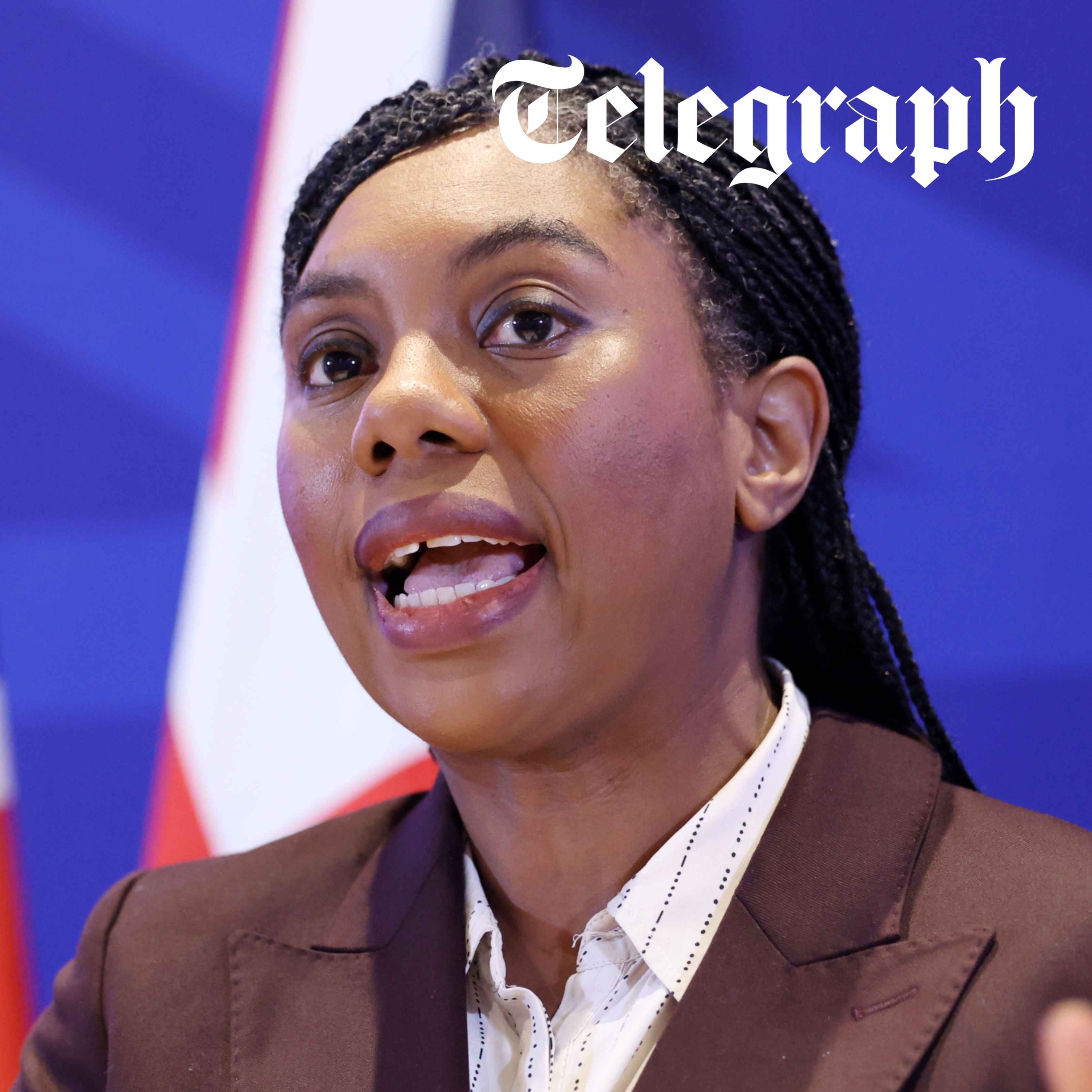
0:46So, Tim, I was at Glaziers Hall in London Bridge today, not because I decided to take up another role in addition to being here and at GB News and start doing people's double glazing, but because Kemi Badenock was there doing her Benefit Street speech. Right. So the Conservatives are now going to reassert themselves as the party of workers against Labour being the party of shirkers. And she came out with a couple of killer stats that I'd like to share with you. The first of which is this. There are six million people of working age claiming benefits instead of going to work. and that is more than the population of Norway in the UK.
1:32That's stat one, killer stat one. That's both shockingly high but also, in the case of Norway, surprisingly low. Yes, so Norway's population is 5.6 million. It's trolls and fjords. It's trolls and fjords. And the second killer stat, which also has a little bit of a geographical theme, is that there are more children in households where no one works in the UK than the entire population of Estonia, which is 1.4 million. So just to up some, as they say in mathematical circles, we've got 6 million people of working age not working, and that's more than the population of Norway, and we've got more workless households than the entire population of Estonia.
2:18This isn't great, is it? No. And the trouble for Labour is that, yes, there was a problem with welfare and welfare claiming under the Conservatives. And you and I both know that it was exacerbated by Covid, not just because more people were claiming benefits, but also it encouraged the spirit of furlough, being paid not to work. And it created a boom in remote working and it created a sick note culture. and we didn't just see that in workplaces, we also saw that in businesses. So we had a kind of growth industry and GPs just simply signing people off sick, probably because they didn't have time in surgeries to go through people's individual problems because there was such a waiting list backlog.
3:07So would you believe that 30 ,000 people receive a sick note from a doctor every day in Britain? I mean, that's another staggering statistic, isn't it? So this is the nub of what we want to discuss today, which is the shift from this being a problem of general unemployment, people can't get a job or don't want a job, to an issue of people signing off because they are ill. Yes. And how has that happened? And what will the Tories do about it that Labour isn't doing about it? Yes. So let's start with the question of has the welfare problem actually grown in the last few years? Because what Labour like to say is that if you take the 30-year average, the non-pensions benefit bill hovers at around 4.8 % of GDP.
4:08So in other words, whatever they're spending now, whoever they happen to be spending it on, they're spending about the same percentage as they have done for the last 30 years. OK. And I think the counter narrative to that is that the nature of the worklessness, if we can put it like that, has changed. So even back in 2012, where there was an unemployment rate of 8 % versus today's 5%, more people were actively looking for work. The trouble with what's happened under Labour is twofold. You've got unemployment having gone up every month since Labour took power, which is problematic. and at the sharp end of that we have youth unemployment that has risen by 1 % since Sikir Starmer became Prime Minister.
4:58Now, we have had a recent announcement about increasing apprenticeships and all the rest of it, but the hike to the minimum wage has made it more expensive for employers to employ young people. So we now have 1 million young people not in education or employment. That's a consequence of there being 160 ,000 fewer jobs in the marketplace because of a squeeze on SMEs and on businesses so that they cannot afford to employ more people. We're going to get onto the Employment Rights Bill a little later in the podcast and discuss what effect that might have. So we've got a bit of a contradiction here.
5:35Labour are talking about lifting 500 ,000 children out of poverty. But what's the point of doing that if at the age of 18 you can't get a job? We've then also got lifestyle changes which have caused absenteeism at school to rise, which has caused generational worklessness. So it's all very well talking about it per share of GDP. That doesn't quite take into account the fact that there's been this habit of importing cheap labour that's undercut British workers. then disincentivise people from having minimum wage jobs. You add to that more generous benefits that then means that people are better off claiming welfare than they are on the minimum wage.
6:16You then have the trickle-down effect of that from parents to children, which then creates this scenario where, for instance, in some areas of Grimsby, it's all very well talking from our little ivory tower here in London's Victoria, in some parts of Grimsby, half of the population is out of work. Right, right. And the people in the ivory tower pay for it. But the statistics don't reflect the sort of human cost of a young person going on to welfare and never working in his or her life. That's calculated to cost them, and therefore the state, a million pounds over the course of their lives. Right.
6:57And by the end of the Parliament 2030, The entire welfare bill, including pensions, is estimated to hit£406 billion, of which£109 billion as sickness benefits. The average person on£38 ,000 currently hands over£2 ,000 a year in order to finance welfare. Yes. So how did we end up with this particular kind of worklessness? I think that's an interesting question. And it's worth bearing in mind that the Tories reformed welfare in the early 2010s. They introduced universal credit. So many of us thought this problem was being solved. At the same time, successive governments have actually been quite mean with some elements of welfare.
7:37So housing benefits have been cut. Unemployment benefits have been frozen. And of course, the Tories also introduced the two-child cap on benefits. It's not a cap on child benefit. That's a cap on how many more benefits you get as your number of children goes up. So the government under the Tories was all about trying to lever people into employment by making worklessness basically pay less. And that worked quite well. It was a period in which people were going to get jobs. You'll remember this in the early 2010s. The miracle of Britain compared to everyone else in Europe was that we went through the credit crunch, but unemployment remained pretty steady.
8:14Yes. We didn't suffer in that way, which is a good thing. And the result is that today, if you were to go on unemployment as a single person, you would be paid just 13 % of the average salary. And in fact, compared to some European countries, we are really a miser when it comes to those kind of out-of-works benefits. So unemployment benefit is one thing. Yes. But it's the switch from people realising that they won't be better off on unemployment benefit. Because if you go on to health-related benefits, you can quadruple your income. Right. So we shifted from people receiving regular, normal unemployment benefits to the rise of disability and incapacity benefits, which are subtly different.
9:03And this has happened at the same time that the definition of disability has enormously expanded into the realm of behavioral and mental issues too. So that's why we now see this whole one in four self-declaring as disabled. Right, right. So at the same time as people are shifting on to essentially health benefits, the ways of being declared unhealthy have increased. So today, one in seven working age Britons claims to have a mental behavioural disorder, which is up by over 50 % in the last decade. And within the disability benefit system, I'm getting these numbers from The Economist, within the disability benefit system, 44 % say they have a mental condition, which has risen from 25 % in 2002.
9:55Wow. Well, that directly correlates then to the rise of smartphones and social media, doesn't it? We can and we must have a debate about what has caused this. And if we are to assume it's real and that people aren't just faking, it's become harder to tell if people are faking because of the way in which things are assessed. Yes. So pre-pandemic, if you were applying for PIP, 80 % of people applying for it had to meet someone in person to be assessed. Post-pandemic, last year, that figure slumped to 2 % of assessments were made face-to-face. The rest were made over the phone. But if we just put aside for one moment, and we'll come into this, people just scamming, and we assume that in fact we have become more mentally ill, I am surprised governments are not having a more serious conversation about how on earth that has happened.
10:48It tends not to have happened in European countries, most of which have not seen a parallel rise in people applying for incapacity and disability benefits. No. It tends to have mostly happened here. But let's assume it is iPhone. Let's assume it is COVID and the experience of that. Yes. Maybe it's a bit of Brexit. Everything this week is down to Brexit. Maybe it's the election of Labour. Maybe it's the election of Labour. Maybe it's Keir Starmer. Every time he appears. Did you see the staff at McLaren? Yeah, they didn't look happy. I would guesstimate that about 80 % of those will be signing on to PIP.
11:20They'll be getting a free McLaren car. They'll be claiming benefits because they had to sit through a Keir Starmer speak. Right, exactly. So we need to have a conversation about why it is that so many people in Britain today are requesting these benefits. But as I say, it's also become far harder to distinguish between those who are genuinely presenting a problem and those who are not. But surely the Europeans aren't suffering as badly as we are when it comes to claimants because they're less generous with their interpretation of whether a mental health condition necessitates benefits. Right. So it could be that we are suffering from a mental health crisis.
12:00And I think we see that in young people. Clearly, people are unhappy. They're going to their GP to get signed off work in increasing numbers. They're claiming sickness benefits in increasing numbers. And specifically, they are claiming them for conditions like anxiety. But what's changed is they're now able to claim benefits where they weren't before. Now, just purely speaking on the basis of ADHD, of which I've got a great deal of personal experience. ADHD, even in its most severe form, which I've witnessed firsthand, does not preclude you from working. Right, right. Okay? It makes life quite complicated.
12:41It makes it difficult for the person suffering to organize themselves, to schedule things, to be on time, to stay focused. People with ADHD can have periods of what's called hyper-focus, where they can't get away from the task in hand, literally for hours. It's a complex condition. It is a spectrum and all the rest of it. But my concern about the system is as follows. We've had a look, haven't we? We've had a look at the government website when it comes to claiming both PIP, personal independent payments, for conditions like mild anxiety and ADHD. and we looked at the system for access to work, which is where you can claim for technological devices and other state-funded sort of equipment and help that could help you work better if you're neurodiverse.
13:28The problem with both of those systems is that you do not require a diagnosis. Formal diagnosis. A formal diagnosis to claim for either. Now, I would question even those who have a formal diagnosis of ADHD or mild anxiety claiming any benefits at all. But if you are not required to have a formal diagnosis to get things like very expensive noise cancelling headphones and other devices, then of course it opens the system up to abuse. And we know the system is being abused despite claims that there is no fraud in the welfare system because we can go on TikTok at any available moment and find a sick fluencer literally telling people how to game the system in order to basically get free stuff.
14:21I do want to say I think some people with ADHD probably can't keep down a job. there are and of course some of the benefits are designed with the very best of intentions to help you to get a job so that you don't just sit around at home all day and and the principle is a good one that if we give you a little bit of cash to enable you to get to work then we save money in the long run on unemployment but also maybe that'll be part of the process of you overcoming your condition if it's one that can be overcome uh adhd is neurological rather than psychological so it probably can't be overcome but nonetheless it's all part of the process of healing and therapy, etc.
14:54So I think it's very well intentioned. Well, my only story, just caveating that, if somebody presents with ADHD at the GP and says, I just cannot focus on my job, I'm really, really struggling, the GP will prescribe Ritalin or another substance that does help ADHD patients as a clinical evidence base to focus for periods of time, whether they're on short release or long release. So what I'm saying is it's a treatable condition that should enable people to get back into work. The other thing about mild anxiety and depression is the statistics suggest that you're actually better off working if you want to help cure.
15:34So this statistic is interesting. Research suggests that being out of work increases the risk of mental illness by 64%. Those in work are 48 % less likely to have depression. Now, I only point that out because if you're going to the GP with these conditions and the GP is actively signing you off work, they're actually helping to exacerbate your depression. I'm talking about mild. I'm not talking about severe. Yes, yes, yes. But these concepts like mild versus severe, I suspect is one reason why the advice seems to suggest you don't need a formal diagnosis because that diagnosis is very hard to get and because the benefits are supposed to be directed not towards you've got this condition, so box ticked, you get this, but rather, well, what is it you can't do that we require to give you help for?
16:28If you can't get a formal diagnosis, I get waiting lists and stuff, but if you haven't got a formal diagnosis, then you haven't been diagnosed with the condition. Notwithstanding how long it takes you to get a diagnosis, I can't turn around to you and say, I've got this, that and the other because I've looked it up online and I've self-tested I'm not a medical professional. So the reason somebody hasn't got a diagnosis is because they haven't been diagnosed with anything. It just doesn't follow. No, I understand that. And they could turn around and say, well, actually, you know, my child has got this.
17:02I know they've got it. I know my child. And unfortunately, they've been waiting on the NHS or indeed CAMHS in the case of a psychological disorder. And it's four years on and we can't get a diagnosis and I'm tearing my hair out. I have total sympathy with that. But at the end of the day, how on earth does one police whether people have conditions or don't have conditions if they don't have formal diagnoses. Yes, yes. You can't self-declare yourself and then claim from the state, can you? No. I mean, you can. That's what the state's allowing you to do. My question is, should that be allowed? It doesn't make sense to me to be able to claim thousands of pounds that is effectively taxpayers' money without having any medical or clinical evidence base for why you're claiming.
17:43Right, right. OK, I just think that, for instance, say a partner dies and then you experience a period of profound depression. Sure. What kind of diagnosis would accompany that? You go to your GP, you would say, my partner's died, I've been plunged into despair, I need some antidepressants, I need some time off work, I need you to write a note to my employer saying this person is completely and utterly bereft and unable to function for a limited period. And the GP does that because that's absolutely accurate and the person gives that to their employer and the employer says, good grief, take some time off.
18:19This is horrific. Yes. Right? What we're talking about is self-diagnosis that is leading to people being on benefits, seemingly ad infinitum, with, as you say, no face-to-face checks. The other problem with all this, and it was exposed in a documentary quite recently by Channel 4's Dispatches, hosted by Fraser Nelson, it featured people that were trying to get off benefits and couldn't come off them. There's nowhere to go when you say, OK, I'm better now. It was a taxi driver. I think he'd had a cardiovascular and respiratory disease. He managed to recover thanks to the NHS and treatment. He tried to get off these benefits.
18:57Nobody would answer the phone. No, no. But also it used to be the case that you would risk your benefits if you were looking for work. Yes. And that's one thing the government is trying to change. So what the government did was it actually uprated some benefits, which might surprise people, a little more generous. but then I guess if you want people to shift from the culture of being on incapacity or disability to one of being briefly unemployed and moving to work, that makes sense. Uprated those benefits and then said you have a right to try. You have a right to look for work without threatening your own benefits.
19:28So they would say they're trying to do that. The problem is when it came to the welfare bit, they're all carrot. They ain't any kind of stick. And they attempted to shave a minimal amount, 5 billion off the bill, with their last welfare reform bill. And of course they had to pull it. On the point about how you then apply for the benefits, a kind of an industry has grown around facilitating the application that makes it doubly harder for the government to filter out who is and who isn't genuine. So to focus on that point about how difficult it is to filter out who's serious and who's not, a whole industry has developed to help people through the process to coach them on how to access benefits.
20:08and one example of many is something called Mr. PIP Hero Chat Bot. And if you go into this thing, you can put your questions to it and it can help you to navigate applying for PIP. So just to give one random example, if you ask it to help you with quote-unquote trick questions put to you by the interviewer over the telephone, it will say an example of a trick question, is the interviewer might ask, how are you today? And the bot says, they want you to say fine, which they write down as no distress. So what they recommend you do is to describe your symptoms today, not just to be polite and say, for instance, I'm doing my best, but today is a difficult day with pain slash fatigue slash anxiety.
21:03They may ask you, what did you do yesterday? Again, here it warns you they're looking for inconsistency. So don't then say, I felt great yesterday. Yesterday was fine. Instead, yesterday was a low function day. I mostly rested and needed help with. But then I go back as well to the forums we looked at this morning and all of the advice on these forums is basically best summed up with this one line that we found on one. it's not about the diagnosis. It's about how you claim the symptoms affect your everyday life. But again, it's problematic. If people weren't gaming the system in inverted commas, why would somebody like Whitney Ainscoff need to go on social media, who allegedly makes almost £500 ,000 a year, showing social media followers how to exploit the benefits system?
21:55She says she'll never get a job. She shows followers how to speak to the Department of Work and Pensions to max out their payments, claim motability cars and even get free phones. She shares a screenshot of her weekly benefits entitlement in one of her videos. Now, it may be that this woman is disabled, but, I mean, weirdly, she is working, isn't she? She has a job. She has talent. She has something because she's able to advise people how to try and claim benefits. Yes. Maybe we should try and get her inside the Department of Work and Pensions to root out those who may not be genuine. But that in itself is extraordinary, isn't it?
22:40Yes. Yeah. If we go back to the reforms of Ian Duncan Smith in the early 2010s, Universal Credit, all of this was designed to weed out this kind of stuff, really. It was to make benefits simpler, more transparent, to make sure you get what you deserve. But the whole process both works for you, but also for the state, because it should be avoiding these kind of pitfalls. Instead, what's striking is that the more complicated life becomes, the more the technology catches up with it and the new ways there are to get around things. Well, look at this as an example of the response, for instance, to Kemi Bainock saying what she said.
23:15And she did have to take a question from The Guardian. You know, is your language around this acceptable? Are you not stigmatising people with disabilities and disorders? So this is from Scope, the disability equality charity, who basically says the benefit system is complex and hard to understand. Deciding how disabled people are supported based on outdated thinking and flawed assumptions would be a recipe for disaster. It can be incredibly hard to know how to access support and many disabled people give up. Many are reduced to tears, left broken and have nowhere else to turn. but it's precisely because the system is so complex and difficult to navigate that we need to restore order we need to get back to face to face because I had a dinner last week with somebody that was involved in an autism charity and the charity concerns itself with trying to support severely autistic children who are largely non-verbal have no hope of being in mainstream education and will struggle to find work later in life.
24:16And he says that these children with severe disabilities are suffering because of the false equivalence now with people who have mild autism, actually more or less able to claim the same in benefits. Now, there has to be a distinction. We've talked about this before. There has to be a distinction, surely, between the sepsis sufferer who has lost both legs and an arm, and somebody with ADHD. And at the moment... Accepting there are some people with ADHD who really, really can't function in a work environment. But if it's a complex system that appears to have become completely unwieldy, then surely we need to restore order by, first of all, making sure that those who are assessing all of the claims are doing them rigorously.
25:01The other thing is we've had concerns and we've had reports of targeted-based welfare assessments. You know, people that put people on welfare getting a bonus for it. Yes. Well, how does that help? Yes, yes. And, you know, I want to stress that the chatbot thing, even the influencers, there is an argument, as Scope is suggesting, that the system is so opaque and complex, and it really is. It's very difficult to figure out what you're entitled to and how to go about getting it. There's a case for saying that what these things are doing and not encouraging people to cheat by any means. It's helping people who are vulnerable and might struggle in these situations to know how to navigate it and to give the answers to get what it is they're entitled to.
25:43But it's pretty obvious it could also be used by people who are not entitled to those things in order to coach them to get access to things that if they were being very honest, they don't really need to have. Either way, what the welfare system is not is it's not personal and it doesn't seem to be really tailored to the individual need. It seems to be impersonal, trying to deal with vast numbers of people. And plainly, it is failing at distinguishing between those who do and don't because the bill has grown so enormously. And to go back to our conversation earlier about what's caused this, is it COVID, iPhones.
26:17Don't we want to stop this growth? Yes. I mean, that to me is the key thing. It is rather than government playing this catch up of, oh, suddenly everyone's presenting with these problems. Therefore, how can we make sure the right money gets to them? isn't the issue that we need to have a conversation about why such vast numbers of people, particularly young people, are suddenly presenting as being mentally ill. Yes. Well, this brings us back actually to Kemi Badenok. Right. Because that was precisely how she addressed the issue in this speech this morning. Quite simply, our sickness benefit system was not designed to handle the age of diagnosis which we now live in.
26:53So we are also going to review which conditions the state treats his disabilities when it comes to benefits. All of us will have physical and mental challenges at some point in our lives. All of us will. But in an age in which one in four people now self-report as disabled, it's clear that we are now going to have to draw a line on what health issues the state can support people with. The government can't do everything. Basically, Badenock is doing this thing of we're going to do the thinking rather than coming up with back of a fag packet policies like reform do. That's her accusation. We're going to think about this like we made Lord Wolfson, the Conservative peer and Casey write a 185 report on why we should leave the ECHR.
27:44We're going to apply similar thinking to our policies on welfare, economics and everything else. And so in that vein, she's created this Conservative economic unit that features her, Mel Stride, the Shadow Chancellor, Andrew Griffith, the Shadow Business Secretary and Helen Waitley, who's the Shadow Working Pensions Secretary. Well, that's the A team, isn't it? Oh, well, it may not be Murdoch. This shock unit that can just turn up to any economic crisis in a van and fix it. I appreciate your cynicism, but I think what she's trying to say is we're going to properly think through what we suggest is a fix to all this.
28:18She was very much trying to convey the message. We're trying to inspire hope here. It doesn't need to be like this. We're not going to be all doom and gloom like Labour. We just want to find some solutions to some of these problems. and she made the point, and she's right about this, that working people are getting increasingly peeved by the current situation. Now we see that evidence by bricklayers recording Instagram videos where they're like, sometimes I want to give up, but I've got people on benefits relying on me. So it's like the working man and woman have turned because there was a great deal of sympathy in the past, obviously, for the idea of people who needed benefits receiving them.
28:53Now I think people think that people are taking the mickey and it's gone too far. And there was a recent poll by More In Common that shows that seven in 10 think we should cut benefits for those who are able but unwilling to work. You see, this is the other thing. That's my point about, okay, if you do have a condition and it is provable with medical evidence that you cannot physically work or you cannot work due to mental incapacity, then of course the state should step in. My problem is that people aren't providing that evidence base and that there is evidence that they can work and they're still not working.
29:29We can't sustain people who can work not working, Tim. That's my central premise. I think there's also a classic Westminster-everyone-else divide over how you handle the problem of welfare. I guarantee Stephen Timms is reporting next year about welfare reform for incapacity, disability benefits, etc. I guarantee he'll come up with a solution that involves spending more money. Yes. It's like whenever there's a problem with crime, the solution is always remove the bars from the prisons, right? Fix the windows. It's always a perverse solution that runs against the common sense reaction to you're spending too much money on something, well, let's spend less money on it.
30:09And most people, when you say to them, there are a lot of young people, not in education or training, Westminster, as the prime minister has done with apprenticeships, says that is a human tragedy and we've got to spend more money to put people into work. The average punter, when told that, will just say, we'll cut off their benefits. Yes, well, indeed. And compel them to go to work because the alternative is poverty. But Westminster's response to welfare problems is always somehow more welfare.
30:49This is why I quite like the employment bill. Because what is Labour supposed to do? The clue's in the name. It's supposed to be a party of work. And part of the problem with work is it's become devalued, underpaid, and far too casual, partly because of mass migration, by the way. It's been easier just to bring in cheap labor from overseas rather than to upskill and properly pay our own people. This bill is designed to deal with two problems. One that work for many people has become far too precarious when you're dealing with things like zero-hour contracts. And the fact that you can be within two years dismissed from your position.
31:24In the first two years, you can be dismissed from your position. They wanted to change that. They've U-turned on that. They wanted to break down to one day. It's now going to be six months because of a lot of opposition from the Lords, including from hereditary peers. God love them. So it's partly about dealing with how precarious work is by making it harder to sack people. And it's also dealing with the other problem of declining union representation. About 50 percent of our workers were in unions in 1979. It's now down to something like 20 percent. Yeah. And a workforce in which people do not have rights, in which jobs are not reliable and not well paid and where you can't expect your union to defend you if you're under attack or get sacked.
32:02That's a low paid culture. It's a depressing culture. It's a neurotic culture. It's one which many young people look at and think, I'd rather not work in that. I'd rather be at home on incapacity. So I would say I think Labour should take a tough line on welfare, but embrace this bill in order to make work more attractive for people. But the counter-argument to that would be we've already got good employee rights. Why do you need to give them rocket fuel? Well, you say that. For instance, you have no statutory right to bereavement leave. Yes. But then again, Labour do this thing of using a sledgehammer to crack a knife.
32:35I did not know this. No, I know. This is how innocent and middle class I am. I did not know that because I work for a very good employer. If I came in and said my mum's died, my employer would say, take the week off. Well, to be fair, our employer says take two weeks off, I think it is. Right. But there are other places in this country where that could happen, and they say you're not allowed to do that. And what the government wants to do is give you the statutory right to that, but also, which I think is marvellous, the statutory right to that if you lose a baby up to 21 weeks for a miscarriage.
32:59I totally agree with that. However, Labour have expanded it to the extent that they're basically saying that any employee can take bereavement leave and hasn't specified how close the relative needs to be. Right. If you're running a small and medium-sized business, it's all very well for The Telegraph, If you're running a little cafe somewhere in Swindon and somebody turns around and said, I'm sorry, I can't come in this week because a second cousin twice removed has unfortunately passed away. And I haven't actually seen them in 15 years. But hey, it's written into this legislation. So I'm just going to claim it because I know my rights.
33:34Where does that leave the employer? My problem with the employment rights bill is it's so old Labour in its depiction of boss is bad, worker's good. OK, some workers are terrible and bosses have the right to dispense with them if they don't pass their probation periods. If you have a rogue employee in and by the way, profit margins in the hospitality sector, for instance, have halved since the pandemic, Tim, halved. And you are already struggling to make ends meet. And you've got somebody that can't put in a day's work, is turning up late, is leaving early, is taking sick days off and you can't get rid of them.
34:10How does that help growth and productivity? So I get the bill, but don't make it this kind of the good of the worker versus the evil of the employer. It's employers in this country that create jobs and wealth that put food on the table of the working man and woman. Yeah, but I think it's unfair to say employers are all bad, workers are all good, but I think it's unfair to suggest that workers are potentially all bad as well. No, I'm not for a minute saying that. In the case of the relative and the bereavement, There are some people who, indeed, their distant uncle may well be the person who raised them.
34:43It might not be defined within law as an immediate person. But shouldn't there be more specificity about that? I just don't believe there are millions of people who are going to start taking days off because someone very distant in their family has died. I don't believe that. Tim, people take duvet days because they can't be bothered to come in. To give another example, I've always thought in this country it's shocking that if you are ill, you have to wait four days before you get statutory sick pay. You don't get paid for four days when you're ill. That's bizarre. So the government's just saying, no, it's on day one.
35:15These things seem reasonable to me. And yes, it's true, business will take a hit. But the counter-argument is that the working class has taken a hit for 30 or 40 years because of low union representation and poor regulation. I love this sort of capitalist versus socialist argument. It's not socialism, it's about making work pay. But if businesses take a hit and they have to lay people off, you're then basically... They can't. That's the joy of it. No, what happens then is the business goes bankrupt and more people lose their jobs. This is again the argument against raising the minimum wage in some sectors where it actually means people will lose their jobs.
35:53Would you rather five employees earn£10 an hour or two of them were fired because the boss can only afford three employees at£10.85? But that feels like a race to the bottom of we have to drive conditions and wages as low as possible in order to keep the business going because it's the only way it can survive. We have to help businesses to survive so that they can pay their employees more money, create growth, create wealth. Yeah. You know, again, I'm channelling my inner babe not, but the central point of all this is just go full circle in this conversation between working and worklessness, especially with all of this rhetoric around lifting kids out of poverty.
36:30The first thing people say is I'm trapped on welfare because if I left it, I would be earning less. Yes. So this is not a socialist point to say, let's make work pay more, make it better protected, but also take reforms point. I think they wrote back on this. Take people out, take more people out of paying tax so that the work pays. But can we please also accept, again, we'll peddle full circle to the more children in workless households than the entire population of Estonia. and please agree on this, there is nothing that impoverishes children more than being in a household where their parents don't work.
37:06Absolutely, of course. But the fact that the government has felt it has to introduce breakfast clubs suggests there are people who are working in conditions so poor that they're unable even to feed their own kids. Yes, and I did raise this with somebody who works on the ground in charities that serve extremely impoverished areas of the UK and asked that person recently whether he had ever encountered a situation where a family on the bread line couldn't afford a packet of Weetabix or the supermarket equivalent. And his response was no. Because a packet of Weetabix costs four pounds. Yeah. I don't agree with the argument.
37:48Or indeed from a food bank. When we talk about poverty, we're not talking about Dickensian poverty. No, I know that. I know that. And a lot of people who are on the breadline really resent a suggestion that they aren't good enough parents to feed their children in the morning. Yes, but the nine-tenths of this discussion has been, and we agree on this, the necessity of getting people off welfare, including some people who may well have minor anxiety issues. I just think if that's what we're asking people to do, it is unfair to ask them to go into a world of work which is highly stressful and precarious and poorly paid.
38:21Labour, when it talks about impoverished households, are talking about households on benefits. And we've just agreed that you can be better off on benefits than not. So if you're on benefits, you certainly can afford the Weetabix. Yes. Which is problematic for Labour because it's opening breakfast clubs for children, it says, who aren't given a Weetabix in the morning. But the reason they may not be given a Weetabix is because their parents aren't getting up to give them breakfast because they don't need to, because they don't have a job. Who wants to start the day with Weetabix? It's horrible.
38:50Oh, it ticks all of the green. Of course it does. You know, it's like it's fully five green ticks. There's no amber or red in there, Tim, which is why I guzzle it down every morning, along with the odd occasional bowl of porridge. I think Britain would be happy if we were all on sugar puffs. Well, that's because you're somebody that goes and gets a pan of raisin every morning from the cafe outside. Right, serious chat for serious times. We shall be back tomorrow, 5pm. Thank you.
Six million people is greater than the population of Norway. But that’s how many British people of working age are claiming benefits instead of working, so said Kemi Badenoch at a press conference this morning about how to “get Britain working”.
With more workless households than the population of Estonia (1.4m), and one in four people now self-reporting as disabled, Camilla Tominey and Tim Stanley ask how Britain became one big welfare state, explain why Labour’s workers rights bill isn’t going to help, and look at whether the Conservatives’ promise to review the whole work and welfare system will be enough.
We want to hear from you! Email us at [email protected] or find @dailytpodcast on TikTok, Instagram and X
► Sign up to our most popular newsletter, From the Editor. Look forward to receiving free-thinking comment and the day's biggest stories, every morning. telegraph.co.uk/fromtheeditor
Producers: Georgia Coan and Lilian Fawcett
Senior Producer: John Cadigan
Executive Producer: Louisa Wells
Video Producers: Will Walters
Studio Operator: Meghan Searle
Social Producer: Nada Aggour
Editor: Camilla Tominey
Hosted on Acast. See acast.com/privacy for more information.


