
 Ask ChatGPT

 The Daily T
7 May 2026 · 47m · 17 chapters

The episode is about the Telegraph’s claims of “rank hypocrisy” by Green Party leader Zach Polanski around anti-Semitism, alongside predictions for UK local elections and the likely impact on Labour, Greens, Reform, and the Conservatives. It argues Polanski previously claimed anti-Semitic attacks during a 2019 Green selection bid, yet later made disputed statements (e.g., about an anti-Semitic assault suspect at Golders Green) and is accused of minimizing or reframing anti-Semitism as “perception” tied to pro-Palestine activism. Notable examples cited: 2019 Highbury beating of a 69-year-old; Polanski’s “traumatised” comments; historic claims about policing and about the “Red Cross”/hypnotherapy controversy. The episode also cites Green candidates Sabine Mary and Saika Ali arrested for alleged online racial hatred; and candidates defending Oct 7 and questioning Zionism.
Professor Sir John Curtis (University of Strathclyde; political scientist/pollster) and the hosts Tim Stanley and Camilla Tobony (no external guest beyond Curtis).
Labour could suffer its worst London result; Reform may win big (e.g., 76 seats in Birmingham); Greens may run second but not take control; Gaza independents likely gain where Muslim voters are concentrated.
Written by AI. May contain mistakes.
Tim shares a humorous personal anecdote about falling off a climbing frame.
“Welcome to The Daily Tea with me, Tim Stanley.”
Discussion on Zach Polanski's past statements and current actions regarding anti-Semitism.
“And he demanded the Greens get a grip on it.”
Exploration of Polanski's political journey from Liberal Democrats to Green Party.
“One is that he's undergone a transition faster and quicker than Caitlyn Jenner.”
Discussion on accusations against the Green Party related to anti-Semitism and sectarian politics.
“And this is the other thing which we need to say about Polanski.”
Analysis of Polanski's controversial statements on national identities and rights.
“And it is rather galling to see Labour now attacking the Greens and accusing them of fueling division, when that's exactly what Labour did for decades.”
Discussion on Polanski's comments regarding Jewish safety during protests.
“and you're going to come out with claptrap like, well, no country has a right to exist, then you're not even advocating the two-state solution that you suggest you are.”
Explore the complexities of media representation and the perception of threats within the pro-Palestine movement.
“He was talking here about the pro-Palestine movement and the marches in general.”
Discuss the contradictions and political motives behind Zach Polanski's actions in the context of UK politics.
“Or we can't cover this because, oh no, poor lamb, it might hamper his chances at the local elections.”
Analyze the strange appeal of populist figures like Polanski and their impact on public sentiment and voter behavior.
“How is it helping the working class people of the United Kingdom to have Palestine on the ballot paper?”
Examine the implications of local elections on party dynamics and strategies among Labour and Reform parties.
“And if you were just to take young women voters, this country would probably have a landslide for the greens.”
Explore how austerity measures impact local elections and council priorities.
“One would like to imagine it's also about resolving the bin strike and getting the streets cleaned up.”
Discuss the implications of electoral results for Nigel Farage's ambitions.
“as the PR people say, the Westminster spinners say, if huge swathes of the country turn turquoise, Farage is going to be much better positioned.”
Analyze Labour's vulnerabilities and uncertainties heading into the elections.
“I know you're having a very busy week with all of the polling flying around.”
Understand how local elections reflect broader national political trends.
“What does a good night look like for Nigel Farage?”
Examine how sectarian voting influences election results in London.
“Should we project any performance on Thursday to a national vote share?”
Discusses how religious affiliations influence voting patterns in London, especially among Jewish and Muslim communities.
“And finally, Sir John, just thinking about people voting along religious lines, obviously, the Telegraph has done a lot of reporting of sectarian voting.”
Explores the contrasting sentiments of the Jewish and Muslim communities towards the Labour and Conservative parties amidst recent events.
“Because if you're a member of the Jewish community in one of those greater London seats, you're looking at Labour and thinking they haven't done enough.”

Get the gist, explore an idea or ask about something said.
 Claude
On The Daily T, what are the key points of this episode?
Searching your listeningAutomatic transcript. May contain errors.
0:03Camilla: The Telegraph.
0:09Camilla: As Britain votes, we ask, is Zach Polanski a stupid ideologue, a dangerous charlatan, or both? Today, The Telegraph exposes the Green leader's rank hypocrisy on anti-Semitism, and we'll explain why his sectarian politics poses a real threat to Britain. And I spoke to Britain's leading pollster, Professor Sir John Curtis, who says Labour could get its worst ever result in London and that the election of pro-Gaza independence is almost inevitable. Welcome to The Daily Tea with me, Tim Stanley. And me, Camilla Tobony.
0:53Camilla: Tim before we get into the local elections the latest idiocy from Zach Polanski uh Starmageddon and all the rest of it I do want to just further very briefly probe something you told me as you limped up the stairs to the studio which is that you fell off a climbing frame yesterday I don't know why you're making a big deal of this I was walking my dog it's amusing me I saw a climbing frame, I thought, I'll have a go. What do you mean? It's one of those ones where you pull your, you lift yourself up and you pull yourself along like that. Oh, wow. And I did okay. But then I realized I'd had enough.
1:26Sometimes when you're in the middle of that kind of ladder walk with arms, your arms can give up on you really quickly.
1:32Camilla: The arms just go, what are you doing, mate? You're not fooling anyone. Have you hurt yourself? Alas, I have the physique of Russell T Davies. Anyway, so I landed very hard on my leg and I'm in considerable pain. Okay. It's not funny. Who's going to land hard on their arse tomorrow? That's a big question. Do you get a vote? No, I had my local elections last year. So do I, which means I have to wait another four years to vote the rotters out, whoever they are. I don't know who they are, but I hate them. Aren't they all rotters? This is the trouble. This is depressing. We're getting depressed, aren't we?
2:03We are already. Today, we're going to talk about Zach Polanski because The Telegraph has a story. Specifically, our excellent journalist Peter Snepp-Vangers has a story.
2:12Camilla: He's a bit of a newbie to The Telegraph. He's doing very well. He's got an exclusive story about Zach Polanski, which I think really goes to the heart of the green phenomenon and the questions about Zach Polanski's character. It turns out that in 2019, Polanski tried to become selected as a London mayoral candidate and assembly member candidate for the Green Party. He claimed at the time that in this campaign, he was subject to anti-Semitic attacks. And he demanded the Greens get a grip on it. In a social media post, he wrote, my gratitude goes to most of my fellow candidates. Adding that his words were pointed because it needs to be.
2:56He said, I think we need to look as an organisation at how we treat our members. The anti-Semitism, transphobia and pathetic smear attacks concern me. It shouldn't be allowed and as a party I'll be doing my bit to get a grip on it. I hope others will join me in consistently condemning it when it happens.
3:19Camilla: Would this be the same Zach Polanski that when challenged on the BBC about the party's problem with anti-Semitism replied that it was not some kind of big scandal because they were only made by a, quote, handful of candidates. Right. The hypocrisy here is absolutely staggering. Well, historic posts seen by The Telegraph also show that Polanski called for an increase in policing following an anti-Semitic attack in which a 69-year-old man had been beaten up in Highbury, North London, in 2019. Again, let's contrast that with his response to the arrest of the suspect in the attack on Golders Green.
3:57Polanski falsely claimed that the suspect had been handcuffed and Polanski said that he was traumatised by seeing the suspect being kicked in the head.
4:07Camilla: Always the victim. I find his use of traumatised really interesting because the issue is how he felt about it. Well, he had to row back from that very, very quickly. And by the way, his poll rating has taken a massive kicking because of his response to the polls. That's really interesting. The pollsters say that Polanski's personal ratings have really nosedived. And of course, that's happening just before the local election. So we'll see if that has an impact upon their results. The Telegraph approached the Green Party for a response to this, and their reply was almost better than the story itself.
4:42They said, Antisemitism is not an abstract issue for Zak. As a Jewish man, he often faces antisemitism. He has consistently stood up against antisemitism throughout his life and political career, and is proud of his record opposing racism and bigotry of all kinds. It is notable that Zak appears to be held to a higher standard than other political leaders because he is Jewish, a double standard which is in itself antisemitic. Politicians of all stripes have a responsibility to come together to end the appalling spread of anti-Semitism. In short, to ask Zach Polanski about anti-Semitism is itself anti-Semitic.
5:23And that, folks, is the dictionary definition of chutzpah. But I think there are two things that we can say about Polanski after reading this story. One is that he's undergone a transition faster and quicker than Caitlyn Jenner.
5:36Camilla: Yes. Used to be known as Bruce. Once Bruce. He joined the Liberal Democratic Party. By the way, he'll accuse you of transphobia for saying that. He joined the Liberal Democratic Party in 2015, in his 30s. A little unusual later in life to get into politics. Very unusual to choose the Lib Dems in 2015. Is that the coalition years? That is at the, shall we say, bottom end of the coalition years. Yeah, that's when they're abandoning, you know, scrapping tuition fees and things. Not only did he join them, but he's put himself centre stage at a conference in which he led a choir singing for a fight back for the Liberal Democrat Party.
6:15In 2016, he heckled Jeremy Corbyn in public, accusing him of being insufficiently pro-EU. and also in a podcast in November 2016, this was discovered by Christian Calgi of the Daily Mail, he suggested that there were reasons to defend the Liberal Democratic Party's U-turn on tuition fees.
6:39Camilla: Fine. Okay, so he's fully throatedly a yellow. He's a yellow. In 2015. Yes. He joined the Green Party in 2017. So he can't really make up his mind. That's only two years. Yes, what's happened? Then, oh, what happened? Well, one thing that happened is he tried to get selected to be a by-election candidate. Ah. And he didn't. Right. And not long after that, he then joined the Greens. Now, what were his politics while he was an early Green member? Had he had some Damascene conversion? Well, in 2018, he described himself as a pro-European Jew, which he said was two reasons I couldn't vote for Labour under Jeremy Corbyn.
7:23Camilla: This is extraordinary, isn't it? Because the very people who did vote for Labour under Jeremy Corbyn are now proudly his electorate. And now the people who have joined the Green Party to support him as leader. And by the way, it wouldn't surprise me if he ends up absorbing the likes of Corbyn and Sultana and other your party types, because let's be honest, that outfit's going nowhere fast. Yeah, exactly. So this is just, I mean, this is gobsmacking hypocrisy. Under Polanski, and be fair, it didn't begin under him, but it has reached its peak under him. The Green Party has gone from being an environmentalist movement to being an umbrella for the populist left under Polanski.
8:10And this is the other thing which we need to say about Polanski. The result is we find ourselves in the strange position that the only Jewish leader of a major party is leading a party which is accused of harboring anti-Semites and being a Trojan horse for Islamists. To give some examples, two local election candidates, Sabine Mary and Saika Ali, were arrested last week on suspicion of stirring up racial hatred online. Meanwhile, other candidates have defended the October 7th massacres and question if Zionism is in fact a mental illness.
8:46Camilla: Progressive stuff. Now, to be fair, Polanski's argument, which is anti-Israel but still could be pro-Jew because he is a Jew, might hold some water were it not for the abject idiocy of his latest protestations on Palestine. First of all, he's saying Palestine is on the ballot paper today. Well, no, it isn't. It's not. It really, really isn't on the ballot paper in local elections in the UK, point one. Point two, he says to ITV's Robert Peston on his show last night that he doesn't think any country should have a right to exist. When asked about Israel's right to exist, he said, well, why should it?
9:29Camilla: By that token, if you follow that skewed logic, Palestine doesn't have a right to exist either, does it? So all of this stuff, all of this kind of confected nonsense about Zionism is racism and genocide is just entirely contrary to his positioning only a few years ago and absolutely obviously a play for the Muslim vote. There's no other way of dressing this up. It's not controversial to say that. It's not hiding. This is all operating in plain sight. We saw candidates for the Green Party sort of travelling down a high street in England, sort of waving Pakistani and other flags, protesting for the Greens, saying that they were for the Greens.
10:19Camilla: There's not a woman in sight. As Patrick Christie's of GB News did observe, you know, this appears to be a Pakistani election taking place on the streets of Britain. And we should observe that Labour was the natural home for this kind of sectarian politics for a very long time. It's simply been stolen from Labour. And it is rather galling to see Labour now attacking the Greens and accusing them of fueling division, when that's exactly what Labour did for decades. And it's why Labour controlled certain local for decades. Now, on the Israel-Palestine point, what Polanski would say, and what he did say, is I believe peoples have a right to exist, not countries.
11:00And this speaks to that left-wing idea that countries and nations really are a fiction.
11:05Camilla: Yeah, there are no borders. Right. Well, borders are, they exist, but they shouldn't. Yes. They are something imagined and they are there to serve the purpose of the capitalist ruling class in some way. And really, it's all about individuals and human rights and groups. And so the Palestinian people should exist and the Israeli people should exist somehow, all together in the same place. Yes. But of course, if you are like the Jews, persecuted for thousands of years, the reason why Zionism becomes a human rights issue is because the experience of the Holocaust told us that the Jews are not truly safe until they have a country.
11:50Camilla: Yes, until they have a homeland. Until there is one place that is dedicated to their preservation. That's why so many Jews have migrated there. That's the core argument for Zionism. But if you're not going to support Zionism and you're going to suggest that Zionism, which is the belief of Israel's right to exist as a state, and you're going to say that it's racism, and you're going to come out with claptrap like, well, no country has a right to exist, then you're not even advocating the two-state solution that you suggest you are. No, it's not two states, is it? You're actually advocating... No, they want one state.
12:23Camilla: No, you're advocating what is chanted on pro-Palestinian marches, which is from the river to the sea. Yes. And what they would say is that that one state should be a liberal, secular democracy. Well, I have some magic beans to sell you, Twig. Whatever their names are. Because the moment you establish that liberal, secular democracy, within minutes it will cease to be a liberal secular democracy and it'll be unfriendly to Jews. Because they would say, hey, you're saying Jews can only be safe if they have Israel. But that's nonsense. They're safe in Britain. They're safe in France. Well, they're not.
12:59No. And they're not partly because of you. Yes, exactly. And if they become unsafe in those liberal secular democracies which seem to be unable to eradicate anti-Semitism, for some reason we just can't do it.
13:12Camilla: No. Then where else have they got to go? No, they haven't got anywhere. But to pick up again on Polanski, because I'm trying to figure out with this very strange transition, Lib Dem to Green in such a short space of time, someone very conscious of his Jewish heritage, but also forming a coalitional politics with sectarians. Should we feel sympathy? Is this a man being duped? What's going on in his head? Well, there, I think on that, there was a very revealing moment in the last few weeks when Polanski was asked to comment on the torching of synagogues and ambulances, Jewish ambulances. And he said, now there's a conversation to be had about whether it's a perception of unsafety or whether it's actual unsafety, but neither are acceptable.
13:58Camilla: Yes. So basically, it could be that Jews are perceiving that they are at risk of harm. Yes. But that isn't the reality. He was talking here about the pro-Palestine movement and the marches in general. Are they actually posing a threat to Jews or are Jews just perceiving them to pose a threat? and he would probably argue that the suggestion that they do pose a threat is part of a plot to get them shut down. Yes, but then this echoes other arguments that are made in his defence. So we've had Mehdi Hassan and others saying in recent days that Zach Polanski is the victim of a smear campaign by the mainstream media.
14:44Camilla: Now, a smear campaign means the dissemination of lies and disinformation about somebody in order to ruin their reputation. Sorry, darling, you're the victim of coverage by the mainstream media. Basically, if you admit, as Polanski has, that it was wrong to suggest that women's breasts could be increased with the power of hypnotherapy, if you admit, as Polanski has, that it was wrong to falsely suggest that you're a spokesman for the Red Cross, if you admit, as Polanski has, that it was wrong to falsely claim that you were a full member of the Society for Hypnotherapists or whatever it's called, you're actually admitting to lies, not smears.
15:26And are we not supposed to cover that?
15:27Camilla: We're meant to ignore it. You want us to self-edit. Yes. You want us to self-regulate and go, well, we're not going to cover that because it was a long time ago and maybe it worked. Maybe her breast did grow. We don't know. Or we can't cover this because, oh no, poor lamb, it might hamper his chances at the local elections. Yes. But just to revert back to your what is the motivation behind this bloke, it could be complete and utter stupidity and idiocy. I personally perceive, if I'm allowed to perceive things as he can, a huge amount of political opportunism here. This is a man who doesn't have a seat in Westminster, who is parading around and, let's be honest, succeeding in the publicity stakes.
16:08Camilla: He is getting a hell of a lot of coverage, some negative, some positive. but isn't this just a guy, despite his socialist tendencies, who is trying to assume a huge amount of power? Yes. And in the process, he is demonstrating to us the contradictions within the left. So if his argument is that you might be misperceiving something as anti-Semitism when really it is a cry of pain for the Palestinian people, we've been told for the last 10 years that what matters when it comes to racism is how it is perceived. Yes. And as Trevor Phillips said to him on his show, if you go all the way back to McPherson and the reforms to the police under Blair, the whole point of that was to say to the police, it isn't just what you, the policeman, thinks is racism.
16:54It's what the target of the racism thinks is racism. So Polanski is contradicting 20 years of where the left has gone on racism. And he's contradicting it for one group of people. This is why Jews say anti-Semitism is unique.
17:12Camilla: Yes. Because it breaks all the rules. Yes. You can have a progressive movement that is anti-racist, and yet it manages through intellectual aerobics to come up with a reason as to why Jews are imagining that they are being targeted. But it's actually reminiscent of Corbyn constantly defending himself against claims of anti-Semitism. Let's be honest, it didn't just rock the Labour Party, were uncovered in independent investigations and resulted in Jewish Labour MPs like Luciana Berger having to leave the party and get bodyguards to protect her. And they're having the same row over the definition of anti-Semitism.
17:53Camilla: But his defence was always like Polanski's, I've fought racism all my life. Yes. Well, you've supported certain communities, but not others. So again, Corbyn's there posting outside his polling booth, championing the fact that he'll always stand up for Palestinians. This is selective fighting of anti-racism that suits my political purposes. It's actually so shameless and shameful, this, because it's also wrapped up in this sort of messiah complex that Polanski thinks he should somehow be held on a higher pedestal than somebody like Nigel Farage because he is in some way, you know, a goodie, left good, right bad.
18:34Camilla: It's actually completely childish. But on a serious note, it's really dangerous, this stuff. This man, I actually believe, is a danger to Britain because he is purporting to represent the complete opposite of what he is actually representing. And he is being absolutely craven in his desire to mop up as many votes as he can from whoever he can, regardless of their own motivations and ideologies. And he is quite happy. He is basically allowing sectarian politics to take hold in the UK while pretending to care about the British working class. Those two sentiments just simply don't add up. I'm sorry.
19:23Camilla: How is it helping the working class people of the United Kingdom to have Palestine on the ballot paper? One might argue it's also a Trumpism of the left. I was struck by reports that Angela Rayner in her preparation to be crowned queen of the Labour Party has argued that what Keir's got wrong is he has no personality and he doesn't seek to divide people. Her argument is you've got to choose an issue over which there's a real battle and take a side. But you've also got to have personality and charisma. And you can see Polanski's done that. He has doubled down on everything. There's very little.
20:02He's occasionally had to apologize, like the Red Cross thing. But there's very little that he's apologized for. And at the same time, he has personality. And I think some people see his, he seems to be unaffected, like when he was dancing on that stage with the men in leather. It's like it was such a bizarre thing to do that he couldn't be faking it. That really is his personality. It's a bit like Trump saying, I can walk down the street and shoot people and they'd still elect me. That kind of brazen strangeness attracts people. But here's the thing, one of the peculiarities of populism. Very often, populist leaders are weird.
20:35Yes. And in the case of Polanski, he's so strange.
20:39Camilla: Yes. If you are voting for someone who embodies your generation who's just like you, you wouldn't pick Zach Polanski. He's a former hypnotist who said he could grow people's breasts. He's a perfectly normal guy who, according to him, has never taken drugs and never drunk anything. But wants to legalise heroin. Right. But that's almost to me as immaterial. I stopped short at the, you've never had a drink. Yes. He joined the Lib Dems in 2015 in his 30s. All of this is really strange. Well, it's even stranger, as you mentioned, the dancing with leather clad blokes scene, that this is apparently attracting the support of Islamists.
21:23Yeah, yeah.
21:23Camilla: I mean, why isn't anyone just addressing this? It's as ridiculous as people carrying Queers for Palestine banners through the streets of London. That you've got a man gyrating on stage with a group of transgender and homosexual people that is winning the support. I don't really judge the conservative Muslim voters for that. I'm not judging that. But why isn't anyone saying this is a farce? Yeah, but I think they see through it. I suspect they see through it. And they're just thinking entirely in transactional terms. This man is my means to make this point. So if it's transactional, then this guy, Polanski, is a power-hungry mercenary.
22:02Camilla: He is actually, that's the point I'm trying to make. He's as transactional as Trump. And what I would say is I suspect the Green Party leadership is entirely hollow. What do we think? I don't think they have any plan for government. I don't think this is like Lenin in 1917 I just think this is a Quite dim man Quite dim and strange man Who has found himself leader of a party And he doesn't understand The historical forces that he's riding And he's cashing in On the abject failure of Labour And Keir Starmer Understandably He's cashing in on the rise of reform Because he can point and say racist and bigot very easily And there are some on the left that believe him Well, when we had Scarlett Maguire and Lee Cain in earlier this week to discuss the polling and the focus groups, I mean, that was one thing that really jumped out at me, is reform and green people culturally very different.
23:01And if you were just to take young women voters, this country would probably have a landslide for the greens. Which is depressing. By contrast, men are trending right and older people are solidly reform or a little bit Tory. So they're culturally divergent, but they say many of the same things. The country is being run by a lanyard elite. And that's one thing I tried to pick up on them with. I think I did very well. But in Labour's head, the establishment is the lords. We've got to fix the lords. Yes. They're still at war or landlords.
23:35Camilla: Yeah, they don't see that they are the establishment. They are the establishment in people's minds. People who have never had other jobs, running the country. It's a corporate and bureaucratic elite. Sort of like soft left automatons. Yeah. Green and reform voters both hate the same group of people for similar reasons. Yes. But that is why Starmer is... But because of culture, they're choosing different means to protest against it. But that is why Starmer, I think, is uniquely hated. Because he is almost the epitome of that, isn't he? smug, liberal, elitist, brill creamed, I don't need to wear a tie, turning up at the polling booth today.
24:16Camilla: I mean, all credit to his wife, who's a rather attractive and glamorous woman. But there, I've spoken to you about this before. Camilla, he was in Yerevan this week. Yes. It's the local elections and he's in Armenia. I know. Why? Totally out of touch. And this is the point that John Mann has previously raised about how badly he went down in Basset Law because the people in the working men's club said, who is this Spiv? Yeah. You know, so we have that. We now have our colleague Ben Riley-Smith is back from paternity leave and he's got a really good line today saying that actually now, I mean, could things get any worse?
24:53Camilla: Talk about things can only get better. Contrary to that claim, the unions have now turned against Starmer. I mean, it's no surprise, is it? They were probably already in Angela Rayner's pocket thanks to the Workers' Rights Bill and all the rest of it. But they're now saying that they've totally lost faith in him. I've been discussing with you, you know, speaking to different Labour figures. I know you've been plugged into different Labour figures just saying how dire this is. So there is no way this man can go the distance at all. It's just a question of time. Yes. I don't know how the mechanics work.
25:24Camilla: We've got Lucy Powell loudly advocating for her mate Andy Burnham. He's now got a route down from the north because apparently he's persuading the National Executive Committee that he should be able to chicken run. And there are a number of MPs in safe Labour seats saying, all right, I'll stand aside for this eyelashed hero. If I were a Starmerite, I'd be tempted to push my man to go now. Yes. Before Burnham comes in. Yes. Because the Starmer people will be thinking we want Wes. They don't like or trust Angela's style of politics. And Burnham could just mop up. He would do much better. So if I were them, I'd be saying to him, for the sake of your party and your country, you need to go now.
26:04so that we can choreograph a street in coronation.
26:07Camilla: Also, when we spoke to Badenock yesterday about who would you rather face, in a way we're asking her, who would you least like to face? I think really they would least like to face Burnham. I think they could have fun with Rainer and they could go on and on about the tax stuff and some of her other gaffes and dodgy ideas. They could make mincemeat of Ed Miliband because of the net zero zealotry, bacon sandwich eating, buffoonery, and of course, the infamous Stone. Even streeting, you know, he's on such a small majority that he's in a perilous place anyway, and doesn't quite have the parliamentary backing he claims to have, I don't think, but I could be wrong.
26:47Camilla: Burnham has got more charisma than Starmer, but also a degree of professionalism that might appeal to people who are sitting on the fence when it comes to Labour, Tories and reform could do. Yeah. I think there's a case for saying also in this day and age, people want an executive. Yes. And he has that experience now for having run Manchester. It feels more and more like the devolved areas are becoming the laboratory for testing politicians and their policies. Before we get on to Professor Sir John Curtis, the country's leading polling. We need to mention the people who might actually win this thing.
27:22Camilla: Reform are set to have an extremely good day stroke night. And we are bringing you a reactive podcast tomorrow morning, aren't we? We're going to get into the studio as soon as we can to crunch the numbers. This is an extraordinary headline, Tim, that I wasn't quite expecting. Reform set to win 76 seats in Birmingham. Now, I think that's as a result of Labour, the left wing vote, the pro-Palestinian vote being split because Labour is facing competition from Gaza independence and probably a side order of the Workers' Party. That could see reform slip through the net, but it could also be a genuine reaction to the perception that parts of that city are being, quotes, Islamified by white working class and middle class people coming forward and supporting Farage, thinking probably quite rightly when you look at the polling that he's got a much better chance of taking them on than Baden-Ock and the Tories.
28:21One would like to imagine it's also about resolving the bin strike and getting the streets cleaned up.
28:26Camilla: Yeah. I mean, are you saying local elections are actually about getting the bins collected? You're probably right, actually. The thing with local elections is, as you know, under austerity this was one part which central government just cut so much money out of. Yes. And at the same time their ability to raise taxes was limited. So what you've seen in the last 16 years, although the funding has gone up again, partly post-COVID because they just had to spend more money on local government, is you've seen not just a reduction in the money, but also the percentage of the money that's raised through tax rather than grant going up and up, which is why you will have noticed it feels like you're paying more for less.
29:10Yes. And at the same time, so much of what councils do is something they're required by statute to do. So cleaning up the rubbish, but also provision of childcare, provision of social care for the elderly, which is growing in demand because we're all getting much older. And because of that cut to central government grant, that means that the council is having to switch its priorities away from other stuff towards those core functions. What this all adds up to is whoever you vote for, there is such a small window within which they can operate in terms of what they can do. which is why the experience of reform councils has been, they say a whole load of attractive stuff before the election, but when they get in, they become focused on finding some cheaper way of providing social services.
29:58They raise taxes as close to the 5 % threshold as they can. And the free, easy stuff they can do is take down flags. Sure.
30:07Camilla: No, exactly. And we did a whole episode on was reform actually doing what it said it would do in kind of revolutionising local councils, and we concluded, no, not really, because they can't. Having said that, just from an optics point of view, as the PR people say, the Westminster spinners say, if huge swathes of the country turn turquoise, Farage is going to be much better positioned. If we are looking at this like midterms, Farage is going to be much better positioned to appear to be a very strong candidate to be the next Prime Minister. The polling is stuck stubbornly at the Tories at around 19%.
30:43reform around 26%. That's still not enough for reform. He still needs to push that 19 % down. And if, as you say, reform emerges as the party of choice in opposition to the government tomorrow, today, then that will help squeeze that Tory vote, they hope.
31:00Camilla: Well, that's our theorising, but shall we speak to the ultimate expert, the polling guru that is Professor Sir John Curtis, who joins us next.
31:22Camilla: Professor Sir John Curtis, political scientist and professor of politics at the University of Strathclyde. Welcome back to The Daily Tea. Great to see you. I know you're having a very busy week with all of the polling flying around. We're predicting at The Telegraph a bloodbath for Labour. Do you agree with that analysis? In some respects, yes, but I think there is still one decisive uncertainty. So, certainly we're expecting the Labour Party to run third in Wales, possibly a poor third. Are there any hopes they might once have had of displacing John Swinney as the first minister in Scotland have long since gone out of the window?
31:55I know reform could indeed, according to some of the polling, lose councils of an ilk that they have never lost before, like EG and especially Barnstein and Sundance. So Labour looked particularly vulnerable in places which are traditionally Labour, but where a lot of people voted leave in 2016. And that is very much the bedrock of reform support. And otherwise, more broadly, yes, Labour Party are running at 19 % in opinion polls. They were at 40 % in 2022 at the time of the local elections then. And that's basically the baseline for much of this year. So Labour losses of a substantial kind were inevitable.
32:35The uncertainty, I think, is London. And I think it's been repeated by the result of the most recent MRP polling for London that's released earlier today by More in Common. So they, like previous exercises, are suggesting that in terms of the share of the vote, Labour in London may well be doing at least as badly as Howard Wilson did in 1968 and Tony Blair did in 2006. Those are by far and away the worst results that Labour suffered in London. However, because of the fragmentation of our politics and because there certainly isn't any sign of a conservative revival in the capital, the Greens, who are the principal challengers, may well run second in London.
33:15They are, however, running second. According to this poll, about eight points behind, others suggest it's about four or five. And of course, under our electoral system, coming first is crucial. It's not how many votes you've got, it's how many more votes you've got compared with other people. And again, the More In Common Poll says, well, yes, they might come first in Hackney, but they may not come first anywhere else. So at the moment, at least, it looks possible that the Greens won't actually be taking control of any councils. Yes, they will nibble at the edges of Labour's hegemony in London.
33:48Quite a few councils may end up in no overall control. But it doesn't look as though we're going to see the spectacular turnover of seats from Labour to the Greens that might cause real panic in 10 Downing Street, and including also amongst the many, many Labour MPs from London. So I think that's the one uncertainty, is just how badly, as compared with the Greens, do Labour do in London. And I think that might just give the silver lining that 10 Downing Street might then try to use to say, OK, guys, it's not quite so bad as everybody thought. But I think the point is two things could end up being true.
34:25Labour could end up with a record low share of the vote in London, but it's still not looked terribly bad because they're still first.
34:32Camilla: Yes. What does a good night look like for Nigel Farage? because expectations are very high that reform are going to sweep the board, not least because the party leader himself has vowed to do so. However, if you set expectations high and you don't reach those giddy heights, then perhaps it's going to look like a disappointment. Yeah, sure. And of course, one of the things we know from the opinion polls, or at least we think we know from the opinion polls, is that support for reform has fallen away in the last couple of months ago. So it's now running on average about 26 rather than about 29. But, you know, still coming first.
35:08And as we've just said, coming first is crucial under our electoral system. So a really good night for reform will be coming second in Scotland, coming first in Wales with perhaps as much as 30 percent of the vote, managing to win, as we've already mentioned, Barnsley and Sunderland from Labour, always, always Labour territory. So we're actually gaining councils from London where all the seats are up for grabs and And therefore, there's a possibility of that kind of turnover. Equally, so far as the battles with the Conservatives are concerned, Norfolk, Suffolk, Essex, leave voting territory. The Conservatives there are on the defensive because these are elections that are postponed from last year.
35:47So they want, in a sense, to be able to demonstrate that they are both able to do damage to Labour in traditional Labour areas and damage to the Conservatives in traditional Conservative areas, much on the same lines as they did last year. And then at least in London, which is never going to be so good for them, because London is not a Brexit city, but at least being able to pick up one or two of the outer London boroughs like Havering, like Bexley or Bromley, to at least demonstrate that London is not a complete no-go area for them. If they did all of that and assuming that, you know, reform are clearly the first party in terms of the number of seats won, I think Nigel Farage would take that.
36:26There's enough headlines there, as well as a more broader performance that would suggest that reform are still clearly the largest, most popular party. Though it might still be true that when we kind of crunch through all the numbers, we might be saying that in terms of projecting their performance to a national vote share, it's a wee bit down on last year.
36:45Camilla: Should we project any performance on Thursday to a national vote share? Is it credible to do so? Some people are suggesting that these local elections have now become a sort of midterm, the equivalent of a UK midterms assessment of the current Labour government. I mean, is that right? Well, let's say two things. The first thing to say, irrespective of what people like myself do with the data, the truth is that it's been evident certainly since the politicization of local government that really started from the 1960s onwards, where the local government elections have become increasingly fought by parties and decreasingly fought by independent candidates fighting on a local ticket.
37:27It's been very, very clear that when the party in government is unpopular, it tends to bud. I've already cited for you Howard Wilson in 1968. Howard Wilson, after the 1966 election, that Labour government became very unpopular and that got reflected in local election results. The Labour Party after 2005, again, reflected in election results. The Conservative Party during the last parliament reflected in local election results. So the truth is, yes, not everybody votes in lines with how they would vote in a general election. But once you start adding up across lots and lots of different places, all those local factors tend to cancel each other out.
38:06And you're getting a broader picture that in a sense is determined by the popularity of the parties. Now, that said, there are still caveats. You should be comparing local elections with local elections, even if we're using a projected national share, because not least, the Liberal Democrats for a long time now, really, since the late 1980s, always do better in local government elections than they would do in a contemporaneous Westminster election. The same has historically also been true of the Greens, though whether that will continue to be true now that they've got a much higher Westminster vote show, we will know.
38:40And certainly what you shouldn't do on the basis of these local election results is to say, ah, so reform have come first, therefore they're going to win the next general election. That is just nonsense. The reason, however, this does matter and why it may have an impact so far as future elections are concerned, including the next Westminster election, is twofold. One is, for many, many years now, Conservative and Labour politicians have happily said, it's no point voting for the Liberal Democrats, it's a wasted vote, let alone anybody else. That argument will become much more difficult to pursue if indeed, as was the case last year, actually the reform show they can win seats.
39:20The Democrats keep on showing they can win seats and the Greens. The second is that one valuable reason about having local councillors is that local councillors help you to maintain a local activist base, running a local party all the place. And one of the failures of UKIP and one of the things that reform are trying to do is indeed to set up local activists running parties everywhere. And the fact they've been able to fight candidates for 99.9 % of the wards has in itself been a demonstration of reform's ability to recruit people to at least a measure of activism. And insofar as if you've got an organizational base, when the political wind isn't blowing so favorably, you are more likely to survive.
40:07And the Greens and the reform party are less likely to disappear when times are not so propitious. You know, just remember, the Liberal Democrats managed to survive the disaster of the coalition from their point of view. But they're still with us. They survived because there was always one man, one woman and a dog in every constituency up and down the line, able to find local election candidates and to keep the party alive during troubled times.
40:32Camilla: Well, on the Liberal Democrats, nobody's really speaking about them at the moment. And I appreciate what you're saying about their sort of supremacy locally. the fact that people do trust them to get the bins out. And if they're undecided, they often do vote yellow. But with the competition coming to them from the Greens, how do we think Sir Ed Davies is going to do on Thursday? Well, I think what we may discover, it's a rather mixed picture. I mean, the truth is there isn't anywhere really where the Liberal Council are likely to make much in the way of a headline, make grabbing gain. The councils, where there's a whole council election and where therefore dramatic changes of control are possible, They, for the most part, don't involve Liberal Democrat territory.
41:12Yes, of course, they've got to defend their redouts in southwest of London, but it looks as though they'll hang on to those, but not necessarily be expanding it. To be honest, I wouldn't be surprised if we discover that support for Liberal Democrats is down a bit on some other recent local elections, but that nevertheless, they still make gains in terms of seats. Because yes, you're right, for the most part, reform tend not to do well in places where the Democrats are strong. So reform in terms of seats are not too much of a charge. But yes, the Greens can be. That's certainly true. But of course, what the Liberal Democrats will hope to profit from is the fact that because support for the Conservatives is going to be well done, as well indeed Labour in some places, that they will profit also from the misfortune of Conservative and Labour and the decline in their support, even if the Liberal Democrat vote tally actually doesn't look dramatically different from what it has been in previous years.
42:05Camilla: Sure. And finally, Sir John, just thinking about people voting along religious lines, obviously, the Telegraph has done a lot of reporting of sectarian voting. If we look at the London picture, just as we can say that Muslim communities might vote in a certain way, and that may well be towards independence and the Greens and away from Labour, I wonder what recent events might have done to the Jewish vote in Greater London. Yes, well, indeed. I mean, of course, I mean, in particular, I mean, Barnett, which is obviously where the biggest concentration was somewhere where Labour clearly lost ground under Jeremy Corbyn's leadership because of claims about anti-Semitism inside the Labour Party.
42:46By 2022, with Keir Starmer in charge, that damage in Barnett seemed to have been repaired. Now, the interesting question is whether or not, on the one hand, people who are identified as Jewish feel that they've been let down by the government by recent events, or whether they feel that the way in which the government has reacted, including the summit that they've had today, does indicate that Labour are indeed utterly concerned about the issue. Of course, what is also true, however, and this is something that Labour would not acknowledge, is that insofar as Labour seem to be particularly addressing the concerns of the Jewish community, this will not frankly make Labour's task of trying to reconnect with the Muslim community any easier.
43:31Yes. And certainly the evidence of the multiple regression polling has been that there is very little sign, long before recent events, of Labour managing to recover the very, very substantial loss of ground that they suffered in areas where lots of people identify as Muslims, basically as a result of the Gaza issue.
43:49Camilla: I mean, I was only thinking that perhaps in constituencies like Barnett, for instance, the Tories might be underpriced. Because if you're a member of the Jewish community in one of those greater London seats, you're looking at Labour and thinking they haven't done enough. You're looking at the Greens and thinking they're part of the problem. You're not going to go to reform because there's been accusations of anti-Semitism of Nigel Farage back in the day. And indeed, Kemi Bapak's had quite a good run at the weekend taking on a pro-Palestinian hekler. I agree with you. I said, you know, it depends on how the Jewish community has reacted to how the Labour Party has responded to all of this vis-a-vis the Conservative Party.
44:27I mean, they're clearly both demonstrating quite a considerable degree of sensitivity that the Jewish community have expressed. They may feel that the Conservative Party is close. I mean, certainly when you ask people about, you know, which is obviously, and I don't want to conflate the issues, it's not the same issue. But it's certainly true that people who support the Conservative Party are certainly tend to be more sympathetic to the Israeli side of the argument inside the Middle East than are those who vote Labour. All of that's true. But yes, I mean, I know that's an uncertainty. But I guess I'm going to say to you at the end of the day, Barnett is but one borough in London.
45:02And yes, there are one or two other parts places like Bury, parts of Manchester, where the Jewish vote matters. But at the end of the day, apart from the big picture we've been talking about, this is going to be a side note. Crucial though it will be for those who have been suffering from anti-Semitism. It's not going to have a major impact on the broad story that I think we're likely to see emerging on Thursday night.
45:28Camilla: And very quickly on the Muslim vote, do you expect more Gaza independents to be elected? Yes, that certainly seems to be the evidence of the polling we've got. It's quite difficult for the pony to pick this up, but certainly evidence in Birmingham, for example, of independence doing quite well in wards with a large number of Muslims. And there are parts of London where that's going to be true as well. Yes, I think we shouldn't be surprised. There were in the 2024 local elections, even before the general election, signs of independence doing well in places with a very substantial Muslim population.
46:01I think that's almost inevitable.
46:02Camilla: Professor Sir John Curtis, thank you very much indeed for joining us on today's podcast. You're welcome. We'll be back tomorrow early with a special podcast reacting to the local government election results. And if you have a question for us, then do please send it to us and we'll try to answer it. The email is thedailytea at telegraph.co.uk or we're on Instagram X and TikTok at dailyteapodcast. We'll be up with the lark. See you tomorrow.
46:38Thank you.
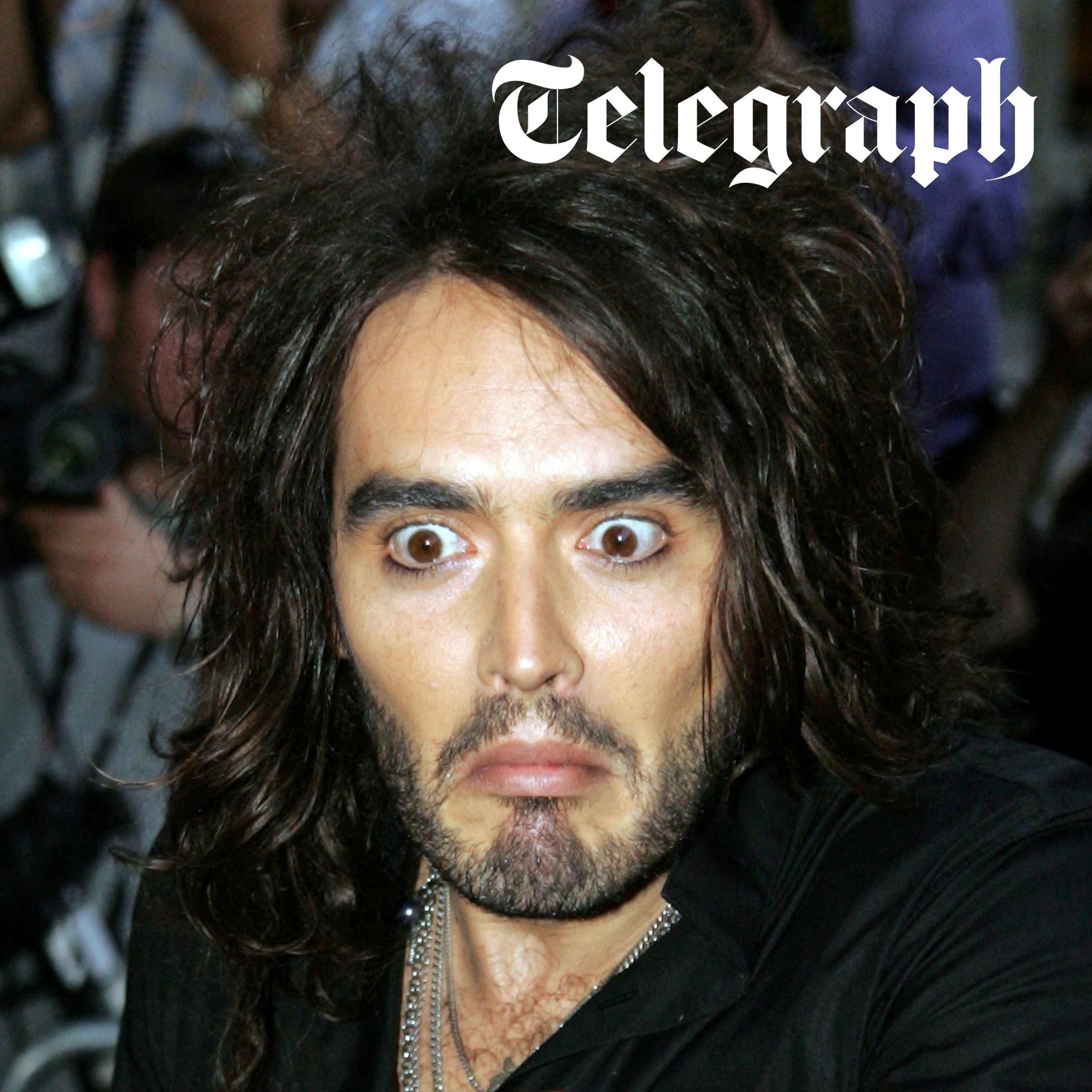
As the country goes to the polls in crucial local and devolved elections, The Daily T asks: Is Zack Polanski a foolish ideologue, a dangerous charlatan, or both?
Polanski recently shared a social media shared a social-media post criticising the police’s conduct when arresting a man suspected of stabbing two Jewish men in Golders Green. As his personal poll rating tanks, Camilla and Tim explain why Polanski’s position on anti-Semitism and the growing Islamist support for his party make him a danger to Britain.
Later, Sir John Curtice, Britain’s favourite pollster, tells The Daily T that Labour is facing its worst-ever result in London and the election of more pro-Gaza independents is “almost inevitable”.
We want to hear from you! Email us at [email protected] or find @dailytpodcast on TikTok, Instagram and X
► Sign up to our most popular newsletter, From the Editor. Look forward to receiving free-thinking comment and the day's biggest stories, every morning. telegraph.co.uk/fromtheeditor
Producer: Georgia Coan and Lilian Fawcett
Senior Producer: John Cadigan
Executive Producer: Charlotte Seligman
Video Producer: Will Walters
Studio Director: Meghan Searle
Editor: Camilla Tominey
Highlights
Hosted on Acast. See acast.com/privacy for more information.


