
 Ask ChatGPT



In this episode of The Daily T, Camilla Tominey and Jacob Rees-Mogg discuss the recent apology made by Sir Jim Ratcliffe, co-owner of Manchester United, who described the UK as “colonised by immigrants.” The episode explores themes of immigration, political hypocrisy, and the burden of student debt in the UK.
Written by AI. May contain mistakes.
Exploration of Jim Ratcliffe's comments on immigration and the Prime Minister's reaction.
“Jacob, before we get into the serious matter of whether Sir Jim Ratcliffe should apologise to the Prime Minister for offending him about comments about immigration, Wuthering Heights?”
Analysis of integration challenges related to immigration in the UK.
“So, billionaire founder of INEOS, we should say that it's disappointing he's no longer in the country paying tax here.”
Debate on Ratcliffe's apology and its implications on freedom of speech.
“People are suggesting a degree of hypocrisy.”
Critique of Keir Starmer's demands for an apology and political consistency.
“We also learn, Jacob, that the FA are going to now investigate whether the comments have brought the game into disrepute.”
Discussion on the stability and longevity of current political leaders.
“I think we've had two dead cats in the last 48 hours.”
Analysis of potential Labour leaders and their political viability.
“And so you'll have next week, week after, he'll be looking steady.”
Explore the complexities of political leadership and the historical context of flawed politicians.
“Some people who you think won't be great prime ministers turn out to do it extraordinarily well.”
Discuss the impact of political decisions and public perception within the Labour Party.
“This is David Miliband, Michael Portillo, Rab Butler.”
Evaluate the implications of judgment in political appointments and the principle of innocence.
“Because we have the growth stats out today, 0.1%, Jacob.”
Examine how the courts influence political accountability and decision-making.
“You are innocent until proved guilty in this country.”
Discuss public frustration regarding governability and the quality of political candidates.
“And I think he was foolish to campaign for an independent.”
Debate the need for constitutional restoration versus reformation in modern governance.
“I'm not sure whether there's necessarily the cut through that she wants on the country crediting her with landing the Mandelson blow.”
Analyze the implications of student debt and the value of higher education.
“They're there to say, was this a legal decision?”
Learn about the Retail Price Index and its impact on student loan interest rates.
“and it would be better if they shut down.”
Hear personal anecdotes about student loans and the burden of debt.
“So for those not studying maths at either school or university, I'm going to break this down into language we can all understand by citing some of the accounts of our team.”
Discuss whether the cost of higher education is justified given the debt incurred.
“What's the point of going to university if you don't earn enough?”
Explore the role of universities in providing scholarships and support to students.
“But saddled with 50 grand worth of debt before you've even started on a career, and you're trying to get a car, and you're trying to get a house and all the rest of it.”
Examining the implications of foreign students taking loans and university funding.
“huge numbers of scholarships that they gave out.”
Analyze the job market for graduates and the necessity of a degree for employment.
“One of the advantages of Brexit was that we didn't have to allow European students to be funded by the British taxpayer when they went to British universities, which whilst we were in the EU, we had to do.”
Debate the necessity of degrees versus skills for various professions.
“You don't need a degree to be in this newsroom.”
Explore the debate on whether practical work experience can outweigh the need for a university degree.
“He didn't care if you were graduate or not.”
Discussion on how to guide children in their education paths based on their individual ambitions and abilities.
“and that your education matters because it keeps your options open.”
An exploration of the apprenticeship system and its effectiveness in balancing work and education.
“If they just said, I don't want to go to university because I want to go around the world, I wouldn't think much of that.”

Get the gist, explore an idea or ask about something said.
 Claude
On The Daily T, what are the key points of this episode?
Searching your listeningAutomatic transcript. May contain errors.
0:02The Telegraph
0:09Jim Ratcliffe has apologised for what the Prime Minister described as offensive comments about immigrants. But who is the Prime Minister to ask anybody to apologise for anything? And with university students racking up on average 50 grand's worth of debt, we're going to expose this government interest rate scandal. It's an interest rate racket and people should only go to university if it's worth their while financially. Welcome to The Daily Tea with me, Camilla Tomini. And me, Jacob Rees-Mogg.
0:48Jacob, before we get into the serious matter of whether Sir Jim Ratcliffe should apologise to the Prime Minister for offending him about comments about immigration, Wuthering Heights? Wuthering Heights. Would you go and see it? Almost certainly not. Why? It's not a James Bond film. Does one go to the cinema for any other film? What about you? Have you been? Are you going to review it? I'm quite interested in the unique talents of the leading man, Jacob Allordi, who is quite, you know, what's the word? Easy on the eye. OK, if you say so. But there's some criticisms that it's been sexed up. Right.
1:24Have you read it? I haven't, actually, no. Oh, so you're not familiar with some of the sauciest scenes? No, I'm not, no. Also, they seem to have given it what's been described in the office as a BDSM feel. Do you know what I mean? I know the BSM because I learned to drive with them many years ago. I don't know if they still exist, the British School of Maturing. And they had an office in Baker Street and I used to go out there. And I would then go and drive around nearby places with L plates on. That's not the acronym that applies here. Is that not the one that applies here? But maybe we just draw a line at that thought.
1:58All right. It's probably best that you're not familiar with BDSM at this stage. Let's motor on then. Oh, excellent, yes. Into a conversation about Sir Jim Ratcliffe. So, billionaire founder of INEOS, we should say that it's disappointing he's no longer in the country paying tax here. No, it's not. Our tax rate's too high. Of course he's gone. I mean, nobody in their right mind has any money staying. We are ruining our country by high tax rates, by lunatic attacks on non-doms. We want rich people to be here. Yes. But if we price them out of being here, they will go. And what he's doing by not being here, by living in Monaco, is showing market forces at work.
2:35And governments have to recognise market forces apply and they can't just confiscate people's money, which this socialist rabble want to do. All right. Well, let's hear Sir Jim Ratcliffe give one explanation for why he's escaped this socialist rabble. At the moment, I don't think the economy is in a good... You can't afford... You can't have an economy with 9 million people on benefits. and huge levels of immigrants coming in. I mean, the UK is being colonised. It's costing too much money. It will cause... It's being colonised. It'll cause... The UK is being colonised by immigrants, really, isn't it?
3:10I mean, the population of the UK was 58 million in 2020. Now it's 70 million. That was comments he made to Sky News. Immigrants have colonised the UK, Jacob. Discuss. Well, it's a very interesting way of putting it, isn't it? Because this is almost always true of new arrivals in a country that they tend to live together in the same area. Yes. And sometimes these areas change. If you look at St. Paul's in Bristol, you've had a variety of communities that have lived there, then moved out and new communities have come in. You could call it ghettoization, which certainly happens, or you could call it colonization.
3:50I think the choice of word is less important than what it's reflecting, that integration takes time. I think integration is a thoroughly good thing. You want new communities to integrate. But it takes time, sometimes generations. And it is the underlying problem with very large numbers coming into this country in a short space of time. It's integration doesn't happen. So what he's highlighting to my mind is the lack of integration and the problems that that has created. Is he in a position to say it if he's now no longer residing in the UK? Do you have any views on US politics? Yes, I do. Do you ever mention them?
4:26Sometimes, but I am paid to do that. It's an occupational hazard, Jacob. If you weren't paid, don't tell me. Well, OK, fine. People are suggesting a degree of hypocrisy. He's now opining the state of things in Britain while he's escaped in Monaco, enjoying life in a bird's-eye view of the Grand Prix. But I think this is a view taken by people who have no arguments. So they say, not that I disagree with what you're saying, not that I think what you're saying is factually wrong. You simply haven't got any right to say it. It's a failure to engage with the important point he is making, rather than just dismissing it because he doesn't live here anymore.
5:02He's got, everyone's got every right to have a view on this country. And we've then got every right, surely, to disagree with it. Hang on a minute, Jacob. Breaking. Ratcliffe has apologised over his choice of language. In a statement, the Manchester United co-owner, I should have said that earlier, as well as Ineos, he's got a stake in the Reds. I'm sorry that my choice of language has offended some people in the UK and Europe. He added, it is important to raise the issue of controlled and well-managed immigration that supports economic growth. Oh, what a wetting. He didn't need to do this. No, of course he didn't.
5:34Also, it's a worse type apology. It's a non-apology apology. I'm sorry if it offended anybody. You can't say anything if you're sorry that it offends anybody. You have to become a Trappist monk. That's just very silly of him. It doesn't help. It makes him look weak and is grist to the mill of his critics. We also learn, Jacob, that the FA are going to now investigate whether the comments have brought the game into disrepute. His eye-wateringly stupid. I mean, just who do they think they are? Freedom of speech is much more important than that. And football is a game where you read every day about association football players having 15 mistresses and all the things that go on, all the shenanigans.
6:16Yeah, go and investigate that, exactly. And they bring the game into disrepute. Honestly. It's not a maiden aunt's knitting circle. They've got to grow up. Telegraph reader Chris Powell sums up the kind of hypocrisy at the heart of Keir Starmer's demand for an apology. He writes, Starmer said only last year this is becoming an island of strangers. He's used this language. This is absolutely right. But Starmer is an old humbug. I mean, he says one thing, does another, then says the other thing the next day. He's neither consistent, nor is he straightforward about these things. But Ratcliffe should not have apologised.
6:49It's a silly thing to have done when he was making a perfectly fair point, as we discussed earlier. What moral standing do you think the Prime Minister has to criticise anybody at the moment or ask them to apologise when he's been the supporter of, the appointer of, the defender of somebody who's great mates with a paedophile. Yes. Until it all got found out. And he didn't care until it was found out. And this is very interesting because Starmer thought appointing Mandelson was a risk worth taking. He knew the issues and thought that Mandelson was clever enough, subtle enough, Machiavellian enough to be able to do a good job as US ambassador, our ambassador to the US.
7:30He only minded when he was caught out and it looked as if that balance of judgment was wrong. Therefore, he can't take the moral high ground. I mean, I think this is wonderful distraction territory to get away from the Labour peer here. Oh, do you think this is a dead cat? I think we've had two dead cats in the last 48 hours. One from Gordon Brown saying that the former Prince Andrew who should be prosecuted, and then one from Starmer attacking Ratcliffe. They're trying to get away from the thing that Brown gave Mandelson his peerage and Starmer made him ambassador and then gave a peerage to this funny fellow from Scotland.
8:05While I've got the benefit of your wisdom on all of this, I mean, you were up close and personal to Boris Johnson in his end-of-days era. How does this feel by comparison? I know you're spectating from the outside at the moment. I'm spectating from the outside. It feels very similar in all sorts of ways. A lot of the supporters of Keir Starmer are very relieved that they got through Monday. Yes. I remember days when I felt very relieved that we'd got through, if you know what I mean, that we got through a day and it looked as if the prime minister would be safe. And then something else comes and then something else comes.
8:41and fortunately because we are not regulated in the same way as on-air broadcasters we can talk about by-elections, can't we? Yes, we can. Thank heavens because we can't on GB News. We have no free speech in this country. It's outrageous. I cannot talk about by-elections. We have to list all of the candidates including the raving monster loonies and all the rest of it. You don't have to on a podcast. You don't have a podcast but we do on the shows. I agree with you. So you can't say anything. No, but you speak freely about the Gordon and Denton event on February the 26th. Which is going to be a disaster for Labour.
9:12And if it's a disaster for Labour, then look what happened in the by-elections that hit Boris. It just adds to the pressure and it keeps on coming. And so you'll have next week, week after, he'll be looking steady. Then the by-election comes and it's calypso-collapso again. So it all looks very, very similar. But isn't it, if we look back at the Johnson era and what finally sort of hammered the final nail in his coffin, It's cabinet dissent, it's cabinet resignations. It's being at the helm of something that is completely ungovernable. It's the personal ambition of people who want your job and they always have that and finally they organised.
9:53But why would you want it even between Gorton and Denton and the locals? You wouldn't, would you? You wouldn't, no. No, it's a poison chalice. It's a hospital, you know, Wes Streeting trying to get waiting lists down. He's going to accept a hospital pass, pardon the pun. He's not going to do that. But isn't it interesting that it seems to me that Starmer got through Monday and the person who had the worst Monday was West Streeting, that his stock has collapsed. The person whose stock's gone up is Ed Miliband, who seems to be so politically adept at the moment. He gave a masterful interview. Are you sure about what you're saying?
10:29His interview to the Today programme was a masterclass in how to be loyally disloyal. disloyal. So he backed the Prime Minister, he said change was a bad idea. He then carefully reminded everybody that he hadn't appointed Mandelson when he'd been leader of the Labour Party. And he got the big point that the nation at large is angry and feels democracy isn't working for them. It was a really clever interview that he did. Very impressive political work of art in its way. This is high praise. Tim Stanley suggested on an earlier Daily Tea that what Ed Miliband had succeeded in doing is saying to Labour MPs and indeed the country, we're on the precipice, but actually that the abyss that we were staring into was the prospect of Ed Miliband taking over from Keir Starmer.
11:18And actually Labour MPs and cabinet ministers thought things can only get worse. This is not the direction of travel. We cannot possibly abandon this decent but hopeless politician in favour of a bacon sandwich munching, Edstone carving failure. The question is, is Labour just less ruthless than the Tory party? I mean, I don't know, because the Tories get rid of leaders the whole time. Yes. But Labour has had a tendency to stick to their leaders, even when they've been pretty hopeless. And I just wonder whether history is repeating itself. So do you think then, as a consequence, regardless of him being a dud, that Starmer goes the distance?
11:59I think the distance is a long time. The distance is three years. People forget this. I'd be really surprised if he went to 2029. I think he gets the local elections. But where do you think he goes? Where do you think the end of this is? And does it just require somebody to pull the trigger, one of the contenders, to say, look, this is enough? But all of the contenders are flawed. I mean, this is a problem generally with politics, and I think this is why the public is so frustrated. why are there so few people of great character left in the House of Commons that we could actually sort of pin our hopes on?
12:34Appreciate there's huge support from Nigel Farage, but just cast him aside and just look at Labour right now. We spoke to Carl Turner earlier in the week. We've spoken to Rosie Duffield. OK, no longer in Labour, but affiliated to Labour. And both made the point that the other rivals are flawed. Wes Streeting and his historic relationship with Mandelson, as you've pointed out, is going to come back to haunt him. Angela Rayner, well, she's currently the subject of a tax probe. Her woman of the people status has been squandered on the altar of her seaside flat. Ed Miliband, we've just discussed his deficiencies.
13:09There's a reason why he was a laughingstock. His resemblance as well to, is it Gromit or Wallace? I can't remember, but I know what you mean. Yes, is actually uncanny because he's lost a bit of weight and is looking increasingly like that Nick Park character. Shabana Mahmood. OK, actually, solidly, blue Labour. Has she been an absolute great leader of reform? Yes, but the left-wing... Won't have her in a million years. Won't have her in a million years because she's far too socially conservative and on immigration far too tough. Who am I missing out? Oh, Al Karnes, who nobody's heard of or could pick out of a line-up.
13:46No. I just... I can't suggest anyone else. I think you never know whether anyone's going to be any good as prime minister until they get the job and that it then tests them quite quickly. On paper, Gordon Brown should have been a very good prime minister. And in the end, he couldn't do it. Some people who you think won't be great prime ministers turn out to do it extraordinarily well. I'm Margaret Thatcher, actually, who people had huge doubts about and turned out to be a great prime minister. All politicians always throughout history have been flawed. We could have had this conversation about every contender for the leadership of any party at any time.
14:21I think the streeting thing is fascinating because he has so clearly been setting himself up for this for years. I loved one particular release of his text messages to Mandelson, which was his sort of carefully prepared statement for future public release on the state of Palestine and whether it should be recognized. that was clearly drafted with the idea of publishing it when he wanted to stand for leadership to show that he'd always been on the side of the pro-Palestinian lot. This is a proud member of the Labour Friends of Israel, by the way. It was very funny. And unfortunately, he's prepared himself for it so much that he's then lost the killer instinct to get it because actually he needed to do something on Monday.
15:05Yes. He should have moved. He had to move. This is David Miliband, Michael Portillo, Rab Butler. He's in that category of people, I think Roy Jenkins as well, who it's there for them to get. Yes. But they're just not quite ruthless enough and it never comes back to them. Interesting. So he's out. Angela Rayner, I completely agree with you. You can't have got rid of a prime minister because he appointed somebody who was dodgy with somebody who has any element of dodginess in her background. I think the country would be furious. Yes. Well, the Labour membership would be happy, but that's not representative of the country as we well know.
15:43Are the Tories doing well enough in securing advantage in the face of these calamities? Because we have the growth stats out today, 0.1%, Jacob. I mean, apparently we're meant to be celebrating 0.2%. It's a downgrade. It's terrible. We got a statement from Sir Melstride, the shadow chancellor, and it's kind of like, oh, well, this is very disappointing. And by the way, citing, streeting, saying to Mandelson in those leaked messages, we have no growth strategy at all. I mean, I personally think that could have been weaponized much more strongly by the opposition. But there you have it. I don't know.
16:23No, Kemi Badenok deserves a lot of credit for finding the smoking gun the week before last at PMQ's, getting Starmer to admit, yes, I did know that Mandelson had maintained a relationship with a convicted paedophile and appointed him anyway. She had him on the ropes with Matthew Doyle this week again. Matthew Doyle, the former head of Downing Street Comms, knew that the friend that he campaigned for, Sean Morton, had been charged. Charged is important. You are innocent until proved guilty in this country. Would you campaign on behalf of somebody who'd been charged with possession of indecent images of children, Jacob, as a father of six?
17:05I'm not saying that. I'm saying something slightly different. The principle of innocent until proved guilty is until the jury's come back and said you're guilty. It's not until the police arrest you or you're charged. And it was against Labour Party rules I'm less concerned about that. I just wonder whether we are undermining the principle of innocent until proved guilty in our desire to go for Keir Starmer. A desire I share. And I'm not sure I've been entirely consistent on everything I've said about this either. But I think we ought to think about the innocent until proved guilty point. OK. As a law graduate, and by the way, we're going to get on to student debt in just a moment.
17:46I agree with what you're saying. Having said that, doesn't the same maxim apply to him allowing Matthew Doyle to be elevated to the House of Lords? It's the point about what did you know and when did you know it? You were told because the Sunday Times reported that he had campaigned for somebody who had been charged with these offences. You had this information. You promoted him to the House of Lords because it was almost like a little consolation prize. We don't want you as director of communications anymore, but here's a nice plum seat and you can clock in and out for 371 quid a day. Let's not get into names, but I know and knew quite well two Tory MPs, one of whom is accused of a serious sex offence, is arrested, charged, prosecuted and found guilty.
18:37Another who was arrested and never charged and then completely exonerated. Now, I was willing to believe their denials until the point at which somebody was found guilty, at which point you believe the courts. Yes. And in one case, I was right to believe the denials. In one case, I was wrong. But was that for me to judge or for the courts to judge? And I think with the Doyle case, he didn't campaign for somebody who'd been found guilty. With the Mandelson case, he was trying to get money out of somebody who had been found guilty of the nastiest type of sex offense. And I do think that's a different order of magnitude.
19:22I think Doyle showed bad judgment. And I think he was foolish to campaign for an independent. I would only campaign for conservative candidates because I'm a loyal party member. But the offender wasn't guilty at that point. And the offender was no doubt saying to Doyle, well, I never did this. I very much doubt he was saying, I am as guilty of sin. I committed all these hard crimes. It's a judgment question for the prime minister. This is a man who has staked his entire career on his legal career, the fact that he weighs things up according to the evidence before him, the fact that he has to be a good judge of character because he was a former director of public prosecutions.
20:00Keir Starmer can't have it both ways. He can't capitalize on this illustrious legal career and then say that it's unfortunate that he has shown a series of bad errors of judgment. He is a terrible judge of character. That's a really fair allegation to make against him. I actually did this on my YouTube thing because he appoints so many people who turn out either to be dodgy or useless. He's not appointing good, capable people. So you've got nearly half a dozen people who've had to resign because of dodgy links. and then you've got four head of communications in Downing Street in 19 months. We're on to the third chief of staff who isn't yet appointed because neither Sue Gray nor McSweeney worked.
20:45It's this absolute failure to appoint key people around him who then work to his agenda. So you're absolutely right about that. His judgment is terrible. Although his counter-argument to that at PMQs on Wednesday was, well, look at the Tories' record. You had whatever it was, 15 housing secretaries. you had a huge turnover of staff. And I include your leaders in that. It is absolutely true. And I think there's a deep problem on this. I'm worried about the cabinet secretary going. Oh, Chris Wormald. We've got a lot of briefing going on in favour of Antonio Romeo. And then some against her too. I see that one of the former cabinet secretaries has come out.
21:22I think it's on the front page of your paper. Anyway, in the first 82 years of the existence of the role of cabinet secretary, there were seven cabinet secretaries. In the 28 years since, there have been seven cabinet secretaries. So this is really interesting about how the state is governed, that we've had this extraordinary turnover of prime ministers, chancellors of secretaries of state, that retired secretaries of state used to be big figures. Well, now you can't walk along pall mall without bumping into about half a dozen of them. Yes. We are to a penny. And that's now happening in the civil service too.
22:02Yes. And that means there's no continuity. There's no bank of knowledge about how the country's governed. The cabinet secretary matters because the cabinet secretary, the prime minister's private secretary and the king's private secretary are the sort of magic circle guardians of the constitution. Only one of them has been imposed for any length of time at all. Yeah, you're talking about Clive Alderton. I am indeed, who knows what he's on about. Who's the king's private secretary. Who's the king's private secretary, who is very capable. But you've therefore only got the King's private secretary of the three in the magic circle as the arbiter of the constitution.
22:34That's not how it should be. But then can you understand, therefore, the public's complete and utter frustration? I mean, I think this growing fear that the country is ungovernable is perfectly legitimate. We can't get a prime minister to go the distance. The quality of the candidate doesn't seem to be there. We can't find alternatives. people are hankering after seemingly as far as the polling is concerned Prime Minister Nigel Farage got no evidence at all that he can actually run the country he can campaign very well we don't know if he can govern Kemi Badenoch is almost the only clean skin in the game in a way and actually some of the polling Luke Trill from More in Common has come out with some polling to suggest that she her popularity now transcends that of the conservatives because she's being rewarded for increasingly good performances at PMQs and she should be credited with that.
23:30I'm not sure whether there's necessarily the cut through that she wants on the country crediting her with landing the Mandelson blow. You know, that's all getting lost in the ether. Yes. I mean, I think this is very important that I think the country is governable. I think all our constitutional structures work, but you've got to do a lot of clearing up to get rid of the post-Blair vandalism to the Constitution that has handed powers over to the unelected and taken it from the elected. And that if the elected are making decisions and say to the public honestly, look, there are hard choices. Do we spend more money on this or do we put taxes up?
24:08Do we spend more money on welfare? Do we cut taxes? Do we spend money on welfare or defense? We explain the choices are difficult. I think the British electorate's pretty grown up. I don't think it expects everything to be roses all the way. And how do you do that? Well, you get back to governing through the king in parliament. You get back to our proper constitutional processes. You get rid of the quangos. You stop the courts making up policy rather than ruling on what the law says. We have a disgraceful situation where the courts now replace ministerial decision-making with their own decisions.
24:39That's not what they're there for. They're there to say, was this a legal decision? Not to say we don't like it. Let's not even get onto trial by jury being scrapped and also this extraordinary decision to delete this court database that Nick Timothy and others have highlighted, which the government seems to be denying. But a great many civil liberties campaigners are saying this huge tranche of information relating to historic court cases is about to be scrapped. Nobody can quite work it out. But when you speak, I mean, you're obviously by definition a conservative. You want to conserve. The alternative view on the right is reformation, rip it all up and start again.
25:15I sometimes see you in that more the latter category. Do you see what I'm saying? You are a bit of a kind of like, right, tear up all the legislation, start from scratch, government's not working, and yet you call yourself a conservative. I am. I'm a 1660s conservative. You see, I'm really quite modern. That it's a restoration. Restoration, not reformation. That's right. It's a restoration of how the Constitution used to work until, you can argue whether it's 1972 or 1997, until we decided to vandalise our constitution and replace it with a crypto-European constitution, which we've got bits of and we've still got bits of our own constitution, and that isn't working.
25:53That sort of grafting one onto the other has failed. It's human rights law. It's all that sort of nonsense that doesn't work in the confines of a common law constitution. That's what we need to get back to, but it is a restoration. It's not a reformation. It's not revolutionary. I tell you what we need. We need some very talented university students to put themselves forward as MPs and in order for them to do that, they probably could do without being saddled with tens of thousands of pounds of debt. Shall we discuss student debt next? That was the most brilliant and elegant move from one subject to another.
26:29Fantastically done.
26:42Jacob when you went to university back in 1806 was it? Oh I think Oxford was just founded when I was there. You were writing with quills on parchment. Definitely yes. When you went to university was debt ever an issue for you? No student loans came in in my last year I think the small student loans for accommodation and things like that but no the student loan programme hadn't really started and you got a grant from your local council that paid the fees. And now we have students protesting outside Parliament. They were dressed as sharks yesterday. They had masks on of Rachel Reeves, although it was notable because one of them addressed Politics Live, which I appeared on, that they were blaming the Tories for their woes because you, along with the Liberal Democrats, did triple tuition fees.
27:31Is it all your fault? Tripling tuition fees was a sensible and bright thing to do. Oh, Jacob, come on. Oh, yeah, I was. Students get a huge benefit from going to university. The problem is the interest rate, and the interest rate is crooked. Yes. That's the thing. I have no objection to students paying their way. I think it's quite right. I also think students should think carefully about whether it's worth doing, whether it's a financial investment that they want to make. I think there are a lot of universities that don't provide good value for money, and it would be better if they shut down.
28:03There are a lot of universities that are dependent on mass migration to keep them going. If they can't make the sums up without mass migration, they should probably go out of business. So I think you have to look at whether there's value for money, but that is a decision for the student, not for general taxpayers. But it's this RPI plus 3%. Yes, explain that to me. OK. The retail price index is a price index that has been abandoned for almost all government activity. Most things are index linked to the consumer price index. The RPI includes mortgage interest rates and all sorts of strange things that have been taken out of the CPI.
28:43And then to add 3 % on it means that the government is actually making a margin if it ran the interest book itself on the government cost of borrowing against what they're charging the students. And this is the bit that seems to have made it go wrong because the students never seem to pay back their debt because they're always paying the interest. Because what is RPI? RPI is probably about 4 % at the moment. I mean, I'm slightly guessing. But that means you've got a 7 % interest rate. Factors of 70 double. Therefore, your underlying fee over 10 years has doubled roughly just on the interest. So for those not studying maths at either school or university, I'm going to break this down into language we can all understand by citing some of the accounts of our team.
29:30So the team here at the Daily Tea is slightly younger than me. Not that much younger, but slightly younger. There must still be a school if they're younger than you, Camilla. You can age me by my revelation that when I was at university from 96 to 99, like the prime minister studying law at Leeds, I remember my father saying to me, take out a student loan because it's the cheapest debt you'll ever have. And I did so to pay for my expenses and all the rest of it. I didn't have to pay fees. They came in just after I left. I looked it up. The student loans company was set up by Margaret Thatcher back in the day.
30:05originally the loan was about£309. My NatWest statements don't go back far enough but I do remember that initially the loan was interest free then I started a job at the Hemel Hempstead Gazette on£10 ,000 a year. After a couple of years I qualified for the repayments and I think from rough memory I paid back this debt that I can imagine wasn't more than£9 ,000 in total after I married at the age of 27. By comparison, here are some of my colleagues' stats. So example one, a colleague undertook an undergraduate degree and graduated in 2021. They have got £58 ,927 worth of debt. They've so far paid off£919, but the interest added is£1 ,667.
30:55So even though they're trying to pay down this debt, the interest is racked up. Example two, again, an undergraduate degree, graduated a year later, 2022. £70 ,455 of debt, paid off£795, interest added,£1 ,984. Let's give one more example because we're seeing a theme here, Jacob. undergraduate degree and master's degree finished studying in 2021 uh-oh 92 432 pounds of debt paid off 2 401 interest added 2 889 okay i'm just looking at the first one just did a quick calculation on interest if i'm right about rpi being about four percent yes then you're talking about 7 % interest, which is over£4 ,000 a year of interest cost.
31:54Now, if you said that instead they should pay broadly base rate, the government's borrowing cost, you've got£58 ,000. What is it? It's 3.75 at the moment, isn't it? Yes. And so you're talking about£2 ,175. So the interest The gross rate cost is about double what it fairly should be because this debt is secured by the government. Ultimately, ultimately, the government will pay it if you can't. So it's got a government guarantee. If I lent you money. Yes. Can you? No, I wish I had any to lend. You have got quite a lot. But I wish I had. If I were to lend you some and you got the government to guarantee it.
32:34Yes. I ought to lend to you only very, very fractionally above the government. Yes, because I've got the guarantee. Government is my guarantor, although having said that, the latest growth rate stats. Well, that's another point. Whatever. OK, go on. But therefore, this debt is government guaranteed. Therefore, logically, it shouldn't be at a significantly higher rate than the government is paying. And therefore, you've got an extra£2 ,000 a year, for example, one that is being paid that is essentially unfair, which makes it almost impossible to pay down the debt unless you're a very high earner.
33:06Yes. So, of course, the debt can be written off if you never earn enough. Yes, but that's pointless. What's the point of going to university if you don't earn enough? That's right. And what's the point of having a system that's set up so that most of the debt gets written off? It's much better to get most people to pay their debt off than set such a high interest rate that nobody can afford to do it. And if interest rates are falling a bit now anyway, then you should see that£2 ,000 a little bit over that I was talking about come down. and then people begin to make capital repayments, which, as with your mortgage, brings down the interest repayment as well and you pay it all faster and faster and faster as the loan matures.
33:46Wouldn't the government rather have a lower interest rate and these debts repaid than have a higher interest rate and the taxpayer be saddled with half of the debts because they can't be repaid? Well, I think this is all to do with government accounting. It's very Gordon Brown-esque that you put it off the books. and you don't have to deal with the defaults until decades to come. So you have a pretense that it's not really government debt, it's not really happening, and therefore you keep the debt-to-GDP ratio down and you keep the annual deficit down. It's all to do with fancy accounting rather than the reality of the situation.
34:23OK, before we get on to discussing between us our nine children and how on earth higher education at this cost is going to be affordable, more of a problem for me than you I would hazard, Shall we listen to some students? Lillian and Will on our team, who may or may not be settled with student debt, went out to speak to some. I know that it stops after a certain number of years and you don't have to pay back after, what, 30 years. But still, that's not really fair because nobody gets to pay back. So they know that that money is going to be lost anyway. Why are they stressing us with the higher interest and all of that?
34:57I think it's so unfair and I think education should be universalised. and the government can do so much to subsidise tuition, but they don't and they continuously privatise certain things, they privatise accommodation, they make it harder for students to be on campus, they make it harder for international students to come as well, so everyone is kind of kicked out and it's only the people who afford, that have the privilege of studying here that can really coast by and not have to worry about the money. A few decades ago it was free and then now it's like more, and like third year for us going to be like 10k for the uni fees so i don't think it's really fair yeah exactly i would agree with her i would say that with the rising costs and everything it doesn't seem to me that uni is worth it for the price i'm kind of doing a masters mostly because job market's pretty tough at the moment so couldn't really find a job last year so decided to do a masters and still pretty tough job market so I'm hoping it opens doors but yeah it's kind of the addition of it being a tough job market means that a lot of people I know are actually in work or if they are doing work it's not really stuff they were looking to do after university they're working in bars or working kind of in call centres or something that's what I did last year so yeah it's a pretty broken system for young people at the moment.
36:15All of that begs the question, is it worth it? Curiously, we have a situation where on average, students have in England, at least£53 ,000 worth of debt. It's slightly lower in Northern Ireland and Wales, and in Scotland, where the fees are lower, okay. But saddled with 50 grand worth of debt before you've even started on a career, and you're trying to get a car, and you're trying to get a house and all the rest of it. Is it actually worth it. And what's interesting is applications have risen. So more people are applying through UCAS to get onto university courses. There is a direct correlation, by the way, with Tony Blair opening up a university for all and the cost of university soaring.
36:55We now seem to be entering a situation, I think, where am I being cynical or is the government actually making it more unaffordable to put more students off? And that's a curious thing for a Labour government to do, because of course the students that are disadvantaged are those who can't afford it i mean you do have a choice if you want it all paid for by the government by the taxpayer you need to get back to many few people going to university and i don't think that's a choice most of the vox pops we've heard from would wish to make this was the one way of making university affordable for about 50 of people to use i think the universities have responsibility themselves i think they should offer more scholarships.
37:39When the numbers were low, if you go back prior to the big increase in numbers, when fees fell upon students before local authorities had taken them over, universities had huge numbers of scholarships that they gave out. So the clever but poor could go to university. I think there's a role for that. I think the universities should also be free to charge whatever tuition fees they want. Really? Yes, you should allow it to be a market system. Yeah, but then surely Oxford and Cambridge would just charge more. Yeah, but you make more money if you've been to Oxford, Cambridge when you leave. It's a very sensible investment.
38:19Well, I mean, that is true. Although look at this as well, Vice-Chancellor pay. What I can't understand is how did universities survive before fees were paid? This has also coincided with universities claiming that they are in debt and deficit the whole time. Well, hang on. How did they fare before? And why are we now in a situation where, to quote Oxford, what do you think is the total remuneration paid to the vice-chancellor of your older university? Probably£400 ,000. £660 ,000? Yes. Are we saying that the vice-chancellor of a university deserves to be paid, what is it, four times what the Prime Minister is paid?
39:00Come on, Jake. This is insane. It doesn't make any sense at all. But of course, they set their own salaries. I don't mean the vice chancellor sets the salary for the vice chancellor, but they're set by people who work within it. And if the vice chancellor is the top salary in the university, if you are number two in the university or number 10 in the university, that sets the benchmark for what you will get. But why are they struggling so much? Not least because we've got more students going to university. OK, we've got more students paying fees. We've got more international students. Their course fees were an average of 45 grand last year.
39:35And by the way, The Telegraph this week did some research suggesting that foreign students are also taking out loans. And the loans bill has gone from 3.2 billion to 4 billion. Sorry, should foreign students be able to take out loans in the UK that they might not end up repaying? No, of course they shouldn't. One of the advantages of Brexit was that we didn't have to allow European students to be funded by the British taxpayer when they went to British universities, which whilst we were in the EU, we had to do. So they were allowed to take out loans as part of the system and they paid the UK level fees rather than the higher fees.
40:07So no, no, that's all crazy. And the fees are crazy. The cost base is crazy. You also have some not very good universities that give people courses that don't give them better salaries when they leave. There's a lot of evidence and statistical evidence on how the premium of a degree does not apply to all universities for all courses. And those courses are a cost and not a worthwhile one. Actually on that, so the most lucrative degree in the country is business and management at Oxford. The median annual earnings after five years are around 93 grand. Second highest hitter is computer sciences at Cambridge.
40:43Then at the bottom end of the scale, this disappoints me, is performing arts. OK, after five years, graduates made on average about 25 grand. But also journalism and media studies and communications is down there, which then begs the question. But you didn't do journalism, did you? No, I did law. But I didn't... In retrospect, I've discussed this with Nick Ferrari, who doesn't confirm nor deny that he rejected a place at Oxbridge, I think it was Cambridge, in favour of going to work for his father's Ferrari's news agency. But many people would have turned out a place at Cambridge, wouldn't they?
41:19Oh, listen to you. Just look, channelling your animus about the boat race in this Daily Tee studio. But regardless, now let's put it to you as a dad, because this is the other problem. With the advent of more children going to university, it then almost creates what I would suggest is a newfound grammar versus secondary modern career path. Many, many jobs are advertised graduates only. Some of them should not be putting that. If they are basic white-collar clerical jobs, you don't need a degree. You don't need a degree to be in this newsroom. Fraser Nelson famously used to recruit people on The Spectator on the basis of a psychometric test.
42:00He didn't care if you were graduate or not. Can you write? Can you punctuate? Can you have an opinion and express it clearly? Come and work for us. I completely agree with that. I think that all sorts of professions have decided to make it a quality assurance mark that has kept people out. This is what professions always do. It's like the guilds in the Middle Ages. You try and keep barriers to entry because you've got a barrier to entry. You keep wages up. It's all about glazed shops, restrictive practices. and you shouldn't have them. It should be up to employers to decide, do you need a degree or not?
42:32Is it essential for the work you're doing? I think going straight into work, as you say Nick Ferrari did, and he's a brilliant journalist and interviewer, he's almost as frightening as you are to be interviewed by, but nobody quite reaches that height. It's nicer than me, I think, slightly nicer. To go straight into it seems to me a really sensible thing to do, and that's why I don't object to the fees, because I think people need to think about it. Is it worthwhile? I know, but I'm saying that and I'm looking at you as a man who went to Eton, went to Oxford. All of your children are being educated to the highest level that this country provides.
43:07Little Sixtus turns round and says, Daddy, I think I want to go and work at the Telegraph. And they have an apprenticeship scheme as well as a graduate scheme. And therefore, I don't really fancy university. And I'm going to apply as an apprentice. What does Jacob Rees-Mogg turn around and say? He says, well done that man. Does he? Yeah, yeah, yeah. Are you serious? Yes, because I think what I say to my children is that it's all about keeping options open and that your education matters because it keeps your options open. It's worth going to university because it opens up more options to your future career.
43:43Yes. If you've got that option by getting an apprenticeship scheme, you've short-circuited it and you've got on with your life. Isn't that the excitement of life? When you were going to university, didn't you really want to get on with life? and that if you could have fast-forwarded by three years, that's quite an exciting thing to do. When you say that, some people go to university because they don't want to get on with life and they want three years dossing around studying classics. Yeah, but you wanted to get on with life, didn't you? Well, I did law. What did you study at uni? History. Did you have a busy schedule or could you have squeezed that history degree into one year, let's be honest?
44:13Oh, I had a busy schedule at the Oxford Union. You were one of those students that were doing their essays in the holidays and then peacocking around trying to establish the formative years of your political career. I've never been called a peacock before. Many things, but never a peacock. You may have slightly peacocked around the Oxford Union, be honest. I made the odd speech, but I don't think that counts as peacocking. OK, but people do go to uni just to put life off. Yeah, but I certainly wasn't in that category. I was very keen. I actually worked for the Telegraph during one holiday. I know.
44:45You worked, didn't you, on the diary? I worked on the City Diary. I worked on the City Pages, and I worked briefly for Quentin Letts. he was doing the City Diary. I was the most useless diarist you could imagine. Were you phoning people and going, oh, hello, hi, it's Jacob here? Would you mind awfully? Would you possibly mind awfully giving me some confidential information that I can share in a diary? I was so mad at it. But Quentin must have knocked you into shape, now the sketch writer for the Daily Mail for the uninitiated. He was very impressive then as he is now. Yes. So you're saying you're fine if any of these children...
45:16Yeah, yeah, yeah. I want them to keep their options open, so I want them to have something else to do. So you set it up as if one of them went into something. If they just said, I don't want to go to university because I want to go around the world, I wouldn't think much of that. But what about your children? What would you say to your three? Well, I think I need to make an assessment of it depending on their A-level results, then depending on their own career ambitions. I think highly academic children should be encouraged to study a degree because I think it would challenge them and help them to unleash their potential.
45:49entrepreneurial children that are self-starters and are just keen to own their first car and get a deposit down on their first home should probably be encouraged to go the perfect scenario and this actually has just happened to a friend of mine whose son who wasn't particularly academic but has gone into working life doing a degree apprenticeship and bless him has just graduated with a first and done exceptionally well in his three years working combining it with learning He's a success story. But are these apprenticeships available? I think that's the perfect scenario that you could get to study and work and earn and end up with a degree at the end of it.
46:25The trouble is I don't think there are enough businesses cooperating with that method. And you also need to make sure you don't fall into the trap of finding that the next job you want requires a degree. Yes. And that's the closed shop issue that you raised that I think you're right to be worried about. Jacob, thank you very much. We're both running to lunches, but we'll be delighted to welcome you back on The Daily Tea in the near future. Camilla, it's always a pleasure to join you. Thank you. I'll be back with Tim tomorrow with an exclusive interview with Sebastian Lai, son of Jimmy Lai, the British businessman who's been languishing in a prison in Hong Kong.
47:09Thank you.
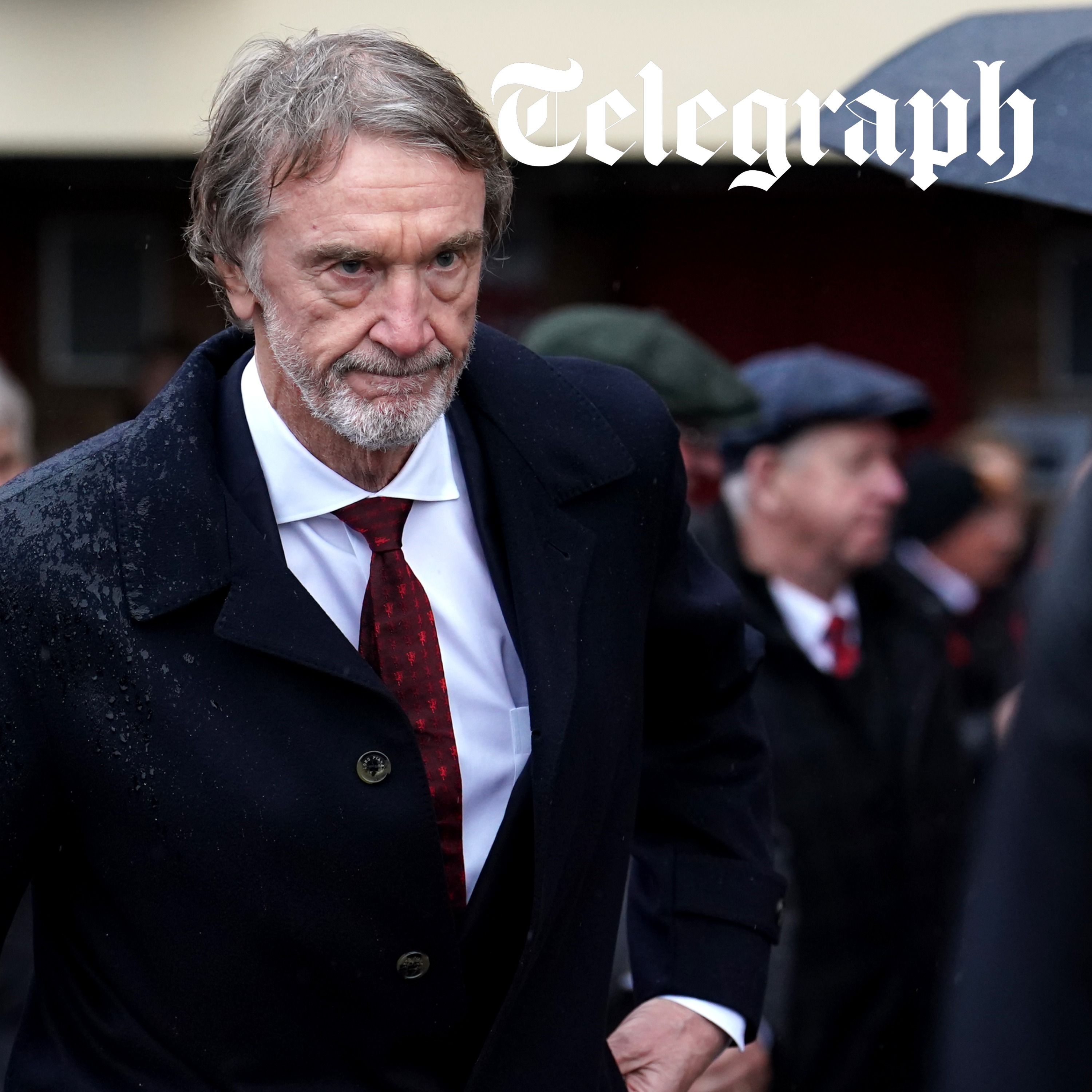
Manchester United co-owner Sir Jim Ratcliffe has been forced to apologise for describing the UK as “colonised by immigrants,” after Sir Keir Starmer described his words as “offensive and wrong”.
Camilla is joined by Jacob Rees Mogg, who says Ratcliffe is merely highlighting “a lack of integration” and that the PM is “in no place to moralise at the moment” after a series of scandals.
Elsewhere, the podcast speaks to students who are leaving university with an average of £53,000 worth of debt, a burden that Sir Jacob blames on the Government’s “interest rate racket”.
We want to hear from you! Email us at [email protected] or find @dailytpodcast on TikTok, Instagram and X
► Sign up to our most popular newsletter, From the Editor. Look forward to receiving free-thinking comment and the day's biggest stories, every morning. telegraph.co.uk/fromtheeditor
Producers: Georgia Coan and Lilian Fawcett
Senior Producer: John Cadigan
Executive Producer: Charlotte Seligman
Video Producer: Will Walters
Studio Operator: Meghan Searle
Social Producer: Nada Aggour
Editor: Camilla Tominey
Hosted on Acast. See acast.com/privacy for more information.


