
 Ask ChatGPT


 The Daily T
12 Dec 2025 · 42m
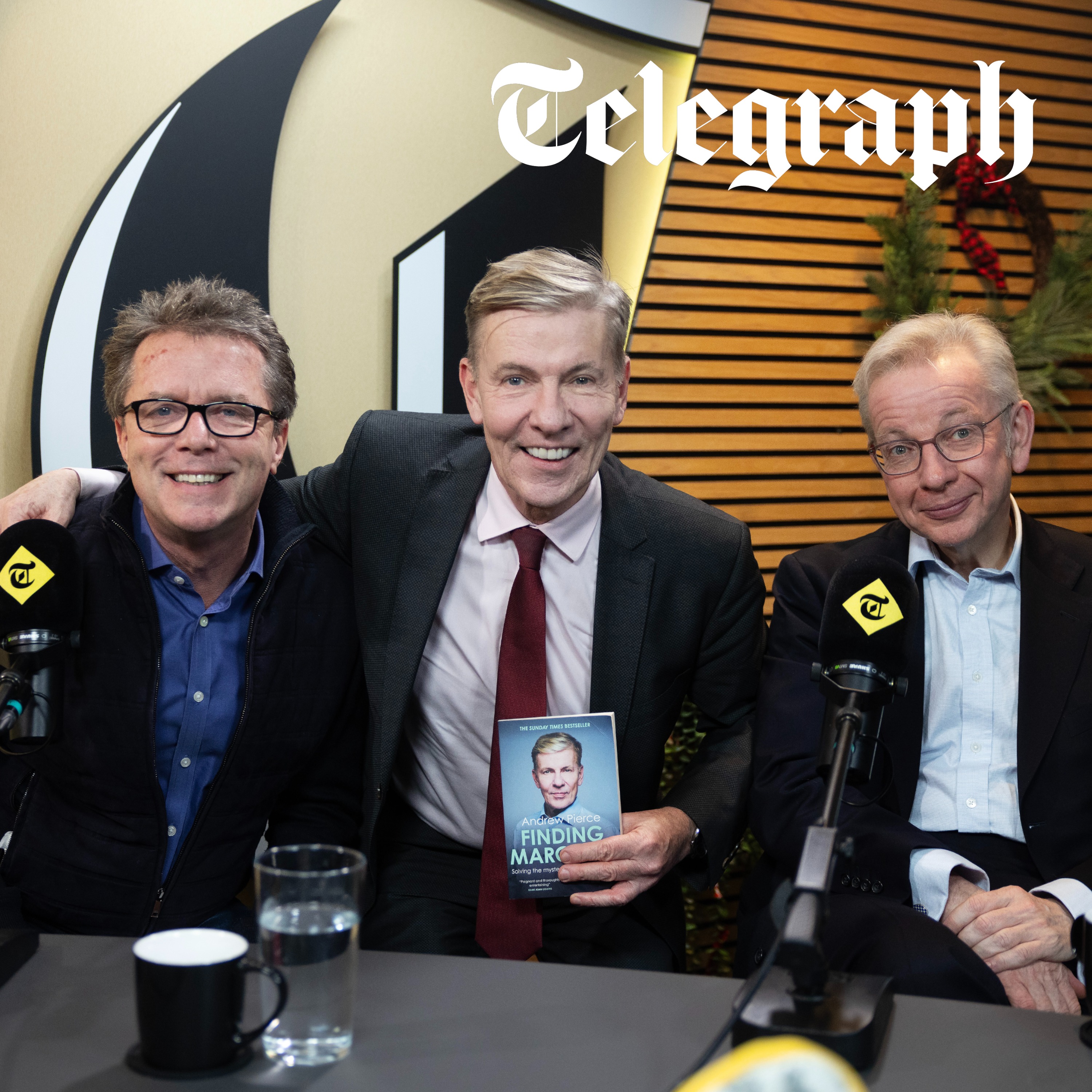
In this special episode of The Daily T, host Camilla Tominey speaks with three notable adoptees—Michael Gove, Nicky Campbell, and Andrew Pierce. They discuss their personal experiences with adoption, its impact on their lives, and how it has shaped their careers.
Written by AI. May contain mistakes.

Get the gist, explore an idea or ask about something said.
 Claude
On The Daily T, what are the key points of this episode?
Searching your listeningAutomatic transcript. May contain errors.
0:02The Telegraph
0:10What's it like to be adopted? How does it influence the choices you make in your life and your career? I'm joined by three famous adoptees, Andrew Pearce, Nikki Campbell and Michael Gove to talk about adoption and what it means for the children who are taken into the love and care of other families. Welcome to this Daily Tea special with me, Camilla Tomini.
0:40Michael Gove, let's start with you. Can you tell me about your adoption story? Yes, I spent the first four months of my life in care. I was given up for adoption by my mum. She was originally from Edinburgh, but she was studying in Aberdeen to be a cookery demonstrator. And I don't know anything about my father, but I do know that I was given the name Graham Logan, Graham Andrew Logan, I've got the same middle name. And I was then with an adoption agency for those first four months in Edinburgh. My mum and dad, as I think of them, as they are, were. Ernest and Christine had been unable to have children and they'd applied to see if they could become adoptive parents.
1:26They'd gone through a bureaucratic process. They'd been accepted. They traveled to Edinburgh. They saw me there. They said, or my mum said subsequently, that she knew that I was going to be their son at that point. And I arrived with them at Christmas, 1967. And I was brought up by them. My sister, Angela, was adopted five years later. She comes from, again, a different family. Her mother also gave her up for adoption shortly after birth. and Angela, again a different mother, was also born in Aberdeen. I remember Angela arriving as a five-year-old. I remember her being bathed in the same metal, same tin bath I'd been bathed in.
2:14I remember also my mum telling me that when I arrived I was covered in eczema and they bathed me in milk in that tin bath in front of the fire. And for as long as I can remember almost, I remember the knowledge that I'd been adopted, that it was different, not wildly different, but different from most other children. And it wasn't an issue. It certainly wasn't a stigma, but it was something of which I was very aware. And did your mother telling you that you were adopted, I think, at the age of five, coincide with Angela's arrival? Exactly. Right, because there's a wonderful quote. She said something very, very sweet to you.
2:58You're different from other children because we chose you. Yes. And then what else did she say, Michael? She said, you grew in my heart, not under it. Which I thought was so... What a lovely thing to say to you about how you'd come to be a part of the family. Of course, you're not allowed to say, we chose you now. Why? Because it gives you a kind of a sense of being and existence that you shouldn't really, like, I'm the chosen one. Yeah. So that's been the road to our destruction, Michael, hasn't it? Yes. Thinking we're chosen. Yes, it certainly has been, yes. I think there'll be many people who'll be cursing the fact that at an early stage I was given that sense of entitlement.
3:40But just to clarify, was it a case that they went into the children's home and were given a choice? When you say your mother said to me, I knew that you were going to be my son, They already knew. The adoption had gone through. They'd been told you're getting a baby boy. Yes. And then they met you for the first time. Nicky Campbell. Sorry to have interrupted. Yes. It's just that there's so much commonality. Of course. There are so many themes. Yes. You were chosen and we knew that you were the baby for us when they went into that. We knew it was you. It was meant to be. There is this, I mean, doing Long Lost Family, presenting that, it's been like a field study over the past 15 years of experiences.
4:17And there's so much that so many of us have in common. Well, tell me about your adoption story. Well, my birth father was a policeman in Dublin who was 22 years old, a very committed Republican. My birth mother was a matron Protestant in Dublin, matron at a hospital. This was my daughter who just graduated from Oxford in history and she did the troubles. And she calls me a perfect microcosm of the troubles, having the north and the south, different divides. She was 36 years old. She was bipolar. So I think she had, and good luck to her, some wild escapades, which people who are, she was bipolar type one.
5:00She had some very serious illness throughout her life. I'm actually bipolar type two, which, and I feel that, I actually do feel that as a kind of connection to her as well, a kind of inheritance. And it has its blessings and it has its curses. But without going into that, she obviously being the matron at the Bagot Street Hospital in Dublin, she had these wild affairs with young policemen, two in particular, one with my birth half-sister Esther. She came across to Edinburgh. We were adopted into middle-class families. And this was, of course, 1961. Me and Michael, children of the 60s, so it was utterly unacceptable, utterly unfeasible and untenable for her to keep children in Dublin as a professional woman.
5:40And as we came across, I was very lucky. I was adopted into the most marvellous, wonderful family. Like Michael, they are not my, you know, they are my mum and dad. And it really irks me when people say, oh, have you ever traced your real mum? I said, well, my real mum is who I grew up with. Yes. Because that is a mum. A mum is a very specific word in my mind. Mother is different. That's, you know, birth mother. It's almost like a technical term. And I was told from ground zero that I was adopted. Do you remember a particular moment when you first found out? No, because I always knew it was taught in an age-appropriate way and I think I was very fortunate in the fact that my mum was a psychiatric social worker and so she kind of, for then, although it was very different now, she wouldn't say, oh, you were chosen now, but she knew exactly how to do it and what to do.
6:29And were you a baby as well, Nicky? Yes, I was. I was nine days old. When I did research into this, I was taken away at nine days old for my birth mother. She was absolutely distraught. And I was in a home for three months, I think, and then my parents came and said, oh, we knew it was you. That's when I had that. And then, I mean, I had the most incredible upbringing. I've always been, it's all ebbed and flowed with me. When I was a teenager, we had the whole thing when so many of us, I'm not your real child anyway, sort of rebellious teenager. Lots of difficulties along the way. Lots of joys along the way.
7:02And ultimately, I wouldn't change it for the world. They were great. They were wonderful. And I miss them every day. And for me, it was driven by curiosity, my search. But wonderful things came out of it. I think I often find this with people on Long Lost Family, that one of the most joyful aspects of the search process is meeting siblings or meeting half siblings because you've got kind of immediately more in common. A very quick story. It's only because Scotland have just qualified for the World Cup and it relates to that. Not that you wanted to mention it at all. Well, me and my friend Ian Glenn, later of the Game of Thrones, the actor, and another friend, Matthew, we used to congregate to watch the Scotland Games in the 1978 World Cup at my friend Matthew Sice.
7:43And when I met my birth sister, Esther, we used to, because we went to private schools in Edinburgh. That was sort of part of the deal, I think, for my mother, my birth mother. And so Edinburgh private schools, everybody knows people. They say, do you know such and such, do you know such and such? and then my birth sister said who are your friends I said well Matthew Crichton's a big friend of mine she said oh Julia his sister's a big friend of mine and Esther said well I stayed with the Crichton's over an entire summer in 1978 when my parents were abroad and I said well I was at Matthew's house every day in that summer watching the World Cup she said well and I remember the three of you I remember the three of you so you had crossed paths without knowing Yes, and I said, I remember Julia's friend.
8:28Good God. Yeah, we met. But that's so interesting because you were basically living parallel lives, just unaware of each other until much later on. Yes. You were both adopted as babies. Andrew, Piers. Hello. Hello. You were adopted when you were a bit older. I was three. Wow. Now, do you remember anything about before you were adopted? Intermittently. so I was born Patrick James Connolly in a in a children's hospital in Bristol my birth mother was an Irish Catholic nurse and all I knew as I was growing up I was adopted at three was that I was Patrick James I didn't know my surname until I was about 33 or 34 and I was doing a story for the times where I used to work and I was looking for somebody's death certificate and I thought why don't I look for my birth certificate because at the age of 34 I'd never seen my birth certificate Wow.
9:17And, of course, I looked for Andrew James Pearce on February 10th, 1961. There wasn't one. Baffling. Confusing. So I went to the man in the information and said, I'm really confused. He said, are you adopted? And I thought, is it the way I walk, the way I talk? What are you talking about, man? So he took me off to the little side room and said, are you looking under the name you are now? I said, yeah. What other name would it be? He said, well, you'll be registered in the name your mother or father gave you. I said, well, I don't know it. All I know is I'm Patrick James. By good fortune, there was one Patrick James, born on February 10th, 1961, and it was Patrick James Connolly.
9:54So there I knew my surname by process of elimination, and I confirmed what I'd always suspected, that I was Irish. And I think that's when I knew I was going to have to track her down at some point. And my dad, you see, mum and dad had three children, and they adopted one child, me. They came from a poor working-class upbringing. but dad had said to me before we disappeared into the twilight world of Alzheimer's he'd get a hold of my hand and say you know son you should find that your birth mother because she used to visit you in the orphanage which I didn't know. Yes we're going to get on in a moment to you and Nicky both tracing a birth mother but Michael deciding not to.
10:32First question do you remember when you were told that you were adopted? No I just always knew it was something I always knew. But it was never really discussed by your mum and dad? No. Did you feel differently to your siblings? Well I look different because to put it politely... Morehands? No they're broad of gers. I'm putting it that way and I've always been rather slim so I never looked like them and oddly I never spoke like them because they all had quite strong Swindon accents but by the time I arrived in the home the nuns had probably beaten any accent out of me literally so I had no accent.
11:06But I find it intriguing you knew but you weren't really told so it was never really formally discussed in the household no i knew it was i knew the orphanage was in cheltenham and oddly my first newspaper job was in cheltenham yeah uh just around the corner from where the orphanage used to stand but it was the only time it came up at the age of 15 mum was reading the paper at home it was the daily mirror because that's what the paper we brought up on and um what a political journey you've been on yeah well everybody on my council state voted labor of course it was 1975 we're in so Jim Howard Wilson is prime minister yeah and she's reading an article that's distressing her and she pushes the art across the table and it's written by a woman called Marge Proops gentleman here will remember her yes the original TV agony art and she was arguing in this article in the mirror that it was quite right that the government was changing the law to let kids like us three to track down our birth parent and mum was quite distressed and said your father and I would never stand in your way oh mum I was just 15 I was embarrassed so I wrote to Marjorie Proof to say you got it all wrong because I've got a mum and I don't need another one anyway Flippin Woman published it with big headlines and your first foray to print journalism and of course mum cried dad cried I was embarrassed and all the kids at school after that called me Marge children are cruel were children cruel yes Michael growing up knowing you were adopted from the age of five does it affect how you are how you behave how you see yourself how you think classmates might perceive you?
12:35I don't recall it being any problem or issue at all at school. I don't recall anyone referring to it. I don't remember it being a cause of bullying or stigma or anything. I think it undoubtedly does affect how you think of yourself and what your sense of obligation is towards your parents. But this is all with the benefit of hindsight and I was a swatty kid naturally but I think that again in retrospect one of the things which I'm sure has governed certainly to an extent how I behaved at school but much more how I behaved in my adult life was a sense of obligation and a sense of gratitude to my parents and the desire to prove to them that they hadn't made a mistake in in choosing me.
13:25That sentiment is slightly mirrored in something you've said, Nikki, in the past. And I quote, I understand no matter how happy your adoption is, that nagging sense of rejection that many adopted people get. Explain that to me, because you've spoken so movingly about your late parents and how close you were to them. And yet there's a sense of rejection. Well, I think I've been struggling all my life to prove to my birth mother that she was wrong to put me up for adoption, but also to prove to my parents that they were right to adopt me and to fulfill on both sides so it's a it's a curse and a blessing it's a it's a sort of driving force but as to growing up and being self-conscious about it I was terribly self-conscious about it because I didn't feel real I didn't feel validated because I had a a sister who was their birth child and whatever whatever whatever I just felt this this thing inside do I deserve this I remember that 11th we were in Inverness Arnott's was a big store in Inverness and we were upstairs having a birthday tea and I remember they got the organist they used to have organists in cafes and restaurants and the organist yeah happy birthday happy birthday on the organ and I felt I didn't deserve it I thought I didn't warrant it I remember bursting into tears because I so I had that kind of who am I thing then and I remember at school somebody saying a friend of mine Robert saying why why have you got blue eyes and I went into an absolute panic about it although having spoken to him recently about it he said I think I think I was just asking you in the wake of a biology lesson you took it personally you didn't mean it like that it was just yeah it was a matter of huge panic do you identify at all because I'm actually speaking to three men that were all adopted because they were given up by single mothers I've realised, which is interesting.
15:13And if we reflect on that at the period it was in the 60s, you now think, goodness me, why was this even necessary? You know, they could have had you all because of the stigma that society imposed on them in those days. They made that choice. Do you feel angry or resentful towards the women that gave you up? I don't at all. But I feel desperately sad for her because you know how old she was when she had me? 35. Right. Extraordinary. Yeah, I mean, that was almost... 36 and 35. Because, yeah, we associate this with somebody being 16, 17. When I started looking for her, I thought she'd be 16, 17 or 18.
15:47And then there was a terrible panic when I realised how old she was. She'd lied about her age, by the way. She'd said she was 29 when I got birth to her. She was 35. Then it was a terrible sense of panic. She's going to be 80. She could be dead or have dementia. But I just felt it was so desperately sad for her that she felt, even at that age, a qualified nurse, district nurse, that she didn't feel she could tell anyone in her family anyone because of the terrible shame and stigma when I did meet her she said it was the shame and she still and she still had the shame. Michael? I do feel sorry for my birth mother for feeling that she had to give me up for adoption but I certainly don't reproach her and the point that Nikki makes about that sense of rejection it's something that we feel if well most people feel if they're adopted at a subliminal or subconscious level because of course mothers now are encouraged to make sure that that first touch immediately after birth is there and that the attachment is formed almost non-verbally.
16:48Skin to skin it's called. Skin to skin. And there are, I think probably any psychologist would say, there are factors in making sure that there is that secure attachment right at the very beginning, which are absent if if you are given up, if you are separated from your birth mother. But I wouldn't blame my birth mother because it was a different world.
17:24We're going to get on to you both finding your birth mothers. But, Michael, why didn't you go on that search? Because you mentioned earlier that Angela, your sister, did. Why did you decide not to? and did you agonise over that decision? I have agonised over it and indeed Nicky's offered me advice on this because his view, which I respect, is that ultimately it's better overall to undertake that search. But I've paused for two reasons. The first is, again, as Nicky said, I think that my mum is my mum. She said that she wouldn't have a problem with it but I know on some level that it would feel like I was saying that her love wasn't enough.
18:02and the second is I suspect, I don't say this in a noble way, I suspect that there's an element of fear because I know that it was a very traumatic meeting for my sister and I'm naturally a nosy person. I know that there are aspects of my character that are, how could I put it, odd and therefore it would seem like a missing piece of the puzzle could be put in place. Hang on, what do you mean? You want to find answers to why you're a bit quirky and different and that you might meet this woman and she may either confirm your suspicions about yourself or, even worse, not be what you're expecting.
18:46It's inevitably the case that all of us will know that so much of our life depends on our upbringing but part of it depends on genetics. if you're a scientist, but ultimately on family background. I'm reminded, I mean, every day I know I'm a doctor, but I'm reminded, you know, whenever I go to the doctor and he says, you know, any risk factors there? And I say, well, I don't know. Yes. And, you know, whether or not it's cholesterol or heart disease or whether or not it's a personality quirk, we're all influenced by the genetic inheritance we have. So not knowing about that means that there is an area of your life, as I say, there are elements in the puzzle that are missing.
19:25You can still discern, even though there are bits of the puzzle that are missing, what the overall picture is. But yeah, I'm just intrigued by this. Are you saying that you have a degree of eccentricity about you that you don't attribute to Ernest or Christine that may be attributable to your parents, your birth parents? And going on that journey might actually open some kind of Pandora's box. Yes, you don't know. So, you know, there are examples of, you know, well known in literature of children. You know, Alan Bennett's story of growing up in a loving household, but then going off to Oxford and, you know, becoming to an extent middle class and therefore finding that there was a slight difference, obviously, in taste and attitude between him and his parents.
20:08But they were biologically as one. So it's not necessarily the case that the reason I'm different from my parents in terms of, or from my mum now, from my dad as was, in terms of some attitudes and so on, is because I'm genetically different, but I can't know, and that's one of the missing elements. But the brain is an organ, and it operates in a certain way, and that's a genetic inheritance. And I love my sister, who I grew up with more than anything. She's amazing, but we're different. When I first spoke to my birth sister, Esther, it was like, oh, my goodness, we're the same. We think the same.
20:46Right. We speak the same. We have the same sort of facilities and we have the same way of communicating. And it was uncanny. But you didn't have that feeling when you met your birth mother. No. See, I was driven, like Michael, we're all nosy, right? Yeah, that's why we're journalists. Well, you're all journalists. We're nosy for a living. It's curiosity. And mine was driven by absolute curiosity. and so I felt so uncomfortable when I met her and I waited in the foyer of the Dublin Hotel all afternoon. It was terrible. She was late. When was this, Nicky? How old were you? I think I was about 30, something like that.
21:22Probably too young. I just went straight for it. And then I met her and the first thing she said to me was, do you like animals? And I kind of get that because I think it's a measure of compassion. But then we went to her home in sheltered housing she started to behave like my mom she started to try and be like my mom and she was cooking and she was fussing over me and I was my my skin was like crawling inside and for me it was I just want to know stuff and it's that long-lost family over 15 years if Michael was doing so many bingo card moments there for me the missing piece in the jigsaw puzzle the feeling of disloyalty the feeling that they weren't good enough for me all those things people have said that to me so many times over the years about why they haven't and why they've waited and why they've been reluctant to but ultimately I didn't want to you know sit on the porch or on the veranda when I was 90 years old chewing a bit of straw and smoking a pipe and drinking a bourbon thinking I wish I'd done that and you know this this guilt stuff is a big part of it it took me till I was nearly 50 to find Margaret because I didn't want to upset my mum, Betty.
22:36Because just like Michael said, she said when she said to me when I was 15, your father and I wouldn't stand in your way. She would have been heartbroken. She'd have thought the love she'd given me hadn't been quite enough. So what I did, I didn't tell her. But then you're feeling really disoiled. And then I was torn apart with guilt about that. You're disoiled because you're lying. I'm lying. And then when I finally wrote the book, Margaret is dead now. My mother's dead. and I told my big sister, she burst into tears and said, are you furious that I've found Margaret? She said, I'm just relieved you didn't tell mum.
23:05Yes. It was the right call not to tell her. And Nicky did it a different way, but I just couldn't have told. And the morning of my civil partnership, she said to my best friend, who she was putting her hat on to go to my civil partnership, she said, did Andrew ever try and find his birth mother? It was eating her too. Wow. But you had a similarly underwhelming experience meeting Margaret. Tell us about that. so she initially denied it was her so we knock on the door I don't knock on the door my great friend Amanda Patel knocks on the door Daily Mail journalist and Jane Moore, another journalist literally found her so we took advice what to do I should not be at the front door because that was such a shock this son she'd not seen for 47 years so Amanda knocked nobody in but we wait because the little dog is barking.
23:57And as I'm looking at the back, I'm in a taxi around the corner and I see a dot emerging on the horizon and I knew it was her. How did I know? What you just recognised. No, it's biological. Something went in here and I knew it. And I rang Amanda and said, she's walking down the street. Who is? How do you know? I said, it's her. I couldn't even see if it was a man at this point. Good God. And it was her. And as she walked past the taxi, she didn't look. And I thought, oh, that's where I get my cheekbones from. But I also thought, am I about to turn this woman's life upside down? so she agrees to see me she chooses the venue the cafeteria of british home stores lovely in birmingham center not quite what i'd anticipated and it gave me something in common because when i was 17 in swindon i worked in the in the dishwasher the cafeteria in british hamestores when i was 17 in aberdeen i worked there look at this this is we adopted boys it's a food hall porter well yeah it's a bit more upmarket when i was on the dishwasher so um we spent an hour together she did not ask me one single question what not one what do you mean she didn't ask me anything about where i've been tangential tangential communication as well because i wanted to know stuff yeah who is my birth father what happened how did it happen she wasn't interested in communicating on that level she said she said she could not remember i said why they why the orphanage in chelton because i was born in bristol she worked in lived in birmingham chelton's in the middle there was an orphanage in bristol there was an orphanage in birmingham clearly she didn't want to be seen visiting me, she couldn't remember.
25:24She couldn't remember the name of the birth father. He's named on the documents. But she told you that the birth father was somebody who was killed in a car accident, but you don't think that's true? I found the person who was standing next to him when he was killed for the book by Extraordinary, and he's not with us now, but he said, oh, I didn't know he had a girlfriend, let alone a baby. So it might not be your dad. It might not be true. It's something they call a toe-tag child. So Jimmy Coffey, his name is, would have been taken into the hostel where Margaret worked. His body was smashed to pieces.
25:56The car hit him and he was dead by the time he hit the ground. And there had a name on his toe and she thought that will do because she needed to give the nuns a respect. There had to be a bit of respectability. There was a father, but God forgive me, he died. Well, let's speak about that because I've focused a lot on the mothers that gave you up. How interested are you all as men of finding out more about your birth fathers? Well, I did. And it was extraordinary. He was, you know, very, very politically different from my family. I grew up with, I remember my dad growing up with when my Baton was killed on the Warren Point, the Warren Point day, looking at the television news and going, bastards, bastards.
26:40and then I remember my birth father discussing that and him saying, it was a beautiful target. Oh dear. That's the... I mean, it's hard, isn't it? Michael's good with words. That's the bifurcation of life. Wow. Michael, I mean, you made the decision not to trace your mother. What about your father? Well, again, I could only know who my father was, I think, through tracing my mother. And there's a contrast in that my dad, who passed away nearly three years ago now, was physically the complete opposite of me. Short, dark, wiry, super fit, very good football player, boxed for the army, hunky regular guy, and totally unlike me physically.
27:25You're quite hunky, Michael. Can I just say you've got wiry strength? You can tell that now. Well, I think it's probably just an illusion in this dark studio. So all our arms are crossed like that. We're very defensive, aren't we? There was a paradox in that regard. And I just don't know it will have been someone who will have been in Aberdeen in late 1966 when my birth mother, as I say, was studying to be a cookery demonstrator. But to just reflect on what both Andrew and Nicky have said about their tracing journey, to quote Hamlet, who had a very difficult relationship with both of his parents.
28:06Aren't you worried you're going to shuffle off this mortal coil and not have answers to these questions that you've had playing in your mind now? Yes, and I can't deny that it's a dilemma. And both Andrew and Nicky have made it clear that it's not like an obvious step to take because I think almost anyone who takes that step will have had hesitations on the way. So I don't think it's a sort of slam dunk either way. and I do worry about it, but I made the decision. My mum is still well and totally on it and still living in Aberdeen and I don't feel I can do it. Fair enough. But if I put an envelope on the table, game show style, with all the details, any details of any siblings you may have, you would open that envelope in a second.
29:00But it's getting there. Yes, that's right. And you see, I wasn't interested in finding my birth father at all because I assumed when I started the search he was a teenager or very young. But then when I discovered she conceived at 34, I thought, was she in a passionate love affair? Yes. Or is this man who was a pipe player who was killed by the runaway car, is he my father? And I found his family and I'm going to do a DNA test with them. Oh, they've agreed to that. Yeah. There'll be a sequel book. Oh, hello. I feel another book coming on. Yes, yes. We're being a very personal and intimate, so do excuse the nature of this question, Andrew.
29:37but do you ever reflect on you being gay and whether it relates at all to your birth parents? Well, I decided very quickly in conversation with Margaret, I thought, I don't think I'm going to share the fact with her that I'm gay because she was a staunchly Roman Catholic woman who went to church twice a day. She wasn't very keen on Northern Ireland because they just agreed that funny thing with people getting married to each other who are men. Right. Right. This was expressed at British home stores and you're sitting there thinking, right. Yeah, this is my birth mother. Well, how did that make you feel?
30:07That's a double dose of rejection. She's 80-something, and I thought, that's a big part of my life, I'll never be able to tell her. And Amanda had come with me, and then she disappeared, and she said, are you marrying her? And I let her think, at some point we might. So it was a dishonest encounter in all sorts of ways. And you tried to meet up with her subsequently, and she stood you up? Same place, British Home Store's Cafe, three times. She didn't show up. Well, that must have been horrific. That really hurt Yes I mean that was Painfully painful I mean it was like Being punched repeatedly Another rejection Big rejection Nikki And then I'd ring Keep ringing No answer And she wouldn't ring The next day Or ring to apologise There was a problem With the dog A grandchild needed And I would say to her Each time Look if you don't need To want to see me again Margaret I get it Just tell me Just tell me Be honest I do want to see you again Because you've got questions You need answering And I will answer them for you I said are you absolutely sure I don't want to intrude On your life I don't need another mother but she kept doing it I rejected her ultimately Yes and I feel it tears me apart in a way and I wrote about this in the book I did about three years ago called One of the Family although it's got a picture of me and my lovely dog Maxwell on the front it's actually about how he helped me through stuff but also the substance of it is trying to come to terms with the fact that I rejected her and she tried so hard she was ringing at all times of day to speak to me and I couldn't do it and I couldn't do it and my wife Tina used to have and she's tries me for it I used to have to speak to him yeah I said pass the phone on so I've it does I feel very sad about that but I was in because it was solely exclusively a journey of curiosity I couldn't offer anything.
32:02I just wanted to know. So you don't regret doing it? No, not at all, because I've met siblings who've gone in and out of my life. I've got a very wonderful relationship with Esther. I know about the details. I know about their lives. Can I just say recently, I went to Ireland with my daughter and we met distant relatives and it was bizarre because one of their, they were cousins, second cousins, and we went to see a mural of their brother, my second cousin, who was killed by the British Army. We went to see a statue to him in Armagh. Wow, what a different world I was entering from the, you know, posh Edinburgh boy.
32:46It was just extraordinary. And that night, they were just lovely, lovely people. And that night we went to see, we shared great-grandparents or great-great-grandparents in Mary Renahan and Barney Hughes. We went to the farmstead. We raised a glass to them. Then an evening I got back. They wouldn't have us staying anywhere else but in their house. And the entire side of her kitchen was a massive family tree going all the way down. And 40 people came that night, all of whom had as great-grandparents, or great-great-grandparents, Barney Hughes and Mary Renahan. And so there was 40 people who were all related.
33:23and it was every slice of sort of Irish society. And so I'm at the wall with people saying, so, well, yeah, yeah, yeah. They say, oh, you're the guy from the television. Oh, yeah, so our great-grandparents were siblings or something. It was an amazing night, amazing night. As you're all in the same trade, so to speak, do you think it's had an effect on you deciding to be a journalist and then a politician and then back to being a journalist as the editor of The Spectator? I mean I suppose it's a performative role in many respects maybe you've lived a life where there has been something maybe you've felt at times that as you've said you had to live up to your parents investment in you but also perhaps you felt you wanted to go into politics to give something back you did work on adoption when you were education secretary has it had an influence do you think, on your life choices?
34:14It must have done. And you can't know how big an influence it has, but undoubtedly. And again, being concerned about adoption and education, because the decisions that my parents made, not just to adopt me, but also about school and so on, determined my life. And as we've all touched on earlier, that sense of wanting to prove to your parents that they and made a mistake. That's been an undoubted factor. If I think of other people whom I know who are of an age, maybe even a wee bit older, who are adopted, it is striking a number of them are journalists. So people like Roger Mosey, who was the editor of the Today programme, and Jim Nockry, a former presenter of the Today programme, and BBC journalists at that.
34:57So I don't know if you can generalise from what is inevitably a small sample, but I think it may well be the case that if you're adopted, there is a questioning element to you. And I think, funnily enough, and I don't want to overstate this, there may also be a search for respectability as well. Andrew? Yeah, I think also there's subliminally perhaps we want to be noticed. Yes. And so you opt for some career where you are noticed. That's really interesting. And so I'm out of here. Where the appreciation can be visible in all the world. Absolutely, all of that. And maybe even subliminally as well, you're thinking they may even recognise me.
35:36Well, I suppose that's the other thing I failed to ask you. Were there moments when you were all growing up that you expected a mother or a father to come? That last point is incredible. Don't you think? Yeah. Somewhere out there, she will see me. She will see me on the television. She'll see my picture in the paper. I worked for the Birmingham Mail for two years. She would have been reading my stuff in the Birmingham Mail with my picture in the paper. But I didn't even know then she was living in Birmingham. No, but was that a feature of your childhood that at some point you're hoping a mother turns up and looks for her long lost son.
36:05Yeah, I think so. I suspect it must have been, yes. I didn't want to be or didn't anticipate being a journalist when I was younger, being a doctor, funnily enough. But I suspect it must be, yes. Nicky, do you identify with this idea of wanting to be on shows so that you can be seen and spotted? Watch the Sammy Davis Jr thing. You open the fridge door and he'll do ten minutes. I think there's a bit of... We can all identify with that. Jazz hands at the ready. There's a bit of that. I actually always wanted to be famous. Did you? Yeah, yeah. And I always thought I would. I didn't think it would be infamous, as it turned out.
36:41But I always thought, or kind of semi-famous, but I always wanted to be noticed and to be something. And I mean, I've done a lot of showbiz in my time. I've done a lot of journalism in my time. So I think there is definitely something in that. Yeah. When I was at school, I was always a star of the school play. Why doesn't that surprise me, Andrew Pearce? because you're so shy and retiring. Yeah, that's my day. But that's also another thing. But it was in the speech competition. I sang solos. I do everything. OK, but that's one thing that might surprise people that perhaps, I don't know, perhaps this is really an ignorant thing to say, but sort of being the outgoing adopted child, one might have an impression of adopted children that they're sort of trying to hold back or stay in the background because clearly you were a character as a boy.
37:25Yeah. So were you. Yeah. And I imagine so were you, Michael Gove. Yeah. I imagine you were basically like you are now, just in little shorts with a little shirt and tie on. Am I right? Pretty much. And I was a... I mean, there were two elements. One, I was a show-off. And second, I was very keen on... Less on acting, but more on debating. Yes. Which is another form, obviously, of performance. But even though I was a SWOT, I was also the person who was the class comedian. So it was definitely the case that I would try to take the mickey out of the teacher, subvert what was going on, not because of a dislike of authority, but I suppose really just to make other people laugh.
38:10Yes. Can we have a concluding thought just based on your quote about winning the lottery? Yeah. This idea that you won the lottery when your parents adopted you. does that often go through your mind goodness me thank god I was adopted by these people because we would have been those people despite all the genetic inheritance we would have been three different people yes well then we're getting into nature and nurture aren't we we'd have been we'd have had a completely different upbringing I'd have been brought up by a single you know matron in hospital who was Protestant in Dublin and all that situation Oh, so sorry, you're reflecting on it in terms of having not been adopted at all and staying with your birth mother stroke parents.
38:55I was thinking more in terms of a different family entirely adopted. Oh, there's that too. But both thoughts go through your mind? When I leave it at the Gossetshire Echo, a girl opposite me called Ros Clark, she was adopted too. Her parents were multimillionaires who owned a newspaper group. And I remember thinking, that could have been me. Yes. But actually, there was no regrets because writing the book, as if I needed any more affirmation, the best thing about Margaret was giving me up for adoption because I got Betty and George, who were just the best parents I could have hoped for. They were fantastic.
39:25So that journey, although really disappointing, she wasn't really interested in you and she stood you up those three times, which is heartbreaking, it actually validated, thank God she did put me up for adoption because you wouldn't have had a great life with her. No, I don't think I would. Can I just, on that point, Over 15 years doing Long Lost Family, as I say, almost like a field study, I've spoken to so many people who were adopted. The number of people I've spoken to who had miserable adoptions. Oh, I only found out I was adopted when I was 14 when I had to join the local football club and then I had to find my birth certificate or whatever.
39:58It was horrendous. And very much their searches were driven by railway children moments of daddy by daddy. I want to meet my kind of quote real parents. So I am so fortunate. My parents were amazing people. Mum died three years ago. Everybody loved her. She was on radar during the war. She was here now. You'd all go, oh, what an incredible woman. So I stand by that. It was winning the lottery. But I also stand by needing to know and now finding out. Final word to Mr Gove. I owe so much to my mum and dad. And again, I've often been haunted by the thought that if I had had an unhappy placement, if it hadn't been for them, then it could have been a dramatically different life.
40:46And knowing that so much hangs by a thread has always been with me. I've really enjoyed this. Has it been quite nice, cathartic, to speak to other chaps in the same boat and to identify yourself? It's a therapy. And we're similar ages too. I know. When I was looking that up, Michael's the baby of the group. Two months. At 58 And then you two actually were both adopted No you were both born in 1961 Yeah I was adopted in 64 Before the Beatles first LP Well thank you very very much indeed For joining me for this Daily Tea special It's been really really insightful Interesting and actually quite heartwarming Thank you Thank you
41:32Thank you.
Michael Gove, Nicky Campbell and Andrew Pierce have all forged highly successful careers in journalism and broadcasting, with Gove serving many years in Government too.
But the men also share a very particular childhood experience: being adopted.
In this special episode, Camilla sits down with the the three journalists to understand how that fact has forged their lives and careers.
They explain feeling different from their peers growing up; finding their birth mothers (or choosing not to); and how wanting to prove to their parents that they were right to adopt them became “a driving force” for their careers in the public eye.
We want to hear from you! Email us at [email protected] or find @dailytpodcast on TikTok, Instagram and X
► Sign up to our most popular newsletter, From the Editor. Look forward to receiving free-thinking comment and the day's biggest stories, every morning. telegraph.co.uk/fromtheeditor
Producers: Georgia Coan and Lilian Fawcett
Senior Producer: David Levene
Executive Producer: Louisa Wells
Video Producers: Will Walters
Studio Operator: Meghan Searle
Social Producer: Nada Aggour
Editor: Camilla Tominey
Hosted on Acast. See acast.com/privacy for more information.


