
 Ask ChatGPT


 The Daily T
20 Nov 2025 · 43m
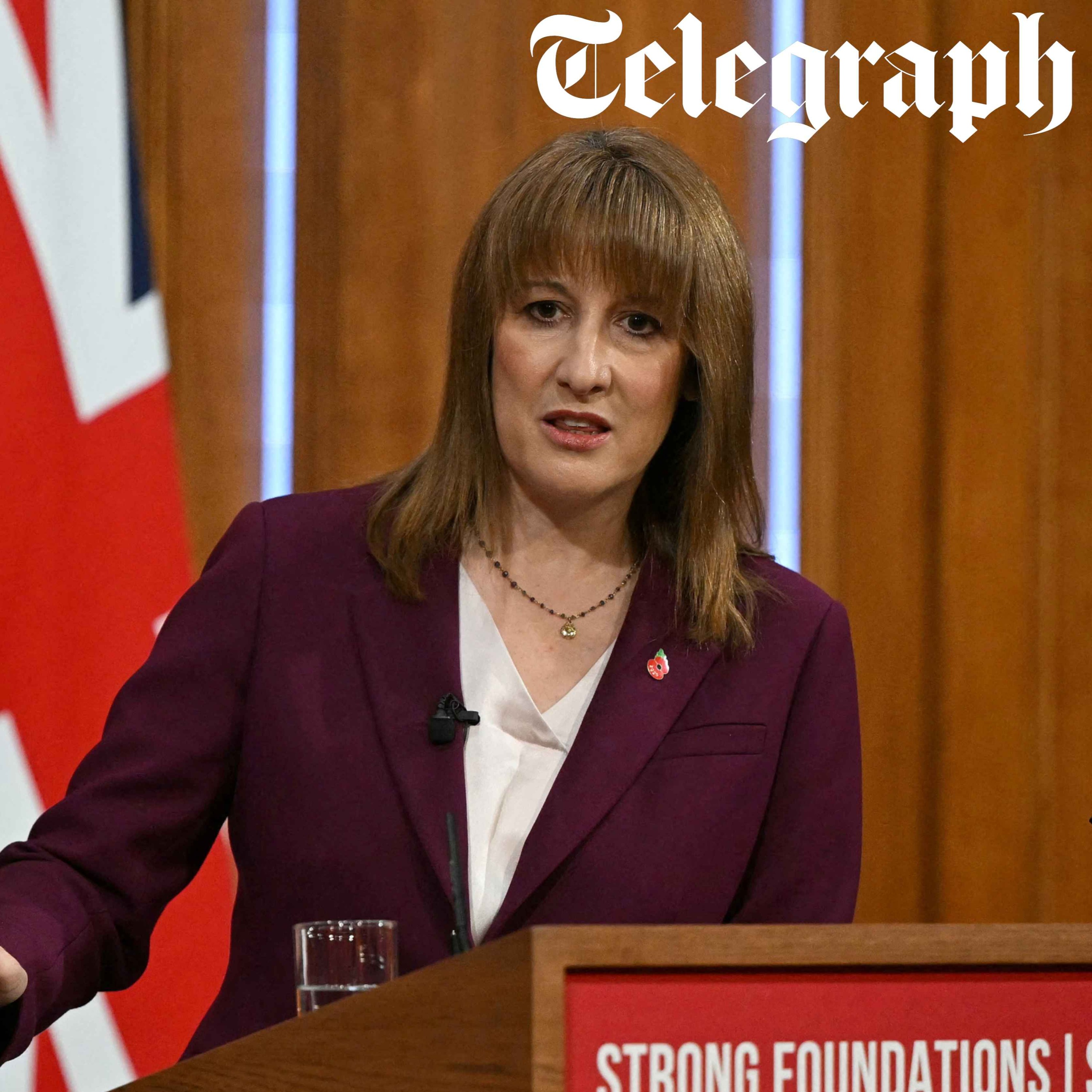
In this episode of The Daily T, hosts Camilla Tominey and Tim Stanley engage with Jacob Rees-Mogg and Allister Heath to discuss the chaotic nature of the upcoming UK Budget. The conversation revolves around Labour's fiscal challenges, the potential introduction of a mansion tax, and the broader implications of current economic policies.
Written by AI. May contain mistakes.

Get the gist, explore an idea or ask about something said.
 Claude
On The Daily T, what are the key points of this episode?
Searching your listeningAutomatic transcript. May contain errors.
0:28The Telegraph
0:39Welcome, Jacob. Welcome, Alistair Heath, Sunday Telegraph editor and Telegraph columnist. I want to start by asking, Jacob, if you have any tips for dealing with the cold. I woke up this morning and my car didn't work because it said the battery had run down, which is proof that the cold snap has finally come. Is your house a cold house? Well, there's been wonderful advice put out by the NHS in Lincolnshire, which said, if you get your feet wet, you are well advised to change your shoes and socks. I just think this is marvellous that there are all these people up and down the country in socialist Britain who can't do that without being told by the state that they need to change their shoes and socks.
1:19I loved the BBC News' advice for yesterday's very light flurry of sleet. it gave a list of things you must pack in your car which included a first aid kit chocolate bars a hot drink sunglasses and my favourite is a shovel well any other person who ever suggests things like that is my mother who is very organised she's a good girl guide I'm afraid I take the view that we're all like the Wells Fargo and that we will get through always in this country and you may get delayed for an hour but you will always get through. This country, my lifetime, has never had severe enough weather to make it impossible to get through.
2:01I know, but it just annoys me how we always act like it's the end of the world when really it's something very brief and there's just a little bit of gold. And it's fun for the children. Yes, the children love it. We forget that. A no school day is wonderful. Not if you're paying school fees, it isn't. But you say we will get through it. We are here today to discuss next week's budget, Alistair. The first thing I want to ask you is, is this the most chaotic budget process that we've seen? Yes, yes, and yes again. I've been following these budgets for at least 25 years professionally, and I have never seen anything this horrendous, completely disorganised, total chaos.
2:42It's unravelled several times before even being delivered. But that's bad enough, all of this stuff. But the substance is even worse, of course. Before we get into the substantive, is the issue, do you think, that things were being leaked? Or that the government was actually trialling different policies, putting them out there, seeing what the public thought of them, and then you turning? A bit of everything, right? I mean, these people are utterly incompetent. They can't do politics. They don't understand that words matter, that threats matter, that floating policies actually matters. If you're going to tell business people, for example, that you might impose an exit tax on them pulling out capital from the UK, what do you think they're going to do?
3:24They're going to pull out capital from the UK very quickly, not wait until the tax comes along. Even if you then suddenly change your mind because it was just a trial balloon or something, never mind, the damage isn't what it's done. You don't need to actually do it to suffer at least part of the damage. Jacob, you've been involved in these processes. Do you agree with that analysis? Well, I actually think Alistair's being too kind to the government because he said it's a bit of all of them. I don't think this is leaks because leaks are unauthorized. I think this is deliberate briefing. They think it's clever, which makes it even more stupid than you've been saying.
3:59And the economic consequences, surely they should have learned from last year when Rachel Reeve said the economy is a disaster. And everyone says, well, if the chancellor thinks it's a disaster, it must be. And people left and money went. and they've repeated it double this time. Yes, yes. I think clearly there's deliberate briefing. Everybody knows that. But I think there's also been some leaks. They've not been able to control. Some information has come out at a time when they didn't want it to come out. But I just think these people are utterly incompetent, right? They just don't understand how an economy works.
4:31None of them have ever held any significant position in the private sector. So they do not understand how the private sector works. We always say that of politicians. But in this case, it's actually 100 % true. But isn't there something wrong with how our system is working in terms of the Treasury that I've thought the Treasury has been too powerful, has been too influential in policymaking. But I did think it actually knew how to run the show. Isn't the Treasury saying to Rachel Reeves, we shouldn't be putting this all out now. We should be keeping it until the budget because of the economic consequences.
5:05Bring back Perda. bring back Perder? Or does the Treasury not know its own business either? Right. Well, I suspect the Treasury doesn't know its own business. But at the same time, this budget's not really a pure Rachel Reeves budget. It's also a King Starmer budget. He has claimed, at least, to have seized at least part of the control from the Treasury and into number 10. So I think this is not like a Gordon Brown-Tony Blair relationship. It's very much a relationship where King Starmer needs to accept a lot of the blame for all of this. I just want to quote some findings by YouGov on popular issues towards the economy.
5:40Zero percent of Britons think that the economy is in a very good state. Zero percent. I mean, I've never actually seen a poll like that before, by the way. Four percent think it's in a fairly good state, which is the same number of people who regard Andrew Mountbatten Windsor in high regard. So it's polling about as well as the former Prince Andrew. 79 % think the economy is in a bad way. 77 % say the government is handling it badly. Only 1 % say that Labour is handling it very well. The public largely acknowledged that Rachel Reeves inherited a difficult economic situation. 73 % of people say that.
6:17But that largely includes people, 64%, who follow the statement with, quote, but she made things even worse or nothing has really changed. Of the 13 budget policies that have been pitch rolled so far, the public only agrees as a majority with four of them. Taxes on gambling companies, VAT off energy bills, topping the list. Now, of those that have been pitch rolled, let's go through the ones that we think will be in there. First, the mansion tax. Yes. I mean, that's the worst, in my opinion. I think it's a catastrophe. By the way, the polling will show that people support this, of course. But it's a terrible, terrible tax.
6:55It is the first massive leap in the direction of a wealth tax. I mean, it is a wealth tax, but obviously it's sort of the most modest version probably of a wealth tax you can introduce. Nevertheless, I think it is an abomination, really. It is wrong to say that people should have to hand over a certain percentage of the value of their house every year. This tax is even worse because the government thinks they're being clever. They think they've cracked the old counter argument against mansion taxes, which is what about pensioners? What about people who have got a small income but happen to live in an expensive house, which is the case with many people in London and the South East in particular.
7:35You might be 18 years old, have a limited income, but because you bought your house 60 years ago, you'd be eligible for this. Well, their big answer is let's invent a new inheritance tax. Let's roll up the liability until the person dies or let's roll up the liability until the person sells. So effectively it becomes a seller's tax. Now, what are the two most hated taxes in Britain? One of them is council tax and one of them is inheritance tax. So what does Rachel Reeves do? You merge both of them and create a super hated tax. Now, in the very short term, people tell pollsters they like this because it's good old class warfare and it won't affect directly 99 point something percent of the population.
8:14But in practice, when people start to realise what is happening, which is that the whole relationship between the state and the citizen is changing, This idea that you can tax someone even when they don't have enough money to pay and then you just create these liabilities which you impose at a later date when they die and things like that. All of this stuff is very, very dangerous indeed. And I think it is eventually going to engulf this government. Jacob, we could include in this wealth tax, as Alice has mentioned it, the Chancellor has signalled that higher taxes on the wealthy will be, quote, part of the story.
8:47They might see that as politically easy, but economically, in the long run, is it a mistake? Oh, well, I very much agree with Alistair's analysis. But I think we've got to look at the point of taxation and what you're trying to do and what achieves your objective. And it seems to me that capital taxation of all kinds is the worst form of taxation because you create the greatest economic distortion for the smallest amount of revenue. Capital taxation determines people's investment behavior in a way that doesn't maximize their return but minimizes their tax. When you have employment taxation and you have sales taxation, it changes people's behavior much less until you get to extreme levels because people need to work and earn and they need to buy goods.
9:36But they don't need to move house. They don't need to realize assets and they can find ways of dealing with inheritance tax through complex structures, by marriage, various ways of minimizing inheritance tax. So they are more voluntary taxes and they are more economically distorting taxes. So they will have a bad economic effect. And Alice is also right. They will be hated. The politics of envy doesn't go very far. When you're told, do you want a tax on your next-door neighbor who's a millionaire, people say, yes, what a lovely idea. Once that tax is being collected, people no longer think, oh, good, my next-door neighbor is being taxed.
10:16They think, what a pity, my nice next-door neighbor has moved and I no longer see him anymore. And what they're placing on mansion tax will simply crash the property market because elderly people won't just sit there rolling up the debt. They'll say we might as well sell up, give the money to our children, live seven years, and then they won't have any inheritance tax to pay anyway. And you will find that high-value properties just get taken off the market, get sold. I mean, the alternative is they think the government will only last a couple of years and the tax will be reversed by a new government.
10:47And then, of course, they won't do anything. And then that would crash the property. And the cash won't come through because you're creating a debt. And I don't know at what age you can start rolling up the debt that can you, as a 25-year-old who lives in a valuable house, say, well, I'll pay this all when I've died. And then actually die insolvent because you owe more than the value of your property, particularly property values for following this tax, which they will, which will make the whole valuation exercise extraordinarily difficult. because they'll be saying it's this value and you'll go to the land registry and say, no, it's not.
11:26The valuation's people, not the land registry. I mean, the state theoretically could start bankrupting people over the long run. And a property crash could actually start directly impacting the execker. But this is incredibly complicated for the government because if you die in test state, the government appoints an administrator for your estate and the government doesn't have enough administrators to run all the estates that will be bankrupt. Right. In other words, Rachel Reeves is acting really, really stupid. I think we're going to get debtors' prisons back. You can't put dead people into debtors' prisons.
11:57You can't put dead people. You could have debtors' graveyards, couldn't you? The government's also talking about a sugar tax on milkshakes, which irritates me, but not nearly as much as the prospect of frozen income tax bans. Now, the big thing that was floated, although the word in Westminster is that this was a leak rather than the Treasury testing it on the public, was a rise in income tax, which of course would have broken one of their key manifesto pledges from 2024. Instead, they're doing that clever thing, which I've heard before. I have a feeling George Osborne did it, of just allowing people to slip into higher rates of tax earlier on.
12:32And this is a point that Kemi Betenoch tried to pin the prime minister down on at PMQs when she asked about whether or not the government would be freezing income tax bans. The prime minister needs to end this shambles. So can he confirm today that he won't break another promise by freezing income tax thresholds? Mr Speaker, the budget is one week today and we will lay out our plans. But what we won't do is... Again, is that actually politically clever? Is it actually economically smart? I mean, to put aside the will it raise the cash, does it do damage in other ways that negates whatever benefit it might have for the Treasury?
13:09Yeah, I think it's a disaster both in terms of economics and politics. We're moving towards being a society where many, many people, almost a norm becomes the 40p tax rate, for example. And that's a completely different situation to what it was when Nigel Lawson invented that top tax rate by cutting it from 60 % where it was before in 1988. And only a tiny number of people paid that tax rate, mainly people in the city and so on. Now it's becoming the norm. And that means that marginal tax rates on the vast bulk of the population are going to end up being much, much higher over the next decade than they used to be.
13:44And that clearly will have a huge effect on incentives, on effort and so on. So everything is changing. But I suppose what Rachel Reeves can say is there's two approaches to being a lefty. The first is a populist approach, which is you pretend that the rich will pay for everything. So, for example, you tax private schools, you tax so-called mansions, i.e. small flats in central London and so on. That doesn't work. It's destructive, but it doesn't raise enough money. Or you can be a technocratic lefty and just get everybody to pay a lot more tax. You get the middle classes to pay a lot more tax.
14:20That's what you see in France, where every normal people have to pay much higher taxes, both direct and indirect taxes, because that's the only way you can sustain a gargantuan state which ends up being 45%, 50%, 55 % of GDP. And in a way, the income tax threshold, the slippage there, is more of this technocratic approach. You're effectively gradually introducing a 40p flat tax effectively on everybody without telling them. Right, socialism by stealth. It's gone, to follow on from Alice's point, in the early 90s, 4 % of taxpayers paid the 40 % rate with the freezing of thresholds by 2028-29. It'll be nearly the top quarter of taxpayers.
15:02It's an extraordinary increase in the reach of this tax. But also it's desperately unfair because we are expecting that the Chancellor will also announce that welfare benefits will go up in line with inflation. So you get to April and people on low earnings will get less money to pay for people who are idle. and this seems to me outrageous on the working population that if we're having this pain, surely it should be spread evenly and that people who are on benefits should have their benefits frozen if the thresholds are frozen, that those two must go together. You see, I'm confused because every year of my working life, I've been told because of austerity and cuts, the state is being impoverished.
15:46And also the government does fewer things than it did when I was a little boy. doesn't have nationalized industries anymore, doesn't much care about defending the world anymore. So why is it that my taxes keep going up? Why is it the left is telling me that the state isn't doing enough, but on the other hand, every year I have to pay more? The state is doing far too much. The UK seems to have, and I don't know whether Alistair agrees with this, a maximum level of taxation, which is about 38 % of GDP. It never gets over that for any extended period of time, we are currently spending 45 % of GDP.
16:21That is 7 % of GDP. That's just under 200 billion pounds a year that we cannot afford. There is no way of raising that money through extra taxation, even through cheats and so on, because people change their behavior. It's 38 % maximum. Therefore, we have to get rid of that 7%. We need the state to do less. And if did do that 7 % less, it would be back to spending the sort of amounts of money it spent all those years ago when you were a young gentleman. So what has happened between Lawson, who in his famous budget was able to, I believe, cut spending, cut taxes and reduce the deficit? What's happened to Britain that means we now spend so much more in those 40 years that requires me to pay more money?
17:08Well, a few things have changed. You know, in the mid 90s, People are used to 3%, 3.5 % economic growth every year. Now, if you said to someone, we're going to get 3.5 % growth next year, everyone would literally fall on the ground laughing. I mean, it's just entirely inconceivable. So there's been a collapse in the rate of economic growth in this country over the past 25 years. You know, the Blairite project and then the coalition government and the Conservatives afterwards sadly failed to reverse this collapse in economic growth. And so that's one big, big problem. The second big problem is the NHS and the welfare state have exploded.
17:42So you now have to pay more and more and more tax for the NHS and the welfare state, both welfare for people of working age and welfare and state pensions and so on for pensioners. That's a huge increased burden, which means there's less and less money to do other things, which is why they've slashed defense spending. You slash defense spending, you spend the money on the NHS, then the NHS is in crisis again, you slash more defense spending and you spend even more on the NHS and so on. And it never ends. And you end up, roughly speaking, the situation we're in today. Now, some of this stuff people say is because of population aging, but there's ways around that.
18:18I just do not accept that population aging leads to socialism. You could have a culture of mass private savings, for example, right? If everybody saved twice as much all their lives and the money was invested and so on, you'd have a completely different society, first of all. And secondly, you need far less government spending on either the NHS or on the state pension. Government spends money very badly. So public sector productivity is lower now than it was in 1997. The NHS productivity has fallen by 18 % since 2019. So that means, depends whose figures you take, but there is around£30 billion that we are spending on the NHS extra to get the same level of services we got in 2019.
19:02And that's why the spending goes up and up when the services actually seem to be worse. It's because of productivity. All our productivity growth comes from the private sector, and the private sector is being hammered by this government. OK. And another question, because it's great to have this explained by people who understand it. Inflation has fallen ever so slightly from 3.8 % to 3.6%. Of course, that's still way above the Bank of England's target of 2%. But food inflation is high at 4.9%. Why is inflation still there, given that we're post-COVID, and I'd have thought we'd have recovered from the initial shock of Ukraine?
19:42My theory on inflation is that we no longer take it seriously. I don't care if the government says they take it seriously, but they don't. Sadly, that's another one of these big changes over the past 25 years. 25 years ago, when Gordon Brown made the Bank of England independent, it was very much an agency relationship. Brown was in charge and he delegated to the Bank of England the authority and the power to set interest rates with a very clear mandate. And everybody thought that the bank would do its best to try and meet this target. And if it failed, it would be embarrassing and bad and all that kind of stuff.
20:16But that was the aim. 25 years later, no one seems to care anymore. I do not believe that the Bank of England is really targeting a 2 % inflation rate. I don't think it's done that for the last few years at the very least. Nothing is taken seriously. There are no consequences in missing it year after year after year after year. and obviously COVID broke the whole system right so all of this stuff is a legacy of COVID and when I mean COVID I mean I mean the lockdowns that went with it the immense amount of monetary policy loosening all that kind of stuff then you had the Ukraine shock which sent energy prices through the roof and could have bankrupted about a quarter or a third of the households in the country just because the energy bills are so high all of this stuff put together means that we no longer we've forgotten the lessons of the past.
21:03We're no longer serious about inflation. I think we need a complete reconstruction of our monetary institutions and a much clearer emphasis on targeting inflation. Also, you can't run monetary and fiscal policy in isolation. So I think the Bank of England has been catastrophically bad since Mark Carney took over as governor. It's got almost everything wrong. But I don't agree with Alistair that it should have had a tighter monetary policy in the last few months because the inflation was being caused by fiscal policy. And if you have a fiscal policy that creates inflation, and what do I mean by that?
21:38Putting up national insurance meant that businesses had to put their prices up straightforwardly. Putting up the minimum wage meant businesses had to put their prices up. So you've had government policy that has been inflationary. And if you'd put all of the effort to bring inflation down onto monetary policy, the economy would be even worse off than it is to an extent that I think the country couldn't actually cope with. And it's why I think you need fiscal and monetary policy run by the same person, ideally the Chancellor of the Chequer. And I really like Alistair's definition of what Brown did, because it's absolutely right that he gave the Bank of England a job and told them to get on with it.
22:18He didn't say, I'm giving up my power. And it's become an idea that the Bank of England is in all respects independent. It's not. It's a functionary. And it's not doing its function very well. And it's doing some things where it maintains independence, like selling bonds at huge losses, in a way that is having an effect on fiscal policy that it really shouldn't be doing. Well, coming up next, Alice's column today makes a very bleak reading. He's going to explain it to us. We'll discuss the politics surrounding the budget and whether or not Rachel Reeves will keep her job.
23:01Alistair, in today's column you say that Britain has a 75 % chance of becoming a banana republic. So that's a 25 % chance of survival. 75 % chance of it all going horribly wrong. How do you reach that calculation? Yes, I think it's a 75 % chance on a good day. Oh, right. On a bad day, it'd be even worse. Well, it's a very simple back-of-the-envelope calculation. I think there's a 50 % chance of us ending up with a right-wing government after the next election, which I believe and hope will come quite a lot earlier than people think. So I think it's coming about 2027. So I think there's a 50 % chance of getting a right-wing government, maybe a reformed government, maybe a reformed Tory government.
23:42Who knows? It could even be a Tory government, I suppose, in theory. But at the moment, that's just impossible according to the opinion polls. And then if that government were elected, I think there's only a 50 % chance of it succeeding because the odds are so great. The magnitude of the task is so immense. The need to retool the machinery of state, effectively to launch a hostile takeover bids of the civil service. And then the need to appoint hundreds of completely new people to positions of power and then to push through very, very complex policies. I think it's a huge, huge task. So I think the odds are against success.
24:18Now, I'm a bit of a gambler when it comes to these kinds of things. I still believe it can be done and I hope it will be done. But I just think that there are some people on the right, reform voters in particular, even some conservative voters who are becoming complacent. Right. It's not a dumb deal that we're going to get rid of all these people. Now, clearly, I think Starmer is on the way out. I think he'll be removed as prime minister by the Labour Party next year, probably. I think there'll be a new Labour prime minister. Obviously, Rachel Reeves will also be removed. But that's not enough because the Tories and reform could easily destroy each other.
24:54In a campaign. In a campaign. There's no guarantee whatsoever that you don't end up with a coalition of chaos made up of Labour, the Lib Dems, the independent Corbynites, the Greens, the SNP, the Welsh Nationalists, everybody together. And that's very easy because you would need quite a sizable reformatory majority if you wanted to have a stable government of the right, while you only need a majority of one or two on the left to have a government of the left, because they all have certain left-wing things in common. Did you say in the column I write that you need a majority of about 50 for us to pull off the kind of reforms, calculating there will be some people who will quit, some people who will refuse to serve.
25:34Because this is the thing, it will be a right-wing government, but the question is who. Yes. So, I mean, you'd have 5 to 15 conservatives, probably, who wouldn't want to serve in this kind of government. They'd refuse to want to leave the ECHR. They'd refuse to do all this kind of stuff. And then you'd have, sadly, for reform, I suspect their vetting won't be perfect, so you're going to end up with 10 or 15 of their new MPs being booted out relatively quickly when bad things emerge about these people. All of this is in this hypothetical situation that you have a... This has happened with just five or six MPs.
26:07They've already lost about a third of... So this is it. The challenge is extremely difficult, right? You need the Conservative Party and the Reform Party to have half plus 50, half plus 25 of the seats in the Houses of Parliament. You need reform in particular to have recruited dozens more very senior people, hundreds of good MPs, hundreds of new members of the House of Lords, hundreds of regulators, and of course, thousands of councillors. I mean, the HR task is gargantuan. No British political party has ever had to recruit that many people so quickly. And then you'd have to plan for victory in a completely different way to what any British politician has ever done before.
26:50You'd have to be even more sophisticated than what the Americans did with Trump, too. You'd have to have thousands of pages of legislation drafted, orders in council, a very detailed timetable, because you'd have to move very, very quickly. And then you'd have to have the right policies, right? So, for example, I'm in favor of drastically reducing immigration. But I'm also aware that you need people who actually want to work. So you need welfare reform. How do you coordinate all these things? How do you not end up suddenly having massive labor shortages and massive shortages of goods and all that sort of stuff, you know, and everything collapsing very quickly?
27:24I think there's an interesting parallel between the less views on net zero and the right's views on immigration, which is the left thinks we should just do net zero now. Stop all drilling and just go and do it now without realizing there's a gap between the ambition and actually you need the energy. Likewise with immigration and a reform government will find this. Yes, reduce immigration, but in the short term, we have a skills shortage. I mean, Trump has found this in America, right? He's had to say we are going to welcome more students in, for example. And I just think any government is going to come against that problem that actually we're just not in a position right now to turn off the immigration tab.
27:59Right. I mean, so I think you can still reduce immigration drastically very quickly because you can cut out the people who are not actually working, for example. But yes, you're going to have to phase things, right? This is why it's all about planning, phasing, careful thinking. You need lots of clever people to sit around and to work things out. Now, the very important thing with, you know, populism is on the rise everywhere, both populism of the left and of the right. But populist parties need a counter-elite if they want to succeed. Without a counter-elite, the populist party is destroyed on contact with reality.
28:34And I think that is reform's great challenge. To be honest, that's a challenge of the British right in general. It needs to build a counter-elite. We need a right-wing counter-elite in Britain. We need very intelligent people with lots of skills, lots of knowledge, lots of understanding of how politics works to take over after the next election. You can't rely on the existing establishment because, you know, that's what Liz Truss did. Remember, Liz Truss parachuted a few kids, you know, beyond enemy lines, and they're sadly immediately destroyed. And Dominic Cummings did the same thing as well with his rocket control in number 10.
29:08He was seeking to bring new people in. That was the key thing. and you need to bring new people in. Unfortunately, you can't wait until you're number 10 before bringing these people in. It's too late. The first day, the first week, the first 100 days are essential. You saw that with Trump too. You've got to be ready. Things have to be written. People have to be lined up. Everything has to be discussed already. You can't fall in all these traps. And obviously, economic policy will be essential. You'll have to keep the markets on side. There'll be huge campaigns against you. So it's all complicated.
29:37This does not mean that you can't push through very, very radical change. I'm not a centrist dad who's pretending that you can't change things. I'm not saying, oh, it's too difficult. We've got to accept all this broken stuff. No, you don't have to accept the broken stuff. But you've got to implement it properly. You've got to plan properly and you've got to bring in the right people. So reform in particular need to focus on people and planning. They need hundreds of really good people. They've got half a dozen. They brought in another good guy yesterday called Alan Mendoza. to become their chief advisor.
30:10Another one I was at university with. This is getting ridiculous. Well, there you go, Tim. You'll be next. No, this is the thing. It'll be everyone else except me. It'll be the cookers and the cleaners will be getting jobs in government. I mean, the interesting thing about Mendoza, he's very anti-Putin and he's anti-Islamism, which shows where it's all going, which in my view is the right direction. I thought that. Assuming he would be a sort of foreign secretary candidate. I thought that's really striking. He's a traditional, almost neocon. So this stuff's very interesting. So here's another one of them.
30:34So they need another 10, another 20, another 30, another 40 of these people, right? They need a lot of people. Then you need hundreds of advisors. You need at least 400 good people to be MPs. You need hundreds of people to go into the House of Lords. Right. So it's a very complex task, but one that could be done. This is why I think the odds are stacked against the right, unfortunately. It doesn't mean the right can't win, but that the job at hand is extremely difficult. Right. Jacob, I think that reform can win the election, but I think the Tories would do a better job of what Alice has just described?
31:07I think we need to work together. I think it's absolutely essential because the Tories have at least some of the people who could contribute to this. Nigel Farage needs to be Trump two rather than Trump one. What I mean by that, he needs to get into Downing Street and not be led astray by the cabinet secretary saying, these are the nuclear codes you've got to deal with, prime minister. He needs to say, this is my legislative program. It's being introduced to parliament tomorrow. Here's my list of 300, 400, 500 peers. He needs to be absolutely ready. He needs to start with constitutional change because the great advantage we have in this country is that the king in parliament can do anything, but it has to go through parliament.
31:48And statute law, primary legislation will not be challenged by the courts. They can't. So you can put back the powers to ministers to decide things. You can take it away from the quangos and you can override the Human Rights Act, the ECHR, the Refugee Convention. You can repeal the Climate Change Act and the Equality Act. You can have a government that can govern, but you need to be ready with your bill on day one. In terms of people, I mean, Alice is absolutely right. I think it's even more than that because I think Nigel needs to make sure every single one of his candidates is a sensible person because the whole election campaign will be dominated by the weird and wonderful candidate in a hopeless seat.
32:35Yes, that's right. And they could win any seat, but it's not going to be a predictable election. So you can't say here are 400 safe seats where we need good candidates. You're going to need good candidates in the most unlikely seat, particularly if there's a split on the left, where the Greens, Lib Dems, Labour, the Palestinian mob take enough votes to allow on 25 percent of the vote a reform candidate to win, who then has to be sane. And they won't have faced the same scrutiny as a reform candidate. Oh, no, they won't face any at all. Nobody cares about them. So you'll get some very odd people on the left getting in.
33:13But also no one would have been watching them because they'll win by surprise. They'll win by surprise. Some real lunatics will win at the next election and we won't have seen them coming. So how does he do this? Well, he learns from Trump because Trump did the people. He really, really knew about the people. You have to politicize the civil service. You cannot carry on with a Rolls-Royce civil service that seems to be one of those Rolls-Royces without an engine. in the body world. Like my car not working in the morning. But it doesn't actually do what it's supposed to do. I think you need that.
33:43That means more people. And you need your legislative programme. Now, why am I much more optimistic than Alistair? Because I think the British people are ready for change. And I think people only want change when times are tough. When Liz came in, people didn't feel too badly off. They'd got lots of money for COVID. Things had struggled on. it had Brexit, which those who liked it were still very positive about. There was a buoyancy. The country was feeling pretty happy with itself. And then she came along and said, we've got to change all these things. And they said, we can't be bothered, really.
34:17The next election, the economy is going to be dire. We will have had between now and then emergency spending cuts by the Labour Party. It'll be just like 1976, except I don't think we need to go to the IMF, but it'll be the same consequences. The left will be unable to make routine decisions. They will probably be on their third prime minister by then. I think it will go. Really, one more prime minister right again. I think they will hold on till the bitter end. This is the optimistic interpretation. This is the optimistic prophecy. It is what I said when I lost my seats. I'm going to quote myself, quoting Crackticus pots from the ashes of disaster gray the raises of success but you need the ashes of disaster and the country's going to be in a terrible state and this is the gloomy bit i i mean people will have left who will not come back there's going to be the great sucking sound of talent out of this country over the next few years young people will start working abroad young people are going to universities abroad the whole thing but that as in 1979 means it's bad enough to do great things and yes it's hard but I think as in 75 to 79 people on the right know it's hard and they're making the preparations certainly people I'm talking to are thinking about what the legislation ought to look like and not waiting to introduce it when they get in I know that reform are thinking about people and thinking about good ways of checking them out of ensuring that they're well vetted, they know the problem and they've seen Trump do it.
35:48We just need to have confidence and we need to unite the right because a majority of 50 is not enough. Majority of 50... That's a better minimum, by the way, in my sort of model of the world. If the right is united and you quote the polls in your piece and it's the positive poll rather than the negative one, so it's 49 % between the Turbas, you lose a few because people who are backing reform won't support the Tories and Tories who hate reform. 44%. If we can get 44 % of the vote with a split left, there is a majority of 200. And that can deliver great things. And that's what we need to be working towards.
36:23But it does mean we've got to reunite the right. Absolutely central. Because I think the counterpoint to all of this is the far left is growing in Britain as a force. And you've got a lot of young people joining it and you've got all sorts of people. And that's what I'm worried about, among other things, which is, yes, you've got all this remarkable activity on the right. I've not seen so much activity on the right ever. So there's a lot of very exciting stuff happening over there. But there's extreme activity on the left also. You've got the Green Party turning itself into an emergent force. I mean, it wouldn't surprise me that the Green Party ends up overtaking the Labour Party in the polls relatively soon.
37:01But the gap is really small. It could end up being that reform is the biggest part on the right and the Green Party is the biggest part on the left. Maybe the Lib Dems still get more seats. Maybe not. So, I mean, you know, Labour is being hit by an even more traumatic upheaval than the Conservative Party is really. One bit I disagreed with you in your piece on, other than I'm more optimistic, perhaps temperamentally, is that I think Labour will carry on even if they've got no mandate at all. even if they're on 10 % in the polls, they will say we've got a majority of 170. I suspect you're right.
37:39Most of our votes we win by 200 because the rest of the left vote with them. And every MP will be thinking, well, I carry on being paid for a couple of years. And I know I'm out. Why hold an early election? Why hold an early election? To go to the dole queue. Yeah. Alistair, in conclusion, we've discussed the prime minister being replaced, but what are your odds on Reeves going? Well, 100%, I would say. I mean, she's clearly here to go. But how soon do you think? Well, that I'm not entirely sure because I think it depends on whether the Labour Party go for the Prime Minister or not. Right. So you also implied earlier that she's not actually doing the job of Chancellor anyway because it's being done in Downing Street.
38:17So she has become a fig leaf, a Chancellor in name only. Yes, I mean, whether it's that extreme, but it's certainly going in that direction. I mean, ultimately, Starmer has taken much greater responsibility explicitly for this budget. So I think he needs to, at the very least, share the blame. Right. You know, he can't just, you know, he can't be Tony Blair saying, oh, Gordon Brown didn't tell me it wasn't the budget kind of thing. We're not in that world at all. If he does go, Jacob, final thought from you, Shabana Mahmood looks increasingly like a good replacement as a prime minister. She might not because the left don't like her view as an immigration.
38:54I mean, this is ironic, isn't it? But, yeah. Shabana's wonderful. I admire her greatly. I think she's got courage. I'm so pleased that she voted against the death bill that Labour was desperately trying to push through. I think she's an admirable person. And I think she's telling the truth about how controlling borders makes race relations better. But she has not got a hope of becoming leader of the Labour Party because that is not what members of the Labour Party or Labour MPs think. They do not like her immigration reforms. A lot of them believe broadly in open borders. she's not going to be the next Prime Minister.
39:29The only chance she has of becoming Prime Minister is if she joins Reform and backs Nigel. I mean, I just don't see her getting any support... That would be a twist. ..from Labour voters. The fact that I think highly of her is extremely unhelpful. I think if she said now, as a Reform MP, we'd be... or people would be demanding her resignation. I think she can say what she's saying now as a Labour MP. The moment she said as a Reform MP, everyone would jump on top of her. But I think the next leader of the Labour Party is going to be Ed Miliband. Yes. And the reason I think that is that he's got the support from the members and the members have the final vote.
40:03And having been involved in one or two conservative leadership contests, the members of parliament back the person they think is going to win. Right. Because that's how they get a job or that's how they hope to get a job. And so it doesn't really matter what Labour MPs think of Ed Miliband. If they think he's going to win, they will go for him. Right. And I think it's getting quite close. The Tribune said it had 80 people. Now, my guess is that means they've got 40 people, but having said they've got 80, they've gone up to 60. They are getting that. If they're like conservative backbenchers, yes.
40:35They are. Backbenchers are much the same. Like in that Michael Jackson video, Ed's going to rise from the Ed Stone. A hand is going to pop up through the air. Well, I don't remember Mr Jackson's video. You won't remember the thriller. But I do want to ask you, because you were leader of the House, of course, is your views on swearing, because Shibana Mahmood said something, and I noticed there's been a lot of debate about it amongst readers in the comments, whether it was appropriate or not for her to describe the foul language that's sometimes thrown at her. Some people really didn't like her using the language in the chamber.
41:05Look, I'm not somebody who swears even when quoting people, and I listened to an interview with the Home Secretary where she said that her mother disapproved, and in many ways I'm with her mother, But I think it is legitimate to, including in the House of Commons, to use this language when it is factual and when it illustrates a problem. I actually think the deputy speaker was wrong to say that this should not be used in Parliament. Parliamentary language and the rules on it are all about civilized debate between you and the opposition. so you don't refer to your opponent in very aggressive and unpleasant terms, but you are allowed to use what I might call fruity language to express a point.
41:51And I thought her point, I would very, very rarely think that it's right to use this sort of language ever. Even in private conversation, I think swearing as a general rule is a sign of stupidity that there's no need to use foul language. However, I think there are occasions when you're making such a powerful point I didn't approve of you swearing when you've got your tea. Right. Eagle-eyed viewers will have noticed that my tea has disappeared between one shot and the next, and it's because I knocked it over, and when I did, I swore like a sailor. Yes. You could just have said bother, which would have been quite sufficient.
42:24Anyway, I think the circumstances and the point she was making were sufficiently serious that using that language made it in a very powerful way, so I'm actually on her side. That's me putting my place. Well, thank you very much, Jacob Rees-Mogg, and thank you Alistair Heath and we'll be back tomorrow at 5pm
Straitjacketed by a manifesto that promised not to raise income tax, National Insurance or VAT on “working people” – and stymied by an exodus of people wealthy enough to seek financial safety elsewhere – the Labour party is scrambling to raise enough revenue to fill a £20bn fiscal black hole.
As the 2025 autumn Budget draws ever closer, there is increasing apprehension as to whether Chancellor Rachel Reeves is going to employ a “mansion tax” to help balance the books.
In today’s Daily T, Tim is joined by Jacob Rees-Mogg and Allister Heath to preview what’s set to be an “horrendous” upcoming Budget, why time is running out for both Keir Starmer and Rachel Reeves and how the right needs to unite ahead of a possible early general election in 2027.
Producer: Hugo Verelst-Way
Additonial production from Mikey Olympitis
Senior Producer: John Cadigan
Video Producer: Will Walters
Studio Operator: Meghan Searle
Executive Producer: Charlotte Seligman
Social Producer: Nada Aggour
Editor: Camilla Tominey
Hosted on Acast. See acast.com/privacy for more information.


