
 Ask ChatGPT


 The Daily T
6 Feb 2026 · 28m · 12 chapters
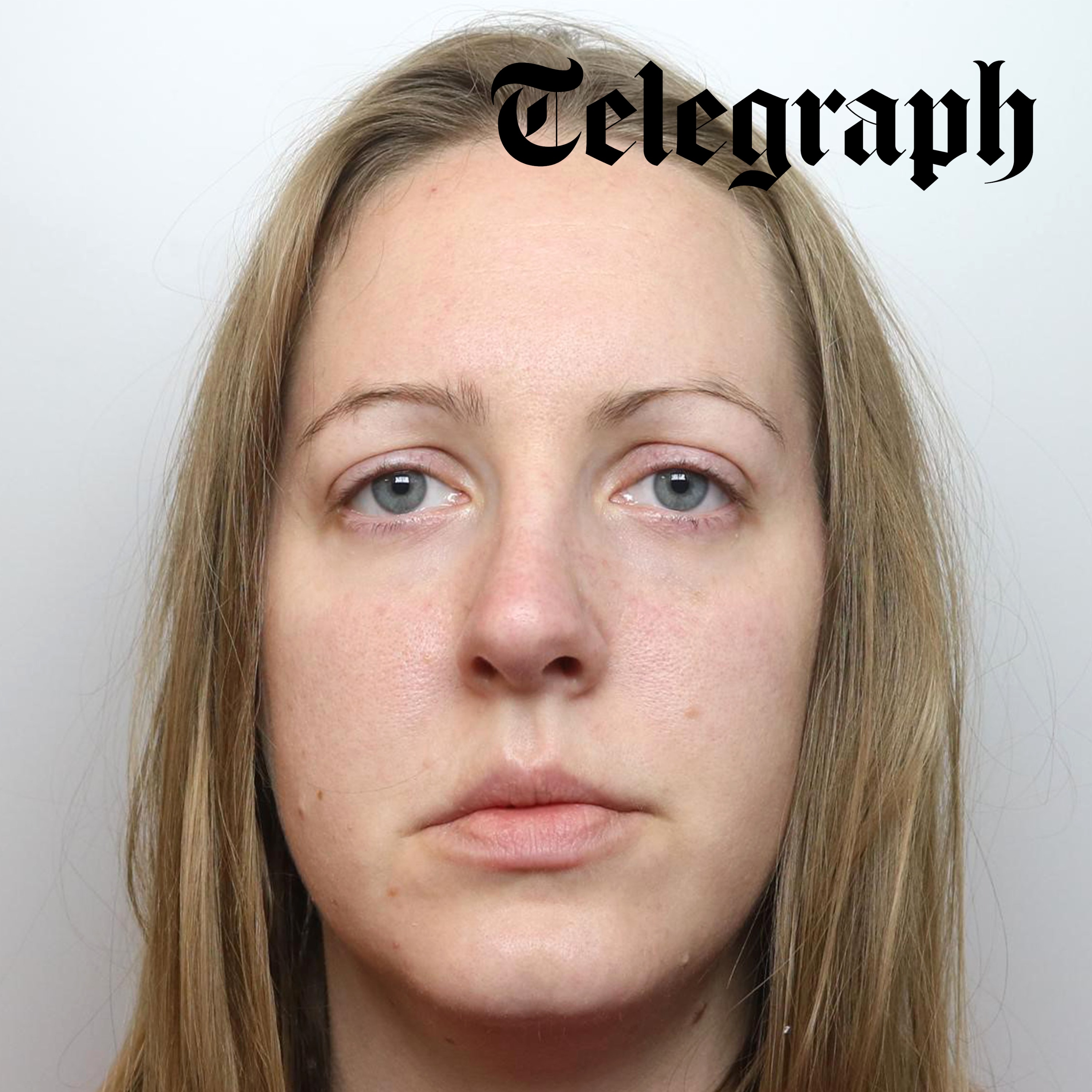
Host: Camilla Tominey
Mark MacDonald (Lucy Letby's lawyer)
[Date Not Provided]
The ongoing legal battles surrounding Lucy Letby, a former neonatal nurse convicted of murdering newborns, and the emerging narrative questioning the validity of her conviction.
Written by AI. May contain mistakes.
Overview of the accusations against Lucy Letby and the surrounding controversy.
“As we've all been completely gripped by the Mandelson-Epstein scandal, one story has also been making the headlines, Lucy Letby.”
Mark MacDonald discusses Lucy Letby's case and the status of her retrial application.
“who has been leading the charge for her retrial.”
Discussion on the expert reports and their implications for Lucy Letby's case.
“You're 100 % convinced that Lucy Letby is innocent, because, of course, many people aren't, and she has been convicted of a string of the most heinous crimes.”
Exploration of the confessions attributed to Lucy Letby and their interpretations.
“with experts in the criminal justice system in this country.”
Insight into the role and process of the Criminal Cases Review Commission in Lucy's case.
“It was when the doctors insisted that she left the unit and she's not allowed to go back on the unit, even though the nurses that worked with her, the trust managers said that she's done nothing wrong.”
Analysis of the prosecution's strategy and recent press release regarding the case.
“because there was always the suggestion that at the end of the day, during the original trial, she just didn't have a great defence.”
Discussion on the police press release defending their actions and the upcoming inquest into baby deaths.
“So one would only imagine that it doesn't reach the level.”
Exploration of the parents' request for changed birth certificates and access to case reports.
“And as you rightly say, the inquests are going to be opened and then adjourned, and I think the intention is to change the cause of death of the birth certificates.”
Discussion on how the Netflix documentary impacts public perception and parental privacy.
“He's come out and said that Lucy Letby could be the victim of the greatest miscarriage of justice of all.”
Analysis of Lucy Letby’s emotional response as portrayed in police footage during her arrest.
“And one's going to ask this question, they've been able to dominate the narrative about this.”
Mark McDonald discusses the defense strategy and public misconceptions about Lucy Letby.
“You know, I'm often told, juries are often told about rape cases and about women who are being raped.”
Details on Lucy Letby's prison conditions and her mental state while maintaining innocence.
“I'll tell her about the Netflix documentary.”

Get the gist, explore an idea or ask about something said.
 Claude
On The Daily T, what are the key points of this episode?
Searching your listeningAutomatic transcript. May contain errors.
0:03Lucy Letby's lawyer: The Telegraph.
0:10Lucy Letby's lawyer: Lucy Letby is modern Britain's most prolific child killer. The former neonatal nurse has been convicted of killing seven newborns and attempting to kill seven more. But medical experts and others have raised serious doubts about the evidence used to convict her, and some are now calling this the greatest miscarriage of justice ever. In this exclusive interview, I speak to Lucy Letby's lawyer, Mark MacDonald, who tells me he is 100 % convinced that she is innocent and reveals for the first time her state of mind in prison. Welcome to this special Daily Tea with me, Camilla Tominy.
0:59Lucy Letby's lawyer: As we've all been completely gripped by the Mandelson-Epstein scandal, one story has also been making the headlines, Lucy Letby. You may remember that we reported from a press conference last year where leading clinicians presented their evidence that Lucy Letby didn't murder a single baby. After reviewing the medical evidence, the panel, led by Canadian neonatologist Dr Chu Lee, claimed the babies in question died due to natural causes or inadequate medical care at the Countess of Chester Hospital. And recently, more evidence has emerged that suggests systemic failings there. Now, as a new Netflix documentary makes public fresh footage of Letby being arrested in her pyjamas, a decision her parents call a complete invasion of privacy, I spoke to Mark MacDonald, Letby's barrister who has been leading the charge for her retrial.
1:57Lucy Letby's lawyer: Mark McDonald, Lucy Letby's barrister, thank you very much indeed for joining us again on The Daily Tea. You referred Lucy's case to the Criminal Cases Review Commission last February. Can you just update us with the status of that?
2:10Camilla Tominey: So the thing about the CCRC is they don't give a run in commentary. As much as I wish they would do, they don't really tell you the progress of the case. However, what I know is this, they are taking the application seriously. I have met with them in the past, and they're working through the several reports that have been given to them. I would hope by now, I should say, that they've read the reports and the expert reports, particularly the combined expert report from Shu Li and the other reports that I've now put in. and they've made such progress that they're now thinking, OK, where do we go next, as opposed to right at the beginning still reading things.
3:00Lucy Letby's lawyer: Just to clarify on the Sue Lee report, because the last time you and I spoke was when The Daily Tea covered that extraordinary press conference where you had got some of the world's leading paediatricians to assess the case and give alternative explanations for the deaths of the babies that Lucy was convicted for.
3:21Camilla Tominey: Yes, and I remember speaking to you there, actually. It was an extraordinary press conference. You could hear a pin drop. I mean, even though he spoke for, I think, just under an hour, it was incredibly compelling. Professor Hugh Lee, it's worth saying, is probably one of the world's leading neonatologist, so a specialist in premature babies, but also within his home country of Canada, is said to be the best. And he put together from all over the world a panel of experts. And then he got them all to look at the case notes blind. How did this child die? They also had lots of other evidence before them, but their primary reading was the medical notes and associated medical literature around it, sort of, you know, x-rays and blood tests and things.
4:11Camilla Tominey: and i didn't know and this is the important thing i've never done this before as a defense barrister you would normally not let yourself into this situation where you know if you instruct a defense expert in the uk and a defense expert does not agree with the defense case then you're entitled to throw it in the bin and nobody in the world will see it Professor Shu Lee said this right at the beginning If I find evidence that she has committed a crime I am going to say it to the world So I wouldn't say it was a gamble Because I knew I was representing an innocent woman But you didn't know where it was going to go on it And I didn't know really until a couple of days before the press conference
4:56Lucy Letby's lawyer: When you say that Mark I know I am representing an innocent woman I mean we know how the law works we know that everyone's entitled to a defence, even if they are guilty, in a bid to mitigate their sentence. You're 100 % convinced that Lucy Letby is innocent, because, of course, many people aren't, and she has been convicted of a string of the most heinous crimes.
5:17Camilla Tominey: Absolutely. Well, let me unpack that. First of all, yes, I mean, the expert reports, of which there's now 30 of them, 30 experts, those reports confirm, And those are the reports that the experts at the Court of Appeal are going to be interested in. No one legally cares what I think. No one cares what I think. But from my own perspective, I've been doing these type of miscarriage of justice cases for many, many years. And in particular, these types of cases, because remember, there's no direct evidence. No one saw her do anything wrong. in fact to the opposite that she was seen to be a very good nurse on the unit and the whole case is based around a hypothetical i.e they've taken the view the premise that this baby has died as a result of intentional harm now we've got to come up with a hypothetical or theory as to why that baby died.
6:22Camilla Tominey: And I know, because I've been doing my job for many, many years, that there is a problem with experts in the criminal justice system in this country. And when the whole case theory really is based upon the theory of a retired paediatrician who has limited publications and is someone who's not a real expert on this.
6:48Lucy Letby's lawyer: Are you talking about Dr Evans now, Mr MacDonald?
6:50Camilla Tominey: I am, yes. And he's a central core to the prosecution's case. I question it. And I ask, well, hold on, is this it? Now, don't get me wrong, Camilla, you know, because you were at the press conference, and I know that you've looked into this case. Of course, there's other stuff, but it's circumstantial stuff.
7:08Lucy Letby's lawyer: Yes.
7:08Camilla Tominey: And it's low rate circumstantial stuff. What do I mean by that? Circumstantial evidence can convict a person. If you walk into a room, there's only one person standing in the room with a gun in their hand and a dead body on the floor. That may be circumstantial, but it's quite strong. They're probably being shot by that person. So circumstantial evidence on its own can convict a person, but it's the weight of that circumstantial evidence that makes it so compelling. And in this case, it was low. It wasn't compelling. So if you put that to one side and you know the whole of the court, the central court, is really the expert testimony of the doctors called by or clinicians called by the prosecution, and you unpack that, you realise in fact the case is incredibly weak.
7:54Camilla Tominey: And what the defence experts have done, they've looked at it blind, they've gone around it in a very neutral way and they've come back and said, as Professor Shu Li said, no crime was committed.
8:04Lucy Letby's lawyer: Yes. So we have Shulie's report into the Criminal Cases Review Commission. Are you also able to include other reports of, for instance, contaminated water at the Countess of Chester Hospital? That may have had an impact on the death of one of the babies who appeared to have had a lung infection. Does that all go in as well?
8:26Camilla Tominey: Yeah, so what I can do, and I have done in fact, is put reports and continue to add reports to the ones that come in. So let me give you an example. Probably the world's leading expert on false confession evidence. So what is a confession, in fact, is a man called Professor Gisley Good Johnson. He's a Brit, originally from Iceland, but he gave evidence in the trial of the Birmingham Six and the Gilbert Four. and he is seen as the eminent expert of what is and what isn't a confession. He has had all the records and all the notes and in particular the notes, the sort of drosses and scribbles by Lucy.
9:02Lucy Letby's lawyer: This is where she reveals, Mark, you know, I did it, I feel guilty and this was very incriminating. She'd written these diaries and it looked as if she was confessing to these deaths.
9:11Camilla Tominey: And that's what the prosecution said to the jury. It's a confession and that's the way the judge directed the jury. Not that it was a confession But the judge said to the jury, well, you've heard her say it wasn't a confession. You've heard the prosecution say it was a confession. It's a matter for you. But what no one really did is go to the experts and say, is this, in your interpretation, a confession? And when I say an expert, I'm talking about a clinical psychologist that looks at everything and looks at issues, not just in relation to false confession, but what is a confession, looking at the context, the psychological context at the time.
9:49Camilla Tominey: And Johnson, as I say, has written this very detailed report and said it's not. It's not a confession. What is it, a mental breakdown? Well, I mean, you've got to take it in the context of where she was at the time, when the sort of stream of consciousness is writing down these jottings that she was doing. It was when she was put on desk duty. It was when the doctors insisted that she left the unit and she's not allowed to go back on the unit, even though the nurses that worked with her, the trust managers said that she's done nothing wrong. They insisted. So she goes into this desk duty, but she's not told why.
10:28Camilla Tominey: And then she's eventually disclosed to her why. And she cannot believe, she just simply cannot believe that the very thing that she spent all her life wanting to do, that she became good at doing, she's now been accused of harming children. And so this stuff, it was about, you know, am I guilty? Have I done something wrong? They're all saying I've done something wrong. I'm saying I haven't because in the same note, she says, I've done nothing wrong. Why are they, in essence, picking up me?
11:01Lucy Letby's lawyer: It was a stream of consciousness. Is the intention with the Criminal Cases Review Commission to precipitate a retrial or a quashing completely of the convictions?
11:12Camilla Tominey: The way the system works in this country is it used to be many years ago, in fact, at the time of the Birmingham Six, that the only way you could only go to the Court of Appeal once. The only way you can go back is that you'd petition the Home Secretary and they would allow it to go back. When the Birmingham Six were released, the Home Secretary, Michael Harrod, stood up in the House of Commons and said, right, we're taking it out of the hands of the politicians. were going to set up the Criminal Cases Review Commission, and that was set up to do what the Home Office used to do or the Home Secretary used to do.
11:46Camilla Tominey: And their job is to decide whether or not it goes back to the Court of Appeal. That's their simple role. Once it goes back to the Court of Appeal, then you have the full argument in front of the judges of the Court of Appeal. If they decide, and the test is, are these convictions unsafe? That's the test, really. If they decide that they are unsafe, then the prosecution are entitled to ask the court, and it's the court's decision, whether or not to retry her for these offences. So it is probable that they will retry her. It was definite that they will ask, but it's probable that the court would agree.
12:24Lucy Letby's lawyer: And that is therefore advantageous to you because there was always the suggestion that at the end of the day, during the original trial, she just didn't have a great defence. I thought it was intriguing and I thought, well, this is a win for Letbe, this announcement several weeks ago that she'd faced no additional charges over 11 new allegations. But then I read into it a bit further and actually, is that an advantage? Because if she had faced new charges, you could have put your central case to court. And there's been a suggestion that actually the reason that these new charges haven't been brought is because the Crown prosecution doesn't want their original case tested.
13:09Lucy Letby's lawyer: Is that right?
13:10Camilla Tominey: You are right. It's called bad character. So the prosecution really will want to induce the previous convictions under what's termed bad character evidence. I can call evidence to say that those convictions are no longer safe in the Crown Court during the trial. so I can line up Shu Li and the other 29 experts outside of that courtroom and call them one by one to show that she wasn't guilty whether or not that in itself played in the hands of the Crown Prosecution Service when they were deciding whether or not to charge I don't know because I'm not allowed access to their reasoning what they've come back is that there wasn't sufficient evidence to prosecute her.
14:00Lucy Letby's lawyer: Yes.
14:01Camilla Tominey: So one would only imagine that it doesn't reach the level. What was the most bizarre thing, the takeaway from this, was the police issue in a press release, unprecedented, never known it before, coming out and effectively defending their position, saying, well, we think there was, we think there was enough evidence, never heard of it. And one has to ask this question, what motivated them to do that why do it because if the convictions are quashed if she is acquitted on any retrial or if there was no retrial it stands that these convictions have gone the spotlight is going to turn on that police force yes and those officers yes and ask the
14:48Lucy Letby's lawyer: question why what has gone wrong yes so it's almost like they're defending their position
14:54Camilla Tominey: by issuing that press release, saying, well, we don't agree with the prosecution service.
14:59Lucy Letby's lawyer: Now, separately, Mark, this week we've got an inquest opening at Cheshire Coroner's Court into the deaths of five of the babies that Lucy Letby has been accused of killing and convicted of killing. What impact might that have on your quest for this entire case to be reviewed?
15:17Camilla Tominey: So that press release from the coroner's court came out at the same time as a press release from the police and the Crown Prosecution Service all happened on the same day, so it was a quite busy day. And as you rightly say, the inquests are going to be opened and then adjourned, and I think the intention is to change the cause of death of the birth certificates.
15:40Lucy Letby's lawyer: What, retrospectively, to reflect that they were murdered, didn't die of natural causes?
15:45Camilla Tominey: Yes. At the time, it was natural causes after the post-murve that took place. What concerns me, of course, is, well, what happens then if the convictions are overturned and Julie is right, no crimes are being committed? Do we then have to go back and change them again?
16:07Lucy Letby's lawyer: But then the demand for the inquests, I assume, has come from the parents. And if they want birth certificates changed to reflect that their children were murdered, then they remain completely convinced of Lucy Letby's guilt.
16:21Camilla Tominey: Well, certainly the lawyers are making the application. But what I have said, and I'll say it again, the parents, the families, any one of them, can have full access to all the reports. I would arrange for a consultant neonatologist to sit down with them and go through what has been found, what was not put before the jury, the alternative views, which is far more compelling than what was said by the experts to the jury, prosecution experts to the jury. There'll be no publicity. I certainly won't be there. And just in a quiet room with them to go through what it is.
17:04Lucy Letby's lawyer: Have any of the parents opted for that or come? Because I suppose the other way, I appreciate what you're saying about it being without any publicity. And of course, that's entirely respectful of parents who, at the end of the day, have lost babies here. And we must remain mindful of that. But it's all very well. For instance, we had Stuart Clifton, the detective who caught the killer nurse, in inverted commas, Beverly Allett, in the 1990s. He's come out and said that Lucy Letby could be the victim of the greatest miscarriage of justice of all. And that's fine. But in order to help her case, really, when it comes to changing the public's mind on this, you would need a parent to start questioning the verdict.
17:44Camilla Tominey: Yeah, you would. And, you know, I am consciously aware that what I am doing is causing upset. I know that. And the reason why I do what I do, Camilla, is this, that the police held a press conference on the night, on the eve of the trial starting in the local magistrate's court, and they held a press conference at the end of the trial, and they did promotional videos, and evidence has gone from the police and has been shown in the media, body-worn footage, etc. And we now know there's a Netflix that's given exclusive access to ITN to film a programme. And one's going to ask this question, they've been able to dominate the narrative about this.
18:39Camilla Tominey: Is it not right? And we're just talking about me here. Is it not right that I am able to say, and actually there's a counter-narrative here?
18:47Lucy Letby's lawyer: Coming up next, more from Lucy Letby's lawyer, Mark McDonald. I'll be asking him why her parents finally broke their silence to criticise Netflix for invading her privacy.
19:09Lucy Letby's lawyer: Mark McDonald, with respect to the Netflix documentary, I also thought it was interesting that for the first time we heard from Lucy Letby's parents at the weekend. They spoke to the Sunday Times. They said that some of the footage that had previously not been released by the police that now features in this documentary invaded their daughter's privacy. And this is quite graphic imagery of her being awoken in her pyjamas. I think this was the second occasion that the police sort of raided the house and dragged her out of bed. Again, some people will have no sympathy whatsoever. They will consider her to be a baby killer and say bad luck.
19:46Lucy Letby's lawyer: Why are Mr and Mrs Letbeen now minded to say more? Because they have been quite silent in all this. We haven't heard much from those close to Lucy Letby coming out staunchly defending her. And maybe that's also caused the public to think that she is guilty of these crimes.
20:03Camilla Tominey: So this is what they call body-worn footage. So it's the cameras that police officers have now as part of their uniform. They go into her bedroom. I think she's asleep initially. She wakes up. She's in her pyjamas. She's looking quite bereaved and doesn't understand what's going on. It's at her parents' home. she's moved back home it's where they've lived for over 40 years and Lucy had never seen this footage before the parents had never seen this footage it had never been played to the jury and I think that the most distressing thing from their perspective certainly from Lucy's perspective is the whole world is going to see her lying in bed being woken up and yet she's never seen it she might see this programme hopefully one day she's released but she won't see it now, it's on Netflix and she won't see this body-worn footage.
20:52Camilla Tominey: And it's the footage of the parents' home. And it has caused an enormous amount of distress. And the question is this, why use it? You've got footage of her being arrested and taken out.
21:06Lucy Letby's lawyer: Yes.
21:06Camilla Tominey: You've got so much stuff that was played to the jury.
21:09Lucy Letby's lawyer: But isn't it because, and again, this is why people think that she did do it, it's a kind of lack of emotional response. I suppose people expect someone who has been wrongly accused of killing babies to be raging in the presence of police officers trying to haul them out of bed. Why isn't she saying to the officers all the time, I'm innocent, I haven't done this, I haven't done this. Why wasn't she screaming to the press as she entered the court and left the court at any other given opportunity that she hasn't done it? Why haven't the parents come forward and given interviews? Why haven't best friends from schools, uncles, aunts?
21:45Lucy Letby's lawyer: This is what the public finds suspicious, that she appears in that footage sort of dead-eyed, resigned to her fate.
21:53Camilla Tominey: Yeah. Well, first of all, I think there's more to it. Certainly there's more interviews, there's more emotion, there's more tears, there's more berealdment than the four or five seconds that we see in the trailer. But, you know, no one person acts the same way when faced in a crisis. You know, I'm often told, juries are often told about rape cases and about women who are being raped. That because she didn't cry doesn't mean that she wasn't raped.
22:25Lucy Letby's lawyer: Yes.
22:26Camilla Tominey: Because she didn't pick up the phone and ring her mum doesn't mean she wasn't raped. They're directed that people act differently in a crisis situation. and so you know you may not have seen her in the floods of tears when she's being arrested and you may not see her like that in court but that doesn't mean that when she's down there is in her cell and she's caught up in a ball lying on the floor that she's asking the question why are they doing this to me because that's what the lawyer sees i mean does she say to you when
23:05Lucy Letby's lawyer: you see her mark i haven't done this you need to get me out of here what's first of all what's she like as a person when you look into her eyes yeah and second of all how is she reacting to
23:16Camilla Tominey: all of these developments so what what i what i don't do and what i haven't tried to do is make it like like you and i'm sure many people want to do about her i want to make it about the case that prosecuted her and the defect cases come forward because that's what it's about Now, whether she looks me in the eyes and says something is not going to change the conviction. It is not going to overturn the conviction. My focus is providing the legal evidence before the court of appeal. And also, the other reason why is because I think there's been too much in the tabloid press, not in the main press, in the tabloid press, at the time of the conviction about her being a woman, about her being young, about her being attractive.
24:02Camilla Tominey: and I don't want to fall down that trap or go down that rabbit hole of, you know, what she'd like and what's her emotions like. But let me tell you this. Each and every time it is clear, she may not say it in the same words as you say it, that she's saying to me, I didn't do this, all right? She reads every single report. We talk a lot and I tell her every single thing that goes on. I'll tell her about this interview. I'll tell her about the Netflix documentary. And she will give me instructions as well as her lawyer. Because a lot of people, for example, a lot of people write to her. And that's really nice that people do.
24:47Lucy Letby's lawyer: Do they? Supportive stuff or abusive stuff or a mixture?
24:50Camilla Tominey: No, supportive.
24:51Lucy Letby's lawyer: Wow.
24:53Camilla Tominey: I receive emails every day on this case from people who want to express their opinion to me about the case. And in the 18 months I've been in, I've received hundreds of emails. I have not received one that's negative. Really? Not one. And I've got a pile this high of letters. Not one. From all over the world. Because a lot of people can see this for what it is.
25:23Lucy Letby's lawyer: Finally, Mark McDonald, how is your client doing in prison? What's the conditions that she's living in? Does she get out? Does she have visitors and how is she mentally, physically?
25:35Camilla Tominey: She is in a good prison. It's a prison. I mean, you know, as far as prisons go, it's not a bad prison at all. She's treated very well by the custody officers and she has a small job within the prison that she does. She keeps herself to herself and she focuses on how she can prove to the Court of Appeal, the world, that she is innocent. And, you know, here's the thing, Camila, this is really important. She said she's innocent right from the beginning. She said that she's not done anything wrong and nobody listened to her. Nobody was getting noticed of her. Now people are.
26:19Lucy Letby's lawyer: It still could take years, though, because traditionally the Criminal Cases Review Commission hasn't acted quickly.
26:27Camilla Tominey: No, it has gone through a change. It's now under new leadership. If they don't get this one right, then one has to question whether or not the whole system works. Because I can tell you that if those 30 people, if Shu Lee, that press conference you saw, had given that press conference to a minister in the Home Department, to the Home Secretary, this would have been back in the Court of Appeal. so if the system doesn't work that was created so many years ago and is failing and it doesn't work on this case then we need to relook at the whole system okay mark mcdonald that's
27:08Lucy Letby's lawyer: really insightful stuff thank you very very much indeed for your time you are in your collar so i shall let you get back to court thank you thank you very much we'll be back on monday 5 p.m
27:24Thank you.
Lucy Letby is modern Britain’s most prolific child killer.
The former neonatal nurse was convicted of murdering seven newborn babies and attempting to kill seven more. But medical experts and others have since raised serious doubts about the evidence used to convict her and some are now calling the case one of the greatest miscarriages of justice ever.
In an exclusive interview, The Daily T speaks to Letby’s lawyer, who tells Camilla Tominey he is convinced she is innocent – and reveals her state of mind as she serves a whole-life order in prison.
We want to hear from you! Email us at [email protected] or find @dailytpodcast on TikTok, Instagram and X
► Sign up to our most popular newsletter, From the Editor. Look forward to receiving free-thinking comment and the day's biggest stories, every morning. telegraph.co.uk/fromtheeditor
Producers: Lilian Fawcett
Senior Producer: John Cadigan
Executive Producer: Charlotte Seligman
Video Producer: Will Walters
Studio Operator: Meghan Searle
Social Producer: Nada Aggour
Editor: Camilla Tominey
Hosted on Acast. See acast.com/privacy for more information.


