
 Ask ChatGPT


 The Daily T
4 Jul 2025 · 42m · 14 chapters
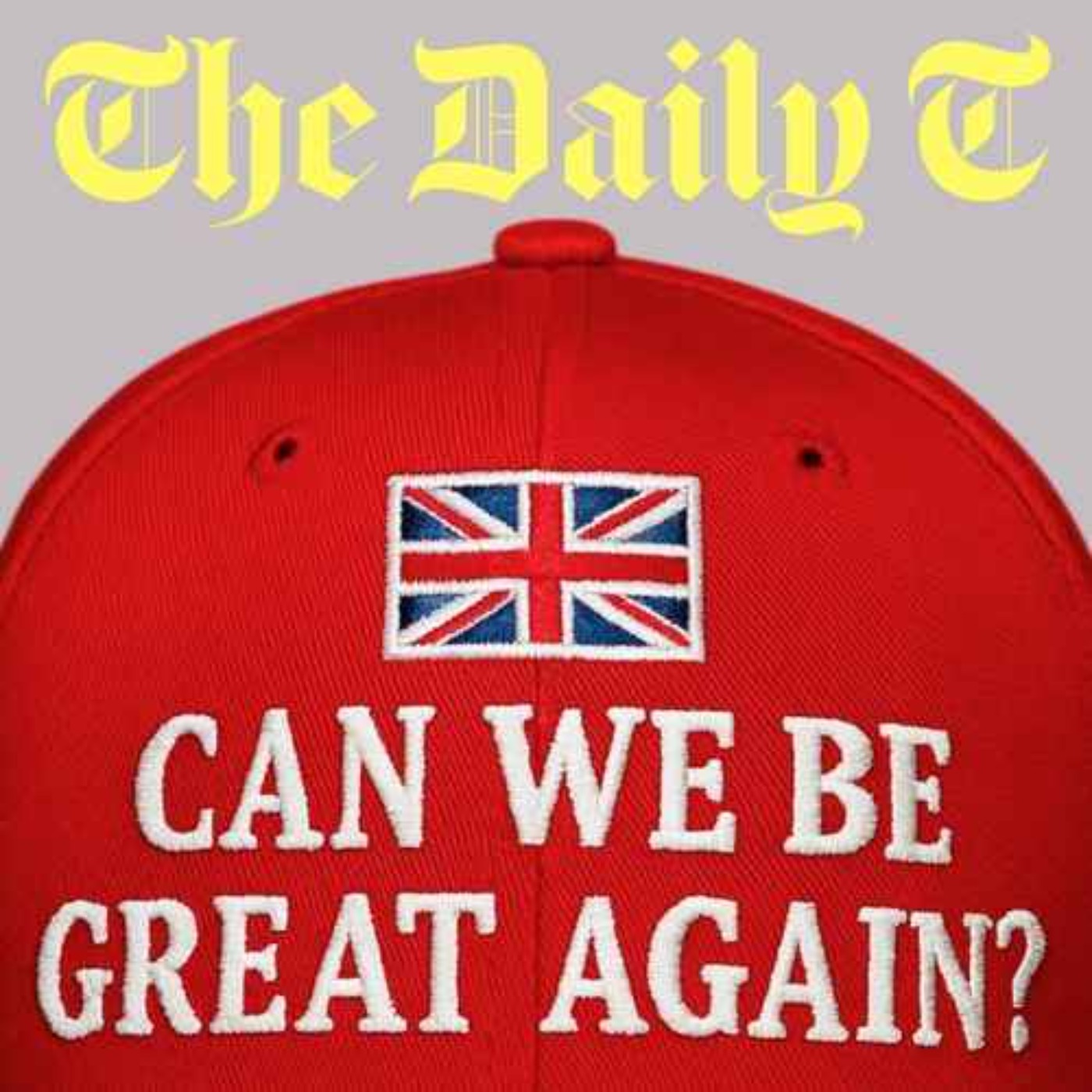
Jeremy Hunt argues that “free trade Britain” and broader globalisation can help the UK beat the economic harm from Trump-style tariffs, but only if governments better spread trade’s benefits across the country (not just London/South East) and explain the consumer gains.
Jeremy Hunt (former UK Chancellor and Foreign Secretary; author of “Can We Be Great Again?”). Dan Hannan (former Conservative MEP; founding president of the Institute for Free Trade; advisor to the Board of Trade). David Hennig (director, UK Trade Policy Project at the European Centre for International Political Economy).
Trade’s main gain is cheaper imports, which raise real living standards; tariffs and protectionism make countries poorer. Trump’s tariff threat is likely limited because markets and other countries won’t follow. Brexit’s opportunity wasn’t maximised due to slow deregulation and weak trade policy; the UK should focus on services, future regulation (e.g., AI), and decentralising power.
1846 unilateral UK tariff removal; France’s customs delays blocking Japanese video recorders; UK services strengths (City of London, tech, life sciences, creative industries); Chatham’s shift from dockyard/industry to audiovisual work; US/China/EU protectionism trend since ~2009.
Written by AI. May contain mistakes.
Discussion on the importance of trade and Jeremy Hunt's book on Britain's global role.
“Shop Halloween decor now at Wayfair.com.”
Discussion on the importance of trade and Jeremy Hunt's book on Britain's global role.
“This is the book by Jeremy Hunt, former Chancellor and Foreign Secretary, about why a dangerous world needs Britain.”
A debate between Daniel Hannan and David Hennig on post-Brexit trade opportunities.
“So we have got the perfect guest to discuss the future of trade in the UK and beyond.”
Exploration of the opportunities and challenges for the UK in a post-Brexit context.
“Well, we are trying not to look back too much, Camilla, in these podcasts.”
Discussion on the challenges of protectionism and the need for a liberal trade policy.
“I just want to defend Jeremy's consistency on this, especially for those Brexiteer listeners who are saying, oh, he's one of those blobsters, he's only saying it, you know.”
Analysis of how the EU's and France's actions affect UK trade post-Brexit.
“And so in order to take advantage of these trade deals, we need governments that are prepared to sustain some short-term unpopularity in pursuit of long-term prosperity.”
Discover how Brexit and global trade dynamics influence the UK's economy.
“has been the same since the 1980s, as Jeremy has pointed out.”
Learn about Britain's historical role in promoting free trade and its impacts.
“That isn't an option for a smaller country like us.”
Explore public sentiment towards globalization and the challenge of explaining its benefits.
“Yeah, I mean, David, should trade policy in the UK be tailored towards British consumers or British producers?”
Examine how technological advances shape job markets and economic structures.
“And this is, you know, I remember knocking on doors in the general election, which I managed to hold on by my fingertips to my seat in Godalming and Ash.”
Discuss strategies for revitalizing towns affected by industrial decline through service-oriented economies.
“that the divide is actually between cities and towns.”
Discusses the effects of job loss in communities and the evolution of local economies.
“We certainly need to do something about that.”
Explores the implications of Trump's tariffs and the importance of free trade.
“So, Jeremy, do you think that Trump's America is going to get poorer?”
Exploring how Trump's tariffs have affected global trade dynamics and the responses from other nations.
“I think all of us would have thought we are going to have a global trade war and this is going to turn the clock right back to the 1930s.”

Get the gist, explore an idea or ask about something said.
 Claude
On The Daily T, what are the key points of this episode?
Searching your listeningAutomatic transcript. May contain errors.
0:02The Telegraph.
0:30All season long. Shop Halloween decor now at Wayfair.com. Wayfair, every style, every home. In a world where AI is changing every role in every industry, knowing who actually has deep expertise matters more than ever. Upwork connects you with the highly skilled freelance professionals with proven track records, so you can hire with confidence. Upwork gives your business fast access to highly skilled specialists with deep expertise, so you can fill critical skill gaps, launch projects faster, and scale support up or down without committing to full-time headcount. With Business Plus, you can access the top 1 % of talent on Upwork.
1:06AI-powered shortlisting delivers a curated shortlist of top freelancers matched to your goals in under six hours. No endless searching required. Thousands of growing businesses already trust Upwork to hire highly skilled freelance professionals for everything from one-off projects to ongoing support. It's free to sign up, and posting a job is easy. Visit Upwork.com right now and post your job for free. That is Upwork.com to connect with top talent ready to help your business grow. That's U-P-W-O-R-K dot com. Upwork.com.
1:51Can We Be Great Again? This is the book by Jeremy Hunt, former Chancellor and Foreign Secretary, about why a dangerous world needs Britain. Hello, Jeremy, once again. Hi, Camilla. This is a series of podcasts we're recording for The Daily Tea, channeling your optimism when it comes to the UK's role in the world. Why write the book? Well, because I think we are suffering from this pervasive negativity and declinism, which is just out of kilter with our actual position in the world. And if you compare us to the glory days of the British Empire when a quarter of the globe was pink, of course we are a smaller power than then.
2:28But actually that's not the right comparison. The comparison is how do we stack up today? And actually we remain one of the most powerful countries in the world when it comes to the big global issues that we face. And one of them is around trade because trade has been the most powerful engine of prosperity the human race has ever known. and we have an American president, leader of the most powerful democracy, who doesn't believe in it. And that's why I have a whole chapter on free trade. And I think the subtext of this is actually something that is more interesting than the sort of techie details that economists like to talk about with trade.
3:06It is actually how we're going to make something of our post-Brexit future because we do now have autonomy when it comes to trade. That gives us choice. And if we choose to be a free trading country, I think that opens enormous opportunities. If we take the wrong decisions, then I don't say we're going to reverse Brexit, but we will end up eroding it by the back door. All right. So we have got the perfect guest to discuss the future of trade in the UK and beyond. Daniel Hannan, former MEP, founding president of the Institute for Free Trade and an advisor to the Board of Trade, and David Hennig, director of the UK Trade Policy Project at the European Centre for International Political Economy.
3:50Now, let's just get something established between you two, because you've had some Brexit beef in the past. Are we friends now? Did you disagree about post-Brexit trade? Oh, we disagreed, yes. I mean, we were in the same year at university. We've known each other for a long time. But I rather feel that David incarnated what Jeremy was just talking about, people who couldn't bring themselves to see any good coming out of Brexit. And I particularly thought, and David was by no means unusual in this, there were a lot of people doing it, to see people who were natural internationalists and natural free traders adopting really very Trumpy nativist protectionist positions over things like the Australia and New Zealand deals.
4:33Oh, it's going to wipe out our farmers. We're going to be undercut by all these cheap imports. I felt that that was fundamentally not about trade. It was about a lingering resentment of Brexit. And that attitude, I think, skewed our readiness to take advantage of some of the opportunities that Jeremy was just talking about. I must let you respond to that, David. My feeling is that I am quite happy to take the opportunities of the UK not being part of the EU anymore, but we haven't taken them in a very good way. I have quite an objection to the way that we focused on the economy we're not. We focused on trying to be a goods economy.
5:09We weren't actually following what the market was saying the UK was. We did a lousy trade deal with Australia because we were a bit too desperate. The UK is a place that people do want to do business. So I'm marginally on Jeremy's side of being relatively optimistic about this. I just don't feel that we have found the trade policy since Brexit that we actually should have that will allow us to strengthen. Well, I must admit I'm a little bit disappointed post-Brexit, even as a lever, because we were promised great things. We were promised that this was absolutely revolutionise our economy, that we would be out there in the world striking trade deals left, right and centre that would be hugely beneficial to the British public.
5:49And let's be honest, and this is one of the reasons why people are now having regrets, not me. I'm quite happy with Brexit, but let's be honest, we haven't maximised on those opportunities. This was, I'm afraid, I keep on pointing it back to, a fault of the Conservative government. Well, we are trying not to look back too much, Camilla, in these podcasts. Could we just look back a little bit? But I'm the first to admit that we didn't do everything we could have. And I think in Boris Johnson's defence, because he was Prime Minister for half of the last Parliament, we did have the pandemic, which was a kind of huge, big break in our ability to really do these big international deals.
6:28But I think the truth is that there was some confusion, some hesitation. And interestingly, I think that Keir Starmer, now in power, the person who really wanted to reverse Brexit more than anyone in Parliament at the moment, is actually coming to understand there are some benefits to being outside the EU, as we've seen with the very limited but nonetheless significant deal that we've signed with the United States. And I think the other area, and I'll be the first to admit that, you know, in the Brexit debates, when I actually voted to remain, although I've always believed we can make a great success of Brexit and that's what I want us to do now, I think the thing that people like me didn't understand was the opportunity in Brexit was to be able to set our own regulations when it comes to the industries of the future.
7:21and it turns out that that's the reason we can really be optimistic about this country when it comes to life sciences with a centre in Europe for medicine discovery around Cambridge. We have the largest tech sector in Europe. We are the largest film industry. That's now an offshoot of the tech sector and the regulations around those industries of the future are the way that you attract business. It's how Nigel Lawson turned the City of London into the world's second largest financial centre after Big Bang. That was a regulatory upheaval. And that really is now our opportunity. So I think it's, yes, signing trade deals where we can to break down barriers, but also being really smart about things like AI regulation.
8:06That will be the thing that funds the NHS in 20 years' time. I just want to defend Jeremy's consistency on this, especially for those Brexiteer listeners who are saying, oh, he's one of those blobsters, he's only saying it, you know. In the run-up to the vote, in fact, very briefly before the vote, as Jeremy will remember, he was kind enough to invite me to his AGM in Surrey and to give a spiel for why to vote leave, which he didn't need to do. And I remember you said afterwards, look, I don't disagree with anything that Hannan has just said about the lack of democracy and the money and all that.
8:36My worry is about the short-term disruption. and is it worth these long-term gains if we're going to have this short-term pain? And then 18 months later, you very honestly said, well, actually, we didn't really have any of that short-term pain. The predictions that were made by the OBR, the Treasury, the Bank of England, OECD, and so on about the recession that would follow immediately after a leave vote have not materialized. So you've been very consistent about this. On the issue of have we taken advantage of the opportunities, as you correctly say, Camilla, We've been incredibly and disappointingly slow, both in terms of domestic deregulation and in terms of international trade.
9:16And I think the reason for this is that we're a change-averse species, and liberalization is always unpopular when polled in isolation. It's always much easier to frighten people about the negatives than it is to enthuse people about the positives, especially when you're doing something counterintuitive like lowering barriers. So protectionism pulls well in every age and every nation because it sounds like common sense. It rests on a series of assertions that are intuitive. Oh, we can't carry on with a trade deficit like this. Oh, we need to grow our own food. Oh, we need to protect strategic industries.
9:51We can't compete with slave wage economies. Always elicits a round of applause. And yet all of those things, when translated into policy, make a country needlessly poorer. And so in order to take advantage of these trade deals, we need governments that are prepared to sustain some short-term unpopularity in pursuit of long-term prosperity. And I think that was a real indictment of the previous conservative government. I have to say I was very disappointed by the reaction of the opposition when we signed or when Labour signed the India deal, which is the most ambitious thing India has ever done.
10:26I mean, sure, an imperfect deal. Everything in this world is imperfect, but way better than the status quo ante. And yes, the America deal is a stopgap deal, but surely we should all be in favour of getting the comprehensive deal with our single biggest trading partner that both sides are promising. And it would be very sad. I mean, one of the advantages of having a Labour government is that they should be able to do these liberalising things without needing to worry about the opposition playing games. And I think that the Tories need to police their own standards. I think I come in because I actually disagree.
10:57I have a different view, which is not that we haven't taken advantage of the regulation. I don't think that opportunity is in fact there. It's a global market now. I think the problem is that we don't like our own strengths as a country. I have a deep problem, the fact that we constantly, you know, we want to build up the manufacturing we had 40 years ago. We don't recognise we have a world-class services industry, and we neglect it, and we neglect the people who want to come here, and we're actually rejecting our own free market successes of the past. So I have a very different view that it's not about regulation.
11:27You can make a case that it's both, but I honestly think we need to focus differently as an economy. I actually don't disagree with that. I do think we are skewed to the top 17 % of our economy that is manufacturing-based because, again, it is a very human thing to care more about the jobs you remember from childhood. We're all weirdly nostalgic about this. Think of any preschool book or book for young children. It's all full of people who work with steel or farmers, right? The one exception, the one sort of free market guy is Bob the Builder. He's always going to be popular in my house. But it's very difficult to enthuse people about jobs where it is difficult to see what the job is, right?
12:10There's an intangibility to the services industry compared with, not least in light of Trump and J.D. Vance trying to re-industrialise us actually making widgets to sell. What about this as an alternative narrative to why things have gone wrong post-Brexit? It's actually all the French's fault. Now, I say that because Jeremy puts in this book a very good example of how difficult the French made it for the Japanese to import their own, was it video recorders? Video recorders, yes. Right? So this is classic example. Where is it? In Poitiers, where basically they had the smallest customs office possible to process all of these video recorders coming in.
12:48It took an eternity and a trade barrier was literally physically put up. Now, many people will argue, David, that one of the reasons why there isn't that frictionless trade, particularly when it comes to the border in Northern Ireland, is because the EU have been so difficult in their approach to Brexit because really they've resented it from the very beginning and tried to make life inconvenient for those trading across the border. Well, Dan Hallon mentions my angry tweets about UK trade deals. He doesn't mention my angry tweets about the French continually behaving like the French. Oh, so we all agree on the French?
13:29So I'm afraid that with... Unfortunately, on this particular occasion, I agree. The French continue to be blockers towards trade, and it is a problem for us, and it will be a problem in our UK-EU trade relations. The only place I'm sure I disagree with at least one of you is on the fact we've got to deal with them anyway because they're only 20 miles away. But I only cite that example because, and excuse my French, plus ça change, OK? The situation with dealing with the French across that border has been the same since the 1980s, as Jeremy has pointed out. But how about this, David, in the whole war between Leave and Remain that we may as well just restoke here before we move on to more global matters?
14:10Isn't it the case that, unfortunately, in light of the election of Donald Trump for a second time, that the EU's protectionism has absolutely been its enemy? It has been shafted by that association across the European continent and we on the outside have been benefited by the fact that we did vote for Brexit. Well, first of all, I'm not a spokesperson for Remain or for Leave, in fact. The fact of the matter is that the US has always been a little bit different, a little bit protectionist. It's a continent in its own right. They make a lot more there. The EU has different forces within it. Now, they miss us because we were a balancing force to the French.
14:52The French have always been pretty anti-trade. The UK was always pro-trade. Germany in the middle made up its mind two or three years after the event as to whether it was in favour or against, but broadly would go with us. So the EU is now in that problem, but the EU has to be globally competitive. We all have to be globally competitive. I mean, in a way, I find the argument... I'm afraid I find the argument rather sterile. We actually need the EU to be a success, ideally, because we are still going to trade a lot. We want to sell our services to the EU. Not according to Jeremy. He wants trans-Pacific partnerships.
15:23I want it all. Why should we not have it all? Why should we not trade with the EU and the world? I mean, I think the interesting thing, I just want to go back to something I discovered in the course of researching this book, which is not a technical point of trade policy, but just one of the most extraordinary things that the UK did. In 1846, we became the first country ever to unilaterally remove all our trade barriers. And that lasted right the way through till 1931, and it presaged a period when Britain economically dominated the world. And I just want to go back to something that David said right at the start about the fact that we underplay our tremendous success in services.
16:04I think that's true. But what is fascinating is that the most successful parts of the British economy are the ones that are fully open to the full force of international competition. The City of London is the best example, but so is our technology industry, which is effectively part of a kind of single market with the United States. Our life sciences industry, our creative industries, These are all industries where there are very few barriers to international exchange around the world, and they are ones that we excel in. So I would argue that that is also true when it comes to manufacturing. It is true.
16:40If you are a very large country like China or the United States, there is an option, as China has done, for example, to set up an electric battery manufacturing company in every province and get them to compete the hell out of each other, and only when you're ready, set them loose on the world. That isn't an option for a smaller country like us. And for us, much the best route, if we want to be internationally competitive, is to take advantage of global competition to make sure that we are the most competitive anywhere. And it's those sectors that we've done the best in. And I think, you know, in this period where we are worrying if we can actually grow the British economy or whether we're condemned to terminal decline, actually it's time to remember something that in the 19th century we taught the world.
17:30What Jeremy says is absolutely true, but also completely counterintuitive and therefore always unpopular. If you look at the response to the stopgap deal we have with the US, it was, oh, we're cutting our tariffs more than they are. Well, great. I mean, to anyone who understands economics, that makes us the winners, right? But that is not most people. Most people have got other things to worry about. And so it is intuitive to think that the chief gain from trade is easier exports when, in fact, the real gain is cheaper imports because that frees up your time and money as prices come down that you then spend on other things, which is what drives growth in the whole economy.
18:03And that was indeed, as Jeremy correctly says, the lesson after the abolition of the corn laws and the remaining tariffs we had. It made us the richest country in the world and the biggest gains were felt by people on low incomes because it made a bigger difference to them. But I think that has always been unpopular. The great Whig politician and Indian administrator, Lord Macaulay, said free trade, the greatest benefit a government can bestow on a people is in every country unpopular. He said that over 200 years ago in 1824. True then, true in 1924, true in 2024 and true in every year in between.
18:38And I think this actually is an opportunity for us because the rest of the world is going at the moment in a protectionist direction. Every year since I think about 2009, there have been more trade barriers erected than taken down. And that's very unusual in peacetime. It's happening in Washington. It's happening in Brussels. It's happening in Beijing. We do have an opportunity to recall our historic mission as the country that led by example, that opened its markets. And I have been, I have to say, very disappointed by the slowness of politicians and officials to do this. They cave in to easy short-term headlines rather than saying, look, it's worth actually explaining to people why lowering our barriers, exactly as in the 19th century, why lowering our barriers makes everyone richer.
19:25Yeah, I mean, David, should trade policy in the UK be tailored towards British consumers or British producers? The inevitability is you have to do a little bit of compromise all round, but we really need to tell the story of trade a whole lot better. Take this point, and I've always agreed that trade is not inherently popular, and a few years ago people looked at you mad if you said that. It's turned round now. But we are all gaining phenomenally as consumers from trade. On the other hand, we also see maybe local factory has closed, the decisions of multinationals are affecting our communities.
20:04Governments, politicians, and I'm the non-politician on the panel, need to explain that better. And I do think that, I'm afraid I'm looking at you slightly accusingly in both cases of saying you've not been telling that story well enough. I'll say that to the current government as well. You've got to be telling the story that we have all gained from trade. And yes, in some instances, it will mean that that factory has closed. But I'm afraid things move on. What we have to do is to think about the industries of the future. Another one that I talk about a lot is distribution and logistics. That's the new manufacturing.
20:36We used to have a factory in every town. Now we have a warehouse in every town. But we don't appear to be proud of the warehouse, but we were proud of the manufacturing. Actually, I'm not sure we were proud of the manufacturing back then. I just think people are, you know, it's the point you keep making. We have a lot of false nostalgia. There was a calculation that the, this was in the US, that the average full-time auto worker in Detroit in the 1950s earned slightly less than an Amazon warehouse worker now. We have an absolutely false idea of what it was when we were a manufacturing company.
21:08Everything else cost less then, but yeah. Well, OK. I'm not sure it did, not goods. But would people really... Not equivalently to wages. I mean, I think we are just, as a species, prone to a lot of false nostalgia. When people say, oh, people were better off 20 years ago, you can afford this and that. I mean, if people actually went back to the beginning of the century, you know, four channels on TV and maybe a blockbuster video and, you know, the coffee was awful and there were no cheap flights and going on holiday meant taking a camera and rolls of film. I mean, the reason people say that is because they are thinking only about producers and not about themselves as consumers, which we all are.
21:40I'd love to send some of the economists who make that argument back in a time capsule to live, you know, three days at the beginning of the century and then come back and tell me that nothing has got better. Yeah, I mean, maybe the availability and the price of white goods is the kind of marker for the average householder, or indeed just tech. I mean, if you think back to tech and the hi-fi of the 1980s that needed to be saved up for for a year and a half, and then you think about the ease with which a young person just buys a smartphone. In fact, even today, my daughter said, I've bought an Apple Watch.
22:08Imagine doing that when we were younger. Yes. And let me just respond to David's challenge here about telling the story better, because I think there's a particular example of where we've got it catastrophically wrong. And that is the abuse that is hurled at the word globalization. And this is, you know, I remember knocking on doors in the general election, which I managed to hold on by my fingertips to my seat in Godalming and Ash. And people would say to me, I'm not going to vote for you because you support globalization. And I think... And actually, more usually it's you are a globalist. Yes, indeed.
22:44It's a labelling of you, which is so ridiculous. You are representing the seat where you grew up. You know, you're a cricket fan. You're rooted in a local country. But what they mean by that is because you support free trade, we are assuming that you're one of those people who's only at home in Davos or in Brussels and who somehow is a corporate suit who hates ordinary people. And that's a way of sidestepping any of the issues that you really ought to be engaging with. Absolutely. And I think the fundamental mistake in Britain, America, and actually across all the advanced democracies, is not that we have embraced free trade, which if you look around the world, when I was born, half the world was in extreme poverty, less than a dollar a day income.
23:25Now it's less than 9%, and the population of the world has nearly tripled in that period. And it's an extraordinary achievement, in some ways the most extraordinary achievement of humanity, to wipe out so much poverty in such a short period of time. But where we failed is in spreading the benefits of globalisation evenly across the country. And that's particularly true in the UK because of the concentration of power and wealth in London and the South East. So you have Manchester, which is 40 % less productive on average than London, because so many more of the internationally competitive jobs are based in London with the higher salaries and so on.
24:06And so I think that Trump, for example, is completely learning the wrong lesson about what's gone wrong with globalisation. And, you know, the Yale Budget Observatory says that if his tariffs are implemented in full, which thankfully I don't think they are going to be, the average American household will be$3 ,800 a year, worse off every year. Now, for people on low incomes, that is a much bigger deal than people on high incomes that Trump claims that he detests. And so I think the other side to the coin of this debate, if we're going to be champions of the free trade that has been such an engine for prosperity, is how do we do a better job of spreading economics?
24:48I'm going to challenge your assumption on one thing, Jeremy, which I think a lot of that is just technology. It's not really about globalization. The move from heavy industry to services is a global move and is being driven by invention. And if somebody has invented a device that allows you to automate a process and puts a lot of people out of work, first of all, those people will find other jobs. That's been the counterintuitive story of all human history, that although every technological advance is met by fear of mass unemployment, things keep getting better. But second, it doesn't matter whether that widget or that new device was invented in your country or someone else's.
25:28You can't keep it out. So the question is, given that there is going to be technological change and that some jobs are going to become obsolescent, how do you ease the transition of the people who used to do those jobs into the next thing? And there is absolutely no evidence that protectionism helps them. On the contrary, what you want to be doing is pulling in as much foreign investment as possible so they can find alternative. And by the way, almost always better and higher paid jobs. But on that point, and you talked about a north-south divide, isn't the divide actually in the UK, and this speaks to your point, David, about whether we are too nostalgia about making things as opposed to selling services, that the divide is actually between cities and towns.
26:09and the cities are home to professional classes, the white-collar workers, and therefore they are prosperous, but while you see these towns who might be mining villages in Wales, they might be seaside towns, those populations, I'm sorry, have been generationally left behind because mines were closed down, manufacturing was closed down, nothing replaced them, and those towns now feel like they are desolate with not much of a future. And what worries me a lot is that the narrative that Trump has, that a lot of people have in this country as well, is that we can somehow bring those back to life with the same thing.
26:45We need to reimagine those towns. Now, you've got a situation now where almost any production can take place anywhere in the world. Now, that's pretty bad for those places that used to specialise in one product. On the other hand, it's an opportunity as well for places because it means that, you know, well, what could this town be? What could this city be? And some places are doing that quite well. And some places are not doing it that well. Where we get the problem is if we think that somehow we're going to bring the factory back. You're not. And even if you did, it would probably only employ 10 people where previously it employed 1 ,000 because of that technology.
27:19So how do we reimagine the services? How do we reimagine that we cover the country in services? How do we measure services? I mean, this is something I've just written about. One of the things that I think reasons why people don't accept is, somebody mentioned the word intangible before. You mentioned it. how do we measure if suddenly thousands of people move into, I don't know, a seaside resort that used to be tourism, suddenly 1 ,000 people move in who are digital content creators who are probably earning a lot more than people who used to run hotels, let's say, because they're nice places to be, seaside resorts.
27:49How do we show that place is a lot more wealthy? I don't think we have the tools. I think we need to develop those tools, and I think that that's what we need to do. We need to think about the future economy. I'm only mindful of the fact that the benefits bill has grown by£86 billion in the last decade. We certainly need to do something about that. So you're saying, Dan, oh, well, people automatically or history suggests that they do progress in life and go on to higher paid jobs. In this country, a lot of people have gone on to benefits. So I had an example in my constituency when I was a Euro MP of exactly what David was just talking about, which was Chatham.
28:21There was an old dockyard at Chatham, employed 12 ,000 people thereabouts at height, closed, I think, in 1984 at exactly the moment when the steel mills and the coal mines were closing around the country. That, of course, was a huge trauma. And I don't want to downplay that for a second. If you've had a secure job as a welder, let's say, and then in your early 40s, you suddenly lose your work and the whole structure of your life. And you're, you know, the only work locally in the short term is a security guard. You're going to be furious. And I used to get this from constituents there, that evil witch, Margaret Thatcher.
28:50She hated the working class, da, da, da. I understand it. I totally, totally buy it. Who wouldn't be furious in that situation? But it's only fair to tell that story right through to the end. going into the pandemic, unemployment in that constituency was 2.1%. There are now more people working there than when it was a shipyard. And what are they doing? Part of it is a university, I'm sorry to say, and there's a little bit of sort of heritage. I'm kidding. But the biggest, the real employer there is the audiovisual sector. It's where they call the midwife. It's where they made Sherlock, right? And so the grandsons of those guys who were bashing metal for a living are now tapping at screens.
29:27Now, my maternal grandfather was a shipyard worker on the Clyde. He had the typical unhealthy West of Scotland lifestyle. He smoked very heavily. He died when he was 61, I think, so I never met him. So I never got the chance to ask him whether he would have wanted to keep that industry going at all costs, however subsidised, however protected. But I have a pretty shrewd idea. If he could see what my cousins are doing for a living now, he would not hesitate, right? So yes, there is always a trauma in the transition, although I I will repeat that that is a transition caused by technology, not by trade.
30:00But most of us are also capable of taking a longer view and wanting a better life for our children, for our grandchildren. And the countries that try to build walls around what they've got and try to halt that progress end up being needlessly poorer. The supreme example in the world of the country that has tried to produce everything itself and keep the rest of the world out is North Korea. They've elevated it to the ruling principle. It's called juche, self-sufficiency. And that is, you know, where would you rather live?
30:55They're made all season long. Shop Halloween decor now at Wayfair.com. Wayfair, every style, every home. In a world where AI is changing every role in every industry, knowing who actually has deep expertise matters more than ever. Upwork connects you with the highly skilled freelance professionals with proven track records, so you can hire with confidence. Upwork gives your business fast access to highly skilled specialists with deep expertise, so you can fill critical skill gaps, launch projects faster, and scale support up or down without committing to full-time headcount. With Business Plus, you can access the top 1 % of talent on Upwork.
31:32AI-powered shortlisting delivers a curated shortlist of top freelancers matched to your goals in under six hours. No endless searching required. Thousands of growing businesses already trust Upwork to hire highly skilled freelance professionals for everything from one-off projects to ongoing support. It's free to sign up, and posting a job is easy. Visit Upwork.com right now and post your job for free. That is Upwork.com to connect with top talent ready to help your business grow. That's U-P-W-O-R-K dot com. Upwork.com. Outdated technology isn't going to improve a disconnected healthcare system.
32:07Next. So what will? At Optum, we wake up every day and work for better. We call it healthy optimism. It's how we use insights and technology to help providers focus less on paperwork and more on patients. Will we fix it all overnight? No. But we'll wake up trying again and again until health care works as one for everyone. That's healthy optimism. Learn more at Optum.com.
32:41So, Jeremy, do you think that Trump's America is going to get poorer? Do you think that this re-industrialization project is going to be successful? what do you think is going to be the effect of his tariff war? I think it'll be negligible actually because I think we've seen that the one thing that stops Trump in his tracks is the markets and the markets in the end will not allow him to do the incredibly damaging things that would happen if he really went through with his Liberation Day tariffs but I think Trump poses a big challenge to the argument that I think Daniel, David and I all agree on, which is that fundamentally free trade is a good thing.
33:23How do you get support for something that is inherently unpopular? And if you don't take the trouble to do that, you are going to end up with populist leaders who support tariffs. And we need to think much harder about that because, as we can see all over the world, free trade is in retreat because we haven't worked out how to do this. Now, I think there is a left-wing answer, which is redistribution. Redistribute from the south to the north in the UK through the tax system. We know that drags down the economy, ultimately damages wealth creation. It's not an answer. Boris Johnson, to his credit, had a good go with the levelling up agenda.
34:04But I think, with the benefit of hindsight, too often that was about bungs from the Treasury for infrastructure projects in the furthest corners of the country, which really had very little ongoing effect. And I'm afraid I think the new Labour government, it's not a new Labour government, actually, it's an old Labour government, but the Labour government that we currently have is actually doing the same thing, with Rachel Rees going up and announcing£15 billion for northern infrastructure projects. They think that'll be good politically and get everyone on board. It won't. I want to suggest there's a third way, which is to dismantle the terrible centralised political structures that we have in London.
34:49Andy Burnham must be the only mayor in the Western world responsible for a city the size of Manchester who has to bang on the doors of the capital city London to get money for a new tram system. Anywhere else in Europe or North America he would be able to raise the money himself, borrow the money himself find a way to solve that problem in his own region. And I think this is a hang-up for all sorts of reasons, but it really goes all the way back to Margaret Thatcher trying to crack down on the loony left councils in the 1980s. But we've got to move beyond that now and recognise that in the end we need to set local areas free to have some control of their own economic destiny.
35:33And until we do that, we're going to continue to have this terrible divide between different parts of the country. But if the infrastructure project is a proper rail link between Leeds and Manchester, that could be wholly transformative for that part of the country. David, what's your view on what Jeremy has said but also Trump's tariff America? So one of the good and bad things of the modern world is that most trade is carried out by large corporates. They can get round barriers. Now, that's bad because it's actually slightly inhibiting growth. We're not getting enough challenger companies in.
36:08It's good, on the other hand, because when Trump comes in and puts in all these barriers, these large companies are working around it, or frankly, they're phoning him up and saying, I need this, otherwise I'm going to be in trouble. And it's not dragging the economy down as much as it might do either. So in that sense, I'm tending to agree that Trump is not going to drag it down. Frankly, what I'm watching for, what I think you're more worried than I am, whether other countries follow Trump's lead. And thankfully, so far, I'm not seeing many that are doing so. I'm seeing that countries don't. This is not the 1930s.
36:37most countries think this is silly, we're not going to follow Trump, but we can't quite say that because he's thin-skinned. In terms of, frankly, Leeds and Manchester, and with a slight nod, I'm afraid, towards the Treasury, which I know was your old home, I do wonder this. Look, if you arrive at Heathrow, you're getting onto the Elizabeth line, you're thinking, good city, well-connected, I can invest here. Now, London doesn't need the help, frankly, because one of the reasons I think, you know, if you look at UK film production, why is it all based around London, which is expensive? you don't have to persuade a Hollywood film star to come and spend six months in London they're going to want to do that if you get off Manchester Airport if you're lucky enough that the plane wasn't several hours late anyway because it's in a terrible state frankly the infrastructure is just not there in Manchester to join up with Liverpool and Leeds I'm sorry I'm going to go back to HS2 because I know it hasn't come up yet but frankly how we started that with London to Birmingham and not with Leeds, Manchester, Liverpool which is so badly in need of proper infrastructure, I don't know.
37:40But that is also what we need in order to persuade these investors who want to come to the UK, who have no problem in persuading their staff that they could live in London, but we need to persuade them that they could also base in Manchester or Liverpool or Newcastle and not enough of them will. And, sorry, I'm coming back to a free market point of view here. They are making the decisions, not us. Google is making the decision where it's going to put its artificial intelligence and the other companies. And at the moment, we're not giving them enough reason to make it outside of London. And we need to give them more reasons.
38:13And I'm sure that strong regional mayors, I have heard this, Andy Street was having that effect in Birmingham as well. Strong regional mayors make a difference. But ultimately, the government has to, yeah, it has to let go of it. And we all have to let go of it. We all have to stop being so risk averse that every time something goes wrong, we demand what is government going to do about this? Dan, Trump's America, is it going to be an economic success, the economy grows, the price of eggs comes down, or a disaster? If he were actually to pursue the tariff policy that he wants, it would be a disaster.
38:45But I agree with Jeremy that he is unlikely to. It's worth remembering also that because the US is a very large economy, the largest in the world, trade is a commensurately smaller part of it. So even with a really bad trade policy, you can offset that with a good tax and deregulation policy at home. So I don't think on balance it will be a disaster. I do worry about this country. And to come back to what David was saying about what can governments do, I think there are some really obvious things that we need to do if we want to attract investment. We need to reduce the price of energy, first of all.
39:17Keir Starmer talks about being an AI superpower. AI is about as energy intensive as aluminium production. It's impossible to do that while having the most expensive industrial energy in the developed world. We need to cut taxes. We particularly need to cut taxes on investment and on corporates if we want to be competitive. And I think we do need to change the balance of incentives for people. If we have this welfare system where 20 ,000 working-age adults are choosing to go on to benefits, net, right? I mean, more than are coming off them. Plainly, we have set the incentives in a bad way, and that is both a direct drain on the exchequer, and bad for taxpayers, and also calamitous for those people.
39:59So all of those things could be fixed. But I do agree with Jeremy that I think that we need also to have a proper link between taxation, representation and expenditure at local level. And at the moment, because we have such uniquely feeble local government, people understandably treat local elections purely as a referendum on the national government. Turnout is extremely low. We don't get the highest quality of candidate in the way that we would if there were real powers there. The high quality people stick it for one or two terms and then say, I can't get anything done here. And they're right to think that.
40:31So genuine decentralization, democratization, diffusion of power, I think would be an immense part of lifting the poorer parts of this country. Can I tell you the maddest example of what you just said, Dan, from my time as chancellor? I became chancellor in the autumn of 22. And it seems a long time ago. But if you cast your minds back, the thing that people were most terrified of at the time was soaring energy bills. They were already higher than nearly anywhere in Europe, but they were soaring because of the invasion in Ukraine. And I had to introduce an energy price cap that gave people the comfort of knowing that their energy bills over the winter would not go to more than an average of£2 ,000 a household.
41:16And then I, for the following year, I made it£2 ,500. and I had to set aside£99 billion in order to make that promise. Can you imagine if we had spent that£99 billion 20 years ago on nuclear power stations, we would have had abundant cheap energy and we wouldn't have had to worry about that problem. And I think Dan is absolutely right to say that being more farsighted about energy is critical. But I just want to make an optimistic point. We like to end on Jeremy's optimistic point. My book is an optimistic book and I am optimistic, despite the problems which I think we write, to be honest about, in terms of getting popular support for one of Britain's greatest ever inventions, going back to Adam Smith and David Ricardo, free trade.
42:07The truth is that if all of us had had a crystal ball six months ago and we were sitting around this table with Mystic Meg looking into the future and we'd said not only is Trump going to be elected, but he is going to do this thing which he is going to mistakenly call Liberation Day and we're going to have tariffs of 145 % on China, 70 % on Vietnam, 20 % on the EU. I think all of us would have thought we are going to have a global trade war and this is going to turn the clock right back to the 1930s. Not a global recession, but a global depression because of what that will unleash. And in fact, what has happened is not that at all.
42:49The rest of the world has looked at what Trump has said, noted that America is only responsible for 11 % of world trade, and said, thanks, but no thanks. And actually, you know, we are seeing more energy into trade deals outside America than we probably had before. And I think the wake-up call for people who do understand the theory of free trade is that we've got to be better at translating the benefits so that ordinary families feel that they are getting a share of the immense wealth that is happening as a result of all this trade. At the moment, they don't, and that's what's allowing room for people who are sceptics to come in.
43:33And I think that's really the wake-up call for us. So in a way, things have worked out better than we might have feared, but we haven't solved yet that bigger problem. All right, so Trump has basically engendered in the rest of the world the art of the deal and deal-making. And I think this is a particular responsibility of ours for historical reasons, but also for geographical reasons. There are three, if you like, big blocks in the world that are capable of exporting their regulations and that therefore have less interest in interoperability and mutual recognition and more in trying to export their own system.
44:07One is the US, one is the EU, and one is China. And then immediately below those three big blocks at the WTO, you have two countries that are big and powerful in negotiations, but that do have an interest in the most open sea lanes possible. And that's us and Japan. And I think we have commensurately a huge responsibility to be steering the world back. And I think Jeremy put it beautifully when he started. This is what raised us above the run of nations in the first place. It was unilateral free trade. We stopped charging our own poor in order to transfer money to rich and privileged groups which were politically connected in this country.
44:46And we can still do it. I want to finish with where you started. Though much is taken, much abides. And though we are not now, that strength, which in old days moved earth and heaven, that which we are, we are. I'm not taking any responsibility. I just want to trade more. I thought you were going to start singing Rule Britannia then, David, No, I'm just going, no, sorry, I'm just... As we cloak ourselves in union flags. No, I'm finishing on a very ground-level view. Never mind the responsibility, let's just trade. Let's just trade. Jeremy Hunt, David Hennig and Dan Hannan, thank you very much for joining us on this very special Daily Tea.
45:46Outdated technology isn't going to improve a disconnected healthcare system. Next. So what will? At Optum, we wake up every day and work for better. We call it healthy optimism. It's how we use insights and technology to help providers focus less on paperwork and more on patients. Will we fix it all overnight? No, but we'll wake up trying again and again until healthcare works as one for everyone. That's healthy optimism. Learn more at Optum.com. Who says Halloween only lasts one day? With Wayfair, one night of Halloween becomes a whole season at home. From larger-than-life yard decor and moody lighting to festive accents for every room in the house, Wayfair has what you need to make Halloween feel like magic all in one place.
46:32because the best Halloween memories aren't made in just one night. They're made all season long. Shop Halloween decor now at Wayfair.com. Wayfair, every style, every home.
In the aftermath of Donald Trump’s protectionist trade tariffs, how does a post-Brexit UK capitalise on its free trade opportunities? Is it time to reconsider what our tradeable goods really are? And should we be embracing globalisation as the best route forward?
Jeremy Hunt puts his argument before Dan Hannan, Founding President of the Institute for Free Trade, and David Henig, Director of the UK Trade Policy Project at the European Centre for International Political Economy.
In this special Daily T series inspired by his new book, Jeremy Hunt pitches his optimism and ideas to leading experts on how the UK can change the world for the better. From mass migration to leading the AI revolution, we ask, can we be great again?
Producer: Rosie Stopher
Executive Producer: Louisa Wells
Social Media Producer: Ji-Min Lee
Video Editor: Andy Mackenzie and Will Walters
Studio Operator: Meghan Searle
Original music by Goss Studio
Hosted on Acast. See acast.com/privacy for more information.


