
 Ask ChatGPT


 The Daily T
15 Oct 2025 · 31m
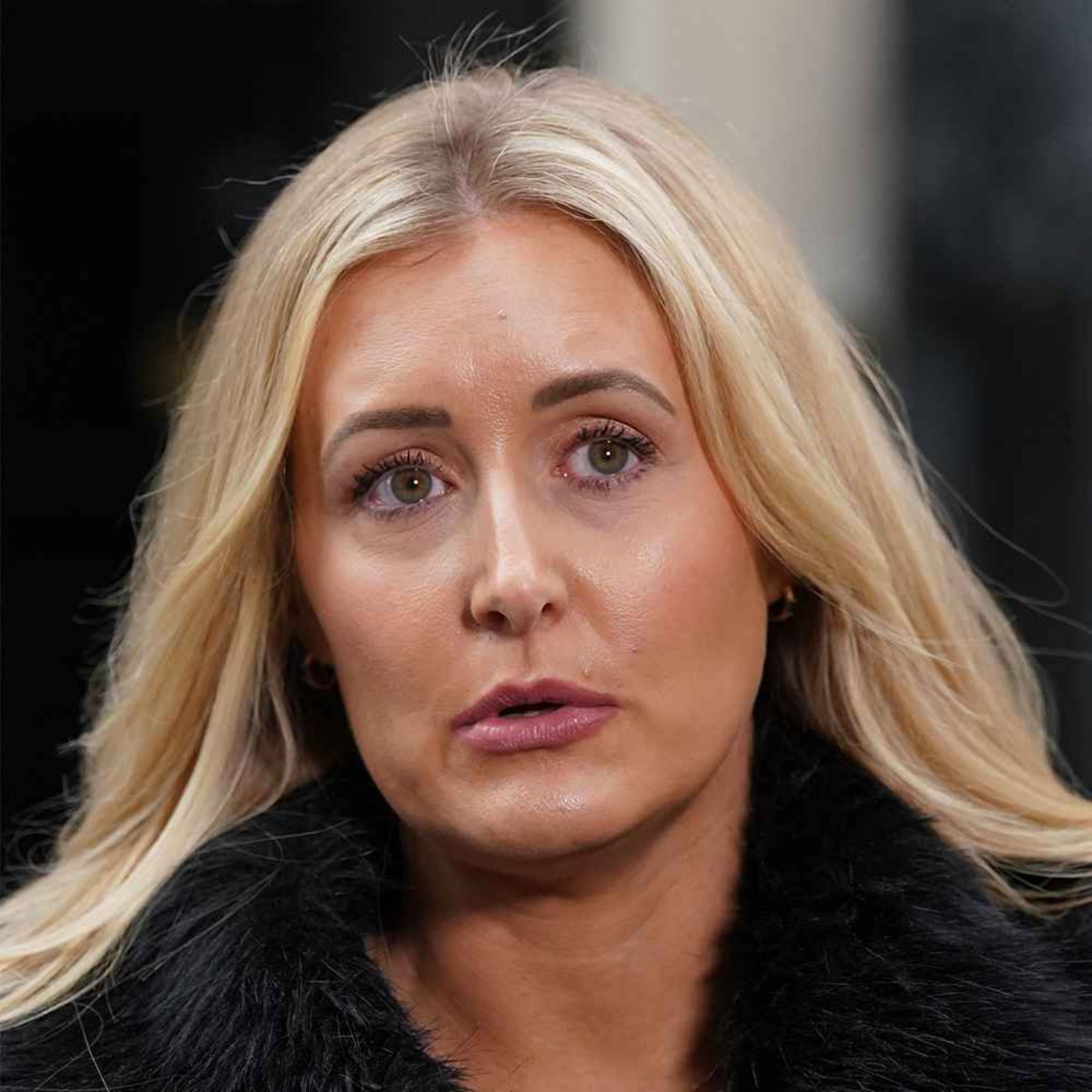
'It's absolutely disgusting': Sir David Amess's daughter slams Starmer's tribute to murdered MP
In this episode of The Daily T, hosts Camilla Tominey and Tim Stanley discuss the fourth anniversary of Sir David Amess's murder. The episode features an interview with his daughter, Katie Amess, who expresses her outrage at Sir Keir Starmer's tribute during Prime Minister's Questions (PMQs), as well as ongoing concerns regarding the handling of her father's case and inquiries into the circumstances surrounding his murder.
Written by AI. May contain mistakes.

Get the gist, explore an idea or ask about something said.
 Claude
On The Daily T, what are the key points of this episode?
Searching your listeningAutomatic transcript. May contain errors.
0:02The Telegraph
0:09Is Keir Starmer guilty of undermining democracy? In the House of Commons today, more questions than answers over the Chinese spying scandal. And Keir Starmer paid tribute to the late Sir David Amess, who was murdered four years ago. We spoke to his daughter, Katie Amess, who tells us that the Prime Minister's handling of her father's case has been disgraceful, disrespectful and he should be ashamed. Welcome to The Daily Tea with me, Camilla Tominy. And me, Tim Stanley.
0:48Tim, it's hard to believe there hasn't been a Prime Minister's Questions in a month until today. What did we do? What did we do in that time? How have we coped? How have you sketched? How have you had anything to fill your time? We've only filled it with a couple of conferences and goodness knows what else in between. But the last time Kemi Babenock landed a blow on Keir Starmer, it was about Peter Mandelson. She did very well. Again, she devoted all six questions today to the Chinese spying scandal. Yes. But before that, it began on a non-partisan note. First of all, the Speaker observed that they were joined by the Speaker of the Ukrainian Parliament, an enormous gentleman who...
1:24Oh, what do you mean, as in tall or wide? No, he was very, very wide. And the strange thing was he was sitting next to what I presume was his bodyguard who was thin and svelte and wearing a proper suit and tie. Wiery strength. And next to him was this enormous man who looked like Orson Welles who was just wearing jeans and a black shirt. And I, of course, thought that was the bodyguard. And the man in the suit was the Speaker. It was t 'other way round. Once he had been introduced and there was a roar of approbation from the MPs, the Speaker then paid tribute to Sir David Amos because this is the fourth year anniversary of his brutal murder.
1:57We're going to speak to Katie Amos, his daughter, later, but let's first hear what Lindsay Hoyle had to say. Today marks the fourth anniversary of the death of our friend and colleague, Sir David Amos, who was murdered in his South and West constituency in 2021. Sir David was a long-serving member of Parliament, respected and liked by members across the House, dedicated to his constituency. We remember him fondly. This was picked up upon by the Prime Minister, who also took the opportunity to pay tribute to Sir David and to comment upon the importance of the security of our MPs. Sir David was much loved across the House, kind and generous, and I know it was a huge loss to many members opposite.
2:42May he rest in peace. As we remember Sir David and our friend Joe Cox, of course, I want to take this opportunity to condemn unequivocally the death threats made against the Honourable Member for Clacton. I know the House will welcome the justice that has been done. Whatever our disagreements, we are all parliamentarians and I won't stand for violence or threats against our democracy. And as well as commemorating the death of David Amess, that was also a reflection on the fact that Nigel Farage has been in court this week facing somebody who threatened to kill him and clearly sensitivities around the safety of MPs are at an all-time high.
3:25Correct. So the Prime Minister is keen to lower the temperature and to denounce all threats against MPs. But at the very end of PMQs, there was a placed question about Kremlin money and the Reform Party, which I felt achieved the very opposite. Look at reform. The member for Clapton and his deputy worked alongside someone who took money to spread Putin's propaganda. Whatever their denials, they have serious questions to answer about what they knew. But that is the choice. Kremlin cronies sewing division or Labour patriots working for national renewal. He's referring there to Nathan Gill, former leader of reform in Wales, who faces his accusations about links to Kremlin.
4:17But by saying Kremlin cronies and talking about the Reform Party, he's clearly sowing the impression that reform is aligned to Moscow. Now, my point is this. If the prime minister is keen to reduce threats against MPs and to create a more collegiate tone in our politics, that doesn't sit very well with implying that the Reform Party is treacherous. And I should add that there was another question made by another MP about our old friend Tommy Robinson, the far right extremism and division, which again was asked in a very carefully worded way in order to imply there is some link between Nigel Farage, Elon Musk, reform, Tommy Robinson and the far right splitting our country apart.
5:07So given that poor Nigel Farage is being attacked by people, supposedly because of his right-wing rhetoric, I think for the Prime Minister to then highlight his supposed right-wing rhetoric or members whose party's links to Moscow, I feel is contradictory. This is what I would describe as the Alistair Campbellisation of PMQs. Campbell has been going on and on and on about Nathan Gill on X and suggesting that no media is covering it. I asked David Bull about it when I interviewed him for my GB News show. We're aware of the story. Reform have responded to the story. They seem to want to make the implication that because Nathan Gill was taking bribes from the Russians, so is everyone in reform, which clearly doesn't stand up currently to any proper journalistic scrutiny.
5:52Yes. And it's not just Starmer, by the way, who is at this, because we've also had Zach Polanski, who's the leader of the Greens. In every single media appearance I've seen him in since conference, he has been again reiterating this line that basically anyone who disagrees with him on any level is, quotes, a fascist. This rhetoric is absolutely preposterous. If you're going to call people like Nigel Farage fascists, or me or you actually, what are we to describe actual fascists and neo-Nazis? What word are we meant to use to describe them? So it's just becoming completely toxic. And it is the week that the reform leader has had to go to court and face someone who has been found guilty of threatening to kill him.
6:35Let's not forget that. It's very serious. Well, this is Nigel Farage speaking outside of that court. The fact is that in 18 months' time, this violent criminal, somebody with 17 convictions in Sweden, in 18 months' time, he will be in this country, living in a house of multiple occupancy or a hotel. He'll be free to walk the streets whilst his asylum claim is being judged. And the only reason we know about this guy is because somebody sent it to me on TikTok. We're going to talk about this question of MP's safety with Katie Amos in a moment. I just want to add that I think part of the reason why this language is ramping up is because A, woke is dead.
7:23So you can no longer just easily cancel people. Because in the past, if reform MPs just said the silliest, slightest thing, their career would be over. But we now live in a world in which Rob Jenner can say he's gone somewhere and didn't see a white face. And not only does he survive, but his party leader basically backs him. So woke is dead. And the second thing that's changed is the right is winning. So if the right is winning, how do you stop the right winning? This is all part of an attempt to make it uncomfortable for right-wingers who are winning the argument to make those arguments because they're going to end up being called a fascist or something like that.
7:56Well, Michael Deacon, our colleague, wrote about it, didn't he? It's written up here saying, is everyone in Britain racist on the basis of the Reform Councillor who had to check herself for saying that she was born and bred in a certain town? And you know, that's exactly the same language Labour MPs would use. It's just ridiculous. And this is my point about the right is winning. At the same time as Labour is trying to carefully stake out what is and isn't fascist or racist or criminal line, It's copying many of Reform's policies. Yes. That's what's so confusing about it. But anyway, the general theme of this PMQs was the safety of parliamentarians, the safety of parliament, because we need to pick up on what was the focus of PMQs debate, and that was the China trial that collapsed, or the Jaina trial that collapsed, to quote Donald Trump.
8:38And at the heart of this was Kemi asking her six questions about the trial and what went wrong. Did she land a blow? I'm not convinced she did. Some of the debate became a rather tedious back and forth over what government said what about whether or not China was a threat. So Labour's argument is the trial fell apart because you, the previous government, had this very wishy-washy definition of China that wouldn't stand up in court, that it wasn't quite a threat. And he gave examples of the old government saying it's not a threat or isn't quite a threat. The then Foreign Secretary, sitting I think over here, the Honourable Member for Braintree, one month after the arrest, so absolutely the relevant time, gave a speech at Mansion House.
9:22It was called Our Position on China, setting out the government's policy. He said in that speech, summing up China as a threat, in one word, would be, his words, impossible, impractical, and most importantly, unwise.
9:42The Foreign Secretary of the Year. Mr Speaker, it wasn't just him. The Leader of the Opposition was the Business Secretary at the time. In September 23, the Leader of the Opposition said her words, September 23, the relevant year, her words, we should certainly not be describing China as a foe. James Peberley then demanded on a point of order that he be allowed to stand up and correct the record because he said his words are taken out of context. Whereas what the Conservatives and Kameen Baden-Ock are saying is, no, that's nonsense. Elsewhere, the Tory government did refer to China as a threat.
10:22And moreover, the prosecution was felt safe under the Tories to be brought against the two alleged Chinese spies. It's under Labour that the trial collapsed. So the key question, which is what Tom Tugendhat asked, is what changed between those two periods? How do we go from a trial that can go ahead because the evidence is strong to one in which it collapses because suddenly the evidence has become weak? That's what doesn't make sense. The other question is what's changed between yesterday and today? Because yesterday the government was saying it was complete nonsense for the Sunday Times to have reported that a meeting took place between Jonathan Powell, the National Security Advisor, his deputy, Matthew Collins, and others.
11:06Today, the Prime Minister has been boxed into a corner. I agree with you that for the general public, this is all quite complicated. It was also overly complicated by Starmer quite typically engaging in a sort of, legally speak, and making it all about procedure. And acting genuinely affronted that procedure might be broken with or he might be accused of not following it. That's how you get Starmer angry at the dispatch box. You suggest that he hasn't quite followed the right routine. You say he's ticked the wrong box or put his pen back in the wrong drawer. Exactly. He hasn't crossed the T's and dotted the I's.
11:42But I think the central question that comes out of the Prime Minister's admission that that meeting did indeed take place. He told Kemi it did. So he says, first of all, the meeting took place. But then when he was asked, so this Matthew Collins, who is Jonathan Powell's deputy, he's a civil servant. Jonathan Powell is a political appointment, but his deputy is a civil servant. So he is an official. The prime minister is asked, are you seriously suggesting that the person that took the decision on whether or not to give the CPS the evidence they needed to proceed with this case against Christopher Bury and Christopher Cash was taken by one official without any consultation at all with his senior, Jonathan Powell, or indeed Jonathan Powell's boss, the Prime Minister.
12:31He just took this decision by himself. And this is what the Prime Minister replied. Yes. I'm Mr Speaker. And that is really problematic, Tim, for the following reasons. First of all, an official in the position of the Deputy National Security Advisor cannot possibly take that decision unilaterally without consultation with his immediate boss and indeed without the overall oversight of the Prime Minister. The National Security Advisor and his deputy are secretaries to the National Security Council. That is a body of people that meet, including the Prime Minister, the Chancellor, the Home Secretary and others.
13:14The officials are there as officials, but as the old adage goes, officials advise, ministers decide. You do not have a situation where you can hold a meeting And then suddenly the consequence of that meeting is that one deputy official, not even the main security adviser, takes it upon himself to conclude that they are not going to give the evidence that the CPS needs to proceed with the case under the Official Secrets Act. And in questions put by Baden-Württemberg, the prime minister said that Collins did not discuss it with Powell. Did not discuss it. Well, that stretches the bounds of credulity.
13:54It really does. But also I go back to the original point and Jacob made it very well yesterday. The prime minister is vicariously responsible for all of these decisions. He can't have it both ways. If Keir Starmer didn't know, then he's not across his brief. And if he did know and he's denying it, he's misled parliament. The other thing is to bear in mind that this is a government of lawyers. The prime minister is a lawyer. It now finds itself at war with the lawyers. because the government has tried to pass the buck throughout onto the Crown Prosecution Service. Initially, the government said, it's the CPS's decisions that led to this trial collapsing.
14:33And the CPS said, no, it's the evidence you provided. Or didn't. Or didn't provide, right. Then on Tuesday night, the government sources said to the press, we would love to release the evidence we gave the CPS that may have resulted in this trial collapsing. But the CPS says we can't. Wednesday morning, the CPS said, no, you can. The trial has collapsed. It's your evidence. You can do whatever you like with it. So that's why, at the beginning of this PMQ, Keir Starmer came out and gave a mini-statement, which, by the way, should really, in my opinion, have been a separate ministerial statement rather than something.
15:13He was trying to kibosh Kemi's moment, basically. He was. He was trying to squeeze it all, concertine it all into one, get it out of the way. Who's interested in this? Let's talk about the A226, which came up, or let's talk about youth services in Worthing instead. Either way, the point is, here is a government by a lawyer, which is trying to pass the buck for, we suspect, political decisions on two lawyers. Yes. And the lawyers at the CPS are not happy about this. No. And it's interesting, isn't it? Because Stephen Parkinson is Keir Starmer's successor as director of public prosecutions. And yet Starmer is putting him under pressure by trying to circumvent his own advice to government, which is, yes, of course, publish, of course.
15:58As, again, Tom Tugendhat told us yesterday, you know, are we really suggesting that the DPP, the CPS and others were all complicit in some kind of strange cover up to not go ahead with the prosecution of these two suspected spies? We must say that both of these people deny the allegations, but they haven't been tested in court yet. The other thing, of course, is I think that when Keir Starmer said today, this was a kind of Philip to try and look as if he was being transparent. OK, then, well, you can have the witness statement. You can have the witness statement of the deputy national security adviser.
16:36But that's a red herring. We don't want that. What we want is the minutes to this meeting that apparently took place. A meeting takes place with ministers, Whitehall officials and others about the Chinese spying case. But at this crucial crunch meeting that was initially denied by the government and then admitted to in the House of Commons today, Keir Starmer says the evidence in the case wasn't discussed. What on earth are you... What went on at this meeting? What do these people talk about at these meetings? But it was a meeting about a spying case. involving evidence and the evidence wasn't discussed.
17:15What was the point of it? So can we please have the minutes to that meeting? Because the crucial question remains, was there some political reason why a government that has spent a great deal of the last 15 months cosying up to Beijing didn't want to prosecute two people accused of spying on behalf of President Xi and others? And the Telegraph's very own Annabelle Denham asks a very pertinent question on Twitter. She says, In just 12 months, Reeves, Lamy, Carl, Miliband and Chief of Defence Staff all visited China. Extraordinarily high levels of engagement. The UK is now self-censoring, dropping cases, refusing to sanction Chinese firms supplying Putin's war machine.
18:01What do we get in return? Well, we get the Chinese already owning half of our key national infrastructure. Yes. They own most of the power grid. They own most of our water boards. They soon to own the air that we breathe. So this is the other problem with all of this. And there's a crude calculation that says in some of these things, it's worth it. That actually China is such a large economy. It is the future. It is investing in what the British government's bet all its chips on, which is low carbon energy sources, etc. So we have to have a good business relationship with them. The problem is that Keir Starmer is standing up in the Commons, trying to defend the government's actions at a time in which MPs themselves feel targeted, either sanctioned or allegedly spied upon.
18:48And that's the problem, is the choice between the safety of democracy or making a fast buck. That's what MPs are trying to navigate. And actually reflecting on the Nathan Gill thing, you know, you're trying to take a morally kind of superior position to reform by condemning the fact that Nathan Gill took money from the Russians. Yet it's in the very same half hour that you've been accused of covering up a different kind of spying scandal because it involves your friends in China. Yes. That shows a grotesque lack of political judgment, doesn't it? It does, it does. But of course, Kremlin cronies.
19:30It's a good line. Well, it's alliterative, I suppose. Well, as we mentioned in PMQs, very solemn words were spoken about Sir David Amos, who was brutally killed as he carried out an MP surgery four years ago. So we're going to speak to his daughter, Katie, who I think will have some very strong words to say about why it is, all these months on, she still hasn't been able to secure a meeting with the Home Secretary.
20:09Today will be four years since the Conservative MP Sir David Amess was murdered by an Islamic State sympathiser during a surgery in his constituency in Leon C, Essex. Sir David's killer, Ali Harbi Ali, is in prison for life, but Home Office failures mean that the murdered MP's killer went unmonitored for years before the crime, even after he was referred to the Prevent programme. Despite assurances from the government, the Amos family are still without answers, saying Lord Anderson's report into Prevent has failed to get to the bottom of things and to answer the fundamental questions. Sir David Amos's daughter Katie joins us now on the podcast.
20:48And Tim was in Parliament today to listen to the tributes that were paid to your late father, Tim. The Prime Minister paid tribute to Sir David and his record of public service, which has been an example that many MPs have since sought to follow. The Prime Minister also spoke about the importance of protecting MPs and democracy. I wonder, Katie, how you would respond to what Keir Starmer said. I think it's absolutely insulting and he is not protecting democracy. He is pouring salt onto the wounds of the victims in this terrible, terrible crime. I have pleaded with him to do an inquiry to find out why the perpetrator was known to the government prevent scheme and to the police, yet was let go back into public to commit this terrible atrocity.
21:39He has ignored my letters. He has, quite frankly, been disrespectful to me face to face when I was asking him why he's choosing to help some terror victims and not others. I just feel like we've been treated absolutely terribly. And he can say whatever he wants, but if he's not doing the actions to help the family, then those words mean absolutely nothing. In what way was he disrespectful to you face to face? I asked him could you please explain why in Southport he immediately launched an inquiry but he wouldn't my father he kept skirting around the issue and when I kept saying no just answer why we can't do an inquiry now but we can in Southport and I kept pushing him and in the end he got really annoyed and said it's a different case it's a different scenario I'm not getting into it but that that isn't good enough to say you're not getting into it with the daughter of the person that was murdered.
22:35It's because you don't have an answer. You only did an inquiry into Southport because the public were rioting. But with my dad, because he was an older gentleman, there's less public outrage. They did the right thing with Southport. 100%. We should have an inquiry for Southport. But then we have to have an inquiry for somebody that died under very similar circumstances over a year before. He can't just pick and choose in order to placate the public and stop public fury. Yeah. I mean, if this was my darling dad, I would be watching the tributes seething, actually. I'd be seething at what the prime minister is saying, because you've also struggled, I believe, Katie, to actually secure a meeting with the Home Secretary about this.
23:21Just tell us about that. So it's absolutely disgusting. When I met with Sir Kiar in March, he said that we had to do a review into the review and Lord Anderson was going to do that. And if we weren't happy with the outcome of that review, then we could go back to him and have our questions answered. And we could look at a different way of getting some answers as to why they allowed this to happen. So we reluctantly agreed because we knew it would add months more heartbreak and trauma. We did the review with Lord Anderson. By his own admission, he was not able to answer any of the questions because it's not an inquiry where you can order people to answer you, where you can make them meet with you and you can demand evidence with, you know, email logs and notes from meetings and stuff.
24:12And so people didn't want to meet with him. They didn't want to talk to him. There was a secret meeting between counterterrorism and the coroner, but no notes for that meeting exist. Apparently, nobody took any notes for that meeting. so the whole thing just wasted our time so when we weren't happy with the outcome of this we wrote immediately to the home secretary and the prime minister and since then it has been radio silence and that is August that's three months now and I just saw online that the home secretary has posted how sorry she is and what a great man my father was I don't want to hear that I know what a great man he was I know what a great parliamentarian he was what are you going to do to get us the answers and find out why you failed him.
24:55What are you hoping to get out of the inquiry? What are those questions that you're seeking answers to? Who made the decision to have one cup of coffee in a McDonald's with the perpetrator? They had budgeted for seven meetings. Why in that one meeting was the perpetrator able to say, I'm not a terrorist, and the person actually labelled him a great guy and released him from the scheme? Why did you not have any follow-up meetings? Why did the teacher who referred him to say that she was concerned about him, why when she was trying to contact you to find out what happened to him, why did you ignore her?
25:30Why did you not pass notes along? They said it was an admin error that his records weren't kept properly and that there was no follow-up with him. Why did they not go back to his family and ask them questions to see if he had changed his behaviour? There's no answers as to why and how this was allowed to happen. They're just sticking a plaster over everything and hoping that I'll move on. But I won't because we need to find out who made these decisions, hold them accountable and then prevent it happening to somebody else. Because right now we're just sitting ducks. We're waiting for this to happen to somebody else.
26:05And then we'll all scratch our heads and say, wow, how did that happen? Well, I'll tell you how it happened because you aren't doing a proper investigation into why this is failing. And I think that that call is so significant this week of all weeks, Katie. I mean, after Joe Cox was murdered, we were told lessons would be learned. Your father is then murdered. We're again told that lessons will be learned. A report is produced. The family often in these cases is never satisfied because sometimes these reports pose more questions than they answer and it's hugely frustrating. We've now this week witnessed Nigel Farage, the leader of reform, outside court commenting on the fact that somebody who made vile death threats against him has been found guilty.
26:51Generally, Tim and I have been discussing on the Daily Tea lately the unpleasantness of the rhetoric around parliamentarians and parliament, the unpleasantness and the abuse that MPs face online, let alone in person. We're in very febrile times. Maybe we can reflect on what happened to Charlie Kirk in America. These are difficult times for people in the public eye. Therefore, there should be some more urgency. about this issue? There absolutely should be and lessons are never learned. They say that every time something happens but nobody actually wants to do the work to find out why this happened.
27:25They're claiming that they sorted out prevent in 2021 after it happened to my father. So why then did Southport happen a year, a year and a few months later? It does not add up and they just want to sweep it under the carpet and brush it under the rug and get everybody to move on and I don't understand why they're not taking it seriously because it is their lives their safety and their family's safety that is in jeopardy so it is in their best interest to find out why this went wrong and you can't just say well it likely wouldn't happen today because we've changed some processes that's just hearsay and speculation what processes have you changed under what basis did you change them?
28:07Where's the evidence that you've changed them? It's just absolute nonsense to get us all to move on and go on to the next issue. How worrying did you find what you heard about what had been threatened against Nigel Farage this week? I mean, it's extremely worrying. And that person could have carried out what they said they were going to do. And thank God he was stopped before he was able to do that. My father wasn't so lucky. We are living in very, very dangerous times where there is heightened violence about politics. And there seems to be so much anger and vitriol because people don't think their voices are being heard.
28:45The government is just not listening to them. And so there's even more passion around issues. And I just think the government aren't taking it seriously enough. This prime minister often likes to talk about procedure. He was head of the DPP. We have to mention that. And he is a lawyer. How do you account for his personal failure to get on top of something which seems so much within his brief? I think he should be ashamed. And when my mum and I met with him, we took a picture of my dad, just so that my dad was represented in the meeting. You know, Sakiya could see his smiling face and think about how he was treating his friends, family.
29:28And he just wanted to come up to my mum and say he was a wonderful man and he was a great parliamentarian. And my mum said, I know that. And you can say all you want, but it's about the actions and it is insulting. And if my father could still see what was going on today, he would be disgusted with all of them. There's been a total lack of support from the current MP that is now in my father's seat. People just want to tow the party line so they can hobnob their way up the ladder. And I'm not blaming one particular party. I don't care who does the review. I just need the review done because the Conservatives also didn't do the review when they were in power.
30:08They've come out now to say they absolutely would do the inquiry if they were in power. And I don't care who does that. I just need it done. Katie Amos, thank you very much indeed for joining us on The Daily Tea once again. Thank you. Tim, it's admirable, isn't it? Katie Amos is not going to give up this fight on behalf of her father. No, her father was a fighter. Yes. We should say he was someone who won in some typically unwinnable seats. Yes. He was dedicated in his support to Margaret Thatcher, whose 100th anniversary we marked this week. And he fought long and hard for city status for his constituency.
30:43and so when I hear her speak I see a lot of Sir David. He would be proud of her. We'll be back tomorrow 5pm.
31:13Thank you.
It’s the fourth anniversary of the murder of Sir David Amess, the Conservative MP who was killed by an Islamic State sympathiser during a surgery in his Southend constituency. At Prime Minister’s Questions this lunchtime, Sir Keir Starmer paid tribute to a “much-loved”, “kind” and “generous” man and talked of the “huge loss” many across the house still feel.
Watching on from her home in Los Angeles was Sir David’s daughter, Katie, and she tells Camilla Tominey and Tim Stanley on today’s Daily T of her disgust at hearing the Prime Minister paying such a fulsome tribute when he’d “ignored (her) letters” and had been “so disrespectful” after she’d “pleaded with him to hold an inquiry” into the failings that allowed Sir David’s murderer to slip through the net.
Camilla and Tim also reflect on the questions that still need to be answered about the China spying scandal, as well as Sir Keir calling for a calming of the political rhetoric whilst simultaneously accusing Reform of being “Kremlin cronies”.
► Sign up to our most popular newsletter, From the Editor. Look forward to receiving free-thinking comment and the day's biggest stories, every morning. telegraph.co.uk/fromtheeditor
Producers: Georgia Coan and Hugo Verelst-Way
Senior Producer: John Cadigan
Video Producer: Will Walters
Studio Operator: Meghan Searle
Executive Producer: Charlotte Seligman
Social Producer: Nada Aggour
Editor: Camilla Tominey
Hosted on Acast. See acast.com/privacy for more information.


