
 Ask ChatGPT


 The Daily T
28 Oct 2026 · 28m · 10 chapters
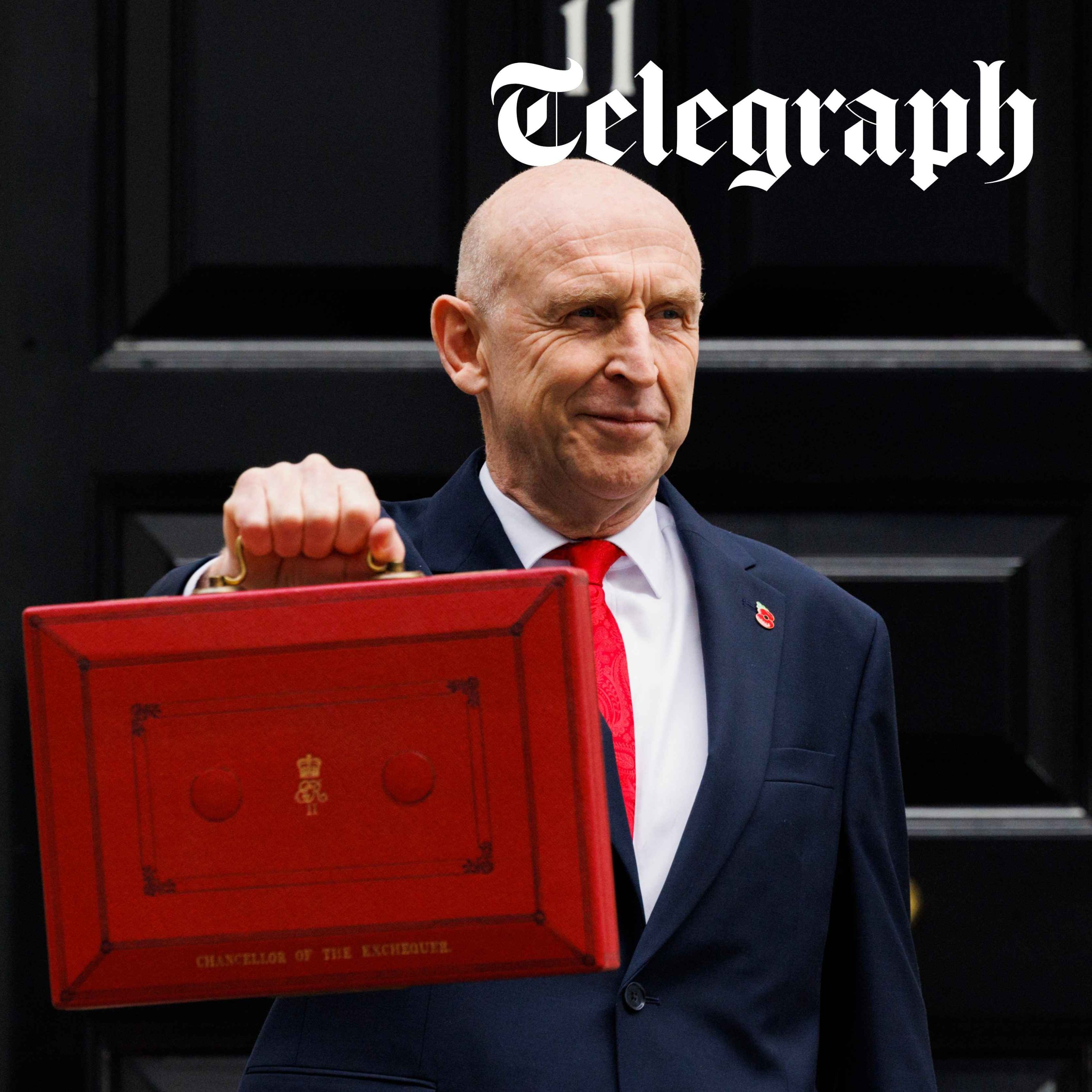
Criticism of UK Chancellor John Healey’s first Budget as “anti-middle class” and a “budget for getting by, not getting on,” arguing it dodges major decisions on welfare-to-defence spending shifts, relies on reviews/taskforces, and uses tax/levy changes that ultimately burden asset-owning middle-class households.
Georgie Frost, business journalist; Jacob Rees-Mogg, former Conservative MP and commentator.
Healey failed to commit to defence spending (3% target), “kicked the can” to next year, and used “sailing” rhetoric while lacking substance. Critics argue energy bill support is poorly targeted (e.g., £100 help for council bands A–D, standing charges shifting costs to unit rates) and that “tax raids” on landlords and banks won’t create growth.
winter bill discount; energy price cap/standing charges; leasehold/landlord reform; cash ISA changes; “Made Tax Digital” timing for self-employed; OBR forecasts of weak real earnings and disposable income.
Written by AI. May contain mistakes.
Discussion about the recent budget decisions and their implications for the middle class.
“So the big thing we are all waiting for is these massive decisions when it comes to spending about shifting away from spending billions on welfare towards spending billions on defence.”
Analyzing Chancellor Healy's failure to make necessary spending decisions and the political implications.
“And I was really struck by what was absent in it.”
Discussion on the UK's financial crisis and the need for supply side reforms.
“Meanwhile, what is happening on the financial front?”
Critique of the budget's lack of major reforms and the complexities introduced.
“If you've got a buffer, it's there when you need it.”
Discussion on the implications of the budget on the rental market and housing affordability.
“You don't have any major supply site reforms.”
Discusses the implications of increasing taxes on landlords and the rental market.
“There are also seen employment and national insurance go up, the minimum wage is going up.”
Analyzes the projected welfare spending and the obstacles to reform.
“Well, he has no parliamentary majority to do anything about it.”
Explores the conflict between energy policies and net zero commitments.
“Get rid of the net zero policies, start fracking and dig out some coal.”
Evaluates the recent budget and its potential political motivations and repercussions.
“hitting the self-employed who are now going to have to pay their tax more often.”
Listeners will learn about the key concerns and implications of the recent budget announced by Chancellor Healey.
“No, I don't think anyone's going to come out of this really unscathed.”

Get the gist, explore an idea or ask about something said.
 Claude
On The Daily T, what are the key points of this episode?
Searching your listeningAutomatic transcript. May contain errors.
0:04The Telegraph.
0:09In 2010, newlyweds Debbie Cooper and Jamie Starbuck set off on a round-the-world honeymoon, but something wasn't right. We kind of started to scrutinise things a lot more. What exactly is going on here? Debbie was missing. We just looked at each other and said, so what's the next step? And it's like, police. He was a lovely little boy, but something happened to him to turn him into a monster. There's nothing off her. He just erased her. Missing Debbie, a new Bed of Lies podcast from The Telegraph. Out now. So the big thing we are all waiting for is these massive decisions when it comes to spending about shifting away from spending billions on welfare towards spending billions on defence.
0:53and he did not address that. Instead, he kicked the can down to next year. If the situation is as bad as the government keeps telling us, then why is it taking decisions which amount to sitting on the deck of the Titanic with a cocktail and hoping that you can just drift through this storm? A raid on the middle class, a budget by a chancellor who, as Kemi said, ought to resign. Why? Well, because he resigned over the government failing to spend 3 % on defence when he was Secretary of State for Defence. And now he's Chancellor. He's also failing to spend 3 % on defence. Well, to break down this attack upon wealth and success, we are joined by Georgie Frost, who is a business journalist, and by Jacob Rees-Mogg.
1:41But first, here's my reaction. Kemi has described it as a budget for getting by, not for getting on. John Healy said, we know who we are and we know where we are going, which made me think of the road to nowhere by talking heads. But it was also a budget which was full of sailing metaphors. You must have noticed. He talked about steering Britain through and when the storms pass, what matters is where Britain is heading. But as you said in our chat, Jacob, the problem is, is that steady as it goes doesn't work when you're in the middle of a storm. And I was really struck by what was absent in it.
2:16remember, remember, remember, always the politics, never mind the economics, because I don't understand it. John Healy resigned as defense secretary over defense spending. That is what brought down Keir Starmer. That is why Andy Burnham is now prime minister. So the big thing we are all waiting for is these massive decisions when it comes to spending about shifting away from spending billions on welfare towards spending billions on defense. And he did not address that. Instead, he kicked the can down to next year. And this was a budget that was full of reviews, full of task forces. Meanwhile, what is happening on the financial front?
2:59Well, you have a tax raid on landlords. You have a tax raid on banks. Now, whatever you think about those two groups of people. They're people who keep the free market going. They're people who keep things growing, in fact. And instead, what is the money being taken from them to give to other people? Well, they are things which are very difficult to argue against, such as 100 quid off your bills at winter, although I have to say mine, that is just a drop in the ocean compared to what I spend on heating. But these little handouts are being financed by what is essentially a raid on the asset-owning middle classes, while the government dodges the long-term issue of how much it's spending on the things that really matter and avoids the kind of massive tax reform needed in order to spur the free market so that we'll have greater income and be able to spend on the things we really want to spend on.
3:54So he referred there to Iran, and it's true, following the Israeli election, who knows, the Middle East could kick off again. The storms have not died away. But I just find it astonishing that if the situation is as bad as the government keeps telling us, then why is it taking decisions which amount to sitting on the deck of the Titanic with a cocktail and hoping that you can just drift through this storm? Jacob. It's very hard to disagree with your analysis. Let's first of all think of the sensible things that he's done, just to try and be fair to him. He has decided to use the buffer. Very good idea.
4:28If you've got a buffer, it's there when you need it. I thought that was a good choice. To explain, that's the headroom. That's the headroom. That's the spending headroom so that every government has a certain amount that doesn't go below that it's got coming in. So it's not down. It's essentially mythical because the sums are so large. You're talking about into the trillions and then you talk about a few billion of headroom. Yes. It's one of those things that chancellors and bond markets get obsessed by. But if you've got it, you might as well use it rather than raising taxes further, which would have been the choice.
4:59So he's done one sensible thing. He's done the cliff edge for carers. That's important and needed to be done. So little bits and cutting the tax on gherkins is sensible. Another Brexit benefit. But this is done by reducing import duties. Yes. If we rejoined the single market, we'd have to put them all back on again, or the customs union. So nonetheless, these things aren't that important. But your analysis strikes me as being absolutely right. Not just the UK, but the whole Western world is facing a serious financial crisis, that spending is too high. The US deficit is 40. The debt is$40 trillion.
5:40It's getting to an unsustainable point. France's debt to GDP is 120 % and its deficit is running at over 5%. We are not alone in facing this problem, but you need at that point to be taking decisions that lead to economic growth and that's the supply side reforms which need to come in a big way. So we've had one of the oil fields, but we need Rosebank too. We've had Jackdaw. We need Rosebank and we should be getting on with that. We need to lower the cost of energy, not by shifting things around. Again, the same criticism that I made earlier about the tax on the banks to help the man in the street.
6:21It doesn't because the man in the street pays for the banks, but that money isn't new money. It's simply being taken from people in a different way. And the same is true with his attempts to take levies off energy, that if you take a levy off electricity or on gas and you put it onto taxation, it's paid for by exactly the same group of people. Individuals may be different, but the group is the same. The British people pay one way or another. What you've got to do is not change who pays for levies. You've got to abolish the reason for the levies. And that means moving away from the net zero scheme.
7:04So he's doing a lot of tinkering. It's a very brown Osborne style budget. You tinker around a lot. You make things more complicated. You don't simplify the tax code. You don't have any major supply site reforms. And you hope really nobody notices and you get away with it for a year. And so I think it's a missed opportunity and in many ways a failure when this country is facing so many serious problems. Georgie. Well, what did I want from the budget? Exactly what Jacob said there. I wanted a more simplified tax system. I wanted a clear path to be opened out for me. At the end of his speech, the Chancellor said that it is burnt into every line of this budget.
7:47We can see where Britain wants to be. I must have, I mean, we were talking through most of that budget. So, you know, maybe I did miss some things, but I'm not entirely sure it's burnt in my head exactly where we want to go. We did have noises about defence, about welfare, about energy, as you rightly say, all things that will cost an enormous amount of money. And it was kicked down, the can was kicked down the road. We do have reviews into NEETS, not unemployment, education training for young people, into PIP. So welfare spending, which are coming out next month. And so therefore they've said, oh, we'll wait until we see the results of those.
8:26And with energy, yes, we do need to do a lot. I mean, you're looking at 40 billion investment if you really, really want to think about energy security and bringing down bills for people. We didn't get any indication of where that money might come from or where they'll spend it. Because what we got was exactly what I believe Kemi said was a budget for getting by, not for getting on. It was a sticking plaster over issues. So for energy, for example, we got help for those in council bands A to D, which was£100. That's 20 million people. Now, if they'd have gone down the route of increasing the warm home discount, that probably would have been about 6 million people and probably more targeted because it's those on welfare.
9:07However, as I've said before, it's not necessarily those people who are struggling the most because you are not just paying an amount. When we hear about the energy price cap going up in January, we're expecting it to go up. That is not what you'll pay. That's not your bill. If you have an old leaky house with five kids running around, you will pay a lot more. And some of this help will not touch the surface, as you said, for yourself. You know, we will have other things. So standing charges, another one, but as Jacob absolutely pointed out, so standing charges, essentially a part of the bill that you pay for your gas or electricity, which you can't do anything about.
9:44No matter how much you cut your energy usage, you can't do it. It pays for things like levies, of course, but also for maintenance, for admin, for the energy companies. So if you take it off that part, where are you going to put it? You're going to put it on unit pricing. So people are going to have to pay more overall. Overall, we've got things like import duty cuts for certain products. Carers' allowances, Jacob pointed out, absolutely right. But just put them all together. I feel like rather than simplifying it, going back to the tax point, we've got the change to the cash ISO, which I pointed out, I think is a good thing to bring it back to its£20 ,000 limit.
10:19Cash ISO is, by the way, a very good product still. That was something that Rachel Rees was threatening. Absolutely. It was going to come in. It was going to come in. He began his speech by praising Rachel Rees. But the one thing that I noticed, because I have an ISA, is him reversing a Rachel Reeves policy. And has reversed that decision. But then he said, oh, we're going to introduce a new starter ISA to try and get people investing. We're going to introduce a first-time buyer ISA. For example, another sort of complication is pensioners who are only on the state pension will not pay tax, even though they will go above the personal allowance next year.
10:50Another complication being added. So I don't feel like we're being simplified. And I don't personally feel like we've got a direction that I'm very clear that we're heading in. Jacob? No, I think that's true. I think it's worth talking briefly about standing charges. They are a perfectly logical way of paying for gas because gas has two components. One is that you've got pipes to your door which have a cost whether you use gas or not. And then the flow of gas that comes through which has a separate and identifiable cost and a fluctuating price. There is a fixed cost on the asset. There's a fluctuating cost on the fuel.
11:26And to say that it should all be wrapped into the fuel price means that 40 % of customers will lose out. And not all of those are going to be the wealthy and great rolling in splendor and state. They're going to be people who live in old houses, poorly insulated houses, disabled people who need to keep their house warm, can't go out, old people who again aren't going out so much. So I think we will be surprised by how many losers there are and how much anger that creates because of general rule of politics. The losers are much noisier than the winners. The winners bank it, say thank you very much, and the losers complain.
12:02So I'm not sure that policy is as clever as it seems. And it is the fundamental point that they're carrying on as if it's business as usual when we are in the midst of global crises. And they're not dealing with that. Not even really thinking about that. But they would say, if they were here, what we're doing is we're shielding poorer members of society from the shocks of those global crises by helping them to save a little bit of money, be it freezing fuel duty, for instance. And they have by and large chosen. Just a second, they have large – so, for instance, in the eternal battle between landlords and tenants, they've taken the side of the tenant.
12:43No, they haven't. No, no, they really haven't. They're really – Well, they want to do leasehold reform, don't they? They are bashing tenants because landlords will put their prices up and they will leave the market and you will reduce supply and prices of rental property will go up. The yields that people will expect to get on rental properties will go up and tenants will find they simply can't find properties and the properties they find cost them more. Once they're in, they will be more secure, but they will find it harder to get in and it's particularly bad for young people. A flexible, open rental market is best of all for tenants.
13:23Landlords are then competitive. It forces prices down. You're falling, if I may say so, Tim, into the classic socialist trap that you think by doing nice sounding things, you help the people trying to help. No, you don't. What you want to do is help the least well off in this society. It's helping them get jobs. How do you help them get jobs? You have the supply side reforms that make the economy more efficient. You stop taxing businesses as heavily. You don't bash the banks because the banks are the lifeblood. They are taking 70 ,000 businesses out of the rates. So they are taking some action to help.
13:5670 ,000 businesses is completely trivial. Right. There are millions of businesses in this country. There are also seen employment and national insurance go up, the minimum wage is going up. And we'll already have paid huge amounts of energy bills are going up. So there's a little bit of support there. But I agree with Jacob to a degree. I think, you know, certainly the I think the landlord is a very good example of if you think by increasing, you know, how much landlords have to pay in tax, that's going to bash the landlords. It's great. How could it possibly be good for tenants? We need to reform the rental system.
14:29So it's it's an option. It's a good option for people. You don't have to buy a property. But at the moment, it's so expensive to rent and it's going to get more expensive and more difficult. And think about all the benefits. If you're talking about trying to get Britain to be outside of London, to really promote the other cities, well, what's the best way to make it really easy to move around? I've spent my entire career, because I'm a big renter, moving around the entire country working, and it's been marvellous, and I've enjoyed it immensely. But I'm old, so it was probably cheaper back then.
15:02But I do think that it's such a wasted opportunity to try and get Britain literally moving. Yes.
15:13I'm Vinicius Rainey. And I'm Roland Olyphant. As hosts of The Telegraph's podcast Iran The Latest, it's our job to keep you up to speed on what's going on in the Middle East. Join us every day as we ask, can the US put an end to Iran's nuclear ambitions once and for all? Who will come out on top in the peace talks? Has this war damaged America's ability to take on China? And what are the long-term implications for the wider world? Search Iran The Latest and listen wherever you get your podcasts. We're also now on video. Watch us on YouTube and on The Telegraph's website.
15:51Let's talk about welfare because the spending bill is now predicted to hit£431 billion by 2031 to 32. He missed this opportunity, didn't he? Well, he has no parliamentary majority to do anything about it. Right. That's the problem. That was the problem that Starmer ran into. and healy probably recognizes because he's not a fool yeah that welfare needs to be reformed but he doesn't have the sports backbenchers to do it and a lot of labor mps that think are dependent for their majority on people on benefits so they don't want to bite the hand that feeds them yes okay georgie one reader asks is it worth having a cash either anymore goodness me who is asking that yes because it's tax-free money who doesn't want absolutely Exactly.
16:39ISAs are a fantastic product. And actually, I spend a lot of time in Canada. It's very rare to have something quite so generous to be able to put£20 ,000 into, you know, an ISA product every year that's shielded from tax, essentially. So capital gains tax, you know, income tax. So absolutely, yes. And the fact that they've changed it, I think, acknowledges that. So I think it was a very smart decision to have changed the cash-wise thing. I would have actually liked it a few months ago if they knew it was a really rubbish decision and it wasn't going to encourage people to invest. I think it was very short-sighted.
17:18But also building societies were saying, we use a lot of that money. Yes, that's such an important point. This seemed to me to be the big giveaway of how Rachel Reeves didn't actually know anything about economics. She thought the money just sat in the account and didn't go anywhere. That's right. That's right. She thought it was like having it under your mattress. Bank deposits are the lifeblood of any financial system that they provide mortgages, they provide loans to companies. They are just a different form of financing of companies from equity financing. Both are enormously valuable. If you look at the financial crisis in 2008, one of the reasons it was such a problem was the loans deposit ratio of the major banks in this country was well over 100%.
18:01They were dependent on overnight money, whereas cash ices are long-term money for the banks. They are a stable basis for them to make loans and do their business, particularly building societies doing primarily mortgage loans. And I thought it just showed the deep ignorance of Rachel Reeves. I'm going to pick up some questions from the live stream here. Georgie, how can they talk about cheaper energy than talk about continuing with net zero? That was a key moment in the budget, by the way, when John Healy did that and lots of People laughed and pointed at Miata Fanboli, who, of course, we all know, privately opposed, continuing with the jackdaw drilling.
18:34Well, it goes back to what we've all been saying is that if you want to really reduce energy bills, you are going to have to focus on some very expensive things. Infrastructure, for example, talking about the national grid, it's very leaky. We must do things to promote our infrastructure, and that is expensive. So, you know, Jacob, I think you have very strong views about what to do with the net zero policies. Get rid of the net zero policies, start fracking and dig out some coal. And then you don't have to spend billions, possibly hundreds of billions on the grid because the grid is designed for a hub and spoke mechanism.
19:10And with wind farms and sailor panels, you're moving it to a spoke to spoke mechanism. And that is a much, much more complicated balancing act than big hubs producing mace for electricity in a small number of places, distributing it to millions of places. is you've now got thousands of supply points coming in, which is just so much more complicated and leads to the billions of expenditure, which of course puts bills up. So I just want to go back to a fossil fuel based economy. We've got lots of it. It's very cheap and it's pretty clean nowadays. And someone else asks how they're doing on their building, their target of building 1.5 million new homes.
19:46And I can answer that. They're not hitting it. They're really nowhere close. and instead of doing that they're talking about helping people to get on the housing ladder which of course is something that doesn't increase supply now as regards to the politics of this i will just note someone funnier than me pointed out that john healy does look like a butcher there's something about the man it's the way particularly he leans forward it always looks like he's he's leaning over a butcher's counter in tesca's or something and he should have one of those little white hats on or a stripy apron. If one's seen, it can never be unseen.
20:21But Kemi Badenoch said he ought to resign over this budget because there isn't the commitment to 3 % in it. And as some people on the live stream have pointed out, this feels like an election budget, not in the sense that it's a giveaway, but in that it's trying to keep everything as calm as possible and suggests that vote Labour and the goodies will keep on coming. If you had to guess, I can throw my tuppence in. Does this feel like a budget which is about saying you should really vote for us in a few weeks' time? I don't think there was enough in it to say that. But certainly if you are thinking about getting us to the polls, then I think it probably hasn't done a terrible job.
21:00I'm trying to think what could be the headlines, you know, Healy the butcher. And I don't think that would really work because I don't think he's done enough in it to really have that sort of a picture on the front covers. But yeah, if you are going to do it, and this is from a financial journalist perspective with no history of political journalism at all, but I would suggest probably now is the time to do it. You know, you're riding high. It could only get worse. I was just going to say, although my dad says there's no situation so bad, it can't get worse. So it could get even worse. The OBR, which of course is independent, has published its...
21:36Not really independent. It's run by a bunch of lefties who all come from lefty think tanks. I was thinking, by the way, when I heard about this innovative defense task force, I just thought being a bureaucratic thing, that's going to end up with more people working on it than there are in the British Army, isn't it? Well, there are 60 ,000 civil servants in the MAD and 73 ,000 soldiers. So we're getting pretty close. There you go. We're nearly there. But the OBR gives a pretty gloomy view of the future. It says, quote, we expect no growth in real earnings in 2027 and 2028 and a slight fall in real household disposable income per person in the near term.
22:10And something I always find confusing about budgets, as I say, he always talks very quickly when running through the tax rises and then very slowly when talking through the amount of money he's going to spend. At the beginning, when he's giving that picture of the state of the economy and where it's going to be, that's all prediction. And we can dispute the figures about it because we noticed when he was saying it that they were not figures that matched your figures, Georgie, of the state of debt to GDP ratio. But this is all prediction. And if he puts forward a budget which doesn't do what we want, which is to spur the markets and create growth, then everything he said is for the birds, right?
22:49Oh, yes, that bit of it is always spin and propaganda. It's hardly worth listening to. The forecasts are only forecasts. The OBR is always wrong. It's more wrong even than the Treasury, which is quite spectacularly bad. So we don't need to worry about the forecast. We need to worry about economic principles. And do you think in economic principle terms, what this budget has done will help the economy grow? I think the answer to that is no. It is an approach to the fiscal side that wants to have the country too highly taxed and isn't dealing with the complications of the tax code, is going to be hitting the self-employed who are now going to have to pay their tax more often.
23:31So it's going to affect... That was a big one. He hinted that we may have to... All of us will eventually have to do tax made digital, which is where you have to submit it four times a year. Well, you only have to submit it at the moment, but he was saying you're going to have to pay the tax as well. Oh, right. Not everyone. It's going to... The threshold's going to decrease as we go on. Right. Okay. But so he's hitting the self-employed from 2029. It's the kind of thing that makes you think, why do I bother? I'd rather not earn the amount to have to hit that threshold than... That's what I'm thinking anyway.
23:57I won't do that appearance on TV. We'll do this for free. I know. I'm trying to keep it low so I don't have to fiddle about with this irritating system. I'm in the process of doing this last quarter's making tax digital. And I'm much better at remembering my expenses each quarter than I was remembering my expenses from a year nearly two years ago. Right. So I'm actually... Do you like it? Well, I don't like it. It's a complete waste of time. It's invasive. But I don't think it's going to make the government that much money. because we all remember what we spent six weeks ago. We don't remember what we spent 16 months ago.
24:28You look through a bank statement and you see something and you think when you're doing it for January the 31st, well, I don't know, I'm not going to claim that because I'm not sure. Six weeks later, you know precisely what it was. Yes, that was a business expense. And so I think they're going to find a lot of people have correctly, without any impropriety, discovered that they can claim back more that is offsetable against tax. However, they want to go ahead with this to hit the self-employed because they don't like the self-employed. They like PAYE. I want to go back to the Healy question. Should Healy resign against his own budget?
25:03Does the Defense Secretary Healy resign against the Chancellor Healy? And I think the answer is yes. And what that reveals is that the resignation was not that of a highly principled man, but it was of a man climbing the greasy pole. He wanted to get rid of Starmer and he wanted to pave the way for Burnham. and he got his reward as being chancellor. That's a very good point. If Healy were in the room right now, what I'd love to say to him is, imagine your defense secretary today. Would you, after hearing that budget, resign? He's got no more for the defense than there was when he resigned. Yes.
25:37And yet he's staying in office and he's in charge of it. I think that's a pretty awkward position for him to be in. I think you might argue that, given the fact that the can's been kicked down the road, to sit on selling welfare, that maybe he'll find some savings there. And once we have the reviews, that's what we could spend on defence. And once the picture is clearer and we've got the spending view, then we're going to have a much clearer picture. But he was being offered a fudge by Rachel Reeves too. There's always fudge, plenty of fudge in government, probably made from Cornish clotted cream.
26:08But he's going to have an innovative defence finance task force. Not any money, but a task force. And the other thing you were raising, is it an election budget? it i mean i think your point's very good that is there enough in it that makes people feel good that this seems to me to be has no firework in it no sparkler no one thing that you can say oh my goodness if we got a hug afterwards from andy burnham so i'm not into male hugging i think that's become very modern boris johnson never hugged you so no didn't get no wouldn't let anybody hug me i'm not a hugger right okay so i've had nolly may tangra is my favorite quotation from the bible um but but i don't think there's enough in it if he had taken tuppence of beer or something something inexpensive but eye-catching do you remember tony blair once wanted um eye catching opportunities with which tony can be associated yes there were no eye-catching opportunities with which Andy can be associated.
27:12Do you agree with that? I don't think the issue is about anything good in there. I think there wasn't anything ridiculously quotably bad potentially that could get... Oh, I think we're going to be quoting the tax rise on landlords and the tax rise on banks, I think. But for the general populace, raising taxes on gambling, raising taxes on banks, raising taxes on landlords. These are the three sins, the three great sins of modern society. You said it. I think they're easy targets. I mean, what we always ask with every budget is, how did I do? And we always have to wait because we need to see what the fine print actually says.
27:53But do you think the average telegraph reader, someone of some assets and some income, how do you think they come out of this? Unscathed? No, I don't think anyone's going to come out of this really unscathed. I think where the big concerns were were things like mansion tax, capital gains tax, all of those sort of wealth taxes we were perhaps expecting. The amount you could take out of your pension tax-free, all of those things we didn't get. So I think there'll be a bit of a sigh of relief for that. But I think once the dust has settled and you see the bigger picture, then I think people will be a bit more concerned.
28:24Every Telegraph reader will be worse off because of fiscal drag, which he didn't even mention. And that's the freezing of tax thresholds, which will carry on in April. And every single Telegraph reader will be worse off because of that, assuming we don't have a huge number of readers who are on benefits. They'll be protected. Well, thank you both, Jacob and Georgie. Thank you for joining us. And thank you for watching and for all your excellent comments. Jacob and I will be back tomorrow to discuss more of the fallout of the Ottoman budget at 5pm.
In Wednesday’s episode of The Daily T, Tim Stanley and Jacob Rees-Mogg are joined by financial journalist Georgie Frost to react to John Healey’s maiden Budget as Chancellor.
Speaking immediately after the Chancellor’s speech, Tim welcomed some of the measures, such as the winter fuel payment, but criticised how Mr Healey was funding it, saying that the increased taxes on landlords and banks “are essentially a raid on the asset-owning middle classes”. On the issue of military spending, Jacob was critical, saying: “He’s got no more on defence than there was when he resigned. And yet he’s staying in office and in charge of it. That’s a pretty awkward position for him to be in.”
The Telegraph is the Publisher Podcast Awards' Podcast Publisher of the Year 2026
► Watch back our Daily T’s Autumn Budget YouTube livestream here.
► Get more exclusive Daily T content from The Daily T+ membership! Join here.
► We want to hear from you! Email us at [email protected] or find @dailytpodcast on TikTok, Instagram and X
► Sign up to our most popular newsletter, From the Editor. Look forward to receiving free-thinking comment and the day's biggest stories, every morning. telegraph.co.uk/fromtheeditor
Producer: David Levene
Senior Producer: Emma Williams
Studio Operators: Meghan Searle & Chris January
Video & Social Producer: Nada Aggour
Executive Producer: Charlotte Seligman
Editor: Camilla Tominey
Highlights:
Hosted on Acast. See acast.com/privacy for more information.


