
 Ask ChatGPT



The episode is a political and investigative roundup arguing that Keir Starmer’s government is under mounting pressure. Hosts Camilla Tominey and Tim Stanley discuss cabinet splits over the “Mandelson saga” and a civil service row involving senior officials nicknamed “Cat Little” (Catherine Little) and “Sir Ollie Robbins” (Oliver Robbins).
ministers are “furious” about the Mandelson scandal and about upsetting the civil service; cabinet figures are debating whether Wes Streeting or Angela Rayner would replace Starmer; and a cabinet minister says it’s “bleak,” with “wagons circling” and resignation timing linked to May local elections.
references to PMQs, Privileges Committee pressure for Starmer to appear, and Cat Little’s Foreign Affairs Select Committee evidence about vetting and Ollie Robbins.
Robert Mendick (Telegraph chief reporter) and Claire Newell (Telegraph investigations editor). They reveal documents alleging Attorney General Richard Hermer was central to the Al-Sweady civil claims against British troops after the 2004 Battle of Danny Boy, including advice that helped raise allegations’ tone; they also detail Phil Shiner’s role and fraud conviction.
Written by AI. May contain mistakes.
Details about the upcoming events of the Telegraph Roadshow across the UK.
“Camilla, it is T minus four days until the Telegraph Roadshow takes off.”
Discussion on Keir Starmer's leadership and the potential for his resignation.
“Now, there's a part of me that will be sad.”
Analysis of the growing rebellion among cabinet members against Starmer.
“I mean, there's a lot going on there because she's taken Catherine and made it Little.”
Examination of the role of civil servants in the current political climate.
“During the disagreement, first reported by The Guardian, Rachel Reeves advised Starmer to keep civil servants on side.”
Discussion on the jargon used by civil servants and its impact on public understanding.
“But Dan has been speaking to people in the cabinet and he says that after Iran, there was a pause for thought.”
Explore the complexities of bureaucratic language and its impact on public perception.
“And there are rules in journalism about who you can and can't take the mick out of, basically.”
Discuss the growing disconnect between government officials and the public's concerns.
“The electorate listens to this nonsense and goes, you're talking hat stand.”
Examine the complexities of national pride and political correctness during St George's Day.
“Why can we not just raise a few flags and go Morris dancing?”
Dive into the controversial role of Attorney General Richard Hermer regarding British troops.
“was at the centre of this really controversial civil claim against British troops.”
Unpack the serious allegations against British soldiers and the subsequent inquiries.
“You know, the government, the Labour government then agreed.”
Analyze Lord Hermer's decisions and strategies during the accusations against British troops.
“And that means, say, if someone's accused of murder, they just get whatever barrister is kind of coming up next.”
Explore the implications of a controversial press release regarding alleged military actions.
“He doesn't attend, but they kind of say to him, this is what we're planning on saying.”
Understand the financial incentives behind legal strategies in military cases.
“But if it was successful, he would have got a lot of money at the end.”
Discuss the findings of a government inquiry that deemed claims by Iraqi individuals as false.
“So it's a separate thing to the press conference.”
Evaluate the psychological and legal repercussions faced by British soldiers accused of wrongdoing.
“Phil Shiner was the driving force behind almost all complaints against British troops in Iraq.”
Examine the implications of Richard Hermer's role as Attorney General following his past.
“It went to this thing that went on for years, a huge, huge cost.”
Analyze the application of human rights laws during military conflicts and its historical context.
“very close friends, close colleague of Keir Starmer, on whom he's worked on many human rights cases back in the 2000s before Keir Starmer was made DPP.”
Delve into the philosophical questions surrounding military engagement and legal oversight.
“Lord Herma was advising them to sue the Ministry of Defence for their captivity after the Battle of Daniboy.”
Reflect on the broader consequences of legal actions against soldiers and the perception of the Attorney General.
“Because we've just been through a conflict Iran, where the prime minister kept saying, I have made the judgment that I was uncertain legally that we could join in the conflict.”
Discussion on allegations against the Attorney General and the implications of his promotion.
“And now I discover that the current Attorney General is one of the people who was bringing these allegations against me.”

Get the gist, explore an idea or ask about something said.
 Claude
On The Daily T, what are the key points of this episode?
Searching your listeningAutomatic transcript. May contain errors.
0:02The Telegraph.
0:30No spreadsheet in sight. What a life. Do right by yourself and your business and search XERO for your free trial. Conditions apply. Make Mother's Day even more special at Whole Foods Market. Kick off brunch or dinner with quality cheese and charcuterie with no synthetic nitrates. Then go seafood. There's an abundance on sale at Whole Foods Market, where it's all sustainable while caught or responsibly farmed. At the bakery, grab seasonal treats like their strawberry pretzel cream pie, and you can't go wrong with the ready-to-heat quiche Lorraine, deviled eggs, and fresh-cut fruits to go. Celebrate mom with Whole Foods Market.
1:13The wagons are circling. It seems Keir Starmer's days are now well and truly numbered as a cabinet rebellion gains momentum over the Mandelson scandal.
1:21Camilla: We reveal the latest exclusive Westminster gossip and react to another nonsensical and infuriating civil service evidence session. And the headaches keep growing for the Prime Minister as the Daily Telegraph exposes the shameful past of his Attorney-General. Welcome to The Daily Tea with me, Camilla Tominy. And me, Tim Stanley.
1:51Camilla, it is T minus four days until the Telegraph Roadshow takes off.
1:56Camilla: My car takes off. Badgers beware. We will be hitting the motorways of Britain. I know. And we are going to keep repeating this advert until someone buys a ticket. Buy a ticket. On Monday, we are going to be in London, where we're hosting a question time debate between Tory James Cleverley, Reform Zia Yusuf and Labour's James Murray, who works at the Treasury. Rachel Reeves' right-hand man is how we're describing him, Tim. Very good. OK. On the Tuesday we're in Cardiff in Welsh Wales, which looks like it's set for a political upset. On the Wednesday we are at Warwick University with Jacob Rees-Mogg taking on students.
2:33Camilla: And then on Thursday we're by the seaside. Lovely Worthing. Get a 99 in your hand because we're going to be in Lovely Worthing discussing royal matters with Lady Colin Campbell. Amazing. And Phil Dampier, formerly of The Sun. If you want to come and watch or be at any of the other live events next week, get your tickets now and the link is in the episode description. Now, Camilla, do you think it might actually be all over for Keir Starmer? Next week. I'm starting to wonder. Now, there's a part of me that will be sad. I'll be working on the impression. There's a part of me that will be sad. And also, he's so bad.
3:07He has been putting my dog through school. Yes. For journalists, he is.
3:11Camilla: He's been paying our mortgage. He's a money printing machine. Indeed. He's fantastic. We love him. But we thought maybe he'd cauterise things on Wednesday with his performance in PMQs, because he has this new formula of Lord Mandelson. The process was followed. Ollie Robinson, give me all the information. Not my fault. Let's move on. Move on. Let's move on. And I sense backbenchers might be coming around to the let's move on position. But what's interesting is that the toxins seem to have spread to the cabinet. Yes. Which, of course, is what really matters. They want to move on with someone else in charge.
3:44Camilla: And that's his problem. So let's have a look at our brilliant political editor, Tony Divers, reporting on this again, first with the scoops. So he's been told by senior government sources, quotes, the wheels have stopped turning in number 10. The question is no longer whether things can go on. It's a question of when people move. Now, you say that we might not be in Clover if Starmer resigns. Come on. Hang on a minute. Who are the two names that everyone in cabinet is saying might replace him? Wes and Ange. Wow. OK. And by the way, can I just say on that front that we are going to get on to speaking about Cat Little in a moment.
4:20Camilla: You're not in favour of this shortening of people's names, are you? No. Shouldn't we be calling him Wesley? Cammy. Timmy, yes. You've got a problem with the fact that the civil servant, the very senior civil servant who appeared today, and indeed the other senior civil servant or former civil servant who appeared the other day, have shortened their names. To Cat Little. I mean, there's a lot going on there because she's taken Catherine and made it Little. So she's Cat Little. But Cat Little sounds like a cartoon character or a primary school teacher. And it's the same with Sir Ollie Robbins. No, his name is Oliver.
4:55Yes. What has happened to this country, the land of Queen Victoria and, I don't know, Ryevita? I can't think of something else. Ribena, which you drink copiously. Go on. What has happened to this country, the land of Queen Victoria and Margaret Thatcher, that our senior civil servants now have childish playground nicknames?
5:15Camilla: I mean, we called Thatcher Maggie, but she never called herself that. No, but we did that. She didn't introduce herself to, Hello, my name is Maggie. No. That would have been ridiculous. If I'm ever... Can you imagine the Cold War being ended by someone called Maggie? Or Timmy. Yes. If I'm ever given a damehood, which I think is pretty unlikely, it's probably as likely as... Well, from this government anyway. Indeed. Keir Starmer remaining Prime Minister by Christmas. I think I might just say I want to be called Cammie just to annoy you. And there's the letters after them. Sir Ollie Robbins, KPMG, IMF.
5:46Camilla: Yeah, ABC. KFC. Yeah, LGBTQ+. You don't have letters with Ollie. That's ridiculous. Ollie is a five-year-old's name. Anyway. Continue, Timothy. Senior government sources have said to Tony that there is a debate about, quote, quote, who would move first, West Streeting or Angela Rayner. Well, hang on, I thought they were moving a little pack. Ah, yes. And that, quote, there is a sense that it is over now. A minister who has publicly supported Keir said their colleagues were, quote, furious about the Mandelson saga and the open briefing war between Downing Street and the Foreign Office. And this is a detail from Tony's reporting that I love.
6:24What is it that Labour cabinet ministers are most annoyed about? Not the appointment of Peter Mandelson, but that the Prime Minister and his team might be upsetting the civil service.
6:34Camilla: Oh, yes, we mustn't do that. The Rolls-Royce standard cat little civil service. Yes, indeed. The blob must never be impinged. OK, so we've got a cabinet split. Just to explain that. So several government ministers, including, reportedly, Rachel Reeves, Shabana Mahmood, Wes Streeting and David Lammy, have accused the Prime Minister of creating a them and us split between ministers and officials in Tuesday's cabinet meeting. During the disagreement, first reported by The Guardian, Rachel Reeves advised Starmer to keep civil servants on side. Yes, that's because she is a purveyor of Treasury orthodoxy.
7:11Because we all know the way to keep public servants on side is to pay them double and let them work from home. I just think that's such a strange thing for a minister to be advising someone to do.
7:19Camilla: I know, but this is the weird thing because we'll get on to Cat Little in just a moment. Kat Little's evidence before the Foreign Affairs Select Committee, Emily Thornberry 2.0, appears to be that Ollie Robbins was doing the Prime Minister's bidding. Yes. If that is what civil servants are for, then you absolutely can't sack them for doing exactly what you've told them to do. And this point was reportedly made in the Cabinet by Shibana Mahmood. Keir Starmer described Robbins as a fantastic civil servant, and Shibana Mahmood reportedly said, if he's such a great public servant, why did he lose his job?
7:52Camilla: I don't understand the split down. When we used to deal with Tory splits, it would be really simple. It would be wetties and righties. Is this split down? What's the split here? Is it Lego hair? Mahmood is on the side of Reeves, who is on the side of Philipson. Yes. I can't believe this government's being torn apart by a debate over how pro-bureaucracy you are. Yes. A cabinet minister told the iPaper that, quote, it's bleak. It's a question for the cabinet, i.e. the future of Keir Starmer, and colleagues need to come to a view. I know what my view is. I think it's moving, isn't it? I think the wagons are circling and it's just a question of time now.
8:31Camilla: And also, by the way, I was discussing this with somebody earlier. I hadn't previously thought that the prime minister, a proud man, a quite vain man, a man with a little soupçon of arrogance at times, which we see demonstrated often at prime minister's questions, I didn't think he would fall on his sword. I didn't think he would be a quitter because I think he would find that to be in contravention of his self-sull role as a public servant. But I'm increasingly starting to think he might not have the stomach for this. Well, Dan Hodges, I'm always reluctant to give him the auction of publicity.
9:10Camilla: We love Dan. We do actually. But Dan has been speaking to people in the cabinet and he says that after Iran, there was a pause for thought. Maybe we can't get rid of this prime minister right now. Maybe we need him. Maybe he is the man for the moment. But the Mandelson saga has changed that calculation and we're back to thinking, let's look at what happens in the May local elections. And if they really are as bad as we're all expecting, that would be a natural time to say to the prime minister, maybe you should go. You know how bad it is. Even the London mayor, Sadiq Khan. apparently thinks the handling of the Mandelson saga has been a, quote, omni-shambles.
9:46Right, extraordinary.
9:47Camilla: Now, he's usually quite loyal, isn't he? Yes. He's always going into bat for Starmer. But according to polls, he's looking at Labour being not quite wiped out, but losing control of many councils in London and seeing reform and Green elected in their place. Why do we never theorise Khan as a potential prime minister? I do. Do you? But he's still got his term to run. Yeah, and the only reason why he's not in play is because he's currently serving as mayor. Yes, we can't. Very good. But I think if he were in Parliament, I think he would be a force to be reckoned with. By the way, on Burnham, there's now also reporting that he is in some way trying to convince the National Executive Committee not to block a second chicken run.
10:28Camilla: So obviously he was stopped in the first place from leaving Manchester and coming to Westminster. There's less justification for that now, Tim? Well, it's an interesting counterfactual. If Andy had stood in... Look at me, I'm shortening names too. If Mr Andrew Burnham had run in Gorton and Denton and presumably won, then right now he'd be in Parliament. And one wonders if the dynamic of this would be even worse for Keir Starmer. Very true. So while we've got the sort of emotional political battle taking place within Cabinet, the Tories are still trying to exploit the question of whether or not Keir Starmer misled Parliament.
11:01Camilla: Yes, which I think is a perfectly sensible strategy. It's all they can do. That's all they can do. And also they're just trying to grind him down. And this is what Labour did to Boris Johnson, called for him to be subjected to repeated inquiries. So now they're saying, right, we should get the Privileges Committee to order an appearance by the Prime Minister. Because we've heard Ollie Robbins being interrogated. We've heard Kat Little being interrogated. Next week we're going to hear Morgan McSweeney being interrogated. OK, he has appeared in front of Prime Minister's questions, but that's six questions from the leader of the opposition.
11:36Camilla: I think we would all welcome a longer interrogation of these events, wouldn't we? I mean, not Keir Starmer. I'm not sure I can take any more. It's all good sketching material. So they're pushing on that door. By the way, on McSweeney, I'm trying to kind of war game how he's going to appear next Tuesday, because obviously he's a Starmer loyalist. He succeeded in electing this man as a Labour prime minister. But does he, like Robbins, feel he's been thrown under the bus? Does he feel I was the adviser who advised, you were the prime minister who decided, why am I having to cop all this flack? I'm now, you know, public enemy number one, struggling to get another job.
12:18Camilla: He could turn. Yeah. Couldn't he? I mean, let's be honest, Starmer's next week isn't going to get any easier for the prime minister, despite the fact that we called it yesterday. It's prorogued Parliament early, so you can avoid PMQs. But it could be his last PMQs, Tim. It could very well be, and that's what we will remember. That's how we will remember him. It's interesting you say that all this is good stuff for sketch writing. Because I was just too busy today, I wasn't on duty to write about Cat Little. That's the Prime Minister's civil service chief. Not much to write, to be fair. She was giving evidence to the Foreign Affairs Committee, chaired by Emily Thornberry, who today was channelling Alexis Carrington, I felt with that jacket.
12:59Camilla: It was gold. It was gold. And I appreciated it. It was part Alexis Carrington, part Jackie Collins book launch. Yeah. And I just feel Emily never wears the same thing twice. No. She's either got a massive wardrobe or she's just cycling through eBay or something. I don't know how she does it. Or vintage. She always looks great. But Emily struggled, and I would have struggled to write it up too, because after about 30 seconds of Cat Little speaking, I completely switched off. Yes. It was like a Mandarin speaking Mandarin. Yes. It was a foreign language. While eating a mandarin. It was pure jargon.
13:30Now, I'm told by people who speak of the lingo that she was saying that Olly Robbins, in fact, did see the results of the vetting. Yes. It may well have involved those colourful boxes, although she was just as clear as mud about whether it did or not. Yes. And therefore, the fault lies with Robbins because he didn't pass it on. But the fact that it required someone to translate it, I think, says everything you need to know. And watching her speak, I began to actually boil with rage. Yes. Because I feel people like that, people like, we mustn't have her go to civil servant, right? She's a career servant.
14:01She's not elected. And there are rules in journalism about who you can and can't take the mick out of, basically. And normally we don't touch civil servants. So if I can speak of her as the embodiment of a class, of a group of people.
14:12Camilla: It's Morris Glassman's lanyard class. The lanyard. These are the people who run this country and they're why nothing gets done. They are employed not to facilitate things, but to say why something can't happen. And part of the reason why they speak in that language, which is like the language of the foreign language of the elite, which only they can understand. Governmental gobbledygook. It's a lot like wokery, you know, and triggering and all this sort of stuff. You develop, the class develops its own language. And those who are outside the class can't understand it. So they're excluded and they can look down on you because you don't know what I'm talking about.
14:47Part of the reason why Cat Little speaks like that is to make you eventually go, I can't be bothered with this. Yes. And you walk away.
14:54Camilla: It's basically the same strategy employed by Starmer, which is to kind of blind you with legalese. Yes. And basically try and transmit the message due process was followed. Yes. By boring everyone to tears with your explanation. Yes, exactly. And it's the same process employed by my broadband provider. Yes. Right. Who I've discovered recently for the last six months. I've been paying for two broadbands because when you switch, they're supposed to tell the other company that you've switched and stopped the payments, but they didn't do it. So I've been ringing them and I've been having like half hour long conversations about process and how to get the money back to the point where you eventually think, I'm just going to give up.
15:31Keep the money.
15:32Camilla: Little Timmy, like the great British public, inside they're screaming, just get it done. Yeah, exactly. And this is the trouble, right? But I think the electorate, well, we know the cabinet and MPs are increasingly seeing through it. The electorate sees it. The electorate listens to this nonsense and goes, you're talking hat stand. The electorate feels it instinctively. I'm always trying to figure out why does Britain hate Keir Starmer? Because sometimes it's irrational, right? We've had a lot of bad prime ministers. But our dislike of this man is on a whole other level. and I think it's because when he speaks, it is computer says no.
16:11Camilla: Yes, it is. It is the petty bureaucracy of everyday life in a country where things are more expensive than they used to be but the service quality is falling. It's someone explaining to you, I'm afraid, having ordered it, that's not on the menu this evening. Perhaps you'd like to have a bucket of cold sick instead. Do you know what? It's worse than that. It's not just that. It's those people who tell you everything is fine when it isn't. Yes. So when you go and you have some inconvenience at a doctor's surgery or maybe at an airline desk or on a train and the person tells you to stay calm when you haven't raised your voice, even though you're getting increasingly angry.
16:51Camilla: Please don't hit the staff. Please don't punch the staff. And you're saying, no, I'm justifiably put out because you are managing this whole situation really badly. And they smile at you and they go, no, I'm handling it really well. Which is why when he says, we must do everything in our power to ensure that there's no anti-Semitism in this country, as a viral video is currently on X. And you all know he's going to do absolutely nothing. Showing a man literally abusing a Jew in his front garden. Yes. So everyone goes. And not only is he going to do nothing, but also the bad things in our life are a consequence of his policies.
17:29Yes. But he doesn't see it. But like with that, please don't thump the staff message that you keep getting. There's this underlying passive aggression, very polite passive aggression in everyday official life. So today is St George's Day. Why can we not just raise a few flags and go Morris dancing? Instead, we have to have Labour ministers coming out and saying, I love St George. I'm a big fan of St George. But let's not be divisive.
17:54Camilla: Yeah, I love St George, but I do secretly think that anybody who waves the flag is a racist and a brigate. I don't need your permission to tell me it's okay to feel proud about my country. So long as I subscribe to this 36 points of principles that I'm tolerant and pro-diversity, as long as you're all of those things, let's enjoy ourselves. It's like starting a party by telling people where the fire exits are, right? And going through a little fire drill. Just let us get on with our lives. For the man who told us, I'm going to, you won't notice I'm here. Remember that speech at number 10 when he first got elected, I want to touch more lightly upon your lives, that sort of thing?
18:34I feel like I'm going to wake up and he's next to me in bed.
18:38Camilla: I can't escape him. What a thought. Just imagine. Tim, can I borrow your frill cream? Let's see where we are here. He's a patriot, but is his Attorney General, Lord Hermer? Coming up next, we speak to the two Telegraph journalists who have revealed the Attorney General's extraordinary role in a witch hunt of British soldiers.
19:28We'll see you next time. No spreadsheet in sight. What a life. Do right by yourself and your business and search XERO for your free trial. Conditions apply. Make Mother's Day even more special at Whole Foods Market. Kick off brunch or dinner with quality cheese and charcuterie with no synthetic nitrates. Then go see food. There's an abundance on sale at Whole Foods Market, where it's all sustainable while caught or responsibly farmed. At the bakery, grab seasonal treats like their strawberry pretzel cream pie, and you can't go wrong with the ready-to-heat quiche Lorraine, deviled eggs, and fresh-cut fruits to go.
20:05Celebrate mom with Whole Foods Market. My wife won't stop talking about Jerry. Jerry. Says he saved us money on car insurance. Mine too. Found her a better rate and didn't waste her time. Who is this guy? Babe. Jerry checked again and found us an even better rate. pulled 20 quotes from top insurers, showed them side by side, and helped me switch policies in the app. It's a car insurance app. Yep. Let's just... Never happened. Do yourself a favor. Visit jerry.ai slash acast.
20:46Camilla: We're joined now by chief reporter Robert Mendick and investigations editor Claire Newell, fresh from quite the splash. Which one of you wants to explain it? I'll let Claire. Claire, go for it. So we've revealed that Richard Hermer, the Attorney General, was at the centre of this really controversial civil claim against British troops. Essentially, there was a witch hunt against British veterans for a long period of time, and we've got 25 ,000 documents that for the first time show Hermer's role in all of that. Just remind us of that story. this was after the Iraq war, what were they accused of and what happened to that accusation?
21:26In 2004, there's the Battle of Dhani Boy. And this is where members of the Mardi army, who are Iranian-backed militiamen in southern Iraq, attacked a British checkpoint known as Dhani Boy. In an ambush, British troops then piled in to support them, a firefight that lasted three hours and at the end of which 20 to 28 Iraqis were killed on the battlefield. Now 20 bodies were brought back to the British camp to identify who was involved in this firefight but at the heart of it then becomes a series of rolling complaints that actually know the British had committed terrible atrocities on the battlefield.
22:07Either they'd taken captives off the battlefield and executed them back at the British base or else killed them and executed them on the field of battle after they'd been captured. These were terrible, terrible accusations. Now, that just took off as a thing. It wasn't true, but it was made up by the Iraqis, and British human rights lawyers ran with it. That's the extraordinary situation we're in. So that by 2007, 2008, when this was the most heroic battle fought by British, four military crosses were awarded this battle. Unbelievable heroism, unbelievable bravery of these British soldiers. They found themselves accused of the most heinous, terrible war crimes really ever sort of levelled at British troops in recent history.
22:52So it's the most egregious case of hysteric war crimes being levelled at British troops.
23:00Camilla: We'll get on to Lord Herma's role in a moment, but it's very important for you to explain the role played by the now disgraced solicitor, Phil Shiner, and that press conference, Claire. Okay so Phil Shiner was involved at a really early stage in these accusations and in 2008 he did what became a really infamous press conference. British soldiers may well have been responsible for the executions of up to 20 Iraqi civilians, the torture of many of these 20 before death, the torture of nine other survivors and horrific bodily mutilations prior to some of the executions. He and Martin Day from Lee Day Solicitors stood up and told the world about these allegations and they were pressing for a public inquiry to get to the bottom of it.
23:53And they were lucky. You know, the government, the Labour government then agreed. They got what they wanted. and then the years that followed there was this big inquiry into these really serious accusations.
24:05Camilla: We should just probably explain the context in which that inquiry is allowed. Tony Blair has come under increased scrutiny and indeed criticism for taking us into a so-called illegal war. We have got Piers Morgan losing his job as editor of the Daily Mirror because of photographs depicting soldiers urinating on Iraqis that proved to be false. So we've got a very febrile environment where... And you have Abu Ghraib, which the Americans are responsible for, which gives the impression that this might have happened. Exactly. It's a massively important context, isn't it? Because they're kind of operating in a world where these kind of claims are believed.
24:43People think they're likely to be true. But the people, the lawyers bringing those claims, do they make any money out of it? So potentially. So if you bring a civil claim against anybody, whether it's a company or the British government, often you do something called a conditional fee arrangement, which is essentially known to us as a kind of no win, no fee. So that means there's a massive risk in doing it. You don't normally get paid for the work you're doing as you go along. But if you win at the end, you get a massive payout.
25:14Camilla: How does Lord Hermer, now the Attorney General, fit into this story, Robert? So Lord Hermer, back in those days, plain old Richard Hermer. He later becomes Richard Hermer QC. and he's a relatively junior barrister, but not that junior. He's a senior junior, probably is probably the best way of putting it. He's a human rights barrister. He deals in these kind of cases and he's very close to our current prime minister. They work at the same chambers together in those days, 2007, before Keir Starmer becomes chief prosecutor for the country. So Richard Hermer is a barrister. He's approached by Lee Day and he's approached or certainly is in conversation with Phil Shiner about their seeking his advice as lead counsel on these Al-Swidi claims.
26:02Now, Al-Swidi is named after one of the dead Iraqis on the battlefield who it's alleged was executed back at the British base.
26:12Camilla: Now, Claire, one of the smoking guns in your expose is the fact that when Lord Herma is brought in to advise, you found paperwork in which he seems to question the credibility of the claims, but yet lean into the idea of prosecuting the British soldiers for them. Can you just explain that a bit more? Yeah, it's really interesting to see. So when we went through these emails, we can see that at a really early stage, Richard Hermer is concerned about these claims. He's wary. He seems to have lots of questions about whether they're true or not. But the interesting thing is, he joins in anyway. We can see that in 2008, these claims start LIDAIR working on them.
26:59And so is Richard Hermer. So it doesn't put them off. which as an outsider, as a lay person, seems a bit strange. Now, hang on. When barristers take these kind of cases, do they just take the one that immediately comes along? Or is there some element of choice in this that he's choosing to be involved in this? So if you're doing criminal work, there's this thing called the cab rank rule. And that means, say, if someone's accused of murder, they just get whatever barrister is kind of coming up next. So barristers would say, well, I couldn't refuse that case. And I think Lord Hermann said that before, hasn't he?
27:34That because of the cab rank rule, he had to take work from specific people. There wasn't any choice. But what's different about this case is he did have a choice. The cab rank rule doesn't apply for conditional fee arrangements. So he didn't have to get involved. He chose to. And when Hermann was involved, what kind of things was he saying to the lawyers? What was he saying to them in terms of strategy? So he gives them advice on their press conference behind the scenes. He doesn't attend, but they kind of say to him, this is what we're planning on saying. This is what our press release is going to say.
28:10What do you think? And at one point, he encourages Martin Day to go further. And then from the emails we've got hold of, you can see that between them, Martin Day and Phil Shiner, the other lawyer, they agree, OK, let's up the ante. And so that's how they interpret his advice. And then they put something extra in the press release, which does go further than before. And what was that? Well, they basically insert into the press release a line that says the survivors alleged that civilians were executed. Right. OK. But it was a massacre. And that it was effectively a massacre. And so at the press conference, this causes an unbelievable stir, as you can imagine.
28:52And it does sort of help contribute to push the government into a public inquiry. And I know we've already discussed what money lawyers make from this, but what kind of deal did Hermer have in relation to this case? He was on a conditional fee arrangement, which means he stood to not be paid during the case. But if it was successful, he would have got a lot of money at the end. And potentially, we've looked at some of the emails going back and forth. it certainly would have been hundreds of thousands that the claimants would have received, if not maybe multi-millions. And of course, Herma would have got a percentage of that.
29:30He bills his hours at the standard of whatever it is,£275 an hour, I think it is. But this conditional fee arrangement allows that in the event of success, he gets an uplift of 50%. So he can double his fee, basically. But that's only of successful. So to recap, British soldiers accused of something. Lawyers step in to pick up the case. Herma is involved and gives advice. And the advice he gives leads to them actually raising the rhetorical tone of the accusation. And in theory, if they had succeeded, Herma could have made hundreds of thousands of pounds out of the case. It's worth splitting those things up a little bit.
30:12So there's a press conference at the beginning in 2008. That's where he gives them advice on what they're going to say. they decide to up the ante. And then around the same time, the civil claims start. So it's a separate thing to the press conference. Herma's involved with both. So he's also advising them on the civil claims. And what we can see in the emails is that there's a point in time where the MOD makes an offer to these claimants and the claimants want more money. And Herma is involved in that process. He's advising, well, how much money can you get? What should you accept? So he is helping them potentially get more money, though in the event the MOD withdraws those offers.
30:57Well, now, to repeat the context that you established, Camilla, you might have come across this case and thought, well, maybe they're telling the truth, in which case it is worth pursuing. And we should say that. This is what lawyers do. But what did the 2014 government inquiry which cost£31 million fined. Well that the Iraqi claimants who'd made these claims were just lying. Right. It was quote deliberate lies. And it was a pack of lies.
31:22Camilla: They were terrorists. Yeah. They were terrorists. They were members of the Mardi army. They were insurgents. They were the ones trying to kill the British and the British fought back. That's it. Yes. The British soldiers in defending themselves against terrorist shock. It's basically the headline. But again we might conclude okay they tried but they failed but what do we know about phil shiner now well it all kind of went quite badly wrong for phil shiner he was referred to the solicitor's regulator and he was found to have breached the rules and it's a little bit complicated it was regarding the press conference but also his behavior in terms of his professional standards as a solicitor but from there there was also a complaint to the police.
32:07And a couple of years ago, he pleaded guilty to fraud charges. Phil Shiner was the driving force behind almost all complaints against British troops in Iraq. And he lodged in the end something like 3 ,000 complaints of criminal behaviour against British troops in Iraq over the years, of which these were the most egregious, the ones we're dealing with now that Lord Herman got himself involved in. Right. So Shiner's imprint all over the sort of the shadow they put on British troops is just shocking, right? And the tide of public opinion, because of some of those historic cases, there were clearly some issues, to say the least, in very few cases.
32:50Yes. It became this enormous tidal wave of British troops just behaved terribly in Iraq. It just wasn't the case. They just weren't true. So now the things he did were things like touting for business in Iraq. He actually went sort of door knocking, not him personally, but he had agents on the ground looking for cases. And terrific encouragement from an Iraqi to say, yeah, I was detained, I was mistreated and all the rest of it.
33:11Camilla: Have you been tortured? It's like better call Saul, except it's better calls Phil. It's better call Phil. This is not just a waste of money. This destroys the lives of the British soldiers who were falsely accused. I've done many, many stories over the years of how awful the repercussions of soldiers suffering PTSD and all the rest of it, having bravely fought out there in this terrible war that they never really probably wanted. Having won gallantry medals from the Queen. In many cases. But to suddenly find yourself at the end of a police investigation at this end or a military police investigation or whatever it might be and your name dragged through the mud.
33:47In the case of Al-Swidi, it went to public inquiry. It went to this thing that went on for years, a huge, huge cost. The toll was enormous. The good thing about the public inquiry was it did get to the truth. It got to the heart of the matter. And in a way, one should be grateful that we got to where we got to. But the idea we should have had a public inquiry, no other country does it like this. I mean, it's just jaw-dropping.
34:09Camilla: We know what happened to Shiner post-inquiry. What did Lord Hermer then do? Well, Richard Hermer just carries on building his practice. No one knew about his involvement in this until the story we have just done. Yes, well, we knew that he'd written a foreword to a Phil Shiner book, but these documents lay bare. He was very closely involved. And they expose his involvement in these civil cases, which we didn't know before. Right. So we knew that he had worked with Phil Shiner. We knew that he had worked with Martin Day. That was in the public domain. But this is the first time that his role in these civil claims has ever been revealed.
34:47And of course, the emails show his substantial involvement. That's his own words. So we've read his witness statement that was submitted and he talks about how he was substantially involved in these civil claims.
35:00Camilla: So what does it then say? I mean, can you tell us anything more about the close relationship between Keir Starmer and Richard Hermer? Because obviously many years on, we now are in a situation where, to put it very bluntly, somebody who has been complicit in the attempted persecution of British troops against allegations by Iraqis that proved to be demonstrably false, has now become the top sort of legal politician in the land. Look, that's why this matters. You know, this is historic and it was shocking at the time and it's shocking now. But the reason this really matters is that Richard Hermer, very close friends, close colleague of Keir Starmer, on whom he's worked on many human rights cases back in the 2000s before Keir Starmer was made DPP.
35:46Camilla: OK, so professionally close but also personally close? Well, they're at Dowty Street Chambers together. I don't think there's much of a paper to put between them. Fair enough. When Keir Starmer wins his landslide election victory in 2024, boy, has time passed. Yes. A lot's happened since then. It's been terrific. You can't fault this Labour government. In that period, on day one, he says, well, I need an Attorney General. I know Richard, well, he's not an MP. I'll make him Lord Herma. So I'm now taking this human rights lawyer who's been very much involved in what's called the witch hunt against British troops back in the 2000s, is now made Attorney General.
36:24He is now Lord Herma. Terrific. One of the roles of Attorney General is to say to the Prime Minister and to the government, what are the grounds for going to war? What are the legal grounds for going to war? And we know that Lord Hermer believes that British troops on the Ministry of Defence all those years ago were being sued on a regular basis for groundbreaking legal work that he was doing, and often with Keir Starmer in the early days before he was DPP, in making the Human Rights Act apply in Iraq. Now, that gets quite complicated, but what it means is that laws governing how you can behave in the UK to do with things like detention of prisoners suddenly apply in a war zone, in a conflict zone in southern Iraq that the British were in charge of.
37:13And that's jaw-dropping. That is also just mad. You cannot fight and win a war applying the same standards in Britain as you would in the war zone. Everyone in Iraq in those days had a gun. That's at its simplest. In this case, there were a load of members of the Mardi army in a field back at the Daniboy, going back to that Battle of Daniboy in 2004, who ambushed British troops. We took captives and we detained them. They sued. Lord Herma was advising them to sue the Ministry of Defence for their captivity after the Battle of Daniboy. They made the most egregious claims of torture, executions and so on and so forth.
37:54Yeah. And that case rumbled for years and Herma was the lead counsel on it. You can't get away from that and he can't get away from that and he's jumping up and down very angry with all of them.
38:06Camilla: What is he saying out of interest? Let's have some balance here. What's his rebuttal to your story, Claire? So he's saying quite a lot of things. He's condemning Phil Shiner, fine. He's saying that when we've raised questions about credibility, saying, look, surely you knew these detainees were lying. there was all this stuff about how someone was supposed to be in the field carrying yogurt, how there were farmers or laborers. Come on. It's kind of getting a bit silly. He's saying at no point did it kind of reach the threshold where he should have dropped the case. It wasn't proven, they were liars, until the inquiry found that in 2014.
38:43And I think our position is, come on, Lord Homer, you've just got some questions to answer here. is it possible for you to be Attorney General when you've been doing all this work previously? And I think that's the key point. It goes a bit further than that, actually, because at the heart of his case, actually, is it doesn't matter who's in the field, whether they are farmers, labourers or Mardy Army, people shooting at the British, because once they're in detention, human rights laws apply, right? And so what he actually says at one point in the various emails we have is he actually says to regulators investigating the behaviour of various lawyers in this.
39:20I don't care if my client is a saint or a member of Al-Qaeda or a member of the Mahdi army. It makes no difference to me. They still have a claim under human rights laws. That's extraordinary. This is so important and interesting because it gives us an insight into the philosophy of some of the people working in this government. And it's not just a question of how a war is fought, but should a war be fought? Because we've just been through a conflict Iran, where the prime minister kept saying, I have made the judgment that I was uncertain legally that we could join in the conflict. He kept referring back to that kind of legal advice.
39:59Is there a case for saying this is a government which might take the view that if any kind of war leads to a situation in which people's human rights are violated, or any kind of war has to have absolutely every country in the world ticking off on it as okay to do. This is a government which is almost handicapped in its defence policy by lawyers. I think it raises real questions about their judgment and Lord Herma's judgment. We can read some of his comments that he thought this case was still viable, even though they were proven to be fighters. And we might agree, we might disagree with what he's saying, but surely it speaks to whether his judgment can be relied upon and whether he's the right person to do that job.
40:41At one point, he sent the witness statements of the Iraqis making these, as we now know, false accusations and some of the documents in the case. And his reply in an email is, this is great. This is why I wanted to become a lawyer. Yes, there you go. And so, yes, you're absolutely right. His philosophy, you would think, is of that sort of left wing liberal, let's not fight wars, Ben. And it may well be, he will argue, I will apply the law as I see it, and that's right to do. And he may well say, in the case of Iran, that's absolutely right. But Britain's enemies will think, I suspect we've got a soft touch here.
41:21Camilla: A soft touch, yes. I think that's going to be an interesting question, isn't it, if you're Russia or whatever, sort of rubbing your hands with Glee saying. But also I think the electorate may justifiably ask themselves if the Attorney General is a man who has prosecuted or attempted to prosecute British soldiers. They may rightly ask, whose side are you on? But this is St George's Day and Labour MPs are making a big show of showing their flags and how patriotic they are. And Keir Starmer's rebrand of Labour began by, as he said, I'm always standing in front of a Union Jack. Yes. Well, perhaps I would argue the least patriotic thing you can do is legally hound British soldiers.
41:57Camilla: Yes, especially if they're accused by liars. So Lance Corporal Brian Wood, who I spoke to, who's an amazing man who won the military cross at the Battle of Danuboy, and then obviously all those troops found themselves under allegations of war crimes, all made up, said to me, you know, the one thing I expected was the British government to put a ring of steel around us, to protect us. And now I discover that the current Attorney General is one of the people who was bringing these allegations against me. And he's sick to the stomach and says, Lord Hermer should not be Attorney General. It's really straightforward.
42:31Camilla: Because it's one thing to look at this kind of lawfare being waged by fringe actors, but quite another to observe what's gone on and then see one of them promoted to the highest office in the land. Look, I think when Richard Hammer was doing all these cases, he can't have imagined he'd one day be Attorney General. No one could have done. So that's fine. He's a human rights lawyer bringing cases. They got out of control. All of those cases ran out of control. But he never ran for election. It's not where he is because he put his record and his character to the British people and they said we'd like that kind of person in the government.
43:05Camilla: This is about starless judgment again. This is about charmocracy again, isn't it? Yes. In the same way that Lord Mandelson, he's not elected, And normally you could have a good career diplomat doing that job, but instead Keir Starmer sends the friend of someone to do it. Likewise, he has promoted a friend to this very important job by giving him a seat in the Lords, which is perhaps the most unsocialist means of promoting someone you can imagine. Similarly to Mandelson, people with the knowledge that has now been exposed by this great Telegraph exclusive are saying, is he really the right person for this job?
43:39Camilla: Robert, Claire, great work. You've got more to come later, I believe, so we shall advise Daily Tears to keep a close eye on the Telegraph website. But thank you very much indeed. Thank you for having us. We will see you again tomorrow at 5pm for a Green Party special. Or more like, why you should beware the Greens.
44:34We'll see you next time.
44:38invoices that chase themselves even better books that automate that's a big one and i can keep track from my phone while i get the job done no spreadsheet in sight what a life do right by yourself and your business and search xero for your free trial conditions apply
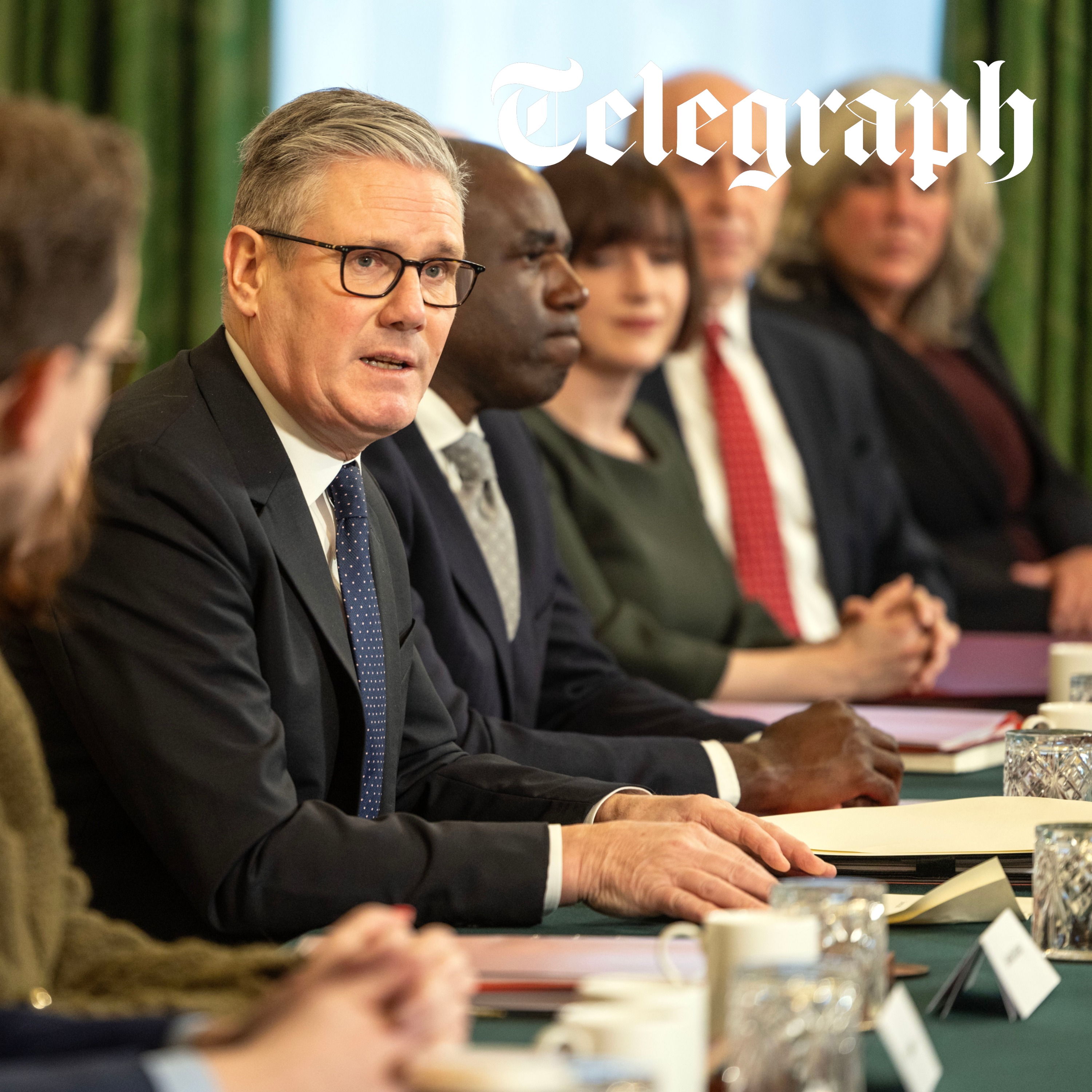
Sir Keir Starmer’s days as Prime Minister appear to be numbered, with briefings from Cabinet ministers that suggest growing discontent over the Mandelson saga.
Camilla and Tim assess whether Starmer can limp on until the May local elections, and who might end up replacing him.
Plus, Telegraph journalists Robert Mendick and Claire Newell reveal the extraordinary role played by Lord Hermer, the Prime Minister’s friend whom he appointed Attorney General, in the failed prosecution of British soldiers in Iraq, and reflect on yet another damaging example of Sir Keir’s lack of judgment.
Read: The emails that prove Hermer was warned of Iraqi lies – but pursued veterans anyway
🚨 LIVE EVENT: The Daily T will be going on the road to London (April 27), Cardiff (April 28), Warwick (April 29) and Worthing (April 30) ahead of May’s critical local elections, where you'll have a chance to put your questions to Camilla and Tim.
🎟️ Tickets are limited, book yours now!: https://www.telegraph.co.uk/politics/0/live-event-the-daily-t-on-the-road/
We want to hear from you! Email us at [email protected] or find @dailytpodcast on TikTok, Instagram and X
► Sign up to our most popular newsletter, From the Editor. Look forward to receiving free-thinking comment and the day's biggest stories, every morning. telegraph.co.uk/fromtheeditor
Producers: Lilian Fawcett and Georgia Coan
Senior Producer: John Cadigan
Executive Producer: Charlotte Seligman
Video Producer: Will Walters
Studio Operator: Meghan Searle
Editor: Camilla Tominey
Highlights
Hosted on Acast. See acast.com/privacy for more information.


