Ask ChatGPT


 The Daily T
27 Oct 2026 · 47m · 21 chapters
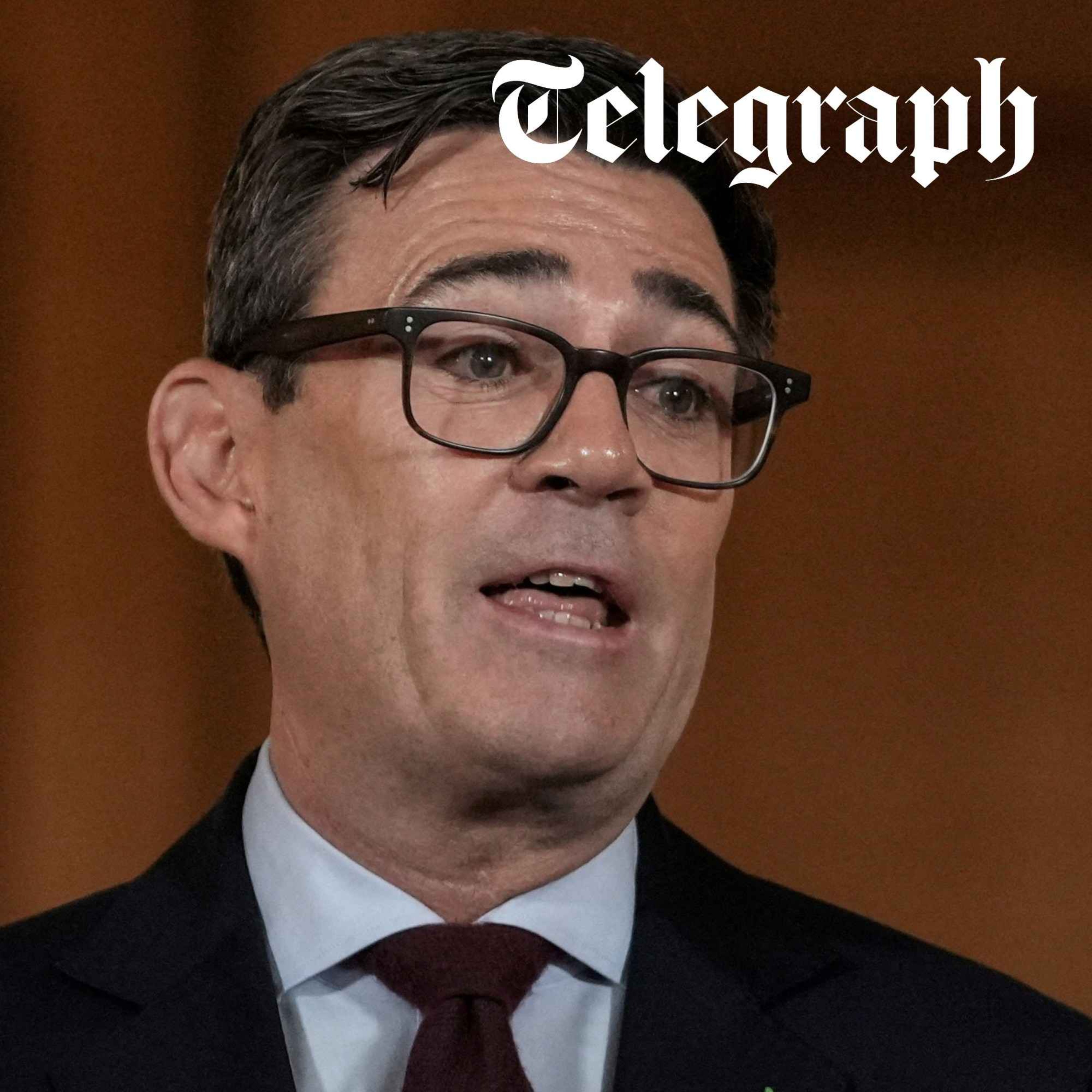
The episode is a political commentary on Andy Burnham’s first 100 days as PM, arguing he’s improved Labour’s polling and presentation but hasn’t changed laws or delivered major policy outcomes yet. The hosts debate whether “100 days” is meaningful in the UK system, and claim Burnham is still searching for direction, with shifting positions on free movement and EU rejoining framed as “conversation” rather than policy. They cite small measures like a national £2 bus fare cap, abolition of VAT on domestic electricity, and a rough sleeping campaign, while criticizing longer-term plans such as a national care service, Great British Grid, water public control, right-to-buy exemptions, and possible electoral reform. Notable examples include homelessness policy effects in Manchester and “housing first” in San Francisco.
Sir Ben Wallace, former UK Defence Secretary (Conservative), who accuses the government of “fake” defence funding by inflating spending via intelligence/other budgets, citing a 2025 £2.2bn defence figure where £2bn is loans for arms purchases and £200m is for Barrow and Furness town improvements, and warning armed forces face real-terms day-to-day cuts despite headline GDP targets.
Written by AI. May contain mistakes.
Discussion on the Prime Minister's achievements and criticisms on his 100 days in office.
“But what has the Prime Minister actually accomplished on this critical anniversary?”
Debate about allegations from Sir Ben Wallace on government funding inflation.
“My sources tell me that Camilla stormed off.”
Examining Burnham's changing political positions and strategies.
“Well, I'm not sure Suella thinks he's an Englishman, but other than us.”
Analysis of Burnham's polling numbers and their implications for his leadership.
“We're going to talk about the budget tomorrow at 12.20.”
Discussion on the difficulties faced by new leaders in forming coherent policies.
“But this is the really interesting thing, that if you look at Andy Burnham, he has been many different things over his political career.”
Exploring the potential long-term policies and objectives of Burnham's government.
“because he's been someone trying to win Makerfield, Brexit constituency, to someone in charge of a Labour majority now seeking closer alignment with Europe.”
Discusses the difficulties new leaders face in policy formation after campaigns.
“And you find in those circumstances that you spend a lot of energy campaigning to win the leadership.”
Explores the implications of current energy policies and their economic impact.
“So we are braced tomorrow for the minimum wage going up.”
Analyzes the effects of minimum wage policies on employment and welfare.
“Westminster City Council has been particularly good at this.”
Examines the complexities of homelessness solutions and government interventions.
“And my friend concluded by saying, all you're seeing is a proper Labour prime minister governing like a Labour prime minister.”
Discussion on the government's manipulation of defence spending figures and the need for transparency.
“change in the funding of a certain objective.”
Exploration of how budget allocations do not reflect true military needs, with examples.
“and it's actually one of the reasons Healy resigned.”
Discussion on the disparity between government's defence rhetoric and real funding levels.
“But in the government's own answer, it will tell you that we are currently spending the same levels, if not less, of GDP on our MOD budget.”
Analysis of past government decisions affecting current defence budgets and morale.
“Like you, when I was in government, I remember the Guardian, dare I say it, said I sounded like an opposition politician when I would rally against the tucking under by the Treasury.”
Examination of political pressures affecting defence budget decisions and priorities.
“Does our elite really take the security of the realm seriously?”
Debate on youth willingness to join the military amid government spending inconsistencies.
“And he may go for the other option, which is next year, We'll tell you next year.”
Discussion on the challenges of military recruitment amidst public skepticism.
“And Peter, understandably, got very angry about that and called him selfish.”
Exploration of Britain's historical reluctance to invest in defense until necessary.
“Everybody then is willing to fight when the bugle sounds, that I have absolute confidence in the patriotism of the British people and of young British people.”
Analysis of how military strategy has shifted towards technology and automation.
“deploy hundreds of thousands of young men with a rifle slung over their shoulder.”
Debate on the challenges in military procurement and the implications for modern warfare.
“And that's what we've got to prepare for.”
Insights on how the conflict in Ukraine has changed military training dynamics.
“That they're developing completely new drains every fortnight.”

Get the gist, explore an idea or ask about something said.
 Claude
On The Daily T, what are the key points of this episode?
Searching your listeningAutomatic transcript. May contain errors.
0:04The Telegraph.
0:09In 2010, newlyweds Debbie Cooper and Jamie Starbuck set off on a round-the-world honeymoon, but something wasn't right. We kind of started to scrutinise things a lot more. What exactly is going on here? Debbie was missing. We just looked at each other and said, so what's the next step? And it's like, police. He was a lovely little boy, but something happened to him to turn him into a monster. There's nothing off her, he just erased her. Missing Debbie, a new Bed of Lies podcast from The Telegraph. Out now. 100 days of pork scratchings and TikTok. But what has the Prime Minister actually accomplished on this critical anniversary?
0:49More devolution and a national social care service, or just a series of undelivered promises for the future? And just 24 hours until the budget, the former Defence Secretary, Sir Ben Wallace, has accused the government of fake funding by inflating its spending on intelligence. He's been a number of different, slightly contrasting things in just three months. Because he's been someone trying to win Makerfield, Brexit constituency, to someone in charge of a Labour majority now seeking closer alignment with Europe. And so much of what he's done has been, well, now I'm in number 10, what am I going to do?
1:23Hello, Jacob. Good to see you again. It's good if you'd have me back. I need to mention, because I didn't say it yesterday, where Camilla is. Because I don't want speculation. I don't want Dan Wooten saying, and where is Camilla Tomini? Who's Dan Wooten? You don't know who Dan Wooten is? I think he used to be on GB News. He used to. He's a Kiwi here. And he'll be saying, she stormed off. My sources tell me that Camilla stormed off. And he'll be discussing that with his special guest stars, Christopher Biggins and Jack the Ripper later on. She has not flounced off. She is on holiday and will be back in one week's time.
1:56But thank you for filling her shoes. I couldn't possibly fill her shoes. First of all, the heels are rather higher than nine would be. And also Camilla is unbelievably brilliant. And I am, you know, the second tier. I'm the sort of night watchman who comes in when either you or Camilla are away. Not true, not true. We should mention another national treasure, Harry Kane, who has won the men's Ballon d 'Or, which is... Which is a gold ball. Gold ball, which would be what in Latin? Well, we looked it up, didn't we? Yeah, we're not going to pretend that we knew. I got Chuck GPT to do it for me, and it is Pillar Aurea.
2:31Very good, very good. So he's won the Pillar Aurea. Well done, that man. First Englishman in 25 years, so we're all very proud of him. Well, I'm not sure Suella thinks he's an Englishman, but other than us. Very good. From the readers, Reno Giordano says, Well deserved. He has a quality which is lacking in many stars today, humility. I agree with that. I wonder what he drinks, because we also want to mention a fascinating survey showing that Gen Z is turning away from tea as matcha rises in popularity. Almost half of young Britons, 47%, think that traditional tea is old-fashioned, and they're turning by 38 % as an alternative to matcha.
3:10Have you ever drunk it? No, I haven't heard of it. Really? My 10-year-old drinks tea, and I drink coffee. I can never remember how old you've got to be to be gen Zed as we're English I don't know I don't know actually forgive me it is Zed isn't it well I hope so yes one that says Zed matcha is disgusting okay it only tastes good if it is served by a geisha and as is so true of many herbal teas they have to be served it has to be loose tea for a start and it has to be sort of boiled at a precise temperature and all this sort of thing and so many people I think are doing herbal alternatives wrong like green tea is pure poison.
3:47Oh, green tea is the most loathsome thing. But it can be lovely so long as it has been properly boiled and properly left to stew in a pot. Well, in my youth, when I had a proper job, I was an investment manager and I used to go on visits to Asian countries and they would very kindly bring in a cup of green tea at the beginning of the meeting, which I would equally politely drink. It seemed to have this sort of fungus in the bottom of it. I was the most loathsome drink. I was gasping for a cup of instant alter recur to keep me going through the meetings. Well, for me, it'll always be PG tips. We're going to talk about the budget tomorrow at 12.20.
4:23We're joined by a financial journalist, and we're going to go through it live and discuss what's being announced, etc. So everyone, please tune in tomorrow. That'll be great fun. But today marks the 100 days, like FDR, of Andy Burnham. what is your what is your when you hear that what is your instinctual summary well if you put it in cricketing terms a hundred is usually a decent innings but does it deserve a standing ovation at lords and i think it doesn't meet the standard for a standing ovation at lords he's done well yes he hasn't done extremely well he's done very well for the labor party he's got them up by 10 points, I would have thought, in the opinion polls, from heading towards under 20 to nearly 30.
5:09So he may have got even more than that. Yeah, in one poll at 32%. And his own personal ratings are above water. He is positively liked, which in the modern era is difficult for politicians to do. He deserves credit for that. But he hasn't actually done anything. The thing about FDR's 100 days was that it was the most enormous legislative program. Or if you think about Donald Trump's first days in office, first 100 hours of Trump, he did hundreds of executive orders. He changed the law of the country. I'm not sure Andrew Burnham has changed a single law in this country. Prime ministers can't really do that.
5:47And I think one example of Americanization politics is the concept of the 100 days. It's perhaps not very useful in a system in which the executive is in parliament. But the executive can bring forward statutory instruments which can change the law. Right. And they can be brought forward with immediate effect, as we did the whole time during COVID. Right. Now, you may think that's not a great process and made, laid, statutory instruments. You couldn't say leave the ECHR. You could give notice of leaving ECHR because that's... But you need to get that bill to Parliament, right? That's real prerogative.
6:22You could give notice and then you could... How long did it take to get rid of a King Emperor? I don't know. How long did it take? Okay, under 24 hours. Right, okay. With an act of parliament through both houses, it took, I think, 45 minutes in House Congress. I'm not going to waste time asking, so why didn't you do any of that when you were in power? That's a given. If it's this easy. Why didn't we do it in power when we were in power? Because I'm afraid most people don't know how the constitution works. Right. And they don't. When emergency things happen, we did get the COVID bill through with great rapidity.
6:53But the normal system is unbelievably slothful. Yes. Just the voice of the sluggard. I heard him complain. and you'll wake me too soon, I must slumber again as the door and it's hinges. So he on his bed turned his hide and his shoulders and his heavy head. That is how government works in this country. But if you've got a prime minister who really wants to get a grip, it's perfectly possible to do. But that's not what the civil service is saying. They're saying you've got to have a consultation. For primary legislation, you never need a consultation because you just say, irrespective of the act that says we needed a consultation, we're not having one.
7:28And then that's the law. Yes. Well, he's putting many things out of consultation. It is government through consultation. But this is the really interesting thing, that if you look at Andy Burnham, he has been many different things over his political career. Yeah. There's been a lot of commentary on his 2016 speech on freedom of freedom. Critic of free movement. Yes. Critic of free movement. Yes. And when you're a prime minister, you don't necessarily need to be a man of high ideology, but you need to know what you're trying to do. and I'm not sure yet he knows what he is trying to do. Is he still trying to please everybody or does he have a direction in which he wants to go?
8:08If you think that Donald Trump was a registered Democrat in the 1980s, and he may still have many of those views, but as a president, he has been clearly a Republican and everything he's done has been in line with his Republican values or the values of the Republican Party. So you can change. You can evolve. But once you've evolved, once you're a leader, you need to set out very clearly what you're doing. And I thought yesterday's 99th day was a very difficult day for him because he was all over the place on freedom of movement. Right. And what did so much damage to Starmer was this feeling that he never made his mind up about everything, anything.
8:50He always changed his mind. The U-turns were endless. You can U-turn if you've made a mistake. Yes. Your U-turns have to be few and far between. You can't be spinning around in a circle in one day of media rounds. So over the weekend, he had suggested that he was open to free movement, but also that he would like in his lifetime to rejoin the EU. So, of course, we in the media then spent Monday asking, number 10, does this mean you're going to go to the European summit in November and you're going to say we are going to open our borders to the EU as the first step towards saying, please, can we come back in?
9:28And they eventually had to come out and say, no, this is not we're not discussing this sort of thing right now. But then they sort of said yes today. Mr. Reynolds on the wireless this morning was saying, well, that will be part of a long-term discussion, but it's not going to happen. But there's a thing, long-term discussion. So Burnham, when he was on Good Morning Britain with Richard Maidley and Susanna Reid, he had this very strange formula of rejoining the EU is something that I would like to see happen in my lifetime. But I will never get ahead of the public. So it's unlikely to happen. Which is it?
10:01You're saying it's something I would personally like to happen. And I believe very strongly, but I'm not going to try and persuade you otherwise. I'm just going to have a conversation. It's all about starting conversations. But this is a very weird way to govern because the way our government works is the government has a position and that is the position of every member of the government and every member of the government has to back that position or resign from the government. Yes. If the prime minister starts saying, I would like to do this, this then de facto becomes government policy. So to say, I would like to do this, but I don't think I can just confuses everybody.
10:32It doesn't give you any serious answers to where policy is going. So he's had a good hundred days in terms of presentation. He's done very well. He's boosted his position in the polls. Nothing has really changed policy-wise. The budget is of such importance to see the direction he's going in. But that direction may be an early general election. I mean, much of this is a function of how he got the job, right? that he didn't enter number 10 via the ballot box. He was brought in in what was effectively a coup. And he has, having got the job, at various stages, you said he's been different things at different times in his career.
11:12He's been a number of different, slightly contrasting things in just three months because he's been someone trying to win Makerfield, Brexit constituency, to someone in charge of a Labour majority now seeking closer alignment with Europe. And so much of what he's done has been, well, now I'm in number 10, what am I going to do? Well, I think he was slightly caught in a trap, really, because to win Makerfield, he had to put forward his Eurosceptic acceptance. But to unite the left, which is what he's trying to do, which is a very, very sensible strategy. If you look at the columns of left-wing voters and right-wing voters, they have hardly changed in recent years.
11:53What has changed is the split between the parties. If by tacking to the EU, he can unite the left, he can afford to lose seats like Makerfield. Unfortunately, Makerfield is his seat. He wouldn't lose it though, but yeah. He probably won't lose Makerfield, but he's giving up on all the Labour Red Bull seats, just accepting that he can't hold onto those in a general election, but that if he unites the left, he can win a functioning majority. And if you take the 170 majority as an aberration because of the way the cards fell, because of the unpopularity of the Tory party, actually, if by uniting the left, he could achieve a majority of 50, that's quite a political achievement.
12:37So I think that's part of the reason he's been moving back to the views that he had historically held. Now, one might think he's not done a lot in 100 days, but he's taken some very small steps, which he says all add up to make the cost of living a bit easier for people, while also setting out a long-term direction. So consider some of the small, short-term stuff he's done, national£2 bus fare cap or the abolition of VAT on domestic electricity. He's also announced his campaign to end rough sleeping nationwide. But in the long run, I mean, there is some quite radical stuff here. A national care service, creation of a great British grid, right to buy exemption on new council housing, public control and moral oversight of water.
13:24He's proposing a massive new training program for the young, along with a national electoral reform commission, which could see us wind up with PR. OK, 100 days. He's on the hoof. He's had to react and move fast because he didn't know he'd be here probably about a year ago. But the long-term vision he's setting out is a classic Labour stuff. Yes. And I have some sympathy for him in the difficulties you face as a new prime minister coming in in midterm. Bear in mind, I supported both Boris Johnson and Liz Truss to get the leadership of the Conservative Party. And you find in those circumstances that you spend a lot of energy campaigning to win the leadership.
14:08But there isn't time for policy formation. You've only got a few weeks of leadership campaign. You cannot design a plan for government in the few weeks of a leadership campaign. And that means that when you get in, you're still carrying on with a lot of your predecessor's work. That carries on. And you need time to get the policy prepared to be moved into legislation. So I do have a certain sympathy on that. Yes, he's done little things. I mean, the cutting of VAT on domestic electricity bills highlights the problem we have with energy prices. The problem with energy is that we've got a disastrous energy policy, which labor is completely wedded to.
14:49Jackdaw has been approved. Ray's Bank hasn't, but Jackdaw is a small step. What they really need to do is approve shale gas, hydraulic fracturing. And then you can do a big effort to reduce gas prices. because it's very difficult. There isn't an international market for gas. Lots of people say there is. It's just not true. There are a series of regional markets for gas, and it depends on interconnectors, and most of our interconnectors come in rather than going out. So it's quite hard for us to export our domestic gas. So that brings the price down pretty significantly. It also would affect global prices because the quantity would be so large.
15:29It's true there is a semi-global price for oil depending on the quality and type of oil. So that would have a big effect if you went for that. That would fundamentally change the economy. The grid issue, what was it? The creation of Great British Grid. This is an enormously expensive consequence of green energy because you're switching the grid from a hub and spoke mechanism with very, very few hubs and millions of spokes to a spoke-to-spoke mechanism where you've got thousands and thousands of spokes going out to the millions of spokes. That is an enormously technologically complicated and expensive thing to be doing.
16:10And you will have to redesign the existing grid to pay for it. So that isn't making energy cheaper. That's going to make it more expensive. Yes. Because we're going to have to pay for that. Nobody's going to do it for free. But you're right. It is essentially a socialist program, isn't it? It's more state control. And there's utter stupidity of people who have opposed council house sales. They assume that if you sell a council house, the house no longer exists. it still lived in and normally by the same person who lived in it when it was a council house yes the question has never been the sale of council houses yes it's always been the supply of housing and what's happening with the supply of housing is it going up or down uh probably down down so the last figures came out a few days ago they've gone gone down because planning is so heavily regulated that nobody can make any money building houses but this is the way with labor isn't it It comes in, it sees a problem, it suggests a state fix, and the consequence of the state fix is usually the problem becomes worse.
17:07So we are braced tomorrow for the minimum wage going up. It's by a relatively small amount. I have sympathy for those who are in employment. It means that their work will pay more. But we're now seeing the long-term costs of pricing younger workers out of the market. And so everything else that they're now doing, the training programs, is sort of playing catch up with the impact of socialist policy, which is to make employing young people too expensive. Yes, that's absolutely right. All minimum wages, other things being equal, always reduce the demand for labor, just of their nature. Where minimum wages become a real problem is when the de facto minimum wage of welfare is lower than the de facto minimum wage of the minimum wage.
17:56because if you assume no rational person will work for less than they can get on welfare, until the minimum wage is comfortably more than welfare, it doesn't really hit because minimum wage is taxed and welfare isn't. Now, we had the figures from Ian Duncan Smith's institute recently that showed that certain types of PIP, you needed to earn£33 ,000 on the minimum wage. You needed to work a 50-hour week to get the minimum wage equivalent to being on a particular benefit. If you are now putting the minimum wage up, you get to a crux point where the minimum wage is so much higher than welfare that it is a genuine destroyer of jobs.
18:44And that's where things have been going wrong. Yeah. And the problem is that if you push back against policies like that, is very easy to paint you as a monster. So another example is homelessness, an entirely moral thing to wish to do to eliminate homelessness. We all hate it. We'd all like to see people given somewhere to live. But when he was on Good Morning Britain, Richard Majorley pointed out that with his homelessness plan in Manchester, initially the numbers of homeless fell, but then they went up again. And he said, what went wrong, Prime Minister? And Burnham said, well, the programme was so successful that more people showed up.
19:20Well, that's socialism in a nutshell, isn't it? The problem with any kind of welfare program is that it can indeed in the short term solve the immediate problem of poverty, but it might also create new mechanisms that encourage poverty by encouraging people to apply for it, right? So they're looked after rather than looking after themselves. And this is what happened in San Francisco, famously, where they adopted a policy of housing first. You come to us, we don't ask about what you're doing or problems in your private life, which are going to give you a home. And the consequence was San Francisco became a magnet for people moving into the region.
19:56So we all know, and I just feel terrible for saying this, I don't believe there is any government program that can completely abolish all homelessness to mean that no one is sleeping rough at Christmas because it's so much more complicated than just whether or not there is available housing. Well, there is an availability of hostels in London for people who want them. Westminster City Council can provide for people who want a hostel. And they do a very good job, actually. Westminster City Council has been particularly good at this. But some people don't want to go in hostels because they may have a drug addiction and hostels may not allow drugs, shouldn't allow drugs.
20:38They may have a dog and the hostel doesn't allow dogs. So there are issues that you come up against that, as you're absolutely right, make solving the problem extremely difficult because unless you're saying to people it is compulsory to get off the streets, which it isn't anymore, which it is. They've changed the law there. They've changed the law there. Then there are some people who will say, well, the accommodation you're offering me is not what I want. Therefore, I will stay on the streets. Yeah. And that's a difficult choice for people who are broadly liberal because you and I don't want to compel people.
21:12On the other hand, And I didn't object to the Vagrancy Act, so I thought it was quite sensible to have a fallback power that said that if you are causing a nuisance on the streets, the police have some power under which to act. And some people who are very unwell or very addicted to something actually require intervention in order to help them. I think that's absolutely right, and I think we have a real problem with two things. One is the drugs law relating to cannabis and the mental illness created by that, that we have so relaxed our drugs laws. I'm very much with Peter Hitchens on this. I think he writes very compellingly about the problems from cannabis and mental health.
21:52And the other is our mental health provision that allows people who 40 years ago would have been hospitalized to be on the streets, neither to their benefit nor to the benefit of society, to the risk of society, many of whom then end up in prison, which is probably not the right place for them anyway. And I think we need to revisit our approach to mental health. Odds on the possibility of an election either this year or next year are improving, partly because of, I suspect, things we've said on this program. It's 16 to 1 that there could be an election by the end of the year. That's not a bad bet.
22:28It's 7 to 4 that it could be an election in 2027. now having said in yesterday's episode that i think december the 10th is a possibility i had a fascinating conversation with a left-wing journalist in the lobby who just kind of then changed my mind about it and he said part of what's going on here is that psychologically conservatives think that raising a tax or introducing a regulation is so scandalous that you must have an election if you're going to do it and his point was why all burnham is doing is just slowly undoing the straight jacket of Starmer. I mean, he put it really well. He said, Starmer believed there was this god of politics that said you can't do certain things.
23:10Whereas Burnham realizes that the god doesn't exist. And in fact, by starting these various conversations, he's giving the left permission to unwind that straight jacket and do the things it's always wanted to do. He's got the majority to do it. There is no need for him to give it up. And he believes he has the power of persuasion to bring people around to things that a few years ago were considered outrageous. And my friend concluded by saying, all you're seeing is a proper Labour prime minister governing like a Labour prime minister. Deal with it. Yes. I don't think it's the Tories who are thinking changing tax policy requires an election.
23:49I think it is that there are very clear manifesto commitments. And Andy Burnham wants to be a trusted politician. And therefore, if he were to break the income tax promise, that would be very damaging to his reputation. And all prime ministers have a certain amount of political capital which they can spend one way or another. To raise income tax would spend a lot of political capital, probably for less benefit than he would anticipate. Re-entering the EU if he wants to do that. The real problem is, if he were to do that purely by legislation, which he could do, one day there will be a conservative government which would just repeal it.
24:28And therefore, the EU would have to ask itself. And we'd leave straight away that if we were taken back in without a referendum, an incoming conservative government or a reformed government would legislate on day one, would use the powers that I mentioned in relation to Edward VIII to pull out that day and say, thank you very much. We're not paying you any money. Go and boil your heads. It would be. And we're resiling from our contingent liabilities, too. Yes. And therefore, they would create enormous instability if they were to use the power in that way. Yes. And likewise, changing the voting system, I think, without a referendum would be very, very difficult to do.
25:07And he's only promising a national commission at the moment anyway. He is, and that might not go anywhere. But I think the point stands that much of what we recoil from is just what Labour wants to do. And there is a substantial number of voters who want to do it as well. But the reason for going for an election is not to change his promises because he can't go into an election without the commitment not to raise income tax. Because otherwise, a whole election will be on raising income tax. And he'll be accused of raising income tax whether he wants to or not. He has to keep that promise. So it's saying, if I go now, I bank another five years.
25:45Otherwise, politics looks very volatile at the moment. Labor was under 20 % a few months ago. So we could be back under 20 % once we've gone through a winter where we might run out of electricity. If we get to people having to use the stores that they've bought, a government would be very unpopular in those circumstances. Energy prices are going to go up hugely in January and so on and so forth. Then suddenly he thinks, well, let's bank a lead. Okay, well, I'll leave the final word to Christian Munger, who says he is a wolf in sheep's clothing, the mate of everyone while stabbing them in the back.
26:23The pal you give private information to who then goes and blabs with others. The man you trusted your wallet with then dips his hand into it. I don't think that person will be voting Labour on December the 10th. I don't remember Little Red Riding Hood going in to see Grandma and saying, Grandma, what big eyelashes you have. Very good. Very good. Well, one major thing that will appear in tomorrow's budget is the question of defence. We'll be looking to see if the government's going to really raise defence spending or to hit its target. Ben Wallace, former Tory Secretary of State for Defence, says that the government is not being honest about its figures.
26:56And we speak to him next.
27:03I'm Vinicia Rainey. And I'm Roland Oliphant. As hosts of The Telegraph's podcast Iran The Latest, it's our job to keep you up to speed on what's going on in the Middle East. Join us every day as we ask, can the US put an end to Iran's nuclear ambitions once and for all? Who will come out on top in the peace talks? Has this war damaged America's ability to take on China? And what are the long-term implications for the wider world? Search Iran The Latest and listen wherever you get your podcasts. We're also now on video. Watch us on YouTube and on The Telegraph's website.
27:40So Ben Wallace, former Secretary of State for Defence, you have laid a very important charge against this government that isn't being straightforward when it comes to defence spending. Tell us what you're saying. Well, it's a long held trick of the UK Treasury to solve GDP targets with tucking under other departments' budgets and pretending that actually there's a material change in the funding of a certain objective. We all remember the 0.7 % of GDP on foreign aid. Obviously, that has been mirrored with the initial 2014 target of 2 % of GDP on defence. And I think when your listeners and readers understand, well, realise what that means, they think that means more money on our armed forces and maybe some of our intelligence and certainly our resilience.
28:37But what this government has done is they've doubled down on basically folding in everything that they can get their hands on to try and claim an increase of defence spending to meet the new target of 3 % of 2030 and 3.5 % by 2035. And I just think with this budget approaching, we can see that this government is prepared to do the treasury tricks, as we used to call them when we were in government. and it's actually one of the reasons Healy resigned. So it'd be interesting if he doubles down, but I could see it in the trails at the weekend and I think it's time that we are all owed that transparency and that's why I wrote to the UK Statistics Authority to ask them to investigate.
29:21Let me give a concrete example of what you're talking about and it's pretty mind-blowing. In 2025, Rachel Reeves announced an extra£2.2 billion to be spent on defence. Of that,£2 billion went towards giving loans to other countries so they could buy military stuff from us. And£200 million was spent on doing up Barrow and Furness High Street. Town centre improvements. It's not going to make the Kremlin quake. Because when we hear those headline figures of 2.2, we imagine that's going on tanks and, more importantly, soldiers and their equipment and their homes. But actually, it's astonishing what is not going on, isn't it?
30:06And the typical trick is to wrap together intelligence spending and military spending, even though NATO says you must not count those things together, because they're actually two very different things. You can count some intelligence if they are under military command and have been subject to military training. So it will be a great surprise to MI5 to discover that they are currently being categorised as defence spending by this government, and that potentially that means I look forward to seeing them on the assault course any time soon, because if the government's going to play by the rules, then these guys need to be able to be brought under it.
30:50And of course they're not going to, because this government is determined to be as opaque as possible. And they just simply refuse to answer many of the questions parliamentarians are putting to them about what is making up the GDP claims. The latest claim is 2.7 % of GDP. But in the government's own answer, it will tell you that we are currently spending the same levels, if not less, of GDP on our MOD budget. on the on the our armed forces are getting the same but since the government has arrived in office with national insurance extras unfunded pay rises delays to equipment programs for new reviews which always adds money actually they've got more and more pressures around the chagos island money all unfunded so in fact the government the mod is being tried being asked to find more with less money while the government tries to parade around Europe saying, you know, the coalition of the willing, we're going to do more.
31:57And all of that leads to hollowing out when you don't match your appetite with the right funding. Ben, isn't the target in and of itself faintly ridiculous because it encourages this type of abuse that even before you've started with intelligence being rolled in, it includes pensions. So that's not actually providing any fighting force. And when I was trying to cut expenditure in the cabinet office, there was a committee in the cabinet office that duplicated a defence committee in Downing Street, actually triplicated because there was one in the Ministry of Defence as well. And I suggested that we cut this and save low millions of pounds a year, not going to change the budget.
32:40And I got told I didn't need to worry my little head about this because it counted towards our then 2 % target, and therefore it was fine. And that as soon as you have these targets, you try and fiddle them and you spend the money badly. What you actually need to do is start from first principles and say, what type of defence do you need and how are you going to fund it? I totally agree. And I think the reason people have avoided that for so many years, that conversation is, Number 10 doesn't want to fund its rhetoric. You know, successive Downing Streets have gone on the world stage and proffered British leadership and British deployments and then not actually funded it properly and they of course don't want to have their wings clipped by a proper grown-up conversation that we can't do everything Prime Minister.
33:27At the same time admirals and generals don't like sitting around tables with their peer group who benchmark each other on how many frigates and tanks and aircraft you have rather than what outcomes you're going to deliver in lethality. And so it's better and easier to boast about the GDP figure than actually readiness and the deployability of your armed forces. And too few secretaries of state have been prepared to stand up to it. Like you, when I was in government, I remember the Guardian, dare I say it, said I sounded like an opposition politician when I would rally against the tucking under by the Treasury.
34:05Some of the bad habits started, I'm afraid, with our own government in 2014. George Osborne decided to count VAT receipts as our defence spending. Now, you can imagine that. That money goes straight back to the Treasury. And I remember on the record saying, I can't kill anybody with a VAT receipt. It's absolutely pointless. And it totally plays into this game of don't you worry or, you know, pretty little head. And it also encourages governments to spin or press release to the parts of journalism that don't ask any questions in the same manner of death. So I notice that this government does a lot of defence journalism, not the defence journalists, not the specialists like Daniel Sharriden in the Daily Telegraph, for example, but will talk to the lobby because that's a day to day basis.
34:58and the likelihood that the political editor of The Guardian will actually know the difference between a long-range missile and a short-range missile is very low, so they don't get interrogated. And I think we are gearing up, I think, for maybe an election, but certainly for a budget where the government's going to claim the highest spending since record began, etc. But you really need to look at what's being spent on our armed forces. That's what your readers want. That's what the public want. they don't want press releases. When you pair it back, you take out MI5. I think we had MI6 and GCHQ in anyway.
35:38But if you were to take those out and then pensions, you're getting a defence expenditure figure that is what, about 1.6%, that sort of thing? I think 1.7. We didn't do the whole of the intelligence budget. I think we did MI6's pensions and some of the joint cyber. But yes, and remember, we're also doing it when we're trying to renew our nuclear deterrence. The last time we delivered our new nuclear deterrence, the last time when we did Trident, we were spending 4 % of GDP on defence. So it shows why on a day-to-day basis, our men and women are our armed forces have record low morale, feel totally demoralized by what they see, because they read in the papers like everyone else that apparently they're getting record funding.
36:31But then they're being told they can't train, they can't deploy, they don't have any ammunition, their ships can't go to sea. And they're wondering, you know, they know the truth. And it's a total, it's dishonoring those men and women to glibly announce in your dispatch patchbox, basically fake funding for our own forces. This is very frustrating to listen to, Saben, because I thought we had started to fix this about 10 years ago when Donald Trump came into office and said, right, everyone's got to start spending more within NATO. And politicians seem to kick their heels and seem to say they were going to do that.
37:08I can't understand this gulf between rhetoric and reality. Maybe I'm just a fool. Maybe defence is just something that people give lip service to but don't really worry about because they don't really think Britain is under threat. Which is it? Does our elite really take the security of the realm seriously? I don't think that they have. I think for decades, prime ministers have always chirped, you know, the line that defence is the first duty of government and then promptly funded the NHS to the hilt and benefits. They haven't matched their rhetoric. And, you know, this is not a singular party issue.
37:48You know, there have been voices in the Labour Party. There have been voices in the Conservatives and the Lib Dems who have always talked about more on defence. The problem has been the rest of the political party has not felt that's its priority. How many times did, Jacob, you and I hear no votes in defence? You often used to hear that from the pollsters. You hear that all the time. Well, I don't really care whether there are votes or not in defense. I care about whether we're defended properly. And, you know, I think, sadly, because of the Ukraine war, it's all come home to roost. All the boasts, all the numbers, all the parade ground rhetoric, we've been found out.
38:28I remember there was a discussion about sending the AS-90s, that's the 155 long-range artillery, to Ukraine. And we had on paper 73 mobile files, 73 sort of chassis that could have gone. At the time, the Treasury had said there would be a new for old. So if we'd sent them, we would have got funding to replace them, which they then subsequently reneged on. But it turned out off the 73, we only had 19 working. I mean, we've been playing top trunks, as I used to call it, where we've been talking about the numbers, but not about the serviceability and the deployability. And that's because serviceability and deployability and operational capability is funded out of day-to-day running costs, the RDEL of a department.
39:16And guess which part of government's RDEL has grown exponentially for the last 30 years and sucked the life out of the rest of government? RDEL is benefits and RDEL is health service activity. So where do they go for that? They go for the MOD. and every single, I think, turn of the hand or the MOD, the Treasury asked to cut more day-to-day running costs. It's why we saw HMS Cardiff not be able to put to sea because there was no money for maintenance. And if you look at the government's own dip, if you remember the Defence Investment Programme that was 18 months late in the first place, their table in their own document showing a real-terms cut to the day-to-day running of defence for the next three years.
39:59I mean, astonishing. I think what's sad, Tim, is other members in Europe have actually stood up. Germany, Poland, the Baltics, Scandinavians have put their money where they have mouthings. Denmark even cancelled a public holiday to increase tax revenues to fund it. We have done press releases. But John Healy was thought of as being on the side of the angels. That is to say, he was Shadow Defence Secretary. And I think your ministerial team thought quite highly of him as shadowed defense secretary, a serious minded man who you could talk to about defense, who understood the issues, who didn't make cheap criticisms, but thought things through carefully.
40:42He then resigned as defense secretary over this very issue. Now he's in charge. Seems to me there is reasonable pressure on him to deliver because he understands the problem in a way that nobody pretends Rachel Reeves ever did. yes I think the test for the chancellor is going to be are you labor first or defense first you resign because you put defense before party I know that one of the reasons he resigned was because of treasury tricks as he called it because I think the treasury came to him with with a scheme that was probably similar to mine at one stage they wanted me to claim that any spending the home office did on someone who came from a war zone was defense spending.
41:25So an asylum seeker from, I don't know, Libya would suddenly be viewed as defense spending. And I said no, I said no to need all of them. I think every single one I said no, but it's his time to choose it. And when he gets up on his legs this week, we will see. And he may go for the other option, which is next year, We'll tell you next year. But in the meantime, let's not forget, despite the words of 2.7 % of GDP, our armed forces are facing a real-term day-to-day cut of the day-to-day running of our armed forces for the next three years. So, Ben Wallace, thank you very much. Thank you very much.
42:02Thank you, Jacob. Jacob, I witnessed an unseemly row on GB News, which fascinated me between the presenter Alex Armstrong and the retired policeman Peter Blexley about whether or not young people are willing to serve their country in the military. And Armstrong suggested he wasn't. And Peter, understandably, got very angry about that and called him selfish. And you've commented upon how it's important that we have a country in which is inculcated in people that are willing to fight. But one point that Armstrong made that I was sympathetic towards was, my government keeps saying we need to fight, but it won't spend the money to do it.
42:38Or when its ally goes to war with Iran, Britain steps back and says, that's not for us. There is a mixed message that the Labour government's sending out, that it is the party of defence and security, and we've got to stockpile some goods, and the Russians are after our cables, and we need young people to sign up. But on the other hand, if you're not willing to put the money in, I feel like I'm being, I know you hate this word, gaslit by the elite into thinking that I ought to sign up for something which Westminster itself won't actually invest in. this is how the british have behaved throughout the centuries that we have never put money into defense until we've actually needed to if you think of the size of the army that was available in 1914 if you think of the lateness of rearmament in the 1930s that we've always run down defense after wars and assume the cold war was in fact a war it was simply a cold war more than it was sensible.
43:39Everybody then is willing to fight when the bugle sounds, that I have absolute confidence in the patriotism of the British people and of young British people. When you say to them, do you want to go off and fight? Of course they say no, because there's no obvious thing to be fighting for at the moment. And it just sounds very aggressive. And they see all these wars that we have fought that have failed, Afghanistan, Iraq too, that haven't covered the nation in glory. So why would they want to join up? But it all changes if there is a real threat, if something actually happens. The lines Marc Francois quoted from Kipling, it's Tommy this and Tommy that and chuck him out the brute.
44:21But it's savior of the country when the guns begin to shoot. And that's right. When the guns begin to shoot, people's patriotism is revivified. vivified. But something that Sir Ben said there, which I picked up on and I don't think is appreciated enough, is the nature of the military has changed. It's no longer about being able to deploy hundreds of thousands of young men with a rifle slung over their shoulder. It's about what he said is lethality. And actually, we still have this fantasy of a people's army because we see everything through the prism of the First and Second World Wars. But the truth is, is that a strong military nowadays really depends on the ability to blow a lot of things up with as little effort as possible.
45:02And that's not really about conscription or appealing to patriotism anymore. It's about having a very well-funded professional army. I have a feeling the answer is yes and no. That is to say, you've seen in Ukraine enormous developments in technology with drones and even drones rescuing people from battlefield. But you've still needed the infantry to hold the territory, haven't you? Yes. And so you've had both a war where large numbers are involved and technology has become key, which has changed the nature of how the war is being fought. And that's what we've got to prepare for. And you're quite right.
45:44We will soon, I imagine, have ships that do not need thousands of sailors on them, that they will be all automated and AI and they'll be operated from a bunker to some naval base. And the same true with planes, that they will all become automated. I think they pretty much are automated now, actually, that the pilot sits there. But if the computer fails, the planes can't fly. there needs so many small adjustments constantly being made to be the size that they are, the shape that they are, and so on, that if the computer can't make those adjustments, the pilot ejects and the plane crashes, that he can't now take the stick and fly it in manual, I think.
46:33And so you're already at a stage of very significant technological sophistication. but if you have to hold territory you still need the troops to do it and you need the ships even if the ships don't need so many sailors so it depends on the type of war that is is fought but i think your basic principle is right it's the equipment and the difficulty there for the mod is mod procurement is so long-winded that the equipment is now out of date before you've even completed the order. Yes. That they're developing completely new drains every fortnight. Yes. And producing them within six weeks and having an incredibly fast cycle.
47:17And as Wes Streeting has said, it's gone from the beginning of the war, us training Ukrainians to Ukrainians now training us. Well, that's absolutely right. Because they've learned so much in the process of fighting. And we had an exercise, the UK and Estonia against the Ukrainians last year, and the Ukrainians won by miles. Well, we will be back tomorrow at 12.20 because we'll be talking through John Healy's first budget.
48:01You
In Tuesday’s episode of The Daily T, Tim Stanley and Jacob Rees-Mogg are joined by Sir Ben Wallace, the former Tory defence secretary. Sir Ben has accused the Government of falsifying spending on the defence budget in order to appear closer to reaching the pledged 3 per cent of GDP by 2030. He criticised the Government for taking only a superficial step towards the target and falling behind its European allies. He said: “Germany, Poland, the Baltics, Scandinavians, have put their money where their mouth is. Denmark even cancelled a public holiday to increase tax revenues to fund it. We have done press releases.”
Tim and Jacob also discuss Andy Burnham’s first 100 days in office, exploring the difficulties associated with coming in in mid-term. They explore the changes he has made and the promises he has made for the future – and whether a snap election could be on the horizon.
The Telegraph is the Publisher Podcast Awards' Podcast Publisher of the Year 2026
► The Daily T covers The Budget 2026 Live from 12.30pm on Wednesday 28th October.
Subscribe to our YouTube Channel to follow along as Tim Stanley, Jacob Rees-Mogg and financial journalist Georgie Frost react to Chancellor Healey's speech.
► Get more exclusive Daily T content from The Daily T+ membership! Join here.
► We want to hear from you! Email us at [email protected] or find @dailytpodcast on TikTok, Instagram and X
► Sign up to our most popular newsletter, From the Editor. Look forward to receiving free-thinking comment and the day's biggest stories, every morning. telegraph.co.uk/fromtheeditor
Producer: David Levene
Senior Producer: Emma Williams
Studio Operator: Meghan Searle
Video & Social Producer: Nada Aggour
Executive Producer: Charlotte Seligman
Editor: Camilla Tominey
Highlights:
Hosted on Acast. See acast.com/privacy for more information.