
 Ask ChatGPT


 The Daily T
13 Jul 2026 · 38m · 13 chapters
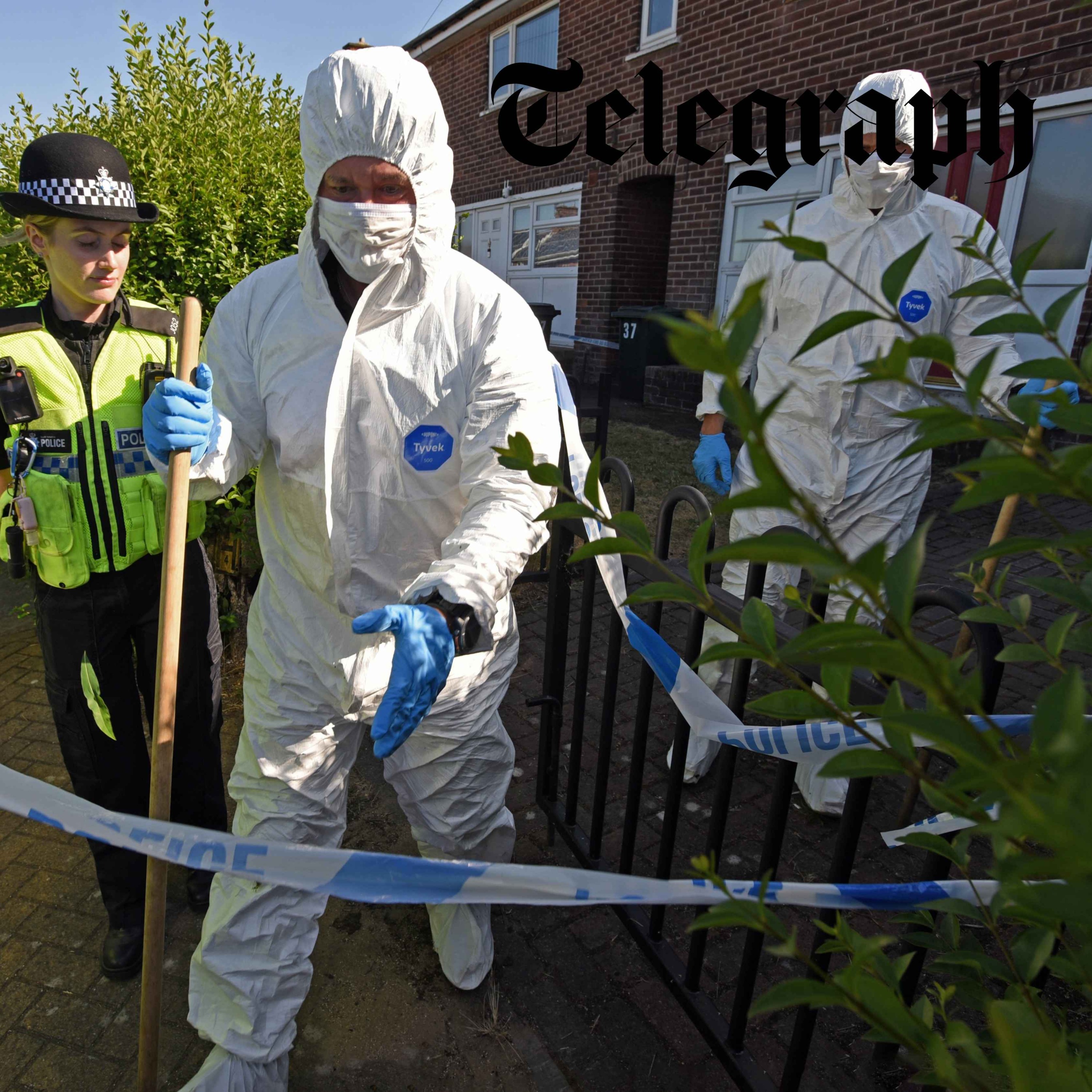
The episode discusses the death of Anne Widdecombe, initially treated as a murder, then said to involve counter-terror police; it also debates Nigel Farage’s £5m security donation and broader implications for political safety and public discourse. It then pivots to welfare policy, focusing on rising disability claims for mental-health conditions.
Jacob Rees-Mogg (UK politician; hosts “The Daily Tea” with Camilla Tomini), Ian Duncan-Smith (former Conservative Party leader; former Work and Pensions Secretary), plus referenced commentators Adam Bolton (Sky News), Peter Tatchell, and Giles Brandreth.
Police handling was criticized for earlier reassurance and for arresting the wrong man; counter-terror involvement suggests possible terrorism motivation. Farage’s security money should be scrutinized for declaration rules, not usage. Welfare spending should shift from paying claimants to getting them back to work; lockdown reduced face-to-face assessments.
David Amos and Jo Cox murders; PC Keith Palmer; ADHD/autism/anxiety claim numbers rising since lockdown; PIP and disability assessments.
Written by AI. May contain mistakes.
Discussion on Anne Widdecombe's death and its implications for politician safety.
“reality television, from Bravo to all the trash TV you could want.”
Hosts reflect on Anne Widdecombe's career and impact on politics.
“Welcome to The Daily Tea with me, Camilla Tomini.”
Discussion on the public's reaction to Widdecombe's death and media coverage.
“you know, don't swear, don't do any dodgy tackles, just mind your P's and Q's, my boy.”
Exploration of the intersection of Anne's Catholic faith and her political stance.
“Ian Dale was on the show, my GB News show yesterday, making the point that actually Anne Whittacombe worshipped Nigel Farage.”
Discussion of Anne's sense of humor and personality in public life.
“I mean, you understand that association.”
Update on the investigation into Widdecombe's murder by counter-terror police.
“Coming up next, Jacob, we're going to speak to Ian Duncan Smith.”
Discussion on the investigation into Anne Widdicombe's murder being taken over by counter-terror police.
“Well, it's a Tory fest on the podcast today because as well as Jacob's company, we are now enjoying the company of Ian Duncan-Smith, former leader of the Conservative Party.”
An analysis of police communication failures and public speculation regarding the murder.
“But, Ian, I want to come back to what you're saying, because when the police don't say anything, that creates a vacuum.”
Latest updates on the investigation from counterterrorism police and the circumstances surrounding Anne Widdicombe's death.
“So Martin Evans, our crime editor, is reporting at this very moment.”
Discussion on political ramifications and the security concerns for public figures like Nigel Farage.
“I mean, there could be a case here for actually a degree of funding for protecting Nigel Farage that comes from the state, perhaps, Ian.”
Exploration of the public's perception of safety and the implications for MPs after recent events.
“I mean, bits get thrown at you occasionally.”
The discussion explores the degradation of public discourse and the impact of anonymity online.
“they had rotated the armed police from fixed points to all around Whitehall.”
A deep dive into the welfare system's shortcomings, particularly concerning mental health and disability benefits.
“You've never been shy in expressing a view about the welfare and benefits bill.”

Get the gist, explore an idea or ask about something said.
 Claude
On The Daily T, what are the key points of this episode?
Searching your listeningAutomatic transcript. May contain errors.
0:04The Telegraph.
0:11ACAST powers the world's best podcasts. Here's a show that we recommend.
0:20Welcome back to Two Judgy Girls. I'm Mary from the Bay. And I'm Courtney from LA. TJG is the podcast where we spill all the tea on your favorite reality TV shows, celebrity gossip, and everything in between. We're here to bring you our unfiltered opinions, hilarious commentary, and plenty of laughs along the way. We're two SDSU Delta Gamma sisters with a microphone and a whole lot of opinions. Each week, we dive headfirst into the wild world of reality television, from Bravo to all the trash TV you could want. We break down the drama, dissect the latest scandals, and share our thoughts on everything from the jaw-dropping moments to the embarrassing antics.
0:59But that's not all. We're not here to just gossip. We're here to connect with you, the jurors, and share our love of all things pop culture. Whether we're dishing on the latest celebrity breakups, discussing our favorite guilty pleasure movies, or sharing embarrassing stories from our own lives, we promise to keep it real, keep it fun, and keep you coming back for more. Come judge with us. ACAST helps creators launch, grow and monetize their podcasts everywhere. ACAST.com
1:33As counterterrorism police take over the investigation into Anne Widdecombe's death, the safety of politicians is firmly under the spotlight. Are we doing enough to protect our MPs in an ever more polarized world? Welcome to The Daily Tea with me, Camilla Tomini. And me, Jacob Rees-Mogg.
1:58Jacob Rees-Mogg, how lovely to see you. Covering for T Stanley, who is currently celebrating his birthday. Oh, well, we wish him many happy returns. Is his birthday today? I believe so, yes. We've sent him well wishes and he's away for the week. It's a very good week. It would have been my father's birthday tomorrow. So it's a good week for birthdays. Is that Cancerians, I'm thinking? I'm a Gemini and I'm in June. Right. Who comes after us? I think it is cancer because I'm May. I'm the same as you. Do you believe in that hocus pocus? No, I think it's all nonsense. And I think Holy Mother Church says it is the sort of thing you shouldn't bother yourself with.
2:30Well, indeed. It's almost practically pagan. Can we talk about worshipping at the altar of the England men's football team, please? Because some people might look at you in your double-breasted suit and think, what does this man know about the beautiful game? In fact, it turns out, quite a lot. Well, I don't really know very much, but I have got five sons. also one daughter, but I can't pretend my daughter's very interested in football. My sons are absolutely fascinated by football. They're playing it in the garden the whole time at the moment. They've rather sacrificed a little bit of cricket.
2:58And yesterday I had a go with them. Did you? You had a knockabout. That must be the first time you've run since the 1980s. Something like that. I'm not very good at it, I can assure you. But therefore I have been watching it. I did watch the last match, which I was delighted that we won, and now through to play Argentina. I'm worried about that. Well, I'm worried about that because it's 8 o 'clock on Wednesday evening, which is the time I broadcast State of the Nation on GB News. And I have a nasty feeling it may dent my viewing figures. So anyone who listens to this, why don't you make sure you put GB News on in the background in case you need a bit of cheering up?
3:33We're all used to double screening these days and I don't think there's a problem with it. And would you say that it's all about Harry Kane or is it becoming increasingly more about, if I do this, You know who I'm referring to with this celebration. It's Christ-like in a way. I mean, that could be offensive to you, Jacob, but that's what he does when he scores. Who am I talking about? I don't know, but is it Mr Bellingham? It is Mr Bellingham. Is he related to Henry Bellingham? I'm very keen to find out whether he's Henry Bellingham's cousin. I haven't yet congratulated Henry on the capability of his cousin, but I hope it's part of the Bellingham cousinage.
4:09Well, you'll be very impressed with the fact that actually Jude Bellingham did so well, he was on a yellow card, because of the advice of his mother, Denise, like you, and you listen to your mother's advice a lot. And actually so does Tim Stanley. There's something about the men who appear on this podcast that listen to their mothers a great deal. And he had said that his mother had given him some advice, you know, don't swear, don't do any dodgy tackles, just mind your P's and Q's, my boy. And that's how he avoided, again, getting any bookings. And now he's the hero of the tournament. Mrs Bellingham sounds a very sensible lady.
4:39Very sensible. Right, let's move on to actually, we had moments of jubilation at the weekend, obviously, with England winning. And then the news about Anne Whittacombe, and I was trying to sum it up with Giles Brandreth this morning, who knew her very well because they were at Oxford together, same generation, and we were saying that... When we heard that she'd passed away, OK, she's 78, it did ring a few alarm bells because I thought, well, she was only on the telly last week. She seemed perfectly fine. I'd seen her at an event a week or so before. She'd been around. She seemed perfectly... She seemed absolutely her normal self.
5:13Her normal self. And say, yes, it was a surprise, but at 78... You just think, oh, well, how awful, it's been extremely hot, something's happened. When it then emerged that a murder investigation had been launched, my reaction to it was, literally, what is the world coming to? What is the world coming to where somebody like Widders, as she was affectionately known to all that knew her, meets just the most tragic and grisly end? I actually thought that Nigel Farage, when he laid the wreath and he spoke very movingly from the heart outside Anne Whittacombe's home in Dartmoor, I found it quite touching.
5:51She was a remarkable individual. Redoubtable, I think the word was invented for her. Opponents knew exactly what to expect from her and at times, I have to say, colleagues did feel the wrath of her tongue. She was the fiercest proponent of free speech I think I've ever met. she believed that we had the freedom and the right to say things that insulted each other. Her career in politics, of course, spanned decades as a minister and then for many years as a shadow minister. And I spoke to one of her colleagues last night who said during those years in the shadow cabinet, she was the only one who always, always, always spoke up for what she believed to be the national interest.
6:33I mean, clearly this party has been rocked by this. The Conservatives also, Kemi Badenot, making the point, This is a 78-year-old woman we're talking about, regardless of her illustrious political career. This is a woman by herself in her home. I thought Kemi hounded so beautifully, reminding us that we are all part of the broad Tory family and not making narrow points or not being generous because she'd left the party, but recognising that Anne was one of us and we were with her. I think Nigel is deeply upset by this. I haven't spoken to him, but I think the sadness, the shock is really genuine and that he wanted to do something, wanted to pay tribute and to lay a wreath.
7:17I don't think there's any falseness in this. And I think the people who are crying, it's political opportunism. No, that's very unfair. Or to look into their own hearts. Yes. Ian Dale was on the show, my GB News show yesterday, making the point that actually Anne Whittacombe worshipped Nigel Farage. She really, really thought he was making the point. But she wasn't even a strident Brexiteer until he came on the scene and then decided that that was the path that she wanted to follow. Can I also just say a word about her being completely posthumously misrepresented? Now, I appreciate the people who have been responsible for maligning her memory have since apologised.
7:56We had this extraordinary discussion that Adam Bolton of Sky News had about her sex life, which I just thought under no circumstances, if a male former parliamentarian had been killed, would that even enter the lexicon of discussion? Point one. We then had the gay rights campaigner, Peter Tatchell, suggest that she was, quotes, a bigot. She was strident in her views. She had a very strong Catholic faith like yourself and my fellow podcast co-presenter, Tim. but I mean she wasn't bigoted. Dale cites the example of her stepping up to help a gay candidate that had been deselected in the 1990s because of his sexuality.
8:37She took up his case. Some of her best friends in politics were gay. I mean don't say that as in some of my best friends are gay but literally Andrew Pearce has written this tearful tribute to her in the mail. Ian Dale was a close personal friend. She's been misrepresented by some on the left. Why do they do this? Why can't they just say a 78-year-old woman who dedicated her life to public services died and we mourn her unequivocally without having to caveat it with, oh, but I didn't agree with anything she said? Because the left is unbearably self-righteous and thinks that anybody who doesn't agree with them is a bad person.
9:11And the right doesn't think that. The right thinks that people we disagree with are trying to do good but in a different way. And there is a deep intolerance on the left. And I think this is broadly because most of their arguments are bad and have been shown to be bad by history. And therefore they have to attack the person. And some of these attacks on Anne shortly after she died, I thought, were vile. I note they've apologized. I think that's a very good thing that they have. And I think one should accept apologies when they are given. But what I would like them to do, and it's both Adam Bolt and Anne Peter Tatchel, is to pray for the repose of her soul.
9:45I think if they were to do that, that would show real repentance. perhaps go to Westminster Cathedral, light a candle for her, to show that they mean it. Because apologies that come from politicians and people around politics often are, I'm sorry if I've given any offence. I'm sorry if. If I've given any offence. Not, I am sorry, mea culpa. Yes. And I think that to go to Westminster Cathedral, light a candle for the repose of her soul would be a wonderful thing to do. What's your analysis of her contribution to public life? Well, I think it was hugely important because she showed that there's a place in politics for people who believe in things and stand up for things.
10:27And that at parts of her political career, she was very unpopular. At other parts, she was hugely admired. And by the end, she was greatly admired. And this was because of her constancy. And it explains why politics is worthwhile. mile. Being a politician just to hold high office, just to be taken around in shape of a different car is pointless, doesn't get you anywhere. Being in politics for things you deeply and profoundly believe in is a worthwhile vacation. Yes. And I think Anne had a vacation for politics, which she carried out right to the end. And that link between her staunch Catholicism and her politics.
11:07I mean, you understand that association. Did you discuss Catholicism with her much? A little. I mean, I first came to know her because we both went to the same church in the Horse Ferry Road. It's not open anymore, but still there, it's not open. And both of us used to read when we were there. She was a convert to Catholicism, I should say. She was a convert, that's right, that's right. I wouldn't claim I knew her enormously well, but I'd known her a very long time, And we always met as friends and she came to speak for me and stayed with me in Somerset and so on. So I knew her in the way you know people you like and have known for a long time.
11:47Catholicism was fundamental to her. And crucially, this understanding, and it's what you say about her views and her friendship with people whose behavior isn't in accordance with the Catholic Church. She didn't judge people. She was certain about truth. but she wasn't there saying you're a good person, you're a bad person she recognised that everybody is made in the image and likeness of God and took the view that if God liked them she loved them, she would love them too Well she also had a good sense of humour and was able to poke fun at herself and actually when I mentioned Ian Dale he'd come on to talk about his book which is about his life and career interviewing politicians and her endorsement which is on the bottom at the back is along the lines of this is a great and thrilling read but I would avoid Chapter 6 at all costs, in which Ian discusses his sex life, basically.
12:39Oh, OK. OK, but even that's funny. Yes, yes. So she's sort of depicted as this former Tory, now reformed battle axe. She was much more self-deprecating than that. Oh, she was. She was very good company. She was amusing and charming. Sent herself up on Strictly Come Dancing, famously. She didn't take herself too seriously. Coming up next, Jacob, we're going to speak to Ian Duncan Smith. who, as well as you, of course, remembers Anne Whittacombe very fondly, but also has got something to say about the welfare bill.
13:13Nirav Modi was a billionaire diamond tycoon whose jewellery was worn by Hollywood stars like Kate Winslet. But in 2018, he was accused of masterminding one of the world's biggest ever bank frauds, and he disappeared. This is the extraordinary story of the rise and fall of Nirav Modi and of how we caught him. He was in the news all the time. Where is Nirav Modi? Why can we not find him? He's one of the most sought-after criminals in India. You owe a lot of people a lot of money, Mr Modi, who would very much like to know where you are. Sorry, no comment. The Indians will think we're a laughingstock.
13:54Here we are seven years later still speaking about this case. they think it's a sham. The Diamond King, a new podcast from The Telegraph. With me, Mick Brown. And me, Robert Mendick. Out now.
14:16Well, it's a Tory fest on the podcast today because as well as Jacob's company, we are now enjoying the company of Ian Duncan-Smith, former leader of the Conservative Party. And just as we all sat down, there's some breaking news, which is now leading the Telegraph website, which is that this investigation into Anne Widdicombe's murder has now been taken on by counter-terror police. So they have now gone in and assumed responsibility for this investigation, I think, from Devon and Cornwall police. That is quite the development as breaking news for this podcast, simply because we had been previously told that this wasn't terror-related.
14:53and when they say it's not terror-related, what they're really saying, I think, is it's not politically motivated. Well, that appears to have shifted in the last few minutes. Well, just about all of this thing has shifted over a period of time. So this contradicts what the police said because they were very clear that this was neither terrorist nor political. They felt there was no evidence to suggest, I think, was the line they used. In actual fact, I think they'd have been better off saying absolutely nothing until they had a clear understanding, first of all, of what had happened And then secondly, who was the main suspect in this?
15:26They seem to have managed to get to Yorkshire after having arrested the wrong man. Suddenly they were able to get to Yorkshire. Where was that evidence of the connection? Yes. And I think therefore this, they get caught, the police, and they don't seem to be able to understand, as they might have done in days gone by. The first thing is if you've got nothing really good to say, say nothing. Wait until you have some kind of sense of what happened. Let them then, the public, know what happened. And don't go speculating yourselves about, we don't think this is a bit of this and a bit of terrorism or whatever.
16:00Just say, she was murdered, brutally murdered, and they're hunting now for the person, anyone with evidence, blah, blah, blah, and leave it at that for the moment. And then others fill in the space. Once you start ruling bits out, they start speculating, and that's what we've had from a number of people, including Nigel Farage. Yes, he's been criticised for some saying he's cashing in or he's trying to use this as leverage on his case about the£5 million donation from Christopher Harbourn, which, of course, he has said was to keep him secure for the rest of his political life. I actually don't agree with that analysis.
16:32I think people within the Reform Party have been completely rocked by this. I think people in the Conservative Party have been... I think people in the country. I think people in the country are saying to themselves, if this can happen to Anne Widdicombe, of all people, what on earth have we become, Jakin? Well, it's very shocking, and I think that Nigel is very shocked. But, Ian, I want to come back to what you're saying, because when the police don't say anything, that creates a vacuum. But it seems to me they say the wrong things, that what people want to know is a broad idea of who it may be, if they've got a suspect in mind.
17:09They want to feel that things aren't being covered up, but they don't want the police speculating. And Devon and Cornwall Police seem to have mishandled everything so far. They seem to have no idea what they're doing. Yeah, I think it's a problem really that's erupted over some of the political interference previously, particularly that terrible case where the children were murdered. They are scared about upsetting one group or another. But at the same time, they need to indicate that they're doing a good job. So we got this, I think one of the inspectors said, this is a great sign of how, you know, Devon and Cornwall police are really good at what they do and they've already now found the individual.
17:48I thought that was completely unnecessary. Don't lord yourself for something which is still ongoing. So there is a balance. As I say, in the old days, by and large, the rule was until you're clear, A, what's happened and B, who you're looking for, then just let people know the circumstances and leave it at that for the moment. When you've got and you need those around to say, we have some evidence, we saw somebody, then you make it clear to them, we are looking for this sort of individual. Now you can start putting out the person. But the speculation that takes place is mostly because of the Internet these days.
18:22You cannot silence that. And so somehow the police have got to figure out how they manage that Internet interruption, which they're going to get the whole time. With regards to Nigel Farage, we're all shocked. I mean, I was appalled on Friday morning when I got up at the Today programme, wanted me on and said, you know, what's this sad that she's died? By midday, it was not sad. It was a tragedy. It's a human tragedy. And it's a real question mark over our politics at the moment and everything else that's going on. These are wider issues that we're going to have to seriously debate because we don't want to say that there are threats.
18:58But I've had death threats. I've been attacked in the streets. The courts didn't uphold that. You know, this goes on. The MPs are probably the least protected of any of these groups that you see and probably the most out there. Now, I'm not asking for protection. I don't want it. You know, it's just not necessary. But I think an understanding of some of the risks that most MPs take, because you have to be close to your constituents. You are always letting people know where you will be. These sort of things mean that you are a very easy target, as we've seen in a number of cases so far, not least of which was David Amos.
19:31who was murdered brutally, and the individual didn't even attempt to get away. He just sat there after having stabbed him God knows how many times. Yeah, Joe Cox in that case, a fixated individual. So, you know, I'm not saying that this is a crisis. I'm simply saying we need to draw breath here and ask ourselves the question, once we understand what has happened to Anne, what do we do after this? Which is why the police's initial statement, saying this isn't political, it isn't terrorism, seems to me to have been such a mistake. They were trying to reassure people without any evidence, and that has now made people the opposite.
20:07They've made more concerned, more worried because of this fake reassurance from Devon and Cornwall police. Yes, I was intrigued as to why they suddenly tried to tell us that there was no political involvement. I mean, I don't know how you know that because you have no – until you get to the individual that you want to arrest, you have no idea what their motivation was. So I thought putting that out there was trying, obviously, unnecessarily to calm people down about jumping to their guns. And the second bit was to start talking about the type of offender when they arrested the wrong man in the first place.
20:40And I think that's an issue. So they were suddenly panicked about, and I noticed it was very definitive, it was a white young man of a certain age. Now, this suddenly was almost like a reaction to previously when they did not release any information about the type of candidate. Yes, you referred earlier to the Southport killing. The murder. So all I'm saying is I think this needs a big rethink by the police forces generally. Shall I just give some context to counterterrorism police taking this case over? So Martin Evans, our crime editor, is reporting at this very moment. They're now leading the investigation into the death of Anne Whittacombe after, quote, new information and evidence has come to light.
21:18This is counterterrorism policing the southeast speaking to journalists. Obviously we know that Miss Widdicom was found dead at her home in Devon on Thursday July 9th after sustaining serious injuries. Police believe she was killed nearly 24 hours earlier at around midday on Wednesday July 8th. We've obviously subsequently seen the messages that were exchanged between her and a producer at Channel 5. She was due to go on air. She'd been on air the day before with Talk TV's Mark Dolan. She was in the prime of her commentary life, in her post-parliamentary life. And she was obviously actively campaigning for reform as well.
21:54Lawrence Taylor, the head of National Counterterrorism Policing, said, Building on the progress made by our colleagues in Devon and Cornwall Police, we have now new information and evidence that means counterterrorism policing is now leading the investigation. We are pursuing multiple lines of inquiry to establish the motivation for this attack. Our priority is progressing this investigation quickly with all the capabilities we have available to us. If anyone has any information, please share it with the police. We would like to thank local communities, the wider public and the media for their ongoing support and patience, and would ask them to continue to support us in the next stage of the investigation.
22:30Obviously, we need to be careful how we're discussing the suspect in this case, because he is still under police investigation. He was arrested. No charges were at that point brought. But we now know from this press update that the man in custody has been rearrested on suspicion of commission, preparation or instigation of acts of terrorism. so this is a rearrest by counter-terrorism police following on from Devon and Cornwall's initial arrest of the man as you say up north in Rotherham we've got to be careful how we discuss this because this man is innocent until proven guilty and investigations are ongoing does this put Nigel Farage's investigation by the standards commissioner into the five million pound donation from Christopher Harbourn, which he says is to better protect him throughout his political career.
23:20He is a target, isn't he? I mean, there could be a case here for actually a degree of funding for protecting Nigel Farage that comes from the state, perhaps, Ian. Well, there is. I remember when I was leader of the opposition, I was offered security protection by MI5, who said, you know, we think there could be threats. But, you know, if you want to have protection, we're happy to do it. But I said, they're not going to protect me against a suicide bomber. And the reality is that if we're careful, it's far better than having people literally living outside your house, which goes with all of this stuff for protection.
23:58So I was, I'm afraid, not in favor of it, because I felt it limited my ability to do stuff. And that's always offered, I think, to the leader of the opposition. I have no problem if leaders of parties are offered security protection, it may be something that now the government will have to review. Not personal to him, but personal in the sense that it's who he is and where he is. Having said that, though, I don't know that this has a huge bearing on the money, because the issue around the money is not what did you receive it for? The issue around the money was why didn't you declare it? Why weren't you clear and obvious about it when you came and you were told, as everybody was when they came to their induction part of their time in the beginning of the House of Commons when they get elected, is these are the rules.
24:42And the rules are that certain sums of money need to be reported, even if they came before you were a Member of Parliament. And that's quite clear. So all of that does seem to me where the inquiry will go. It's not about what usage you put it to. It's about why was this money not recorded? And if you were in doubt, why didn't you go and ask about whether you should do it? Is he right to claim that he's the most persecuted person in British politics? Up to a point that Ian and I have had our share of people who don't like us, that's political life. Well, you had an attack on your house. But I've never felt under any threat.
25:19I mean, bits get thrown at you occasionally. He gets milkshakes thrown at him and I've had coffee thrown at me. And these things happen. It's part of political life until it gets to serious physical assault. And that's where it's different. And I wonder what you think about this making politics serious again, that the initial reaction to Nigel's by-election was Count Binface. And everyone think that was all a great hoot. I just wonder whether people now realize again that politics matters and that the view in Clacton is going to be very different. It's not going to be some great jolly fest of Binface.
26:02it's going to be people saying there are serious issues and people are being killed in this country because of their politics and that changes things yeah I think I think the public are now concerned about the nature of their streets and about what's happening in public life I don't think there's any question about that lots of us have had threats I've had death threats my grounds were invaded by people who the police refused to move you know we've I had an attack when my wife was with me. Yes, I saw you after that. And the court refuses to see this. Somebody threw a traffic cone. I actually had Labour MPs coming up to me saying, how horrific, what's going to happen?
26:41Because they were worried that if this isn't found to be, the people aren't found to be guilty of this, then what happens then to MPs? And the answer is, we're fair game. Now, for anybody that has an objective or a concern, that's really where I think Parliament is. Now, Parliament's taken some action over things like, if you're having a surgery, to have somebody there to make sure that you're okay. But quite often the police are pretty poor about this. They're supposed to be somewhere in the area, and they're not always because they've got other priorities. But I never wanted somebody in a surgery because I thought it would intimidate.
27:11Constituents find it quite hard to go to surgery. Well, I use my outside the surgery. So what happens is they're in within distance if you needed them. That's not because we didn't ask for them because that's what Parliament wants you to have at the moment. But pretty much that's a fixed time when you're in a set location where everybody knows you're there. So it's very easy to target you at that point. But other things like when you're canvassing, you don't want anybody with you at all except other political supporters, etc. And Parliament itself has been made a hideous fortress with new fences around it, which seems to me to be far too extreme in the other direction.
27:44It's our heart of democracy. People ought to feel welcome when they go there. Whereas, in fact, we treat people like criminals when they try to go to the House of Commons. And then after PC Keith Palmer was killed in the Westminster attack, you can't blame... PC Keith Palmer was murdered because as a cost saving, they had rotated the armed police from fixed points to all around Whitehall. And I'm afraid they've been doing some of that again. So there aren't armed police on the fixed points and the entries to Parliament anymore. And that was really stupid. and that seemed to be the underlying reason for why Keith Palmer was murdered.
28:22Also, does it help? I mean, it's one thing to face brickbats in life, but in death, some on the left have really tried to sully Anne Widdecombe's memory. We've had Adam Bolton quite inappropriately discussing her sex life on Sky News. He's had to apologise for that. We've had Peter Tatchell, the gay rights campaigner, describe her as a bigot. We've got somebody else, a transgender former Labour candidate who celebrated Miss Whittacombe's death, saying that she prayed she had screamed in agony, now being investigated over. What is wrong with people? I mean, even posthumously, Anne Whittacombe's memory and legacy is besmirched in this absolutely grotesque way.
29:07What hope is there for public discourse in this country if people behave like this? Well, as I say, people talk about public discourse, meaning politicians and people in power. But in fact, since the Internet has arrived, the public discourse by people who aren't involved with politics, you've named a few people, we haven't named them, but you've explained what they said. And the answer is, how can you expect decent behavior if you aren't prepared to act like that to your neighbor? And your neighbor is, by definition, everybody. And the point I'm simply saying now is that, for the most part, most people are reasonable.
29:40You knock on their door, you talk to them, and they are polite and then say, no, I'm not voting for you. I'm voting for somebody else. That's all normally politely done. Very rarely you get abuse. What you get abuse from is some of these people that are sort of twisted and tortured into their position on the far left or way maybe on the far right or whatever it happens to be. They are not part of mainstream politics, but what the Internet has done is allowed them to have a voice. And they never used to have a voice before because that's how, you know, parliamentary democracy worked. But now they can have a voice.
30:12And any person who is miserable, mean, spirited, and doesn't care really about the harm that they cause can now make a bit of a storm, famous for five minutes on the internet. And I do say that some of these companies that run this stuff need to be much more careful about the kind of abuse that goes down on these podcasts and things. Because it normalizes bad behavior. That's the point. Completely. It becomes very easy for you to hide behind this idea that you are anonymous and then abuse somebody appallingly. And it's not surprising then that this gets taken up elsewhere. Also, we don't want the consequence to be that parliamentarians or commentators are editing themselves, are not saying what they truly believe in because they're worried about receiving abuse both in person and online.
30:59Which moves us on to the next topic, actually, Ian. Former Work and Pensions Secretary. You've never been shy in expressing a view about the welfare and benefits bill. You've written a piece for us, which is entitled Welfare Claimants Need Fat Jabs, Not More Money, which isn't necessarily going to ingratiate you with left-wing backbenchers who believe that the benefits bill can just continue climbing higher and higher. I'm just going to give some stats because I thought this was very interesting following from Stephen Timms, who incidentally was almost killed in his own surgery and survived a stabbing.
31:35He's gone on to have a look into our entire benefits system. And he's concluded that the system is broken, which probably is no surprise to either of you. And then the Times recently revealed the following. 100 ,300 claimants are claiming disability benefits for ADHD, attention deficit hyperactivity disorder. 228 ,000 are claiming them for autism. 435 ,000 for anxiety and depression. These numbers have either doubled or trebled since lockdown. How on earth do we deal with this? Well, I think lockdown was part of the big problem in breaking this process because up until then we had, whilst, you know, still problems and things were still rising, we had actually reduced the cost of it quite dramatically by about$25 billion year on year.
32:22And we had reformed much of the way in which it was delivered. And key to that was face-to-face meetings. When somebody makes a claim, you sit down with them and talk it through. If it's for PIP or it's for sickness benefit or whatever, you need to go face-to-face with them. Well, the government suspended the face-to-face checks and basically just loosened everything. Far too much money poured in. And the result of the lockdowns led to lots of people sitting alone in their houses, then claiming they were now depressed because they probably were depressed. They weren't doing anything. Maybe many of them didn't have lots of friends or family.
32:56But the thing about this that I wrote in this was to try and draw attention to the fact that you should treat the problem itself. because if you look at what's going on, depression, anxiety, and even ADHD, the greatest health cure for them is work. It's as simple as that. Without work, you seem to have no purpose in your life, and without purpose, you sit there and you get depressed. So the key for the welfare system is to be getting them back to work, helping them if they need support while they get to work, but don't pay them a benefit to sit in their rooms doing nothing. So we've already come out at the Centre for Social Justice with clear plans to say, instead of giving people money for being depressed or suffering from anxiety or ADHD, say, we'll put a bit of that money into helping you through talking therapies or whatever, but we're going to get you back to work and we'll work intensively with you to get you into work because that will cure your depression more than anything that you can do.
33:49So you don't spend the money on locking people down into their problem. You spend a little bit of the money making sure they rise out of their problem. And the same goes for, it's not the fact that somebody's way overweight or morbidly obese. It's what happens when you are. And the consequentials of that in health care are astonishing, not least of which is just a whole list of these things where people can't move around properly. They also suffer from diabetes. All these things become consequential on the health budget as well. And so my point is very simply, if there's a way of curing people, getting them ready, then that's what we should be doing and talking to people about.
34:26And that was just opening the argument. The way if you want to save money is not just a slash or cut it, to save money by changing the lives that are trapped in this benefit system by moving them out. And we discovered that saved far more money than anything else that we were doing. And that's what this government should be doing. But they're not even talking about it. I like Stephen Timms. You know, I get on very well with him. We've had debates, et cetera, but he's absolutely what you'd want from somebody, personable, polite, but always argues his case. But what he's done is after a year of looking at this, they've come out with a retrospective look, which I could have written in 10 minutes on a sheet of paper.
35:02This is the problem. Now they say they're going to spend another year thinking about what to do. And we can tell them what needs to be done. And all of their views will say the same. And the problem, therefore, is it seems to be like a stepping stone to avoid the Labour backbenchers having to be confronted about reducing spending on welfare, which is the key argument in all of this. The question is, how do you do it? Ian, is there a fundamental problem with PIP not being means tested? So that if you get a certain amount of money, for some people that will be enough to pay for the lifestyle that they want.
35:37And therefore they've got no reason to go out to work. And that actually PIP encourages people to stay at home because it pays all their costs. Yes, well PIP is not a work-related benefit. That of course is, it came straight out of the back of Disability Living Allowance, which should have been around for a long time. We had we've always had problems with this because the biggest growth area is in mental health. It was really set up more on musculoskeletal. But now what's happened with all these claims on it for mental health? It's very difficult, therefore, to define the nature of your problem.
36:10So if you're depressed or you have anxiety or whatever and you're claiming it, then for those who are trying to assess you, it's very difficult. Because what's the assessment you make for somebody who's depressed without a medical assessment that goes with it? And so the idea behind disability benefits going way back was that they put a floor underneath somebody who had difficulties so that they could get on with their lives without having to worry about buying extra equipment and all the other bits and pieces. However, for mental health, that has become a problem because it isn't the same problem that they face as musculoskeletal people do who have a physical, very identifiable problem in getting around and doing things.
36:48for those suffering depression and anxiety, there we've come back to exactly the same point. Instead of paying them that benefit, work with them to get them back into work because that's the treatment you need and don't go paying people the full benefits for those just to sit at home. Okay, but that means taking benefits away from some people. Well, it means basically changing their lives in that regard. So that in other words, work seems to become the key and the system can drive you towards work, making you more available. And there are big shortages in the labour market at the moment. And therefore, there are jobs available.
37:20And the key thing about all of this is to say, what is the purpose of welfare for? It's to pick you up when you have a significant problem, a health problem of some description. If it's a perennial problem, to support you to a degree as far as they can to live a normal life. But it's not there because you feel bad about life. So the key problem here is it exploded massively under COVID, because all the checks stop going on and GPs are very reluctant to say to somebody you don't have depression because you know what they can say yes it doesn't seem to be something wrong with you it's not what they think physically it's very difficult to get that done so you do need very fast psychological checks on all this to make sure that those experts can see you to define you better and that never really takes place it's very difficult to get that done in the present circumstances but if instead of paying people huge amounts of the benefit, you put some of that saving into getting more people who are experts to be able to define what your problem is, and then working with occupational therapists to say, how many hours can you do?
38:25And the other one is, by the way, trying to stop people falling out of work onto statutory sick pay, getting companies to be prepared to support them more because of the training they've had to keep them balanced while they get treatment, talking therapies or whatever, and then back up the scale into work because you save money and you don't dump them on sickness benefit. Ian Duncan-Smith, thank you very much indeed for joining us on today's Daily Tea. Jacob will be back tomorrow, 5pm.
39:18ACAST powers the world's best podcasts. Here's a show that we recommend. The anti-Semitism capital of North America is now Montreal? That's what the New York Post reported. Hatred of Jews is now normal in Canada. And Jews are now the number one target of hate crime in the country. That's what the government of Canada says. I am a Canadian Jew, and I want to know, is all of that true? My name is Jesse Brown, and my new podcast is called What is Happening Here? Find it wherever you get your podcasts. Acast helps creators launch, grow, and monetize their podcasts everywhere. Acast.com.
On today’s episode of The Daily T, Camilla Tominey and Jacob Rees-Mogg discuss the latest developments in the case of Ann Widdecombe’s killing, news which has rocked Westminster and the wider political world over the weekend.
As news breaks that the investigation into her death is now being lead by counter-terrorism police, they focus the discussion on whether more should be done to ensure the safety and security of political figures and MPs in today’s ever-polarising world.
Iain Duncan Smith also discusses welfare reform, the issues with Personal Independence Payments (PIP) and criticises the latest Timms review into disability benefits.
We want to hear from you! Email us at [email protected] or find @dailytpodcast on TikTok, Instagram and X
► Sign up to our most popular newsletter, From the Editor. Look forward to receiving free-thinking comment and the day's biggest stories, every morning. telegraph.co.uk/fromtheeditor
The Telegraph is the Publisher Podcast Awards' Podcast Publisher of the Year 2026
Studio Operator: Meghan Searle
Producers: Emma Williams and David Levene
Video Producer: Will Walters
Social Producer: Nada Aggour
Executive Producer: Charlotte Seligman
Editor: Camilla Tominey
Highlights:
Hosted on Acast. See acast.com/privacy for more information.


