
 Ask ChatGPT


 The Daily T
13 Feb 2026 · 40m · 15 chapters
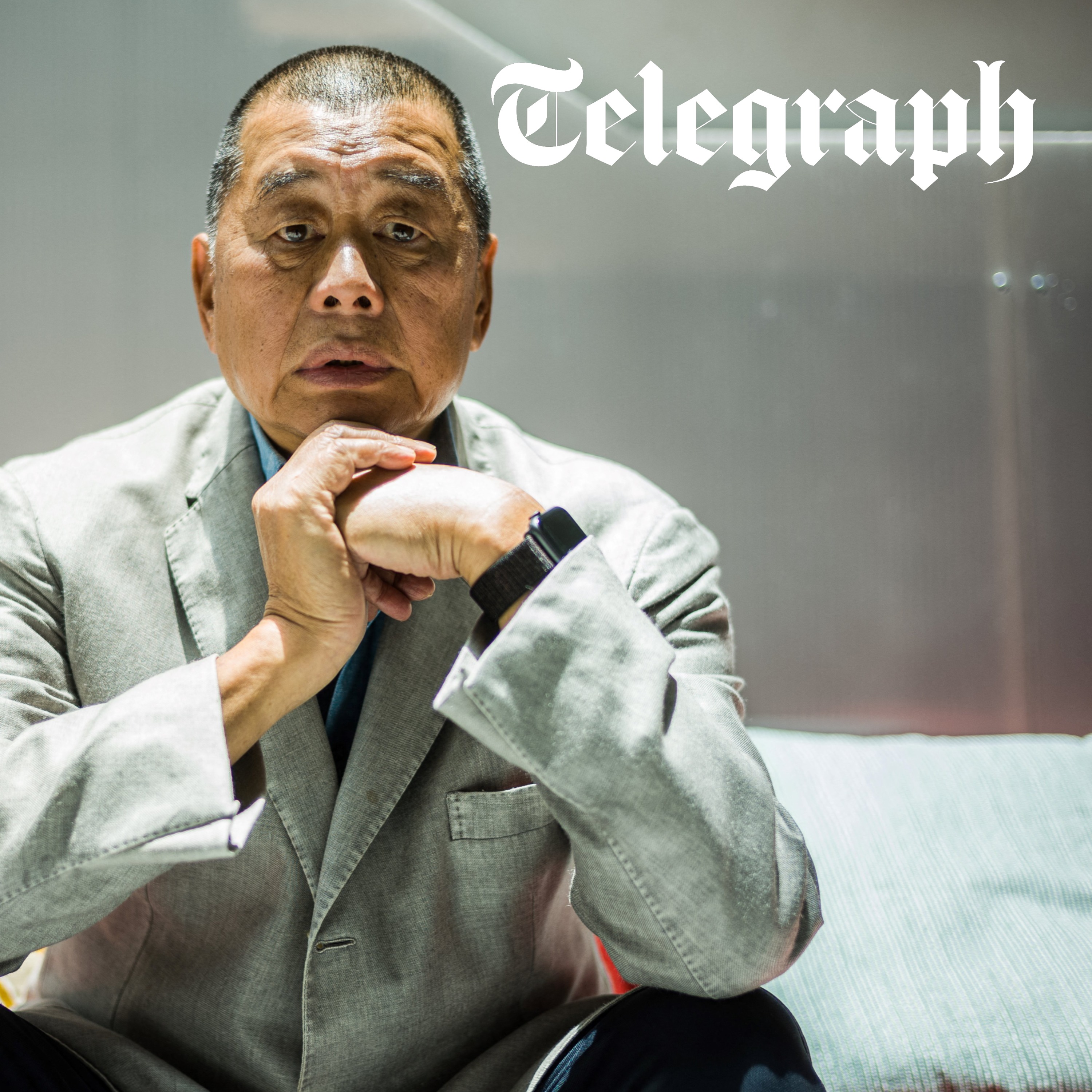
Jimmy Lai’s son on PM failing to release his father: He’s serving a death sentence
In this episode, Camilla Tominey and Tim Stanley speak with Sebastian Lai, the son of media mogul Jimmy Lai, who is currently imprisoned in Hong Kong under severe conditions. The discussion revolves around Jimmy Lai's life, the implications of his imprisonment, and the responses from UK political leaders regarding his case.
Written by AI. May contain mistakes.
Overview of Jimmy Lai's life, career, and the implications of his imprisonment.
“People might be asking themselves, well, who is this man?”
Discussion on UK-China relations and the impact on human rights, particularly regarding Hong Kong.
“Explain to us, in your own words, why should people in this country care about a 78-year-old man locked up in Hong Kong?”
Analysis of the British government's stance on Jimmy Lai's case and the broader implications for British citizens.
“It used to be that if you were a British citizen of anywhere in the world, any of the colonies, you were what was called a citizen of the United Kingdom and colonies.”
Explore the complexities of the UK's diplomatic stance towards China.
“Apparently, it's a great thing that the Prime Minister has been able to release you from these sanctions.”
Understand the economic transformations in China and their global implications.
“But Keir Starmer went in, and of the seven sanctioned MPs, he got six of us unsanctioned, as it were.”
Examine the challenges faced by the UK in managing its relationship with China.
“It's like the old priests of a cargo cult trying to reheat it.”
Discuss the implications of the UK's failure to act on international human rights.
“And that was very much because a lot of this is about protocol, it's about demonstration and all that shit.”
Hear about the emotional toll of his father's sentencing on Sebastian Lai.
“So that is in the hands of the Chinese state.”
Sebastian shares the emotional impact of his father's 20-year sentence.
“I mean, 20 years, it's almost, it's a farce.”
Discussing Jimmy Lai's legacy and his fight for democracy in Hong Kong.
“Sebastian, why has the Chinese Communist Party targeted your father?”
Sebastian critiques the UK's response to his father's situation after a recent diplomatic visit.
“And the knowledge that with his life, with his work, Hong Kong is a freer and a better place.”
Sebastian details his father's deteriorating health in prison.
“The former governor of Hong Kong, Chris Padden, put it quite succinctly.”
Sebastian reflects on the emotional challenges of being separated from his father.
“The president has an incredible track record of freeing people around the world.”
Sebastian recounts his father's decision to stay in Hong Kong for a cause.
“But I think what makes him so special is that he refuses to be intimidated by fear.”
Exploring the essence of press freedom through the lens of Jimmy Lai's story.
“he hoped that he could act as a lightning rod.”

Get the gist, explore an idea or ask about something said.
 Claude
On The Daily T, what are the key points of this episode?
Searching your listeningAutomatic transcript. May contain errors.
0:02The Telegraph
0:09The Chinese Communist Party has sentenced a British citizen, businessman Jimmy Lai, to 20 years in prison. On this special edition of The Daily Tea, we speak to Jimmy Lai's son, Sebastian, and ask whether the Prime Minister should have done more on his recent trip to China to secure his father's release. Welcome to The Daily Tea with me, Tim Stanley. And me, Camilla Tominy.
0:42Tim, the name Jimmy Lai is becoming ever more familiar, not least in light of Keir Starmer going to Beijing, promising to raise the case of this British businessman that's been in solitary confinement now for five years, only for it to transpire that he's been sentenced to 20 years in that prison in Hong Kong. People might be asking themselves, well, who is this man? This man was a businessman who did very well in the clothing industry in Hong Kong, born in China. He's not involved in politics at all until he is, I suppose you could say, radicalised against communism by the Tiananmen Square massacre.
1:20He moves to Hong Kong. He's hugely successful there. He then decides to foray into journalism because he is increasingly sceptical, indeed questioning of the Communist Party in China. He sets up Apple Daily in the 1990s and he remains there really as a leading voice in critique of what is going on in China. By the way, while the rest of the Western world is enjoying golden relationships and inviting President Xi and others to state banquets, part that aside, disaster strikes in 2020, Tim, when the world is otherwise distracted with Covid, ironically, later to be named by Donald Trump as the Chinese virus.
2:01He introduces this draconian national security law to basically silence opponents of his regime, be they in China or Hong Kong. In August 2020, nearly 200 police raided the Apple Daily and arrested Lai, who was then released on bail. In December 2020, he was charged with collusion with a foreign country or external elements under the draconian national security law plus fraud. And he's been in prison ever since then. mostly in solitary confinement. The Apple Daily has been closed and his assets have been frozen. There have been other convictions and charges brought against him and his lawyer has been barred from representing him.
2:41Clearly this case raises huge questions about international diplomacy, the West's relationship with China and how it's changed over the years. The Hong Kong giveaway by Britain, which was deemed necessary. We then saw a governor, Chris Patton, go in and try and ensure that the Chinese Communist Party didn't disrespect the treaty that was signed at the time to ensure that Hong Kong retained its independence. So much has changed for Britain in terms of the last few weeks and months because of the green lighting of the super embassy in the heart of London on the site of the old Royal Mint. Huge concerns raised by parliamentarians, but also this newspaper, Tim.
3:21We spoke to our colleague Gareth Caulfield about blueprints that he had found, the unredacted blueprints showing evidence that they were going to be using at least the basement of this building for spying purposes and its location next to those key cables linking the City of London to Europe and the rest of the world has caused a huge amount of consternation among those that are familiar with security matters. But successive governments have decided that economic relations with China are more important than our historic commitments to human rights, even though we should note that Britain has granted citizenship to millions of Hong Kongers.
3:58So we have honored that historic relationship with them. But from George Osborne onwards, it has felt very much as though the financial relationship has taken priority. And the Prime Minister visited China last month, where he says he raised the question of Lai with Xi. But he was rather more keen to emphasise the tariff deal he got on exports of British whisky and a 30-day visa waiver for British people to visit China. So it was very much a visit about business. We're going to be speaking to Jimmy Lai's son, Sebastian, in just a moment. But first, one of the wins that the Prime Minister announced was that he had managed to get China to lift sanctions on a number of MPs, including the Tory Tom Tugendhat.
4:43He joins us on the Daily Tea now. Tom? Explain to us, in your own words, why should people in this country care about a 78-year-old man locked up in Hong Kong? Well, first of all, he's a British citizen. And if the British government has any purpose at all, it's to stand up for British citizens around the world and to defend us as individuals, not just our interest as a collective. And as a British citizen, he deserves to have the same consulate, the same personal protection, the same advocacy as any other British citizen. That's the first. The second is this is part of the deal that Britain struck with the People's Republic of China in the 90s, the so-called Sino-British Joint Declaration, which led to the handover of Hong Kong and an agreement lodged with the United Nations.
5:32And, you know, we have a prime minister who keeps telling us that international law applies to us. Well, shouldn't it also apply to the People's Republic of China? Part of that deal was on freedom of the press. and here it is being quite clearly violated in the most egregious way possible with the arrest and detention for more than 1 ,000 days now of a 78-year-old man. Does that handover now look terribly naive? Well, I'm not sure we had much of a choice, if I'm honest. It was a 100-year lease on the new territories, not on the island of Hong Kong, but the reality is the island of Hong Kong wasn't sustainable without the new territories.
6:09So I don't think we had a choice in terms of handover. I think you can certainly criticize us over the 60s and 70s of not introducing democracy into Hong Kong earlier and governing Hong Kong as a colonial outpost for longer than we really needed to. And there's plenty of criticisms you can make of that. But I think that the efforts that Chris Patton made, not only to introduce democracy, but also to embed the wider aspects of democracy, I don't just mean voting, I mean a free press, I mean a free civil society in terms of universities and so on, is something that I think he should be credited for enormously.
6:47And what we're seeing, frankly, is just the extension of CCP terror and repression into every aspect of Chinese life, including Hong Kong, to the extent now that, frankly, we should stop pretending that Hong Kong is in any way a separate jurisdiction. It's not. It should have no separate recognition and no separate treatment by the British states. The Chinese have violated it. I guess to follow on from what Camilla asked, was that inevitable? We had to give up Hong Kong because we weren't willing to fight for it, because we were a declining power. And since we gave it up, we're an even smaller power with even less leverage over China.
7:29Realistically, were we always handing this over? And was it always just going to be integrated into the communist dictatorship? So I think that's likely to be the case. And, you know, before you say we weren't willing to fight for it. I mean, it's, you know, it's thousands of miles away by sea. a small island next to a population of, at the time, I think it was 700, 800 million Chinese, now 1.4 billion Chinese. The idea we could have ever fought for it, I'm afraid, is just really not credible. And given that we depended for life support, water and food and things like that, off the Chinese mainland, it was never credible.
8:06But I think that it isn't unreasonable to say, hang on, you signed a deal for 50 years, it would be good if you recognised it for more than 10 or 15. and clearly the Chinese have not done that. There are other mistakes that we made that followed on, including allowing China into the World Trade Organization, which had disastrous consequences in terms of economic output and fair trade around the world. But I think for Hong Kong, I think the biggest error we made as Brits was in 1984, actually, which was when we changed British citizenship. It used to be that if you were a British citizen of anywhere in the world, any of the colonies, you were what was called a citizen of the United Kingdom and colonies.
8:50And we changed it. We changed it to a citizen of the United Kingdom, a British citizen, sorry, forgive me, or a British overseas national. So BNO, as it's called, British National Overseas. And we then didn't give the same rights of residence in the United Kingdom. And the idea was that we didn't want to have, you know, seven, eight, nine million Hong Kong Chinese coming to the UK. Now, I can understand why people were concerned about it. But it meant that we effectively abandoned people who had grown up under British rule, with the rule of law, with civil institutions, with democracy of a kind, and slowly let them suffer.
9:29Now, it's one of the things, actually, I'll always be grateful to Priti Patel for when she was Home Secretary. She was the Home Secretary who I campaigned for and campaigned with to get this changed. And that's where we got the BNO visa change. So instead of getting an automatic six-month visa, you've got the ability to stay in the UK for long enough to translate your British national overseas into just British national. Yeah. Maybe the other problem was that when President Xi introduced this very draconian national security law, August 2020, we're all in the depths of Covid, dealing with lockdowns.
10:07Of course, Boris Johnson at the time railed against this at the point at which Jimmy Lai is imprisoned. Could it be argued? And sorry, I don't want to come across all Starmer here. It's all the Tories fault. Could the government of the time have done more to protect this man who, as you say, there's been a lot of misreporting about his citizenship. He is a British citizen. He's never been a Hong Kong national. He's not a Chinese national. He's a British guy. This has got parallels with, for instance, although slightly different, Zagari Radcliffe. You know, a huge campaign. Do these huge campaigns get launched when it's, and of course, she needed a campaign behind it to be released.
10:44Do not get me wrong. But it's a woman. She's a mother. Meanwhile, this is a multimillionaire businessman. I don't know. I just don't feel that the awareness is at the same level when this is an aberration against this man. There is a big difference as well. And I don't want to take anything away from Nazanin. She's an extraordinary woman and she demonstrated enormous courage and, you know, fortitude in some horrific circumstances. But she was grabbed. Jimmy Lai had a choice. He knew what was coming and he could have abandoned his news business, Apple Daily and he could have got onto a private jet and zoomed off into the you know whatever but he didn't he stayed knowing what was going to happen absolutely certain what was going to I mean nobody was under any illusion as to what was going to happen but you know like the captain of the ship he felt it was his responsibility to be there till the end and he stayed knowing he was going to be arrested and indeed he was and he's you know you speak to people who are legally connected to him as in his legal team and people like that you know there are no illusion what the outcome of this trial would be everybody knew what the outcome of the trial would be and you're right about chairman xi that you know we'd seen changes in china from deng Xiaoping through hu jintao on, you know, there was this impression that we were getting more commercial and therefore possibly more liberal and eventually perhaps more democratic China.
12:18At least that was the hope. Well, it turned out to be completely wrong, didn't it? And it turned out we were completely wrong, not in 2013, but really 2015, 2016, when Chairman Xi's crackdown started happening. And when the cover-ups of the Wuhan virus, COVID, were going on in late 2019, early 2020, and COVID was spreading around the world, Chairman Xi wasn't focused on saving the Chinese people or warning the global community. No, no, he was focused on repressing what he thought of as civil unrest in Hong Kong, which was actually just ordinary people committing the same crime as you're committing now, that crime of journalism, and asking politicians questions, which, frankly, they should be able to answer.
13:03What exchange do you think took place between Keir Starmer and Xi on the subject of Jimmy Lai when Starmer visited Beijing? Look, I wasn't in the room, so it's very difficult to know, but he says that he raised it. Now, we all know there are ways of raising issues and there are ways of really making the point. And it sounds like he raised it alongside a series of pro forma points that everybody knows have to be raised, but nobody really takes seriously. If he really wanted to raise it seriously. And, you know, I'm not alone in saying this. Sebastian has asked for it. Many people have asked for it in different ways.
13:41the moment to do it was the moment when he had maximum leverage. It's before you get on the plane. It's before you agree to this mega embassy. It's before you agree. Instead, he secures the relief of sanctions on me. Now, I don't care. Yes. I'm not in Hong Kong. I don't have property in Macau or Beijing. Let's just clarify that, Tom. You're one of many MPs who have been sanctioned by China. Apparently, it's a great thing that the Prime Minister has been able to release you from these sanctions. Well, he reported that he had accomplished that, he'd been given that by Xi, as if that was a breakthrough in UK-China relations.
14:16Because, of course, you and Ian Duncan Smith and others, I'm assuming, are planning a great summer holiday to the Great Wall. Any minute now. But didn't that betray how much he doesn't understand the views of supporters of dissidents in China like yourself? Well, he didn't understand. And look, I don't view it either as a badge of honor or a shame to be sanctioned by China. It's up to them. They can do what they like. I don't really care what they do to me. I do care what they do to a British citizen. OK, I do care what they do to me like. I do care what they do to students in the UK. I do care what they do to businesses and to jobs in the UK.
14:53I care what they do to my constituents. I care what they do to my fellow citizens. That's what I care about. If they want to say I'm sanctioned, so what? Frankly, it's of no interest to me. But Keir Starmer went in, and of the seven sanctioned MPs, he got six of us unsanctioned, as it were. Tim Lawton, who was an MP in sanction, not unsanctioned. The lawyers, like Sir Geoffrey Nice, who helped and advised us, which is, by the way, an essential part of democracy as well, to be able to access honest advice. They're not unsanctioned. various academics who helped us, they're not unsanctioned. So it's the lowest of low-hanging fruits that he managed to get.
15:35And by the way, minister after minister who has been to China in the last, whatever it is, three, four years, has been very, very clear that while it hasn't been on the public bit of it, in private, when asked, what about unsanctioning the MPs? The answer has always come back, you've got to give us the embassy first. Oh, yes. Well, again, I see absolutely no interest for the United Kingdom. My convenience on changing planes in Hong Kong or going on a holiday to the Great Wall of China is as nothing to having a mega embassy undermining the security of our country. It's of no interest to me that we should do this.
16:14And forgive me, but I find it deeply, deeply offensive that the Prime Minister should have sacrificed my comfort in exchange for the security of our country. I think it's ridiculous. The other mystery of all this, I mean, I think we can understand, to a certain extent, the economic arguments, although actually the trade deficit is, I believe, 46 billion in their favour, not ours. Can I challenge it? Yes. Actually, come in a minute, because there's a real misunderstanding as to what China is today as opposed to what China was in 2000. Look, every time you get a rapidly industrialising country, and by the way, this is consistent for the last 150, 200 years, they throw off cash.
16:50And that cash leads to investment overseas, right? So for us, it was railways in Argentina and shipping lines to whatever. For the Americans, it was something similar. For the Europeans, you consistently see this. And so you see the rapidly industrialising Chinese economy in the late 80s, 90s, throwing off cash, leading to investment around the world, including in the United Kingdom and other places. Well, guess what? In the last decade or so, that's turned around. And it's turned around for the same reason as every other rapidly industrializing country stops throwing off cash. The economy slows down, the population ages, consumption domestically goes up, you turn to housing and satisfying the luxury needs of your own population rather than looking elsewhere.
17:35And exactly the same thing has happened to China. It's not a surprise. And so guess what? China's foreign investment over the last few years has gone down. And not just in the UK, but all around the world. So the idea that you're going to try and get Chinese investment back like in the 2000s, this is like some sort of cargo cult where you're cutting a new runway through the bush in the hope that the planes will come back. The planes aren't coming back. They only were there because of the Second World War and the islands. Sorry, forgive me my mixed metaphors. But you get what I mean. It's like the old priests of a cargo cult trying to reheat it.
18:08And it just won't work and it'll never work. It's almost worse than that because, OK, you have less of an economic justification for it. You've got a backdrop of persecution of the Uyghurs, surveillance both of China and us, huge fears of a super embassy that appears to have a spying dungeon in it next to key cables, allegations of spying in parliament, a collapse of a spying trial, some kind of axis of evil forming in the world between Xi, North Korea and the Russians. And a prime minister that has prided himself on being somebody who campaigns on human rights with all that thrown into the pot.
18:56And let's be honest, it's not just the prime minister rushing off to Beijing. The chancellor's been doing it. Ed Miliband's been doing it. We've got energy policy now that emboldens the Chinese. Oh, can you make all of our solar panels? Can you make all of our windmills? I just can't really understand just how morally I understand that difficult decisions need to be made in politics in order to further greater aims. But this is a complete mystery to me. So let me double down on that, because actually, if you believe, as the prime minister said, that this is about furthering trade links, you'd think it'd be about investment in the UK, wouldn't you?
19:35You'd hope so. You'd hope so. It wasn't. £11 billion of investment from AstraZeneca into China. That's moving jobs out of the UK into China. This is literally the reverse of a trade deal that the Prime Minister should be doing. He advertised 30-day visa-free travel. Sorry, why do we want that? For China, I get why they want it. They want British businessmen to go over and buy goods in return, right? I get that. By the way, they do the same with Nigeria. They do the same with many other countries. They have one of the loosest visa-free travel schemes around the world for exactly the reason you can imagine.
20:12They want to be the world's marketplace, and so they want people coming in. And by the way, the problem of illegal migration from the UK or Nigeria to China, it's not a big problem, right? Why do they want it in reverse? Well, if you apply for a visa, you're giving our intelligence people, you're giving our diplomats a few days at least, maybe longer, but a few days at least to check out whether or not you're a member of the PLA, whether or not your academic qualifications are covering up a connection to the Ministry of State Security, their version of the CIA. You're looking for those kind of connections.
20:45If you get visa-free travel, you're waiting until the plane list comes in when the plane takes off and you're hoping you've got a few hours to check, but actually you don't really because you've got too many people. It just doesn't work. So actually, whether it's visa-free travel to China or visa-free travel from China, we shouldn't want it. And that was a huge concession to Beijing. So every single one of his wins, if you'll forgive me, was actually a loss. Literally every single one. And, you know, forget about the cables just for a second. Forget about the spying centre just for a second. And I know it's a big ask, but just forget about it for a second.
21:24Diplomacy is about symbolism. not just action if you like a lot of diplomacies to do and by the way this has been the case for a thousand years ambassadors peacock around with you know horse-drawn carriages and all the rest of it you know there's a reason why we have such a successful diplomatic outreach in many ways the king helps enormously the carriage of the new ambassador helps and all those sort of things you're going to have a chinese embassy that is bigger than buckingham palace right next to the tower of london the symbol of monarchical power in the city of london with a flag towering over the city.
21:58What do you think investors coming to London will see as they're getting in the cab around Tower Hill? They will see a massive Chinese flag and a statement that is not really in Britain's interest. Tories sold them this Royal Mint site. Look, Camilla, the deal that was done in 2018 should never have been done. it was deeply deeply wrong i think kia starmer looked overwhelmed when he went to china there's that sad little scene of him being shown around by the tour guide yeah not by g not by the tour guide which was insulted by the way they didn't even clear so when mackerel went not only did they clear you could see other tourists when starmer was there So for the French, they cleared the site and there were sort of, you know, groups of happy Chinese citizens cheering President Macron.
22:54I mean, not sure whether they knew exactly who he was, but they were there to cheer and they cheered. Or even if they could see him. Well, they were there for the show, right? And that was very much because a lot of this is about protocol, it's about demonstration and all that shit. You know, Starmer went like he was some sort of visiting tourist. To be fair, Yung Chang called it on this Daily Tea, didn't she, Tim? She was completely on humiliation. He was humiliated. But what he probably doesn't appreciate is that Britain does have leverage because dictatorships are always vulnerable. We think we're vulnerable because we have scandal and governments change, but actually the point is our system can cope with a change of government.
23:33Dictatorships can't. It is vulnerable. And Jimmy Lai is a threat to the Chinese Communist Party. Yes, they're not wrong to have arrested him in the sense that they are correct that the truth will do huge damage to the Chinese Communist Party. They are absolutely correct that they only survive because they repress with violence and with silence the will of the Chinese people. They are totally right about that. And yet Western governments, as we're at danger of doing with Iran again, always think we'll let them go to the brink of civil disobedience and then we'll cut a deal. This is the time to do a deal with them because they're at their weakest.
24:10And it always feels like we come so close to pressuring them to change. And somehow these regimes always persuade us that that's the moment to think about the economy first. And it's wrong. And it's wrong for several reasons. One, because you're making the deal with the crocodile hoping that he'll eat you last, which is a ridiculous idea. And secondly, you're doing the opposite of storing up treasure for yourself in heaven. and you're doing it in hell, because the people who you have encouraged, whether it's the Iranian protesters in recent months or whether it's Hong Kongers who were given, they don't forget that you let them down.
24:48They don't forget that your promises are worth nothing. They remember, because one of the reasons I was so angry about the withdrawal from Afghanistan, I'm always personally angry because the commitment and the sacrifice that so many of my friends made. But that's personal, that's not as a politician. as a politician why I was so angry, is because it made a statement around the world that after 20 years and$2 billion or however much it was invested in cash and thousands of lives lost, American and British and Estonian and Danish and many others, we would walk away like it didn't matter. And others around the world saw us and went, well, if you won't even fight there, we don't believe you when you say you're going to fight here.
25:34And so, you know, when we look at Ukraine, for example, not the only reason, obviously, but one of the reasons that Putin was confident, I'm sure, is because he saw we weren't willing to fight for Afghanistan. So why the hell would we fight for Ukraine? And I'm sure that's one of the reasons why she tests on things like Jimmy Lai and tests Starmer. If you're not even willing to stand up for your own citizens, do you know what? I don't believe you when you say you're going to sanction trade or do whatever you. Before we speak to Jimmy Lai's son, Sebastian Tom, this newspaper wants to support Jimmy Lai.
26:09We've got an audience that wants to support him. How can we do that? There's a sense that we need to pile on more parliamentary pressure. I know you're leading the way, Ian Duncan Smith is, and others. People listening and watching the Daily Tea, I think it's important we're raising awareness, but they'll want to know what they can do. What can we do? Can we get this guy released? So that is in the hands of the Chinese state. And I'm afraid our maximum point of leverage was a couple of weeks ago and the prime minister didn't take it. So there are a few things we can do. The first is we need to make sure that every MP in the House is absolutely clear that this is a British citizen.
26:47And Sebastian and his lawyer, Keelan Gallagher, have been absolutely formidable at briefing and making sure people know what's going on. But we need to make sure other MPs know of every single party. By the way, this isn't a partisan issue. The second thing we need to do is to make sure that the concessions that sort of seem to have been given by the Chinese state, I think I've explained clearly why I don't think they were concessions at all, but are not seen as a softening of the line. So Chinese officials should not be welcome in the British Parliament. You know, it should be socially unacceptable.
27:17to be going to social events with China. Yes, I know there are business areas where there are some things that will continue, but you shouldn't be attending diplomatic functions. You shouldn't be, you know, it should be none of the social element. And if I may, on a personal level, there's one extra. Jimmy Lai is a practicing Roman Catholic for whom his faith is enormously important. He's been in solitary confinement. And if you read the diaries of St. Thomas More about the pain that it caused him to be separated from communion, from the Eucharist in our faith. That's a very real pain. And so remembering, Jimmy, in your prayers, if you're a Catholic, well, if you're a Christian, is, I think, the third thing that can be done.
27:58Tom Tugendhat, thank you very much indeed for joining us. Thank you.
28:13Sebastian Lai, thank you very much indeed for coming on The Daily Tea a very, very difficult week for you because to make a terrible situation even worse your father's now been sentenced to 20 years at his age, he's 78, this is a life sentence where were you when you heard how are you feeling have you been able to communicate with him at all well when I heard this I was in London and um okay obviously we knew that a very heavy sentence for my father was coming uh I mean after this incredibly long show trial uh where those allegations of witnesses being tortured no jury three national security law judges uh we knew that it was going to be something of that scale.
29:01I mean, 20 years, it's almost, it's a farce. To a point, he'll be 100 by the end of this trial. So essentially, it's a life sentence, it's a death sentence. One thing that gave me a bit of courage, though, this bittersweet moment, and actually, I shouldn't say it was unexpected, but I was almost, I was very moved to see was when the sentence was passed. And I had reported my father how he was. he was stoic and he even managed a smile almost as an act of rebellion, almost to say that he's still fighting, that though they may have shackled his body, they will never shackle his spirit. And I mean, this is incredible because it's been five years of solid confinement, of this continued attempt to break this man, to ruin his health, ruin his body, ruin his spirit.
29:55And even now, even in these horrible conditions, he's still fighting. He still has fight left in him. And I'm very proud of that. Sebastian, why has the Chinese Communist Party targeted your father? So my father was the loudest voice, one of the loudest voices, pushing for democracy in Hong Kong. He used to own a newspaper called Apple Daily, which was not only the largest newspaper in Hong Kong and Taiwan, but it was also a, more importantly, it was a pro-democracy newspaper, and a newspaper that was founded on the principle that information is choice and choice is freedom. A newspaper that was going to speak truth to power no matter what, and as he has proven with his actions, defended until the end.
30:43The party accuses your father of trying to undermine China and work with his enemies. What is your response to that accusation? It's a silly accusation. You know, he's been in there for five years. They have all the time, all the time and more to find evidence and, you know, all that they have found. The charge he's being sentenced under is collusion in foreign forces. Collusion necessitates a nefarious benefit. And all that they have found is that this nefarious benefit was democracy. Something that he gave many years of his life forth, you know, much of his resources. And at the end of that road, it would have been one vote for every single person in Hong Kong.
31:26And the knowledge that with his life, with his work, Hong Kong is a freer and a better place. And I don't think that undermines anything. In fact, under the joint declaration, it was promised to the people of Hong Kong. Sebastian, the timing of this sentence came just days after Keir Starmer had returned from his trip to Beijing. We understand that he did raise your father's case with President Xi. Should he have gone in the first place knowing that a British citizen was languishing in solitary confinement for five years? Yeah, and you know, as we spoke about this last time, I think to many people in the British public, it feels like we've given a lot away to China, including this visit, including this embassy.
32:13And many people are worried about this relationship. What does this normalization mean? And China hasn't done anything to debate our concerns. Our national security concerns are concerned about personal safety. And if they can't even put a 78-year-old man on a plane and send him over, which after having five years of these horrible conditions, ruined his health, done so many horrible things, Hong Kong has done so many horrible things to my father, then it tells you all you need to know about this relationship. And I think many people view this cruelty that is happening to my father as a perfect example of how relationships can't be warmed until he is freed.
32:55Yes. The former governor of Hong Kong, Chris Padden, put it quite succinctly. He said, it was a tragedy that the only thing that came out of this trip was Johnny Walker, not Jimmy Lai. And that's a reference to a trading partnership for Scottish whiskey to be shipped over to China. And I'm sure we're all very pleased about that in the Highlands. But how confident are you that the Prime Minister and indeed the Foreign Secretary, Yvette Cooper, are doing everything in their power to release your dad? They have said that it's a priority. And I've met both Yvette Cooper and the Prime Minister. And look, I think I just have to put my trust in them now because unfortunately my father doesn't have much longer, you know, given the current trajectory of his health decline.
33:53I don't know if, he definitely doesn't have 20 years. I don't know if he even has a tenth of that left. And so, look, I think it's the ultimate test for UK and China-Hong Kong relationships. And I hope that their strategy of engaging with Hong Kong and China to protect the values of our nation works out. And my father is home with us in London one day where he deserves to be. Donald Trump will be visiting China in April. Do you have greater hopes for that visit? I think, you know, we've always been very grateful about the president's support and the support from the US. The president has an incredible track record of freeing people around the world.
34:39And this will be saving my father's life. So I really do hope that it works. You mentioned there your father's failing health. What condition is he in? So this whole time, these five years, he's been kept in solid confinement. He's been in a maximum security prison. He doesn't get natural light. he you know if you put a 78 year old man now in these horrible conditions where temperatures in Hong Kong routinely goes above 30 degrees so he essentially bakes in there in the summer it's no wonder that he's he's he's deteriorated so much he's lost 10 kilos last year alone he now has heart issues his nails are falling out his teeth are rotting it's a horrible image And I think anybody who knows someone of my father's age, in the late 70s and the early 80s, you can imagine putting a man like that in a 60 square feet cell and the conditions he's in, even 100 days.
35:37That is inhumane and insane. And he's been there for 1 ,800. And who is allowed to see him? Are the family able physically to go and see him? Yeah, so because he's in solitary confinement, he doesn't see people most days, but he's allowed four visits a month. and obviously it's through a window but he still gets visits. How are you coping with this, Sebastian? I mean, we're of the same age. My father's of a similar age. He's actually turning 80 this year and when you talk about those conditions that your dad is facing, I just couldn't even begin to imagine my own father in such a similar situation.
36:11And also your lack of direct contact must be desperately difficult to deal with. I know you can write to him but I assume you haven't actually spoken to him by phone or physically for some years now. Yeah, I haven't seen or spoken to my father since the end of 2020 because I advocate honours to be off. It's not safe for me to go back to Hong Kong. Even doing something like this, for example, where I'm critical of the Hong Kong government could let me in prison in Hong Kong. Look, I miss him a lot, obviously. I love him a lot. But I think when people think of men like my father who do such courageous things, who are willing to go to so much in defense of his principles and his journalists and people that defend democracy in Hong Kong.
36:57They think of these men as people who have no fear. And that's not true. I know my father. I know that he fears. He fears never seeing us again. He fears dying alone. But I think what makes him so special is that he refuses to be intimidated by fear. he would always say that he doesn't like to overthink something if he knows it's the right thing to do. And I think, you know, leaving home to China, leaving this place that didn't have freedom to land into Hong Kong, he fell in love with these freedoms and he knew that there was a more important cause for his life to sacrifice himself in defence for these freedoms, but also to protect other people in doing so.
37:45And so I'm very sad that I haven't seen my father in five years, but I'm also tremendously proud of him. And, you know, I think a man who has given so much for freedom, so much for liberty, deserves a bit of it himself. Just to make the point for those who don't understand the kind of logistics of how this all played out, your father could have got out, couldn't he? But he chose to stay. Yeah, exactly. My father could have gone off at any point. He's a British citizen. It's the only citizen he holds. In fact, he loves the UK. He loves going to the UK. But someone asked him actually before he got arrested, Jimmy, you know, staying here, you are risking your life.
38:25I mean, you're 72 now. You're 72 at that point five years ago, six years ago. Can't you just leave? And he looks at them and says, if I leave, I'll be living comfortably. But if I stay, I'm living meaningfully. and he knew that by leaving that his other pro-democracy campaigners will be targeted, his staff, his journalists will be targeted and by staying, he hoped that he could act as a lightning rod. And there's this kind of almost heartbreaking moment in an interview where he's asked about this, what would you say to your journalists? What would you say to the people who work for you, for the journalists that go out and report and what's happening, the changing face of Hong Kong.
39:12And he says... Thank you. I might have misled you. But thank you. I mean, we always talk about freedoms, press freedom, freedom of speech. I think, looking at my father, that's what... that's what defending these freedoms look like. Sebastian Lai, thank you very, very much indeed for joining us on The Daily Tea. we of course wish you all the very best in your quest to get your father released. Thank you very much for having me.
40:07Thank you.
“Beijing’s public enemy No 1” – a title that defines the fate of the media mogul Jimmy Lai.
A self-made millionaire, a British citizen and an unapologetic opponent of China’s authoritarian regime, he now sits behind bars, facing a 20-year sentence under Hong Kong’s draconian national security law.
Camilla and Tim speak exclusively to Sebastien Lai, Jimmy’s son, about his father’s deteriorating health, his disappointment with Sir Keir Starmer and the British Government’s “lacklustre” response, and why he is pinning his hopes for his father’s freedom on Donald Trump ahead of the US president’s visit to China.
We want to hear from you! Email us at [email protected] or find @dailytpodcast on TikTok, Instagram and X
► Sign up to our most popular newsletter, From the Editor. Look forward to receiving free-thinking comment and the day's biggest stories, every morning. telegraph.co.uk/fromtheeditor
Producers: Georgia Coan and Lilian Fawcett
Senior Producer: John Cadigan
Executive Producer: Charlotte Seligman
Video Producer: Will Walters
Studio Operator: Meghan Searle
Social Producer: Nada Aggour
Editor: Camilla Tominey
Hosted on Acast. See acast.com/privacy for more information.


