
 Ask ChatGPT



A podcast by The Telegraph featuring Associate Editor Camilla Tominey and columnist Tim Stanley. They analyze major news stories related to UK politics, culture, and foreign affairs, often with humor and candidness. The show includes exclusive interviews with influential figures and expert guests.
Written by AI. May contain mistakes.
Discussion on the Home Secretary's stance on immigration and Labour values.
“the Daily Tea she won't rule out going even further.”
Exploration of the proposed £40,000 incentive for illegal migrants to leave.
“But on the other hand, we do not want ethno-nationalism of reform and so-called far-right immigration crackdowns with people bundled into the back of lorries.”
Debate on student visas and the potential for abuse within the system.
“But anyway, so£40 ,000 to go home effectively.”
Analysis of the new visa bans and their implications for Labour's political strategy.
“And she says in Denmark, this has resulted in 95 % of all of those asylum rejectees voluntarily leaving the country.”
Discussion on how immigration policies are framed within political discourse.
“If somebody agrees to sign a document saying, I'll take the£40 ,000 and I'll leave, no human rights lawyers can get in the way.”
Speculation on Labour's potential leftward pivot in response to immigration issues.
“I won't give a running commentary on discussions we're having with other countries.”
Explore the strategic choices facing Labour regarding leadership and voter alignment.
“Can we just 3D chess this and war game it?”
Discussion on Labour's approach to immigration laws and internal party dissent.
“But then maybe it's a conundrum because there are some Red Wallers that won't trust a Muslim prime minister on the issue of immigration, perhaps.”
Analysis of legislative strategies to bypass opposition in the House of Commons.
“It normally goes through pretty much on the nod.”
Examining the UK government's stance on international issues, particularly Iran.
“And what she's doing will be a modest plaster over a very serious problem because she's not going to the full extent of repealing the Human Rights Act, which is impossible in a Labour Party context.”
Debating who holds real power in the UK government amid various political pressures.
“I think it's not the prime minister is the clear answer that he seems to be pushed about all over the place.”
Discussion on the implications of past conflicts in the Middle East on current strategies.
“And that the support of the region for Iraq was very strong because they felt it was an attack on all of them, particularly religiously.”
Exploring the ramifications of Iran's political situation on global alliances and strategies.
“Trump thinks his duty is to get rid of bad actors.”
Explore China's geopolitical strategies and their implications for the Middle East.
“We've got Donald Trump due to meet, we think, President Xi at the end of this month.”
Analyze the UK's position and challenges regarding military intervention in Iran.
“The long-standing British position is that the best way forward for the regime and the world is a negotiated settlement with Iran where they give up their nuclear ambitions.”
Discuss the tension between international legal advice and the need for decisive action.
“And that's the point to drill down on on preparedness.”
Exploration of Ed Davey's stance on supporting asylum seekers and British citizens abroad.
“not necessarily contributing to the tax system, but taking taxpayers' cash because they are asylum seekers or they are needy in some way.”
Discussion on the historical precedent of protecting British citizens, referencing the Don Pacifico debate.
“and Don Pasifco was born in Gibraltar, had British citizenship, was in Athens.”
Comparison between the current situation in Dubai and the historical Blitz, emphasizing different perspectives on crisis.
“Having said that, I think the people in Dubai might share a bit more Blitz spirit.”
Emphasis on the need for government support for British citizens around the world.
“OK, so toughen up Dubai business people, influencers and others.”

Get the gist, explore an idea or ask about something said.
 Claude
On The Daily T, what are the key points of this episode?
Searching your listeningAutomatic transcript. May contain errors.
0:02The Telegraph.
0:30Sir Jacob Rees-Mogg: do yourself a favor. Download the Jerry app or head to jerry.ai slash a cast.
0:41Camilla: Home Secretary Shabana Mahmood has announced a big new immigration crackdown and she's told the Daily Tea she won't rule out going even further.
0:50Shabana Mahmood: But the problem is the party absolutely hates it. So is she actually even a Labour politician at all or just a reform tribute act?
0:58Camilla: And who is running the country right now? Because it turns out Keir Starmer was slow to react to the situation in Iran because of advice from Ed Miliband and Lord Hermer.
1:09Shabana Mahmood: They were worried about history repeating itself with Iraq, but I will explain why the conflicts are completely different.
1:15Camilla: Welcome to The Daily Tea with me, Camilla Tominy.
1:18Shabana Mahmood: And me, Jacob Rees-Mogg.
1:30Camilla: Jacob, welcome back. I've got a sweaty brow. I have just raced here from Broadway House where the Home Secretary, Shabana Mahmood, has been giving a speech that would delight somebody like you on the right. She's delighting the right and insisting that it's just old-fashioned Labour values at play here as she cracks down on immigration, legal and illegal.
1:52Shabana Mahmood: Yes, well, I don't want to correct you to begin with, but I'm going to have to. horses sweat, gentlemen perspire and ladies gently glow. So you may have a gently glowing forehead but no more than that.
2:02Camilla: Are you saying I've had a glow up in the last few months?
2:04Shabana Mahmood: I don't know. I'm delighted with that. I don't know what that means.
2:07Camilla: You do know what that means. A glow up is when a woman of a certain age appears to have suddenly become youthful and starts wearing trendy clothes. You could have had a glow up, you've had a haircut.
2:17Shabana Mahmood: Well, I needed one. I was beginning to look like a nippy.
2:20Camilla: But your uniform has remained the same since the late 18th century, let's be honest.
2:24Shabana Mahmood: Absolutely right. Absolutely right. So, no, I think the speech is just the sort of thing that the British voter wants to hear, except it's not traditional Labour values. Labour has always been the party of mass migration, that the problems we have with mass migration have consistently been worse under Labour governments. And they're actually doing nothing to stop the small boats coming, which with the current good weather, we're getting an absolute flood of. So, yes, she's saying some things that are positive, but I'd be surprised if an awful lot of this turned out in practice to make a great deal of difference.
2:55Camilla: All right. Well, let's just hear how she positioned herself, because on the one hand, she said we can't have fairytale green policies. But on the other hand, we do not want ethno-nationalism of reform and so-called far-right immigration crackdowns with people bundled into the back of lorries. So she said, actually, contrary to what you're saying, what she's doing on immigration absolutely does encapsulate old working class Labour values. Let's have a listen.
3:22Sir Jacob Rees-Mogg: Labour values applied to our migration sit at neither extreme. They are no invitation to the fairy tale of open borders, as Zach Polanski's revolutionary Green Party demands. And neither are they the nightmare of Nigel Farage, pulling up the drawbridge and shutting out the world. narrowing our proud patriotism into a crude ethno-nationalism. Between those two extremes, there is ample space for a migration system that is fair, but where it needs to be, firm. There can be both compassion and control in a system that rewards contribution and those who play by the rules.
4:01Camilla: Let's run through the proposals, Jacob. Now, probably the most controversial with the Telegraph audience anyway is this idea of incentivising illegals, all those who have been refused their asylum claim, to leave. And initially that had been several thousand pounds. She's now saying that she wants to pay up to£10 ,000 per migrant with a cap of£40 ,000 so it could include a family of four. Why is it always families of four? I speak as a family of five. And I'm a family of eight. Indeed. But anyway, so£40 ,000 to go home effectively. I don't know what stops these people taking the money, going back to where they came from, and then using the money to pay a people smuggler to come back.
4:44Camilla: But maybe that's just too much effort.
4:46Shabana Mahmood: No, no, it's not. The market imperative will be to do that. So if it costs£4 ,000 to come over on a small boat, you make a£6 ,000 profit if you get£10 ,000 to go.
4:58Camilla: Yes.
4:59Shabana Mahmood: And the more people who come on small boats, small boat prices I read, probably in the Telegraph, have been going down recently. And so it suddenly attracts people to come and get the cash and to try again. And I think you've got to be very careful about introducing things that create an incentive to come in. What about if you've come here on a tourist visa and you then, which costs you nothing. I mean, there's no£4 ,000 to come over. There's the cost of your flight. And then the end of your period here or your student, you say, I'm claiming asylum or I'm going to stay illegally. And then£10 ,000.
5:34Shabana Mahmood: that's just£10 ,000 off your travel costs. Yes. So I don't think this is the right way to go about it. I think we need to be more Trumpian and just deport people. Yes. But we've got to remove people who are here illegally not create perverse incentives for them to come. I think on the other hand what she's doing in terms of student visas is absolutely right and sensible that if there are countries that have a problem they should lose their right to get student visas and I know you asked her about Pakistan. Yes, we'll come on to that in just a minute. Really important, yes.
6:05Camilla: I mean, she made a very good point about student visas because there was a question about will this just alienate young people who are already flirting, if not openly voting for Zach Polanski's Greens? And she said, well, a student visa isn't a right to remain here. A student visa is a right to come here and study, and then when you've done that, you go. But obviously we've seen abuse of that system and people staying on and staying on and then inviting relatives over. Just when it comes to this£40 ,000 incentive, She's saying she's borrowed it from the Danes. She speaks to the socially democratic government over there that's had a huge crackdown.
6:40Camilla: And she says in Denmark, this has resulted in 95 % of all of those asylum rejectees voluntarily leaving the country. And that's a good thing. And she says, by the way, if they don't take the incentive, we will just deport them anyway. So this is a way of doing it nicely before you do it nastily, I assume, to keep both the Labour backbenchers and members happy and, indeed, and we do need to discuss this, the Muslim vote. Because she's in a really interesting position, isn't she, as a Muslim Home Secretary that also needs to be mindful in the aftermath of Gorton and Denton, that they don't alienate that caucus of support, that if it isn't going to the Greens, it's going to the Gaza independents.
7:22Shabana Mahmood: Absolutely. If you can deport them anyway, why not just deport them anyway? I think that's a fundamental weakness in the argument to say, well, we'll pay them and if they don't go, then we'll deport them anyway. Why not just go straight to that stage and save£10 ,000? They are, after all, here illegally.
7:38Camilla: Because you ward off lawfare in the meantime. If somebody agrees to sign a document saying, I'll take the£40 ,000 and I'll leave, no human rights lawyers can get in the way.
7:47Shabana Mahmood: And the problem with that is that we've got to pull out of the European Convention on Human Rights. This is the problem with Shubhana Mahmood's position, is that she wills the end but not ultimately the means, and therefore the loopholes are going to remain. The other point, you may, is really fundamental. 95 % of those who claimed asylum who failed are being removed. Ah, but that's the point. We're giving asylum to far too many people who are getting here who shouldn't be getting here in the first place. The numbers are out of control.
8:17Camilla: Well, that leads us to my question then. So she has announced this week that she is slapping visa bans. That's quite Trumpian, let's be honest, on four different countries, Afghanistan, Cameroon, Sudan and Myanmar. She says that migrants from those countries have been abusing the visa system by applying for asylum once they're here in the hope of staying permanently. And then they get put up at taxpayers expense in hotels. And by the way, she did say that she's got three migrant hotels in her own constituency. So I challenged her on that because a lot of Telegraph readers who have been reading our coverage online keep on asking the same question.
8:52Camilla: What about Pakistan? Home Secretary, good morning. You're targeting four countries, including Afghanistan, with the new visa bans. But in reality, Pakistan accounts for the biggest share of people who enter the UK on legal visas and later claim asylum. About a quarter of the total or nearly 10 ,000 people last year. Migrants from Pakistan also topped the table for all asylum claims last year. But despite more than 70 % of those claims being rejected, just 4 % were returned. So why haven't you also applied a visa ban to Pakistan?
9:25Sir Jacob Rees-Mogg: Well, firstly, this is a new action that I'm taking for the first time. It's not the end of the action that we will take. I won't give a running commentary on discussions we're having with other countries. If you look at those tables, there are a number of other countries where the numbers are very high. We will, of course, be speaking to our counterparts. We already are. And this is the beginning and not the end of the action that we will take in this area.
9:47Camilla: I should have asked this follow up question, Jacob, but we were rushing about a bit and there was a lot of questions to be asked of the Home Secretary. The follow up question would have been, this doesn't make much sense because in Afghanistan, especially if you're a woman, you are less safe than you are in Pakistan. And yet you're banning visas from Afghanistan and not Pakistan.
10:06Shabana Mahmood: Well, that must be to do with Labour Party internal politics, mustn't it? There's a very large Muslim community that baits Labour from Pakistan and they don't want to alienate it and therefore they don't want to make it harder for people from Pakistan to get here.
10:18Camilla: But it is a significant Daily Tea exclusive to reveal that the Home Secretary, despite her own Pakistani heritage, is not ruling out further visa bans.
10:27Shabana Mahmood: Yes, but it's very odd that she didn't have it in her first lot of visa bans.
10:31Camilla: Yes.
10:31Shabana Mahmood: The numbers coming from those countries, I think it's about 3 ,000. So in terms of the total number of student visas issued, it's remarkably small. So it is tiptoeing around the problem. This is the thing. Voters, in my view, are very fed up with the problems with immigration. They want it dealt with. All we get is governments that take half measures.
10:56Camilla: We include the Tories in that, right? Of course we do.
10:57Shabana Mahmood: Of course we do, because we didn't pull out of the European Convention on Human Rights. That's fundamental. It's not the answer in and of itself, but it is one of the obstacles you need to clear to be able to get an answer.
11:09Camilla: The other problem for the Conservatives is it was so conspicuous in her speech, the absence of the word Tories. OK, so every time she is justifying her positioning to the Labour base by saying, I'm doing this because I'm middle of the road, I'm not on the extremes of the left like the Greens, or indeed the extremes of the right like reform. Let's have a listen to how she positioned it.
11:32Sir Jacob Rees-Mogg: Some say in response that we should turn to the path proposed by the Greens, that we should create a world without borders, that nation states are social constructs, and that patriotism is a dirty word. To some, these might seem like harmless student politics, but the danger and the possible damage is real. A party leader who seeks the highest office in the land should not be on the beaches of France helping migrants onto small boats, encouraging them to make a perilous crossing. And what he did personally, his policies would do many times over, creating further incentives to come to this country illegally and increasing the already the vast burden placed on taxpayers in this country.
12:20Sir Jacob Rees-Mogg: Farage calls for border control without fulfilling our humanitarian and international duties. Polanski calls for the most expensive and expansive migration policies anywhere in the world without any attempt to control the border. Nightmare on the one hand, fairy tale on the other.
12:41Camilla: So she's not referencing the Tories at all in this, Whereas actually, another question to be asked would have surely been, are you comfortable, Shabana, that actually these policies play far better with the Tory base and the reform base than they ever will with Labour members and MPs?
13:01Shabana Mahmood: Well, that's back to your question earlier about whether these are traditional labor policies, which I think they're clearly not. But this is classic oratory, isn't it? That you attack a bogeyman in that corner and a bogeyman in that corner, and you ignore people who are saying sensible things. Of course you do. And you try and paint your opponents as being extreme. I, as it happens, don't think reform is a far right party. I think it is a right wing party within the normal bounds of political discourse in this country. But of course, as a government politician, you want to paint your opponents as extremist.
13:34Shabana Mahmood: That's natural. And we all do this in our language, that we accuse our opponents on the left of being communists. Well, they're not, but we say it all Marxists or whatever it is. This is just the natural form of political discourse. And of course, you ignore the people who are saying sensible things that aren't a million miles away from what you're saying.
13:51Camilla: Yes. So somebody like Mahmood has got the support of, say, Morris Glassman, regular on your GB News show, a blue Labourite on the right of the party. Can we just 3D chess this and war game it? Because there are mixed opinions on this. Mahmood would do better for Labour than Starmer or any of the left wing alternatives. Correct or false? Because clearly, post Gorton and Denton, I feel there's going to be this leftwards drift. And we're going to come on to speaking about Miliband's role in the whole Iran situation in just a moment. The only direction they can really pivot is leftwards if they're to take on Polanski and whatever Corbyn represents right now and all that sort of so-called progressive electorate.
14:39Camilla: They can't pivot to the right, but if they did pivot to the right, they would compete with reform much better in the Red Wall. But then maybe it's a conundrum because there are some Red Wallers that won't trust a Muslim prime minister on the issue of immigration, perhaps.
14:58Shabana Mahmood: I think Labour and the Tories face very similar problems, and the answers are actually very similar. that there are some conservatives who say the problem of the Conservative Party is that if we embrace reform and take on lots of their views, then we lose all our Lib Dem leaning vote. And there are people in the Labour Party who I admire. I mean, I particularly like Maurice Glassman. I think he's an interesting, able man. I don't know Shabana Mahmood, but what I hear of her is impressive. But then they say that we need to get back these voters who've gone to reform. But in my view, Labour voters who've gone to reform and Tory voters who've gone to the Lib Dems are already lost.
15:37Shabana Mahmood: They're not coming back. The Tories only lost 1 % of their 2019 vote to the Lib Dems in 2024. That vote went post-Brexit. As I think most of the Labour reform vote went post-Brexit, it may have come via the Tories in 2019. Yes. So the answer for Labour is a terrible answer for the country, but it's to reunite the left, which I see Andy Burnham was saying yesterday and that Ed Miliband has said previously, and that means having policies that bring the Greens and the Corbynistas back on board.
16:13Camilla: So Mahmoud is blowing in the wind here. I mean, 100 Labour MPs have signed some letters saying they disagree with this. So where do we go from here? Because she's not putting much... She's putting some secondary legislation before Parliament She's changing us from having a duty to provide refugee and asylum support to having a power to do so, which is significant, my resident Perry Mason, because...
16:38Shabana Mahmood: Because a power doesn't mean you have to do it, whereas a duty means you have. I think she's been extraordinarily clever and politically adept in doing what she wants to do without risking a defeat in the House of Commons.
16:51Camilla: Explain that a bit more.
16:52Shabana Mahmood: OK, well, if she had to have primary legislation, it would get amended. And there would be a lot of Labour MPs who would feel under pressure to vote for amendments that made it harder to do what she wanted to do. Yes. Secondary legislation is unamendable. It's a take it or leave it vote. Got it. And it's very rare for governments to lose secondary legislation in the House of Commons, particularly when they've got a big majority. It normally goes through pretty much on the nod. and then she's doing other things by ministerial direction which doesn't require any vote in the House of Commons at all.
17:25Shabana Mahmood: That is Trumpian.
17:26Camilla: It's almost like executive orders being issued by a Home Secretary who's saying we're in a desperate situation, we've got to crack down.
17:33Shabana Mahmood: It's completely constitutional. The powers will be based on primary legislation. It is, of course, contestable in the courts because anything other than primary legislation can be tested by judicial view. But it's politically wise of her not to risk a confrontation with her backbenchers But your point, a letter signed by 100, immediately after the Gordon and Denton by-election, Labour people were coming out blaming her for the defeat, for her policies on migration already being too strong. That was before we got this week. So it seems to me that she is, as you phrase it, blowing in the wind because her party doesn't like this.
18:11Shabana Mahmood: And what she's doing will be a modest plaster over a very serious problem because she's not going to the full extent of repealing the Human Rights Act, which is impossible in a Labour Party context.
18:24Camilla: In that press conference, as you can imagine, Jacob, pesky journalists weren't just focusing on her proposals about immigration but also asking some difficult questions about Iran and indeed Trump describing Starmer as no Churchill.
18:37Sir Jacob Rees-Mogg: On what's happening in Iran and President Trump and his comments, firstly, of course, as I've just said, we will always prioritise the British national interest and always act in line with that. The president will say some things that we agree with and others that we disagree with. I've been involved in some of these conversations as part of the National Security Council and the wider cabinet. It is this government's responsibility that the prime minister is leading, that we take incredibly seriously to always put our national interest first. That has applied to every decision that we've made in respect of this matter, and particularly in relation to the defensive action that we are taking part in because we wish to protect British lives, our citizens out there in that region.
19:22Camilla: Coming up next, we're going to be discussing who's really running the country. Is it the Prime Minister? Is it Lord Hermer, the Attorney-General? Or, God forbid, Jacob, is it your favourite Labour politician who you think is so skilful politically, Ed Miliband?
19:42Sir Jacob Rees-Mogg: Are you noticing your car insurance rate creep up even without tickets or claims? You're not alone. That's why there's Jerry, your proactive insurance assistant. Jerry handles the legwork by comparing quotes side-by-side from over 50 top insurers so you can confidently hit buy. No spam calls, no hidden fees. Jerry even tracks rates and alerts you when it's best to shop. Drivers who save with Jerry could save over$1 ,300 a year. Don't settle for higher rates. Download the Jerry app or visit jerry.ai slash ACAST today.
20:23Camilla: Jacob, who is running the country right now?
20:26Shabana Mahmood: It's a very good question. I think it's not the prime minister is the clear answer that he seems to be pushed about all over the place. And we discover from the National Security Committee that Ed Miliband was the one who forced him not to allow UK bases to be used by the US. And it all comes from Hermes understanding of international law, which seems to be the be all in the end all of how we govern. So it's anybody but Starmer.
20:53Camilla: Anybody but Starmer. I think it's interesting as well to remember Ed Miliband's role in the proposed Syrian bombing campaign, which he blocked despite mounting evidence that Assad was using chemical weapons against his own people, including children. OK, so he's taken this so-called principled stance. I certainly disagreed with him at the time. I disagree with him now. I haven't had the benefit of your wisdom on Iran in general. Where are you on this conflict?
21:22Shabana Mahmood: It obviously starts from a background of our Middle Eastern involvement going wrong. So the second Iraq war, Afghanistan and the Arab Spring, particularly the overthrow of Gaddafi in Libya, all of them made things worse rather than better.
21:41Camilla: Yes.
21:41Shabana Mahmood: And therefore everyone is coloured by that in their judgment.
21:45Camilla: Justifiably so.
21:47Shabana Mahmood: Justifiably so. And the big question is whether Iran is the same as Iraq. And there's been a very interesting piece by a former ambassador to many Middle Eastern countries, Sir John Jenkins for Policy Exchange, saying that Iran is fundamentally different to Iraq, partly because the Iranian population want a change of government, that they don't like having a religious extremist government, partly that the consequence of removing a secular ruler, Saddam Hussein, was to get a religious backlash, whereas removing a religious group may well get a secular backlash. And that the support of the region for Iraq was very strong because they felt it was an attack on all of them, particularly religiously.
22:36Camilla: Yes, so the Sunnis opposed the Iraq war as well as the Shias, whereas this time we've got a distinction between Shia and Sunni Muslims.
22:43Shabana Mahmood: That's right. And Iran has attacked all its neighbors who are now very hostile to the regime in Iran. Yes. And it's not my area of expertise, but it's always interesting to listen to people who've debated their lives to understanding the Middle East. And so I think what Jenkins is saying needs to be taken very seriously. And he also adds the fundamental point that Trump isn't going to put any troops on the ground. And that's where I think the real difficulty is. If you can have the removal of Iran's power to attack and you can cut off the head of the snake by getting rid of the leadership, then you have a weakened Iran and it becomes worth doing.
23:24Shabana Mahmood: Yes. Almost regardless that you have stopped a fundamentally evil regime that kills its own people. That is a good outcome. And you're not trying to go in and run the place. So it's not Iraq. And I worry that we are learning the wrong lesson from what went wrong in Iraq, with Syria, with Libya, and on and on.
23:46Camilla: You are echoing, actually, opposition leader, your esteemed Conservative leader, Kemi Badenok, who made this very point on the Today programme on Radio 4 this morning. First of all, there's a different situation from Iraq.
23:58Sir Jacob Rees-Mogg: And also the lessons from Iraq were be ready, have a plan, know what you're going in to do and understand what the end game is. I don't know what Stommer's end game is other than I don't want to have anything to do with it. I don't think that is a serious proposition. There are lessons to be learned from Iraq. We're not talking about... In your list, it seems to me we don't have the answers. No, but we're not... Being ready, maybe, but having a plan, no, having an end game, no. But which is why I have been very specific. We're not talking about putting troops on the ground. That's something that happened in Iraq.
24:28Sir Jacob Rees-Mogg: I'm not suggesting that at all. But Iraq was not firing at British bases.
24:33Camilla: Iran is doing that right now. It's not the same thing. There is a legitimate concern, though, being raised by those on right and left who oppose this. There's no plan B. This is the John Bolton argument. It's the sane sort of moderate argument of people of any ideology who are merely saying, I support the overthrow and the death of the Ayatollah. He was a tyrannical, medievalist, murderous ruler who has ruined the lives of Iranians since 1979. We're all glad to see the back of him and his top team and anyone else that follows hot on the heels of his brutality. But at the same time, we are legitimately concerned that Donald Trump, who seems to have problems focusing on one area for any extended piece of time, a little bit like my 15 year old son, slightly tangential in his thinking at times, that actually he hasn't cultivated an opposition for the last nine months.
25:34Camilla: He hasn't planned how this can play out. He's done phase one, Operation Epic Fury, wonderfully named, makes him look like the strongman on the world stage. But where's phase two, three, four and five?
25:46Shabana Mahmood: But isn't this different, again, from what George Bush Jr. was trying to do? George Bush Jr. and Tony Blair had persuaded themselves that state building was the moral duty of the West. Trump doesn't think that. Trump thinks his duty is to get rid of bad actors. And once you got rid of bad actors, that's the end of what you're trying to achieve.
26:06Camilla: Let the state rebuild itself in its own way. And so I think the fair criticism is a rock.
26:14Shabana Mahmood: We didn't know what to do when we won. That's because we wanted to do something when we'd won.
26:18Camilla: Yes.
26:19Shabana Mahmood: Whereas Trump doesn't. Look at Venezuela. He wanted to get rid of the president. Yes. But he didn't want to do any more than that. He's now leaving the Venezuelans to sort it out for themselves. Iran is probably the same, that he's got rid of the leader. it's now going to be up to Iran sort out for itself with a much reduced military power. So really the argument that's being made against it is the one that leads you never to do anything because the point at which you have enough information and every bit has fallen into place, the need to do it has passed. Events have overtaken you. Yes. And sometimes you've just got to crack on with the action because the opportunity is there.
26:59Shabana Mahmood: And this is very interesting about whether the action was Israeli-led actually rather than American and that America followed Israel because it knew what Israel was going to do and knew the consequences would follow. So it may not have been Trump's timing anyway.
27:12Camilla: Yes. And indeed, the intelligence garnered through traffic lights.
27:17Shabana Mahmood: Isn't that fascinating? Extraordinary.
27:19Camilla: Cameras in traffic lights installed by Mossad to keep an eye on where the Ayatollah was at any given time and the fortuitous nature of him deciding to meet all of his top team in a compound that could easily be aerial bombed. Yeah, that might have dictated the timing. I suppose there's a legitimate question to be asked. Why didn't you step in when the people were on the streets before 30 ,000 extra protesters were killed? Why didn't you go in then at the height of the rebellion?
27:45Shabana Mahmood: The military assets weren't in the right place. No, fair enough. I do hope Sadiq Khan has changed the password on the CCTV cameras in London, because we don't want the Chinese probably got a Huawei installed anyway. Oh, yes. Knowing exactly where we're all moving.
27:58Camilla: Well, Chinese spying is a thing. And actually on China, before we get on to what we think the government actually knew, because we've got some new intelligence on that and we'll get on to Miliband in just a minute. Just on China. This is about more than Iran, isn't it? We've got Donald Trump due to meet, we think, President Xi at the end of this month. first visit by a US president, I think, since 2017. He has now decapitated China's main buddy in their plan to take over the world. OK, so his defenestration of this ayatollah has huge ramifications for China. China was taking 1.4 million barrels of oil from Iran until the moment that this regime nearly has been toppled.
28:39It also was in an alliance with Iran,
28:42Camilla: OK, also trying to form an alliance with Middle Eastern countries with a huge amount of money and do deals there. It hasn't stepped in, notably China, to help Iran, as Iran is currently retaliating against anyone that they can find. The positioning of China on all this, and you spoke about Venezuela earlier, and that was also an attempt to kind of reduce China, wasn't it? The Venezuelan intervention. Do you think that's been informing President Trump's thinking?
29:10Shabana Mahmood: I'm sure it has. The only thing that surprises me is he's not more supportive of Ukraine because China-Iran-Russia was the anti-American axis and they were all working together. Though China always trying to maintain deniability, so bullets for Russia were made in North Korea nominally rather than in China to try and keep that level of distance. But it looks as if China's allies don't actually get any support from China.
29:38Camilla: China never gives anyone anything.
29:40Shabana Mahmood: No.
29:41Camilla: And that's been exposed now. It could make an invasion of Taiwan less likely, as President Xi is now forced to shore up his economy rather than his military.
29:52Shabana Mahmood: Well, and the shutting of the Straits for me is a greater problem for China than it is for anybody else.
29:58Camilla: So let's bring it back. There is a link, by the way, to Miliband. He loves China. He loves China making all of these solar panels and electric vehicle parts and all the rest of it. But Ed Miliband appears to have dictated things in Cabinet that persuaded the Prime Minister, who may have already been persuaded by Lord Hermer, his best friend, the Attorney-General, who is equally enthralled to international law as he is, into not fully throatedly supporting President Trump in all this. The Prime Minister did defend his position at a Downing Street press conference today. The long-standing British position
30:32Sir Jacob Rees-Mogg: is that the best way forward for the regime and the world is a negotiated settlement with Iran where they give up their nuclear ambitions. Now that's why I took the decision that the UK would not join the initial strikes on Iran by the US and Israel. Now that decision was deliberate. It was in the national interest. and I stand by it. But when Iran started attacking countries around the Gulf and the wider region, the situation changed. Iran has now fired drones and missiles at ten countries that did not attack them. These are allies of the UK, where we have hundreds of thousands of British people, as well as British military personnel.
31:30Our number one priority is protecting our people.
31:34Camilla: And he also revealed that he hadn't spoken to Donald Trump for quite some time.
31:38Sir Jacob Rees-Mogg: In relation to Donald Trump, I spoke to him on Saturday evening this last weekend.
31:45Camilla: Amid new reports that the US president has a different nickname for Starmer, having said he's not Churchill, apparently now he's just describing him as a loser. Jacob, what do you make of Starmer's whole sticky situation and the suggestion that, of all people, Ed Miliband is now running the government.
32:03Shabana Mahmood: First of all, I think leaks from the National Security Council are an absolute disgrace. It's bad enough having leaks from the Cabinet, but the Cabinet doesn't decide anything, so it's just sort of political gossip.
32:14Camilla: Hang on, who do we think's leaked to this, to Tony Diver and others, our esteemed colleague here at The Telegraph? It's in Miliband's interest to look like he's bossing things.
32:23Shabana Mahmood: It would be the politicians who've leaked it, not the military.
32:27Camilla: OK. By the way, So disclaimer, we don't have any evidence of who leaked this, Jacob. No, we don't.
32:32Shabana Mahmood: But I'm just saying generally it's the politicians. It's not that the armed forces don't leak. They understand the need for discretion. I think this is really serious, that this culture of leaking in British politics is bad enough, but that we've got a blow-by-blow account of who was on which side in the National Security Council is a real threat to our security.
32:54Camilla: OK, so in Camp Miliband we have Miliband.
32:57Shabana Mahmood: We have Miliband. And we have Rachel Reeves, which is really odd because her whole position is dependent on the Prime Minister.
33:03Camilla: But she's in a Leeds constituency and may have a Muslim vote to look after. I'm just saying that.
33:08Shabana Mahmood: But people are deluding themselves. MPs who think that by taking a policy position on a particular issue, they shore up their support in their constituency. Ignore the fact that constituencies go on the national vote.
33:20Camilla: You reckon? Overwhelmingly. Come on, look at Gaza.
33:24Shabana Mahmood: Gaza elects Gaza candidates. Well, OK.
33:27Camilla: All right. But it doesn't save Labour people who are very pro-Gaza.
33:31Shabana Mahmood: All right. But people think it does. They're quite wrong. So you've got her. You've got Yvette Cooper, who seems to have been classic foreign office muddle. She seems to have become complete foreign office stooge.
33:42Camilla: Yes.
33:42Shabana Mahmood: Shabana Mahmood seemed to be...
33:44Camilla: Well, Shabana Mahmood was in what I would describe as the Tim Stanley position, actually, of initially being in opposition due to concerns about history repeating itself and the legality of the war, but then warming to the idea of UK intervention after Iran retaliated against its Gulf neighbours. Then she thought that there was support.
34:06Shabana Mahmood: But at the NSC, she was in favour of not doing anything. OK. So that's... Interesting. ..important from her position as Home Secretary. And the only person you seem to have in favour of it is the Prime Minister himself, who gets overruled, and we're streeting who wasn't there.
34:21Camilla: And John Healy.
34:22Shabana Mahmood: Oh, and John Healy, of course.
34:23Camilla: Although John Healy was described to me, the Defence Secretary, as somebody who would always put party before department.
34:28Shabana Mahmood: But that's the key, isn't it? This is all about party management, don't you think?
34:31Camilla: Yes, I think it is about party management. I think the Labour Party and the Prime Minister are on very shaky ground. But I also think that the problem for Keir Starmer is it once again exposes his abject weakness in office, his lack of leadership skills and his lack of ability to do politics. And I know it's all very well saying, well, this man is decent. He is a terrible politician who is now humiliating Britain on the world stage. It would have been better, would it not, for him to have just picked a side, whether we agreed with him or not, if he had channeled his inner Hugh Grant in Love Actually, taken on the US president and said, no, my advice from my Attorney General, Lord Hermer, is that this is illegal.
35:15Camilla: We've made this mistake too many times before. The Iraq intervention destroyed Labour for a generation. I'm not doing this. this is my justification for it. I'm sorry, no, you're not using the bases. I've just given away the Chagos Islands to Mauritius and I stand by that decision. So I'm really sorry, Donald, enough's enough. At least he would have picked a side and he might have garnered some respect. It's the flip-floppery of it all that has undermined his position.
35:43Shabana Mahmood: It's the flip-floppery and it's the fact that he is not in power. So I've been at a cabinet meeting where practically everybody spoke against a particular position, not me as it happened. And the Prime Minister summed up and said, right, the decision of the Cabinet is, and did what he wanted to do and what the majority of people had spoken weren't in favour of. I take it you're talking about Boris Johnson. I'm talking about Boris, yeah. And at that point, the people who don't like the decision can resign or live with it.
36:13Camilla: Yes. And Starmer is so weak and so needs to maintain support
36:17Shabana Mahmood: among his backbench is that he can't sum up and say, OK, the mood of the meeting is, and back John Healy. He ends up being bullied by his own cabinet, and that's the in-office-but-not-in-power position.
36:31Camilla: And now he's being bullied by the US president. If the briefing about the calls that flew across the Atlantic over the weekend about our refusal to allow them to use Diego Garcia... I mean, it's extraordinary. You know, apparently Starmer was being shouted at. It was scratchy. That was the word that was used. It was a scratchy call between the US president and the prime minister. So you haven't got anything now. You're weakened domestically because you flip flopped. You're weakened internationally because you flip flopped. You've dithered and delayed and you've jeopardized the special relationship.
37:02Shabana Mahmood: And unfortunately, this matters because it's humiliated the country. We didn't use the earlier time. And you were going to mention that the advice seems to have been clear for two or three weeks. We didn't use that time to get any preparedness to defend Cyprus or any other British interests. We look weak. Our navy is completely run down. We don't support our main ally when things are tough. And therefore, why should our main ally support us if we need it? It's a humiliation for the armed forces of the United Kingdom who look powerless. It's humiliation for the nation as a whole because our prime minister looks indecisive.
37:38Shabana Mahmood: It really is bad for the country at large.
37:42Camilla: And that's the point to drill down on on preparedness. So Tim Shipman's written an interesting piece of The Spectator, basically suggesting that we did know more than the government is making out that it knew. Now, of course, we knew more. We all knew this because Donald Trump made no secret of fact, when there was uprising on the streets of Tehran and beyond, I will sweep in and come and help you at some point. At that point, we should have deployed HMS Dragon to the RAF base in Cyprus, correct or not?
38:10Shabana Mahmood: Well, the most ridiculous thing is that everyone knew, because they could read it in the newspapers, that the US was collecting military assets to be in striking distance of Iran. And yet the British armed forces seemed to do nothing about it.
38:26Camilla: Yeah, just kept ships in Portsmouth.
38:28Shabana Mahmood: Under repair. And we've hardly got any ships at the moment. And then there's a submarine that I think is also, according to Daily Mail, under repair in Australia, but is the only one that was available.
38:38Camilla: Although, to be fair, there are military bods quoted anonymously in Shipman's piece saying that they were tearing their hair out because ultimately the decision making needs to come from the prime minister and the defence secretary.
38:48Shabana Mahmood: That must be right. That must be right. But it depends how the advice is given. And I imagine that the defence secretary doesn't intervene directly in the operational of a submarine. He doesn't say, oh, I don't want it to go to Australia. I want it to stay near the Gulf, that the military have to work that out for themselves, don't they? I mean, I don't know. Perhaps they do wait for political orders for everything. But if it's in the newspapers, don't our senior bods think, oh, we've got a submarine that is in the Middle East. It's heading to Australia. Why don't we just keep it in the Middle East because something interesting is going on here?
39:27Camilla: Yes. Also, the timeline around the so-called legal advice. So on the Saturday, the Prime Minister doesn't support the war because it seems as if he thinks it's illegal. We know that because Emily Thornberry, his former Cabinet colleague, now the chairwoman of the Foreign Affairs Select Committee...
39:42Shabana Mahmood: Oh, Chairman, surely you're not that woke. Camilla, how could you?
39:46Camilla: Oh, what a chair.
39:47Shabana Mahmood: No, that's even worse.
39:49Camilla: OK, at the head of the Foreign Affairs Select Committee...
39:53Shabana Mahmood: All right, presides.
39:53Camilla: ...presides over. She started talking about illegality of war before anyone really knew where the missiles were being fired. So do we then extrapolate from that that actually they did have more warning about this? Lord Hermer had put together some advice. The prime minister acted on it on the Saturday, but then he changed his mind by the Sunday because the circumstances changed and he had to adapt.
40:17Shabana Mahmood: Well, we seem to be led by advice rather than by decisive political leaders. Legal advice is exactly that. It is advice. It is not an order or instruction. instruction. Now, Starmer has raised the level of authority of the Attorney General's advice, but that is all it is. And Prime Ministers can decide, as Tony Blair did. Tony Blair fired John Morris. Yes. Actually, my cousin. Didn't like the advice. Oh, it's your cousin. Yes, yes. He was my grandfather's first cousin. My mother was a Miss Morris. Anyway.
40:48Camilla: Explain who Mr Morris was, so to speak.
40:51Shabana Mahmood: John Morris, Lord Morris of Aberaven, as he became, Knight of the Garter, was the Attorney general at the beginning of Blair and he was the I think only minister who had survived from 1979 so the whole 18 years he'd remained in parliament came back into office and he advised as we understand it against the Iraq war Blair fired him put in Lord Goldsmith and Lord Goldsmith said it's all right it's fine with it's fine with me and this is actually a perfectly reasonable thing for prime ministers to do that you hire lawyers to give you the advice that you want I know but
41:25Camilla: Lord Hermer and him are very, very close. Great friends. We know that Lord Hermer's fingerprints are all over everything, including the great Jay Goss giveaway.
41:31Shabana Mahmood: So you've got to assume that this is the advice that Starmer wants. He wants to raise international law or theories over international law. Because international law is not like statute law or the common law. There's not a body of judgments or a legislature that can change it. It's very theoretical. Yes. So their theoretical view of international law now overrides national security. And this is really very stupid.
41:58Camilla: And a final little thought, Sir Ed Davey. Now, Sir Ed Davey is somebody who supports people coming to this country, not necessarily contributing to the tax system, but taking taxpayers' cash because they are asylum seekers or they are needy in some way. Apparently Ed Davey doesn't support different kinds of people who don't necessarily pay tax in this country because they're living in Dubai, but even though they're British nationals and they need to be rescued from a situation where they're facing an aerial bombing campaign, that they shouldn't receive state support because, to quote him in the House of Commons, they may be somebody like Richard Tice's fiancée, Isabel Oakeshott.
42:41Shabana Mahmood: So just mind me, who is Ed Davey?
42:44Camilla: Now, now.
42:46Shabana Mahmood: Yes, a man of great substance and significance to the national debate. This is quite wrong that I'm always with Palmerston in the great Don Pacifico debate where he said that as the ancient Roman could say, quivius Romanus sum, so the British subject should expect the full power and might of Britain to protect him wherever he was in the world. and Don Pasifco was born in Gibraltar, had British citizenship, was in Athens. His property was destroyed in riots and Palmerston demanded compensation from the Greek government and when it refused he sent a gunboat. I think we should stand up for our citizens.
43:25Shabana Mahmood: I think we're absolutely hopeless about it. I mentioned Jimmy Lai in passing and our utter failure over Jimmy Lai.
43:31Camilla: Yes, this is the Hong Kong businessman who has spoken to his son Sebastian. He's languishing in solitary confinement now having been sentenced to 20 years in prison for questioning communism in China, basically. But he did it in Hong Kong and was meant to benefit
43:44Shabana Mahmood: from the Joint Declaration and the freedom of Hong Kong that the Chinese agreed for 50 years from our giving it to them. We don't stand up for our citizens abroad. We should. Having said that, I think the people in Dubai might share a bit more Blitz spirit.
44:00Camilla: Do you? What, you think they're being a bit wet?
44:02Shabana Mahmood: Well, in the first three days of the Blitz, 1 ,000 people in London died. In the first three days in Dubai, three people died. I think one's got to have a sense of proportion. Dubai is not the great fire of London. One or two buildings have been hit. And I'm not saying it's not nasty to be there, but, you know, I remember bombs going off in London as a child from the IRA, that sometimes things happen and they're not very nice. OK, so toughen up Dubai business people, influencers and others. Yeah, but also His Majesty's Government should defend British citizens wherever they are in the world.
44:39Camilla: I'm so glad that once again you've injected some Latin into the Daily Tea, as ever, Jacob. Right, we thank you for your time once again. It was always a pleasure. I shall be back tomorrow with a special episode of the Daily Tea, speaking to the moderate Muslim who was effectively cancelled by the Home Office for calling out Islamist extremism in the UK. Back at 5pm tomorrow.
45:04Thank you.
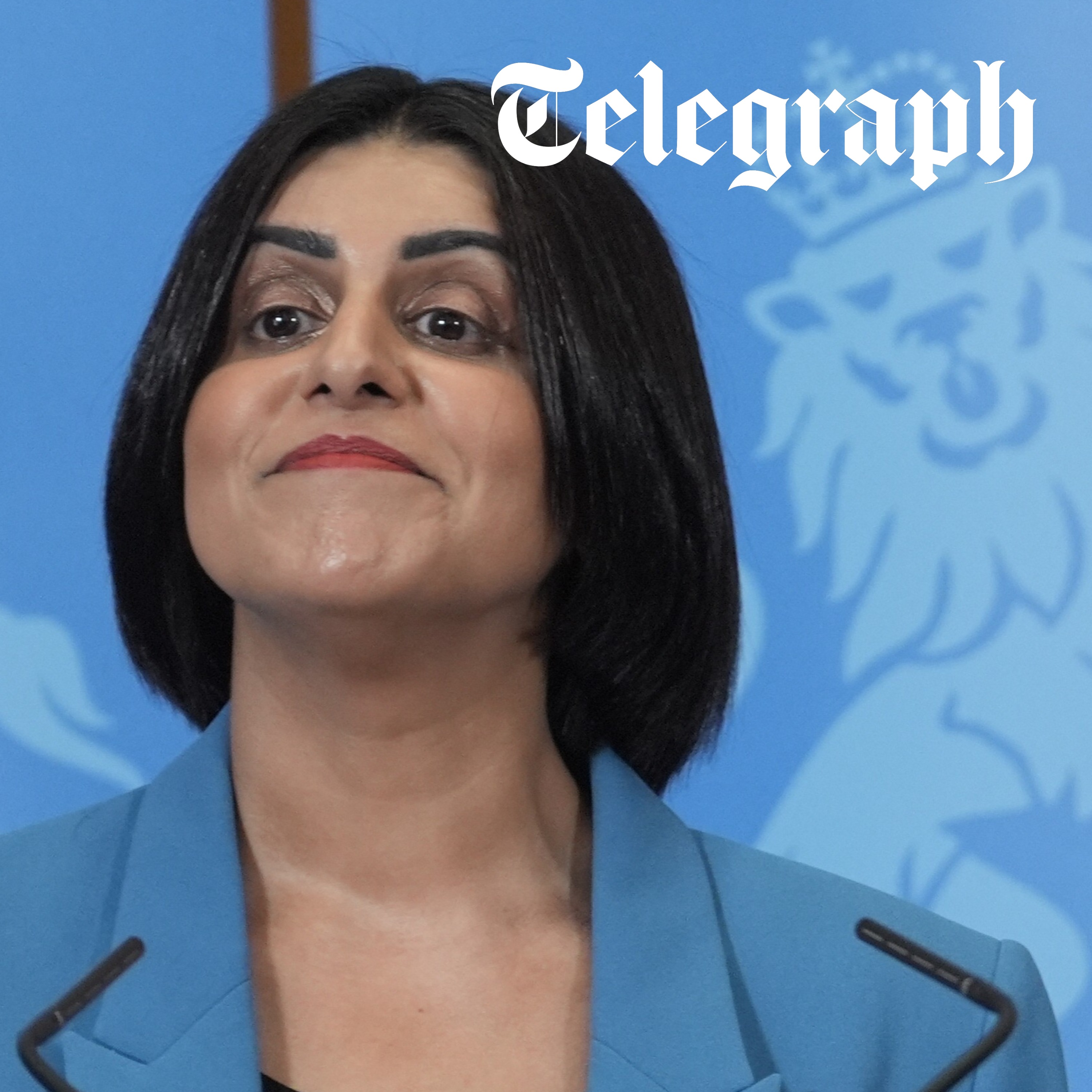
Shabana Mahmood has announced a host of new anti-immigration measures in Labour’s most radical policy intervention since it came to power.
The plans include offering asylum-seeking families up to £40,000 to leave Britain, as well as suspending student visas for four countries over migrants using the system as a backdoor route to claim asylum.
Camilla and Sir Jacob Rees-Mogg assess the plans, after Mahmood tells Camilla at a press conference that the measures are "not the end of the action that we will take in this area".
Elsewhere, Jacob condemns Sir Keir Starmer’s “flip-flopping” on Iran, which led to him being “bullied by his own Cabinet” into his initial decision to not allow US forces to use British bases.
We want to hear from you! Email us at [email protected] or find @dailytpodcast on TikTok, Instagram and X
► Sign up to our most popular newsletter, From the Editor. Look forward to receiving free-thinking comment and the day's biggest stories, every morning. telegraph.co.uk/fromtheeditor
Producers: Lilian Fawcett
Senior Producer: John Cadigan
Executive Producer: Charlotte Seligman
Video Producer: Will Walters
Studio Operator: Meghan Searle
Social Producer: Nada Aggour
Editor: Camilla Tominey
Hosted on Acast. See acast.com/privacy for more information.


