
 Ask ChatGPT



Written by AI. May contain mistakes.

Get the gist, explore an idea or ask about something said.
 Claude
On The Daily T, what are the key points of this episode?
Searching your listeningAutomatic transcript. May contain errors.
0:09Camilla Tominey: The cat is out of the bag. Labour will raise taxes. We'll be talking to the Sunday Telegraph editor Alastair Heath about how labour is going to make us all poorer.
0:20Allister Heath: And we're going to be speaking to the Telegraph colleague who came face to face with one of Europe's most prolific people smugglers.
0:28Camilla Tominey: Welcome to The Daily Tea with me, Tim Stanley.
0:30Allister Heath: And me, Camilla Tominy.
0:42Allister Heath: Well, this is a surprise. This is a turn up for the books, Tim. And we're joined by Alistair Heath, editor of the Sunday Telegraph in The Daily Tea studio. Taxes are going to go up.
0:52Camilla Tominey: Ah, what a surprise.
0:53Allister Heath: Now, I remember the Labour manifesto last year suggesting that taxes on working people absolutely weren't going to go up.
1:00Camilla Tominey: Well, that's because everything was fully costed, wasn't it? Fully costed.
1:04Allister Heath: Fiscal discipline, no more borrowing, no more tax and spend. How's that looking now, chaps? 15 months on.
1:11Camilla Tominey: Aside from the taxes having already gone up in one budget, after which Rachel Reeves said would not happen again, and now she's talking about it happening yet again, some of this hinges on Labour's definition of working people.
1:24Allister Heath: Shall we listen to what Rachel Reeves has said so far on this issue, looking ahead to the budget on November 26th?
1:30Tim Stanley: There are tax rises coming down the track.
1:32Allister Heath: Yeah, but I think that this government are making...
1:34Camilla Tominey: Sorry, in terms of the ambition of this government, it is big. But you agreed, yes, there are tax rises coming down the track. Well, I was really clear during the general election campaign, and we discussed this many times, that I would always make sure that the numbers add up.
1:48Allister Heath: And, of course, challenges are being thrown our way, but I won't duck those challenges. Of course, we're looking at tax and spending as well, but the numbers will always add up with me as Chancellor.
1:58Camilla Tominey: Can you promise the British people you're not going to get stuck in a doom loop of having to go through this cycle every year of having to find more tax to fill the Black hole?
2:08Allister Heath: Nobody wants that cycle to end more than I do. That was Rachel Reeves, the Chancellor, speaking to Sam Coates of Sky News. So what's the theory then, Alistair? If VAT income tax and national insurance don't go up on so-called working people, whatever a working person is, a working person is apparently somebody who works on the factory floor, according to Labour, and not a person who runs their own business and may be in danger of employing other people.
2:34Camilla Tominey: Well, it's all absurd semantics, isn't it? I mean, it's basically a modern Islingtonian way of describing the working class, I suppose, as they might understand it. So you say working people now rather than working class so that you're not kind of falling back into supposedly antiquated terminology. It's all nonsense, right? We're going to face massive, crippling, terrible tax increases yet again after a calamitous, horrible budget last time. It's clearly a breach of everything Labour has said. We were promised that last time was just a one-off because for some strange reason they decided to spend and spend and spend as soon as they arrived in office.
3:10Camilla Tominey: But of course, it's all going to happen again. And it's even worse than that. They now say they want to have more headroom than before, which means the tax increases could be even greater than the supposed black hole in the public finances. So you're talking about possibly 30 or 40 billion pounds in tax increases. Now, the IMF is predicting that GDP per capita in the UK will go up by 0.4 percent or 0.5 percent next year, which is basically nothing. What do you think is going to happen if you tax increase taxes by 30 or 40 billion? And what do you think is going to happen if you're actually targeting the most successful people in society with these tax increases, as the Chancellor or allies have been hinting at in briefings over the past few days, right?
3:53Camilla Tominey: It's a massive shock to the economy. Again, this is a plan that will destine Britain to stagnation. The best outcome is economic stagnation. The best outcome is that the doom loop will just get worse and worse. These tax increases will create more problems than they solve.
4:08Allister Heath: She doesn't like the word doom loop. She doesn't like the phrase doom loop, I should say. And she says, Tim, and this is the killer line of her defence, this is her line of defence, the UK is the fastest growing economy in the G7 for the first half of this year.
4:23Camilla Tominey: Right.
4:23Allister Heath: Which is quite a good argument.
4:25Camilla Tominey: No, I mean, it's all nonsense. I mean, ultimately, the only form of growth that counts is GDP per capita. On GDP per capita terms, Britain is performing abysmally, right? The only hope, as the Resolution Foundation pointed out, is that there's a collapse in employment and that somehow because employment's falling, the GDP per capita numbers might look better. But this is horrible. What's happening here is that the economy is struggling. It's struggling in a historic fashion. This is the worst prolonged period of economic growth probably since the Industrial Revolution, right? It's a disaster. It explains a lot of the social tensions.
4:57Camilla Tominey: It explains why you now got groups fighting each other over a fixed pie. It explains the rise of zero-sum politics. It explains the rise of reform, of the Green Party, of the Corbynites. Everything is changing. Tensions are rising. And economic growth is at the heart of this. It's not the only thing at all. Obviously, immigration is very important also. But it's at the heart of a lot of our problems. It's why the welfare state is unaffordable. And Reeves coming along just thinking that the answer is to spend, spend, spend, tax, tax, tax. Well, that is the road to disaster. OK, so I want to dig into some of that.
5:33Camilla Tominey: First of all, on the issue of GDP per capita, how do we compare to our competitors on that? Right. So the IMF thinks we're basically performing just as bad as France. So France and us are basically identical, growing by 0.4%, 0.5 % a year this year and next year. These are very poor numbers because GDP per capita basically says public spending should never go up by more than GDP per capita. Right? Because that's the amount of money we're generating as a country. So that's the money we have. And we can't really spend more than that. So if we spend more than that, either in the private sector or in the public sector, the only way to do that is to borrow money.
6:13Camilla Tominey: Yes. In other words, we are living beyond our means. We are stuck in a mindset where the economy is growing by 1.5%, 2%, 2.5%, 3 % a year. And we think we can, well, we just think we're much richer than we are. We're not. We're poor. We're becoming poorer and poorer. Is there anyone in the developed world who is doing things differently and it's resulted in a better rate of growth? Yeah. So America has done much better than us since the financial crisis. Much better. There's a clear gap. Also, the emerging economies of Eastern Europe, for example, Poland, have done much, much better than us. Well, they've got these countries are pro-growth.
6:50Camilla Tominey: They've got a pro-growth mindset and a pro-growth tax system. They don't penalise and persecute the better off. They don't penalise and persecute people who make money, who set up businesses, you know, who become rich. America has seen an explosion in entrepreneurship in recent years. You've had literally thousands of successful large companies created. Hardly any of that's happened in Britain. The city of London has been neutered. It was neutered deliberately by George Osborne after the financial crisis. So we lost this big engine of growth. And we've had some growth in tech and things like that.
7:22Camilla Tominey: But it's been very small. It's been minnows. We've not created a Tesla. You know, we've not created an Apple. We've not created a Microsoft. We've not created a Google and so on. And countries that do well do all these kinds of things. And America's done that. And we haven't. And we are falling behind.
7:38Allister Heath: She seems to be saying, by the way, that millionaires aren't leaving in their droves. I mean, anecdotally, we hear that they are.
7:45Camilla Tominey: Yes.
7:45Allister Heath: There was also that report which found that there was a millionaire leaving every 45 minutes since Labour took power. But if they're not leaving now, and I think that's probably a fib by Rachel Reeves, they're going to, aren't they? Because the taxes that she has identified apparently been pitch rolling different ideas, an increase to capital gains tax, a rethink of bankers bonuses, which were frozen under the Conservatives. She's now looking at national insurance on rental income, which could signal the death of the landlord. and then even if you haven't got that much money, even if you're just lucky enough to have some savings in a cash ISA, that could also be plundered for more taxes.
8:23Camilla Tominey: They're talking about halving that, aren't they? Currently it's£20 ,000. Yes, I mean... It's noted that it might be reduced to£10 ,000. Yes, but the idea is you might be able to put more money into stocks and shares ISAs instead. Right. I mean, among the tax rates, that's maybe not the worst if that is indeed the full plan. Obviously, if the plan is simply to reduce the amount of ISA funds in total, then of course it would be a terrible thing. But basically, she's wrong, right? Millionaires are clearly leaving the UK. Every survey of millionaires shows that they're leaving the UK at a much faster rate than they are leaving in other countries.
8:58Camilla Tominey: Countries like Italy are attracting lots of people. America is attracting people. Middle Eastern countries are attracting people. Indeed, yes. So clearly that's happening, right? It's just laughable to claim otherwise. And she's just delusional. She just thinks that she can tax and tax and tax and that there won't be any behavioural response. But, well, I've got news for her. There's always behavioural responses. We live in a global open society. People move around. Also, the biggest departures come from immigrants. So very successful immigrants are people who have already made a choice once in their lives, at least, to change country.
9:32Camilla Tominey: They're nomadic. Exactly. If you've already changed country once, the likelihood that you can change country a second time is quite high. This whole idea that London is some sort of utopia, the best city in the world and people are going to put up with anything just to live here. Well, that's been tested to destruction over the past 20 years.
9:48Allister Heath: I mean, the counter argument is rule of law, English obviously spoken as the main language, good schools and good universities. Although some of the scenes that we've seen unfold in Oxford this week might challenge that view. What about this? Is she delusional as well, Tim, when she blames austerity, Brexit and Liz Truss for the economic woes we now face?
10:13Camilla Tominey: I think I'm going to have written on my gravestone, I blame Liz Truss. Yes, why not? Whatever happened to me.
10:18Allister Heath: For anything.
10:18Camilla Tominey: I blame Liz Truss. The one thing I'd say on that is whenever the left talks about austerity, it always means austerity and spending cuts. But austerity also means tax rises, right?
10:28Allister Heath: Yes.
10:29Camilla Tominey: That is part of the picture of austerity. that there is a socialist version of austerity. Yeah, and for them, austerity is reducing the public sector. Yes. In reality, there's private sector austerity. That means tax increases. Yes, precisely, yeah. And that's, yeah, in the 1940s, that's the kind of austerity that Labour imposed upon the country immediately after the war in order to build up public services. They raided everyone, and that's what partly delayed our recovery, whereas countries like West Germany were able to embrace the market and grow much, much quicker. Do I think she's delusional?
10:58Camilla Tominey: I think it's useful for them. The interesting political question is at what point does that cease working? When can they cease doing that? I suspect a year out they still can say, but the government left a mess. And look at Liz Truss.
11:11Allister Heath: I don't know, though, because I think YouGov's approval ratings are showing that she is now the least popular politician alongside Keir Starmer in the country and in a stretch of recent history. I'm just I don't know about this blaming Brexit thing. I mean, we're well beyond that. That's interesting. Because it's been clouded by the calamity that was the COVID pandemic, hasn't it? We're now nearly a decade on from the vote to leave in 2016. I just don't think that washes. I agree that one woman's austerity is another person's efficiency savings. And, you know, Liz Truss?
11:47Camilla Tominey: Just to say on the Brexit point, because this is important, this is part of the reason why this government fails to govern, is it can't choose a narrative and stick to it. So it liked Brexit during the last election. And it's been very reluctant to criticize it or its impact, actually, even as we all know it's trying to roll some of it back by achieving greater integration back into Europe, free movement, aping regulation, etc. But it's been reluctant to actually criticize Brexit directly. Now it's doing it. And it's the same with immigration. It's the same with the flag. It's all that stuff. Where they chase where they think the narrative has moved to, they don't have one of their own that they stick to.
12:25Camilla Tominey: And I think that's part of the reason why people don't trust them. I think the Brexit point shows that they just don't understand politics. They don't understand Britain and they don't understand politics. They are completely detached. So their finger is not on the pulse of the nation. They are able to read opinion polls that are quite misleading. So if you look at opinion polls, quite a lot of people will say stuff like, oh, Brexit was a failure, we'd quite like to rejoin the EU. It's nonsense. It's just like the digital ID card proposal. When Keir Starmer suddenly said, I want a digital ID card, you had polls that showed 60 % or maybe even 70 % support for the policy.
13:03Camilla Tominey: For the past 25 years that I've been following these things, or even 30 years, there's always been public support for ID cards when you just poll the question. But suddenly, Keir Starmer says, it's going to happen. Within a couple of weeks, the positive feeling for ID cards just collapsed. The polls literally have turned around. Storm is so toxic that people disagree with anything he proposes automatically just because it's from him. And suddenly you now have polling showing that most people don't want ID cards. It's the first time I've seen that in 30 years. And exactly the same thing would happen with Brexit.
13:38Camilla Tominey: Right now, there's been no defence of Brexit made by anybody in a position of power for at least five or six years. The last person who defended Brexit publicly in a position of power was Boris Johnson when he was prime minister. Since then, there's been no pro-Brexit argument made, really. So it's not surprising that the polls are faltered. Obviously, governments of both sides have completely failed to make the most of Brexit, all that sort of stuff. But I can predict one thing. If this government said, we're going to undo Brexit and we're going to rejoin the EU, support for leaving or staying out of the EU would rocket immediately.
14:09Camilla Tominey: Yes, indeed. And so, therefore, this government just has no clue. It doesn't understand public opinion.
14:14Allister Heath: It's got like the anti-MIDAS touch.
14:16Camilla Tominey: Yeah, exactly. Exactly. It's got a reverse Midas touch, a negative Midas touch, and it just looks at polls. You know, polling is very important, but it's very abstract. If you started having focus groups and said to people, do you want to rejoin the EU? OK, so you want to start giving the EU£20,£30 billion a year. You want to have total free movement. People will go nuts. And, you know, I suspect the rejoin referendum will be 60 or 65 percent against rejoining. And of course, it would unleash Farage, it would unleash the Tories, it would completely break the Labour Party. So it's all delusion.
14:48Allister Heath: It's like when they poll and they say, would you be OK with paying an extra P in the pound to improve the NHS? It's a loaded question. But there's no clarifying. But by the way, just to point out that the NHS will be 6 % less productive than it was pre-COVID and you still won't get an appointment. That's the way that they front load these things.
15:09Camilla Tominey: And I think also the penny in the pound makes people think they're just going to pay a penny. Yes. They forget the many, many pounds they pay and that it all adds up. I mean, a similar thing happened with devolution when there was the famous referendum in the 2000s about regional assembly for the northeast. Dominic Cummings cut his teeth in politics. And it was something which the left and the Labour Party just thought, of course, people vote for this. Of course, they'll vote for more self-governance. And they rejected it totally. Two to one. It was a total catastrophe. It was the original Brexit dry run.
15:37Camilla Tominey: It was the first time the right won anything for a long time. Yes. But it was pioneering new tactics by doing things like pointing out that politicians would have more power and money would be wasted on politicians. Yes, it was one of those things that proved that people lie to pollsters. We had the same issue with Brexit. We had the same problem with Donald Trump. We're sort of tilting at windmills because politicians argue based upon a false data set of what the public thinks about things. When the public isn't actually confronted with the effects of that, they change their mind. And I think the same probably extends to economics.
16:07Camilla Tominey: It's very easy in this environment to say, well, look, don't you want your hospitals to be improved? Wouldn't you like to spend a little bit more money to improve? And yes, people would in a survey say they would. But actually, when they consider the effects, personal and social, of tax rises, they reject it.
16:22Allister Heath: Yes. Also, let's be honest, the public right now doesn't seem to be holding the economic calamity that Brexit apparently presents against Nigel Farage, who was its key proponent. I mean, clearly it's a political attack line to try and reduce support for reform. Once again, it's backfiring. Yes, I mean, clearly Britain's woes haven't been caused by Brexit.
16:43Camilla Tominey: They've been caused by something completely different, which is we've turned our backs on free markets. We've had a 30-year slow, gradual shift back towards social democracy, high taxes, increasingly large and badly managed public services, and so on and so forth. That is what's happened. We've embraced centrist dad economics, which has been a disaster. You know, we don't build housing. We've got an extremely regulated planning system. I mean, all these sorts of things. Everything's gone wrong. And the Tories and Labour have been incapable of articulating an alternative set of policies to try and break us out of this low growth rut.
17:18Camilla Tominey: And I'm afraid to say Reeves is just going to make us even more into a low growth economy. And if she's really planning some sort of wealth tax, then that is really the beginning of the end. It's the beginning of the end because no country can survive an actual wealth tax. The moment you really start saying to wealthy people, we're going to seize, confiscate your money just because you happen to live here, maybe because you happen to own an expensive house in London, these people will leave and they will take their money with them. And, you know, the economy will be in deep, deep, deep straits.
17:50Camilla Tominey: Yeah. So lots to look forward to on November the 26th.
17:54Allister Heath: Yeah. The inevitabilities of life, life, death and taxes. Alistair Heath, thank you very much for joining us.
18:00Camilla Tominey: Thank you. Coming up next, the small boats. We speak to the Telegraph colleague who came face to face with one of Europe's most prolific people smugglers.
18:20Allister Heath: Would you believe, Tim, that the number of migrants that have now crossed the Channel is at a record-breaking high of 33 ,500? I can believe that, yes. Starmer said he'd smash the gangs. Seems to just be encouraging them. And now his new Home Secretary, Shibana Mahmud, is going to send border control officers to the Balkans in a bid to smash the gangs in those countries. So, again, immigration top of the Labour agenda.
18:47Camilla Tominey: Best of luck with that. Our own senior foreign correspondent, Sophia Yan, has been looking into the underworld of migrant smuggling. In an investigation, she exposes the operations of Osman Ali, a suspected people-smuggling kingpin, who is accused of orchestrating routes into Italy from Pakistan. Allegations swell of torture, beatings and a ruthless network that preys on hope. When Sofia traced him to a small town in northern Italy, he claimed that his successful business is pulling in 50 ,000 euros, that's 43 ,500 pounds, a month. This is the moment she tracked him down.
19:28Tim Stanley: We went today to one of your businesses. That's your business, right? Yes. Yeah, and there were people there who told us that you smuggled them here and that they're working for you now. So why would they say that if it's not you? No, I didn't help him. Yes, but he... Only work with me. Before arriving in Cherbigo, I interviewed many survivors, families whose relatives died along the way, and migrants who say Ali smuggled them to Europe. They told me he had moved to Italy many years ago. After a lot of digging, I eventually found an Italian address linked to Ali. But we weren't sure what we'd find.
20:07Tim Stanley: Satellite images showed a rusty garage. Ali's name was on a mailbox, so it seemed we were on the right track. But we still had to go from flat to flat trying to figure out which one was his. When did you get Italian citizenship?
20:26Tim Stanley: There were people in Mauritania and Senegal, in Libya.
20:39Tim Stanley: to work for him. My, my, my, my.
20:43Allister Heath: Never, never, never have helped people illegally to come here. Well, Sophia Yan joins us now to talk about her exclusive story. What's interesting about Ali, Sophia, is it takes you nine months to find this bloke, and he's got a very interesting backstory. He starts out in life earning£5 a month in a supermarket in Pakistan and then ends up having these businesses that are pulling in tens of thousands of pounds a month, you obviously claim through people smuggling. He clearly denies that.
21:17Camilla Tominey: Just tell us about him and what you know about him and how he came to be a people smuggler.
21:23Tim Stanley: The first instance I heard of Usman Ali's name was when I was interviewing survivors from a migrant boat tragedy in January. There were about 80 people placed on this vessel. They'd been sent primarily from Pakistan through the Gulf into the African continent all the way through to Mauritania. From there, they were meant to sail to Spain. But this already was something that was different from what had been promised. A lot of them had gone thinking that they would be able to travel with valid visas by air, that it would be entirely legal. But at this point, that was no longer the case. And so all these people were put on this vessel.
21:59Tim Stanley: There were five captains aboard who starved them, tortured them, and started to kill them one by one at sea in an attempt to extort more money. Eventually, after about 12 days on the water, Moroccan authorities rescued the remaining survivors. Only 22 made it out alive. And so these were the people I interviewed initially. And one of them told me something that I come from then with other survivors that Usman Ali had called them actually after they were found and threatened them, told them to stay silent, not to tell the authorities anything. And from this, I started to wonder some more because the number he'd called them on was a number that really few people knew because these people had been at sea for so long.
22:43Tim Stanley: They'd lost all their belongings, had been taken by the smugglers or they were forced to throw it all overboard. So when they finally arrived and were being processed by the Moroccan authorities, the Moroccan authorities gave them a SIM card that they put into an old phone by which they were able to communicate with their families. So how did this man get this phone number? Why was he threatening them to stay silent? So then I started to ask more, well, who was he? How did you meet him? What was he like? And from there, I was able to trace backwards into Usman's life. We went to his hometown. A colleague of mine went to his hometown, and that's how we unspooled it all, detail by detail.
23:21Allister Heath: And how did you find him when you met him? As in, what was he like?
23:28Tim Stanley: He was exactly as how people I'd interviewed described him. So some of the initial interviews I did when I first started down this journey to find more about Usman, he was described to me as somebody who was really, he had a calm demeanor. He was even nice, people said. He was very gentlemanly. He was never gruff, even though he was in charge of circumstances that were really difficult for the migrants. For instance, a story that was told to me is that he was in charge of a house in Mauritania where migrants were forced to hide in the months prior to boarding boats, ideally en route for Europe.
24:04Tim Stanley: And even though they were being starved then, food and water being withheld from them, he still, Usman still was in a way respectful to them, at least in how he spoke to them, which is very interesting because this is someone who was described to me as wildly dangerous. He's an alleged international criminal. There are arrest warrants out for him. The authorities are definitely now looking for him. And so it was interesting to meet him because he seemed so normal. He seemed like your cousin, your uncle, somebody you just meet on the street. He lives in northern Italy now. He's been there for some time.
24:39Tim Stanley: His family had moved there many years back, and he has established himself in Europe. And so that's the thing that really struck me, because he's someone that you could come across and see quite, you know, just on the street.
24:51Camilla Tominey: And did he try to brush you off? Did he deny everything outright? Did he try and present himself as something he is or isn't?
25:01Tim Stanley: he was extremely receptive which was surprising i showed up at his door with a translator and a photographer and of course we asked him we put all these allegations to him about what i'd heard regarding smuggling activities and by this point we'd done interviews in three countries i had a lot of details about this man and his alleged smuggling network what he was doing around the world. And he denied it all. He wasn't angry or aggressive in any manner. He just said, no, that's not me. He said, there are people back home jealous of me. They're trying to smear my name. You know, when this happens, and I'm paraphrasing here, you know, he's saying things like, when these boats are found and the migrants are speaking to the authorities, other smugglers are telling them to give my name.
25:53Tim Stanley: People are just, essentially, he was saying he was being set up. And he said, no, no, no, I've never been involved in this. You know, there's so many people behind each of these boats. The routes go through so many countries. Oh no, it could not be me. And again, I'm really just roughly summarizing what he said, but it was just so interesting the way by which he denied this. He said he had no involvement, but gave me so many details about how these routes and networks work and how human smuggling is done around the world. So I kept asking him and pressing. But he continued to stick with that line that he is a pillar of the Pakistani diaspora community in Italy, that he's an entrepreneur, that he had businesses that he owned and ran.
26:33Tim Stanley: And he does indeed have businesses registered in Italy. He does have legal residency in Europe. That was partly how I found him in the first place, because there are several active entities registered to an address that I found linked to him. And so whether or not these businesses are used as some sort of cover for his illicit activity. This is much harder to determine. But I can tell you that when I was in Italy investigating the very last leg of this, I did visit one of his business locations and there were migrants coming in and out. One of them told me that he had just been smuggled two months ago through the Balkans route by Usman Ali.
27:10Tim Stanley: And he was now working for him at these businesses. So you can see how widespread bread, this kind of racket can really be and how creative in a way, because there are legal fits and also illegal fits. And this is what the allegations are. It's really quite vast.
27:26Camilla Tominey: Well, those allegations are being made, am I correct, by the Pakistan government that he's mentioned in the Red Book, which gives the details of the most wanted smugglers and traffickers. I'm correct on that, aren't I?
27:39Tim Stanley: Yes. So Pakistan releases its list, its Red Book, once every two years. And they released their most recent one for 2025, just a few days after I found Usman Ali in Italy. And he's right there on page 70. He is somebody that they absolutely want to find. There are case documents that sources passed on that I reviewed. And they say in there very clearly that Usman's wanted for interrogation, but can't be found. And well, he's not in Pakistan. He's in Italy.
28:10Camilla Tominey: Right. He's in the directory. Can you tell us something about the people who he was smuggling? How does someone end up in that situation? What kind of people are they? Why aren't they taking a quote unquote legal or safe route? How would they end up going with someone like Osman?
28:28Tim Stanley: The people I spoke to that had gone with him or had been approached by him, Most of them had already tried to obtain visas, whether for asylum reasons or because of interest in greater economic fortune. They wanted to go abroad to work. So for a lot of them, they'd already tried many, many years to process the appropriate paperwork. And with Ali's case and also with other migrants, they run the gamut. You've got doctors and engineers. You've also got farmers. So it depends. The reasons can be very, very wide. Some people are fleeing because of famine or war, genocide. Some people, again, want to go for economic opportunity.
29:05Tim Stanley: It's hard to really categorize in one fell swoop where all these people sit. But when it comes to the migrants that I spoke to who did come across Ali, they were often people that he knew personally. And that's part of why the cell works. they trust the person who's offering this service, this smuggling service, which is how many smugglers like Ali see themselves. They provide a means by which to move people around the world when the legal pathways are not available or they've been rejected already for whatever reason. And so they feel often that they've exhausted every possibility in the book.
29:43Tim Stanley: And they're told by someone like Usman Ali that they can go legally. What really struck me is that this is the kinds of ways by which he would advertise what he was offering was already a lie to begin with. He was telling people that he could manage, he could give them this opportunity to get to Europe and also provide a job for them, possibly at the end of that road, by getting them the right visas. And to a certain extent, that was true. I mean, in the case of Ali's migrants, they in many instances could fly through the Gulf. they could get pilgrimage visas, for instance, to Saudi Arabia or some sort of temporary permit to go to the UAE.
30:22Tim Stanley: I mean, a lot of South Asian temporary laborers often apply and routinely receive visas for this kind of situation. And so to a certain extent, they could travel legally, but that promise only went so far. And at some point, they do often fall into this situation where they realize they've been tricked. And that's where things can get really hairy. And that's what we saw with the main incident that I spoke about earlier, where 22, only 22 survived out of 80.
30:49Allister Heath: Presumably, the Italian authorities have taken interest in your investigation. I can't imagine the Italian Prime Minister, Giorgia Maloney, particularly wanting Usman Ali to remain in that northern Italian small town.
31:05Tim Stanley: Italian authorities, we did reach out to them for comments. They have said that they aren't willing to speak about the affairs of a private citizen and that they can't speak about a situation that's fluid and ongoing investigations. I am hoping that now that the story is out, that there will be more of a response. Pakistani authorities have said that they are working through Interpol and through official channels to coordinate with Italian law enforcement because they do have the interest to trace and to apprehend Ali himself. So we'll have to see. International law enforcement is very difficult, of course.
31:37Tim Stanley: You think about bureaucracy, you think about red tape, you're working across not just jurisdictions within a country, but across countries. So there's a lot of coordination that needs to occur. But his name is on the map. They're looking for him. They're trying to find him. At this point, if he's still there, that remains to be seen.
31:58Allister Heath: And also, I suppose it does, what you've discovered over the course of the last nine months is this is a very complex issue involving a lot of different individuals, I suppose, across the continent of Europe and beyond. So in this country, when Keir Starmer and the Home Secretary talk about smashing the gangs, Sophia, I mean, is that even a credible promise to the British electorate?
32:20Tim Stanley: It's a really difficult goal to accomplish. Smuggling gangs are just one part of the overall equation. The smuggling gangs themselves are already really difficult to tackle. We're talking about people like Ali who are arranging door-to-door travel. We've got drivers that shepherd people across Europe, across the Middle East. earlier on in the journey. We've got street level recruiters, people who sit in the tea house that anyone can approach to ask, okay, for a contact and for some information, police officers on the take, there are financiers that move money around. There are many different nodes to these big smuggling networks, and they're not like your movie mafia.
32:57Tim Stanley: They're different. I would think of it as different entities that work together as necessary and as it suits, but those partnerships and relationships can change at any moment. So when you're looking at it from a law enforcement perspective, I say this a lot, it's whack-a-mole, but in real time. So that's already itself very difficult. There's the issue of international law enforcement and the coordination of the policing behind it all. But then you have to think about other challenges and other issues. One is the issue of legal pathways. Is there a way for people who do need to go, for instance, for asylum reasons, to be able to apply and receive a valid travel document and visa to go where they would like to go?
33:39Tim Stanley: And is there a way by which to ensure that there's no abuse and fraud of that system? Is there a way by which to think about why people are leaving and what can be done? I have never met a single person on the move who has chosen to leave their entire life behind because of some silly reason. I mean, making a decision like that is so monumental. And often people are leaving with the thought that they probably will never be able to return home. And this is not something that is the decision anyone makes easily. Nobody takes it lightly. And it's also this that cannot be underestimated. The will to survive, the will by which to seek hopefully better fortunes.
34:23Tim Stanley: This is what pushes people to go and to take such a drastic decision and to risk everything. I've met some people who were farmers, fairly destitute, but borrowing money and selling all their belongings to pay tens of thousands of pounds on the hope of getting somewhere where they think they might have a better life. So it's a very multi-layered issue. And it's really very difficult to tackle because you have to, I think, look at this at many different levels.
34:54Camilla Tominey: And crucially, Sophia, as your investigation shows, many of the people who end up making this very dangerous journey do so thinking it's safe or even legal, and they've been lied to. They are themselves the victims of a criminal conspiracy. I think sometimes when we talk about this issue, people think they're part of the criminal conspiracy, but actually they're victims of it too.
35:15Tim Stanley: In so many cases of people that I've met, this is exactly what's happened. With Usman Ali, it was exactly the same. He has a long beard and a lot of people would assume that that meant he was a devout Muslim. They revered him and he played it up. He went by this moniker, this alias Mulfi Usman, which is an honorific in Urdu for someone who's of cleric level of status. So he was often respected because of this image that he gave off and he used it to his advantage. This is what people have told to me. And he often would approach people who he knew very well. His childhood friend was somebody who agreed to go on one of his journeys.
35:55Tim Stanley: And again, on the promise that it would be legal and by air, that everything would be done by the book. And that man whose brother I interviewed, he died. He died on a boat. The exact circumstances are not clear. But I did speak to his remaining family and they told me this whole story. And that was one of many that I found when I was investigating Usman. And there's a lot of different ways by which people will try to convince a person who's desperate to move that their game, this is what they call it, these journeys, these smuggling journeys, that their quote unquote game is the one to take. And they use those trust relationships.
36:31Tim Stanley: And it's because these people have such a difficult time in finding a legal way to go themselves that they are pushed into the hands of smugglers.
36:40Allister Heath: Sophia Jan, great work on this story. Thank you very much indeed for joining us on The Daily Tea. Thank you. I think what Sophia has discovered there, like all crimes, it's complex. It's not quite as simple as a slogan like smash the gangs. And it involves extremely vulnerable people being exploited at the end of the day.
36:57Camilla Tominey: Yeah. And what I also infer from what she was saying, which I don't know if I agree with, is people are always going to want to do this. And therefore, can you stop them? Would it be safer to open up legal routes so they can do it that way instead and therefore cut out the criminal middleman? And this is always the way we're debating any kind of prohibition, whether it's alcohol, drugs or the free movement of people.
37:20Allister Heath: Well, it all goes on to the black market eventually. If you capped the safe and legal routes, more people would still want to come. And they'd still look to people like Usman Ali, although he denies the claims.
37:31Camilla Tominey: He denies the claims, but if the claims are true, then he is evil.
37:35Allister Heath: Yes.
37:36Camilla Tominey: I mean, sociopathic.
37:37Allister Heath: Yes, because he's set people on their path to death.
37:39Camilla Tominey: People who he knew, he has lied to them. And I do think it's really important to stress that those people thought they were travelling safely and legally. They did not think they were taking that risk. Because sometimes we look at people crossing the channel and say, why do you take that risk? Well, it's possible that a lot of people have found themselves at the last stretch of a long journey that they thought would not be so dangerous.
37:56Allister Heath: Well, it's also possible that a lot of people are ill-educated and don't really understand what they're doing.
38:02Camilla Tominey: Yeah, that's quite possible. Although she also mentioned there were some doctors and engineers who he's trafficked.
38:06Allister Heath: Yeah, as well as farmers.
38:07Camilla Tominey: Traffic, yeah, traffic as well. But ultimately, we have a right to control our borders.
38:13Allister Heath: Also.
38:14Camilla Tominey: We have a right to say no. Does it inspire that much confidence in the police force of Europe
38:21Allister Heath: that a journalist has managed to track this guy down in nine months where others have failed, even though he's been on this red book since this appalling incident of this death boat?
38:31Camilla Tominey: Yes. I mean, that's quite extraordinary.
38:33Allister Heath: A reporter finds him and the police don't.
38:35Camilla Tominey: And it also doesn't give us much confidence in Western society full stop when a man like that can also have legitimate businesses.
38:45Allister Heath: Yes.
38:45Camilla Tominey: And describe himself as a pillar of the migrant community.
38:49Allister Heath: And a pillar of the European community, seemingly, happily ensconced in a northern Italian town. Our government's whole plan is to make it impossible to do that by establishing things you have to do to prove yourself so that illegality is impossible.
39:05Camilla Tominey: If it can still be done, then that suggests it's going to be much harder to smash the gangs than the government promises.
39:12Allister Heath: We're going to be back tomorrow with a very special Daily Tea in this week that we've marked the centenary of Margaret Thatcher's birth. We're speaking to her daughter, Carol, who's going to give us an interview roughly titled My Mum Maggie.
39:34Thank you.
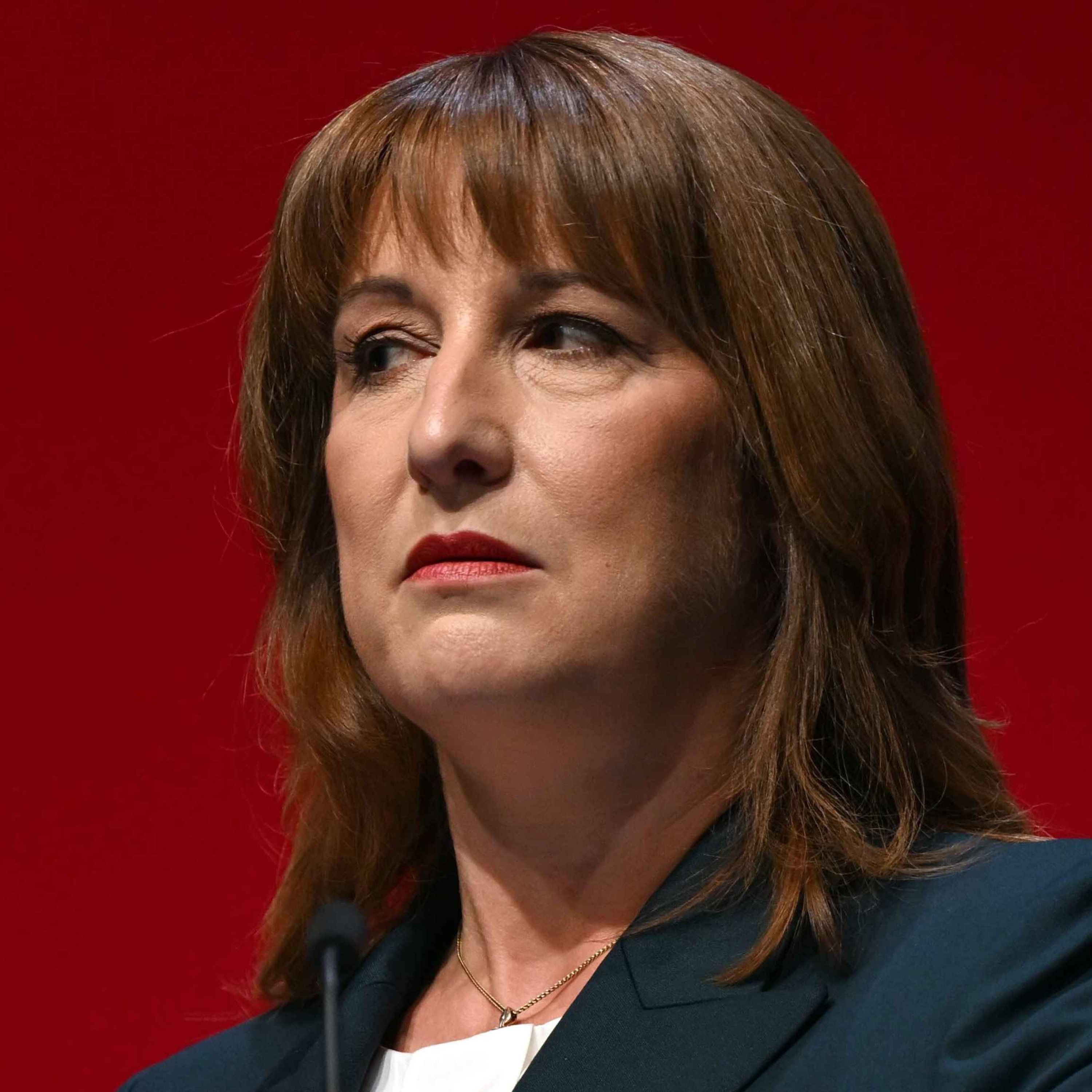
Rachel Reeves has admitted that next month’s Autumn Budget will see Labour raise taxes on the wealthy.
As she was heading to Washington for meetings with the IMF, The Chancellor told Sky News she was “looking at tax and spending” ahead of the November 26th fiscal event, and then went on to tell The Guardian that taxes on the wealthy “will be part of the story”.
On today’s Daily T podcast, Camilla Tominey and Tim Stanley are joined by Sunday Telegraph editor Allister Heath, who calls Reeves’s plans “delusional”, that her blaming Brexit for economic stagnation proves Labour “doesn’t understand Britain” and says that “the moment you start saying to wealthy people ‘we’re going to confiscate your money’, it’s the beginning of the end”.
► Sign up to our most popular newsletter, From the Editor. Look forward to receiving free-thinking comment and the day's biggest stories, every morning. telegraph.co.uk/fromtheeditor
Producers: Georgia Coan and Hugo Verelst-Way
Senior Producer: John Cadigan
Video Producer: Will Walters
Studio Operator: Meghan Searle
Executive Producer: Charlotte Seligman
Social Producer: Nada Aggour
Editor: Camilla Tominey
Hosted on Acast. See acast.com/privacy for more information.


