
 Ask ChatGPT



The episode of The Daily Tea focuses on two political flashpoints in the UK: Labour’s reversal of its winter fuel allowance cut, and Reform UK leader Nigel Farage’s Welsh campaigning, plus a separate discussion with Tory MP Nick Timothy about “blasphemy” concerns.
Nick Timothy (Tory MP for West Suffolk; tabled the Freedom of Expression (Religion) Bill) and Nigel Farage is discussed via his Port Talbot press conference; Zia Yusuf is discussed as a Reform figure.
Labour will restore winter fuel payments for pensioners earning under £35,000 (about 9 million people; £200–£300), after criticism that pensioners earning around £13,000 lost the allowance; hosts argue Reform pressure drove the U-turn. Farage claims credit for the reversal and attacks Labour’s 26-year rule in Wales, citing Wales’s GCSE results, unemployment, GDP per capita, and NHS cancer care. Timothy argues blasphemy laws were repealed, but the Public Order Act is being used as a “backdoor” blasphemy law; he cites Quran-burning cases (including Hamit Koskan) and supports limiting prosecutions to clear incitement. He also defends a burqa/face-covering ban as oppressive to women and undermining social trust, while noting enforcement questions.
Written by AI. May contain mistakes.
Discussion on Labour's reversal of the winter fuel allowance cuts.
“First of all, Zia Youssef returning to the reform fold after his little tantrum.”
Analysis of Chancellor Rachel Reeves' statements on public finances.
“I don't know about you, but it's all feeling a little expensive for the taxpayer.”
Examining Nigel Farage's press conference and claims regarding Labour.
“I mean, they've done this because they are running scared of reform, haven't they?”
Discussion on the challenges of reindustrialization in the UK.
“Reform are currently on 25 % in the polling in Wales.”
Analysis of internal conflicts within the Reform party.
“And yet we were importing it from Japan, I think it was, to keep those blast furnaces open right at the last minute.”
Explore the internal dilemmas of the Reform Party concerning policies and leadership changes.
“That came after the Burka ban row with Sarah Pochin, Reform MP for Runcorn, newly elected, suggesting it was an idea that the prime minister should consider it, prime minister's questions.”
A reform voter emphasizes the need for diverse voices in immigration debates.
“and whether it is creating an environment where a blasphemy law is going to be introduced by the back door without us seeing it coming.”
Discussion on the implications of recent Quran burning incidents and proposed blasphemy laws.
“And what are the long-term implications for the wider world?”
Discussion on the unique challenges faced when criticizing Islam in contemporary society.
“Well, I think, I mean, firstly, the law itself is blind in the way that it's written.”
Exploration of the burqa ban and its implications on freedom, expression, and women's rights.
“Can we talk about something that's very closely related to this, which is the idea of a burqa ban, which has obviously come up last week.”
Examining the influence of the Muslim Brotherhood and political Islam within UK governance.
“because you want to and you find it liberating?”

Get the gist, explore an idea or ask about something said.
 Claude
On The Daily T, what are the key points of this episode?
Searching your listeningAutomatic transcript. May contain errors.
0:02The Telegraph.
0:30Simplicity plan. Plus, choose Apple Watch Series 12 or iPad on us. Simplicity plan with Simplicity Pro required. Plan and device payment. Purchase our separate agreements with separate terms. Service plan for watch or iPad required. Additional terms apply for all offers. Outdated technology isn't going to improve a disconnected healthcare system. Next. So what will? At Optum, we wake up every day and work for better. We call it healthy optimism. It's how we use insights and technology to help providers focus less on paperwork and more on patients. Will we fix it all overnight? No. But we'll wake up trying again and again until health care works as one for everyone.
1:04That's healthy optimism. Learn more at Optum.com.
1:14Camilla: Two U-turns in two days, Gordon. Yeah. First of all, Zia Youssef returning to the reform fold after his little tantrum. And now winter fuel hood of funk it. the Chancellor Rachel Reeves admitting that it probably wasn't a great idea to strip impoverished pensioners of that allowance. I think we saw the second one coming quite a long way off. I really didn't see the first one coming. So we're going to be discussing that and Nigel Farage's press conference in Welsh Wales today in Port Talbot. And we'll be talking to the Tory MP Nick Timothy about his plan to stop blasphemy laws being reintroduced and also talking to him about the possible Birkaban.
1:54Camilla: Berkabans. It's the issue of the day. Welcome to The Daily Tea with me, Camilla Tominey. And me, Gordon Rayner.
2:11Camilla: How surprised were you, Gordon Rayner, to hear the Chancellor, Rachel Reeves, this morning saying, hang on a moment, we may have got the cut to the winter fuel allowance wrong. What's the least surprise that you can possibly be by something? Turning up in the desert and finding sand. Exactly. That's how surprised I was. And they've announced, so we had thought, is it going to be completely reversed? It's not quite that, is it? But basically, Labour has announced that all pensioners earning less than£35 ,000 will have their payments, which are between£200 and£300, restored. And this is a reaction to the incredulity that the policy was met with after it was revealed that pensioners who were earning just 13 grand were losing this allowance.
3:02Camilla: Because it was intended, wasn't it, as a kind of an attack on boomers, Gordon, wasn't it? I mean, it felt from the very beginning that Labour had just sort of fallen into this massive elephant trap that the civil service had set for them. Because if we go back to, you know, when Labour first came into power, they were looking to save money. We know that every new government is told by the Treasury, by civil servants, here's lots of things you could do to save money. One of the ones they're always told is, oh, you could get rid of the winter fuel payment. Yes. And they always go, don't think so.
3:32Because politically that's going to be enormously damaging.
3:35Camilla: Get rid of the triple lock. Exactly. It's really expensive. But Rachel Reeves and Keir Starmer fell into the trap. They kind of decided it over a weekend, didn't they? They just sort of had a quick meeting. Yeah, we'll do that. Didn't think about it. No doubt the Treasury mandarin's went off and had a good laugh. And then they announced it and everybody said, this is a total disaster. You're going to lose a huge amount of support. People are going to die over the winter because they'll get hypothermia. It'll all be blamed on you. And guess what? That's exactly what happened. That's what happened.
4:02Camilla: And it was so extraordinary for Labour to announce it. So then we had Labour MPs criticising their own government and making claims about pensioners choosing between heating and eating. So now that this is being restored, nine million pensioners will continue to get the winter fuel allowance This winter, that's 75 % of the elderly population of the UK. It's going to cost£1.25 billion, though, Gordon. So that needs to be paid for in the autumn budget. Let's expect more tax rises. Spending review on Wednesday. I don't know about you, but it's all feeling a little expensive for the taxpayer. Well, maybe they'll just tax pensions and then people's pensions and get the money back that way.
4:41Camilla: Well, we have done a lot of coverage on the Telegraph website about that today, so do read those pieces. Shall we hear Rachel Reeves being grilled about this by Sky News' Sam Coates? Yes, please. I had to make urgent decisions last year to put the public finances back on a firm footing. We inherited a£22 billion in-year black hole in the public finances. I was always clear that the number one priority of this government was to return stability to the economy. We did that with a number of difficult decisions, but because of those decisions, our public finances are now in a better position, which means that this year we're able to pay the winter fuel payment to more pensioners and£9 million will receive it this year.
5:24Hold on a minute. Is she trying to say that the public finances have been restored because they withheld winter fuel payments from pensioners?
5:32Camilla: Yes. Basically, we had to do this because of the evil Tories. There was a£22 billion black hole in the finances. But thanks to my hugely successful autumn budget, we're now in such clover that we have enough money to give. I mean, I appreciate that Q1's growth figure was a surprising 0.7%, but hang on a minute, Rachel, from accounts. I'm not quite sure that the growth figures for the second quarter are going to be great after so-called awful April. This is some extraordinary political spinning, isn't it, Gordon? I mean, they've done this because they are running scared of reform, haven't they?
6:12They haven't done it because she's woken up and had a moment of epiphany, or indeed because the public finances are brilliant now, which I didn't realise they were.
6:20Camilla: She's woken up with more fiscal headroom. Yeah, so that's what it's about, isn't it? They're terrified of reform and obviously the Tories have said that they should restore winter fuel as well, but they don't really see the Tories as a threat anymore, I don't think. They're just worried about reform taking huge chunks out of their support, aren't they? So the plan is, right, to announce this at noon and Kai Bosch, Nigel Farage, taking to the stage in Port Talbot. Labour have been in power there for 26 years. Reform has set their sights on Wales. And actually, when we look ahead to the Senef elections, must say Senef rather than Sened.
6:57Or indeed Senef, which I think is what you just said.
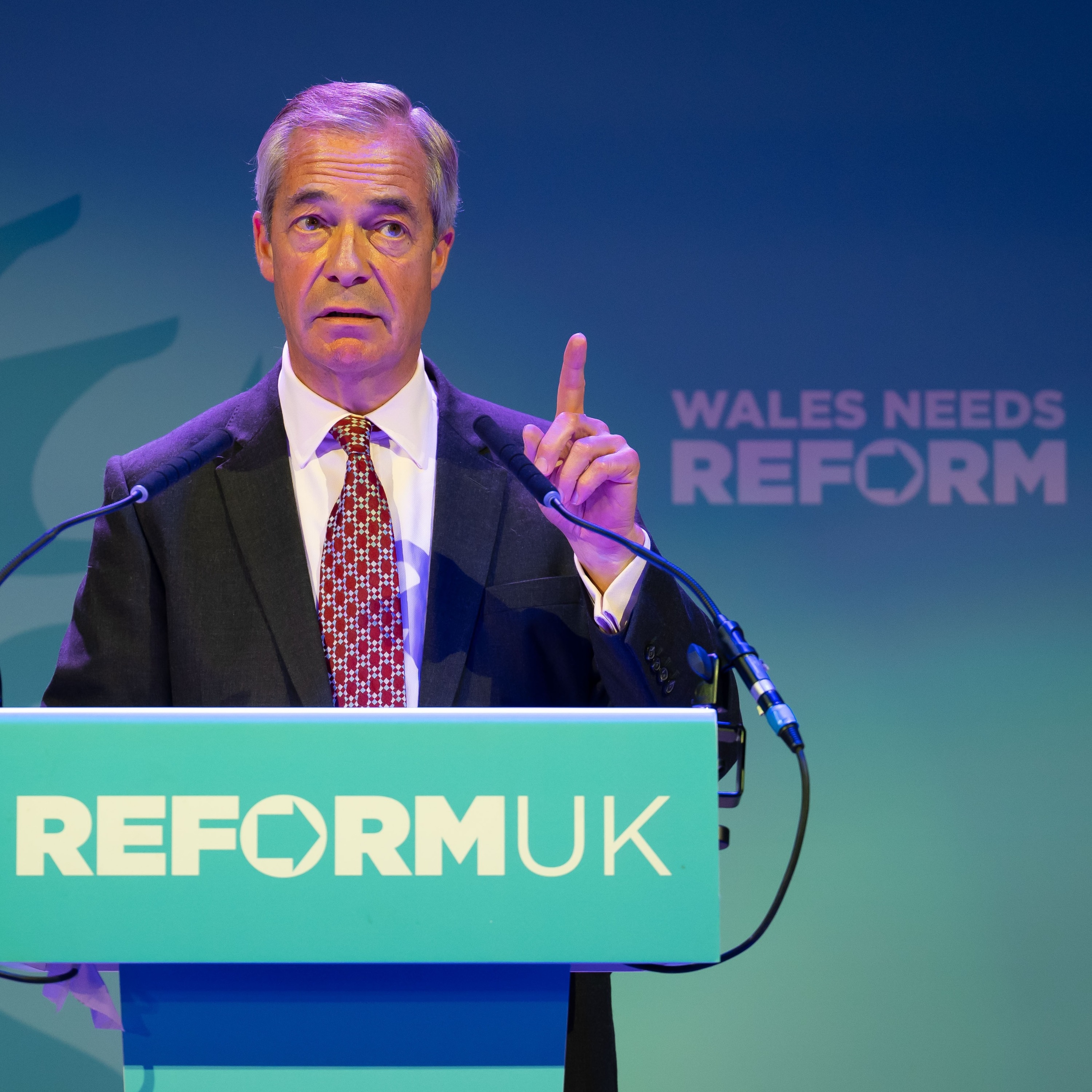
6:59Camilla: Shall I say it again? Well, no, I think we can keep that in. Yeah, keep it in. And by the way, my grandmother was from Wales, so I should know better. So he takes to the stage. He's the new representative of the working classes in Wales. and, of course, he crows. Again, Labour make this mistake. They think, yeah, we're going to put it out at noon, that's going to kibosh Nigel Farage. No, he just waits for 15 minutes, stands up on stage and says, the only reason why Labour is you turning on this is because of me. It is a considerable step in the right direction. There'll be a lot of pensioners out there very, very pleased, including constituents of mine in Clacton, who served this country in World War II, and felt they were being very badly treated.
7:43So, look, I think we can claim some credit for this Express headline from last week. And well done, The Express, for splashing it. And I think we have made the political weather on this one. There is no doubt in my mind that the government would not have U-turned on this had it not been for the pressure that Reform UK is putting on them. So as you can imagine, the newspaper headline he was holding up effectively said, reform says restore winter fuel. And that's what Labour have done. The reason that he's in Wales, of course, is that these Senate elections are happening next year. Reform are currently on 25 % in the polling in Wales.
8:25Plaid Cymru, 30%. Labour, who, let's just remind ourselves, are in power there, are on 18%, way back in third. And Farage is basically saying that Labour's been in power for 26 years. They've got nowhere to hide, he says. And he rolled off a string of statistics about what a terrible situation Wales is in. He talked about the lowest GCSE results in the UK, unemployment being the highest in the UK. GDP per capita is£10 ,000 less in Wales than the rest of the UK, he says. He said that the NHS in Wales has the worst cancer care in Europe. He said Wales lags behind in everything.
9:02Camilla: Even when it comes to how fast they can drive their cars? That's right. 20 mile an hour speed limits, which we endure in London and really don't enjoy. Now, when it comes to re-industrialisation, this is very much the Trumpian playbook, isn't it? This is J.D. Vance. Look at what we've done with Rust Belt America, although actually they haven't done anything yet. But this is what we're promising the working people of the US. He's translating that politics to the UK. I mean, he doesn't single out Thatcher for criticism, you know, closing down the mines and not putting anything in its place. But basically he wants to make Britain great again, doesn't he, Gordon?
9:38But often this is the case.
9:41Camilla: This is the problem with reform when rhetoric meets reality because the Telegraph's very own Tony Diver, associate political editor, asks him, I think, a really important question when it comes to re-firing up the coal blast furnaces. I'm just going to ask you one more time about this coal policy. Could you just be specific about what exactly it is you're proposing? and you're talking about small specialist mines, where would they be? Are you talking about just mines in Wales or would you be looking to do this in England as well if you had the opportunity? And can we just be clear that the government in Westminster has banned licences for new coal mines?
10:17So if you were to win next year, there'd be no prospects of any new mines until at least well after the next general election. We can always have a fight, can't we? We can always have a fight. And who knows? there may be situations where we just do things. I mean, we'll have to come to that, cross that bridge. Look, I mean, for example, the coal that would have suited beautifully for Scunthorpe could be produced in Cumbria. And yet we were importing it from Japan, I think it was, to keep those blast furnaces open right at the last minute. There are still uses for coal. They are not the mass usages that we used to have years ago, but there are still usages, and if that's the case, we should produce our own.
11:00So I guess this is the problem, isn't it? That he is in danger of writing checks that he can't cash, I think. I was interested in another one of the answers he gave when one of the reporters got into quite a lot of detail about blast furnaces. And just to remind people, Port Talbot was the largest steelmaking plant in the UK. Then in September last year, the two blast furnaces were switched off. 2 ,800 jobs were lost. And the reason that he's linking coal with that is that there is Welsh coal that is very high quality that is needed for high quality steel making. Now, he was asked, is it possible to effectively fire up those blast furnaces again, because they have an awful lot of material in them?
11:42The technical aspect of that is incredibly hard. A lot of the experts say you just can't do it. And his answer to that was, well, nothing's impossible. Well, maybe that is impossible and so then he had to say well okay maybe we'll just build new blast furnaces it did feel a little bit like he was just winging it yes some of that stuff you know also he's going to be
12:00Camilla: in danger if they do get into power and he can't deliver on these promises to the working classes it's going to be the letdown of the Tories times a hundred right because like sometimes people look at the Tories and they make promises about jobs and working people and people are like well they're not really. They're the party of the elite. He's absolutely positioning himself in this kind of man of the people space. I'm the one that can rescue Britain. And if the economic reality is that it simply isn't financially viable to re-industrialise the UK, we've now become a services economy. The factories have been closed.
12:35Camilla: These towns have been left behind. I don't like this speak, by the way. I don't like this talk of declinism. I think it's one of the failures of Thatcherism and I speak as you know as a massive Maggie fan that nothing was put in place of the mines when they were closed down and that some towns in England, Wales, Scotland, Northern Ireland just literally were lost because everybody in those towns lost their jobs on the back of the failure of that industry to thrive. So of course it's problematic but I mean he's got a huge weight on his shoulders to try and fulfil some of these promises if he actually does get into number 10.
13:13He talked a lot about having to attract private investment to be able to do these things. He admitted that the Welsh government wouldn't be able to afford to, for example, build new blast furnaces in Port Talbot. They would have to have some money from national government and they would have to attract some private investment. And that's a big if. I mean, he doesn't know that that's going to happen.
13:32Camilla: And this question about seriousness, the seriousness or not of reform has been a major theme of the weekend. You and I are in and out of this studio, oh, everything's going well for reform. They're on track to come second in the Hamilton by-election in Scotland. Oh, no, Zia Youssef has just thrown his toys out of the pram. We discussed it on Friday with Tim Montgomery. I said I thought that his departure tweet was petty and petulant. He basically says, you know, helping reform to form the next government isn't a good use of my time. That came after the Burka ban row with Sarah Pochin, Reform MP for Runcorn, newly elected, suggesting it was an idea that the prime minister should consider it, prime minister's questions.
14:13Camilla: Yusuf, being a Muslim, doesn't think that's the direction of travel that the party should take. Also, there's a lack of consultation clearly within the party. Nobody knows she's going to ask this question. Everyone in reform's head start exploding. The party seems to implode over the weekend. And then Saturday night, there's another ex-post from Yusuf. Yeah. Mia Culper. I may have reacted in haste and actually I may have spoken too soon and I'd like to come back into the fold, presumably after a warm and cuddly chat with Uncle Nigel. Shall we listen to what he said about it? This was him speaking on the BBC's Today programme.
14:53I've been working pretty much non-stop, virtually no days off in those 11 months. And, you know, I built a tech company from scratch as well. And so I know what it's like. You start with almost nothing, no infrastructure at all. And this thing had just become so huge. And even, I mean, you probably remember the count at Runcorn. I was there right up until the end of that count where we obviously won by six votes. And even after that, I didn't really get a break because we had the celebratory event in Kent and then straight on to launching 10 counts or so. Let's get to the substance. It's very difficult to keep going at that pace.
15:28And that exhaustion led to a poor decision.
15:30Camilla: And this was Nigel Farage's version of events. Yes, we did hit a speed bump last week. It could be we were driving more than the recommended 20 miles an hour, which is what we're supposed to do here in Wales. But, you know, Zia Youssef and I have worked together almost inseparably over the course of the last 11 months, and we have both taken on our shoulders the most enormous burden. Zia, administratively, far more than me. And I was already beginning the process of trying to broaden the management team. Zia lost his rag. He put out an intemperate comment or two. I wonder who in this room hasn't at some point done that, whether it's on social media or with family or friends.
16:23But it was pretty clear by the next morning that he bitterly regretted what he'd done. and as part of broadening that management team, he is very much back and enthused and he will take on the Doze job. And then in the same press conference, he was also asked about how a lot of people end up falling out with him or have done over the years and this idea that it's a sort of my way or the highway. I think he's been accused of a messiah complex almost. Yeah, that's what we put loads of it. Fairly or unfairly. This is what he said about that. If ever anybody talks behind my back, or if anybody betrays that trust, then yeah, I'll never speak to them again.
17:03It's quite simple. And they should expect the same level of trust back from me. And you know, when it comes to fallouts in politics, I mean, well, just have a look at the chaos of the Conservatives over the last few years. So look, I am loyal to people, all the while they're loyal to me. If they're not, then things change. Inevitably, inevitably what you get are people who think they're bigger and better than me. The parties will be better off run by somebody else than me. And that's what leads to the public fallouts because they don't like the result of it.
17:40Camilla: I mean, it's interesting, isn't it? I think there is a problem with it being a one-man band. And we were discussing last week, you know, what happens to reform if something happens to Nigel? And then you have this impression that it kind of ceases to exist. I mean, I don't think we can underestimate how important his role at the helm of reform is. Where is Rupert Low now? You know, he has gone from Rupert to Hooper. Maybe he will have his own kind of renaissance. I don't know. But Nzia Youssef Rao, I don't think really harms reform in terms of it being a Westminster bubble story. Do you know what?
18:13Not now it's been sorted out. No, exactly. I think it would have harmed them if it had come to the next general election and the Tories and Labour could have had these posters quoting his tweet. effectively saying they're not fit to govern, but they've sorted it. I think it's killed it off.
18:27Camilla: And also people quite like people admitting that they've made a mistake, saying I'm sorry and coming back. I'm just going to reflect a reader on that. Michael Connor said, how enormously refreshing to see a true British politician like Zia Yusuf publicly state he was probably wrong, has had time to think, and is now back with redoubled commitment. No PR spin, no obfuscation, no lies, just a straightforward acknowledgement that I got it wrong. I agree with Michael on that. Where it has been harmful, I think, Gordon, is it's sort of exposed in this row about banning burkas, reform's internal dilemma with just how right-wing they should be.
19:03Camilla: You've got somebody like Rupert Lowe having been defenestrated from the party because he was deemed to be a bit too extreme, entertaining the idea of alliances with Tommy Robinson, talking about deportations, openly saying, I'd support a burka ban. that clearly makes somebody like Yousef feel uncomfortable. I then question Richard Tice, the deputy reform leader on my show on Sunday on GB News, and I'm trying to pin him down. Well, where are you on it? Do you want to ban it or not? Yes or no, I kept on saying to him. And he's in this kind of stuck between a rock and a hard place. We've picked off as many writers as we can, so we now need to seem more moderate.
19:44Camilla: This is like all about Farage's quest to be Waitrose Man. we can't go off the reservation too much he gives me this response where he's like we need to have a conversation and I'm like come on Richard you know where you stand on it he's basically saying well I got him to the point of saying deep down yes I do agree with the ban but if anyone can persuade me be my guest it's like you know get off the fence on these issues yeah five years ago they would have said ban the burka yeah because they're in a position where they're trying to appeal to Labour voters, aren't they? And so that's why they're having to sort of do a bit of a pivot.
20:19Camilla: I'm just going to read out one other reader comment, just because I thought it was interesting and it segues nicely into the next part of our conversation. Surya Singh says, as a Brown reform voter, I'm tremendously happy Yusuf has rejoined. An excellent example of nuance in the immigration debate, proving that there are well-integrated, successful Brown families in this country willing to contribute to the nation's success. I just think that's interesting because we discussed the white minority report last week, and we're discussing now this burka ban, and maybe we don't hear from enough people from ethnic minorities with their view on it.
20:56Camilla: You know, we often hear some of the extreme voices at either end of the wedge, and not just moderate people with moderate views. They've come here, they embrace British values, and maybe they're just cut out of the conversation completely. Now, on that theme, coming up next, We're going to be discussing an issue again that we discussed last week, the burning of the Koran, and whether it is creating an environment where a blasphemy law is going to be introduced by the back door without us seeing it coming. We're going to be discussing all this with the Tory MP, Nick Timothy, who is trying to block that with legislation in the House of Commons.
21:38I've got big news. I switched to Verizon and got the new iPhone 18 Pro. I can keep my old phone. Can I also get the latest iPhone every year? Anything else? Verizon let me choose Apple Watch Series 12 or iPad on them. Everybody listen up. Switch to Verizon and get the new iPhone 18 Pro now. No trade in needed. and the latest iPhone every year with Simplicity Plan. Plus, choose Apple Watch Series 12 or iPad on us. Simplicity Plan with Simplicity Pro required. Plan and device payment purchase are separate agreements with separate terms. Service plan for watch or iPad required. Additional terms apply for all offers.
22:09Pessimism. It's never going to improve a disconnected healthcare system. Next. So what will? At Optum, we're working every day to connect primary, specialty, and pharmacy care and help lower prescription costs. Will we fix it all overnight? No. But we'll wake up trying again and again until healthcare works as one for everyone. That's healthy optimism. Learn more at Optum.com.
22:56America's ability to take on China. And what are the long-term implications for the wider world? Search Iran the latest and listen wherever you get your podcasts. We're also now on video. Watch us on YouTube and on The Telegraph's website.
23:18Welcome back. Now, you'll remember that last week, Hamit Koskun, who burned a Quran outside the Turkish embassy earlier this year, was found guilty of committing a racially aggravated public order offence. And this gave rise to suggestions that blasphemy laws are being reintroduced by the back door.
23:37Camilla: Well, on Tuesday, the Freedom of Expression Brackets Religion Bill is going to be put before the Commons in a bid to try and stop what some MPs are claiming is an infringement of freedom of speech in this dealing with people that are trying to burn religious texts and make protestations about extremist Islam. The person who's tabled it is Nick Timothy, the Tory MP for West Suffolk, and he joins us now. What are your concerns and what are you proposing to deal with it? Well, Parliament actually abolished blasphemy laws in 2008, and we haven't actually prosecuted any blasphemy cases for decades anyway.
24:15But what's happening increasingly is that the Public Order Act is being used to effectively create a new backdoor blasphemy law. We've seen a couple of cases recently where people have desecrated a Quran and criticised Islam, and they've been prosecuted under the Act because the Act says that you're not allowed to use abusive or threatening language or behaviour to cause people alarm, harassment and distress.
24:42Camilla: We had this debate about the Quran burning, and we both said to ourselves, didn't we, the act of burning a Koran isn't a crime in itself. The act of burning any book and indeed even a flag isn't a crime in itself. Wasn't the problem in that particular case, the fact that he had done it outside a Turkish embassy where he was voicing criticism of Islam as a religion? Yes, and the fact that he was outside the Turkish embassy I don't think is either here or there because it's not like he was standing outside a mosque and being incredibly provocative in that kind of way. But the perverse thing about using the Public Order Act in this way is it effectively says the protester, the person using the language, is accountable for the reactions of other people who respond violently to criticism of their beliefs.
25:32And I think that's wrong. Because if you do that, you are killing free speech. Out of interest, if someone turned up outside a church or an embassy and burned a Bible and was spouting anti-Christian rhetoric whilst burning a Bible, is that okay? Would we say, well, that's free speech, that's okay for them to do that? Obviously, it wouldn't be nice, and it's not nice to burn a Quran either. But I think this is actually my point, which is if somebody does mock Jesus, or if they were to do something unpleasant with a Bible, the reaction of others isn't to threaten violence and disorder, and therefore the person doing it would not be prosecuted in this way, because that's the logic of using the Public Order Act in this way.
26:22Camilla: This specific case of Hamit Koskan, who is obviously being very brave, he's being very vocal in his condemnation of what he regards to be Islamic extremism, basically. And the response to the Koran burning has been, well, violent and visceral. He's now in hiding. He's in a safe house. We talked to our chief reporter, Robert Mendick, about the case last week. He's gone to visit him there, interviewed him there, and now he's facing death threats. So is this another example? Are you saying then, Nick Timothy, that this man's right to live his life while being critical, as he has been, of a religion and arguably perhaps even its peoples or some of its peoples, that should trump any other concern if it resulted in him now fearing for his life?
27:07Well, I don't think anybody should live in fear of their lives for expressing sincerely held opinions. What we're talking about is a group of people, a minority of people, I'm not suggesting all Muslims have this kind of attitude, a minority of people seeking to impose their values and expectations of respect for their values on everybody else. And that's not what a free society is about. That's not what pluralism is. And it's not what Parliament has ever said should be OK. As I say, Parliament repealed blasphemy laws many years ago.
27:43Camilla: But do you think this is something uniquely that some members of the Muslim community are doing? I just use the other example. Obviously, there are protests sometimes by Christian fundamentalists, if you can call them that, outside abortion clinics and all the rest of it. Are we saying we're in the situation now, which is why you've had to raise this and try and make a legislative intervention? Because there is something unique about some people in the Muslim community who are trying to specifically shut down criticism of Islam compared to people in other religious communities. Well, I think, I mean, firstly, the law itself is blind in the way that it's written.
28:24And I'm sure judges would behave in a way that treated adherence of different religions in the same way. Equally, we should be honest that since 1988 at least and the publication of the Satanic Verses, the public conversations that exists in this country and in other Western countries about Islam is, I think, limited by fear of consequences if people say the wrong things. Now, Salman Rushdie lived in hiding for years. He was actually attacked a couple of years ago in America. We have the Batley teacher who showed a depiction of Muhammad during a lesson about blasphemy at school. And he remains in hiding with his family.
29:12We've had other incidents such as the case of the boys in Wakefield who scuffed a Quran at school and were suspended from school. and the mother of one of the boys had to sit through a kind of show trial in the local mosque with the police attending. Now, we can't pretend that the authorities, the state, is behaving like this because the people who work and run these organisations think that we should have a blasphemy law. They're doing it out of a sense of fear of the consequences. But that's wrong because if you give in to the mob, They're not going to stop there. They'll continue to push and push.
29:53And it's up to us, I think, if we want to defend the reality of a free society, to hold the line and to say, no, this is not OK. Can we talk about something that's very closely related to this, which is the idea of a burqa ban, which has obviously come up last week. It caused a huge row, particularly within reform, when they asked the prime minister whether he would be in favour of a burqa ban. And wearing a burqa or not wearing a burqa is largely connected to freedom of expression and free will. You've, I think, said in the past you'd be in favor of banning burqas, haven't you? Is that still your view?
30:29Yeah, I've actually written about this in The Telegraph. I've had this view for a number of years. And obviously, it's difficult if you do live in a free society to say there should be restrictions on certain things. But, you know, I've never been an absolutist about freedom. And even when we're talking about free speech in the context of the Public Order Act, I mean, I would still say things like clear incitement should be illegal. So we shouldn't be absolutist about some of these things. The reason I have an issue with the burqa is apart from the fact that I think it's oppressive to women. and I remember a conversation with a Muslim female friend of mine who said you should be unafraid about saying this because it is it is like watching women walk around the streets manacled she felt that strongly about it and she said you know you shouldn't hold back from saying this so I think it's a problem for women but it's undoubtedly I think a social problem for everybody There are consequences to our actions, whatever we do.
31:38And I think if you live in a community where it becomes normal for a significant number of people to cover their face, that inevitably is going to undermine social trust. And I don't want to live in a society like that. And I actually think most people would say the same.
31:58Camilla: We've heard from Kemi Badenot, your party leader, suggesting that she would like to see burkas and any other face covering banned from the workplace. And I think she's also including things like balaclavas, although I don't know about you, I haven't seen many people in balaclavas walking to workplaces. No, but one of the things that struck me while Nick was talking there in terms of enforcing this is if you did ban burkas, what happens if somebody then decides to walk around in a Spider-Man mask all day? Do you then tell them that you're going to arrest them for that? Well, maybe any face covering beyond a medical face covering post-COVID is a problem.
32:32Camilla: It was interesting, Nick, because we did ask the Telegraph audience what they thought of a workplace Berkaban. 116 ,000 people voted, 82 % for it, 18 % against. Let's just read a couple of the readers' comments here because it is quite interesting. Peter Kelly, it's not just about security. It's also about the status of women in Western society. No woman in Britain should be made to cover her head with only her eyes visible. Kitty Devereaux says she finds the burqa genuinely unsettling. It's a symbol of hardline Islam associated with the subjugation of women. Ben Barker, however, says it should not be up to employers to ban the burqa.
33:10Camilla: This is a responsibility of government. Just to put the alternative view, because I'm in a difficult space on this, on one hand I'd always fight for women to wear what they like. we're assuming that women who wear the burqa are forced to do so by men. I'm not sure whether that's always the case. I don't think all of them are. That's the thing that I think is difficult about this, that you'd almost have to stop each person and say to them, have you been forced to wear this or are you wearing it because you want to and you find it liberating? I don't know. Because to me I don't think the moral question is just about individual rights.
33:46It's about what it does to us as a society. Social cohesion. Yeah.
33:51Camilla: Can I ask a supplementary question just with you in mind as Theresa May's former right-hand man, you worked with the former prime minister both at the Home Office and then in Downing Street. Is there an argument to say that the genie is now out of the bottle on this? If we look back and we've now got calls, for instance, to prescribe the Muslim Brotherhood, David Cameron considered that back in the day, abandoned it. Theresa May as Home Secretary could have arguably done more on Islamic extremism. What happened? How has this, have we now got to the situation where we're sort of talking about burqa bans?
34:24Because Tim Stanley, our colleague, wrote a good piece today on this and just said,
34:27Camilla: well, it's a bit late to be discussing it now. Other states have been well ahead of the UK when it comes to this issue. Yeah, and I think the fact that some states have been show that actually it can be done. Now, I'd have liked to do some of these things much earlier, but they weren't. so we can only deal with things as they are. The Muslim Brotherhood is a completely insidious organisation. There was actually a report published by the French government a few weeks ago about the activity of the Muslim Brotherhood there, which I think reached very similar conclusions to the report commissioned by the British government about 10 years ago.
35:07And lots of organisations that are considered mainstream and with whom the state engages and lends legitimacy and so on. And the media will have people on talking about what it's like to be a Muslim in Britain or to express the views of the Muslim population. Lots of these people are actually connected to the Muslim Brotherhood. And I think we, for a number of years now, have grown used to the threat of Islamist violence and terrorism. And people are aware of that risk. The security and intelligence agencies cope as best they can and do a good job. But actually, if you look at the Muslim Brotherhood and the organizations connected to it, they may not be interested in terrorism.
35:52They're trying to achieve their goals through entryism and by basically playing the liberal democratic game by creating all of these organizations that act as representative groups, that take part in consultations, that go on the TV and advance arguments. It's subtle, but it is quite effective.
36:15Camilla: Do you agree the Tories have been asleep at the wheel on this? Look, I think there was a certain amount of progress in terms of confronting things like the ideology behind these things. I mentioned the Muslim Brotherhood Review that David Cameron launched, which I think was actually very informative in terms of exposing what some of these organisations were. I know, but nothing happened. But yes, exactly. But you can't deny that we've basically gone further down the road towards something that I think, you know, I worry about a lot. We shouldn't have these organisations anywhere near our national and public life, but they are.
36:57And, you know, then there's another layer to it, which is we have four Islamist members of parliament now. We may have more in the future. This is something that we need to really grapple with because I don't think having political Islam in and around our government is anything anybody in this country should really want.
37:21Camilla: Nick Timothy, thank you very much indeed for joining us on The Daily Team. Thanks for having me. So spending review on Wednesday, Gordon, and then another announcement from Nigel Farage on Tuesday about their new chairman. Will it be a Tory? Could it be Suella Braverman? Well, it could be. I mean, you can't rule anything out in politics these days, can you? You never can. And we'll be covering it all tomorrow, 5pm.
38:12Pessimism. It's never going to improve a disconnected healthcare system. Next. So what will? At Optum, we're working every day to connect primary, specialty, and pharmacy care, and help lower prescription costs. Will we fix it all overnight? No. But we'll wake up trying, again and again, until healthcare works as one for everyone. That's healthy optimism. Learn more at Optum.com. Optum.
Rachel Reeves finally confirmed Labour’s rumoured U-turn on the winter fuel cut for pensioners this lunchtime, completing a humiliating climb down for the Government. Nigel Farage was quick to take credit for the reversal in a speech in Wales.
Camilla and Gordon ask whether Reform’s continual outflanking of the Tories like this is only cementing their place in the public’s minds as the unofficial opposition.
Later, they speak to the MP tabling a new free speech bill after a man was prosecuted for burning a Koran. Nick Timothy says that blasphemy are being brought in through the back door to quash criticism of Islam.
We want to hear from you! Email us at [email protected] or find @dailytpodcast on X, Instagram and TikTok.
Producer: Georgia Coan and Lilian Fawcett
Senior Producer: John Cadigan
Planning Editor: Venetia Rainey
Executive Producer: Louisa Wells
Social Media Producer: Robbie Nichols
Video Editor: Andy Mackenzie
Studio Operator: Meghan Searle
Original music by Goss Studio
Hosted on Acast. See acast.com/privacy for more information.


