
 Ask ChatGPT


 The Daily T
3 Apr 2026 · 31m · 14 chapters
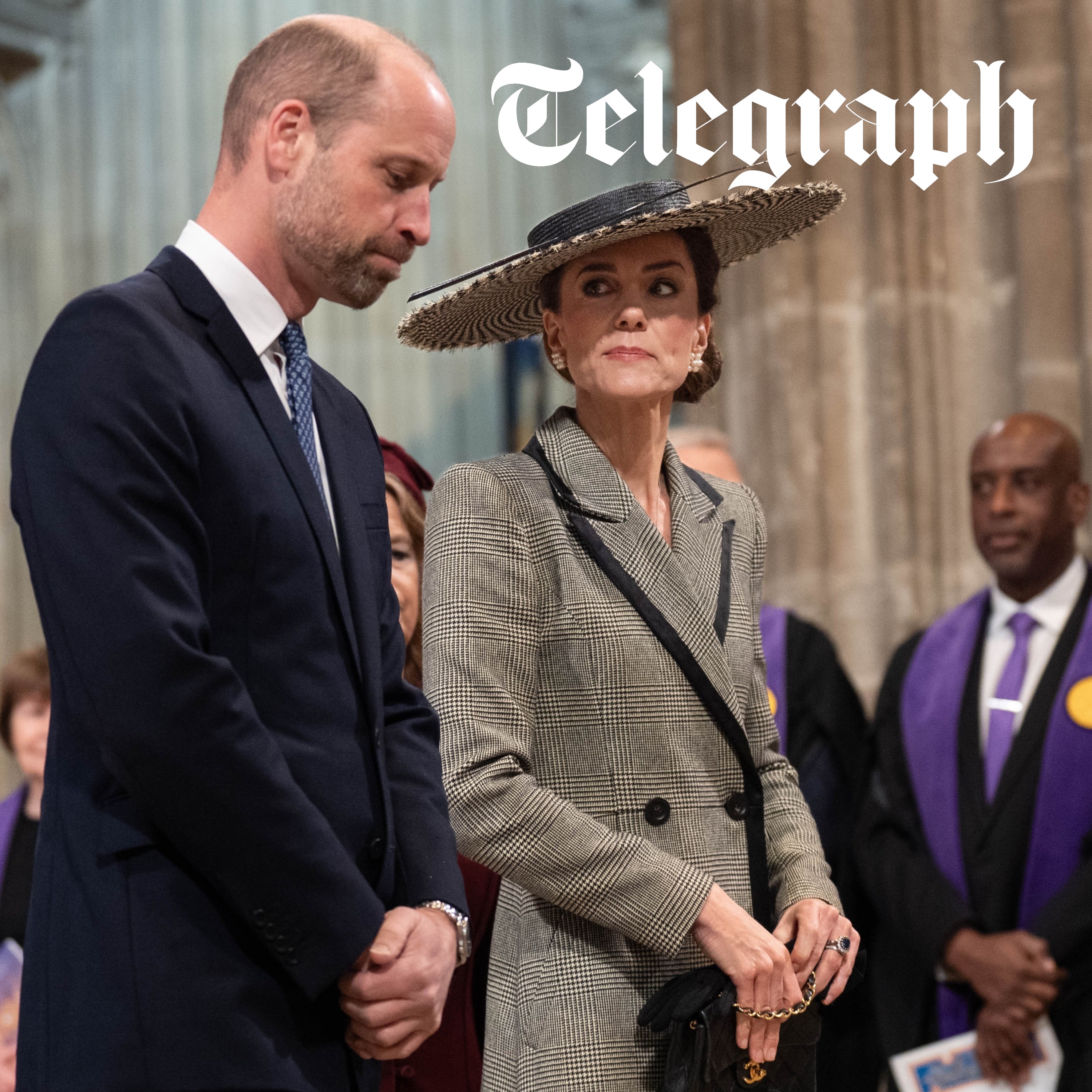
Whether Prince William’s “quiet” Christianity is enough for him to rule as King, and what his private faith signals about the monarchy’s constitutional role and England’s wider religious/cultural future (Easter context).
Gavin Ashenden, former chaplain to Queen Elizabeth II; Tim Stanley and Camilla Tominey (hosts/royal reporter and church/royals commentators).
William is described as sincere but an irregular church attender (not regularly in Sunday pews), raising fears his faith is strategic/political rather than spiritually grounded. Ashenden argues the constitutional settlement (1688 Protestant monarchy) ties king/church/state together, and that the real crisis is cultural: secular authoritarianism and future Islamic theocratic pressure, with Anglicanism “on life support.” He suggests Parliament could change coronation oaths, but shouldn’t hide the issue.
daily prayers in Parliament; William and Kate’s Westminster Abbey ceremony; Charles III’s “defender of faith” line; Ashenden’s references to Rotherham rape-gang failures and threats to free speech.
Written by AI. May contain mistakes.
Discussion on the perception of Prince William's religious commitment.
“Welcome to The Daily Tea with me, Camilla Tominy.”
Exploration of the Church of England's position within the monarchy and politics.
“didn't do God as much as his grandmother and indeed his father.”
In-depth look at the historical reasons behind the Church of England's formation.
“This is not, in fact, at all about William.”
Discussion of Henry VIII's motivations for establishing the Church of England.
“Because in some ways, it's quite remarkable that we still have what we have in the 21st century.”
Analyzing the constitutional settlement and its relevance today.
“And I think many of the things people were taught aren't actually true, rather they're slanted in a way that hides the truth quite badly.”
Discussion on William's struggles with faith as he prepares for kingship.
“And what people don't understand is the royal family are here courtesy of Parliament.”
Examining the cultural changes affecting the monarchy and religion.
“to put over poor, outdated constitutional arrangements.”
The discussion culminates in reflections on the intertwining of faith and politics in modern society.
“And one might argue that the next stage in that cultural evolution is William, which is the culture of agnosticism slash atheism.”
Explore the clash of powerful ideologies and their implications for society.
“which they're likely to exercise long before then.”
Discuss the strengths and weaknesses of Anglicanism compared to Catholicism.
“and a kind of quiet committee of parliamentarians, I would say, you know, guys, if you want your establishment to succeed, you would swap Anglicanism for Catholicism.”
Examine how modern beliefs and practices influence perceptions of Christianity.
“I may be committed, but I'm also committed to other people having a neutral space to find their way.”
Analyze the failures of the Church of England in engaging with its followers.
“So although you're quite right in saying...”
Discuss the monarchy's relationship with faith and its implications for future leadership.
“Well, see, I mean, one of my beefs about King Charles at the moment is not so much that he's committed to faith.”
Discussion on Prince William's role and responsibilities regarding the Church of England and societal values.
“See, I think we need to raise our eyes a little bit beyond the denominational issues.”

Get the gist, explore an idea or ask about something said.
 Claude
On The Daily T, what are the key points of this episode?
Searching your listeningAutomatic transcript. May contain errors.
0:04Camilla: The Telegraph.
0:10Is Prince William, our future king, religious enough to rule? I mean, he's a really sweet man with sort of vacant ideas about God. And the difficulty with this is it feels strategic, it feels political, it feels... And the trouble is I understand why they're doing that, of course I do. But if you're a passionate Christian, frankly it's insulting.
0:28Camilla: A former chaplain to the late Queen Elizabeth II, Gavin Ashenden, has criticised the prince's lack of public religious expression. Is William being disarmingly honest about his spiritual journey, or is the palace signalling a slide towards secularisation at the very heart of the monarchy? Welcome to The Daily Tea with me, Camilla Tominy. And me, Tim Stanley.
1:01Camilla: Tim, today we're going to discuss a topic that involves two of our specialist subjects. The church for you and the royals for me. And it is Easter. That's why we're doing this daily tea. Happy Good Friday. It is a happy day, believe it or not. It is indeed. It's so Christian to call a good day the day when you kill the Messiah. But he will rise again. He's rising again. And today, even my inner lapsed Catholic knows that I should be eating fish later. Well, not at all. Preferably. Not at all. Just fasting. Just water and bread. Got it. Thank you for clarifying. And we're here to discuss Prince William, the future king, and his, quotes, quiet faith.
1:44Camilla: So, back when I was a royal reporter, there were always rumblings of concern that the then Prince William, now heir to the throne, didn't do God as much as his grandmother and indeed his father. And we've got some interesting quotes from aides close to William in the Sunday Times that have suggested that his commitment to the Church of England does run deep and is sincere, but it is quieter and more private than people expect. And this has been born out of concerns that, I'm going to be honest about it, he just doesn't attend church very much. Right. So he goes for significant royal family occasions, Christmas, Easter.
2:26Camilla: Obviously, he's ever present at Westminster Abbey for various services, be they marking the Commonwealth or other major royal occasions. But I'm going to be honest, he isn't somebody that is regularly in the pews on a Sunday morning. So he's an irregular church attender. His faith is described as quiet. In other words, the Church of England is about to be taken over by an Anglican. Don't really see the contradiction here. That is spoken like a true Catholic. Let's bring in Gavin Ashenden, who is the former chaplain to the late Queen Elizabeth II. Now, you've criticised William, saying that his quiet faith is strategic and political.
3:07Camilla: Explain that to us and welcome to the Daily Tea. Well, thank you. So can I change the language a bit? I haven't criticised William. I think he's a marvellous man. I like him very much. What I've offered is a critique of the situation that William finds himself in. And it's not a very nice one for him, and it's not a very helpful one for us. This is not, in fact, at all about William. It's about fin de siècle. We're at the end of a culture. We're at a crossroads. And it's simply that this is an advanced sign of how close to the crossroads we are, because it was inconceivable to the constitutional minds who dreamt up what happened in 1688, that we would have a monarchy that felt agnostic about Christianity.
3:48That wasn't something they could conceive of someone becoming a Catholic. In fact, the present arrangements are designed ever to stop that happening. So the enemy of our constitutional settlement is not agnosticism or even atheism. It's Catholicism. Well, that's really quite passé. The problem we have at the moment is that we have an entirely different cultural conflict for which our constitutional arrangements are not fit. So what we really should be doing is not interrogating William about his state of spiritual alertness, but actually asking ourselves much more serious questions about how we can evolve the cultural clash that this particular hiccup represents in the near future.
4:29Let's just establish, to make it clear, what the constitutional settlement is. Because in some ways, it's quite remarkable that we still have what we have in the 21st century. So what is the role of the Church of England in the English constitution? Well, we need to go back and look at two things. First of all, the creation of the Church of England, which was intended to avoid civil war. So the Church of England is not so much a religious idea, it's a political idea. There were a number of political Protestant factions, and having had one civil war, the country wanted to avoid a second one.
5:05Camilla: Can I just interject there? I mean, call me ill-educated. I thought it was designed to enable Henry VIII to divorce his Catholic wife. Well, so that's not ill-educated. It's an element. And the bit I'm talking about came downstream of that a bit. So if we start, I mean, this could be tedious to our listeners, but I'll try and make it interesting. Context is king here, Gavin. Well, it really is. So essentially, this begins really with King Henry VIII deciding he wanted, who was a kind of Trumpian figure on steroids. He makes Donald look mild. And he wanted to be both king and emperor and pope. And he was absolutely concerned about his dynasty.
5:46The Tudors were feeling a bit fragile about their dynastic claims. And so one of the ways in which he wanted to do this was to ensure a legitimate offspring. The pope wouldn't play ball. We don't need to go there. And consequently, his solution was to blow the whole thing up and make himself responsible for everything, which he did. The problem was that the cost was something, I mean, unbelievable. And one of my complaints is that in my education, which was expensive and thorough, I've been taught a great deal of Protestant Tudor state propaganda, which having become a Catholic, I'm now beginning to scratch my head over.
6:19And I think many of the things people were taught aren't actually true, rather they're slanted in a way that hides the truth quite badly. So the Tuna dynasty was made secure. But the problem was in the next 100 years, some of the kings kept on having nostalgic twitches for Catholicism. Now, when the Civil War came, it was essentially a civil war about the divine right of kings, about Catholic versus Protestant, but also about Parliament versus the Crown. Now, Parliament won. And Parliament represented, if you like, the serious Protestants, people we associate perhaps with the hard edge of Northern Ireland at the moment.
6:55strong-minded Presbyterians. And one of the consequences was they chopped their king's head off. They felt very bad about that. They revisited the whole thing. And as they tried to find a compromise, and so we had the Stuarts, they were clear of two things. They didn't want another civil war, and they didn't want to chop anybody else's head off. So when James II found himself wanting to become Catholic, they said, well, we'll just have to get rid of the family. We'll get in a new family, one that's Protestant and will never change. And so they looked, they found William and Mary. Mary was related directly, William wasn't.
7:29And the deal was, would you like to become king and queen of England, but you must be Protestant and your successors must be Protestant and we must keep the Catholics out and not have any more civil war. So in 1688, that was a sort of the Lady Bird guide. Yes, I love that. But it's important to look at the royal history
7:46Camilla: and the relationship between the royals and the Church of England, let's be honest. What it has left us with is a state church that in a way sacramentalizes the state. That's exactly the case. And what people don't understand is the royal family are here courtesy of Parliament. Parliament, for example, I mean, if we decided that it wouldn't be fair to ask William to make these oaths, we could solve the thing at a stroke. Parliament could simply change some new laws, make some new coronation oaths in which he didn't subscribe to Christianity or the Church of England. It would mean the end of the Church of England, but Parliament could do it if it wanted to.
8:20And in a sense, this is, for as long as we are a parliamentary democracy, where Parliament has the supreme authority, this is Parliament's problem to sort out. It's not poor William's and it's not even the Mountbatten-Windsors. But it ought to be sorted out rather than covered up. The problem, I think, that I saw, and other people did too, was a dear William who has been asked questions about his faith for a long time and has had a difficult childhood. Something of an ingenue and didn't really have any views about spirituality and religion. there's no reason why he should except that he's next in line for the throne and because of what Parliament has ordained he will have to become Supreme Governor of a Christian Church and a Defender of its Faith a title by the way that Parliament gave not the Pope that's a historical detail but he's not ready to do it bless him I mean he might be ready to do it when he comes who knows what's going to happen
9:12Camilla: well he's going to have to be well except this is my difficulty if William had found himself engaged in a spiritual journey, however slow, however cautious, however inquisitive, then I think we'd be in a place where there wouldn't be a big gap between the person of William and William who has to take on a public office. My concern is if there's too big a gap, it looks like hypocrisy or it looks like role-playing or it looks like fantasy. And if you want the whole system to work, and it's already a bit of a fiction, you can't afford to have a credibility gap between William as he is now and William when he becomes King William on accession to the throne.
9:51Now, I'm not the first person to see this. And I think the reason we have this newsflash is because a number of civil servants have said, we need to narrow that gap. Let's create a little pontoon in the middle of the bridge. And let's imagine that William is beginning to, well, you see, it's worded very carefully. He says he's committed to it. The it is not God. The it is the establishment. The it is the Church of England. That's the it he's becoming committed to. So now, I'm a passionate Christian. Christians are dying all over the world. Christianity is a matter of life and death. It's quite difficult to have someone treat the faith, particularly on Good Friday, when God himself enters into our situation, gives himself in love and compassion for us.
10:31It's not a cheap thing for anybody to have it treated as a kind of strategic plaster to put over poor, outdated constitutional arrangements. Well, it's actually a bit of an insult. So in short, we have Parliament, King and Church, and they're all bound together. They're all joined together by the desire to assert the right of the other. So, king in parliament, church blesses the state. This is why it's so important. This is why the nonsense of we have church-state separation, which people keep asserting, they're thinking of America. It's not true of this country. We are a constitutionally Protestant country and our democracy, our parliament, everything operates on the assumption of that.
11:11For instance, there is daily prayers in Parliament before each daily session.
11:17Camilla: And indeed, MPs mark their seat at PMQs with a prayer card. So the king's role in this is to be the defender of the faith. Now, the problem is what happens when you inherit that hundreds of years old constitutional settlement, but the country's definition of faith has radically changed. Now, you've raised one, which is Catholics, who have been emancipated for bordering on a couple of hundred years now, which is nice. Still can't be the monarch, but okay, we have had a Catholic prime minister, Boris Johnson, believe it or not. So we've already got rid of that. We then had multiculturalism, which is reflected in the transitional figure of Charles III, who famously is supposed to have said, I would like to be the defender of faith rather than the faith.
12:03Camilla: Yeah, all faiths. And one might argue that the next stage in that cultural evolution is William, which is the culture of agnosticism slash atheism. So let me put it to you that in the sense that the Church of England aspires to represent the entire national community, in a way, William better reflects the religious sentiment in this country than perhaps you or I do. And that quiet faith, one thinks of David Cameron's Like Magic at Home, It Comes and Goes in the Chilterns, that quiet faith is actually where England is spiritually. Well, you would be right if we could freeze time as it is today.
12:42But the thing is, time is not frozen. It's moving on. And what we're actually faced with is a sort of, if you like, a temporary oasis, long may it last, between three cultures, two of which are political, although the one you've described is also political in the way you've outlined it. And the trouble is, the two other cultures are a secular utopianism, which the history of which we look at in the 20th century and I think that the numbers who died for communism or Marxism, whatever you call it, are astronomical. They're over 100 million because as a way of life, as a way of doing things, and its inheritors are the people passing laws about the way we think and speak in public at the moment.
13:25So it's alive and kicking and growing in power. But essentially the secular utopianism of the left is quite determined to arrange society according to its own preferences and will use force in the law to do it. It needs a robust repudiation. And the trouble is we're in a culture where there isn't much, there's no robust repudiation in the present settlement. Now, on the other side, we have an Islamic theocracy. And 20 years ago, I can't have imagined having this conversation, but in 40 years' time, 50 years' time, 60 years' time, Muslims will be at least 50 % of the population and therefore they'll have democratic pressure as well as demographic presence, which they're likely to exercise long before then.
14:06And they too, because it's what Islam teaches, have ambitions for a theocratic Islamic state. So now we're surrounded by two very powerful ideologies, both of which are authoritarian and are concerned with the exercise of power. And in the middle, you have the sort of dying embers of Christendom celebrating agnosticism and every person's right to think for themselves. The problem is it won't do. The center space, as Yeats so beautifully put it, can't be held. So we need something. So first of all, Anglicanism in its, I mean, it's, you know, bless it, it's on life support. I don't want to be rude, but it hasn't got long left in its present form.
14:45What might do instead? Well, this is where the conversation gets very interesting. One of the reasons I became a Catholic is I think Catholicism might do. It has the strength, the courage, the clarity, the martyrs, and it's been doing this struggle for a long time. So if we were doing some blue-sky thinking and a kind of quiet committee of parliamentarians, I would say, you know, guys, if you want your establishment to succeed, you would swap Anglicanism for Catholicism. You bring back a Catholic...
15:11Camilla: Well, I know it's funny, but you see... I get the whole argument, if you're going to be a bear, be a grizzly, right? Yes, exactly. If you're going to be a Christian, just be a Catholic. Please do.
15:42Camilla: Can I just have a clarification here? though, please, because you're both committed Christians and therefore you are considering people who believe in God but don't necessarily regularly worship as agnostic? Is that what you're saying? I thought agnosticism was, I think God exists, but I'm not sure. I think William's saying, I believe in God. I consider myself to be a Christian, but I don't go to church all the time. Yes. What you've done... I just want to say, which, by the way, I don't mean this rudely, but that really is quite an Anglican perspective. I mean, the difference with Catholicism is it is the entire church is sacramental in its approach to worship.
16:22So you're obliged to go to mass. I'm speaking from the view of the secularist, perhaps.
16:26Camilla: I'm just trying. That's the only heathen at this table. I'm trying to give the alternative. Right. I'm saying it's not necessarily a secularist or an agnostic perspective to say I don't have to go to church every week because there are some forms of Protestant Anglican worship which don't insist upon. Okay. They might say Christmas and Easter. You definitely, and I'd say, I'd argue, I suspect that actually culturally that was more the practice in this country for a very long time. It's not necessarily a signifier. You're quite right of agnosticism to say, I do believe, I just don't go every week.
16:54Because to be fair, culturally, that's what a lot of Anglicans are.
16:57Camilla: I just want to clarify, we're not really suggesting that William is either an agnostic or an atheist, are we? We're not saying anything about William at all. What we're saying is that there is a kind of liberal, free-thinking space, which has characterised our society for a long time. On the whole, we've loved it. It's given people the chance to explore. It hasn't required much from people, but I'm saying that that's disappearing fast. Yes. And it's the disappearance of that, let's call it an agnostic space for the moment. Okay. But I mean, some people call it liberal humanism or, you know, it's a kind of I'm not committed to anything.
17:32I'd like to find my way around without being told what to do-ness.
17:34Camilla: Fence-sitters, Gavin. Well, or people poised on balletic tiptoe looking at the horizon, whatever you like. What I'm saying is that for as long as you have a society which promises and delivers on freedom of thought, freedom of speech, freedom of conscience, and freedom of action, you can do that. It's a luxury. Actually, it's a luxury that's been created by Christianity. It's about to disappear. And it's the disappearance of that neutral space. I would like to keep it. I think it's immensely valuable. I may be committed, but I'm also committed to other people having a neutral space to find their way.
18:08But the problem is, if we're just going to say, right, let's bring back James II, let's bring back Mary I, and let's just have a Catholic monarch and a Catholic church, there will be objections to that within the C of E, because the C of E is not just a historic compromise. It does contain within it some very clear Protestant ideas. Yes, indeed. And it has, partly because of the Reformation, evolved. This is what happens with Protestantism. When you break off from the church, you begin to change in other ways too. And perhaps the biggest example is we have just installed the first female Archbishop of Canterbury.
18:45That is now woven into the religious cultural density of this country. Like it or loathe it, I'm not a fan of it, but the Vicar of Dibley, the land of the Vicar of Dibley, is never going to accept Catholicism, the very patriarchal Catholicism, as its national church. Well, that's true. If it was given a free choice, of course it wouldn't. And I think, but the question is, is it being given a free choice? I mean, if, for example, just hypothetically speaking, you had to choose between a Catholic monarch who apparently at the moment is a Duke in Liechtenstein, who speaks very good English, was educated in England.
19:19These pretenders often turn out to be gay, by the way. That's one of the funny things. They usually turn out not to be terribly Catholic either. Sounds good for coffee to me. In order to clarify the choice, we could go there, but let's not. or President George Galloway, if that was a choice you had. Yes. Now, I'm not sure that either of those are particularly attractive, but sometimes... George Galloway is a good Catholic. I like George Galloway, but I was trying to...
19:42Camilla: Doesn't he consider religion to be the opium of the people? No, he's very religious. This man's such a contradiction. Carry on, Gavin. He's an enormous contradiction. Please block me on Twitter. George, if you're listening, unblock me. There's no need. I'd like to go back and say that... Well, let's say Ken Livingstone, from a previous generation, who, if you were going to choose between a politicized president, who always, as presidents do, have political ambitions, and a monarch who was more benign towards people who didn't share his politics, as monarchs are, wouldn't you choose almost any monarchy rather than a political president?
20:17And I think that's one of the great virtues of monarchy, that it saves us from presidents. Now, the question of which monarchy is a separate question, but let's say that people say, well, actually, that's probably right. We don't want a politicized president. And then the only monarchy available to you is effectively a Catholic one rather than an Anglican one. There are reasons for that. There are more Catholics going to church now in this country than Anglicans. The Catholics have a much clearer ethic when it comes to ethical public moral issues that they can argue and distinguish and stretch back to an honorable intellectual inheritance.
20:53It's actually a serious grown-up church that lasts, and there's 1.4 billion in the world. You can make all kinds of arguments for it. The arguments against it are essentially partly ones we've been indoctrinated into. Catholics are left-footers, they're foreigners, they're the other side, and we don't want them in our backyard. Thank you very much. I think it's time to get over that. If you really want to be progressive and forward-looking, your choice is between a politicised president or a Catholic monarchy. I think it's what it comes down to. But if we had a Catholic monarchy, one of the things they would do is refuse to sign bills on things like abortion.
21:22They might as well. And this is my point, is the monarchy has survived in the way the church has survived, in part by offending as least the smallest number of people that it can get away with. But Tim, with respect, Parliament could remove the need for the monarch to sign bills. I mean, I was asking ChatGBT as I came, just fill me in on my constitutional law because it's a long time since I read my law as a student. And ChatGBT confirmed what I thought. Don is always right, one needs to triangulise with Grok. But it confirmed what I thought, which was if Parliament wants to make its arrangements so that the monarchy becomes, for example, with nothing to do with faith or religion, Parliament's king.
22:01We could have a symbolic monarchy that represented a kind of Disney-fied culture of nice clothes and nice buildings that had no religious affiliation whatsoever but swanned around representing the state in a kind of quasi-neo-Gothic romantic way. Parliament can do what it likes. So although you're quite right in saying... Monarchy as Netflix special.
22:19Camilla: Can I just say something? that, you know, with three Catholics sitting around this table, you two are converts and therefore you have the zealotry of the convert with your desire for the next monarch to be a Catholic. And the disappointment of the convert. I was born, brought up, baptized, had my Holy Communion and confirmation in this church, although I have now somewhat walked away from it. We're straying away from the central question here and maybe this is what we need to discuss. It's an extraordinary failure of the Church of England that the future king hasn't found God, you could argue.
22:52Oh, sure.
22:53Camilla: Right? So, interestingly, we had quite a dialogue around Harry and Meghan and their relationship with Justin Welby and her suggesting on that Oprah Winfrey interview that he had married them three days before, which, like many of the claims on that show, turned out not to be true. But she did get confirmed, and there was a message sort of sent to us journalists that they were taking the kind of Christian aspect of all this very seriously. and we'll remember the reverend Currie who gave that evangelical address in church and all I'm saying is it was sort of steeped in God. Now it was a different kind of ceremony for William and Kate.
23:28Camilla: And people laughed at him by the way People laughed at him, I liked him. That's how the English reacted to a bit of actual Episcopalian not even evangelical religion And it was like you know, those shades of coming to America I love the Lord and if loving the Lord's wrong I don't want to be right Okay, but back to William William and Kate's ceremony at Westminster Abbey because of the surroundings is obviously also deeply steeped in Christian tradition. But let's get back to the central point here. How committed a Christian does he need to be and how can he become more committed? It's surprising, isn't it, to have a grandmother who took her coronation oath before God with such seriousness and solemnity.
24:10Camilla: Similarly, actually, her son the king the moment where he is anointed he said i do not want this to be publicized i do not want it to be filmed it is sacred it is a sacred moment is this generational has he not had enough exposure to senior clergy what's gone wrong here because familiarly he should to god more shouldn't he well it's i mean you've asked a question with so many aspects to it What's gone wrong is that Anglicanism is, by definition, if it has to be a state church, a very, very light touch about how it asks questions of people. I mean, there's no way of stopping being an Anglican. You can't leave it.
24:51And apparently you can enter it without really intending to. I know you've proposed the question in that way, but I just don't think it's the right question. We could answer it and get some answers. No, come on. Well, see, I mean, one of my beefs about King Charles at the moment is not so much that he's committed to faith. I understand how that happened. He was brought up by some Jungians. He's got some very developed ideas about spirituality and religious language functioning as a way of integrating consciousness and unconsciousness. It's all perfectly. But it isn't Christian. And it isn't even sort of, in a sense, English.
25:22There are two crises at the moment I'd like the king to intervene over. One is the Rotherham rape gang stuff because his subjects have been raped. And Parliament, to whom he answers, has done nothing about it. In a sense, couldn't he act almost like equity to common law? The system's failed. I'm going to intervene by drawing attention to the fact that this needs dealing with, if only that. And the other thing I'd like him to do is I'd like him to intervene over free speech. Free speech is absolutely essential, and we're losing it with enormous rapidity. Now, if I had a king and he was any kind of defender of mine, I would say right at the top of my list of how our society gets glued together and functions are these two elements you could pick two more, six more but I'd like the king to do more than well I could parody what he does so let me not do that, I'd like him to do more if he was going to be king, I just don't want a kind of, as you quite rightly said a kind of monarchy a la Netflix as in jail you said it's almost not English well of course the family is European and as well as As well as not being a pleb, he's an aristocrat.
26:27And so his interest in religion is a global one. It's a baby boomer era when you're trying to get away from institutions and you're trying to think about spirituality in its broader sense. For instance, he likes to spend time at Mount Athos. There's a lot of Greek Orthodox influence in his life as well. But one thing I'll say in defense of the king and why I personally really like him is he's religiously literate. He might not nail his colors to the mass in the way we like, but he knows what he's talking about. My concern with William, Camilla, is Charles, when he was younger, talked about architecture, religion, literature, music.
27:02He loves Wagner. William, to me, just seems to be polo and the army.
27:07Camilla: Well, I think that's... Is that the real issue? To be fair, I agree with you that the king has always had... He's always worn his spirituality very proudly, hasn't he? And he's also accreative. So he is a deep thinker. There's obviously a generational difference between him and his son, William. I think William is more concerned about causes and themes of suffering. I couldn't tell you. I couldn't tell you. You're a royal journalist and you can't tell me who the heir to the throne, who's his favourite composer. No, but then he isn't and has never been and never claimed to be an academic or an intellectual.
27:43I don't think either of those things are academic or intellectual. I think they're just about having a cultural hinterland. And I think part of the issue here is not... I mean, everything we've discussed, cultural change, constitutional challenges, I think all this comes down to, William, is a bit boring.
27:56Camilla: He... that could be right. But to conclude, Gavin, without suggesting that he immediately takes himself to the Vatican and goes through some kind of conversion exercise ahead of when he becomes king, what could he do to improve his own standing as a future head governor of the Church of England? go to church? See, I think we need to raise our eyes a little bit beyond the denominational issues. We're in a civilisational crisis at the moment. We're at the end of our culture. If he wants to go more to the church, let him, but that wouldn't actually solve very much. It would simply make the thing look a bit prettier and neater.
28:38I think I would forgive William a lot. I'm not sure it's entirely fair to paint him in the way we've done it. He's an expression of his generation. and I would like him to act as a guarantor of some of our most essential liberties against the two monolithic authoritarian worldviews that are competing to take over our society. In that sense, you might say he could be defender of the post-Christian faith, post-Christian values. I'm not denominationally alarmed in the way that it might sound like it. I'm civilizationally alarmed. so if William said you know I'm not not entirely sure how I feel about the Trinity but I'm absolutely sure how I feel about the police and the state paying no attention to the raping of my citizens in large numbers without recourse to justice I'm going to flag it up and go on talking about it I'd love him.
29:33If he said the same thing about freedom of speech so that Parliament was stopped in describing various phobias that didn't allow us to speak our minds or ask questions anymore I'd love it. I care more about that than his allegiance to the Church of England.
29:46Camilla: Gavin, I've got it. I've got it. The solution. He needs to freebase the comments section of the telegraph. Yes. And then he'd fight for these rights. There's a lot of very un-Christian language in there. Spoken like a true Catholic at Easter. Gavin Ashenden, thank you very much indeed for joining us on the Daily Tea. Thank you. You're off to pray. I'm off to eat chocolate. We'll be back not on Easter Monday. And feel guilty about it. Oh yeah. Look, I was raised by a Catholic father and a Jewish mother, so I always say I suffered from guilt squared. Be back not on Monday because it's a sacred and holy day, but we will be back on Tuesday, 5pm.
30:28Ahead of May's critical local elections, we're taking the daily tea on the road, visiting key battlegrounds across Britain and answering your questions with four special live events. Join me and Camilla, plus special guests, in London on April 27th, Cardiff on April 28th, Warwick on April 29th, and Worthing on April 30th. You can buy tickets now at telegraph.co.uk forward slash daily tea live.
Prince William’s personal faith has been thrust into the spotlight, after a former royal chaplain accused the Prince of taking a “strategic and political” approach to religion.
Camilla and Tim are joined by former Chaplain to Queen Elizabeth II, Gavin Ashenden, to debate whether the future King’s “quiet faith” is a sign of honesty, or a worrying shift away from the deeply Christian leadership embodied by the late Queen.
They discuss claims that the Prince of Wales may not be “particularly religious,” how aides insist his beliefs “run deep” despite being private, and whether his focus on the Church’s social action - from food banks to homelessness - is enough for a future Supreme Governor of the Church of England.
We want to hear from you! Email us at [email protected] or find @dailytpodcast on TikTok, Instagram and X
► Sign up to our most popular newsletter, From the Editor. Look forward to receiving free-thinking comment and the day's biggest stories, every morning. telegraph.co.uk/fromtheeditor
Producer: Georgia Coan
Senior Producer: John Cadigan
Executive Producer: Charlotte Seligman
Video Producer: Andy Mackenzie
Studio Operator: Meghan Searle
Social Media Producer: Nada Aggour
Hosted on Acast. See acast.com/privacy for more information.


