
 Ask ChatGPT


 The Daily T
12 Sep 2025 · 55m · 24 chapters
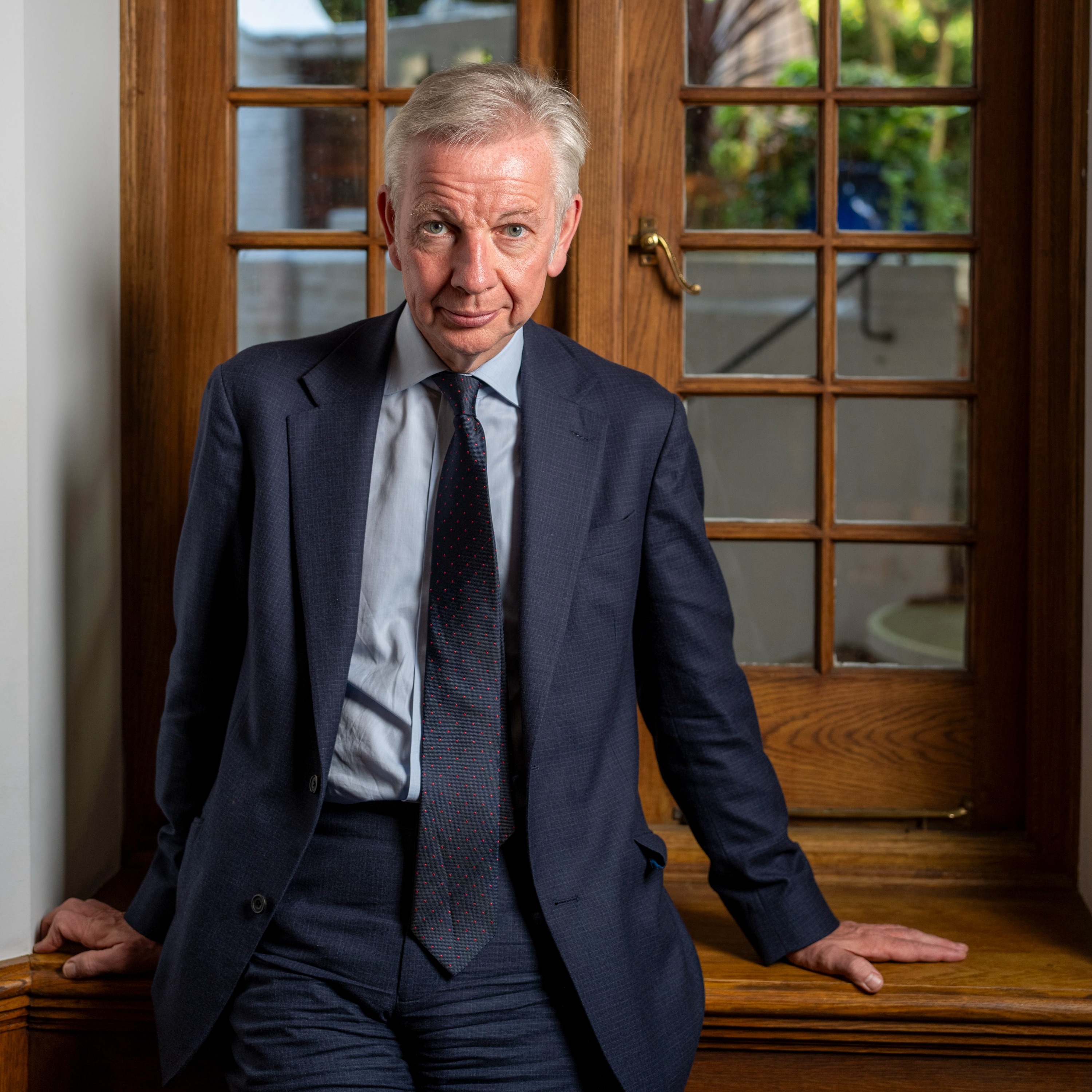
Michael Gove discusses his role in the 2016 Brexit leadership turmoil (“knifing” Boris Johnson), why he withdrew support, and whether Boris could have stayed PM; he then assesses the Reform UK conference and Reform’s credibility on migration and the economy; he also reflects on his education reforms, personal life, and media/political culture.
Lord Michael Gove is editor of The Spectator and a former cabinet minister across many departments. He previously worked in journalism and politics (including with Vote Leave). The host is Tim (from The Telegraph’s Daily Tea studio).
Gove says he didn’t “stab Boris” while PM; he argues Boris became untenable in 2022 due to decisions by Boris, advisers, and the wider parliamentary party. He defends the Vote Leave plan: no premature Article 50 trigger, more EU pressure first, and different Northern Ireland handling. On Reform, he calls the event “gloriously camp” but criticizes inviting figures he deems inappropriate (a vaccine/royal-health conspiracy-linked speaker; Lucy Conley) and says Reform is hazy on deportation timelines and economic policy (e.g., steel, water, taxes). He argues experts were discredited by repeated establishment failures.
Oliver Cromwell tea choice; the “Trojan horse” Birmingham schools scandal; Gove’s GCSE statistic (1% achieving A–C in a Knowsley school); his “confidence speech” vs Corbyn; his time acting in Christopher Lee’s mobile-home caravan for A Feast at Midnight.
Written by AI. May contain mistakes.
Michael Gove shares his thoughts on having tea with Oliver Cromwell.
“And then, while I be mother, Tim will ask you a key and critical question on this podcast.”
Discussion on Boris Johnson's leadership decisions and their consequences.
“we would not have the tube misery that people are experiencing.”
Michael Gove reflects on the Brexit outcomes and strategies.
“So the English Civil War wasn't either Charles I's fault or Pym or Hamden or Cromwell's fault.”
Gove discusses his views on electability and his political ambitions.
“The second thing, though, is, again, very much to Camilla's point, the real difficulties that the Conservatives encountered happened after the 2019 general election.”
Insights from Michael Gove about the recent Reform Conference.
“which are electability, looks, charisma, all the rest of it, I don't have in comparison to lots of other front rank politicians.”
Exploring media mistakes regarding controversial figures and their implications.
“It was very striking in the conversation that I had with Zia Youssef and indeed what Nigel Farage said to you and to others, Camilla, that that is very much in his mind.”
Analyzing the current government's approach to reform and its perceived lack of seriousness.
“in her suit with her cassette, you know, with the over-record bit with some chewing gum on and said, well, you know, Angela's gone, Angela's resigned, I'm singing the song.”
Examining the public's skepticism towards experts and the challenges of leadership in politics.
“But the other area where they are still very hazy, that was absolutely critical, is the big economic picture.”
Discussing the historical and political challenges in addressing Islamist extremism.
“And that feeling that it's not about incremental change for the better, but that what we need is something more convulsive is clearly there.”
Analyzing the Tory party's current challenges and historical context.
“So there are three very powerful things there.”
Exploring the complexities of migration policies and the accountability of political leaders.
“But part of the problem is moving on from when you made the remark, by the time you came out of office, people were classing you and the Tories within that cadre of experts.”
Discussing the dynamics of leadership and strategic choices within the Tory party.
“I think it's fair to say that it wouldn't matter who was leading the Conservatives right now.”
Discussing the challenges facing the Conservative Party and its leadership.
“was ghastly and that she would soon be out and wanted her to be out.”
Analyzing Kemi Badenoch's effectiveness and her approach in Parliament.
“Queensbury rules in Westminster and take the gloves off.”
Michael Gove shares reflections on his time in politics and Parliament.
“as grimmer financial news affects all of us and that is the area where I think the Conservatives of the party undoubtedly with the strongest position.”
Discussing the shift in how speeches and contributions are made in Parliament.
“I remember your confidence speech against Corbyn.”
Exploring Gove's early career, influences, and experiences in film and politics.
“Not all his speeches are good, but he understands the importance of using language to persuade for longer than 20 seconds.”
Gove discusses how his adoption influenced his motivations in politics.
“I went to a school in Scotland, Robert Gordon's College, which was keen on debating.”
Gove addresses educational reforms and the complexities surrounding them.
“Even now, after the changes which I believe made education better, it's still the case that there are too many schools in parts of the country where children don't get the education that they deserve.”
Gove reflects on the intersection of his personal life and political career.
“And nobody ever says, let's bring back secondary moderns.”
Discussing the human elements involved in political decisions and their impact.
“Speaking of Sarah, when she was in the Daily Tea, I mean, obviously it's complicated because marriage and the breakdown of a marriage is.”
Explore the impact of political life on families and personal relationships.
“Nevertheless, I, on a human level, can't help feeling a degree of sympathy for the situation in which she and those close to her find herself in at the moment.”
Discuss why people assume he is gay and the societal perceptions of masculinity.
“It's because he's confessed to being his camp as Christmas.”
Understand the historical perspective and future challenges for the Tory party.
“That could be a little bit lofty and a bit snobby and a bit intellectually superior, if I may say.”

Get the gist, explore an idea or ask about something said.
 Claude
On The Daily T, what are the key points of this episode?
Searching your listeningAutomatic transcript. May contain errors.
0:03Tim Montgomerie: The Telegraph.
0:09Tim Montgomerie: On today's Daily Tea. Lord Michael Gove.
0:13Michael Gove: And I'll be talking about breaking up with Boris, making up to Nigel, and also what I did when I was a young man in my 20s in Christopher Lee's mobile home.
0:33Tim Montgomerie: Michael Gove, the editor of The Spectator, former cabinet minister for practically every government department, actually, joins us in the Daily Tea studio. Lovely to see you.
0:42Michael Gove: It's an absolute pleasure. Lovely to see you, Tim, as well. Would you like a cup of tea? I would love a cup of tea.
0:48Tim Montgomerie: And then, while I be mother, Tim will ask you a key and critical question on this podcast. We're teeing you up. The question we always ask everyone is, if you could have a cup of tea with anyone in history, who would it be? Oliver Cromwell. OK, I felt like you said that too quickly. You've seen this before. You came prepared. Why Oliver Cromwell?
1:10Michael Gove: I think I'd be... In fact, I know that I would be fascinated to hear from one of the most consequential and arguably one of the wickedest figures in British history to talk to someone who had spent the first part of his life as a roisterer, then had become a pious and quiet farmer, as it were, then to go on to become, in effect, one of the most talented generals ever in our history, then to go on to be the person essentially responsible for killing a king, and then to be the first and only Lord Protector of this country, and also to be the person who welcomed the Jewish population back to this country during the Commonwealth.
1:55Michael Gove: I think it would just be, you know, of all the figures in British history, he's probably the most complicated, the most intriguing. And if I could get him to open up, then that would be great. Also, as a proper Puritan, I suspect that he would probably rather have a cup of tea than a glass of beer.
2:13Tim Montgomerie: He'd be absolutely delighted to be on our podcast, wouldn't he? He would, he would. Was his son Lord Protector as well?
2:19Michael Gove: Richard, yes. Tumbledown Dick, briefly. For a couple of weeks. Yes, exactly. And do you admire Oliver Cromwell? No. I'm fascinated by you. Because that would confirm a lot of people's suspicions about you. No, I have no doubt but that had I been alive in the 17th century and had I been an Englishman, which of course I'm not, then I would have been for the king. Oh, that's reassuring. Definitely.
2:42Tim Montgomerie: Although I love your just immediate grasping of that nettle because we were just downstairs and we are coming to the end of a horrific week for commuting in London because of the tube strike. I was moaning to Michael about how difficult it's been to actually get into this studio. And then Michael said the words, bring back Boris. And I thought, well, let's just get straight into this. Let's get into it now. As you brought him up.
3:07Michael Gove: Well, if we had a Tory mayor in London rather than Sadiq Khan, we would not have the tube misery that people are experiencing.
3:16Tim Montgomerie: Right, well, I'm going to raise you with this. If you hadn't stabbed him in the back and the front, we might still have Boris Johnson as Prime Minister right now, Michael Gove, you brute.
3:30Michael Gove: Well, I think it's the case that it's nothing to do with me. I didn't stab Boris anywhere when he was Prime Minister. It was, I think, unfortunately, I said unfortunately the case, that a combination of decisions he made, advice he took, but also the decisions that lots of members of the Parliamentary Party took meant that in 2022, he found himself in an untenable position.
3:57Tim Montgomerie: I know, but let me just explain. I'll show my working.
3:59Michael Gove: Yes.
4:00Tim Montgomerie: My workings as follows. If Boris stood when he should have stood, which was in the immediate aftermath of the referendum result, David Cameron actually showing a complete lack of courage in continuing in office. If he had ran then, which he was going to do before you said, after a very difficult week in which your ex-wife, Sarah Vinas, confessed on this podcast you hadn't had much sleep. You then said, oh, actually, I don't think he'd make a very good prime minister. He then backed out of that race. We then got Theresa May, who absolutely bungled the Brexit negotiations. Boris Johnson would have been much better at handling them.
4:34Tim Montgomerie: And then if we'd got a better Brexit deal, then people wouldn't have felt as sold out by the Tories. And maybe then he would have been emboldened to be a bit more brave and bold with bringing down immigration and tax. And perhaps he'd even have handled Covid better because he would have bedded in for those four years.
4:53Michael Gove: I think that there are lots of conditionals, ifs, maybes and hypotheticals there. I'm one of those people who thinks that Boris was a good prime minister. So I'm not one of the Boris knockers, as it were. But you're right. In the immediate aftermath of the referendum, I've often, often revisted the question as to whether or not it was right for me to withdraw support from Boris. And to this day, I don't know exactly what the right course of action should have been because I don't know how things would have turned up. All I do know is that in the days after the referendum result, when the country needed leadership, Boris, for all his gifts, was just not displaying day by day, hour by hour, the preparedness or the qualities required to become prime minister at that point.
5:50Michael Gove: And I felt that I couldn't recommend to the country at that stage that he should be prime minister. I think it's also the case that in history, there's never a single cause that explains anything, never a single responsible figure. So the English Civil War wasn't either Charles I's fault or Pym or Hamden or Cromwell's fault. And similarly, what happened in 2016 wasn't the direct responsibility either of me, Boris, Theresa or anyone else. It was a confluence of factors. But it was all best avoided, as was the Civil War. And I don't want to rake over old coals too much, but can I just ask, in that leadership election, did either you or Boris genuinely have a plan for getting out of the EU in a well-ordered way, one that wasn't the same as Theresa May's or what she cooked up later on?
6:43Or were you bluffing? Because there was that moment after the referendum when the two of you appeared on telly and a lot of people looked at you and thought, you look shocked. I was in the room that day.
6:52Tim Montgomerie: I was in front of them both. They were like two rabbits in headlights.
6:56Michael Gove: No. I was genuinely regretful that David Cameron had gone as Prime Minister. And as Camilla said, I was one of a number of people who thought that he should have stayed on. But I understand why he felt he had to resign. It was also the case that that morning, Boris himself had been barracked outside his home and we thought that rather than seeming triumphalist, it was important to seem measured. Arguably, we should have struck a slightly different tone. But in terms of the plan, absolutely. And it was laid out. It is there still, archived on the Vote Leave website. We would not have triggered Article 50 prematurely, as I fear Theresa May did.
7:39Michael Gove: We would have put greater pressure on the EU to talk to us and to open negotiations, even if they were informal, before taking that step. We would have ensured that, in particular when it came to Northern Ireland, that we did not accept the EU's proposition that we needed to somehow treat Northern Ireland differently from the rest of the United Kingdom for the sake of the peace process. So there would have been real changes. And here I think Camilla does have, and you have, Tim, a very good point, if it had been Boris or me or someone else who was implementing the vote-leave-agreed approach. And again, we will return to the future, I promise you.
8:21But you might also, had you done all of that, had had a good majority. Because part of the problem was, and it wasn't just Theresa May's strategy, but also that she lost the majority in 2017. Yes. Whereas one suspects Boris, or perhaps yourself, might have commanded a bigger majority or not even had an election. Would you have had an election?
8:41Michael Gove: I don't think we would have had an election at the time that Theresa chose to. The second thing, though, is, again, very much to Camilla's point, the real difficulties that the Conservatives encountered happened after the 2019 general election. So, yes, of course, there were Brexit agonies and the country was put on the rack during those years until the issue was resolved. However, the difficulties that the Conservatives had post-2019, the difficulties with the pandemic, the difficulties with increased migration, and the difficulties with the economic chaos at the time of the mini-budget that Liz and Kwasi had when they were in power, all of those post-dated our exit from the EU.
9:22Michael Gove: And I don't think it can be linked directly to Brexit because they were all choices that were made by people within that Conservative government. And of course, I was in that Conservative government that stored up trouble for us at the polls.
9:34Tim Montgomerie: Final question on it. This is it. I promise.
9:36Michael Gove: Yes.
9:37Tim Montgomerie: Because I mean, I'm not going to tell you anything you don't know already because we've discussed this. But here's my frustration. You at the time thought you would have made a better prime minister than Boris Johnson. And maybe actually you ended up being vindicated in that belief. But actually the perfect scenario, and again, this is something that I did agree with Sarah, not that the women around the table know better than the men here, chaps, but the combination of Boris as the front man who could reach the parts that others couldn't and you as the details man, the kind of cabinet minister that was able to go into departments like education and really shake them up, somebody with huge intellectual rigour and all the rest of it, would have been the perfect partnership.
10:18Tim Montgomerie: Your mistake, if I may say, was that you thought that you were electable as a prime minister. Do you accept that that was actually an error now? And do you have any regrets that you never made it to the top?
10:29Michael Gove: So I think it is undoubtedly the case that many of the things that we consider to be electability, which are electability, looks, charisma, all the rest of it, I don't have in comparison to lots of other front rank politicians. Obviously, I'm now an ex-politician. So that is certainly true. But at that point, my view was not so much that what was needed was or were the gifts of charisma, but the close application and attention to detail of an incumbent prime minister at a time when we needed to navigate our way through the shoals, but also the opportunities of Brexit.
11:06Tim Montgomerie: What did you make of the Reform Conference? We saw you there very briefly on Friday. I mean, Nadine Dorries is obviously a good scout for Nigel Farage. There's now weekend coverage, The Mail on Sunday, with Nadine suggesting that Boris should consider some kind of Tory reform pact. That's not in his gift, though, is it? Well, he in turn, as Tim Montgomery revealed to me on my show on GP News yesterday, has likened the idea of a Tory reform pact to being like a penis enlargement. Sounds like a great idea in theory, but never quite works in practice. Well, let me say, as a potential reform voter, don't knock until you've tried it.
11:41Tim Montgomerie: Michael, we were just trying to analyse it this morning, Tim and I, and Tim's written a brilliant colour piece on the shenanigans that went on.
11:49Michael Gove: I read it. All politics today is like Greta Thunberg. The fringe is everywhere.
11:56Tim Montgomerie: But what did you make of it all?
11:58Michael Gove: Well, firstly, it was gloriously camp. So the Spectator cover last week said that one of the enjoyable things about reform is that at a dreary time in our politics and in our national life and in our economy, that reform is a marvellous sort of carry-on, never mind the knockers, antidote to that. And as everyone has pointed out, Andrea Jenkins coming on in her wonderful glittery catsuit and then premiering Insomniac, which I'm sure is doing very well on Spotify at the moment. I'm an insomniac, I'm an insomniac, Staring at the ceiling When you're about to be done And Jeremy Kyle, Vox popping the members of the audience as though this were an extension of, you know, morning TV.
12:49Michael Gove: I'm going to grab this man straight away. Pete didn't expect this. How are you? I'm fine, thank you very much. What do you think of the state of this country right now? I think it's a complete mess, to be honest with you. Do you know, I feel like Shalyn Janica without the yellow suit. Right, where are we going to go?
13:04Tim Montgomerie: We're going to grab. Oh, let's go for him.
13:06Michael Gove: What's your name, sir? Richard. It's more for my kids and their kids. I mean, we just want to help put the country back on the right path. And the energy is phenomenal. I think that's a really important point. This is Britain. Who are we going to now? I've lost the will to live. Here we is, this lady. I'm going to sit down. Been a while since I sat on a step in a blue suit with a white shirt. Wow. All of that. Nigel, even. turning up in his made-to-measure turquoise or teal reform-colored suit. All of that reinforced the cabinet. The other thing, though, was a greater level of seriousness behind that on the reforms part about the need to not disappoint in government.
13:50Michael Gove: So they are convinced that if trends continue, they could be in power. And one of their worries is not so much the scrutiny that it will face beforehand as the disappointment that will ensue if they get things wrong. It was very striking in the conversation that I had with Zia Youssef and indeed what Nigel Farage said to you and to others, Camilla, that that is very much in his mind. But the third thing is, and again, this is a point that's been made by many others, but certainly me. I think they still made some mistakes, not the Katniss, that's rather glorious, I think. The two mistakes that I think were made were inviting on this chap who made some bizarro link between vaccines and the royal family's health, which I thought was unseemly.
14:35Michael Gove: But also inviting Lucy Conley on, because while Lucy Conley should not have been in jail, she said some horrific and horrible things. And so one should sympathize with the ordeal that a mum who shouldn't have been in jail faced. But please don't make her into a heroine. and I think that was misguided. Yeah, I agree. My theory regarding Andrea Jenkins' song is she told them she was going to do it but they didn't believe her. And then she just showed up on the morning in her suit with her cassette, you know, with the over-record bit with some chewing gum on and said, well, you know, Angela's gone, Angela's resigned, I'm singing the song.
15:11Tim Montgomerie: Yes. And she made them. Maybe that's okay. Maybe it is, but if you're going to be a serious reforming government as they aim to be, when one thinks back to the coalition, Yes. And the people you came in with, David Cameron, George Osborne, you were serious. You'd thought this thing through for several years. The vibe is different with reform, isn't it? There is more of an air of winging it.
15:33Michael Gove: Yes. To be fair, on the area that is of greatest concern to them and their voters on migration, they have done a fair amount of work and they have appreciated that it's not enough to talk about leaving the ECHR. There are a web of other commitments and international obligations that the UK has made. And there are a number of domestic questions, partly to do with the judiciary, partly to do with the operation of the Home Office that require to be addressed. So they've been realistic about that. But even then, there are inconsistencies. So Nigel Farage has moved on the question of whether or not women and children would be deported as well as young men.
16:15Michael Gove: And he's also, I don't want to say prevaricated, but certainly he's been difficult to pin down on the question of how long it would take. So two weeks has been quoted. Yes. But is it two weeks from the moment that he becomes prime minister, if he does, or two weeks from the moment that this very difficult legislation is passed? Now, he might argue that we're at least two years out from an election and there's still time for him to fill it in. But my own view is this is the flagship. Reform needs to be clear, authoritative and credible on that. We can forgive them a certain amount of haziness in one or two other areas.
16:50Michael Gove: But the other area where they are still very hazy, that was absolutely critical, is the big economic picture. Are they really going to nationalise steel? Are they really going to take water companies into public ownership and cut taxes as well? Tough call.
17:05Tim Montgomerie: Well, this is my view on it, and I think this plays into something you once famously said about experts.
17:11Michael Gove: Yes.
17:11Tim Montgomerie: OK. What did you say? What was the actual quote?
17:14Michael Gove: People in this country, I think people in this country have had enough of experts. I actually said particularly from organisations with acronyms that have got things wrong in the past. I was talking about the IMF and the Institute for Fiscal Studies and all of these bodies. Some people might add the WHO. I won't go there. But the broader thing actually about having enough of experts overall, I think I unwittingly articulated something. that you've written about and spoken about, Kamala, as well.
17:45Tim Montgomerie: Well, I think you've mentioned Cameron and Osborne and everybody else and people saw them and they saw them looking very competent and then they reflect on their time in government and they say to themselves things like, well, we've got this Islamic extremism problem in the country now and David Cameron had the opportunity to prescribe the Muslim Brotherhood in 2015 and he didn't. And we had a series of quite kind of, in a way, high tax raising budgets from Osborne, which have ended up in this kind of strange socialist uniparty drift into high tax, tax, tax, tax and spend and more tax and spend.
18:21Tim Montgomerie: You know, he then gets austerity. This word becomes toxified. What it actually means is efficiency. But now no one can cut any spending from any government department without literally being the devil incarnate. And so all these things happen and the good people of reform look at Andrew Jenkins in her spangles and look at Nigel Farage in his turquoise suit and say, well, how much worse can it get? And then you throw in the Labour lot with Angela Rayner avoiding tax and Keir Starmer pretending there isn't a crisis, what crisis when it's exactly as it was in the 1970s and again go, well, Farage, let's give him a go.
18:57Michael Gove: Well, I think your broad point is absolutely correct. And I think it is interesting that there's a guy called Luke Trill who runs an opinion polling company called More in Common. I think he's been on your podcast before. A polling that he did over the weekend showed, A, that reform voters are very close to, in their general views, the mainstream of the British public, and also that the British public is split down the middle. There are slightly more people who think that in order to fix Britain, you just need to use our existing institutions and make them work better. But nearly half of the country think, do you know what?
19:29Michael Gove: Just burn it down. And that feeling that it's not about incremental change for the better, but that what we need is something more convulsive is clearly there. Nigel Farage is benefiting from it. It's also the case that Jeremy Corbyn and Zahra Sultana and this new Green leader, Zach Polanski, are benefiting from it. I think you're broadly right. On the narrow point, let's just touch on Islamist extremism. David Cameron is very clear about the need to tackle it. But as was shown with the situation that I and David dealt with in Birmingham schools, the so-called Trojan horse plot, it is actually the case that it is it's difficult to deal with.
20:08Michael Gove: It's not just a matter of will. It is also the need for care and precision and how you use the tools in government. So I don't think there is any doubt on the basis of not just the conversations I have, but the work that he commissioned that David Cameron was deadly serious about this. I don't think Nigel Farage or anyone in reform is any more keen or indeed better informed about this problem than David Cameron. So they will face some of the same challenges in government dealing with it. Because it's not enough just to will the end. You've got to be able to deliver.
20:42Tim Montgomerie: I mean, I spoke to a former top cop who I won't name a few weeks ago about this. And it was all set to go. And there'd been this report. By the way, I have no criticism of you at all. You showed immense courage in the whole Trojan horse scandal. at a time when if you even mentioned anything about Islamists or extremism, you were branded an Islamophobe and all the rest of it. But I said to this top cop, what happened to that? And he said, well, Cameron just lost interest and went on to other things. And that's people's frustration with politics. It's why people are looking at this recent reshuffle going, what is this bizarre ministerial merry-go-round?
21:15Tim Montgomerie: It lacks seriousness. They've only been in office for a year. Why does the person who was once at home, the Home Office, why are they now an expert in foreign affairs? Why do things kind of go all the way to report level and then nothing gets done? The biggest enemy of the Tories right now is their perceived lack of delivery on a huge number of their promises.
21:33Michael Gove: So there are three very powerful things there. One, I think it was the case that the work that David did on the Muslim Brotherhood in particular still continues to influence thinking when it comes to the right people in the police and in the security service and in government. And it's work that he did that is waiting to be picked up. The second thing is this sort of reshuffle question. I agree with you. It is very difficult for someone to make a difference in any government department if they're only there for just over a year. And then the third thing about the Conservatives and lack of delivery, I would argue, well, I would, wouldn't I, that it is a mixed picture and that there are some areas where delivery was successful.
22:14Michael Gove: the challenges, you know, in Australia, in Canada, political systems similar to ours, most governments have a shelf life of about nine or 10 years. We stretch the elastic to 14. And that's not a way of trying to excuse any of the things that we actually did get wrong, but there was just a natural sense that people wanted a change. And I think, again, the point that Kemi Bainlock was making yesterday is that it takes oppositions or has taken oppositions since the 1970s, quite a long time before they're then back, that nine or ten year period, or longer in government. So I think it is premature to judge the current conservative leadership and while it's understandable, not right to settle them with all of the sins that were committed in the past.
23:05When you made that point about experts a few years ago, The left took that to mean know nothingness, like people saying to a doctor, I know better than you or to an airline pilot, get out of the way, let me have a gift, which would be ridiculous. Actually, the point I inferred was that experts had been discredited because they had made mistakes. And I think that's correct. But part of the problem is moving on from when you made the remark, by the time you came out of office, people were classing you and the Tories within that cadre of experts.
23:36Michael Gove: I think that's absolutely correct. I think you're absolutely spot on. The late Queen, who was right about everything, famously when she was touring the city in the aftermath of the financial crisis, asked, why did nobody see it coming? Yes. And, you know, in the presence of people who were earning galactic level salaries and had four figure IQs. Similarly, and here I'm as at fault as anyone else, all of or many of the super smart people who knew all about foreign affairs were able to make predictions about what was going to happen in the Middle East, which were proven comprehensively wrong. And then there have been other things which have tarnished the establishment from scandals in the Roman Catholic Church, the complete failure of the Church of England to display the spiritual leadership that the country wants to the expenses scandal.
24:20Michael Gove: And of course, the problems that we had during COVID and elsewhere. So absolutely. And that means that even the most insurgent and or anti-establishment person who is in government or is supporting a government for that period is seen as part of the problem and part of the discredited, eat your greens, we know what's best for you. Man in Whitehall knows best, elite, rather than the elected representatives of the people trying their very best. And probably the biggest, in retrospect, it now seems obvious, policy mistake was mass migration. And the Tories own that. They really do own it. So when you say it is unfair to blame the current leadership, fair enough.
25:08But you understand why we all do, because it would be an act of self-disregard. I would have no self-respect if I were to vote for a party to clean up a mess that that party had created. So it might just be that for a generation or so, because the mess was so big, I just can't vote Conservative because I respect myself too much.
25:29Michael Gove: No, I completely understand that. But I would draw an analogy with the 1970s. So Edward Heath and the Conservatives lost in 1974 deservedly because the economy was in difficulty and the key failure was controlling the trade unions. In 1979, the Conservatives were elected on the basis that the economy was in difficulty and we needed someone to control the trade unions, and that was Margaret Thatcher. And Margaret Thatcher's leadership followed on from the fact that she'd served for four years in Ted Heath's government. Kemi Badenoch was a cabinet minister for just about two years, slightly under two years.
26:06Michael Gove: During that time, she was very clear, I know, she gave me a tongue lashing about it, that the older guys in the cabinet didn't appreciate the scale of public anger or the need to act on migration in a different way. So she didn't need any convincing then. She doesn't need any convincing now. And I would argue, I mentioned earlier, reforms, you know, detail now on how to deal with migration. Almost all of that detail, not all, but almost all of that detail has been cribbed from the toys. Now, I'm not saying that's unfair. You know, you've got to be a big boy or a big girl in politics. But what I am saying is that Kemi Beidnok and the people who are currently leading the Conservative Party should not be blamed for the mistakes that were made and were generated in the aftermath of Covid on migration.
26:55Tim Montgomerie: But she should be blamed for the fact that the more she leads the opposition, the less popular she becomes. So we can agree, I think. I think it's fair to say that it wouldn't matter who was leading the Conservatives right now. You'd be having enormous problems.
27:10Michael Gove: Yes, of course. And that's why I think that the logical thing for conservatives to do is not to make their perfect the enemy of the good. I'm sure it's the case that there are conservative MPs who think, well, if only X were leader, if only Y were leader, if only I were leader. Indeed. But actually, I don't think that there's a single policy position that Kemi has outlined that doesn't command the majority of, sorry, doesn't command the support of a majority, actually, of conservative members and potential conservative voters. And again, sad nerd that I am. I was spent part of the summer reading a history of the 70s by this guy, Dominic Sandbrook.
27:50Michael Gove: Brilliant historian, of course, on the rest of history. And Margaret Thatcher, right up until 1978, actually, had to endure all sorts of sniping and criticism from the grandees of the party and people like Whitelaw and Carrington all thought that she was ghastly and that she would soon be out and wanted her to be out. But actually, to be fair to the Conservative Party at the time, it remembered the principle of regimental loyalty. And that meant that when the moment was ripe, they were in a position to win.
28:22Tim Montgomerie: But she has these moments. She missed an open goal on Angela Rayner at PMQs. I mean, frankly, the Telegraph did a better job of being in opposition than the Tories last week. We've got to be honest about that. She's also done this bizarre thing of bringing a degree of kind of non-entity to her shadow cabinet. I mean, you're now a member of the House of Lords.
28:43Michael Gove: Yes.
28:44Tim Montgomerie: She could bring you in as a so-called grey hair. You know, why aren't people like Ian Duncan Smith?
28:49Michael Gove: Quite her.
28:50Tim Montgomerie: Well, it's not meant to be a criticism. It's meant to reflect Michael's experience and wisdom, if I can put it like that. Similarly, there's others with experience and wisdom compared to some of the current shadow cabinet, like IDS, like David Davis and others. I mean, I think she's actually struggled to convince people to come in because they're having such an awful time and they're tanking in the polls. But she was this attack dog we discussed this last week and she's become like a little puppy and she's got a lot of your advisers with her and there are a great many Tories and people that want her to succeed, thinking she's being badly advised, thinking that the comms is wrong and thinking that, frankly, she needs to stop playing Queensbury rules in Westminster and take the gloves off.
29:33Michael Gove: Well, I think she has been effective at Prime Minister's questions far more often than not. I know there was a lot of criticism from political journalists about the approach that she took. But Kemi was on the one o 'clock, six o 'clock and ten o 'clock news criticizing Angela Rayner. A lot of the material, I don't take anything away from the Daily Telegraph's investigative journalism, which has been superb on this story. But a lot of the material which others have followed was generated by the conservative political machine. And also, I think it's a mistake to imagine that Kemi is somehow cowed or passive in the face of advisers.
30:12Michael Gove: I think we all know her and we all know that you don't put Kemi in the corner, that she is fiercely independent minded and she will do what she thinks is right, not what anyone else tells her to. So it's simply the case that, as we touched on earlier, whoever was leading the Tories at the moment would face a difficult struggle. But I think she has been throughout the summer and indeed only yesterday taking the attack to Labour. Angela Reina is a significant scalp. No one was pushing the story in Parliament as energetically as Kemi was. Of course, there was outside media pressure as well. and now I think particularly as we move into the autumn, everyone agrees, and indeed this was Tim's point in his column, the economy will become a bigger and bigger issue as grimmer financial news affects all of us and that is the area where I think the Conservatives of the party undoubtedly with the strongest position.
31:14Okay. Isabel Harman once said that ex-MPs are a very good advert for staying out of politics. Yes. Because they look so much healthier than they did. when they were in Westminster. Yes. You look good. That's very kind. You look very well. Are you happy being out of politics now?
31:32Michael Gove: Do you miss it? Yes. So, of course, still being a member of the House of Lords. Someone said that being in the House of Lords was after the heroin addiction of the Commons. It was a bit like being in rehab with methadone. I'm not entirely sure about that analogy. Do you have a particular moment when you're in the Commons you're very proud of? I remember your confidence speech against Corbyn. That's probably the parliamentary speech of which you're most famous. Yeah, probably the one that, if anyone's going to remember anything, yes. So that was the high point. The low point was way back in 2010 when we cancelled a Labour school building programme, which I think we were right to do, but I did it very ineptly.
32:16Michael Gove: I was torn to pieces by Ed Balls and also by John Bercow, speaker. So there were ups and downs. the thing I think which is a bit of a shame but I must be careful not to become too much of a fogey is these days I think it's something that both of you have observed A, there's a tendency for commons contributions to be designed for social media clips rather than being properly fully constructed pieces of rhetoric or oratory or persuasion And secondly, there's been a rising tide of people who've got ChatGPT or Claude or some AI bot to write their speech, which I think is a shame. And I think going back to one of our earlier points, one of the reasons why Nigel Farage has the hold that he does is that he understands the importance of a good speech.
33:10Michael Gove: Not all his speeches are good, but he understands the importance of using language to persuade for longer than 20 seconds. You've been a columnist, a journalist. You were a movie star. Which movie was this? He played a vicar. Did you play a vicar? I played the school chaplain in A Feast at Midnight. With Christopher Lee. Christopher Lee played the classics master. Robert Hardy who of course more famously played Churchill played the headmaster Sam West, Timothy West's son who's an amazing actor in his own right who's currently playing Siegfried Farnen in All Creatures Great and Small Sam West was the school cook and Brian Kant whom some of us may remember from Play Away was the milkman You must have been just out of university how did you end up It was a friend of mine who was the producer of it And I was not long out of university.
34:08Michael Gove: And I and another friend who played the French master were at a bit of a loose end. And so we play these tiny roles. But it did mean that I spent many hours in Christopher Lee's caravan, a special sort of mobile home designed for the stars, and got to know the... And he was a truly great man. And a Tory. War hero, Tory, Brexiteer, absolutely charming. And I subsequently went to have tea with him on a couple of occasions in the flat that he used to live in in Chelsea. And, you know, he was, again, both a gentleman of the old school and also a brilliant raconteur and whip-smart politically.
34:56Tim Montgomerie: What part of your decision to go into politics was because you quite enjoyed the performance of it all?
35:03Michael Gove: I can't know because I like debating and spent both, particularly at school. I went to a school in Scotland, Robert Gordon's College, which was keen on debating. And there's a particular tradition, it's not exclusive to, but it's stronger, I think, in many Scottish schools in debate. And it's certainly stronger in Scottish universities. And that was something I loved doing. I would have, I think, if I hadn't gone into journalism, I might have gone into law, you know, barrister or an advocate of some kind. So there is that element. But the main motivation is the annoyance that I felt, to put it mildly, at people getting things wrong.
35:46Michael Gove: And that's not to say that I got everything right, but I was frustrated about decisions that were being taken inside the Conservative Party about how to oppose Labour. and then frustrated more powerfully about some of the things that were happening to our country. And that's why I got involved.
36:05Tim Montgomerie: And how much were you influenced by the fact that you were an orphan who was adopted by your beloved parents? I think I remember you once telling me that you felt in some way that you needed to pay your adoptive parents back by doing something meaningful with your life. I mean, was that a thing for you?
36:24Michael Gove: Yes, it's very difficult to analyze oneself honestly. We all tell each other stories about ourselves and deceive ourselves sometimes about our real motivation. But one thing I do feel very powerfully is that I would not have had the opportunities that I have had were it not for my adoptive parents. My dad's now passed away, died a couple of years ago, but my mom is still alive and very well living in Aberdeen. And I owe everything to them. And I do feel a profound sense, certainly did feel a profound sense, that I needed, need to prove to them that they didn't make a mistake in adopting me. To what extent were your academy reforms and your interest in education motivated by that, by desire to help other kids?
37:10Michael Gove: Well, profoundly, because I remember when I first became the shadow education spokesman, looking at the statistics and the performance of schools in England. And there was one school in Knowsley, just north of Liverpool, where only 1 % of children got five A to C passes at GCSE. So one in 100 children in a position to even think about doing A levels. And as the crow flies, the distance from that school to Edinburgh, which is where my birth mother was from, was the same distance as from Edinburgh to Aberdeen, where my adoptive parents lived and my mum lives now. And I thought, you know, a chance in history could have meant that I might have been adopted by a family whose children went to that school.
38:00Michael Gove: And my future would have been very, very different. And I felt that it was is tragic that so much depends on chance and geography. Even now, after the changes which I believe made education better, it's still the case that there are too many schools in parts of the country where children don't get the education that they deserve. And again, as The Telegraph has consistently pointed out, the boys who suffer most, and it is boys who are currently suffering most, are white working class boys. You see, this is part of the mystery of Michael Gove, because on the one hand, one, from a conservative point of view, must and one does celebrate those reforms.
38:42you also, I don't want to say blocked but you did not open new grammars Oh yes Even though they wished to be opened I have to know this because I live in Sevenoaks England where the only grammar that opened under the Tories opened and that itself was an annex It couldn't even be a school by itself We had to pretend it was part of another school and you also were quoted as saying that you thought private schools and private education made society unequal and you hoped that they would become an eccentricity and you even flirted with taxing them, which is now all the rage. As I say, this is the mystery of Michael Gove.
39:17You've done this great conservative thing with the Academy's reform, but there's other parts of your personality that leaves us all thinking, is this man really a conservative?
39:25Michael Gove: There is no one more conservative than me. However, the key thing about grammar schools is their ethos and their approach is wonderful, but the problem is that, by definition, grammar schools can only take 25 or 30 percent of the population in the area that they cover. And nobody ever says, let's bring back secondary moderns. So creating a grammar school ethos in a socially inclusive comprehensive is, I think, absolutely the best of all worlds. Now, some people will scoff and scorn and say, well, you know, that doesn't happen. Well, all I would say is visit Michaela. Visit one of the free schools that was created as a result of our reforms.
40:04Michael Gove: And there you have children of some of the poorest backgrounds in central London who are performing better than in an academically selective grammar school. And then when it comes to independent schools, I went to an independent school from the age of 11 to 18. I didn't get a scholarship until my final years there. So my parents sacrificed a lot in order to send me there. So I admire any parent who does that. But what I wanted to achieve was a situation where parents didn't have to make those financial sacrifices in order to be certain of a good education. And one of the points that's been made, I think, better than I can make it by my ex-wife Sarah is she grew up in Italy.
40:47Michael Gove: And there it is a genuinely eccentric choice to pay for your child to be educated privately because the best state schools are so good.
41:06Tim Montgomerie: Speaking of Sarah, when she was in the Daily Tea, I mean, obviously it's complicated because marriage and the breakdown of a marriage is. Is it right in any way to suggest that Brexit broke your marriage?
41:18Michael Gove: Well, I think it was politics overall that contributed, undoubtedly. So everyone listening will know that relationships are complex. And in the same way, as I said, you can't take a historical event and reduce it to one factor. You can't take something as complicated as a relationship and its ending or the marriage ending and reduce it to one thing. But it is undoubtedly the case. And here Sarah's book lays it out that politics overall, but particularly the intensity of politics around Brexit definitely, definitely did have an effect. and I think I've said before but I'm very happy to say on the podcast that reading Sarah's book is obviously painful for me in a number of ways because of recalling that but it is an amazingly well written and honest account and I think it helps people to understand some of the pressures that politics places on families and even though obviously she made an error it means that even as Angela Rayner, you know, understandably had to resign.
42:32Michael Gove: Nevertheless, I, on a human level, can't help feeling a degree of sympathy for the situation in which she and those close to her find herself in at the moment. Now, I'm sure that most listeners will think, well, you know, it was her stupidity or greed that led to the situation. but I think that you can be angry about the mistakes that politicians make and you can believe that they should perhaps resign but I think a little bit of us should also remember the human and have a degree of sympathy for someone when they've paid a price.
43:01Tim Montgomerie: Also perhaps remember the children involved. You've spoken in the past of the toll that your political life took on your children.
43:08Michael Gove: Yes.
43:08Tim Montgomerie: And what have they said about that to you?
43:13Michael Gove: Well, different things. So, again, my children are both grown up. They're both over the age of 20. The two things can sometimes be different. They will speak for themselves if they want to in due course, I think it's fair to say. But both of them, and this is a tribute to Sarah more than anything else, both of them are very robust and very cheerful souls. And Sarah and I love them very dearly. And I think that they will be, I hope, very successful in whatever they want to do in life. But again, you're quite right. You know, Angela Rayner is a mother. And I don't know what the impact of recent events will have been because also she's had to reveal details of her family life that she ordinarily wouldn't have wanted to or needed to.
44:03Tim Montgomerie: But you now seem to have quite a nice set up. You're still really good friends with Sarah. You've got a girlfriend. I think there's talk that your daughter helps to babysit perhaps your girlfriend's little child. Like, it's kind of all worked out well. You've had a second chance in love. If it's not too personal to ask, I can see him squirming. Tim is squirming. What the hell is your question? No, no, no.
44:27Michael Gove: I think nobody's particularly interested in my private life.
44:32Tim Montgomerie: Well, people who get divorced, to be fair, in their 50s, might want to know that there's life after divorce and you can still get on with your ex.
44:43Michael Gove: The two things I would say are, one, Sarah's book, which is superb and covers many aspects including life in journalism and growing up in Italy and so on, has an overwhelming lesson, which is the impact of political life on those involved in it, and it's fascinating for that reason, and people who wouldn't normally agree like you, Camilla, and Ed Balls, both attest to.
45:05Tim Montgomerie: A massive fan of Esports, as you well know.
45:07Michael Gove: Oh, yes, how good it is. The second thing is that I'm loathe to give anyone advice on anything outside politics. But I think I'm lucky in that Sarah is naturally, as those reading the book will know, generous by nature. And I think the key thing is that, yes, of course, relationships tend and people get divorced, but the important thing is to remember those things that you have in common and to try wherever possible to understand what the other person has gone through and is going through and whatever your own frustrations or anxieties or even anger to try to recognise that someone who loved you enough to marry you is someone that you should still love enough to want the very best for.
45:49Why do you think a lot of people assume you're gay?
45:55Tim Montgomerie: It's because he's confessed to being his camp as Christmas. Yes, I think it's because... They're beautifully dressed and groomed. I don't know about that. As they often are.
46:04Michael Gove: I wouldn't say they're particularly well-groomed. I think it's because, A, gay friends, and B, if you are... So, my speaking style in the House of Commons and the fact, as you know, my brief screen stardom, I think would lead people to think he's a little bit light on his toes. But no, the... I think... I said no one's particularly interested in anyone's private life. But I think that these particular questions have been addressed by Sarah better than I can.
46:35Tim Montgomerie: Well, Sarah said she described you as, quote, a heterosexual man in a gay man's body. There you go. And also, did you see that very funny thing on X where it took all of your old spads and all of the political editors of the world, the Seb Paynes and everyone of this world, and they were like the Govoids.
46:55Michael Gove: I think the meme, I think, caught up with the fact that quite a lot of men in politics tend to have the same side parting and the same specs.
47:03Tim Montgomerie: Yes, that's right. That's true. And the same tailor. Yeah. But I think it's also that if you're interested in politics, you're likely to be drawn to a personality such as yourself because you're good at it, because you're a good speaker and you're a thinker. And so young people, particularly Tories, who want some sort of education in politics are likely to look to someone like you.
47:24Michael Gove: It is certainly the case that, you know, in the same way, funnily enough, I was privileged when I was making the transition from journalism to politics to work for Michael Howard for a bit. If there's someone who's been around and knows what they're about and you happen to admire them in different ways, then you can learn from them. But it's also the case that, you know, quite a lot of people who work for me went on to or have worked for Boris as well. And some of them are just naturally talented people. who was editor of The Spectator, you're now editor of The Spectator. My point is there's a literary side to that kind of Toryism, which you don't find in reform or anything like that.
48:02Tim Montgomerie: No, we find it in that bag that you brought in, which is heavier than the weights that you and I do in the gym. It's got about 15 books in there. Of course it does, yes.
48:11Michael Gove: Yeah, well, I was going to say, yes, I suppose this is the test for reform. If they have a bookshop at their conference... Yeah, good point. ..then we all know they're serious about that.
48:21Tim Montgomerie: That could be a little bit lofty and a bit snobby and a bit intellectually superior, if I may say.
48:26Michael Gove: No, I think the key test, there are exceptions to this, the key thing that unites successful people, I mean, obviously there are some unsuccessful people to whom this applies, is reading. So Nigel Farage himself is a voracious reader. Is that true? Particularly of military history, but not exclusively. But almost everyone that you can think of, whether they're people in the tech world, whether they're people in business, whether they're in politics, whether they're people in the arts, is they're always, if they have a moment, reading. And so that is why Bill Gates, Barack Obama, some of us might think that they're, you know, not great role models, but they're certainly, you can't say they're successful people.
49:09Michael Gove: You know, their advice to young people is to read, read widely, read voraciously. And certainly for anyone who's considering a career in the media, whether it's writing or broadcasting, I would say read. Read Orwell. Read Christopher Hitchens. Read Tim Stanley. Read Tim Stanley and Camilla Tominey.
49:31Tim Montgomerie: I'm working on a cosy murder mystery. Can I ask you a series of yes, no questions? Because I know you're a phenomenal media operator that never prevaricates, never does the politician's thing of answering a question with another question. because we had so much to ask you and I feel we're running out of time. So you can have a few maybes if you like, but yes, no's would be preferable. Michael Gove, will you ever run as an MP again?
49:53Michael Gove: No. Oh, I wasn't expecting that.
49:57Tim Montgomerie: Are you still in touch with David Cameron?
50:00Michael Gove: Yes.
50:01Tim Montgomerie: Oh, OK. That surprises me because Sarah Vine said she wasn't in touch with the Camerons at all.
50:07Michael Gove: The last time I saw David was at a social event a few months ago when we were celebrating a shared friend's birthday. And I've seen him on a number of other occasions.
50:20Tim Montgomerie: OK. Are you regularly in touch with Boris Johnson?
50:24Michael Gove: No.
50:25Tim Montgomerie: Are you sometimes in touch with Boris Johnson?
50:28Michael Gove: Yes.
50:29Tim Montgomerie: Are you back friends with Boris Johnson?
50:32Michael Gove: He'd have to answer that question. But we were both in Greece at the same time this summer and almost managed to have lunch.
50:40Tim Montgomerie: Did you ask Sarah Vine to take anything out of that book?
50:44Michael Gove: No.
50:45Tim Montgomerie: Should we leave the ECHR?
50:47Michael Gove: Yes.
50:48Tim Montgomerie: Do you back Labour's VAT on school fees policy?
50:51Michael Gove: No.
50:52Tim Montgomerie: Do you think Boris Johnson will return to politics?
50:56Michael Gove: No, I don't think he will. I think it's been, I mean, one mustn't over-interpret small things, but in a way, some of Boris's, I mean, he's got lots of supporters, but some of his supporters who've been strongly identified with him in politics, people like Jake Berry and Adin, having gone to reform, I think that makes it more difficult. But of course, with Boris, you can never say never.
51:14Tim Montgomerie: Are the Tories dead?
51:16Michael Gove: No. Do you think they are going to come fourth in the next general election? Absolutely not. Can I ask, and this is more a question of two or three sentences, what is it that makes the Tory party something that should survive? What is the historical necessity of the Tory party? There's no historical necessity for any political organization. There's a historical necessity for Parliament and for the monarchy, for the rule of law and for our balanced constitution. But the party that best understand and embodies that appreciation of how to meld the institutions that we inherit with the challenges of the future, the party that best has an instinctive love of our traditions, our countryside, our way of life, and at the same time appreciates the importance of economic innovation and enterprise and the Promethean spirit.
52:18Michael Gove: The party that is both the party of chin-stroking skepticism about change, but preparedness to be radical when it's required, is the Tory party. Now, it's been an eclipse before. There was no effective Tory party from 1714 until Pitt the Younger. There was no effective Tory party from 1832 until Disraeli became a prime minister with a majority in 1874. I would hope the Tory party will not take more than 40 years to get back into power. Yes. But there is something about the British and the English spirit that the Tory party bullies. And it's striking, even at the Reform Conference, there were people who were members of Reform and voting Reform who still referred to the Conservative Party or the Tories as we.
53:16Because it's a fractured family.
53:18Michael Gove: Yes.
53:19Tim Montgomerie: We must give your new podcast a light dusting of publicity. Thank you. We're not going to go mad on this, but because we like you and because we like your co-host, Madeline Grant, previously of this parish, a very good friend of both Tim and I. We'd quite like to have her back.
53:33Michael Gove: Yes. You poached her from the Telegraph.
53:37Tim Montgomerie: How dare you?
53:37Michael Gove: Well, I think the relationship between the Telegraph and the Spectator is not competition like that between Tories and reform. We're part of an extended family. And so the Daily Tea and our new podcast, Quite Right, with Madeleine Grant, are, I think, kissing cousins, as it were. And I think if you like the Daily Tea, you'll like Quite Right. And of course, what you do on the Daily Tea is on the money every day and newsy quite right deliberately attempts to take one step back and look at politics and culture in the round. And I think Telegraph readers who've loved Madeline's columns and sketches will enjoy them in the spectator.
54:20Michael Gove: And the one thing I would say to anyone listening is that a combined spectator and Daily Telegraph subscription is probably the best investment you can make if you want to stay informed and entertained.
54:31Tim Montgomerie: Amen to that. How do you find podcasting?
54:34Michael Gove: I'm learning from both of you. Yes. I don't think we're the best teachers.
54:40Tim Montgomerie: We'll try our best and we will be listening. Michael Gove, Lord Gove. That took me by surprise. I know, we forget these things. Kept that quiet. Lord Gove. please Michael thank you very much indeed for joining us on the Daily Tea and answering some of our frankly rude questions thank you very much
54:58Michael Gove: not at all
55:19you
He held almost every Cabinet position during his two decades as an MP, perhaps most notably as a reformist education secretary. He also had a very public falling out with his old pals David Cameron and Boris Johnson.
Now Michael Gove has returned to his roots as a journalist, taking on the editorship of The Spectator and launching a new podcast, Quite Right.
Lord Gove talks to Camilla and Tim about why he broke up with Boris, where Reform are going wrong, how politics impacted his family life, and his adoptive parents.
Producers: Lilian Fawcett and Georgia Coan
Senior Producer: John Cadigan
Planning Editor: Venetia Rainey
Video Editor: Will Walters
Studio Director: Meghan Searle
Social Producer: Charlotte Hocquet
Executive Producer: Charlotte Seligman
Hosted on Acast. See acast.com/privacy for more information.


