Ask ChatGPT


 The Daily T
13 Sep 2026 · 47m · 24 chapters
Michael Gove argues that England’s education reforms (2010–2014) improved PISA results by making schools more “knowledge-rich,” giving headteachers autonomy with accountability, and emphasizing foundational learning (reading, times tables, grammar) plus regular testing (e.g., SATs). He claims “woke” ideology, weaker accountability, and “lazy” unions in Scotland/Wales and parts of the UK drove declines. He also argues smartphones/AI can atrophy thinking if they replace mental effort, and supports restrictions on phones/social media in schools.
Michael Gove is former UK Education Secretary (2010–2014) and now editor of The Spectator. Hosts are Camilla Tominy and Tim Stanley (The Daily Tea).
creativity requires knowledge stored in working memory; testing is a health-check and motivation; Scotland’s Curriculum for Excellence removed knowledge and league tables/inspection and worsened classroom behavior; some universities offer “junk degrees” and exploit overseas students.
Michaela School; Mossbourne Community Academy; PISA reading/math/science comparisons (England top-10; Scotland/Wales down); SATs at end of primary; Jason Arday/Cambridge “wokery” reference; “Rewilding Education” by Hillary Kremen.
Written by AI. May contain mistakes.
Exploration of the differences in educational outcomes across the UK.
“launch projects faster, and scale support up or down without committing to full-time headcount.”
Exploration of the differences in educational outcomes across the UK.
“Chips, introducing children to knowledge the best that's been thought and written.”
Michael Gove discusses his reforms and their impact on English education.
“Because I think we can all agree that government usually screws things up.”
Debate on teaching philosophies: knowledge acquisition vs. self-directed learning.
“It was not in the prior condition that Labour claimed it was after 13 years in power.”
Discussion on technology's role and its implications for learning and information retention.
“So correct me if I'm wrong, there were kind of two models of understanding how children learn.”
Michael Gove speaks on the value of learning languages and critical thinking in education.
“I find it so interesting because this all coincided with a transformation in technology, which also fed into the debate about the right way to educate kids.”
Discussion on the need for an education system focused on children's opportunities and the role of teachers.
“And presumably they were on the kind of, you know, corduroy jacketed, guide on the side view of things.”
Exploration of the role and benefits of testing in the education system, including addressing opposition.
“But what they want to do is to suggest that we were squeezing that joy out of education.”
Discussion about balancing curriculum breadth with the need for testing and ensuring comprehensive education.
“The best schools recognize that the best way of passing those tests is by cultivating all of a child's capabilities.”
Analysis of how technology, including smartphones and AI, affects children's learning and cognitive abilities.
“And if you think about it this way, I've noticed I'm a very good person with directions and map reading.”
Comparison of education results in England with other countries, highlighting unique challenges and achievements.
“But in the last few years, we seem to have been becoming dumb and dumber in the West.”
Comparison of education results in England with other countries, highlighting unique challenges and achievements.
“AI-powered shortlisting delivers a curated shortlist of top freelancers matched to your goals in under six hours.”
Discussion about the socioeconomic dynamics affecting education and the experiences of individuals from different backgrounds.
“Now, I have a friend called Daisy Christouli, who's a brilliant teacher.”
Explore how digital distractions can negatively affect mental capacity.
“And you may remember there was a Disney movie some while back, Wall-E, which was all about humanity essentially becoming bloated and useless because we'd forgotten how to, in every sense of the word, exercise.”
Discussion about the socioeconomic dynamics affecting education and the experiences of individuals from different backgrounds.
“Can I ask something about the sort of socioeconomics of all this, the demographics of it?”
Examine the divide in educational success among students from different backgrounds.
“So the potential for many more children to have the choice of going to university is true.”
Investigate the influence of political correctness in universities.
“I just want to add, he worked in the education department.”
Consider what changes need to occur for university admissions to improve.
“So our universities have been denigrated.”
Analyze the educational reforms in Scotland and their negative impact.
“was wrong to talk about 50 percent because I'd like us to be more ambitious as a country.”
Critique the effectiveness of Scotland's Curriculum for Excellence.
“And they threw away those advantages in order to be faddish.”
Discuss the over-reliance on technology and its impact on learning.
“So the older two did this thing where they got out these sheets with times tables on.”
Explore the balance between technology use and traditional teaching methods.
“There's internal memos saying don't give them.”
Learn about the importance of challenging children in education rather than catering to low expectations.
“And English schools have been doing that.”
Discuss the implications of current education policies and leadership changes in the UK.
“because all of the working class kids done good in Labour government, the Rachel Reeves, the Ellie Reeves, her sister, the Bridget Phillips and all the rest of it, it's very clear.”

Get the gist, explore an idea or ask about something said.
 Claude
On The Daily T, what are the key points of this episode?
Searching your listeningAutomatic transcript. May contain errors.
0:02The Telegraph.
0:30launch projects faster, and scale support up or down without committing to full-time headcount. With Business Plus, you can access the top 1 % of talent on Upwork. AI-powered shortlisting delivers a curated shortlist of top freelancers matched to your goals in under six hours. No endless searching required. Thousands of growing businesses already trust Upwork to hire highly skilled freelance professionals for everything from one-off projects to ongoing support. It's free to sign up, and posting a job is easy. Visit Upwork.com right now and post your job for free. That is Upwork.com to connect with top talent ready to help your business grow.
1:05That's U-P-W-O-R-K dot com. Upwork.com. Hello, hello. This is Brooke DeVard, host of the Naked Beauty Podcast. I want to talk to you about Lexus. At Lexus, master craftsmen called Takumi are involved not just in physical craftsmanship, but in all of those sensory details. These masters evaluate things like how a door closes, the click of a switch, the acoustic feedback of controls. Instead of just instruments, Takumi craftsmen rely on human perception and intuition to create what sounds and feels right. Out of all of the tools that Lexus uses, the most powerful one is understanding what will make us feel something.
1:45Because a car that doesn't make you feel something is a car that stops short of amazing. Experience amazing at your Lexus dealer.
1:55Tory England has soared ahead in education, but socialist Wales and Scotland, along with much of the West, has been in steady decline. What did England get right and the rest of the UK get wrong? Former Education Secretary Michael Gove joins us to explain how woke ideas and lazy trade unions have conspired to hurt an entire generation. Welcome to The Daily Tea with me, Camilla Tominy. And me, Tim Stanley.
2:19Michael Gove: The teacher is either the sage on the stage or the guide by the side. The sage on the stage was basically Mr. or Ms. Chips, introducing children to knowledge the best that's been thought and written. The guide by the side is the teacher as encouraging slightly older brother or sister, while children themselves use their natural curiosity to explore and learn. Actually, if you want people to be genuinely creative, you have to start by teaching them knowledge and by allowing that knowledge to be absorbed. We're delighted to be joined today by Michael Gove, who is now the editor of The Spectator, but also was formerly education secretary from 2010 to 2014.
3:04And this was my idea. I wanted to do this because we saw the PISA results this week and they showed something fascinating. This is the Programme for International Student Assessment, which tests teens globally on how they're doing in problem solving, in thinking critically, and their ability to communicate. Around 750 ,000 15-year-olds are tested in 91 countries. And it's a way of ranking our country's performance in relation to other nations, and therefore judging how well we're doing by our own kids. Because I think we can all agree that government usually screws things up. But there's one thing it must take responsibility for and do well, it's educating children.
3:47And what the latest results showed is something unexpected and really interesting. We talk Britain down, but actually England's doing really well on education. And it has nudged its way into the top 10. So English schools have climbed to ninth globally for reading, for 10th in mathematics, and eighth in science. But at the same time, Michael, Scotland and Wales have continued to decline. For example, English students registered a mean reading mark of 497, which is above Scotland's 488 and way ahead of Wales' 459. Now, one possible explanation for this is we are a devolved country. The regions decide how their kids are educated.
4:40England, under your leadership in the early 2010s, began an experiment in education, which we're going to discuss today, which the other regions chose not to follow. So what we want to analyse here is what were the effects, what were your reforms? What were the effects of your reforms? How are they doing? Why didn't Scotland and Wales do them? What did they do instead? And is Labour in danger of ruining the one thing we're doing really well at? So if I could just begin by asking, when you entered government in 2010 as part of the coalition, what back then was the state of English education?
5:19Michael Gove: It was not in the prior condition that Labour claimed it was after 13 years in power. There were signs of improvement, but they weren't nearly strong enough. Tony Blair had recognized that unless you improved state education, then not only would the country be less socially just, it would be less economically competitive. And unless you improved state education, then an increasing number of people would opt out. I agreed with that analysis and I also agreed with some of the steps that he put in. But I felt that they needed to be supercharged. And what he had sought to do was actually to learn from some of the lessons, to be fair, that previous conservative education ministers, particularly Ken Clark, had initiated.
6:10Michael Gove: Ken Baker also. You don't have to be called Kenneth in order to have good ideas in education. But in the past, it helped. The principles were these. Firstly, that you should give head teachers a great degree of autonomy and flexibility. but at the same time, it should be alongside proper accountability, league tables, inspection from Ofsted. And you should also have a curriculum and exams that were ambitious. You should hope that more children could achieve to a higher level than had been the case in previous generations. And what we sought to do between 2010 and 2014 was to expand what Tony Blair had created through the academy network.
6:52Michael Gove: When we came in, there were a couple of hundred schools that were academies, essentially independent schools within the state sector. And we increased that. So by the time we left, a majority of secondary schools and nearly half of primary schools were academies. We also established new schools, which could be pioneers and exemplars, free schools. And it's now the case that some of the very best schools in the country didn't exist a decade ago. Schools like Catherine Burble Singh's school, Michaela, the best in the country. And we also made sure that the national curriculum, which is the sort of spying which governs what the majority of children learn in school, was more knowledge rich.
7:34Michael Gove: One of the things about the world of education is that there are lots of fashionable theories about how children learn and what they should do in schools. What we did was to go back to the evidence about what works best, apply that, and you can see, as you pointed out, the results in the league tables that show England improving strikingly, so in comparison to Wales and to Scotland, where they decided to go in decisively the opposite path to the one that we were taking in England. Let's just focus in on that, because it might help people to understand what some teachers think about education and why it's gone so wrong.
8:15So correct me if I'm wrong, there were kind of two models of understanding how children learn. One is you teach kids stuff and say you need to know these facts and figures, these basic things. The other is that you give children skills and they basically teach themselves. Is that a fair description of the debate? It is.
8:35Michael Gove: So there are broadly, as you characterize them very fairly, two sort of philosophies. And there is a sort of terrible cliche that's used in education speak, which is the teacher is either the sage on the stage or the guide by the side. And the sage on the stage used to be the unfashionable view. The sage on the stage was basically Mr. or Ms. Chips sharing their knowledge, their expertise, exercising their adult authority, introducing children to knowledge, the best that's been thought and written. The guide by the side is the teacher as encouraging slightly older brother or sister, while children themselves use their natural curiosity to explore and learn and to work in groups learning from each other.
9:31Michael Gove: The second method sounds lovely and it has its roots actually in philosophers like Rousseau who believed that it was through play and creativity that children would learn. Experience shows and the evidence that you mentioned earlier shows that actually, if you want people to be genuinely creative, you have to start by teaching them knowledge and by allowing that knowledge to be absorbed. So if you want to be a brilliant musician, then you practice your skills. If you want to be an accomplished athlete or footballer, then it will be hours and hours of practice, allied, of course, to natural skill, that will take you to the very top.
10:18Michael Gove: And in the same way, if you want people who can, in a world of AI, navigate an increasingly complex working environment, then you want people who've already got that knowledge because it's there. It's in their working memory that allows them to be creative. And sorry, I'll let you know. No, no, no. I'm fascinated by this. I'm so passionate about this. I find it so interesting because this all coincided with a transformation in technology, which also fed into the debate about the right way to educate kids. Because at the roundabout the time you came into office, the smartphone lands. And the argument of the progressives is, well, we're heading into a world in which kids don't need to retain information.
11:01They just need to know how to research and access information. Because in the future, the whole world is going to be there on the smartphone. So it's a waste of time, reductive, didactic, old fashioned, to teach them stuff that they'll be able to access, just given the skills to know how to navigate the new online world.
11:20Michael Gove: Yes. And even though it's new technology, it's an old argument. In America, 100 years ago, people like Dewey, who was an American educational theorist, took the view that with books being published everywhere, you didn't need to retain information in your head. It was always going to be there. It's a fallacy and a misunderstanding of how the brain works, how creativity works, and how we make new discoveries and how we master the world around us. Because if you store things in your own working memory, then you're better able both to reach for the right book in the library, to ask the right question of chat GBT, to make those connections, to be genuinely capable of dealing with the world around you.
12:03Michael Gove: If you don't know stuff to begin with, then a comparison between Romanesque and classical architecture is meaningless to you. It's just burbling. If you do know that, then you can use technology, you can use books, you can use others in order to develop your thinking in whatever area. Similarly, if you are already numerate, if you're comfortable with using numbers, then the flickering Bloomberg screen in front of you is something that you can study in a second and react to in a millisecond. But if you're adrift, if it's not the case that your brain has already absorbed how to use numbers, then it doesn't matter how quick the computer screen in front of you is in responding, you will be completely adrift.
12:50Michael Gove: There's another element as well. Even as we know more about technology, we know more about how the brain works. And basically, the synapses, the bits inside our brain, flash and strengthen the more information there is and the more different types of things that you learn. So, for example, one of the things that is often neglected these days, partly because of technology and partly because of the global use of English, is learning a foreign language in our schools. But actually, there are different parts of the brain that are strengthened by learning a foreign language. And the suite of skills that you get if you study a foreign language, a humanities subject like history or geography that means that you're thinking critically, as well as science and literacy overall and numeracy.
13:39Michael Gove: Put all these together and you're giving your brain the workout that a personal trainer will give your body when they put you through that combination of Pilates, cardio and weights that makes Camilla look so good. That's kind of you. Let's go back to basics here then, because you became a betenoir of the left for some of these reforms. And presumably they were on the kind of, you know, corduroy jacketed, guide on the side view of things. What did you say about the three R's? What were you trying to say back then? My point was that we needed to have an education system that was built around children.
14:24Michael Gove: So there's a famous comment from an American teaching union leader when she said, when children start paying union dues, then I'll listen to children. No, it was never said by any teaching union leader in the UK. And I don't think it would really have been thought by them. But what I wanted to do was to say, we need to do it the other way around. Everyone involved in education should be thinking, how do we get the most out of children and provide them with opportunities? And I wanted to work with teachers. And in fact, during the time that I was education secretary, there were a growing number of teachers who took to Twitter or who were writing blogs and sub stacks or who were getting in touch with me and with others to explain how determined they were actually to raise the level of ambition.
15:14Michael Gove: But the teaching unions saw what we were doing as an attack on the sort of model and relationship that they'd had in the past, which was one where there wasn't searching accountability for how well children were doing. They could blame poor performance on children's poverty and say, what can you do with these kids and write children off? Folk on the left basically abandoning working class and poorer children. and I wanted to challenge them. Yes. And for some of them, that was deeply uncomfortable and that's why they reacted so badly. And they also mischaracterised what you were doing as some kind of return to learning by rote and that you wanted to basically take us back to the Dark Ages.
16:00Michael Gove: Yeah, I think that learning by rote is one of those phrases which sounds horrific. Yes. But there are two aspects to it. The first thing is you do need... If you're going to go on to become a gifted mathematician or even just numerate in the modern world, you do need to have your times tables. You do need to be able to do some mental arithmetic like that. Similarly, if you're going to read fluently, then you need to be able in the first instance to match letters to sounds and then understand how words come together and then have some understanding of grammar. Now, good teachers can make that enjoyable, but it does involve work.
16:40Michael Gove: But once you've done that, once you've learned to read, you can then read to learn. Once you're fluent with numbers, then you can do all sorts of creative things. So committing things to memory, they called learning by rote, but it's really laying down the foundations for future excellence. But what they want to do is to suggest that we were squeezing that joy out of education. And again, it might be fun if you're a six or seven year old to play with bricks rather than to learn your timetable. But it is no fun when you're a 16 or 17 or an 18 year old and you find yourself neat because you're innumerate.
17:19Michael Gove: And children are being betrayed and parents are being lied to if they're told that you can prosper without doing some of that hard work early on. And where did the row over SATs come into it? That's the test that the children take at the end of year six. There was a big, and there still is, big opposition to lots of people in the education world to testing at all. There's an argument that it causes stress and mental ill health. Actually, it is only through having regular testing that you can make sure that people have absorbed information and they're ready to go on to the next level. It's in human nature to enjoy and appreciate a test which is stretching but manageable.
18:05Michael Gove: So yes, it can be disorientating if you're being asked to do a task that is beyond your ability. But there's a sense of achievement and purpose and fulfillment if you know that you've mastered something and you can then move on to the next stage. That is part of human life overall. So testing is both a way of making sure that children have learnt. It's giving them a sense of satisfaction. It's helping them on to the next stage. But critically also, the SATS tests at the end of primary school let us know how well schools are doing. Yes. And it means that we can then look at those schools that are doing superbly and we can say, let's emulate them.
18:44Michael Gove: Let's check to see what the teachers are doing there. Let's make the teachers the stars and the heroes for what they've done. And it also means when schools are underperforming, we can say, look, we can help. and in that sense it is the same as a health check that any of us might want to have from time to time but some in the teaching unions hated it not just because of ideology but also because if poor schools were exposed or schools that weren't doing well were exposed they took it as an implicit criticism of the teachers there and rather than thinking how can we help them to do better they thought let's cover up because these are our paying members and we don't want them to feel uncomfortable.
19:24And what about the counter-argument that the Tory reforms encourage people to teach to the test and that the good results we have today are perhaps actually a reflection of schools becoming cannier at jumping the hurdles that you've put in front of kids rather than necessarily developing the whole child?
19:42Michael Gove: Well, I think the first thing is that tests are increasingly well designed in order to ensure that people have the mastery of the knowledge and the capacity to demonstrate their learning and their skillfulness to move on to the next stage. The second thing actually is that the best schools don't teach to the test. The best schools recognize that the best way of passing those tests is by cultivating all of a child's capabilities. So when people say, oh, X school is an exam factory, I say visit it. So if you visit Michaela School or if you visit one of the pre-existing extant academy schools like Mossborn Community Academy, which Tony Blair set up, what you don't find is a school that is drilling children only for the test.
20:28Michael Gove: You find a school where poetry is celebrated, where you will have string quartets and choirs, where you will have children who will be enthusiastic and supported in their hobbies. You'll find a school where the teacher will want to share what it is that they're reading for pleasure with the children there. So I absolutely understand why people would be concerned about any narrowing of the curriculum. But the critical thing is that it's only by making sure that we have testing along the way, that we can be confident that each step that a child takes is built on a solid foundation. And it's also the case that the best way of getting children to pass those tests is by making sure that you have an educational environment in which every part of their brain and every part of their soul is appealed to.
21:18Now, this makes perfect sense to the average person, what you're saying. And if you think about it this way, I've noticed I'm a very good person with directions and map reading. But I've noticed that since the invention of the sat-nav or just using my phone, not only, okay, I'm directed somewhere because I just type in the name and I get to go there, but I can tell the muscle in my brain has atrophied because when the phone switches off or something, I can't remember the right way to go. All of my Neanderthal skills have been lost because I've not been exercising the brain. And the impact of the smartphone and in the last few years, AI, some people say accounts in part for a dramatic fall off in European scores on PISA, particularly in countries like France and Spain.
22:06The pattern is everyone's roughly around the same level around 2010. Everyone begins to decline. There are some weird bumps because of COVID, but then there's a radical falling off in some countries. What Britain does is it returns somehow to the level it was at in about 2010. So in other words, Britain's doing well comparatively. I agree. But we've all been affected by changes in technology. But what AI is doing, say the experts, is it is removing the last vestiges of a kid having to think and work for themselves. They can now just say, if you think about it, great expectations. when I was studying it.
22:42If I wanted to do an exam on it, I had to read the wretched thing from beginning to end. Now I can go online and just type in what happens in Great Expectations. So you're teaching kids resilience, discipline, how to gather and retain knowledge. There's an even stronger case for that 16 years later than when you began.
23:05Michael Gove: Totally. And I think you're absolutely right. And I think it's been an underreported thing, except, of course, on the pages of the Daily Telegraph, that while the PISA results are great for England, it's against a backdrop globally, particularly in the West, of scores falling overall. Throughout most of recorded history, people have been getting more intelligent. But in the last few years, we seem to have been becoming dumb and dumber in the West. And it is striking, again, as you point out, that England's in the top 10, but there's only one other European country in the top 10. Estonia? Estonia.
23:42What the hell's going on in Estonia? What are they eating there?
23:45Michael Gove: It's a unique and wonderful place, Estonia. We might come back to it in a future daily. They insulated themselves well from COVID because as an Estonian politician told me in Portcullis House, because they're constantly worried about a Russian invasion, they batten down the hatches and are extremely self-sufficient and they've got a huge amount of national pride and they invest a great deal in education in that country. But my view is that the countries from which you can learn most in all forms of public policy are the countries that face a direct threat or a crisis every day. Exactly. Because it means that they can't indulge in luxury beliefs.
24:22Michael Gove: No. So you might or might not be a fan of this Israeli government. But in Israel, they have to be creative because they face it. Taiwan, Singapore. Taiwan, Singapore. Exactly. The East Asian countries on the edge of communism. Precisely. Precisely. And Estonia is in that position.
25:07Thank you. With Business Plus, you can access the top 1 % of talent on Upwork. AI-powered shortlisting delivers a curated shortlist of top freelancers matched to your goals in under six hours. No endless searching required. Thousands of growing businesses already trust Upwork to hire highly skilled freelance professionals for everything from one-off projects to ongoing support. It's free to sign up, and posting a job is easy. Visit Upwork.com right now and post your job for free. That is Upwork.com to connect with top talent ready to help your business grow. That's U-P-W-O-R-K.com. Upwork.com.
25:45Michael Gove: Pessimism. It's never going to improve a disconnected healthcare system. Next. So what will? At Optum, we're working every day to connect primary, specialty, and pharmacy care, and help lower prescription costs. Will we fix it all overnight? No. But we'll wake up trying again and again until healthcare works as one for everyone. That's healthy optimism. Learn more at Optum.com. Optum. This message is brought to you by today's sponsor, Walden University. Set a course for change. Now is the time to make a real change in your life, career, and community. At Walden University, we give you the support and flexibility to get the W.
26:29you. Walden's online programs are designed for working professionals like you. You'll gain hands-on skills to take on real-world challenges and succeed. Your future is waiting and Walden is here to help you achieve it. Take the first step to make your impact. Visit waldenu.edu. Walden University. Set a course for change. Certified to operate by Shev.
26:58the broader point about ai and uh um uh smartphones i think is correct again uh someone that you've
27:06Michael Gove: featured in the past jonathan height um has made the point that um as children lead lives increasingly online so there are all sorts of dangers to mental health and to uh curiosity and the capacity to grow intellectually and also physically. Now, I have a friend called Daisy Christouli, who's a brilliant teacher. She makes the point that technically speaking, none of us need to run anymore. We can go anywhere we want, by car, public transport, all the rest of it. And yet, hundreds of thousands of us will be out at a park run or jogging or doing something similar. Why? It's absurd. You know, why are we putting our body through that strain?
27:48Michael Gove: Because only by doing so in certain circumstances or doing some other form of exercise can we stay physically fit. And it's the same with smartphones and AI. If we allow smartphones, if we allow AI, if we allow the digital world to substitute for all of the activities that we used to do mentally, then our minds will atrophy. And you may remember there was a Disney movie some while back, Wall-E, which was all about humanity essentially becoming bloated and useless because we'd forgotten how to, in every sense of the word, exercise. And what is true for the body is true for the mind. Can I ask something about the sort of socioeconomics of all this, the demographics of it?
28:40you were two state school boys done good because you were naturally bright and you embraced... My father would disagree, but carry on. You embraced academia and you ended up at Oxbridge, both of you. And you could have gone in a different direction. And we've discussed this a lot in the past. I suppose there must have been a bit of a contradiction at the heart of the left-wing project when Tony Blair said that half of all children should go to university. because how do you actually achieve that? You either make the children cleverer so that 50 % of them are able to do it or you dumb down and ensure that 50 % are able to do it.
29:16And I asked that question because I had such a sort of visceral reminder of how school can go both ways. When my son picked up his GCSE results in the summer, my girls are privately educated and my son is state educated for various different reasons, but we just picked the schools we thought suited them best. and I'm proud and pleased to say that although he's not the most academic child, my son got enough points to get into sixth form and off he is and he's loving A-levels. But then out of his cohort of friends, a great many of them didn't make the grade and a great many of them are going off to college.
29:53And of course, I and him and everyone that knows them wishes them well. But I still feel that we have this divide in this country as we did back when my parents were educated and maybe I'm the product of them both passing their 11 plus. And we still have that divide. And how can that bridge, how can that gap ever be bridged, Michael?
30:13Michael Gove: Well, I think there is so much there. The first thing is we know from the very best state schools that they can take children from very disadvantaged backgrounds and more than half of the children being educated in those schools can go on not just to university, but to the top universities. So the potential for many more children to have the choice of going to university is true. The second thing is that there is a problem in our universities, which is similar to the problem that we had in our schools 15 or 20 years ago. Just as we've been fighting what you might call wokery or political correctness or ideology or faddishness in our schools.
30:58Michael Gove: So we've surrendered to that in our universities. And the tragedy of Jason Arday has focused attention on Cambridge. Put aside his personal tragedy, what it's revealed about what goes on in what's supposed to be one of our top three universities also reveals what we've written about in The Spectator and you have in The Telegraph about the decline of our universities and the way in which they've succumbed to wokery. Alongside that... I just want to add, he worked in the education department. Precisely. That's really important. Yes. So the R-Day scandal is not just about him personally, it's about the culture of education training in this country.
31:41Michael Gove: For anyone who can bear to, I would invite them to read the book written by the head of the education department, the woman responsible... Hillary Kremen. Exactly. Captain Kremen, yeah. For teaching those who become our teachers. She's written a book called Rewilding Education. It has to be read to be believed. What? Is it as bad as the title suggests? Yes. So she uses as evidence some of her own poems about her experience of COVID. So she's very much a guide on the side. She attends a dancing workshop. Yeah, she's a guide on the slide, I should think. They dance. They dance out their different educational theories.
32:16They really do. It's that mad. Montessori on steroids, shall we say. The top education learning centre in England, and the head of it is dancing with her colleagues to try to figure out the best way to teach kids.
32:31Michael Gove: It's that mad. It's beyond parody. People wouldn't believe it. If Armando Iannucci got together with Monty Python in order to create a parody of political correctness, they couldn't even come near. I've got it. So our universities have been denigrated. But the other thing, critical thing is when it comes to those who choose not to do and there are a million reasons not to go to university. The critical thing is giving or helping employers to better understand what they might need to do in order to support people into work. And one of the things that I don't think we've done right, and there are other countries from which we can learn here, is get employers into the vocational education business in a way that they haven't been.
33:16Michael Gove: One of the problems that we have is that there are people in colleges, people who run organizations called learning providers, who are seeing in the non-university population an opportunity to make money. And they're not really necessarily providing them with exactly what the world of work requires. And of course, there's another thing as well. In our universities, there are some universities that are basically, it's not so much that they're woke. It is that in order to avoid going broke, they're offering junk degrees and they're also importing students from overseas, bilking them of cash on the basis that once they're here, then other opportunities are open to them.
34:03Michael Gove: And they're basically immigration loopholes. On the number of young people that should go to university, what do you think the percentage should be? It's a good question. I'm no longer a politician. So when I prevaricate, it's not because I'm trying to avoid it. It's because I genuinely don't know. But I'm one of the few people on the right who don't think that Tony V. was wrong to talk about 50 percent because I'd like us to be more ambitious as a country. And my view is we should have more people going to university, but we need to make the universities better. We shouldn't let them off the hook.
34:44Michael Gove: Now, I think it's perfectly legitimate for people to take a completely different view. But as you can infer from what I've said in this podcast already, the love that dare not speak its name for me is for Tony Blair. And if telegraph readers are horrified, they're bringing up sick in their own mouths. If they're dropping their marmalade now, then the thing that I would say is there were lots of things to disagree with later on. But I think that there are two or three things he got right and education after the first few years was one of them. Okay. Go back to schools then because we need to explain the disparity between the different parts of the UK.
35:29Exactly. While you were doing this, what was Scotland, which, by the way, used to well outperform England in league tables. What was Scotland doing to its schools?
35:42Michael Gove: It was moving decisively and determinedly in the opposite direction. So it had a pretty decent curriculum. It ditched it. It replaced it with something called Curriculum for Excellence. Ironically named Curriculum for Excellence. Exactly. Which was nicknamed by some teachers in Scotland curriculum for excrement. And it was essentially a move away from knowledge towards the sort of random skills that you talked about and a less structured approach towards learning. They got rid of league tables. They don't have proper inspection. And also their behavior policy was disastrously deployed. One of the things that you need to do in schools is have good behaviour so that teachers can teach and children can learn.
36:27Michael Gove: One of the ways you have that is that you give headteachers the right to exclude disruptive pupils. You need to make sure that they're educated appropriately elsewhere. In Scotland, you can't. In Scotland, there is an epidemic of violence in the classroom alongside a decline in learning. And it's almost as though, in fact, it is as though, the SNP in particular said, whatever they're doing in England, we'll do the opposite. And there are differences in Scotland's tradition and educational system. I don't think it should be the case that Scotland should be a clone of England or vice versa. But as you point out, Scotland was already ahead of England.
37:10Michael Gove: And they threw away those advantages in order to be faddish. And the real tragedy, the double tragedy, is not just that they threw that away. It was also they were undoing what was distinctive about Scotland. Because, again, if you'll forgive me, in Scotland, there was an approach towards a universal system of education before there was in England, with John Knox wanting a school in every parish. My home city of Aberdeen had two universities when there were two in the whole of England. It was the case that the whole idea of the Scottish Enlightenment, the democratic intellect, the idea that in a relatively poor country, that it was by intellectual endeavour that you provided people with opportunity, used to be hardwired into Scottish DNA.
37:57Michael Gove: And now it's a tragedy. It's disappeared in a camper van. I want to play the words of Myri McCallan, who is the SNP's education minister, explaining Scotland's PISA results. If you think about Scotland's education system in the context of PISA, PISA is particularly looking at reading mathematics and science, which are very, very important in our system. But Scotland's curriculum for excellence also looks at artistic expression, problem solving, moral education. and I wouldn't have one without the other, frankly. So I just want to draw on the evidence that we have to make sure that our education system is capable of both providing academic excellence, as certain bodies will encourage us to do, but also produces well-rounded individuals who are ready and capable to be resilient in this world.
38:49Can I just say as a parent this is infuriating to listen to that kind of rhetoric. You sometimes think, have you actually ever engaged with anyone in school. I can tell the denigration of my children's learning just in terms of the times table from the eldest who's now 18 to the youngest who's 13. And we've spoken about it already and earlier, but this kind of focus on feelings rather than facts. Do you feel like learning your maths today? Does children no favours whatsoever? Now, that's not for me to be critical of the children's schooling. It's actually just the method of learning, which we've already touched upon.
39:26So the older two did this thing where they got out these sheets with times tables on. And I remember I would have to time them with an egg timer, get them done, get them written out. And if you're really under pressure to learn those times tables, you have to learn them. And their times tables by the end of it, it took some time, were brilliant. My youngest was put onto a computer and she did this kind of bells and whistles thing, making noises like it's some game. I couldn't really monitor it very well. It wasn't on pen and paper. I couldn't quite access the technology. Sophie Winkleman, who's campaigning against screens and tech.
40:02Heroin. Amazing person. She's pointing to Norway, where actually the education system has gone back to basics and said, let's get rid of this tech and bring back pen and paper. She makes the point, if you do this strange thing of almost making Times Table like an Instagram reel, you know, quick rush of endorphins every time you've got one right. It does not teach the children in the right way. Now, we do have to consider all that. We keep on going on about screens at home. We're not talking enough about screens in the classroom. Is there an over-reliance, Michael, on the digitisation of education?
40:39It's so frustrating as a parent. They're told to get the laptop at school. Everything's in a digital format. The AI, at the end of the day, as Tim has rightly identified, I mean, it's there. And I would defy any young person not to use it to try and construct an essay. I'm sorry. They're only human. You almost can't avoid it because all research has done through the internet.
41:02Michael Gove: Yes, well, completely. And the point's been well made. and it's repeated in this book about meta, about Facebook, by the author Sarah Wynne-Williams when she's talking about Mark Zuckerberg and all these people. The new tech overlords insulate their children from screens and smartphones. The Zuckerbergs say they don't allow their kids screens, do they? Exactly. There's internal memos saying don't give them. The development of a child is held back by that. Now, none of us want to deny our children. the opportunity to stay in touch with their friends. None of us want to make our children secluded mini monks or nuns.
41:45Michael Gove: So it is very difficult and I empathise with parents. That's why, even though I'm generally against heavy-handed government, I do think that restrictions on phones in schools, restrictions on social media for young people are absolutely right in the same way as we should restrict their access to alcohol and tobacco. It's a cliche, but it's true. And English schools have been doing that. Exactly. Exactly. And it's not Luddite because the people who have the best understanding of tech take this view. And if you want to be able to navigate and use it safely, then you would no more place a child who's at a developmentally sensitive stage in front of those screens for hours on end than you would put them behind the wheels of a JCB.
42:34But do we think the Chinese and the Taiwanese and others are using pen and paper and not the tech?
42:40Michael Gove: Oh, absolutely. The striking thing about, as Tim mentioned earlier, the countries that are doing best in the international comparisons, countries like Singapore, is that they absolutely do have a knowledge-rich curriculum and pen and paper testing. It's also the case that those countries appreciate how important technology is to their future. whether it's in South Korea or in China of course or in Singapore or Japan but they know that children will be better prepared for that future if they have that solid foundation. I want to get something off my chest which is it really makes me angry when teachers say children don't want to do something.
43:22Of course a child doesn't want to do something. If you're offering the choice between play on your computer or learn the bassoon I would choose play the computer. So first of all it's a choice which in some ways you just shouldn't give a child because they're not morally developed enough to be able to choose for themselves. But also, it's not correct. Children love to be challenged and pushed and to be competitive and to develop. But so often one does hear it. We won't have an orchestra in this school. None of the kids want to do it. You're forcing them to do something. You're forcing them to learn or read something.
43:52They don't want to read that. It's a cliche, but it's the tyranny of low expectations. Tragically, one finds it so often in working class communities that most need someone to go in and say, kids want to and must do this.
44:06Michael Gove: Yeah. So if I was to deliberately deny your child or your child access to your inheritance, if I were to say the money that you've worked hard and saved should not go to your children under any circumstances, you would say, well, that's inhuman, Michael. You know, I want to be able to. Now, over generations, mankind has built up through civilization this amazing treasure house of wisdom, music, art, creativity, the best that's been thought and written. This is everyone's potential inheritance. But the key to it is making sure that you can read fluently, that you can assemble the building blocks of knowledge together.
44:54Michael Gove: So when you say you're absolutely right, Tim, the children don't want to do it. What you are basically doing is saying, this child doesn't want the key to all of these riches. So let them play outside the treasure house. Never allow them to be admitted. And that, I agree with you, is absolutely wicked. The other thing is children are not yet capable, we can discuss at what age they are, of making decisions in their own interests. We don't let children decide whether or not they're going to drink alcohol. We don't let children decide what the future of the government is going to be. We don't let children literally assume adult responsibilities and risks.
45:46Michael Gove: As a species, we know that children need care and they need boundaries. They need love and they need discipline. And it is a form of neglect to say that you respect a child by respecting its wishes. You respect a child by giving it the care and the support that it needs to then become an autonomous adult rather than to remain a child all its life. There's an irony, isn't there, when I think about we need to kind of bring it to today then and how Lucy Powell, the new education secretary, might be treating all this. because all of the working class kids done good in Labour government, the Rachel Reeves, the Ellie Reeves, her sister, the Bridget Phillips and all the rest of it, it's very clear.
46:34I mean, in the case of Phillips and the previous Education Secretary, she's brought up by a single mum in Sunderland who clearly very strongly believes in education and she ends up socially mobilising all the way to Oxford and good for her. Funny enough, we'll give a shout out to a daily tea that I'm doing with Bridget and... She and I have an interesting relationship, Michael, and we're going to have a Sunday showdown at the Labour Party conference. She's a very good hockey player. I know she is. Always goes for the ankles. Tell you what, I hope she doesn't bring her stick with her, otherwise I'm in trouble.
47:03But we're doing that at the Labour Party conference on the Sunday and look out for that. And to be fair, it's a testament to our bridge that she's up for having a scrap.
47:11Michael Gove: She's also quite sound on the whole gender question. She's very sound on gender and she's very sound on anti-Semitism in schools and universities. Now, listen. Anyway. So, Burbleson and Philipson were absolute loggerheads because, as you've said, Burbleson's entire success depends on her autonomy as a headteacher. Her making the decisions about uniform, discipline, curricula, how they have the school day, timetable and the rest of it. Being on the left, Philipson has come in and at her time she wanted a command and control. No, central government decides we're not going to allow you schools to do your own thing.
47:50And funnily enough, that brought her into direct conflict with Andy Burnham, because Andy Burnham wanted to do his own thing in Manchester. He wanted the T levels. He wanted kids going straight from school into local businesses. And actually, it's probably not a bad scheme. Where is Powell in all this now? Because what's going to happen? We've got these great PISA scores, which are part of your legacy. But Labour has taken credit for. Well, first of all, should Labour have taken credit? it. And second of all, we do need to be mindful, as it was at the beginning of the conversation, of the unions.
48:20And we've now got the head of the National Education Union, a man called Daniel Kabidi, who is rapidly left-wing and very much on the you're dancing academic and guide on the side school of thought. Has Labour learnt from the Tories? Who's going to build on it? Or are they going to contradict it and undermine it?
48:38Michael Gove: I think it's still just an open question. So there are all sorts of worrying signs. One of the first things that Lucy Ball said is she felt that there'd been an over-focus on academic outcomes in education. What else are you meant to focus on in education? Too much growth in the economy. Too much sex in my love life. I worry that maybe out of tribalism or partisanship, they will dismantle and move away from what we've done. And Labour, of course, have been continually in power for more than 20 years in Wales, which is part of the United Kingdom, with the worst educational outcomes. And when we were talking about all the bad things, or I think wrong things that had happened in Scottish education, they'd done exactly the same, if not worse, in Wales.
49:31Michael Gove: So in Wales, of course, they were also influenced by what the trade unions wanted. I hope that they will resist that. And Andy Burnham himself is someone who is the product of aspirational parents, a good Catholic state school and a proper humanities degree at Cambridge University. English degree. English literature. Well, Tim looks down his nose at this, but it's probably something for another day. And there are other people, and Lucy Powell in other realms has been sensible. So I remember, even though her constituency is quite remainery, that during the Brexit debate, she wasn't one of those second referendum extremists.
50:18Michael Gove: She wanted a sort of, you know, a way through a consensus approach, probably forlorn, but at least it showed a degree of open-mindedness. So I still want to give her the benefit of the doubt, but almost everything that have been said so far is worrying because it suggests that in our desire to see excellence spread, in our belief that more children from poorer backgrounds can be stretched more, that Labour are going to succumb to the trade union temptation of not aiming high, not having rigorous accountability. It's still early days, but I'm worried. Well, Michael Gove, editor of The Spectator, thank you very much.
51:00Michael Gove: Jamie and Camilla, thank you very much. Thank you.
51:27Hi, it's Brooke DeVard, host of Naked Beauty, and I want to talk about how I upgrade my hosting experience. There's a moment just before guests arrive when my home stops feeling like a series of rooms and it becomes an atmosphere. The light settles, the air shifts, and then the beautiful scent of jasmine, rose, and fig fill the air. It feels warm and considered. That's what Pura does. It turns fragrance into environment. A collection of beautiful, clean fragrances, all controlled from your phone. Choose your sense of place at Pura.com. There's one thing that will forever change the way you sleep.
51:57And it's the softest 100 % organic cotton sheets from Bowlin Branch. You'll fall asleep faster wrapped in the most luxurious comfort. You'll never sleep hot again with sheets that feel breathable to sleep in. You'll experience the purest softness on night one and feel your sheets get even softer with every wash. Discover the difference with 15 % off your first set of sheets at bowlinbranch.com with code BUTTERY. Exclusions apply. See site for details.
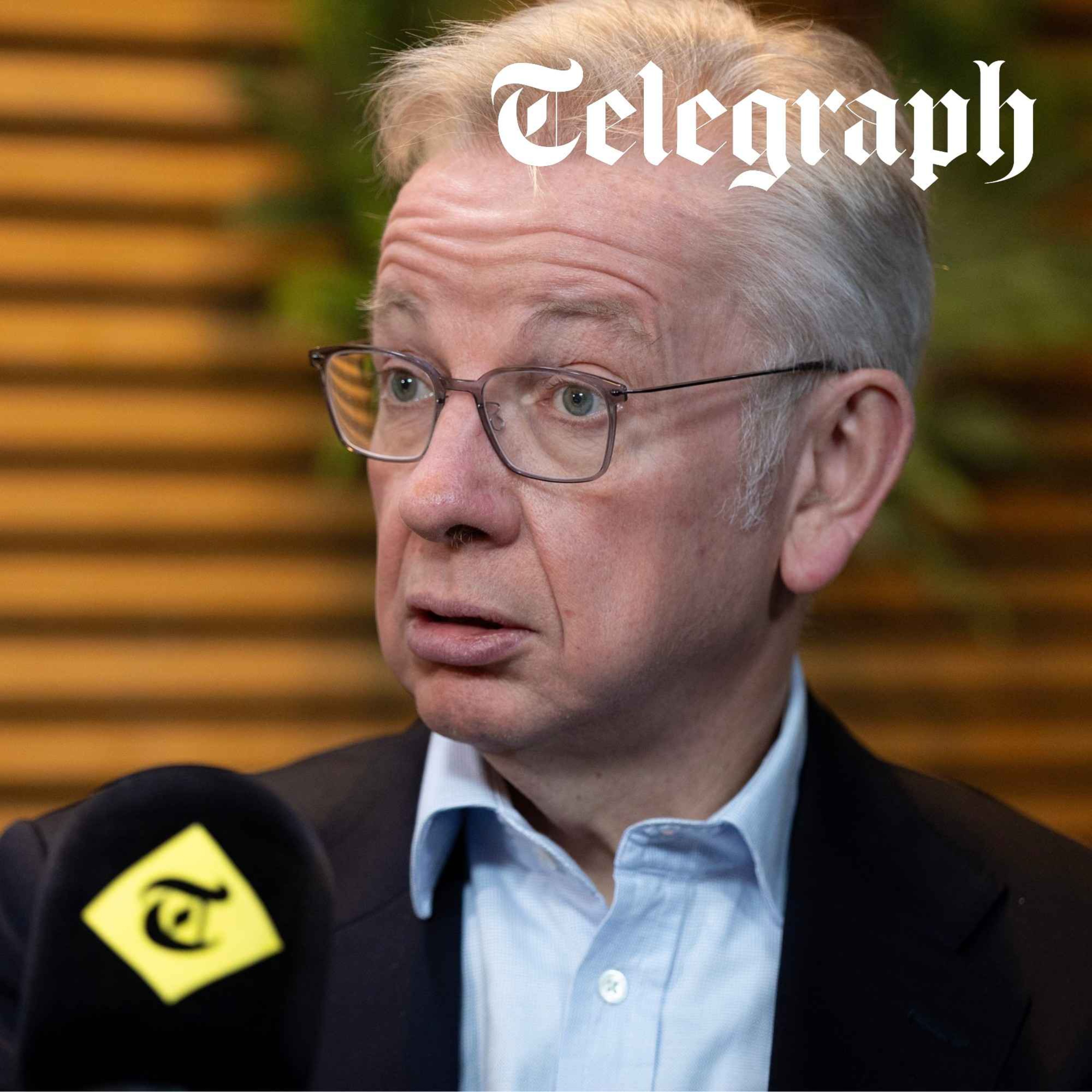
In Sunday’s edition of The Daily T, Camilla Tominey and Tim Stanley are joined by former education secretary Lord Gove, who explains how woke ideas and lazy trade unions have conspired to hurt the education of an entire generation. Lord Gove also dissects the latest Pisa rankings showing English students outperforming those of other home nations, including Wales and Scotland, and expresses his concerns that the current Labour Government will undo this progress.
► Subscribe to our new Daily T YouTube channel: youtube.com/@dailytpodcast
► Sign up to our most popular newsletter, From the Editor. Look forward to receiving free-thinking comment and the day's biggest stories, every morning. telegraph.co.uk/fromtheeditor
The Telegraph is the Publisher Podcast Awards' Podcast Publisher of the Year 2026
Producer: David Levene
Senior Producer: Emma Williams
Social Producer: Nada Aggour
Video Producer: Jim Spencer
Executive Producer: Charlotte Seligman
Editor: Camilla Tominey
Highlights:
Hosted on Acast. See acast.com/privacy for more information.