
 Ask ChatGPT



Written by AI. May contain mistakes.
Bob Ward shares insights about his family and the mystery surrounding Julie's disappearance.
“This is episode one of Murder in the Maasai Mara, SOS.”
Exploring Julie's journey from Suffolk to Kenya and her longing for adventure.
“But this isn't like any other cold case investigation.”
Julie’s experiences and lifestyle in Nairobi, filled with excitement and new friendships.
“She'd quit her job and signed up for a five-month journey, driving overland from Britain to Kenya.”
Julie’s aspirations in Nairobi and her plans for an entrepreneurial venture.
“It was obviously a huge wrench that she, you know, she didn't have a family and she was so, so close to them all.”
Learn about Julie's adventures and the circumstances leading up to her disappearance.
“and then sell them possibly in Nairobi, but also abroad as well.”
Discover the immediate reactions of Julie's family and the start of the search efforts.
“But somewhere on that journey, Julie Ward disappeared.”
Follow John Ward's desperate search for Julie and the shocking find of her jeep.
“and wasn't the sort of person to wait around for answers.”
Learn about the shocking discovery of Julie's remains in the Masai Mara.
“It was the body of a white woman, nine miles away from Julie's abandoned jeep.”
Explore the emotional turmoil faced by John and his companions post-discovery.
“Something painfully familiar was attached to the tree.”
Understand how John communicated the tragic news to his family back home.
“It was a very, very strange evening, you know, and obviously everyone's coming up with different theories and having to console John and trying, you know, just trying all the time to work out what's happened.”
Examine the family's reactions to media coverage following Julie's death.
“Julie, who'd been photographing wildlife, disappeared near her campsite at Sand River.”
Follow John's quest for the truth about Julie's murder and the obstacles he faced.
“There had been so much about that scene that felt suspicious to him.”
Learn about the long-lasting impact of Julie's case on her family and investigators.
“The next time he met Dr Shaker would be in very different circumstances.”

Get the gist, explore an idea or ask about something said.
 Claude
On The Daily T, what are the key points of this episode?
Searching your listeningAutomatic transcript. May contain errors.
0:28The Telegraph After her father flew out there and found a gruesome crime scene, he spent the rest of his life searching for answers. But no one was ever convicted of her murder. Catherine's investigation shines a light on a messy knot of cover-ups, strange behaviour by MI6, and fresh evidence that implicates the son of Kenya's former president. This is episode one of Murder in the Maasai Mara, SOS.
1:08Before we begin, I want to warn you that this series contains details that some listeners may find distressing.
1:22So first of all, can you introduce yourself, please? I'm Bob Ward, I'm Julie's younger brother, and John Ward's son. So, in your own words, if you could just tell me the story of the Wards. The Wards. Well, I suppose the Wards were a completely normal family, with a very normal, happy, loving upbringing. Dad was a self-made man. It's March 2024 and I'm in Bob Ward's childhood home in Suffolk, in the east of England. It's a rambling building, painted a pale yellow and set back from the road. A sign at the top of the driveway spells out the word Saxonwood in yellow Gothic letters. Bob used to live here with his sister, Julie, their brother and their mum and dad.
2:19Mum was a housewife, absolutely mad on dogs, but we grew up surrounded with a menagerie of animals, a donkey at one point, rabbits, tortoises. Bob shows me around. The house is bigger than most, with photographs on the walls and souvenirs from trips abroad. But at one end, the evidence of normal family life gives way to rooms lined with metal shells holding heavy files. This is where... This is room number one of the filing system. What we're looking at here is everybody who's involved has a file on them. Every incident that's happened, it's all here. But there's another section of this upstairs in the office.
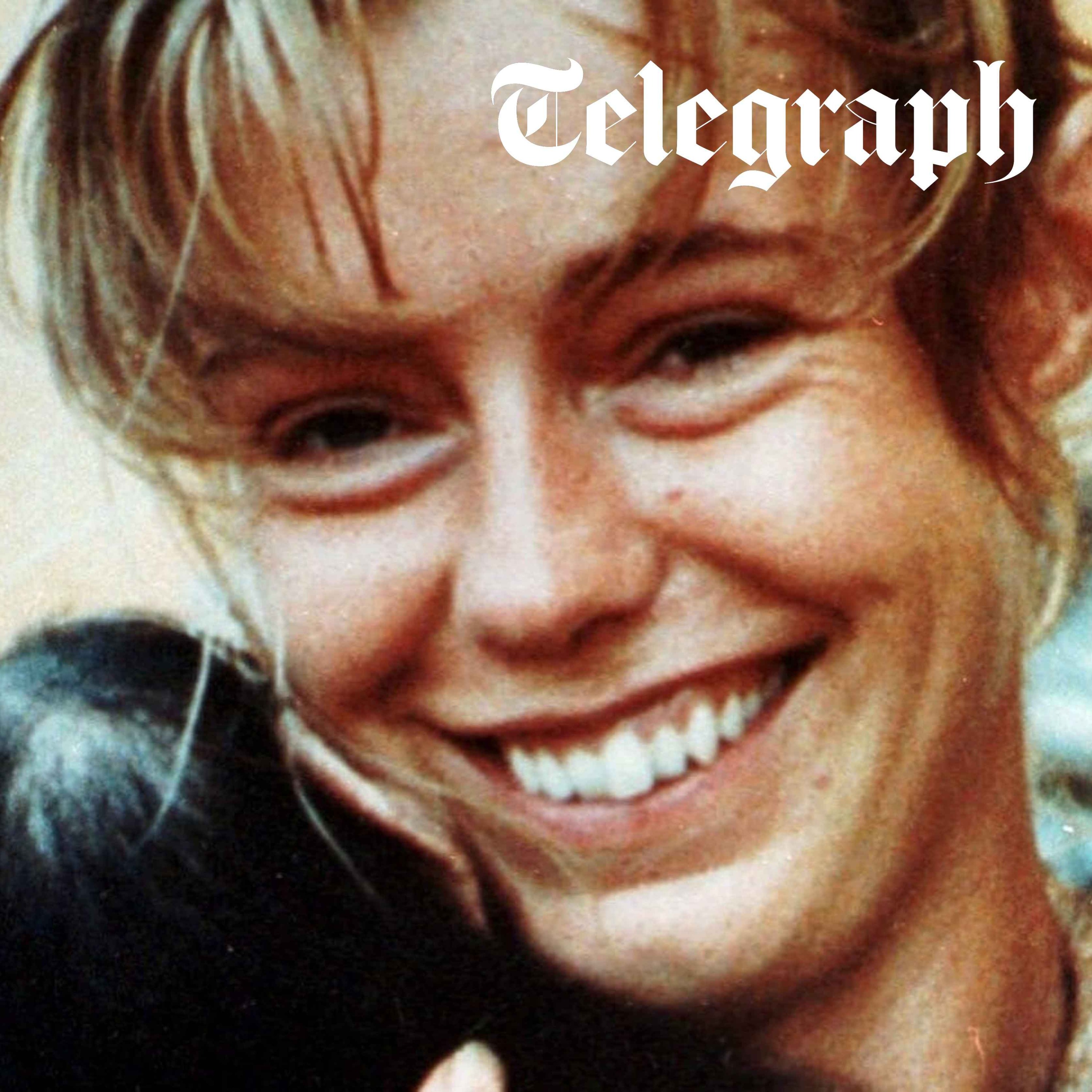
3:05Let's go. I just passed. I saw the yellow files under the stair, kind of cubby, with one saying Maxwell. Yeah, hell yes. Yeah, a big bar, that one. The attic room has a sloping roof on both sides and light flooding in. You can hear classical music playing from somewhere. Oh, that's the famous photo. The famous photo, yes. No, it's a nice picture. It's a lovely picture. Getting one of Julie smiling is quite rare as well because she was too shy. It's a photo of Julie when she was 28. She's tanned and blonde with hair pulled back except for a messy, sweaty-looking fringe. And she's holding a small chimpanzee which has its arms wrapped around her neck.
3:51Julie's eyes are almost in shadow but she still just radiates joy. She has this huge grin exposing her teeth. Slightly wonky, very white. She didn't like the camera herself. She liked being that side of the camera, not the other side. The photo is near a large map propped against a wall showing part of the Maasai Mara game reserve in Kenya with about a dozen locations marked by hand. And there are more files, shelves and shelves of them. If you want a transcript for a trial, it's here. It feels a bit like a police incident room. Every letter is here, every telex, every freedom of information, it's all here, all in order.
4:30So there is an enormous amount of reading or investigating to do.
4:41The reason Bob's family has amassed this archive of documents, that this incident room exists, is that 37 years ago, Julie travelled to the Masai Mara and never came back. The question of what happened to her has dominated the ward's lives ever since.
5:05Her father, John, devoted decades to trying to answer that question. And in the process, he amassed this incredible amount of evidence. He's got secret government documents, diplomatic cables, records of conversations with spies and dictaphones filled with hours and hours of interviews. Ever since this thing started, there's been cover-up after cover-up after cover-up and there's been lies and deception and people you think you can trust, you find you can't trust and they're trying to deceive you as well. And it just tends to get you more and more angry, actually, and more and more determined, because you think these bastards shouldn't get away with it.
5:47I've spent a lot of time over the past 18 months visiting John's son Bob in Suffolk, poring over this library of secrets and tracking people down. It's a story that's taken me from archives in London to Cornwall and over to Kenya, to the bustling streets of Nairobi, to isolated farms, and into the wild landscape of the Maasai Mara. Because almost four decades after Julie Ward went missing, the truth of what happened to her remains a mystery. But this isn't like any other cold case investigation. It's a messy knot of cover-ups, strange behaviour by MI6, and fresh evidence that I can now bring to light.
6:39It goes beyond the Ward family to questions about how far the UK will go for its citizens and it's a story that deserves to be untangled. I'm Catherine Rushton and this is Murder in the Maasai Mara, episode one, SOS.
7:09On a cold February day in 1988, Julie Ward set off on a huge adventure. She'd quit her job and signed up for a five-month journey, driving overland from Britain to Kenya. She wanted to see the world beyond Suffolk and felt the call of the wildlife and vast landscapes of the African continent. Here's Tim, her brother. I think she was just, I need to do something with my life rather than sit around my mum and dad's house all the time. It definitely was out of her comfort zone, but she embraced it. She travelled to a town on the Kentish coast and piled into a big, yellow, converted truck with a group of other eager travellers.
7:52So we were on the same trip across Africa. Were you nervous? Not at all, no. It was just all very exciting. We're all very young. This is Lucy Brewer. She's got cropped grey hair and an impish smile. Back in 1988, she was in her early 20s, joining Julie on that big yellow truck. She was very slight, tall. She had long brownie, blondie hair, which got highlights as the trip went on. You know how you meet somebody and you just click, you just get on, there's just an instant connection. It was all natural. Climbing aboard alongside Lucy and Julie was a man in his early 30s called Phil Shord. He was seeking an adventure after the breakup of his marriage.
8:40The driver poked his head through the room and said, anybody going to Africa? And then, that must be us then. Julie made an impression on Phil right away. She exuded a bit more confidence than most other people on the truck, I have to say. But quiet. She wasn't trying to make her claim for being the person in charge of the group or anything. Julie might have been quiet, but she stood out to Phil for her focus. She had more of a plan about what she wanted to do. What she wanted to do was to photograph and publish the photographs in some form. And that was what she went on a trip for. They crossed the English Channel and set off, travelling through France and Spain, over the Mediterranean and into Morocco.
9:28You stare out the window, watching everything go by. You just didn't want to miss a thing. As the days turned into weeks, freezing Europe gave way to the desert. We had windows just open as we were going through warmer climates. You could sit on the benches and have your legs dangling outside. Julie always had her Olympus camera in her hand. She wanted to have a photographic diary of the trip and she knew that the colours, the scenes, the setups in the Sahara would make good photos and she got some wonderful ones. It sounds like a life-changing trip for Julie. The freedom, bumping along rough roads in the back of the yellow truck, watching the landscape gradually shift to become sandier and more golden, which sometimes came with challenges of its own.
10:25Any times we'd stop in the desert when we would get stuck in the desert, first thing you'd do is set a fire and then you'd have this row of 27 mugs. It was in these moments that Julie proved her mettle. She was very resourceful and she was always helping out. If we had to stop and do any work on the truck or anything, she was there making teas for the guys, making sure they had everything they needed. As they headed further south, the desert became dense jungle. We went to see the gorillas in what was Zaire. She was almost bubbling. It was the biggest thing in her life. We had the gorillas this close, almost reaching out, trying to touch you.
11:13She was, you know, almost floated back down the mountain, back to the camp. After five months of living on top of each other in the big yellow truck, Julie and her new friends arrived in Nairobi, the capital of Kenya. Some of the group continued on to Zambia. Others flew home to Britain. But Julie decided to stay. She was looking for a place of her own. She kind of wanted a little bit of solitude. This is Doug Moray. Julie rented a cottage from him in the grounds of his house in Nairobi. It was a simple building in a lush green area on the western side of the city. We had 10 acres. We had a warthog in the garden all the time.
11:59A couple of times we had a giraffe. Very wild. The house was often filled with guests. Every weekend, Doug hosted a volleyball match and everyone was invited. Every Saturday afternoon it was open house. Everybody met everybody there. Here's Lucy. People would just converge on her and they would come and fill up her fridge with beers and steaks. And there would just be these impromptu gatherings that would happen every night. Lucy says that Julie was having the time of her life. It had absolutely everything that she loved there, apart from her family. It was obviously a huge wrench that she, you know, she didn't have a family and she was so, so close to them all.
12:45Julie sent long letters and postcards to her family and friends back home, all about her exciting new life. I've read some of them. These are proper letters. They're often on thin airmail paper, and in them she jokes about how much better her social life is in Nairobi than it ever was in Suffolk. Well, there's lots of letters in there, but, you know, as I said, she was, I mean, it's quite clear. I mean, that's not all of them, by the way. Very neat handwriting. Yeah, well, she's very, yeah. I mean, she used to send us all individually postcards, which is always nice. The theme always seemed to be beer, and I can't think why.
13:17You could tell that she was definitely growing in confidence, and she started off as a little wallflower at the back of the lorry and barely spoke to anybody. But within a fairly short time she was getting stuck in and she was as confident as anybody else on the trip was. And that came across in her letters and her postcards. Lucy also shows me the letters she received from Julie once she returned home. She is a good letter writer. She puts you in the place, doesn't she? Yeah, and it's just a chatty. It's really chatty. It's like you're talking to her, isn't it? Yeah, she's obviously having an incredibly fun time.
13:50Yeah. Julie came up with a plan to stay in Nairobi for longer. The idea would have been to drive out to countries, different countries, and source jewellery, masks, anything sort of collectible, and then sell them possibly in Nairobi, but also abroad as well. Her father, John, was a self-made man who'd earned a fortune from hotels, and Julie had picked up some of that same entrepreneurial spirit. And this is the last bit, which was on the back of an envelope, and this was sent to me as things I had to do. She asked Lucy to join, and together they plotted practicalities, like visas, export carnets and French lessons.
14:41Seven months had passed since Julie left England, and her life had changed so much. She was missing her family, though, so she planned a short trip home. A few weeks before she was due to leave, Julie met up with Phil, her friend from the truck. She told him she wanted to squeeze in an adventure before flying back to England. She said, I've bought myself a little car. It doesn't work very well. It's a four-wheel drive, but at the moment it's only two-wheel drive. I've got the transmission in the back I need to get put on. So I'm going to go down to the Mara and really get into it. The Maasai Mara is an absolutely vast nature reserve in southwestern Kenya, nearly 600 square miles, bounded on one side by Tanzania.
15:32Some of it is dense vegetation, but most of it is open grassland, bleached golden by the intense heat and dotted with low trees. It's home to elephants, giraffes, lions, leopards and hyenas. And at certain times of year, during the Great Migration, more than a million wildebeest, zebras and gazelle, move through the reserve in a huge sweep to Tanzania and back again as they follow the rains in search of fresh water and pasture. Julie closed up the cottage she'd rented from Doug, her plane ticket safely laid out on the table. On the 2nd of September, eight days before her flight, she set off with a new friend, a gruff marine biologist from Australia.
16:22They drove the 140 miles to the Maasai Mara. It took them all day. This is what we know happened next. Julie and her Australian friend entered the reserve shortly before dusk and drove 15 miles or so through it towards Sand River Gate, near the Tanzanian border. It was a huge double arch that could be locked at night. It's guarded by rangers who keep records of people travelling in and out. Julie and her friend pitched their tents at the small campsite nearby just as darkness fell. They got up early the next day to look for animals. Julie's Jeep bumping up and down on the long road that runs through the reserve.
17:10But after about an hour of driving, it became clear the Jeep wasn't up to the task. We went out on a game drive and there was a little Suzuki Jeep, which was Julie's car, broken down the side of the road. And so we pulled over and asked if they needed any help. Steve Watson had a job driving tourist trucks like the one Julie had travelled on. He linked her broken jeep to his own vehicle and towed them back to where he was staying, Serena Lodge. I doubt it was more than a couple of miles. She was told she'd need to have a replacement part flown in, which wasn't going to be quick. So Julie's Australian friend decided to take a plane back to Nairobi.
17:59Julie was happy to wait. Her flight home wasn't for another six days. She had time. That evening, she had dinner with Steve. I think we both just liked each other. We pretty much hit it off. When you meet someone, I don't know what that spark is, but there is sometimes something there. And everything I was hearing about her made me like her a lot more. Julie and Steve spent the night together, and Steve tried to persuade her to delay her flight so that they could see each other again in Nairobi. After that evening, she had a big influence on me. So yes, I really wanted to see her again and I'd hoped we could build upon a relationship.
18:45But although it seemed Julie had feelings for Steve as well, she wanted to stick to her plan. The replacement part for her jeep arrived and the mechanics set to work. Finally, with four days to go before her flight home, Julie and her jeep were ready to get back on the road. At around midday on the 6th of September 1988, she set off from Serena Lodge towards Sand River Gate. We don't know if she ever got there. We don't know if she got lost or stuck or had more mechanical trouble. But somewhere on that journey, Julie Ward disappeared. More to come after this short break.
19:56So it's about 6.20 one evening and we're currently doing the reverse journey that Julie took. We're currently driving through this quite post-apocalyptic landscape because there have clearly been fires here, everything's charred. It's early 2025 and I'm driving through the Masai Mara with a Kenyan journalist called Edwin Okof. He's been helping me report this story. We're retracing Julie's final movements. And it's quite easy to see how someone would get lost. It's so quiet and incredibly beautiful with huge expanses of grass that have turned pale gold, the air quivering in the intense heat. Earlier in the park we saw lots of wildlife, lots of trees, whereas here it's very desolate.
20:45But when the sun starts to drop, the atmosphere changes. Ahead of us we've got elephant poo on the track, which feels quite exciting. And then to the left, the grass is completely burnt out and you can't even see the sun anymore for the smoke. The landscape is barren and dark, save for the glowing red flames of fires that send up plumes of smoke. But it's very, very close to the road. I would say about a metre from the road. We end up having to drive through one of these blazes to get out of the reserve before the sun sets. I need to close my window. I get a real sense of how things can turn on a dime here, of how pale gold grasses become wildfires.
21:28And it just makes me think of how Julie must have felt. Of how apex predators could be hidden nearby, ready to strike. And I can imagine that if she was on her own, it would be really frightening. And of how crimes could take place without anyone ever knowing. There we go, out the other side. Driving along on the rough tracks in her unreliable Suzuki, Julie was an open target.
21:57Four days after Julie set off from Serena Lodge, Julie's father, John, was mowing the lawn at their family home. The thought struck him that Julie should be back by now. His son, Bob, recalls... Oh, he was definitely scared. Him and Mum knew. Mum had a feeling, she describes a feeling of doom, and she knew something was wrong. Later that day in Nairobi, Julie's landlord, Doug, had the same feeling. Her disappearance, initially, I brushed off as being, you know, she's a kid. I was not concerned. And it wasn't until I went over to her house and found the tickets. Her plane tickets were still lying exactly where she'd left them on the table.
22:43The date on them had passed. So that's when I got worried. I went to bed concerned. and then about 10 o 'clock at night I get a call from John. Doug told John Julie should have been back by now. So Dad had a sense of urgency immediately. John cut an imposing figure. He was used to calling the shots in business and wasn't the sort of person to wait around for answers. So he got on the first flight to Nairobi and started organising a search of the Masai Mara where Julie was last seen. When John Ward came, he had pictures of that missing girl This is James Sindio He was a senior warden in the Masai Mara We speak in his simply furnished home James remembers John coming into the office with a pile of missing posters and handing them to his boss a man called Simon McCullough He wanted those posters so that at least everybody was aware or knows they have a picture of that missing gun.
23:49Julie's landlord, Doug, was a pilot, so he helped John charter a plane to scope out the area where she'd disappeared. Here's John in an interview he did with The Telegraph back in 2008. We flew down all the roads, very low, very slow, looking everywhere. Even from above, surveying the Masai Mara was an enormous task. They swooped low over the open savannah. The pale grass stretched on and on in all directions. They peered at riverbanks, sporadic clusters of tents and shadows cast by clouds, and they looked for smoke in case Julie had started a fire. But there was no sign of her. So on the second day, John called in reinforcements.
24:36That evening, we organised five more aircraft and a helicopter. We got together with the pilots and we organised a grid search so that every plane took a separate area. Among them was Steve Watson, the truck driver who'd taken a shine to Julie after her jeep broke down. I'd just met someone I'd really fallen for in every way and all of a sudden she was no longer there. Steve joined the search as a spotter. We were up in the midday heat, fly in a small plane in that sort of heat. Planes are extremely uncomfortable. You feel sick all the time. After a few hours, a message came crackling over the radio.
25:20A pilot had spotted something. It was one of these little Suzuki Jeeps. It was a sort of sandy, browny sort of colour. Julie's Jeep was in a small gully, a few miles east of the Sand River Gate, and it looked stuck. The car was in a slight ravine, so I think two of its wheels, certainly one but possibly two, were down into a slight ditch. Three letters were clearly visible on its roof. S.O.S. The S.O.S. was in stones on the roof. I can't remember, I think they were fairly squarish letters rather than being curved letters. It looked like Julie had tried to signal for help. John got into a jeep and hurried to the site as a plane circled overhead, marking the spot.
26:11Here's John telling the story in an interview, a year later on NPR. Very strange that there was no note, because she was a great note-leaver. If she went shopping at home, she'd always leave a note saying I've gone to the shops to get, or taken the dog for a walk or whatever. She always left notes. But there was nothing. The jeep was locked and there was something bulky on the back seat. One of the men broke the window and John reached inside, hoping it was Julie. But it turned out to be a bundle of camping gear. There's food in the jeep, maps in the jeep, but no Julie. John looked out over the vast expanse of scrubland and called out in desperation.
26:57Julie! Julie! huge, vast, massive skies. You know, there's no wind. The silence that came back was deafening. There was nothing. John returned to his plane and restarted the search, whilst vehicles fanned out below him. Very, very rugged country, great boulders and thorn trees and just a part that nobody ever goes to. There's a lion down there, a cheetah, a hyena. James Sindio, the senior warden. followed the river west. The Rangers, one team was led by Simon McCullough and I led the other team. So I went downstream while he went upstream of the Sand River. Here's John talking to the telegraph again.
27:46I can see these guys in camouflage walking around and then we keep on searching and then within half an hour or so there's another radio message. Simon McCullough and his team had found something. The body's been found, but it's all fucking chaos. It was the body of a white woman, nine miles away from Julie's abandoned jeep. Once again, John raced to the scene. A police officer and several rangers were on the ground waiting. Nothing could have prepared him for what he saw. What was a shock was it's not a body, it's parts of a body. That was shocking. There were just fragments of a person, scattered around the ashes of a fire.
28:31The smell of burnt flesh hung in the air. John took in the horror before him. There was a jawbone, there was some fillings in it, bottom jaw. The lower jaw was in two pieces, and a lock of hair lay on the ground. It was gently curled and bleached golden. There was a leg, a bottom half of the left leg lying in the grass, a leg just like my leg here, and it was just from there downwards. The leg had been severed at the knee. The top of the leg where it had been severed was burnt and charred. There was a big long cut in the back of the calf, right from the bottom here, right up the top, a very deep, big cut.
29:11The foot was almost intact. It was still flexed, as if trying to run. When he saw the leg, he knew it was Julie's. In his heart, because of the toes, we have a genetic toe. It took John a moment to register the mess of other objects that lay nearby. Some sunglasses and a pair of red flip-flops. A can of pilchards rested on the branch of a tree. It was open and half-eaten, but not yet completely rancid. Something painfully familiar was attached to the tree. There was some towel that was the same as the towels we have at home, so there was no doubt even at that point. John sank to the ground, reached out and stroked his daughter's leg.
30:00For a moment, nobody moved. The air was thick with silence. John waited for the officials to collect the remains. In normal procedure, evidence is bagged for forensic testing. But as the sun grew lower in the sky, John thought they were making to leave. Julie's remains were still on the ground. Their way of looking at this was, well, this is obviously the girl. She's dead, but what can we do? And they were just going to come away and leave it there. But John wasn't going to leave her behind in the wild. And so I started to gather these pieces together. And, you know, it was macabre, but there was nothing to put them in.
30:52Slowly, John collected up what was left of Julie himself. He combed through her ashes with his hands. The guy who was flying the helicopter went back to the machine and he unzipped a seat cover from the helicopter, which then formed sort of a bag. The helicopter pilot held the cover open whilst John placed her leg inside This was the first of many obstacles John would face Strange failures in procedure where things happened that weren't quite right and John had to step in himself Julie's landlord Doug flew in and looked after John that evening at one of the Masai Mara lodges I just went to shake his hand and he showed me his hand and it had ashes all over his hands, which was a pretty moving kind of experience.
31:47Steve was also there. It was a very, very strange evening, you know, and obviously everyone's coming up with different theories and having to console John and trying, you know, just trying all the time to work out what's happened. He's quite a big chap. Had quite an aura about him. And, yeah, he just broke down into tears. Hearing details of the state of Julie's remains, Steve had one thought. Someone has done something to her, because you can't set yourself on fire like that. John went to sit alone on the balcony of his room, in the dark. And I was upset by then. The day's shocks had sort of really started to hit me.
32:32and I sat for a moment on the balcony and I could hear all the lions roaring out there and the hyenas growling. It's hard not to feel for this lonely figure, surrounded by the people who had helped him in the search, but also so alone, to be the only member of his family who knew that Julie was dead and to realise that the next day he would have to travel to Nairobi and make a phone call that would shatter them. My job was to be at home to look after Mum whilst he was away. Julie's brother Bob was back in Bury St Edmunds with his mum and older brother. Three days after John had left for Nairobi, the phone rang.
33:18He couldn't talk particularly well. I could hear what was happening. Mum listened in silence and then the phone call kind of petered out because Dad couldn't say any more. just couldn't talk. John kept it brief. He just told them Julie had died. Her brother Tim recalls. One minute you expect to come back after six months, the next minute your dad's ringing up saying that they found some chopped up chard remains of her in the middle of nowhere. It's just, you are just numb. I then came downstairs to a mother who has just received this news and we had no idea what to do. Shock, pure shock. Bob says there was just silence.
34:02Whilst we sat in this house, in this confused, saddened, grief-stricken state that none of us knew how to act. It wasn't until he flew home that he told us the details of it. It was horrendous. That's how I can describe it. It's the worst day of all of that life.
34:27As the family grieved, the press started setting up camp outside Saxonwood. Julie's death was all over the news. Julie, who'd been photographing wildlife, disappeared near her campsite at Sand River. It was six days later that first her broken-down jeep and then her burned remains were discovered in the remote park. After a massive search organised by her father, parts of her charred body were discovered. He found a lock of hair in the fire. He picked it up and realised for the first time that the charred remains scattered around him were his daughter, Julie. You don't really have time to deal with your emotions because you're fending off the Daily Mail, the sun, the star, the news of the world who just kept knocking on the door.
35:10Sod off. Leave us alone. We had the curtains closed. Oh, horrible time. Horrible time. In those early days after Julie's death, her family searched for a reason why. John told them what he'd heard from an official at the scene. One of the many things that people had said about how she died was suicide. Initially, the men in the family believed it could be true. She got lost. She was on her own. She'd been there for six days. She was petrified. Therefore, that equals potential suicide. You know, I'd better end it now. Julie's mother, Jan, jolted them out of it. That got mum's hackles up straight away.
35:51She wouldn't commit suicide. Julie loved being out there. That hasn't happened. But the alternative was also unthinkable. John feared Julie had been murdered. And yet a lot of the press kept reporting on her death as if it was a tragic accident. John grew angry. He was haunted by what he'd seen in the Maasai Mara, by the fact that he had had to gather up the pieces of his daughter himself. There had been so much about that scene that felt suspicious to him. He couldn't understand why the Kenyan authorities weren't investigating it as a murder. Bob, his brother Tim, and their mother Jan felt numb and helpless.
36:41But John couldn't sit with his grief. He needed to channel it into action. Within a week, he was back on a plane to Kenya. There was no thought of, right, let's all go out there. Dad's definitely a fly solo sort of guy. Julie's remains were at the city mortuary in Nairobi. It was a grim facility. John went to see the pathologist who conducted Julie's post-mortem, Dr Adel Shaker. John later told the story in an interview. We saw him in his rubber boots and his rubber aprons and his rubber gloves and splashed as he is with blood and gore. Dr Shaker hadn't written up his report, but he talked John through his findings.
37:27He showed him Julie's lower jaw, which had been found split in two. He had it stuck together with glue to show that it was like, as he had described, like you break a teacup. You can actually stick it together again. It's a precise fit. It was how he knew. It hadn't been done by animals. It was a chop from a heavy instrument. One clean blow. Dr Shaker said that Julie's bones had been cut deliberately by a human and that the burning had taken place after that. It was confirmed she was murdered. This horrible episode in the mortuary would turn out to be one of the few instances where officialdom operated in the way that John hoped for and expected.
38:14It wouldn't stay that way. The next time he met Dr Shaker would be in very different circumstances. John would be furious, fearing that someone was trying to cover up Julie's murder. Over the next 37 years, John would visit Kenya more than 200 times, hiring private investigators and lawyers, chartering planes and meticulously building the archive of evidence at his family home in Suffolk, spending upwards of£2 million in the process. And yet, although he got painfully close, he never uncovered the truth. John Ward died in 2023 without ever knowing for sure what happened to Julie. Even though there have been two inquests, three people tried for murder, and investigations by three different police forces, her murder has never been solved.
39:14So I'm picking up where John left off. Like him, I want to know who killed Julie, why someone wanted the crime erased, and how far the cover-up went.
39:32Coming up on Murder in the Maasai Mara
39:41Something's going on out there to make this not look like a murder The message was very clear, don't rock the boat If you're enjoying this series, my colleague Jack Leather has made a film charting my investigation in Kenya Follow the link in the show notes for this episode to see some of the people you hear in this podcast. Murder in the Masai Mara is a podcast from The Telegraph. It's written and reported by me, Catherine Rushton. The series is produced and sound designed by Anna Stauffenberg and the executive producer is Cara McGugan. Additional reporting by Edwin Okoth. Additional production by Lillian Fawcett and Jack Leather.
40:23Script editing by Venisha Rainey Mixed by Elliot Lampert The commissioning editor is Louisa Wells Original theme music by Nyokabi Karaoke With thanks to the Ward family If you have any information about this case that could help us get closer to the truth please get in touch at juliewardcase at telegraph.co.uk
40:53Thank you.
On a cold February day in 1988, Julie Ward sets off on the journey of a lifetime from England, through Africa. She establishes a new life in the bustling capital of Kenya but mysteriously disappears while on safari - leaving her plane ticket back to England untouched on a table in her Nairobi home. When her father John flies to Kenya to track her down, he finds a gruesome crime scene in the Masai Mara that throws up more questions than it answers.
Archive in this episode: NPR, ITN via Getty, The Telegraph
Get in touch: [email protected]
Watch the accompanying film to this series: https://www.telegraph.co.uk/news/2025/11/28/kenyas-secret-deal-silence-father-murdered-julie-ward/
How to access bonus content on Apple Podcasts with your Telegraph subscription: https://www.telegraph.co.uk/contact-us/telegraph-subscription-bonus-content-apple-podcasts/
Sign up to the Telegraph: https://bit.ly/murdermasaimara
Sign up to our most popular newsletter, From the Editor. Look forward to receiving free-thinking comment and the day's biggest stories, every morning. telegraph.co.uk/fromtheeditor
Hosted on Acast. See acast.com/privacy for more information.


