
 Ask ChatGPT



In the third episode of Murder in the Masai Mara, titled "The Search Party," investigative journalist Katherine travels to Kenya to follow up on the decades-old cold case of Julie Ward, whose murder remains unsolved. The episode highlights Katherine's attempts to track down key individuals associated with the case, including the last man to see Julie alive and the head ranger of the Masai Mara game reserve. New leads emerge, including a tip from a Maasai elder, potentially providing significant breakthroughs for the Ward family.
Written by AI. May contain mistakes.
Catherine discusses her investigative process in tracking down individuals connected to Julie's case.
“This is episode three of Murder in the Maasai Mara, The Search Party.”
Catherine and Edwin navigate Kenya using local insights and traditional methods to find people.
“It's all pretty standard fare in my job as an investigative journalist.”
Catherine seeks out David Unchoco, the last known person to see Julie alive.
“Kenyan names can sort of tell you where they come from.”
Discussion on David Unchoco's involvement in Julie's case and his subsequent arrest.
“Just being told that it is this village and that he lives down a longest track.”
Catherine interviews Unchoco, exploring his experiences and confusion during the investigation.
“They focused on the two rangers instead.”
Unchoco reflects on the lack of community discussion surrounding Julie's disappearance.
“He sits on a plastic chair under a tree, dressed in Maasai robes.”
Catherine meets James Sindio, a senior warden who helped search for Julie.
“Then I ask him something I think is quite innocuous.”
James describes suspicious actions by the head ranger during the search for Julie.
“We start by running through the events of September 1988.”
Explore the doubts around Simon's discovery of Julie's remains and suspicious claims.
“But looking back, more than three decades on, he finds it puzzling.”
James shares a previously undisclosed account regarding a Maasai elder's claims.
“The Telegraph Sign up free today at telegraph.co.uk slash from the editor.”
Dive into the complex trial of Simon McCullough and the evidence presented.
“One of the police detectives I've been speaking to back in Britain agrees.”
Follow the investigative team as they track down Simon McCullough's location.
“The Ole name indicates that Simon's Maasai and Edwin says it makes sense that he'd retire in this area because it's a Maasai region.”
The team gets crucial information about Simon's whereabouts and his reluctance to discuss the case.
“They're sitting by the roadside, shooting the breeze, and they look like they'll be Simon McCullers vintage.”
Despite a warm farewell, Simon's refusal to discuss the case leaves the team frustrated.
“He tells us he has a meeting and he asks us for a lift.”
The narrator reflects on the lack of answers and explores further leads related to the case.
“As we drive away, I think about all the things Simon didn't say.”
The narrative shifts to a warning received during Simon's murder trial, hinting at deeper political connections.
“We had better go so I don't miss my plane.”
A cryptic note leads to the name of a key suspect linked to the case, raising new questions.
“He told me that, you know, I can see you're a young man and you have a long career ahead of you, so don't mess it up by writing stories that Mze and those around him do not want to hear.”

Get the gist, explore an idea or ask about something said.
 Claude
On The Daily T, what are the key points of this episode?
Searching your listeningAutomatic transcript. May contain errors.
0:28The Telegraph Mara in 1988, and how her father John faced years of obstruction in his attempts to uncover the killer. Today, Catherine goes to Kenya herself to track down the last man to see Julie alive, and uncovers a previously unknown tip from a Maasai elder. This is episode three of Murder in the Maasai Mara, The Search Party.
1:03Before we begin, I want to warn you that this series contains details that some listeners may find distressing. As I've been working on this story, I've been drawing up a list of names. People who knew Julie, who met her in Kenya, or who became involved with the investigation into her murder. Then I try and track them down.
1:31Please hang up and try again. That didn't sound good. Let me call her from this. Sometimes it's just a matter of making a phone call. Hi Lucy, how are you? I'm very well, thanks. Good. So I'm part of the Telegraph's investigations team and I'm looking at Julie's case. But if they're not expecting me, I prefer to knock on their door. It's all pretty standard fare in my job as an investigative journalist. I spend hours, sometimes days, trawling public records to help me narrow down addresses. Things like Companies House, the electoral roll, even birth and marriage records. It's worth it, because people are more likely to trust someone that they can literally look in the eye.
2:20Hello, sorry, my name's Catherine. I work for The Telegraph and I'm looking at the case of Julie Ward. But this isn't a story I can just report from Britain. One former police officer tells me... The answer's in Kenya. They know what happened. The answer lies in Kenya. There are people on my list that I can only chase down on the ground, so I plan a trip. Edwin Okoth, the Kenyan journalist who's been helping me with this story, makes a head start on finding them. There's no formal address system outside the major cities, so Edwin uses other methods. Kenyan names can sort of tell you where they come from.
3:05So I will know this name is associated with this region, and that's the first step. Then it's a matter of heading to that area and relying on old-fashioned word of mouth. It's better in the village because you can keep asking. So we rely on what I told you about the Google Maps, the human Google Maps, where you just ask people about how to go to reach to a certain place. And we had to rely on school names and very old family names to track people because it's not very easy to get. Sometimes information comes from the most unexpected places, like on one occasion when we stopped to buy pineapple in a very noisy street.
3:49How much is your pineapple, please? Yeah. How much? Ten bob. Ten bob? Yeah. Edwin gets chatting to the pineapple seller, who gives us a shred of information we need. I'm his daughter. I'm his daughter. Great. Does he know where the daughter lives? He might live with them. No, he doesn't. Once we find one person, it gives us a thread to pull. They might share snippets of information about the next person, who then helps us with another. He lives there on the way to Naruk, around 27 kilometers from here. Just being told that it is this village and that he lives down a longest track.
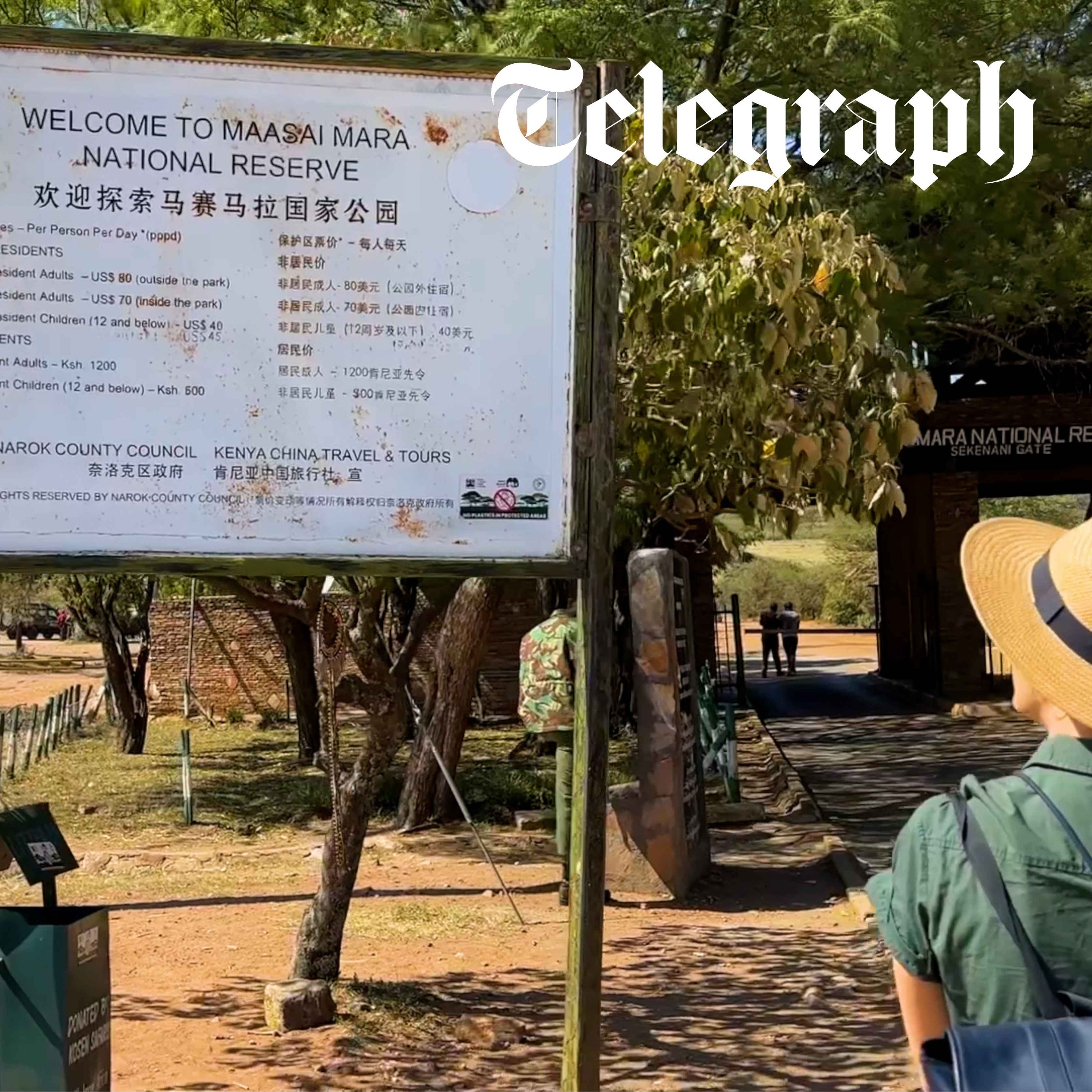
4:34I want to speak to some of the people who were working in the Masai Mara when Julie was murdered. Those who joined the search when she was missing, the last man to see her alive, and the head ranger of the game reserve. I want to hear what they remember, and I want to see if there's any new information they can share, all these years on.
5:03I'm Catherine Rushton, and this is Murder in the Maasai Mara. Episode 3, The Search Party
5:23So we are on day two of trying to find David Unchoco. I'm on the road with Edwin, looking for one of the people at the top of my list. David Candula Unchoco. the last known man to have seen Julie alive. Following what Edward calls human Google Maps where we're basically just asking directions from people as we go on. M 'Choco was working at Sand River Gate as a revenue clerk and said he saw Julie drive off in her jeep. Initially we approached the revenue clerks because revenue clerks, they were where other revenue clerks live. John Ward thought someone had forged Julie's name in the visitor's book and he enlisted the help of a handwriting expert to prove it.
6:07It turned out to be Nchoko's writing. John thought it made him a suspect. They directed us to an area with the Nchoko family. Back in 1990, the Met police didn't think there was enough evidence to suggest Nchoko was involved in Julie's murder. They focused on the two rangers instead. But by 1999, Nchoko was back in the frame. He was arrested by the Kenyan police and charged with Julie's murder. He spent four months on remand in one of the country's most notorious prisons, where his family say he was tortured.
6:50Ultimately, the case was thrown out. There wasn't enough evidence, and Nchoko was freed before a trial even began. I want to get N 'Choco's perspective, to find out why he didn't just tell John it was his writing in the first place. So we're driving down this very bumpy road, it's quite wide. So Edwin and I spend a long time looking for him, in the countryside near a town called Narok. On the second day, we think we've found him. It turns out that it's the wrong David N 'Choco, but he knows the one we're looking for because he's our David and Choco's half-brother. There are two David and Chocos in the same family and the David we want now goes by his middle name, Candula.
7:44We drive out to and Choco's farm which sits in a lush green valley. He's a tall man with deep set eyes and a care-worn face. He sits on a plastic chair under a tree, dressed in Maasai robes. He tells us how he got tangled in Julie's case. They were just interrogating me because of saying that I was the last person to see the deceased alive. I understand you wrote the name Julie Ward in the book. Can you tell us why? That one. It is the thing which brought me a lot of problems. As we talk, we sip sweet, milky tea from enamel cups, and a donkey occasionally brays in the background. At times, we struggle to understand each other, but Edwin is there to help.
8:39So the mistake came when I entered the details. He explains that Julie didn't enter her details, so he did it for her.
8:52He admits signing Julie's name and he tells me exactly what he told Graham Searle all those years ago. He says he was trying to get the records straight, that this one small act caused him huge problems. In the green surroundings of his farm when Choco tells me about the terrible conditions in the prison where he was kept on remand, and the impact, he says, the ordeal had on his family. My wife got stressed and he died. My younger brother also, when he heard of my arrest, got a stroke, he died. Both his wife and brother died. It sounds like he's had an awful time. But I still haven't got to the bottom of why Unchoco didn't just tell John he'd written Julie's name in the visitor's book right from the very start.
9:52I try again and again. Why didn't you tell them voluntarily that you had written it? At one point, he makes it sound like he couldn't volunteer the information because he was being bombarded with other questions. Because they are asking some other questions, and I cannot say another question while they are asking. I'm struggling to make sense of it. Then I ask him something I think is quite innocuous. When Julie disappeared, what were the rumours going round? And he says there weren't any. There were no rumours. No rumours. So a girl goes missing and no-one talks about it. There were no rumours I had.
10:38When they found the body parts, did people start talking about, oh, maybe something happened, what could have happened? Yeah, I didn't have heard of that. Honestly, I find this hard to comprehend. At the end of a couple of hours, I feel frustrated. And Choco's been pretty open. He's speaking to me on the record, after all. But I still don't feel I've got to the bottom of why he didn't give John the full picture right at the start. Why John ever had to get a handwriting expert involved. But there are many reasons why someone might shy away from the truth, like being scared for their job. It doesn't necessarily mean they're guilty of murder.
11:25Thank you so much. Yeah. Thank you. Yeah. As I leave, I come away with the impression that Nchoko's still afraid of talking. all these years later.
11:42I'm hoping the next person I speak to will be more forthcoming. James Sindio. He was a senior warden in the Maasai Mara and helped search for Julie when she was missing. You've heard his voice before. When John Ward came, he heard the pictures of that missing girl. I know John really trusted James, but also always felt like James was holding something back. I want to see if I can get him to share it. Edwin and I meet James at his house on the outskirts of a village between Nairobi and the Masai Mara. It's a simple building, away from the main road, in a walled compound surrounded by a pretty garden with lots of flowers.
12:29He welcomes us inside, away from the glare of the sun. Thank you for accepting us of short notice for no notice. The room is sparsely decorated, with a handful of pictures on the wall. James in his ranger uniform, a wedding picture. Is this your wedding photograph? Yeah. There's a clock ticking and a fly buzzing round. And every now and again, James' young grandchild comes and has a look at what we're doing. Hello. We start by running through the events of September 1988. As we talk, I'm struck by how open and sincere James seems. When the late John Wood brought all those posters, we distributed to all the gates and the lodges.
13:16James describes what appears to me to be some strange behaviour by his boss, the head ranger of the Masai Mara game reserve, Simon Ole McCullough. Simon Macalla was given those posters. John walked into Simon's office with a pile of missing posters. Simon took them from him, but James says he didn't distribute them, that instead he took them to his office and left them there. I thought maybe he just kept them, and then later on he was to instruct the rangers to post those posters of the missing girl. At the time, James didn't think too much of it.
14:11But looking back, more than three decades on, he finds it puzzling. It never occurred to me why he had not cooperated in posting the pictures. As James and I talk, Simon's name comes up again and again. James tells me about how after Julie's jeep had been discovered, the Rangers divided into search parties and fanned out to look for her. One team was led by Simon Makala and I led the other team. He says Simon's journey to Julie's remains would have been a rough one. From where the car was found up to where the remains were found, so it's another distance of about eight kilometres of very bushy vegetation.
15:01John had always been suspicious of how quickly Simon had found Julie's remains. Here's John, being interviewed by The Telegraph in 2008. When Makala had got to the scene, he must have gone in an absolute straight line because we've done it so many times and measured the time, you see. He must have known where he was because otherwise he couldn't have gone straight to it. There was no other way of knowing. Simon claimed vultures led him to Julie's dismembered body. And James tells me he thinks this could be true. Normally, the mini-as have worked no matter. You look at the vultures, where did you see them landing, then you know there's a cuckoo there.
15:39There was another thing that appeared strange to John about Simon's behaviour. According to press reports from the time of Julie's inquest, he told the police he couldn't drive. But actually, he could. It was James who accidentally exposed this under oath. I never knew he had already said that he doesn't know how to drive. He has been driving in the park. So that was a shock to me. It feels like quite a crucial detail. After all, the police were still puzzling over how Julie's Jeep ended up in that gully, miles from the main road. John was convinced Julie would never have driven there herself, not of her own accord.
16:24He thought the whole Jeep scene, with the SOS stones on the roof, had been staged. There are clearly questions that need to be answered. I ask James if Simon's still alive and where to find him. He tells us the name of the town where he thinks he lives. Is he easy to find there? Yeah, ask any shopkeeper there. OK. Before we leave, I've got one more question to ask. It's the most important thing I came for. Bob Ward told me that his father had a feeling with you that you wanted to tell him something. Is there anything that you wanted to tell him that you didn't manage to? How did you know that?
17:13James did have something he was keeping back from John. He wasn't ready to share the information before, not during the three decades that John was investigating. But he's ready to tell me now. There is one missing link. that in the whole investigation, the inquest, and even during the investigation, I never heard anywhere.
17:47More on that after this short break.
18:16The Telegraph Sign up free today at telegraph.co.uk slash from the editor.
18:34I'm sitting with James Sindio in his house, under the picture of him in his ranger's uniform, and he's about to tell me something he's never shared before, about a conversation he had shortly after Julie's remains were found. He was close friends with one of the men who'd been in Simon McCullough's jeep when they discovered Julie's remains. I'm going to call this friend Matthew. It's not his real name, but I don't want to give that here because I haven't been able to verify this story. It's just a lead to follow at this stage. But according to James... After they visited the scene of crime, he appeared very disturbed, very, very disturbed.
19:20And I learned from him that there was a gentleman from the nearby Manyatas. Manyatas are Maasai settlements. Maasai elder, he came and found them when they were still in the scene. The search party was by Julie's remains when the Maasai elder allegedly approached. Matthew didn't speak the Maasai language, but some of his group did. He relied on them to translate. According to Matthew, this elder told the search party that He heard at night some scream, loud scream. The Maasai elder allegedly said that he waited until the following day to approach the area to see what was going on. Early in the morning is when they went and found the body, complete body intact of a white girl.
20:18The body of a white girl. Not pieces of a body, a body intact. And they didn't know what happened, that she was there.
20:37I'm keenly aware this is just hearsay, with four degrees of separation. The Maasai elder told Matthew's group, who translated for Matthew, who told James, who told me. It's anything but watertight. But as an investigative journalist, it's my job to pursue leads like this. If true, it suggests that acts of killing Julie and dismembering her body were two separate events, and it throws up all sorts of questions, like did the police ever talk to people in the Maasai villages? James has wondered the same. His grandchild was particularly noisy at this moment. Somebody saying he heard the scream and even had seen the body.
21:28But that link, that part of it, was completely delinked, lost, you know. It was not part of the investigation that was ever done. Before I leave, I asked James why he didn't feel able to share this information until now. I didn't want to appear to be, what can I say, I don't know what he called Kierhe. They know it all. But this is what he told you? Yes, exactly. He did that. I'm 100 % sure of that. This tip feels like a breakthrough. As I leave James' house, I realise that the picture I've been building of Julie's murder has been thoroughly shaken up. One of the police detectives I've been speaking to back in Britain agrees.
22:28He thinks this Maasai elder story could have made such a difference all those years ago. That's the first I've heard of this. Have you found this out, Oris? Well, I have never heard that. He's frustrated that this information didn't come sooner. I would kill for that and it sounds so believable. more so than other things I've heard. You know, it's sort of, this is a really good one. It has also given me some leads to follow. I want to find Matthew and talk to the other people who were in that search party, starting with Simon McCullough, its leader. There's something I haven't told you about him.
23:13In March 1999, Simon stood trial for Julie's murder. Looking back in my career in journalism, there are very few stories that have stayed with me. The Julie Ward story is one of them. Dane Kiambi is an associate professor at the University of Nebraska in America. But back in the late 90s, he was an intern at People Daily, one of Kenya's newspapers. I really needed very little briefing because we all saw their dad, John Ward, everywhere, you know, looking for justice for his daughter. Even though Dane was very junior, his editor-in-chief hand-picked him to cover Simon McCullough's trial. The latest act in the torturous saga of the Julie Ward case began here at Nairobi High Court today.
24:02The trial of the fourth man so far to be accused of her murder. It was a small room, nothing fancy about it. But of course there was the portrait of the president in the room, Daniel Arap Moy. Dane remembers the atmosphere. Calm and tense at the same time. I remember the judge, he had a booming voice and whenever he spoke, everyone would stop and listen. But Simon appeared unflustered. He looked decent and calm and I can see he would look quite authoritative to the officers who are working under him. The trial went on for nearly five months. John Ward, her father, has spent half a million pounds of his own money investigating the case.
24:56Mr Ward testified that McCalla had acted suspiciously, had misdirected search parties and lied to investigators. McCalla had suppressed evidence and lied repeatedly, but the case against him is circumstantial. But Simon's lawyers said it was John who wasn't telling the truth, that his testimony was, and I quote, an encyclopedia of lies, and that he'd turned Julie's death into a way to make money. What's more, they said Simon had been brought to court based on conjecture and guesswork. There was a panel of assessors in the court whose job it was to advise the judge. They all agreed that the case against Simon fell short of the necessary standard of proof.
25:41And they said that the prosecution hadn't even come up with a convincing motive. For the fourth time in seven years, a suspect was acquitted. Just like the two rangers, Peter Kippen and Jonah Magaroy, and the revenue clerk, David Unchoco, Simon McCullough walked free.
26:04We don't really need to go over what he said in his trial or anything like that We want to put some specific questions to him Edwin and I spend a long time looking for Simon Ole McCullough But I want to ask him about this thing that James Sindio mentioned About the Maasai elder We go to the town James Sindio suggested In a part of Kenya known as Transmara West I want to know from Simon what the elder told him and, you know, if I possibly can, whether he passed on that information. The Ole name indicates that Simon's Maasai and Edwin says it makes sense that he'd retire in this area because it's a Maasai region.
26:47All of this, of course, presupposes that he'll talk to us. I think it's going to be quite a tricky encounter. We approach a village. It's a very lush green area with tall banks of red soil either side of the road, held in place by knotted tree roots. The village straddles the road, and honestly, if we hadn't been told that this is where Simon's house is, I think we'd have driven straight through. We start asking precisely where he lives. We don't want to become the village gossip, so we're careful about who to approach. What about this man? He looks like he might go. Edwin favours people on motorbikes.
27:31There's one way to get a contact. So basically Edwin just stopped a chap who was wheeling his motorbike along the road. He was looking for someone with a bike so they wouldn't go and chat to other people. So we told the guy what we wanted. and the guy has basically said, I'll help you if you supply me with pliers to fix my bike. So that's what we're doing. When the bike is finished, he hands back the pliers and gives us the directions we've been waiting for. But after all that, it turns out he's got the wrong man. He says it's a big family, so there will be many McCullers. But then we have a stroke of luck.
28:05We ask a trio of elderly men. They're sitting by the roadside, shooting the breeze, and they look like they'll be Simon McCullers vintage. They know exactly who he is. And they send us to another village altogether. First major confirmation and a real breakthrough to know that Makala is still alive. Finally, and literally, we're on the right track. Rattling about as we go along. There are cows, donkeys by the side of the road grazing. It's blazingly hot. We approach Simon's farm through a rusty gate. His house is set back from the road, surrounded by grass with a few tall trees. This looks like a wealthy man, right?
28:53Simon sits below them in a new-looking pork pie hat, surrounded by a group of people. Even in his mid-70s, he cuts a well-built and powerful-looking figure and invites us to sit down. He's friendly and welcoming. But Simon doesn't want to talk about the Julie Ward case. He says it was traumatic for him, and he wants a peaceful life. He won't let us record, but he doesn't send us away either. Instead, he tells us about his career, the Maasai Mara, local customs and his farm, the crops he grows. He'll speak about pretty much anything, except Julie Ward.
29:40I try to ask him about the Maasai Elder, the one James Sindio talked about, the man who allegedly told Simon's search party that he'd seen a dead white woman intact. But Simon doesn't answer my question. He just reminds me he doesn't want to talk about the case. And the conversation moves on to a different subject. Eventually, we run out of small talk. He tells us he has a meeting and he asks us for a lift. I get the sense he's using it as a friendly way to see us off the premises. It's pretty disappointing. But in the car, I think that this is my opportunity to pose some potentially tricky questions.
30:27So I'm just going to report myself for my podcast. Yeah. I'm just alerting you that I'm doing this for me, OK? I'll talk into it. So we're just driving along the road and we passed a big herd of cows which were ringing bells... I start to record myself with Simon in the back. So for the tape, I'll explain that the extra voice you can hear in the car is Simon Olemacher, who has given us a lovely welcome. With the tape still running, Simon starts responding. but he hasn't wanted to discuss the thing we came to talk about. And the reason is he says that he's very traumatised by the whole thing. Isn't that right?
31:11It's true. It's true. We talk about some of the people who've been affected by this story. He went crazy. He went crazy. It's very sad. It takes its toll. Finally, he tells Edwin that we've arrived at the place he has his meeting and asks him to stop the car. It's a strange goodbye, warm, even though he clearly doesn't want to speak to us. Go well. Go well too. Don't hurt me. My mind is clear. I love you. You guys. Do you want to knock down? No. Are you sure? I'm now a Maasai elder. I walk with a stick. Bye-bye.
32:02As we drive away, I think about all the things Simon didn't say. So, we've tried to get some answers and we haven't got them. It feels like the way he's decided to handle this whole damaging episode is to stay staunchly silent on every aspect, including the part I wanted to verify with him, the story about the Maasai elder. He basically didn't say anything. He met it with silence. It's frustrating. I spend the rest of my time in Kenya trying to find someone else who can corroborate the Maasai elder story. I have the names of two of the other men who were in Simon's Jeep during the search. I managed to speak to one of them, but he's not very helpful.
32:51He says he can't remember anything at all. The other one is James Sindio's friend, Matthew. but I haven't managed to track him down. James lost touch with him and I don't know that he's still alive. We'll let you know if we find him. Sure. Thank you so much. We had better go so I don't miss my plane. By the time I get on the plane back to Britain, the lead James gave me is still just that. A thread I will continue to pull. It's a bit deflating if I'm honest. But this isn't the only intriguing lead. There's another avenue I've been following, one which John spent years digging into, which could lead to Julie's killer.
33:42Back in 1999, at Simon McCullough's murder trial, something unexpected happened. We got a message from two of the senior court reporters. This is Dane Kiambi, the former journalist who was covering the trial for the People Daily in Kenya. That we should restrict our reporting to what we hear in the court. Now that's standard practice in court reporting, to make sure it's fair. But the two senior journalists had something else to add, something less standard. And specifically, we should avoid mentioning or implicating or reporting on the names of Mzeh, anyone associated with him, if they were ever mentioned in the case.
34:34Mzeh. Even as an intern, Dane knew who that meant. So Mze is Swahili name for the old man. So that, of course, was Daniel Arup Moy. Daniel Arup Moy, the man whose picture hung on the wall of the small courtroom. The president of Kenya at the time Julie was killed. The senior journalists were passing on a warning from some imposing-looking men hanging around the court. They were these tall, well-dressed men in dark and brown suits. Dane thought they were acting on behalf of the Kenyan state. Once they look at you, they can easily instill fear in you. We immediately knew that, yeah, this is real.
35:25We are facing a direct warning from the government. As the trial wore on, Dane spoke to one of them. He told me that, you know, I can see you're a young man and you have a long career ahead of you, so don't mess it up by writing stories that Mze and those around him do not want to hear. Dane didn't know how President Moy could possibly be linked to the Julie Ward case. Neither he nor his associates were mentioned in the trial. John Ward had no idea that the Kenyan reporters were being warned in this way. But the Moy name had come up before.
36:11One day, only a couple of weeks after Julie's death, John was standing outside a hotel in the Maasai Mara. He was waiting for his driver to arrive when a woman approached him. His son Bob told me the story. He saw a lady who was not Maasai, but was in very bright clothes with a big headdress and she started sidling towards him and he thought well that's a bit odd but it was a very slow process apparently it's very slow sidle sidle eventually she's next to him and she just says she gets dad's hand and puts a bit of paper in it so dad didn't think much of it and she thought she was kind of saying do you want to buy some, she was a clothes seller, do you want to buy some clothes?
37:01So anyway, he put it in his pocket. He then goes and do his investigation and he gets back to the hotel and, oh, it's got about that bit of paper. John kept the note and I've seen it. It's been torn from a larger sheet and is creased where it has been crumpled up. It looks like it's been written in black biro, in curly handwriting with a circle over one of the eyes. It says, The man you are looking for is Jonathan Moy Torotich. That's the full Kenyan name of Jonathan Moy, one of President Moy's sons.
37:43Next time on Murder in the Masai Mara. I get this call from him saying, I'm going to meet this man who may be a crucial witness to Julie's murder. We found out some very helpful information that the president's son, Jonathan Moy, had been out in the Masai Mara at the time. He has very bravely agreed to talk to us. There has always been a lot of rumours, but no real fact to put him there. and suddenly we'd uncovered a piece of fact that he was there. If you're enjoying this series, my colleague Jack Leather has made a film charting my investigation in Kenya. Follow the link in the show notes for this episode to see some of the people you hear in this podcast.
38:35Murder in the Masai Mara is a podcast from The Telegraph. It's written and reported by me, Catherine Rushton. The series is produced and sound designed by Anna Stauffenberg and the executive producer is Cara McGugan. Additional reporting by Edwin O 'Coth. Additional production by Lillian Fawcett and Jack Leather. Script editing by Venetia Raney. Mixed by Elliot Lampett. The commissioning editor is Louisa Wells. Original theme music by Nyokabi Karaoke. With thanks to the Ward family. If you have any information about this case that could help us get closer to the truth, please get in touch at juliewardcase at telegraph.co.uk
With Julie’s murderer still at large, attention focuses on the last man to see her alive and the head ranger of the Masai Mara game reserve. Reporter Katherine goes to Kenya herself to track them down and see if their recollections can help unlock the decades-old cold case. A previously unknown tip from a Masai elder emerges. Could this be the breakthrough the Ward family has been waiting for?
Archive in this episode: ITN via Getty, The Telegraph
Get in touch: [email protected]
Watch the accompanying film to this series: https://youtu.be/T8VhCxyx3O0
Sign up to the Telegraph: https://bit.ly/murdermasaimara
Sign up to our most popular newsletter, From the Editor. Look forward to receiving free-thinking comment and the day's biggest stories, every morning. telegraph.co.uk/fromtheeditor
Hosted on Acast. See acast.com/privacy for more information.


