
 Ask ChatGPT


 The Daily T
30 Jan 2026 · 41m · 21 chapters
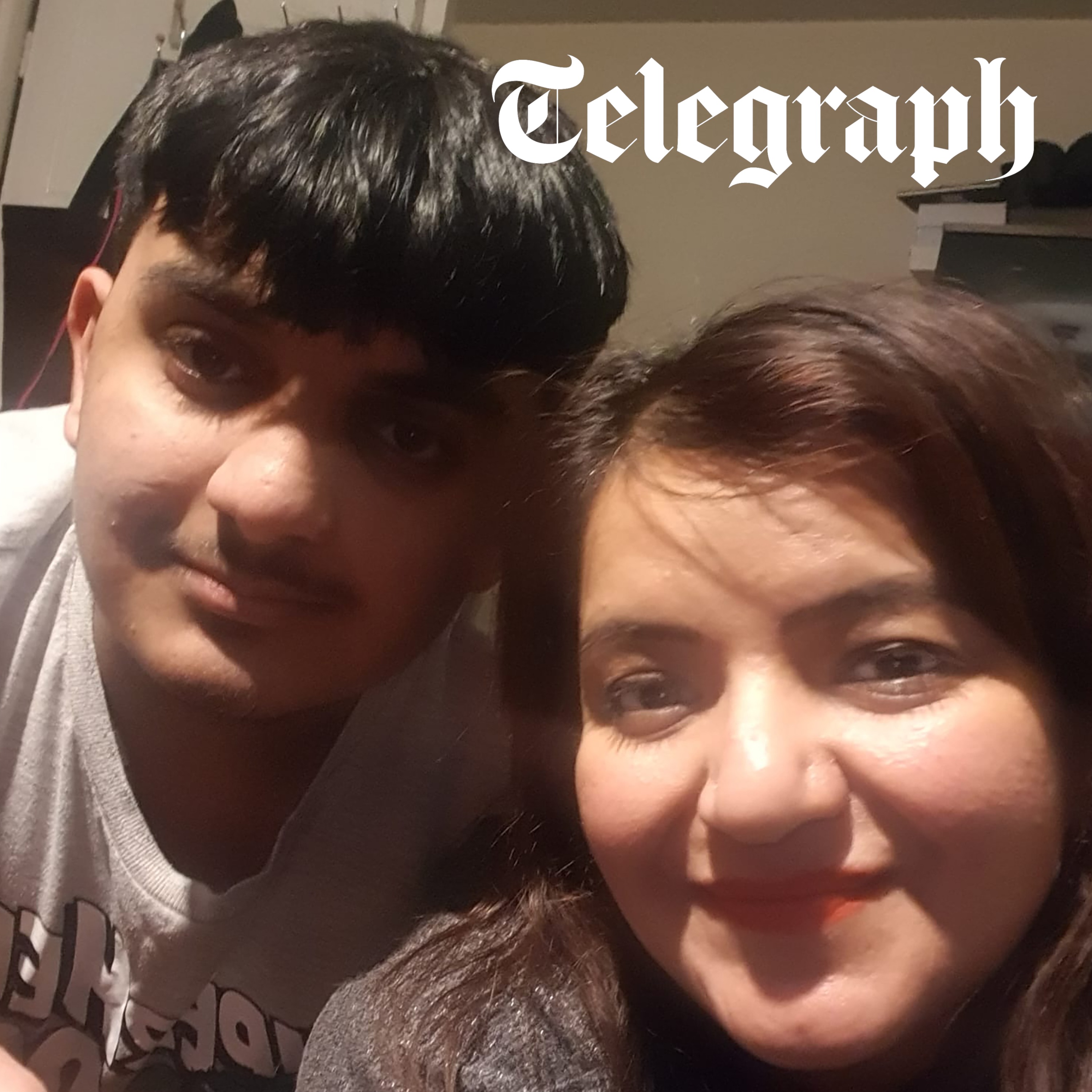
In this episode of The Daily T, hosts Camilla Tominey and Tim Stanley address the growing concern of knife crime in the UK, particularly focusing on the tragic case of Ronan Kanda, a 16-year-old who was murdered in 2022. The episode features a discussion with Ronan's mother, Pooja Kanda, about her efforts to advocate for 'Ronan’s Law', aimed at banning dangerous weapons like ninja swords and increasing penalties for their illegal sale.
Written by AI. May contain mistakes.
Exploration of conflicting statistics surrounding knife crime in the UK.
“So we're going to get into that specifically.”
Insights into the nature and recording of knife-related offenses in the UK.
“Martin Evans, our crime editor, joins us in the Daily Tea studio.”
Examination of trends in knife crime and factors influencing these changes.
“So it suggests that there are fewer knife-related homicides taking place.”
Discussion on the shift in weapon preferences among gangs over the decades.
“offences and data that really doesn't perhaps tell you the true picture as it is.”
Analyzing multifaceted causes of knife crime and community responses.
“So actually the damage isn't just done plunging the knife in, but in turn pulling it out.”
A deep dive into the case of Ronan Kander and its implications for knife crime legislation.
“I mean, Martin, you mentioned earlier the damage that can be caused specifically by zombie knives.”
Discuss the alarming trend of teenagers being sold dangerous weapons.
“Now, this is a knives and swords company run by two brothers who have been linked to a string of teenage murders.”
Explore how the accessibility of weapons affects youth violence.
“What did you learn about the ease with which DNA leisure could flog these deadly weapons to kids?”
Introduce Puja Kanda, a mother affected by knife violence.
“Tim, I know innately you're against banning things, as am I, but in this case I feel like I want to make an exception.”
Puja shares heartfelt memories of her son Ronan.
“Thank you very much indeed for sharing some time with us on the Daily Tea.”
Detail the events leading to Ronan's tragic stabbing.
“He had gone to buy a PlayStation from a friend and the people who attacked him believed he was that friend.”
Puja explains the dangers of zombie knives and their impact.
“but the nature of the weapons used, which has then moved you to launch a campaign to stop the sale and use of zombie knives.”
Discuss the involvement of DNA Leisure in the sale of dangerous knives.
“And crucially, these must have been traded through the post, right?”
Puja shares her campaign to change knife sale laws.
“how you'd have a company operating under that premise but actually selling extremely dangerous knives to young people as, quotes, collector's items.”
Learn about the journey and motivation behind campaigning for Ronan's Law.
“We were not going to be stopped because one thing that I said the day we received that email and we read it together, I cried.”
Explore the specifics of Ronan's Law and its impact on knife sales.
“So the Ronan's Law is about responsibility for stronger safeguards on knife sales, especially online.”
Discuss the systemic issues contributing to knife crime and the need for broader societal change.
“My son didn't die because of one single failure.”
Gain insights into the factors driving gang violence and youth vulnerability.
“So we are trying to develop something that we can train them, we can show them what the gaps were, because I actually see so much gaps that they might not be able to see it.”
Examine the cultural factors that may influence youth behavior towards violence.
“is the gangs see the vulnerability of each child and how to expose them and how to use their vulnerability in this.”
Investigate the significant role of parenting in preventing youth violence.
“grab a sword and what drove him to that is the one thing that we need to look at it wasn't just that he bought a machete and sword and a machete he actually went and used it and not just that I've been buying it.”
Understand the impact of empathy on youth behavior and the societal factors at play.
“What I find exasperating is that if you watch the news, not to blame us, but if you watch the news, you would just think Britain was totally broken and full of broken people.”

Get the gist, explore an idea or ask about something said.
 Claude
On The Daily T, what are the key points of this episode?
Searching your listeningAutomatic transcript. May contain errors.
0:28The Telegraph
0:41Tim there's a great deal of confusion and we've actually discussed it on this podcast about crime and the level of crime in the UK we're going to narrow in on knife crime yes because a little later in the Daily Tea we're going to be speaking to the mother of a boy called Ronan who was killed as a case of mistaken identity with a ninja sword. And it's a horrific tragedy, but it speaks to a wider problem, particularly in the teenage generation, with young men involved in gangs freely being able to access machetes, zombie knives and ninja swords, despite various government legislation trying to stop their sale.
1:27So we're going to get into that specifically. But the crime stat issue, it came up with Leila Cunningham. She's the reform candidate for mayor of London. She says that London's never been more lawless. But there are competing statistics. There are some on the right who say that we've hit sort of peak violence, casual stabbing, gangland stuff. And there are some commentators who say, actually, if you look at the statistics, that kind of crime has dropped significantly and London in particular has never been safer. and then there's a debate in the middle about what statistics you use and if the issue isn't really crime overall but changing patterns of crime, the kind of people committing it and who they're targeting.
2:08So it might be that it is down but certain kinds of crime which are particularly devastating and tragic are up. Before we speak to Ronan's mother Pooja Kanda, Martin Evans, our crime editor, joins us in the Daily Tea studio. Help us through this, Martin, because I've got some statistics here that I'll just give to you and you can tell me whether they're right or wrong. So the latest figures suggest 53 ,000 knife offences were recorded across England and Wales in the year to March 2025. Now, in the Met Police area specifically, it's cited that there's a baseline of 182 offences per 100 ,000 people.
2:51Now I'm conscious even as I'm reading out these stats that all of these figures represent someone somewhere who's been stabbed, right? But where are we with a knife crime? Is it up? Is it down? Are the statistics worth the paper they're written on? Well, it's a really interesting question and not a simple one to answer because there are a wide array of statistics available and people from whichever position they are coming from will use them to their own advantage. But essentially you talked about the 53 ,000 knife-related offences and the key word that you used there was recorded. So they are offences that are recorded by the police.
3:37Now, not all knife-related offences are recorded by the police. So if a gang member, for instance, has a knife pulled on them, they're very unlikely to be reporting that to the police. So that figure will actually be an underrepresentation of the true picture. The figure about 182 per whatever it is, 100 ,000 people, I mean, it doesn't really mean anything, does it? No. I think the most important statistics in this debate are things like homicide statistics. So a homicide statistic can't be massaged. If a person has been killed, that figure is recorded and it's in black and white. The latest statistics available, and for some unknown reason, it only goes up to March 2024, that there were 262 knife-related homicides in the UK.
4:32And that was down on the previous year. So it suggests that there are fewer knife-related homicides taking place. There is also ONS statistics, and that will be figures that represent somebody's personal experience of crime. So they may have had a knife-related incident, may have been involved in a knife-related incident, but haven't reported it to the police. And then on top of that, you have figures from the National Health Service. So if somebody receives a stab wound, they will almost certainly end up in hospital being patched up. Those figures are very key as well because clearly you can't really lie about those figures.
5:19And those figures suggest that fewer people in the most recent statistics ended up in hospital for a knife-related injury. Again, suggesting that knife-related crime is going down. But is it going down from a historic high? So sometimes I've seen graphs which suggest that there is a real peak in this kind of violent activity around 2020. And yes, it is down, but it's down from a very strange phenomenon of a spike in violent crime. Yeah, I was looking at some data earlier, actually, and this is a really shocking figure that there has been a 64 % increase in knife-related offences. These are police recorded offences.
6:02of the last decade. So that suggests a very sharp increase of a recent history. The pandemic changed things because clearly there was a long period of time where people weren't out and about in the streets. The figures at the moment suggest that knife-related offences are around about 7 % down on pre-pandemic figures. So we had a sharp rise and then the pandemic and then things seem to be coming down. But it gets very confusing when you start talking about police recorded offences and data that really doesn't perhaps tell you the true picture as it is. Also, I think what's changed, Martin, and maybe I'm just going by TV drama, but back in the 1970s and 80s, for instance, then you might see flick knives depicted on screen or pen knives or kitchen knives.
7:00You certainly wouldn't. I mean, I'm being anecdotal here. I haven't looked at the data, but I don't remember many cases of people being killed with, in the UK, machetes, zombie knives, and ninja swords. That seems to be a new phenomenon. And certainly you wouldn't have heard of teenagers using such weapons. I remember some talk about the use of machetes and other knives around the triads in Luton near where I grew up back in the 80s. That's probably about it. So something's changed because the availability now of such knives and the online world has created an environment where teenagers can access weapons that frankly would have been the preserve of the military, maybe some people involved in sort of specialist wildlife and martial arts, or sort of wildlife and conservation.
7:55Am I correct, Martin? Yeah, and I think you hit on a really important point that in every kitchen up and down the country, there are deadly weapons that if somebody wants to go and hurt somebody, they can grab without any trouble at all. I think the truth is that in the gang culture, there is a certain status around having these zombie knives and machetes, weapons that look aggressive. It's a bit like having a dog. If you're a gang member, you don't want a chihuahua, you want a pit bull. And these blades are carried for status. I remember being at a police briefing a few years ago with a senior Met commander, and he was talking about zombie knives.
8:38And he was saying that following the Iraq war and conflicts in Afghanistan, medical paramedics had got very good at patching up knife wounds because, you know, in the battlefield, we're learning how to deal with these trauma wounds. But he said the problem with zombie knives is they were causing so many lacerations in the body that they were virtually impossible to patch up and save somebody's life. And this is because they have a serrated edge. So actually the damage isn't just done plunging the knife in, but in turn pulling it out. Yeah. And so they are, not only do they look deadly, they are actually more deadly than a normal blade.
9:27You see, the right wants to tell a story of everything's going downhill fast. And the left is increasingly countering that with, no, you're just lying. Things are actually progressing and getting much better. Isn't it just the case that there's always a certain level of juvenile delinquency and it fluctuates according to technology and, dare I say, fashion. You've mentioned different fashions in crime over there in the past. I remember the Yardies in the 90s. That was the big scare back then. And now there has been a fashion for knife crime. Well, the state has become aware of it and is taking action to reduce it.
10:04So it peaked and it will go down. But what doesn't go away is the fact that there are people who wish to commit crime. Yeah, and let's be frank. I mean, you're right that there will always be, sadly, homicides. There will always be knife crime in this country because we don't have access to handguns, quite frankly. Yes. I think the causes of this, you know, the old New Labour mantra of tough on crime, tough on the causes of crime. I mean, the causes of these things are multifaceted and they're complex. and a few years ago learning from the Glasgow model where Glasgow used to have I think at one point it was regarded as you know the most dangerous city in the world in terms of your chances of being injured in a violent incident and they challenged this with what was called a public health approach so they treated violent crime as a disease so you diagnose it and then you look at what's causing it, lifestyle issues, get to the root of why people are turning to violence.
11:06And that's been adopted across the country now. And it's very complex to explain what it means, but it's things like having youth workers in accidents and emergency trauma centres. So you get a young man coming in with a stab wound who fortunately hasn't died and gets patched up. He's not just then dispatched from A &E to go and seek revenge on the person who attacked him. There are youth workers in A &E who will sit this guy down and talk to him and try and divert him. Similar things are happening in police cells as well where you get people brought in. They have perhaps been arrested on suspicion of a gang-related offence.
11:50they may not be charged but a youth worker will sit them down and try and divert them away from from that inevitable path in schools I mean absolutely vital that we're in primary schools police officers talking to young children and I remember listening to a cop who um this just seems extraordinary but there was a trend a while ago something that was sort of disseminated among gang members that if you stabbed somebody in the backside, it wouldn't be fatal, but you would obviously frighten the person who you were attacking. Tragically, of course, that's wrong. There is a big artery. There's a very important artery around there.
12:29It makes me cross my legs thinking about it. And so, you know, just trying to educate young children about myths like that, None of these single sort of actions is going to resolve the problem. But together, it's a way of challenging and trying to divert people who may be drawn into that world. Sure. I mean, Martin, you mentioned earlier the damage that can be caused specifically by zombie knives. We're going to hone in on a particular case. I mean, it is just so tragic. At the end of the day, any young person losing their life to knife crime, regardless of the circumstances, maybe it's a gang member stabbed by another gang member, is appalling.
13:16This is particularly tragic because the young man caught up in this violence, Ronan Kander, hadn't done anything wrong, hadn't been the member of any gang at all, was the victim of mistaken identity. He was murdered in June 2022 by two teenagers who used a ninja sword, which had been purchased online. Ronan's mother, Pujo, who's going to join us later on the Daily Tea, and his sister Nikita have since championed Ronan's law that came into effect last August to ban such deadly weapons and increase sentences for those who sell illegal blades to children. We're going to talk about that aspect, but also the fact that the knife came from a company called DNA Leisure, which is the subject of a Channel 4 documentary.
14:00Now, this is a knives and swords company run by two brothers who have been linked to a string of teenage murders. Their names are Adam and Eddie Ilyaz, and they are the focus of the Channel 4 study of the availability of such knives and the selling on to children. They sold thousands of these deadly weapons over the course of 10 years before closing in 2024 after, Martin, that ban on zombie knives was finally imposed by government last year. I mean, you're across this documentary. What did you learn about the ease with which DNA leisure could flog these deadly weapons to kids? I mean, it's extraordinary to me that anybody would want to buy or sell these weapons.
14:53But, you know, I'm not a young gang member. The availability of, as I said earlier, I mean, we all have deadly weapons in our kitchens. but the availability of these particular machetes, zombie knives, these swords, they're wanted by people who are members of violent gangs. They are wanted for the simple reason to intimidate, to hurt and to kill people. There is no other justification for owning these weapons and there's no justification for selling them either. And since the ban came in, we have also had a number of amnesties where people have been encouraged to hand these sorts of weapons in.
15:36And I think something like 60 ,000 have been taken off the streets in recent years. But also in the documentary makes reference, I think, to what's called the grey economy, where you get people buying up these weapons and stockpiling them and then selling them on social media to get around the ban because they're not registered companies. These are individuals trading almost like sort of drug dealers on the dark web. And so there's pressure being brought to bear on social media companies who are allowing people to sort of advertise these things. But it's clearly not going to end knife crime by bringing in these bans and closing down these companies.
16:19But it is an absolutely vital, vital part of the fight against it because we need to take these sorts of weapons out of circulation. Tim, I know innately you're against banning things, as am I, but in this case I feel like I want to make an exception. It sounds like someone's selling anthrax with the explanation that it's a collectible. Yes. Some people just like having a file of anthrax in their front room. It makes no sense, right? No, it doesn't. And it's the ease with which, as we shall discover, it was bought by a young person. That's what is especially distressing. I think in this country we can't lawfully buy handguns and the number of people killed in this country by a handgun is minuscule.
17:06Yes. And I think that is an important analogy, that if you cannot lawfully buy these weapons, you cannot kill somebody with them. Yes. Obviously, people would then hit us with the question, is this not the same with shotguns and rifles? And I think it's very different because they are generally used as a tool. So shotguns can be used by farmers, et cetera. And there is also a tradition in this country of hunting and sportsmanship. And it's a very well-regulated and self-regulated community of people who do it. So if you are purchasing a shotgun and there are lots of checks and it has to be kept in a very secure place and all those sorts of things, you're probably doing that for a perfectly sane purpose.
17:55I think that's different from a zombie knife, which really only has one use. Well, the government has launched a knife licensing consultation that happened just before Christmas. It closes next month and it's backed by the lady we're going to speak to next. we're going to speak to Puja Kanda, whose son Ronan was killed in 2022 by one of these ninja swords.
18:30Well Ronan's mother Puja Kanda joins us now. Thank you very much indeed for sharing some time with us on the Daily Tea. I think in the first instance, quite often when something tragic like this happens to your son, it quickly moves on to becoming a story about policy and changes to the law. But actually, Tim and I would like to find out in the first instance what Ronan was like. Thank you, Camilla, for talking to me. Ronan was an absolutely beautiful, loving, caring an innocent child who was just walking home on 29th of June 22 when the tragic incident happened. Before that, he was absolutely beautiful.
19:19Honestly, one of the best children who never shied away from helping his mom in a housework. He even helped many other children in the school, giving them tuition after the school hours. I didn't know any of that until after actually I found out what Ronan's character was at school. And he was very much loved, sort of our family. And he kept us together. We are broken by what happened to Ronan. Buja, I think adding to the awful tragedy of this story is that your son really was in the wrong place at the wrong time, right? He had gone to buy a PlayStation from a friend and the people who attacked him believed he was that friend.
20:11He was at the right place, Tim, because he was just outside his house. He was just two doors away. He was walking home. They were in a wrong place. They were the people who should not be in that place at all and yes he was he picked up the remote control he was walking home listening to his music and these people told mistakenly that he was somebody else and they just stabbed him without looking at his face so he was at the right place unfortunately they were in the wrong place Pooja I don't want to put you in a difficult position to relive much of this at all because it's still very recent I mean we're only talking about something that happened three to four years ago but when you found out what had happened where were you and what was that moment like I was in my meditation class Camilla and just sitting like I'm sitting in a darker room where you're just trying to concentrate I did not feel right it was I was feeling very uneasy as it his mother's instincts, whatever you call it.
21:22But I was with my neighbor whose brother called her and said to her, somebody has been stabbed. And I'm sitting in that group, not knowing that it's my own child. And my neighbor says to me, Pooja, I'm going home. Come on, let's go. Something isn't right. Somebody has been stabbed outside her house. And my friend hasn't even stopped and my husband has called me saying that Ronan has been stabbed just outside our house two doors away and I remember Camilla the car hasn't stopped I have just jumped out running toward the tent the blue tent and the tapes and the police around it and I'm trying to push them away and they were not allowing me.
22:12I was forcefully pulled back. And that's when the ambulance people came and told me they have tried to even operate on Ronan to save his life. And unfortunately they couldn't save him. The issue here is not just that he is the tragic case of mistaken identity, but the nature of the weapons used, which has then moved you to launch a campaign to stop the sale and use of zombie knives. And Puja, sorry, I do not want to cause you any more distress than is necessary, but it should be pointed out that Ronan suffered two wounds. One was 20 centimetres deep, the other 17 centimetres because he was stabbed with a ninja sword.
22:59Now, it's the nature of the weapon that was used here, Puja, which is of key concern to you in order to stop this happening to any other parents. Tell us about zombie knife use and what you found out about it subsequently. So we did not know anything about when this happened to Ronald first, anything about bladed article. The term did not exist in our vocabulary, in our dictionary. and until I had first day of the court case, we went there and we were shown the sword in the gallery and when I saw that Camilla, I literally fainted. I fainted outside the courtroom. My child has suffered that because before that I had no, So nothing I knew about the case, about the bladed article.
24:00Now, slowly, slowly, the revelations were out. The fact that there were 25 plus weapons were bought by a 16-year-old child. I will clearly say he was a child who was doing that for the past six months. and he bought that online from DNA Leisure and there was no verification. He was doing that like he was buying bread and milk in the shop, 25 plus weapons, and then on the top of that he admitted in the courtroom that he's selling that for profit to others. So it wasn't just the danger that he was buying, he was selling that to other perpetrators to be in the future. I saw the gap. I saw the huge gap.
24:57And crucially, these must have been traded through the post, right? So how did the killer collect something? Did he have to prove who he was? So he was buying them on his mom's credit card, on her ID. And he admitted in the court that she did not knew which is to be honest I find it hard to believe as a mother myself if my child is using my credit card and I don't know where's the money going from my pocket then you are blinded to your circumstances saying that I um he bought them then he went and collected them from the post office with his mother's ID and he had his face covered. So he was handed in with his mother's ID.
25:56There was no right checkups done at the post office at all. And that was one of the reasons that we are fighting and we are trying to work with the post office as well to get this right for future references. Just to clarify, Puja, the killer took delivery at the post office of a ninja sword set and a large machete, which, as you say, for a 16 year old, seems completely unfathomable, Tim, that you could so easily order something. OK, albeit using somebody else's credit card who is an adult, but then get through the process of actually receiving it despite being a masked teenager. And the company, DNA Leisure, has now closed.
26:43Is that correct? It's correct, Tim. We wrote to DNA Leisure, actually, after what happened to Ronan, after the court case. And my daughter did Nikita Kanda, and his answer was, the law permits him. Yes. And he will carry on doing it. So let's just clarify that for a minute, Pooja. So basically your daughter Nikita Ronan's sister did write a letter to one of the company's owners. The company was owned by two brothers. And Adam Elias responded saying that the weapons were just collector's items like stamps. Yes. Now, that obviously raises very, very serious questions about how you'd have a company operating.
27:30and this of course is investigated by the Channel 4 documentary, how you'd have a company operating under that premise but actually selling extremely dangerous knives to young people as, quotes, collector's items. I mean, it's preposterous. It is. Absolutely it is. And the continuation of that behaviour is actually profiting on people's murders and that behaviour was carrying on and you could see that he was never going to be stopped until we actually started campaigning. We started making the noise. We were not going to be stopped because one thing that I said the day we received that email and we read it together, I cried.
28:16I cried, Camilla, knowing somebody can write that type of email back to a mother and a sister after they have raised the concerns of how they are operating and what they're selling is actually killing people outside. And one thing I could say to him, that he's the reason that I have Ronan's Law, because when he wrote in the email that law permits me, that's when I said to my daughter, there you go, this is our fight. We are going to change the law and then we will see, we'll really be able to continue selling these type of weapons. Ronan's Law passed in August. What did it change? So the Ronan's Law is about responsibility for stronger safeguards on knife sales, especially online.
29:10And so the accountability sits with the retailers and the system and not grieving families only. This is also a banning of a ninja sword that was used on my son. there is no need for that type of weapon to be available and in a wrong hand this is what happens in a wrong hand it takes life so basically it's resulted in a ban on ninja swords that's 14 to 24 inch blades anyone found with one could face six months in jail later increasing to two years plus it makes it illegal to possess, sell, make or import the weapon. It's also resulted in increasing the jail sentence for selling weapons to children or illegal blades such as Nombi Lives to two years and it requires online retailers to report any bulk or suspicious looking purchases of knives to the police.
30:08Are you satisfied that the law has gone far enough Pooja or would you like to see more? I would like to see more. I would definitely like to see more. My son didn't die because of one single failure. He died because of the gaps across the system. There was not just the one failure I saw. Obviously, this will play a huge part in preventing these type of weapons going into wrong hands. It would definitely play a huge part in that. But saying that, Roland, there was all the organizations who have played a role. They need to make the change within themselves as well. Because it's not, I feel like there is a more responsibility we are putting on children, saying that we need to educate children, yet adults are failing the children as well, like parents, like the post office in this instance.
31:01They need to come forward to do the prevention work as well. how they can implement rules and regulations. So these type of ID mishaps do not happen again. We are trying to work with West Midlands Police right now. So we are trying to develop something that we can train them, we can show them what the gaps were, because I actually see so much gaps that they might not be able to see it. So I just want to highlight that to them. This is the disturbing thing about this entire case, Pooja, and it's an absolute testament to you to have introduced this law in your son's name and I congratulate you for it.
31:40But the trouble is there will always be a way for criminals to exploit the young and for the young to carry out criminal acts thanks to those who have enabled them. I wonder, Pooja, what you have to say about the prevalence of gang-based violence in this country. Why do you think it seems to be so common? Why are young men attacking each other in this way? I'm no expert here. I'm still learning so much about the knife crime. But what I have been put through, I can tell you for one thing, is the gangs see the vulnerability of each child and how to expose them and how to use their vulnerability in this.
32:27and this is why our child is a vulnerable. How I can say is my son, Ronan, was not a vulnerable child because his mother was a strong mother, even though she was a single mother. I brought him up with morals and love. I brought him with the strongness. So no matter what circumstances we are in, we can make through it. And my son and my daughter are that strong mountain that I can say that I brought them up. And I do believe the parents are not spending time with their kids, not instigating the love that they need to. The children are not strong enough because of the lack of communication in their life from their parents as well.
33:15I am trying to learn why a gang member who can come into your child's life and take away your child, and as a parent you don't have an incline on that, what's going wrong with your parenting, what's going wrong with the schooling, what is going wrong with people around that child that we are not able to secure a child and show him what's right and wrong? Yes, because Pooja, Ronan was caught up in something that was inherently evil in intent anyway because even if this killer had stabbed his own friend who he had mistaken for Ronan, what on earth motivates a teenage boy to think that he should take a ninja knife to anyone this is what's troubling about this he was going to attack his friend this brutally and unfortunately mistook him for ronan but it's just extraordinary that that should even be in his head that's what one of the things camila that nobody's safe outside walking today i could be taken for anyone else because of my hair matches from the back for somebody else so are we safe that's we need to ask ourselves why we are not safe why a child 16 year old thinks that he can grab a sword and what drove him to that is the one thing that we need to look at it wasn't just that he bought a machete and sword and a machete he actually went and used it and not just that I've been buying it.
34:52To me, it was a culture around the machetes, around these type of weapon is huge among these youth nowadays. And there is this scare that, oh, there is a culture going on. I think we need to, one of the things I say, who's going to take a plunge and say, I'm not going to carry these weapons? Who is going to stop being part of that sheep behavior? there has to be somebody who has to do that. Yes. You're saying basically, Pooja, that this is about a hell of a lot more than just knife legislation. This is about education, this is about family, this is about society. It is. It's a lot more work. Pooja Kanda, thank you very much.
35:38You're welcome. Thank you. What I find exasperating is that if you watch the news, not to blame us, but if you watch the news, you would just think Britain was totally broken and full of broken people. But there in Pooja is a good human being. Ordinary middle class woman, raised her son really well, obeying the law. When a tragedy comes along, she does something about it. Not everyone can. Some people are just paralyzed by grief. I don't understand that. But she has channeled this into civic action and she has made things so much better. Why should she have to tolerate other people doing such horrible, evil things?
36:19I know, and I thought that when she was speaking. Why has this happened to your son? Her son had nothing to do with these people. She was right to correct me when I said wrong place, wrong time. He was in the right place. He was where he should be. It's other people who intruded into his life. Why are there people out there selling these weapons and making cash off of something that no one needs to own, collector's item be damned there's no reason to own this but also what has gone wrong with these kids that they would think of purchasing one and and using and using it on someone who owes them money that's why he attacked this person because he thought that they owed him money but they must lack a basic aspect of humanity and okay look they're 16 at the time and i've got a 15 year old boy i listened to puja and i think that could have been my son yes my son could have gone out gone to buy a PlayStation controller down the road and this happened it's it's horrifying for parents there is a there for the grace of God go I element to all these whenever we cover this I like well up because I think I could be puja and we have to have some very serious conversations about what has gone wrong in the upbringing of a 16 year old that thinks it's a good idea to buy a ninja sword, let alone use it.
37:41She's right to identify parenting because who else must take responsibility for a child if not a parent? The clue is in the word child. Now, I appreciate you can be criminally liable over the age of 10. And we had this with the Bulger killers and we have these conversations. And is it nature or nurture or all the rest of it? But she made a very good point there about the fact that this knife was purchased with a mother's credit. card yes yes and as a parent you know whether your children are using your credit cards we've had the same conversations about people like Axel Rudolf Cabana and what his parents knew and when they knew it yes and was then using their id to collect the knife from the post office yes and for me it's I know people particularly conservatives always say it's due to a lack of discipline in lives.
38:33Is it not down to a lack of empathy? Yes. I mean, I was ill disciplined. I was badly behaved at that age, but I wouldn't have considered taking someone's life. You value life. You're brought up to value life. Well, you just instinctively don't want to make someone hurt. Yeah. So because I believe that's innate to all human beings, unless you're actually neurologically broken, you're psychopathic. I don't understand why empathy wasn't working in that case. Because all of the important things in life, in the lives of these people have been devalued and replaced with materialism, some kind of I'm a bigger man because I'm aggressive, membership of gangs, being in the cool group, narcissistic behaviour, the listening to violent, strange, you know, cultural references, music, the playing of violent games.
39:33You put all of this into a soup and it creates this environment where actually the value of another person's life comes second to how I'm perceived in my particular group. The social media I can record, whether I'm feared rather than loved. I mean, and you have to add in the adults in the room here who are capitalising and financially benefiting on all of this very obvious teenager vulnerability and confusion. You've got people cashing in on these disaffected youths, totally cut off from what you and I understand to be sort of human kindness. And I instinctively want to see those young men punished for what they've done.
40:20There's also a part of me that wonders is everything you've just described can be found in prison. And they're simply going to have many more years of marinating in all the sickness that you've very eloquently described. We'll be back on Monday at 5pm.
40:46Thank you.
Knife crime in the UK has reached “national epidemic” levels, with 53,000 offences recorded in England and Wales in the year to March 2025. But how has this tragedy become so dangerously normalised, and what is the Labour government actually doing to tackle it?
We look into the tragic killing of 16-year-old Ronan Kanda, who was murdered in 2022 with a ninja sword purchased online by two 17-year-olds in a case of mistaken identity.
Ronan’s mother, Pooja Kanda, joins us to discuss the campaign that led to ‘Ronan’s Law’ - banning these deadly weapons and increasing sentences for illegal sales. Pooja also talks about the now-closed company, DNA Leisure, which sold the sword that killed Ronan and is linked to multiple teenage murders.
Plus, we’re joined by The Telegraph’s crime editor, Martin Evans, to break down the latest government response, including the new Knife Licensing Consultation and the launch of the National Knife Crime Coordination Centre.
We want to hear from you! Email us at [email protected] or find @dailytpodcast on TikTok, Instagram and X
► Sign up to our most popular newsletter, From the Editor. Look forward to receiving free-thinking comment and the day's biggest stories, every morning. telegraph.co.uk/fromtheeditor
Producer: Georgia Coan
Senior Producer: John Cadigan
Executive Producer: Charlotte Seligman
Video Producer: Will Walters
Studio Operator: Meghan Searle
Social Producer: Nada Aggour
Editor: Camilla Tominey
Hosted on Acast. See acast.com/privacy for more information.


