

 Ask ChatGPT
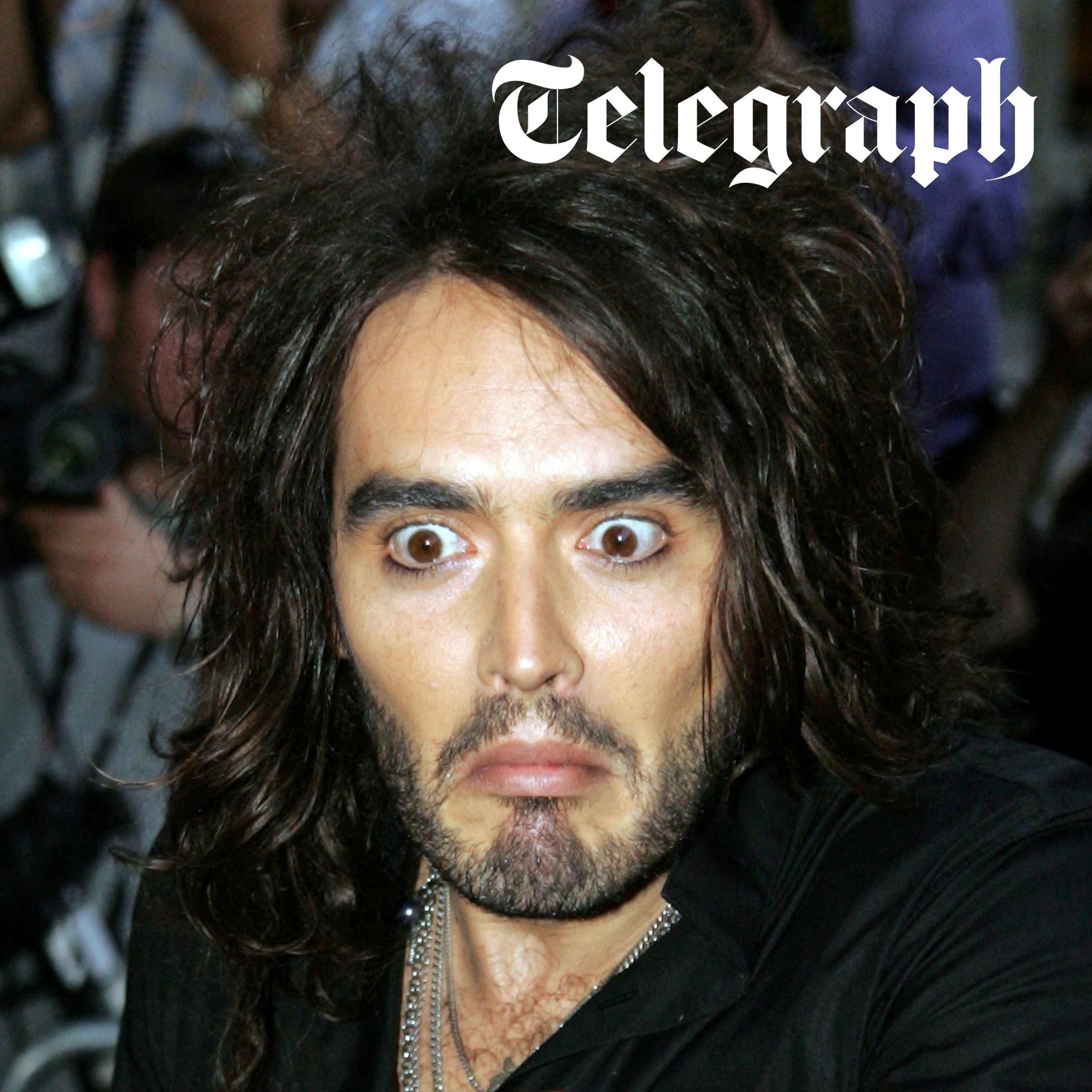


Nick Timothy discusses his controversial tweet about an iftar in Trafalgar Square, where he said the azan and mass ritual prayer “dominated” a shared civic space and inflamed community divisions; he argues for “ordered pluralism” rather than banning religion or adopting French-style secularism.
Nick Timothy (former head of policy/communications at the Conservative Party; MP; critic of Islamisation claims) and Rachel Johnson (journalist; sits in for Camilla on The Daily Tea).
the azan was broadcast via loudspeakers and explicitly repudiates other faiths; iftars are fine when inclusive and not structured around public prayer; Islam is portrayed as more “totalizing” than Christianity and less compatible with a secular/spiritual divide; government definitions of “anti-Muslim hostility” allegedly blur race and religion and silence debate.
prayer near Houses of Parliament; Abu Hamza’s street prayer; Hizb ut-Tahrir demands for prayer rooms (via Ed Husain’s account); Catholic restrictions on women clerics; French laïcité court case referenced; Gaza independents and school prayer disputes; Pro-Life March prayers.
Written by AI. May contain mistakes.
Nick Timothy discusses his statements regarding the Ramadan prayer event.
“And we're going to talk about the one man...”
Debate on the appropriateness of prayer in civic spaces.
“Because I don't think that is appropriate for a shared civic space like Trafalgar Square.”
Exploration of differences between Christian and Islamic expressions in public.
“Obviously, we all believe in freedom of religion.”
Investigating public reactions to Islamic practices in shared spaces.
“And you don't have to start an iftar with the azan or the prayer.”
Discussion on the implications of mass prayer events in public.
“that's obviously part of the tradition and lots of us will have stayed in Muslim countries and heard it and in its own context.”
Delving into the complexities of balancing religious freedom in a multicultural society.
“not in mosques, but in shared civic spaces like Trafalgar Square?”
Explore the complexities of how different religions coexist in modern Britain.
“Well, my faith to some extent is sex segregated.”
Discuss the influence of extremists on the perception of Islam within communities.
“And then, of course, you have the fact that you point out in the Catholic Church, no women are ordained.”
Delve into the concept of ordered pluralism and its implications for British society.
“to make a success of their lives and to get on with things but also to have the kind of social capital to say no to these people.”
Examine the impact of demographic shifts on societal tensions in Britain.
“So there is something of a precedent for that kind of ordered pluralism there.”
Explore the complexities of discussing religion and race in political discourse.
“because the change you are describing is well underway.”

Get the gist, explore an idea or ask about something said.
 Claude
On The Daily T, what are the key points of this episode?
Searching your listeningAutomatic transcript. May contain errors.
0:02The Telegraph.
0:30The Red Cross is committed to achieving an inclusive blood donation process that treats all potential donors with equality and respect while maintaining the safety of the blood supply. Join us and help save lives. To learn more and make your appointment to donate blood, visit redcrossblood.org slash LGBTQ. That's redcrossblood.org slash LGBTQ. Ryan Reynolds here from Mint Mobile. I don't know if you knew this, but anyone can get the same premium wireless for$15 a month plan that I've been enjoying. It's not just for celebrities. So do like I did and have one of your assistant's assistants switch you to Mint Mobile today.
1:07I'm told it's super easy to do at mintmobile.com slash switch. Upfront payment of$45 for three month plan equivalent to$15 per month required. Intro rate first three months only. Then full price plan options available. Taxes and fees extra. Default terms at mintmobile.com.
1:27The Prime Minister is calling for Tory MP Nick Timothy to be sacked over his comments about Ramadan prayer in Trafalgar Square. Timothy described the event as an act of domination and straight from the Islamic playbook. Is he standing up for British values or is he inflaming community divisions? We're joined by Nick Timothy himself to discuss his controversial comments for the first time. Welcome to The Daily Tea with me, Tim Stanley. And me, Rachel Johnson.
2:07I'm delighted to be joined today by Rachel Johnson, sitting in for Camilla. How are you? I'm very well, thank you, Tim. Good. And we're going to talk about the one man... The talk of the town. And the one tweet that has dominated politics for the last week, such that the Prime Minister has called for the shadow justice secretary to be sacked, although Kemi Bednock has defended Nick Timothy, describing him as standing up for British values. Well, he is here with us right now. Nick Timothy. Hello. What did you say and why? Well, I saw the footage of the iftar that was on Trafalgar Square. The iftar is the movement that Muslims break their fast during Ramadan.
2:47and I've attended iftars. They're nice things. They're often very inclusive. This event I think was different because they started the iftar by performing the azan, the Muslim call to prayer, which says explicitly there is no God but Allah and Muhammad is his messenger, which I think is a direct repudiation of other religious beliefs. And then there was an area that was cordoned off on Trafalgar Square, so planned in advance, for mass ritual prayer. And I saw that, so I'll explain what the context of all of this is in a moment, I suppose, but I saw that and I described it as an act of domination.
3:27Yeah. Because I don't think that is appropriate for a shared civic space like Trafalgar Square. You tweeted, perform these rituals in mosques if you wish, but they are not welcome in our public places and shared institutions. And given their explicit repudiation of Christianity, they certainly do not belong in our churches or cathedrals. There have been Islamic events held in churches and cathedrals, that's correct. But in this case, were you concerned about the fact this is very close to, say, St. Martin's in the fields? Well, I think that might have been a conceptual factor that some people would want to point to.
4:00I think it is something that you have to consider when you're judging this event. But I think even if the prayer hadn't been directed past St. Martin's in the fields, I still think there are reasons to question it because people question whether critics of the event are picking on Islam and Muslims because they say, well, the passion play is held at Trafalgar Square. Or there have been events for Hanukkah or for Vaisakhi or Diwali. And I think there's a clear difference. I'm absolutely not saying there shouldn't have been an iftar. I will come on to that. I'm not saying there shouldn't have been an iftar at Trafalgar Square.
4:44And I'm not saying that Muslims shouldn't be free to pray in their mosques and their homes. Obviously, we all believe in freedom of religion. But the difference is that those events are not exclusionary in the same kind of way. And the azan is a very clear statement of the supremacy of Islamic beliefs over others. And the act of prayer, when performed in that way, dominates what is supposed to be a shared civic space and says this belongs to us. And the context, when it comes to the use of prayer in this kind of way, is a growing trend over a number of years where certainly Islamists have sought to dominate and Islamize, in the words of Ed Hussein, the Islamic scholar, public spaces.
5:37Abu Hamza did it when he was thrown out of Finsbury Park Mosque. He organized and led ritual prayer on residential streets. But we've seen people take breaks from the Saturday marches against Israel and perform collective prayer in open air on those Saturdays. And we often see it now in places of national significance. So we've seen it in, for example, facing the houses of parliament and things like that. And you don't have to start an iftar with the azan or the prayer. And Islam actually gives Muslims lots of flexibility about how they meet their requirements to pray. You can defer your prayers until later if you wish.
6:18So most iftars, when they're organized for others to be involved too and to be inclusive, don't have the azad or the prayer. So I think the question is, why did people want that in a public space in this way? I spend time in Muslim countries, and we're all familiar, those of us who have been to Muslim countries, with the call to prayer, which is five times a day, the first one at 5.30, then at 12.30, then at 3.30 or 7.30. And it's very loud and insistent. and the faithful then do pray. When you talk about the An-Nan here, was it an actual sound? Did somebody cry out, aloha, akbar, and God is great, and God, there is only one God, loud, so the entire Trafalgar Square could hear it?
7:12Yes, it was performed through speakers. So with a loud speaker, through a loud speaker. Yeah, and look, I mean, in Muslim countries, that's obviously part of the tradition and lots of us will have stayed in Muslim countries and heard it and in its own context. So we are guests in those countries and we do not object to that custom. I think you can appreciate it sounding quite beautiful. I have every respect for it. We don't do that in this country because we're not a Muslim country. Not yet. And we're not a Muslim country. I don't think we're going to become a Muslim country. But I think that's the difference because the call to prayer is obviously, if it's broadcast at volume, it's indiscriminate.
7:53It's there for everyone to hear. And the message is not a neutral message. It's a proclamation that Islam is the true faith and others aren't. But nobody on the number 24 bus going down Whitehall will know what the call to prayer actually says. And I mean, I said, read your tweet. I think lots of people do know what it is. and they do understand what the intent of broadcasting it at volume in public places is. And obviously, adherence of Islam know what it means as well. And I think this is the point. Why are people choosing to broadcast it in public places, not in mosques, but in shared civic spaces like Trafalgar Square?
8:39I don't think it's appropriate. I think we have to understand why people might want to do that. We do have to cover the question of balance and are you singling out Muslims in a way you would in other faith groups. So, for instance, you mentioned praying opposite parliament. Christian groups do that all the time when they're trying to influence a bill, etc. You mentioned singing in such a way which asserts Islam supremacy. Well, many expressions of Christian belief have an implicit suggestion of supremacy because they assert that Jesus Christ is the son of God, which is a highly controversial idea, including for Muslims.
9:17But they accept that that is done in public places when Christians do it. I don't think it's that controversial an idea in a country that's been Christian for as long as ours has, but we can return to the question. It's controversial, but it might be controversial in highly multicultural London, where we now have to rub up against each other and share a public space. And I guess... But you've just made Nick's argument. Right. Nick called the act of domination doesn't sit well in that in a society that's trying to have people rubbing along with each other in a largely Christian country. No but my point is is that Muslims are used to the idea that Christians get the microphone and there are some elements of Christian belief which may be seen as exclusionary but no one really complains about that.
10:06Can I question. The first is, I do think there is a difference, as I said, between Sikhs dancing, Jews handing out doughnuts, and that kind of thing, and what we saw at the Iftar on Trafalgar Square, because those are consciously inclusive events. And I think iftars are often consciously inclusive events, and that's totally fine, and totally welcome. It was the organized act of mass ritual prayer and the call of the azan that I think made this different. The other thing is, even if we said actually this is exactly the same as the things that Christians do, I do think we actually should treat Christianity differently, because this country is founded upon Christianity.
11:02And we, you know, as the share of the population grows that is maybe more secular, maybe less religious, our society is still founded on Christian ideas. The very concept of secularism was only really made possible through Christian thinking. And it's one of the clear differences between Christianity and Islam. Jesus said, render unto Caesar what is Caesar's, render unto God what is God's. Jesus himself set out this distinction between your spiritual life and the life that should be governed by man, by political leaders. That kind of distinction doesn't exist in the same way in Islam. And Islam, for theological reasons and for sort of cultural and legal and political reasons over centuries, is more totalizing than Christianity.
12:02It doesn't respect that line between the secular and the spiritual. And I think that is one of the contextual things that we need to understand when we're considering these questions. I think part of the context is also that in this country we have a particular brand of Christianity, which we're used to, which is very different from the more strident, self-confident brand of Islam that has come here. So, for instance, there are still elements of Christianity which are contestable and controversial. Every year I take part in something called the Pro-Life March, in which we march around, including to Trafalgar Square, in witness for the unborn.
12:40And that involves prayers. Now, that's very controversial. We know it is because the British government has actually banned people from doing that outside of abortion clinics. We have laws. And for those who are saying over the past week, you can't ban prayer, we've done it. My point is that that's controversial. This is controversial. But I guess if on balance I had to choose between one or the other, I'd rather have a general policy of allowing people to pray and accepting that some offense might be caused than trying to referee between groups and say, you're allowed that, you're not allowed that, because I subjectively judge that one form of prayer is more controversial than another.
13:16But I don't think it needs to be as binary or as simplistic as that. And I don't think what I'm saying can be said to be subjective in that kind of way. I mean, I've explained why I think contextually these things are important and we should be able to talk about them. I've explained why I think this particular way of organizing an iftar is different to other kinds of religious festivals, including iftars where there aren't public prayer in that kind of way. and I've also explained that I think Christianity is different in this country because it is our foundation so I don't think the debate needs to go into this like hard binary choice where is everything allowed or is everything banned there will be there will be a more subtle way through this but it began to it began to move into that because for instance partly I suspect in retrospect trying to justify why Kemi Batenock came out in support of you, some Tories started to say things like the issue was that it was sex segregated.
14:25Well, my faith to some extent is sex segregated. For instance, we ban women from becoming clerics in the Catholic Church. We have nunneries and monasteries, etc. We do things that if the eye of the state were to turn on us, I'd be worried about the state starting to get into the business of deciding what religion is and isn't acceptable. That's one reason why I'm personally sensitive to attempts to police the Muslim community, because I can see someday the liberal state coming for me too. There's lots of examples where government has started to address particular problems and challenges. I think of the way through counterterrorism policy in the past, the government has sought to come up with ways of monitoring what might go on in Islamic supplementary schools, which are unregulated.
15:22And then civil servants will say, well, now we've got to talk about Sunday schools. So your caution, I think, is completely understandable. And, you know, I don't sit here today with a 27-page document explaining exactly what we should do in some circumstances as opposed to others. You know, I'm trying to start a conversation about how we live together in a country where we do have different religions and we do have some people without religious belief at all. I don't want to throw out the Christian and the Christian influenced philosophical and legal and institutional traditions that this country has.
16:06But I do think we have to have a really serious conversation about these things. We sometimes talk about the coexistence of different religions and the strains of different religions in the context of things like security and terrorism. But actually, I think the more important conversation in a way is the sort of social and the cultural change in the country and the ramifications of those changes for our institutions, our laws, our norms, and so on. And I think we have a couple of paths before us. And I really worry about this. So we've got to get this right because the future, if we don't get it right, I think is quite worrying.
16:48On one path, we can have a conversation where Muslims reconcile how to be good Muslims and good British citizens who live in the Britain of today with all of its difference. And there's loads of Muslims who do that. I mean, it's obviously possible. You can be a good, faithful Muslim and be a good citizen of this country. But if we don't do these things, the other path is one where our coexistence is actually quite uneasy and lacking in trust and potentially violent.
17:43on sexual orientation. The Red Cross celebrates this historic change and welcomes those who may be newly eligible to donate blood. There's a place for everyone in the mission of the Red Cross. The Red Cross is committed to achieving an inclusive blood donation process that treats all potential donors with equality and respect while maintaining the safety of the blood supply. Join us and help save lives. To learn more and make your appointment to donate blood, visit redcrossblood.org slash LGBTQ. That's redcrossblood.org slash LGBTQ.
18:46Are you noticing your car insurance rate creep up even without tickets or claims? You're not alone. That's why there's Jerry, your proactive insurance assistant. Jerry handles the legwork by comparing quotes side by side from over 50 top insurers so you can confidently hit buy. No spam calls, no hidden fees. Jerry even tracks rates and alerts you when it's best to shop. drivers who save with Jerry could save over$1 ,300 a year. Don't settle for higher rates. Download the Jerry app or visit jerry.ai slash ACAST today.
19:28I think Tim is guilty of... He's just guilty. He's a Catholic. Tim is guilty. We could end it there. but I think the segregation is actually a red herring and I was taken down that route in my initial sort of queasiness about this mass event I wanted to find something wrong with it and I lit upon the segregated aspect of the actual prayer but then of course you're hit with all the whataboutery If you go to the Western Wall in Jerusalem Well I've done that and there's a tiny section for women and there's a big section for men where you'll see Clinton and, you know, and Macron and Xavier Millet and everybody, you know, bringing their Jewishness to it, which is, I think, fabulous.
20:14But anyway. And then, of course, you have the fact that you point out in the Catholic Church, no women are ordained. And in synagogues, which I've been to Alan Yentob's funeral, for example, it was segregated, the actual prayer section. And I was thinking, what am I doing sitting here? for the former head of BBC One in a segregated synagogue in St John's Wood. Anyway, I think that's a red herring. I think the kernel of your argument is really about the fact that our good Muslim brothers and sisters are being used by what you call the Islamists, and they're not aware of this, but this is why you used the word domination, which is I think the bit that everybody was triggered by because it suggested a recolonisation of the Muslims in what you rightly and correctly describe as a mainly Christian country.
21:12So can you explain why you think that your average Islam is being turned into Islamists, being Islamised, and why this is a symbol of that? Well, I would really recommend lots of books on this kind of subject. Ed Hussein. Ed Hussein is a friend of mine and he is, actually as a young man, he was involved in extremism himself. I know, I've read it. Saw the futility and the stupidity of it and has since dedicated his life to exposing extremism, showing people the reality of it, but also studying Islam and its history in order to show people that actually it's perfectly possible for worlds and our civilizations to coexist.
22:02So yeah, he wrote this book called The Islamist, where he describes his time as a member of Hizb ut-Turiyah in East London. And he describes exactly this phenomenon, the way the members of HT would demand at their college things like prayer rooms and things like that. And then the prayer room would be given over to them and then the corridors around it would be dominated by them. And they'd tell people that they weren't welcome there unless they were one of them. And it's a test of authority. And it's a lot of these things, I think we non-Muslims think, well, there's a message being sent towards us.
22:41But we've got to remember that there's actually a message being sent to lots of other Muslims. Because the hardliners, the extremists, often, you know, when they are ingratiating themselves with senior politicians or chief constables or whatever it is, they are basically sending a signal to Muslims who don't share their hardline views that nobody's going to come and protect you. These guys are on our side. We've got the power in our community. So you shut up. And this is not just a sort of Islamists versus non-Muslims argument. This is actually an argument between Islamists and normal Muslims who want to get on with their lives.
23:21and we've got to do much more to help normal Muslims to make a success of their lives and to get on with things but also to have the kind of social capital to say no to these people. Okay, you've tried to draw a line with your tweet and we've seen the election of Gaza independents, I think four or five of them. We've seen someone like Catherine Burblesings trying to draw the line because there are pupils in her student body who want to pray publicly in the playground. And she's actually had to go to court to defend, you know all about that. I know. To defend the secular, the laicite, as it was always called in France, of her school, which is the part of the endowment, part of the foundation of that school.
24:03And I'm completely on her side. But it seems to me that we've completely, as we are a Christian country and the king is head of state, and we've got a kind of weedy, milky heir to the throne who's just declared he's sort of Christian, I feel it's very hard for us as a country to draw the line. Where is the line? Given that we, our king, is actually the head of the Christian church and our head of state. So we have a problem here by saying we can't allow religion in the public square of Trafalgar Square. Well, that's why I'm saying that I actually think the solution is more subtle than this kind of binary choice.
24:43and what you say about the role of Christianity in our constitution, which is more than just the king being the head of the Anglican church. We have bishops in the House of Lords. Christianity is recognized in our constitution as being the foundation of the country. Now, actually, traditionally, culturally, in this country, we've done religion in a fairly gentle way. and that was established I think through years of pain. It goes back a long way but the years of the Reformation, the Civil War, I'm not saying it was this sort of smooth, easy journey but gradually over time we actually learned that we have to live in a way that just allows for difference.
25:33So defender of the faith rather than faith. Well, I think he should be the defender of the faith. That's part of the title that the monarch of our country has had for many centuries. Didn't Charles change it to the defender of faiths? No, he didn't. No, it was reported that he was interested in being the defender of faith. Because that would be very symbolic if he had. He couldn't. No, but he didn't. And I think he was right not to do that. But I think the point is we need to live and we've got to think about our society in terms of accepting the fundamental deal of pluralism. You're free to live as you choose because you have to respect the rights of others to live as they choose.
26:14But that can't just be in some kind of vacuum, some kind of moral vacuum. That pluralism rests upon an order that comes from the inheritance that we have. It comes from our very, very old constitution, our laws, our institutions, our ideas, all of which are shaped by Christianity. So it's not as simple as just saying we just go straight into this kind of French style secularism. That wouldn't be right for Britain. It doesn't match our traditions at all. It has to be more subtle, but it has to recognize the respect of pluralism. but that pluralism we have to understand that pluralism rests upon a sense of order i gave this i gave a speech last year where i talked about ordered pluralism where it's pluralism doesn't just mean that you just let everything go there have to be some sort of common standards and some basic norms well in northern ireland and that means we've got to be much more sort of rigorous well in northern ireland where of course the religious settlement has been rather more violent and where again christianity is very controversial and where marches are policed and people are actually directed as to where they can physically go.
27:26So there is something of a precedent for that kind of ordered pluralism there. That's something we want to avoid, presumably. But I guess the question is, is it avoidable? Because the reality is we have changed as a country. We had mass migration under both parties. We're now dealing with people who are second or third generation Muslim. They're not going anywhere. They're not leaving. They're now part of this country. They are having children. White Christians are not. So we're going to continue down this road even further. Is some kind of tension in the public sphere just inevitable? Because Islam, to some extent, is just very un-British.
28:03We need to be able to talk about all of these things because the change you are describing is well underway. Everyone's been afraid to talk about the change for all these years. The change is only going to happen faster, actually, for the demographic reasons you describe. And the response from the government to what I said, I think, is exactly what we shouldn't do. They called me a racist. They called for me to be sacked. They want to silence this whole conversation. and and this is another contextual thing which is the government has just launched this official definition of what it calls anti-muslim hostility which i think is a terrible idea because it basically confuses concepts of racial identity with religious belief and and i've been warning ever since the campaign to have a definition like this started that this is going to give special protections for religious beliefs, which is not something that we should do in a society like ours.
29:15And the government changed the name. It's not going to be called Islamophobia. Don't worry, it's just anti-Muslim hatred. It's different. It's a softer definition. But it still elided these concepts of race and religion. And when they launched it, the Secretary of State, Steve Reid, said, this is not going to be a challenge to free speech at all. And literally the week after, The definition was launched. Steve Reid was calling me a racist and calling for me to be sacked. For critiquing a religion, which is apples and pears. Exactly, it's apples and pears. It is ridiculous. There was a clip of one of his interviews, I think it might have actually been with Camilla, at the weekend where he said I was racist.
29:58And I challenged him on Twitter. I said, which racial group, to which racial group, do you think I've been racist? if you can't answer then I think we'll all know you're a liar and obviously he didn't answer because he can't but because this is because this is intellectually muddled but this is partly because the left just doesn't do religion but it's also doesn't get what you're talking about everything you've talked about here about the content of those prayers etc they just won't know that because they're not interested in religion they can't imagine that a group is motivated by religion or that a disagreement with them disagreement with them is about theology it must be about race because that's all they can cope with intellect well I think that that is all true.
30:35And I think we are suffering from the fact that we are not a very religiously literate society, certainly among certain people in politics. But there is actually, it's not just muddle. There is actually a cynical attempt to insert concepts of race into debates about religion, because some of the hardliners who want their methods and they want their extreme beliefs to be protected and unchallenged, want to be able to shut down the people who are scrutinising them by smearing them as racist. So there were efforts to shut you down. Kemi Badenok, your leader, defended you. James Cleverley, less so, on a BBC programme.
31:23I mean, if people like you can't say things like that, and there be a civilised conversation about what Ed Hussein calls the total Islamisation of public space, where does this end? well so to be fair i mean i wouldn't make too big a thing about what james said he just said that uh he wouldn't have put it in the way that i did and we're not talking about this isn't like a like a uh the party's just made a policy announcement and and unless you use 100 exactly the same words there must be some kind of division i'm asking no i just want to make this point because i think this is important yeah this is a really complicated thing and and the country hasn't had this debate and it should have had this debate years and years ago.
32:10It's a bit like immigration. We weren't allowed to talk about immigration and now we aren't allowed to talk about Islamisation. And I don't think it matters if somebody says, well, I wouldn't choose to put it like that. But, you know, this is what I think. I don't think it matters. I don't care if people disagree with me. I don't care if some people want to really go for me. I just want us to have this conversation because I think it's so important. And I think it is actually quite striking. I think the Conservative Party has been very solid as a whole behind in its support for what I said. It's not just Kemi.
32:39But also Tommy Robinson observed that the Everton window had shifted on this. I mean, are you not at all uncomfortable that such a figure is saying, is acknowledging that you're saying something that couldn't be said before? I hate the way this kind of thing is like weaponized. I mean, Hitler liked dogs. I've got a dog. I mean, it doesn't really mean that. And cream cakes. I know, but if Hitler liked Nick Timothy at a tweet, that would be a different subject to... I'm sure he'd love my dog if he'd go out to meet him. But also, actually, to be fair, Ayaan Herson-Ali, who you've probably had on this podcast, who knows of what she speaks, as Ed Hussain does, also has been retweeting Tommy Robinson.
33:18So the Overton window on Tommy Robinson has shifted, you might say. Well, OK, that's uncomfortable, right. Well, yes, but what do you think of Ayaan? Is she unmentionable? Is she gone too far? I don't know, because I haven't seen that. but it is Tommy Robinson being drawn into national discourse. Well, I don't follow Tommy Robinson. Yeah, sorry. So you're saying Nick Timothy said could have been said by Tommy Robinson, ergo. No, I'm just asking if you are at all uncomfortable with the thought that the conversation you're starting will be joined in with by very unpleasant people. Well, I think anybody who knows me and anybody who's paid attention to anything I've said over many years knows I have no time for any of that stuff.
33:59but I'm responsible and accountable for my words and my beliefs and I will defend them robustly. And if I make mistakes or I change my mind, then I can do that and I can explain why. But I'm not accountable for what somebody else says. Yeah. Can I just put one thing to you before we finish, which is looking at this from the point of view of some Muslims, they would say, we're always being accused of not integrating. and were always accused of being apart from British society. On the one occasion, which they've been doing uncontroversially since 2019, by the way, they came to Trafalgar Square and they prayed, including with the elected mayor of the city.
34:43And a politician said that was divisive. So here they are trying to be part of society, and the iftar is indeed open to non-believers as well. Anyone could take part. And the one time they stretch out the hand of friendship, someone slaps it away. Can you see that point of view? Well, I think I've already made clear why I think iftars are totally fine and why this is different. And as I say, I've attended iftars, like, I think they're fun. It's nice. But I've explained why I think these things are different because of the azan, because of the mass ritual prayer. I don't want to offend anybody.
35:23I'm not trying to be hurtful. I know I've offended a couple of Muslim friends, and I'm genuinely very sorry about that. But I do think we have to have this conversation. We've got to understand one another better, how we're going to get along as fellow citizens of this country. There's a much broader conversation to have about national identity, which is constantly denigrated, constantly erased. If you look at the way kids in primary schools are taught these days. There is nothing more inclusive than the British identity because everybody who's a citizen, regardless of what your religion is, what your skin colour is, whatever, gets to be part of this amazing country.
36:09And we should be celebrating that much more. And I think we just have to try to understand one another better. We're not going to understand one another better unless we're prepared to talk about things really honestly and openly. I agree with Nick. Put it on a T-shirt. Are we happy there? Nick, Timothy, thank you very much. Thank you. Thank you. Thank you.
36:51Blood donation is now more inclusive. More people are able to donate blood with the American Red Cross through FDA guidelines that eliminate eligibility questions based on sexual orientation. The Red Cross celebrates this historic change and welcomes those who may be newly eligible to donate blood. There's a place for everyone in the mission of the Red Cross. The Red Cross is committed to achieving an inclusive blood donation process that treats all potential donors with equality and respect while maintaining the safety of the blood supply. Join us and help save lives. To learn more and make your appointment to donate blood, visit redcrossblood.org slash LGBTQ.
37:31That's redcrossblood.org slash LGBTQ. With almost half a million customers and over a trillion dollars of secure payments, Bill isn't new to intelligent finance. It's the proven way to simplify bill pay and maximize cash flow. Want to learn more? Visit bill.com slash proven for a special offer.
Sir Keir Starmer has called for Nick Timothy, the shadow Lord Chancellor, to be sacked after he described a Ramadan prayer event in Trafalgar Square as “an act of domination” from an “Islamist playbook”.
The row has exposed divisions within the Conservatives. Leader Kemi Badenoch backed Mr Timothy, while James Cleverly, a fellow shadow secretary, distanced himself from the remarks.
Tim Stanley and Rachel Johnson are joined by the man himself to unpack the political fallout of his comments for the first time since they were posted and ask whether this is a debate about integration and public religion – or a misstep that risks deepening community divisions.
We want to hear from you! Email us at [email protected] or find @dailytpodcast on TikTok, Instagram and X
► Sign up to our most popular newsletter, From the Editor. Look forward to receiving free-thinking comment and the day's biggest stories, every morning. telegraph.co.uk/fromtheeditor
Producers: Georgia Coan and Lilian Fawcett
Senior Producer: John Cadigan
Executive Producer: Charlotte Seligman
Video Producer: Andy Mackenzie
Studio Operator: Meghan Searle
Social Media Producer: Nada Aggour
Editor: Camilla Tominey
Hosted on Acast. See acast.com/privacy for more information.


