
 Ask ChatGPT


 The Daily T
28 Jul 2026 · 45m · 14 chapters
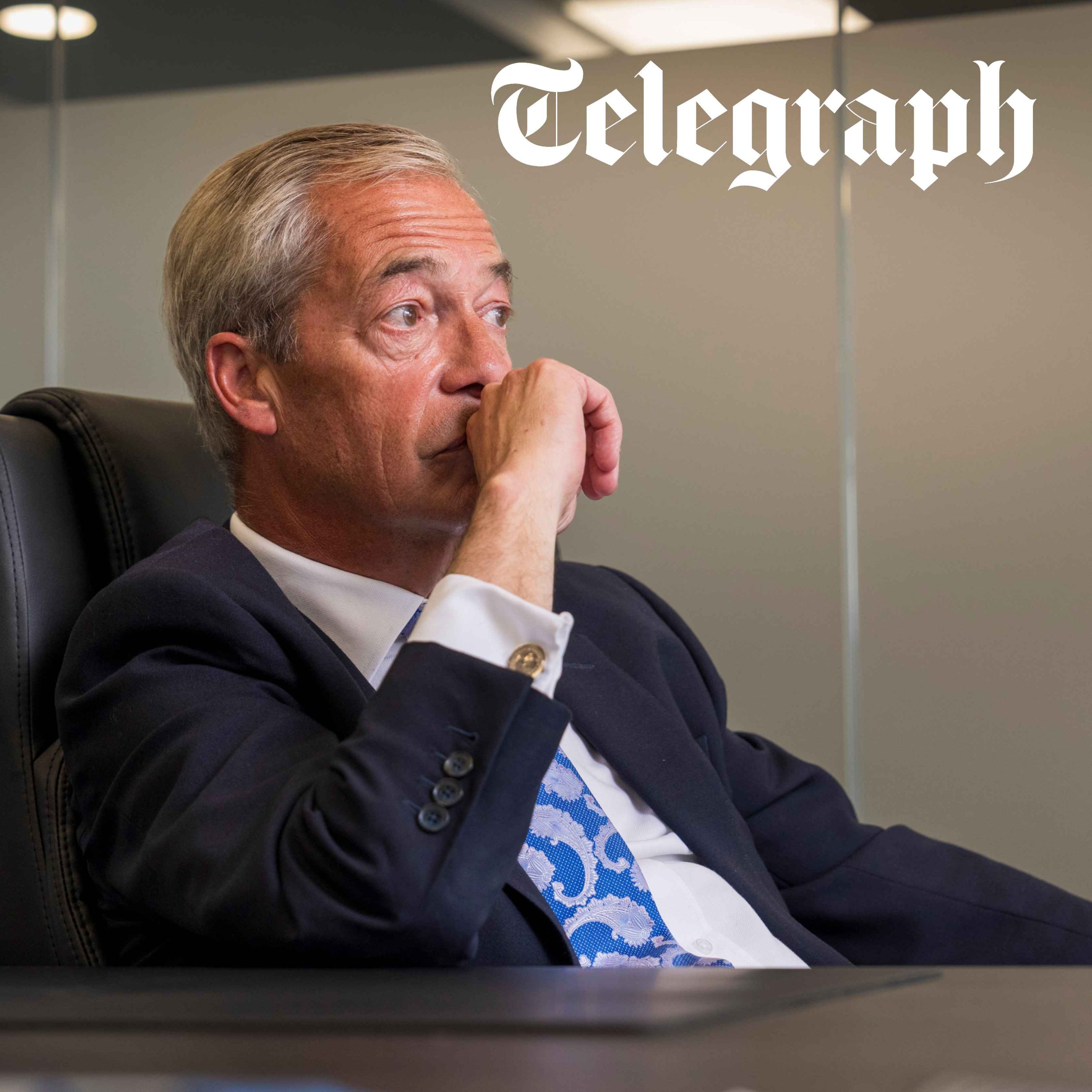
The episode argues that political “edgy” jokes and violent metaphors should not automatically be treated as police matters, while also discussing hypocrisy and double standards in how threats are handled. It centers on Nigel Farage reporting Green Party leader Zack Polanski to the Metropolitan Police after Polanski shared an Instagram image from a Bristol rally showing a man in a guillotine “We’re only making plans for Nigel” T-shirt. Hosts claim the guillotine reference is likely a borrowed lyric/joke (linked to an XTC song) rather than a literal death threat, and that arresting someone over a shirt is “tenuous,” especially given Farage’s own history of inflammatory rhetoric. They note the context of Anne Widdicombe’s murder and other political threats.
Kemi Badenoch (Reform UK/Conservative figure in the transcript), and David Shipley (crime and justice reporter; former prisoner).
Written by AI. May contain mistakes.
Discussion on the controversy involving Zach Polanski and Nigel Farage.
“An incitement to murder or just a sad sack in a silly t-shirt.”
Exploring the background and implications of the shared image.
“It's quite tenuous, but the Green leader posted an image of a man wearing a t-shirt with a guillotine graphic alongside the caption, we're only making plans for Nigel.”
Debate on the balance between free speech and the seriousness of threats.
“So I don't think we need to worry too much about the pronouns.”
Examining the perceived double standards in how threats are treated.
“Is this the same sort of thing that happened to David Amos, Joe Cox?”
Discussing the history of political language and its implications today.
“You can really see him so angry about this.”
Analyzing how these incidents affect political strategies and messaging.
“I mean, I challenge anyone to think of a time in their lives when they haven't used language that is over the top and exaggerated, saying, you know, I'm going to throttle you if you don't do so and so.”
Introduction to an upcoming interview segment with Kemi Badenoch.
“I think Zak Polanski definitely, definitely needs to profusely apologise and maybe even someone needs to be fired, whoever was involved in actually posting that photo onto social media.”
The discussion centers on political reactions to perceived attacks and the implications for free speech.
“Do you really want to spread the narrative that you are constantly under attack from the establishment?”
A conversation about early prison releases and the government's approach to prison management.
“But in 2018, he was accused of masterminding one of the world's biggest ever bank frauds, and he disappeared.”
Learn about the challenges and proposed reforms in the UK's prison system.
“People don't try to escape Nightingale hospitals.”
Hear insights from a crime and justice reporter on prison conditions and policies.
“We're now joined by David Shipley, who is a crime and justice reporter and himself a former prisoner.”
Explore the efficacy of rehabilitation efforts in prisons and their societal implications.
“It might help prevent re-offending rates because the state of prisons was so bad.”
Gain insights into the personal impact of incarceration and the quest for moral accountability.
“So actually the real re-offending rate, given how few crimes are actually solved, is far, far higher.”
The speaker discusses their time in prison, the introspection it allowed, and the importance of accepting moral responsibility for one's actions.
“COVID, I was in Wandsworth the first half of that for most of 2020.”

Get the gist, explore an idea or ask about something said.
 Claude
On The Daily T, what are the key points of this episode?
Searching your listeningAutomatic transcript. May contain errors.
0:02The Telegraph.
0:30it and launch. And if you want a hand, our podcast specialists are there to help you launch with confidence. This is podcast advertising without barriers. Get started at acast.com slash advertise.
0:46An incitement to murder or just a sad sack in a silly t-shirt. Nigel Farage has reported Zach Polanski to the police over an image that he says threatens his safety. There's no doubt that it is deeply distasteful. But whatever happened to free speech on the right? Welcome to The Daily Tea with me, Tim Stanley. And me, Poppy Coburn.
1:16Poppy, Zach Polanski is in danger of having his collar felt, not for double parking his barge, but for him sharing something created by someone else which has troubled Nigel Farage. It's quite tenuous, this. Yes. It's quite tenuous, but the Green leader posted an image of a man wearing a t-shirt with a guillotine graphic alongside the caption, we're only making plans for Nigel. Now, Polanski shared that with his 700 ,000 followers on Instagram. So this is a key point. He's supposed to be a very important, sober public figure with a very large following. So when he shares this sort of image, it disseminates more widely than it would do if it was you or I doing it.
1:59And he shared it as part of a series of images from a Green Party rally in Bristol on July the 26th. Nigel Farage has reported the image to the Metropolitan Police and the London Assembly, where Polanski is a member. And Nigel has said, It is beyond belief. It is insightful. And I will be demanding that Mr Polanski is arrested. If I had done that, I would have been arrested and I would deserve to be. Right. So there's a few important pieces of context that I think we have to get into here, because this is quite a meaty story. I've just been reminded that it's not the first time Polanski's got in trouble in social media.
2:37Do you remember the Golders-Green stabbing attack a few months ago? He got in trouble for attacking the way that police responded to it. So clearly he shouldn't be allowed to run his own social media. Maybe a suggestion for the Green Party there. So this man who appears to be wearing this shirt, making plans for Nigel with a guillotine. It is a man, isn't it? Yes, it is a man. A bearded lefty man. He looks very bearded and lefty. Because sometimes when I say these things, when I report about left-wing agitators, I have to double check how they themselves wish to be described. Okay, this one is a man.
3:09Yeah, I think it's a man. And frankly, he's got enough problems on his plate. So I don't think we need to worry too much about the pronouns. A few things stuck out to me when I saw this. Now, it looks really, really bad. I can see why Nigel is very angry and I can see why Reform is very angry and we can get into the context of Anne Winnicombe very shortly. But there's two things that are relevant here. One, making plans for Nigel. That's in reference to a song from 1979 from XTC, not a band I'm familiar with. But I recognise the lyric because a friend of mine does like music from that era. So there's that.
3:39And there's also the guillotine. This is a classic kind of left-wing, political edgy joke. Right. And so I think, look, I don't think this person earnestly wants to kill Nigel Farage, and I don't think by Zach Polanski retweeting this post or posting this on his social media, he was saying that he wants to kill Nigel Farage. I do not believe that that was the intention here. I think it was a deeply unpleasant and inappropriate thing to do. Given the context of the fact that Anne Widdicombe has been murdered in her home, a man has been charged, 28-year-old Joshua Kerry, an admin worker, allegedly hit Anne Woodcombe 21 times over the head with a hammer.
4:15So you can understand why reform would be incredibly angry to see a leader of a political party do something like this. It is at best deeply inappropriate and at worst, as Nigel Farage suggests, an issue of potentially arresting someone and charging them. But that free speech buzzer is going off in my head. And do we actually think this fits into the wider context, because this is now a really hot button issue, safety of MPs, safety of politicians. Do we believe that this is someone seriously advertising the fact they want to kill Nigel Farage? Maybe they might want to in their minds. But is this the same sort of thing as what has just happened to Anne Whittacombe?
4:54Is this the same sort of thing that happened to David Amos, Joe Cox? Are we being heartless here or is there a really serious problem that's directly connected to people within the left-wing movement who seem to be increasingly comfortable making deeply inappropriate and threatening statements towards right-wing politicians? I get why reform is very sensitive about threatening language and very bad taste jokes, not just in the aftermath of the killing of Anne Whittacombe, but also the many threats that have been made against Nigel Farage and the violent things that have been done against his person.
5:24and I was witness to the infamous milkshaking incident. There's this stuff you shouldn't just laugh off. It is very serious. And the left rightly memorializes Joe Cox and makes a big deal of the threats to left-wing MPs from the far right, as it should, because that's unacceptable in our democracy. But there is a feeling of a slight double standard, that when a joke or threatening language is used about someone on the right, that's something we're just supposed to laugh off, as if, come on, the right habit coming and bring it upon themselves. Well, they're fascists, you know, they're dangerous.
6:00This is the sort of language that Zach Polanski has himself engaged in. And I can see why Nigel Farage, given all these threats to his person, given his very explosive speech where he resigned from his seat to stand again in the Clacton by-election, the stuff that you could really see him getting emotional about is the threats to his person, him feeling that there's intrusion into his personal life, his family life. You can really see him so angry about this. So I wonder if this response has actually come from the heart. He really is furious at Zapolansky who's done something like this. But the same right, and I'm not going to bracket Nigel in with this because he's not here to defend himself, but the same right that says Lucy Connolly shouldn't have gone to jail, or at least shouldn't have gone to jail for so long for a tweet saying burn down an asylum hotel.
6:48That right then saying arrest someone for a cartoon on a shirt. And crucially, it wasn't a cartoon on Zach Polanski's shirt. Yes. It was. That's why I use the word tenuous. I'm sorry. It is. This was a collection of images that he shared. It's in one image that this bloke has the shirt on. It is very likely Polanski didn't notice it. I'm going to assume that. It is possible, whisper it, that he didn't even do the posting, I suspect, because who really controls a leading politician's social media account? The idea that someone would be arrested for that does not sound to me like the kind of libertarian UKIP Brexit reform tradition that I thought we were familiar with.
7:33And the other thing is, if we're going to go down this path, be very careful. I mean, in 2019, Nigel Farage talked about taking the knife to Whitehall and to civil servants. We all knew what he meant. He meant sacking people. Some people reported him to the police, suggesting that there was a natural physical threat. Remember the fuss that was made about the Daily Mail's headline? Well, I have to have written it down to remind myself. Enemies of the people. Oh, who can forget? Isn't it funny how the language is all French revolutionary, whether it be guillotines or enemies of the people? And again, the left said, you are putting a target on our back.
8:13No. No. We speak in idioms, right? We use borrowed cliches. And it's precisely because they're from the past. That's one of the things that blunts the guillotine of using that cliche. I, in my sketches, frequently say of corrupt politicians off with their head. I don't literally mean please erect a scaffold and cut off the head of a backbencher. It's just the colourful language of a healthy democracy. I think what's interesting is that someone felt that they could go to a left-wing rally wearing a shirt like that and feel totally comfortable that they wouldn't be called out for it, that someone could take a photograph of it.
8:50And I agree. I don't know if Sapolansky was actually involved in posting this photo. But someone was, someone who I assume would work for the Green Party. They could think that's acceptable, I think is very revealing. But I totally agree with you. I mean, another example of Nigel Farage saying on the eve of the successful referendum result that we had won it without firing a single shot. And I remember seeing lots of people on the left saying, how could you possibly say that after Joe Cox was murdered? I mean, what a ridiculous thing to say. He obviously wasn't referencing that at all. He was using, as you've correctly pointed out, language that sketch writers, politicians, historians, everyone uses all the time.
9:28I mean, I challenge anyone to think of a time in their lives when they haven't used language that is over the top and exaggerated, saying, you know, I'm going to throttle you if you don't do so and so. Exactly. What I am worried about is that reform is pursuing a certain course of action, perhaps out of fear, legitimate fear, that they feel that they are particularly under attack, that they are alone. And that's very troubling if they do feel that. And I think they have good reason to, again, and Woodcombe, all of these other incidents that have happened in the past, they have good reason to feel that way.
9:58But what will happen? Will they get round the clock security? OK, legitimate case for that. Or will we have Andy Burnham introducing a Protecting Politicians Act, which brings in the sort of free speech restrictions we'll see in a place like Germany, where people are fined 500 euros for saying so-and-so politician is an idiot. You know, these are the sorts of cases that you'll see in continental Europe, where they have such a kind of frightened political culture, partly because of history, that they feel that there's no free speech allowed in the political realm at all. and it ends up in these quite farcial situations.
10:29Because I can see how that will end up. I agree that the right is not treated fairly. I agree there's a double standard. But who's currently in government? I mean, how would that law actually be applied? Will it not just be used against people like Lucy Connolly and even people that have made really just pretty banal statements and told that they're extremists and they're dangerous and we've got to get them into a prevent cause? Because frankly, that's already happening. So I understand why he's upset. I think Zak Polanski definitely, definitely needs to profusely apologise and maybe even someone needs to be fired, whoever was involved in actually posting that photo onto social media.
11:02But are we really getting to a stage where every single time someone makes an off-colour joke or there is some kind of reference, in a metaphorical sense, to violence in politics that the police need to be involved? Because I think that is wrong. The idiot in the shirt also probably does think they are a Latter-day Jacobin. I'm sure they do. Or a Bolshevik, that they are on the cusp of a revolution. and there's something pathetic about that in and of itself. Yes, a balding overweight man. I'm sure he thinks he'd be at the top of the vanguard if it were to come and I'm sure these people, if they ever did get another shot of power, would be like every other leftist revolution.
11:37Why does the left think that Nigel Farage, who has never served in government, why do they think he is the establishment? He's so obviously not. He's only just recently got into parliament. He's spent his whole life trying to break into the establishment to tear it down from the inside. He's a straight white man, which means he is part of the establishment dot dot dot just because. I don't think there's any rational thinking involved in this. A lot of it will be wrapped up in irony. You know, again, there is a problem with the left of this kind of discussion. But do we need to get the police involved?
12:08Really? In this country that arrests tens of thousands of people every year for speech offences online. And Zia Yusuf did invoke the police when it came to Rupert Lowe, remember? Yes. And that arguably is one of the things that escalated the row within reform and led to Rupert Lowe walking off. So you could say it's reform's tendency to try to police tone that actually has created Restore UK, which threatens reform from winning the next election. And I think that right-wing voters, populist right-wing voters, whatever you might think of their views on individual policy, are quite sophisticated in their reading of political rhetoric and language.
12:53And it's this kind of double standard that restore supporters will bring up whenever you talk to them about, well, why don't you just support reform? They will say, well, we feel that reform is happy to be PC when it wants to be. We feel reform is happy to threaten to bring in the police when it wants to. And they think that's an example of reform going woke in its own way or cynically trying to use the tools of the establishment and the uni party and the blob to control its particular opponents. Frankly, I don't think it's particularly smart populism either. I mean, if we look at the two successful populist figures of the last 10 years, Donald Trump and Boris Johnson, they were both people who kind of brought you in on the action, brought you in on the fun.
13:36You know, like we're going to fight the establishment, but don't worry, I'm totally in control, I'm in charge, and I'm having a laugh while I'm doing it. You know, there's a reason why that image of Donald Trump, after he speaks at a Pennsylvania rally where someone tries to murder him, and what does he do? He doesn't cower on the ground. He gets up, he raises his fist in the air, and he says, fight, fight, fight. And I feel like that kind of response to when you are legitimately being persecuted, Trump is legitimately being persecuted. I think Nigel Farage is legitimately being persecuted, but it's the way you respond to it in a purely political sense that I think can be quite tricky.
14:10Do you really want to spread the narrative that you are constantly under attack from the establishment? Because then as a voter, do you not go, well, how are you going to be able to fight them? How can I trust you? How can I get behind you? So, yeah, I'm not sure if this is necessarily the right messaging strategy for a purely political sense for reform. Well, there has been a different response to it, which took me by surprise with its bluntness. Earlier today, I interviewed Kemi Betenoch. She was doing a press conference about early releases from prison. And don't worry, we did actually ask her about that.
14:41And we're going to go on to that in the next part. But we're going to pull out the bit towards the end of the interview where I asked her about this question, because I was expecting her to give a very nuanced answer and maybe to try to get a third-way response on this. But instead, she was very bold in what she said to me. So let's listen to that. Finally, I would like to ask you about the controversy around the Zach Polanski tweet, which has been reported to the police. This is of an image of a man with a T-shirt that suggested a death threat against Nigel Farage. Now, it's all being investigated, et cetera, et cetera.
15:14But in the past, you have described Nigel Farage as thin-skinned. That was in relation to his reaction to press coverage and the donations, not threats of violence. But you have suggested that reform does seem thin-skinned when it comes to these things. And we do live in a free country, don't we? Aren't you welcome? Aren't you allowed in this country to say and do stupid things and within a relative, a common-sense bandwidth get away with them? So common sense is the key issue. Common sense is the key issue. And I don't think that what Zach Polanski did was right. I know the police are investigating it.
15:50But I'm just very concerned about the police who should be catching rapists and murderers policing tweets. I think incitement of violence is wrong. Everyone knows I'm very robust. People say all sorts of things about me. You don't hear me complaining about it. And people complain about stuff I say, but it never gets to the point of inciting violence. But I do wonder where reform's actual line is, because they were quite happy to say Tories should be in hiding and that there would be a reckoning. I mean, those could be interpreted as incitement to violence. You know, I stress interpreted. So what I don't want to see is people having some rules for themselves and then different rules when it's their political opponents.
16:33We all need to abide by the same rules. My view is that common sense should prevail. A woman has been arrested called Heather Herbert over a remark she made about Anne Wadickham's death, saying that she welcomed it and hoped that it was painful. Should people be arrested for things they say about someone who is deceased? So I think that free speech is an absolute core value of this country. And that does mean that people will say things that are unpleasant. Anne Whittacombe was a fantastic person. I can't speak for her. But I don't think that people should be arrested for celebrating someone's death, however obscene and morbid it is.
17:13I remember when Mrs Thatcher died and there were lefties throwing parties then, but we never asked that they be arrested. So I think that as a country, we need to stay true to our values and our principles. Free speech means sometimes you will hear things that you don't want to hear. Free speech sometimes means people will say things that they shouldn't say. Party leaders need a much higher standard than regular everyday people. Incitement to violence, whoever you are, is a no-no. Kemi Badenock, thank you very much. Thank you. Kemi there discussing Heather Herbert, woman who has been arrested and charged for remarks that she made about Anne Whittacombe's death.
17:55What do you think about Kemi's tone in that answer? I mean, I thought it was very impressive. A little bit surprising from Kemi Badenock. I do think personally she cares deeply about free speech issues. But then she was also the politician pushing for the Online Safety Act. So there are gaps in every single politician's response to this sort of thing. But you can see how she's trying to frame reform in this, right? Like the Conservative Party is this sober institution that's just getting on the job quietly, reformer doing these like comms sideshows. I thought that was quite an interesting way of framing it for the party.
18:27Whether or not that applies to everyone in the Conservative Party that isn't Kemi Baden-Ock, I find slightly difficult to believe. But she's correct, I think, on the Heather Herbert case. but they shouldn't have been arrested. Absolutely not. I loved Anne Whittacombe. Everyone here loved Anne. Anne was a principled constitutionalist conservative. And obviously, I can't speak for someone who's tragically passed away, but I feel pretty sure that she would be uncomfortable with someone being arrested for saying bad things about someone who's dead. That just doesn't strike me as a position that Anne Whittacombe would likely take.
19:07And I'm uncomfortable with reform doing that because, as I say, I feel they are invoking the tools of the state that they themselves have been critical of in the past. So it's not only do I not like it on principle, but I think it's also hypocritical for them to do it. And it is generally better for communities to police themselves through things like shame than it is for the state to become involved and put people in prisons, which are already, which is the whole point of our conversation, which we're going to listen to next, very overcrowded. I think it's not good enough to say, well, the left would do the same thing to us if they were in charge.
19:46We know that's why we don't support them politically, because we do not think they are responsible custodians of the state. The problem is when you create these tools where you do allow the police to persecute people for offensive speech, The idea that it will never, ever be used against your movement, which is currently out of political power, is just ridiculous. Surely the lesson of the last 20 years and the overexpansion of speech restrictions in this country is never, ever, ever give in to emotionally sympathetic cases because that is not how they will be applied 90 % of the time. There will be overreach and it will affect you and your movement.
20:22If the same sick joke had been told about a Labour MP, the left would be up in arms about it and demanding they be arrested and sent to prison. And I think that is part of what really gets under Nigel Farage's skin, is the absolute hypocrisy and the sense of, you know, he's always talking about two-tier justice, that very different standards are applied to the left because for some reason they get to set the standard. Talking about law and order, let's discuss early releases next.
20:54While every other channel is fighting for your customer's attention, podcasts are where they've already given it. No one accidentally listens to a podcast for 45 minutes. They choose to be here. They trust the voice in their ears. And when that voice talks about your brand, it doesn't sound like advertising. It sounds like a recommendation from a friend. Acast gives you that trust at scale. Digital precision, post-read authenticity, and performance data that proves it worked. Don't fight for attention. Buy it with ACAST. Learn more by visiting acast.com slash advertise.
21:32Nirav Modi was a billionaire diamond tycoon whose jewelry was worn by Hollywood stars like Kate Winslet. But in 2018, he was accused of masterminding one of the world's biggest ever bank frauds, and he disappeared. This is the extraordinary story of the rise and fall of Nirav Modi and of how we caught him. He was in the news all the time. Where is Nirav Modi? Why can we not find him? He's one of the most sought after criminal in India. You owe a lot of people a lot of money, Mr. Modi, who would very much like to know where you are. Sorry, no comment. The Indians will think we're a laughingstock.
22:13Here we are seven years later still speaking about this case. They think it's a sham. The Diamond King, a new podcast from The Telegraph. With me, Mick Brown. And me, Robert Mendick. Out now.
22:32Earlier on today, Kemi Betonog did a press conference in which she appeared with victims who gave harrowing testimony about the men who were going to face early release despite the terrible things they had done to them. Afterwards, I sat down with Kimmy and asked her what the Tories would do to fix the problem of overcrowding. Kimmy Beignock, thank you very much for joining us on The Daily Tea. Thank you, Tim. We've just heard some very powerful testimony from ladies who are the victims of crime and the perpetrators are going to face early release. It's very difficult to look them in the face and explain why that might happen.
23:07But can you see the government's point of view that there is a very small headroom in the prison estate, it's running about 97%, and they fear it's going to run out in November. They have to take some people out of prisons. Can you see their point? Yes, I can see their point. So that's why I'm not saying no early release. What I am saying is no early release of this category of dangerous person. Which includes? Killers, rapists, paedophiles. If they let out someone who's been shoplifting, I think that the victims would feel more relaxed than having their rapists out on the streets. Some of the stories that we heard were absolutely harrowing.
23:51And we recognize that there is a challenge with prisons. I talked about some of that in the press conference. We had early release in conservative government. But look at the numbers. Over 14 years, we released 10 ,000 prisoners. Two years, Labour has released 60 ,000 prisoners That is extraordinary And never ever did we release this category of killers, rapists, paedophiles And that's what we're talking about I just think it's obscene But of course we have to understand how we got to where we are And in the press conference you did say My job is coming up with solutions Not talking about the past But to come up with a good solution You have to understand where the problem has come from And what Labour will say is it's come from the failure to build new prisons.
24:37You closed 23 of them, plus longer sentencing. So those two things, how do you account for that as a Tory and how would you change that? So I'm not going to apologise for longer sentencing. I'm a law and order Tory. I think that people should go to prison. Prison works. This is not a David Gawke kind of Conservative Party. We don't want all that sort of stuff. I think the report which he did for Labour was dreadful. and was not based in reality. Now, you are right. We were not perfect, far from it. I think we created 14 ,000 new places, nowhere near enough. But why did that happen? Because if you don't understand what went wrong, you won't be able to fix the issue.
25:20We had in our manifesto building prison places. COVID derailed that program, but also there were delays because many communities wouldn't have those prisons. It's time now for the public to accept more prisons. I know it is difficult, but it is absolutely right. I have a proposal, even on my doorstep, I had some very tricky meetings with constituents in surgery saying no. And I said, this is something that we absolutely have to do. We also sold some prisons to get the money to build new prisons. And that was one of the things that got derailed in the program. I can't fix any of those things. I can't stop COVID from happening.
25:58What I can do is say we've got a plan. Build, rent, remove. Build prisons cheaper and more quickly. A lot of the planning permissions, the stop prisons being built, we're looking at Nick Timothy, the Shadow Justice Secretary. He's got some great plans. We are actively working on that. We can rent some prison places from other countries. And we need to remove foreign national offenders where appropriate. A lot of it is impossible because of the Convention on Human Rights. Telegraph readers and podcast listeners will know that we are going to leave the Convention on Human Rights. And if you're not signed up to that, you cannot be a Conservative MP.
26:37I want people to know that we are serious about this. All of our policies are joined up now. I'm sorry that things didn't go well in the past. I wasn't in charge in the past. I'm in charge now. You would accept a prison in Saffron Walden. So there was a prison that was proposed on my doorstep. I did not oppose it. I don't know where prisons will go in the new prison building program. But what I would say is that communities need to accept certain sacrifices if we are going to build things. We're not building anything anymore as a country. We're not building the right homes. We're not building prisons.
27:13We're not building reservoirs. We need to build to get growth. We also need to deal with some of the things that are increasing demand, cutting immigration. We've got a borders plan. We have plans to bring immigration down. That's another thing that went wrong under us. We've apologised for that, but we now have a plan to deal with it. Immigration has started coming down already, not because of Labour, but because of the things that James Cleverley and Rishi Sunak did when they were in government. As a short-term fix, what do you think about proposals from the late, great Anne Whittacombe? She said that when she was a minister, she brought in a US prison ship, that she used porter cabins, and she even looked into using an abandoned holiday camp as somewhere to put prisoners.
27:52This sort of Nightingale prison idea, people are talking about it. It's not in your agenda. Why? So I don't know how feasible a Nightingale prison is compared to a Nightingale hospital, where the people there are not dangerous. People don't try to escape Nightingale hospitals. Exactly. So I wouldn't want to say something like that unless we had a fully thought through plan. So I know there are other party leaders who will just say things and then try and work it out later. I don't say things unless we've got it completely worked out. There are some people who are talking about putting men in women's prisons.
28:24I've looked at that. Everyone knows my views on this. I think it's a terrible idea. There are better ways to do it. So build, remove, rent. I've talked about how we would do that. But let's stop this specific problem right now. The women who sat on this panel today were talking about having their rapists just back with a third, a third of their sentences complete. Pedophile, some of the most horrific crimes. That's the thing I'm trying to stop now. And Andy Burnham can stop that. The commencement order stopped today. He could do that. So he's telling everybody that he's paused it. He's reviewing it.
29:00He hasn't paused anything. thing. If he really wants to show that he's pausing it, he should do the actual pause, which is stop the order that starts it. As you said in the press conference, and the public needs to appreciate this, this is not as a short-term measure the government's doing. It's actually a radical reform of the nature of sentencing in this country. You've talked mostly, of course, about very dangerous criminals at the end of their sentencing, but this proposal also suggests that there will be a preference for suspended sentencing for up to one year. So that means that whole categories of crime, it will be understood within the court system that we arrest you, you go to a court, you're found guilty, and then we send you back into the community.
29:38How do you feel about that? That is basically decriminalisation of certain crimes. It's basically saying you can carry out these crimes and nothing will happen to you. We might make a note of it somewhere. I don't think that's right. I think that will increase crime, not decrease it. We still need sentencing. We still need to punish wrongdoing. We need to keep people safe. Prison works. That is what the Conservative Party under my leadership stands for. Other people may have different views. They are welcome to them. They may not agree with my views, but this is what the Conservative Party is doing.
30:08We're putting people in prison. We're keeping them there. If there is overcrowding, we understand it's difficult. Let's get more prison officers. Let's pay them more. Let's support them to deal with that. But let's build more prisons quickly and cheaply. Public pleas, accept a few more prisons. It has to be done. Let's rent prison spaces abroad. Let's get rid of foreign national offenders and we will solve this problem. Kimmy Badenock, thank you very much. Thank you. We're now joined by David Shipley, who is a crime and justice reporter and himself a former prisoner. And you write mostly for The Spectator.
30:40Yes. How bad is the overcrowding crisis in Britain's prisons? Is this early release of thousands of prisoners justified? It's not quite as bad as it was, say, two years ago when we did the emergency early releases, but it was pretty bad. There's a couple of thousand spaces left in the prison system right now. But part of the problem is the population keeps going up. And we've only managed to increase the available spaces by about 500 since Labour came into office. And of course, they're promising 20 ,000 by the end of the parliament. I think in reality, that's not going to happen. If you look at the sort of official regulator and audits, they're putting everything in amber or red, which either means probably won't happen or almost certainly won't happen.
31:27So the problem they've got is the population keeps going up. If they don't release in line with the new Sentencing Act, which will kick in in September, then the forecast is that by November, the prisons will be full again. And how does overcrowding affect life for prisoners themselves? Now, I'm not asking this question because out of necessarily sympathy for prisoners, But can prison, as it currently is, do the job it's supposed to do of keeping prisoners isolated and safe and possibly reforming and rehabilitating them? Well, you're absolutely right. So whether or not we care about the particular experience of individual prisoners, overcrowding breaks a lot of the prison system.
32:06So most prisons are actually running way over what their real capacity should be. You've got what's called doubling up happening all over the system. So in a prison cell the size of a car parking space, you've got two men. Sometimes in slightly larger cells, you've got three or four men. And what that means is, if you think about it, if you had to spend 22 or 23 hours a day with your dearest family member, loved one, closest friend. Of course you would. There was almost no one on earth that we could spend 22 hours a day, 23 hours a day locked in a box with. So quite naturally, if you put men who don't know each other, who may have violent tendencies, who may have drug addiction problems, who may have mental health issues, who may be of different faiths, who maybe have different dietary requirements, who have different attitudes to personal hygiene.
32:51Of course, all of that regularly leads to violence and conflict. What's quite interesting is I've seen, because what you've described here is a practical problem, which is that because we haven't provided enough prison capacity, which is not just a failure of the Labour government, it's a failure of conservative governments to not build prisons. And it's kind of melding in quite a strange way with Andy Burnham and the Labour government with ideology. So when James Timpson was put in as a prisons minister, I remember seeing lots of press releases about how early release of prisoners was actually justified.
33:19It might help prevent re-offending rates because the state of prisons was so bad. So it was almost like feeding this slightly toxic system where prisons are so broken, drugs are so rife, staff are so under-trained that no one is being rehabilitated in prisons. But then people, the solution to that is not being, well, let's do your emergency powers and build these prisons as quickly as possible. It's, well, let's just release them and maybe that might be better for them. And to change the sentencing structure across the board to make it harder to send people to prison. Yeah, I think what happened when Labour came into office is that the prison reform movement got their man as prisons minister, which they were delighted about.
33:56I know the guys at the Howard League and the Prison Reform Trust were really excited about that. And in some ways they were disappointed with him, but actually they got a moment where their ideological desire to reduce the use of imprisonment suddenly seemed sensible because there wasn't any room left in prisons. And also I think at the same time within HMPPS, the senior civil servants there, quite a lot of them, when you speak to them, you get a sense they think imprisonment itself is quite an icky concept. It's not a very nice thing to do. And they don't really like the idea that they lock people up.
34:29But also they had the problem of lack of capacity. And what I think they've discovered is they've got a really easy solution to capacity. I don't have to worry about actually building more prisons or rehabilitating people so they don't come back. What they do instead is persuade politicians to release them early. So actually there's incentives and ideology, I think, getting married in this. Something many people don't understand is that people don't serve the time that they're given inside. I mean, I appreciate that the sentence is effectively the length of time that the state takes an interest in you and looks over you.
35:03So it doesn't all have to be inside a prison. But when we hear of someone getting 30 years, we all think that means, oh, good, they got 30 years. But actually, even pre-sentencing reforms, they might serve two thirds of that or half of that. I mean, I find I think many punters find that really odd. I think so. I think part of the problem with how we sentence people is it doesn't make sense to the average member of the public. can we say you're going to go away for this many years we sort of all expect that's what the sentence will be and then when we hear they're getting out early that i think sounds like they've been let off yes it feels unjust right of course it does so i think a better system would probably say up front we're jailing you for 10 years and then you'll be on supervision for another 10 years i think actually framing it in that way would be more honest and that would be helpful um but you're right of course you know the other bit is it's not earned early release for good behavior it's not been like that in the UK for a very long time.
35:54It's very much automatic unless you do something appalling. Yes. And the government has tried to dress this up as it is earned. It has tried to give the impression that it is earned, but in fact, it is automatic. Unless you pose a threat to the public, it's automatic. Oh, no, even then. So actually, people are being released who we know to pose a threat to the public. Shabir Ahmed, who was released recently, is unrepentant. this is one of the rape gang leaders, you know, unrepentant in his crimes, absolutely clearly will pose a threat if he gets the opportunity, he's been released. So we don't actually factor in public protection meaningfully into our sentencing regime.
36:31Well, I'm kind of interested in this because it kind of raises that question of what is the point of prison, which has been a question that I think the public and the political establishment have been out of line with for a very, very long time. And this, again, comes into sentencing guidelines. And the sort of thing that you would think is an aggravating factor, say, for example, someone having a low IQ, not being able to understand the consequences of their actions, I think you and I would say, well, that's a bad thing because it means they're surely more likely to commit the same crime again.
36:59But that's not how it's assessed in censicing guidelines. It's about criminal culpability. And it's the same thing with prison sentences. I think most people would say, I want this person removed from my local community because I don't want them to see them there. I want them to be punished. Whereas the purpose for prisons now seems to be, well, there's some kind of rehabilitation happening by osmosis. Because we know it's not really happening in a lot of prison wings that are totally, totally dysfunctional. But it's not there for punishment purposes. We're not removing you from the mainstream population to punish you for having done wrong.
37:30It's almost like this weird, you're going on a mandatory social care course and then you'll be back in a couple of years' time. I don't really think people see that as justice. I think I'd go further, actually. I don't think it even does rehabilitation. So it's not – the prison system is not particularly punishing. It's not – you don't go and do hard labour. You just spend a lot of time locked up, really bored, staring at daytime TV in most cases. And a lot of the men there get addicted to drugs, moonshine, wherever it might be. So nothing productive happens. It's just very boring and tiresome.
37:58There's not really any rehabilitation going on. The proven re-offending rate is 30%. And that's measured in the people who get caught doing a crime in the year after release. So actually the real re-offending rate, given how few crimes are actually solved, is far, far higher. and it doesn't really protect the public because, as you said, we sentence not on the basis of risk to the public. We sentence on this sort of idea of the person's own moral culpability. And actually it's got even worse now because what we're really sentencing on and managing sentences on is the basis of how much capacity we have.
38:26So it's become entirely divorced from people's moral intuitions about what prison should be. And I think that's why the public are getting increasingly angry, and rightly so. Do you actually believe that Andy Burnham is going to stick to this? Because we can't even call it a pledge. It's kind of him saying, yes, this is wrong. We'll be looking into it. Obviously, the state of affairs can't continue. Let's pause it. Can he actually stop it? I think he's going to find it very difficult. So Antonio Romeo, who's the Cabinet Secretary, used to be the Ministry of Justice's permanent secretary. She, I'm sure, has gone to speak to him and show him the scary charts, which demonstrate there'll be no space in the prison systems come November.
39:02So what do they do? He obviously doesn't want to be the PM who released all the rapists, certainly, which is what he will be branded as come September. So what other options exist? If he looks to rapidly accelerate deportation to foreign national offenders, that might create some capacity. But even that's quite a slow process. One thing is Dartmoor sitting empty because it's radioactive. But if you speak to the – and people might not care about prisoners having to go there, but obviously prison staff would have to man it. And if you speak to the Prison Officers Association, their union, they would not be willing to sign off on that.
39:34So that won't be reopening. Maybe he could look to free up space by moving women prisoners out. Some people have talked about releasing women prisoners. But actually, if you look at the data, women in prison are more likely to be there for violent defences than men. They're much less likely to go to jail in the first place. Precisely. So actually, it's a bit like the Young Offenders Institute. We don't really jail very many women and we don't jail very many under 18. So those who do end up in custody tend to be... Really, really should be in custody. Well, yeah, they've either got really complex mental health and drug addiction it needs or they're violent or all of the above.
40:09So you can't necessarily just release those women out into the community because they'll just re-offend and end up back in custody. So what could he do? I think the only options that might exist that could save him are to do a rapid review of the 17 ,000 or so people who are on remand. Because there may be some there that you could say, actually, there's one or 2 ,000 here we could manage in the community, you know, on the tagging system. or look to rapidly expand the open prison estate and move lower risk prisoners to open just because you can't really build high security nightingale jails as has been pitched quickly, but you can build very rapidly open prison space.
40:46You can just pour out concrete and throw down prefab cells. It takes weeks. Okay, okay. You yourself have done time for fraud. Without commenting on whether you feel you should have been there or not. I do actually. Do you think you should have been there? So I think the idea that sometimes gets pushed is that non-violent offences shouldn't result in jail time. I don't think that's true. Okay, okay. What role do you think prison played in your journey to be where you are here today? Was it something which was morally helpful? Or do you regard it as something that was done so badly or run so poorly that it didn't really make a difference to you now being a free man, writing so well, and informing this debate so intelligently?
41:29intelligently i think i think the problem with the prison system is it doesn't demand that people accept moral responsibility for their crimes right and so you see in prison a lot of people who don't think they're really responsible for being in prison uh and a lot of the criminological establishment i can put it that way both within the prison system that with academia sort of encourages that by always finding reasons in people's childhood you know why that why they've committed crime um i think you know perhaps because i was already feeling appallingly guilty about my crime and i've been thinking about it for a while and perhaps because i'm a christian i i was already primed to accept moral responsibility so when i went to prison and because covid happened while i was there i spent a huge amount of time staring at the ceiling having to think you know kind of grappling with what did i do that because prisoners were limited their time outside the cell is already limited, but during COVID it was limited even further.
42:26COVID, I was in Wandsworth the first half of that for most of 2020. And yeah, we were locked up for 23 or 24 hours a day. They would bring us food to ourselves. Some days we would either get to go out for a shower or get to have 30 minutes of exercise outside. And that was it. It was very, very constrained. So a huge amount of boredom, I suppose, provided me with the space to just really reflect on the choices I'd made in my life and what kind of man I'd been, what sort of man I wanted to be. So I think for me, I'm really glad I went to prison that helped me kind of grapple with and face the choices I'd made in my life and, you know, resolved to be better.
42:58But I don't think the system itself is really constructed around that. And I think a system which did work would have to center the idea that you have to accept moral responsibility if you're going to change. Actually, if I look at the men I know from prison who have turned their lives around, including one man who committed murder, by the way, all of them started from being able to completely accept their own personal moral responsibility for what they did. Right. But a lot of people in prison perhaps don't have the capacity to do that because, as you know, a lot of them have serious mental health problems, are illiterate, come from abusive backgrounds, are dealing with their own PTSD.
43:34They are essentially at the end of a cycle of crime. How does any system get people who are so broken to confront and accept their own responsibility? Well, I think it does happen even for men like that. So the man who committed murder, who's a friend of mine, I got to know him quite well. And he had the worst kind of childhood. So his mother was a heroin-addicted sex worker. When he was very small, she would dose him on heroin to keep him quiet while she was working. She had a succession of brutal partners who beat him up and brutalized him in all sorts of ways. He dropped out of school at 12.
44:06He was addicted to all sorts of drugs, including heroin. in his late adolescence he ended up killing another man in a fight over drugs and status and went to prison for murder. And when I met him 15 years into his sentence, he was actually one of the calmest, kindest human beings I've ever met. As I discovered what he did as he talked about it, I was really intrigued by this. And what he said to me is actually that the prison had saved him because he'd actually got off the drugs. He'd actually got therapeutic interventions. We do do therapy for young murderers, actually. There is some good intervention there.
44:41And then he got educated. So having left school at 12 with no qualifications, when I met him, he was finishing a degree. And he's one of those people who completely accepts moral responsibility. Whenever he talks about his crime, he says, you know, I murdered my victim. There's no evasive language. And that's quite rare, actually, in prison. A lot of people will evade, they'll mitigate, they'll minimise their crimes. And I think – so I think I would like to think that almost everyone is capable of accepting moral responsibility for their choices. You know, even very small children are actually, I think, if we guide them the right way.
45:18So I think that's more about creating a system in which that moral responsibility is at the heart of prison and justice. It's not there now. And I think that is one of the, you know, we talk about capacity and activity out of the cell, but actually the moral core of the prison system, the just system, isn't what it should be. And until that's fixed, the rest of it doesn't matter, but I think it's sort of less relevant, really. David Shipley, thank you very much. We'll be back tomorrow at 5 p.m.
46:23We'll see you next time. just haven't been introduced yet. We're Acast, where that introduction happens. As the world's largest podcast marketplace, we let you browse shows, see who's listening, and book host-read sponsorships or run your own ads all from one platform. Transparent pricing, real-time data, complete control. Start advertising on podcasts by visiting acast.com slash advertise.
In this episode of The Daily T, Tim Stanley and Poppy Coburn discuss the row that has broken out between Nigel Farage and Zack Polanski, after the Reform UK leader reported the head of the Green Party to the police over a social media post that appeared to threaten Mr Farage.
Tim also speaks with Kemi Badenoch, who believes that police time should not be wasted on investigating acts of free speech. Following her piece in The Telegraph, the Conservative Party leader tells The Daily T where the Labour Government is going wrong in tackling Britain’s overcrowded prisons.
Tim and Poppy also speak to David Shipley, a prison reform campaigner and former prisoner, who shares his insight on the flawed infrastructure plaguing the penal system.
We want to hear from you! Email us at [email protected] or find @dailytpodcast on TikTok, Instagram and X
► Sign up to our most popular newsletter, From the Editor. Look forward to receiving free-thinking comment and the day's biggest stories, every morning. telegraph.co.uk/fromtheeditor
The Telegraph is the Publisher Podcast Awards' Podcast Publisher of the Year 2026
Studio Operator: Meghan Searle
Producers: Emma Williams and Georgia Coan
Video Producer: Will Walters
Social Producer: Nada Aggour
Executive Producer: Charlotte Seligman
Editor: Camilla Tominey
Highlights
Hosted on Acast. See acast.com/privacy for more information.


