
 Ask ChatGPT


 The Daily T
21 Oct 2026 · 44m · 14 chapters
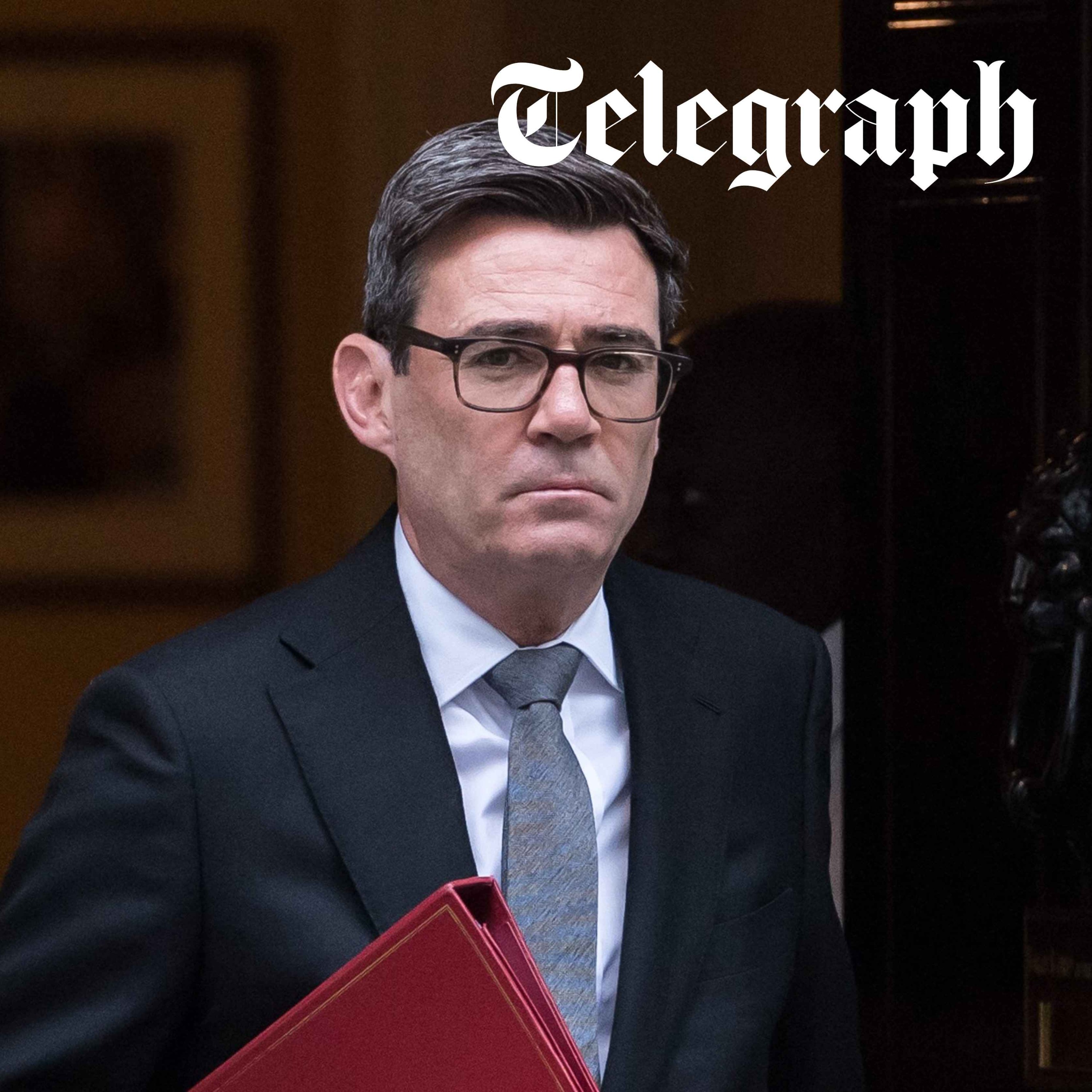
A politically combative recap of UK PMQs and Labour’s record, arguing Andy Burnham’s “vibes” style masks delayed or non-existent achievements, especially around Jackdaw/Rosebank energy approvals and social care promises. It also pivots to a separate discussion of rising anti-Semitism in schools, controversies over pro-Palestinian symbols (including a “Palestinian poppy”), and a Westminster/security controversy involving Sarah Helm (wife of NSA Jonathan Powell) and alleged pro-Hamas/anti-Israel posts.
Tim Stanley and Camilla (co-hosts/commentators). Sir David Bell, author of a government review on anti-Semitism in schools.
Burnham’s “scrapped digital ID” saved no money because it wasn’t implemented; social care “National Care Service” is not yet delivered; Jackdaw approval was previously decided and delayed for political reasons; anti-Semitism is rising and many students expect no action; teachers should debate controversial issues but avoid politicized symbols that chill discussion; Palestine Action should be treated as a terrorist group (debated), making Sarah Helm’s alleged support problematic.
Jackdaw gas leak approval; Prince Harry/royal “reconcile” remarks; Speaker Lindsay Hoyle’s fury over leaked statements; “Palestinian poppy” controversy; survey stats from Bell (1 in 5 incidents; 1/2 felt no action); Sarah Helm/X posts likening Israel to Nazis and supporting Hamas.
Written by AI. May contain mistakes.
Discussion on Andy Burnham's lack of significant achievements in office.
“The king of overshare as Prince Harry speaks once again.”
Commentary on Prince Harry’s public statements and the implications of his oversharing.
“They always look too good to eat, don't they?”
Analysis of the Speaker's anger during PMQs and implications for government communication.
“When are you going to take a decision on Rosebank?”
Discussion on Burnham's misleading claims regarding digital ID cuts and their implications.
“So another example which we've been discussing is defence spending.”
Analysis of civil service accountability and comparisons between politicians.
“We find ourselves in the bizarre position where one Labour prime minister claims to have made a courageous decision by planning to introduce digital ID.”
Debate on the economic strategies of Labour leaders and their effectiveness.
“He must be watching all this and going, I'm sorry, this guy isn't serious.”
Critique of Ed Davey's performance during PMQs and his focus on irrelevant issues.
“What we're talking about is people who are slightly marginally more towards the centre, literally, than Jeremy Corbyn.”
Discussion on Burnham's political strategy and his relationship with other political figures.
“The little things that help people out were mentioned.”
Introduction to the discussion on the government's report regarding anti-Semitism in schools.
“Oh, and the other thing is, the other recurrence at PMQs, is it two weeks in a row that James Cleverley has stood up and made, basically, publicly campaigned for his role as the Tory candidate for Mayor of London?”
Detailed discussion with Sir David Bell on the rise of anti-Semitism in schools.
“And in that discussion, which we're going to hear in just a minute, we discuss whether teachers should be allowed to wear pro-Palestinian symbols.”
Explore the findings of a report on anti-Semitism in educational institutions and the responsibilities of teachers and unions.
“feel targeted even if the school itself hasn't got some of the measures that we know the CST has had to bring in in order to protect their security.”
Discuss the implications of personal beliefs of family members of officials on national security and public perception.
“It's politically embarrassing, but I think there are two separate questions.”
Explore the complexities of freedom of speech and the accountability of public figures.
“That bar needs to be kept really, really high.”
Discuss the cultural implications of support for Palestine and associated public figures.
“But if like a CND protester lies down in front of a military tank to try to prevent manoeuvres, then they should be run over.”

Get the gist, explore an idea or ask about something said.
 Claude
On The Daily T, what are the key points of this episode?
Searching your listeningAutomatic transcript. May contain errors.
0:03The Telegraph. Ratty and riding on vibes. Andy Burnham was defending his slim record of achievements at the dispatch box against Kemi Badenock and today's PMQs. But the trouble is, he hasn't actually achieved anything. Burnham's claimed that one of his decisive actions, Kemi asked, what spending have you cut? One of his decisive actions was, I scrapped digital ID. Right. It wasn't even in place. It doesn't exist. No. It doesn't exist. You scrapped an idea that cost nothing. Yes. Well, isn't it the same with this whole, I've solved the social care crisis? That really irritates me. This is silly.
0:43Because nothing's happened. Tim, yesterday you were saying you'd had it up to here with men describing their feelings. And oversharing. The king of overshare as Prince Harry speaks once again. The timing's suspicious, isn't it? All of the royals are doing this great state visit from Oman, dressing up in their finery. I think Kate is in Diana's tiara. Yes. And up pops Harry, speaking as Andy Burnham did to the lads at GQ. And I quote, I want it to work out. With everything else that's going on in the world, the most important thing is to reconcile. That's the key point. Scars stick around forever.
1:20Some people don't want to work it out, though. For me, there's enough drama in the world and enough drama in people's lives to continue with issues with family. Who caused this drama? This is ridiculous. This is like saying, well, I'm sorry, but the other people must bring the fire extinguishers to put out the flames that I fuelled with Spare and Netflix documentaries and Oprah Winfrey. I find this extraordinary. Look, I hate work and I think it's bad for you, But in the case of Harry, I just think he needs a job. Yeah, get him a job. And I would say, because the problem is, is that as he will find discussing young people getting to the job market, you've got to start from the bottom.
2:04So I think shelf stacking. Yes. I can just imagine him, someone coming up to him and saying, where are the pineapples? Ah, yeah, you go like down there. Yeah. I'll fall. Yeah. But mate, it's a long way to go. Do we think Waitrose or Aldi?
2:22where would Prince Harry work I don't know I could see him manning that little stall of groceries in the basement at Fortnum's yes where milk is 12 pounds for half a pint or in the vein of Megan why doesn't he work on the chocolate counter hey you know those people you go hello could I have four chocolates and they go that'll be 156 pounds I don't know if I like my grandmother that much, but thank you so much. Boxing things up. Glace fruits. That's it. That's what Fortnum is a big art. Or royal jellies. They always look too good to eat, don't they? They do. They look like soap. I know what to buy you for Christmas.
3:04You've just come back from PMQs. High drama. Is it just me or did the speaker absolutely lose it? Let's listen to Speaker Krakatoa exploding at Michael Shanks, the Minister of Energy. It is simply not good enough that it was trailed by the press last night and announced all over the media this morning by the Secretary of State before it could be properly scrutinised in this house. And this isn't the first time on this subject. That's what's more shape. It was a leak. I'm sure there will be a leak inquiry. Or is it that this department is deliberately briefing out to the media? The Guardian, the BBC were carrying it last night along with the radio.
3:49It seems ministers once again need reminding of the government's own ministry rule code, which makes clear that important policy announcements should be made first to this House, especially when we are sitting. There is no excuse. I hope the minister is taking this on board. I'm sorry he's having to take the flack for a Secretary of State who doesn't care about members on this side, that side, over there, wherever. Because in the end, we're elected, we're elected by our electorate to hear statements here, not via the media. Am I getting the message through, Minister? Because we've had this conversation once before.
4:32I'm sorry that you're being set up as the patsy that has to take this ridiculous situation. I want us to learn. I was hoping we had changed what happened previously. I thought this was a new beginning. Well, it's certainly a bad one today, isn't it? The Speaker is always complaining that ministers have announced something through the press or something has leaked before it's been presented to Parliament, which is the correct way to do it. He sounded really angry on this occasion. And I think that's partly because he went off his own script. And he started to really raise his voice and kind of swallow his tongue.
5:09This was real fury. And the irony is, is that Michael Shanks used to be a school teacher. Right. But the shoe was on the other foot. Yes. And this sounded as though he was being given a dressing down by the deputy headmaster. Now, this is important, not just because of the procedural point about why has this been leaked or presented to the press before the Commons. That happens all the time. It was the obvious fury from the Speaker that a junior minister was making a statement rather than the Secretary of State for Energy, who is Miata Fambeli. And she's been on the broadcast round all morning.
5:47She has, but she's been very reluctant to say if she approves of the decision to greenlight jackdaw or not. Because she probably doesn't. We all know she's dead against it. Yeah. And this is why it's so interesting, because Andy Burnham here is trying to manage a big tent. He's got in it the Starmorites, who are comparatively right-wing when it comes to Labour. Yeah. They are broadly in favour of, let's say, a pragmatic approach to energy, which was reflected in the manifesto, where they got around their ban on new oil and gas exploration by saying, but Jackdaw and Rosebank were actually decisions made by the previous government.
6:27So they're not new, they were deferred. So they're taking a pragmatic line on that. And they're also taking a pragmatic line on immigration. And Shabana Mahmood, for instance, wants to make it harder in this country to get long-term residents. So people who are brought in on a visa, right now you have to wait five years. They want to up it to about 15 years, which means a whole lot of people would say, I'm not hanging around for that long and they'll go back. It's a way of getting the Boris wave to go home, right? Now, that was the Stammerite line. But now that Burnham's taken over, he's opened the door to the left to people like Miata, who I've known for a while, very intelligent woman, very principled, but we all know she's on the Miliband soft left side of the party.
7:07And she is known to disagree within the cabinet with Shabana Mahmood about visas, just as Angela Rayner is known to have done as well. And she obviously hates granting this license to Jackdaw. So I think the reason why she wasn't there is because she doesn't want to be scrutinized by MPs. Either the Tories goading her and saying, why did it take so long? Or more importantly, left wing MPs saying, Miata, you know you don't want to do this. So why are you doing it? So I think that's why the speaker is so angry. he can sense that she has avoided this one because of her own personal political reasons.
7:45Also, Lindsay Hoyle does keep on thinking he's the last to know. It's like the end of the grapevine. Why am I only hearing about this now? Exactly that. It's exactly that. Now, this poses a problem for Kemi Badenock, doesn't it? Because when the government actually does something that the opposition has been angling for, then it's quite problematic to then have a go across the dispatch box. So let's hear how she positioned it. Mr Speaker, last week I asked the Prime Minister to stop faffing about. So can I thank him for finally approving the Jackdaw gas leak?
8:22I noticed there were no chairs on the government fenchers. I love this whole idea of Andy Burnham going around telling us within minutes of taking office how many decisions he's made, how many nettles he has grasped. Well, OK, as you've just pointed out, you haven't really taken a decision on this. It was already decided that this particular field would be back open for exploration. We'll find out what happens with Rosebank. My understanding is it's harder to land Rosebank with the pro-Greens in the Labour Party than it is jackdaw, simply because one's gas, one's oil and whatever. Let's see what happens.
8:58And indeed, the Energy Secretary was pressed this morning. When are you going to take a decision on Rosebank? and she couldn't commit to it being before Christmas. We also know in the background that Burnham is worried about the optics of all of this. But maybe this decision has been taken now while Zach Polanski is at his lowest ebb. The Greens are tanking because of the Zionism is racism motion. So actually they don't feel they have to pander as much to the environmental lobby. I mean, that could be an explanation of the timing, maybe. And the question people have been asking for a long time is, why is Jack Dorr even controversial?
9:29Yes. It is worth hearing the response of Greg Jackson, founder and CEO of Octopus Energy Group, who, as you know, is an environmentalist who is very pro-renewable energy. And he said this, this is a good energy policy. Jackdaw will replace 20 ships a year of imported gas with cleaner British gas that pays tax here and sustains jobs for longer. Now, he goes on to make the case, which is true, that the energy it produces flows into the European grid and will not directly cut your energy prices here. And he argues instead for heat pumps, insulation, etc. But the fact that this very prominent environmentalist businessman comes straight out and says it's good energy policy and it means we're no longer importing dirty fuels from abroad leaves you wondering, what was the controversy and why did it take so long?
10:25Also, you quoting him has reminded me of something. I must submit my meter readings. Aren't yours done automatically? No, I'm with Octopus and they remind me every month. Ah, OK. But responding to Kemi, this was the first time that Burnham sounded ratty, the PMQs. His approach has changed. Again, under instructions from the speaker, his answers are shorter now. Are they? Yeah, believe it or not, they are. It went on a team, didn't it? I mean, look, rather than an hour long, they're now half an hour long, but they are comparatively short and punchy. And also he started out by doing the whole empathetic, I get where you're coming from.
11:03Thank you for coming here today and I shall take on board your concerns. And he's cutting that out and he's going more for the old Keir Starmer. I will not take lectures. Yes. And so he was quite almost ratty when he responded to Kemi Badenock's point about making decisions. Because he tried to claim this as an example of him making a tough decision. It's really not. As you say, Jackdaw was actually approved by the last government in 2022. too. And it's an indictment of Britain that it has taken four years for it to be signed off again. Labour says it was held up because when the Tories were in office, they didn't follow the beloved process, which meant doing proper environmental impact studies.
11:40And that meant that green activists were able to take it to court and get it held up. That is true. But a decision by this government could have been made sooner and definitely has been delayed because of political reasons and fighting with the back benches, which itself is kind of mind-blowing when you have a majority their size. It's so strange how Labour is scared of its own shadow, be it on this or on welfare. So it isn't really a story of a man coming in and making a decisive decision. It's a story really of someone trying to pursue an ideological balancing act and pulling off the one decision he thinks he can get away with while delaying the other one.
12:22Yeah. Well, isn't it the same with this whole, I've solved the social care crisis? That really irritates me because nothing's happened. Nothing's happened. So he gives a speech, OK, albeit a compelling and quite heartwarming speech about his father and suffering from Alzheimer's and the treatment that he got. All that's happened is that Dame Louise Casey continues to review our options when it comes to social care. He's invented this phrase, National Care Service. There is no service as it stands. Nothing has changed, to quote Theresa May, who came unstuck herself when it came to a dementia tax.
13:00Nothing's happened. And yet he seems to be claiming he's taken some extraordinary decision that's changed everyone's lives. I have grasped the nettle, he said. He's grasped the dock leaf. I mean, he's done nothing. What's he grasping? What he also said was unfair was he said, I've done something no one else has done before. in politics. Well, you mentioned Theresa May. She actually did try and do this. And the great British public voted against it. That's right. Partly because Labour said it was a granny tax. So we mustn't forget these things. But you're absolutely right. You're spot on, Camilla.
13:32I mean, he has done nothing. He's done nothing. One thing he claims he has done is he has committed to reforming the triple lock on pensions in order to finance social care. Remember, that is something that they are saying would happen after the next election. Yes. So much of what Labour says it has decided it will definitely do is actually spending commitments deferred to whenever the next election is. So another example which we've been discussing is defence spending. Yes. It's all about a delayed timetable. If you look at various savings that they have supposedly made, they're all destined to kick in later on down the road.
14:16And a good example of how misleading all this is, how you're really wrestling with Mist as a journalist, is Burnham's claim that one of his decisive actions, Kemi asked, what spending have you cut? One of his decisive actions was, I scrapped digital ID. Right. It wasn't even in place. It doesn't exist. No. It doesn't exist. He scrapped an idea that cost nothing. Yes, yes. And even Darren Jones has said that. So Darren Jones, who's a Starmerite, came out after the elevation to power of Andy Burnham, a man he didn't want to replace Starmer as prime minister, let's be honest. He was former chief secretary to the Treasury saying this whole saving you've made by scrapping digital ID.
14:57No money was apportioned to that policy idea, which, by the way, was widely unpopular. It was popular for about five minutes for Tony Blair and then it quickly unraveled over the course of about 24 hours. So he's then claiming victory for scrapping something that no one wanted, that wasn't put in place and had no budget afforded to it. We find ourselves in the bizarre position where one Labour prime minister claims to have made a courageous decision by planning to introduce digital ID. Yes. To be followed by a Labour prime minister who claims to have made a courageous decision by abolishing that plan.
15:38And in the process, seems to have found billions of pounds to spend on other things instead because he got rid of something that wasn't there. The interview with Darren Jones, by the way, is fascinating in and of itself and worth a whole other podcast to break down. I know that I'm not sure what the audience is for discussions about how the civil service works. But what I find curious is after a couple of years in government, Darren Jones sounds like Dominic Cummings. Yes. And he's saying things like the problem is, is civil servants are not held responsible for their decisions. Yes. However bad they are, they can always get a job in another department and ministers are ranked in order of political importance more by how they perform on telly rather than how they actually do their job.
16:25These are all the same kind of structural complaints that Dominic Cummings has raised. And it's fascinating to hear someone else after just a couple of years in government saying the same from the left. Yes. And also somebody who's very close to Keir, who understands that this man is a charisma vacuum, but because he follows the process, he should be taken more seriously than, say, Andy Burnham, who's down with the kids at Ladbible. And this must be anathema to Jones. He must be watching all this and going, I'm sorry, this guy isn't serious. And that would be the feeling. I'm sorry. And I know that conservatives for the small C are pouring cold water on recent stats that show Britain growing faster than anyone in the G7.
17:05We're all doing badly, but we're doing comparatively well, or a slight uptick in productivity. But what the Starmerites are saying is Rachel Reeves got it right. We strongly disagree. We believe they kneecapped growth through making it more expensive to hire people. But the point is, is they're saying, well, we have benefited from pursuing fiscal stability, keeping our headroom, sticking to the rules. These Burnhamites coming in, imagine that they can just wave a magic wand, announce lots of little gimmicky things and say in the future, down the line, we're going to build, I don't know, a hydroelectric dam on every high street, whatever.
17:42They don't realise that's not how it works. And in fact, they're going to undo all the good work that we've done. Only the left would celebrate£66 billion more taxes. That's true. I mean, we are entering a strange post-truth, aren't we? We're talking about right-wing, left-wingers. What we're talking about is people who are slightly marginally more towards the centre, literally, than Jeremy Corbyn. And equally, this whole idea that Starmer and Reeves themselves weren't socialists. I mean, the former self-declared as a socialist. He said, I'm proudly a socialist. We've now had, all I'm saying is, there's fag paper, frankly, between all these people.
18:20I agree 100 % with that analysis. My point is, is that when Starmer went, there were some people who said, oh, there's going to be a civil war in the Labour Party. And we found that hard to credit because what was the case for Starmer as we could see it? But actually, if Burnham makes mistakes and if his economic approach backfires, there is a cadre of people within the Labour Party now who will say, we were a bit better at this than you. Yeah, we were less terrible. Because we weren't about vibes. We were about process and doing things sensibly. Yeah, they're still all as bad as each other in my mind.
18:56Talking about people who are really, really poor, Lib Dem leader Ed Davey. Now, I can see you've got your Burnham bingo card there, but we haven't really filled it in because... I don't think I would win this week, which is a bit disappointing. Yeah. Were bus fairs mentioned? Uh, no. The little things that help people out were mentioned. I think this is because he's keeping his answers shorter. He can't waste time on saying things like growth in every postcode, hope in every harm. We need a big yellow bingo card for Ed Davian. It would have just two squares. Exactly. And they would read Brexit and Trump.
19:26Exactly that. So every week this man, frankly, wastes questions on two subjects that actually the government can't really easily control. How Trump behaves on any given day. And then he does this quite ridiculous thing of saying, I know you don't want to condemn Trump because of the special relationship, but would you mind just going on and condemning him like throwing red meat to his bloody liberal base, which is just so tedious. Second of all, the Brexit question. Well, again, Burnham refers back to this massive event on November the 20th. I mean, goodness me, is the whole world going to stop turning as Burnham goes to Brussels?
20:01I'm on edge. Oh, no, you remember the devil? God, goodness me. It's bigger than my first wedding and the birth of my child. Isn't it just shh? Maybe we should get those eclipse glasses. Like, what might happen when Burnham goes across the tunnel? But the problem here is Davey is a busted flush. Yes. And increasingly, his questions are all written for an audience of one, Andy Burnham. Yeah. Because they're about signalling not just to Burnham, but his own backbenchers, that I'm the man who Burnham could do a deal with. So even when he's trying to be critical, he frames the questions as, I love you.
20:34Yes. You beautiful man with your eyebrows and your hair. I know. Would you like me to rub your back? By the way, can we rejoin the EU, please? If you don't want to, just nod. No, that's right. And when Daisy Cooper, who, if anyone cares, is regarded as the likely challenger to Ed Davey, stood up to ask a question. Someone shouted out, look behind you, Ed. Yes. But I know why this happens. It's because the allocation of questions is based upon the number of seats, not your poll rating. But every week it does feel a little unfair that Ed Davey gets those two pointless questions. and there isn't a reserved question for reform.
21:17Nigel Farage is invited to ask questions and it's up to him to decide whether he wants to stand up to or not. But I just, given how we know things actually stand in the country, I just feel like it's a waste of parliamentary time. Also, practically every PMQ, there's some planted question by somebody basically saying, aren't reform a bunch of racists and pointing and staring? Yes, which we had in that one. And unfortunately for the person asking it, it was towards the end of PMQs. And by this point, all the reform MPs had got so bored, they'd wandered off. Well, to be fair, I could do that. Leaving just Lee Anderson behind.
21:52Yeah. Oh, and the other thing is, the other recurrence at PMQs, is it two weeks in a row that James Cleverley has stood up and made, basically, publicly campaigned for his role as the Tory candidate for Mayor of London? Yes. He keeps on getting up and then asking very London-centric questions, which, to be fair, the Prime Minister spotted. He said this in response.
22:17The second round of auditions, Mr Speaker. And I saw Essex got a mention this week, but it was still a question about London. What's all that about? Again, I understand why you'd go to Cleverley because he is a former Home Secretary. and there is a sense in the commons that you defer to experience and prestige, but to be asked to speak two weeks in a row when he's really just using it to mention the fact that he's running for London, I'm not sure what the value of that is. Also, and this is what we're going to discuss next as the government comes out with a report about anti-Semitism in schools, Was it an error for Badenock not to have mentioned the controversy surrounding the posts of Sarah Helm, who is married to National Security Advisor Jonathan Powell?
23:31Every weekday since the full-scale invasion began, we've brought you on-the-ground reporting, expert analysis and the biggest interviews. From weaponry and military strategy to the reality of life in Russia and Ukraine, we follow the conflict from every angle. Listen daily, wherever you get your podcasts.
23:57coming on to whether people have the right to express themselves through symbols tim um i spoke earlier to sir david bell who's carried out this government review into anti-semitism in schools to her credit bridget phillipson when she was education secretary asked for it because there were of course a spike in uh students particularly and some teachers complaining that they were being harassed by people because of their Jewish faith. And in that discussion, which we're going to hear in just a minute, we discuss whether teachers should be allowed to wear pro-Palestinian symbols. And we now have this new poppy that has been invented by an NHS trainee doctor, which is called a Palestinian poppy.
24:36And I actually find that deeply offensive. And I just wondered what you thought. I love to quote Jermaine Greer, who said, people keep confusing an opinion with a prescription. I would not prescribe this Palestine poppy, but I think it is disgusting to wear one. Why? Because the poppy in this country is a sacred symbol. Yes. There are very few things in British life that are sacred anymore, but memory of the war and the sacrifices that people have made is part of that. and it's a big story it stretches across the whole of the former empire it's an inclusive one it's always growing we don't just remember people who fell in the first and the second world wars we remember people who've fallen in controversial wars that some people would rather forget right but it is our story do not confuse it with that and also don't hijack it don't hijack it The same with white poppies.
25:38Yes. All of this rubbish. We all know what the poppy is. Yes. We all know what it represents. Let us have it. Let it be our day of painful remembrance. And please don't try and make it about you. Because whenever people redecorate it in any way, it's not really about the cause. Well, no. It's about them. This is also about, as ever is the case, Israel and Jews, because the person who's invented it, a man called Dr. Abdel Ismail, said Israel was a cancer. In a YouTube video, which has now been deleted, he also appeared to defend Hamas' October the 7th attack as armed resistance and said that it was legal under international law.
26:21One thing, and we'll discuss this more as we approach, that I've always found incredibly moving is the people who collect money for poppies. And very often people have done it their whole lives. And it's frequently either because they have a military person in their family or they have a connection to one of the wars or they've done it just as a means of saying thank you. So I always think don't just think about the controversy you're causing for the memory of the ones who've passed. Think about the headache this creates for those people that they put their heart and soul into this business. Let them get on with it.
26:56Don't try and make it a whole thing or an opportunity for protest. It's one day of the year. Let us have it in peace. Well, let's hear from Sir David Bell now, who wrote that report into anti-Semitism in schools. Sir David Bell, thank you for joining me on The Daily Tea today. You were charged with the government into looking into the extent of anti-Semitism in schools. What did you discover? Just how bad is it? Well it's clearly on the rise and sadly that reflects the wider trends in society and I think particularly concerning for me was the one in five young people that we surveyed who said that they had witnessed or experienced an anti-Semitic incident and three in five Jewish students and perhaps most concerning of all actually half of those young people felt that no action would be taken and so weren't necessarily inclined to report such incidents.
27:55And you were talking to students both in Jewish schools and non-Jewish schools so this is happening where Jewish students feel targeted even if the school itself hasn't got some of the measures that we know the CST has had to bring in in order to protect their security. Absolutely and I think it's really important to make the point that this is not just a report about Jewish children and young people in Jewish schools. This is intended for all young people in all schools and colleges, because of course, the vast majority of schools and colleges will not have any or very few Jewish students. But of course, we know that anti-Semitism is also present in such schools.
28:35So it's very important that everyone takes this report seriously. And did you find anti-Semitism just from peers or are teachers also found guilty in this report? Well, certainly some Jewish teachers reported to us that they felt that they were less welcome, that they were encountering a hostile atmosphere in schools and colleges. And I think as the report points out, there's a responsibility on everyone to tackle anti-Semitism, and that includes the education unions, but it also includes school leaders being prepared to challenge anti-Semitism wherever they find it. From the outside looking in, many who read The Telegraph will think the following, that generally the teaching profession is left leaning and more likely perhaps to be pro-Palestinian than other professions.
29:29Second of all, you mentioned the unions there. We know figures like Daniel Kabidi, for instance, who's the head of the National Education Union, has gone on pro-Palestinian marches. You would therefore get the impression that some of these environments are very pro-Gaza and that could have an effect on the children that they teach. I presume I've also seen a spike since October the 7th. Yes, I think it's important to make the point that there's no evidence as far as I could find it of institutional anti-Semitism in the education unions. But it is clear that a number of Jewish teachers that I spoke to and who corresponded with me said that they felt less safe than they might and less supported when they were encountering anti-Semitism.
30:20So I think it's really important, and I say this in the report, that the education unions who've had a history of tackling racism and prejudice tackle anti-Semitism in exactly the same way. Because anti-Semitism is, I'm afraid, across all sections of society. And therefore, every organisation has a role in tackling it. That report finding that it should be treated as a distinct harm might surprise people because people might be already saying, well, why isn't it already? I think what's happened is that there have been generic commitments to tackling racism and prejudice and hatred. I have no argument with that approach, but I think it hasn't been sufficient to identify and to tackle anti-Semitism.
31:10So I think there's an important feature in this report simply to name anti-Semitism and ensure that it's recorded, it's reported and it's acted upon as a distinctive form of hatred and prejudice. And Sir David, what are you saying about pro-Palestinian symbols like badges, for instance? Because this week, The Telegraph has also reported on the invention by a Muslim doctor of a Palestinian poppy. And that's caused quite a lot of controversy. should anybody in the teaching establishment be wearing these sorts of symbols? Well, I thought long and hard about calling for an outright ban on political symbols of whatever sort, but I was trying to look at this through the lens of being an institutional leader myself and not wanting to have imposed on me a policy that would be unworkable and potentially not even tested in law.
32:05Now, having said that, I do say in the report that actually schools and colleges have mechanisms in place already. For example, staff and student codes of conduct, and that can include dress codes. But it also, I think, plays to the point about teacher professionalism. It is really important that schools and colleges give students the opportunity to talk about and debate and discuss controversial issues. There should be no chilling of that kind of conversation. But if you go in as a teacher or somebody of influence in a school wearing a symbol, then I think it's not unreasonable for students, school students to think, well, can I really say what I think?
32:50Can I debate my point of view? So I think there's a restatement in this report on the importance of teacher professionalism and a strengthening of some of the recommendations around the political impartiality guidance. It should be stressed that you only looked at schools. Are there wider concerns about universities and anti-Semitism on campus, which is again a subject that we've reported on extensively at this newspaper? Yes, I don't think there's any dispute that there has been examples of anti-Semitism in university campuses. I think one of the reasons I was asked to look specifically at schools and colleges is because there has been all of that focus on university campuses in recent times.
33:33But as far as I'm aware, this report is the first time that a similar deep review has been done of schools and colleges. So, look, anti-Semitism is a big problem in our society. it needs to be tackled. And to be optimistic, actually, education provides the opportunity to change minds, to influence students and to tackle anti-Semitism at root. One other story that we've been covering this week, and I don't know if you're in a position to comment on it or not, but let me just ask you, Sarah Helm, the wife of Jonathan Powell, who's the National Security Advisor, has come under scrutiny because she appeared to oppose the ban on Palestine action, which is a prescribed terrorist group.
34:13Andrew Gilligan at The Spectator has discovered that she posted some posts on X that seem to support Hamas, that she's equated the IDF with the Nazis. Do you have an opinion on that and indeed Jonathan Powell's position in office? Well, I don't think it's for me to comment on Jonathan Powell's position in office. I think what I say in the report is that everyone needs to be very careful that strongly held opinions do not elide into anti-Semitism. And I think that's the responsibility on all of us, whether a young person, a teacher, somebody in a position of prominence, or just a member of the general public.
34:55Are we careful and are we thinking about our language and how we are being perceived? And And I do say in the report, maybe we've lost something of that ability to talk about these issues, but do it in a respectful way that thinks about other people. Now, if we can't develop that in our young, what hope do we have for the future? And one more final question. Is this largely being incubated on the left, on the right, or is it a mixture? well one thing that came across very strongly talking to everyone as part of this review was the role of online conspiracy theories yes and there's certainly evidence that there are online conspiracies conspiracy theories about anti-semitism on the left and on the right and i think that's why broader debate and discussion about how you manage online is important because there's no doubt that a lot of these conspiracy theories are being fuelled through online means, and then those are seeping into the consciousness of children and young people.
36:00And that's a tough job for teachers to handle it. But one thing I also say in the report, it's not good enough just to say we can't talk about these things. We must talk about these things because anti-Semitism in its modern manifestations is a scourge that must be addressed and tackled. Sir David Bell, thank you very much indeed for joining us. Good to speak to you, Camilla. Thank you. Is it just a Westminster bubble story that Sarah Helm, the wife of Jonathan Powell, who is the National Security Advisor, so he is the main man in the Prime Minister's ear on all security matters relating to the UK, is it problematic that she has been discovered to be pro-Palestine action, which is now a prescribed terrorist group?
36:44And according to Andrew Gilligan of The Spectator, somebody who has posted on social media in the past, seemingly in support of Hamas, questioning the UN investigation into rape and torture on October the 7th and likening Israel to the Nazis. What a question. It's politically embarrassing, but I think there are two separate questions. One is, should we judge officials on the basis of what their partners tweet or say? Which bleeds into the second question, because the answer is yes, if what they say is in support of a banned terrorist group. Which leads me to the second question, should Palestine Action be considered a terror group, which it is?
37:31And that's why this is a sort of a circular argument that always comes back to, do you think Palestine Action should have been labelled a terrorist group and banned? If you do, then the fact that she said all of that is super bad because she's expressing support for a terror group. If you think the government's prescription of Palestine Action was a political decision and an inaccurate description of that group, then it doesn't really matter what she says. In the same way that Sally Rooney, the author, saying I'm going to give the royalties of my books to Palestine Action or to support it, which has led to her publisher in this country saying we will no longer publish her books here.
38:09Well, if you think Palestine Action is a terror group, then that decision by her publisher makes sense. if you think Palestine Action is not a terror group then it's censorship of Sally Rooney and a very bad thing. See my point here? It all comes back to whether or not you think Palestine Action is a terror group. Maybe, or whether you think that in a marriage somebody in a position of authority and influence is in turn influenced by their spouse's thoughts and beliefs. Do you want... Okay, but we don't want to be in a position here of saying a husband should tell a wife or a partner to shut up because of my job.
38:43No, I don't. But I think in the role of national security advisor, let's be honest, we make an assessment of, I mean, I suppose there are some couples who are like yin and yang and one could be a rabid lefty and one could be a rabid righty. And for some reason, opposites attract and it all works swimmingly well. I do think it's problematic when you've got our national security advisor married to somebody who is expressing thoughts and beliefs that are absolutely contrary to what this government stands for. and I do think I mean it's not as if it's a friend or a cousin or a brother or a lover this is his wife and I think there is a uniqueness to his role as well when it comes to national security that makes him I think more responsible for the views of those very close to him and his family actually presumably when he was vetted everyone would have been checked out yes for whether they had, I don't know, what's the word for it?
39:40Supposedly treasonous thoughts. I mean, I'm not into the thought police, but at the same time, I do find it extraordinary. I'm also seeing it in the light of, you know, ITV undercover stings into reform and things going, oh my goodness, a couple of blokes down the dog and duck have said this, so we're in danger. Nigel Farage is a national security threat. Is he? Look at this bird. What's going on here? And by the way, I find it deeply disturbing that some of the main broadcasters haven't even mentioned this story. like it's all some storm in an ex teacup. It's bigger than that, isn't it? Do we think the left would have been happy about this kind of situation if it was, I don't know, Hamish Badenock expressing these views?
40:20You may recall when Tony Blair was prime minister, his wife Cherie Blair, is a human rights lawyer, said that she understood why Palestinians resorted to violence. That caused a great deal of controversy. I don't think anyone would have suggested that Cherie then influenced Tony Blair's opinions. In a way, it's a bigger deal with unelected officials than it is with elected ones. Yes. Because with elected, ultimately we can go, well, I don't like that bloke's wife, so I'm going to kick him out at the next election. With an unelected one, there isn't that degree of transparency. Sure. And what I would say is, I'm trying to thread a needle here.
40:57I'm not entirely comfortable with the prescription of Palestine action. Right. I'm not very comfortable with what's happened to Sally Rooney because I generally take a civil liberties, let's not do this kind of thing if we can avoid it position. But what I do recognise is that there is a very difficult contradiction in the government's position. that on the one hand it has banned this group and said it's so bad that it needs to be prescribed. On the other hand, its official in charge of security has a partner who speaks out in favour of them. That, I think, is a contradiction that the government at least has to explain, which is why I do think it's a news story.
41:40Yes, I think that the people who proscribe groups probably know what they're doing. I trust them to proscribe groups that appear to have alliances with Hamas, it should be stated that the Metropolitan Police have investigated Sarah Helms' posts and have found that they do not meet any sort of bar for criminal action. I'm glad to hear that. Fine enough. That bar needs to be kept really, really high. I'm a freedom of speech advocate, but at the same time... That's not the issue. The issue is her husband, not her. OK, but I am deeply troubled by questioning of whether rape and torture took place on October 7th and likening Israel to the Nazis.
42:20I think we need to kind of draw a decency line there. Yes, and I wouldn't vote for that kind of person. But if an unelected official says it, they probably ought to be sacked because they can't serve everyone fairly. If their partner says it, that's complicated. Should they be judged because of what that person said? But I just want to say, in the case of Palestine Action, the issue under dispute is they have never targeted people. they have targeted property. They're infamous of breaking into RAF Brice Norton, which has been called a terror act. It might be, but normally when we say terror, it's against people rather than property.
42:58So the issue here is not whether or not it's a criminal organisation. The issue is whether or not it is a terrorist organisation. I don't know. I think if it's against the military, then that's kind of... But I'm against the military. I know you are because you've got nurses, not nukes as a sticker on your laptop. I don't like war. There are wars I don't approve of. No, I know you're a lover, not a fighter, and I respect that in you, Tim Stanley. I'm merely saying that I think actually that is an assault on the state. And I think if you're trying to take out military bases stroke hardware, then that's an attack on kind of crown and country.
43:28And I think that's deeply problematic. But if like a CND protester lies down in front of a military tank to try to prevent manoeuvres, then they should be run over. Are they a terrorist? They should be run over. OK, maybe they are criminal. Maybe they should be arrested. are they a terrorist? I think that's what, you see my point is everything comes back to the debate about whether or not Palestine actually should have been banned. I know but then this other thing about Sally Rooney is like why is she doing, you know, of all of the causes to jump on it's this one, is it? Because of course you're meant to be some kind of women's empowerment champion but of course, I mean, Palestine is well known for supporting the birds of the world.
44:05I mean, come on Sally Rooney, go and support something a bit more compelling. I find it very strange. Well it's for publicity as well, isn't it? Let's be perfectly honest. It's an Irish thing too. the Irish left the Irish left we forget about the Irish left the Irish it is a cultural national thing they do identify with the people of Palestine I find I don't agree with the issue but if I'm going to be consistent as a civil libertarian I have to defend the right of people to say dumb things even if I strongly disagree with what they're saying
44:43Thank you.
In Wednesday’s episode of The Daily T, Camilla Tominey and Tim Stanley analyse Andy Burnham’s defence of his record in office at Prime Minister’s Questions where he spoke about the Government’s decision to approve the Jackdaw project in the North Sea. The pair also look at the Speaker of the House of Commons’s scathing attack on Miatta Fahnbulleh, the Energy Secretary.
Next, Camilla and Tim discuss The Telegraph’s report on the anti-Semitic views of an NHS doctor selling “Palestine Poppy” badges, and how Jonathan Powell, the national security adviser, has come under fire over his wife Sarah Helm’s comments relating to Palestine Action, a proscribed terrorist group. Camilla also speaks to Sir David Bell, the former Ofcom chief inspector, who commissioned a review into anti-Semitism in schools, as it was revealed three in five Jewish students in England have experienced discrimination.
The Telegraph is the Publisher Podcast Awards' Podcast Publisher of the Year 2026
► Get more exclusive Daily T content from The Daily T+ membership! Join here
► We want to hear from you! Email us at [email protected] or find @dailytpodcast on TikTok, Instagram and X
► Sign up to our most popular newsletter, From the Editor. Look forward to receiving free-thinking comment and the day's biggest stories, every morning: telegraph.co.uk/fromtheeditor
Producer: David Levene
Senior Producer: Emma Williams
Studio Operator: Meghan Searle
Video & Social Producer: Nada Aggour
Executive Producer: Charlotte Seligman
Editor: Camilla Tominey
Highlights:
Hosted on Acast. See acast.com/privacy for more information.


