
 Ask ChatGPT


 The Daily T
16 Mar 2026 · 46m · 21 chapters
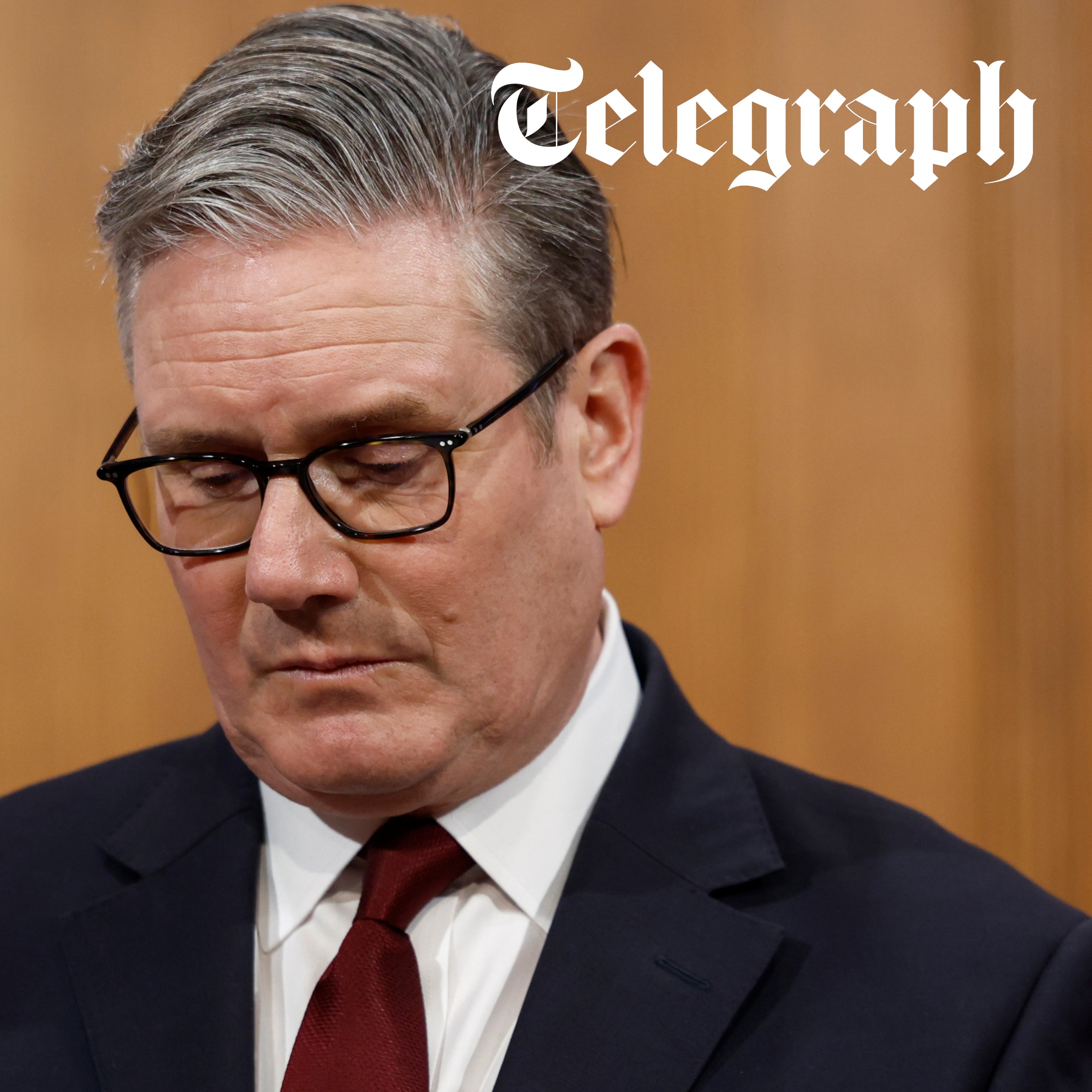
In this episode of The Daily T, hosted by Camilla Tominey and Tim Stanley, the hosts discuss the current state of Keir Starmer's leadership and the implications of his recent decisions regarding international conflicts and domestic policies. The conversation is driven by excerpts from a new book that criticizes Starmer's lack of political philosophy and effectiveness as a leader.
Written by AI. May contain mistakes.
An exploration of the critiques against Keir Starmer's leadership qualities and lack of a guiding philosophy.
“Tim, the question, who is Keir Starmer really?”
Discussion on how Starmer's background and actions create a disconnect with the working class.
“The most damning part of that is the observation that he doesn't really care about other people.”
Examination of how Starmer's media portrayal affects public trust and perception of his leadership.
“The way he dresses, the way he kind of gels his hair, there's an extent to which I think he appears quite self-important, pompous and vain.”
Analyzing Starmer's responses to international crises and his perceived indecision.
“And so now the West has to take desperate measures to try to get it open again.”
Discussion on Starmer's perceived importance on the world stage and his ideological conflicts.
“it doesn't look like there is a philosophy behind it because he's just reacting to events.”
Explore the difficulties Keir Starmer faces on the international stage.
“But in the same way that I never believed that Keir Starmer's personal diplomacy kept America supporting Ukraine against Russia.”
Discuss the role charisma plays in political leadership and perception.
“But the fact that we're still there means we are bringing an end to the global crisis.”
Analyze how leftist policies have shaped Britain's global influence.
“That is also why, by the way, all the rhetoric now around the surge in prices at fuel pumps diesel at me and my husband was searching around the local area for the cheapest diesel we could find.”
Examine recent fuel price hikes and the government’s handling of the situation.
“But actually, the real reason why things are so expensive in this country is because the government taxes are so highly.”
Explore public perception of Starmer and how his background affects it.
“Second option, do you want to do something about fuel duty?”
Discuss the differences between charismatic and technical approaches in law.
“But he doesn't have the, he tries to carve out this, I was brought up in a cardboard box in the middle of the street narrative.”
Explore the host's transition from law to journalism and the importance of human interest.
“What did Lord Bingham say and why did he say it?”
Discuss the implications of political decisions and the perception of leadership in politics.
“But the appointment of Peter Mandelson is not about process.”
Analyze Keir Starmer's approach to leadership and the perception of his past experiences.
“Your defence is the car was going too fast, and that's a disgrace.”
Examine the impact of a leader's character on governance and political success.
“That's the job of a cabinet secretary, or indeed a cabinet office minister.”
Contrast optimistic and pessimistic political views and their effects on leadership.
“You can tell what motivates someone by their obsessions.”
Discuss the implications of public protests on political representation and values.
“you know, we have to consider that in the background of all this, I don't think it helps him to have that Alcud's march at the weekend.”
Delve into the complexities of free speech and government response to controversial speech.
“And I wrote my column about this and it was published on Saturday.”
Analyze the cultural significance and changing perceptions of the Oscars through the years.
“And it's like, just choose a side and operate from that principle consistently.”
Reflect on the historical context and star power of classic Academy Awards ceremonies.
“And the Oscars were indeed the event of the year because so much of the local economy hung on it, like a hairdresser could become famous and make thousands from doing Rachel Weisz's hair or something like that.”
“but also of the films and of our relationship to them.”

Get the gist, explore an idea or ask about something said.
 Claude
On The Daily T, what are the key points of this episode?
Searching your listeningAutomatic transcript. May contain errors.
0:02The Telegraph
0:09He won't send ships to the Strait of Hormuz and he won't make a commitment on the future of fuel duty. What is wrong with our Prime Minister? We've always been told that whatever his politics, Keir Starmer is a thoroughly decent man. But a new expose suggests he not only lacks ideas or a philosophy, he's not even especially nice. And what has gone wrong with the Oscars? Welcome to The Daily Tea with me, Camilla Tomini. And me, Tim Stanley.
0:47Tim, the question, who is Keir Starmer really? And the answer might be, who cares? Because he doesn't necessarily inspire many. Although my husband sent me the extract from a new book that is doing the rounds. It's been written by, OK, journalists at a rival paper, but let's just name check them because it is a book and it is a book about Starmer's premiership. Gabriel Poggrind and Patrick Maguire over at The Times. And it was serialised in The Sunday Times. And there's a particular couple of paragraphs which have sort of got people talking. And I mention this because my husband sent it to me.
1:23My husband is a massive fan of the Prime Minister. Let me just make that quite clear. And he was sort of saying, doesn't this just sum up the problem here? Shall we just read out this very damning analysis of who the Prime Minister really is? And it's basically suggesting he's a man with no philosophy, no fixed beliefs and no ideas. By the autumn of 2025, MPs began to wonder aloud how long he would last. The Prime Minister was running out of other people to blame. Cabinet ministers and Number 10 advisers strained for loyalty, but it proved too difficult for some. He is, said one influential aide upon their departure from Downing Street, the least intellectually curious person I have ever met.
2:05Said another politician upon whom Starmer relied heavily, he can only prepare by reading briefing books for hours on end. He doesn't brainstorm. He has no fixed views on anything. There's no clarity because there's no belief. There's no belief because there's no understanding. There's no understanding because there's no curiosity. Said a senior civil servant who observed him closely, he is not a compassionate man. He's careless about people around him. It's just not warm. He just doesn't think very hard about other people. A once close advisor witheringly said, I don't think he has a theory of power.
2:43I don't think he's ever sat down and read any history or has any idea how power works. I just don't think he would be attracted to the kind of historical figures who got stuff done. Wow. The most damning part of that is the observation that he doesn't really care about other people. He's careless about people around him. He's just not warm. And what does that remind one of? That moment when Rachel Reeves cried in the House of Commons and he failed to notice. Yes. I mean, it was a bit of a kind of, she's behind you, pantomime moment, admittedly. And he was focused on the task in hand, which was addressing the House.
3:22But admittedly, it was a low point. And this kind of goes against the grain of this narrative around him needing to be forgiven because he's fundamentally decent. He is the son of a toolmaker who wants to lead a government of service in the interests of the people of Britain. You see, and we're going to discuss the press conference at which he mentioned that when we were growing up, we didn't have enough money. Oh, for goodness sake. I have Have No Ideas, Fall Back and Biography. Yes. How do you explain what it is you want to do? Well, if you don't really know, you have to dig back into your past.
3:59Or if you don't really have a very interesting past, your parents' past. How many politicians do you hear say, my great granddad fought at the Somme? Yes. Well, that's a nice detail, but it's not an explanation for what you think or why you do what you do. Not only is it not theoretical or abstract, it's not even your own biography. No. Margaret Thatcher, of course, talked about being the daughter of a grocer and talked about family budgeting, but she also had a clear ideology, which she explained at every turn. She explained to people why I'm a capitalist wasn't because I'm a grocer's daughter.
4:34It was because I believe in the philosophy of free markets. I believe that capitalism sets workers free. In her case, theory and biography went hand in glove. But he's never done that. Starmer keeps telling us that he understands our problems because he once had them too. Yes. What he does not do is then connect that to a philosophy of government. So when he grew up, he had a broken window. OK, so what are you going to do about my broken window? Also, I just don't know if that rhetoric really appeals when everybody knows now. OK, he might have had humble beginnings. Everybody knows now he earned a lot of money as a lawyer, as most lawyers do, charging by the hour.
5:15Right. And he's got a protected pension. He went to a very good school as well. He went to a very good school. Yes. She didn't pay for, but it was a highly selective, very elite school. And before he had to move to Downing Street, he had a very nice property in North London. So when I think he talks about the common man that he seeks to identify with, there's a disconnect there. And there's also a disconnect very clearly between his vision of, you know, Labour's definition of working people, Labour thinking that Angela Rayner is a working class hero, when if you actually asked the working classes what they thought of Angela Rayner, they would disagree with the analysis.
5:52Starmer's that typical sort of elite leftist who thinks he knows what people further down the chain think, but he doesn't because people further down the chain think that he's actually quite disconnected from reality, that he speaks in these loyally ways that mean he isn't a leader, that he is a lawyer, not a leader. The way he dresses, the way he kind of gels his hair, there's an extent to which I think he appears quite self-important, pompous and vain. Look at the press conference. He makes this press conference, and let's get on to this. He makes it in a way all about himself because there's a contradiction at the heart of the message he's trying to communicate.
6:36He gets on the steps of Downing Street. He gets elected. He says, we want to end the psychodrama of the Tories. This isn't going to be a self-serving government. This is going to be a government of service. And yet spends the entirety of his premiership basically trying to protect his own position in the face of backbench rebellions, in the face of bungled policymaking, in the face of being pushed around now by his own cabinet, you know, Ed Miliband and his intervention on the Iran war. at every turn. I just see this as a prime minister absolutely serving himself. And we see this at the press conference, but we'll come on to it.
7:11I think he is a man who is dwarfed by events. Yes. At the press conference, the point of it was to respond to events over the weekend. As we know, the Iran war, America is winning it militarily. It's destroyed the Iranian leadership. It's destroyed what there was of its navy. And it's probably drastically reduced its ability to attack other countries in the region. We've got a news story currently running saying Iran has run out of missiles. Right. So in a war of attrition, eventually America was going to win. The one problem, of course, is the Strait of Hormuz, which is a strategic choke point for the world in terms of delivery of oil and energy.
7:51And so now the West has to take desperate measures to try to get it open again. And this is where we run the risk of boots on the ground or ships in the sea, and America has been asking for NATO and Allied support with getting the strait open. And here we learn the cost of Britain's delayed reaction at the beginning of the war, which is Donald Trump no longer regards us as a critical ally in this venture. I don't want them after we win the war. I want them before we start. So whether we get support or not, but I can say this that I said it to him. He will remember. Well, that was Donald Trump speaking overnight on Air Force One.
8:36Can I just say what is going on in the White House press team that whenever the US president makes a key intervention in this war, he does it at the loudest part of Air Force One. So everybody's straining. The journalists there are going, sorry, what's he just said? Sorry, what? and then the public is like, sorry, I can't quite hear that. Yes. If we wanted... And of course there's a bit of turbulence and journalists are bouncing around, but Trump's hair remains perfectly still. It's been hairsprayed within an inch of its life. I feel like if you were going to try and recreate the magic of a Trump protestation right now against Starmer, that we can only do it now if we put our own very large aircon unit on.
9:18OK. And then you are drowned out. To recreate the sound of Air Force One. Just recreate Air Force One now. OK. John's coming in to turn off this behemoth. For those only listening and not seeing, this is the biggest air conditioning unit you've ever seen because this studio is basically... Insanely hot. It's as hot as Hades. Yes. Because it's insulated and soundproofed and therefore in the summer, my God, in the winter, my God, it's just permanently a sauna. Ed Miliband would hate this. So this is the sound of Air Force One and we're going to go live to the president. Yes. We don't want your ships.
9:51We don't need them. We've already won. HMS Drag Race can stay in Portsmouth. We don't need it. We don't need it. Although don't you think that he's changed his tune on that thank you, John? Weirdly, the president has changed his tune, Tim, because he was saying we don't want your warships. Yes. Now he does want our warships. Keir Starmer has said in a press conference today, we're not sending warships. Whisper it. Yes. We don't have any. We don't. We don't. But you never want to be the only power involved in a conflict, especially if you're having to make this kind of dangerous commitment. This is when you want a coalition of the willing.
10:32And part of the problem that the administration has is that in previous conflicts, a coalition was built before they went in. So 2003 is the classic example when they laid out a case, I would say weak, but they laid out a case that Iraq was developing weapons of mass destruction so that they could go into the conflict and they would have at least the backing of, say, Britain and Spain. But this time around, really, they just went in with Israel and subsequently asked other people to help. So I just said earlier I regard him to be quite self-regarding. Let's just listen to this line from the Prime Minister.
11:06This is how he is currently justifying his positioning in terms of this conflict in Iran. I have been attacked by some for my decision not to join the offensive against Iran. But at every stage, I've stood by my principles. My just overwhelming impression is that this is constantly him now, ironically because he's not being hawkish, he's being dovish, in defensive mode. He is now having to defend his own positioning, even though it's fairly obvious to anybody watching, even those who might be loyal to the Prime Minister, that his dither, his delay and his indecision has actually ended up pleasing no one.
11:49I think it's akin to Gaza, right, where one week after another, the government appeared to either say something that was friendly to Israel, then something which was friendly to the people of Gaza. And all the while it was trying to walk a tightrope. And in its own head, it was saying the thing that that week was a precise, principled, ethical response to whatever the challenge of that week was. But the reality of the conflict for most people was you were either for it or against it. And the same is true with Iran. Most people will be of the view that either you back our ally. Yes. Or you think our ally's gone nuts and we should stay out.
12:30Yes. So in his head, every decision is a short term response, hand to mouth response to the events. Should I support this? Should I be against that? But if you actually take a step back, it doesn't look like there is a philosophy behind it because he's just reacting to events. So at the beginning of it, America's on its own. We're not even going to let it use our bases, even though that's not us directly involved in the war, but because of legal constraints. And now it's suddenly we're involved in opening up the Strait of Hormuz. Yes. And at this point, we start to wander into massive ego. We have to reopen the Strait of Hormuz.
13:06to ensure stability in the market. That is not a simple task. So we're working with all of our allies, including our European partners, to bring together a viable collective plan that can restore freedom of navigation in the region as quickly as possible. I mean, that aligning with Europe rather than the US is kind of emblematic of his entire premiership. premiership, although he did the thing of trying to be the Trump whisperer. We know this sits deeply uncomfortably with him. We know he probably doesn't personally like Trump. We know that he thinks it's an occupational hazard to have to keep the US president on side.
13:50But there was also another barb about we mustn't let this war embolden Putin. Well, that surely is a thinly veiled attack at America for loosening sanctions on Russian oil and gas. Because of course, in the back of his mind, just as you'd have the average Labour MP trying to point score on Putin with Nigel Farage, he also, in the back of his mind, wants to do that with the US president because he seems to them as closely aligned. This is such an awkward position I appreciate for Starmer to be in, that he's having to deal with somebody who is now appearing increasingly gung-ho and with whom, ideologically, he doesn't have anything in common at all, despite his own lack of ideology.
14:30But in the same way that I never believed that Keir Starmer's personal diplomacy kept America supporting Ukraine against Russia. No. I also don't believe that Keir Starmer's personal diplomacy is going to lead to opening up the Straits of Hormuz. Yes. And it's fantasy to imagine otherwise. Yes. So he's got an elevated sense of his own importance on the world stage. It's a little like Britain attending all these COP summits, right? Yes. In about five years' time, we're going to be the only people at that COP summit. It's just going to be Ed Miliband and some Polynesian king, right? Yes. But the fact that we're still there means we are bringing an end to the global crisis.
15:10No, no one believes that you have the authority and, importantly, military muscle to do this. Yes, but that interests me because would we be more convinced by a Boris Johnson figure, you know, honey-monstering around the world stage as he did in the case of Ukraine. And I think actually did look as if he was leading something, that he was following in close support of Zelensky. Yes. And got credit for that in that post-Partygate nightmare era. He actually did get credit because people looked at him and said, whatever you say about his domestic problems, whatever you say about him being this bumbling, buffoonish character, when he goes out and says he supports Ukraine against the Russian invasion.
15:57I believe him. I believe that he believes this. It's the soft power of charisma. Boris had the soft power of charisma. You cannot play that role on the global stage if you don't have charisma. So Starmer is a casualty of his own lack of personality. He is, but also of a structural problem whereby the left has played down or diluted so many things that could give Britain influence on the world stage. Yes. They're paying the price for their own policy legacy. Because, for instance, they don't like the finance sector. There's one thing we do well. We had on this show Tyler Goodspeed. And one of the things he argues in his book is that...
16:37Former economic advisor to Trump. To Donald Trump. You might not like banks. Banking is something we do well. We should do more banking. Energy independence. We have a great deal of oil and gas that we could be exploiting ourselves. Yes. We have chosen not to do that. Defence. We could have... We were actually brilliant at defence. And we have all joked a lot about Britain's armed forces, because that's very British, to talk ourselves down. But the reality is we do have a substantial force. We have a very strong history. We have good technological and strategic advantage about other people. The problem is we just haven't spent enough money on it.
17:12Yes. These are all things that the left has agitated against or undermined for decades, including within the Tory party, which I regard as a centre-left party. So here he is now in a moment of international crisis trying to wield an authority that he doesn't believe in, Britain's unique role in the world, its unique history, and he's trying to flex a muscle that he has degraded. Yes, that's right. That is also why, by the way, all the rhetoric now around the surge in prices at fuel pumps diesel at me and my husband was searching around the local area for the cheapest diesel we could find. Yes.
17:54Got some for£1.55 a litre at Sainsbury's. Oh, blimey, you're paying a lot. Not bad. Well, no. Well, hang on a minute. There was another garage down the road. It was£1.77. Right. It was empty. Wow. So you go to the supermarket and get better prices. Yes. We were also having a discussion like, have you booked your summer holiday flights? Because the price of jet fuel is going to shoot up. Oh, really? Tim, get to it immediately after we've recorded this. But anyway, so like most people with a car, you're going around, you're searching different forecourts for the best price you can get. And yet in their infinite wisdom, the Prime Minister and Rachel Reeves have decided to make this all about profiteering at the pump.
18:34Now, I've just demonstrated that the prices have shot up and there is a cogent argument to be made. Well, hang on a minute. Why are you doing this, fuel companies? Because you bulk bought all of this fuel back in the day when the price was under$100 a barrel, well, well lower. Why are you automatically passing this on? And I just thought of all the people you're now going to attack, it's going to be the people producing the petrol and diesel that we rely on to get about and get to work. Yes. And that... That's smart politics. Ed Miliband and Rachel Reeves both came out last week and said there must be no price gouging.
19:11And everyone took that to mean there is price gouging. They were going to have a meeting with representatives of the petrol companies. Those representatives pulled out of that meeting because the government couldn't guarantee that it wouldn't be in front of cameras, that this wasn't going to be a sort of a star chamber performance. But also the companies claim that people working in petrol stations have faced abuse because of the government's rhetoric. Now, the public, again, shares our instinct that those companies are probably going to try and bilk us some more money because that's life, isn't it?
19:40But the public is not dumb. They also know that most of the cost of filling up your car goes not to the company, it goes to the treasury. Yes. Our fuel is taxed at the highest level, I believe, in Europe, or at least one of the highest levels in Europe. Right. So it's a little bit like when we spoke to that landlord and we said to him down in Dorset, how much of this pint do you actually take home? And he was like 14p. Yes. It's exactly the same when you look at the pie chart of petrol, right? Yeah, this is what we call crony capitalism, right? This is when you get monopolies of both state and providers.
20:16And they both essentially are related and they support each other. And the result is you're getting screwed from both directions. Ed Miliband went on Laura Kunzberg at the weekend. And first of all, he had to back down and admit that there was currently no evidence of price gouging. And he insisted that what they had been saying was to forewarn companies not to do it. But then she also confronted him with a magical pie chart that showed precisely how much comes off what you pay at the pump in terms of VAT and fuel duty. And it amounts to around two thirds. So the wholesaler, the wholesale price, the people selling it, that's something like 25 % of the cost.
20:56And the actual petrol station gets something like 6%, again, as with pubs, a very marginal take on what they're selling. But actually, the real reason why things are so expensive in this country is because the government taxes are so highly. Exactly. Now, in response to this, the prime minister insists that he is capping energy bills. And again, people are not dumb. This offer is so mean as to be laughable. He said energy bills will be capped to the end of June, saving the average household£170. pounds. Plus, because of certain renewables charges coming to an end, you're also going to be saving money that way.
21:37So in other words, your home domestic bill is going to be capped and reduced until the summer. And of course, there is a cap on fuel duty until September. Yes. But here's the thing. The summer is only three months away. Yes. Yeah, yeah, yeah, yeah. So all you're telling us is that we have financial certainty for three months. And of course, what happens in June is you use less energy. Yes, exactly. So you're telling us that our prices are going to be lowered at the point at which we're using less energy. Indeed. What I want to know is post-September, when I need to put my heating on, what will the price then be?
22:24And also post-September, again, when one uses one's car more because you can't walk. You can't make the kids walk to school in the pouring rain or the freezing cold. What is going to happen to fuel duty? Yes. And again, this speaks to dither, delay and indecision, because as is ever the case with the Prime Minister, everything is under review. There's going to be a consultation. We're going to ask a load of people whether it's a good idea to have fuel prices go up in September. we could still be embroiled in war in Iran by then. Leadership would surely be about weighing up all of the different options that are before you.
23:02Do you want to send warships to the Strait of Hormuz? That might help the US free up that key shipping lane, which means that we don't face this crisis in the first place. Second option, do you want to do something about fuel duty? Because it's looking like it's looming and you're talking about trying to help the working man and woman, this would be a good way to demonstrate that. Oh, no, I can't take the decision now. It's all in abeyance. Well, that's not decisive, is it? No. It's just, it's nothing. What is it? What's it doing? OK, they've accounted for people with heating oil. Yes, I've got to say, we should note for balance, there is a£53 million support package for the most vulnerable household to rely upon heating oil and there's also a legal direction to energy companies to pass on the savings from last year's budget to the consumer.
23:50And I should also note that past Tory governments have also bailed out consumers. The Thatcher government applied a one-off levy to win full profits from energy companies. So I'm not going to suggest that his lack of philosophical consistency disqualifies him. No. But with a good government, you have a sense of you understand its direction, you know where it wants the country to be. It's not just short-termism. I'm going to bail you out this week. Next week, you're on your own. But there is a sense of we are trying to design the economy such that we won't have these privations and these problems in the future.
24:26But if he does this whole thing of wait and see, we're going to wait and see and not take decisions. It's exactly the same when it comes to new oil and gas licenses in the North Sea. Yes. What was a justifiable position, perhaps to some six months ago, a year ago in the Labour manifesto doesn't apply today. We discussed this last week. What insulated the UK against the oil and gas crisis that was caused by the 1979 revolution? It was because James Callaghan, a Labour prime minister, insisted. I mean, maybe he didn't predict what was going to happen in Iran, but he just understood the need for energy self-sufficiency.
25:08He, at that point, I think that was the point where the most drilling in the North Sea was carried out. And thankfully, we didn't suffer as a result. You know, can you not adapt your positioning to unfolding events? Instead, it's this typically Starmer, Miliband-esque, well, no, we are doubling down on net zero, even if it defies common sense, even if it defies what the public actually wants, because it's two different premises. Does the public care about climate change? Yes, it does. But does the public also think it's ridiculous that we could produce millions of barrels of oil ourselves, but instead we're importing it at great cost and our energy costs are now at the highest in Europe?
25:51Does that make sense? No, it doesn't. Well, to explain his motivations, he pointed out that when he was growing up, his family struggled with money. The funny thing about that is the public doesn't believe it. I mean, the popular perception, you know, pollsters have shown this, the popular perception of Keir Starmer is that he's privileged. Yes. No matter how much he talks about growing up in a working class household with a broken window, it doesn't seem to filter in and the public just don't seem to get it. Look, as soon as you go to university and study law... Yes. I'm sorry. That changes everyone's perception of you.
26:24Yes. Because it's something that very few people are able to do. And he's gone on to great things. And that's wonderful. But he doesn't have the, he tries to carve out this, I was brought up in a cardboard box in the middle of the street narrative. But it doesn't quite work because the father that was a toolmaker, also it's suggested, did have quite a senior role in the factory that he worked in. He attends a grammar school that ends up being a private school. So, OK, he isn't private. But it's the same as Jeremy Corbyn's narrative on this. And you look at the family and you go, OK, like it's upper working class to middle class.
26:56What it isn't is sort of Dickensian poverty. No, no. And I don't particularly want to litigate his family or his family's history. I just don't care. Well, he brought it up. It's just totally. We can interrogate it. We have to interrogate because he's bringing it up. But I just don't care. But you studied law. Yes. Is he typical of the kind of people you studied law with? I mean, there are some, I literally studied law in the same faculty at Leeds University, but just several years later, or maybe in more than, well, he's 62 or something, isn't he? And I'm 47. So many, many, many years later. There are, I suppose, somebody made the point about him.
27:34He wasn't a lawyer who ever sort of had moments of flourish in court. He's the kind of lawyer that wants to spend hours and hours and hours studying the precedent and the case law and, you know, pouring over so-called paginated bundles. But you wouldn't necessarily want him in a wig and a gown arguing your case because of the lack of charisma and personality. Also, there are some people who are kind of like legal technicians that I did notice at university sort of lack a degree of empathy. I mean, I ended up going into journalism and not law precisely because I felt that the human interest at the heart of many of the cases we were studying was so fascinating that I kind of moved away from studying the case law.
28:18Well, what is the ruling? What did Lord Bingham say and why did he say it? And started going to the library, looking on the microfiche. How was this reported at the time? These extraordinary cases that affect people's lives. I don't think he's the latter. I think he's the former. It's all about technicality with him. Yeah, so at the press conference on that point, Peter Mandelson came up and the Prime Minister said this. The independent advisor has looked at the tail end of last week at the process we went through and he said it was the proper process. Look, the process wasn't strong enough and that's why last year I moved to strengthen the process and will strengthen it again.
28:53My reflection is the process wasn't strong enough. The process was followed. Was the process strong enough? No, it wasn't. See, the legal mind falls back on, I technically did the right thing. But the appointment of Peter Mandelson is not about process. It's about political judgment. Yes. It's about when someone comes to you and says, why don't we make Peter ambassador to Washington, D.C.? You say, no way. You say, what? You mean the Prince of Darkness, who was fired twice from Labour government. Yes. Who the public and most of my party really dislike. Yes. You're going to make him ambassador.
29:27But in Pogrand and Maguire's book, they come back repeatedly to this point that he is someone who, as you've said, focuses on detail, insists upon doing all the reading, wants to know every argument, wants to have long deliberation with people, but doesn't actually come up with an answer. No, hence why that box was unfilled. I mean, we mentioned this when we got the Mandy files, didn't we? And you said there was a little box available for the prime minister to add his comments. Yes. And those comments were conspicuous by their absence. And we should state for fairness that he may have written comments somewhere else.
30:05But it's since sort of emerged that he did devolve this decision making to both Matthew Doyle and Morgan McSweeney, his former head of comms, his former chief of staff, who had a vested interest in appointing Mandelson because both of them were very close to him. So he may have just delegated the decision making. But even that, what does that say in itself? That I don't want to entertain the intricacies of a very difficult political appointment, even though I want to benefit from the politics of it. Yes. And also that whole, oh, well, clearly the process wasn't up to scratch. I mean, there was something wrong with the process.
30:41Yes. At what point does he acknowledge that there's something wrong with him? Yes. It's always everyone else's fault. Yes. So now this is the new line from Starmer. We've exhausted everything else. I was lied to. It's Morgan McSweeney's fault. It's Matthew Doyle's fault. Now it's the fault of the process. Yes. The process wasn't up to scratch. Yes, yes. But anybody with half a brain or any knowledge at all, you know, he cited in that press conference as well, once we got the Bloomberg emails, once we had them, then we knew, well, no, sorry, you had the evidence, my lord. It's like being caught speeding.
31:20You had the evidence. Your defence is the car was going too fast, and that's a disgrace. Yes. The car, it's a difficult thing, this, because the car is able to go at 120 miles an hour. The whole thing ran away with me. What are you talking about? You had evidence from The Telegraph, this newspaper. I wrote the piece with two colleagues, 2 ,100 words of evidence about how close Mandelson and Epstein were. You had that, Prime Minister. So don't now blame the process. Blame yourself because you weren't across this. And by the way, you exercised really poor judgment, not for the first time. How many times have you exercised poor judgment?
31:57Take some responsibility, man. Yeah. We had a fascinating conversation with William Hague, which was broadcast over the weekend. Yes, listen to that on the Daily T feed because it's good. What makes a good prime minister? One point he made is experience. It's striking that he was honest and said he was too young when he became leader of the opposition. 36. I know. It's incredible, isn't it? And in the case of Keir Starmer, he only entered parliament in 2015. He rose through the ranks far too quickly. He only got the nomination for leader because the calibre was so low after so many people lost their seats in 2019.
32:29And this is a point that Rosie Duffield frequently makes, the dissident Labour slash independent MP for Canterbury, that he was just promoted too far too fast, doesn't understand Parliament, doesn't understand his colleagues. It's partly just about that. Yes. But it's also, being prime minister is a very difficult job, and it exposes the strengths and weaknesses of people's character. And you sometimes get prime ministers who are guided by a sense of principle. The classic example is Margaret Thatcher or even Tony Blair. And then you get prime ministers who are obsessed with process. And Starmer very much belongs in that category, along with, say, Theresa May or Ted Heath or Rishi Sunak.
33:11And these are people who they're in government in order to govern. They believe the fundamental issue is not a choice between left and right. It's a choice between doing the job well than doing it badly. So if they just read all the advice, and if they just work closely with their civil servants, and if they just tackle every problem as it comes on its own merits, then they will improve the country incrementally, like putting a cap on your bill until June, and then we'll think about what happens after that later on. And in the round, it'll all work out. But that's not their job, is it? That's the job of a cabinet secretary, or indeed a cabinet office minister.
33:47No. That is not the job of... If a prime minister's job, Tim, isn't about politics, what's it about? You've cited four former prime ministers there who are bad at politics. We have a new archbishop of Canterbury who, when the House of Lords is debating abortion, is choosing to go on a pilgrimage to Canterbury. Her pre-DSSR decided to leave the country during COVID as congregations were gathered in car parks. Right. My point is the Anglican Church is a classic example of institution which has become increasingly corporate and is of that mindset that it's about process, box ticking and doing things right.
34:21Well, it is, but it's also about religious or political leadership, a touch of vision, something like that, a sense that you're working for some higher purpose. And you just don't get that with Keir Starmer. And the other thing, and this is a point which our brilliant editor has made to me, so I don't want to claim credit for this, is you get politicians who have a fundamentally pessimistic view of life and you get politicians who have an optimistic view of life. Never has that contrast been greater than between Boris Johnson and Keir Starmer. Absolutely. And the flaw with Boris Johnson's everything great perspective is you make profound mistakes, like opening up the borders, right?
35:02You make mistakes which come from a generosity of spirit. The flaw with people like Keir Starmer, again, Theresa May was very much like this, is you have this view that life is really tough. And as a human rights lawyer, you assume that everyone, even British soldiers, are in some way torturing and harming innocent people. Yes. So it requires people like you to fight their corner. And there's something very noble about that. Don't get me wrong. Yeah. But when you have such a miserable view of life... Yeah, but that's back to him being a lawyer. Right. You make your money out of litigation. Litigation, ergo, is when people are in desperate situations.
35:41Yes. So he's constantly glass half empty. Yes, exactly. Because that's been his entire career. Yes. So when you see this and all this stuff about I grew up, we had no windows, the house was on fire, we got one carrot at Christmas. When you get this constant falling, these are psychological tells. You can tell what motivates someone by their obsessions. and the fact that he always has a crutch falls back onto the story of the hard luck youth. You think about it, if I asked you right now, what was your childhood like, unless you had a really horrible one, most people would go, I love my mum and my dad, we had some nice holidays, it was great fun.
36:13Even if that's not true. But that is true about his childhood. He did have a good childhood. But most human beings are instinctively nostalgic, right? Yes. I don't want to sound mean, but it does say something about a human being that whenever they reflect upon their youth, it is a story of struggle and misery. It's not a story of this is what made me happy. And I come back to this, the left has wound everything down that it's now trying to use, be it the energy, military, etc. Well, as the Prime Minister spoke, standing behind him with two enormous flags, the smaller Britain gets, the bigger its flags grow.
36:49I guarantee they'll be replaced with hedgehogs within six months. Like on banknotes. Yeah. Have a couple of badges. Yeah. Or a giant picture of a drag artist and Nelson Mandela, right? Because you are trying, he is trying to get this country to follow him, but he doesn't believe in leadership. He's trying to get this country to love his country, which I think he does love, but he sees his country as unlovely. Yes. He has to try and apologise for his country in many ways. That is why it is all doomed from the very beginning. Can I just make one other observation? you know, we have to consider that in the background of all this, I don't think it helps him to have that Alcud's march at the weekend.
37:30It wasn't a march. It was a static protest. Right. But I think it's so emblematic, this. Bob Villain of Glastonbury fame is able to attend this protest and repeat the death, death to the IDF chant that landed him in very hot water and the subject of a police investigation back last summer. Doesn't that tell you everything about the current state of stasis that we're in? Nothing changes. They promised change in the manifesto. Nothing changes. We allow people like Bob Villan to come out with this stuff on the streets of London. There's no decisive person saying enough is enough of this. You're not representing British values.
38:15Get out. It's just more of the same. Right. And I wrote my column about this and it was published on Saturday. You know, can we really afford more of this? Can we afford to be kept in suspended animation, to be in this limp-wristed limbo for much longer? And then the readers all said, well, just imagine what comes next. It's Angela Rayner or it's Ed Miliband as prime minister. What I want is a sense of philosophical coherence. What is the government's prejudice towards? Is it towards allowing free speech or clamping down on free speech? I don't actually want to live in a country in which people are locked up for saying things like death, death to the IDF.
38:58I don't want him locked up. Right. OK. Or even silenced. I believe in I want to see the maximum expression of free speech. But if he is allowed to say death, death to the IDF, I also don't think we should have the police knocking on doors of people like Alison Pearson. No, let's have some consistency. What is the government's prejudice? Is there prejudice towards free speech or is there prejudice towards reducing speech that does harm? But I don't know what it is. Why? Because you get this feeling that every time someone tweets, Keir Starmer is in his office looking at that tweet and running through it and thinking, what legally is the standing of this tweet?
39:33And it's like, just choose a side and operate from that principle consistently.
39:51Before we go, Tim, let's just discuss the Oscars because you and I were obviously going through all the outfits and slagging them off early on. Her bottom's too big in there. Or conversely, it looks too small, too thin. It looks too small. Where is it? And why are people wearing those gloves right up to their... I just think it's... Sharing their bony, ozempic arms like chicken bones. It's terrifying. Listen, if you're Audrey Hepburn in the 1960s... You do it. Just don't do it again. But also we were talking about, does anyone care anymore? Have the Oscars lost their magic? The one funny joke that the host Conan O 'Brien told was in reference to the head of Netflix being there and saying, you must be hating it.
40:29You know, you don't like watching things on a big screen. You'd rather be at home by yourself binge watching. And I thought that basically sums up, you know, we're not in the golden age of cinema anymore. No. And this ceremony has become sort of slightly hackneyed. I mean, we were discussing it earlier. You want a host like Ricky Gervais to rip through them all, but that's already been done at the Golden Globes. And in a way, that was the moment that these awards ceremonies lost their magic because we now, when we see Javier Bardem stand up and talk about genocide in Palestine, we're like, oh, for God's sake.
41:02Yes. Just stick to making films with Penelope Cruz and shut up. Gervais pointed out that the emperor has no clothes. And once someone's done that, all you can see is his wobbly bits, right? Yes. From that moment on, it was done. Likewise, Will Smith punching. Well, it was a slap. Slapping, slapping Chris Rock a couple of years ago. Do you know that was 2022? It feels like it was yesterday. Right. If you have a moment like that, no Oscars is going to ever surpass it. Get my wife's name out of your mouth. What a line. I used to live in Los Angeles. Yes. And the Oscars were indeed the event of the year because so much of the local economy hung on it, like a hairdresser could become famous and make thousands from doing Rachel Weisz's hair or something like that.
41:47So it had a great buzz about it. But in the 80s or 90s, it used to command TV audiences of around 50 million. In the last five years, it struggled to scrape about 20. And the reason for that is not just the declining quality of the festival itself, but also of the films and of our relationship to them. I think it's worth remembering the Academy was established in the 1920s to be an alternative to a trade union because there was a big fear in Hollywood that actors and directors would organize and go on strike. So they figured out that if we just create an Academy rather than a union and we give them awards, they won't go on strike because actors are so vain and stupid that they'll accept that, right?
42:29This morning, I watched some of the 1972 Academy Awards because I'm that kind of person. And I find these things interesting. And it's a totally different era. First of all, the films which were up that year for Best Picture include The Godfather. Oh, my goodness. Cabaret. Yeah. And Deliverance. Wow. Right. The opening bit was a tribute to Hollywood musicals sung by Joel Grey of Cabaret. Helen Hayes gave the introduction, the grand dam of American film and theatre. And just watching this parade of stars, I looked at them and I thought, they're so beautiful. Yes. Why does everyone nowadays look like a cartoon?
43:05Well, they've had too much Botox and fillers, right? They all look the same. Healthier and normal about people back then. There was politics in the 70s. Vanessa Redgrave gave her famous speech in 1978 about Zionist hoodlums. And the Marlon Brando moment. Marlon Brando sent a Native American girl, Sashin Littlefeather, to receive his award. And some people say she actually wasn't even a Native American. So there wasn't politics. But the point is, it had class. The movies were good. and because people still went to the cinema until later, say, Titanic in the 90s, everyone had seen what it was you were talking about.
43:38The simple changes, no one goes to the cinema anymore. That's so true. So I want to list, here are the winners that you might recognise from the 1970s. Rocky. Yes. One Flew Over the Cuckoo's Nest. Wow. The Deer Hunter. Love it. Godfather's Part 1 and 2. Here are some winners from the last 10 years of Best Picture. Onora. Pardon? Never seen it. Right. Coda. It's quite a serious thing about... I can't remember. Go on. OK. It's not Marlon Brando. No, it isn't. Nomadland. Nope. No. This is my point. Never seen them. Nomadland sounds like something that's on Netflix. Like Landman. Right. And as for this year's winner, One Battle After Another, it's an OK movie.
44:23Yeah. But the idea that it's in contests with Citizen Kane or Gone with the Wind is nonsense. I'm sorry to make what was supposed to be a light last part of the show dead serious. But this is my point, is that culture and society have changed. And the Oscars is now a niche thing for an industry which is in decline. It's just kind of sad. Let's end on a really lowbrow note with me asking you, in all the time that you were in Los Angeles, who was the most famous person you either encountered or just saw? Oh my gosh I interviewed actor, writer, director and poet Leonard Nimoy Leonard Nimoy from Star Trek I did Oh my gosh He was very old We sat in his garden And honestly it was one of the high points of my life Yes I'm not even a big Star Trek fan Yes But to be in the presence of a man who was a genuine star is a great honour.
45:25And I have met prime ministers, I've met vice presidents, I've met many more powerful and richer people. But that afternoon in the garden of a Vulcan, I think is probably the most privileged I've ever had in my career. What's the sign I should be doing? I confuse it with the... Live long and prosper. Live long and prosper, Tim. We'll be back tomorrow, 5pm. I get confused with the Scout one. What's the Scout one? Thank you.
Keir Starmer has once again refused to be commit to any kind of support for the conflict in the Middle East, even after Donald Trump promised “he will remember” the UK’s lack of action.
In a press conference this morning, Sir Keir also refused to clarify whether fuel duty would rise in September, with the conflict already sending forecourt prices through the roof.
After a weekend that saw damning extracts of a new book that paints Sir Keir as a Prime Minister in name only, with no fixed ideas, philosophy or political instinct, Camilla and Tim ask – what is the point in his premiership?
We want to hear from you! Email us at [email protected] or find @dailytpodcast on TikTok, Instagram and X
► Sign up to our most popular newsletter, From the Editor. Look forward to receiving free-thinking comment and the day's biggest stories, every morning. telegraph.co.uk/fromtheeditor
Producers: Lilian Fawcett
Senior Producer: John Cadigan
Video Producer: James England
Studio Operator: Meghan Searle
Social Producer: Nada Aggour
Editor: Camilla Tominey
Hosted on Acast. See acast.com/privacy for more information.


