
 Ask ChatGPT



In this episode of The Daily T, hosts Camilla Tominey and Tim Stanley address the ongoing accusations against the BBC regarding its biased coverage of transgender issues. They discuss the impact of this coverage on young people, particularly through the perspectives of parents whose children have transitioned.
Written by AI. May contain mistakes.

Get the gist, explore an idea or ask about something said.
 Claude
On The Daily T, what are the key points of this episode?
Searching your listeningAutomatic transcript. May contain errors.
0:10The BBC has repeatedly been accused of bias when it comes to its coverage of trans issues. But what effect has that had on young people watching the national broadcaster? We speak to two parents of children who have transitioned and who blame the BBC in part for that decision. Welcome to The Daily Tea with me Camilla Tominy and me Tim Stanley.
0:44Tim, we did the big expose of BBC bias and the focus was largely on Trump and the splicing of the Trump speech in the Panorama documentary before the January 6th riots and then we identified on the Daily Tea, didn't we, that a speech of Trump's at the same time had also been spliced for Newsnight. Everyone wanted to focus on that. Actually, the Michael Prescott memo, which was based on David Grossman, the BBC journalist's investigation into bias at the BBC, also uncovered that a lot of their trans coverage had been biased. It had lent into the idea that trans women are women. It had tried to exclude gender-critical voices from coverage.
1:24So the focus on Trump, in some ways, helped the BBC. Yes. Because that's a political story. But some of the accusations of bias have real-world, deeply personal potential consequence. And we are speaking today to two members of an organisation called the Bayswater Support Group, which represents 650 mothers and fathers of primary school-age children and teenagers who believe they are trans. Now, last week, that group accused the BBC of damaging their children with what they said was a, quote, constant drip feed of one-sided stories, celebrating the trans experience without adequate balance and objectivity.
2:04They've written to Ofcom, urging them to investigate but have received no response. They've also accused senior BBC managers, including Jonathan Munro, who took over as the head, the ultimate head of BBC News after Deborah Ternus' resignation, along with Tim Davey last month, of failing to take their concerns seriously. Here are some examples of alleged BBC bias. A biased news report of a high court ruling that restricted children under 16 from accessing puberty-blocking drugs. The cartoon series Hey Dougie, in which a raccoon named Wren was described using the pronoun they and their, suggesting the character was non-binary.
2:43BBC denied that the character was intended to be non-binary. and also, and I think I remember this one, an episode of Doctors in which a mother said that she knew her daughter was transgender because when she was six, her best friend was a boy and she liked playing with mud. I'm just going to pause for laughter. The girl's father was portrayed negatively for not accepting his daughter's desire to be a man. Just to be a bit more specific about that LGBT desk at the BBC, that's been accused by the Bayswater Group of being captured by a small group of people promoting a pro-trans agenda and keeping other perspectives off air.
3:25A few examples that have been cited include the fact that the concept of gender identity is often presented in the BBC reporting as an established fact rather than contested. Apparently the desk ignored leaked documents from the World Professional Association for Transgender Health in March 2024 that raised concerns about the quality of care given to gender distressed children. And last month, Transgender Trend, which is a gender critical campaign group, accused the BBC of, quote, indoctrinating children with pro-trans children's programmes. The example of that is a 2025 episode of Waterloo Road.
4:02Again, I remember this. It was mind-blowing, which focused on a boy living as a girl called Lois, who stopped visiting his dementia-ridden grandmother after she dead named him by using his birth name Jake. I'm not sure what's more mind-bending, that storyline or the fact that you watch Waterloo Road. No, I didn't. I only watched it because people pointed it out. And what was mind-blowing was the show's cruelty towards the old. The elderly. Because the point is this person was old and had forgotten and you're supposed to give leeway to the old. Yes. Whether they know or not, you're supposed to go, oh, gran, you don't know what you're talking about.
4:41But also this gran had dementia. Right. So she's confused. But instead, the show took the side of the child over the old person, which is going to be a theme of this edition. For balance, we should read out the BBC's response to Ofcom in regard to the complaint about the trans bias accusations. And I quote, BBC News has taken a number of actions relating to our reporting of sex and gender, including updating the news style guide and sharing new guidance. making our social affairs editor responsible for this coverage and where there have been concerns about particular stories, we have addressed them.
5:16We continually review our coverage to reflect developments such as the recent Supreme Court ruling. The other trouble with all this is, in the backdrop, is that the health secretary, because the NHS have been accused of being very slow to update their own guidance in response to the ruling. We're streeting. The health secretary's been all over the place on this. Our supposedly right-wing health secretary, that's correct. But that's the Labour government. All over, isn't it? Unable to make a choice or to stand with one side or another. He has said that banning puberty blockers has been uncomfortable, but was ultimately right.
5:49He spoke at an NHS LGBT conference back in September where he faced questions from trans activists about the impact of the ban, which he made indefinite in 2024. He did make it indefinite, but he made it indefinite on the condition of what trials reveal. Yes. I want to stress that. Also, let's not forget, and we're going to hear from a parent about this very subject, they can still be prescribed by private GPs and private doctors. Anyway, he told attendees at that conference that it had been truly uncomfortable and that hearing from young people who had been affected had not sat easily with me at all as he defended the decision.
6:23His remarks received a mixed response on social media, with some praising his answers in front of a hostile environment and others questioning his wording and his efforts to appease both sides of the debate. Well, it's all very well debating this from a political perspective, but what does it feel like for a parent to have a child who transitions without their knowledge? Sarah joins us now, not her real name. Sarah, thank you very much indeed for joining us on The Daily Tea. We appreciate what we're going to ask you is quite personal and actually quite difficult to speak about. So we're grateful that you are here with us.
6:55You don't want to be seen on camera. You want to remain anonymous, which is perfectly understandable, considering the subject matter involved. This began really during Covid with your daughter. She was anxious. She wasn't herself. Just tell us what happened. Well, I think she sort of had problems which we didn't realise about, sort of like bullying and her own sense of self. And she'd started to sort of search for answers online. And I think like a lot of kids sort of fell into a rabbit hole of, you know, who am I? Why do I feel different to anybody else? And I think that's where she was sort of like taken down this rabbit hole of, firstly from sort of ADHD into a trans identity because they're quite overlapping.
7:44Yes. And I think a lot of the content that you can see about neurodiversity actually then overlaps into trans identity influences, I suppose. and I think we hadn't realised just how many YouTubes and BBC programmes there are about trans identity and I think that's where she sort of fell down that rabbit hole and then I think because a lot of kids feel that their parents will be anti it and will be so against it, that's the kind of, guess what they're sold, is that you might need to keep a secret from your parents because you don't want to be rejected and of course I would never reject my daughter, I love her to bits.
8:26It's difficult when you say, I mean, Tim, that's surprising because we are honing in on what role the BBC may have played. I think we can all accept in many different areas that TikTok and other social media sites might have a role to play in Gen Z and Alpha's decision-making on issues around identity, neurodiversity, boyfriends, girlfriends, schoolwork. And it's glossy and it's personalised and there are influencers who are transitioning and will give updates on their transitioning so you can track what's going on in your own life by an influencer online who will show you how to do it and what it looks like and what to expect.
9:07But if the BBC isn't providing balance, if you're going to a trusted news source and it's not telling both sides of the transitioning story, I think that's problematic. And clearly as a parent, Sarah, you found that problematic. Yeah, I mean, there's all sorts of content. You'll have like a Dr Ronks piece about binders. And binders are a really, really restrictive, dangerous way of repressing the female body. I found that piece particularly shocking because this is a doctor who is on the BBC and basically expressing horror at this young woman's larger breasts and giving her advice on how to compress them.
9:54And I think that's terrible. Was this online, on TV? That was a BBC Three piece. But obviously because of the kind of dominance of the BBC, and this is somebody who has an online presence, who has an Instagram presence, whatever. If you look at that sort of person, if you look at that content, then what does that do to that individual's algorithm? What's it going to suggest to them? Suggest going further into this rabbit hole of binding and further medical interventions. I mean, it's online confirmation bias, basically. Yes. Yes, which you don't expect to get from the BBC. Given if you give the example of chest binding, that is so controversial because it should be a very last resort to very specific problems that should be properly consulted with a doctor, not something that someone's promoting or talking about in that way.
10:49It suggests somebody's issues with their body. and that to me is like anorexia. It comes from the same place. It comes at the same time. It hits you at puberty. And instead of encouraging people to accept their bodies, you're saying change it, cut that bit off, take this drug. This will change you. This will be all the answers. And the BBC are not actually giving you the kind of flip side of that as to what are the consequences. Yeah, what are they? You know, I mean, that's the thing. You are left with irreversible damage. You know, and I think one of the complaints that I made to the BBC was about a piece that featured Dr.
11:31Helen Weberley. And at the time, she was under investigation from the General Medical Council for her prescription of testosterone. And yet the BBC thought that she would be OK to be included in this. And their response was that because they had one detransitioner in that piece, then that was their balance. Just to qualify that Dr. Weberle is somebody who helps trans patients to transition. She's done a lot of broadcast interviews where she's proved controversial. In the case of your daughter, Sarah, you are aware that she's unhappy during COVID, but she basically transitions at the age of 16 without you really knowing.
12:16Can you explain that to us? Because it's a kind of social, you know, it's within a social circle. So she can call herself one name within a social circle. And then because of the issues that we'd had with school, which we weren't going to, school would call her by her name. But they kind of like said, but it's OK for you to be called by the name that you want amongst your friends. Yes. So in a sense, that is a social transition. Would you have preferred at that stage if she had chosen a male name? and we're being very careful here, we're not saying the names because we don't want to identify anybody.
12:50You didn't want her to use a male name, I assume. No, because it's part of that kind of going down that path. And also I think, you know, a lot of this is about control. A lot of this is about becoming an adult, controlling who you are and controlling things around yourself. And so it becomes a battle between you and your child, between like, you know, I want to call you this name, they want to be called that name. So there is a complexity there with names. It's a minefield, this, because the child wants to express him or herself in any way they can. Parentally, you need to guide your child in the right direction while maintaining their sense of happiness in the direction they want to go in.
13:37You could apply this to a child revealing to you that they were gay. You support it the best way you can. Well, my problem with it, Sarah, is as a parent, we have to fill out various different forms, for instance, to allow the children to be given cowpaw. Can we give your child cowpaw if they fall over in the playground? Can we take a photograph of your child on a school trip and put it on social media? What I found extremely disturbing about your story is that teachers are complicit in affirming your child into a different gender. and you are firmly kept out of this, which I find extraordinary.
14:15Yeah, I mean, you know, I didn't know that my daughter was seeing a counsellor. What? And I found that extraordinary. Yes. Because that comes back to the same thing, is that if you think that a child is suffering in some way, the school nurse would phone you and say, well, can we give them paracetamol? Yeah. You know, but for weeks I didn't know that she was seeing a counsellor and a counsellor who had quite a specific view. Right. But is that because your child had turned around to the teachers and driven a wedge saying, my mum won't believe me, my mum doesn't support me, my mum's... I think schools need to take a view on that.
14:54Where is the safeguarding issue in this? Yes. Where is the safeguarding issue? And they take the safeguarding issue of if a parent will not affirm, then they are a safeguarding issue to their child. And that's the problem. Because the problem is... That's the wrong way round, isn't it? Yeah. And the issue is that, you know, the kids are constantly being told that if they don't follow this path, they will attempt suicide. Right. Now, that's emotively incredibly manipulative. Yeah. And also, you know, it's just wrong. Even at the Tavistock, they were saying that, you know, These kids were not more likely to attempt suicide than any other children with mental health issues.
15:39But we know now that kids who do take testosterone, massive dose of testosterone, who do alter their bodies, they are more likely to make suicide attempts. And that was another of my complaints to the BBC was that they had a final quote in an article about Elliot Page that was basically... That's Ellen Page, as she was once known, a US actress who has transitioned to become male. Yeah, I mean, she basically said that if we don't allow trans kids to play sport, they're going to kill themselves. That was the final, that's the final sentence in a BBC article. And the only comeback that BBC did was they didn't change that sentence, but they just sort of like, we've put a link on at the bottom to, you know, if you need to access these services.
16:30And of course, you know, you then go to the BBC help things and it's all sort of like if you're if you're a lgbtq plus person then you need to access these sort of services and they're all affirming you know they'll be affirming funny enough there won't be any links to the bayswater group or any of the gender critical groups that exist that seem to be persona non grata as far as the bbc is concerned how did you find complaining to the bbc oh just it's just they just bat you off with a quick email back you know like and you just give up in the end because what's the point you know i mean you're fighting so many battles on so many fronts and i think the most painful thing about the suicidal ideation part is is the fact that it's so perpetuating that suicidal myth is so important to pushing the medical treatments that these kids get afterwards life-saving yeah their claim to been life-saving and if you don't remove that that idea that they're life-saving then there's no point in taking them there's no point in taking testosterone if you're saying if you're not claiming that it's life-saving testosterone and you know giving a kid lots of testosterone and estrogen it's a cosmetic it's a cosmetic treatment yes for a psychological problem yes and that's wrong That's really wrong.
17:50And there's lifelong effects for both of them. You can get lots of different cancers from taking too much testosterone. You can get lots of different cancers from taking too much estrogen. And you're opening up all of these young people to it. Well, the other thing is it goes against the CAS report into the Tavistock Clinic, the gender identity services that they provided there. It's clearly made the point that there was no clinical evidence base for the treatment that they were offering. It also identified that autistic children and neurodiverse children were grotesquely overrepresented in the statistics of the patients that attended.
18:28And it concluded that the treatment that was offered, there was no evidence to support it curing, making happier or improving the outcomes of those who appeared in the first place to demand or desire a transition. It wasn't a cure. No, no. I suppose some people watching this might say, Sarah, that you're not affirming your daughter. And those who think that she should be affirmed would say you're contradicting her. If you had been given the space in which to handle her the way you would have seen fit to handle her, what do you think you might have done to help her through this period? I think I'd have probably accessed kind of quite different mental health care.
19:12I think I would have accessed mental health care from a body issue, anorexia kind of point. Right. Rather than this is just identity and anxiety. I think I'd have handled it from that point. Okay. And I think... So you would have sought help. You wouldn't have just suppressed it and said you're wrong, get over yourself. I mean, the thing is, it's very, very difficult to access mental health care for anybody. Yes. Particularly during that lockdown period when literally every other kid was. And also we knew what was happening. We realized what would happen with the counsellor at school, which just made her worse.
19:54So bad mental health care is as bad as no mental health care. Yes, yes, yes. And so it's really difficult actually finding a person who will navigate them through this. um you know obviously my you know i just want a happy a happy young adult and i don't want a medicated young adult and i think you know we're talking to other parents there's such a wider issue of kids whether they're identifying as trans or not of just wanting to change their bodies and wanting to use you know medical medicines and and protocols to change their bodies that they were just kind of missing just not kind of not realizing because they're not coming up as being like anorexia it's a kind of ordered eating it's a kind of very prescriptive protocols of living and so you'll get teenage boys who they have they don't identify out of their sex but my god they want testosterone because they want that body yes yeah they want that body social media induced i mean it was described to me on behalf of young men and teenage boys as the three p's it's protein shakes, powerlifting and podcasts, largely by men telling boys.
21:08I do all three. Yeah, I know. It's had no effect. And you know why it hasn't had any effects? Because I don't shoot up. No. When you see people who look like that, I'm sorry, they're cheating. They're very often cheating. But let's be perfectly honest. We had a whole debate during the 90s about the airbrushing of magazine images, but that was just the tip of the iceberg. For women. Pretty much every representation of any influencer or famous person that they see online has It's been doctored and changed and filtered. Therefore, they have got completely distorted views of what one should look like.
21:41And that has changed how they behave. We've also seen social media create a generation, frankly, of narcissists who are posing and pouting constantly. They are self-obsessed. They're obsessed with their own image. Comparatively, when we were going out, I mean, sometimes throw some clothes on Sarah and not even look in a mirror. God forbid you could do that these days. So I do agree that this is about a wider thing, actually, than simply trans issues. It goes much, much deeper than that. Where's your what's your daughter? She's 18 now. Yeah. Do you have what's the nature of your relationship with her?
22:17Yeah. I mean, you know, it's kind of the elephant in the room. It's like we don't really talk about it because like I don't want to keep, you know, I'm not going to keep pushing her and like asking her about how she identifies and that kind of thing. That's just weird. You know. But is she identifying as a male now with a male name? And she accessed a private service that very, very speedily gave her testosterone. And she's underweight and she's had an autoimmune reaction to a virus. So that private medical practice didn't know about those. So it's so, I mean, this is the other thing. private medical practices are like the wild west yes they are absolutely and because these kids see testosterone as being a natural product they don't see it as like an anabolic steroid like we did in the 80s you know yeah it's a hormone as far as their concern it's natural yeah it's just like your body lacked it so we're giving it to you to make you this into this image that you want to be And, you know, private medical practices will just do it over a video call and you get a prescription.
23:28I mean, the funny thing is, is that so many of us are described as being, you know, right wing fanatics or whatever. Yes, TERFs, gender critical, JK Rowling devotees. I mean, this is like this is like unfettered capitalism. That's the irony. It is because it's like there's no regulation. There's no regulation of, you know, the private practices. And, you know, there's... Well, even more perniciously, they're actually preying on the vulnerable. Yeah. Yes, yes. But on the capitalist point, it's also being driven by influencers are probably receiving sponsorship. Exactly, exactly. And all of these...
24:06Money being made. All of these influencers now moan about the fact that they're not making as much money because, you know, and they're all blaming it on the algorithm. There probably is an element of the algorithm to do with that, but there's also an element of the fact that the kids have moved on. the younger kids have moved on and they're not getting the next batch I know but for a parent like you Sarah there is a phrase transgender trend it was also the name of an organisation that was gender critical for your daughter to have fallen victim to a trend that was created probably by Covid exacerbated by capitalists, influencers and others with some skin in the grain supported by the education system and the school backed up by biased BBC reports.
24:51I mean, that doesn't really help you. No. That she was caught up in this storm and is now maybe beyond the point of return. I don't know. Once you take testosterone, will she go back to being a woman one day? I think the problem is that people don't talk about the side effects of testosterone when you start taking it. And again, the BBC won't talk about that because then you're criticising, life-saving, gender-affirming care. So you won't see a story on the BBC about the horrific side effects of testosterone abuse. You won't see a story on the BBC, but you will see it on the Daily Tea, Tim. You certainly will, yes.
25:33Sarah, thank you very much indeed for coming in and speaking about this very serious issue. Oh, thank you. Coming up next, having heard Sarah's testimony, we're going to speak to a dad called Mark who hasn't spoken to his daughter for four years after she suddenly transitioned at 16.
26:03Mark and his wife were blindsided when their youngest daughter of three children transitioned the age of 16. She's now 20, but she no longer speaks to her parents. Mark joins us now. Thank you very much for joining us. Your story is similar to that of Sarah, who we've just spoken with, in that your daughter's struggles began during COVID. Is that correct? That's when we first became aware of it. We understand she would argue that they began earlier. However, our perception as parents is that she was a fairly normal girl. She was a tomboy, very much like my wife tells her experience growing up.
26:49So we thought she had the normal struggles that girls go through, but it did get very much exacerbated during COVID with the lockdown she seems to have been unable to understand that when the the schools gave them work and they gave them a lot of homework that she felt she had to do it all and it was too much for her yeah she couldn't cope it got to a stage where she went into fifth year she wasn't able to cope started dropping out of school and we got so worried for her we arranged a private counselor and eventually wondered if she needed a break. And we arranged for her to go and stay with grandparents.
27:36And it was during then that she came out, as it were, as trans. And it seems to have placed them in an impossible situation because they weren't ready for this. They had no knowledge of how to respond. and they felt they had to affirm, which a lot of people do. But at the same time, our daughter had expressed that she didn't feel safe at home. And so there was this impossible situation. What do they do? Do they believe our child? How do they respond to that? And so that created a very difficult situation for us. And it seems to be quite common that there's a, it's almost as if there's a script given to children, to young people, that if there's any possibility of your parents having concerns or expressing questions that you try, children are advised to withdraw from the family.
28:46Right. And we tried everything. It's been four years now. And our daughter has just pulled further and further away from us. At the end of last year, she broke off all contact. And so we're from our side, we would love to reconcile, would love to restore our relationship. But until she makes the decision, we're kind of in limbo. Just going back to this period where your daughter appears to sort of be speaking by a script, that just flashed a kind of red flag to me because we've spoken again with Sarah about the role of social media in all this. do you think that she was going online and getting advice if we can put it that way from online sources be it social media or indeed the BBC as to how to handle this situation with a view to getting the outcome that she wanted regardless of whether it was the right outcome because you've expressed quite a lot of distress I can see it in your face there at the notion of your own daughter turning around and saying, I don't feel safe at home.
29:55What's your theory about how that all came about? It's been as if we're in a mystery story. There's so many unanswered questions that we have. What we do know is that our daughter is an artist and she was going onto YouTube, onto TikTok, and she was learning skills. And we were quite pleased. We thought, well, this is good. She's learning valuable skills. she's learning to draw. What we didn't know is that some of those influencers, some of those tutors online were trans identified. And we wonder now whether that had an impact that, you know, we don't know what was said. Maybe it was just the fact that she was in their company, as it were, for such a long period of time.
30:44We don't know if there was other influencers online or in person. We would love to know the truth if our daughter would share with us. So unfortunately, I can't say any more. But the safety aspect, you say that that featured in other children's testimonies, so to speak, in order to get on the affirmation pathway. I'll put it to you, Mark. Was she unsafe at home? No, that's a really important question. I feel guilt as a parent that I didn't protect my daughter. I think there's quite a lot of parents. I'm a member of Bayswater Support Group. It's a parent peer support group. And a number of parents have expressed similar regret.
31:31We thought we were protecting her. We thought that we were monitoring her. And so the fact that there's this risk, this possibility that she had access in my home, does that mean that I failed as a father? So, yes, I struggle with that. And yet a father in Bayswater just a couple of weeks ago shared with me a story, his story, and he's allowed me to share this with you today, that they were very careful. They bought iPhones, which I think you can lock down. You can have a lot of parental controls on them. They were very cautious about not allowing access to the Internet between certain hours of the day and night.
32:18and then they found out that a friend of the family's had that their child had upgraded their phone and that family had given the daughter this effectively burner phone without the parents knowledge and it felt like such a betrayal when they found out that you can do everything in your power to protect your child but our children have some agency you know I can remember what it was like as a teenager you know I was my parents don't know half of what I was up to you know but also there are people around people that we trust people that we think are friends people that are family I am now probably quite paranoid you know people that I thought I could trust friends and family it's very difficult to trust them now that's the personal affirmation that people can receive or the internet affirmation what about the media let's talk about the bbc do you think the bbc amplifies trans oh yes that would certainly be my perception i worked as a contractor at the BBC back in 2016-2017 in their HR department.
33:43And I can't talk about that, you'll understand. But I did have the opportunity to read public reports. And so as a taxpaying license fee payer, I can talk about the BBC's annual report. And I noticed at the time, 2016 2017 the bbc had already set diversity and inclusion targets which were higher than the general population and this was for lgbt representation for black asian middle eastern representation and it was like at the time there was a why is that why is the bbc setting a target that is higher than the general level in the population. And I had a look before this podcast, the show, and their targets are higher now.
34:40So they've continued to increase. So if you look at this year's annual report from the BBC, I think they're actually saying that they split it into quartiles. That would be an interesting thing to discuss with the Director General. You know, is this 25 % of your staff? Of that 25%, 17 % identify as LGBTQ+. And then the numbers go down to, I think, 11 % at the highest paid quartile. And some people would argue that that is representative of the population. But to say that you must have a percentage of your organisation being trans affirms that identity. Oh, yes. You're already leaning towards it is a thing and to be encouraged by saying we must have people like that in our organisation.
35:34You're saying it's read that trans is a thing and that anybody identifying as trans must be accepted, embraced and encouraged. That's all well and good when you're dealing with adults. It's hugely problematic when you're dealing with adolescents going through difficult, difficult times. Mark, your daughter's now 20. as you say you don't have any contact. You're trying to trace back in time what you could have done wrong. There may have been a moment where you had read a book called Irreversible Damage by Abigail Schreerer and you commented that all trans activists should be lined up and shot. You didn't know that your daughter was then perhaps mooting the idea of transitioning.
36:18That could have been a moment perhaps. I mean, do you reflect on that now and regret you'd said it or where do you stand? Oh, I absolutely regret it. Yeah, knowing now that she probably was identifying as trans there, I wish I hadn't said it. It's difficult, though, because I do feel a lot of anger towards trans activists. Sure. And what my daughter didn't understand and still doesn't appear to understand is that that was said out of a desire to protect her and other young people and you know I do express myself sometimes very bluntly and I've always done that well we all do and I didn't realize and I do regret very much that it didn't occur to me that she wouldn't understand where that was coming from.
37:16I think my perception is that this trans activism towards young people is a form of grooming and I feel that children should be protected from it, not exposed to it. And I think the BBC, unfortunately, as far as I can tell in their programming, there's been very little criticism, Very little questioning of the risks of the harms to people.
37:53Designed to help parents in a similar situation to you. It's actually done very well in America. I'm wondering if perhaps your daughter might have cited that as a reason for a barrier between you and her. Yes, no, it's quite possible. Certainly I'm a Christian. I wrote this book, They Cried Out to the Lord. And again, what my daughter doesn't seem to understand is that I grieve her loss. You know, I desperately want a relationship with her. And also I have two older children and they have pulled away from us. They won't say why. Is it possible they are affirming? My younger daughter, I don't know.
38:42And they won't talk to us. So we seem to have a normal family. We seem to be able to get on to share normal things. And the last four years have just devastated us. Mark, thank you very much. I mean, you've given us a lot of food for thought here, and we wish you all the very best with trying to reconnect with your daughter. OK, thank you. It's so difficult that, Tim, isn't it? Because I'm now thinking Christmas is fast approaching. We've spoken to two parents who are disenfranchised from their children. I mean, in Mark's case, all of his children. I can see it from both perspectives. I think it'd be very hard to be the child and not think that your parents support or understand you.
39:29And we know how rebellious teenagers are. And often we do have to impose on them sort of strategies, thinking, discipline to save them from themselves. That's what you're meant to do as a parent, because you've got wisdom and experience and they haven't. You've seen it, done it and got the T-shirt. So when they go off the rails or when they decide to do things that you know won't serve them in the long term, you have to rein them in, change their path. Sometimes it goes well, sometimes it doesn't. Right. But I mean, parentally, you have to put your children's best interests at heart. And I see two parents who are doing that, but they're clearly not in line with liberal thinking.
40:08Yes. They're not taking it lying down. They're not people who believe that trans women are automatically women and trans men are automatically men. And if a 14 year old who is confused and being kiboshed by Covid turns around and says, I think I'm living in the wrong body. They're not those parents who go, all right, dear, let me take you to the Tavistock. And adding to that, the state seems to have taken the side of the child against the parent, which is an inversion of what one assumes would normally happen. Well, I suppose the irony is... Not just the state, but the culture. Everyone takes the side of the child and affirms what they are saying.
40:47For, quote, safeguarding reason. For safeguarding reasons. Without realising that the child safeguarding has actually been found wanting. Well, I found it striking how similar their stories were. Both occurred under COVID. Yes. It's both taking place without the parents being aware. Media is playing some role in it, presumably social media as well as the BBC. My suspicion is the BBC is less important than this just because fewer people watch the BBC than they used to. So now they're getting affirmed by social media. and in both cases underlying other problems have been interpreted as this is evidence that you're in the wrong body.
41:28I find it striking how many adults, particularly adults who work with children, seem to have forgotten what it's like to be a child. Yes. I can remember it really well. Everyone has the same thoughts when they're a teenager. Fears about sex. Will I ever have sex? What is sex like? Do I want to have sex? My parents. Are they really my parents? Do I want these people as my parents? Yes. It's all about the invention of self. You're trying to redefine yourself away from the childhood period. This is classic Freudian stuff where you're defined by your parents into becoming an autonomous individual.
42:02Yes. And it's a natural leap for some kids to say, I don't believe I'm meant to be in this body. Not only am I not your children, not only am I not living by your rules, but I'm not going to accept this sexual development process that you forced upon me. Yes. And it is perfectly natural to consider and flirt with the alternatives. What I find strange is that adults, who, as I say, are qualified to work with children, seem to have forgotten that experience. And when a child comes to them and says, I think I might be in the wrong body, they've gone, well, you must be. Yes. Are you so thick? Are they so thick as to have forgotten what it's like to have all those doubts?
42:42and they don't have the wherewithal to say to the child, you're going through something we all go through. There are techniques for dealing with it. It may well be that you need medical intervention of some sort. Yes. But what you do not want to do is take testosterone, bind your breasts, separate yourself from your family. What kind of caregiver says any of that to a child? That's what I find so strange about this. Not unless the parents do pose a risk. Also, on a much more kind of basic level, you can be a teenager who doesn't quite know where they belong. Are they in the cool group? Are they in the sad group?
43:21Are they good-looking enough? Will they amount to anything? What am I going to do with my life? I mean, if I think back to me as a teenager, I was just like gawky and wearing bad glasses. And what the trans cult does is it takes a lot of that anxiety and it flips it into a superpower. Yes, you can be special. You are special. You're not just awkward or neurotic. You're actually, you're like a chrysalis that's turning into a butterfly. And here are these celebrities, like you mentioned, Elliot Page, who have done it too. And look what a success they've made of their life and how very happy Elliot Page seems to be and all this sort of stuff.
44:00I'm saying all of that. I'm open to trans existing. Maybe trans exists. There are trans adults. I've met plenty. I like them. I respect them. I admire them. I affirm their basic humanity, of course. So maybe as an adult, there is this thing called trans, but it's very, very strange to set a series of rules, to set a script. That word came up in the interviews again, to set a script that means when a child comes to you with a set of problems, that anyone with a brain would look at the child and say, you've got ADHD or you've got anorexia. And instead to look at them and go, you're in the wrong body.
44:34I don't know how that person ever qualified to work with children. No. And how it ever came to be the stock response to, as you say, teenage or pubescent angst. The other thing is the adult factor here. I just simply think that you have to make these decisions at 18. Yeah, of course. Like with everything else. Yes. Just like with everything else. Yes, like with the voting and the taxes and the smoking and everything else. If you're talking about taking life-altering drugs, hormones, having life-altering and life-changing surgery, could you please be of age? Yeah. That's all we're saying. And we've now got a puberty blockers trial that's been started, Tim, that could prescribe puberty blockers to children as young as 10.
45:21Right. In my mind, that's child abuse. Right. It's very, very strange. And And the more we know about the brain, the more we know that it takes longer to mature. Men are basically not adult men until they're into about their 30s. Maybe 40s. I'm not sure I've even made it there yet. But my point is, is that the more we understand the brain, the more we should err on the side of pushing back concepts of agency. Because I'm just not sure we're all firing on the same, on the right cylinders. or we're so driven by a crazy mix of psychology, circumstance and hormones that the idea that that person is able to look in the mirror and understand themselves, something that many people die without ever having done, is preposterous.
46:04Do you have a view on this? Do get in touch. It's thedailytea at telegraph.co.uk or you can contact us via our socials at Daily Tea Podcast. We'll be back on Monday, 5pm.
46:19Thank you.
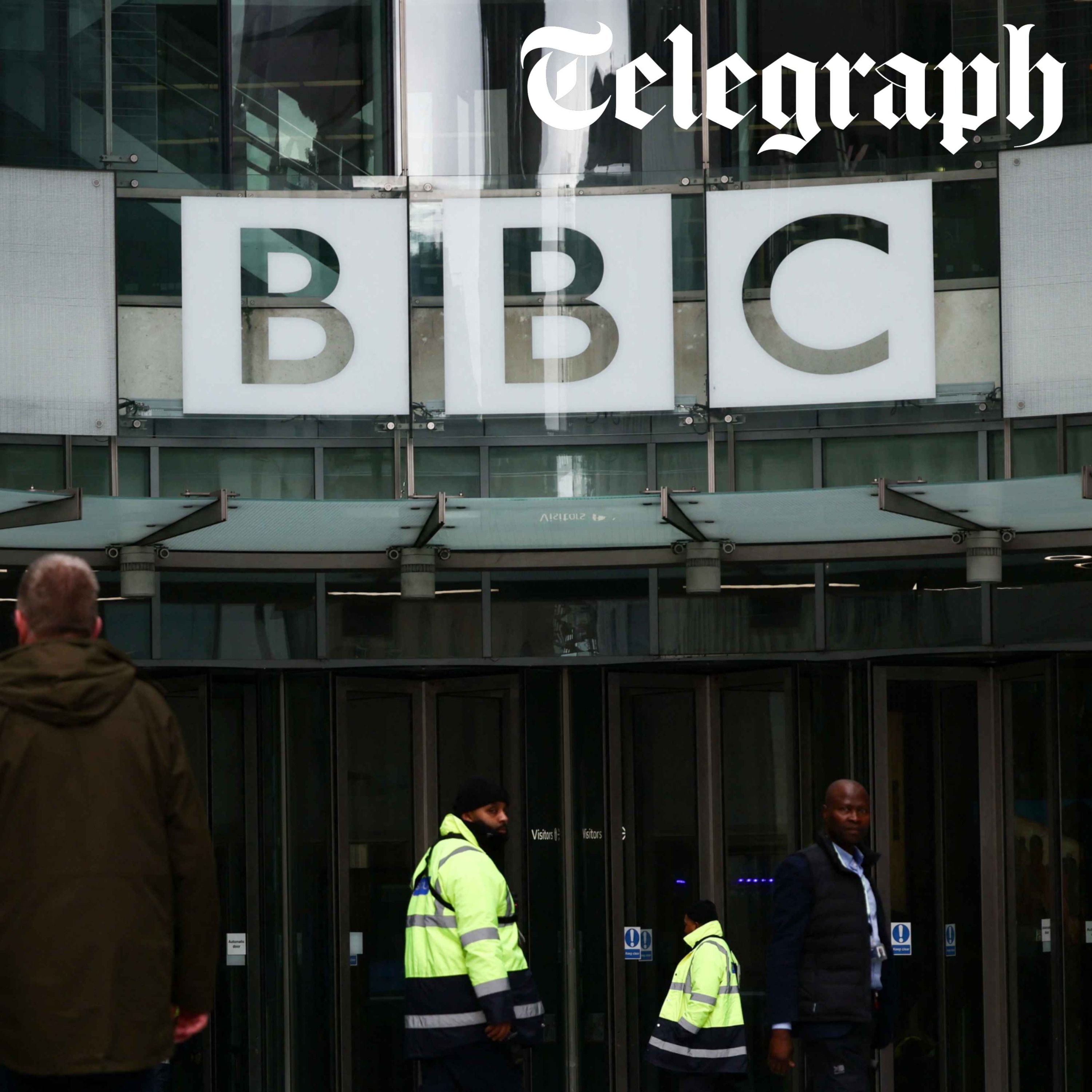
The BBC is facing mounting accusations that it has failed to report impartially on transgender issues.
A formal complaint has been sent to Ofcom by the Bayswater Support Group, which represents hundreds of parents who believe the broadcaster has promoted one-sided coverage of sex and gender. The group accuses senior editors of failing to reflect dissenting views, glossing over safeguarding concerns, and presenting gender identity as an uncontested fact.
Camilla and Tim Stanley are joined by parents of two young people who socially transitioned as teenagers. They describe how their children’s gender identities were affirmed at school during the Covid pandemic - in some cases without parental knowledge - and the lasting impact it has had on their families as the relationship with their children broke down.
They also discusses leaked allegations that the BBC’s coverage has been subject to internal censorship, alongside examples cited by critics - from reporting on puberty blockers to children’s television and drama - and the corporation’s response to claims of bias.
We want to hear from you! Email us at [email protected] or find @dailytpodcast on TikTok, Instagram and X
► Sign up to our most popular newsletter, From the Editor. Look forward to receiving free-thinking comment and the day's biggest stories, every morning. telegraph.co.uk/fromtheeditor
Senior Producer: John Cadigan
Executive Producer: Louisa Wells
Video Producers: Will Walters and Andy Mackenzie
Studio Operator: Meghan Searle
Social Producer: Nada Aggour
Editor: Camilla Tominey
Hosted on Acast. See acast.com/privacy for more information.


