
 Ask ChatGPT


 The Daily T
19 Sep 2025 · 51m · 19 chapters
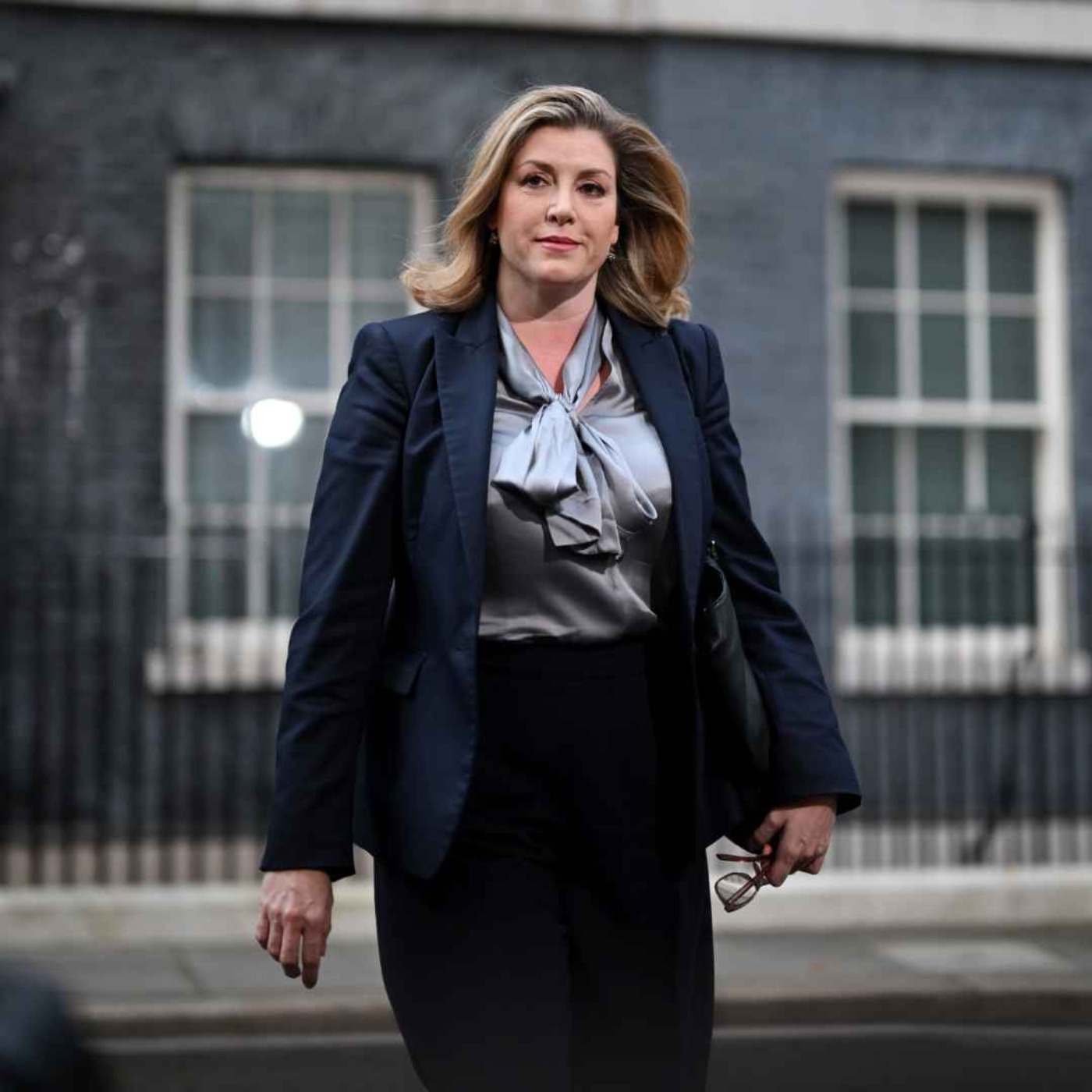
Penny Mordaunt discusses her political journey, what she says went wrong in Conservative leadership after 2022, and why she wants to run for the Tories again—arguing Reform UK would be a “disaster” and that Kemi Badenoch should be given time to build a coherent platform.
Penny Mordaunt is a former MP and Tory leadership candidate; she served as Defence Secretary and held roles in government and Conservative communications (including head of broadcast under William Hague). She also carried a sword at the King’s coronation, is an amateur astronomer, and has appeared on TV (notably Splash and Celebrity Big Brother).
She says Truss’s economic approach was wrong and that her own plan with Gerard Lyons would have helped. She argues Thatcher-style reforms must be incremental and rooted in tradition, not “blowing everything up.” She claims the party’s problem is lost narrative and weak communications, and that Reform’s coalition is incoherent and would trigger a second Scottish referendum.
Romania orphanages shaped her view of politics; the 4,000% rise in girls accessing trans services; D-Day commemoration controversy cost her seat; energy policy (halving energy costs, “drill baby drill” in certain circumstances) and engineering as solutions.
Written by AI. May contain mistakes.
Penny Mordaunt shares her interest in astronomy and her wish to meet Galileo.
“Penny Mordaunt, welcome to The Daily Tea.”
Penny reflects on her experience at the coronation and its impact on her life.
“And when you say amateur, what are we looking into the stars and the sky, telescopes?”
Penny talks about her challenging childhood and the motivations for her political career.
“And after the coronation, I had so many letters and drawings from young children about the coronation and my role in it.”
Penny explains her attraction to the Conservative Party and its values.
“There were some people on parade that day that were standing for 13 hours.”
Penny discusses her unexpected journey into performance and reality TV.
“And then in my experience at university and encountering the opposition, confirmed that I did once go to a Labour conference.”
Learn about Penny Mordaunt's experiences with reality TV and her motivations behind them.
“wonderful 1930s Lido, is alive and well because of the hit I took on that show.”
Discover Mordaunt's experiences and insights from her leadership bids within the Conservative Party.
“When you say that, are you saying, you know, Liz Truss won it and it almost instantaneously went wrong?”
Explore Mordaunt's thoughts on Boris Johnson's time as Prime Minister and the challenges faced.
“It should mean something to people's disposable income or their retirement age, that people should be cheering about that.”
Understand the complexities of modern governance and the impact of communication on politics.
“can you tell us anything about those PMs?”
Discusses Kemi Badenoch's role as leader of the opposition and the future of the Conservative Party.
“both the left and the right of the party, to have consultations with a view to a policy platform?”
Discusses Kemi Badenoch's role as leader of the opposition and the future of the Conservative Party.
“Discover nearby trails and explore the outdoors with all trails.”
Discusses Kemi Badenoch's role as leader of the opposition and the future of the Conservative Party.
“We were speaking earlier about where prime ministers can come unstuck.”
Explore Penny Mordaunt's insights on political challenges and her views on trans issues.
“Is there a degree of ideological confusion that has had a part to play?”
Discuss Mordaunt's aspirations in politics amid challenges facing the Conservative Party and the rise of Reform.
“And when it comes to sort of reflecting on political life, I mean, it must have been awful losing your seat.”
Explore the complexities of political reform in the UK and the challenges facing the Conservative Party.
“Don't you think that nationalism went out with Nicola Sturgeon and her husband's camper van?”
Discuss the importance of national pride and resilience in British identity amidst challenges.
“state banquet on Wednesday night in which Donald Trump appeared to sort of, his speech was almost a love letter to Britain, celebrating everything that Britain has achieved over the years.”
Analyze the potential reforms needed in the UK's legal and constitutional frameworks.
“But are you relating that back to kind of suggested bonfires of legislation like the Human Rights Act and leaving the ECHR?”
Discuss Penny Mordaunt's aspirations for her role and the future leadership of the nation.
“And also because we have those checks and balances, we do want our judiciary to be independent.”
Penny Mordaunt discusses her upcoming book and its contributions to British culture.
“there were some wrong-uns in there, sure, but the bulk of them, the flag is not a symbol of hate.”

Get the gist, explore an idea or ask about something said.
 Claude
On The Daily T, what are the key points of this episode?
Searching your listeningAutomatic transcript. May contain errors.
0:02The Telegraph.
0:30trails nearby and explore confidently with offline maps and on-trail navigation. Download the free app today and make the most of your summer with AllTrails. Here's a tip for you. There's a podcast out there with fans waiting to be your next customer. They tune in every week, they trust the host, and that host wants to talk about brands like yours in their own words to their audience. The problem is you just haven't been introduced yet. We're A-Cast, where that introduction happens. As the world's largest podcast marketplace, we let you browse shows, see who's listening, and book host-read sponsorships or run your own ads all from one platform.
1:10Transparent pricing, real-time data, complete control. Start advertising on podcasts by visiting acast.com slash advertise.
1:24on today's daily tea former mp and tory leadership candidate penny mordaunt i'm going to be talking about what went wrong what's still going wrong and how we put it right and of course holding a big sword welcome to the daily tea with me camilla tomany
1:53Penny Mordaunt, welcome to The Daily Tea. It's at this stage in the game that I do offer you a cup of tea from the Big Yellow Teapot. Would you like one? I very much would, thank you. Now, while I play mother, I'm going to ask you a question that we ask everyone on this podcast. Who, alive or dead, would you most like to have a cup of tea with and why? And then I shall come over and pour while I'm not on the microphone. Marvellous. Well, I think Galileo. One of my hobbies is I'm an amateur astronomer and I thought he is the most amazing man, not just a brilliant man, but a brave man as well. And I think it would be rather nice to have a cup of tea with him and tell him that he was right and tell him a few things we've discovered since he was around.
2:39I think that would be rather lovely. That would be marvellous. And when you say amateur, what are we looking into the stars and the sky, telescopes? Yes, I just always, yes, love that. I was a member of the British Astronomical Association. And when I travelled, I would try and get to telescopes. And I particularly like planets and looking at those. So when I was in Washington, for example, the observatory there has the most amazing telescope, the same telescope that was used by Abraham Lincoln. Oh. And so I generally try and go and have a nose of what's going on. Wonderful answer. Love that. Now, we're going to get on to speaking about your new book in just a moment.
3:17But if I contextualise you by saying you may now be best known for the coronation, does that annoy you? Because you had been an MP for years. You've been part of the conservative movement for years because you worked in PR and in broadcast. You were the head of broadcast under William Hague. and yet outside of Portsmouth, would you agree that most people know you for that role and is that okay? I think most people around the world know me for that because it was two billion people that watched the coronation and that is nice because when people meet you, they've got something nice to talk about and that is lovely.
3:56Doing that changed my life and it was an incredible experience. So I don't mind that at all. But I think people do know me for other things. They know that I've been Defence Secretary. They know that I've held various other roles in government. They know that I used to bash the SNP on the nose on a sometimes hourly basis some weeks. So they know me for other things, but that experience did allow me to have a shared experience with other people that meant a lot to them. And after the coronation, I had so many letters and drawings from young children about the coronation and my role in it. And I think it's given me a connection to a lot of people that I really value.
4:43Did you know before you did it how prominent you were going to be? No. And in fact, I didn't know what I was going to do until a couple of weeks before the coronation. And I had no idea how people were going to respond. So it was, and of course, in the cathedral, I was in the Abbey, I was without my mobile phone. So I didn't see any of the social media stuff until hours later. And I know you've been asked this before, including by me, because we've discussed you and the green outfit. You said, look, I'm the first woman to do this. I need to look the part. Like, how did you choose that green goddess outfit?
5:22So it was tricky because you needed to blend in with your female cabinet colleagues. Yes. I needed to stand next to the clergy and I needed to stand next to the military and not look out of place in any of those scenarios. So I had a lot of help, some great advice from people on Savile Row and elsewhere. And I could never afford an outfit from them, but they gave me their suppliers. So I just did the legwork myself, ran fabric between the dressmaker and the embroiderer and the atelier and came up with it. And it's now with Christie's. Yes, I was wondering where it is. It's going to be sold and we'll do something good with the proceeds.
6:04And memories of the sword carrying itself. Was there any moment where you wavered and thought, this is really hard? Now, on the day, the adrenaline carried you through and it was just such a great occasion to be part of it. And we were all concentrating on making sure the king had everything he needed and that was all fine. The back-to-back rehearsals, while the clergy argued about particular blocking and what they did in 1953, whilst me and my fellow sword carriers were stood there, that was quite emotional. Oh, wow. So they're doing retakes and you're standing there carrying this thing. Yes, sort of eight hours.
6:39But you did say you had taken preventative painkillers. Yes, I did. I did. In fact, a lot of us did. I mean, Stuart Peach, who was carrying the Sword of Mercy, has ejected from an aircraft and is a physical wreck. So I think one of the other chaps had a back brace on. And on the day, I mean, the thing that you won't have got from the television was the scent of the flowers in the abbey. It was phenomenal. Until you got to our corner and then the flowers faded and the smell of Voltarol and deep heat took over. But we were all so proud to do it. Did you have anyone in your mind as you were doing that?
7:17Because not to get emotional too quickly, but you lost your mum when you were quite young. And I would imagine in that moment, you're sort of trying to make someone proud. Who were you thinking of when you were doing it? Or the nation maybe? I think I wanted to make the nation proud. And I think that's why I went to such efforts and why we all rehearsed for nonstop for two weeks. And I got plaudits for standing for a couple of hours. There were some people on parade that day that were standing for 13 hours. So we all did our bit. And I think we did do the nation proud. Why did you get into politics in the first place?
7:52You sort of born into a military family. As I've just alluded to, you had quite a difficult childhood or at least teenagehood because you lost your mum from breast cancer when you were 15. that must have awoken you to what life can really be like and how hard it can be. I think I've also read somewhere that you were motivated to get involved when you witnessed the suffering that was going on in Romanian orphanages. Just take me on the beginnings of your Tory journey. Well, I think I'm a conservative because I believe in taking responsibility and I had to shoulder a lot of responsibility at a young age and my family weren't particularly well off.
8:32You know, we had a lot to cope with. And I cared for my brothers and tried to sort of keep everything going. And I had to work at the same time as studying. And interacting with services, the state, it was just a nightmare. And back then, I mean, there's more provision for people now, but back then it was very, very hard. So I got interested in why things don't work and why healthcare, for example, was in such the state it was. And then my dad remarried and I hadn't planned to go to university or anything like that. I'd been so focused on looking after my family. And in the news at the time was Romania and about a year after the revolution.
9:19So I thought, well, whilst I'm planning what I'm going to do next. I was working in factories and sort of had saved a bit of money up. I'll go and help there. So I went out as an 18-year-old and I worked in the former Eastern Bloc over a couple of years, but sort of doing several stints, sort of three months long. And it had a huge effect on me because I could see the effect that the Ceausescu regime had had on people. I mean, not just The fact that there were these children who'd been abandoned because they weren't considered to be perfect enough in these. I mean, they were called orphanages, but they were really killing houses.
9:58Yes. And but it was also the attitude of people living 100 metres away from them that didn't see them as human beings. And and that taught me that politics is an incredibly potent force there. it was being used for incredible ill, but I could see how it could be used for incredible good. So I got interested in politics, but I never thought I would ever be a politician. I always thought I'd work behind the scenes and work for campaign organisations. So why the Conservatives then? Because I suppose you could be exposed to the horrors of the Romanian orphanages and go in another direction and go towards Labour and think that sort of state intervention was the best idea.
10:44Why Toryisms, so to speak? Because I think it is about taking responsibility for things, having agency and having effect and valuing every human being. I think that that's what my party is about. I mean, again, I think because of some of the experiences I had, it was clear to me that, you know, families, if they got more money, they were going to do better, they'd have more opportunity and choices. that families were better making decisions about their future and having choice and options than the state. I think also my, I mean, if you're brought up in Portsmouth and you've witnessed the Falklands War and sacrifice and duty, you also feel a connection to your nation.
11:28And the Conservative Party, that's what it means to me. It does mean service. It means having a connection to other people in our country and wanting the whole nation to do well. So that's it at its most basic form, but I think that's why I was attracted to the Conservatives. And then in my experience at university and encountering the opposition, confirmed that I did once go to a Labour conference. I was involved with student politics and I went to a Labour education conference as I was involved in the NUS. And I think the next day I joined the Conservative Party. Why? Because it picked you up?
12:05I mean, it was just appalling. They were, I got the sense that they really didn't care about people. They didn't care about children or students being able to get on. It was all about them and an ideology. And I hated it. Where did the segue come in that you ended up being a magician's assistant? So when I was at college doing my A-levels, I was the prime carer for my family. So you're basically playing mum to your brothers. Yes. And then I had to also earn money. I mean, my twin brother and I, we bought a central heating system for our home when we were 17, 18. So we had to, we really just had to earn money.
12:53And being a magician's assistant was the best paid job I could get because it meant I could study. I didn't have to drop out of college. And so Friday and Saturday night, when my mates were doing something fun, I was doing three shows a night around the country. Did you enjoy it? I mean, I appreciate it was a means to an end. It was. I mean, I'm the sort of person that can muddle along and find any situation cheery. But it was tough. I mean, as you know, 18 and being ogled by a lot of people is not consistently fun. Yeah, but then you went into Splash some years later, which, by the way, my children loved so much.
13:30they still mention it. When you were involved in the leadership, they were like, is that the lady from Splash? Yes. So you didn't mind a degree of performance. Well, my swimming costume was fairly modest, but it saved my local Lido. I should point out to the uninitiated that Splash was this reality show sort of presented by Tom Daley where ordinary people who weren't divers took part in a diving competition. I mean, that's famous people. The Hilsey Lido, which has now been completely refurbished, wonderful 1930s Lido, is alive and well because of the hit I took on that show. Well, it wasn't a hit, was it?
14:07Do you regret doing that? No, I don't, actually. I don't. It was well worth it for the outcome. And I had a good time. I mean, I don't think I've turned down so many of those sorts of shows. What else have you been offering? Well, most recently, Celebrity Big Brother. Oh, my God. Shark. Oh, yes, Shark. Shark Infested Waters. I've turned down Dancing on Ice. Have you? Who Dares Win? SAS Who Dares Win? Well, you'd be good at that. You'd be good at SAS Who Dares. I probably would have absolutely, you know, been brilliant, but it was not for me. Why? Because I, I mean, I did, I did splash because there was a particular outcome, which was the Lido that we were, so my fee went for that.
14:50And at a critical moment, if we hadn't been able to do a community asset transfer and save the building, it would have been gone. And it's a very rare Lido, which is now completely modernised. It's fantastic. I had no idea that was the backstory to you doing this. Yes, yes. Because obviously people assumed you were doing it to improve your profile. No, no, it was very focused on that. But all the other shows, which are, you know, eating grubs and, you know, I think the nice thing about Splash was you were learning a skill. And, I mean, it was great. I loved it. We got the Olympic coaches to teach us how to high board dive.
15:27But have you high board dived since? No, because there is a dearth of 10-metre boards. I mean, the next phase with the Lido is because it used to have 10-metre boards. And if we manage to restore that, the nearest 10-metre outdoor board to it will be in Barcelona. So it'll be an amazing facility. So we'll see what happens. Our mutual friend, a man called Nick Wood, who used to spearhead William Hague's communications and then went on to work for Ian Duncan Smith, told me a little story about you when you joined the comms team. And he said that what impressed him about you is you had to do the early shift and you had to like walk five miles, get on a bike, get on a bus.
16:14Do you remember these days? Yes, I do. Yes, I do. And I thought that's interesting. What does that tell us about Penny Mordent? So at that point, when you'd left uni and you got into sort of conservative communications, were you even thinking then, look, I would like to run for office? How did that come about? No. And it was only because, and it's one of Nick's contemporaries, Rick Nye, who went on to found Populous, the polling company. He was head of research at the same time that Nick was working at CCHQ. And he took me aside one day and he said, out of everyone in this building, you should run for office.
16:52You'd be good at it. Wow. And had he not said that, I would have never considered doing it. Wow. So it's all his fault. OK, it's all his fault. So thinking about you having been an MP for all that time, you take part in two leadership bids. I remember being at the launch of the first, which was hugely successful. You get through to the fifth round. How difficult was it to lose those two leadership bids in 2022? So I think when you're in the moment, you're just you're so busy, you're carrying on. I mean, I've always had the focus about what is in the interest of the party. I think I was right to run in the first contest.
17:37I think we would, well, I would say this, you know, we would have had a different time of it had I managed to get through and very sadly, you know, fell at the last hurdle in that first contest. When you say that, are you saying, you know, Liz Truss won it and it almost instantaneously went wrong? I mean, you're saying that the path wouldn't have been quite so rocky under Penny Mordaunt as Prime Minister. I think that the economic programme that I had put together with Gerard Lyons would have done things that I think the nation needed. We had not been the party of business for a very long time.
18:18And I think the priority for me was really ensuring that business had the brakes that it needed. But it was critical. I spent a lot of time with Jared at the time working out the sequencing of how to do this. And when I was out of the contest, he went on to advise her and advised her not to do what she then did. I mean, it was obviously a very difficult time, difficult time for the country. It was a moment of immense political turmoil. And I write about it in the book, us losing the Queen at the same time. It was just dreadful, dreadful for the country. So that to me was terribly sad because I just saw there was such an opportunity there.
18:59Why did you back Liz Truss and not Rishi Sunak? Because I felt that Rishi's strengths were not campaigning. And I felt it was incredibly important that the nation had a really strong narrative. I think that that's part of our issue now, that we've lost the sense of the stake that we have in the nation and the nation has in us. When we have inward investment into this country, it should mean something to every household. It should mean something to people's disposable income or their retirement age, that people should be cheering about that. and I think we've lost that connection particularly around business and those people that take risks to create opportunities and wealth for us all and I think it was important that we that we had the best person we could possibly have to tell that story and that was that was how I made my choice.
19:59And at that time in 2022 what part of you thought that the Conservatives might already be lost. You know, it's post Boris Johnson. COVID's been mismanaged, at least in the eyes of the public. Partygate. He does that curious thing of moving you on from defence. You've been there for 85 days. It's quite seminal to have a woman in the role. You're steeped in sort of military history and the history of Portsmouth and a passionate advocate for the armed forces. He clearly wanted Ben Wallace in. OK, fair enough. I mean, was that very hurtful to you? No. I mean, I have great respect for Ben and I think he did a good job.
20:41And I did hope he fills this everything I could to hand over to him and give him every chance of having a good start. And I can't complain that Boris didn't... You didn't have a good crack of the whip, did you? Well, I had 85 days and I made everyone count because I knew I may not have long in the job, but I just could not. I get on with Boris. I didn't resign when he was in post. I've always tried to support him, but I just felt I couldn't support him as PM because I just had doubts about what he would do when he was in. And, you know, that's a choice we have to make in all these contests. So I can't complain about that.
21:21And having worked with him, Truss, Sunak, May, can you tell us anything about those PMs? I know you won't want to be indiscreet and disloyal but is something misunderstood about how hard it is to be Prime Minister? This is a job that you wanted is there any insight you can give us into that whole tumultuous period that you had frankly a front row seat for? Well look I think for all of those people I think they did their best And so I've no ill will or ill feeling towards them at all. I think, though, that we are in difficult times where you have complete state atrophy. I mean, the one thing that Donald Trump has done in the US is demonstrate if you have the political will to do something and you're prepared to do what is required, you can get things to happen.
22:19And I think the public are looking at what has happened over the last year and successive conservative administrations. And it seems that whoever is in, whatever their political hue, whatever their flavour of conservatism, they haven't been able to get things to happen as they would wish. And the totemic issue is obviously the issue of small boats. And so I have watched prime ministers try and get things done. I've thought deeply about what are the things that need to change for us to actually become an effective, capable nation. Again, that's why I wrote Greater. And it's one of the reasons why I've written the latest book, because a lot of people are saying at the moment we should replicate what's happening in the States here.
23:07And I think that wouldn't work. What we have to understand is where people have been able to do radical reforms in this country. I mean, the key example is Margaret Thatcher. Those reforms were absolutely rooted in tradition, in faith, in things that were familiar and understood by the people of this country. and I can give you countless examples about where people go too fast and it doesn't work. I mean, we've spoken about Liz Truss. Look at every single Lord's reform that's ever been proposed. No one ever does the incremental stuff in the pursuit of excellence. No one ever creates those habits in any of our state architecture.
23:49It's all about blowing everything up and that does not work in Britain and I think we have to do things that are going to work. But are we now in such different times, a 24-7 news agenda, social media, that actually figures like for Thatcher that were given time to think things through, to consult the big brains on both the left and the right of the party, to have consultations with a view to a policy platform? You know, we just don't have that time. Kimmy Baden-Ock's not being afforded that time. She's being told, I'm sorry, but every time Farage appears, you are losing voters and therefore you must get on and tell us exactly how you would rule.
24:33And therefore, although we can be nostalgic about Thatcher and you and I are aligned on the Iron Lady, if she were in charge today, she'd be chewed up and spat out by this news cycle. Well, people's attention span is becoming shorter and to get noticed and to set the news agenda, you have to do something that is going to get attention. And those people that are on the extremes, that's straightforward for them to do. They will get airtime doing it. But there is no other way to come up with the answers to these problems than to do the hard yards. You have to be able to take people with you. You have to be able to tell a story.
25:15But you just have to learn in this new age of communications how to do that. You know, my days with Nick Wood, we'd have a 24-hour news cycle. We'd have points in that news cycle, the Today programme and then a new line in mid-morning to freshen stuff for the one o 'clock. All that's gone. Yeah, but that's a bad thing and that's the Conservative Party's fault. The comms haven't been good. Kemi's comms, you must agree, as a former commswoman, let alone a former MP and leadership candidate, could have been better. Or is it just that she's getting completely frozen out as William Hague was, as IDS was, because opposition's bloody hard and it doesn't matter who's imposed?
25:58She's got a very tough shift, but she's right not to be distracted from her core job, which is twofold. Holding the government to account, she's got a particular job to do as leader of the opposition. And I think actually she and her team have been doing that well in the House of Commons. They've been pointing out, you know, some problems with the front bench and other appointments the prime minister's made. But also they have they have really been campaigning quite effectively, I think, on some appalling policies, the tax on education, the tax on farmers. And that's good. But she also understands it's her job as a prime minister in waiting, particularly at this moment when the nation actually needs someone who, when they are in, is going to make things happen.
26:45to do that work. And we need to stick with her and give her the time and the resource to do that. Would you think the knives are out for her within the party? I don't, actually. I mean, there's always people that are going to speculate. There's a lot of people saying, oh, she'll be out. She'll be out before the May elections. Oh, she won't make it till Christmas. She's not good enough. Robert Junrick would be better. Penny Mordaunt would be better. There is the general chit chat that exists around Westminster. But I spend a lot of time up and down the country with ordinary party members. And they all know that if we have another leadership contest, I mean, we are the party that gave the nation six prime ministers in six years, the last one being a Labour prime minister.
27:34If we have another leadership contest, all we are going to be doing is demonstrating that we've learned nothing. so I'm in touch with Kemi I'm doing what I can to help her I was going to ask you that does she ask you anything about PMQs because you did kind of carve out a niche of being a good performer in the Commons I'm not an advisor to her in that capacity but I've been working with Kevin Hollenrake I've been working with his predecessor Nigel Huddleston both party chairmen offering support and some what resource I can give to help
28:16There's never been a better time to get outside and experience the benefits of nature. Discover nearby trails and explore the outdoors with all trails. Download the free app today and find your outside. Do you keep hearing podcast ads like this one, for example, but always wonder how you actually get involved with them for your own brand or organization? Well, it's easier than you think. We're Acast, and we give you the platform to do it all yourself. Browse thousands of popular podcasts, choose the shows that match your perfect audience, set your budget, and launch. And if you want a hand, our podcast specialists are there to help you launch with confidence.
28:58This is podcast advertising without barriers. Get started at acast.com slash advertise.
29:15We were speaking earlier about where prime ministers can come unstuck. Is there a degree of ideological confusion that has had a part to play? I apply that perhaps to Boris Johnson. He's a Brexiteer. He's painted as a right winger. He's not really because he's pro-immigration and net zero and indeed presided over record high taxes, the highest tax burden since the Second World War. Similarly, you slightly came unstuck. And please clarify for me on the trans issue. Can we talk about you saying when the consultation into the Gender Recognition Act was launched? I think that was back in 2018. you told MPs a trans woman is a woman.
30:01Do you regret that now? No, that's not what happened. I mean, well, yesterday the Telegraph ran an article that basically said people like me shouldn't be conservatives. We should not be in the party. We're not pure enough. And that my main contribution to politics was the fact that Picture editors liked me because of my face. And then the article went on to say all sorts of things that my political opponents have said about me on that issue. I think the clip you're referring to was actually me taking through a bill, not my bill. It's actually the prime minister's bill. You're a women and equalities minister at this point.
30:48No, I wasn't. But I was a minister in the cabinet office. And so I was asked to take this through. and it was not a bill that I'd written. I was given it a few hours before I took it through the house and we were doing some things that could be said to be detrimental to trans people. In fact, I altered the language in that bill because it was talking about maternity rights and the original bill I was given referred to pregnant people because it had to cover trans people legally. And so the drafters, they used gender neutral language. And understandably, people objected to that. So I changed the bill.
31:32So it was legally sound, but I used the word mother. So that's what I did. And that seems to be a perfectly reasonable thing to do. But some people were worried about that. So I went out of my way, perhaps wrongly, to reassure people that their rights were also being protected and that somebody who was a trans man would still be covered by these legal protections. I mean, the article that The Telegraph ran about me yesterday didn't mention that I was the first minister to hold an inquiry and raise concerns about the volume of girls going through trans services, a 4 ,000 % increase. I set up that inquiry.
32:17I was the first minister to engage and talk to Fair Play for Women and take their views into account. And I also, when I was Women Inequalities Minister, rejected the call for the gender recognition process to be split off from healthcare. so my views on trans issues are I think very sensible yes I just have never found it necessary to say disparaging things or abuse a vulnerable group of people I totally understand that and it's I'm afraid it is part of a campaign I mean it doesn't worry me that what does worry me is when not your paper but another paper said that because my family were Catholic and that my grandfather had fought in both world wars for the Irish regiment, that he was a member of the IRA.
33:09I mean, there's just so much guff out there. Okay. But also, I think the time when statements like trans women are women were made was a different time to sort of now. Would you say that now? Would you say trans women are women? No, because that was in a particular context. And we were talking, I mean, the clip from the House of Commons, it's about a legal context. Yes. So, no, I mean, I don't think I think we've moved on and I think we've had some good rulings on that issue and that we've got some clarity on those issues. But no, I mean, I think it's it's important to explain a context, but also to tell people what my views are and my record is, because it is not, I'm afraid, as is being painted and has been painted for some time by a very small group of particular individuals.
33:56And clarify one more thing for me. Did you ever tell Cabinet that you thought transgenderism was the biggest issue of our time? No. I mean, this is the recollections of Boris Johnson. And I would just put it in that context. I did, under Theresa May, present a paper on these issues. But I also think that those issues were important to talk about. The issues about the volume of girls going into transition. transition. It was a 4 ,000 % increase. And there were some very concerning things. We didn't have good data either. My researchers at the time were trying to get information out of the Home Office and others about the numbers of people who were making use of some of these services.
34:41And it was impossible. So I do think those issues were important. I think that if we gripped them earlier, it would have been better. What was in it for Boris to say that then about you? Does he see you as a rival? You'll have to ask him. I have no idea. But what I would say is it's always good. And I think particularly as a journalist, you've always been very fair to me on these issues. Others have not. But, you know, go and talk to the person that you're writing about or you're trying to find out their views. Maybe ask them. Yeah, I know it's a controversial suggestion, but go and do that. And if you're relying on what other people are saying who may not have that person's best interests at heart.
35:20I'm interested in that remark you made about your looks being analysed. I mean, is this something, may I say you are a very attractive woman? I'm very happy to take those compliments. You take that compliment. But has, I mean, in one way, being good looking helps you advance in public life. In another way, is that quite hard, being analysed on your looks rather than what you're saying? Well, it's what women have all the time. I mean, it's just is part of our lives. So, no, I don't I don't think about it at all. And some days people are complimentary and some days people aren't complimentary. But I do think it is important that you you're very conscious about how you're presenting yourself.
36:02I never used to like walking up Downing Street because all the women. All of us lot are shouting at you. Well, and the cameras come out and quite often if men are walking up, you have shots of their faces and their shoulders. When women, it's full length body shots and all of that. And I just think you need to be aware of that sort of thing if you're in the public eye, but I don't fret about it. And when it comes to sort of reflecting on political life, I mean, it must have been awful losing your seat. I remember that night and I was like, oh, for God's sake, you know, you had been a very, very loyal campaigning constituency MP.
36:41The maths, let's be honest, the maths goes against you. We had got it slightly pitch rolled ahead of time. Look, I don't think Penny Mordaunt's going to keep her seat. Tell me about that moment. What's it like on the night? I think it was hard. I mean, I literally just carried on, but it's very hard for your team. I mean, you've got this amazing campaign team, but obviously as an MP, if you lose your job, your staff lose their jobs. And we had polled the seat at the start of the campaign and we were expected to win by about 5%. And the thing that did it for us was D-Day. Because if you, I mean, people listening to this podcast, they will all know what I'm talking about.
37:21It was a big thing across the country. I cannot begin to tell you what that was like in Portsmouth. But what was it like for you? You're going on the doorstep. He's dropped this absolute clangor in leaving the commemorations early, Rishi Sunak. What are you then saying to yourself, saying to the voters, saying to your team, are you then tearing your hair out? I think you just have to be honest with people. I mean, I think people kept faith with me. They knew me well in Portsmouth. They knew, you know, I'm a Navy girl. They knew that had I been in that position, I would not have done that. So people weren't being unkind or, you know, unpleasant to me on the doorstep.
38:04They were just saying, you know, we just can't vote for your party. So it wasn't difficult on the doorsteps. But I mean, I just think it was exemplary of how far adrift the party as a whole had and the operation. But there's such a bitter irony that you lose your seat because Rishi Sunak leads the D-Day commemoration early, which is something that you would never have done. That's quite hard. It is, but, you know, democracy is never wrong, as I said on the night. And I mean, of course, you know, if we were miles ahead, I could have probably weathered that particular dent. But as I said, people couldn't think about the future.
38:45They were thinking about the here and now because they bluntly, they were frightened. They were frightened about the cost of living. They were frightened about accessing health care. and if we were in government and we'd made people feel that way, we didn't deserve to win again. But then here's a question. Are you a sucker for punishment? You want to get back into this world, Penny Morden. I know I do. You've got ex-prime ministers sniping from the sidelines. You've got people analysing your looks, whether they're good, bad or whatever. You go out on the stump and you've got your own leader undermining you undermining you during an election campaign because of D-Day debacles and what have you.
39:24And you have said you want to get back into all this. I do, because despite some downsides to the job, it is an amazing thing to do. And you can have a real positive impact, both on the nation, but also on the area you represent. I mean, when I got elected in 2010, Portsmouth was in the top 10 crap towns of the UK. There is such a list. And in 2022, it was voted second best place to live because we'd rebuilt schools. We'd saved the local Lido and the Wimmering Manor. And we got community assets and community centres. We improved health care. We improved education outcomes by some margin. We got a billion pounds of investment into the city.
40:08So, you know, I love that. So you're saying you want to run again there? Well, it is not up to me. I mean, obviously, Portsmouth is my home, but this business is luck and timing. So I have to go through. Kemi, I think, rightly is saying, right, we need to start from scratch again. Yes, none of you are shoe-ins. None of us are shoe-ins. So I have to go through the candidate selection process again. And then, you know, seats come up at different times. So it is luck and timing. But I will, you know, I will do what I need to do. But you want to do this even though the Tories are tanking in the polls.
40:41They're suggestions they're facing an existential crisis. You've got Nigel Farage nipping at your heels Reform massively on the up Yeah I do want to do this Because it is obviously not a lot of fun And I've kind of been here before You know when I was working with Nick Wood We were working under William Hague That wasn't a barrel of laughs either But it's the most important thing I do think and I obviously would say this I do think that the philosophy That sits at the heart of the Conservative Party is the one that is in tune with the values of this nation. Not reform, not Nigel Farage? No, because I don't really think they have a philosophy.
41:22Well, he's a proud patriot like you, isn't he, Farage? There are parallels between the stuff you say and... No, no, no, no. Because I'm very happy to fly the union flag, and Nigel is too, but I would never stand on a platform that fielded pro-independence, Scottish independence candidates. The candidates he fielded in Scotland at the last election were pro-independence. Reform is like an episode of Fantasy Island. You can't be saying Farage isn't a unionist. Are you saying that? Well, why on earth would you be attracting Scottish nationalists to your party? I mean, I personally think if reform got in, that would be the fastest way to a second referendum on Scotland.
42:03Really? Yes, I do believe that. Don't you think that nationalism went out with Nicola Sturgeon and her husband's camper van? I think reform are trying to hold together a coalition of very different people and there'll be trade-offs in that. But won't your former conservative colleague Danny Kruger make sure that reform doesn't go in that direction? Well, we will have to see. But I think that the attraction for people to reform is that they are, I mean, culture precedes politics. They are playing to this notion I described earlier that politics as usual isn't working. We have to do something different.
42:42The state, as it has functioned, is not functioning. It's not delivering. And so you have a lot of disaffected people, but they're coming from all sorts of places. And you can't be in a party that is going to add 150 billion to public expenditure at the same time as cutting it through the Department for Government Efficiency. You can't have a party which is draping itself in the union flag at one end of the country, but is quietly encouraging Scottish independence at the other. I mean, that is just not a coherent platform. That will be a disaster. And I mean, if Danny can sort it out, you know, good luck to him.
43:22Is he a loss to the Conservatives? Well, I don't want anyone to leave the party. More might go. Well. Your Bravermans, your Jacob Rees-Mogg's. I'm sorry to see anyone go, but the only thing that is going to bring people back to the Conservative Party is that we've got a compelling offer. And that comes back to the hard yards that Kemi's doing, which is why she's got to be able to do it. But is it credible to suggest that she's ever going to be a future prime minister, Kemi Badenow? Yeah. You might be more likely to be one. No, I don't think that. I mean, I'm doing everything I can to help her.
43:56I think she's tough. I think she has the right values. She's not saying everything to everyone and trying to please everyone. And she understands that we've got to get back to doing the things that this nation needs to do really well. I mean, I'll give you an example. I mean, energy. If we could halve the cost of energy, we would just be helping so many sectors in this country. Should we drill baby drill? Well, I think she is right to say that we've got to be realistic about this. We've got to have some sort of sobriety in our plans. Penny, are you a fracker? I think that in certain circumstances, yes.
44:35I mean, it needs to be led by the science, but we have got to diversify where we're taking our energy supply from. And I think the challenge of our age is bigger than net zero. I mean, across the world, we've got 2 million people still cooking on paraffin stoves and we have the technology to solve these problems. That's what we ought to be excited about and focused on and reducing the costs for people. So she's right. I thought her speech on energy was great. That's one example. We've got to increase the number of engineers we've got. That's how we will provide a balance to China. It's not through lawyers and trade.
45:13That was the latest announcement. Absolutely. These things are unsustainable. So she's doing the right things and she's doing the hard yards behind it to have a coherent policy platform. Tell me about the book, because it comes off the back of a really quite interesting state banquet on Wednesday night in which Donald Trump appeared to sort of, his speech was almost a love letter to Britain, celebrating everything that Britain has achieved over the years. And I think the King looked visibly moved by the whole statement. I mean, whoever wrote it really should be commended. And we've lost a bit of that, haven't we?
45:54We've lost a bit of pride and what it means to be British. I think that's absolutely right. And pride is really important. It's not just about feeling good. Pride is a necessary condition to being successful because I'm a great believer, if you think you can or you think you can't, you're right. And what applies to people applies to nations too. So restoring our pride and our faith in our own capabilities is really important. Despite everything that various governments have thrown at the British public and our business community, we're remarkably resilient. I mean, how we came through COVID was phenomenal.
46:35And we're the largest foreign investor in the US. We do amazing things. We've got incredible science space, incredible creative industries, a big long list of things. In fact, at the top of my Twitter timeline, I have a video pin that I made called Freedom is never a gamble and it's about Brexit, but it is a list of things that we have got done and why we should just remember that we are a capable nation. And so I was motivated to write the book. Pump and Circumstance, I should say. Why British Traditions Matter, because I wanted also to analyse the reforms that we need to make, but why we have to make them in a particular way to be successful.
47:15We know that the world is highly chaotic. It's becoming less reliable, less stable. But a nation like Britain, our uncodified constitution forged through a thousand years, is reliable, highly flexible, highly resilient and dependable. And those things, their stock is going to rise in the next few years. So we shouldn't be worried about the world as it is and our ability to cope. We should remember who we are and we should go forward with a bit of confidence. But are you relating that back to kind of suggested bonfires of legislation like the Human Rights Act and leaving the ECHR? Because we can depend on us having led the world in the rule of law and we know what our constitutional and inverted commas rights are and therefore we should have more confidence.
48:07Yes, but also the way we do those reforms. So the US in comparison is a young country. And some of the difficulties it's going through at the moment are because it hasn't been through all the things that we have been through. Trump will want to write more executive orders and scoop powers away from Congress and Congress is thinking, what do we do about this? How do we feel about this? so the creative chaos if I could call it that in the US might work for the US at this point in their history try and do that in Britain turn this nation into a petri dish which is what I think reform will do yeah that's going to be a disaster but Kemi might go in that direction she might think that politically there's nowhere else to pivot but follow Farage and indeed Jenrick who who was her rival for the leadership, down this, leave the ECHR, leave the Refugee Convention, tear up the Human Rights Act path.
49:02Are you going to support that? I am supportive of doing those things. I mean, I personally think that you could reform the ECHR. I mean, the papers, for example, that Policy Exchange have written, we're talking about its practices, but I think it's probably not capable of reforming in that way. So, I mean, I was a Brexiteer. If you can't reform something, crack on with something else. But the ECHR by itself is not enough. We've got to look at some of the issues, the constitutional creep of our Supreme Court. There's the Human Rights Act as well. But there's also international treaties. I mean, I pro bono chair the Coalition for Global Prosperity in the new year.
49:43We're doing a big piece of work to rewrite the 1951 Refugee Convention for the modern world. So we do need to look at these things. But you are right. We should have confidence that we can do this and that our motivations and our values are right because of what has preceded it. And also because we have those checks and balances, we do want our judiciary to be independent. We want to be challenged. We want the executive to be held in check. and you know this this incredible as i say it's uncodified it is written down but it's in 400 places and it's held together by people carrying big swords but it works and i just think in this day and age where we're we're facing such volatility this is a great strength that we have as a nation and and we should be confident about our ability to do these things and modernize for the world as it is.
50:38To take the conversation full circle, if I look through my Galileo telescope at Penny Morda in, I don't know, let's say four years' time, where does she hope to be? What does she hope to be doing? Well, I hope that I will be assisting Prime Minister Kemi Badenock in implementing her deeply thought through, highly effective policy of reforms that the nation needs. and I hope that the nation would be given the leadership that it is absolutely crying out for. I mean, last weekend, those people on the streets of London, there were some wrong-uns in there, sure, but the bulk of them, the flag is not a symbol of hate.
51:21It's a symbol of love and a huge desire for this nation to do well and it needs someone at the helm that has values that are shared by the people of this country. And I think Kemi's that person. Penny Morden, your new book, Pomp and Circumstances, is out now or out soon? It's out on the 16th of October and all the royalties from it are going to the Royal Hospital Chelsea, the Household Cavalry Foundation, which looks after both human and equine veterans and many of the crazy community groups across the country, because it's not just about coronations and parliament and all that. It is also about cheese rolling, nettle munching, shin kicking and all the crazy stuff that happens.
52:07Should we go to a cheese rolling together? I think that might be something for a future daily. I will be going to a cheese rolling and several of the other events. Are you taking part in the cheese rolling? No, I won't because I do not wish to be hospitalised, but you're very welcome to join me. Penny Morda, thank you very much for joining us on The Daily Tea. Thank you. And we'll be back on Monday, 5pm.
52:52We'll see you next time.
53:02A host who's built real trust with their audience talks about your brand in their own words, in their own voice. It doesn't interrupt the experience. It's part of it. With Acast, you can access the world's largest podcast marketplace. Choose the right shows, the right audiences, the right format. Then watch the data tell you it worked. You're not buying impressions. You're buying influence. Learn more by visiting acast.com slash advertise.
In an exclusive interview with The Daily T podcast, Dame Penny Mordaunt opens up about losing her Portsmouth North seat at the 2024 General Election - and why she blames Rishi Sunak’s D-Day blunder for the defeat.
The former Conservative leadership contender reflects on the Torie's time in power, her viral moment after carrying a sword during the Coronation and why she worked as a magician's assistant at uni.
She also discusses the rise of Reform UK, why she’s backing Kemi Badenoch as a “prime minister-in-waiting”, and her own hopes to stand for Parliament again.
► Sign up to our most popular newsletter, From the Editor. Look forward to receiving free-thinking comment and the day's biggest stories, every morning. telegraph.co.uk/fromtheeditor
We want to hear from you! Email us at [email protected] or follow @dailytpodcast on Instagram, TikTok and X
Producer: Lilian Fawcett and Georgia Coan
Senior Producer: John Cadigan
Planning Editor: Venetia Rainey
Video Editor: Will Walters
Studio Director: Meghan Searle
Social Producer: Ece Celik
Executive Producer: Charlotte Seligman
Hosted on Acast. See acast.com/privacy for more information.


