
 Ask ChatGPT



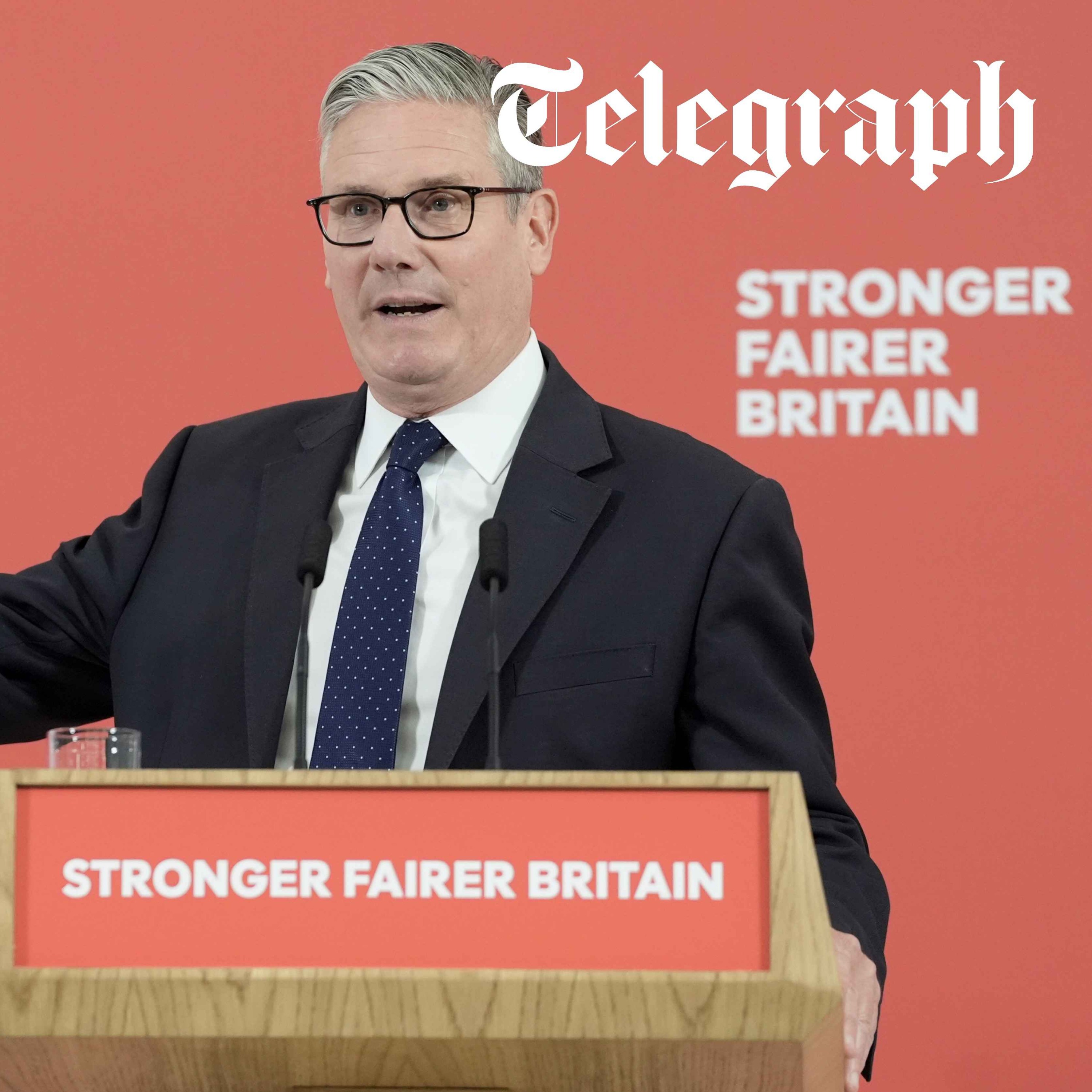
The episode argues that Keir Starmer’s “defence investment plan” is too small and too late to restore Britain’s hollowed-out armed forces, and that Starmer is “Prime Minister in name only” because Andy Burnham is portrayed as the real decision-maker. It claims Starmer and Rachel Reeves announced a plan of about £15bn (up from £13.5bn) that falls far short of expert estimates (£18–28bn) and NATO’s 5% GDP target by 2035, despite opposition from military brass and former defence figures like George Robertson. It also criticises Starmer’s media approach (avoiding questions) and frames the NATO summit as likely to bring Trump’s pressure.
Ben Houchen, mayor of Tees Valley and Baron of High Leven, discusses why Burnham’s “level up”/devolution pitch won’t work at Westminster, contrasting mayoral “micro” control with macro constraints (tax, levies, energy/grid costs) and citing Teesside projects like Net Zero Teesside (BP/Equinor) and bus franchising costs.
Written by AI. May contain mistakes.
Discussion on Keir Starmer's legacy and political ambitions.
“Tim, like Andy Burnham, we're going up in the world.”
Analysis of media accountability in politics and responses from Kemi Badenoch.
“We'll get onto that in a moment, because he's presented his defence plan to the nation in a bid to secure his legacy, and I'm not sure he's quite achieved his aim.”
Discussion on Andy Burnham's political strategies and the public response.
“This refusal to answer press questions, it was picked up on by Kemi Badenow.”
Overview of Keir Starmer's defence spending plan and its criticisms.
“He has suggested, and this is the former spin doctor for Tony Blair and Number 10, by the way, a former journalist whose entire career has been based on communications.”
Reactions to Keir Starmer's speech and the implications for his leadership.
“He's just an MP going around talking to constituents.”
Discussion on historical context and the implications of current defence spending.
“It's nowhere near the£18 to£28 billion that was initially suggested by all of the experts in the know.”
Critique of Keir Starmer's performance and its impact on his political legacy.
“And by the end of the parliament, it will have raised that to 2.7%.”
Discussion on Donald Trump's criticism of Starmer and the future of UK politics.
“And also, I mean, when it came to him and his legacy, we know because he has repeatedly mentioned his leadership of the Coalition of the Willing, that he very much wants to be remembered as an international statesman.”
Explore the disconnect between politicians and the lives of ordinary people.
“And it just speaks to how politicians have this fantasy that they are personally responsible for other people's lives.”
Discusses Andy Burnham's ambitions and criticisms related to his leadership.
“This is about Labour trying to persuade itself that he's the answer to all their problems.”
Ben Houchen shares insights on regional governance and leadership qualifications.
“Coming up next, we're going to be speaking to the mayor of Tees Valley, Ben Houchen.”
Debates the perception of progress and challenges in Northern England.
“I think I'd just like to qualify that that wasn't my headline.”
Analyzes the government's approach to regional functions and disparities.
“You know, my argument, I find it really interesting that Andy talked about, you know, bringing number 10 to Manchester.”
Discussion on the political landscape and economic disparity in the north of England.
“So even on basic things like that, it frustrates me that we might get back into a place where politicians across the north of England look at Manchester with frustration that we see, oh, the north is improving.”
Exploration of local devolution efforts contrasted with overarching national policies.
“but also from his speech yesterday, is that a lot of what he's focusing on, particularly on the devolution agenda, is very micro.”
Analyzing the long-term effects of industrial decline on northern communities.
“there was a much fairer, broader distribution of wealth across this country because there were very successful industrial towns in the north.”
Discussing the challenges of re-industrializing in a global economy.
“It's about disenfranchising an economy that created the safety net itself.”
Debate on balancing local investment needs against national economic policies.
“Well, Ed Miliband would say we do that with the Green New Deal.”

Get the gist, explore an idea or ask about something said.
 Claude
On The Daily T, what are the key points of this episode?
Searching your listeningAutomatic transcript. May contain errors.
0:03The Telegraph. Too little too late. Starmer's swansong fails to take flight as his long-awaited but lacklustre defence investment plan falls short. Meanwhile, the outgoing Prime Minister's wings have been severely clipped by Andy Burnham. We speak to his fellow regional mayor, Ben Houchen, about why our Andy's grand evolution plans aren't feasible. Welcome to The Daily Tea with me, Camilla Tominy. And me, Tim Stanley.
0:41Tim, like Andy Burnham, we're going up in the world. We're sitting at a desk that has now been elevated because there's something wrong with it. An engineer is coming, so you and I need to behave as if we're at a bar or something. Or a seance at the table suddenly. Actually, we could do that later. Who's spirit should we summon? Is there anybody out there? At Thatcher, obviously for me. Whose spirit would you summon? I would summon the spirit of Keir Starmer, who is politically already passed, as they say. We'll get onto that in a moment, because he's presented his defence plan to the nation in a bid to secure his legacy, and I'm not sure he's quite achieved his aim.
1:14No. But Burnham, well, no, in fact, before we get onto Burnham, we'd like to summon, once again, the spirit of Margot Ledbetter. Of course, yes. You were mourning Penelope Keith quite rightly yesterday, along with most of the Telegraph audience, let's be perfectly honest. One of them, Graham Pack from Bushy, who is a regular contributor to this show, has pointed out the following. Tim said on Monday's podcast that when he writes for the Telegraph, the person he thinks of reading it is Penelope Keith or her alter ego, Margot Ledbetter. Well, in the Christmas special of The Good Life in December 1977, the Goods and the Ledbetters spend their Christmas together.
1:49The Goodes make hats for everyone and Margot wouldn't wear hers as it was made from the Daily Mirror. So she swapped hers with Tom Good, whose hat is made from the Daily Telegraph. And there's a wonderful picture of Margot in a Daily Telegraph hat, which we at some point will try and recreate with our own broadsheet newspaper. So there you have it. Margot for the Telegraph, the Telegraph for Margot. There's also been a bit of consternation after our discussion yesterday about a lack of accountability of Burnham. This refusal to answer press questions, it was picked up on by Kemi Badenow. Let's hear her having a go.
2:29Well, it's so funny. Andy Burnham doesn't like questions. Nigel Farage doesn't like questions. Even Keir Starmer in Parliament, he doesn't like questions. If you want somebody who can answer questions, please come to me. I will answer all of your questions. It's interesting that Kimmy mentioned Nigel Farage there, who I feel has been a bit quiet since Andy Burnham was elevated. Yes. And this might be because he himself is avoiding questions over the£5 million donation. I'm sorry to mention it again. Every time you do, reform supporters say, why do you keep talking about that? Well, I'm sorry, it's out there.
3:00And many people feel he has yet to properly explain where all the money went. I think he's at a rally this week with their police and crime guy, Colin Sutton. But the point is as well is that they haven't yet appointed a spokesperson for defence or foreign affairs, which means that when it comes to reform, analysing defence spending and other matters, they're sort of found wanting because they haven't got a spokesperson for that particular department, which may be an oversight. I think it's intriguing how does reform tackle Andy Burnham, because there might be some things that he's appealing to that reform voters quite like.
3:34Yes. Redistribution of power and money towards the northern part of the country. This is a pitch towards the red wall and those are reform voters. So I'm still waiting to see how reform sees Burnham, what it's going to try and reduce his pitch to and how it's going to answer it. Well, I mean, the response of this readership and audience appears to be that it's childish idealism, which is reflecting what we said yesterday. But, you know, let's hear him out. Now, Tony Blair said in his essay that his theory on life is to do precisely the opposite of what The Guardian ever suggested he should do when he was in office.
4:07My theory in life is to think precisely the opposite of anything Alistair Campbell thinks, who appears apparently on a rival podcast. He has suggested, and this is the former spin doctor for Tony Blair and Number 10, by the way, a former journalist whose entire career has been based on communications. He apparently thinks it's a great idea that Andy Burnham is not taking media questions because speeches matter and when important, should speak for themselves. A problem with Keir Starmer's communications is that he would make a speech, then take questions, and broadcast journalists in particular would make it more about them and their take than him.
4:45Not quite sure that's the right analysis. Do journalists ask questions on their own behalf, or is it perhaps on behalf of their audience? Well, what journalists tend to do, which Number 10 does find frustrating, is they'll be giving a policy speech. So today we want to talk about defence. but the day before the prime minister may have been caught on camera backing his car repeatedly over a cat or something and so a journalist will begin with a question about the dead cat yes and that that really irritates politicians when they can't control the agenda i'm very amused by the idea of running a communications firm in which your advice to your clients is don't communicate i think burnham should stop the speeches as well yes just simply take the fifth Just stay indoors because he's not even going to come to London.
5:28He's going to live in number 10 north. Just stay in the house. The odd tweet now and then to say, I don't know, we've invaded Poland or something like that. But just really keep it on the down low. Also, the best way to achieve consensus, I find, in my household is to give no one else a say. Just to go ahead and do it. Just do it. Everyone then collaborates. Their sort of semi-constitutional argument is, right now Andy Burnham is simply an MP. He doesn't have to take questions from the BBC or Sky because he's not even yet really running in a leadership race as such. He's just an MP going around talking to constituents.
6:05Yes. So therefore we don't need to answer questions. Talking about how he might theoretically rewrite legislation like decency laws. But that just underlines how we're, without a contest, going to go from a strange situation where a man is elected as an MP and then perhaps a month later walks into number 10 without having been scrutinised by the public, let alone journalists. Talking about strange situations, something quite odd did unfold in Berkshire this morning when Keir Starmer and his Chancellor Rachel Reeves emerged on stage to announce a defence spending plan that most military top brass disagree with, including, by the way, the former Labour Defence Secretary George Robertson and others, and indeed Lord Barron's, the man that wrote the investment plan in the first place, upon which the spending plan is based.
6:54We had Keir Starmer and Rachel Reeves embracing on stage, congratulating each other. This is delusional, isn't it, to have two people who are so close to the precipice, they're almost falling off, patting each other on the back for coming up with not enough defence spending and then insisting that they've done a really good job over it. I just saw the speech which is the sort of ultimate gaslighting. We had that from Keir Starmer outside Number 10 when he listed all of Labour's great achievements as he announced his resignation. And now we have a defence spending plan that, OK, it's up a little bit on the£13.5 billion that was pledged and caused the former Defence Secretary John Healy to resign.
7:36It's up to£15 billion. It's nowhere near the£18 to£28 billion that was initially suggested by all of the experts in the know. You know, those people in military uniform that actually serve on the front line and know their onions and aren't either in the Treasury sort of counting beans or in the prime minister counting the days until he leaves office and tries to secure a legacy. So, again, we have this kind of it's the world according to Kuer Starmer and then the reality, which is the world according to everybody else, as far as I could tell, Tim. Well, the mood of the speech was a farewell drinks.
8:10Yes. There was a lot of kissing and hugging and saying, I just want to pay tribute, as if Keir Starmer was leaving the firm after 30 years rather than two years. We should also remember that Dan Jarvis, who received plaudits from the prime minister for his hard work as defence secretary, has been defence secretary for all of about two weeks. I know, less than that, I think, actually. I mean, a week is a long time in politics, but my goodness. And he would like to take credit for squeezing that extra£1.5 billion out of the Treasury. I think that was probably more the price for the government not falling now rather than necessarily it's something that Dan Jarvis managed to negotiate.
8:51Also, this all really has to be signed off behind the scenes by the man who actually matters, which is our old friend Andy Burnham, who has indicated with an air of zero interest that he's all right with that. Yes. OK, I will go with those figures. Well, he's quite happy to spend less on defence because he wants to spend more on departments that presumably ingratiate him with his electorate. So the NHS, schools, big northern powerhouse projects. Yes. I know probably rail. Well, we have a massive devolution effort coming down the road, which will be very expensive. And I imagine that Prestwick and Exeter will be expected to defend themselves.
9:32Yes. In this brave new world order. In the Labour government's defence, it inherited a 2.3 % of spending on defence. And by the end of the parliament, it will have raised that to 2.7%. Yes. It's still well short of NATO allies. It's well short of Donald Trump's demands of NATO countries. But what they can reasonably say is the Tories underinvested. We have raised the amount of money that's going on defence. And even Kemi Badenock herself has admitted that the armed forces have been, quote, hollowed out. I quote Ben Wallace, the Tory previous defence secretary, since the 1980s. She's given speeches saying the armed forces have been hollowed out since before I was born.
10:14And I think that's probably accurate, actually. Right. Yes. Well, they've been quietly dismantled since the 1940s. Yes. But there is something in this that in the same way with immigration, that if you look at the statistics, it's coming down from a historic high, but nonetheless the direction of travel is correct under Labour. The Conservative Party does have to explain why on so many key Conservative positions they did the very opposite of what they stand for, and Labour, in its defence, is actually doing what Tories are always supposed to do, reducing immigration and increasing spending on defence, and paying for that in part by squeezing foreign aid.
10:55The PM is spinning it by saying that it is the biggest sustained increase in defence spending in half a century. And I thought, this is again, jaddling Margot Ledbetter. Whenever I hear the words half a century, I think he means since the Second World War. Yeah, I'm the same. And then I realised, I looked at it, I went, well, what day was that? No, that's my lifetime. Yeah, he's saying half a century since the 1980s. And then I remember that I'm nearly half a century old. I know. I think my birthday is closer to George Washington than the present day. It's just awful. It's starting to feel like that.
11:29And also, I mean, when it came to him and his legacy, we know because he has repeatedly mentioned his leadership of the Coalition of the Willing, that he very much wants to be remembered as an international statesman. And there's even been reports, by the way, I mean, his political corpse in the UK hasn't even gone cold yet. And yet he's being linked to the NATO secretary general job, I believe. And fair enough. But there was this really interesting line. So our very own Telegraph deputy political editor, Dan Martin, asked him a pretty punchy question. Thank you, Prime Minister. How can you present this defence investment plan at the NATO summit when you're Prime Minister in name only?
12:07And also Donald Trump wants you to meet this 5 % target of GDP by 2035. Do you think that's possible for the UK? And what will you tell him at the summit? I quite admired the chutzpah, Tim, of the Prime Minister's reference to how he is going to leave the world stage. The inflation rates across Europe. Look at our growth projected rates across Europe. So that is the work that this Chancellor has done. And I'm very proud of Rachel in relation to that. To have stabilised our economy in two short years after what we picked up means that I can depart the stage because it's the end of my journey, it's not the end of anybody else's, but I depart knowing that we have left this country in a better state than we got it.
12:50It made me think, like, the words Keir Starmer and stage. I was like, could this be one of the worst performances we've ever seen? One of the most wooden actors we've ever had. Like, if Starmer was Shakespeare, the old joke springs to mind, he went on as Hamlet and came off as Omelette. I just thought, oh my God. His backbenchers have decided he is not to be. Indeed. And you were, I mean, you know, what would the to be or not to be speech look like voiced by Keir Starmer? To be or not to be, I'm absolutely clear about this, is the question. and i think and i think it's nobler nobler in the mind to suffer the swings and arrows of outrageous fortune he would but if he didn't have the speech he would he would of course tell us well that his father was a danish toolmaker yes that's right but also that he had just met someone called jack who was a danish prince yes uh and he can look him in the eyes and he sees the future ahead of him now.
13:58Yes, he does. Because he did this in the defence speech. Of course, he met someone who works making typhoons. That's right. And he has secured his future. And that's what it's all about. That's what it's all about. And it just speaks to how politicians have this fantasy that they are personally responsible for other people's lives. As though Keir Starmer, putting a bit of cash into defence, has transformed this person's life. Yes, I know. It's such a strange view of the world. It's actually slightly Corbynistic as well, isn't it? Do you remember when old Compo used to go to PMQs and start reading out letters from constituents and saying, oh, I met Jane down in Islington and she said this, that and the other?
14:34It's this idea that he is very much connected to the common man, which, of course, we know he really isn't. The other thing that Dan Martin asked about was Trump's reaction to him failing to meet the 5 % target by 2035. Of course, the US president hasn't held back in his criticism of the prime minister, as is ever the case, Tim. Remember, he once described him as not Churchill. And a White House spokesman warned the outgoing Prime Minister and indeed Andy Burnham, his likely successor, who Trump has described as very liberal. Whatever that's meant to mean. It's a slight, I'm sure. He said he expected NATO allies to, quote, abide by their 5 % defence spending pledge.
15:15So when Keir Starmer has his last hurrah at this NATO summit in Ankara, which I believe is on July the 7th, he's likely to be given short shrift by the president and therefore his dreams and ambition of being remembered as, you know, the next Kissinger probably fall by the wayside, don't they? I think if you put him in charge of NATO, it would be abolished within months. Do you reckon? It could be an absolute disaster. Well, if you put him in charge of NATO, would Trump remain in NATO? That's the question. That is the question. Or indeed Trump's successor, J.D. Vance or anyone. Yeah. There are two things that have raised doubts in my mind about Burnham taking off.
15:49One is the suggestion that he'll be the first female prime minister. Oh, yeah. Because... By the way, do you like how I've managed to cope during this podcast, even though I've got a pair of breasts, discussing both bombs and budgets? Do you see what I've... Amazingly... I was listening to you thinking, should you not be sticking to a female agenda? Should I not be talking about childcare? Because according to Labour insiders, Andy is so concerned with the female agenda that it practically makes him a woman. I know. So if he'd gone to that infamous Tavistock clinic, the one where you could go in in the morning, sir, and come out in the afternoon as a madam, if he'd gone in and said, and tell us, Andy, what persuades you to think that you are a woman trapped inside a man's body?
16:35He would actually have said, I'm very worried about the pay gap. That's right. I don't think that's how it works. So that I found really tin-eared. Should we rename him Andrea Byrne? Andrea Byrne. It was tin-eared and it speaks to how this is a Labour internal phenomenon. This is about Labour trying to persuade itself that he's the answer to all their problems. And of course, one thing that happens every leadership election is the world always asks, where's the female candidate? Where's our Ange? Instead, you're going to crown as Miss Labour, Andy Burnham. And so the answer they have to come up with is, well, we didn't need to get an actual woman because Andy's the next best thing.
17:14So I thought that was curious. And the second thing was I watched him sitting in the back of a car after his Manchesterford speech. I left the north again. I travelled south again. Well, there's a bit of a Smith's lyric there for you. But I'm back in London after the speech. Talking about, oh, I'm back in London. Oh, I'm back in London. Oh, dear. I mean, Sadiq Khan's London. He's right to be frightened. Of course. I hope he's not wearing a Rolex. Exactly. I hope he's still got his wallet and his phone. But I'm back in London. And he quoted the Smiths. I hope you're excited about this. I know I'm excited about this.
17:46And I was watching this thinking, I'm paid not enough to watch this. Yeah. Right. But most people are not. Who in the United Kingdom, apart from us and Labour MPs, is watching Andy Burnham's TikTok? No. Some people are. Andy Burnham and all of his aides. No, I know. But you know what I mean? I can tell he's having a good time. Sellers of black T-shirts everywhere. Well, I know. And you can see that the Labour Party is really enjoying this. But there is a danger whenever you try to cook up a phenomenon, where you try to get talk generated about yourself. There's a danger that it's just you. And it's just you talking about yourself to you.
18:25And I'm sort of wondering, is everyone else going to buy this? Also, can I shatter an illusion? I'm not sure Morrissey, lead singer famously of the Smiths. Go to Labour, yeah. I'm not sure he's a Burnham fan. In fact, somebody quite close to Morrissey did recently inform me. Quite like GB News. Quite like GB News. Quite like my show in the mornings. All right, OK, it's not the Saturday 5. No, it's the Sunday morning politics show with Camilla Tomlin. Apparently, I mean, I don't like to brag, and at the end of the day, I think, you know, there are some people from that neck of the woods who really do deserve to be put on a pedestal, and Morrissey, for the musical genius that he provides, is one.
19:05Oh, Lowry. Yes, Lowry. Of course. I love this assumption that all of these people think that, you know, the entire population of the creative arts in this country are all going to back them. So I rang a friend who lives in Manchester yesterday and he said, Tim, this is a really specific social phenomenon that is limited to central Manchester. Yes. of white-collar men who've moved up north, usually to avoid the house prices, and have gone a bit mad and start wearing a T-shirt and walk around saying, I'm from Manchester, men can be women, and this sort of thing. He's talking to a really specific experience.
19:46And the whole idea of Number 10 North, for example, excludes the entire north outside of Manchester. Well, on that note, Shall we speak to somebody who's from a different part of the North? Yes. To find out if they consider Andy Burnham to be their king, in inverted commas. Coming up next, we're going to be speaking to the mayor of Tees Valley, Ben Houchen.
20:15We're now joined by Ben Houchen, who is the mayor of Tees Valley. He's also Baron of High Leaven, which sounds like the kind of bread that David Cameron would bake in a machine. Only my mother calls me that. I think it's... Where is High Leven? High Leven is a place between... A place where I grew up and the place where I currently live now. So it marries the two places together. When you become a lord, which you are, do you get to choose then what the town or area is that you are named after? Kind of. So you get a meeting with the royal household and you put forward suggestions and those suggestions have to meet certain criteria.
20:49So if they don't, you're given a polite, not necessarily no, but maybe another one would be more suitable. My actual original request, not I've ever talked about this actually, but my original request was to be Lord of Cleveland, Old County Cleveland. Yes, Old Middlesbrough. Because there was an old Lord Cleveland who used to be a Union Baron actually back in the 70s. But for some reason that was considered too large these days an area. So as a Lord, you're bottom of the rung, so you have to have a very small area. And as you go up the rung, I assume to kind of earldom and dukedom, then you're allowed to take on much greater areas.
21:21And is High Leven aware that you've taken their town? Probably not. Right, OK. Because if I were you, I would stroll around that town. Yes. Well, they're introducing myself, yes, in Irving. There was a co-op called High Leven Co-op that's now been changed, I think, in Asda Express or something like that. So the name is now gone. You wrote yesterday an excellent piece for The Telegraph, which is titled, As a regional mayor, I know why Burnham will fail in Downing Street. Now, accepting that headlines are sometimes written in order to sell the piece, what is the argument here? Why is it that having been a regional mayor does not mean automatically that Andy Burnham is super qualified to run a country?
22:02I think I'd just like to qualify that that wasn't my headline. I'm slightly more, not entirely, but slightly more sympathetic to Andy than the headline that was chosen for me. The text underneath that that I can vouch is mine. Yes. And what I was trying to get at, for anybody that hasn't read it, I do think it's worth reading, because I'm still a regional mayor. And one of the things you find a regional mayors, I know you've talked about in the last 24 hours, as as many others, that at the moment, regional mayors are in effect, directly elected regional development agencies that have been reconstituted.
22:31And the reality is, we get money from government, either on an annual basis, or over a three or four year settlement. And we get to spend that money, which is great, right? I've been reelected. I've been elected three times. now. And I get to build big new train stations, we get to invest in business. But you never really have to take a tough decision. I think it's fair, I've been honest about that in the past, the tough decisions lie elsewhere, largely within central government. And so you get to, when things go well, say, look at the money that I've spent. And you often don't necessarily always refer to the fact that all of this money is coming from central government.
23:05And when you, when a project goes wrong, or isn't funded, or you need more money, or it needs more support from government because shock horror, regulation, legislation gets in the way, government departments still have a lot of control, and it goes wrong, well, then it's not your fault, it's the government's fault. So it's very easy to maneuver a place where you insulate yourselves from the tough decisions. And what I was trying to get across was Andy has been a successful mayor, I think elections show that. If you go to Manchester, he is truly popular in the makefield by election showed that as well, given how unpopular the Labour government is.
23:35But it's a very different thing to having to go to Westminster, particularly as he's going to, in high likelihood, be the Prime Minister in a matter of weeks. And it's not a decision as to whether he builds a train station or is it the government's fault or not. He's having to make some very difficult decisions that are much more macro than that, where he's going to have to finally pick winners and losers. And not only does he pick the winner and the loser, but he's then responsible for that. He can't then blame some other organisation that is out with his control and so insulates him from those types of decisions.
24:03What I can't quite understand is that he seems to be saying two things at once. On one hand, he's saying, look at the success we've made of Manchester. I want to spread that across the country. And in the next breath, he's saying the North has been completely left behind and it's been neglected by Westminster. Therefore, we must, to use Boris Johnson's phrase, level up. Well, which is it? I mean, Tim and I visited Makerfield. It seemed like actually a quite prosperous constituency. I think it's considered to be the sort of posh part of Wigan. OK, fair enough. There has been growth in the north.
24:36I mean, you're in T's side, which has really been extremely prosperous over the course of the last 30 years. He's giving this narrative that there's this massive north-south divide. I mean, you tell me, is that still the case? Or is he talking in sort of 1970s language here? I think a lot of it is outdated. But there are still, you know, if you take Manchester, he takes Teesside. You can pick out, for example, Manchester City Centre and you can look at the boom, you can look at the skyscrapers, you can look at the trams and the rail systems. And that is all very good investment. And people would see that that's a huge benefit to the city.
25:07In the same way, the stuff that we've done in Teesside, you can pick out very prosperous things that we've done. That doesn't mean that there aren't huge challenges in my area or what was Andy's area. And if you look, there are lots of indices and data that suggests that things have got worse in parts of Greater Manchester. In the same way, I'm sure some of my opponents, they've got worse in parts of Teesside. So this idea that you can create this homogenous blob across the north and say the north has been neglected or the north hasn't had its fair share. At a superficial level, people will say, OK, but then the question becomes, OK, so what do you do about it?
25:37And then you're into the realms of picking winners and losers again. Is the loser the south of England? Is it London? Is it parts of the north? You know, my argument, I find it really interesting that Andy talked about, you know, bringing number 10 to Manchester. One of the problems we've had since we had devolution from George Osborne creating it in 2017, when I was one of the first elected mayors with Andy, one of the big arguments over the last nine years is the North is much greater than Manchester. The North isn't just Manchester. And we always say the BBC want to do something on the North.
26:03They'll jump on the train to Manchester. They don't go to Scunthorpe. They don't go to Whitby. They don't go to Sunderland. They'll go to Manchester. And if Andy's not careful, he finds himself falling into the trap of trying to define the North as an homogenous blob, which doesn't, I don't identify with Manchester. I think Manchester is a great place but because Manchester is doing well do I feel like I'm doing well living in Teesside? Is that going to be more likely that I'm going to vote for you? And I think in the north it's not just about London. There is sometimes a recognition that places like Manchester are also prioritised other non-metropolitan areas and I think increasingly over the last number of years the conversation is much more about metropolitan and non-metropolitan areas rather than a north-south divide and that tends to be where the haves and the have-nots reside.
26:44Yes. Didn't the Conservative Party also experiment with moving some governmental functions to the north? Well, this frustrates me, Tim. They did, and it still exists. So when Rishi was Chancellor, we created Treasury North. And let me tell you, and I'm sure Rishi will, there was a hell of a battle with the civil servants as the Chancellor to even convince them to be able to set up a Treasury office in the north of England with real senior civil servants, not just kind of back office paper processing type jobs. Then when he became prime minister, he upgraded that. And when he was prime minister, he spent, I think it was, I might get this number wrong, but I think it was a day a week when he was in the constituency, he would work from the office as a number 10 office.
27:20And that still exists. It's now called the Darlington Economic Campus. There are over a thousand senior civil servants there. And when I say senior, you've got Beth Russell, who's the Joint Permanent Secretary of the Treasury, now lives in Darlington and spends most of her working month in Darlington and goes the other way to London. And so, again, even that betrays some of Andy's slight ignorance about what the North is, about what's going on, because had he recognised that, the question I'm now going to ask is, well, does that mean that that now closes and migrates to Manchester? Because I'll tell you what, the civil servants would love it if they could close the Darlington office and move it to Manchester, because that was their give to Rishi.
27:55Their give to Rishi was, well, if we must do this in the North, let's just do it in Manchester. And Rishi's view was, well, no, if we're going to do it properly, take it to an area that doesn't feel obvious, that doesn't feel like a place that has already had a huge amount of investment and concentration, even if it is in the north of England. So even on basic things like that, it frustrates me that we might get back into a place where politicians across the north of England look at Manchester with frustration that we see, oh, the north is improving. But that will actually be defined as is Manchester improving even more than it already has.
28:24This is fascinating, isn't it? There's now two number 10s in the north. under Burnham's proposals and only one in the south, none as far as I can tell in the south-west, none on the southern coast, you know, near Dover or that part of the world, none in Suffolk or Norwich or anywhere near there. Well, if you think about some of the poverty in some of these seaside towns, which, I mean, couldn't be more disconnected if you think about the south coast. Well, we might get a number 10 Clacton. We might get a number 10 Clacton. So if you look back at Darlington, Darlington was really well established.
28:55It was, we thought, politically really well received. It was talked about on the doorstep a lot. Rishi, as Prime Minister and Chancellor, made it a thing. He tried to draw focus to it a lot. We still ended up losing the Dalton seat in the 2024 election. Yes. Yes, good point. It's not as straightforward as that, is it? And I think the thing that I saw from partly in the piece that I wrote, but also from his speech yesterday, is that a lot of what he's focusing on, particularly on the devolution agenda, is very micro. And it's the macro challenges that really matter. We can have devolution everywhere.
29:25we've delivered and I will praise all of the people I work with, the thousands of jobs that we create across T-SAT, all the investment we've created. But with the swish of a pen, somebody puts up national insurance and all of a sudden all of that progress that you've made is wiped out because NEETs go up 5%. Energy costs, the chemical sector in T-SAT is being demolished, not because we're not attracting new investment in manufacturing or re-industrialisation, which is exactly what Andy wants, it's what I want. But if Desnares and the Treasury decide that they're going to add more levies to be able to recoup the cost of upgrading grid or renewables, well, all of our effort on a micro level is completely wiped out multiple times over because of macro decisions taken in Westminster.
30:04So this idea that we can deal with the micro and somehow the macro takes care of itself, I just don't think is feasible. In defense of Burnham, if you go back 50 years or so, there was a much fairer, broader distribution of wealth across this country because there were very successful industrial towns in the north. That ended with industrialization, and it happened parallel to taking away a lot of powers from what were once very strong local governments. And what he's trying to do is change that, partly because his argument is we don't want to have a situation in which people, if they want to make it, have to move to London all the time, which drives up house prices, if nothing else, and makes the Southeast packed and unlivable.
30:45So he's just trying to turn the clock back to a time when there was just a more even distribution of wealth and opportunity across the country. And I think nobody can disagree with that message. And I've said that for my whole time as mayor. Indeed, Boris, when he was prime minister, was levelling up. So, you know, talent is equally distributed across the country, but opportunity is not. I mean, it is levelling up 2.0 that Andy's trying to create in his own image, which is great. That's what we want to see. But I think it potentially misdiagnoses some of the problems. You know, if you were to take Teesside, for instance, and I suspect this is prevalent in Greater Manchester and the Northwest in other industries.
31:19But when we saw the real terminal decline of industry across the north of England, which started, you know, really industry peaked in the late 60s in Teesside and started that terminal post-industrial decline that ended with the closure of the steelworks in 2015 in Teesside. What you found is communities that were built on paternalistic industries of a scale like ICI and British Steel, when they don't exist anymore, or when they go from employing between them nearly 100 ,000 people down to 1 ,500 people, that's not about stripping away powers from local communities. It's about disenfranchising an economy that created the safety net itself.
31:54That was the different thing. It was those businesses that would pay for the training, that would make sure at 16, even if you didn't have a qualification, there was always a job for you to be able to train on the job because there were conglomerates that sat in regions by themselves. And what we found over the last 30, 40 years, a lot of that has disappeared, largely due to macro decisions by various governments over the last 30, 40 years. And we also therefore find that a lot of our industry is taken over by foreign entities. You can talk about the rights and wrongs of that. One of the wrongs of that is that we, particularly when you look at industrialized areas, we become branch economies.
32:29So head offices will sit in North America or Japan. And when you get a credit crunch, when COVID happens, when something shocks the economy, what happens? People retrench back to the center. They'll go back to the head office. And what then suffers? It's the branches. And if you look across the country, we are now very much exposed economically, particularly on a manufacturing front. So again, at a high level, yes, we need to re-industrialize. The bit that I don't think Andy has set out yet is how do you do that? How do you do it in a world where America is becoming much more isolationist? China are trying to corner industries by dumping, whether it's steel or cars into the market, to be able to destabilize economies like the UK.
33:05OK, you know, these are macro decisions that he's going to have to make. Well, Ed Miliband would say we do that with the Green New Deal. And Tees Valley is on the coast, on the edge of a revolution in the production of cheaper renewable energy, which has created lots of jobs. But does it create as many jobs as those old industries you're describing? So it's a fascinating thing. So, I mean, at the peak of the steel industry, no, it's not creating the same number of jobs that were there 50, 60 years ago. It's creating thousands of jobs. But this, I think, perfectly encapsulates the difference between being a mayor and being a prime minister.
33:45There's a great investment called Net Zero Teesside that is a joint venture between BP and Equinor, so big powerhouses in the oil and gas industry. And they're building a very large scale, nearly a one gigawatt gas-fired power plant. But it's clean because they're capturing all the carbon out of it and they're burying it under the North Sea in the old depleted oil caverns. Now to do that on a first-of-a-kind technology at that kind of scale, it's a£6-7 billion capital project. That has required eye-watering subsidy. So from my point of view as mayor, I've fought with both Conservative governments and with Labour governments in the first 12 months of this administration to get that over the line, which both the Conservatives helped with, and I'll be honest, Sue Gray in particular, but Keir Starmer personally intervened in to get over the line in the first six months of this administration.
34:28As mayor, I'm eternally thankful for that. That's investment and jobs in my area. Does it justify the 30-year CFD contract that is in, from my estimates as I understand it, nearly£400 a megawatt? That's billions of pounds of UK government subsidy going into that project. Could that money be better spent elsewhere? could you create more jobs with it? And these are the different decisions that you take as mayor. It's very parochial. I'm getting that investment here for me and for my community. Whereas the prime minister can't do that for everybody, you bankrupt the country. And you go back to Manchester, sorry, as a parallel example, the buses, which I've had lots of discussions with mayors across the country who are currently trying to franchise buses.
35:10One, franchising buses isn't nationalisation. You are just dictating where the market puts the buses, and the markets reflect that in the pricing, right? So you are just paying private companies to put on either sustainable or non-sustainable buses and you just dictate where they go. Nobody talks about the fact that it costs Manchester £250 million a year net. So taxpayers' contribution to that net of any income is£250 million a year. Trying to suggest that we need a B network across the country, how much is that going to cost? Who's paying for that? Ultimately, the taxpayers are paying for that.
35:40And this is the dichotomy that I don't think Andy's yet got his head around. but I do think he will try and run the country like he has run the Greater Manchester Authority and I think at some point that is going to hit a harsh reality that is very different once you're Prime Minister. Fascinating stuff. Ben Houchen, thank you very much indeed for joining us on The Daily Tea. We will let you get back to High Leaven as soon as you possibly can. Thank you very much. Thank you. We will be back tomorrow at 5pm after one of Keir Starmer's final but two PMQs.
36:14Thank you.
In today’s episode of The Daily T, Camilla Tominey and Tim Stanley examine the long-awaited and much-scrutinised defence investment plan, introduced by Sir Keir Starmer.
Despite the outgoing Prime Minister and the Chancellor sharing carefully choreographed mutual congratulations, military experts, senior political figures and Donald Trump were among those to condemn the £15bn package.
Meanwhile, Camilla and Tim speak to Baron Ben Houchen of High Leven, the Mayor of Tees Valley, about Andy Burnham’s credentials as Labour leader and why his grand plans for devolution are not feasible.
► For the latest defence news and updates on major global conflicts, follow Ukraine: The Latest and Iran: The Latest podcasts from The Telegraph.
We want to hear from you! Email us at [email protected] or find @dailytpodcast on TikTok, Instagram and X
► Sign up to our most popular newsletter, From the Editor. Look forward to receiving free-thinking comment and the day's biggest stories, every morning. telegraph.co.uk/fromtheeditor
Studio Operator: Meghan Searle
Producers: Georgia Coan and Emma Williams
Video Producer: Will Walters
Social Media Producer: Conor Clark
Executive Producer: Charlotte Seligman
Editor: Camilla Tominey
Highlights:
Hosted on Acast. See acast.com/privacy for more information.


