
 Ask ChatGPT


 The Daily T
14 Sep 2026 · 35m · 12 chapters
The episode centers on Reform UK’s reported £72m in donations received within 42 hours, and Labour’s plan to retrospectively cap political donations at £100,000. Hosts Camilla Tominey and Jacob Rees-Mogg argue Labour is “vindictive” and anti-democratic, framing the issue as “politics of envy.” They claim Reform’s donors are two crypto entrepreneurs: Christopher Harbourn (previously gave large sums, including £5m to Nigel Farage’s personal security, under Standards Commissioner investigation) and Ben Dillow. They argue donations are compliant and that no policy is “for sale,” contrasting this with Labour’s union-linked funding and alleged “asks” for legislation. Notable examples include peerages, a Channel 4 sting involving a polling arrangement, and inheritance tax/VAT/private school fee debates.
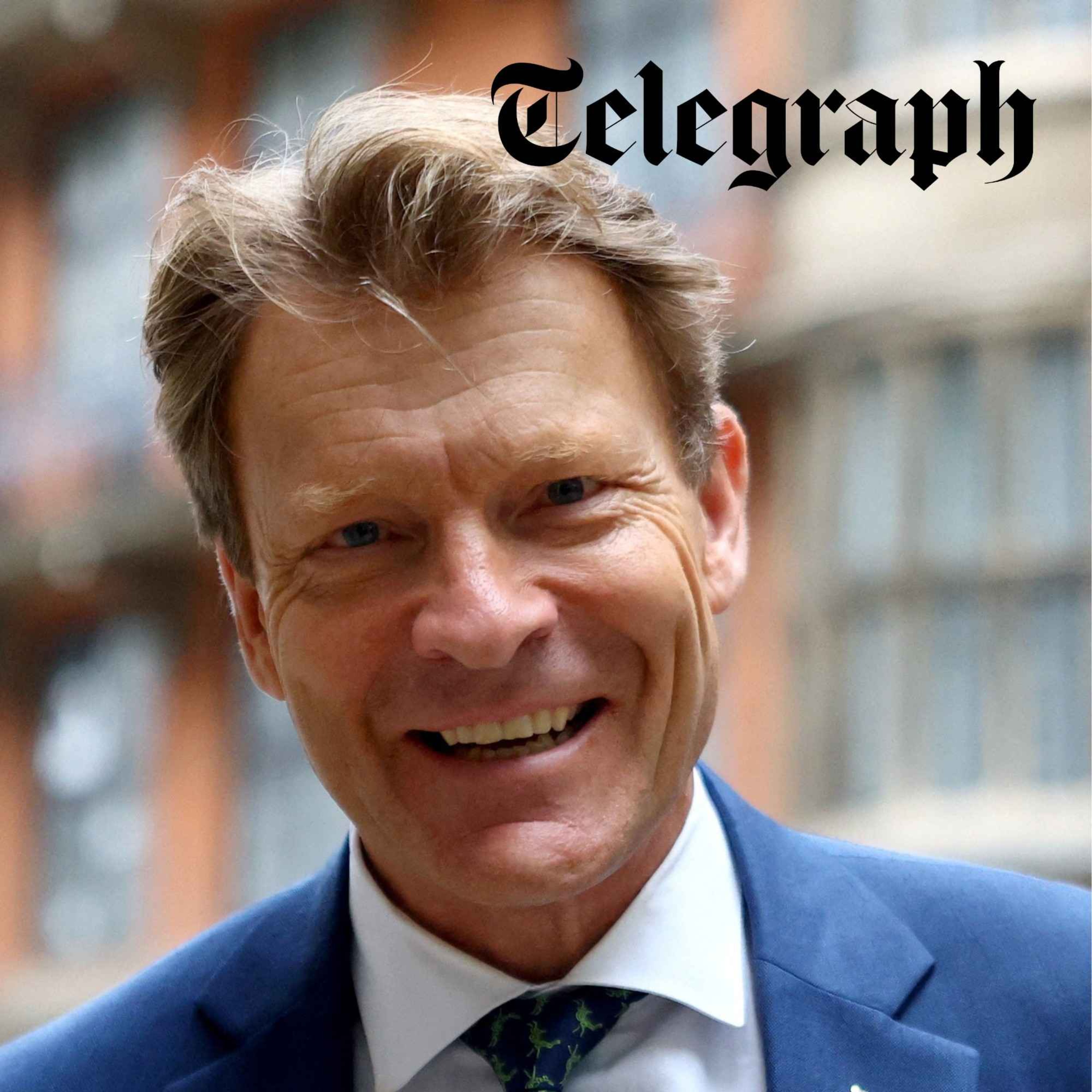
Richard Tice, Reform UK deputy leader, who denies quid-pro-quo and defends crypto deregulation.
Written by AI. May contain mistakes.
Discussion on Labour's political donation cap and reform's huge donation.
“That's the verdict from Richard Tice after reform received a whopping£72 million in 42 hours.”
Casual banter between hosts about personal anecdotes and upcoming events.
“Very quickly before we get into the meat and bones, pardon the expression, of today's podcast, which is going to be about the reform mega donation, I just want your instant reaction to this.”
Analysis of why crypto billionaires are supporting Reform over traditional parties.
“This great newspaper reported on this at the weekend.”
Discussion on the implications of large donations and potential influence on politics.
“The Conservative Foundation has just bought a new central office for the party.”
A deep dive into the differences between fiat currencies and cryptocurrencies.
“Now, you worked for a long time in the city of London with very high net worth individuals.”
Exploration of how wealthy individuals influence politics and public policy.
“Between 1690 and 1914, the value of the pound remained the same.”
Discussion on the democratic implications of large donations to political parties.
“I would not recommend people speculating cryptocurrency because its value ought to be a steady value.”
Explore the unusual legislative actions regarding political donations and their implications.
“And there's the Provisional Collection of Taxes Act 1968, which allows them to do it on a commons motion.”
Discuss the arguments for and against inheritance tax, including its economic impact.
“Goodness me, we're busy with the daily tea over conference season.”
Analyze the influence of high-value donations on political parties and their policies.
“Now, is that going to apply to the unions or to people like Lord Ali?”
Engage with Richard Tice on political donations, policy influences, and party dynamics.
“Well, Richard Tice, welcome to The Daily Tea.”
Explore the importance of smart regulations in finance and the political challenges faced by reform leaders.
“So I think what these individuals want is they want some business-like people We're going to stop the country going bust, fix the unnecessary regulations.”

Get the gist, explore an idea or ask about something said.
 Claude
On The Daily T, what are the key points of this episode?
Searching your listeningAutomatic transcript. May contain errors.
0:02The Telegraph.
0:30and we put them right in front of you. Browse thousands of the world's leading podcasts, book host reads or run your own ads, and track every conversion in real time. Same skills you already have, brand new results. ACAST. ACAST.com slash advertise.
0:49Labour is vindictive for trying to retrospectively introduce a cap on political donations. That's the verdict from Richard Tice after reform received a whopping£72 million in 42 hours. But the party's deputy leader maintains there are no strings attached and that peerages are not for sale. Welcome to The Daily Tea with me, Camilla Tominy. And me, Jacob Rees-Mogg. I mean, the hyperventilating hypocrisy from these people. A Labour Party that did, at the last election, take£4 million from a Cayman-headquartered hedge fund that was particularly interested in climate change and whose staff suddenly appeared on advisory bodies.
1:28But I thought reform were meant to be a bit different. I think that they're not going to be directing policy. I think you're falling into the traffic politics of envy. Yes. Just seeing a big sum of money and thinking how awful people have so much money. Jacob Rees-Mogg, lovely to see. You've had a trim. A slight one, yes. My hair was getting almost as long as yours. How long would you allow your hair to become? Not too long. Below the year? Has it ever been below the year? I wouldn't have thought so, no. What, not even in the 70s? No, no. 1770s. In the 1770s, I wore a periwig, powdered. But in the 1970s, I was too little to have very long hair.
2:02No, fair enough. I've aged you and I should stop doing that. Before we carry on, there's going to be something very exciting happening at the Labour Party conference. In fact, I bet you're jealous of this. Guess who I'm going head to head with in a Sunday showdown special? The ice maiden of all lefties. The great, the one and only Bridget Phillipson. Exactly. How very exciting. And Bridget, we may, it will start being a debate and then it may descend into some kind of actual wrestling. Right versus left, which everyone would want to see, right? I'm sure you will do it with more grace and alarm than the Today programme interview with Kemi Batenock last week.
2:38And that you may allow Bridget to get a word in edgeways. Of course I will. And also she's quite a mean hockey player. So I'm hoping she doesn't bring that stick as I interrogate her on the wisdom of putting VAT on private school fees. But you're quite a good tennis player, so you may be able to make a bit of a racket. I got a bit of a tennis elbow at the moment because I did play a 15-year-old at the weekend, which nearly approaching 50 was a mistake. I won the first set, lost the second two, and I need to see a physio. Very quickly before we get into the meat and bones, pardon the expression, of today's podcast, which is going to be about the reform mega donation, I just want your instant reaction to this.
3:16a diabolical 39 % of Gen Z's add ketchup to their Sunday roast. React to that. Well, I think, I never quite remember what Gen Z is, but most of my... It's our eldest child's generation. I'm afraid my children add tomato ketchup to their Sunday roast. What? We have little pots of it, but each one has his own pot. And Mary likes... Solid silver? No, not silver. Likes mayonnaise with hers as well. And the reason for that is that when we just have the ketchup bottle, or when they were little and we had the ketchup bottle, the noise over who was to have the ketchup bottle next was unbearable. So they have their own ration of ketchup.
3:57So is this acceptable then? If a re-smog says it's acceptable to put ketchup on a roast, then it has to be acceptable. Well, I wouldn't hold myself out as an arbiter of taste, and I wouldn't personally do it. But if children want a bit of ketchup and they enjoy their roast beef and Yorkshire pudding, better that they're having a Sunday roast enjoying it than that they're having pork scratchings with Andy Burnham. What about mayonnaise? Where do you stand on it? Homemade. Oh. It's homemade. No, of course not by me. If it's homemade, mayonnaise is very nice. But if it's shop mayonnaise, I don't think it's particularly nice.
4:30Right, let's get on to the serious matter of 72 million quid going into reforms coffers. This great newspaper reported on this at the weekend. So we've got two crypto billionaires. Christopher Harbourn, who's familiar to the audience already because he's the one who gave Reform a huge chunk of cash as a party. And they then gave that£5 million to Nigel Farage for his personal security, which is currently being investigated by the Standards Commissioner. He's coughed up another£36 million after another crypto billionaire called Ben Dillow gave the same amount. And I think Harbourn felt outspent and so came forward and said, well, I'm going to match that.
5:09Now, the left has got their knickers in a twist over this, but I'd imagine Tories aren't particularly happy either. Why would two highly successful businessmen choose to invest in reform untried and untested rather than the good old fashioned fiscally conservative conservatives? Well, because they're crypto billionaires and that they want something new and fresh and different. They're not diehard Tory industry titans. They are people who've made something, you know, an absolutely cutting edge part of economic activity. They're new money, is that what you're saying? No, I'm not saying it like that.
5:46I'm saying that they're entrepreneurs and they are people who want to be with something that is new and doesn't have the baggage of the old. I like the baggage of the old. I think it provides stability. I think it provides institutional knowledge. I think it helps us avoid mistakes. But I quite understand why if you have made your money in something that didn't exist 15 years ago, you want to back a party that is brand new and can be formed or is being formed rather than one that has a very clear form already. So I understand that and I understand why they wouldn't be a natural for the Tories at the moment.
6:24Though Harbour and I believe gave money to the Tories in the past. But I can see the glamour of reform for them. I also think it's a perfectly reasonable level of donation. Really? Yes, because if you take the old parties, if you take the Conservative Party, it has millions of pounds that it's built up over the years in Conservative associations up and down the country who have cash on their balance sheet, some own properties, some get a steady stream of income from those properties. The Conservative Foundation has just bought a new central office for the party. The Labour Party similarly has association offices, but it also has that bedrock of union money, but not just money, local infrastructure that it can use for elections.
7:11That total historic support, asset base, gives those two parties a strong advantage. And in a democracy, new parties ought to be able to form and to challenge the old parties. But to do that, they need money. and therefore I think people who are giving to political parties are just as charitable as people who are giving to museums or to the Royal Opera House. Okay, and I appreciate that and we're going to put a lot of this to Richard Tice, the Deputy Leader of Reform UK, in just a moment. But we're talking about massive donations from two individuals who might be minded for the person who becomes Prime Minister next to liberalise or deregulate the rules around cryptocurrency.
7:58So I put this to Robert Jenrick at the weekend on my GB News show. And of course, he said, these men have asked for nothing in return. Now, you worked for a long time in the city of London with very high net worth individuals. I've been in journalism and around the block for a few years. I know that no billionaire on earth wants something for nothing. That is obviously true. people always do things that they think support their own interest but you don't have to be a billionaire to give money to the Tory party because you want a good conservative government it's a perfectly reasonable thing to want yes I don't think what happens with these donations is that people say okay here's 36 million and therefore I'm going to write your policy on x y or z it is that but let's probe that because it has happened a little bit in the past and the other thing that has been given in return for huge chunks of cash is, of course, a peerage.
8:51Oh, well, that goes back to early times. James I introduced the baronetcy to raise cash. He sold them for£1 ,000 a time. He issued too many of them that the price went down. I make the point because the concern will be that you've got a very small collection of hugely wealthy individuals that have this amount of spare cash down the back of the very posh sofa that they can hand over to a political party that has got a very high chance of forming the next government and exert influence on the basis of that cash. I appreciate it was ever thus, but I thought reform were meant to be a bit different.
9:26No, I think that they're not going to be directing policy. I think you're falling into the trap of the politics of envy. Yes. Just seeing a big sum of money and thinking how awful people have so much money. If they want to give me 36 million, I'd be delighted to resmog enterprises. But I don't envy it being given to reform. And when you come to cryptocurrency, I think cryptocurrency ought to be deregulated because governments have swindled us with fiat currencies. What do you mean by fiat currencies? I mean currencies that they just print. Right. Which don't have any backing. Between 1690 and 1914, the value of the pound remained the same.
10:08Yes. Some years it went up, some years it went down, but over the whole period, it remained the same. Exactly the same as true in the United States between 1776 and 1914. The dollar remained the same. Since then, since we've only had paper, the value of the pound has fallen by over 99%. Now, think of this. What is the Bank of England's target for inflation? 2%. Okay, so you buy a government bond for your retirement. Yes. And you buy£100 worth of government bonds. Yes. And you get your 2 % return. Inflation is 2 %? Yes. I'm trying. You know I'm terrible at maths. I don't do maths A-level. And you retire in 35 years' time?
10:47Yes. At that point, your£100 of government bonds is worth£50. Yes. That money has been taken from you by the inflation tax. Yes, I do understand that. Fiat currencies swindle people. Cryptocurrencies are an attempt to change that in a modern economy. Actually, I was talking about this to Arthur Laffer for GB News. And he's rather changed my mind because I've been quite cautious about cryptocurrency and worried about its uses for criminality. Dr. Laufer pointed out to me that pound notes are used for criminal activity, dollar bills all over the place. Do you have any cryptocurrency investments?
11:27I don't. I have no cryptocurrency. But are you minded to? I don't think of it as an investment. I think that's been the mistake, that it's become a speculation. but what it should be is a store of value, one of the key attributes of a currency, that fiat currencies have failed to be. Okay, I understand that. And so I think there is a nervousness of cryptocurrencies. There's a feeling that they're used for money laundering, which they are, and for criminal activity, which they are, but so are dollar bills. And there's therefore a nervousness about people who made money out of it. Yes. I would not recommend people speculating cryptocurrency because its value ought to be a steady value.
12:09That's its virtue. But do I think cryptocurrencies should be an important part of our economic infrastructure? Absolutely. And that's without having got any money from any donors at all. Yes. But I suppose there are two questions for Nigel Farage, particularly. You're in the middle of a donations crisis, not just the Parliamentary Standards Commissioners investigation, but also as a result of that Channel 4 verbatim sting, where we still can't get to the bottom of whether or not reform commissioned a poll because money changed hands, £32 ,000 between a fictional son of a fictional American donor and a polling company.
12:46Just put that to a side. you then respond to that i mean it's pretty ballsy and say all right well we've just accepted 72 million pounds worth of new donations from two figures where we're trying to pin down whether or not they have been british citizens in time for new legislation being brought in can i say one thing as you're saying yeah being politics of envy i categorically disagree with the lefties including angela rayner and margaret hodge wanting to retrospectively apply rules i think it's a complete aberration, it's wrong. And that really is the politics of envy. I think if these donations are found to have been made within the rules as they stand today, not rules confected by lefties who are trying to stop reform from benefiting from this cash, then I think if the rules today, as they stand, have been met, I think they're fine.
13:37I completely agree with that. And I think the government is trying to fiddle it, that in tax law, the government does have the ability to announce forestalling measures and say we are going to legislate to change the VAT rate on school fees in due course. If you pay a school fee now, it will still be subject to the VAT rate. It applies from this date. That's been standard. And there's the Provisional Collection of Taxes Act 1968, which allows them to do it on a commons motion. What is extremely unusual is to say we are going to legislate with effect from a date prior to the legislation. I'm astonished that the Attorney General, then Lord Hermer, approved this because the attorney has a veto on retrospection in legislation and is allowed to say this legislation may not go through because it is retrospective.
14:32Every bill that goes before Parliament from the government is reviewed by the Attorney's Office for retrospection. And I think they've done this for narrowly partisan reasons to try and stop reform, having money. This is anti-democratic. A lot of the attacks on reform is because they're winning, they're doing well, and getting votes. And Labour hates this because it's taking, in their view, votes from Labour, and therefore they want to hobble reform. And I think this is democratically disgraceful. Is there a difference, though, when you're talking about two billionaires donating as opposed to, say, the trade unions?
15:12The point being made by Sharon Graham of Unite, that actually when you're talking about trade union money, you're talking about the membership fees of many, many thousands of people. And therefore, there's something a bit more meritocratous about it. Completely bogus. Utterly bogus. If you look at the foundation of the Labour Party, its money comes from the trade unions. Why? To influence policy. Yes. It's not even hidden. It's not disguised. The Labour Party is the party of the trade unions to implement policies that the trade unions like. Employment rights bill, for instance. Employment rights bill.
15:45That's what they get the cash for. So you can actually see with Labour... The money trail. The money trail to policy initiatives much more clearly than you can with individual donations. individual donations are much more honest than buying this by trade union bosses. It's balderdash that the odd trade unionists had any influence on what the trade union does. And a lot of them don't know they're making the political levy anyway. I mean, I suppose the headline there is political party does what main supporters want to shock in the sense that Kemi Badenock has this weekend been rumoured to be considering scrapping inheritance tax in her Tory party conference speech fast approaching.
16:25It's the first week of October and we're both going to be there and we're doing a special event together just to flag that too. Goodness me, we're busy with the daily tea over conference season. Now, she may well be minded to do that because some of her donors are people like James Dyson, who isn't short of a few bob that he wants to hand on to his own children without giving 40 % of it to the government. So in that regard, of course, political parties going to take decisions that ingratiate them with their own fan base? Well, inheritance tax is a fundamentally bad tax. It raises little revenue and it's very, very economically distortive.
16:59So to get rid of inheritance tax is a good thing to do economically, regardless of playing to your supporters. I mean, you need to find eight billion quid if you're going to get rid of it. Well, you probably don't actually, because I think you would find that you raise more money because people would take capital gains that they don't take because they're worried they're too old, you would get people making investments that they haven't been making because they think they need to stay in bad investments that are more favourable for inheritance tax. So what about the argument it only actually affects one in 10, therefore you're scrapping a tax for the rich?
17:31The number's getting bigger and bigger. And what you want to do, more and more people are being caught because the threshold's been frozen. What you want to do is have a tax system that is the most efficient for the economy rather than one that is, we don't like you, so we can tax you. That's a very bad way of raising money. Back to the politics of envy. So do you think Badenock should do it? She's completely right. But hang on, scrap stamp duty, scrap inheritance tax. It looks a little desperate. There's a constant need to pull rabbits out of hats. No, no, no, these aren't rabbits out of hats.
18:02These are things Tories like me have been thinking about for years because these taxes are fundamentally damaging the economy. I'm very against capital taxation because capital taxation means the allocation of capital is less good, is not the best it could be, which reduces growth, reduces productivity, and doesn't actually raise you very much tax. Taxes need to fall broadly on income and expenditure at as low a level as you can get away with. Capital gains tax, inheritance tax, and stamp duty at high levels are very economically damaging. It's part of the reason our economy hasn't grown in recent years.
18:39So Labour are trying to cobble the reform donation on two fronts, as far as I can tell. First of all, it's this confusion about when these two donors became British citizens and whether that falls into some kind of loophole because foreign donations are not allowed. I think they've always been British citizens. It's whether they're residents. Domiciled. So one's from Hong Kong, one's from Thailand. They've both got property in the UK. It's when did they register? That's right. And what is residence? What is residence? What is residence? It's more than 90 days in the country. What is it? I don't know.
19:15You can be resident and not ordinarily resident. Right. You can be not ordinarily resident. You can used to be able to be domiciled here, but not resident here. Right. Now they've changed domicile to get rid of the non-doms. This is a very complicated area of what residency is. And I don't know the answers. No, fair enough. And then the second front that it could be blocked is on this retrospective cap on donations. So this proposal to cap donations by£100 ,000. Now, is that going to apply to the unions or to people like Lord Ali? Of course it's not going to apply to the unions. This is naked gerrymandering.
19:56It's to stop the Tories and reform raising money whilst Labour can have as much money as it likes. But that's disgraceful. I mean, in one respect, there's some interesting YouGov polling to suggest that Nigel Farage right now has never been more unpopular. But as I was travelling into work this morning, I did think to myself, the left does keep on playing into his hands when he says he's a victim of an establishment stitch up. Because the more they go after this money, that will please the people that are already on their side. but it does make people who might, by the way, be Conservatives, not reformers, not fully-fledged Nigel fans, go, hang on, there's something a bit iffy about this.
20:32This is just the left trying to stop the right. Of course it's the left trying to stop the right and they'd be doing it if the Conservatives got big donations too. They'd be doing it if they did. Well, the Tory party is still dependent on pretty large donations and we got£10 million from the estate of Lord Sainsbury. Yeah, that was the last biggest donation. That's right. Christopher Harbour, he had given£9 million previously to reform. Then you've got figures like Frank Hester, 5 million, Mohammed Mansour, 5 million, all the way to today. But then how about the argument that this is all a bit MAGA, this is all a bit democracy for sale?
21:07That central point that should we really have just individuals like Delo and Harbourn able to possibly influence the outcome of the next general election? I think Delo and Harbourn are true philanthropists. People who give to the British Museum, they want a peerage too. They want a room named after them. They want to be socially acceptable in society. People who give to the Royal Opera House want to be invited to the Royal Box. They want to meet the king when he goes to the Opera House. People always want something for their nations. Yeah, that's what's troubling for people. And people are giving to a party because they want the country to be better governed.
21:45That seems to me to be a pretty noble cause, rather than the noble cause is actually. But the left will then go into the rhetoric of the left in America and say, if he does become the next prime minister, that Nigel Farage has somehow bought Downing Street. But you can't buy Downing Street. Voters are free to vote the way they see fit. Hillary Clinton massively outspent Donald Trump in 2016. Good point. Donald Trump won. The Tories outspent Labour in 2024. Who won? Votes are not for sale. Voters aren't stupid. The left thinks voters are stupid. They think they're the lumpen proletariat who suffer from false consciousness and therefore don't know what they're doing.
22:25The left thinks we're all morons. The right thinks we are intelligent individuals with agency and therefore we can have confidence in money being raised back because 36 million here or there isn't going to make you vote for reform, but it's not going to make me vote for reform. I wonder what will happen if these two lose their investment completely and reform don't form the next government, will they be ruing and having buyer's remorse or will they just think, oh, I've lost some pocket change? They're loaded, aren't they? It depends how much you're worth. If you're worth a billion, this is 3.6 % of your total assets.
22:58If you're worth 10 billion, it's 0.36%. So it's basically your weekend spending money. It's not a lot if they are as rich as they're purported to be. Shall we put all of these questions to Richard Tice, the deputy leader of reform, next? I think that is a very good idea.
23:18Outdated technology isn't going to improve a disconnected healthcare system. Next. So what will? At Optum, we wake up every day and work for better. We call it healthy optimism. It's how we use insights and technology to help providers focus less on paperwork and more on patients. Will we fix it all overnight? No. But we'll wake up trying again and again until healthcare works as one for everyone. That's healthy optimism. Learn more at Optum.com.
24:15wherever you get your podcasts.
24:24Well, Richard Tice, welcome to The Daily Tea. The first thing I want to ask you is whether you're confident that these two donations of£36 million will meet the law that is, as we speak, being changed through Parliament. Well, that's our understanding from the advice that we've received that everything is compliant and in good order. Whether or not a vindictive Labour Party tried to change things even more than is currently in the legislation being taken through the House of Parliament, time will tell. But it's a fantastic responsibility to be given by two hugely successful entrepreneurs to give a level playing field.
25:07Because obviously the two main parties, they raise and spend many tens of millions every year, 30 to 40 million in an election year. Votes is one more choice. And competition is a great thing. So putting us on a level playing field so that we can come up with the best people, the best campaign managers, the best policy makers is good for democracy. It's good for Britain. And what about your cryptocurrency policy? Is that why you've got these donations? Is it a pair of donations in support of policy that you've already announced? And does that mean policy is for sale from reform? No, nothing's for sale from reform.
25:45But the simple fact is we've got a lot of policies that appeal to a lot of people. And it's actually as much the confidence expressed by these two individuals and many others, of course, who are backing the leadership of Nigel Farage, backing the senior leadership team of the reform, and saying in order to make sure that you're ready for government, you've got to have enough money to win those target seats, but also to have the policy team, draft legislation, all in place. And we've made it very clear that there's been no ask, nothing would be given, unlike, of course, in the Labour Party, that is primarily funded by unions who make very significant asks to change employment law, to change public sector pay and conditions all the time.
26:34It seems to the lefties that that's acceptable. Oh, no, but if it's someone who might be a little bit to the right of centre, then it's completely unacceptable. I mean, the hyperventilating hypocrisy from these people. A Labour Party that did, at the last election, take£4 million from a Cayman-headquartered hedge fund that was particularly interested in climate change and whose staff suddenly appeared on advisory bodies. If we're saying that democracy might be for sale on the left, we have to accept that it might be for sale on the right. In that, yes, I appreciate exactly the point you're making about trade unions paying millions into the Labour Party in order to have legislation be passed like the Employment Rights Bill.
27:18But at the same time, surely that also applies to the right, that if you are minded in future to try and suggest the deregulation of cryptocurrency, people are automatically going to say, oh, that's what the donations are all about. Well, first of all, let's just remember that the Conservative Party has a long, proud track record of giving peerages to people who've given them two or three million quid. We don't give any peerages away. We've got a broad range of policies. We've shouted loud and clear. I've spoken for about three or four years about getting rid of daft, unnecessary gold-plated regulations across the whole piece, such as GDPR and many others beside, a net stupid zero.
28:01So I think what these individuals want is they want some business-like people We're going to stop the country going bust, fix the unnecessary regulations. We want smart and safe regulations. But with regard to both AI and crypto, you know, the city of London has long for 200 years been an innovator in finance. So why shouldn't it be an innovator in these modern forms of finance as opposed to seeing those markets go overseas, go offshore, lose the growth opportunities? better to be smartly regulated, smartly taxed in an innovative city of London to increase prosperity, jobs and growth in the United Kingdom.
28:40Richard, I agree with almost everything that you've said, which makes interviewing you on this subject slightly difficult. But let me put it a different way. And that is, if you receive money, very large amounts of money from a certain quarter, it actually makes it harder to implement policies that you may long have believed in that support them because everyone's very suspicious of you and you lose disproportionate political capital. If you want an example of this, I would point to the Tories getting rid effectively of non-dom status, which mainly happened because Rishi Sunak's wife was a non-dom and therefore he instructed the chancellor to do it.
29:16To appear whiter than white, a candidate, you end up doing things that aren't in favor of your donors, even though you want to do them to give the appearance of prebity. Yeah, and it's a fair challenge. I think it just comes down to the quality and courage of the leadership of reform, of doing the right thing to help save a country that is in serious financial peril, that's got no growth to talk about. I mean, production and construction GDP figures are utterly dire last week. The monthly borrowing figures are dire. So we've got to change course. And that's across a whole raft of issues. Just at our brilliantly successful conference a couple of weeks ago, I put forward policies on our planning policies to rejuvenate and rebuild our town centres, to build up to 50 ,000 new affordable social homes every year.
30:09These are the detailed policies that affect everybody across the country and are broad-based and very carefully thought about. Just before we ask you about one particular policy that Kemi Badenok may inject into her party conference, speech in a couple of weeks time. Can you just clarify something? Are you saying that if reform gets into government, you will not give any peerages to any donors ever? We're saying that no peerages have been promised. We're not allowed to give any peerages. And frankly, we want to reform the House of Lords. But the only point we would make is that if we're prevented from passing legislation by a grumpy House of Lords that doesn't like us, then we've clearly said, but then we would have to fill the House of Lords in order to get our legislation through, if we've been lucky enough to get a majority.
31:01Because that's the whole point. But that's the point though, isn't it? That if you have to give peerages to people who support reform's agenda in order not to be thwarted by the upper chamber, who else are you going to give those peerages to if not those who have given you millions of quid? Who knows? Maybe it might be you two. Oh, Mr Tice, honestly, so you can't rule out never giving peerages to donors, can you? You can't do that. I'm making it very clear. These two individuals have not asked for anything and they won't be given anything. Where do you draw the line? If you've donated 25 quid as a member, does that rule you out as well?
31:39The best thing to do is for us to win an election and for the House of Lords to recognise that if we've got a manifesto, then it should be allowed to pass with the usual sort of appropriate scrutiny. And that's the position. But under reform, I can absolutely guarantee to you, unlike other parties, peerages are not for sale. Jacob wants to ask you about the Bade Not policy because the pair of you are worth a few, Bob. I bet you'd want to vote for a Conservative government, Richard Tice, if it scrapped inheritance tax. Well, Richard, I'm going to go back to the point I made to you when you kindly came on my GB News programme, that your shadow chancellor's gone native.
32:20He's joined the blob. He loves the OBR nowadays. And he says that it's not a priority to get rid of inheritance tax. What's happening? You're going all pinko in your economic policy. Goodness. I mean, that's offensive to call me a pinko, to call Robert a pinko. Come on. We need to retain some probity on this great show. No, what we need to do is we need to do things in order. And the right thing to do is a tax cut that helps 40 million people, including pensions, by lifting the income tax threshold from£12 ,500 to£15 ,000. That's very broad based. Likewise, for me, I've pledged to cut energy bills, average household energy bill by£250 by scrapping all the ludicrous net zero nonsense.
33:06Once we've done those things, and we would do those in the first 100 days, then if we show the markets that we can keep saving money and deliver on what we want to deliver, cut daft regulations, create some growth, then we can look at other things to create more growth. But we can't do everything at once, Jacob. They have to be priorities. But what I'd say about that is that you and I both know that inheritance tax is economically a very bad tax. It raises surprisingly little revenue. But my concern about it isn't that. It's that it is economically distortive. It's one of the reasons we have misinvestment across the economy.
33:43It's part of the reason for our low productivity growth. And that it worries me that reform, when there is an obviously bad economic tax, doesn't prioritise dealing with that and goes along with the Treasury consensus about keeping things as they are. Look, you're absolutely right that it's a terrible tax. It's a grief tax. But we can't do everything at once, Jacob, because we know what the bond markets do. You've seen that in your own incarnation. So we have to make some choices. and you know yes ultimately uh you know i mean we would definitely get rid of the family farm tax uh that we've absolutely committed to but it is right to incentivize work to level the playing field between those in work and uh those on benefits that helps the most people first that's political choice we make and then as we deliver then we can move on to other things that's uh In a sense, that's the difference between us and the Tories.
34:48We need to help the most people possible across the United Kingdom to broaden the growth, put more money in people's pockets, to deal with the cost of living crisis, cut energy costs and bills. And then, hey, presto, we get some growth and that growth continues. And if we can get the growth back to the sort of levels in the 80s and 90s of 3 % a year, plus or minus, then happy days, bring it on. we can get more tax cuts. But I think you want to look at Nigel Lawson's memoirs and his explanation of why he cut the taxes he cut, because he cut the ones that led to the most growth, rather than the ones that were immediately the most politically appealing.
35:25And that's where I'm worried about you not taking inheritance tax seriously, because I think you're missing an opportunity that's extremely good for economic growth, for a relatively small amount of money, for things that are sexier, to use a word I don't normally use. We're taking it very seriously, Jacob. And while some of our, well, we think that our policies are glamorous to tens of millions of people. And the multiplier effect of putting more money into people's pockets, they can then choose how they want to spend it or saving, is very significant, as you well know. And so we look at all these things very carefully, very seriously.
36:06We need the greatest bang for our bucks as fast as possible. And the big difference, though, Jacob, is with our policies, we've said if we don't enact them in the first 100 days, we'll resign. So people can trust us because trust is quite low in politics. There we are. And can I also point out... You won't. You'll find an excuse not to after 100 days. That's a shocking allegation. There'll be a war in Iran or in... Shocking allegation. But you know it's true. Also, when it comes to political sexiness, we must acknowledge that Mr Tice was voted the sexiest politician in 2026. So on that bombshell, lunch on you next time, Richard Tice.
36:43Great to see you on the Daily Tea as ever. Nice to see you. Thank you for having me.
37:11Quick question. When was the last time a display ad changed your mind? Now think about the last time a friend told you about something they loved. Different feeling, right? That's how podcast advertising works. A host who's built real trust with their audience talks about your brand in their own words, in their own voice. It doesn't interrupt the experience. It's part of it. With Acast, you can access the world's largest podcast marketplace. Choose the right shows, the right audiences, the right format. Then watch the data tell you it worked. You're not buying impressions. You're buying influence.
37:45Learn more by visiting acast.com slash advertise.
In today’s edition of The Daily T, Camilla Tominey and Jacob Rees-Mogg are joined by Reform UK’s deputy leader to discuss the party’s massive donations.
The Labour Party is heavily criticised for its attempt to block the contributions. Mr Tice labels it “vindictive” and “hyperventilating hypocrisy” and confirms that the donations won’t be rewarded with peerages.
Get your tickets to The Daily T’s On The Road Sunday Showdown between Camilla Tominey and Bridget Phillipson here: https://www.telegraph.co.uk/telegraph-events/live-events-party-conferences-2026/
► Subscribe to our new Daily T YouTube channel: youtube.com/@dailytpodcast
► Sign up to our most popular newsletter, From the Editor. Look forward to receiving free-thinking comment and the day's biggest stories, every morning. telegraph.co.uk/fromtheeditor
The Telegraph is the Publisher Podcast Awards' Podcast Publisher of the Year 2026
Producer: David Levene
Senior Producer: Emma Williams
Social Producer: Nada Aggour
Video Producer: Jim Spencer
Executive Producer: Charlotte Seligman
Editor: Camilla Tominey
Highlights:
Hosted on Acast. See acast.com/privacy for more information.


