
 Ask ChatGPT


 The Daily T
30 Jul 2025 · 37m · 12 chapters
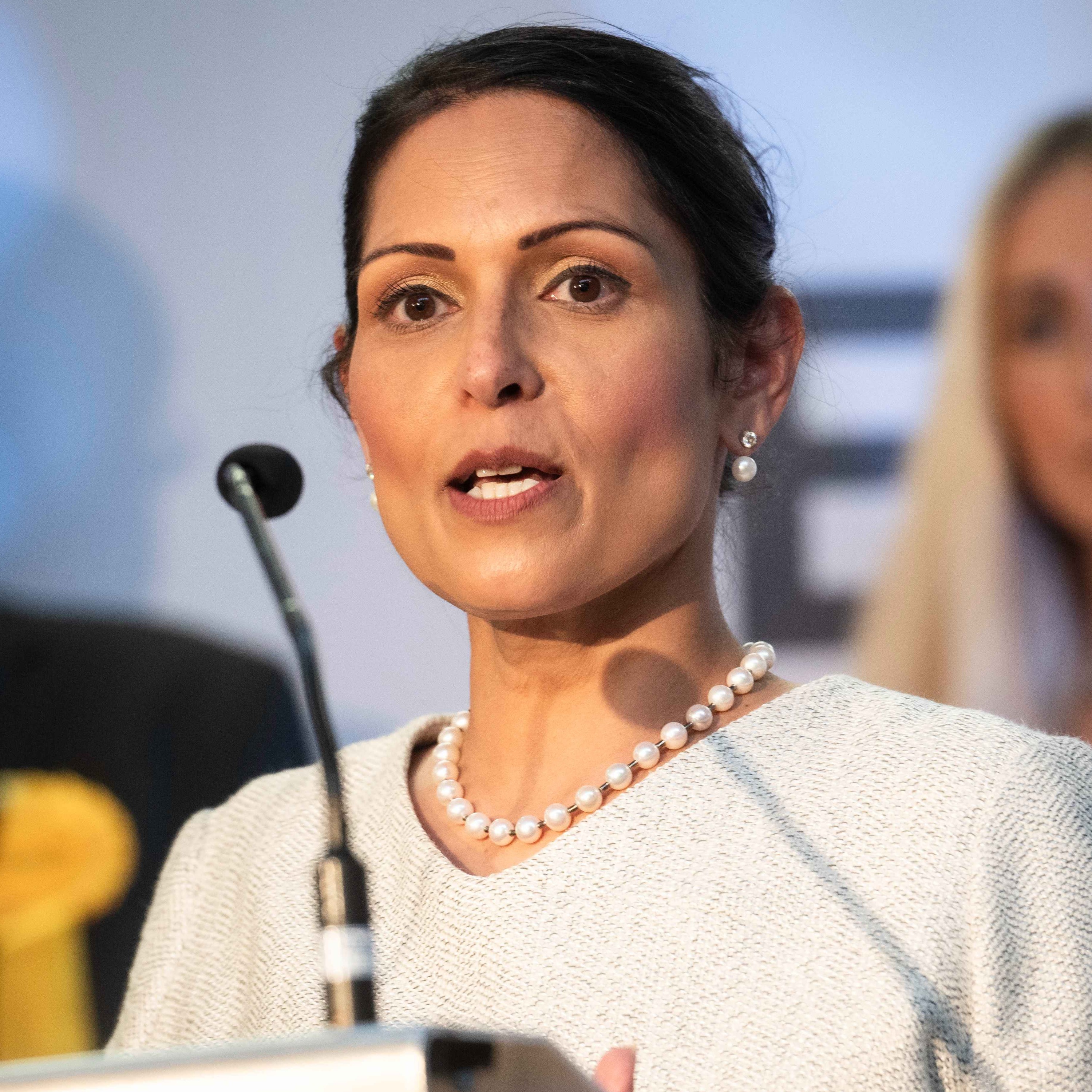
UK plans to recognise a Palestinian state in September unless Israel meets conditions on Gaza (aid, ceasefire, no West Bank annexation, long-term peace). Episode argues this rewards Hamas and is politically motivated, while debating humanitarian conditions and aid/famine claims in Gaza.
Dame Priti Patel, UK Shadow Foreign Secretary; former International Development Secretary; former International Development Secretary background used to criticise Labour’s humanitarian diplomacy. Henry Bodkin, Jerusalem correspondent; reports from Israel/Gaza and writes about the Israel–Hamas “propaganda war” over famine and aid.
Recognition conditions are “on Israel not Hamas,” giving Hamas a “free pass.” Hamas is described as an Iran-sponsored terrorist group; Starmer/Lammy allegedly lack a workable peace plan and haven’t secured aid routes. Patel invokes the Montevideo Convention criteria for statehood and says Palestine lacks functioning governance. Bodkin claims extreme hunger is real; Israel’s March aid halt and later distribution system led to starvation, with trucks looted/intercepted and UN access constraints. He says Qatar/Saudi/Egypt urged Hamas to disband, potentially shifting regional dynamics.
Emily Damari’s “shame on you” post; Patel’s claim she pressed Lammy 22 times on Gaza aid; Bodkin’s description of Gaza Humanitarian Foundation distribution sites; UN/NGO warnings about collapsing staff; Qatar hosting Hamas leadership.
Written by AI. May contain mistakes.
Discussion of Keir Starmer's decision to recognize Palestine and its implications.
“So the Prime Minister has made four specific demands of Israel.”
Priti Patel critiques Labour's handling of the Israel-Palestine crisis.
“And on that note, Priti Patel, the shadow foreign secretary, joins us in the studio.”
Priti Patel discusses the shortcomings of Starmer's leadership in foreign policy.
“Those conditions, Camilla, you mentioned earlier on, they're all on Israel.”
The conversation shifts to the humanitarian situation in Gaza and the role of the UK government.
“I don't think Starmer has any core values or substance or even an original thought to effectively convene or lead other countries.”
Exploration of the negotiations for aid into Gaza and responsibilities of the UK government.
“And they can see this through the girls in independence who are obviously in parliament as well.”
Discussion on the UK government's involvement in humanitarian aid and its implications for Israel and Palestine.
“We read plenty of reports about UN workers basically being linked to Hamas, where they've got a whole network where they are accessing humanitarian aid and leverage it and using it against the people of Gaza.”
Introduction of the episode's sponsor, Walden University.
“Well, coming up next, listening to All That is Henry Bodkin, our man in Jerusalem, and we'll be speaking to him next.”
Introduction of Henry Bodkin, the Jerusalem correspondent, who will discuss the current situation in Israel.
“That's B-O-M-B-A-S dot com and use code audio.”
Analysis of the Israeli government's response to Keir Starmer's recognition of Palestine and the implications for hostages.
“You were listening to what Dame Priti Patel was saying there.”
Explore the changing perspectives in Israeli society regarding Hamas and the conflict.
“And I think there's, you know, there's some disappointment among diplomats.”
Understand the dire humanitarian situation in Gaza and the complexities of aid distribution.
“What can you tell us about the truth of the matter?”
Discuss the implications of regional leaders' stances on Hamas and their impact on peace efforts.
“On a slightly lighter note to finish, G-Ray, YouTube, the YouTube as it is known, which features the Daily Tea podcast every day.”

Get the gist, explore an idea or ask about something said.
 Claude
On The Daily T, what are the key points of this episode?
Searching your listeningAutomatic transcript. May contain errors.
0:02The Telegraph.
0:30real-world challenges and succeed. Your future is waiting, and Walden is here to help you achieve it. Take the first step to make your impact. Visit waldenu.edu. Walden University. Set a course for change. Certified to operate by Shev. In a world where AI is changing every role in every industry, knowing who actually has deep expertise matters more than ever. Upwork connects you with the highly skilled freelance professionals with proven track records, so you can hire with confidence. Upwork gives your business fast access to highly skilled specialists with deep expertise, so you can fill critical skill gaps, launch projects faster, and scale support up or down without committing to full-time headcount.
1:11With Business Plus, you can access the top 1 % of talent on Upwork. AI-powered shortlisting delivers a curated shortlist of top freelancers matched to your goals in under six hours. No endless searching required. Thousands of growing businesses already trust Upwork to hire highly skilled freelance professionals for everything from one-off projects to ongoing support. It's free to sign up and posting a job is easy. Visit Upwork.com right now and post your job for free. That is Upwork.com to connect with top talent ready to help your business grow. That's U-P-W-O-R-K.com. Upwork.com.
1:51There's been a great deal of condemnation, Gordon, of Keir Starmer's move to recognise a Palestinian state. But could there be a more damning response than that of Emily Damari, the British-Israeli citizen who survived 471 days in Hamas captivity and has turned around and said to the Prime Minister today, shame on you. Yeah, we'll be talking to the Shadow Foreign Secretary Dame Priti Patel about what she thinks of Starmer's move and we'll also be talking to our Jerusalem correspondent Henry Bodkin who is on the ground there. Plus a little bit of chat about YouTube becoming the second most watched thing on our tellies.
2:31Welcome to The Daily Tea with me Camilla Tominey and me Gordon Rayner.
2:46Well, the Prime Minister, Keir Starmer, has done what was expected in saying that the UK will recognise the Palestinian state in September unless Israel takes, quote, substantive steps to end the appalling situation in Gaza. So the Prime Minister has made four specific demands of Israel. Note that, of Israel, not of Hamas. And they are end the appalling situation in Gaza and allow 500 aid trucks in a day, reach a ceasefire, make clear there will be no annexation in the West Bank and commit to a long-term peace process that delivers a two-state solution. And the Foreign Secretary David Lammy has been speaking at a UN conference.
3:28Let's hear what he had to say. Let me be clear. The Netanyahu government's rejection of a two-state solution is wrong. It's wrong morally and it's wrong strategically. It harms the interests of the Israeli people, closing off the only path to a just and lasting peace. And that is why we are determined to protect the viability of a two-state solution. And so it is with the hand of history on our shoulders that His Majesty's government therefore intends to recognise the state of Palestine when the UN General Assembly gathers in September here in New York. Very much channelling his inner Tony Blair there, who I believe did use the phrase hand of history.
4:24I can't believe he can't even come up with his own expression. Well, I've actually said it's not quite the hand of history on his shoulder, but the hand of Hamas. And on that note, Priti Patel, the shadow foreign secretary, joins us in the studio. You just revealed you had a little nickname for David Lammy. That's correct, yes. I call him Calamity Lammy. I don't think he's overseen anything that's been constructive for Britain's standing in the world. And certainly he's failed in all negotiations when it comes to representing Britain. And at a time like this, in light of Keir Starmer's statement yesterday, yet another statement around the Middle East and Gaza, I just don't think that it demonstrates Britain has not been playing a leading role in key negotiations to free the hostages, get aid into Gaza.
5:09And we certainly have not been really advocating a proper peace plan or a peace process. The criticism of Keir Starmer's decision to offer this potential recognising Palestine as a state is that it's rewarding Hamas. Do you agree with that? So I think there are a couple of things to say, actually, about his announcements yesterday. First of all, I think it's fair to recognise that he has basically taken this decision to appease his backbenchers. There's mass unhappiness in the Labour Parliamentary Party. We know that. And just as an example, I have pressed David Lammy 22 times at the dispatch box on Gaza.
5:48What is the government doing? And every opportunity, their backbenchers are literally just piling in on the front bench. And I think you've all seen that through various statements, urgent questions, etc. This absolutely is effectively given a free pass to Hamas. There's no question or doubt about that at all. Those conditions, Camilla, you mentioned earlier on, they're all on Israel. They're not on Hamas at all. And let's not forget, Hamas are a terrorist organisation sponsored by Iran. Well, we know where Starmer and Lamy sat on those Iranian airstrikes a few months ago. They sat on the fence.
6:25They wouldn't even come out and basically welcome them, which was just extraordinary. And let's not forget, I mean, mention Israel and Gaza. In 2005, Israel withdrew from Gaza. and the Palestinian Authority were then left in charge, they failed. And guess what? Hamas came in. And we're in the state that we're in right now, in this diabolical situation where we're seeing terrible things happen to people, a humanitarian crisis because of Hamas. Yes, Israel is clearly there. But, you know, this conflict started because of Hamas, because of October 7th, because of the appalling kidnapping of hostages.
7:03and what Keir Starmer is doing right now, this will not bring lasting peace or a sustainable peace at all. Any recognition of Palestine should come through a peace process, a formal peace process. Starmer is just uttering platitudes. There's no substance behind this. And I think just to finish the point on this, I don't think Starmer has any core values or substance or even an original thought to effectively convene or lead other countries. some of the Abraham Accord countries, countries such as, you know, the UAEs, the Saudis, even America. And don't forget, it was only last week the US envoy, Steve Whitcroft, withdrew the Americans from the ceasefire talks for the very reason to quote him.
7:47He said Hamas basically were not acting in good faith. Well, Qatar, Saudi Arabia and Egypt have all urged the terror group to disband in order to enable a Palestinian state. When you talk about him kowtowing to backbenches, I mean, is it the backbenches? Is it actually kowtowing to Corbyn and Sultan as a new party? I think it's going to be called the left party rather than your party. We don't know. Well, they're going to let left wing people decide what to call it, I think. And is it also, Priti Patel, kowtowing to the Muslim vote? They're worried about losing Muslim voters in key constituencies.
8:23we've already seen the likes of Wes Streeting nearly forced out of Ilford North. There are other key seats, Gordon, you were mentioning them earlier. So Starmer Streeting and Shabana Mahmood were all under a huge amount of pressure from the pro-Gaza vote at the last election. So I think there is a fear from them that they could actually lose next time around if this is still a big issue. So I agree. I completely agree. And that's the dishonesty that we all get with Labour and Keir Starmer and his party, to be quite frank. They're under domestic pressure. That's self-evident, isn't it? There are new groups where our politics has become much more dominated by the parties.
9:05There's more plurality. Political landscape is changing. They don't know how to handle it. And the fact that they will lose seats at the next election, I'm sure, is playing on their minds. And they can see this through the girls in independence who are obviously in parliament as well. They're not going away. They're absolutely not going away. Whatever one thinks of their views and, you know, I disagree with them on many, many issues. That's not the point. Labour are playing now. This is party politics and the appeasement to the backbenchers is one thing. But I think the reality of literally that change in landscape, how they've lost, one could argue, some of their key support.
9:40that was a key support base for them. And that effectively, over successive elections, has almost defined a lot of the Labour Party base and vote in some parts of the country. What about the argument? I mean, when we hear David Lammy, and I appreciate you've got your own nickname for him, but he does seem to want to do the right thing by the people of Gaza. You can tell he's very impassioned when he speaks. There's clearly a lot of compassion there for children, particularly suffering, you know, women and children suffering. We've seen a lot of imagery in the last few days alone of people queuing up for aid, of photographs of young kids with empty saucepans wanting food.
10:23We're getting a lot of messages out of the region suggesting that there is an issue with famine and starvation. I appreciate there's been some controversy over a particular image that was used, which actually featured a child with a muscular skeletal problem and was sort of projected as an image of famine that might not have been that genuine. But let's be honest, Priti, the situation on the ground is dire and the counter-narrative to this, if we were to adopt the sort of Corbyn-Sultana and now Starmer position, is that something needs to be done to prevent further bloodshed and death in Gaza.
11:02So what I would say to that, look, first of all, there is an absolute humanitarian crisis that has taken place. That didn't happen overnight. It didn't happen overnight to the extent that it led Starmer to make that statement yesterday. It's been going on for months and months and months. And I mentioned earlier on, I pressed David Lammy on this, you know, many times in Parliament. I've asked him specifically about aid. And the reason I've asked about aid is because, as you know, I'm a former International Development Secretary in the United Kingdom. actually stands tall in the world when it comes to humanitarian crises and leveraging our expertise.
11:37I don't think we've leveraged our expertise at all to stop this awful crisis. And I've pressed David Lammy and his ministers and the Labour government to ask them directly, so what are you doing to get aid in? Find other alternative routes to get aid in the same way in which David Cameron did when he was Foreign Secretary last year, through painful negotiations with other countries, the United States, Cyprus and Israel. You've got to work with people to get new routes open. And that's difficult. And that requires diplomacy and diplomatic handling. Instead, all we've had, and I think there should be some honesty about this, we get the statements, we get the platitudes from the government, and that's fine, but it doesn't help to feed people.
12:22The job of government ministers is to find solutions. In challenging times, you use diplomacy to find solutions. to get aid in. And I've asked and pressed too many times now directly, what have they done to press the Israeli government to find alternative ways to get aid in? I get no answers whatsoever. They skit over that, and I don't think that's acceptable because this humanitarian crisis could have been alleviated by working with our partners and other countries and not just standing on the sidelines giving statements of condemnation. Just on the specific point of there are these accusations and counter accusations that we're seeing right now, aren't there?
13:02That Israel's being accused of causing this famine in Gaza by preventing aid from getting in. The Israelis are saying, no, it's Hamas's fault. They're looting it all and either keeping it for themselves or selling it. Do you have any insight into what the truth of that is? So I think we have to all acknowledge and recognise that the UN system is imperfect. And the Israeli government, they have been very vocal about the sort of fungibility of aid. Don't forget, we pay for that aid as well. and that it has been falling into the hands of Hamas. Now, I've also heard and read and picked up that Hamas made one of the conditions of the ceasefire was effectively for aid to be handed over back to the United Nations, because obviously they benefited from that in the past.
13:46We also know that the UN system has effectively, you know, been to a certain extent, being used by Hamas. Look at the situation with UMRA. There were nine UMRA workers. UMRA is an arm of the United Nations that were responsible for October the 7th. We read plenty of reports about UN workers basically being linked to Hamas, where they've got a whole network where they are accessing humanitarian aid and leverage it and using it against the people of Gaza. The one thing I would say to all of this, I think, is the British government, bear in mind this is UK aid, we contribute to the United Nations and to all the aid agencies within the UN.
14:26The UK government should have done so much more work to actually check all of this and be much more public to give greater confidence and also confidence to Israel. Israel is still an ally of ours, despite all the statements, to say actually we have different information if that is correct or let's find other ways in which we can get aid in. And to be quite frank, on the basis of all the questions that I've been asking, I wrote to Lammy again last week. There was a statement in Parliament last Monday on this. We have not had any factual information from the government or any proactivity from the government.
14:58And I think that is really wanting. And that's simply not good enough. What's strange is that Starmer and indeed some of his colleagues, including Lord Hermer, the Attorney General, are very hot on following international law. We must follow international treaties and conventions. There is a piece of legislation, a treaty surrounding how you recognise statehood in the world. It's called the Montevideo Convention, signed in 1933. It stipulates that in order for a state to be recognised, it must meet the following criteria. One, it must have a permanent population. Two, it must have a functioning government.
15:38Three, it must have defined borders. And four, the capacity to conduct foreign relations. Well, as it stands, I'm sorry, Palestine isn't there, is it? If Palestine is a thing. Well, it has two governments, doesn't it? Well, but there's a fundamental point here as well, which is even to get to recognise in Palestine through a peace process, so that's effectively a negotiated process, you've got to have a system of governance. And what is so interesting is within the region, and it is, I think, again, where is the government right now? I just don't even think they're in the room or at the table.
16:13They seem to sort of like claim that they've had calls with their counterparts and that's about it. You know, this is a diplomacy in action. It is hard graft. You have to be in the room. So as we know, in May earlier on this year, there was a Cairo process. And I think President Sisi led that with the Emiratis and the Saudis. The Saudis played a big role in that to look at the rebuilding and reconstruction of Gaza, which is vital in some shape or form before you can even end up to get in state recognition, stability, institutions in place, etc. There's been no follow-up from the British government on that.
16:46The World Bank, I met with the president of the World Bank in May this year. We had a very, very firm conversation about the reconstruction and rebuilding of Gaza and they're very clear in their minds. They're working with the multilateral system now to look at plans. I've asked David Lammy directly, where does Britain sit on all of this? Bear in mind, we pay. We're a shareholder at the World Bank. There are no answers whatsoever. So it demonstrates. I think it speaks to the macro point here, that there's politics at play domestically here. Britain isn't in the room. I worry deeply about our standing in the region and also in the world, because we've always been at the table.
17:24Britain has always been a great force for good, very strategic in influence. And we're respected for that. And I just don't sense that anymore. Well, we don't sense it after observing the scenes in Turnberry, where basically Starmer was owned by Trump. I mean, it's problematic, isn't it, Gordon, when you've got Trump turning around and dismissing the likes of Emmanuel Macron, the French president, as being irrelevant to the talks. He made that remark about, well, nobody's really listening. This is the good news. No one's listening to what he has to say. The same must apply to Starmer. Well, there are 147 countries that already recognise Palestine, I think.
18:01Does that sound about right, Priti? It is. It's around about 130. So is one more going to make any difference? Isn't there also a danger in this that Starmer risks encouraging Hamas to keep this going? Because if they make it impossible for Israel to meet the conditions that Starmer's put down, then he then recognises Palestine. I think that's absolutely right. It's spot on and comes back to our opening comments. Effectively, you know, the onus is on Israel, not on Hamas. That's simply not right. You know, hence my point about you need to have a peace process and all parties have to come to the table.
18:37In this case, you cannot bring Hamas to the table. And, you know, what has Keir Starmer done to basically say to Hamas, you know, you don't have a future in Gaza. There are so many issues here. And I genuinely believe that they have not actually done the work on this. I think there is an element. And we've seen this in recent weeks and months where Labour, the Labour government and Keir Starmer and David Lamming, They just like to sort of hide behind other countries, you know, like Macron, for example, the E3 or whatever, you know, in terms of signing statements without thinking through the substance, the practicalities, the real consequences of all of this.
19:12At the end of the day, Hamas is a terrorist organization. They have been doing dreadful things for too long. And effectively, this does. You know, the warm words that Starmer gave yesterday, effectively, that is another tick in the box of Hamas. And do not forget when Macron made his statement, Hamas basically, they were welcoming that. So this is deeply disturbing and it doesn't deal with the whole issue of jihadi terrorism and Iran's influence in the region and the level of destabilisation that they bring. And that's not just with Hamas, it's Hezbollah, look at what's going on in Yemen. There are wider issues here at stake.
19:54He's kind of politically boxed himself into a corner as well, hasn't he? Because if he says, well, we will recognise Palestine as a state unless there's a ceasefire, what's he then going to do if there is a ceasefire? Say, I no longer want to recognise Palestine as a state. Let's just finish on discussing the politics of all this. I appreciate you're partisan, but it doesn't look good, does it, to have the hostage, the British-Israeli hostage, Emily Damari, post this on X. By legitimising a state entity while Hamas still controls Gaza, and continues its campaign of terror, you are not promoting a solution, you are prolonging the conflict.
20:30Recognition under these conditions emboldens extremists and undermines any hope for genuine peace. Shame on you, she says. And that's been accompanied by a statement from the hostage families via lawyers saying the same. I mean, the optics of that, Gordon, to be told shame on you by Emily Damari. It's yet another example of Starmer not being very good at thinking what the consequences are going to be of something that he does, that he thinks, oh, this is a good idea, we'll do this, and he never stops to think, well, what will the knock-on effect of that be? And already we're seeing what the knock-on effect of it is.
21:06The public discourse around recognising Palestine as a state, you know, people, I think, generally the polling is in favour of this idea, pretty. Look, I think there are a couple of things here. I mean, I understand that on the polling. I don't think there is a full understanding, you know, within the larger public of the implications. And I think Emily's statement and the statement from the hostage families, I read that earlier on this morning, it speaks to, let's not forget, the absolutely unimaginable suffering that they have all experienced. There are hostages still in captivity. 10 days ago, I met with a couple that were hostage, held hostage, and the situation was just absolutely awful.
21:49And to, you know, it comes back to the point, to even claim and start saying we're going to recognise Palestine while there are hostages in captivity is unthinkable, unimaginable. He's given away, basically, you know, a negotiating hand, but has, Gordon, to your point, emboldened Hamas, basically, to go back and they'll come for more, won't they? I mean, the point about aid in the UN, hostages, there's nothing there for Hamas to basically say, well, actually, we are going to get rid of you, basically, and there's no role for you. Hamas may as well say, oh, well, we'll hold on to the hostages till September then.
22:23Well, that's right. And this whole thing, I heard a government minister this morning basically say that, oh, this is a policy that's going to be kept under review or reviewed again in September. This isn't a piece of domestic legislation where there's some kind of impact statement. And I'm afraid their mindset speaks to the fact that they simply haven't thought this through. And I just don't think they understand the real depth of what goes on in the region. And if I may just finally say this, you can sense that through bilateral relations. You know, have they really immersed themselves in the region?
22:54What goes on in the region? You know, the type of relationships, the relationships across Saudi, the Emirates, Qatar. They're not all straightforward. Do they have a full understanding of that? Or do they just sort of take their briefs from FCDO officials, which I suspect they do? You've really got to get under the skin of some of these really difficult relationships. and understand, you know, how can this region be elevated out of conflict and what role do we have to play there? Well, Dame Priti, thanks ever so much for coming on The Daily Tea. For the first time, incredibly, and I'm sure we'll have you on again very soon.
23:28Thank you. Thanks for having me on. Well, coming up next, listening to All That is Henry Bodkin, our man in Jerusalem, and we'll be speaking to him next.
23:44This message is brought to you by today's sponsor, Walden University. Set a course for change. Now is the time to make a real change in your life, career, and community. At Walden University, we give you the support and flexibility to get the W. Walden's online programs are designed for working professionals like you. You'll gain hands-on skills to take on real-world challenges and succeed. Your future is waiting, and Walden is here to help you achieve it. Take the first step to make your impact. Visit waldenu.edu. Walden University. Set a course for change. Certified to operate by Shev. Thank you for calling the Bombas Comfort Line.
24:23Bombas make socks, slippers, tees, and underwear made with the highest quality materials. Press 1 for comfort, 2 for style, 3 for donation. You chose style. Bombas is styles for whatever you enjoy. You can run in Bombas, lounge in Bombas, dress them up, dress them down, but always give back in Bombas. Because with every item purchased, another is donated. Bombas, comfort worth calling for. Go to bombas.com slash audio and use code audio for 20 % off your first purchase. That's B-O-M-B-A-S dot com and use code audio. You know that feeling. Too many updates, too many meetings, too many things falling through the cracks.
24:56Monday.com was built for that gap. The AI work platform designed from the ground up for people and agents to work side by side and deliver more together. drafting the brief, flagging risks, running a competitive scan, your agent can do it all. And the best part, anyone can build one. Even you. Try it. Create your first Monday agent today at monday.com.
25:30Well, joining us now from Jerusalem is our Jerusalem correspondent, Henry Bodkin. Henry, welcome back onto the Daily Tea. You were listening to what Dame Priti Patel was saying there. Is she right to say that Keir Starmer has made a misstep by saying that he will recognise Palestine based on the various conditions that he set? I think the thing that came across from Priti Patel's comments were she kind of talked about the Israeli position as if it's a kind of single unified position. And of course, the government, Benjamin Netanyahu's policy is very firm. But the reality here is that there's quite a lot of noises off.
26:08And I think what's quite interesting is that there's been quite a lot of reporting for weeks now that the army itself, the IDF, its senior leadership doesn't really think it can go much further with Benjamin Netanyahu's dual war aims of defeating Hamas utterly, not just dismantling it as a terror army, which it kind of has already done. It's now a kind of guerrilla army, kind of individual cells of small handfuls of gunmen, really. Still very dangerous. So doing that and releasing the hostages, that I would say is kind of reflected by the majority of the population in Israel. They're very much motivated by returning the hostages as soon as possible.
26:45A discussion is beginning to grow about the state of Palestinian civilians, but it's mainly about the hostages, growing belief that you can't fight your way to getting the hostages back or put enough pressure on Hamas militarily in order to get them to cough them up, essentially. And so I suppose when Keir Starmer and his advisors were wondering whether or not to do this, they would have had an eye on those voices to say, well, can Benjamin Netanyahu achieve his war aims in the way that he's currently doing it? Although, do people in Israel really care what Keir Starmer or David Lammy think or say?
27:20Look, I mean, this is yes and no. I mean, I think the government was not surprised that this has happened. It's been covered widely in the Hebrew press and the wider Israeli press, but not in a hysterical way. I mean, this is a country which has endured October the 7th, which has just been to war with Iran. They don't run around like headless chickens because prime ministers of other countries make statements. I think, certainly for the governing faction and their quite significant support in the population, they have the most capable military in the Middle East, and they have the support of the most powerful nation that the world's ever seen.
27:57And that's what matters. You know, there's a complicated emotional bond between Israel and Britain because of our history setting up the Jewish state and the mandate and everything like that. And I think there's, you know, there's some disappointment among diplomats. And look, I mean, in a sense, this is a failure of Israeli policy, that Israeli policy has for years been to try and prevent this happening, to try and stop it getting to this stage. There are certain kind of ministers whose job it is to go on the attack. One of them is the foreign minister, Gideon Sarr. And he almost as if he knew this was coming yesterday, although technically he was answering a question relating to Emmanuel Macron's declaration last week.
28:32But he kind of turned it back on the West, essentially, and just said, look, you know, you've lost control of your streets to Muslim hordes, was essentially what he was saying. This kind of narrative among certain parts of the Israeli right that this support for Palestine reflects a kind of a problem we have at home with immigration. So, you know, that side of the response was to be expected. I think Israel are disappointed, but they're not hysterical about it now. Is there a settled view or what is the majority view of how they do end this conflict? And presumably there isn't a great deal of support for the idea of recognising Palestine as a state at the moment.
29:10in the aftermath of a Hamas terrorist attack. But what is the settled view of people in Israel, if there is one, about how you bring this to an end? Yeah, I mean, Israeli society moved to the right after October 7th. I mean, it does during every war, but October 7th was obviously unique in its horror and its shockiness. And it's still very much there, I think. a view took hold then that Israel had given the Palestinians in Gaza quite a chance at self-government under the Hamas government beforehand. I think international observers and stuff would say, well, that's a bit ridiculous. And therefore, when October the 7th happened, they felt absolutely stunned and in a sense betrayed.
29:59And a view took hold that no one's innocent. And that's very much still current, that there are no innocent Palestinians among a big body of what is now Israeli center ground. And that hasn't shifted back. What's changed is a kind of more of a hard-headed look at the war. You know, Israelis are very pragmatic people. They're quite fluent in the language of war. And they're quite good at asking questions, well, how well is it going? You know, what are we achieving for this? And you've got to understand that this is a citizen an army. You walk down any street here and there are Israeli flags out because someone's son, someone's brother, someone's nephew is in Gaza when really he should be at university.
30:40So they take quite a hard-headed look at this. And the emotional yearning to get the hostages back, it's more than a sense of solidarity. It's very, very deeply ingrained in the idea of Israel and what it is to be Jewish here. And it's talked of in that terms. That is still a massive priority for people in Israel. And as I say, the proportion of people who want to strike a deal with Hamas, just get the hostages back and deal with the aftermath later, has been growing steadily. Henry, you're one of few journalists that have been into Gaza. You were recently accompanied by the IDF to see what the situation was on the ground there.
31:16You've also written this very compelling piece that we will link to our show notes about the propaganda war going on between Israel and Hamas regarding the conditions, regarding claims of famine, this confusion as to whether the Palestinian people have got access to aid or not, whether it's being blocked by Israel, whether it's being blocked by the terrorists. What can you tell us about the truth of the matter? So, look, I'm in no doubt that there is extreme hunger levels in Gaza because I spend a lot of time looking through Gaza social media and I spend a lot of time talking to people there and also to journalists that we trust there and everyone's very, very hungry.
31:56In terms of why, look, Israel stopped all aid coming into Gaza at the beginning of March, and that lasted for two and a half months. And then they started this US-backed new system, the Gaza Humanitarian Foundation, where with three or four purpose-built distribution sites, they asked Gaza people to walk towards those and collect the aid. And at the same time, there was a bit of a trickle of the kind of legacy humanitarian trucks, as it were, the UN and the other things. Lots of people warned at the time that famine would happen because of the blockade. It wouldn't happen immediately because it takes time to bite.
32:28And they say that's now happening. I think it was 100 NGOs last week said that their staff are now collapsing in the street, things like that. So I think basically a lot of the trucks coming in are definitely being looted. I've absolutely no doubt that Hamas are taking what they need. Because, I mean, there's no point having rifles and bullets hiding in your cellar if you don't have food next to it, right? Israel says that they are intercepting these trucks on a wide-scale basis and depriving the population of food. We haven't seen evidence for that. The UN are saying that they're not saying that Hamas is not intercepting these trucks, but they're saying that basically the situation on the ground so many people are starving is that a lot of it's just mobs coming in and just kind of overrunning the trucks because they're so desperate.
33:12The UN took a while last week to get their act together in terms of their PR, because the week started very much with Israel on the front foot, putting out this drone footage of all these supplies sitting on the Gaza side of the border waiting to be distributed. And there was a sort of narrative coming with it that the UN just can't be bothered. The UN is saying that Israel puts serious practical and bureaucratic hurdles in our way. And then towards the end of the week, they produce quite a long statement explaining exactly what those were. And I mean, to sort of summarize quite shortly, they're saying that the situation on the ground now is so difficult that you need really, really, really willing, active cooperation with the army to get these trucks to where they need to go to.
33:51Otherwise, they just get dismantled by hungry people very quickly. We're not allowed into Gaza, so we can't see for ourselves. Henry, a lot of people here will have read the news that Qatar, Saudi Arabia and Egypt have very unusually told Hamas that should disband in order to solve this and to enable a Palestinian State. People might have read that and thought perhaps this provides some new hope for a breakthrough. Is that being naive or is it an important development? I think it's a really significant development. In practice, most of these, with the slight exception of Qatar, which we can talk about, most of these countries absolutely hate Hamas and hate the Muslim Brotherhood ideology upon which Hamas is founded.
34:34And they want nothing more than to sort of move the region on and to recognize Israeli stuff, of course, the UAE already has with the Abraham Accords. But to actually specifically go out there and explicitly condemn October the 7th and call for Hamas, which stars itself as a resistance movement against the Jewish state, to be disbanded, I mean, that kind of really does firmly symbolically close the chapter on any notion of kind of pan-Arab resistance to Israel, which was sort of obviously such a feature of the 20th century in which Israel had to physically fight off on a number of occasions. Qatar is quite interesting because Qatar is the one that's always been accused of actually being quite kind of like quietly Muslim Brotherhood receptive.
35:17And they host Hamas's leadership in this country. And it's not just when the negotiations are happening, like they live there. So that's significant. I think probably what some of them were hoping as well was that by doing that, they could puncture the Netanyahu line that by going after a two-state solution, you're rewarding Hamas, because Hamas don't believe in a two-state solution. Hamas believe in a one-state solution, right? They believe in pushing Israel into the sea. So by condemning Hamas and pushing for a two-state solution, they're kind of trying to focus the spotlight on Ramallah, on the Palestinian authority, which has lots and lots and lots of problems and isn't particularly effective, but has recognised Israel's right to exist since the 90s.
35:59So I think it's very significant and it's a necessary step. But I think in terms of other grounds for hope in terms of Israel going for a two-state solution again, you know, they've just mauled Iran, they've got the best army, the best air force in the Middle East, and they've got the support of the United States. People here simply don't think they need to recognise Palestine. Henry Bodkin, thank you very much indeed for joining us on the Daily Tea from Jerusalem. Thank you. On a slightly lighter note to finish, G-Ray, YouTube, the YouTube as it is known, which features the Daily Tea podcast every day.
36:34Do watch it on there. It's overtaken ITV to become the second biggest broadcaster in the UK after the BBC. Yeah, and that's the second biggest on people's televisions, not just on their phones and what have you, whereas ITV is only 12%. It's got the BBC in its sights because the BBC accounts for 19%. And it's not just young people that are watching YouTube over 55s, watch twice as much YouTube content as they did at the same time last year. I think what's really interesting about this is where is this going to leave the BBC in terms of the license fee? If YouTube overtakes the BBC, which it kind of feels inevitably it will do at some point, And it's very hard for the BBC then to make any kind of moral case for people being charged effectively a tax for something that isn't even the most popular thing in the country.
37:27No, indeed. And young people won't want to pay for it because they're used to getting content for free or subscribing. Also, is it just because YouTube is now much easier to navigate via a telly? I mean, it used to be the case that you're putting in searches and, you know, using a remote control to search for anything is literally a nightmare. Yeah. And when we were discussing this earlier, it was revealed to me, Mr Rayner, that you have never heard of the YouTube sensation that is the Sidemen. No, I hadn't before today. Are you OK? Inevitably, you have... What a boomer you are. Inevitably, you've met all of them.
38:04Yes. Because you're down with the kids. I'm so down with the kids that I went to a KSI boxing match with my son, Harry, who met all of the Sidemen. He was so excited to meet them all. It was the weirdest journalistic evening I've ever been to because I was there with my son, Harry, Donald Trump's right hand man, Jason Miller, who has been on this show. Of course. Nigel Farage and Majid Nawaz, who used to be on LBC. So it's a little bit of a strange gathering. My son was running around getting all of these photographs with these guys who I regarded as randoms before I was told that they had 22 million followers on YouTube.
38:42So you must watch a Sideman video. I recommend Hide and Seek at KSI's house. I already watch YouTube. Who's your favourite YouTuber? Well, us, obviously. You can't really say that, though, can you? That's a bit boring. Who's my favourite YouTuber? You put me on the spot now. Yeah, because you're down with the kids. Mr Beast. OK. Do you know who that is? No. Oh, my God. I can tell you who mine is. My favourite YouTuber is Matt Armstrong. He buys written-off supercars and then rebuilds them, and it's joyous. And he's got an audience that's about 4.5 million subscribers. Oh, my God, it's like Pimp My Ride, but on YouTube.
39:28No, it's more like Turn My Crashed Ride back into a nice car. Should you have your own YouTube channel? Because I know you're very good at the old motoring renovations, Gordon. Well, yeah. It's just that, look, YouTube is doing what the BBC was meant to do, wasn't it? By supplying the sort of programming that is not necessarily commercially successful on a mainstream broadcaster. But YouTube does all that, you know, because it has all these niche interest channels that people can watch, whether you're into knitting or, you know, cars like me. And they have these global audiences. Well, to mix up my social media metaphors, time is TikToking on the BBC licence fee, Gordon.
40:08OK. We'll be back tomorrow, 5pm. MUSIC
40:40Back to school is busy enough. The last thing you need is shopping that makes it harder. Whether you're moving into a dorm, your first apartment, or just getting organized for the semester, Wayfair makes it easy to get everything you need in one place. Furniture, bedding, storage, decor, study essentials, all at prices you'll love with fast shipping before move-in day. Get everything you need for back-to-school season. Shop Wayfair.com today. Way fair, every style, every home. Hey, before your Q3 call, I've got the campaign brief ready, built from last quarter's data and the competitive landscape.
41:16Great. Did you include the differentiation angle the CMO asked for? Already in there. Three angles no competitors using right now. Just need your approval. Approved. Thanks. Oh, agents, where would we be without you? Hmm, somewhere with a lot more tabs open. Create your first Monday agent in minutes at monday.com
The Prime Minister Keir Starmer has said Britain could recognise a Palestinian state as early as September, but only if Israel takes “substantive steps” to end the crisis in Gaza.
He has made four specific demands of Israel: end the “appalling” situation in Gaza and allow 500 aid trucks in a day, reach a ceasefire, “make clear” there will be no annexation in the West Bank and commit to a long-term peace process that delivers a two-state solution.
But Israel, the US and even hostage families argue that such a move “rewards Hamas” and “validates terrorism.”
Camilla and Gordon examine whether Britain’s recognition would carry real weight on the global stage and hear analysis from former Home Secretary Priti Patel who has accused the Labour Government of not playing a leading role in key negotiations to free the hostages, get aid into Gaza or advocate for a proper peace plan or process.
Meanwhile, Qatar, Saudi Arabia and Egypt have urged Hamas to disband to enable the creation of a Palestinian state. We ask The Telegraph’s Jerusalem Correspondent Henry Bodkin how likely it is that Hamas will step aside as the humanitarian crisis worsens.
Producers: Lilian Fawcett and Georgia Coan
Senior Producer: John Cadigan
Planning Editor: Venetia Rainey
Video Editor: Will Walters
Executive Producer: Charlotte Seligman
Editor: Camilla Tominey
Hosted on Acast. See acast.com/privacy for more information.


