
 Ask ChatGPT



Written by AI. May contain mistakes.

Get the gist, explore an idea or ask about something said.
 Claude
On The Daily T, what are the key points of this episode?
Searching your listeningAutomatic transcript. May contain errors.
0:28The Telegraph
0:40The world leading economist, Dr. Arthur Laffer, welcome to The Daily Tea. Before we even begin this podcast, can you please explain the Laffer curve? I would love to. The Laffer curve describes the relationship between tax rates and total tax revenues. There's a lot of things that come in between there, sheltering your income, moving to different places, all sorts of things that break up a very simple relationship. There are two effects tax rates have on total revenues. One is what we call the arithmetic effect. If you raise tax rates, for example, you do collect more revenue per dollar of tax base.
1:17That's true. But also, if you raise tax rates, that's a disincentive to report income, so you'll shrink the tax base. These two effects always work in the opposite direction. And sometimes when you raise tax rates, you get less revenues or more revenues if you lower rates. And look, at 0 % tax, do you mind if I show it to you on the board? Please do. Well, if you have here, let's talk about tax rates being the vertical axis here. At 100 % tax rates, if you don't get anything after tax, why would you ever work? You wouldn't work. By not working, you'll have no income, there'll be no tax revenues.
1:54At 100 % tax rates, you're going to get zero tax revenues right here. Now, also, if I tax you at 0%, you're going to make a lot of money, but you're not going to have any taxes to pay. So at zero tax rates, again, you're going to get zero revenues. But now what happens when I start lowering the tax rate from 100 % to 99 to 98 to 97? As I go down, sooner or later, someone's going to go to work. And you're going to start getting increases in revenues going here. And as you keep lowering it, the rates that comes down, down, down. If I go to zero and I now raise the tax rate from 0 % to 1%, well, you may work a little bit less, but we're going to collect more revenues on now, aren't we?
2:37And so as you start raising the tax rate, you find that tax revenues start rising. And you get here, you get this curve. I didn't draw it very smoothly. But this is the relationship. This is what they call the Laffer curve. Now, just for the record, I did not name it. That was a person from the Wall Street Journal. And just for the record as well, I didn't invent it. It's been around for thousands of years. But I did bring it back into use in the 50s and 60s because there was a mistake being made in macro that they said that every time you raise tax rates by 10%, you got 10 % more revenue, which isn't true.
3:11You may get 9 % more revenue, 8%. You may lose revenues, but you won't get 10%. So at every revenue, there are two tax rates that give you the same revenue. It's common sense. It's obvious. Everyone knows it's true, even though they like to yell and scream about it and say it's right wing, whatever. It's not. It's just plain economics. Incentives matter. And that's it. If you tax something, you're going to get less of it. If you subsidize, you're going to get more of it. When you look at economics this way, we tax people who work and we pay people who don't work. Well, Dr. Laffer, thank you for explaining that, because it's the only branch of economics I actually really understand.
3:54I've got to be honest. And you've in the Daily Tea studio because you've got a new book, Prosperity Through Growth, Boosting Living Standards in an Age of Autocracy and AI. That comes out today. Great time to speak to you. And to begin, what's your view of the British economy right now? Because we've got a budget looming on November the 26th. Businesses are very worried about it. Taxpayers are very worried about it because Rachel Reeves, the Chancellor, has not ruled out tax rises. In fact, we very much think that they'll be there by stealth or otherwise. Have we become a bit of an economic basket case in this country?
4:30I'm an American. Yes. For the record, I am in love with Britain. I've been coming here for the last 70 years. Came here as a young kid and I've spent a lot of time here. I've got six children, four of them are British subjects. So, you know, I just love... But I am an American, so I don't want to say anything that's untoward there. But, you know, you've not been performing the way you should. You deserve to be. Here is the birthplace of industrial age, of good economics. Adam Smith, David Ricardo, I mean, all of this. You should be the ones not only having prosperity but leading the prosperity and you're not.
5:09And what has been happening with the UK for quite some time now is it's been sort of spiraling down because very simple bad economics. and what I'm here for is not to tell you what to do, but I've been around a long time. I've been going to the Oval Office now for 55 years. I was here with Lady Thatcher, worked with her a lot, and good friends. She used to stay at my home. She and Sir Dennis, and, you know, I do this, and all I am here to do is, is there anything I can provide to you that would help you achieve the goals you wish to achieve? Can I in any way, I'm not here to yell at you. I'm not here to be the punching boy or anything like that.
5:47Is there anything I can do to help you create a better life for Britain? And I just so wish Britain could have the prosperity that she deserves. She really does deserve it. You've led the world for so many years and now you're falling back and it's our turn to see if we can't come back and help you make it to the prosperous country you should be. Well, you could give us the unvarnished truth. We'd appreciate that. And one thing is the government keeps saying we are the fastest growing in the G7, but that growth is under 2%. So is that not something to be proud of? I'm 5 '6", and I'm the tallest midget in the bunch.
6:25And, you know, no, it's not something to be proud of. Right. It's not. Britain has not been performing well. For how long? Now, you asked me to be iron varnished. Yeah. Also, I want you to understand that a lot of this is, I believe, to be true. I'm not positive. I am an economist after all. But if you tax people who work and you pay people who don't work, do not be surprised if you had a lot of people not working. We tax speeders on the highways to get them to stop speeding. True? Yes. We tax cigarettes to get people to stop smoking. Why then do we tax people who earn income? Why do we tax people who employ other people?
7:09Why do we tax companies that make wonderful products at low cost and make lots of profits? Now, we don't tax them to get them to stop earning income. We don't tax them to stop employing other people. We don't tax them to make lousy products at high cost. But don't for a moment think that the same consequences don't befall taxes on income, employment, and profits have the same effect as they do on speeders and on smokers. They do. And you've got to be well aware of the negative effects of taxation when you run public policy. You can't go around virtue signaling all the time and ignore the truth.
7:50And that's about as close to unvarnished as I can get with you. Is there any figure for what the tax burden should be? It's currently 39 % of GDP. That's risen a great deal actually since COVID. And the political argument here has been that we've just had continuity taxation. We had the Conservative Party who back in the days of your friend Margaret Thatcher wanted to keep taxes low under Nigel Lawson. And steadily they've crept up. And then they really hit their peak. They hit a post-war peak during the pandemic when the then-Chancellor and soon-to-be Prime Minister Rishi Sunak started giving people free money in furlough, bailing out companies.
8:29And, of course, there was a lot of COVID loan fraud, which was also problematic. So that figure of 39%, what should it be in a good functioning economy where people are incentivized to work more? Yeah, I don't know where it should be, literally, but it should be a lot lower. Yeah. A lot lower. When Gordon Brown raised the highest income tax here in Britain from 40p to 50p, you saw what happened. It collapsed. The exchequer had a section in there called the Laffer section where they looked at all the analysis two years later and found out all the people left the country. This is not rocket surgery.
9:03I mean if you have two locations, A and B, and if you raise taxes in B and lower them in A, producers and manufacturers and people are going to move from to the lower tax. And so you had a lot of people taking their incomes offshore. You had a lot of people using lawyers, accountants, deferred income specialists to shelter their income. You had people going out of business. You know, it is my view that it should be lower than 40p. Now, Cameron, after the study, dropped it from 50 to 45p. But I thought he should have dropped it a lot further there. And in the same breath, don't just drop the rates, but also get rid of the deductions, exemptions, exclusions.
9:38You know, we're all terrified of huge deficits and running out of money. No one wants the schools to close. The police do not be there. No one wants that. So what you want to do is make sure you have the least risk of losing revenue. So when you lower the rates, you lower the rates and broaden the base by getting rid of deductions, exemptions, exclusions, credits. So you don't have a net revenue loss. And, you know, all this thing about the Laver Curve, looking at rates, it's true. But also remember you want the broadest possible tax base. You want the least number of places people can put their income to avoid paying taxes.
10:14You want the lowest possible rate so you provide people the least incentives to evade, avoid, or otherwise not report taxable income and the broadest base. And you were failing right now. This is me just talking. Other people will disagree with me fully, but that's to be expected. But to me, where you're failing is you need to lower those rates and broaden the base. And then you can create a political economy of growth which will provide you with a wherewithal to hire the poor. I mean, my president, John F. Kennedy, said the best form of welfare is still a good high-paying job. And if you don't create those jobs, you'll never dig your way out of this hole.
10:54So my view, get rid of the deductions, exemptions, and exclusions and lower the rates and create that machine that just drives you to the stars. Do you know personally of people who are leaving Britain right now because of our taxes? Do I know them personally? I mean, do you know of people? Oh, yeah. Well, I can name you some names if you want. Just joking. But no, of course, I see them all the time. I'm a former Brit down in Italy, Hong Kong. Yeah, there are lots of places over in the UK. Oh, my God. And in the book, we interviewed, I think it was 35 people there, six former prime ministers, I think 11 former chancellors of the exchequer.
11:32We did all these other people. A lot of people who were thinking, business people who were thinking about moving and not in the whole advantages. Yeah, everyone understands what I'm just saying. It's not complicated. It's not difficult to understand. I've tried to make this Laffer curve simple enough so that even a politician can understand. Yes, or even journalists. Let's be honest. You guys are one step above. Weather forecasters a little bit below. So we're pretending to keep up. You're doing very well. Among those people you interviewed, did you interview Liz Truss, my agent? Yes, we did. And what do you think of the Liz Truss budget?
12:06Was this an attempt to do what you're describing? But Liz Truss never had a budget. She proposed something, but it never was put into place. And before it was even at a chance, she and Kwasi Kwartung, you know, faced this onslaught of all this negative. And it caused a political tailspin. It lost confidence in the government. And she was out. But remember, she never tried or put into place any one of the things she proposed. So if you use that against tax rate reductions, you're incorrect because it wasn't there. Where you've had the tax rate reductions under America Thatcher, under Cameron, you can see how the response are.
12:41Even Cameron's little weak little cut did improve the economy. And Thatcher really – we dropped that rate from 98 percent to 40 percent. Yes. That's a tax cut. I mean, it's amazing that it was 98 in the 70s. Even Tony Blair is advocating cutting that 40p rate of tax. Tony Blair is cool. Is he? Oh, yes. I'm such a huge fan. And do you know who was a really huge fan? Lady Thatcher. Really? I have a great cute story. I don't know. Go for it. But he is reported to a dear friend of mine, his R &B Banerjee was his economist, and he supposedly said he thought Thatcher was one of the best prime ministers Britain had ever had.
13:23And I was going to see her at Chester Square having dinner with her after she was out of office. And I told her, I said, you know, Prime Minister Blair thinks you're one of the best prime ministers that Britain has ever had. And she goes, oh, I quite liked him too. It was the cutest thing I've ever seen. I wanted to jump over and just give her a hug. I just loved her so much. But she also did a job. Yes. And she did it right. And all we need to do is get Thatcher back again and cut it now way down, maybe to 30p, but get rid of all these loopholes. But then the counter argument to that might be, Dr.
13:57Laffer, basically Liz Truss got defeated by the markets. Can a PM with a radical plan for tax overhaul or slashing taxes actually get away with it when we saw how she was chewed up and spat out so quickly by the reaction of the markets? I'm not going to tell you about how to do political strategy. I'm not, but now I am. I think if you let it come and be a policy of discussion like we did with Reagan, we ran on it. There was a campaign on it. It went with Jack Kemp having the Kemp tax bill, Kemp Roth, and then we did – so we had a lot of exposure so people were able to analyze it and get comfortable with the concept.
14:36And when you get comfortable with the concept rather than having just all of a sudden a bucket of ice water pour what they thought might be ice water, pour it on them. Yeah. You know, people deserve to be told. They deserve to have a chance to analyze it, to look at it, and to get comfortable with it, to look at the history. What happened with the Kennedy tax cuts in the U.S.? What happened with the Coolidge tax cuts? What happened with the Reagan tax cuts? And we had no problem putting it in, getting it. I think we got the 86 tax. Now imagine this today. We cut the highest marginal income tax rate from 70 % to 28%.
15:12Wow. Wow. We cut the corporate rate from 46 % to 34%. Yes. We went from 14 tax brackets to two tax brackets. But while reducing deductions and exemptions. We got rid of all the deductions and exemptions. That's the key thing. It wasn't just that rich people just suddenly got loads of more money. It was simplified. These other ones want to get rid of all the deductions and raise tax rates. It's the combination that creates the incentives. What you want to do is make sure that people – everyone knows they've got to pay their taxes fair and square. And if it's a war of the rich against the poor, you're going to always lose against the rich because they can hire more lawyers, more accountants, more – they can hire politicians.
15:53You know what they do. They've got the money to do it. So you need to make it so the rich agree that – if you make 10 times as much as I do, you should pay 10 times as much in taxes but not 1 ,000 times more in taxes. And so what you need to do is make it so there's a consensus in the country. When we passed this bill in 1986, there are 100 members of the Senate. The vote in the Senate, 97 to 3. Wow. It was a landslide. Only three senators voted against it. Al Gore voted for it. Teddy Kennedy voted for it. Tall and pink Bill Bradley for it. All the lefty libs and all. Why? Joe Biden voted for it.
16:31Joe Biden, of course, did too. You're darn right he did. And why did they do it? Because it's the right thing to do. And all I'm trying to do here with you today is tell you how we did it, how it was done, and even how you did it in times past. And just say, you know, there has been a path here. This is not brand new. Take a deep breath. Take the brown paper bag. You know, don't lose your mind. And that's what they did with Liz Trust. They lost their mind. They got all panicked. And then it was unrecoverable. But she did rush it, didn't she? And to be fair, the one thing we haven't discussed yet is spending.
17:04Yes. And part of the issue was that - There are 90 things you haven't discussed yet. Right. This is just taxes. But when it comes to reassuring the markets, part of the issue with Liz Truss's projected cuts was that they weren't matched by spending cuts. She needed to go to the people and explain it to the people and talk about it. And I'm not criticizing Liz Truss at all. I don't mean to. I'm an American. I mean, I thought quasi - You can do that here. She's not like the queen. But I know I can, but I don't want to because I thought she was thinking very much in the right direction and all that.
17:32Yeah. There's no need to rush this. Britain's been around for a long time. It's going to be around for a lot longer. If you get it done tomorrow as opposed to today, it's going to be fine. You need to do a low-rate broad-based flat tax. You need monetary reform. You need spending reductions. You need deregulations. God knows you need deregulation. And you need free trade. And all of these things can restore Britain to its previous greatness. You are a great nation. You truly are. And I'm just here to help you get there. Coming up, why wealth taxes would be a huge mistake. And Dr Laffer reveals his conversations with Nigel Farage and Donald Trump.
18:20What about the kind of counter-narrative to Ronald Reagan's fiscal discipline in the sense that didn't he famously say, the deficit's big enough to look after itself? I mean, was there a degree? How do we analyze that? What you look at the deficit is there is what deficit will you create if you reduce tax rates and reduce all the deductions, exemptions and exclusions so that the static revenues are exactly the same? None. I'm very worried about debt, too. Yes. I'm very worried about deficits, too. This is a proposal that does not increase the deficit period because you're getting rid of all the deductions.
19:00But does it bring it down? Well, of course it will. But once it starts bringing it down, once you pick the low-hanging fruit and you get that growth, the sky's the limit. Once you start creating that political economy of growth that we did with Reagan and every country followed our examples. Everyone said we cut corporate tax. We cut – states cut tax. And we had this huge boom that was – I mean it was the roaring 80s. I mean from January 1, 1982 when the tax cuts – 83, when the tax cuts took effect to June 1984. What's that? A year and a half? 18 months? Six quarters? U.S. real GDP grew by 12 percent.
19:45That's at an 8 percent per annum compound rate. That's Chinese growth rates. We did that by building it, doing it correctly, getting it into place, let it go, and paying for it, analyzing it carefully. Be very careful. This is the people's economy, not ours. Although the U.S. is so different, isn't it? Because you're not a welfare state with a government attached. Oh, yes, we are. It's just not as bad as you are, but we're pretty bad. I mean, health spending is higher proportionately than the U.K. We're spending more and more on the NHS. It's less and less productive. It still hasn't reached or got back to the productivity levels of pre-COVID.
20:24That's hugely problematic, isn't it, Dr. Laffer? But, you know, I'm not again not going to say what you should or shouldn't do. But, you know, my view is that you should have transparency in medical care, that you know what the costs are, what the transparent prices are, what the consequences that are. And give the people their income and let them choose. Let them choose where they live. Let them choose how to school their children. Let them choose what food to have and have the budget there. Now, those who are down and out in the bottom, of course, you have free health care clinics for them. Of course.
20:53And, of course, those who, you know, we want to have catastrophic insurance. But you shouldn't insure people's lunches. You shouldn't insure people's getting checkups. I mean, that's not what good health care is. If you don't pay something, you treat it like it's worthless. And you want to have products that you treat respectfully. In the U.S., we are going for health care price transparency and quality transparency. Donald Trump has signed the executive order, and we're going to get it. And we're going to get a good, well-run market. I call it la croix de santé. In 1970, the U.S. had the highest life expectancy of any country in the OECD by four and a half years of the average.
21:35And it had the highest cost, but barely the highest cost. After the last 55 years, our life expectancy has fallen way below the OECD, two and a half years below, and our costs are double the next highest as a share of GDP. It's what I call la croix de santé, and it moves exactly in the wrong direction. If you get medical care price transparency and content transparency, we know what the consequences of these health care provisions will be and what they cost. People are able to choose their health care. Some people smoke. I think that's good for you. There are some people who drink too much and run across freeways.
22:12That's not a good idea either. There are some people who do all this stuff. You need to make sure they know what the consequences of their actions are and let them choose. Let me put something to you because one possibility is that the chancellor will reach for wealth taxes in the next budget. And I don't know if you're familiar with an ex-trader in this country called Gary Stevenson who is pushing a line which is very popular on the left now. that, okay, we don't want to tax incentives. We don't want to tax productivity. But there's a large part of wealth, which in this country has become parked in assets, where it just accumulates.
22:46It grows by itself because of interest rates or because of the value of property going up. It's not actually productive. And the rich are essentially hiding their wealth from us. Is it unreasonable to say, we'll have a bit of that to cover the deficit shortfalls that we've got? Well, I can understand the argument. We'd all wish it were true. Now, I wrote a book called Taxes Have Consequences with Dr. Gene Sinkfield and Dr. Brian Dimitrovic. I did that three years ago. It came out and it's been a very good seller. It's the complete history of the U.S. income tax. Now, it's not your income tax. It's the U.S.
23:20We have every single tax return from 1913 to the present. No sampling. We have all the categories of income. We have every single tax return with no names on them, mind you. We know the lowest person on the top 1%. We know the highest person on the bottom 99%. We've got all our tax rates went from 7 % to 77%, down to 25%, up to 94%, down to 82%, back up to 91%, then down to 28%. So we've had huge variation in tax rates in the U.S. Let me tell you what the results are. Every single time we've raised tax rates on the rich, every single time, three things have happened. The economy is underperformed.
24:01Tax revenues from the rich have gone down. and the poor have been hammered. Every single time we've cut tax rates on the rich, three things have happened. The economy has outperformed. Tax revenues from the rich have gone way up. They stopped sheltering their income and they start paying their taxes. And the poor have benefited enormously. You know, when you look at wealth taxes, which are really the Saez, the Piketty, the Sanchava, the Zuckman type of thing, it's just silly. The only perfectly equal income. Let me give you the example here. Let's imagine we wanted everyone to be exactly equal.
24:37Okay? Yes. We could be socialists for a moment. A pure socialist. Just be communist. How do we get everyone... You can lean into this more easily than I can, Tim Stanley. How do we make sure that everyone is exactly the same? The only way we can do that is we have to tax everyone above the average income, 100 % of their income, and we have to subsidize everyone below the average income up to their average income. That is the only way we can assure that everyone will come out equal. Now, if we actually did that, if we actually taxed everyone above the average income 100 % of the excess and actually subsidized everyone below the average income up to the average income, I'll stipulate today, counselor, we'll all be equal at zero income.
25:13The only way you can assure income equality is make sure everyone is equally poor. If you have all the poor people and one guy makes a buck more than the other one, inequality increased. Hello? What you want to do is not get equality of income. You want to get the poor better off. The dream in this world is to make the poor richer, not to make the rich poorer. Please, there's nothing wrong with being rich. There's something desperately wrong with being poor. And we do not give these people who are poor, they're just as smart as we are. They're just as good as we are. They're just as fine. They have nice moms and dads and cousins.
25:53They're great people. We just haven't given them the opportunity to be able to be successful in this world. Tax rates. I've never been hired by a poor person. Have you ever heard of an economy being taxed into prosperity? It's stupid on its face. Have you ever heard of a poor person spending himself into wealth? It's dumb. And any professor that tells you that should be fired on the spot. Yes. Wealth taxes are a huge mistake. Gary Stevenson certainly isn't a professor. Clearly. Have you got any familiarity with Nigel Farage's economic plans? Presumably you've heard of Farage, good friend of Donald Trump.
26:30I know Nigel fairly well. Okay. And I've just talked to him. I was on his podcast a couple of times and I've known him for a long time. Or his DB News show, no doubt. He sure has found a sore spot, hasn't he? Well, he seems to be very popular with the electorate right now. Well, that's a sore spot, isn't it now? But do you know anything about Nigel Farage's economic policies? I know what I hope it will be. and it's this thesis that we've been discussing this is what I'd love to do and I'm going to spend some time with him and talking about economics and just the same way I'm with you has he asked for your advice Dr Laffer?
27:01on the show we had loads of fun I mean I like him very much he's very witty, charming you know I'm not going to assess what he has done in the past and all this other stuff that's for you he's British but he's surely got the political thing and if he does get into power I would love to see him do the tax cuts that we're talking about spending restraints sound money minimal regulations, free trade, and you can take Britain to the moon. Spending restraints might be difficult for him because he seems to be, well, the conservatives accuse him of having some socialist ideas, re-nationalizing the railways, trying to re-industrialize areas that have been long forgotten since the 80s, and also increasing welfare.
27:40Increasing welfare. I mean, you started this conversation. Do you realize that Ronald Reagan, when he was governor, was the biggest taxing increasing governor ever in US history? He was head of the labor union there, called the biggest nationwide strike in AFTRA and SAG and all that. He put in the anti-abortion statutes of the state of California. He did an equal rights amendment. He chaired it. Who would have guessed that man would become the greatest president in U.S. history? He did. People learn. And what I'm doing here is I'm a teacher. I'm a professor. And hopefully I don't oversell. I hope I try to just explain to you what happened, how it happened to that.
28:17and with Nigel I would love to do the same thing. I'd love to do that with Reeves here. I would love to do it with Keir Starmer. Would Reeves take a meeting with you? I have no idea. I'd be glad to meet with her. Has the Treasury, to use an American term, reached out? No, they have not. But Keir Starmer, I would love to do it with him. I'm not Labour. I'm not Conservative. I'm not Liberal. I'm not a reformist. I'm an economist. You met Mel Stride, actually, friend to this podcast. He flew out to my home and we spent three hours. I loved him. He was very charming and his staffer, Jim Davies, was great.
28:47And we had a great time. We had a couple of laughs. And he was incredibly focused on the economics. And he got it. He understood exactly what... I'm a teacher. And what I want to do is teach in the way that can allow you to do a better job. I'm not here to tell you what to do. I'm not. I'm just, here's my stuff. And the same thing I do with Trump. If you were teaching British politicians, would you use Donald Trump's economy as a model? Well, some of the things he's done has been spectacular. Transparency, energy decontrol, cutting the tax rates, the Tax Cuts and Jobs Act was spectacular. Increasing defense was amazing.
29:25He's got to get control of the Fed, which will be another six months before he has that. But he's deregulated the economy incredibly well. And I think he's pushing towards free trade. All you guys think he's tariff man, but he's using tariffs to negotiate, to bring people to the table, to cut tariffs. That's exactly what he did in his first term. We had five trade deals. USMCA, which reduced tariffs, reduced trade barriers. We had the Japan deal, which reduced tariffs, reduced trade barriers. We had South Korea deal, same thing. And we had the Brazil and the Colombian deal done. All of them reducing taxes on traded products, reducing tariffs, reducing quotas.
30:01So you think his tariffs are a short-term tool rather than a long-term commitment? Yeah, he's a negotiator. He does stuff that I cringe at. I'm a wuss. All right. I'm an old, you know, and when I hear him do this stuff, oh, my God, I roll up in a fetal position. I start crying. I wet my pants and I climb under the bed. But Trump is a negotiator. You know, the one thing I think, if I may say, knowing him for as many, many years as I have, is, you know, you've got to treat Donald Trump seriously, but not literally. When you say there are billions and billions. No, no, it's maybe only 70. But don't mistake what his goals are and how he wants to achieve prosperity.
30:42This man understands it. He is far more than a poll taker. He is a CEO of a country. And that's what he is. And he's not a pollster. You say, well, people in the polls don't like it. You know, if it's the right thing to do, he'll do it whether they like it in the polls or not. That's what he was elected to do. And when you say you're his teacher, is he a good pupil? Oh, Trump is terrific. I mean, Trump really understands this stuff. He knows what happened in the Great Depression with Smoot-Hawley tariffs. He knows that. He knows what happened under Nixon. I was in the White House as George Shultz's right-hand person when we put in the import surcharge where we did all that.
31:18He knows all that. He knows what happened with the Kennedy round tariff negotiations and how it created prosperity. He knows what happened with NAFTA under Reagan, which created prosperity. He knows all that stuff. But he also knows the reciprocity issue, that we are the freest trade nation and the big nation in the world. And we need to get them to lower their tariffs. He also understands the flexibility you can do with tariffs today that you couldn't do historically. You had to pass legislation. He uses executive orders. And he also understands leverage. You know, and he knows how we are the big bow-wow in the park.
31:51And, you know, everyone suffers under a trade war. Everyone does. Some get hurt more than others. and he knows how to use that leverage to get people to lower their tariffs. If you look at what's happening around the world, I'm quite impressed with how he's using the leverage there. I mean, look what happened in Gaza. Yikes! Look what's happening in Russia and Ukraine. So when President Trump talks about tariffs as a revenue raiser, that's what? That's just theater? You know, I beg you, look at what he does, not what he says so much. Please, when you look at what he did in his first term, they were all cutting tariffs.
32:29Now, when you hear him talk about revenues, when you hear him, I'm the tariff man, look at what he does and look at how he does it. He is a classic CEO. Many people in the White House don't like him. He tells you, he doesn't ask you what he should do. He tells you what to do. I want that done now. That's what a CEO does. And CEOs often aren't really popular, but boy, is he getting stuff done. And it's all inuring very much to the benefit of the world economy and world peace. I believe at the end of this term, we will be at peace. China will not be fighting Taiwan. I believe that the Russian-Ukrainian war will stop.
33:09What he's done with Pakistan and Afghanistan is amazing what he did to the three wars in Africa. I mean, this guy likes results. He likes getting stuff done, not just blah, blah, blah. Now, he does love talking. And if you call him, he'll give you his opinion for the moment. But I'll tell you something. This is me talking. No one else, and I don't want to impugn anyone or anything. I can think of no one on this earth, including myself, whom I would prefer to see president of the United States than Donald Trump. He is the quintessential CEO. I don't have the ability to do that. This guy does. Look at what he's faced on a personal level.
33:51the the the finally the 500 million dollar fine he had for the the lady who claimed he said a bad word to her 35 years ago and got the extent 83 million facing 433 years in prison cool calm and collected i would meet with him after the judgments would come out butter wouldn't have melted in his mouth he would just bump bump bump all business this man has the stamina and the ability to really run a system. And I think he's doing a very good job at present. Dr. Laffer, before you go, can I do a couple of quickfire questions to you? Please, of course. Sorry to be so long-winded. No, not at all. Do you think the UK economy will go into recession in the next year?
34:31Not if you take my advice. Next question. Do you think the IMF will have to bail out the UK if things go catastrophically wrong on November the 26th? Well, I don't know if they do or will or not, but the IMF is not your friend. IMF puts conditions on the countries that you don't want to have because it'll make you worse, not better. Some institutions heal the sick. And then there are other institutions that infect the healthy. IMF is the latter. OK. Do you think there's a chance of another global financial crash? Well, there's always a chance of it if things go awry. That's true. But I'm not expecting that.
35:08I really think we're in the beginning stages of one of the greatest worldwide booms of all time. And as you know, I'm 85 years old and I've come to the conclusion even better than when Reagan came into office. I've never been more optimistic about the U.S., the world, Britain than I am today. So I made a vow to myself that I'm going to live another 52 years and die at 137 so I can enjoy all of the prosperity that's going to come because I want to see it all. You know, I want to I've been to the mountain. I've seen the other side. I want to live through to see the glory that's going to be this world economy, just like it was with Reagan and Thatcher and all these other countries that came through.
35:47You are in the beginning stages of one of the greatest periods in the U.S. in the world history. And just enjoy it. Don't always find something that and that. We're not feeling it yet. Arthur, we're not feeling it yet. But you don't feel it. But it's dark. It's just before dawn. Yes. And it is right now the dawning of this world economy. You can see Trump. You can see Malay. You can see Bukalé. You can see Britain. I mean, you're just on the verge of, you know, there's so much low-hanging fruit here in this country. Britain may be the exception to this whole life here. No, it will not be. No. You are the country that created this Industrial Revolution.
36:23You're the nation that brought prosperity and capitalism and economics. You are the homeland of Adam Smith and David Ricardo. You are, I'm going to say one line that you may not like, but forgive me. and I mean it to be a compliment and an insult simultaneously of every six days there's a country on average every six days there's a country in this world that celebrates its independence from Britain what does that tell you well that tells you that you've lost a lot but it also tells you you once had more than anyone else in the world we are going to restore Britain to its former preeminence. And Britain is going to become the country everyone wants to emulate because you have the chance of really bringing back prosperity.
37:13My book with Matthew Elliott, with Michael Hintze, and with Douglas McWilliams, that book, Prosperity Through Growth, and you'll see all the ways in regulatory, trade, monetary policy, spending policy, taxation on how to do it. And you're going to do it and I'm going to sit here and just smile with great pleasure watching all of you indulge yourself in happiness. It's so much more fun being rich than it is being poor and we'll make everyone rich. Well, Rule Britannia, Dr Lava, thank you very much. My pleasure, thank you for having me. We'll be back tomorrow 5 p.m.
38:01Thank you.
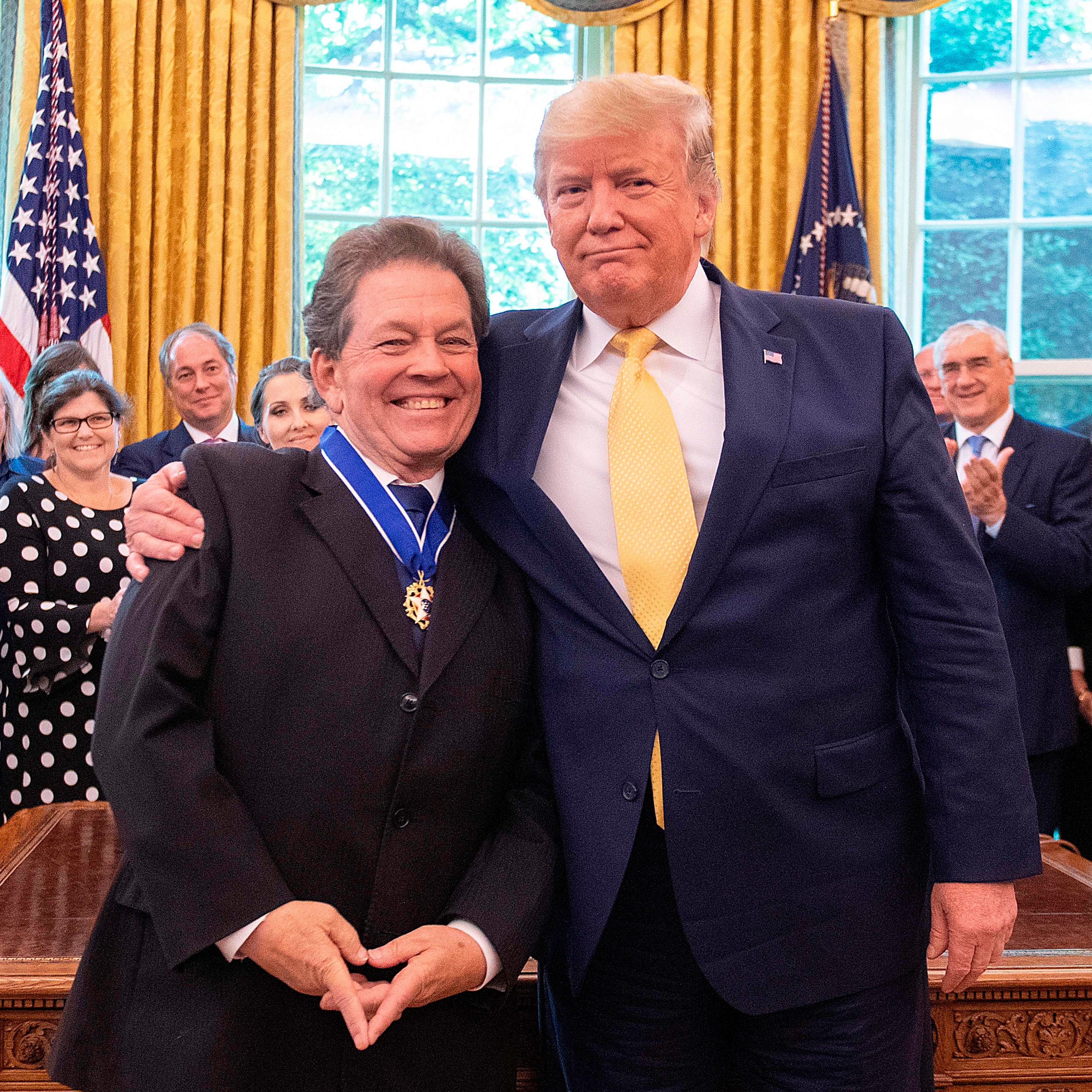
Even the most innumerate among us has heard of the Laffer curve, a theory popularised by US economist and presidential advisor Arthur Laffer. It spells it out how, beyond a particular threshold, increasing taxes actually brings down revenue.
Camilla and Tim are joined by the legendary economist – who has worked with Presidents Trump and Reagan and was a friend of Margaret Thatcher – to discuss the upcoming Budget, Trump's tariffs, and whether Nigel Farage has a coherent economic plan.
Laffer also weighs in on Liz Truss, who he says was "thinking in the right direction" with her mini-Budget, and explains why a wealth tax would be a "huge mistake".
We want to hear from you! Email us at [email protected] or find @dailytpodcast on TikTok, Instagram and X
► Sign up to our most popular newsletter, From the Editor. Look forward to receiving free-thinking comment and the day's biggest stories, every morning. telegraph.co.uk/fromtheeditor
Producer: Lilian Fawcett
Senior Producer: John Cadigan
Video Producer: Will Walters
Studio Operator: Meghan Searle
Executive Producer: Charlotte Seligman
Social Producer: Nada Aggour
Editor: Camilla Tominey
Hosted on Acast. See acast.com/privacy for more information.


