Ask ChatGPT


 The Daily T
6 Nov 2026 · 26m · 12 chapters
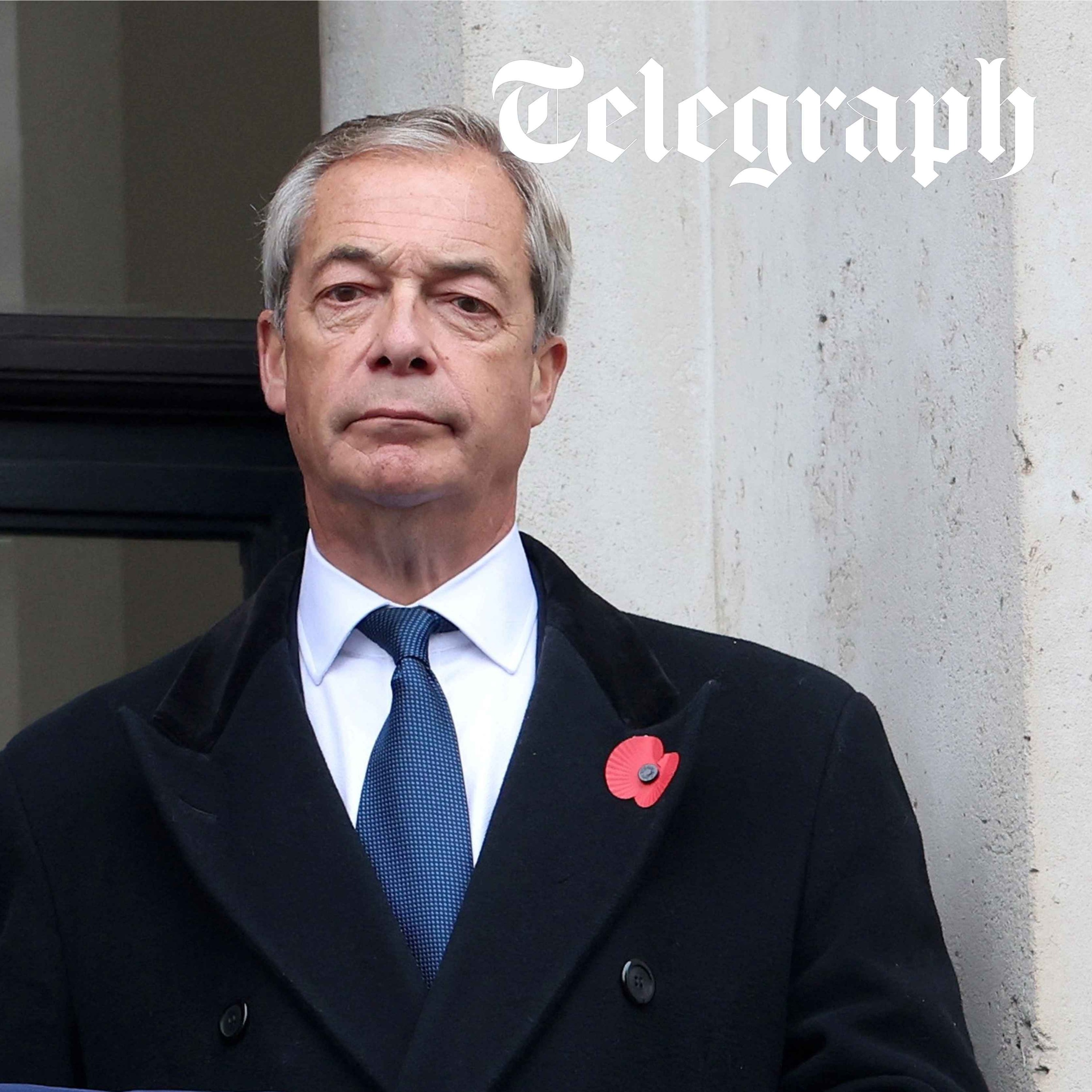
Nigel Farage’s Remembrance Sunday special on why Britain must keep remembering war sacrifices, with discussion of military history, patriotism, education, and modern geopolitics.
Nigel Farage (Reform UK leader; lifelong interest in military history; grew up near Biggin Hill; WWI/WWII memorial visits; cites family service including his grandfather Harry, wounded in WWI). Host: Camilla Tomini. Other named voices: Tim Stanley (mentioned), Andrew Roberts and Jean-Claude Juncker (discussed), plus “a friend” Ron (Lancaster pilot) and a constituent Jim (30 Lancaster missions).
remembrance is increasingly vital as living memory fades; some modern narratives delegitimize WWII/WWI; NATO and US alliance are essential; EU sovereignty transfer undermines democracy.
Bomber Command memorial (55,000 died; 125,000 served; 3% kill odds per raid); Harry Patch’s silence; Cenotaph 2008 wreath-laying by last WWI veterans; Australian memorial at High Park Corner (built 2003, names 24,000 places); Oxford Union 1933 debate; Dunkirk/“no deals” Churchill; Weimar democracy’s collapse.
Written by AI. May contain mistakes.
Nigel Farage reflects on the sacrifices made during wartime.
“In 2010, newlyweds Debbie Cooper and Jamie Starbuck set off on a round-the-world honeymoon.”
Discussion about the Bomber Command memorial and its significance.
“Nigel, we're here at the Memorial for Bomber Command.”
Farage shares his childhood experiences related to military history.
“I was piloting Lancaster until the seventh mission and we got shot down.”
Farage discusses his early visits to the Western Front and their impact.
“just tell us the emotions that went through you because it's a unique experience that you've repeated often.”
Exploration of how trauma affects veterans and their reintegration into society.
“If you've been a POW in either war for four or five years, and you've left at 18, you've come home to mum, and you've changed completely, you can't adjust back.”
Farage discusses his journey in discovering his grandfather's military past.
“is when I first went in the mid-'80s on those trips, you'd get to Tyne Cot, near Britain's biggest military cemetery in the world.”
Discussion on the changing perceptions of wars and their historical impact.
“It was the Balfour Declaration in 1917, you know, to commit to Jewish people having a home state of their own, partly to get America to join the war, I think.”
Learn about the significant contributions from overseas during the world wars.
“So I was brought up to believe that a great sacrifice had been made, that whilst it was desperately awful and sad, that it had to be done.”
Explore the significance of memorials and the lessons from both world wars.
“Nigel, why did you want to take us to this memorial in particular?”
Discuss the role of alliances in World War I and their implications today.
“Do we have to assume it's a possibility?”
Examine Winston Churchill's leadership and its relevance to current conflicts.
“but the whole of Europe has fallen and defeat looks to be inevitable.”
Hear personal insights on the importance of remembrance and honoring veterans.
“Because there was a bit of a row about this and there's a 1984 protocol which dictates that you need to have a certain number of MPs and whatever.”

Get the gist, explore an idea or ask about something said.
 Claude
On The Daily T, what are the key points of this episode?
Searching your listeningAutomatic transcript. May contain errors.
0:03The Telegraph.
0:09Pessimism. It's never going to improve a disconnected healthcare system. Next. So what will? At Optum, we're working every day to connect primary, specialty, and pharmacy care, and help lower prescription costs. Will we fix it all overnight? No. But we'll wake up trying again and again until healthcare works as one for everyone. That's healthy optimism. Learn more at Optum.com. Optum. In 2010, newlyweds Debbie Cooper and Jamie Starbuck set off on a round-the-world honeymoon. But something wasn't right. We kind of started to scrutinize things a lot more. What exactly is going on here? Debbie was missing.
0:53We just looked at each other and said, so what's the next step? And it's like, police. He was a lovely little boy, but something happened to him to turn him into a monster. There's nothing off her, he just erased her. Missing Debbie, a new Bed of Lies podcast from The Telegraph, out now.
1:20On Remembrance Sunday, we are here with Reform leader Nigel Farage to remember the sacrifices made by the few for the many. We reflect upon the history, the suffering, the glory, and ask, what is the state of patriotism today in modern Britain? Welcome to The Daily Tea with me, Camilla Tomini. Meet Tim Stanley. I mean, Nigel Farage. And Roberts recounts that every single man in the room had served on the Western Front. Every single man in the room had seen horror, had seen death on an enormous scale, so understood what Churchill was saying when he said, there will be no deals, we will fight to the end, even if we have to die, choking in our own blood.
2:03Wow. Here on the Daily Tea, we wanted to commemorate remembrance, And who better to do that with than Nigel Farage, who is a huge fan of military history. Nigel, we're here at the Memorial for Bomber Command. About 55 ,000 people died in Bomber Command during World War II. And people who are listening, I shall describe it, here is a seven-man crew of the Lancaster Bomber. It's a really stunning memorial. It's one of my favourite ones in London. When you see something like this, what's the first thing you think of? Well, I think of all the people every day that go past in their cars, in the back of cabs, in buses, and they pass by amazing memorials like this and don't even know they're there.
2:44So the first thing I think is, I'm delighted this finally got built. But are we actually remembering what people did? You mentioned Bomber Command. 125 ,000 men served in Bomber Command as aircrew. Now, many of those were right at the end of the war. If you join bomber command early, there was a 3 % chance on every single raid that you get killed. So after 30 missions, you'd be given the option of a ground job. Many refused. So you're right. 56 ,000 killed, 20 ,000 taken prisoner. And they were living in Lincolnshire, in Yorkshire, in pretty grim conditions. Yeah. Very, very long flights. I mean, you can't even imagine the horror, the terror, the sheer raw courage.
3:29These are very young men. Young men. I had a friend of mine. I knew him. I knew Ron very well. He said, I was 18. I was piloting Lancaster until the seventh mission and we got shot down. So, you know, it was your odds of getting through this without being killed or taken prisoner were actually quite low. Take us back in time a bit, Nigel, to a young Nigel growing up in the shadow of Biggin Hill. When were you first interested in military history? Because your grandfather, Harry, of course, served. Yeah, he was wounded in World War I. So there's obviously a bit of family interest there. But yeah, I literally grew up next to Biggin Hill.
4:05And there were air shows every year. But as kids, I'm talking sort of into the early 70s, we'd be out foraging in woods and we'd find bits of old German bombers. And I did actually, I think I was about seven, I bought home an incendiary bomb one day that hadn't gone off. Mum and Dad are pleased about that one. I don't know. I mean, she sort of lost her sense of humour over that one a little bit. So I was always interested. And then, you know, I started to meet people who'd flown in the Battle of Britain, both British and German, funnily enough, at these big reunions they had at Bigger Hill. But what really sparked my interest more than anything was the Daily Telegraph.
4:47Really? Tell us more. So I remember sort of mid 1980s, sitting in a trading room in the city. And we had busy days, or we had quiet days. And we would always look at the obituaries in the telegraph. And you'd see sort of Fred Hill, aged 94, has just died. He held a pillbox on his own for eight days somewhere near Epe. And three or four of us got talking. And one of them said, well, have you ever visited the battlefields? I said, no. So four of us, in 1986, went off to France, started visiting the Western Front. and that was where my real enthusiasm for visiting, for showing people around, for reading, for collecting, that was where it really started.
5:26When you first went to the Western Front, just tell us the emotions that went through you because it's a unique experience that you've repeated often. Some people have never gone. Well, I went, I mean, when I went, of course, when the first trip I went on, there was a chap there with us who'd been at Vimy Ridge in the Canadian Army and one of the reasons I did so much of it in the late 80s, early 90s, is I wanted to meet the last Victorians who'd served in the conflict before they finally passed away. So that was a very intense period for me. And since then, I mean, for example, the other week, I took a party the other week, and there were two people, aged about 30, travelling with us, who only during the course of the few days they were there, having spoken to home, realised that they had people that were killed in world, you know, great, great uncles and things like that.
6:17So it's very easy for families to find a connection of some kind to it. And generally, I find people are fascinated by it. I think what's interesting about World War I and World War II is they're predominantly fought by civilians. You know, previously, we had a very small army, historically, the Navy, of course, you joined up, you were in it for 20 years, whatever it was. But suddenly, you've got people who, you know, are driving bin lorries or stockbrokers, and they're in uniform, and they're fighting in wars. And the First World War is the first time that really happens to us and other European countries.
6:48So yeah, I'm fascinated by all of it. But particularly, the question of luck and fate. Why did some people survive, others didn't? I mean, it was said for many, many years that God died on the Somme. But the people started to question, was there really a God? Could he allow these awful things to happen? But I think we can, And we ought to look back at this period as one of obviously sadness and loss, but also incredible achievement. On the one hand, I'm struck by the courage and danger of the fighting. I'm also impressed by the ability to return home and build a life. And the people who you spoke to, how did they do that?
7:29How did they cope with that trauma? In many cases, very badly, particularly people who've been POWs. If you've been a POW in either war for four or five years, and you've left at 18, you've come home to mum, and you've changed completely, you can't adjust back. I think it was very, very difficult. And I can remember, I mean, bear in mind, when I was born, there were still First War veterans who were still driving trains, buses. They hadn't even reached retirement age. So I remember as a kid, you'd be told, some chap, well, just be a bit careful. He's a bit, because of the war. Now, we'd now call it PCSD.
8:04But there were vast numbers of people from both wars, physically but mentally, very, very badly affected. But kind of life was different and people just got on with it. On that level, what do you remember of your own grandfather then? What was Harry like and what did he tell you? Really, to be honest, not very much. It was sort of like, we don't discuss that here. And it's kind of like it's buried, it's not talked about. It's why the British Legion sprung up in the early 20s. Hundreds of Legion clubs. That was where men could go, have a beer, share their experiences with each other. There was very interesting, Harry Patch, who was the last surviving soldier from any of the armies in World War I, it lived to 111.
8:48Harry said that he was married for over 70 years and never once spoke to his wife about his experiences in the Western Front, where he was very badly wounded. And he said when he was 100, he turned 100, And he saw a flash of light come in through dawn. And it reminded him of a shell that blew him up. And he thought, well, maybe I'll start talking about this because there aren't many of us. So I think my family was very typical that you just don't discuss that sort of thing. And certainly not in front of the children. And how did you go about finding out what happened to him? So my own father, who only retired four years ago as president of his Territorial Army Regiment, despite all his years and my uncle who'd been a professional soldier as well they knew nothing about it at all and so in 1990 I went to the public records office in Kew and went for the diaries the battalion records and started to discover the story now of course you just go online online yeah it's unbelievable I mean you want to try and trace an ancestor you know soldiers died and it's all there.
9:55And you can piece it together incredibly quickly. So it's very much more accessible. The other thing that's really interesting is when I first went in the mid-'80s on those trips, you'd get to Tyne Cot, near Britain's biggest military cemetery in the world. And there was a parking bay for six cars. There's now a coach park. There's now a coach park. When I was at Vimy Ridge, which is only 50 minutes from Calais, and the Canadian government have people that run the place full-time, I said to the lady there, I said, gosh, this is busy. Oh, no, she said, it's a normal day. She said, we get over three quarters of a million visitors every year.
10:31So now vast numbers go and visit places like that, the Normandy beaches. Schools, of course, do a lot of trips. And I just hope we keep on doing it. But is there a danger? And of course, this has often been said, particularly in recent years. You were lucky enough to be at the Cenotaph, I believe, in 2008, to see the last three World War I veterans lay a wreath. obviously veterans are dying and there's a concern that we cannot have that first-hand testimony when I remember speaking to my grandfather who was in the Royal Navy about his wartime experience and indeed my grandmother you know she has her first child before the war and my mother is born she's called Lynn because they named my grandmother was called Vera so they're called Lynn Lynn after the force's sweetheart slang for gin I mean is slang for gin as well that actually turned out to be quite appropriate, Tim, thank you.
11:20But the point is, we're the last generation, really, the Generation Xs that have a direct contact with a relative that might have served. You're right, and one of my constituents died last year, Jim, who did 30 missions as Taylor and Charlie on Lancasters. And yeah, you're right. Look, I think, do you know what's changed? That the human stories, and again, I'm back to the internet. I'm back to the internet. Actually, you can see interviews with these people It kind of brings it to life in a way that it wouldn't have done 20 or 30 years ago. But my sort of other worry with this is there are people who protest on the streets of London and appear to have a growing influence in terms of what kids get taught at school about our history who fundamentally object to Britain's role in World War I because of the Balfour Declaration.
12:14Yes. It was the Balfour Declaration in 1917, you know, to commit to Jewish people having a home state of their own, partly to get America to join the war, I think. But so there is now a narrative that kind of everything we did was bad and was wrong. And that goes not just for World War I and World War II, but in fact, for the entirety of history. And some now have even quite intelligent American conservative commentators questioning whether we should have fought against Hitler at all. Are you talking about Tucker Carlson, Nigel Farage? Someone that I've always regarded as a friend that I know well, I'm just astonished.
12:52What's going on there? Because there are some sections of the right who are literally saying, oh, well, maybe Hitler had a point. Oh, yeah, yeah, yeah. I mean, it's, you know, we know about the extreme left, but I'm also worried about the far right in our country and in America as well. So that's why, as an even more important, pertinent, modern reason why, remembering this, remembering what those that went before us did so that we could enjoy liberty and free speech becomes, I think, in some ways more important than ever. I think some on the right want to delegitimize the wars because they don't approve of the things that came after them, including Israel.
13:30So they want to suggest the whole thing was a horrible error or even Churchill was guilty of it. And one of the hurtful things about what Tucker Carlson has said is it forgets the sacred nature of military sacrifice. Of course, there's always a reasonable debate about what did we do and why we had that after the war. Churchill lost the election. But there is a sense of you've got to show respect for what people have given up in this cause. Well, I was certainly brought up to have deep respect for what had gone before. I mean, at school, 850 boys from my school died in the wars. It's about five entire years.
14:05So I was brought up to believe that a great sacrifice had been made, that whilst it was desperately awful and sad, that it had to be done. And not just for us, but actually for the freedom of the whole of Europe as well. The world. Behind us are wreaths of poppies that have been delivered here from New Zealand, from Belgium, the Czech Republic. It was a global effort. It wasn't just us. Well, it was. And we also should remember, and this is important in terms of integration and people feeling part of this country, you should also remember that 40 % of all our effort, human effort in the two wars, 40 % came from overseas.
14:4240 % came from well the Empire straight Commonwealth other allies I mean Portugal for example said two divisions in World War one to the Western Front 40 % of our overseas effort came from the old Empire and none of them were conscripted none of them were conscripted they all wanted to do it so if you go for example you go to weep in Belgium or wipers as the British with our skill for foreign languages. I know, I know. Yeah, well, absolutely. But if you go there, you know, you can see where Sikhs fought. You can see where various Indian regiments fought. You can see where Muslim soldiers fought and died as well.
15:20And again, I think that story is perhaps quite an important one that needs to be told. Are you satisfied that both world wars are being adequately taught in British schools? No, I'm not really. And I think actually, do you know what we really ought to do? Go back to 1900. Because 1900, the Times newspaper writes, that now that we're in a new century, a man is so much better than he's ever been before, we'll live in a world that's been peaceful and better than it was. And then, of course, we get the First World War. And that's the pivot of the old world of a new four great empires fall. Communism arrives in Russia.
15:57National Socialism. Hitler, basically, with Field Marshal Ludendorff by his side, leads a political party of those that have served and felt betrayed by politicians over the armistice, over the Treaty of Versailles. Women go to work. Women get the vote. The welfare state begins. So I think actually the war is a very useful way of looking at everything that's happened in our country. And very interestingly, of course, we come out of World War II with a debt-GDP ratio of 256%. And by the late 1960s, we've paid nearly all of it off. Could be some lessons there for today as well.
16:48In 2010, newlyweds Debbie Cooper and Jamie Starbuck set off on a round-the-world honeymoon. But something wasn't right. We kind of started to scrutinise things a lot more. What exactly is going on here? Debbie was missing. We just looked at each other and said, so what's the next step? And it's like, police. He was a lovely little boy, but something happened to him to turn him into a monster. There's nothing off her. He just erased her. Missing Debbie, a new Bed of Lies podcast from The Telegraph. Out now. This message is brought to you by today's sponsor, Walden University. Set a course for change.
17:24Now is the time to make a real change in your life, career and community. At Walden University, we give you the support and flexibility to get the W. Walden's online programs are designed for working professionals like you. You'll gain hands-on skills to take on real-world challenges and succeed. Your future is waiting and Walden is here to help you achieve it. Take the first step to make your impact. Visit waldenu.edu. Walden University. Set a course for change. Certified to operate by Shev.
18:02Nigel, why did you want to take us to this memorial in particular? Well it's High Park Corner, the traffic's whizzing around. I don't think anyone knows this is here. It was remarkable, massive, massive contribution by the Australians in both wars. Particularly in World War I, the Australians were seen to have been the most effective part of our army. Whether that's because they were fitter and stronger. Probably. And there may have been some of that to it, you know, or perhaps they had generals that learned a little bit more quickly. But it was remarkable that at the turn of the century, there was no Australian memorial in London to their contribution.
18:39And so this got built. It was opened in 2003 for the Queen. Tony Blair was here. I was here in the crowd. John Howard, who was the Australian prime minister, was here. Big thousands of Australians gathered for the opening. and it marks the over 100 ,000 soldiers, sailors and airmen from Australia that were killed in the wars. But rather beautifully what it does is it names the 24 ,000 places across the whole of Australia where they all came from, plus the 40 big battle honours to which they're entitled. I just think it's a very special memorial, but also it's a very modern memorial. You know, you were asking me, as these things slip from the edge of living memory, will we forget to do these things?
19:29Somehow, I don't think so. Yeah, we can still do beautiful when we try. Yes, we'd perhaps try more again. Of course, in Australia, the war is not without its controversies. One thinks of the horrors of mistakes made at Gallipoli, for instance. And there are some, I suppose, if Tucker Carlson were here today, he might say that he regards these conflicts as a mistake to be avoided. what is the best way to avoid that kind of mistake now well i mean there is this idea that we oh you know the germans are wonderful people very peaceable just the nazis that corrupted them for a few years well i'm really sorry but you know bismarck bismarck unites germany the first thing he does is invade across into alsace lorraine uh you know the germans come back in 1914 and please don't think the Germans under Kaiser Wilhelm were a benign lot.
20:20They were intent on total domination of Europe. And interestingly, the Kaiser had views on Jewish people, for example, not dissimilar. That's true. Yes. Not dissimilar, forgotten completely. So we enter World War I as a matter of duty, as an obligation. We're allies of France. We're protecting Belgium. But look, if we hadn't got involved, Europe would have been a very different place. And ultimately, that would have threatened us. So I think there were justifiable reasons for both wars. But that alliance system, it became a tripwire, is the argument. And how do we, in the modern world, avoid that?
21:01Because we don't... Ukraine, yes, but we don't want a direct confrontation with Russia. Or do we have to prepare for it? Do we have to assume it's a possibility? Let's face a really brutal truth. the tripwire, as you describe it, of alliances that got us into World War I, helped other countries a lot more than it helped us. We did pay a very big price. The system of alliances we have today, let me tell you something. If we don't have an alliance with the United States of America through NATO, we are literally defenseless. And I mean, we can even look today at the front page of a telegraph talking about Russian so-called trawlers, looking at all our interconnectors under the ocean.
21:47I think we're woefully, woefully ill-prepared. So today for us, that alliance with America is everything. If you are of the belief that part of the reason the European Union was formed was as a result of the Second World War, do you think Sir Winston Churchill would have been a Remainer or a Brexiteer? So I discussed this with Jean-Claude Juncker at length. The Dan Bragg? Well, yeah, no, no, that was... That was somebody else, sorry. Herman Van Rompuy, or Rumpy Pumpy, as we called him. Juncker was the one you used to have a few bevies with on occasion. Well, Juncker was the one that made me feel like a Methodist, you know.
22:27But Juncker was a real high priest believer in the United States of Europe. And we discussed it. He said, look, my dad was 19, working in a steel factory in Luxembourg. The Wehrmacht come, say you're a Germanic person, conscript him in the army, send him to the Eastern Front, where he got bandy-wounded. And yes, the Germans invaded across the Rhine three times in 70 years. So the European Union is put together to stop the Germans ever doing it again. But what they actually did was they put forward a solution to a problem that was already over. I don't believe German tanks were coming post-1945 at all, in any way.
23:09And here's the mistake they made. Yes, of course, if people trade with each other, cooperate with each other, visit each other's countries, they tend to have very, very good relations and a peaceful coexistence. But rather than, by stealth, taking the independence, sovereignty and democracy of nations away from them and handing it up to people that you can't vote for and can't remove, by doing that, you're more likely to create division, terrorism, whatever it may be. When we talk about peace, you know, and the European Union was designed as a project of peace, what we forget is this. There's not a single example, not a single example, of two mature, functioning democracies going to war with each other.
23:56And what we should have done, really, is to robustly fight for democracy to stay strong, within European nation states. And it was really the fall of democracy in the Weimar Republic, if you think about it, that led to World War II. Is Churchill a hero of yours, or are there other military leaders that you admire more? Oh, no, Churchill is absolutely, I mean, just the most remarkable man. And I mean, I think, you know, Andrew Roberts in his book describes a scene where, just after Dunkirk, when we might have got the men back, but all the kits in France, the whole of, apart from the Greeks who held out, but the whole of Europe has fallen and defeat looks to be inevitable.
24:34You know, and Halifax is urging that we do a deal with Hitler. And Roberts recounts that every single man in the room had served on the Western Front. Every single man in the room had seen horror, had seen death on an enormous scale. So understood what Churchill was saying when he said there will be no deals. we will fight to the end even if we have to die choking in our own blood wow that's what churchill said the cabinet gave him a standing ovation and a rational prime minister would have done a deal not a deal that would have lasted in my opinion but would have done a deal So for sheer outright courage, belief, doing something against the odds have been quite remarkable.
25:25If we're in that kind of conflict today, do you think young British people now would sign up in the way they did in the First World War? I don't think you'd quite get the August 1940 rush in quite the same way. But I think it's interesting, isn't it? In 1933, the Oxford Union will not fight for king and country. That motion gets passed. There's outrage. But it's very interesting. The study was done of all the Oxford students that took part in that debate. They all served. They all served. They all served. So I think the answer is, if people believe that war is justified, that their homes, their families, that everything's under threat, I think they would.
26:10It's part of the issue that people identify their country with the state or they're encouraged to, when in reality they're two different things. You wouldn't be fighting for Andy Burnham. You'd be fighting for your home. Yes, because you see the nation state as an extension of your family. Yes. It's what you belong to, almost regardless of who the prime minister is, the president is, or whatever it may be. But of course, in our case, the monarch plays a very, very pivotal role. You know, the king and country. Yeah. We're not going to make this party political, but I did want to ask you how important it is to you to represent Reform UK at the Cenotaph.
26:49Because there was a bit of a row about this and there's a 1984 protocol which dictates that you need to have a certain number of MPs and whatever. You made the argument and won the argument that actually you should be there. Clearly you commemorate Remembrance Sunday every year anyway, but to be at that official ceremony. Yeah, no, I'll be very pleased to be there. I'll be very honoured to be there. And that'll be important. Although somehow last year was even more important because in Walton, in Walton-on-Sea, the year before, the Remembrance Day parade was cancelled through lack of insurance.
27:23Yes. And I worked with a local parish council and I had the honour to lead the parade of 1 ,000 people to the Walton War Memorial last year with a 99-year-old Royal Scott veteran to lay reed. So I'll be thrilled to be at the Sellotarf and do that. Of course I will. honored to do that. But I'll also be thinking about these commemorations taking place in thousands of villages all over the country.
28:05Outdated technology isn't going to improve a disconnected healthcare system. So what will? At Optum, we wake up every day and work for better. We call it healthy optimism. It's how we use insights and technology to help providers focus less on paperwork and more on patients. Will we fix it all overnight? No. But we'll wake up trying again and again until healthcare works as one for everyone. That's healthy optimism. Learn more at Optum.com.
In Friday’s episode of The Daily T, Camilla Tominey and Tim Stanley are joined by Nigel Farage as they visit London’s Royal Parks’ war memorials to remember the fallen before Remembrance Day.
At the Bomber Command memorial in Green Park, the Reform UK leader tells Camilla and Tim about his paternal grandfather, Harry, and how he learnt of his First World War service records through archives at Kew. He discusses the trauma experienced by veterans and the difficulties they face readjusting to civilian life after serving in conflict.
Farage also discusses his commitment to the Armed Forces and stresses the importance of teaching the full history of both world wars, including Britain’s role in the conflicts, as part of the national curriculum.
Visiting the Australian War Memorial in Hyde Park, the party leader reflects on his efforts to secure Reform UK representation at the Cenotaph, and praises Winston Churchill’s courageous wartime leadership.
The Telegraph is the Publisher Podcast Awards' Podcast Publisher of the Year 2026
► Get more exclusive Daily T content from The Daily T+ membership! Join here.
► We want to hear from you! Email us at [email protected] or find @dailytpodcast on TikTok, Instagram and X
► Sign up to our most popular newsletter, From the Editor. Look forward to receiving free-thinking comment and the day's biggest stories, every morning. telegraph.co.uk/fromtheeditor
Producer: David Levene
Senior Producer: Emma Williams
Studio Operator: Meghan Searle
Video & Social Producer: Nada Aggour
Executive Producer: Charlotte Seligman
Editor: Camilla Tominey
Highlights:
Hosted on Acast. See acast.com/privacy for more information.