
 Ask ChatGPT


 The Daily T
24 Jun 2025 · 44m · 17 chapters
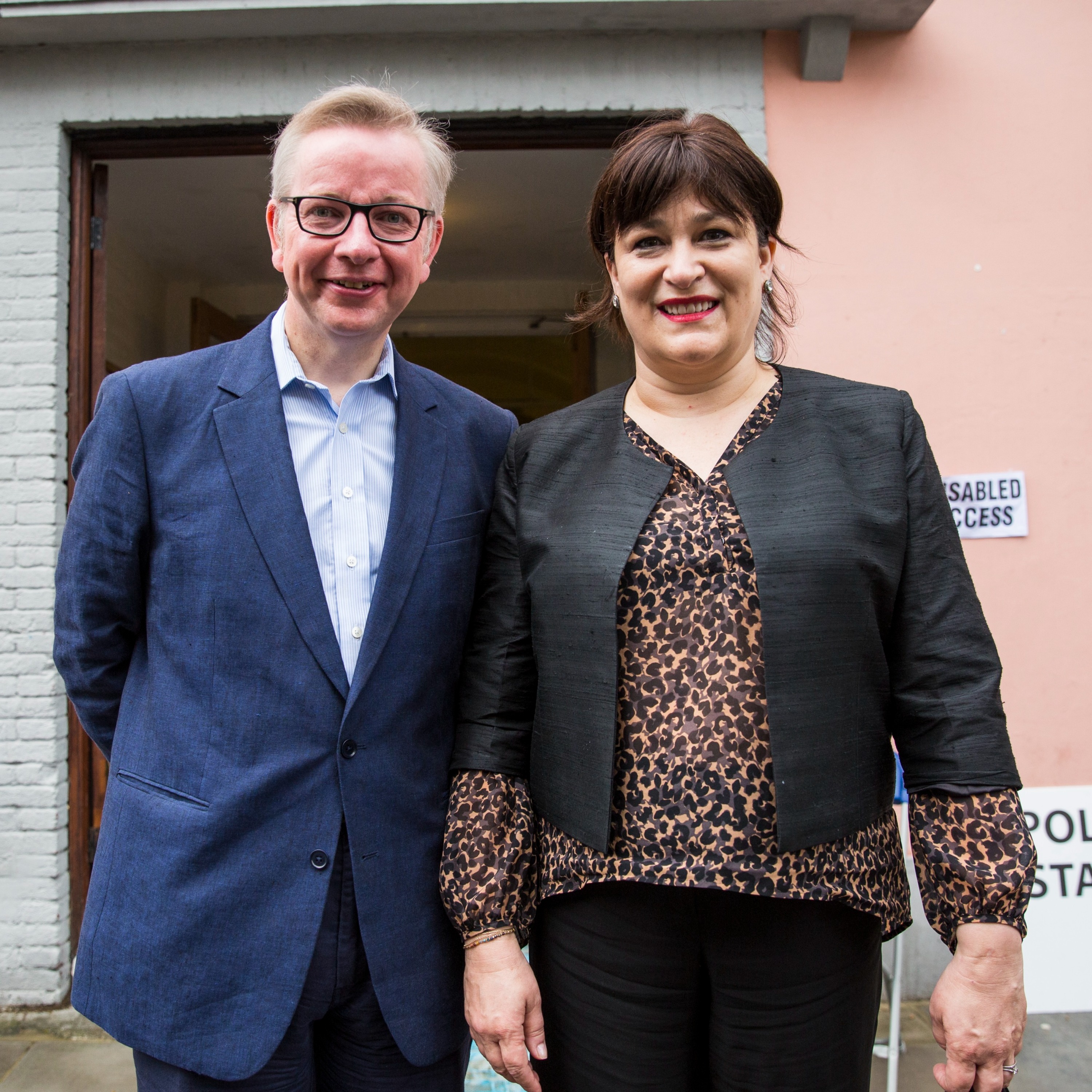
Sarah Vine, Michael Gove’s ex-wife and a journalist, discusses her memoir How Not to Be a Political Wife, focusing on the breakdown of her friendships with David and Samantha Cameron and the wider Tory turmoil around Brexit—especially Gove’s demotion in 2014, his Brexit stance, and the leadership chaos after the 2016 referendum.
Sarah Vine is a political journalist and columnist (Telegraph/Daily Mail mentioned in the episode). She was close to the Cameron and Gove circles during the 2010s and later divorced Gove, attributing the split partly to communication breakdown.
Cameron’s “man-baby” resignation after the Brexit vote worsened chaos; the “blob” of Whitehall/machinery muted reform ideas; Gove was cut off “at the legs” after being demoted; Cummings is brilliant with data but undiplomatic and poor at human realities; Gove’s Brexit decision was partly personal retaliation and belief.
Feldman party incident where Cameron told Vine to “get your husband under control”; Jeremy Clarkson mistaking her for staff; Vote Leave press conference with Cameron and Gove “rabbits in headlights”; Vine’s account that she helped draft an email urging Gove not to back Boris Johnson as PM.
Written by AI. May contain mistakes.
Camilla Tominy introduces Sarah Vine and her book.
“Visit telegraph.co.uk slash newsletters today.”
Sarah explains her candid approach to writing a political memoir.
“I have the book in my hands, How Not to Be a Political Wife, with a picture of a woman just lying face down.”
Discussion on the change in relationships as Cameron comes to power.
“2010's a turning point because the Tories enter into coalition and suddenly opposition becomes actual positions of power with David Cameron at the helm.”
Exploring the class divide and perceptions in political relationships.
“and then they basically just cut you off of the legs, that is quite annoying.”
Analysis of Michael Gove's motives during the Brexit campaign.
“This idea that you are in a fairly modest house in London, that they, I mean, Samantha Cameron sort of descended from a degree of aristocracy.”
Explore the dynamics of loyalty and betrayal in politics, focusing on Gove's perspective.
“that, you know, I really stuck my neck out.”
Analyze the role of Dominic Cummings in British politics and his impact on leaders.
“Oh, I'm glad you've spotted that killer line.”
Discuss the implications of David Cameron's resignation and the subsequent political chaos.
“I love Nadine and she's a very good columnist and we actually have a very good relationship.”
Explore the reasons behind Michael Gove's decision to oppose Boris Johnson's leadership.
“Boris is a big character with great abilities and I enjoyed working with him during the referendum campaign when he campaigned with great energy and enthusiasm.”
Discuss the contrasting roles of Boris Johnson and Michael Gove in politics.
“Well, I had no role in that decision that he made.”
Analyze Boris Johnson's leadership during his time as Prime Minister.
“He didn't need to be supporting Boris as the all-encompassing Thatcher, who is not only the showman, but also across all the detail.”
Evaluate Boris Johnson's handling of the COVID-19 pandemic.
“when Michael was working for him, they worked very well together then.”
Reflect on key decisions that impacted the Conservative Party's trajectory.
“But what's interesting, just to go back to that pivotal moment where Michael decides to suggest he wouldn't make a good prime minister back in 2016.”
Delve into Sarah Vine's memoir discussing her childhood and personal challenges.
“Listen daily, wherever you get your podcasts.”
Examine the psychological effects of hair loss on women's identity.
“I'm on your side, basically, and not to try and crush them.”
Explore how childhood challenges shaped resilience and career success.
“I mean, now I just wear a sort of hairpiece and that's fine.”
Discussing the evolution of Sarah Vine's friendship with Michael Gove post-divorce.
“And like your writing's never been more sort of prolific and well received.”

Get the gist, explore an idea or ask about something said.
 Claude
On The Daily T, what are the key points of this episode?
Searching your listeningAutomatic transcript. May contain errors.
0:02The Telegraph.
0:30Visit telegraph.co.uk slash newsletters today.
0:40Camilla: Why did David Cameron scream the words, for F's sake, get your husband under control after Brexit? What made Michael Gove knife his friend and ally Boris Johnson in the back after the referendum result? And which Prime Minister was the biggest man-baby of them all? In this special edition of The Daily Tea, Michael Gove's ex-wife Sarah Vine, the journalist who had a front row seat for one of the most tumultuous periods of modern British political history, reveals all. Welcome to The Daily Tea with me, Camilla Tominy.
1:23Camilla: Sarah Vine, welcome. Hello. I have the book in my hands, How Not to Be a Political Wife, with a picture of a woman just lying face down. Just face-planting. It is a really good book. And I was just telling you earlier how I was in a party with some Tory wives and all they were talking about was this. And it's been out, you've had it serialised in your own paper. It's very naughty. The Daily Mail. It is a little naughty, but look, it's candid. Why write a book unless you're actually... Well, I just think why do a memoir unless you're going to be honest? There's no point. Because lots of people do write memoirs and then they're not honest and then they're just really boring.
1:53This is not boring. And what's the reaction been like so far? Actually, funnily enough, a surprise. I mean, Simon Heffer on your own dear organ. Yes. It was awfully cross. It seemed very cross that a woman had written a book. How dare she? About things that really are to do with men. Yes. Which made me laugh. I'm very fond of Simon Heffer, but he was very confused by it because it has emotions.
2:14Camilla: It does have emotions. And feelings. And it's messy. And it's, you know, it's sort of self-confessional and all of those things which maybe are not, you know, what you would necessarily expect from a political memoir because mostly political memoirs are all about how, you know, if everyone had just done what I said, everything would have been fine. In fact, this is about how all the mistakes that I made and the things that I got wrong and all the misunderstandings. And I just wanted to sort of, what I wanted to do was to give people a sense of the people behind the politics because, you know, they often get erased and politicians do front, They tend to pretend that everything is, you know, super and fine, and it's never super and fine.
2:53So I thought, you know, it's a soap opera, really.
2:55Camilla: Also, I admire your courage and bravery of returning to this newsroom. We once did describe you as Lady Macbeth in copy. Yes, you did. We'll get onto that in just a moment, but that's very good of you, just because you've mentioned my esteemed colleague, Simon Heffer. I don't think he was the one who described you. No, he was not the one who did it. It was in an analysis in the Brexit years, but we'll get onto that in a minute. Right. So, look, I think you paint a picture of before 2010. I think 2010 is this turning point. You're sort of leading this life in opposition. You're very close to the Camerons and the Osbournes.
3:25Camilla: It does seem quite glossy, actually. It was fun. It was fantastic. It was sort of, you know, happy days, as they say. You know, it was great. We were just like mates doing what mates do, having babies, being friends, going on a holiday together, chatting, eating, drinking, laughing, just being like anybody, like normal mates. And then politics. Politics gets in the way, doesn't it? And I think there are kind of three dates which are significant in this and then you can talk me through what you reveal about the breakdown in your relationship with the Camerons. 2010's a turning point because the Tories enter into coalition and suddenly opposition becomes actual positions of power with David Cameron at the helm.
4:04Camilla: You join the Daily Mail. And I know what that's like. Suddenly a friend becomes the enemy and people do treat you differently if you're a journalist. not least if you're on a very high profile publication, that God, shock horror might be critical of what the government is doing. And another key moment we'll get on to is 2014 when Michael is demoted by David Cameron from Education Secretary to Chief Whip. Just talk us through the period of the kind of slow disintegration of the relationship before Brexit. it, but when it comes to David Cameron assuming power and how that changes the dynamic of their relationship with you, because people will be intrigued.
4:44Camilla: What does happen if you're close mates with somebody who suddenly becomes prime minister? Yes. So the machine takes over, you know, the sort of Whitehall machine takes over. And it was very interesting because it wasn't just me. It wasn't just us. I mean, the other person that it really happened to was Steve Hilton. Do you remember Steve Hilton, who is now running to be governor of California? And, And, you know, Steve was really important for David Cameron in opposition because Steve was sort of, in a way, his kind of Dominic Cummings, if you know what I mean. Ideas man, very clever, very bold.
5:19We always wrote up that he wore shorts and baseball caps and things like
5:22Camilla: often these maverick advisors do. He didn't have the best dress sense, but, I mean, we shouldn't hold that against him. But, you know, Steve was full of fizzing, fizzing with ideas. And as soon as Dave got into power and into number 10, then the sort of mandarins begin to circle. And someone like Steve, who, again, like Cummings, outspoken, doesn't suffer fools gladly, isn't very diplomatic, doesn't really know how to sort of play the game, gets pushed out because they're annoying and inconvenient. And so that's, you know, and prime ministers have this, which is that they go in and they have genuine friends who love them and who want them to succeed and who understand that they have this desire to change stuff.
6:03And then, I mean, Dominic calls it the blob. And to an extent he's right, the blob sort of activates and makes sure that anyone like that is pushed out of range because the last thing they want is, you know, the prime minister having ideas. I mean, this is a bit, I mean, you know, the old TV show, which was, you know, Yes Minister, is pretty accurate actually in a way. And it's worth, I mean, I know it's a sitcom and I know it's sort of funny and it's art and all those things, But there are real elements of reality in that. It's just, you know, everything becomes about compromise and doing things in a certain way and diplomacy.
6:42And so the sort of, you know, if you've got a sort of if you've got an agenda or if you've got a bit of a reforming zeal, that all gets muted and dampened down. And that's what happened with Michael. So, you know, Michael went into education, having been in opposition with Dominic Cummings, putting together a programme of reform for schools in Britain, went into government, started off doing his programme of reform, took over the department from Ed Balls and just encountered a sort of wall of, I mean, just no, just talk to the hand and of entrenched views that nobody wanted to change. And, you know, when the coalition came in, there'd been a long period of Labour.
7:24And particularly in the Department of Education, it was very politicised at that stage. You know, everybody working there was pretty much, you know, a Labour supporter. And they were all devastated that Labour weren't in charge anymore. And they had a very clear agenda, which we're now seeing being played out in the current Labour government, which is that they, you know, they hate private education. It's a tribal, there's a tribal rage against anything that is, you know, anything is, They want to squash all of that. And Michael came in with Dom and they had this idea of free schools and self-governance and academies, and that was just counter to the culture.
8:00But they pushed on, and Dominic being, we know from his recent history that he's quite tenacious and he's quite a blunt instrument and put a lot of noses out of joint. But that was what Dave wanted to do. he wanted to reform education and that was what Michael had been given the task of doing. So why did he then demote him to Chief Whip? Because some polling came back which showed that people were kind of a bit jittery about all of this stuff and you know so then it became about the polling and Dave's popularity and the Tory party's popularity and Michael was considered to be just too much. But what does that then do to your friendship.
8:43Camilla: You know, you're really close to Samantha Cameron, your best friend. And I think I was right to be cross about it. Yes. Because actually you say to somebody, let's go into government, let's reform schools, which were in a terrible state. Let's do some really interesting stuff. Let's make schools better. Michael's whole agenda was every, you know, every child, you know, state education should be as good as private education. That's what we're trying to get to, right? We're trying to get to the stage where people don't need to send their children to private schools anymore because the state system is good enough.
9:09And you'd send your own children to state schools. Yes, exactly. Whereas this government just want to kill all private education. So they're trying to get... For them, it's a dumbing down, whereas he was trying to dumb up.
9:20Camilla: But wife to wife, you're friends with Sam. So how do you handle that? Because her husband is your husband's boss. So there were no conversations about that. And I couldn't understand why you wouldn't have... Why, you know, you wouldn't have an honest conversation about that. Why you wouldn't sit down with your friend and say, listen, the problem we've got is that it's polling really badly, so what are we going to do about this? Instead of which you just take it, you just go and do your own thing. And that's, you know, a lot of people have said, well, Sarah, what do you expect? He was the Prime Minister.
9:49And that is a completely valid point of view. But on the other hand, you know, if you've really stuck your neck out and really worked hard to try and achieve something that somebody has asked you to do, and then they basically just cut you off of the legs, that is quite annoying.
10:04Camilla: Is that when the rot set is... And that's OK to be cross about, right? No, I don't appreciate that. Is that where the rot sets in? Because you tell this really interesting story that seems to be pivotal, really. You're at the Cameron's Place in Whitney. It's at the centre of the so-called Chipping Norton set. You're helping out by serving some drinks. Jeremy Clarkson mistakes you for the staff. And then you actually, a realisation dawns on you. Have you just become the help? Well, yes, that was my, yes, that was what I was thinking. I think I probably didn't think it at the time. I thought it was funny that Jeremy thought I was.
10:38And actually, I don't blame Jeremy for that. It was a busy, busy party. And I was wandering around with a bottle of wine. So it was perfectly reasonable assumption to think that I was the staff. And why would he know who I was? But it was interesting that afterwards I began to feel that. I began to feel that it was all very well and good while I was behaving myself. But don't get out of line. Don't get above your station.
11:05Camilla: But was it also because they didn't like what you were writing? Because you've got an obligation, haven't you, to be extremely honest in your column? Well, that's the thing. I think they were very cross about, I mean, I know they were very cross about me going to the Daily Mail. And again, part of me was a bit miffed about that because I was like, well, I respect your job and I respect what you do. And I have a lot of respect for your profession. And why can't you respect my job and what I do? And actually being a Daily Mail columnist is quite difficult. It's a great privilege, but it's not an easy job necessarily.
11:35and you know it does require a certain type of you know it's very full-on and it was almost as though it was just dismissed as a sort of I felt that there was a definitely looking down the nose at that thing and I just you know and this sort of obsession with the with with the Daily Mail being evil and all of that kind of stuff which is ridiculous and I just I felt that I was just not um I just I was annoyed that they weren't taking me seriously.
12:03Camilla: But you also seem to be speaking to some kind of class divide in the book. Yeah. This idea that you are in a fairly modest house in London, that they, I mean, Samantha Cameron sort of descended from a degree of aristocracy. Obviously, the Cameron's extremely well-to-do. There's you, there's Michael Gove, the adopted son of Scottish parents. You've educated your children at state schools. I mean, as did they at the time, you were sharing school runs and things. There's just this idea that you are sort of, I don't know. And also George Osborne seemed to be indicating this when he made a comment about how dare Michael sort of turn against us over Brexit.
12:39Camilla: We made Michael Gove, this idea of a kind of like Tory posh boy ownership. Yeah, sort of patronage, really, I would say. Yes. Yes. Sort of patronage. I mean, it's interesting because I wasn't when I wrote the book, the class thing wasn't in the forefront of my mind. But I think it's come through almost subconsciously from me and people have really picked up on it. So I guess, you know, the book is a bit of a stream of consciousness. It is a bit of a, you know, I am slightly vomiting into the book. I am, you know, off-floating, if you know what I mean. I am getting stuff off my chest. And I think it's come through a little bit organically.
13:15People have certainly picked up on it. And I think, you know, I think that's right. I think that was ultimately how I felt, you know.
13:22Camilla: Let's get into the kind of when this all explodes. I refer back to the demotion because people may suspect that Michael decided to support Brexit in the face of Cameron and Osborne supporting Remain because he was demoted and he wanted to get his own back. I think it was because, I mean, I don't know, because Michael has never actually talked. We haven't actually, I mean, we're divorced. I know. And part of the reason why I'm divorced is because we're not, because the communication did. And I think a lot of people get divorced because the communication goes between them. And then you sort of think, well, I don't know who this person is anymore.
13:57But I think that part of him thought, and again, it might have been quite subconscious, that, you know, I really stuck my neck out. he cut me off at the legs with pretty much no mercy and actually did it in such a way I don't know if you remember but he did it in a way that it was really humiliating for Michael you know he had said that he was going to do it in a certain way and that it was going to be yeah and then he did it in a way that really was quite brutal and I think that Michael probably in the back of his mind was thinking well you know I really believe in Brexit which he he did you know he had all sorts of very good reasons for wanting to leave.
14:35Including his father losing his job when we joined the year. Exactly, and the whole fisherman stuff. And I think he thought, well, you know, you're not going to be loyal to me, so why should I be loyal to you?
14:46Camilla: He also has Cummings in his ear, and you've mentioned Don before. Yes, he does have Cummings in his ear. What's your analysis of Cummings in a nutshell? Hero, genius or evil Machiavellian? No, no, he's brilliant. He's really good at data and understands things very clearly, But he doesn't understand necessarily. He's a very empirical person, you know. So he doesn't necessarily understand that something might be right on paper and it might make perfect sense and absolutely be the logical thing to do, but that it might just be impossible to do from a sort of human personal point of view. So I think he struggles with that, converting those very sensible kind of logical.
15:29and he's very analytical and his analysis is often brilliant, but he doesn't apply it necessarily terribly well and he's not very good at, I mean, he's incredibly undiplomatic.
15:42Camilla: Yeah, I mean, he's absolutely destroyed Boris Johnson, but we can get on to Mr Johnson in just a moment. Tell me about the incident which is reminding me a little bit of the dog bowl fight between William and Harry in Nottingham Cottage, which features in Harry's autobiography, Spare. the bust up, the major bust up with Samantha Cameron at the Feldman's party. So that's a party hosted by the former Tory chairman, Lord Feldman. What happened? So it was his birthday. It was his 50th birthday. And I didn't want to go because by that stage, things were quite hairy. Where are we in the timeline? I think it was sort of February before the referendum.
16:19And things were quite hairy by then. And people were sort of very cross. And everyone was shouting at everyone. And I just thought it's probably best if I don't go to this. and then Kate Ford rang me and said please come and Gabby.
16:30Camilla: Kate Ford being an insider in Downing Street. She was Cameron's chief of staff I think that's right. I get these titles confused and I spoke to Gabby who was Andrew's wife and she said no please come we really want to see you and I was like okay fine I'll go. So I went and as luck would have it or I don't know if it was luck or design I was in the lift going up with the Camerons and Dave was furious with me and he was obviously he was really angry and really upset and he that was when he said you've got to get your husband into line and I said okay so then I went into dinner and it was a big long room and I was sat at one end and they were sat at the other which was fine dinner and I was quite tired and I got up to leave and as I went down the sort of bit between the wall and table I said goodbye to Andrew and then Sam just sort of had a go and I completely understand that I mean it's just, you know, she must have been as upset and as frustrated and as tired and as exhausted and all of those things as I was.
17:26But had to go and said what? Oh, she just was very cross because I'd written a piece in the paper that day, trying to kind of set out why Michael was doing what he was doing and why it didn't mean that, you know, it was just, it was simply an ideological, it was simply a different point of view. It wasn't a sort of, it wasn't designed to be a personal attack on them or anything like that it was just that this was what he thought and this was what he believed in and this was what he wanted to do and you know as I always say to my children you know if you do something really annoying it doesn't mean I don't love you it's just that I'm annoyed with the thing that you've done but it doesn't change the framework of our relationship and I was trying to make that argument and she felt very upset that I'd done that and that it was in the paper and that I'd talked about it which again completely fair enough but she was just very upset with me and um i can't really remember what she said sweary was it shouting she wasn't she was not really very sweary and she definitely wasn't very shouty it was just more it was just not a very happy conversation you know it was not i mean it was reported as us having a massive shouting match but we didn't do that that's not really our style no so you've had david say to
18:32Camilla: you for f's sake get your husband under control and then you make there's a killer line in this book because basically Sam... Oh, I'm glad you've spotted that killer line. Well, that's a killer line, but the other killer line is this killer line because Sam Cam is saying to you, you know, how dare you do this? My husband is fighting for his political life. And you put it like this, David was fighting for his political life. Michael was fighting for his political beliefs. Yes. So that is, for me, that is the central point of the book. And it's interesting that you've noticed it because you're only, there's only one other person who noticed it.
19:06Michael. No, not Michael. It was actually a friend of mine who read the book and said, that's the line. That is the line. And so, yeah, that was basically it. Yeah. So correct, yes. And was that the last time you spoke to the Camerons? Yes, in any meaningful way. I mean, I've seen them at various... I've stopped going to events that they're at now because I think it is very uncomfortable for them and I just...
19:29Camilla: This is silly now. Don't you think? We're nearly a decade on. I mean I I get I get it but I am I think that I I feel bad I mean I do feel bad about the whole thing I feel like I understand why they were so angry I just genuinely do I get it completely and I think partly because of the job I do and I'm quite used to people shouting at me and quite used to people saying you know things about me that aren't really true Lady Macbeth etc etc I just sort of, I kind of accept that role as the villain quite easily. And I'm happy to just step, sidestep. The book may not have helped. Well, no, but you've got to own it, right?
20:14Camilla: Yeah, own it. And you're perfectly entitled to tell your own story. This is the other thing. They can tell their own stories. She could tell her own story. Well, they have done. They totally have done. He's written his book from his shepherd's heart. And I didn't wait for everybody else to write their books. You know, Kate Fall wrote her book. He wrote his book. Yes. Et cetera, et cetera. This is my version of it. This is what I'm going to challenge you on. Go on. You paint this picture of Michael Gove being this sort of kind of insular, academic, intellectual, which he absolutely certainly is.
20:46Camilla: He's an exceptionally bright man and a very well-read and well-informed man, sort of politely going through the business of politics as if it's all kind of like he's fumbling his way. and that is absolutely not the way he is perceived by his Conservative colleagues or former Conservative colleagues. You know, we know about Nadine Dorris' sort of strange obsession with him being at the centre of a plot to control the Tories. I must say that all of my encounters with people that have encountered Michael Goh in politics make him out to be much more calculated than you're making him out to be. Well, either I'm very naive...
21:23Well, you know him better than anyone. Which is always possible. But, you know, this is just my honest appraisal of him. I mean, I don't think most people always think that politics is conspiracy and nine times out of 10, it's just cock up. And the person I married and the person I knew is really not that like that. I don't know. Maybe he operates completely different or maybe he operated completely differently, you know, in Whitehall. It's possible, I suppose. He can be quite disingenuous. But on the whole, I would say that certainly, you know, in the early years, it was very, you know, he was well-meaning in everything.
22:10but there will also be I mean there are lots of people who I mean I was I was on GB News earlier and I was talking to an ex-MP and he was saying that he'd had dealings with Michael and he'd done stuff with him I think on housing and he said he was amazing yeah he'd been incredible and you know he'd done the whole cladding thing and he was you know that he'd done really good work so I think the thing about politics is you have to remember what filter people are wearing and a lot of time it's it's very tribal and people you know they do place filters on people it's completely up to the reader you can think that i'm fabricating or you can think that i'm being honest but this is this
22:54Camilla: is my michael yeah the way i i mean do you find any part of nadine doris's theory around the plot and Michael's role in it credible. I love Nadine and she's a very good columnist and we actually have a very good relationship. But she knows that I think that she's wrong about this and I've been very honest with her. We have some quite feisty WhatsApps occasionally. I think that she's, you know, there are elements of truth in what she says, but I think she's put two and two together and made five. Also, she may be seeing things through the prism of her a very close friendship with Boris Johnson.
23:31Camilla: Yeah, exactly. So, you know, there are all these elements that you have to remember, that they're all important in the general scheme of things. But also it's just funny how tribal the Tories have been and what the history of that party is. It's such... It blows the mind at times, doesn't it? I know, it's such a psychodrama. It is a psychodrama. It really is such a psychodrama. Well, let's get on to the aftermath of the vote to leave the EU 2016 and the moment that Cameron decides to resign. I was absolutely clear about my belief that Britain is stronger, safer and better off inside the European Union.
24:05And I made clear the referendum was about this and this alone, not the future of any single politician, including myself. But the British people have made a very clear decision to take a different path. And as such, I think the country requires fresh leadership to take it in this direction.
24:25Camilla: It doesn't seem to me that Michael Gove or Boris Johnson thought that was going to happen. Well, no, they didn't. They signed a letter the day before saying, we're looking forward to, if we win, you tell us what to do. We'll do it. I was at that Vote Leave press conference, by the way, the second day, and I don't think I've seen two more terrified men staring into the abyss. They were literally both rabbits in headlights. So I went from that press conference, which was meant to be celebratory, to Downing Street and watched the whole thing unfold. before my very eyes, thinking, what on earth has happened?
24:58Camilla: Now, I was a Brexiteer, so I was happy with the vote. But I did think, this has escalated quickly. Yeah, completely. And you say that Cameron was a man-baby for resigning. Why do you say that? Because I think, you know, you don't start a massive fire unless you know how to put it out. And I think that it would have been the responsible thing to have done, the grown-up thing to have done, would have been to have gone out there and said, OK, well, this wasn't the result I was expecting, and I am quite disappointed. but I am the prime minister. I did call this referendum. I am going to ensure that there's a, you know, sensible and calm handover.
25:33I'll stay for that. And then I'll, you know, potter off in six months time when I've got the ball rolling. And that would have poured cold water on all the sort of heat and fire of the moment. And it would have allowed people to sort of stop, take stock. And it would not have precipitated the leadership contest that was so disastrous because then what would have happened is everyone would have gone home had a drink and a little sleep and then come back to work on the next week and had some proper conversations and instead of which it just tumbled into this catastrophic disastrous thing but that also
26:10Camilla: speaks to the killer line because it suggests to me that what you're trying to suggest about David Cameron is that he isn't a man of political courage or conviction that he was actually just a careerist in the role? I think that's fairly probably, I mean, that's a bit reductive. But yes, I think broadly speaking, yes, I think that he just, he wanted the win. That's the thing. And you know, he'd had that win in Scotland with the referendum. And he wanted to be the person to sort of lay the party's psychosis about Europe to rest. That was what he wanted to do, which by the way, great idea really good thing to try and do but this was not the way to do it and I think with politics you know for me it politics politicians are essentially gamblers and you know in the way that if you're in a if a gambler's in a casino they're always going to try one last spin of the dice aren't they they're going to try they want the big win you know they they might have a good night but then they'll go I'll put it all on black and he put it all on black and he didn't win and instead of staying at the table, he left.
27:18And that was what created the chaos that came afterwards, from which, by the way, the Tory party has not yet recovered and may never recover. Right. So I do think that that is, you know, I don't want to be too hard on him because, you know, personally, I think he's a very, very nice person. But I do think that was a big error of judgment, which has had some quite serious repercussions. I mean, it was because of that that we ended up really with Theresa May, which was a bit of a disaster. But again, Michael does play a role in that.
27:45Camilla: Oh, completely. Totally. And I do write about that. I know you do. So let's get on to that. Because at that point then, of course, Michael and Boris Johnson have to forge a plan. They have to move forward with this idea of the Prime Minister has just resigned. Who's going to replace him? Lady Macbeth, if I may call you that. What was your role? Madam Lady Macbeth to you. What was your role in Michael Gove's decision, having initially supported Boris Johnson's leadership bid and hoping to actually be the person who ran it, then saying at a press conference, actually, I don't think this bloke's fit to BPM, I think I would do a better job?
28:25Boris is a big character with great abilities and I enjoyed working with him during the referendum campaign when he campaigned with great energy and enthusiasm. But there is something special about leading a party and leading a country. And I had the opportunity in the last few days to assess whether or not Boris could lead that team and build that unity. And I came, as I say, reluctantly but firmly to the conclusion that while Boris has many talents and attributes, he wasn't capable of building that team. And there were a number of people who had said to me during the course of the week, Michael, it should be you.
28:59This is our chance to think globally again. to lift our eyes to the horizon, to bring our unique British voice and values, powerful, humane, progressive, to the great global forums without being elbowed aside by a supranational body. That is the agenda for the next Prime Minister of this country. But I must tell you, my friends, that having consulted colleagues, I have concluded that person cannot be me. I came last night to the conclusion that it was necessary to put myself forward. Well, I had no role in that decision that he made. You did send the email. Tell me about the email. Because the email was sent the day after.
29:46So he came back, I think it was on a Wednesday night, and he came in, he said, OK, this person can't do this. John Boris is not fit to do this.
29:55Camilla: Yes, we'd spent some time with him. They'd tried to plot a way forward. There'd been a whole sort of mess, everything had been very messy. then he had all of his um special advisors and everyone came around and all people he talked to and there was a big sort of powwow and i just sort of sat there and listened and then basically what i was doing with that email was doing what a sort of i don't know pa might do which was to pull together what had been said all the concerns and everything put it in an email send it off and you know as a wife i was saying here you go this is this is what this is my summation this is My summation of the situation, and here you go, I hope this sounds helpful.
30:30Camilla: Your summation was basically, unless he can give you some assurances of X, Y and Z, then... Because I knew how frustrated he was with Boris's behaviour. And I think that I was always very much of the opinion that Michael, and I mean this genuinely, honestly, kindly in all of those ways, but was just not cut out to be Prime Minister at all. Not doesn't have the temperament, doesn't really have the, you know, he's. Michael is a brilliant ideas person and very, very good at getting things done. But he's not a showman. And Boris was the showman, right? This is what blows my mind. Because between the pair of them.
31:16They would have been such a good partnership. If Boris had been the front man. Yes, exactly.
31:19Camilla: And Michael had attended to the detail and been a really diligent and affected deputy. This is why I can't understand it. He didn't need to be supporting Boris as the all-encompassing Thatcher, who is not only the showman, but also across all the detail. He could have said to himself, I can have an instrumental role in this. That was what was so unbelievable. I have huge admiration for Michael, but there was never any question of him having a chance of being prime minister. No, I agree. And the thing is, is that this is where the human, this is where the people come into it, which is that they were absolutely shattered.
31:56It was a mistake. It was an error of judgment. Michael should have just come home and gone to bed and woken up the next morning and slept on it. Was Cummings in his ear at this point? I think so. Because there's an irony here. Cummings is there saying to go. I mean, you should ask Cummings this when you see him.
32:15Camilla: Kamal is interviewing him. Yeah, you should ask him when he comes on your show because I don't know is the answer because I wasn't privy to any of those telephone conversations between Michael and Dominic. I have no idea whether Dom was on the phone to Michael on the way back from seeing Boris going, you must do this, Mojoo. And actually, Michael did keep a lot from me in that way. And he says it's because he didn't want to bother me with it, but I suspect it's because he actually just kept it from me. I think you could well be right. I think Dominic might have been instrumental in that. But I just think that what people forget or perhaps don't know is that Michael and Boris were never really great mates.
32:56They came together for the referendum, but they weren't friends' friends. Do you know what I mean? They weren't a kind of muckers.
33:02Camilla: Well, you make the point like Boris isn't the kind of same year group. He's a couple of years ahead. And equally, he's like very much a one-man band, isn't he, Boris Johnson? He's never really had a team. that could explain why it all actually ended up going wrong for him. But you see, the thing is, if you fast forward to when Boris was Prime Minister, when Michael was working for him, they worked very well together then. And Boris, I thought, was actually brilliant as Prime Minister in many ways. Well, he was very magnanimous for bringing Michael back in. Exactly. He'd be nice, not just in the back, but the front.
33:34Talk about being big about the situation. I think he was really big about the situation.
33:39Camilla: What is your overall analysis of Boris Johnson, who is an easily misunderstood figure? I think it's a great shame that he's no longer prime minister. Even though you agreed with Michael Gove that he probably wasn't fit to be prime minister. We all go on a journey, don't we? I mean, you know, I think he grew up a lot between Brexit and becoming prime minister. I've grown up a lot between, you know, in the last 10 years. I've changed hugely. I'm a completely different person. I mean, people don't stay static. They move on. They learn. And, you know, life is about learning from your mistakes, right?
34:12That's what you do. And I think Boris did learn from his mistakes. And I think he did make some serious, important changes. And I think he was a very good prime minister. And I think he was unfairly defenestrated. I thought his behaviour during Covid was exemplary, actually. Exemplary? Partygate? No, I mean, that was nonsense. Come on. That was a fabricated nonsense. But also the other thing, Camilla, is that I was privy to all of that during COVID. Everything was happening via Zoom remotely. And I was still living with Michael, even though we were separated by that stage. But, you know, I would sort of be pottering around the house and doing whatever it was I was doing.
34:50And I'd hear, I'd overhear the cabinet conversations. And Boris was brilliant. He was on it. He was working all the time. He was incredibly diligent. He nearly died. He nearly, I mean, that's a side. He's having babies in the middle of it all. But I mean, the point is, is that he was not, he was being, as Michael once said to me, he's been the best Boris he could possibly be.
35:10Camilla: But what's interesting, just to go back to that pivotal moment where Michael decides to suggest he wouldn't make a good prime minister back in 2016. I do pinpoint that as the point of no return for conservatism in a way, obviously with the benefit of hindsight. and actually Graham Brady, former chairman of the 1922, now Lord Brady, speaks to this. He makes a really excellent point and it is this. Had Boris have been Prime Minister and not Theresa May during the Brexit years, he would have, with Cummings' and Gove's help, delivered a much better Brexit than she negotiated. And then Brady makes the subsequent point, notwithstanding what you've said about how Boris handled Covid, that Theresa May probably would have been a better Covid Prime Minister.
35:58Camilla: and therefore if the sequencing was reversed, you might not be in this mess now, which is why so many Tories still can't forgive Michael because that moment of madness, as you say, just have some more sleep, Madden. Yes, go to sleep. Have a cup of tea and lie down. Get to bed and have a visit. That's the moral of the story, isn't it? Is it? Have a cup of tea. Never, ever, ever always sleep on it. Always sleep on it, ideally for a few days.
36:35I'm Dominic Nichols.
36:36Camilla: I'm Francis Dernley. We're hosts on Ukraine, the latest from The Telegraph, the world's most listened to podcast on the war in Ukraine, with more than 120 million downloads. Every weekday since the full-scale invasion began, we've brought you on-the-ground reporting, expert analysis, and the biggest interviews. From weaponry and military strategy to the reality of life in Russia and Ukraine, We follow the conflict from every angle. Listen daily, wherever you get your podcasts.
37:13Camilla: You're also very candid in this memoir about your own life and some of the battles that you faced. I was really struck, and it struck a chord with me because my mother was an alcoholic, the sort of quite negative impact on your life of your quite heavy drinking father who was extremely critical of you and your appearance. You admit to struggling with your weight throughout school and then lose a shed load of weight when you come back to England you brought up in Italy. Talk about being bullied. Talk about losing your hair. Like you've really, you've laid it all out there, Sarah Vine. Yeah, well, it's a memoir.
37:48You know, you've got to be honest with the reader. And I think, yeah, the stuff about my father is tough or was really tough to write, actually. And probably for me is the, you know, I could, to be honest, I could have written an entire book about my father and my relationship with him and how tricky he was. He is still alive and will eventually at some point presumably read the book. I don't know.
38:08Camilla: So you haven't discussed it with him so far? I mean, no, I haven't. I've discussed it with my brother who was there and who remembers everything. and he said to me, Sarah, let's be honest, you've been quite easy on him. So, you know, I think my brother is very supportive. I think that I've never moved easily through life. That's the thing. Because of my father, I had quite a difficult childhood. And, you know, he was hypercritical of me the whole time and into my early adult years. And, you know, lots of my friends witnessed it and would, you know, completely. It was funny because when I did the book, The publishers were very worried that my father might sue me.
38:46And I just said, honestly, there will be plenty of witnesses to this stuff. It's fine. We can, you know. You know, funnily enough, I do love my father. And I still, I think, you know, I think like all children who have very difficult relationships with their parents, they still want that, you know, you still want the approval, don't you? You still want the, you just want them to love you. You just want them to love you. And you want to make them proud. Yeah. And so with my own children, I've just tried to do that. I've just tried to love them for whatever they are and however they are and wherever they are in their lives.
39:18I think that's the most important thing you can do as a parent, not in a soppy way, but just, you know, to say that I'm here. I'm on your side, basically, and not to try and crush them. And so, you know, I had problems with eating, quite sort of serious problems with eating. And then my hair fell out, which was probably related. Well, it's certainly related.
39:40Camilla: Was it stress related? Stress related and also just being anemic and all of that kind of stuff. And that stayed with me my whole life, really. How difficult has that been to deal with? Losing the hair. Well, I read a survey once. Terribly difficult. I read a survey once where women said they would rather have a breast removed than lose their hair. And it really struck me. And you've written about it very movingly. I have written about it outside of the context of the book. I think it's a very important thing for a woman. And if you don't have hair or if you have very little hair or if your hair is thinning, A, there's a sort of masculinization that happens.
40:19Because I remember when I first started losing my hair and I went to the doctor, he said, oh, yeah, you just got male pattern baldness. So when you're 16 and you're told you've got male pattern baldness and that's the age where you're sort of trying to become, you know, you're trying to work out whether you're, you know, what your sort of appearance and all those things are very important to that age. Right. So then that's so that's that. So you're just basically, you know, you're not very feminine is what they're saying. And you can't be feminine. And also it's not something you can do anything about.
40:47You know, especially when I was, when it happened to me, there were no solutions. There were no, now you can get sort of toppers and everyone talks about it on TikTok. And it's quite understood. And in fact, I was one of the things I am quite proud of is that I was one of the first sort of journalists to really talk about the issue of hair loss and to write about it very openly and very honestly, which I did on The Times. And then when I came to the mail, I wrote about it then. And I got so many letters and emails from ladies who had the same problem and who were so relieved because you hide it.
41:21But it affects your self-esteem in so many ways because you don't feel attractive. You don't feel valuable. You let boys take advantage of you just because you're so grateful for any attention. everyone teases you you feel you don't like for years I would never go out I would I never went clubbing for the simple reason that if I danced and got hot then my hair would look even thinner so you know people all my generation were often you know going to nightclubs I never did that because I couldn't I just couldn't because it would immediately become obvious that I didn't have much hair and I would get very self-conscious about it you know I used to worry about rain and wind and I you know I used to be quite a good swimmer I stopped doing that because again you You know, it makes it look worse.
42:05I mean, now I just wear a sort of hairpiece and that's fine. And I'm very open about it. But I just, it's quite sort of important, I think. But also the other thing about it is you feel so stupid for worrying about it. Because you think, oh, God, you know, I've got all my arms and legs and I don't have anything seriously wrong with me. Why am I complaining? It's just hair. Because it's a huge part of your identity. And it just is. Psychologically, it's important, you know.
42:30Camilla: But I'm just thinking to bring the conversation full circle. that some of the difficulty and adversity that you did face in childhood and beyond made you extremely resilient and so you're obviously kind of poking fun at yourself with this book how not to be a political wife but in a way weirdly you were really well equipped to cope with this I mean everybody had that issue during Brexit of like just losing friends and I was having to people on Facebook were hurling abuse at me and you know I've still lost but you were almost like it was the most public breakup of a friendship and everyone could identify with it and it played out on the world stage almost but in many respects it's sort of hasn't it kind of been the making of your career all this you were at the times you go to the mail you know you're getting along there this all happens you've subsequently I was discussing this funnily enough with a former colleague of yours who won't name but so you know Sarah Vine's career has absolutely taken off.
43:31Camilla: You've just won your whatever fourth, fifth press award. You're 58. You're winning these awards. Like I'm just saying that sometimes something calamitous happens that you have been prepared for in very different ways for the whole of your life. And like your writing's never been more sort of prolific and well received. Well, I mean, you know, it's like Beyonce said, if life gives you lemons, make lemonade. I mean, it's just you've got to sort of, you know, you've got to try and... I'm very lucky. I am very lucky. The one thing I can do is I am quite good at doing is writing. Yeah. Which is good.
44:05We just need one skill.
44:06Camilla: It's just, you just need one thing, right? And your relationship to conclude, you say, with Michael has never been better. Despite your divorce, you're now very close and parenting. Well, you're not parenting Beatrice and William because they're older now. I can see him as, you know, he's my friend again. Good. Which is lovely because actually he's a fun friend to have, right?
44:30Camilla: recollections may vary especially if you're the cameras but yeah fair enough Sarah Vine your book How Not To Be A Political Wife is out now thank you very much for joining me on the Daily Tea
44:57Thank you.
Leaked emails, toxic campaigns and political fallouts - Sarah Vine, journalist, columnist and ex-wife of former Conservative minister Michael Gove, has seen it all.
In her revealing new book How Not to Be a Political Wife, Vine offers a candid, behind-the-scenes look at some of the most explosive moments in modern British politics. From tense Cabinet rifts to personal fallouts with the Camerons, Vine shares her unfiltered account of life at the heart of Westminster.
Camilla sits down with Vine to talk about what it was really like being married to one of the UK’s most controversial MPs and how she built her own high-profile career in journalism.
We want to hear from you! Email us at [email protected] or find @dailytpodcast on X, Instagram and TikTok.
Producers: Georgia Coan and Lilian Fawcett
Senior Producer: John Cadigan
Planning Editor: Venetia Rainey
Executive Producer: Louisa Wells
Social Media Producer: Ji-Min Lee
Video Editor: Will Walters
Studio Operator: Meghan Searle
Original music by Goss Studio
News clips from BBC, Sky News and PA Media
Hosted on Acast. See acast.com/privacy for more information.


