
 Ask ChatGPT


 The Daily T
23 Jan 2026 · 46m · 22 chapters
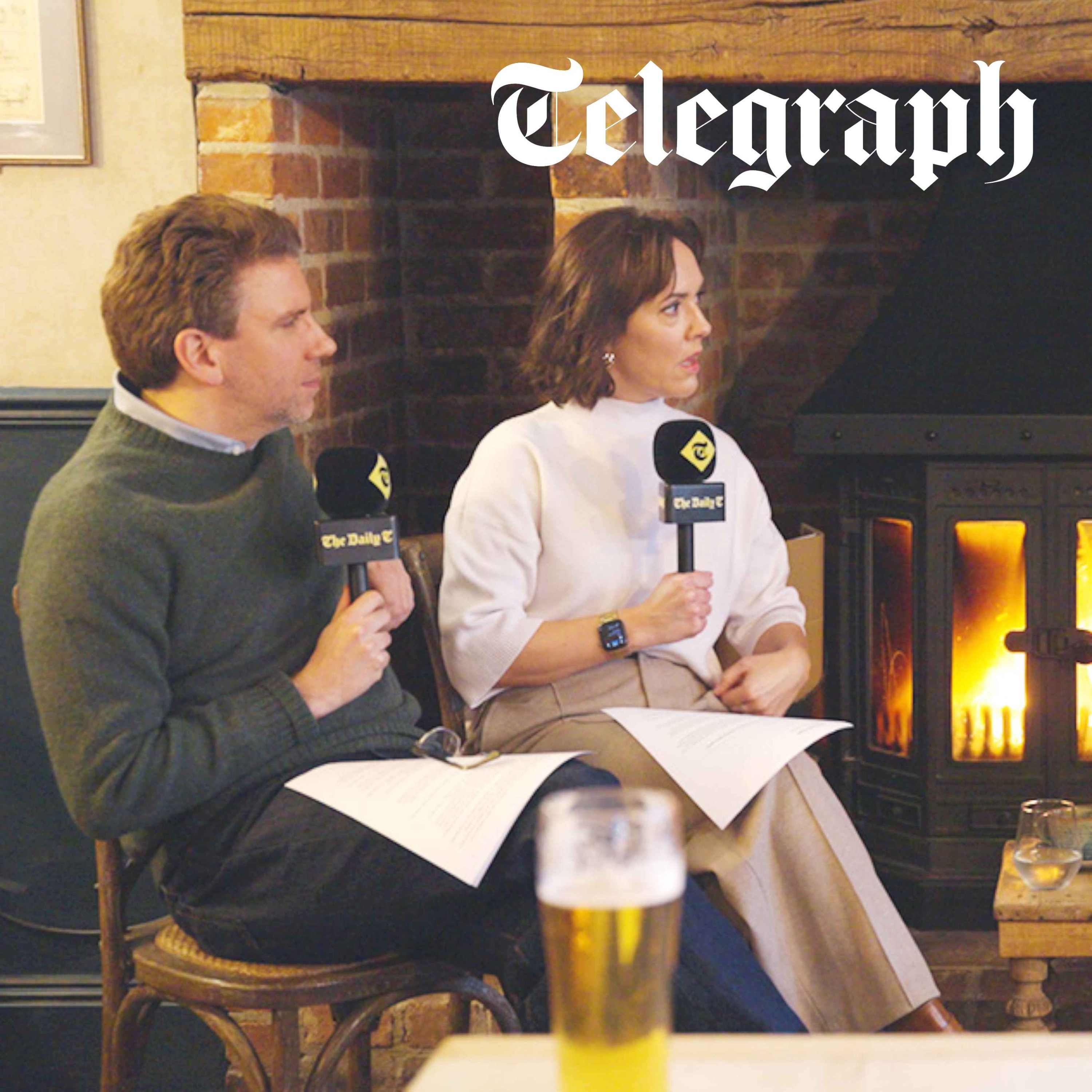
Hosts: Camilla Tominey and Tim Stanley
Lilian Fawcett
Charlotte Seligman
In this episode, Camilla and Tim discuss the ongoing challenges faced by the UK hospitality industry, focusing on the impact of Labour's policies on pubs and the broader hospitality sector. They visit Dorset to meet landlord Andy Lennox, who expresses his frustrations with the current government by barring Labour MPs from his pub. They further engage with celebrity chef Tom Kerridge, who shares insights on the pressure facing the hospitality sector.
Written by AI. May contain mistakes.
Discussion on the current challenges facing pubs and hospitality.
“I can see a dartboard above your left shoulder.”
Interview with Andy Lennox, a landlord leading the charge against Labour MPs.
“I mean, this is a funny thing, isn't it?”
Andy explains the financial difficulties and taxation issues facing pub owners.
“But there's not really much growth there.”
Insight into how rising business rates are crippling pubs financially.
“It seems to be a quintuple whammy of problems.”
Exploration of the high VAT rates in the UK compared to Europe and its effects.
“There's always a multiple and this is where even more complicated.”
Discussing the challenges posed by minimum wage increases in the hospitality industry.
“Okay, you've got the Nordic states at 25%.”
The political implications of barring MPs and how it reflects industry issues.
“And so if you look at the pub, for example, we'd like to think that we could probably make 10, maybe 15%.”
Explore how the minimum wage affects hiring young, inexperienced workers in hospitality.
“And you have alluded to this when you talk about young people, the minimum wage increase.”
Discuss the implications of lowering the drink drive limit on rural pub culture.
“and they haven't had those social skills embedded into them.”
Gain insights into the financial pressures and compliance challenges faced by pubs.
“This is important because the government's not just doing this to raise money.”
Analyze the current political landscape and its impact on the hospitality industry.
“And ultimately, you know, they haven't actually set out to a certain extent what their policy is on VAT.”
Learn about the difficulties of managing seasonal pub operations and staff.
“might have helped your industry, but you haven't forgiven them for clobbering you over the course of the last 14 years?”
Learn about the difficulties faced by pubs in balancing seasonal trade and taxation.
“And this is, again, where the taxation system doesn't work, because you've got rates that basically are every single month, nothing changes, nothing changes.”
Explore the impact of exorbitant interest rates on pub owners and their ability to secure funding.
“Because there's such a high turnover of hospitality businesses at the moment, you're in a situation where basically nobody wants to lend to you.”
Transition to discussing the experiences of celebrity chef Tom Kerridge in the hospitality industry.
Gain insights into the challenges faced by Tom Kerridge and his various establishments post-budget.
“hospitality boss tom kerridge who's going to tell us how he has almost been driven to closing his business because of the last budget.”
Understand how rising business rates are affecting the profit margins of pubs and the industry.
“him, Tim, wasn't it, was that he has a£1.5 million turnover, but he's very lucky if he can make more than 50 grand profit.”
Discuss the effect of employment rights and wage increases on the hospitality sector.
“So that conversation I had with Peter Carr, and then it turned into a little bit more, I think what it does is allow him to then approach racial grief and say, listen, this is the situation.”
Discover actionable suggestions from Tom Kerridge on how government policies can better support the hospitality industry.
“And you do it because you thoroughly enjoy it.”
Learn how hospitality plays a crucial role in the development of young adults and employment.
“The moment that, you know, you start looking at cutting costs, everything starts going backwards and backwards and backwards.”
Discover the significance of VAT rates for the hospitality industry and the ideal rate for profitability.
“So a 10 % VAT rate would be ideal for the business.”
Understand the consensus on VAT rates and how they affect the future of pubs and hospitality.
“That's fairly conclusive then, because both Andy and Tom there have said that the biggest thing is the VAT.”

Get the gist, explore an idea or ask about something said.
 Claude
On The Daily T, what are the key points of this episode?
Searching your listeningAutomatic transcript. May contain errors.
0:28The Telegraph but will it be enough to save an industry that is on its knees? Welcome to The Daily Tea and this Save Our Pub special with me, Camilla Tomini. And me, Tim Stanley.
0:50Tim, we're in the pub. I can see a dartboard above your left shoulder. We're in the goods yard in not-so-sunny pool. What's happened? This isn't the seaside trip we planned. But on a horrible day like this, where else do you want to be but a pub where you can have a real fire, real people, two real dogs. Yes. And we're drinking out of pool. Where? Because we're near pool, which, of course, produces fantastic pottery. Oh, yes. We're drinking cups of tea, although the punters around us, because we've assembled some daily tea fans who are drinking, I've got to be honest, alcohol. But it is past noon.
1:24It's just gone noon. So that's all right. And we are here really to do a special podcast marking our Save Our Pubs campaign. The Telegraph has been campaigning to save pubs, which are closing at a rate of one a day. At least that may be a conservative estimate. And we're joined here by landlord Andy Lennox, who has done this extraordinary thing of taking on Labour MPs and saying, frankly, in the style of Peggy Mitchell from EastEnders, get out of my pub. Why did you do that? Why did you launch this campaign, which you told me earlier is now being supported by 1 ,500 landlords? Yeah, about 1 ,500 landlords.
2:02To be fair, we've kind of lost count now about how many people are actually doing the campaign. And actually that transcends across restaurants as well, into hotels. I think even hairdressers have joined in as well. So you have barred Labour MPs. How do you know they're a Labour MP? Do you ID people? I mean, this is a funny thing, isn't it? It's like, do we have loads and loads of pictures behind the... Yes. You should have a row of photos of the cabinet. With crosses across their faces, like traitors. Well, we do have some top trumps that we've started using. Do you have a Labour MP? We have a Labour MP in Bournemouth, yes.
2:37Do you know their name? Yes, so we have a Tom Hayes. So essentially the Ground Zero event was in a place called the Larder House, James Fowler restaurant down in Bournemouth. and Tom Hayes, basically the local MP, kind of didn't take too kindly to it and did a video, which then went viral and then we took up the campaign. We launched it into the old Fatch in my other pub. We launched it here in the Good Yard and then it just went viral after that. And tell us, before we get into why you've launched that campaign and what we can all do to save our pubs, tell us a bit about your history. When did you first get involved in pubs?
3:10How many pubs have you got and how has the landscape changed for you as a publican? So I've been in hospitality since I was 21. So I run a successful chain of restaurants. I then went into pubs and I've got four pubs. And they're all over Dorset and one in Hampshire as well. And it's a lifeblood of me. It's what I've always done. I absolutely love pubs. I love hospitality. I love the way that, you know, it's everyone's first job. It's the way that basically you learn your first social skills. But ultimately, it's got harder and harder and harder. And over the last, I mean, I think the last time we made any real money was about 2017.
3:47You're essentially operating now to just pay HMRC, you pay your staff, keep the doors open. But there's not really much growth there. And you're getting to a stage now where we're starting to look at things which we shouldn't be looking at. Maintenance schedules. You're really down at the absolute brass tacks bones of everything now. And we've just kind of said enough is enough. If you sell a pint, do you have any idea how much of the money you get? What are you making on selling? 14p in a pint. So if I sell a pint for£5.50, we make about 14p. One for? Yeah, 14p. And where does the money go? So about, in essence, about£2,£2.40 goes to HMRC and taxation through various different, you know, it's not just, you know, VAT, which obviously is the most important one, on the one we'll talk about later.
4:38But then throughout your NI, your employer's contributions, your alcohol duties, it just cuts down into your pint. And then obviously, you're then paying all your staff, you're paying all of your rentals, you're paying your rates, again, which obviously we'll talk about. But ultimately, when you get down to the barstacks, it's 14p. Okay. So this kind of, it's not just a double whammy or even a triple whammy. It seems to be a quintuple whammy of problems. Labour is inflicted on the publican. So let's explain it to us like we were in the pub, Andy. First of all, the business rates rise. What impact has that had?
5:09What happened? What changed? And why are so many pubs being clobbered by it? So this is a really interesting one. It's quite a difficult one to explain. So bear with me. I tried this with my mother quite a few times and we're still not there. But essentially, we obviously all have rates that we pay. During COVID, we got a discount at 75%. And then basically that relief then went to 40%. What's ended up happening is the COVID relief is now going to be taken away, which obviously everybody to a certain extent understands that you can't keep on having COVID relief. The government then basically introduced a transitional relief on rates.
5:45And they basically said, you know, look, we're going to actually drop your rates down. But what they didn't do was look at the new, well, they say they didn't, the new VOA. So the new valuation office then doubled pubs rates. So essentially you had 40 % being taken away from you. They then put in transitional release and put in a new multiple. And then essentially then they doubled the rate. So for example, the old Fatch, my other pub, that's gone from 32 ,500 up to 82 ,500. Good grief. So essentially, obviously you don't pay the full 82. There's always a multiple and this is where even more complicated.
6:23You actually pay about, well, it used to be 49p in a pound. That's now come down to 44p in a pound. But then your rates have then gone up. And so we're actually, in essence, all paying about 20 ,000 pounds more. So essentially, if you then equate that to pints, there's 100 ,000 pints that I have to sell. Okay. We also featured a lady who ran a pub who had had a 2 ,000 % increase to her business rates. Right. So say if we were drinking, say if you and I were drinking tequila slammers, that's tequila slammer number one. Tequila slammer number two, I would assume, is this VAT issue. You need to explain that to us again, like we're in a pub, Andy.
7:07Because we are. So ultimately, you have, well, actually, you then have the employers and I that's coming. And that was coming in the first budget. So in the first Reeves budget, cost my company about£350 ,000. We then basically went back. We reengaged with Labour MPs. we re-engaged with everyone, we said, look, we cannot take any more taxation. They've obviously then come back with the rates. And this is where we are. And that's why we launched a campaign. But the fundamental problem with our hospitality industry, and this is not just pubs, this is restaurants, this is hotels, this is everything, is our VAT rate is one of the highest in Europe.
7:40So essentially, if you look at the average European VAT rate for hospitality, It's 13%. Yes. We are at 20%. Okay, you've got the Nordic states at 25%. So obviously that's quite a, you know, but they've only got 6 million people in Norway. And they've got like free universal childcare. Exactly. And, you know, but ultimately the average is 13%. And alcohol is very expensive there. And alcohol is very expensive. It's very Protestant. But then you've had this minimum rate. It is. But you've also had this minimum raise increase of national wage. So it's gone up every year for the last seven years. you know and so essentially we are you know actually a average person in Norway um in hospitality gets paid about 12 pounds 79 I think we're now at 12 pounds 41 so um you know think about a pint of a price over in Norway but VAT in Europe they value their hospitality they see their hospitality as a real career you know one of the things for me I love what I do I love who I employ I love seeing you know those young people those 15 16 years having their first job, you know, and learning their first social skills and all this kind of stuff.
8:46You know, we'll go on to that. We can't afford to employ them anymore, which is really, really frustrating. But they value their hospitality and they see it as a real career and they have made the taxation correct for that industry. And at 13%, it makes sense. Everything works. And actually, some of them are as low as 5%. So, you know, Spain, I think it's 7%. Ireland, which is our nearest essential partner is now going to be 9 % as well. And so what we're saying is that we need to readjust how our taxation system works. Because ultimately, that money goes straight, you know, off your pint. You know, before we've even said we talk about£5.50, that 20 % straight off that goes to HMRC anyway.
9:25Yes. And it doesn't work. And when your numbers don't work, it really, really becomes a struggle. And so if you look at the pub, for example, we'd like to think that we could probably make 10, maybe 15%. That's kind of where you want to be, we're now more like 3 % or 4%. Wow. And you just can't operate the margins. And it's becoming unsafe, those margins. It's just there's nothing left to give. And when you have, for example, people coming to us and saying, we've got applications for jobs, 30 people applying for jobs, because nobody is employing. And it's a real, we believe that we're the engine of the economy.
10:01And we really do believe that basically we employ 3 million people, a massive, massive employer. and we really believe that we are the engine of the economy. And when we're going and when we're doing well, you know the economy's doing well because everyone's out, everyone's eating and we're part of everybody's lies. Whatever you do, whether you're having tequila slammers or whether you're having a pint, whether you are commiserating because you've lost your job or you're celebrating because you've just got promotion or you're seeing friends and family, you're having a wedding, a funeral, whatever, it all evolves around hospitality.
10:37And so it is kind of the barometer of the nation. All this extra detail is important because it's possible the government will roll out some sort of U-turn, but it will probably just be focused on one issue like business rates, right? When it's everything, you're being hit by so much more than just that. And one doesn't want the government to do one thing and give the impression that it has come to its senses when in fact the industry is being hit by so many different things at once. And I have to say, we're not going to let them. And this is the main thing. The business rates bill coming down the line in April is a bill that we are not paying.
11:09We can't afford to pay the bills that we've got. And this is the big, big key thing. You've got a numerous, numerous kind of taxation on a pint, et cetera. And we've got to say, look, you know, the rates bill we're not doing, we're just not going to do it. And that's where we're at. And that's where we need to get this U-turn. But the really fundamental piece here is to fix the issues in the industry. we must get a VAT cut. We must bring it down in line with Europe. And why can't we bring it down in line with Europe? I mean, we had Brexit. We've had all these numerous things to say, you know, we want to take control of our, you know, our own taxation and everything like that.
11:45Why shouldn't we be the same as Europe? Yes. But one argument for leaving the EU was that we could do that. We could reduce that. I know. And we haven't done it. That was one of the big things. It was like, oh, you know, we went and entered into the, it wasn't even called the European Union then, but it was the common market. and they implied VAT and we had to take that on. And we said, well, actually, we can bring that down. Everyone else has brought it down, apart from us. It's mental. Our island is resolutely in the EU and seems to be undercutting us on tax at every available term. And look how well they're doing.
12:15Corporation tax. Look how well Ireland is doing. Exactly. Europeans decide the society they want and then they frame the tax policy to achieve that, whereas our governments just try and screw us for as much money as possible. And one reason why I love the focus on barring MPs is because at every election, a politician will visit a pub. At the last election, Keir Starmer, I saw him visit a pub. And of course, he went in and he was uncomfortable. He didn't know who to show his lanyard to, all this sort of stuff. But he does the pulling the pint badly so that it's nine tenths ahead and all the cameras click.
12:49And again, pubs are the engine of the economy. And then they get into office and they do this. they do absolutely nothing and you know look barring Labour MPs was a bold decision it was a difficult decision for us we've always tried to make it as as unpolitical as possible you know for us this is industrial action I can't close I can't afford to I can't go and march you know on Westminster I don't have a tractor and so essentially for us this is like you know we're going to bar 404 people and they can't go into the pub. So they can't then get those photo opportunities. Yes. They can't then, you know, you know, go into a pub and, you know, pull a pint and whatever like that.
13:34And we just, that's what we want to do. We just targeted action and they have listened or we are hoping they have listened. Yes. Well, we'll get onto whether we've actually seen any action yet. So tequila slammer number one, we've discussed the business rates hike. I think you leaned into tequila slammer number two in regard to national insurance contributions going up for employers, which was the budget before last. We also discussed tequila slammer number three, which is the VAT disparity, is tequila slammer number four. And you have alluded to this when you talk about young people, the minimum wage increase.
14:07Because, of course, the other thing about the Labour government is they insist they're doing this because they need to raise living standards and they must be paying young people a living wage. Just tell us practically from a boss's point of view, the impact of that, because I suppose theoretically, it's great to be able to pay a pot washer as much money as possible. But the economies of scale dictate that you then need to put everyone's wages up. Right, Andy? Yes. I think you have a couple of things here. And this is really close to my heart. And this is not just the Labour government. It is also the Tories, because let's be honest, that living wage has come up every year under them as well.
14:43But I don't think anybody really is noticing what the real problem it's created. So essentially, if I have an 18 year old who comes into the pub and they want their first job and they've not got any training whatsoever and they haven't got any social skills. Normally speaking, their parent has come to me and said, look, you know, it'd be really good if we can get my 16 year old or my 18 year old in. and can you get them to learn a bit of social skills and understand how to interact with people? Because it's your first time you interact, right? If you go into any job, those social skills will set you up for life.
15:14But they're now being paid£12.41, but they're completely untrained. That used to be a really, really good supervisor wage for someone who was really, really good trained. But what's happened is they're getting 7%, 8 % pay rises, and then we're meant to then pass that on. and it's meant to go up the richer scale to your managers, et cetera. But my managers are getting less than inflationary pay rises, 2.5%, 3%, because I can't afford to do it. And so the problem is, is actually the managers are getting annoyed because they're like, well, we're doing all the real big work. The great, great, great members of staff who you think are amazing and they're really, really good waitresses and waiters who have been with you for years and they're highly trained are not getting very much more money, but your 18-year-olds and your 16-year-olds and your 17-year-olds and that kind of 19, 20, are all just getting these enormous pay rises.
16:09And what's happened is it means that we're not employing them anymore. Yes. And so all of that youth is not getting employed. We used to have a scheme where basically we would employ 15, 16-year-olds and they would come in and we'd have one or two in every single restaurant. And they would, to a certain extent, cabin fodder, you know, they would run around, and they would bus tables, they would just, you know, run food or whichever, but they would be learning and they would be social skills and stuff like that. We don't have any of them anymore. I mean, I think we have one and that is a family member, you know, is my niece.
16:39And that's really, really problematic. You know, they've already had COVID where they've had some real, you know, issues and they haven't had those social skills embedded into them. And now they're not getting it now. So you're going to have this workforce in a couple of years' time. because ultimately with hospitality, one, you'll either go into hospitality and lots of them do or you'll work until you're 18, 19, you'll go to university, you'll go off and do an accountancy degree or whichever, or you'll go and I've got people that travel the world on their cocktail bartender just because they wanted to go and do that.
17:12But none of that is happening and it's a real, real issue. Is there a potential for a tequila slammer number five in this? I mean, there's a lot more tequila slammer. I know, well, you can name more if you like, although I'm getting drunk on the thought of it. But it's the inability to have even one tequila slammer if this measure is introduced to reduce the drink drive limit. So I don't know what you think about that, Andy. It's idiotic. Well, Scotland have done it. So this is about bringing down the level from, I believe it's 80 to 50, which would mean that you would be precluded, I think, from having one pint.
17:48You could go to a country pub, and we say this on behalf of the rural community, Tim, Yes. To which many Telegraph readers and viewers and listeners belong who just want to amble to the local in their car for one pint. Say hello to the locals there. Maybe they're, I don't know, haven't got a husband or wife anymore or they just it's the only time of the day they go out. They now face, if this proposal goes through, being criminalised for having one pint because one pint or one glass of wine would take them above that limit. And some of those local pubs have diversified to becoming restaurants, etc., in order to attract more custom, in order to survive.
18:24But people might not think about driving out to a pub for lunch if they can't drink. Yes, just one drink. Just one drink. So my other pub is a pub that is on one of those kind of driving routes. And, you know, it relies on people to come in and have food, have a pint, and they pass through. Now, actually, I argued with my wife about this because she's very, very firm on the drink driving thing. And, you know, we don't want people drink driving. But having a pint, one pint and driving doesn't seem like it's very unsafe. And do you not think it is government overreach when they're trying to basically say that?
19:04And then there's the other side of the coin that now we've gone through this whole motion of getting 0 % in all of the pubs. You know, we've got 0 % wines, we've got 0 % champagne, we've got sparkling, we've got 0 % beers, we've got all of this stuff. And now they're saying that they don't want 18-year-olds to have 0 % alcohol because it's a pathway to drinking alcohol. What? Who said that? They have said that, yes. Are these people completely insane? Which is why it should be encouraged. I mean, isn't it? No, no, no, honestly. So they're saying a 0 % Heineken or a 0 % Tankery is a gateway to water.
19:39No, because you're going into a pub. This is important because the government's not just doing this to raise money. It's not just doing this for safety. It's doing because it is a government of petty-minded round-head Puritans who hate alcohol and drinking and people having fun. They're socialists, and therefore they are allergic to fun. And we've said that basically not being able to have a pint in your rural pub will be a death knell. It will be. Then turning around to people who say don't go to pubs because that's a gateway to drinking just seems even more idiotic. And all of this is with a myriad of more taxation that's coming down the line.
20:16Line up some other slammers. What have I missed? What have you missed? So obviously you've got the alcohol duty that's coming, so that's put 4p on a pint. So then you're sitting there kind of going, well, if I'm making 14p, and now there's 4p extra in taxation on a pint through alcohol duty, do I pass that 4p on, which essentially to pass that on is another 16p on a pint? Do I take that 4p and reduce my profit by 14p to 10p in a pint? You've also got all of the compliance pieces. Over the last 10 years, I would say, you've had so much more compliance, so much more EHO, so much more... Explain EHO, Andy.
20:55Sorry, environmental health, you know. And all of this stuff is good. And I have basically been sitting there for over a decade, longer than that, saying that our industry needs to grow up. if we want to be taken seriously we need to be serious about what we're doing and you know what hospitality 20 years ago to hospitality now is a whole different ball game you know where we we are now one of the shining beacons of europe in terms of hospitality and essentially all of that costs money and all of that is needed but ultimately when you're then getting into a situation where you've got no profit you've got nothing left to give you know we've sat there for years and I pride myself on our company where we sit there and we say, look, we don't want you to do any more than 45 to 48 hours.
21:43You can do it if you want to. If you want the money, that's fine. But we would like you to do 45 to 48 hours. We'd like you to have two clear days off. But that's us growing up. It's gone are the days where you're working 90, 80, 70 hours a week. We're not slave drivers. But all of that costs money. And we generate 60 billion in taxation. I think the new figure is 66 billion in taxation to UK PLC. We're not saying we don't want to pay tax. We do pay and we pay a lot of tax. What we're saying is that we should be able to make a little bit of profit. And that is where we're at the moment. Is there any political party right now that you would trust with hospitality?
22:20I mean, Nigel Farage likes a pint. Nigel Farage does like a pint. And ultimately, you know, they haven't actually set out to a certain extent what their policy is on VAT. However, the Liberal Democrats, they have set out their policy on VAT. They're going to cut VAT. Actually, a big supporter for down here is Vicky Slade. She then got me in contact with Daisy Cooper. We then basically said, look, forget about the rates, forget about all the other taxation, cut VAT, and we'll deal with the rest, because we'll make it work. And so they've said, you know, we're bringing it down to 15%. You know, we'll obviously want 13%.
22:55So it's a little bit, but it's still good that they've done it. The Conservatives, Kemi Banderhook, she's obviously said that they're going to scrap rates altogether. And she's also very supportive of the VAT piece as well. So we've actually just sent over a Treasury paper to Kemi's office to say, look, this is why we want 13%. This is what we think it will do. Because also, the VAT rate is not essentially a tax cut, because it self-generates. So through the growth, in five or six years, it's not a tax cut. Yeah, there'll be more money coming in. And ultimately, you know, if you look at the, I think it's over a billion pounds that's currently owed in taxation by hospitality that's unpaid.
23:32You know, so you add those things in, it brings down that ask quite a lot. On that theme, we've got some questions from a dozen or so Telegraph readers who have joined us in the Good Yards today. And the first question comes from Jackie Cox. Which party in the next election do you think is best placed to support pubs, farms, small businesses to help them recover from labour? All right. He's slightly drowned out there by the very aggressive wagging of a dog's tail. Tim. What's the answer to that? I don't know. We have to be completely nonpartisan. But at the moment, it is clear that the party not to support is Labour, because I agree with your analysis of the puritanical approach to this.
24:14Also, one gets the impression increasingly from Labour that they're just bicycle riding urbanites who don't understand rural communities, don't understand people who get in cars to go to pubs for lunch, don't understand the hospitality industry because none of them have ever run a small business in their lives. So it's hard. I didn't know that about the Lib Dems. No, I didn't. Leaning into the VAT Cup, but then... They're quite clever at this sort of thing. But to be fair, they came out straight away. They were off the back. But I would like a party to support that actually says what they're going to do.
24:45You know, we've not had a party in power for a very, very long time who has actually gone and done what they said they're going to do. There was lots of people that supported Labour in the last election, especially in hospitality, because they said, you know, we're going to do this, we're going to do that. They didn't do any of it. And they've done the exact opposite. And ultimately, you know, I think a lot of people are politically homeless. Yeah. What I'm interested in is you don't seem to be leaning into the Conservatives, even though you could argue during Covid, Rishi Sunak, furlough, loans, etc.
25:13might have helped your industry, but you haven't forgiven them for clobbering you over the course of the last 14 years? I haven't forgiven them for clobbering us for the last 14 years. But I think also it's a really difficult one, isn't it? Because I think the Conservatives are actually, you know, getting their act together. I think all the political parties are, you know, trying to figure out, you know, where the new layer of the land is. But ultimately you're in a situation where people like Kemi is using the Labour MP campaign to clobber Keir Starmer and has been in PMQs and she's used it loads of times.
25:47But I really want to see some meat on the bone. And I want people to listen to us. And ultimately, I don't think anybody's listening to us. And one of the reasons I'm not going to go into the political of who I think or whatever is because I think that politicizes what we've done. And the No Labour MP campaign is political enough. But what I've tried to do and I keep on trying to do, and I'm going to continue doing, is bringing it back to this is industrial action. It's not about political party. It's about the government of the day. The government of the day have put in taxation that basically we cannot afford to pay.
26:16and the government of the day now must listen to us and they must turn around and say, okay, we got it wrong in the first instance on rate reform. But then look at the Treasury papers. Look at the papers we've created. We've had our local university do the paper, run the figures. Just look at it. It makes perfect sense. To any normal human being, it makes perfect sense. It begs the question, I mean, she did the review over Christmas and you have to ask yourself, why didn't you do that review and work out the numbers before you announce them in the budget? And also, who's going to resign over that?
26:47Is it going to be Rachel Rees because she's lied, or is it going to be the VOA office because they're lied? Can we have a question from Martin Wright? How do you run a pub in the summer when it rains? So incredibly difficultly. I suppose we've got a number of different pubs. So the one we're sitting in right now is incredibly difficult to run in the summer, incredibly busy in the winter. You know, you've got the warm fires, but in the summer it's very, very, very difficult. and ultimately we've also got another pub that is incredibly good in the summer but in very very bad in the winter so having that breadth of you know being able to transfer staff from different places is really important we've then got another pub which is the old fact which is the the award winning pub that is busy all year round and the reason that's busy all year round is because we've reinvested into our outside spaces we are very big family pubs we've got family spaces you've also then got a really really big inside space and you've got fires and all that kind of stuff so everything basically is worked around to being a year-round pub and that is the key to a successful pub and this one here for example the goodyard is very very difficult you're you run on a skeleton crew you try to keep your outgoings as small as possible but you're still paying your rent you're still paying your rates you still pay exactly the same amount of money in the summer as you do in the winter so it's very difficult for me we we try to spread that out so we try to have one or two pubs which we can basically move staff around we move kitchen teams from one to the other to try and basically you know balance it out but ultimately that it's a very difficult so we've got another pub that um is over in in corfe castle and my my sister pub for out of ours and they do an enormous trade in the summer i mean for the six to seven eight weeks of the summer it is absolutely amazing and then they drop to basically nothing and trying to go between those things is incredibly difficult.
28:35And this is, again, where the taxation system doesn't work, because you've got rates that basically are every single month, nothing changes, nothing changes. And then you're, you know, and so you're basically making money in the summer, losing it in the winter, and you get to zero again. And so what we've done, and this is why we're successful, is we've toggled those things. But again, you know, some of our pubs making an enormous amount of money and they don't make any profit. And Andy, can I ask how much of the industry's problems are really down to the government or to the English just not going to the pub so much anymore?
29:11That's a good question. For me, and I can only talk about our own experience, we don't believe there's anything to do with people not wanting to go to the pub. Actually, we're very busy. You know, if you take the old Fatch, it's a very, very busy pub. But there used to be a pub on every street corner where I grew up and now there's one or two. And because, you know, and there's going to be less and less. You know, you mentioned one in six pubs or one pub every day. It's six hospitality venues every day. Wow. That's what's closing. And ultimately, those pubs that haven't developed their offering, they've gone.
29:46And ultimately, no one's saying that basically business shouldn't fail because businesses should fail if they don't, you know, reinvest and they don't change. But what I'm saying is that if my pub is an award-winning pub and, you know, been voted Dorset's best pub, and I do 400 roasts on a Sunday, every Sunday, every week, every month, and we turn over about 1.6 million, but I only make 50 grand, is that my fault or is that someone else's fault? So, for example, next year I've got a in one of my pubs I've got a redo the thatch I've got to put that in two years in advance 75 ,000 pounds to do it if that pub only made 50 ,000 pounds where does the money come from will I borrow it yeah and then we've got there's another one there's your tequila slammer number hundred interest rates you know it's unbelievable that basically in our industry the interest rates are triple what interest rates are in other industries.
30:52Because there's such a high turnover of hospitality businesses at the moment, you're in a situation where basically nobody wants to lend to you. So when they do lend to you, they lend to you an incredibly exhaust, you know, ridiculous interest rates. I mean, not that we're taking it, but I had a quote yesterday, and I can prove it as well from a company. And the interest rate was 59%. Good grief. 59%. Wow. Obviously, we turned around and said no. It's like drug dealer raping. Yes. That is drug dealer. That is like loan shark. That's pay or you lose your knees. Yes, exactly. And so obviously you're saying no, but we've got government-backed, so fully guaranteed loans at 15%, 16%, 17%.
31:35Why is that? That's a fully government-backed. So that's basically full security. but because it's our industry they're like well no we're doing it at 14 15 16 17 percent when when most people are three or four percent above base that's it's mad and that's and we've been trying to campaign on that for years saying look you know if you guys could lend to us because everyone borrows everyone has to borrow to expand everyone has to borrow to do whatever they want to do at normal rates then we would then have more cash flow coverage etc and stuff like that i was just thinking we hadn't even touched on tequila slammer number whatever which is uh energy prices which i would imagine have been very difficult for pubs but let's talk it in a way andy we have to leave it there but thank you very much to you good luck with this business which we will be promoting on this daily tea special thank you to all of the punters yeah thank you so much for coming continue drinking and coming up next we're going to be speaking to the celebrity chef and hospitality boss tom kerridge who's going to tell us how he has almost been driven to closing his business because of the last budget.
32:50Tom Kerridge, thank you very much indeed for joining us. We've spoken to Andy Lennox, who maybe is a kind of different end of the hospitality industry in a way. I mean, he runs pubs down in Dorset. Just remind our audience, what different establishments are you now running in the UK? So I have five different sites, three pubs that are based in Marlow, one pub in Chelsea, West London, and one restaurant that's in Whitehall, just around the corner from number 10, Downing Street, funnily enough. But all sites are slightly different. The three pubs in Marlow, one is a two Michelin star venue that's been open for 20 years.
33:24One is a singular Michelin star venue that's been open for 10 years that is a little bit more relaxed in terms of this counter bar seating and quite an eclectic and varied menu. And the other one is a burger, steaks and kind of fries kind of place with the sport that's on the telly and is all about being a local boozer. The Chelsea site is a kind of like a food-led, almost kind of, I suppose, gastropub style West London pub, which has great footfall dressed off the King's Road. And then the main restaurant in the centre of Whitehall is a kind of like a 90 cover British brasserie is the best way to describe it.
34:05Wow. And how is the business in general doing, not least in light of the last budget? Businesses across sites down percentages, probably around about 15 % down on last January, which is a bit of an issue in terms of revenue and understanding how to move forward. There is some spend out there. There is some movement. I think some people, particularly a consumer that haven't really that have a big disposable income are still coming out for something to eat and entertainment corporate the spend is down but they are still entertaining in a way but the revenues are not the same and january is a little bit of a struggle this year because christmas wasn't as good as expected so normally christmas would run for the whole of december and hospitality you know generates most of its money through that december period to get us through the kind of January and February period, although Christmas probably was down around about 20%.
35:02I think that there was a shorter period of people going out and spending and enjoying the festivities. So it's a difficult space right now for the whole of hospitality. I mean, what you're saying is very much echoing what Andy said. And this killer stat for us from him, Tim, wasn't it, was that he has a£1.5 million turnover, but he's very lucky if he can make more than 50 grand profit. And those profit margins are being squeezed and squeezed and squeezed. And, of course, also making that reference to how little of the pint he sells he actually makes on that drink. So basically saying that he made 1414p on every pint.
35:43Now, he's taken a very aggressive stance against the government. He's banning Labour MPs. I know, Tom, that you are a Labour supporter. You remain one, even though I assume you're highly critical of the Chancellor, Rachel Reeves, over all this. Yeah, I mean, you can be supportive of a party and its fundamental politics without having to be 100 % behind every particular policy that they make. And, you know, I think the understanding about hospitality and the way that the business works is one that I think Rachel Reeves and this position that they're in at the minute is one that shows a non-understanding of hospitality and the way that it operates.
36:17So, yeah, in terms of the business rates and the business rates movement and the way that that's going, that's the fact that they've been listened to. The fact that, you know, I was quite fortunate to be able to get in and speak to Peter Cale for Christmas. I caught up with him at a drinks party, kind of like some sort of gathering where he was there. And I kind of ambushed him and said, listen, you know, we need to have a conversation regarding the business rates and moving forward, because what's happened post-budget has been incredibly unhelpful for hospitality. In fact, we were looking for a bit more of a break.
36:46Like, I know your hospitality in general is calling for a VAT that sits like the rest of Europe. And we were hoping for some sort of movement with that regard in the budget. And in fact, the opposite came through with the business rates repositioning. So I was able to have a conversation with him pre-Christmas and kind of thought that it might fall on deaf ears and it might be one of those tick-bock processes of saying that they've spoke to somebody from the industry. And however, on the 5th of January, I was in Peter Curl's office having a conversation face to face with him where he presented to me my business rates increase of what it's going to be.
37:23You know, he had done the research, his team had been there and said, listen, you know, when I sat there and said these figures are completely unsustainable. You talk about your previous guest there that, you know, they have a£50 ,000 profit if they are lucky on a£1.5 million turnover. where one of my pubs sits there with a roundabout similar sort of turnover, perhaps just a little bit more, but it is just a small boozer. And my business rates have gone up£75 ,000. So if you are operating on a business model that might make£50 ,000 and your business rates suddenly go to£75 ,000, if you're a pub owner operator, what's the point in doing it?
37:56You're straight away being taken into a deficit. So that conversation I had with Peter Carr, and then it turned into a little bit more, I think what it does is allow him to then approach racial grief and say, listen, this is the situation. This is the numbers that we're talking about here. So I'm sure like every Secretary of State, they all want to do well, no matter previous government, this government, no matter which politician, which Secretary of State it is, they want to do the best for the ministry that they're representing, whether it's health, whether it's education, whether it's business and trade.
38:27But I think they can only do that once they get some sort of movement with the purse strings and it comes from the treasury. So I think the more ammunition that they have to go and see Rachel Reeve and say, listen, this is what has to happen. We need to have some movement here. Which has meant that I think in turn, there's been some form of business rates U-turn. However, we still to see what the detail is. And at the minute, it just sits with just pubs. But it's not just pubs. It's the whole of hospitality. Because the separation, the difference between a pub and a restaurant these days is very, very, you know, it's marginal, you know.
38:55Most pubs operate as food-led spaces because that's the only way that they can kind of generate monetary value all the way through and operate as a business. So, you know, that business rates reversal needs to be looked at across the whole of hospitality. Tom, it's not just about tax. It's also about another policy, which is very close to the heart of the Labour Party, which is employment rights and pay. And I'm sure you love your workers. You've also got to be able to afford to employ them with the living wage going up, but also with the new employee rights coming in. Is the government hitting hospitality very hard from that angle too?
39:32Yeah, hospitality gets hit massively. I mean, it is a kind of a low pay industry because it doesn't make any money. You know, it's run by people that operate on passion when you open small businesses and small pubs and little restaurants or coffee shops. You know, it's done by people who live a life in hospitality and absolutely love it. The margins are absolutely tiny and marginal. And you do it because you thoroughly enjoy it. I think, listen, every good employer, no matter what industry you're in, whether it's tech, whether it's AI, whether it's manufacturing, whether it's healthcare or whether it's construction or hospitality, every good business is success, is dependent on a workforce.
40:12You know, that workforce's ability to buy houses, have access to great education, healthcare, all of those sort of things are incredibly important. Without a workforce that is able to live, maintain and enjoy you know their lives you know your business is not going to prosper being able to minimum wage I completely understand and I completely get there's it's a cross between that isn't the biggest policy that that is killing off hospitality it is you know there are five different issues I think it is minimum wage it is NIEs business rates it is also food inflation it is also utility bills it is also you know VAT now all of those things as a combination they then add huge, huge amount of pressure into the business.
40:56And so every single point needs to be looked at. With that in mind, just to conclude, Tom Kerridge, as you're used to designing menus, give us a starter, a main course and a dessert of options you want to put to the government to change policy. What would be on your menu as suggestions to Rachel Reeves as to how to improve the situation for hospitality owners like you? To be honest, it's one big lot dumped into the table in the middle of it. The biggest thing that would help hospitality is a difference in VAT. It's a front end tax that makes an opportunity for hospitality to exist, to be able to make a profit.
41:33Now, profit doesn't mean that business owners just start making more money. What it does is it means it gives growth, it gives reinvestment, it allows education, it allows proper wages, it allows more staff, it allows all of those sort of things that every business needs. you know hospitality is such a funny business that you know people think that if a hospitality business makes a profit it's a bad thing if a young british businessman opens a you know a tech business for you know with a government funded grant for 20 000 pounds and 10 years later sells his ai company for two billion everyone applauds it and thinks it's amazing you know those profit hospitality has to operate the same as every business because so many different things happen behind the scenes in terms of like there's always something broken there's always something that needs reinvesting there's always a boiler that needs fixing there's all and they can only become repaired that places can only grow if if it operates with an operational profit if it breaks even or goes but it sits stagnant and stagnant means that things start going backwards the problem when you know it doesn't operate and make money is businesses then start looking at cutting costs when you start looking at cutting costs things start becoming de-skilled and it ends up being this kind of race to the bottom produce product starts getting used is cheaper and you You know, all of those sort of things, whether it's Mission Star restaurants or whether it's just high street chains.
42:48The moment that, you know, you start looking at cutting costs, everything starts going backwards and backwards and backwards. Places start closing and the operational skill sets and the levels of understanding of what happens in hospitality, it all disappears. Now, hospitality is one of the most important and incredible employers in the country. There's over three million people that are employed in it frontline. But also it's one of the most important regards to young adults and their movement into further, not only just further education, but into becoming different areas of where they go into society.
43:18If you think of most people, no matter what age they are, they would have worked in hospitality at some point from the ages of 15 and 16, whether they're washing up or part time waitresses and waiters or whether they're working behind a bar at a student union. you know all of those sort of things hospitality is so vitally important for young adults growth and being able to connect most people young adults their conversation is normally amongst their peers and the only kind of adult conversation they have with their parents or their parents friends or whether it's lecturers or teachers to actually be into the real world of hospitality they have an opportunity to understand that it embraces all walks of life and the world is such a huge and amazing and vast place and hospitality has all of those people within it so it's such a vital part of, I suppose, the bigger picture of the country, of the way that people move forward, what they learn, and they're able to interact with each other.
44:09Tom, the VAT rate in this country is 20%. In Norway, it is, I think, 5%. In Ireland, it's 9%. What do you think our VAT rate should be? What's the ideal rate for someone in your business? Listen, I think across hospitality, we would love it to sit at around about 10%. That 10 % margin makes a big, big difference to us to be able to operate. If you think most businesses right now, hospitality businesses, are making a loss or breaking even. I mean, a 10 % difference in revenue that comes back into the business allows it to operate as a profit, allows small growth. It's green shoots. So a 10 % VAT rate would be ideal for the business.
44:48Tom Kerridge, we know you've got a busy day ahead. We can see staff bustling around behind you. So thank you very much indeed for your time on The Daily Key. Thank you. Thank you. That's fairly conclusive then, because both Andy and Tom there have said that the biggest thing is the VAT. So although we've been focusing on the business rates where we've seen a U-turn and all of the other policies, it's that VAT that they need to come down in order to turn around their fortunes. Which is why we left the EU in the first place. I know, why can't we do these things? If you're interested in supporting the Save Our Pubs campaign, the Telegraph is running a petition to lobby the government to go further, and you can find that at telegraph.co.uk forward slash pubs.
45:27We're off to the pub. We'll be back on Monday at 5pm.
One pub a day closed in 2025, as Labour clobbered the hospitality industry with higher business rates, a National Insurance and minimum wage hike, and an increase in alcohol duty.
With The Telegraph’s Save Our Pubs campaign calling on the Government to cease its assault on the Great British boozer, Camilla and Tim are in to Dorset to meet landlord Andy Lennox who is actively barring Labour MPs from his pubs.
They also speak to celebrity chef, restauranteur and publican Tom Kerridge, who pleads with the government to drop VAT to 10% in order to help the hospitality industry survive.
Read more about The Telegraph's Save Our Pubs campaign
We want to hear from you! Email us at [email protected] or find @dailytpodcast on TikTok, Instagram and X
► Sign up to our most popular newsletter, From the Editor. Look forward to receiving free-thinking comment and the day's biggest stories, every morning. telegraph.co.uk/fromtheeditor
Producer: Lilian Fawcett
Executive Producer: Charlotte Seligman
Video Producer: Will Walters
Camera Operator: Aaron Wheeler
Social Producer: Nada Aggour
Editor: Camilla Tominey
Hosted on Acast. See acast.com/privacy for more information.


