
 Ask ChatGPT


 The Daily T
3 Mar 2026 · 40m · 18 chapters
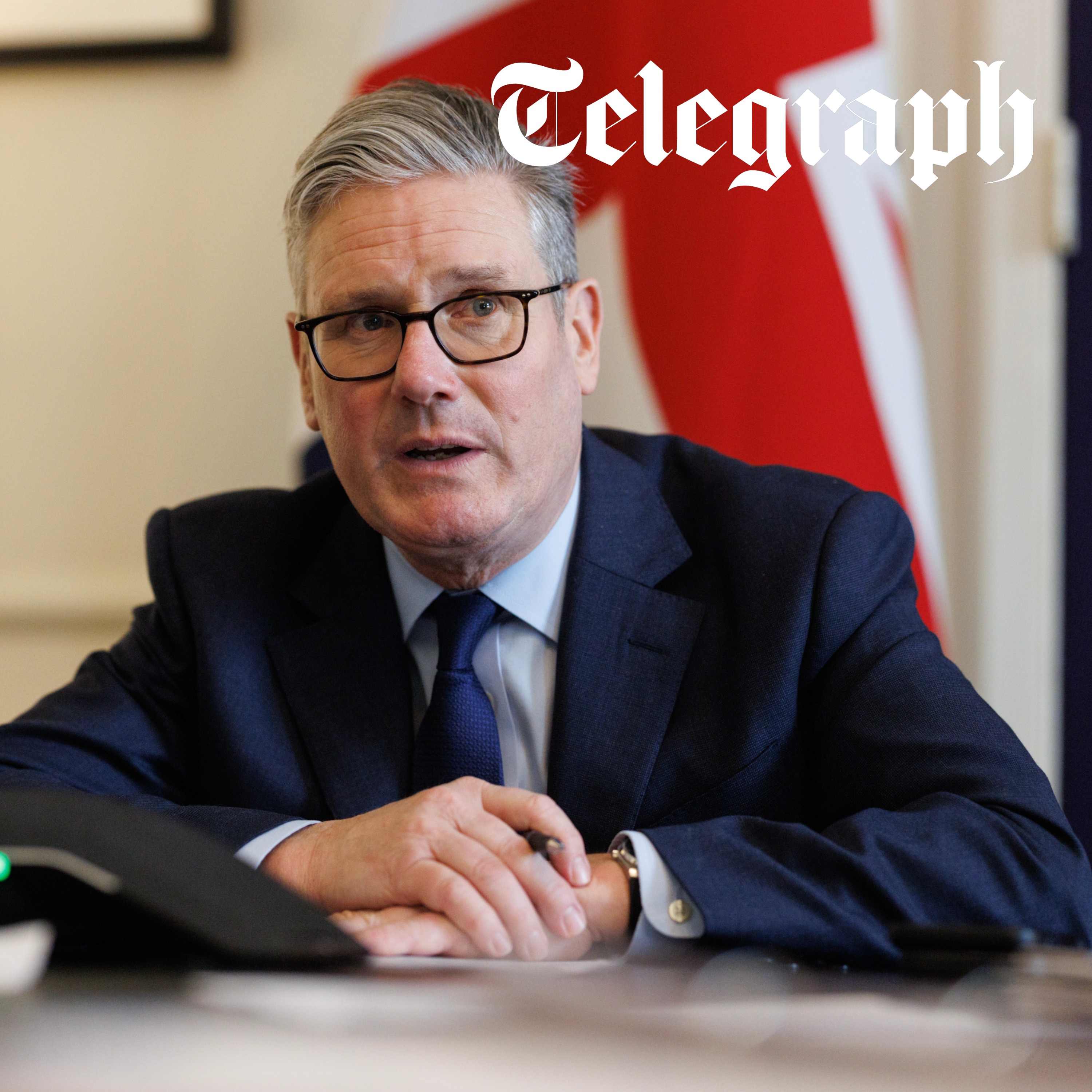
In this episode of The Daily T, hosts Camilla Tominey and Tim Stanley discuss the current events surrounding UK politics, particularly focusing on the escalating situation in Iran, Sir Keir Starmer's political maneuvers, and Chancellor Rachel Reeves' Spring Statement.
Written by AI. May contain mistakes.
Discussion of the UK's stance regarding Iran's recent actions and Starmer's response.
“It's a bit noisy because they've been renovating the Houses of Parliament for the last 406 years, and there's still 300 years to go.”
Analysis of public sentiment regarding US strikes on Iran and UK's involvement.
“It is very sad to see the relationship is obviously not what it was.”
Exploration of UK political figures' responses and public demonstrations related to Iran.
“This is the public thinking anything Trump's doing, we don't want to be part of.”
Debate around British expats' tax responsibilities during the Iran crisis.
“This, by contrast, sounds like a partisan opposition to the West in favour of its enemies.”
Emily Thornberry joins the discussion on the legal basis for potential military action regarding Iran.
“It is also still run by medieval monarchs, right?”
Emily Thornberry discusses the complexities of addressing Iranian actions and regime change.
“Chair of the Foreign Affairs Select Committee.”
Explore the challenges and realities of regime change in Iran, including foreign support and the role of ideology.
“who just don't want their lives to be ruled by old men who have particularly strict ideas about religion.”
Discuss the moral dilemmas and strategic considerations when negotiating with regimes like Iran.
“But if this had happened under somebody like Obama, there may be the suggestion that people on the left would be more in favour of it.”
A brief overview of the Chancellor's performance during the Spring Statement and its implications.
“When do people think, all right, enough now?”
Examine the implications of the Chancellor's Spring Statement on the UK economy and political landscape.
“Tim, the Chancellor delivered her spring statement.”
Discussion on the government's claims about economic improvements.
“She referred to the absent member for Clacton.”
Critique of the government's optimistic economic statements versus actual forecasts.
“More money in the pockets of working people.”
Analyzing public sector productivity issues and their financial implications.
“They're saying it's all rosy, but we know it isn't.”
Discussion on the implications of welfare spending and taxation on economic health.
“And we're seeing all of that coming back to bite us.”
Responses to the Chancellor's fiscal statement and proposed policies.
“The Chancellor said that your response, Mel Stride, lacked substance.”
Evaluation of Rachel Reeves' effectiveness and recent political controversies.
“swirling around, too much of their own backbenchers actually being the tail that wags the government dog.”
Discussion on sectarianism in politics and its negative impact.
“I wanted to see somebody actually come forward and grip the situation in the country and provide some hope to people who are finding life very, very tough right now.”
Debate on the UK's capacity to accept refugees amidst current conflicts.
“and there's a claim about defamation in the House of Commons because Mothin Ali, the deputy leader of the Greens, was spotted there.”

Get the gist, explore an idea or ask about something said.
 Claude
On The Daily T, what are the key points of this episode?
Searching your listeningAutomatic transcript. May contain errors.
0:02The Telegraph.
0:30Tim: one of our properties so we can handpick the perfect holiday for you. Simpsontravel.com, because your time is precious. Are you noticing your car insurance rate creep up even without tickets or claims? You're not alone. That's why there's Jerry, your proactive insurance assistant. Jerry handles the legwork by comparing quotes side by side from over 50 top insurers, so you can confidently hit buy. No spam calls, no hidden fees. Jerry even tracks rates and alerts you when it's best to shop. Drivers who save with Jerry could save over$1 ,300 a year. Don't settle for higher rates. Download the Jerry app or visit jerry.ai slash acast today.
1:17Emily Thornberry: The Iran war is spreading out of control. We're on College Green where we've just heard the spring statement, but we're going to be interrogating politicians about what should be done to bring stability to the Middle East.
1:28Camilla: We're going to be speaking to Emily Thornberry, the chair of the Foreign Affairs Select Committee. We're going to be speaking to the Shadow Chancellor, Mel Stride, and the man who claims to be Shadow Chancellor, Robert Jenrick of Reform.
1:39Emily Thornberry: Welcome to The Daily Tea with me, Tim Stanley.
1:40Camilla: And me, Camilla Tominy.
1:52Camilla: Tim, we're on College Green. It's a bit noisy because they've been renovating the Houses of Parliament for the last 406 years, and there's still 300 years to go. So we'll cope with that. You've been in the chamber for the spring statement, which is a bit of a damp squib with everything going on. This is going to be a podcast of two halves, because we need to address the Iranian issue, but also reflect the fact that the Chancellor has given a fairly significant statement in the House, which you thought she performed quite well in, right?
2:21Emily Thornberry: She did OK, yeah, but let's attack Iran first.
2:25Camilla: OK, fine. So the latest is that we have Donald Trump going even further than he went with Conor Stringer, our Telegraph colleague, in saying that Keir Starmer was a disappointment yesterday, doubled down in an interview with The Sun's Harry Cole, in which he said, you do it because you can do the voice.
2:44Emily Thornberry: It is very sad to see the relationship is obviously not what it was. This was the most solid relationship of all, and now we have very strong relationships with other countries in Europe. It's not going to matter, but Starmer should have helped. He should have. I mean, France has been great. They've all been great. The UK has been much different from others.
3:05Camilla: So he's very happy with little Emmanuel Macron, less happy with his apparently not very special relationship buddy, Keir Starmer. Yes. Some embarrassment because the French have gone in and tried to defend our own RAF base in Cyprus.
3:19Emily Thornberry: They sent in a ship, that's correct, yes.
3:20Camilla: Then leaving us to play catch-up. So the Telegraph website's currently splashed the thought of us sending warships to Cyprus.
3:27Emily Thornberry: Yes, we're going to send one old, old ship, which is currently giving pleasure tours around Portsmouth Harbour.
3:35Camilla: Indeed. Now, overnight, because of our debate yesterday, I'm a right-wing zealot. You're an anti-Israeli-ist. We're both on other sides of the divide. Our debate has sparked some debate, but it seems that the public do agree with you Tim.
3:51Emily Thornberry: By 49%.
3:52Camilla: 49 to 28 according to YouGov Britons opposed the US strikes on Iran. So there you have it you have the public with you half 50 % oppose the US using RAF bases to launch attacks. So long as the targets were restricted to missile sites with a third 32 % supporting the policy. 45 % of Britons say the government should neither praise nor condemn the US. So they quite like this fence sitting by Keir Starmer.
4:19Emily Thornberry: And I have seen similar polls in the United States, although I've seen other ones that contradict it. I suspect some of this is, as Constantine Kissin would say, orange man bad. This is the public thinking anything Trump's doing, we don't want to be part of. But some will also be long memories of Iraq and just general disapproval of America and Britain getting sucked into yet another Middle East war. But I doubt that that 49 % are all closet Islamists.
4:46Camilla: No, I know. You put that on an X and I said, I don't think anyone suggests that they are closet Islamists. You could be both concerned about the unilateral nature of the US and Israel doing what they did without consulting the British, and also be concerned about Islamic fundamentalism.
5:04Emily Thornberry: Of course you can. But since America struck Iran, the Iranians have sneakily struck back. with the result that the war is now expanding as many people feared it would. The US embassy in Riyadh has been attacked and the war has spread to Lebanon where Israel is now invading in a bid to contain Hezbollah.
5:23Camilla: I mean there is some irony to the fact that Iran has now bombed more Muslim countries in the last few days than Israel in the last 20 years. Right. Anyway, also there's another domestic debate going on about the deputy green leader Mohsin Ali attending this rally at the weekend. Now, Alec Shelbrook, who is on the Tory side, said that this was an aberration because it appeared to glorify the Iranian regime and the Ayatollah. That was then denied by the Green MP for North Herefordshire, Ellie Chowns, who said, you're defaming Mothin Ali, who it should be pointed out, couldn't defend himself in the House of Commons because he doesn't actually have a seat.
6:03Camilla: He isn't an MP. He's a local councillor based in Leeds. However, I did a little bit of research into the rally, which was organised by the Islamic Human Rights Commission. Now, that's currently being investigated by the Charity Commission. William Shawcross's report on Prevent suggested that that organisation was very closely linked to the Iranian regime. The Islamic Human Rights Commission, which organised the rally, mourned the passing of the Ayatollah. I just wanted to read out these quotes because I just find them fairly amusing. Describing the Ayatollah as a rare role model, an erudite, principled, spirited and stoic individual who, quotes, stood on the right side of history.
6:47Emily Thornberry: We shall never see his like again.
6:49Camilla: We never will. And equally, it has been claimed that at that so-called peace rally, there were chants of death to America, death to the IDF, death to Israel. well, Khamenei, you make us proud, and we must globalise our resistance to US and Zionist terrorism. So it sounded really peace, love and harmony to me. Everyone got out their guitars and played kumbaya. Yes. So that's going on.
7:14Emily Thornberry: See, this is very frustrating because this country has a very venerable and ancient anti-war tradition.
7:21Camilla: Yes.
7:21Emily Thornberry: Whether it be anti-interventionism through to full-on pacifism, that is in opposition to all conflict.
7:28Camilla: Yes.
7:28Emily Thornberry: This, by contrast, sounds like a partisan opposition to the West in favour of its enemies.
7:36Camilla: Yes.
7:37Emily Thornberry: And I wouldn't really call that anti-war at all.
7:40Camilla: No, it's something quite different. The other row that's raging between left and right, and this is an interesting one, is how much sympathy we should have for so-called tax dodging British expats who are in Dubai managing to keep almost all of their income, not playing tax there or in the UK.
7:59Emily Thornberry: This is from an extraordinary moment in the debate about Iran when Ed Davey said this. We rightly expect our brave armed forces to protect British citizens around the world in crises like this. But that includes tax exiles like Isabel Oakeshott and washed-up old footballers who mock ordinary people who stay in the UK and pay our taxes here. So as we protect them, does the Prime Minister agree it is only right for tax exiles to start paying taxes to fund our armed forces just like the rest of us do? Now that's so strange because Ed Davey is criticising British citizens, not all of whom are there in the Middle East because they're tax exiles.
8:47Emily Thornberry: Some of them are doing work, they're living with family. They're on holiday. They're on holiday and they're currently cowering in basements in fear of their life. So he attacked ordinary Brits who are presumably his potential voters.
8:59Camilla: Yes, precisely. And blue wall seats and things. It's just insane. Also, does the left really want to go down the road of questioning whether people who might not pay that much tax should receive state support? Right. Something's going to go quite wrong for them there. You know, if you were going to pay political 3D chess, you'd say that's the road to ruin.
9:21Emily Thornberry: Well, generally, if you are on the left, do you really want to highlight thousands of people moving abroad because the tax rates here are punitive?
9:28Camilla: No, you don't want to be doing that at all.
9:29Emily Thornberry: OK, you might have problems with the individuals making that move. I personally find it rather strange. Dubai looks awful to me.
9:37Camilla: Yes.
9:37Emily Thornberry: I would rather pay 100 % tax and live in a giant sunbaked shopping mall for 365 days a year.
9:44Camilla: You might enjoy Wadi World, the water park there, Tim, but that's another story. Maybe I'll take you there one day. The Delights of Dubai with Tim Stanley. I feel a travel podcast coming on.
9:53Emily Thornberry: Oh, please. The only activities appear to be falconing and sand dune surfing. You can go go-karting. I have no desire to go there whatsoever. It is also still run by medieval monarchs, right? Yes, OK. It's weird and creepy. It's a very strange place to be.
10:07Camilla: You are so socialist this week, medieval monarchs, honestly.
10:11Emily Thornberry: Oh, come on. The right has been attacking Iran quite correctly because it's bad for women. I'm joking. I feel the same standard should be applied to the Sunni Gulf state monarchy.
10:20Camilla: I'm getting us two first class tickets to Dubai as soon as the skies open up again. You and I will have a little working holiday. But anyway.
10:28Emily Thornberry: But my point is the reason why so many people are going there is because of punitive tax rates. Yes. That is not a good thing. That is a sign of failure in an economy when so many people decide they have to leave it.
10:39Camilla: There's nothing the Green leader, Zach Polanski, likes more than punitive tax rates.
10:43Emily Thornberry: And he has called the attacks on Mothin Ali Islamophobic.
10:47Camilla: Islamophobic, yeah. I'm not quite sure whether I agree that. Just to remind everyone, Mothin Ali did appear to justify the October the 7th attacks and then took that account down. And he did describe a rabbi as an animal. And that rabbi was then driven out of his home in Leeds with his wife and children. So go figure.
11:05Emily Thornberry: And to follow the logic of Polanski's argument, if you criticise a Muslim for attending a rally which appears to have been in support of a violent regime, that is Islamophobic, well, that's deeply insulting to the several million Muslims who have not felt inclined to attend a rally in the last few days in support of the Iranian regime.
11:26Camilla: Or think to glorify the October 7th attacks or describe a rabbi as an animal, not least if you're claiming to be all for community cohesion. Anyway, Tim, your favourite Labour politician is fast approaching.
11:39Emily Thornberry: Emily Thornberry. There she is. Doesn't she look magnificent?
11:42Camilla: She does. She's great. Chair of the Foreign Affairs Select Committee. Hello. Thank you for coming. Welcome. Pleasure to see you. Step onto the Daily Tea stage.
11:52Tim: Very good, very good.
11:53Emily Thornberry: Emily, thank you very much for joining us. A strong argument against action is the lack of a legal basis for it. But I've heard an interesting counter-argument in the last 48 hours, which is that the war actually began on October 7th. Because Iran has been prosecuting a war against Israel and against the West for that period, is this not legal because it is a perhaps delayed reaction to the ongoing threat of Iran?
12:18Tim: I think it's a stretch. 800 people, I think, in Iran have died over the last few days. And the war that has started, we just don't know how it's going to end. And we're obviously really concerned, looking at it, that there's going to be chaos across the whole of the Middle East. And listen, I mean, we had the Iranian ambassador come before the select committee, and we gave him a fairly hard time. And this was in the summer during the 12-day war. And we said to him, well, what do you expect from Israel? You have this belligerent language. You are supporting all of their enemies around the edge.
12:57Tim: You have all these proxies. You know, you seem to have nuclear material, which is much stronger than you need to in order to be able to provide energy. So, you know, what do you think? You know, no wonder the Israelis are going to take against you. And, you know, and he said, yes, yes, yes. But, you know, we're in the middle of negotiations and they should have allowed the negotiations to finish, which I suspect if we had him again in front of us, he would say the same thing now. I also had him back when they were killing hundreds and thousands of people on the streets. And we had him in a private session and said to him, what on earth are you doing?
13:36Tim: And he came out with some complete nonsense about how people were being shot in the back because they were being killed by, you know, the Israelis and the Americans who were out on the street. And obviously, but, you know, it's important to hold these people to account and to say to them, this isn't acceptable. and also to say to him, there's a younger generation of people in the Middle East, whether it's in Iran or whether it's in some of the other Arab states, who just don't want their lives to be ruled by old men who have particularly strict ideas about religion.
14:12Emily Thornberry: But just to say, doesn't the failure of the rebellion over the new year give support to the argument that the Iranian people just can't do it by themselves? It does require foreign support. So why not take this opportunity, whatever Trump's motives, to bring down a regime that you yourself have said is corrupt and grotesque and needs to go?
14:29Tim: It is corrupt and grotesque and it does need to go. But the question is, how do you do it? I mean, yes, if ordinary people in Iran go out on the streets now, they will be shot. You know, I think that the regime will double down and will ensure that they keep as much quiet on the streets as possible. So then how do you get the guns off these people? I mean, what are you doing? You're not going to be able to do it from the skies. How does this work? And we know that the Iranian regime is deeply rooted. It isn't just a few people at the top. I mean, you know, they do have, there's layer upon layer upon layer, and they all have a stake.
15:08Tim: You know, they have a stake because of their ideology, but also, quite frankly, because of the corruption. You know, they all have a stake in the economy because it's doing them very well. so they're not moving anywhere I hate to say this because I don't I'm a great optimist but I also kind of sometimes want to temper it with a bit of reality which is I think that actually the choice is not going to be you know have this theocracy or have a a liberal democracy it's going to be you know you either end up with a dictatorship of some form possibly one that isn't quite as bad as the one we've had so far, but no better than that, or complete chaos, a complete collapse of the current regime, which will not mean that people will rise up and a democracy will spring forth.
15:55Tim: It won't happen. I wish it would. But this is not our experience.
16:00Camilla: Can I ask you, Emily, because you've copped some flak on X for saying the only way that war is ended is at the negotiating table. And many people have said, oh, well, that's precisely how the Allies handled Hitler and used other examples of where that doesn't happen, only just reflecting on what you're saying about how murderous the Mullers and others are in Iran right now and the idea that if people do rise up, they're just going to be shot dead. How can you then say in the same breath that these people are people that you can negotiate with? You have to. But how can you?
16:31Tim: I know, listen, it's horrible business and, you know, you can't always keep your hands completely clean. You have to talk to people and you have to find a way through. People are people. But it's difficult. But in order to get something, a peace that will stick, there has to be negotiations. Yet I hear what you say about Germany and Hitler, but once Hitler was dead, there had to be some form of negotiated settlement, there had to be some way forward to accommodate the Germans, to accommodate Japan. How were they going to be able to pick themselves up off the floor and get going again for the sake of their peace?
17:06Camilla: But there had to be a complete defeat. And there also had to be a moral victory. You know, we can obsess over the legality or not, but there is a moral question to be answered here. And if our close allies, the US and Israel, have decided to take on a regime that has murdered and made the lives of its people miserable since 1979, that in good conscience, good old Great Britain should be backing them up in that full-throatedly.
17:34Tim: I don't agree with you. because I don't see the plan. If there was a plan, then it would be a different matter. Then, you know, if they had a plan, then it would be, you know, you could argue this. I actually think that usually morality and legality go pretty close hand in hand in any event. I just don't think that you can attack a country because you don't like it and because you want it to be different. No, no, I hear. But, you know, it's about more than that, but the fundamentals are the same. you know and if you decide this regime is one which is unconscionable i'm not prepared to have this regime in the world anymore and this one and this one and i'm getting rid of this leader and i'm getting rid who's to decide this you know this is the law of the jungle and and and you know and it's all i mean no this is why we have to do these things collectively this is why we have to collectively make a decision about things which is what law is about which is what international
18:29Camilla: law is about. But if this had happened under somebody like Obama, there may be the suggestion that people on the left would be more in favour of it. Part of this is the Trump factor. Part of this is that you find him unconscionable. No, no. Because do you know what?
18:43Tim: If this had been under Obama, what we would have ended up with was we would have ended up with the JCPOA. We would have ended up with the agreement that the Iranians get rid of their nuclear programme, which is what they had we had an agreement internationally actually you know and it was being monitored and people say it wasn't worth the paper it was written on trump says that and when trump got elected he said oh don't like that and it was quite hard to know whether that was actually because it was obama's deal and he didn't like the idea of having to abide by somebody else's deal so he took tears it
19:15Camilla: up and then what then look what happens well they had to bomb a nuclear facility because they didn't believe the iranians when they said that they were not going to proceed with the nuclear program yeah and there wasn't the and they were probably right to mistrust them i mean i'm not sure the ayatollah
19:30Tim: was the most trustworthy guy there was i mean the jcpoa the agreement the obama agreement was done with america and you know and allies it took years and years and years and part of the point of it was to give some encouragement to those who weren't on the absolute extreme but were close to the center and were prepared to talk to the West. The idea was to encourage them, but also to try to make sure that we monitor them getting rid of their nuclear weapons. And that got torn up, and we are where we are now. So please don't tell me that things would be the same under Obama, because it wouldn't be the same under Obama.
20:10Emily Thornberry: I just want to break the rules of interviewing to interrupt and make a point, because you've been picked up on this issue of the Second World War and negotiation. I think part of the problem is that the right sees a lot of things through the prism of the Second World War, and it's really unusual. That's a rare war in which one side completely won by going right through to the capital of the other side, and the losing side was completely defeated and vanished and never came back. That almost never happens in warfare. What usually happens is, well, what often happens is you have stalemate, and one side collapsing because it can't continue to fight, like the First World War.
20:42Emily Thornberry: You have negotiated settlements like Afghanistan, where America eventually withdrawn, or you have economic pressure like the Cold War, the Soviet Union fell, not a bullet was fired. So I guess this is a point rather than a statement, but do you agree with me, Emily Thornberry, that World War II looms so hard over our discussions about foreign policy that sometimes it distorts what really happens in life?
21:04Tim: I think that whatever happens, we have to, in the end, work with each other and live with each other and that needs to be done through negotiations in the end. and part of the problem is, like I've just heard as walking over here, that not only have the Israelis and the Americans bombed the parliament and killed the supreme leader in Iran, but then, as I understand it, where the 88 mullahs were going to meet in order to decide on a new leader, that that has now been bombed too. So how is this ever... Who are we ever going to talk to? I mean, how is this ever going to work? How are we going to find a way through this?
21:45Tim: I just, I worry so much that there is no plan at all. Or even that there's a possibly a more unified Israeli plan, but many different plans amongst the Americans. And so how do we now know when we've succeeded, when they have succeeded and when they haven't? When does it stop? When do people think, all right, enough now? I mean, it's really worrying.
22:04Camilla: And I think here is right to stay out of it. Emily Thornberry, thank you very, very much for joining us on The Daily Tea. Not at all, it's a pleasure. Coming up next, Tim, it's not top of everyone's agenda, but it is Spring Statement Day. It is. So we're going to play bingo with the Chancellor.
22:28Tim: Romantic retreats, luxury beachfront hotels, expansive family villas with sensational sea views. Not lots of, just the very best of. Simpson Travel. The magical destinations you love. The personal service you expect. We visit every one of our properties so we can handpick the perfect holiday for you. Simpsontravel.com. Because your time is precious. You know what's wild? Most people are still overpaying for car insurance. Just because it's a pain to switch. That's why there's Jerry. Jerry's the only app that compares rates from over 50 insurers in minutes. and helps you switch fast with no spam calls or hidden fees.
23:13Tim: Drivers who save with Jerry could save over$1 ,300 a year. Before you renew your car insurance policy, do yourself a favor. Download the Jerry app or head to jerry.ai.acast.
23:33Camilla: Tim, the Chancellor delivered her spring statement. She was wearing a very nice powder blue suit. I believe from the fold, just to be a bit girly about it. Hair a bit longer.
23:43Emily Thornberry: Yeah.
23:43Camilla: Looked pretty calm and confident. There was a few kind of slight fluffs of wording at the beginning, and then she, well, she got into her stride, and maybe that is on the back of Mel Stride's quite hysterical response. We will speak to the Shadow Chancellor later, so hold that thought, but how do you think she did?
24:00Emily Thornberry: I think performance-wise, this was the best I've ever seen her in the Commons. Really? The benches behind her were happy and were joining in. It became a bit brutal, especially when Mel Stride tried to speak. The Labour people laughed and shouted him down so often. The words I wrote down were turbulence and uncertainty. That's the global situation, not Britain.
24:18Camilla: Global headwinds.
24:19Emily Thornberry: Global headwinds. That she wants to reshape the economy to create an active and strategic state. And she emphasised again and again stability. Her argument is that you not only can have fiscal stability and social justice, but one depends upon Tother. Now, what is the point of a spring statement?
24:38Camilla: Good question.
24:40Emily Thornberry: Labour is determined there should only be one major fiscal event every year, the budget. They say that's important for stability. Last year, however, the spring statement mattered because the economy was in such a mess that she actually had to unveil some measures. This time around, it is perhaps a mark of their success that they didn't have to do anything. All she had to do was read from the book and tell us what the numbers are. And some of the numbers are actually looking pretty good. The headroom has grown. The debt borrowing is down. Growth is a little bit up. People's wages are a little bit up.
25:12Emily Thornberry: Now, we'll discuss this with Mel Stride later on.
25:16Camilla: And Robert Jenrick, who's the other shadow chancellor. He's coming on in just a minute.
25:20Emily Thornberry: Right, OK. We mustn't forget Rob. What was frustrating in Stride's statement was that he chose to begin by just saying, is that all there is? Right, like that line from the song, is that all there is? You know, fine. but he sort of let the genie out of the bottle with that it's as if he began the end of his speech at the beginning what he should have done and he's such a i hope he doesn't hear this but he's such a circus performer it's all roll up roll up come and see what i've got my barrel all that sort of stuff what he should have done was built a calm cool case of demolishing her figures yes and i think the argument he should have put across was yes actually the books look pretty good but They look good because you have raided the country for tax money.
26:02Emily Thornberry: They look good because interest rates have gone down, which isn't really in your command, and that's reduced the bothering a little bit. But if things are better on paper, it's not because the economy is growing and we're developing the kind of exciting global performing economy that we need. It's just because you've taken a lot of money out of people's bank balances.
26:21Camilla: Also, to be fair, the growth figures are still so woefully disappointing.
26:24Emily Thornberry: Oh, we're talking 1.5%, 1.6%. sense. Everything begins with a one.
26:28Camilla: Now, while we were listening, because we were kind of thinking to ourselves, well, this is a bit of a non-event. There was some talk that she wasn't even going to hold a spring statement, as you say. And maybe it was their intention for it to be a non-event. It felt to me a little bit like a Labour Party broadcast. You know, this is how well we're doing. In fact, there were some chosen phrases that are on the Rachel Reeves bingo card that we must just address because it was all getting a little familiar, a little repetitive, felt to me a little bit 2024, frankly. Yes. So we had, there was a re-emergence for the£22 billion black hole, that's back.
27:03Emily Thornberry: Excellent.
27:04Camilla: The£22 billion black hole. We had a reference to Liz Truss's disastrous mini-budget several times, Tim. Liz Truss's mini-budget. Liz Truss's disastrous mini-budget. After their disastrous mini-budget. We've of course had global headwinds. In the face of global headwinds. Which come in quite convenient actually. If you can blame Iran for your own economic woes then that's great. We had of course the classic lifting children out of poverty. Oh yes. The biggest reduction in child poverty. Every child lifted out of poverty. More children lifted out of poverty. That's what she's done with her breakfast clubs.
27:40Camilla: That's what she's done with scrapping the two child benefit cap. Yes. That by the way five minutes ago she was opposing. Yeah. But now she's calling it shameful, shameful to keep the cap in place. She, of course, referred to a fear about returning to austerity. Austerity, the cut-off investment. So we must reject a return to austerity. Ka-ching, that's on the card. She referred to the absent member for Clacton. The honourable member for Clacton, oh, he's not here today. Yes. He wasn't there, Nigel Farage. That's right. She talked about backing builders, not blockers. Back the builders, not the blockers.
28:12Camilla: We've heard that one before, Tim. she talked about inflation being down. Inflation is down. Interest rates being down. Interest rates falling. Borrowing down. Borrowing is down. And of course she talked about that money being in the pocket of working people. To make working people better off. So that working people reap the rewards. We can invest in the priorities of working people. To make working people better off. Working people better off. Every pound in the pockets of working people. More money in the pockets of working people. So I just felt it all sounded a little bit samey, but maybe that was the point.
28:48Emily Thornberry: It did, and it's the voice as well. That doesn't help, does it? No. Hacking that block and all that sort of stuff. Yes. But I think, again, I wish Mel Stride had pointed out that whatever good some of this tax rate has done, it's going to be splashed on benefits.
29:03Camilla: Well, you can put that to him literally in a minute because he's right behind.
29:06Emily Thornberry: That's the product of U-turns.
29:08Camilla: He's behind you.
29:09Emily Thornberry: He's behind you. Tim. Hello. How are you? Mel Stry, thank you for joining us. Pleasure. The government has been able to boast a£30 billion surplus in January, that people's wages are going up, that inflation is down, that the cost of borrowing is falling. Things are actually heading in the right direction, aren't they? Well, this is the problem. They're saying it's all rosy, but we know it isn't. We knew that before this statement. Look, what the latest figures show, the latest forecast, is that growth actually is downgraded this year. Look at unemployment that Ratery's had very little to say about actually is going up this year compared to the previous forecast, next year as well and the year after.
29:44Emily Thornberry: The reality is, unless this government gets a grip on spending, particularly welfare spending, gets taxes down, particularly those taxes that are destroying jobs and growth, then we are not going to make much progress. And I think that's the story of what we've seen today, which is really telling us very little. How do you account for the rise in wages? To what extent is that to do with public sector wages? So it's a combination of both, obviously. What we should be worrying about particularly is what's the underlying story around productivity around the public sector and the private sector. And productivity in the public sector is far too low, particularly in areas like our National Health Service.
30:20Emily Thornberry: And unless we can get that up, then of course that's simply just going to be adding to the pressure on the public finances going forward. And I've not really seen any clear strategy from this government as to how they are going to improve productivity going forward. You saw them when they first came into office, just giving out pay rises left, right and centre, 14 % for the train drivers, 22 % for the junior doctors, but no requirements to improve productivity as part of those deals. And we're seeing all of that coming back to bite us. My point is there's a difference in philosophy, isn't there, that the Tories want to get government out of the way and let the economy grow, whereas Labour, is it spending its way to looking good on paper?
30:56Emily Thornberry: If you raise public sector pay, pay goes up. If you spend lots of money on breakfast clubs, poverty goes down. And is that sustainable? Well, we've had the highest inflation last year in the G7, and the IMF are projecting it will be the highest in the G7 this year. It's been higher and stickier than in other countries. And part of the story on that is actually these large dollops of spending, principally funded by borrowing, that are driving up prices. And if prices are higher, then interest rates stay higher for longer, because that's the monetary response. And, of course, that makes everybody who's got a mortgage less well-off.
31:30Emily Thornberry: It makes businesses less likely to invest, and it's a dampener on the economy. So what they should have been doing is running things much leaner, getting on top of expenditure, particularly welfare, and getting taxes down.
31:42Camilla: The Chancellor said that your response, Mel Stride, lacked substance. Someone, I think it might have been on X, suggested that you behave like a circus performer. And Rachel Reeves said that the Tories are in irrelevance, and therefore no-one's listening to what you have to say. What's your response to that?
31:59Emily Thornberry: Well, I would say, why do people say those things? They say those things when they're under pressure. And what we did in the chamber today was hold the government to account. And she knows that when I say inflation is higher than it was when she came to office, that growth is running at an anemic level, that borrowing is about twice the level that it was forecast at the last general election, that welfare is going up through the roof, that unemployment is at a five-year high. She knows those are hard truths. and fine, she can deflate by coming out with all sorts of colourful descriptions of what's gone in the chamber.
32:33Emily Thornberry: But that is the serious message that she's got to think about.
32:36Camilla: Did she do enough to account for recent events in the Middle East? Nothing on fuel duty, which is due to go up. Nothing on, as you pointed out, what's going on with our own North Sea oil and gas. Doubling down on net zero. Wasn't quite as reactive as it could have been in light of what's going on in Iran.
32:54Emily Thornberry: The big thing that she's got to think about is defence. and really increasing our expenditure on defence.
33:00Camilla: But they are doing that, aren't they?
33:01Emily Thornberry: Well, to a degree, but they're not getting to the 3 % by the end of this Parliament, 3 % of GDP, that we believe they should be doing as a minimum. And the reason they're not doing that is their mismanagement of the economy, particularly the welfare budget, means that they don't have the money to actually do those kind of things. I've got a stat on that. Without it being extremely difficult. I've got a stat on that, Mel. Share your stat, Camilla.
33:21Camilla: The defence budget for 24-25, 60.2 billion. Benefits budget for the same period,£70.9 billion. Although it did go up heavily under the Tories, Mel.
33:33Emily Thornberry: So when I was Secretary of State at Work and Pensions, I took through reforms that the OBR scored as seeing almost half a million fewer people going on to long-term sickness and disability benefits with a saving of billions of pounds. We were in the middle of consulting on personal independent payment reforms that would yielded big savings as well, and then the general election interrupted, interrupted and we went into the last election with£12 billion worth of savings in the welfare budget per year. The Labour Party just simply ripped all that up on day one when they came into office and that's part of the story.
34:06Emily Thornberry: So they ripped up our reforms that I had brought in and would have made a huge difference to those costs and at the same time then came forward with their own plans which of course they couldn't get past their backbenchers and that's part of the story coming out. You've got a government, even if it had a plan, it's too weak to deliver it. There's too much noises off at number 10, too much scandal swirling around, too much of their own backbenchers actually being the tail that wags the government dog. They are absolutely stuck, unfortunately.
34:35Camilla: Mel Stride, thank you very much indeed for joining us on the Daily Tea as ever.
34:39Emily Thornberry: Always a pleasure.
34:39Camilla: Thank you. Now Mel's gone. Did you see what I did there?
34:42Emily Thornberry: About the circus act, Stark. Very clever. I think
34:45Camilla: he thought that Rachel Reeves had said it. I was nondescript.
34:49Emily Thornberry: I just hope that he doesn't watch the Daily Tea. Millions do But maybe he's the one person in Westminster who doesn't
34:55Camilla: In fact six million Can I just say six million watched and listened in February And that's a short month You might not want to put that joke in your sketch What if you read your sketch You're identifying
35:11Emily Thornberry: As a man was shouting Jesus is coming Rob Jenrick walked across the green Thank you for joining us What's your swift, simple analysis of the Chancellor's fiscal statement. I thought she was in la-la land. What planet is she living on? Who does she talk to? She doesn't seem to understand how hard up people feel right now in the country. As a result of bills rising, taxes going up, good jobs being lost all across the country, people are finding life tough at the moment. And what did she have to do about it? Was there a plan to tackle unemployment or get the economy growing? No, absolutely nothing.
35:48Emily Thornberry: Rachel Reeves has failed as Chancellor. It's been a wasted 18 months since she took office. Almost everything has got worse and she's just trying to get back to where she was, where she began. I wanted to see somebody actually come forward and grip the situation in the country and provide some hope to people who are finding life very, very tough right now.
36:06Camilla: Can I ask you about your big expose yesterday at 8.30 where you revealed that Rachel Reeves has an interesting friend up in her constituency in Leeds? Tell us more.
36:18Emily Thornberry: Well, that's right. Right, look, you'd think that as Chancellor of the Exchequer, she'd be busying herself trying to get jobs into the economy, trying to get bills down. Instead, it turns out she's been meeting somebody who you can only describe as a fanatic, a character in Leeds, in her constituency, who has been spreading conspiracy theories about 9-11, about the Jews, who's invited vile preachers to the mosque, somebody with frankly abhorrent views. And she describes him as a friend. he's described her in turn as a very good friend. And she needs to explain this relationship because I think it's incredibly shocking that you've got the second most important person in our government cosying up to this extreme individual.
37:03Emily Thornberry: Why? Well, I think we can all guess that she is partaking, as so many people sadly are right now, in sectarian politics, trying to use him and his connections in order to win votes and secure her constituency in Leeds. And that is a very dark statement on where we are right now with our politics.
37:21Camilla: Speaking about sectarianism, we had a conversation earlier on the podcast about the criticisms of Mothin Ali and others. In fact, I can see another person who attended the rally at the weekend, Jeremy Corbyn, giving an interview to somebody else. And a row over whether that was a kind of pro-war rally, a pro-Iranian regime rally, or whether it was a peace rally. and there's a claim about defamation in the House of Commons because Mothin Ali, the deputy leader of the Greens, was spotted there. Alex Shelbrook's been criticised by a Green MP. Where do you stand on attendance of that rally? Because, of course, I know that you are a proponent for people expressing themselves freely in protest.
38:02Emily Thornberry: Well, we're a free country and I guess you can say what you like within the confines of the law. And from what I could see, people at that rally were mourning the death of the Ayatollah, one of the most abhorrent, sick dictators of our lifetimes. And this isn't just some academic exercise or isn't about what's happening thousands of miles away. His regime led to the deaths of British young men who are fighting in Iraq and Afghanistan. Think of those brave men who died at the behest of IEDs. They were invariably supplied by Iran. So there will be grieving families across our country, including in my constituency, who I know, who lost servicemen during that period, and they will be thinking, what on earth is going wrong in our politics?
38:49Emily Thornberry: Reform has spoken favourably of the war in Iran and of Donald Trump's prosecution of it. Now, we reported in The Telegraph that the UK is bracing for a great many refugees from the region. When you were in power under the Tories, you had a programme for Ukrainians to guarantee them the right of asylum in this country. Given your support for the war, would you do something similar for Iranians fleeing the latest conflict? No. Look, I think we have to be realistic. The UK has no capacity right now. We have no social housing. We have hotels full of illegal migrants right now. Our local councils have no money to support people.
39:28Emily Thornberry: So there's absolutely no way in which the UK can step up and take part in taking people from Iran at the moment. But you know, people will charge you with hypocrisy on that, that you were very happy to take Ukrainians, but in this instance, it's a war you're in favour of, you don't want to take any refugees. Well, firstly, I don't think it's wrong for a country to prioritise certain places on the basis of geography, cultural ties, or historical ties, like, for example, Ukraine or indeed Hong Kongers, to whom we owed a deep historic debt. But you also have to just be realistic with the world as it is, and times have moved on since then.
40:08Emily Thornberry: There is clearly no capacity in the UK for us to take a wave of refugees. They should be being looked after if they need to leave the country at all in the region. And I should just say this, if that regime now stabilises, and that's a big if, we don't know what's happened, things might get worse, but if it stabilises, then the tens of thousands of Iranians who've come to the UK seeking sanctuary in recent years should go back. And actually we might find that a very large number of people who came here, including on small boats claiming asylum, can easily be deported back to Iran. But look, that's for another day.
40:42Emily Thornberry: We don't know exactly what's going to happen. But there's no way, let's be very clear, there's no way in which hard-working Brits can afford to take more people into this country and put them up in social housing and hotels. We should be focusing right now on bringing down people's bills, bringing down taxes, bringing back good jobs to this country and putting the interests of British people first.
41:03Camilla: Robert Jenrick, thank you very much for joining us. If you could leave via the man with the loud hailer and wrestle it off him, we'd be grateful. Thank you so much.
41:12Emily Thornberry: Nice to see you both. Camilla, that's us done for another day. We've won the battle against the preacher in the corner. You couldn't do that in Iran, could you?
41:19Camilla: No, you couldn't. Hooray, democracy rules. We'll be back tomorrow, 5pm.
41:35Thank you.
Sir Keir Starmer has been forced into an embarrassing scramble to send a warship to Cyprus, after France announced a major deployment to Mediterranean.
Camilla and Tim speak to Labour MP Emily Thornberry, chair of the foreign affairs select committee, who has called the US-Israel strikes on Iran illegal – and tells The Daily T, “you can't attack a country because you don’t like it and because you want it to be different.”
Meanwhile, the Chancellor has delivered her Spring Statement, in which she took the opportunity to re-run some of Labour’s most tired attack lines. Tim and Camilla are joined by shadow chancellor Mel Stride and his former party colleague, Reform’s Robert Jenrick, to unpack how Rachel Reeve's rosy-sounding figures are hiding a much darker economic picture.
We want to hear from you! Email us at [email protected] or find @dailytpodcast on TikTok, Instagram and X
► Sign up to our most popular newsletter, From the Editor. Look forward to receiving free-thinking comment and the day's biggest stories, every morning. telegraph.co.uk/fromtheeditor
Producers: Lilian Fawcett
Senior Producer: John Cadigan
Executive Producer: Charlotte Seligman
Video Producer: Will Walters
Studio Operator: Meghan Searle
Social Producer: Nada Aggour
Editor: Camilla Tominey
Hosted on Acast. See acast.com/privacy for more information.


