
 Ask ChatGPT


 The Daily T
18 Mar 2026 · 56m · 29 chapters
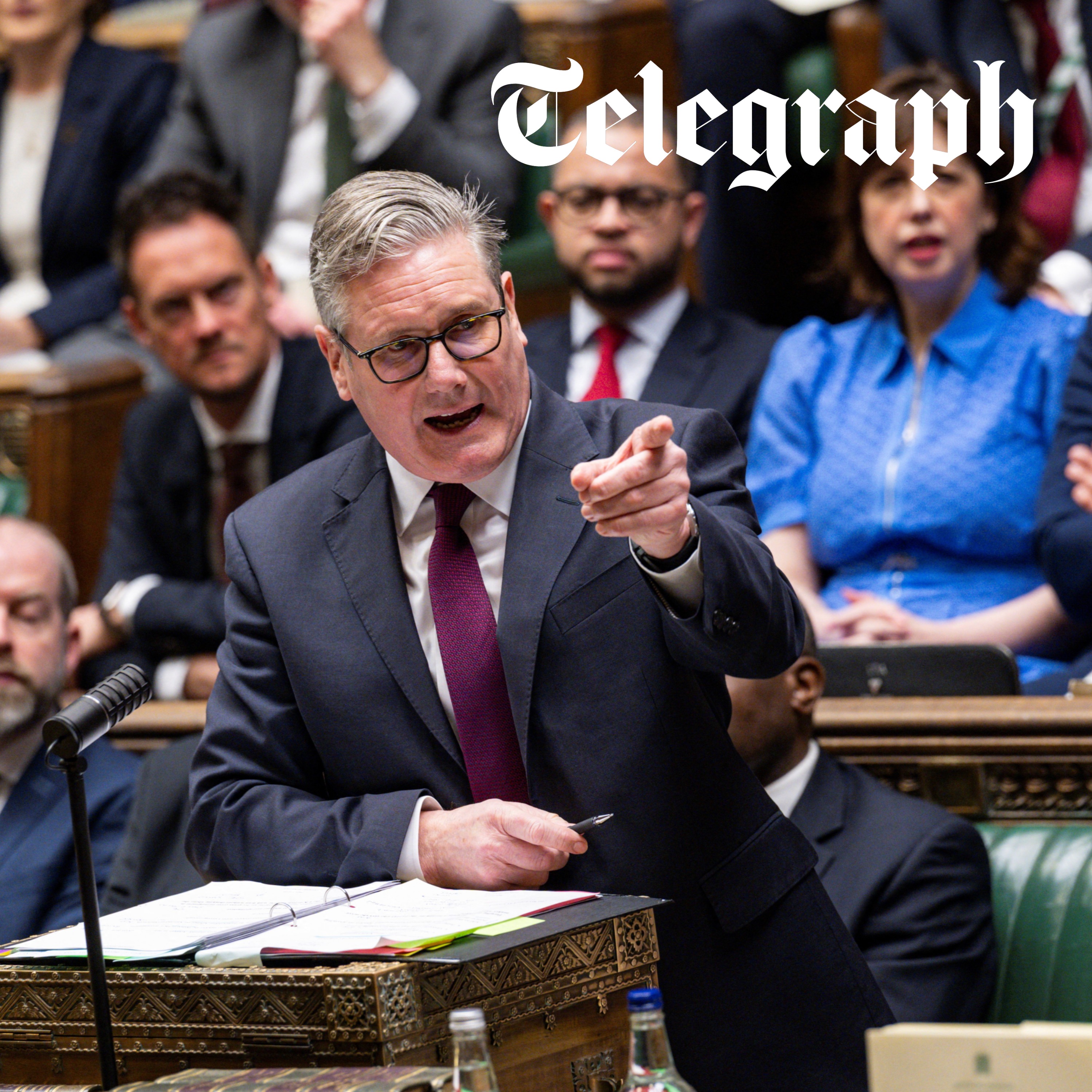
In this episode of The Daily T, hosted by Camilla Tominey and Tim Stanley, the discussion revolves around the chaotic Prime Minister's Questions (PMQs) session. Key topics include Sir Keir Starmer's performance, Kemi Badenoch's questioning on Peter Mandelson's appointment, and the leadership maneuvers of Angela Rayner. The episode also features an interview with Sir Geoffrey Cox, former attorney general, discussing the importance of jury trials in the UK legal system.
Written by AI. May contain mistakes.
Discussion on the recent chaotic Prime Minister's Questions and Angela Rayner's role.
“Is it still Prime Minister's questions if the Prime Minister refuses to answer any questions?”
A deep dive into the Prime Minister's evasive tactics during PMQs.
“Because you did bump into her sort of in the comments.”
Exploration of the history and structure of PMQs and recent leadership styles.
“We need to be fair to Matthew Doyle about that.”
Discussion on the Prime Minister's perceived lack of accountability and responsiveness.
“First of all, a note on the history of PMQs.”
Analysis of Nick Timothy's role and potential impact as the new Shadow Justice Secretary.
“The Prime Minister wants us to believe that he is a serious leader, but he doesn't do the work.”
Discussion on the government's avoidance of parliamentary scrutiny and its implications.
“So for him to make that crack about the prime minister is unusual for him and I also thought rather brave.”
A look at Nick Timothy's background and his recent appointment in Labour.
“But you can see him becoming visibly irritated by how much this government would prefer not to face parliamentary scrutiny.”
Discussion of Timothy's commentary on religious events and public opinion.
“He may be wet on some subjects, but on the issue of Islamist extremism in the UK, he is an extremely outspoken voice.”
Starmer's remarks on religious celebrations and the Conservative Party's stance.
“I don't know if I support this kind of mass prayer.”
Discussion on Kemi Badenok's support for Timothy and implications for British values.
“The only conclusion is the Tory party has got a problem with Muslims.”
Analysis of Angela Rayner's recent statements and their political implications.
“I don't think she wants to look weak on the issue of Islamic extremism because reform have been making hay on that subject.”
Exploration of the public's view of Rayner as a potential leader and her appeal.
“to have argued for taking away some benefits from migrants.”
Discussion on the criticisms surrounding Rayner's background and qualifications for leadership.
“So I am convinced that if Labour got rid of him and swapped in her, I think the polls would change radically overnight.”
Discussion on the double standards in critiquing politicians based on their educational background.
“I know people sometimes expect right-wing commentators to see no good in left-wing politicians.”
Analysis of the Liberal Democrats' approach and the challenges they face in current politics.
“By the way, I can also see good in Labour politicians because, as you know, I've got my own strange girl crush on Bridget Phillipson, the ice maiden.”
Discussion on Ed Davey's leadership style and its implications for the Liberal Democrats.
“We all know the BBC just polices the centrist consensus.”
Discussion around the shifting political landscape and the reactions to Trump's comments.
“But if they are now pro-nuclear bombs and anti-free speech, why would any young left-of-centre liberal-type person vote for them?”
Introduction of Geoffrey Cox and his stance on parliamentary debates.
“One of the last exponents of good parliamentary debate, the Conservative Cicero, Geoffrey Cox.”
Cox argues for the importance of jury trials in justice.
“gave an incredible speech in Parliament last week railing against David Lammy's plans to scrap jury trials.”
Cox critiques Labour's plans regarding jury trials and discusses the implications.
“We have learnt that in this Daily Tea studio.”
A detailed discussion on the significance of jury trials in protecting rights.
“And secondly, even when you do get a magistrate's order committing the case to the Crown Court, you will not have a jury for any offence up to that may carry an offence likely to be three years.”
Discussion on the potential flaws in the jury system and opinions on its effectiveness.
“backbench, an unruly backbench rebellion.”
Explore the criticisms and complexities of trial by jury.
“good and true, would think in any different scenario that was presented to us in the lecture theatre.”
Understand why trusting juries can be more effective than experienced lawyers.
“That does not mean There will be cases of the kinds you describe, but that is not the common experience.”
Learn about the significance of genuine speech in parliamentary proceedings.
“People were responding not just to the substance of that speech, but also the style of it.”
Discuss the decline in standards of parliamentary debate in current politics.
“but they had a kind of character and learning and reading and reflection in life that taught them what they wanted to say.”
Delve into the role of professional expertise within parliamentary practices.
“of this with no prescription, with no policy, with nothing on the face of it by way of evidence that They would have the genius to bring about change of that kind.”
Examine the cultural significance and defense of jury trials in the UK.
“Juries are a common law, if you like, Anglo-Saxon institution.”
Geoffrey Cox discusses the challenges and potential reforms in the justice system.
“Our institutions are threatened, they're being undermined by ideologies that are inimical to them, frankly.”

Get the gist, explore an idea or ask about something said.
 Claude
On The Daily T, what are the key points of this episode?
Searching your listeningAutomatic transcript. May contain errors.
0:02The Telegraph.
0:30one of our properties so we can handpick the perfect holiday for you. Simpsontravel.com, because your time is precious.
0:42¡Feliz cumpleaños, Rafa! ¡Sopla, sopla! Traigan la manguera, que son 45. Cuando cumples 45, te toca soplar muchas velas y examinarte contra el cáncer de colon, Ya que al detectarse temprano, es más tratable en 9 de cada 10 personas. Usa la prueba de Cologuard en la privacidad de tu casa y envíala de regreso para obtener tus resultados. La prueba de Cologuard es una opción con receta para detectar el cáncer de colon en personas de 45 años o más con riesgo promedio. Resultados positivos deben ir seguidos de una colonoscopía. Pueden darse resultados falsos positivos y falsos negativos. La prueba de Cologuard no reemplaza la colonoscopía en pacientes de alto riesgo.
1:23No uses Cologuard if you have adenomas, if you have an inflammatory intestinal disease and certain hereditary syndrome or a personal or family history of colon cancer. Ask the test of Cologuard to your doctor. For more information in Spanish, visit Cologuard.com. We're going to go to everyone.
1:45Is it still Prime Minister's questions if the Prime Minister refuses to answer any questions? We unpack a rowdy and sometimes chaotic PMQs where Kemi Badenoch went on the attack about Peter Mandelson at the same time as Angela Rayner is on manoeuvres. And David Lammy wants to scrap jury trials. We speak to Geoffrey Cox, the barrister and MP who set the Commons alight with a barnstorming speech defending British liberties. Welcome to The Daily Tea with me, Camilla Tomeny. And me, Tim Stanley.
2:27Tim, you've had an Angela Rayner style glow up. What's gone on here? For those who are only listening to The Daily Tea today, Tim has had a haircut and it's taken 10 years off you, if I may say. It always does. And tomorrow I plan on shaving. That'll be a further five years. Be like I'm here with an adolescent. Be like. As we discussed the very few days. People were worried because my hair was getting bigger and my stubble was getting longer. and I think people thought I might be living in my car again. I love how you've caveated that with again. Let's not go back to those dark days, Tim. It's back when you were a socialist.
3:01Things weren't working out for you. Shall we discuss a fiery PMQs? And we'll get to Angela Rayner in a moment. Please. Because you did bump into her sort of in the comments. But first of all, you're there as a sketch writer. I'm there watching in the office. The public perhaps are watching in their lunch hour from home or indeed at their desks. And I'm sure I wasn't the only person to be shouting at the screen, just answer the bleeding question. Yes. For the love of God, Prime Minister, this is getting farcical. There is a theme to today's show, which is the decline of Parliament. We'll be discussing with Geoffrey Cox later on the decline of rhetoric in Parliament.
3:41But the point of PMQs, and it is stated in Erskine May, which is the Bible for how Parliament operates. Note, Erskine May, written in the 19th century, is really advice on how Parliament should function. It's not hard and fast rules. But the advice is that the minister is supposed to come and answer questions put to them by MPs who can ask whatever they like. So the onus is upon the PM to answer questions at PMQs. What he did instead when Kemi asked him, six questions all related to Peter Mandelson, hinging on one theme. The Prime Minister tried to avoid scrutiny on the Mandelson files by releasing the documents immediately after Prime Minister's questions last week.
4:24So let me ask him now. Did the Prime Minister personally speak to Peter Mandelson about his relationship with the convicted paedophile Jeffrey Epstein before appointing him as our ambassador to Washington? Which is important because he said, Peter Mandelson lied to me. And so the leader of the opposition is trying to establish, hang on, when did you two speak face to face or on the telephone or in any capacity? Because as far as we're aware, it was two friends of Peter Mandelson who asked questions of Peter Mandelson. One of whom, as was pointed out, also has a connection to a convicted pedophile, Matthew Doyle.
5:05I don't hold that against him. We need to be fair to Matthew Doyle about that. But nonetheless, it's a bad look. So it's Doyle and it's Morgan McSweeney who appear to have done the heavy lifting on this. That's the former chief of staff to the prime minister, now out of a job. So Kemi asked the same question six times and the prime minister gave a variation of a non-answer, which was, well, you were in favour of going to war in Iran. It's clear the appointment process wasn't strong enough and that's why I've already strengthened it. But it was my mistake, Mr Speaker, and I've apologised for it.
5:40she should follow suit and apologise for her gross error of judgement in calling for the UK to join the war in Iran without thinking through the consequences. Well, your Shadow Justice Secretary said something nasty about Muslims in Trafalgar Square. She appointed the Shadow Justice Secretary. He said last night that Muslims praying in public, including the Mayor of London, practising his faith, are not welcome. He described it as an act of domination, straight from the Islamist playbook. If we're in my team, he'd be gone. It's utterly appalling. She should denounce his comments and she should sack him.
6:22The trouble for the Prime Minister is that this is actually starting to wear rather thin. We started out with a PMQs between Starmer and Badenock, which descended into a degree of what I would describe as mansplaining, patronising tone, actually sort of unnecessary aggression. It's now descended into... By the way, you're right about that. He now starts every PMQs as aggressive. Yes. Yeah. He doesn't build up to it. He goes in aggressive. It's weird, isn't it? Because this aggression comes with a degree of nerves at the dispatch box. You've noticed his hands shaking somewhat. You know, he's meant to be the great lawyer who should be able to present a good case to Parliament.
7:01And he seems to be struggling just to answer the most basic of questions. Now, I say it matters because on the odd occasion that people do come up to me in the street and say, oh, I love your GB News show. In fact, somebody said it on a full tube train. I love you on GB News. I was like, thank you very much. They say these bloody politicians, they just won't answer the question, will they? And I say, I know it's so frustrating, sir. I ask a straight question. I want a straight answer. Sometimes I even have to say to them, as Badenock does, yes or no, just please. Now, I think if you've got some poor sod on the broadcast around the morning after Trump's just introduced the prime minister and said he's not Churchill, You might want to stick to some kind of script to kind of keep the government's end up.
7:42If you're at Prime Minister's questions, the clue is in the name. For how much longer can he get away with this prevarication and obfuscation? It's actually embarrassing. Yes. First of all, a note on the history of PMQs. It's been around for a very long time, but it's been formalised only since 1961. So it used to be that a couple of times a week, the Prime Minister would answer a few questions relevant to their brief. That was then formalized in 1961. It became two sessions during the week of 15 minutes each. And then Tony Blair combined that into the 30 minutes. I think one thing that's problematic with PMQs is the idea that the prime minister should know everything about everything.
8:23When, of course, ministers also take questions during the course of the week as well. So I've never understood why the prime minister is answering questions about the train station at Reading as well as the war on Iran. But there's a way of finessing this and handling this that should allow you to disguise your ignorance and brush things off without it being so obvious what it is you're doing. And Starmer lacks the particular skill to do that. We should note that this aggressive style that you've observed and this pushing back against the opposition is a strategy. And it's a new one adopted since Morgan McSweeney left the government over the Mandelson saga.
8:59So we keep hearing that Kier has decided to let Kier be Kier. And that means leaning into progressive positions and pushing back against Tories and reform rather than reacting to things. So he has decided that a vote winner is that he didn't rush to war in Iran. So when he keeps bringing that up, you have to understand, like he's now taking questions from the public about Iran. He's doing little video sessions where he answers people's questions. He really believes this is a vote winner. Yes. I think most people see his reaction to Iran, the public broadly supports it, as the least worst option.
9:40I'm not sure they're excited about it. But he is trying to turn everything he has done out of necessity, which is he didn't want Britain to be drawn into a wider war, so he held back slightly. He's trying to turn that into a vote winner as he is the Labour Party's relationship with Muslims. So I think it's no coincidence that at this PMQs, he hit back repeatedly on, well, you rushed a war and your shadow justice secretary had something critical to say about Muslim prayers in Trafalgar Square. Well, let's get on to Nick Timothy in just a minute. But just on this point of not taking responsibility.
10:15I mean, I thought Badenock landed a good blow where she made the point that he blames everyone but himself. The Prime Minister wants us to believe that he is a serious leader, but he doesn't do the work. He outsources the decisions, and when things go wrong, he blames the vetting, he blames the Chief of Staff, he blames the Cabinet Secretary, he blames anyone but himself. This Prime Minister appointed Peter Mandelson, but didn't bother to ask the questions. If he cannot be straight with the House on something as simple as this, why should we believe a word he says about anything? And to be fair, it was handy for the Tory leader to be backed up by her own MP, admittedly Andrew Snowden, who again landed the point about how frustrating this has all become.
11:00Mr Speaker, every week the Prime Minister comes here and reads out this prescripted nonsense that bears no resemblance to the questions he's actually asked. The leader of the opposition asked him about Peter Mandelson and he answered about the war in Iran. The leader of the opposition asked him about Mandelson again and he answered with an attack on the Shadow Justice Secretary. He was asked about Mandelson again and talked about protests in London. What is he scared of? What is he hiding? For a man who has spent years presenting himself as a forensic investigator, he has certainly had a blind spot to the details for this convicted paedophile with a friend in high labour places.
11:42So I shall ask him again. When he found out that Lord Mandelson had an ongoing relationship with the convicted paedophile Jeffrey Epstein, did he speak to him personally before appointing him ambassador to the United States? Mr Speaker, we've set out the process. When Snowden asked that question, I thought, oh, a star is born. Yes. He was good, wasn't he? I have literally never heard of him. I think it's almost a pity that there's such a high premium in politics now upon being personal and aggressive. But, hey, there is. And he was able to condense Kemi's six questions into one in a very effective way.
12:24And this is against convention. Jesse Norman sitting on the front bench actually clapped him. He thought it was so good. And when the session was over, Norman made a point of pointing at him and saying, well done. So don't be surprised if you see him on the shadow front bench very soon. Quite a few people on X were saying, why doesn't the speaker intervene? Yeah, he did. And I will repeat again, I'm not responsible for the answers, but it's certainly not opposition questions. And then when the session was over, and this is a life hack for working in parliament, always stay for at least five to 10 minutes after an urgent question or a statement because that's when you get points of order.
13:05These are generally asked by people who were involved in the debate. But with PMQs, not everyone can be. So that isn't so much the case. And the point of order was raised several times by Tory MPs. What do we do if the prime minister doesn't answer a question? And one MP asked if there needed to be reform of the standing orders, so the governing rules of Parliament, to say that the Prime Minister is obliged to answer the questions put to him, to which Lindsay Hoyle said this. There is a real weakness in that because there is an assumption that the person knows the answer. I will leave it at that.
13:41That's quite a revelation from the Speaker because he has to be resolutely non-partisan. Yes. You can tell that he's irked and irritated by this now. Yes, he has a complicated relationship with the Labour Party. He is obviously a Labour MP, but he's totally objective. I do believe that about Lindsay Hall. But you may recall when Labour were in opposition, there was some dispute over a vote related to Israel and some people felt he had gone easy on Labour and let them off the hook by permitting a certain amendment, etc, etc. So for him to make that crack about the prime minister is unusual for him and I also thought rather brave.
14:16But Lindsay is getting more and more exasperated with a government telling the press things before they say them to parliament, but also not answering questions in due time. He's clearly given Labour the benefit of the doubt in about a year to learn how to play the game. But you can see him becoming visibly irritated by how much this government would prefer not to face parliamentary scrutiny. So back to Nick Timothy. So just to explain, this is the new shadow justice secretary. He has replaced Robert Jenrick following Jenrick's defection. Very much a team Jenrick. And some people did think, would he follow Jenrick to reform?
14:53And his background is interesting because he's a Birmingham boy done good. He's very much an advocate of grammar schools. He was chief of staff to Theresa May. And at that point, indeed, when he entered Parliament, people quite rightly said, well, you're that close to May. Maybe you're actually a bit wet. He may be wet on some subjects, but on the issue of Islamist extremism in the UK, he is an extremely outspoken voice. And also he was a columnist for The Telegraph. Now, when I saw this post yesterday, I did kind of do one of those, ooh, that's a bit punchy. Yes. And what he had done is he had used footage of Sadiq Khan, the London mayor, in a kind of mass prayer to mark Ramadan with a lot of Muslims in Trafalgar Square.
15:35and he'd basically done quite a long caption to go alongside the film saying, I don't know if I support this kind of mass prayer. It's a way of trying to exert control over the population. Dominance, that was it. And others then replied showing footage of Sikhs praying together and Hindus. Yes, there's a passion play performed in Trafalgar Square. I mean, as good Catholics, we're used to mass pilgrimages. Yes, go to St Peter's, yeah. Exactly. So I don't know how I felt about it, really. Maybe it was a step too far. Shall we listen to how Starmer weaponised it? When I see religious events in Trafalgar Square, when I see Hindus celebrating Diwali, when I see Jews celebrating Hanukkah live, when I see Christians performing the Passion of Christ or Muslims praying, that shows the great strength of our diversity and country.
16:31I've never heard her party call out anything other than the Muslim events. It's only when Muslims are praying. The only conclusion is the Tory party has got a problem with Muslims. What was really interesting was Kemi's response, because rather than distancing herself from Nick Timothy, she described him as standing up for British values. At the same time as the government's going to war on British values by scrapping jury trial. It's not. It's limiting them in a small number of cases. But you take the point. And we're going to be speaking to Geoffrey Cox about that in just a moment. And we had the same with Rob Jennerick when he was still at Tory a thousand years ago.
17:10And when he talked about visiting somewhere and not seeing any white faces, Kimmy had the opportunity to sack him but instead stood by him. So it's really interesting how is she encouraging her front benches to say controversial things and then backing them up? Or is it weakness? Is it that they're going off piste and saying controversial things, but she doesn't want to fight within her party so she supports them? Or it could be a bit of both. It could just be that her ministers are saying what the first thing comes into their head and she actually happens to agree with them. I think from a political point of view, she probably thinks that the majority of the Muslim vote is lost already because if it's not going to Labour, it's now going to the Greens or Gaza Independents.
17:51If there are some Sunni Muslims who deplore what's been going on in Iran and advocate Trump's intervention, then maybe they would side with her, but equally could also side with reform. I don't think she wants to look weak on the issue of Islamic extremism because reform have been making hay on that subject. So she's clearly decided to just stick to her right flank on it, which is probably sensible. Either way, the Prime Minister pointed out that one Tommy Robinson had said this is the kind of thing that the Tories wouldn't have said a few years ago, and it shows how much the debate has changed.
18:27Mr Speaker, even Tommy Robinson, I can hardly believe I'm saying this, has said today that if the shadow Justice Secretary had made these hateful comments two years ago, the Conservative Party would have kicked him out. Now, Tommy Robinson isn't some sort of moral signpost. He was pointing out how much their party has changed. They're more inclined to his views, and he's right about that. The one good blow that Kemi Badenok did land, I thought, Tim, was in relation to referencing the fact that Angela Rayner is once again on manoeuvres. She's appeared at an event for an organisation called Mainstream, which represents sort of soft left labour thinking, and she's basically said, I don't think we can go on for much longer.
19:09She sort of questioned the prime minister's longevity in office. Let's put it like that. Yes. She also said that Shibana Mahmood's immigration changes, whereby legal migrants could be compelled to leave, was un-British because it was unfair because those people had established a life within this country. At other times, Rainer has been reported to be critical of mass migration. I think at one point she was thought in cabinet to have argued for taking away some benefits from migrants. So is she just saying that for that audience? Is it what she really believes? I don't know. But I have noticed that to do a twist on Samuel Johnson, patriotism is now the last refuge of a socialist.
19:50Yes. Whatever policy they're doing, they now wrap it up as British or un-British. Yeah, this is like Yvette Cooper in the I've got a kitchen full of Union Jacks. Full of Union Jacks and George crosses. But we're now in a situation in which reform will say something anti-immigration and Keir Starmer is like, frankly, they're un-British. Yes. I'm not sure it's a good thing as well to attack a Muslim Home Secretary as being un-British. I mean, there'll be some on the hard left who might say, oh, you're a racist. I hadn't even thought of that. But this is how Kemi raised Rainer to the Prime Minister.
20:25The Prime Minister wants to talk about my leadership. I'm shocked because his former deputy has just fired the starting gun on the race to replace him. And I'll tell him one thing. She and I both agree that this weak man should be replaced by a strong woman. Was Angela Rayner in the House of Commons? I've not seen her in weeks. I could not see her. And normally she's unmissable. It's like, where's Wally? But Wally has enormous red hair. Yes. And high heels. And everyone wants to stand near her. Yeah, fair enough. I did brush pasta in Parliament. Oh, you had a brush by. I had a brush by. With the woman who's always at the hair salon.
21:00I had a brush by. I smiled at her, but everyone does. Yes. And I thought she looked like a movie star. Did she? I think she's incredible. You have got some kind of weird crush on Angela Rayner. I do have a huge crush on Angela Rayner. I just think she's got great style. She had the hair. She had a great red blazer on. She sometimes isn't brilliantly dressed in. She's a very attractive woman. Is she? Yes, she is. And she's ordinary. She somehow manages to combine being ordinary and special. So I am convinced that if Labour got rid of him and swapped in her, I think the polls would change radically overnight.
21:34I really do. Don't you appreciate that there are many in this country that don't think that she's qualified, stroke fit to be Prime Minister? What do they base that upon? Handling the war in Iran. I don't know. Like her leaving school early with no GCSEs and struggling sometimes. But John Major didn't even go to university, right? No, I know. I mean, they say that point about Churchill's lack of formal education, but also just, you know, a career full of strange gaffes, like saying, in one hand, we need to build more houses And then when confronted by Trevor Phillips, who said, well, the trouble is you can't build enough to keep up with immigration.
22:06She then said, oh, don't worry, we've got enough houses. Yes. I mean, it's bungling like that that makes people think, hang on, isn't this woman a bit of a liability? And yet Donald Trump has won two elections, three, he would say. All right. But also, sorry to remind you, she is currently being investigated by HMRC for tax avoidance. It's not the best look, is it, for a kind of working class hero? It's not. She's also, by the way, she's been hoist by her own petard. She said in 2023 that no MP should have a second job. Being an MP should be your one and only job. And now it's been revealed that she's landed a book deal and she's on the public speaking circuit for 100 grand a time.
22:45I thought you were going to say she had a part-time job in Boots or something. Well, no, maybe she's... She's written a book. Well, there you are. She ain't that thick. No, I think... I know people sometimes expect right-wing commentators to see no good in left-wing politicians. And I don't mean morally, I mean in terms of quality. Sure. That's not the way I see it. To me, it's like commentating on a football game. It might not be my team, but I can look at a good player on another team and go, that lad's got some ability. And likewise, I look at Angela Rayner and some politics is all about cut through.
23:17The ability to look into that TV camera and somehow move something in the viewer at home. Angela Rayner has that in spades. Boris Johnson had it in spades. Well, it's charisma. It's charisma and it is indeed a gift from God, as the word means. And I think it's silly for right-wingers to dismiss it because of all the various prejudices they have against people with low education. The reality is, is the girl has star power. I'm only, by the way, I feel that I've got a little bit of leeway in criticising people's lack of formal education when my formal education is constantly pinpointed. You know, Raina's the first person to point out that somebody might have gone to Eton or private school or Bullingdon boy this, Tory scum.
24:02But yet if you discuss the education of anybody who wasn't educated at a private school, you're finished. By the way, I can also see good in Labour politicians because, as you know, I've got my own strange girl crush on Bridget Phillipson, the ice maiden. Now, that I don't see. I don't know why. And neither do the members. They had a vote and they voted for Lucy Powell. I know they did, but I just... The bob. Yeah. The steely glare. Yes. The absolute inability to small talk at all before she comes on my GB News show. And the fact that she does come on my GB News show. And very quickly on that, Sir Ed Davey, what has happened to the so-called Liberal Democrats?
24:43He thinks it's a priority right now. with war in Iran, fuel prices skyrocketing, a cost of living crisis, economic growth collapse, he thinks it's a good idea to question whether GB News as a channel should exist. That's his second question to the Prime Minister after something about nuclear power which he's going on about in a week. Nuclear weapons. Not only do the Lib Dems want to retain nuclear weapons, he thinks they should be built here. He wants British bombs for British workers. But on the GB News Point, can I just suggest that he might want to watch my show back and see my own unique relationship with reform MPs, including Richard Tice, who never leaves the studio intact, bless him.
25:28Get a stretcher for Tice. His claim is that it's being inadequately regulated and it's turning into reform party TV, which breaks loads of TV media rules, which we're not governed by, but they are. Not on Sunday from 9.30 to 11. And second of all, do you know which channel was the only channel to cover the Lib Dem Springs conference? Guess who got that hospital pass? GB News. I mean, it wasn't glowing coverage, but it did. Catherine Forster, bless her heart, went down to Bournemouth to listen to all this hat stand and report it. No one else is there. Yeah, I know. I know. I know. I know. Pick a lane mate.
26:04She did an interview with him himself. We all know Channel 4 is commie news. Well, look at the BBC foray. We all know Sky News is Remainer news. We all know the BBC just polices the centrist consensus. But GB News also has bent over backwards to try to demonstrate within certain parameters of knowing what its viewers want to demonstrate objectivity, right? So they do have on voices from opposition, apart from left-wing parties. Their presenters are very careful to always add at the end of an angry rant. Of course, some people might disagree. And they do have a clear distinction between news delivery and commentary, which is why you'll tune in to watch Nigel Farage and he'll be presented by someone else because some news is broken so Nigel isn't allowed to present.
26:47And there's always a lefty on. There's always a lefty, yes. There's always a lefty. Yeah. And as is a fair representation of lefties, they're always horribly wrong. So it's good of all of those things. But I just want to come back to this point. It's called the Liberal Democrats. Yes. And a liberal leader is using this opportunity to question the independence of a TV channel, to demand further regulation of a TV channel. And the prime minister, who can only win from that question, that's not a question aimed at the PM. That's not a proper question to give to a PM at all. He replied, thank you for raising this free speech issue.
27:22How Orwellian is that? Yeah, very. In their mad mind, regulating GB News is the way to safeguard liberty of thought. That's bizarre. It's insane. But given that the other question, as you mentioned, was about should we build our nuclear weapons in this country? Everyone's asking, why is Ed Davey doing so badly in the polls? Why are the Lib Dems stagnating and why are the Greens taking over? Well, that's why. It's not just the dad dancing, which makes him look fundamentally unserious and it cuts through in a bad way. There's good cut through. Angela Rayna looks sexy. I vote for her. There's bad cut through, which is Ed Davey looks like a fat fool.
28:00I won't vote for him. It's ridiculous. But if they are now pro-nuclear bombs and anti-free speech, why would any young left-of-centre liberal-type person vote for them? They're just all over the shop. Also, one final point. Should we just listen to Trump again? I'm not sure you should tell the same joke twice, but this is what happened when he once again pointed out the bust of Churchill in the Oval Office. You see that man right there? You know who that is? Churchill. Winston Churchill. The late, great Winston Churchill. And Barack Hussein Obama did not want his bust in this office. Did you know that?
28:42And when I came in, I was asked if I wanted it. I said, absolutely, I want it. And I put it right there, Winston Churchill. And, you know, unfortunately, Keir is not Winston Churchill. Kemi, of course, couldn't go in on that attack line, Tim, because the prime minister has sort of skewered her I mean, why hasn't she defended her own position on Iran? She can't really do that because she's trying to land the Mandelson questions. I was thinking, why haven't you doubled down on what Trump is saying about our own prime minister? But actually, both she and I noted Robert Jenrick on Newsnight last night was saying, oh, I don't really like this.
29:18Because actually, as much as the public may hate Starmer, and let's be honest, his poll rating is subterranean right now. We just don't like seeing a prime minister Traduced on the world stage Not least by the big orange man Well he might be a terrible prime minister But he's our prime minister Exactly And we're patriots It's so interesting to watch reform Diplomatically distance itself from Trump But also to see Kemi trying to handle this Because some of the criticisms of Starmer She would agree with But you can't be seen to support that When it looks like it could be read as an attack Upon your own country Shall we talk about the decline of Parliament further next, Tim, with...
29:57One of the last... Bastions! One of the last exponents of good parliamentary debate, the Conservative Cicero, Geoffrey Cox.
30:21views. Not lots of, just the very best of. Simpson Travel, the magical destinations you love, the personal service you expect. We visit every one of our properties so we can hand-pick the perfect holiday for you. Simpsontravel.com because your time is precious.
30:54When you get 45, you have to get so many lights and examine you against the colon cancer, because when you detect it early, it is more treatable in 9 of every 10 people. Use the ColoGuard test in your home privacy and send it back to your results. The ColoGuard test is an option with a recipe to detect the colon cancer in people of 45 years or more with average risk. promedio. Resultados positivos deben ir seguidos de una colonoscopía. Pueden darse resultados falsos positivos y falsos negativos. La prueba de Cologuard no reemplaza la colonoscopía en pacientes de alto riesgo. No uses Cologuard si has tenido adenomas, si tienes enfermedad inflamatoria intestinal y ciertos síndromes hereditarios o un historial personal o familiar de cáncer de colon.
31:36Pide la prueba de Cologuard a tu médico. Para más información en español, visita Cologuard.com diagonal prueba. Hey, it's Hannah Burner from Giggly Squad, and we're partnering with Abercrombie for the launch of their new spring collection. I need a wardrobe that can handle a busy week in the city and go straight to a weekend getaway. Abercrombie's newest drop is full of dresses, sweaters, and layers that effortlessly do both. The piece that's stealing the show from me is the new reversible trench coat. It's a classic navy on one side and a coastal plaid on the other, the perfect spring staple.
32:09Get your closet ready for a full season of plans. Shop Spring at Abercrombie & Fitch in the app, online and in stores.
32:24Geoffrey Cox MP, who was the Attorney General from 2018 to 2020, gave an incredible speech in Parliament last week railing against David Lammy's plans to scrap jury trials. Let's hear a little bit of it before we speak to Geoffrey. Jury trial is the most potent weapon and instrument against oppression, against injustice. And it serves not just those who are wealthy, but those who are poor, not those who have a voice, but those who do not. It is 12 members of the jury who will give a hearing to people who have otherwise no hearing. Geoffrey Cox, Casey joins us now, barrister but also the MP for, is it Torridge and North Devon?
33:08No, Torridge and Tammerstock now. It used to be Torridge and West Devon. Never argue with a lawyer, Tim. We have learnt that in this Daily Tea studio. And you gave a barnstorming speech in Parliament last week defending trial by jury. So can you put the case for the defence of trial by jury to us now? Why is it so important and why is what Labour's planning, or indeed David Lammy, the Justice Secretary, so damaging? Well, the burden of proof is generally on the person who brings the case. The burden is on David to prove that these changes in institutions which have lasted hundreds of years and rights which have existed and been inherent to the common law and the people of this country for hundreds of years should be displaced by some expediency ground that will actually work.
33:58And my case, for the beginning, Camilla, is simple. He's not proved it. He's not even adduced the slightest basis on which you could interfere with rights of this importance. Look, jury trial... Okay, let me do that. Let me do that. Let me step in right at this point and say, okay. Give the chance for the prosecution. Okay, his argument would be that we're talking about a tiny percentage of cases actually go to a jury trial in this country. But the problem is, is they happen to be concentrated in one of the most sensitive areas, which is rape. And we have an enormous backlog of women who are waiting to see a day in court to get justice.
34:32So what he's saying is we can get through some of that backlog by just reducing by a small amount the number of trials which are by jury. We're not getting rid of it in principle because we don't apply it to everyone in principle. But this way we can expedite some of those cases. and you may argue it is unjust to take away trial from jury, but one might also argue it is unjust for women to be waiting years and years to get to court. Yes, but when you look at the actual granular detail of the argument, it is that they will save 25 ,000 court days in the Crown Court by A, removing the right to choose whether an indictable offence should be tried by a jury, and that will now be decided by a bench of magistrates with no rights otherwise for the accused to opt for jury trial.
35:23And secondly, even when you do get a magistrate's order committing the case to the Crown Court, you will not have a jury for any offence up to that may carry an offence likely to be three years. Now, a sentence. Now, the case has to be proven. Will you save that amount of days or anything like it by the removal of juries. And I think the professions, not just the bar, but others as well, other observers say the case just is not proven. The removal of the delays occasioned by jury trial are tiny. And the Institute of Government, which has never retracted its statements, suggests that the savings will be minimal.
36:06savings minimal for the removal of a fundamental right, which I would argue is a distinctive feature of the identity of this country. If you were to ask what about our country lends it its distinctiveness internationally, what would you say? Well, one of the things you'd say would be the common law, the language of Shakespeare, the language of Dickens, the language, but also the common law, or what Churchill called that marvelous structure of good judgment and right feeling. And part of the common law has always been the right to jury trial. And you remove that, you remove that in all its significance, because you see here we, you and I know, I've read your pieces, Tim.
36:52I've read that steaming indignation at the state of modern politics and modern polity. I've read the cynicism, I've read the irony deployed so effectively against the political classes. But it's not just the political classes. Brexit challenged our trust in all sorts of institutions. The press, the judiciary, the one institution that nobody has ever questioned, because it involves the participation of ordinary people chosen at random to participate in the adjudication of the most fundamental allegation the state can make against an individual is jury trial. Why would you remove that and confer it, the absolute opposite of what the Brexit movement meant, on a group of experts, on a group of persons who are after all representatives of the state, take it away from other citizens and hand it to the state, to me.
37:48Jeffrey, we're loving how animated you are. Megan in the studio is saying, stop banging on the table. I beg your pardon. Forgive me. I like the indignance of it, and I like the passion with which you're expressing yourself. Indignation, no. No, okay. But knowledge of how for years the system has worked, and how we are about to jeopardise something ineffably fragile for the sake of an unproven case, a few thousand saved days. it's, in my view, it's just folly. Well, David Lammy used to agree with you. Oh, he did. Of course he did. He famously wrote a report saying that, in particular, people of minority ethnic background get a better deal out of juries than they would out of judges and magistrates.
38:34But you're a lawyer. He is a lawyer. The prime minister is not just a lawyer, but a lawyer of human rights. How can it be that lawyers disagree over what, to me, seems like a fundamental British legal principle of the right to a trial to jury. Explain to us why do you think this government's gone to war on it? Well, I probably need to be careful in what I say because I don't want to appear partisan. Oh, don't worry about that, Geoffrey. Come on. I have to say that my experience of the Prime Minister is that almost every or any fundamental principle by which he has purported to live his life in the profession is a casualty on the altar of his political survival.
39:17And I'm consistent on this. I said it before the election, during the election, it's on the public record. It seems to me that what Keir will do is abandon almost any principle if it's politically convenient or the calculations he makes at the time seem to him to suggest it's in his interests. And I fear that these fundamental principles, another one, I mean, I can cite several of them, but these fundamental principles will not survive what is seen to be the political expediency and interests of the government at the moment, which is that he shouldn't be seen to capitulate again to a backbench, an unruly backbench rebellion.
40:00So, I mean, I have other views about the risks of human rights lawyers and the human rights industry, as some call it. The problem, it seems to me, with a lot of what I would call broadly left-inclined lawyers in my profession, many of whom I have enormous respect and who carry out their duties on the bench impeccably, unimpeachably, is that they do tend to view these human rights instruments as holy writ, which they are the mediating priesthood who can explain it to the public, interpreted by judges whom they assist to get the holy writ interpreted. My view is that juries is the antithesis of that.
40:47Juries are the popular participation. It disrupts the legal hubris. I often used to say to a jury when an unpopular cause, a man or woman with no friends, I would say, you, you are the only people sitting on the same level as he does in the courtroom. Not the judge, not the lawyers, but you, you will make the judgments. And you will go away from this court and you don't have ever to come back. And there is something very remarkable about a system perpetuating that kind of direct involvement of ordinary citizens. It is the antithesis of the expert, the bureaucratic administrative elite who takes judgments over you.
41:38And this government seems to prefer that. Yes. To the people. I'm going to try and prosecute the alternative case just in the interest of once being a law student. And I remember very clearly much of our application of the law referred to the man on the cluppum omnibus. It referred to the reasonableness test. And, of course, it referred to the idea of what 12 men and women, good and true, would think in any different scenario that was presented to us in the lecture theatre. But let me just give me the alternative narrative, which is this. and it has been reflected in some correspondence to The Telegraph and other newspapers.
42:16Some people have served on juries and grown increasingly frustrated with the layman's take on things, with the amateurish scrutiny of the evidence put before them, the notion that some jurors just look at the defendant and think to themselves, well, do they look guilty or not? And that actually trial by jury can be flawed, notwithstanding the concerns about the court system being gummed up, that in itself trial by jury is flawed because the people who are asked to serve on juries don't really know what they're doing, often go with their emotion rather than the evidence put before them, and it's all a rather tiresome and perhaps imperfect system.
42:59Well, look, no human system is perfect. No. All I can say to you is that the basis, I think most people, most observers and most researchers who have ever looked into this suggest that the way in which juries exercise their responsibilities, often in the most appalling cases, which, as I said in the House, challenge the very frontiers, boundaries of humanity, often in highly complex cases, they invariably carry out their duties with solemnity, seriousness. Because as I said in the house, a criminal trial has a kind of focusing effect. You're stripped away from the outside. Sometimes you're segregated in certain kinds of trials.
43:45It produces a focus and a lens on the evidence. And the only question is this, does it make you 12 people sure? And of course there are going to be some errors, but I would prefer to trust 12 ordinary people with their horse sense, their intuitive understanding and empathy of human motivation, than a lawyer who sat there for 30 or 40 years become thoroughly inured to the kinds of people he sees before him every day and finds it difficult often to deploy the kind of intuitive sympathy and empathy and intelligence that a jury habitually does. That does not mean There will be cases of the kinds you describe, but that is not the common experience.
44:31And it is not the experience of the research that is being published and has been published recently. Nor is it the experience of dozens, hundreds of my colleagues who've practiced for decades in the courts. Why do you think it is that this system is so important to those of us who practice in the courts? It's because we see every day the way juries carry out their duties. And we are astonished at times by the sheer courage and attention that they give to these cases. It's not the experience of the Prime Minister either, who in a previous life wrote a report saying that the removal of trial by juries in Northern Ireland had led to more wrongful convictions.
45:15Yes. People were responding not just to the substance of that speech, but also the style of it. There was a lot of commentary online about it, mostly approving people saying that this is not the kind of speech you tend to see in Parliament anymore. Is that the way you normally speak? Not at home. I don't mean in private. But I mean, were you giving us the standard Cox stump speech? Is that what we should expect from you? I don't think I would say it was standard because the system of justice in our country is very close to my heart. I mean, as Bacon said, every man owes his profession a debt of obligation.
45:53To me, this is critical, intrinsic to the English character, to the English culture, to the distinctive features, as I've said, of our national identity, and to our inherent sense of fairness. And it is an antidote to that which brought about Brexit, in my view. It is a folly now to confer this upon a group of so-called experts and judges. So it was motivated by sheer... It was a passionate speech. Yeah, a passion. I'm always wary of the word passion. It can cover so many things. It was a speech, I hope, that was moved and breathed, genuine, experienced. If I may say, as a sketch writer, I watch a lot of speeches.
46:42And that kind of speech is unusual now, partly because you were addressing the chamber. Most people nowadays read a speech and they're really reading it in order for it to be recorded and put up online. Sometimes they're reading it on their phone. Sometimes they're reading it on their phone. Yours was old fashioned and heartening to see because it really felt like it was a parliamentary speech rather than a standard Twitter speech. Is that something you recognise? I was brought up on autobiographies of the great parliamentary debates of the 19th century and the first half of the 20th century. I was brought to the house at the age of eight by my father, a soldier.
47:27I could lean over the parapet of the wooden rail there up in the public gallery. and I remember hearing extraordinary speakers then, Wedgwood Ben, Powell, others besides, they all had a presence. What informed that presence? What informed their ability to speak without note? Several things. They knew quite a lot about what they were talking, but they had a kind of character and learning and reading and reflection in life that taught them what they wanted to say. And they had something to say. I think the risk about politics these days is that it, I've often said, I'll be risk, court, controversy.
48:19I think we're engaged in the moment in something that I would describe as the infantilization of British politics.
48:30Why are people of real substance and stature? And I don't make general and universal claims here or generalizations. It would be rude to do so. And secondly, there are some exceptionally able and talented people in the House. But I think anybody who observes from the outside would confess if they were honest, particularly if, like you, they were observed for a while and close up, the fall in standards in parliamentary debate in the House of Commons. Reading is inimical to making a speech that engages flexibly with debate. You can't be responding to the point previously made by another member. It's not courteous.
49:15The first thing I was taught as an advocate was hold the eyeline of your audience. Look at them. Look at them straight in the eye. Well, if you're reading, you can't do that. And then when you see the flicker of movement, you sense and pick up whether the point is landing, whether it's being understood, whether you need to switch tack to persuade. You can't do that with your head in your... It's an elementary point of advocacy training. You can't do that with your head in a script. So I think it's the enemy of real debate. I think it's a real concern because, you know, when people look from outside at what is after all the cockpit of our nation, it's the place where these great themes should be aired, developed.
50:08that people should be able, whatever the side of the political debate they're on, they should be able to hear articulated these great themes. This lifts the spirit. It tells people who are watching and listening that the things that matter to them most are receiving the kind of gravity and seriousness of attention in that place and are being expressed with eloquence and, if you like, with passion. But if they don't see that, they will soon, and this is what we're seeing, they will soon condemn the political class as being what we see all the time now, as being a pointless. And then what follows, Tim?
50:49What follows is the person who claims he can bring a change to all of this with no prescription, with no policy, with nothing on the face of it by way of evidence that They would have the genius to bring about change of that kind. But simply the word change. These people are discredited. They're not up to the march of events. Time for something different. We've seen it before. Who are you referring to, though? Is that a reference to Nigel Farage? No, no. Because he's a good political orator, isn't he? Not a parliamentarian, though. He doesn't really enjoy the Commons. I mean, I'm not going to comment.
51:29Well, to be fair, Geoffrey has been accused of not being in the Commons enough. You've been put on a par with Mr Farage because you've got a huge amount of secondary income coming in because of your work. From one source. Practice the law. Well, tell us about that, because that was another point of criticism. Some of the Labourites were saying, well, this is all very pompous. We've barely seen him in the great cockpit, as you've described it. And you're making hundreds of thousands of pounds advising clients, which might not necessarily be in the interests of your constituents. That's the same criticism that is levelled at Farage in Clacton-on-Sea.
52:03when he's there. In fact, I think he was the second highest paid MP after Nigel. Is that fair, Geoffrey? Well, I don't think it's fair criticism. I'm doing what John Smith did, the revered leader of the opposition. Some say the best Labour prime ministers we've never had. John practised in the Scottish courts for months on end while he was in the House. I can name you a whole series of them. I did. John Morris, the former member, these people have led me while being members of parliament, led meaning as a junior in cases. So this is a tradition which has been maintained for 150 years. And from those people in the legal profession, at least, you tend to select your law officers, because the law officers are taking judgments on the most exquisitely complex points of law, which unless you have senior experience at the bar, are very difficult for you to take an informed judgment and decision on.
53:05I mean, when I was the attorney general, it involved drone strikes. It involved covert operations. It involved a whole range of things which senior experience was needed for. Where are you going to get that and still have them accountable to the Democratic chamber? unless you allow professional people. I'm not arguing for lobbying. I think that should be stopped. But to allow somebody to farm or to engage in a legitimate and honest and honourable profession, be it medicine, be it the law, is a good thing for the House. It's essential for the House. It's always been within the rules and dozens of people have done it, including many very distinguished Labour MPs.
53:52I think this is a debate about the way we are governed, cobbling together some of what you've said, that parliament is better when it contains people who have a life outside of parliament, whereas the left wants professional activists who do nothing else, who decides whether something is right or wrong. The people from your own community or an appointed judge to decide. And then when it comes to parliament itself, should it be a question of people reading pre-prepared speeches, not really engaging, or should they be litigating ideas? It always seems to be a choice between bottom-up democracy, which is the sort of English Tory tradition, or a more continental-style approach to politics, which is about groups of experts, shall we call them citizens' assemblies, coming together to decide in a bureaucratic way how people ought to live.
54:38Well, I couldn't have put it better. That's my view. Juries are a common law, if you like, Anglo-Saxon institution. I'm not saying that judges are not superb. We have one of the finest judiciaries in the world. Make no mistake about that. They're an incorruptible group of people. I have no hesitation in saying that. But the kinds of perceptions that are needed to adjudicate sometimes on whether somebody was motivated or intended criminal action, these are things that often judges are not best suited to decide. You know, Dickens said that a lawyer tends always to see human nature in its worst light, because when people come into court, it tends to be cross-examining or it tends to be seeing it in its worst light.
55:28A doctor, he says, I'm not sure this was true, used to see it in its best light. A jury sees it fresh every day in their ordinary lives. And the 12 of them pool together that knowledge almost by a kind of occult process that happens when 12 people join together. We do things differently here. And it's part of the character and identity of our country. And one of the problems that people are perceiving now up and down the length and breadth of this country is that the character and culture of our people, the English people, but also the Scottish and the Welsh, have been apologized for too much.
56:17Our institutions are threatened, they're being undermined by ideologies that are inimical to them, frankly. And I think jury trial has to be fought for and defended. Maybe the criticism is right, Camilla, maybe I should be more often in the House, but I'll be honest with you. I think it's better to make a speech that has an impact infrequently than make a series of frequent speeches less considered and read from scripts. The counter-argument, of course, is we need you in court because we need to un-gun this system. Final question, Geoffrey Cox. If not this adjustment to trial by jury in a bid to save court time, what should be done?
57:04It could be argued that courts could sit for longer. It could be argued that lawyers like you need to work a little harder, perhaps at the weekends. What's your top recommendation for how we sort this out? Well, I agree. I'm not against some of the changes that are being proposed. For example, there are some offences that you could probably make summary only. From the 16th century onwards, Parliament provided for some offences to be made summary, triable summarily only. I think there are possibly more you could look at. But they would not be the indictable offences that at the moment has the right of election.
57:45I think it's about exactly what you're saying. It's more court days. Let me say straight away, I do think that the Conservative Party, as ever, should take the opportunity of opposition to reflect on what it got right and reflect on what it got wrong. And I think we didn't get it right on justice. Yes. It's working harder. It's greater investment. It's open court days. It's timetables that stick. And it will take a while to work this backlog through. But if we have the right investment in the system of justice, if we problem, another problem is we've got too few criminal barristers. now. Cases are not going ahead because there's nobody to prosecute them or nobody to defend them.
58:30Why is that? It's because the investment, the finance was sucked out of the criminal justice system. I can't pretend the Conservative Party got this right. But what you don't throw is the baby out with the bathwater. Why, for what is a temporary problem, would you alter a fundamental permanent right of the British people? When you make your next barnstorming speech, we shall invite you back to the day of tea. It has been a great pleasure. Thank you very much, indeed, Geoffrey Cox, for joining us today. Thank you. Thank you. We'll be back tomorrow, 5pm, when we will be speaking to Tom Bower, the author of another explosive book, Tim, about Harry and Meghan.
59:12Can't wait.
59:24TO DOING PUPPER Let's Hooks protect them!
59:40To learn more, To do not skip them! To leave the radio at 444... Happy New Year, no影 natural artistas! To do them! The Shanghai Dog Man. 415. When you're 45, you have to get to get a lot of candles and examin you against the colon cancer, because when detects it early, it's more treatable in 9 of every 10 people. Use the ColoGuard test in your home privacy and send it back to your results. The ColoGuard test is an option with recital to detect the colon cancer in people of 45 years or more with average risk. The positive results can be followed by a colonoscopy. They can give results false positive and negative negative.
1:00:19La prueba de Cologuard no reemplaza la colonoscopía en pacientes de alto riesgo. No uses Cologuard si has tenido adenomas, si tienes enfermedad inflamatoria intestinal y ciertos síndromes hereditarios, o un historial personal o familiar de cáncer de colon. Pide la prueba de Cologuard a tu médico. Para más información en español, visita Cologuard.com-prueba. Hey, it's Hannah Burner from Giggly Squad, and we're partnering with Abercrombie for the launch of their new spring collection. I need a wardrobe that can handle a busy week in the city and go straight to a weekend getaway. Abercrombie's newest drop is full of dresses, sweaters, and layers that effortlessly do both.
1:00:56The piece that's stealing the show from me is the new reversible trench coat. It's a classic navy on one side and a coastal plaid on the other. The perfect spring staple. Get your closet ready for a full season of plans. Shop spring at Abercrombie & Fitch in the app, online, and in stores.
Is it really a Prime Minister’s Questions if the Prime Minister refuses to answer any questions? That was the frustration in the Commons this lunchtime, with Kemi Badenoch attempting to pin Sir Keir Starmer down on Peter Mandelson's appointment, but to no avail.
Camilla and Tim assess a fractious and chaotic PMQs.
Elsewhere, they speak to Sir Geoffrey Cox, the Conservative MP and former attorney general, after a barnstorming parliamentary speech in which he excoriated David Lammy’s plans to limit trials by jury – a feature of our justice system which Sir Geoffrey tells The Daily T is “intrinsic to the English character”.
We want to hear from you! Email us at [email protected] or find @dailytpodcast on TikTok, Instagram and X
► Sign up to our most popular newsletter, From the Editor. Look forward to receiving free-thinking comment and the day's biggest stories, every morning. telegraph.co.uk/fromtheeditor
Producers: Lilian Fawcett and Georgia Coan
Senior Producer: John Cadigan
Executive Producer: Charlotte Seligman
Video Producer: James England
Studio Operator: Meghan Searle
Social Producer: Nada Aggour
Editor: Camilla Tominey
Hosted on Acast. See acast.com/privacy for more information.


