
 Ask ChatGPT


 The Daily T
29 Apr 2026 · 50m · 21 chapters
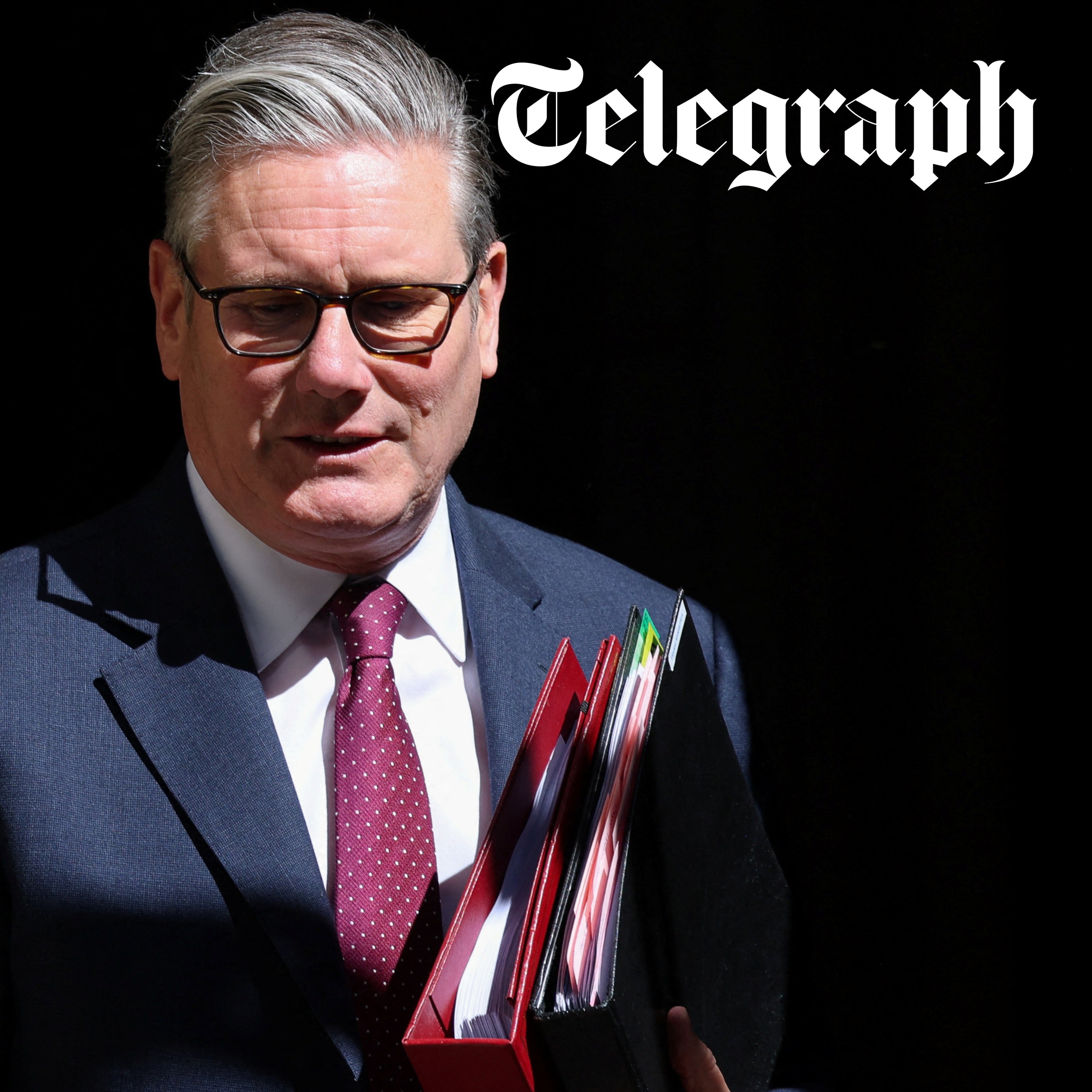
A Daily Tea roadshow in Warwick (with Jacob Rees-Mogg) covering political violence and free speech on campus, the outlook for Starmer’s final PMQs ahead of local elections, and challenges for students and young voters (university value, student loans, youth unemployment, housing, marriage/family policy, and voting at 16).
Jacob Rees-Mogg (Conservative MP; Brexit-era speaker; known for controversial free-speech views). Hosts: Camilla Tomini and Tim Stanley (Daily Telegraph). Audience questions from students (e.g., Harrison, “Anonymous,” Angus).
PMQs felt like a lower-stakes “end of term” before local elections; Starmer’s political capital limits a major reshuffle, and Reeves being “toast” wouldn’t automatically save him. Sectarian violence against Jewish people is rising and needs policing, but Rees-Mogg argues political violence is not uniquely worse than past eras. Freedom of speech should not be curtailed except where laws against violence are broken. University is valuable for “optionality,” but some degrees are “mis-sold.” Housing/planning failures drive youth left-leaning. Marriage stability affects social outcomes; benefits can discourage family formation.
alleged stabbing of two Jewish people; attacks on Jewish ambulances and a Manchester synagogue; Farage’s reported letterbox firebomb; historical references to 19th-century political violence and IRA killings; student stats (costs, youth unemployment, graduate earnings); housing ladder advice to “stay with parents”; discussion of 16-year-old voting.
Written by AI. May contain mistakes.
Jacob shares his previous experience at Warwick and its impact.
“Welcome to the Daily Tea on the road in Warwick with me Camilla Tomini and me Tim Stanley.”
Discussion on university life and political engagement.
“I thought nothing of it, but imagine my surprise when Jacob's team actually messaged me back.”
Evaluation of the latest Prime Minister's Questions session.
“To turn Bill Clinton upside down, as someone once said, I did inhale because that was the damn point.”
Speculation on the future leadership of the Labour Party.
“Well it was a kind of end of year review or end of parliamentary term review where it looked as if Kemi Badeknot wanted to move on from the Mandelson saga.”
Discussing the political ramifications of a cabinet reshuffle.
“So there may be a route for Burnham to get in, but not being in the Commons means he hasn't been blamed for the last two years, and that's quite helpful.”
Insights into the upcoming local elections and party dynamics.
“The last time he tried, he wanted to move Ed Miliband, and Ed Miliband said no.”
Examining the SNP's rise and its effects on UK politics.
“because on Tuesday night he survived a Conservative-led motion to refer him to the Privileges Committee.”
Discussion on potential coalition strategies among center-right parties.
“The SNP were in real trouble in Scotland with Nicola Sturgeon's domestic difficulties, to put it politely, undermining the SNP's popularity, it's failures in government, it's wasteful expenditure.”
Exploration of recent incidents of political violence and discourse in the UK.
“And therefore reform the conservatives who combined look as if they could win a comfortable majority need to come up with a plan of how we can work together.”
Explore the complexities of political protest and sectarian violence in the UK.
“Well, I would differentiate between sectarian violence and political protest.”
Understand the nuances and implications of free speech in political contexts.
“because it's so stressful and neurotic and paranoid.”
Discuss the economic challenges faced by students today.
“Coming up next, let's discuss some of the challenges facing the people in this room.”
Debate the value and necessity of university degrees in today’s job market.
“Well, they might not be enjoying it this morning, which is on us.”
Discusses the high costs associated with education and living for students.
“This is an addition to the£9 ,353 annual tuition fees.”
Explores the difficulties young people face in achieving home ownership.
“We've also got some data on high earnings.”
Examines attitudes towards marriage and family among younger generations.
“Just get into that basement and stay there.”
Analyzes why younger voters lean left and their political engagement.
“of a married home are lower on every single metric that you can think of.”
Discusses the implications of lowering the voting age and youth responsibility.
“So in 2019, people under 35 voted quite heavily for the Conservatives.”
Explores the resilience and evolution of British culture in a changing society.
“If you'd all said we should smoke, drink, fight for king and country and get married at 16, fine.”
Discusses the resilience of British culture amidst changing demographics and values.
“So, yes, I mean, British culture, can you ever kill British culture?”
Explores the impact of public inquiries on accountability in British politics.
“and the Prime Minister's accountability for the Mandelson scandal.”

Get the gist, explore an idea or ask about something said.
 Claude
On The Daily T, what are the key points of this episode?
Searching your listeningAutomatic transcript. May contain errors.
0:02The Telegraph.
0:30lifetime price guarantee. You'll always know you've got the best deal. Save big today at Mattress Warehouse. We're more than a mattress store. We're Mattress Warehouse.
0:44Tim, we're on the next stop of our UK tour. We're at a university. We're in Warwick. We're on campus and we are here at the invitation of the PPE Society, thank you very much, with Jacob Rees-Mogg. Today we're going to be discussing political violence in the United Kingdom, free speech on campus, is university still worth it, who are young people voting for and of course a fiery last PMQs before the local elections. Welcome to the Daily Tea on the road in Warwick with me Camilla Tomini and me Tim Stanley.
1:27Now, Jacob, this isn't your first rodeo because you've been to Warwick before. And on that subject, a former student called Dennis writes the following. I'm a longtime listener and first time correspondent. I was bemused to listen to your podcast with Jacob discussing the last Warwick visit. Why? Because I was the individual who invited him. I was one of the co-chairs of the Warwick Brexit campaign at the time. and I thought few could articulate the benefits and potential of Brexit as eloquently as Jacob. Ten years on, my guilty secret. I was absolutely steaming drunk when I emailed his team. Most people drunk message their ex or a chicken shop after a night out, but not me apparently.
2:12I thought nothing of it, but imagine my surprise when Jacob's team actually messaged me back. I'm extremely happy they did though. Jacob packed out the auditorium, was extremely friendly and charming with myself, the organisers and crowd alike. And I know for a fact he swung a couple of minds in favour of leaving at least. Andy sent us a photograph of you looking actually less grey, a little younger back in those days. Do you remember the last time you were here? I do indeed, yes. And it's not grey, it's the shaving home gets stuck in my hair. And if I took it out carefully, I think I would be as dark as I was then.
2:46It was a great event, very enjoyable, very interesting, as he says. a good audience and I was very flattered to be invited. I didn't realise he'd sent it when he had taken wine. Jacob, when you were a student, did you party hard? I invited lots of people to speak at lots of events but partying hard was not necessarily one of my greatest priorities. There was a lot of politics. Did you ever smoke weed? Certainly not. No, did you? This is not about me. Moving on to Peter's shoes. I've been asked that question before by other journalists and I always say the same thing because I'm afraid to say an awful lot of journalists think they're catching out politicians and then they can catch themselves out with that question.
3:25NB, Cathy Newman. Anyway, moving swiftly on. Honestly. Well, I did. You smoked, but you didn't inhale? No, no, no. To turn Bill Clinton upside down, as someone once said, I did inhale because that was the damn point. Yes, quite. And then I think I spent about half an hour in a bath throwing up. Right. Let's talk about PMQs. What did you make of it? Well it was a kind of end of year review or end of parliamentary term review where it looked as if Kemi Badeknot wanted to move on from the Mandelson saga. Is that a politically astute idea? I think so. We've had a number of PMQs that were getting more and more exciting and this was getting back to normal.
4:06It was a very straightforward PMQs. It wasn't the high octane of a Prime Minister who if he gives the wrong answer could be gone the following day. I doubt the Prime Minister will be fully in charge by the next PMQs because he's got to get through the local elections. So he was trying to make the best fist of it, and Kemi was being pretty tough in her questioning of his manifold failures. If you had to lay a bet, do you think this could have been his last PMQs? It won't be his last PMQs because it'll stay on until the leadership election is completed. OK, but figuratively speaking. Figuratively speaking, I hear rumours that Andy Burnham's lot are getting ready for immediately after the local elections.
4:48If Angela Rayner's good enough to come back in the cabinet, surely she's good enough to be leader, and that takes the weight of the HMRC inquiry off her shoulders. Ed Miliband is preparing himself very carefully. And Keir Starmer's a dud. I mean, all three of those have better qualities than Starmer to lead the country. Rayner is charismatic. Miliband is a highly competent departmental minister. He's not doing things I like, but at least he gets them done. Burnham is rather mysterious, but he seems to have rather following. Perhaps it's in the eyelashes. I don't understand why he's got a following.
5:22I don't think he's much cop, but he is perceived to be better than Starmer. He's also, crucially, not in the Commons. It's a mystery to people how he can be spoken of as a leader of the party when he's not in the Commons yet. But there is now an MP, Mr Dowd by name, who, when asked by your illustrious newspaper if he was going to make way for Andy Burnham, said, I don't want to comment about that at the moment, and he has one of the sixth safest seats for Labour in the country. So there may be a route for Burnham to get in, but not being in the Commons means he hasn't been blamed for the last two years, and that's quite helpful.
5:59That's one of the reasons he's popular. Kemmy Badenock did have quite a funny line, actually, in reference to Burnham and his imminent assault on the premiership. I didn't hear him say he's not reshuffling the Chancellor. It sounds like she's toast. Meanwhile, the former Deputy Prime Minister is on manoeuvres. This government is like a bad episode of Game of Thrones. His own people have turned against him, and all the while the Prime Minister is holed up in his castle, wetting himself about a visit from the King in the North. There was also a line in there that Badenock had picked up from the press that the next reset for the Prime Minister is going to be a reshuffle.
6:39And we're hearing reports that that might happen as soon as May 9th, so two days after the locals. Presumably Labour predicting a bloodbath and that he's going to try and rearrange the tech chairs on the Titanic, so to speak. And the notion that as part of that reshuffle, he's going to ditch the Chancellor, Rachel Reeves. Which he denied. He denied. So Kemi said that means she is toast. Would that save his bacon? No. Why would it save his bacon? I don't get why that would look impressive. I mean, who was going to replace her that would be any better? Well, there's rumours today as well that he's trying to do a deal with Angela Rayner and bring her back into the cabinet.
7:15I can't see her as Chancellor. Well, we did discuss this in the week. Rayner as Chancellor. Well, I'm just fascinated by the idea that Reeves being toast saves Starmer's bacon. I'm just wondering who the good egg is who is going to come in and save the day. this breakfast menu that we're establishing. I wouldn't have thought Angela Rayner would be anybody's first choice for Chancellor. I also don't think Starmer has the political capital to reshuffle his cabinet. The last time he tried, he wanted to move Ed Miliband, and Ed Miliband said no. And it's worth bearing in mind that the normal course of events is a prime minister commands a majority in the House of Commons.
7:54He says to a member of the cabinet, you're out. The member of the cabinet says, okay. If a member of the cabinet says no, and the prime minister doesn't really command the commons, that's really difficult. The prime minister then has to go to the king to get the minister sacked. This hasn't happened since the 19th century. Ministers have always said yes. They've sometimes refused to be moved. And then you have the thing. And I expect he would try to move Reeves rather than sack her outright. You then get Reeves saying, no, I won't be moved. Does he go the full sacking route? does he then lose even more people on the back benches?
8:30I just don't think he's got the political capital for a major reshuffle. It's just not there. And he does seem to have the confidence of Parliament because on Tuesday night he survived a Conservative-led motion to refer him to the Privileges Committee. He won that 335 votes to 223. There were only 15 Labour MPs who rebelled and they were all names you could pretty much second-guess, Nadia Whittam, John McDonnell, etc., though 53 people did abstain. Yes. Is that significant? Well, I would just make one note on that, that the Tories made hay with the idea that Nigel Farage and Robert Jenrick weren't present, even though the campaign slogan for reform right now is vote reform, get Starmer out.
9:10Well, you wouldn't even vote in the Commons to try and force him to face further scrutiny. The Tories might have bungled this somewhat, Jacob, in actually sort of reaffirming his position, because clearly that rebellion that you're all saying is taking place behind closed Labour doors certainly isn't happening in the Commons, is it? Oh, I wouldn't be so sure about that. I think they put down the right motion. Had it been a straight no-confidence motion, every Labour MP would have backed the Prime Minister and would have done so believing that was the right thing to do, that they don't want a general election.
9:46This motion, by being a privileges committee motion, a lot of MPs would have gone through very reluctantly, thinking they were sullying their own reputations by supporting a Prime Minister in whom they don't have a lot of confidence. People will do that once, but they won't carry on doing it. I wouldn't read into this vote a big boost to backbench confidence in Starmer. I would read an effective whipping operation, but whipping operations have a half-life that you can do them sometimes, but you can't go on and on whipping an unwilling, a reluctant backbench group. Now, we saw in the back and forth between Kemi and Starmer what the local elections are likely to be about.
10:28Kemi accusing Starmer of producing no growth and being a weak leader. Starmer countering that we now have an employee rights bill to celebrate. And also that the Tories got it wrong on Iran. But many people, including some in this room who will, of course, have the vote, will be thinking these two parties are almost irrelevant to the local elections. They're the two parties that are going to lose, right? Yes. And actually what really matters is the reforms. Green, applied in Wales, and the SNP in Scotland. Isn't it striking that our parliament, which every Wednesday we tune into, is a battle between the two parties that are losing?
11:07It's a very important point, that Starmer's failure really has reinvigorated the SNP. The SNP were in real trouble in Scotland with Nicola Sturgeon's domestic difficulties, to put it politely, undermining the SNP's popularity, it's failures in government, it's wasteful expenditure. I mean, the list in the SNP goes on, not failures in education, failures in health, really bad government. But the SNP is going to win. And Plaid looks to be winning in Wales with reform coming a strong second, with the Labour Party, which has dominated Wales for 100 years, coming third, and the Tories coming fourth.
11:46Now, Nigel Farage has said something which might please you, Jacob, which is that, well, he didn't say yes, but when he was asked about a coalition with the Conservatives, he said, we'll have to see. Now, that's not no, so it means the door, we are interpreting that to mean the door is open, yes, maybe. And you have long argued that there needs to be some sort of pact between the two parties if the centre-right is to win an election and govern the country. Well, I agree that I've been saying this, obviously. I have been saying it. Bear in mind in Scotland and Wales, it's the de haunt system. It's not first past the post.
12:18So there is no real penalty for voting for a small party. In Westminster elections, there is. And we are looking, those of us on the right, whether reform or conservative, at the prospect of a Labour coalition, possibly a Green coalition, Zach Polanski, the SNP, running the country in 2029. That seems to me to be a straightforward dereliction of duty. And therefore reform the conservatives who combined look as if they could win a comfortable majority need to come up with a plan of how we can work together. Shall we move on to talk about political violence and political discourse? Yes. We're obviously aware that there were some who wanted to protest outside this event and we're happy for them to do that because at The Telegraph we do believe in freedom of speech and expression.
13:03Of course. But there have been a couple of worrying developments this morning that I think we need to reflect on. The first of those is that there has been a stabbing of two Jewish people in gold as green. There has been a man arrested, so we are slightly limited on what we say. But we have that event, and we know that that also follows the attempted arson attack on some Jewish ambulances. We, of course, remember the attack on those who are attending the Synodogue in Manchester. And generally, I think we can all agree that there's a rather febrile atmosphere right now. We could even reflect the recent events in America and that attempted attack on the US president at the White House Correspondents' Dinner.
13:42We also have today, exclusively reported by The Telegraph, that Nigel Farage, the leader of reform, has revealed that last year he had an incendiary device put through his letterbox of his home, a so-called firebomb attack. And we know as well that there is a trial imminent regarding a firebomb attack on the Prime Minister Keir Starmer. Are we seemingly unable, Jacob Rees-Mogg, to have civilised debate in this country that doesn't descend into protest and violence? Well, I would differentiate between sectarian violence and political protest. And there is, I'm afraid, a rise of sectarian violence that has particularly affected the Jewish community.
14:25This is straightforward, nasty crime that needs proper policing to deal with it. it's inexcusable it's similar to the sectarian violence there was in northern ireland during the troubles i don't think that boils over generally speaking into political violence i think one should contextualize this there used to be much more political violence ai has been used to study local newspapers in the 19th century to look at political violence and we 19th century was all lovely and democratic and democracy was growing and we had the 1832 and the 1867 reform acts. Actually both parties paid people to go and smash up the other side's meetings.
15:10There was an enormous amount of political violence going on which we've forgotten about because it was only in the local newspapers which nobody's bothered to look at. If we take the what happened to Donald Trump this is very unusual in a British political context but Spencer Percival was murdered at the beginning of the 19th century. There was an attack made on Robert Peel where his private secretary was murdered in mistake for Robert Peel. I think there were nine assassination attempts on Queen Victoria. So we sometimes forget that the world has always been quite dangerous. And more recently, politicians have been killed by the IRA.
15:44By the IRA, and then two more recently by really mad people. And likewise, when people say, this is the first time we've had sectarian violence in this country, I always think you've not been to Belfast. Indeed, or indeed Glasgow in the 1970s. So all violence is unpleasant and there shouldn't be violence against politicians. But do I feel as a politician particularly worried? No, I don't. I don't think it's any worse than it's ever been. And I think freedom of speech is marvellous. I think the last time I got here, I got covered in glitter. Well, if that's the worst you get when you go and make controversial speech on Brexit with people who fundamentally disagree with you, I can live with that.
16:24Right. But your sein is unusually foie. I hope there are no French students here. Pardon moi? Two MPs have in recent years been murdered while carrying out their duties. And many MPs actually feel very worried and feel they can't do their job because of the level of hostility that they face. So you may feel that way, but others do not. And the problem is that it creates an atmosphere within which people are reluctant to talk, reluctant to do things. because it's so stressful and neurotic and paranoid. Even if there is no real threat, it is the perception of a threat which can shut down debate.
17:01We should also point out, by the way, that when we held our event on Monday night in London, which people can listen to on Thursday, Zia Yusuf of reform had to come with a bodyguard. I mean, this is becoming a more frequent occurrence. We understand that there is protection or close protection for members of the cabinet and the prime minister, but now for people who are in politics, Yusuf isn't even a sitting MP and this is required? I mean, I think it's a matter of judgment of individual politicians. I've never felt it necessary to have a bodyguard. I mean, when I've done events, there have sometimes been security provided, as there has been very efficiently today.
17:38But I think most MPs, most public figures, can go about their business extraordinarily safely. We are a very, very safe country. Yeah, I get a few people who shout disagreeable things at me, who don't entirely hold my view of the world and think of funny things to say. What's the most disagreeable thing that's ever been shouted at you, Jacob? Oh, Lord, I can't remember. Somebody said something to me that... Oh, that's right. I thought this was really very funny. I was walking along Stories Gate just by Westminster Abbey and I was walking along quietly and somebody was at the Westminster Abbey and called out to me, I thought you normally goose-stepped.
18:19I thought that was really quite clever. and amusing rather than being deeply offensive. Right. But some people feel that you pose a threat to people's safety by having your views and promoting them in a certain space. I mean, okay, I'm not saying I agree with that, but take the view, for instance, that someone goes to a university to study chemistry and they're black or gay or whatever. They're not here because they want to have a political debate. And then some right-wing person turns up and starts questioning from the way they see it, their very being. Don't they have a right, they would say, for that not to happen in a place which is, for them, their home?
19:01Which also, by the way, they're paying a lot of money for. Well, I think this is very odd to suggest that people like me are questioning people's very being. Of course we're not, in any circumstance. That's how they perceive it, that's how they feel it. I think that would be a very odd thing for anybody to perceive, and I think they couldn't point to anything I've said that would question their being in any way. I'm not that against chemists. What have they done wrong? Indeed, I'm married to one. My wife did chemistry at Bristol. That's not what I'm talking about. You know what I'm talking about.
19:28Oh, really? I just think there's such an odd view of the world that there is nothing that I have said, nothing Nigel Farage has said that would question people's right to lead the lives they want to lead. That believing you should have secure borders is not a racist view of the world. It is a very sensible way of ensuring the country has the ability for everyone to get on, to ensure that people feel that their taxes are being properly used and not wasted on people who've come into the country illegally and so on and so forth. Having secure borders is not hostile to British citizens. It's saying to people who aren't British citizens, we don't have any room for you.
20:06That is a perfectly reasonable thing to say. So I think freedom of speech covers all of that. And that if somebody gets unduly offended by freedom of speech, then that's just bad luck. I'm not the great advocate of snowflakes. Is there a limit to that freedom of speech such that we could argue that permitting a certain kind of speech legitimizes it because we're allowing something to be said even if it is extraordinary and is something which collectively we ought to say you shouldn't be saying that. But if we just create a neutral platform and say go ahead and say it is there a risk that we are effectively If not condoning permitting something that could metastasize into something evil further down the line.
20:49I wouldn't Allow the normal law to be broken you cannot go around saying I think you should stab So-and-so or you should kill somebody that's perfectly reasonable advocating violence is wrong is against the law against the normal law It's not to do with speech. Are you allowed to say that you believe things that others find offensive. Yes, of course you are. Otherwise, there is no freedom of speech. And I think your argument that says you must stop freedom of speech at a certain point because of what it may lead to becomes enormously subjective because some things that I might want to lead to, you might think are dangerous.
21:25And who is to decide? So I think you have freedom of speech. I also think... Well, I was going to say the person who decides, the person who should have some input is the person whose life might be threatened. by that speech. I mean one half of this is a discussion of free speech, the other half we were talking about sectarian violence. I presume maybe you would, you'd feel comfortable with someone coming to this campus and saying Islamist things that might further down the line, if we don't police it, might encourage someone to attack Jewish people. Well I think Muslims are entitled to say that people should convert to Islam, that is what their faith believes, as I'm entitled to say that if you want to save your soul, you shall become Catholics.
22:06And I do say that without any shame or hesitation or equivocation. Repent and believe the gospel. That's what people should do. Should I not be allowed to say that? And therefore, if I'm allowed to say that, surely the Muslim should be allowed to say that you must do whatever the Muslim equivalent formulation is. And that doesn't mean that I'm not responsible for IRA terrorists who use their Catholicism to defend their terrorism. Indeed at one point in my childhood we had the armed police in the house protecting my father from the IRA. So Catholic being protected from people who purported to be Catholics.
22:46And I think we've got to say the same about Muslims. Just because there are some Muslim extremists, and this is a real problem, I don't want to understate that problem, that does not mean that asking people to convert to Islam is wrong or dangerous or should be stopped. We're in a university. Coming up next, let's discuss some of the challenges facing the people in this room. Students, student loans, graduate jobs, record high youth unemployment and the seeming inability for the young to get on the housing ladder.
23:25Right now at Mattress Warehouse, save up to$800 warehouse-wide. Get buy one, get one free deals, plus a free adjustable base on select mattresses, 0 % interest financing, free delivery, and our exclusive lifetime price guarantee only at Mattress Warehouse.
23:49As we are filming at the beautiful campus of Warwick, it is incumbent upon us to ask if everyone's enjoying Warwick. OK, people's heads are nodding. Somebody's shaking their head. Where would you rather have been? And do that. Well, they might not be enjoying it this morning, which is on us. And do they consider it value for money? Who here thinks university, can we have a show of hands, is value for money? What are you now paying? It's£9 ,750 a year. One hand just went up at the front and then he put it down again. So we've got some people thinking it is value for money. OK. Who thinks it isn't value for money?
24:27Right. OK. OK. So kind of split. But who believes that for them it's necessary? Right. So to get on a life, this is something you have to do, but it is still too expensive. Interesting. OK. Well, the government is capping the maximum interest rate on Plan 2 student loans and Plan 3 postgraduate loans at 6 % effective from September. But that hasn't changed the fact that people are still owing a vast sum of money. Yes. Is it worth it? Well, if you look at a career like journalism, is it worth it? You do not have to have a degree to be a good journalist. And a good example to cite is somebody like Nick Ferrari, who I believe rejected an offer at Cambridge in order to join his father's news agency, Ferrari Press, and obviously has gone on to have an illustrious career.
25:16I think one of the biggest problems facing younger people today is the rather spurious requirement of being a graduate on jobs that absolutely don't merit a degree. and I think that I think that you're I'm speaking as a mum as well as a former student of law at Leeds University I did the degree because I was interested in it obviously it didn't really have that much bearing on me then going on to become a journalist although it did come in quite handy when we had to kind of freshen up our knowledge on defamation and all the rest of it when I look at my own children I think that requirement that I was brought up with you must go to university at all costs has changed because people are getting degrees in subjects and then struggling to get jobs.
26:01But I do blame employers for that if they're slapping graduates only on applications that actually don't require a degree level of knowledge in that particular field. What do you think, Jacob? I completely agree with Camilla. It's my default position, actually. I usually completely agree with Camilla. But that is why people have to take degrees. It's what I say to my own children. I've got hordes of children. I think six at the last count. And I say to them, it's very important to go to university because it's all about optionality and keeping your options open for as long as possible. And that if you go into the great world of work at 18, there will be lots of jobs you can't get because you don't have a degree.
26:42But you'll also find when you're 30 and you're applying for a new job that people say, what was your degree? And if you fill out didn't have one then you knock yourself out from competition for those jobs so it is very important to do even if the degree isn't important to the career that you go on to or the knowledge that you get isn't relevant to what you go on to it is important in ticking that box i then think there is a hierarchy of universities and you are in the top part of that hierarchy and therefore you are likely to be in a position where you're actually getting quite good value for money because you're being very well taught, you're in an attractive campus, you're meeting similarly intelligent people, you are therefore in a position to go on to do great things.
27:26There will be some people doing courses in really third-tier establishments that are not going to be worth the paper that they're written on, won't help them get a job, and they're basically being misled into doing these degrees because they've been essentially missold, both by the government and by the universities. Jacob, you say you've got six kids. So let's do the maths, which probably three of us aren't qualified to do. The Higher Education Policy Institute estimates that a student needs£61 ,000 to fund a, quote, minimum socially acceptable standard of living over a three-year degree, which rises to£77 ,000 in London.
28:03This is an addition to the£9 ,353 annual tuition fees. So you could, in theory, be paying about£70 ,000 for six kids. He's already paying that in private school for you. That's true. That's probably actually a saving on Eta. I can't ask your hearts to bleed for me on this. I have just, just paid about a week ago my last set of school fees for my eldest son, which is a delightful day of celebration and song. So what comes at university is, as Camilla points out, less of a problem. But I'm very lucky and I never want to hold up my own circumstances being typical. But the scariest stat here, and do you all agree with this, average weekly costs for a first year student is£418 that includes rent weekly that makes sense somebody who does maths is nodding over there thank you sir how many pints is sorry but equally we do have a stat which suggests that actually 68 percent of undergraduates are in paid employment which is a notable rise from 45 percent in 2022 however the UK youth unemployment rate is at 16 percent as of March this year that's up from 14.5 percent last year London has the highest rate at nearly 25 percent right Jacob did you have to pay anything when you went to university oh no no I know Camilla did you have to pay anything when you went to university no I just missed out.
29:35Did you? I did. I paid a little bit. But we are part of the luckiest generation in that we got all these goodies for free. And this generation is still being compelled to go through university and they're being bilked for it. And once they come out of it, you're also going to face sky high housing costs and a labour economy that because of AI is probably going to be shrinking. So it does feel as though we're stacking everything against graduates. Absolutely. We've also got some data on high earnings. It does suggest that people who are graduates do earn more than those who don't. So the average earnings for graduates grow by 72 % compared to 31 % for non-graduates.
30:20Shall we move on to home ownership? Who here in this room thinks that they have a realistic prospect of being on the property ladder within the next decade? Well, you're wrong. I was 40 when I got on the property ladder. It ain't easy. I don't think they are. I think, you see, they're at Warwick, and they're ambitious, and they're driven, and therefore they will be able to do it. That was the question of how many thought they would. How many want to be a homeowner by, let's say, the age of 30? Let's get that. But you see, that's the real... All hands are up, by the way. That's right. That's the real thing, it seems to me.
30:59And it's been a dreadful failure of politicians, and I've included myself in this, of accepting planning laws that have made that so much more difficult. That actually people of my generation were buying houses by the time they were 30. Why? Because we were building enough houses for the population that we had. That's the key thing and the key obstacle. But I just want to warn the people putting their hands up. If you do own a property, you then have to pay for everything in the property. It is a nightmare. It's like having a child, but a child that just eats and eats and eats, and there's always something wrong with it.
31:30It's always breaking down. My advice is move into your parents' house and stay there as long as possible. Because nowadays, those people live forever. They've got nothing to do. They've got amazing pensions. They've paid off their mortgage. They owe you, if anything, on balance. Just get into that basement and stay there. That's my advice. On that very cold note, as a happily married mother of three, can I ask a more personal question of you all? Who here would aspire to be married within the next ten years? Ah, you see, that's up there with the I'd like to own my own house. This appeals to the two Catholics either side of me, doesn't it?
32:09And the one in the middle, I hope. I'm the lapsed Catholic. You haven't apostatised in the middle of this presentation. Jacob, let's not, for goodness sake, get on to my lapsed Catholicism. Otherwise, I'll be rounded on not only by Tim and you, but also my father. Jacob, that's encouraging. People still want to get married and have many, many children like the little mogsters. Well, you didn't ask them about children. Well, who here would aspire to have many, many children like the mogsters? Ah, you see, this is heartwarming stuff again. We should say, because the viewers can't see, it's quite a male audience.
32:41But it's absolutely wonderful. We'll ask the ladies in a minute. I would say having lots of children is great joy. but the thing we should worry about is that we are and I know I keep on harping on about this point it's not just to flatter the audience we are here with the intellectual elite who are going to be the most successful and the achievers in society marriage has become something that is very closely linked to your socio-economic group and that essentially people who are better off are continuing to get married and people are worse off are not getting married with devastating cultural consequences, that the chances of children brought up without the stability of a married home are lower on every single metric that you can think of.
33:26And this is where it was very interesting what Nigel was talking about on the radio this morning, Nigel Farage, about family policy. We don't particularly need family policy, dare I say, for people in your position, because you're doing it for yourself and you don't need to be told. We need family policy for the least well-off, people on benefits who are actually much better off if they are not a family. The benefit system hugely encourages people to pretend that they're not in a family if they are, or to avoid getting into one if they're not. And that needs, to my mind, fundamental reform. There's an irony in that many elite liberals who argue against marriage are themselves, in fact, married.
34:04And have all the advantages. They live like good conservatives, but they proselytise against marriage. All I would say to young people, because youth is so precious and you have so many opportunities, waste it. Just waste it. You don't have to do anything before you're 30. It's only really around 30 you have to start thinking about jobs and marriage and all that sort of thing. Just take those glorious years and just wee them up against the wall. Just seriously, go to Europe, bum around France. Really. We might not be welcome. Just for the record, this is not the advice I would give. I would suggest a rather more cautious approach.
34:41If you work really hard like I do, you end up doing a roadshow with Jacob and Rhys-Margaret at 43. I was married at 27 and had my first child at 30, so I also disagree with Tim's analysis. Shall we go to questions? Is Harrison in the room? Hello, Harrison. He asks the following. University students being left-leaning isn't new. However, with evidence starting to mount that they aren't, unlike previous generations, moving to the right as they grow up, why do you think this is? and how can the right appeal to younger people? This is problematic for your side, Jacob, if, as the old adage goes, people aren't getting more right wing as they grow up.
35:22Yes, I think there are a number of things. I would go back to housing. I think that if people feel they can't get onto the housing ladder, if they don't have a financial stake in society, it's much easier to be on the left if you're not paying all the bills for the nostrums of the left. I'd also say that these things change between elections. So in 2019, people under 35 voted quite heavily for the Conservatives. In 2024, none of them did. And that was partly to do with the general popularity of the Conservatives. I noticed that reform is doing very well with young men, and the Greens are doing very well with young women.
35:58And so politics is of interest to younger people, and it's a question of how you turn that into votes for your party. It's one of the reasons I think Conservatives and reform need to work together, that we have an electoral coalition that could work, but that young people are currently not joining conservative groups. I think it's true of religion, because there is a revival going on. It's not quite as big as some people talk about. But when I go to church, I meet young people in a way in which, when I was young and I went to church, I didn't meet anyone. And it was so frustrating to have to go through the experience of discovering Christianity alone.
36:32It made you feel like a real weirdo doing it. And I'm very jealous of this generation that if you are interested in religion, and you do want to try out a church, you'll find other people doing the same thing. And that's a wonderful thing to see. In fact, sometimes I speak to them and I think, ooh, you're a bit religious. I think they're more religious than me. So I don't know if it's an outlier, but I feel that younger people are getting more into God. They also like the real deal, both in religion and in politics. They don't want the mushy centre. So the bit of the Catholic Church I won't surprise you, places to is the extraordinary form, the Latin mass, the most traditional.
37:10Its seminaries, the seminaries, the Institute of Christ the King, of the oratorians, are full. It's what people want. At the other end of the scale, the evangelicals are doing very well too. The middle mush is where people don't want to be. And I'm afraid both the Conservative Party and the Labour Party got into the position of being the middle mush. and I hope the Tory party gets back to being proper Toryism. I think Kemi is doing very well on that and therefore people will be attracted to it. In a kind of similar vein, Anonymous asks... Is Anonymous here? Where's Anonymous? OK, this could be your question, Anonymous.
37:50What are your thoughts on votes at 16? Now, this is quite interesting because the Sunday papers run a story suggesting that actually Keir Starmer's bid to give votes to 16 and 17-year-olds is threatening to backfire on him because a lot of those younger people won't vote Labour, they'll vote for the Greens, and Nigel Farage claims that the youth vote for reform is rising. Jacob? Can I ask the audience? Yes. Can I ask you a series of questions? At what age do you think you should get married? 16? Hands up. OK. 18 for marriage? It should be 18. What age should you be allowed to drink? Should you be allowed to drink at 16?
38:32Oh, half the room is saying yes Should you be allowed to smoke at 16? Yeah Very few The smokers have just put up their hands, everybody Should you be able to fight for king and country at 16? About a third of the room, maybe Do you think you should vote at 16? Ah Very few people Very few people And I think you get my point That I think we need an idea of when you are an adult and I don't know really whether this is 16 or 18 or 21 but I think you need to settle on it and it's absurd to say you can vote at 16 but you can't have a pint. I think it's just stupid. I also think it's absolutely crackpot to be saying you can't go on a mobile telephone to use some social media until your 16th birthday.
39:19You're not allowed to use it at all when you're 15 and 364 days. The next day you can spend all day on social media and vote. So on the one hand we're not trusting young people a bit and then we're giving them the vote. I just don't think this makes sense. When the vote was reduced to 18, there was a royal commission. They looked at a whole series of other ages that it could be. They looked at other areas where people reached maturity and were given responsibility or power and they decided on 18. This is just done for narrow political advantage, which is why it won't be done because it's now a narrow political disadvantage.
39:55And that's why I'm not in favour of it. I wouldn't mind. If you'd all said we should smoke, drink, fight for king and country and get married at 16, fine. Then have the vote. We have another question from another anonymous who asked, do you think British culture is at risk? Camilla, do you think British culture is at risk? I'd like the person who asked that question to kind of... Well, you want to define British culture, but when you saw the king speaking to... And we'll discuss this a lot more in our royal special from Worthing tomorrow. But when you saw him addressing Congress, I felt like I was seeing the embodiment of Britain.
40:27Yes. Even though he's Greek. No, he's not. He's only half-country. The Duke of Edinburgh, the late Duke of Edinburgh wasn't Greek anyway. All right, all right, OK, fine. That's like, oh, St George is Turkish and da-da-da-da. Right, right, right. But St George really was Turkish. Yes, I know. Whereas Prince Philip really wasn't Greek. But didn't he also feel... There was a debate as to whether St George was Turkish or Greek. It's all Greek to me, Jacob. But he's certainly not British. No. But some people said when they saw his brilliant speech, in which he talked about our tradition of Magna Carta and Christianity and those things, Some people said he never says that in England.
41:01I'm not sure that's true. In fact, it's not true. He does say these things all the time. But perhaps it's going abroad that he looks more British. But I feel like the way I always feel most English. Well, any Englishman next to Trump is going to look extremely English. And I actually did, as I came up here on the M40, listen to both speeches, the Congress speech and then both of the speeches at the state banquet. And I think what he encapsulated very, very well indeed was the good British sense of humour. Yes. You know, a number of little jokes, not really jibes, but a few jokes about, well, you had suggested that if it wasn't for the Americans in the Second World War, we'd all be speaking German.
41:39May I suggest that if it wasn't for the British, you'd all be speaking French. Yes. He made a little reference to independence happening 250 years ago, which in British speak is the other day. And he encapsulated, I think, in carrying on with the visit. I mean, let's be honest, the king and the queen are in their 70s. there had been an attempt on the president's life. Security's at an all-time high. And they embodied the sort of British spirit of keep calm and carry on in going out there, not least in the face of a very, very fragile special relationship that the king has been required to repair, even though he's not meant to meddle in politics.
42:14So, yes, I mean, British culture, can you ever kill British culture? I'm not sure. No, I don't think so. Jacob? Oh, I think British culture is enormously strong and successful and has been one of our great global exports. Just look at America's 250 years old. What was it trying to do 250 years ago? Perfect the English Constitution and that's what its constitution is about. Why were they fighting? They were fighting because they wanted to be treated like English gentlemen and they felt they weren't being. And so now I think our culture is extraordinarily strong. Our values are strong. And that's why so many millions of people want to come here.
42:48They want to come here because we are a great country. But if too many people come here, I guess I infer from this question, if too many people come here, then does a country which is no longer, say, 80 % Anglo-Saxon Celt, is it still British? Oh, yes, yes. Really? Yes. We've got to control immigration. We must keep immigration under control. We must bring control onto immigration, which we have failed to have. But no, I think that once you're here and you've got a British passport, you are British. And actually you find that some of the greatest advocates of British virtues are people whose parents and grandparents came to this country.
43:26But let's take one thing the King listed as an example of what unites Britain and America, Christianity. He did also talk about interfaith dialogue, yeah, but we are a Christian civilization. Let's say hypothetically in 30 years' time we're no longer majority Christian. Are we still British? It's not about people coming here who belong to other faiths. It's about this huge number of people in this country who know nothing about the Christian faith because they haven't been told it in schools, they don't have a local vicar who knocks on their door and says, why weren't you in church on Sunday? It's the churches that have not been encouraging Christianity.
44:01You know, that's not quite my question. I'm going to nail this one because, okay, it's abstract, but imagine if overnight Britain became majority, let's randomly say, Hindu. I mean, practising Hindu. Would it still be Britain? Well, I think Rishi Sunak, whom I wasn't the greatest admirer, is a practicing Hindu, is in fact very English in his ways. He likes going to watch the Test Match. He was educated at Winchester. He's got very English habits. Obviously, I would want him to join Holy Mother Church, as I'm encouraging everybody at every opportunity. Yes, that's not quite the question I'm asking.
44:38If Christianity is definitional to British culture and we are suddenly 60 % another religion, are we definitionally British anymore? Yes, we are, because the culture of Christianity is written into our laws and into our constitution, into our structures in such a way that if one generation was not actually Christian, that would not fundamentally change the culture. Our culture is partly built from our religion, drawn from our religion, drawn from our history. Yes, but I guess if the religion changes, then presumably the laws and the institutions would change with it, because why would, if we were a majority Hindu country, why would they wish to continue with laws and institutions which are expressly Christian.
45:20Because that would take a very, very long time to change all the laws, by which time they'd probably all converted to Rome and joined me. Let's wrap up by bringing this full circle because we started this podcast talking about PMQs and the Prime Minister's accountability for the Mandelson scandal. Let's end with Angus's question. Where's Angus? Angus, thank you. Are there too many public inquiries in modern British politics? During the Thatcher administration, none took place. However, since 1997, over 70 inquiries have been launched. In a fragile world which requires strong leadership, are we too concerned with bringing accountability to public life?
45:59Well, Angus, I completely agree with you. I mean, we have far too many inquiries that cost millions and millions of pounds and don't in the end tell you anything at the end. I think the COVID inquiry is utter waste of time and money. Other countries have done it for a tenth of the cost in a faster amount of time. We did it very well. Andrew Tyree did it. Actually, who I was meant to be having lunch with today. I cancelled my Lord Tyree to come. I don't know why you can't just get a meal deal at a lunch time. Andrew, if you're listening to this, my apologies, but I can at least praise you for what you did.
46:31He's waiting at boodles right now. Poor bloke. Garrick, actually, but let's hope not. that he did a house of commons joint committee actually the lords and commons into the banking crisis it was done in a few months it cost a couple of million pounds rather than hundreds of millions of pounds and it came out with some very sensible recommendations parliament is the right way to hold bodies to account and to do inquiries through parliamentary committees not through these wildly expensive endless inquiries and i think we need to get a grip on Although when there's a grotesque state failure, for instance, in the case of Hillsborough, you do and actually infected blood.
47:12Yeah. Probably one of the biggest scandals. And Reform and the Tories have been demanding a specific inquiry on the rape gangs scandal. And of course, the Labour government resisted and resisted any inquiry at all. And now there are question marks over whether the scope is wide enough. there are some significant societal injustices that can only really be addressed with an inquiry can i come back on that i'm sorry sure conversation i don't agree i think it's all part of our move away from ministerial decision making and accountability to parliament to hand things out to quangos and third parties the infected blood scandal was an absolute disgrace and everyone knew that.
47:56It didn't need an endless inquiry. It needed a minister to say and a prime minister to say this is dreadful. We have to compensate people. That wasn't difficult to do. Ditto Hillsborough. All the evidence was there. It didn't need, what is it, 40 years of inquiry. It did after a huge amount of obfuscation and actual downlight line by the police force involved. So what you actually need is politicians who do things and make decisions and have the gumption to get on with it. I think the inquiries become a means of buying time. And there's one thing that absolutely astonished me about my period in government, and that is the willingness of governments to defend predecessor governments of a different political party from decades ago who did something wrong and trying to say they didn't do anything wrong and therefore having an inquiry later.
48:48You need politicians to take decisions, to take responsibility and then it could all have been dealt with much faster and the sadness of the infected blood inquiry there's a lot of people who ought to be compensated will have died before they get compensation and that's partly because you've had this endless inquiry very good well thank you very much jacob for joining us and thank you all for being here uh remember if you can vote please do vote vote conservative vote conservative we'll have no party political broadcast on this stage thank you very much thank you very much indeed to the ppe society for inviting us here we are going to be back tomorrow and tomorrow's episode is monday night's event yes which is worth listening to just for the fisticuffs between zia yusuf and james cleverly handbags james murray the government minister was left unscathed really as as right went against right what james murray unscathed against you that's quite something there were a few bruises and a Thank you, but it was silly, really.
49:46There was too much blue on blue and not enough blue on red. It was revealing. It was revealing. And then we've got our right royal special, Tomorrow in Worthing, Tim, Lady Colin Campbell and Phil Dampier, the former royal editor of The Sun. That's going to be playing out on Friday, so a busy week ahead. But thank you very much to everybody at Warwick University for hosting us today. We've really enjoyed it. Thank you. Thank you. Thank you.
50:32We'll be right back.
50:45And get a free adjustable base with select mattress purchases. With 0 % interest financing and free delivery available, getting better sleep has never been easier. And with our exclusive lifetime price guarantee, you'll always know you got the best deal. Save big today at Mattress Warehouse. We're more than a mattress store. We're Mattress Warehouse.
Keir Starmer faced a fired-up Kemi Badenoch at the final Prime Minister’s Questions before the local elections this lunchtime, with the PM refusing to explicitly rule out sacking his Chancellor, Rachel Reeves.
Camilla Tominey and Tim Stanley are live at Warwick University with special guest Sir Jacob Rees-Mogg as part of the Daily T: On the Road, who says he has heard Andy Burnham is ready for a leadership challenge immediately after May 7.
They also discuss the creeping rise of sectarian and political violence, with an antisemitic attack in Golders Green, North London, and Nigel Farage admitting to this newspaper that his home had been “firebombed”.
🎟️ Tickets to our show in Worthing, the final stop of The Daily T roadshow, are limited – book yours now!: https://www.telegraph.co.uk/politics/0/live-event-the-daily-t-on-the-road/
We want to hear from you! Email us at [email protected] or find @dailytpodcast on TikTok, Instagram and X
► Sign up to our most popular newsletter, From the Editor. Look forward to receiving free-thinking comment and the day's biggest stories, every morning. telegraph.co.uk/fromtheeditor
Producers: Georgia Coan and Lilian Fawcett
Senior Producer: John Cadigan
Executive Producer: Charlotte Seligman
Video Producer: Will Walters
Camera Operator: Andy Mackenzie
Editor: Camilla Tominey
Highlights
Hosted on Acast. See acast.com/privacy for more information.


