
 Ask ChatGPT


 The Daily T
28 May 2026 · 42m · 11 chapters
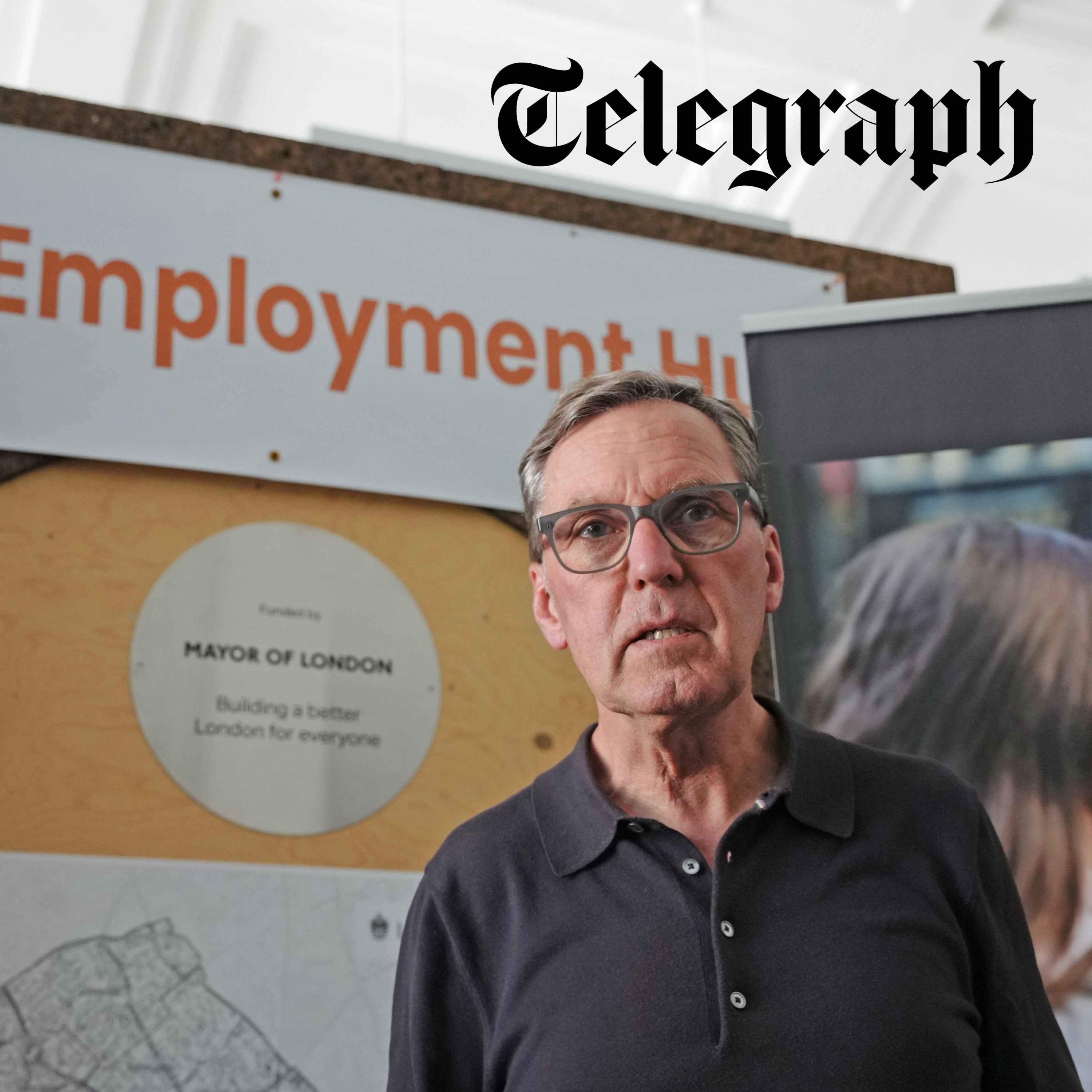
The episode argues that Britain is creating a “scrap heap” for young people while also claiming Brexit tariff cuts are lowering supermarket prices. It cites a government report (Alan Milburn review) predicting NEETs (18–24 not in education or employment) rising by nearly a third to over 1.25 million in five years, and claims benefits are too easy to access and too hard to leave. Key proposals: scrap welfare for those who haven’t contributed, toughen disability/PIP assessments, raise barriers to incapacity, introduce national service, and reduce incentives that discourage employers from hiring young people. Notable examples include PIP/ADHD “mild anxiety” cases, paper-round work ethic, and alleged “disappearing messages” on WhatsApp.
Serge Sefai (executive headteacher, Peckham’s St Thomas the Apostle School) and political editor Tony Diver (Telegraph), plus discussion of Alan Milburn and Peckham headmaster Serge Sefai. A second segment highlights a Telegraph exclusive about Peter Mandelson texting ministers while US ambassador and ministers allegedly trying to conceal those communications.
Written by AI. May contain mistakes.
Discussion on the government's list of everyday essentials and how Brexit has affected food prices.
“Jacob, the government has come out with a list of 125 what they call everyday essentials on the supermarket shelves, boasting that the prices of these goods are coming down because of tariff deals.”
Debate on youth unemployment rates and the welfare system's impact on young people.
“Because there's lots of figures in there.”
Exploration of immigration's impact on job availability and wages for British workers.
“that was promoted to act as it now is by Angela Rayner that has made employers much less willing to take people on.”
Exploration of how increased labor supply affects wages and benefits in the UK.
“And throwing the race card around is a very cheap way of avoiding discussing the real issue.”
Discussion on the generational differences in responsibility and accountability among youth.
“But I must be at the beginning of it and you at the very end.”
Critique of the welfare system and its effects on youth employment and motivation.
“You know, it sounds like I'm being horrible, but the welfare system is a wonderful thing.”
Discusses the issues within the education system and welfare abuse.
“And now we've got the welfare system, which I've already said.”
Introduction of Tony Diver, the political editor, to discuss current affairs.
“dives into the Mandelson scandal latest.”
Explores the implications of Peter Mandelson's actions and behavior.
“This is Perry White style journalism that you've come up with, Tony D, because you first of all revealed that Peter Mandelson, while he was US ambassador, note that everyone, he was just US ambassador.”
Discusses how government ministers communicate and the transparency issues.
“very grateful that you've been given some kind of opportunity for renaissance, but very careful that you're not, you know, overstating your own presence in Starmer's...”
Examine the role of WhatsApp in government communication and record-keeping.
“The Cabinet Office has been trying to deal with the Mandelson files now since February, trying to get all this stuff out.”

Get the gist, explore an idea or ask about something said.
 Claude
On The Daily T, what are the key points of this episode?
Searching your listeningAutomatic transcript. May contain errors.
0:03Camilla: The Telegraph.
0:09Camilla: Are we condemning an entire generation to the scrap heap? A shocking new report by government predicts the number of young people not in education or employment will soar by nearly a third to over 1.25 million over the next five years. We speak to the Peckham headmaster who says we need to stop making excuses for children, scrap welfare, introduce national service and toughen these snowflakes up. And it's the scandal that won't go away. A Telegraph exclusive shows that Peter Mandelson was texting cabinet ministers with unsolicited advice while he was US ambassador. And what's more, Labour ministers have attempted to conceal their messages with Mandelson and refused to disclose them.
0:51Could Kirstama's judgement in Bring This Man Back be any worse?
0:55Camilla: Welcome to The Daily Tea with me, Camilla Tomini. And me, Jacob Rees-Marg.
1:09Camilla: Jacob, the government has come out with a list of 125 what they call everyday essentials on the supermarket shelves, boasting that the prices of these goods are coming down because of tariff deals. some of the things on this list I would associate them with somebody like you actually I know you like your bath olivers and your cheeses and do you eat a lot of quinoa? I'd call it quinoa anyway Is it quinoa? I think so, I think once words become English one pronounces them in an English way I'm for Florence rather than Firenze and all of that so I'd definitely go for quinoa I don't really know what it is there was a sign up in Somerset a year or two ago saying this field is growing quinoa which nobody really knew what it was But if you take the list, most things I'm afraid I don't like.
1:53So you've got aubergines, avocados I think are revolting. Why?
1:56Camilla: They're a bit slimy. Yeah, funny food. Baked beans I don't like. Bananas I loathe. I think they're the most disgusting things. Yes, you've got a real thing against bananas. I quite like biscuits. But this is unalloyed good news. It's really a proper Brexit benefit. And anything that reduces the price of food is good. I love you're making this about Brexit. It is about Brexit. OK, fair enough. We couldn't have done this in the European Union. No. And let's take, though I don't like them, baked beans. Heinz means beans or beans means Heinz. There's a tariff of 16 % on American US beans and zero on Canadian beans.
2:35So if currently Canada could sell us beans for a pound and the US could do the same, the US would be£1.16, which means that Canada could charge us an extra 15p and still be cheaper than America. Yes. When you bring down the tariff on America, it makes Canada more competitive too. It puts pressure on the other suppliers. So it has a geared effect on reducing prices. Also, if the tariff is 16%, VT is charged on the tariff, not on most foods, but on chocolate biscuits and things like that. So you take it from 16 % to 19.2 % effective tariff. I'm trying to follow this. You may have lost me.
3:20Camilla: Hines, beans means Hines. OK, baked beans won't have VAT on them, so that'll be just the tariff rate. But chocolate biscuits would have VAT on as well. And so any tariff there is plus 20 % of VAT. So you're saying, thanks to Brexit, stuff is cheaper. It will have a geared effect. It will make the whole food industry more competitive. and British food, thanks to our very competitive supermarkets, is already one of the lowest priced amongst European nations. Yes, and yet still the socialists in the government want to apply price caps. By the way, though, 125 everyday essentials, which includes something called Phonio.
4:02Camilla: Do you know what Phonio is? I know it's written down. Only because I've looked it up before I came on. because I looked at the list earlier today. It's, I think, for people who have wheat intolerances and things like that. It's a super grain. And can also be used as feedstuff for animals. OK, but it's not an everyday essential, is it? Feedstuff for animals is pretty important. Well, maybe. It just seems a bit Nigella. More competitive. Dried papaya? Margarine? Oh, margarine's the devil's work. Well, I don't like margarine. Who has margarine over butter? Margarine goes into cakes, doesn't it? Well, I think so.
4:37Camilla: But I think they did an experiment once, and the only thing that could survive a nuclear holocaust is a tub of margarine. It's completely fake, isn't it? But crisps and dried apples, nectarines. Rusks. Garlic, heaven forfend. I think they actually have a special tax applied upon it, a sort of French tax. Toffees and caramels are there, so you can have your Werther's Originals. Waffles and wafers, so lots of waffle from politicians will be tax-free. This is making us hungry. Tomato ketchup. Yes. It's a really good thing. All right. It's always good to remove tariffs. Tariffs just make things more expensive for consumers.
5:12And most of these things we don't grow in this country. So there's no effect on British producers, which is I think you should encourage British producers to be more competitive rather than protect them with tariffs. Nonetheless, we don't grow many bananas, even in the glorious subtropical climate we have in Somerset.
5:30Camilla: Not even in Ghent or Somerset. I'm going to try and really segue this extremely delicately into youth unemployment because we have this report by Alan Milburn, formerly the Blairite minister, now putting together this review of why so many young people aged 18 to 24 are not in education or employment or so-called NEETs. And one of the criticisms that is made of the youth of today, Jacob, is when you mentioned growing our own produce, that they're not willing to do the fruit picking, that they're not willing to do those low level, low paid jobs that are actually increasingly, and we'll get onto this, being done by immigrants rather than British youngsters.
6:13Camilla: What's your reaction to this report? Because there's lots of figures in there. Let's not blind everyone with numbers. Probably the most shocking headline figure is that we've now got the number of NEATs soaring by nearly a third to more than 1.25 million over the next five years. So we're currently around the kind of 950 ,000 mark. But this number of kids who are leaving school and going presumably onto unemployment benefits, sickness benefits or other forms of welfare is steadily rising, which frankly, this report really depressed me. Because I think if you're consigning young people at 16 and 18 effectively to the non-work route, I'm not saying consigning to the scrap heap, that's an unfair kind of, it's too pejorative.
7:03Camilla: But if you get on benefits at that age, I think all of the statistics and research suggests that it's very, very, very hard to get off them. And that's what I find hugely worrying, not just as a journalist and a British citizen, but as a parent. But I don't believe that British people won't do these jobs. I think they're entirely rational because instead of doing eight hours of really hard work, they can sit at home and get almost as much money. Yes. And that is too generous a benefit system for people who have never worked. We basically want to stop benefits for people who have never contributed by national insurance to the tax system that you may have to when they are incapable.
7:51But that needs to be a high barrier of incapacity. We've set the minimum wage too high for young people. and we've also got things that discourage them from going into work, that rules and regulations that make people very nervous about employing younger people or starting them on the road to work. So it's become harder for children to do paper rounds. Yes. And that came from EU law, of course, which we're no longer bound by. It was no harm in children getting up early and doing a paper round. It wasn't sending them up the chimneys. It was creating a good work ethic and you want children to be ambitious from an early age and encourage their ambition.
8:33We've also offered people expenses at university so they get their fees paid and they get a living allowance. Admittedly they have to pay it back but they don't pay it back because they never earn enough.
8:44Camilla: No. So if you're saying to people you can have three years on the state and then do a university degree that doesn't get you a job. Yes or it doesn't get you a well paid job. The whole point about university is you should, as a graduate, be earning more than a non-graduate. And in many cases, it's not. And you never pay it back. But what's gone wrong here? Because Ian Duncan-Smith, your former Conservative colleague, introduced universal credit, which was widely credited by both left and right of revolutionising the welfare system. And there was a sweet spot where it did pay more to work than beyond benefits.
9:16Camilla: What's happened? First of all, universal credit has been handed out too easily. There have been too few checks on whether people are working. It's been too easy to move to disability benefits which aren't means tested. So you get on to PIP by claiming you've got a low level mental health problem. And that then becomes self-reinforcing because we know that male mental health is highly correlated with unemployment. So you pay them more, you make them unemployed, and then they remain with a low level mental health problem because they are unemployed. And therefore, we've got a real problem with how we are paying people.
9:51We've stopped the face-to-face interviews because of Covid. They then weren't brought back. The checks aren't in place. The discipline of stopping payments when people aren't looking for work, which is so important. And you've also got the figure on immigration, that 27 times more likely to employ a foreigner, a young foreigner, than to employ somebody in this country. We've just got to stop.
10:12Camilla: That's from the Centre for Social Justice, which is the think tank that was sent up by Duncan Smith and others. We have got to stop mass migration. I don't mean just reduce it. We've got to stop it. Let's just drill into the detail of that research. The number of non-EU under 25s on UK payrolls increased by 290 ,000 since 2020. That's an increase, Jacob, of 355%. That compares to just 11 ,000 extra young UK nationals. So let's just break down the absolute insanity of this. We have got youth unemployment at an 11-year high. we have got nearly a million people not in education or employment and yet we are importing foreign labour to do the jobs that actually British youngsters should be doing.
11:04So you've got to stop the importing of foreign labour, you've got to stop increasing the minimum wage for the under-21s and indeed for the over-21s, you've got to reverse the national insurance charge and you've got to get rid of the stupid unemployment rights bill that was promoted to act as it now is by Angela Rayner that has made employers much less willing to take people on.
11:23Camilla: But there's a problem here with the left. OK, so I interviewed Mick Lynch. We had a Sunday showdown, which is becoming a little bit of a daily tea series where I take on lefties. And in that, the former union boss would not accept, it didn't matter how many times I said it, he wouldn't accept that mass migration had had an impact not only on the availability of jobs to, I'd describe them as indigenous Brits, but British people, they also had an impact on wages themselves, bringing them down because people are getting undercut. Let's just have a listen to his response to that. I don't believe in blaming people because they're serving the economy that capitalism has dictated in this country.
12:04It's the capitalist economy that has demanded this labour, much of which is the low-wage economy.
12:11Camilla: Exactly. The capitalist economy also emptied... Mass migration could have driven wages down. The capitalist economy has also emptied the factories and mills of this country. Has mass migration driven wages down in this country? Well, we'll have to see. I don't know. Have you got the facts and figures? Well, I think it's been suggested that it has. Well, who suggested it? Well, you could ask, for instance... Who is suggesting it? You could ask, for instance, a British builder back in the noughties whether they were being undercut by Romanians and Polish people. When we try to regulate that... And they would say, Mick, yes, we were.
12:43If you have to regulate that through trade union negotiation and trade union action, you decry it. Because we don't ask people what colour they are or where they've come from. No. I remember working on building sites in the 80s in London where London workers were saying we shouldn't allow these Northerners onto our sites.
13:00Camilla: Sure. But then the other problem has been... We shouldn't allow Geordies and Scotch people and people and scouts. But you've cited your hard-working parents. Don't you think that there is an argument to suggest that when it comes to immigration policy, one must favouritise quality over quantity, that if people come here and make a contribution... I'm not going down the road that the Telegraph... The Telegraph seems to be preparing itself... If they come to this country and they aren't working and they're taking from the state rather than contributing, that's a problem for working people. ..to become a fully signed-up affiliate of reform.
13:28No. And all of the racism and disunity that's going to cause... The fact is that the unions don't represent their members anymore. They represent some lefty, Islingtonian view of the world, and this betrays their members rather than serving them. Unions are meant to be there to protect the British worker and now they seem to want to protect the continental worker. That's not their job. That's not why people pay their fees to the union. They should sue the union because they're being ripped off by a failure of representation and Mick Lynch should be shamed of himself for not standing up for his members.
14:03So I think that's pretty poor of him. And throwing the race card around is a very cheap way of avoiding discussing the real issue. You must be right. It's a simple matter of supply and demand. If you increase supply and demand remains constant, prices fall. We have increased the supply of labor by importing it from abroad. Demand has remained constant. That has reduced the cost. And that has affected British employees who therefore get offered less than they can get on benefits. So it's partly wages are low and it's partly benefits are too high.
14:35Camilla: Well, the socialist argument would therefore be put up the minimum wage. If wages are too low, they need to be higher. But if supply is constant and demand is constant and you put the price up, you simply reduce the demand. Yes. And increase the supply, actually, because more people want the jobs. So you make competition for jobs more and you reduce the demand. And people, if you put the price of labour up, invest in machinery. so people move to automation rather than taking people on and therefore you create more unemployment rather than more that if wages go up unemployment rises other things being equal on welfare i agree with you that we've now got this what seems to be a free for all maybe i'm misrepresenting it but back in the day i think my father used to have to do invalidity benefit analysis as a doctor Many GPs did it to check that people were getting the right...
15:32Camilla: It wasn't actually checking up on people to see if they were cheating the system. It was checking up to see whether they had the right levels of care according to their disability. And Dad was going out to see people with profound physical problems. We now seem to have a situation where such patients are on a par, seemingly, with those suffering from conditions like mild anxiety. Where do you pull up the draw, bitch? because, as you know, politically, it's such a difficult argument to make to somebody that you're going to take away the benefits that they're already claiming. And I know the Tories are saying this.
16:05Camilla: Helen Wakeley, who's the Shadow Work and Pensions Secretary, is saying we are going to stop any payouts to people with ADHD or mild anxiety. But even somebody like Richard Tice will attest reform have taken over these councils. And quite a few councillors have said to us at the recent conference, you know, it's quite difficult managing, for instance, transport to school. You turn around to a mum and say, we're taking away that taxi, and there's all hell breaks loose. Yes, we've got to be sensible about this. And there are laws, if you live more than three miles from a school, you're entitled to transport.
16:40But I think parents have the primary responsibility of their children and have a responsibility to get them to school, particularly if they're getting special education and away from the normal school. If you're in a rural area and you're more than three miles away, the council provides a bus and lots of people go on the bus and it is reasonably affordable. But I was discovering when I was still an MP that people were getting taxes miles and miles away. And as the MP, my job was to support the people. But as general policy, that is unaffordable. It doesn't make any sense and parents should take responsibility.
17:12You should do what we did from 2010, which was everybody who was on disability benefits was called in for an assessment to see if they qualified. And it was done by a third party. It was done by ATOS, who got a 94 % success rate in their evaluations. The ones that went wrong were terrible. And I had some awful cases that I had to take up for constituents who were really badly treated. A lot of people never turned up for the assessments because they knew they were actually fine and were playing the system.
17:41Camilla: Right. So you're saying reassess those on disability benefits. Which is basically PIP, yes. Which is PIP. So that's the personal independence payments, which we've done stories on. And that's why I'm saying about this kind of false equivalence, because we have heard of PIP payments being made to people who really have quite mild and modest conditions. I think back, we interviewed Luke Akerst the other day, who's the Labour MP for a constituency up in Durham. He uses a stick. I remember Robert Halfron coming in and out of Parliament every day as the former Tory MP for Harlow. It seems extraordinary to me that these two men who have disabilities were schlepping into London every day, doing their job, coming into the Commons and then representing constituents who were seemingly claiming benefits for less severe conditions than they themselves were suffering as their elected representative.
18:33We've got very silly about this. We read figures in the paper that say 25 % of people have a disability. Just look around. That is not true. A very small number of people are really disabled. We see it with the blue badges. Far too many people are getting blue badges and therefore it's a great thing to get because you're then free to park anywhere.
18:52Camilla: Yes. Celia Walden wrote about this. She said, I struggled to get my mother one and now I'm finding that they're being handed out for ADHD. You've got to be much tougher about all of these things and rigorous in who you let have them. And then, this is the quid pro quo, you can be properly generous to the people who really need it. Yes. Because some people are genuinely very... If you can't work, you've got to be helped by the state. That's absolutely right. And inevitably, with any system, people will play the system. But the system is in and of itself designed to be abused, and that needs to be changed.
19:26Camilla: Shall we explore, Jacob, whether this is also a generational issue? Now, you're not a boomer. People might be surprised by that, but you and I are the same generation. We're exes. But I must be at the beginning of it and you at the very end. Indeed. You were born in the 60s. I was born in the 70s. I was born in the 1760s, I might say. Exactly so. But born back in the Stone Age. But I think it's important to try and investigate. You know when people say the youth of today? I mean, you're a father of six. I'm a mother of three. I don't like this whole talk about the youth of today, like the generation Ys and Alphas are all useless.
20:03Camilla: Let's speak now to Serge Sefai, who's the executive headteacher at St Thomas the Apostle School in Peckham, South London. Serge, if I may, I feel I should call you Mr Sefai, but let's try and be informal here. Is there a generational issue at play here? Is it the advent of the smartphone? Is it COVID? Is it just that some of these younger generations aren't made of tough enough stuff? Well, I'll tell you what's changed. is adults' attitude to children. I mean, adults are abdicating their responsibility and bringing up children properly. There's labels for everything these days. I'm sick to the back teeth of when we're supposed to be bringing up children to take responsibility, to be resilient, to realise that, certainly from my perspective, the education system, if it's not its main role, to prepare our children to contribute positively to the society they're going to live in, then what the hell are we doing?
20:58But there's excuse after excuse for poor performance. There's no naughty anymore. There's a nice label that needs to be reintroduced. There's no disruptive, you know, none of that. We have experts turning up to tell us it's something else, which means the children think, well, it's not my fault. Parents are even worse, I'm afraid. They fall into the trap because sometimes parenting can be difficult. But people give up too easily. And they don't let them start. I know you've talked about the welfare state. People do not understand. Children aren't stupid. You know, they know, why would I go out to work, you know, when actually if I sit at home, someone's going to call me disadvantaged.
21:36I can pretend I've got a well-being issue, you know, and I can get almost as much money sitting on my backside playing PlayStation all day. You know, why on earth are we allowing this to happen? It sounds awful and I've been labelled all sorts of things. I'm sure you can imagine, but at my age, I don't care anymore. you know we're doing these kids a disservice because kids in my school i can tell you they're brilliant absolutely brilliant but give them a chance you know health and safety trying to find some decent work experience placement for my kids you know okay i do want the top lot going to good university i don't want the university of tesco or primark end up with a rubbish degree that is never going to be useful for them we're already experiencing that the so-called graduates that can't get a job top graduates can you know but it's the middle ground so let's give them a chance to find jobs that they want to do that they can have a career with but try getting on the ladder in terms of work experience fine middle class parents they've got connections and stuff like that but my schools have always been in a city you know i can't get through the health and safety issues so people won't take the risk of taking a 15 year old on for a couple of weeks see if you like that.
22:51They haven't got the contacts of auntie or uncle to get them on the ladder to start with. And then, of course, I've mentioned it already, which really upsets me. You know, it sounds like I'm being horrible, but the welfare system is a wonderful thing. But it was always meant to be a safety net. We now have it as a way of life for too many people, and especially the young. And I would cut it to the bone, or if we have to give them benefits, let them earn it in some way, shape or form, I would even go so far as to introduce some kind of national service. You want some benefits, right? That will give them a chance to try a few things out, to see what they want to aim for in life.
23:28Introduce a bit of purpose. And of course, we all know in terms of mental wellness, you know, if you have purpose, it's actually quite nice to go to work, get a pay packet at the end of the month, right? You know, it's great. And that's how you should live your life. not sitting on the settee with everyone giving you loads of excuses as to why you can't work. And it's not your fault. And I would extend that to the youth justice system as well. You know, it's a complete nightmare as someone who's dedicated their life to bringing up kids. You know, it's been a barrier after barrier. I fight it every day.
24:01And you know what the best thing about headteacher? I've got some front gates. So at least I can control a certain amount that goes through those gates. But I'm sorry, Mr. Rees-Mogg, you're right there. I don't know where we get this political class from. You know, is it ignorance? You know, is it incompetence? My gut feeling is it's indifference. I don't want to hear about disadvantaged. I don't want to hear about children living in poverty. Don't they watch the news? This isn't Somalia. You know, you can't be living in poverty and walk around with an iPhone and designer trainers. You know, someone needs to tell these children, you're all right.
24:32Now work a little bit harder and you'll get there. I'm sorry, I'm ranting on a bit. But there's layers and layers of this madness. The problem I find is there's nothing you've said so far that I've disagreed with. What I want you to develop a bit, please, is what you've been seeing in terms of mental health. Because it seems to me very odd that COVID and iPhones create more mental health problems than the blitz created. That children manage to get through the blitz without having the whole of the rest of their lives upset by their mental health problems. and now people had a bit of educational disruption because of COVID and they're on disability benefits for life.
25:13This seems to me so unlikely to be true, but I wondered what your experience is. The answer is they're not having a complete breakdown. Someone's telling them they are. It seems to me we have a whole industry in telling the children that they need to feel bad, you know, that there's lots of excuses why life can be a little bit tough sometimes. And when we grew up, we were told, you know, you fall over, you're going to happen to you get yourself up dust yourself down and get on with life now we have a whole industry telling children exactly the opposite oh dear you know that's really serious you know just lots and lots of excuses for failure and mediocrity and that's no way to bring up children they are influenced by such things and of course we know children they won't clear up their rooms given the choice have someone give them a choice of clearing up your room and tell them well actually it's not your fault that you can't clear up that room it's some kind of mental not that you're lazy and go upstairs and get on with it now we don't have that anymore you know just basic common sense of how we bring up children and as somebody's been in education for 47 years who grew up with you know an immigrant family with no English etc the one thing my family taught me was a really good work ethic with no excuses and you know what one day you will have to earn a living work hard and you'll be fine but don't keep looking for excuses but in our case we have a whole bunch of adults giving these children excuses and adults giving other adults excuses and uh well you can tell i've had enough unfortunately i can't do much about it um and i'm just going to keep going with the children that i'm responsible for and my own children and grandchildren you know i'm not going to listen to excuses when i know it's detrimental to the way we bring them up.
27:00Camilla: Serge, can I ask you, when you speak like this, do the good schoolchildren of Peckham actually respond quite positively? Yeah, love it. You should see, we have on Progress 8, which I wish the media would understand a little bit better in terms of measuring school performance, both my schools that I've been involved with until, well, I am involved in both still, you know, were 10th and 15th in the country for Progress 8. And with all areas of the school, I have rank orders at school to give kids context. I know that they're going to fail at times. I'm going to prepare them for it. My assessments at school, they get rank ordered.
27:36And you know what? If they muck up, they move down. Of course, they're upset. But no wonder you've mentioned the word flaky. If the first set of examinations the children ever set of any consequence is when they're doing the GCSEs, of course, they're going to find it difficult. And of course, it always is. but in my schools they sit twice a year examinations that are assessed and there are consequences to it okay it might be tough at times but it motivates them but more importantly it prepares them for real life and that's the job of an education system and certainly it's the job of adults that are in charge of children and i'm fed up with the excuses because it doesn't do the children any good i think you know i don't know what the experts get out of it because it's as plain as the nose on your face that we're doing something wrong.
28:21And now we've got the welfare system, which I've already said. But what a wonderful thing to have. But it's being abused. And therefore, the downside, the biggest downside of it, apart from, of course, you're talking about a million kids not in work, is that if the children that needed it had all that money available, they would get what they needed. The elderly would get what they needed. But it's spread so thing that everyone's struggling. You reminded me of when I was at school a long time ago and you've got the trials results and it was read in reverse order from 270 to one of where people had come in their trials and one of the most successful people I know very early on in his Eton career was right down at 270 and he's gone on to great things.
29:06It didn't cause him mental problems. Do you want to mention which
29:08Camilla: Atonian that might be or are you going to keep that? I'm going to keep it quiet. Where were you in the ranking between nearly 301? Oh, I was in the bottom half. Were you? Yeah, yeah, very much so. I went up as the years went on, but to begin with, I was very much in the bottom half. There you are. Who would have thought it? A school in Peckham and Eton using exactly the same methods. I bet our system's a bit more nuanced because we give them a rank order for every subject, not just an overall one. You got that as well. Oh, right. You got that as well. Sounds miserable. You can imagine the stick I get from the trendy Wendy's who always go, what about the child at the bottom?
29:41Yes. Well, the difference is, one, you know you're at the bottom, and sometimes parents can go through the whole primary school. No one's ever told them their child is rubbish at maths.
29:51Camilla: Yes. And then they come into my school, I'm sorry, look, that's the truth. However, we've got to stop there now. I take an awful lot from the private sector, actually. I look to see what they have. They have fantastic parental engagement. Why else would you want to pay twice, for goodness sake? I can't make up for the context they have. The other thing they have is wonderful pupil-teacher ratios. So once I'm armed with these rank orders, the weakest children have the smallest classes, and I'm pushing up from the bottom the whole time. And what we find after five, seven years or whatever, actually a bit like Mr.
30:24E. Smog, if you like, even though some children might have been in the bottom half of my schools, compared to schools down the road, actually they were doing pretty well and went on to do really well because they had the right attitude. they could cope with failure and a no-excuse policy as to when things need to be done, they need to be done as well as you can.
30:46Camilla: OK. Serge Safai, executive headteacher at St Thomas the Apostle School in Peckham, thank you for your plain speaking today. Really enjoyed it. Thank you. Thank you. Coming up next, our political editor Tony Diver dives into the Mandelson scandal latest.
31:12Camilla: welcome tony lovely to see tony's not wearing a tie do you agree with this jacob he's the political editor of the telegraph he's obviously hot you're still in your double-breasted suit is this a problem tony is senior enough and wise enough to make this decision for himself but unlike me that is so conservative autonomy make your choices for yourself unlike me he's clearly better constructed because his head is remaining on and as i explained to you the other day i think mine would fall off with ice a tie. That's why I don't risk it. Your head is on. Your tortoiseshell glasses are on. You're looking serious.
31:42Camilla: This is Perry White style journalism that you've come up with, Tony D, because you first of all revealed that Peter Mandelson, while he was US ambassador, note that everyone, he was just US ambassador. He wasn't a government minister. He was throwing a lot of weight around. Tell us everything. Well, I should say first that next week we're going to get the second batch of the Mandelson files. We've only had one so far and the next one is the big one. It's the one that contains all the WhatsApp messages between ministers and officials and Mandelson. So it should reveal what he was doing, who he was talking to, where his influence spread within the government.
32:15And what we revealed this morning is that he was offering a lot of unsolicited advice to ministers about how they should be going about doing their jobs. And people that we've spoken to say, well, I don't mean this by any offence, Jacob, but they say politicians of a certain age who've been around for a while feel that they should start getting involved in what other people are doing, start being a sort of consultant political strategist. And so although he was strictly only dealing with the US in his role as ambassador, he was texting other ministers and saying, oh, I've seen what you're doing on this.
32:43Perhaps you ought to think about doing it like that instead. And it sounds like this wasn't really advice that anyone was asking for.
32:50Camilla: Who does he think he is? What's your reaction to this? Well, I think he was entitled to do it, that you are allowed to write to ministers. He was a member of the House of Lords. He was an ambassador. But dare I say that ministers get an awful lot of unsolicited advice. And they send polite replies to people saying, thanks so much, thinking very carefully about what you've had to say when they haven't bothered with it at all. And the further away people get from having been government ministers, the less seriously these missives are taken. I mean, it's a slight problem because occasionally very wise people send in very good thoughts.
33:27But ministers are just too busy. to bother with the ramblings of former ministers.
33:32Camilla: But, I mean, it speaks to a degree of arrogance on Mandelson's behalf. This is a man who has twice had to leave... Queen Anne is dead. I mean, the arrogance in Mandelson are... I know, Mandelson in arrogant shock. I get that, but it's... Where's the humility? You've actually had to leave government twice in disgrace. You've been given this extraordinary reprieve that at the time, Tony, you, me, others on The Telegraph, wrote reams and reams about his very well-known associations with Epstein. This guy has been nicknamed the Prince of Darkness. He is a controversial character. Without all that in mind, I think you would be going into that role very grateful that you've been given some kind of opportunity for renaissance, but very careful that you're not, you know, overstating your own presence in Starmer's...
34:19Camilla: I mean, what does it say about Starmer? What's Starmer thinking in letting this guy run rampant through Downing Street? Well, I think it's worth saying that Mandelson was brought in during Labour's successful election campaign as a kind of strategist. You know, he's always been operating on the fringes, offering pieces of advice here and there. Obviously now, in light of what we know about him and his relationship with Epstein and the way that the vetting process, all of these stories that we've been through endlessly, that advice starts to look slightly different. It starts to look like someone trying to meddle and trying to stick his oar in where it's not wanted.
34:51And there's been a huge amount of interest in what exactly is in these messages and what they're going to show about the way that the government was operating when Mandelson was there. And I think the fact that he is trying to offer advice to people outside of his beat is interesting. I think it gets to the idea of who the man is, the way that he operates, and the kind of character of him. This has been endlessly trawled over, but of course we look at it slightly differently now. We know what's happened. Mandelson, in a way, is like a drug addict, completely addicted to power. He even wrote to me when I was business secretary, and he's no fool.
35:23So instead of sending me a WhatsApp message or an email, he sent me a handwritten letter. And if I remember rightly, there was some post that was going to be available that was in the government's gift. And he wrote a very flattering letter saying, you're not the sort of person who would put narrow party political considerations to the forefront of your mind, you'd think more broadly. So it was very well constructed letter. And I sent him a handwritten reply of a thank you for your letter kind. But he's, he's clever, He's manipulative. He knows how to deal with people. I don't think we should be surprised.
35:57I think what would be really interesting to find out is how government ministers responded, what they did in reaction to this and whether he was having a real influence, because he does have that Svengali capacity within the Labour Party or did have.
36:13Camilla: Well, that brings us on to Tony's second scoop, because government ministers did reply, and many were in communication with Peter Mandelson, but you found out that they've tried to keep those messages secret. That's right. I mean, this is an extraordinarily complex process. The Cabinet Office has been trying to deal with the Mandelson files now since February, trying to get all this stuff out. But what we don't know really is how exactly those communications between the Cabinet Office and ministers have gone as they try and gather up all this material that's ultimately going to be released. And our story today shows that the Cabinet Office actually had to send two requests to ministers to ask for their communications with Mandelson.
36:52The first one simply said, please can you send your messages with Mandelson that are work-related and we will go through them and look at them for the Humble Address. But in fact, that wasn't what the Humble Address says. It's not what Parliament has demanded. Parliament has demanded to see all the communications between ministers and Mandelson, not just the ones that are about their ministerial jobs. But the people that I've spoken to involved in this process say the fact that there was a small caveat in what Kavanaugh was initially asked for meant that there was some wiggle room for ministers.
37:20They were able to say, oh, well, this conversation I was having with him, that wasn't really work-related. It wasn't strictly related to a piece of ministerial work I was doing. We were just having a chat. And so the Kavanaugh was quite surprised to receive back from a load of ministers who've got well-known connections to Lord Mandelson, a line that simply said, yeah, I haven't got anything for you. We didn't have any conversations.
37:40Camilla: I'm thinking of Wes Streeting here, who was once his protégé. I mean, I don't know who else would have had a series of communications, judging by what you've said. Very many of them would at least have been contacted by the guy if that's how he operates. Well, I think it's worth saying that Wes Streeting voluntarily published all of his own messages with Mandelson before the request even went out. Sort of flush it all out there. But Wes Streeting's messages looked as if they'd been written for publication. that there was one where he set out his opposition to government policy on recognising the state of Palestine, which looked as if it was there for his leadership campaign whenever it came.
38:16So I was a bit suspicious about the streeting messages, weren't you? Well, I think what would be interesting to you is to compare the official release that comes next week with what we got from his team a few months ago. Do we think any messages were lost in this process that were inadvertently deleted or anything of that kind? Well, the problem with it is that we're basically reliant on these ministers to come clean about what they had. And I think that's why this story is important, because it shows that if there is a little bit of wiggle room, the ministers will take it because it's embarrassing to have their messages put out there.
38:47And there are ways, of course, that you can get rid of your WhatsApp. You can simply delete all of them if you want to. Many of them have got the disappearing messages feature enabled on WhatsApp, which means the messages are automatically deleted and become unrecoupleable. Yeah, I do. I've got a 90-day automatic delete on messages because I discovered at one point my telephone wasn't working because WhatsApp was taking up all the memory. Yes. OK, so it's a memory thing. It's a memory thing. Do you think some people, some politicians... I've now got a new telephone, so I no longer need it, but it's there and I haven't got rid of it.
39:18Telephone, one of those jobs. That's right, operator.
39:21Camilla: But do you think some politicians have disappearing messages because they don't want to keep the receipts? Oh, I'm sure they do, yes. I mean I find that extraordinary I think if you're in public service and you're an elected representative it's a bit like being a journalist you have to keep your notebooks for the last seven years just in case you're the subject of an ipso or a legal complaint why should ministers be able to have disappearing messages this is really interesting because in the city traders had to have their mobiles recordable as well as their landlines because as people move more and more to mobile communications, it was very easy to get around the recording requirements by using mobile.
40:01And therefore, the FCA added a regulation that if you're doing anything that was trading, your mobile had to be recorded as well. Whereas with ministers, if you go back 30 years, there was a civil servant sitting in on the call who would take a note. Now all these things are done without any record of them. And that's a big gap in record. And we saw it with our own
40:20Camilla: lockdown files. Okay, this idea of government by WhatsApp. But if it is government by WhatsApp, there should be transparency to that process. Well, in theory, there is. In theory, the same rules apply, and advisers and ministers should hand over their WhatsApps periodically, or anything that's discussed as an official matter of government policy should be recorded by the civil service. They should be updated about it later to create a minute. But in reality, of course, there doesn't happen. I was never asked for that. Never, ever asked for WhatsApps? Nobody asked for my WhatsApp. When there were leak inquiries, people asked to look at my telephone.
40:53Who on earth would think that you?
40:55Camilla: Of course, people would be at the subject of a leak inquiry. I would never leak anything that was actually secret. No, I know. I tried many times to get information out of it. I'd speak to you about the terrorism of lockdown, which I didn't like. But that was opinion rather than I never leaked anything secret. No, you gave me opinions, but of course you didn't. Tony Diver, we'll let you get back to your desk, your keyboard and your pen and your notebook because you're coming out with some great scoops, which we will link in the show notes. So they're all over the Telegraph website. Well done, you.
41:21Thanks for having me on.
41:22Camilla: Thank you, Jacob, for joining me this week. It's been a pleasure as ever. Always a pleasure. Thank you for having me. Tim and I will be returning tomorrow at 5pm with a great chat with Maeve Halligan, who is the very brave Cambridge student that's taken on the Trans Lobby and won.
41:58www.יךot - couleட för 120 g 저 HUBO
The former Labour health secretary Alan Milburn has delivered his landmark report into youth inactivity, revealing that the number of young people not in education or employment is poised to rise by nearly a third to more than 1.25 million over the next five years.
Camilla and Jacob Rees-Mogg speak to the headteacher of St Thomas the Apostle in Peckham - Serge Cefai - who says that the younger generation are inclined to hide behind mental health “excuses” and try to “game” the welfare system rather than take responsibility and find work.
Elsewhere, Telegraph Political Editor Tony Diver reveals how Peter Mandelson was texting Cabinet Ministers with “unsolicited advice” whilst he was serving as US Ambassador.
We want to hear from you! Email us at [email protected] or find @dailytpodcast on TikTok, Instagram and X
► Sign up to our most popular newsletter, From the Editor. Look forward to receiving free-thinking comment and the day's biggest stories, every morning. telegraph.co.uk/fromtheeditor
Producer: Emma Williams
Senior Producer: John Cadigan
Executive Producer: Charlotte Seligman
Video Producer: Will Walters
Studio Operator: Meghan Searle
Editor: Camilla Tominey
Highlights
Hosted on Acast. See acast.com/privacy for more information.


