
 Ask ChatGPT


 The Daily T
8 Feb 2026 · 50m · 27 chapters
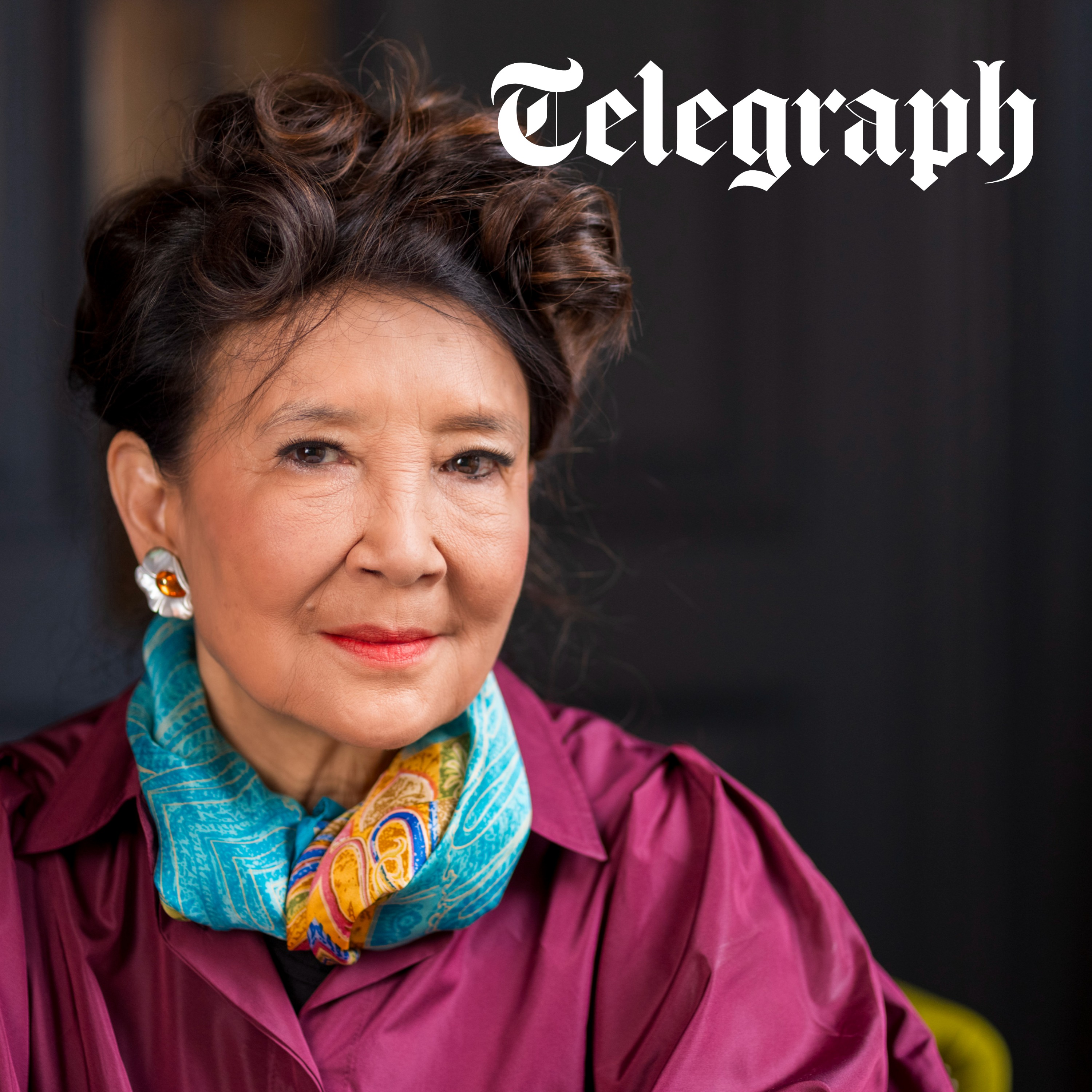
In this episode of The Daily T, hosts Camilla Tominey and Tim Stanley discuss Keir Starmer's recent trip to Beijing, intended as a diplomatic reset for the UK-China relationship. The trip, however, is critiqued as a failure by Jung Chang, a bestselling author known for her unique insights on China, especially her works like Wild Swans. Chang reflects on the historical and cultural implications of engaging with a regime that is perceived to be reverting to authoritarianism.
Written by AI. May contain mistakes.
Jung Chang shares her thoughts on who she'd like to have tea with from history.
“The question we ask everyone is, if you could have tea with anyone in history, who would it be?”
Jung Chang recounts her painful memories from the Cultural Revolution.
“But for more than 100 years, she'd been maligned for being the source of, have you heard of this 100-year humiliation?”
Jung discusses her brave journey to see her father in a labor camp.
“Well, the saddest memory was my father being, you know, becoming insane because of the persecution he suffered.”
Jung reflects on the broader implications of the Cultural Revolution in China.
“Well, I was 16, 17, and I didn't regard myself as a child.”
Discussion on Mao's role in the Cultural Revolution and his motivations.
“but then broadening out into a kind of a freewheeling social revolution against teachers, parents, party officials.”
Jung Chang describes how her experiences shaped her as a writer.
“And the other one about himself was the extreme extent he would go to realize his own goal, to achieve his own goals.”
Exploration of Jung's internal conflict during the Cultural Revolution.
“First of all, before the Cultural Revolution started, when I was 14, I had read a lot of books.”
Explore the complexities of youth involvement in the Red Guards during the Cultural Revolution.
“You have to tear it into tiny pieces, flush it down the toilet with the red guard at the door.”
Learn about Jung Chang's gradual understanding of Mao's responsibility for atrocities.
“I think that is what I mean by not rational thinking.”
Hear about Jung Chang's experiences and cultural shocks upon arriving in Britain.
“She would have been nothing if it had not been for Mao.”
Discover Jung's reflections on Western lifestyle and her newfound freedom in Britain.
“I was one of the first group of Chinese to leave China, to come to the West to study.”
Understand Jung's early political engagement and her observations about British society.
“The only Western film I saw was The Sound of Music, which I got this incredibly valuable ticket.”
Examine the differences and similarities between Mao's and Xi's leadership styles.
“Well, that's the polite way to describe jumble sale clothes, basically.”
Delve into the lasting psychological effects of the Cultural Revolution on Chinese individuals.
“You have to allow contact with the outside world and therefore you can't do a Mao.”
Jung Chang discusses her personal journey of transforming trauma into memory through writing.
“and started, you know, like shrinking right in front of my eyes.”
Exploration of how trauma affects generations in China and the impact of censorship.
“Whereas I think most Chinese of my generation and older and even younger have not had the privilege to do that.”
Discussion on the current perceptions of communism in the West and its historical implications.
“But, you know, how many people bother to run the risk?”
Analyzing the concept of luxury communism and its implications for modern ideology.
“And yet there seems to be a serious effort in this country to rehabilitate it as an idea.”
Exploring Xi Jinping's approach to communism and his balancing act of power.
“Well, I always regard the idea of luxury communism to be a bit of an oxymoron.”
Discussion on the influence of Mao on Xi and current human rights abuses in China.
“Xi, so I can't give you an answer as confidently as I can give you if you ask me a question about Mao.”
Examining Xi's crackdown on wealthy entrepreneurs and its implications for power dynamics.
“Those tyrants always have conflicting goals.”
Discussing the unique property rights situation in China and its long-term effects.
“And then people like him then started to want more say in politics.”
Jung Chang reflects on her personal separation from China and her mother due to political issues.
“You have been separated, therefore, from your beloved mother, who features so heavily in Wild Swans and your subsequent book.”
Learn about the risks and personal decisions related to speaking against Mao in China.
“And I mean, since I wrote the biography of Mao.”
Explore the implications of the UK Prime Minister's recent visit to China.
“I mean, in those decades, many, many things have changed.”
Understand the historical grievances and diplomatic dynamics between China and Western powers.
“You know, they're not, they can't, I mean, no one can say that this is a casual, they didn't understand.”
Discuss the contributions of Britain in China and the complex historical narrative.
“And the contribution Chinese customs under him made was something like one third.”

Get the gist, explore an idea or ask about something said.
 Claude
On The Daily T, what are the key points of this episode?
Searching your listeningAutomatic transcript. May contain errors.
0:02The Telegraph
0:10She survived China's cultural revolution and her book Wild Swans is the definitive take on life in a communist dystopia. Today, Yung Chang joins us on The Daily Tea and tells us she feels the Prime Minister's recent trip to Beijing was a complete and utter humiliation. Welcome to The Daily Tea with me, Tim Stanley. And me, Camilla Tomini.
0:42Yung Chang, bestselling writer and critic of modern China. Thank you for joining the Daily Tea. Thank you very much. The question we ask everyone is, if you could have tea with anyone in history, who would it be? And would you like a cup of tea? I think I would very much like to have a cup of tea with Empress Dowager Tse Xi, the last great royal ruler of China. And she was born in 1835. And in 1861, she started the palace coup and became the power behind the throne, the ruler of China behind her five-year-old son, the new emperor. And she brought modernity to China. She brought medieval China into modernity.
1:34She opened the door of China. And her last project before she died in 1908 was to turn China into a constitutional monarchy, like on the model of Britain. Unfortunately, she died before the project was complete. But for more than 100 years, she'd been maligned for being the source of, have you heard of this 100-year humiliation? Yes. So China suffered. But I mean, she was a child when opium wars started. Actually, I must say, she was the person who banned, who was the first person to ban foot binding. Did you know, crushing women's baby girls' feet and crippling them and making them look like three-inch golden lilies, all that suffering.
2:35And the people who really introduced the idea in her head and urged her to do it were actually British and American missionaries and officials. I mean, she was an extraordinary person, particularly at a time when women were not, she wasn't allowed to be face to face with her officials. I have read your wonderful biography of her. Very much enjoyed it. Thank you. But we want to discuss your most recent book. Yes. So, I mean, you're the author of now three seminal books, Wild Swans, 1991, Laying Bare, the Frankly Horrifying Truth of the Cultural Revolution, a biography of Chairman Mao himself, and now your latest book, Fly Wild Swans.
3:27And it's probably a difficult question to answer, Yun Chang. But if you look back on the Cultural Revolution and everything that you have documented, what sticks out as your worst memory of it all? Well, the saddest memory was my father being, you know, becoming insane because of the persecution he suffered. He was one of the few who stood up to Mao and protested the Cultural Revolution. And my father was arrested, tortured, driven insane. And that was, I witnessed the whole period. And he was exiled to a camp and died tragically. And so that was very painful. and my grandma also died as a result of the Cultural Revolution.
4:26I looked after her. I spent the Cultural Revolution with her and saw the great pain she suffered because her daughter, my mother, was suffering because my mother wouldn't denounce my father. And so I saw this pain which led to her death. And that was also very, those were the most painful memories. And there was a period where, very bravely as a teenager, you hitchhiked to get to the labour camp that your father was at in a bid to cheer him up, which must have been an extraordinary thing to do at such a young age, conscious of how much your father was suffering. What can you tell us about that?
5:08Well, I was 16, 17, and I didn't regard myself as a child. No. You know, I was thrown from childhood, aged 14 when the Cultural Revolution started, straight into adulthood. And I also didn't think of the dangers on the way because I've seen those most horrendous denunciation meetings, people being beaten up. all down in public, everyday sight in the Cultural Revolution. And so I had this sort of urgent feeling to see my father because in the camp it was so awful and many people committed suicide by jumping into a river, into a mountainous area, into the river. And so people say that the roaring of the river was like the sobbing of the victims that had died.
6:13And I heard many stories like that. So I was very worried about my father because he had a mental breakdown in particular. And I just sort of wanted to go and see him, to keep him company and to make him feel that he's loved and life is worth living. Because he really, in those days, I mean, you know, love, your family were the only things that sustained you. And then many people committed suicide because they had been abandoned by the family, by their children. And so it did make a difference because my father said if it hadn't been for his family, he would have committed suicide long before.
6:59The Cultural Revolution was a moment of madness in the history of China, begun by Mao in the 1960s to try to defeat his opponents within the Communist Party, but then broadening out into a kind of a freewheeling social revolution against teachers, parents, party officials. Millions died. Eventually, students were sent out to the countryside, as you were, to work, I believe, as a barefoot doctor with very little experience of medicine. Something I really wanted to ask you is, to what extent was the Cultural Revolution a Chinese phenomenon? Or was it a Marxist phenomenon? Or is it just Mao, Mao Zedong, the dictator who caused it?
7:38That's what I really want. In the same way people debate about the Soviet Union, to what extent was the Soviet experience Russian or Marxist? What was the origin of the Cultural Revolution? Well, the Cultural Revolution was Mao's great purge because he had created this great famine in China between 1958 and 1961. Roughly 40 million people had died of starvation. And so even his whole party thought this was too much. And so he faced this revolt from his own party. And so he started the Cultural Revolution in 1966 to try to purge his party and replace the officials with people who he believed were loyal to him.
8:28It was a phenomenon. It wasn't mad in the sense that he had no responsibility. He was crazy. For him, it was logical. logical. And he turned on the teachers. He made schoolchildren beat up their teachers and destroy Chinese culture. Not because he really hated the teachers. He described himself as a teacher. He was a school teacher when he became a communist. And it was all part of his political calculation. Now, it's a combination of all three things you just mentioned. Mao described himself as the combination of Marx and Qin Shi Huang. Qin Shi Huang was the first emperor of China, and he was famous.
9:23He is famous for cruelty. He is known for burying scholars alive and the burning books. And in Mao's definition, Marxism was class struggle, you know, people against each other violently. So a bit of it was borrowed from Marxism. A bit of Maoism was a Chinese tradition from this first emperor. And the essence of that ghastly tradition is cruelty. I mean, the Cultural Revolution was more cruel than, if I may say, I think other purges in the communist countries. And the other one about himself was the extreme extent he would go to realize his own goal, to achieve his own goals. And the extent, the cruelty, the extreme extent.
10:31For example, Mao criticized Stalin for tolerating European classics. And he said Stalin made a mistake. Stalin was too liberal. Stalin made a mistake by tolerating European classics in the Soviet Union. So Mao, under Mao, the thoroughness with which he got rid of books, with the slogan, the more books you read, the more stupid you become. It was so extreme. And I haven't seen any other totalitarian, even countries like that. I mean, for 10 years, China was a cultural desert. No books, no theaters, no cinemas, no museums. And my school was founded in 141 BC. And it was the oldest school in China, oldest school under government, local government in China.
11:34So Mao was in a way in keeping with a political tradition within China. But crucially, he was at war with Chinese tradition and history. He destroyed old China. Yes, he explicitly called on young people to destroy old culture. To follow up on that, how do you, because you then became a brilliantly successful writer and a compelling one, how did it affect your development as a writer to have gone through a decade of not being able to read a book or enjoy culture? How do you emerge like a butterfly from that chrysalis? Well, I was very lucky. First of all, before the Cultural Revolution started, when I was 14, I had read a lot of books.
12:21My parents had a huge study full of books from floor to ceiling. And I read a lot of books in there, studied Chinese classics, foreign classics. And then when the Cultural Revolution started, the books were being burned, my parents' collection was gone. But I had a 13-year-old brother who was very entrepreneurial, who discovered a black market selling books. The books that had escaped the bonfires of the Red Gods. So he built up a collection of foreign and Chinese classics. So I was able to read this collection. And of course, he hid them everywhere. We lived in a compound for a underwater tower in a compound, a few sort of under the mattress with the covers torn and replaced by collected works of Mao.
13:29So I was able to read those books and that sort of kept my mind going. So I sort of escaped the brain death of a nation. Although there's a killer line in Wild Swans where you reveal at that stage in your life, you say, I was incapable of rational thinking in those days. Now, that may explain what you've said about taking huge risks to go and see your father in the labour camp. But what do you mean by that? Because equally, you're reading in secret. There's a moment where you start writing poetry. You have to tear it into tiny pieces, flush it down the toilet with the red guard at the door. So is there an inner sense of rebellion rising to the surface?
14:10I think when I said I was incapable of rational thinking, I meant that I wasn't able, like the vast majority of the Chinese, linking the obvious. I hated the violence and destructions in my school. But I knew they were done by Red Guards. But when I was permitted to join the Red Guards, I joined. I couldn't link those two. I couldn't say, therefore, I reject the Red Guards, because Mao had called on all the young people to be Red Guards. I mean, everybody in my generation was one. And so that was one. The other was I hated all these violence and atrocities around me, but I never thought of, for many, many years, I didn't think of blaming Mao for it, which was the obvious thing.
15:15He was giving all the orders. And for many years, I already thought, you know, that society I lived in, if this was paradise, what then is hell? And this was when I had written my first poem on my 16th birthday, when the Red Guards came to raid our flat. And I had to rush to the bathroom to tear up the poem and flush it down the toilet. But even then, I didn't question Mao. Mao was like God. You know, when I was growing up, if we children wanted to say what I say is absolutely true, we would say, I swear to Chairman Mao. So he was unquestionable, unthinkable in the sense that you couldn't contemplate him.
16:07He was like, we must eat food, we must breathe air. He came as a part of the things that we just automatically do. I think that is what I mean by not rational thinking. But what changed and how did it change? What changed was for many years, my questioning of the society grew. And for a long time, I blamed the Gang of Four, Madame Mao and her associates. But I didn't question Mao. Sorry to say, these were the radicals who people thought were really running the government in Mao's later years. Yes. I mean, they were blamed for the Cultural Revolution. They were made scapegoats for the Cultural Revolution after Mao died.
17:00So even today, very intelligent people in the West as well as in China still blame these four inconsequential people for this horrendous Cultural Revolution which made 100 million people, the official figure, suffer. And then one day I had learned a little English. I was again very lucky. Long story, I wouldn't repeat. I'm not going to just going over that again. But I had learned a little English. A friend gave me a copy of Newsweek. And there was an article about Mao, China. And there was a little picture of Mao and a little picture of Madam Mao. And the caption says, Madam Mao is Mao's eyes, ears, and mouth.
17:57And that moment came as such a revelation. A window was suddenly opened in my head. And I suddenly saw light. And I suddenly could see, you know, I gained a little logic. And I just suddenly thought, of course, why we blame Madam Mao? She is nothing. She would have been nothing if it had not been for Mao. And Mao was the one responsible. And this was 1974. And this is eight years from the time, eight years, is that 74, 68, six years. Eight years from the beginning of the Cultural Revolution, 1966, when I was already a poet about what I saw. And six years after I had spelled out to myself, I hate this, all this that happened to me.
18:58But it took me so long to come to this conclusion. Mao died in 1976 and then Deng Xiaoping gradually takes over and China begins to open up. and you went to Britain in 1978 on a government scholarship. Now, we have bad memories of Britain in the 1970s and we tend to talk it down. How did it seem in contrast to China? Well, I mean, I had such a wonderful time when I first came to Britain. I was one of the very few Chinese. I was one of the first group of Chinese to leave China, to come to the West to study. And to Britain, I came with a group of 14 people. We were all wearing the Mao suit. We were not allowed to go out on our own.
19:50We had to move in a group. And we were quite a sight in the London streets. Yeah, it must have been. I didn't realise you had to wear the uniform when you were in London. And moving in a group. And I had such a wonderful time. And because I had been the first person to go to many forbidden places and do many forbidden things. I mean, one of the things was to go into a pub. Because the Chinese translation for pub, jiu ba, suggested somewhere indecent with nude women generating. Some pubs are like that. Yes, we specifically told not to go into a pub. But I was torn with curiosity. And so one day I sneaked out of the college.
20:45I darted across the road. I pushed the door of the pub open and I saw nothing of the kind, only some old man sitting there drinking beer. I was rather disappointed, of course. And so I did many things like that. And for me, it was a fantastic time. It was like landing on Mars and everything was different. You know, China had been completely isolated from the outside world. And I had no mental image of the West. The only Western film I saw was The Sound of Music, which I got this incredibly valuable ticket. And I rode a borrowed bicycle for hours in the sandstorm to go to this privileged place to watch it.
21:43And I had no mental image how people lived. And so when I first came, you know, it was in my letters home. I said to my mother and my friends, you know, my biggest discovery is Westerners are human beings like us. They are not aliens. And so, you know, many wonderful, much wonderful times. When involved with politics, am I talking too long? No, not at all. It was a year before the general election when Margaret Thatcher was elected. And because we were, the group was in London to study politics was part of our course. And so we went to hear a town hall debate. And we, of course, listened earnestly.
22:40But my memory of that town hall debate was completely overshadowed by what we later realized to be a jumble sale. On our way home, we saw this church lit up and busy buzzing with activities. So we were curious and we went in and we saw these clothes so cheap because our monthly allowance was 10 Chinese yuan, which in those days, the exchange rate was three pounds and eight pence. So obviously we couldn't buy anything. And so we all loaded up of this jumbo sale clothes and we didn't know it was called jumbo sale. Anyway, we loaded up and they became my wardrobe after the Mao suit in the next couple of years.
23:40And so my, you know, friends, English friends, then said, Oh, Yong, you're always wearing beautiful vintage. Well, that's the polite way to describe jumble sale clothes, basically.
24:10We've obviously had quite a lot of dialogue in recent weeks and months about Britain's own relationship with China, and you wrote a really interesting essay in The Spectator, Christmas edition, which I read from cover to cover, talking about whether there were similarities between Mao and President Xi. On one hand, you're associating Chairman Mao with the deaths of 70 million people, the suffering of 100 million. Comparatively, President Xi hasn't committed such crimes. But it was striking to me that you were pinpointing an extreme amount of naivety in the Western world for entertaining a golden relationship with China over the course of the last 15 to 20 years.
24:52Where do you stand on President Xi? Well, I think Mao's kind of evil. By the way, the article, I didn't write it. I gave an interview. Ah, that's right. And it was a write-up interview. To the spectator. Mao's evil was a special, extreme kind. I think very few people could be that evil. In the totalitarian regimes, like in the Soviet bloc, I can't see any other, I mean, except Stalin. and Pol Pot and the North Korean leader. There's quite a few now. But I doubt whether Mr. Xi is quite like him. And also, I think President Xi is of an era very different from Mao's time now. He can't, even if he wanted to, which I doubt very much, He can't apply that kind of cruelty and violence on the Chinese population.
25:56The door of China that has been opened by Deng Xiaoping's reforms from 1978, the year I came to Britain, cannot be closed again. And once you have this contact with the outside world, I mean, you can't do that Mao-style personality cult. You can't do the Mao-style cruelty, terrorization. And I think when Mr. Xi first came to power in 2012, he did make a lot of effort to try to make China more like Mao's time. But he had gained only limited success. And one most important thing is there is a lot of capitalism now in China. And China needs money. I mean, China would be nothing without having lots of money in the world.
26:55So in order to make money, you have to allow capitalism. You have to allow contact with the outside world and therefore you can't do a Mao. No, although what impact do you think the Cultural Revolution had on the Chinese psyche, if I can put it that way? Communist rule still persists. I wonder generationally, looking back now and then also looking forward, what impact it had on a deeper psychological level for your people? Well, I think some psychologists should really go and do a field study. In my experience, when I was able to go back to China and when I had these dinners and so on with friends or with people I interviewed, I found that when the past was brought up, very composed, swaggering people would suddenly turn to like started shaking, literally, and started, you know, like shrinking right in front of my eyes.
28:07and speaking incoherently. And so I realized that this trauma has not been turned into memory. I am very lucky. I am in Britain. I have written about the past. I mean, before I wrote Wild Swans, I lived with nightmares of horrible sins, corpses and screaming awake from these nightmares. And these nightmares disappeared after I wrote Wild Swans. I had, I would say successfully, turned trauma into memory. So I can talk to you about it, I can live with it, I can laugh, I can live a normal life. and I don't have to suppress part of the things in my head. Whereas I think most Chinese of my generation and older and even younger have not had the privilege to do that.
29:16And so I think there is still a lot of trauma existing there. And because a lot of people are unable to talk about their past to their children, and their children and children's children are now being brainwashed, particularly under Chairman Xi. And so that is, of course, people get completely wrong ideas about the past. And of course, if you really wanted to know about the past, you can still find out. I mean, the Internet, although thoroughly controlled, but there were loopholes and many people can get information. But, you know, how many people bother to run the risk? And so I would say young generations, to me, are very worrying.
30:13People who didn't live on the Mao and do not know what life on the Mao is like. There is some nostalgia now, isn't there, among the young? I mean, that's another phenomenon. So I think the brainwashing have been effective because of this suppression of past trauma. But that phenomenon, I mean, we've had a kind of recalibration of what communism is in this country with very left wing figures referring to things like luxury communism and popularizing communism as something good. Yes. What's your reaction to that? Adding that when you came to list the worst totalitarian dictators, I know you listed communists.
31:00They were all communists, right? It has a bad, bad record. And yet there seems to be a serious effort in this country to rehabilitate it as an idea. Of course, I didn't mean that there weren't other EU people outside. But we were talking about the communists. There is Hitler and Muslim, of course. The point is communism has a bad, bad record when it comes to human life. It's bad, bad. I mean, of course, from my vantage point, I mean, for writing my Mao biography, for example, which I wrote with my husband, John Halliday, and it took us 12 years, and we interviewed many, many communist leaders.
31:40And, I mean, there are communists, horrible people, and there are also people who are relatively humane, relatively. I mean, after Stalin died, Khrushchev denounced Stalin and opened the doors of the Gulag, for example. So how... Well, I'm just wondering whether... Well, I always regard the idea of luxury communism to be a bit of an oxymoron. You actually might regard it as being quite an offensive term. What is the... Well, luxury communism is this idea that it's kind of an ideology that has been misunderstood and perhaps misapplied. and that there's nothing wrong with redistribution of wealth and nationalising of industries and common thinking and even, you know, state education, get rid of private, get rid of choice.
32:33That seems to be something that's gaining popularity. The Green Party in this country, for instance, is on the rise on the back of those sorts of policies. And just to add, there's also an idea that the reason why communism failed in China is because it was tried in a dirt poor peasant country. But now we have the technology and we have the money to make communism work. So, I mean, is there anything to that, that there are conditions under which this ideology could work? Or is just history proven the ideology never works? I don't think it can work. It's been tried for a century and it created disasters everywhere.
33:11I mean, it's just the degree of disasters in places after Stalin died when Khrushchev denounced Stalinism. And Russia didn't become, Khrushchev kept communism. And Russia didn't, it became relatively better from under Stalin. But it didn't become a nice place. I mean, you know, it fell on Gorbachev and Yeltsin in the 1990s, well, I mean, early 1990s, to dismantle the system for people to be really free. Yes. Can we even really speak of Xi as a communist? I mean, there's a debate in the West about to what extent is this man really trying to revive Maoism? or is he just a cynic who just wants to cling to power and that involves economic growth plus a little bit of ideology either to hammer his opponents or to persuade the poor of China that someday they will get rich too?
34:10You know, I haven't studied Mr. Xi, so I can't give you an answer as confidently as I can give you if you ask me a question about Mao. Right. But from my observation over the years, I mean, he was, he did, he does worship Mao. No question about that. He worshiped Mao. Given the choice, he would have liked China to be like Mao's time and to have less capitalism. Yes. But over the years, he also realized that it's impossible. I mean, the basic thing is in order to fulfill his ambition of world dominance, that was his ambition. That had been Mao's ambition, although Mao failed to achieve it because China was poor.
35:08He had to export food in exchange for military technologies and factories, starving 40 million people to death to export food. But Xi had inherited China that was prosperous. It was in fact at the peak of its prosperity. And so he reckoned he could have this world dominance. For that world dominance, he needs money. I think I just mentioned that. Without money, China has no soft power and there was no way to build military power anyway. So he has to make a compromise. I think this he's quite good at, I realize, he's quite good at balancing his goals. Those tyrants always have conflicting goals.
36:06They want the cake and eat it. But the fact is they can't. I mean, I... There's a line in your book, to be fair, you say, Xi has dragged China back onto the road towards Maoist hell, even if it is unlikely he will get there. And I suppose I could completely understand what you're saying. You know, have a number of examples of absolute, you know, appalling human rights abuses, be it the treatment of the Uyghurs, be it the imprisonment in solitary confinement of our own British Hong Kong businessman, Jimmy Lai. And we can also say that he has dispatched with his enemies. He's recently got rid of his top general and you could see echoes of Mao's dismissal of Lin Bao there, perhaps.
36:49So there are echoes, but we're in different times. Yes. Well, I think one main thing that Xi has been doing is turning against the capitalists. I think that will play a role in defeating his ambitions. I mean, you know, there was a time, I don't know if you remember, there were these super rich Chinese, Jack Ma, the richest man in China, who's been so pleased with himself. I mean, thinking that he really could become somebody like the richest man in Britain or in America. And went to Davos, hobnobbing with world leaders. And then people like him then started to want more say in politics. And he founded his own university, the rich people founded their clubs.
37:45And that is the thing that the Communist Party would never allow. And so Mr. Xi then got rid of the whole thing and really took Jack Ma down many pegs to show who's the boss. So rich people in China who had impressed Western leaders. I mean, I think I won't name him, but some Western either visiting China or saying, you know, look at this man, he's worth so many zillions or that man he's worth, what if he could buy the whole of Britain or something. But they don't know that this money they have is they only have because the party allows them to have. I mean, if the party doesn't allow them to have, they could lose it overnight.
38:39Yes. I mean, Jack Ma now owns or even owns, I don't know whether, you know, the sense of really owns something, a fraction of his empire. And every Chinese who have bought their homes, they don't own the land under the homes. They own the property for 70 years. and after 70 years, the party will discuss what to do. And the chances are the party is wise and they certainly don't want to start a revolution because if you take away the majority of people's homes, that would really be the end of the party. So chances are they're going to be wise. But without the concept of the absolute right to your property, to your private possessions.
39:33You are always beholden to the people in power. Yes. The other problem for you, of course, is you cannot go back to China under President Xi. You have been separated, therefore, from your beloved mother, who features so heavily in Wild Swans and your subsequent book. I mean, it's almost like it's a love letter to your mother, would you agree? But you haven't been able to see her for all of those years. How have you coped with that? And how do you cope with not being able to be reunited with your homeland and with your relatives? Well, I feel very, very sad, of course. And for many years, I had been fighting to go back to see my mother.
40:16And the regime in Beijing wanted to ban me from going to China after I wrote the biography of Mao. But the British government then helped me tremendously. I mean, David Miliband was the foreign secretary and really, really threw its weight behind me. I mean, not like if I may say today. Of course, Britain did not have or Britain does not have its weight now like in those days. Yes. is 2007, and China has become much more powerful. So their kind of relations have changed. But it also, I mean, at the time, British government really, really, you know, really helped. And And so I was able to go back to China for many years, for a couple of weeks a year, to see my mother.
41:25And actually to do my research. They allowed me to do that. But I was like in a bubble, separated from the Chinese society. And the thing they didn't want me to do is to make contact with anyone except my family. But in 2018, I realized that I can't do that now. Because that year, Mr. Xi made himself the permanent supreme leader of China by changing the Constitution. And one of the very first orders he gave was that anyone who is deemed to have insulted revolutionary heroes will go to prison and suffer worse. And I mean, since I wrote the biography of Mao. Which was very insulting. My husband and I, yes, we kind of documented Mao's misrule of China.
42:31And Mao was the number one, is the number one hero in China. His portrait is still on Tiananmen. His face is on every Chinese banknote. And so I realized that if I continue to go back to China, you know, prison would be waiting for me. And so I made the very painful decision of not fighting to go to my mother's bedside. And I mean, in fact, this was the reason why I started, why I wrote Fly Wild Swangs. And for many years, you know, since the publication of Wild Swangs more than 30 years ago, people have been saying that I should write a sequel. And I had always said, no, I didn't think there was enough material.
43:29But then when I was looking at my mother on my iPhone mobile, and I saw her very weak, but still very strong. And I thought of the past decades, because it's more than four or nearly four decades now since I came to Britain. I mean, in those decades, many, many things have changed. And China has changed from a place full of hope and optimism when the reform started and to develop from an isolated and poverty-stroken country to the world, kind of almost like a number two rivaling America, to turning back towards the bad old days. And I must ask, given that change, which has been accompanied by, as you've suggested, a change in Britain's status in the world, was it unwise, do you think, of the UK government to sign off on that massive Chinese embassy?
44:36Well, I think, you know, I don't know the details. I haven't researched this. I don't know the details. But I think anything that is remotely dangerous to Britain's national security should not have been done. And I think Britain has really, I feel so sad and angry seeing the prime minister in Beijing and being roundly humiliated. And Beijing really went out of its way to humiliate him. Having the tourist guide show him around the Forbidden Palace rather than Xi himself. It's so painful because when Trump visited Beijing and the Forbidden City, Xi himself and his wife accompanied Trump and being Trump's tour guide.
45:27When Macron went to China just the other day and the regime organized the crowds to surround him, you know, showing that he was welcome, trying to have selfies with him, making him very happy. It's definitely a definite insult. It's so funny. Custom and hospitality are so important to the Chinese. And I don't think the British have properly read and understood those signals that they were sending. Well, Britain had invented diplomacy. Yes. You know, they're not, they can't, I mean, no one can say that this is a casual, they didn't understand. I mean, what I wonder is why would, I mean, these things must have been in the schedule negotiated before the prime minister went.
46:21Why would the prime minister still be made to go? I don't think he was happy. But we began by discussing the empress and 19th century history. I wonder if the fact that China is so friendly towards America and France and not towards Britain is a historical legacy, that there are those in power in China who still blame us for China's supposed humiliation in the 1800s. That's just not true, if I may say. And Deng Xiaoping himself said, you know, in China, you know, with the foreign powers, damage have been done to us by foreign powers. And the damage inflicted, the country that inflicted the most damage on China was Japan.
47:11But the country that got most out of China, taking advantage of China, was Russia, including the Soviet Union time. He didn't mention any of the Western countries. In fact, by writing the biography of Empress Dowager Cixi, I worked in the Forbidden City archives, and I worked through mountains of documents in that period. Britain, I mean, America was treated China the best and Britain the next. It needs a lot of details, which I can't obviously can't do here. I mean, yes, nobody can excuse the Opium War. It happened in 1839. But subsequently, Britain had done a lot to, I mean, in fact, it had acted together with the Empress Dowager to ban opium.
48:14For the Empress Dowager to ban it, ban taking opium in China and Britain by stopping opium production in India. This was 1906. There was a parliamentary debate. And over the years, I mean, there were a lot of Britons who have worked with the Empress Dowager. I mean, like, you know, the entire Chinese customs was manned by Robert Hart, who was from Northern Ireland. He served in China for decades. And the contribution Chinese customs under him made was something like one third. I mean, now because that's many years ago I wrote that book, of China's income. I mean, and also, I mean, as I said earlier, the contribution proposing to the Emperor's Darger to ban foot binding.
49:15Ban foot binding, yes. And also the many things, the many details. If you can say anything to make me feel better about the British Empire, I am very grateful. And we are very grateful that you gave us this interview. Thank you very much, Yung Chang. Thank you.
49:37Thank you.
Keir Starmer’s visit to Beijing was meant to signal a reset in Britain’s relationship with China. Instead, it has sparked fresh questions about how far the UK should go in courting a global superpower accused of sliding back towards authoritarian rule.
On today’s Daily T, Camilla and Tim speak to bestselling author Jung Chang, whose latest book Fly, Wild Swans traces China’s path from the horrors of Mao’s Cultural Revolution to the Xi Jinping era. Chang argues that Western leaders are ignoring uncomfortable truths about modern China, and warns that the country risks drifting back towards a darker past.
She also reflects on her own extraordinary story: growing up under Mao, watching her father persecuted, and eventually escaping to Britain, where she would go on to write one of the most influential accounts of modern China ever published. So, as Britain looks east for trade and diplomacy, are we forgetting the lessons of history?
We want to hear from you! Email us at [email protected] or find @dailytpodcast on TikTok, Instagram and X
► Sign up to our most popular newsletter, From the Editor. Look forward to receiving free-thinking comment and the day's biggest stories, every morning. telegraph.co.uk/fromtheeditor
Producers: Georgia Coan and Lilian Fawcett
Senior Producer: John Cadigan
Additional production from Annabel Hogan
Executive Producer: Charlotte Seligman
Video Producer: Will Walters
Studio Operator: Meghan Searle
Social Producer: Nada Aggour
Editor: Camilla Tominey
Hosted on Acast. See acast.com/privacy for more information.


