
 Ask ChatGPT


 The Daily T
30 Aug 2026 · 37m · 10 chapters
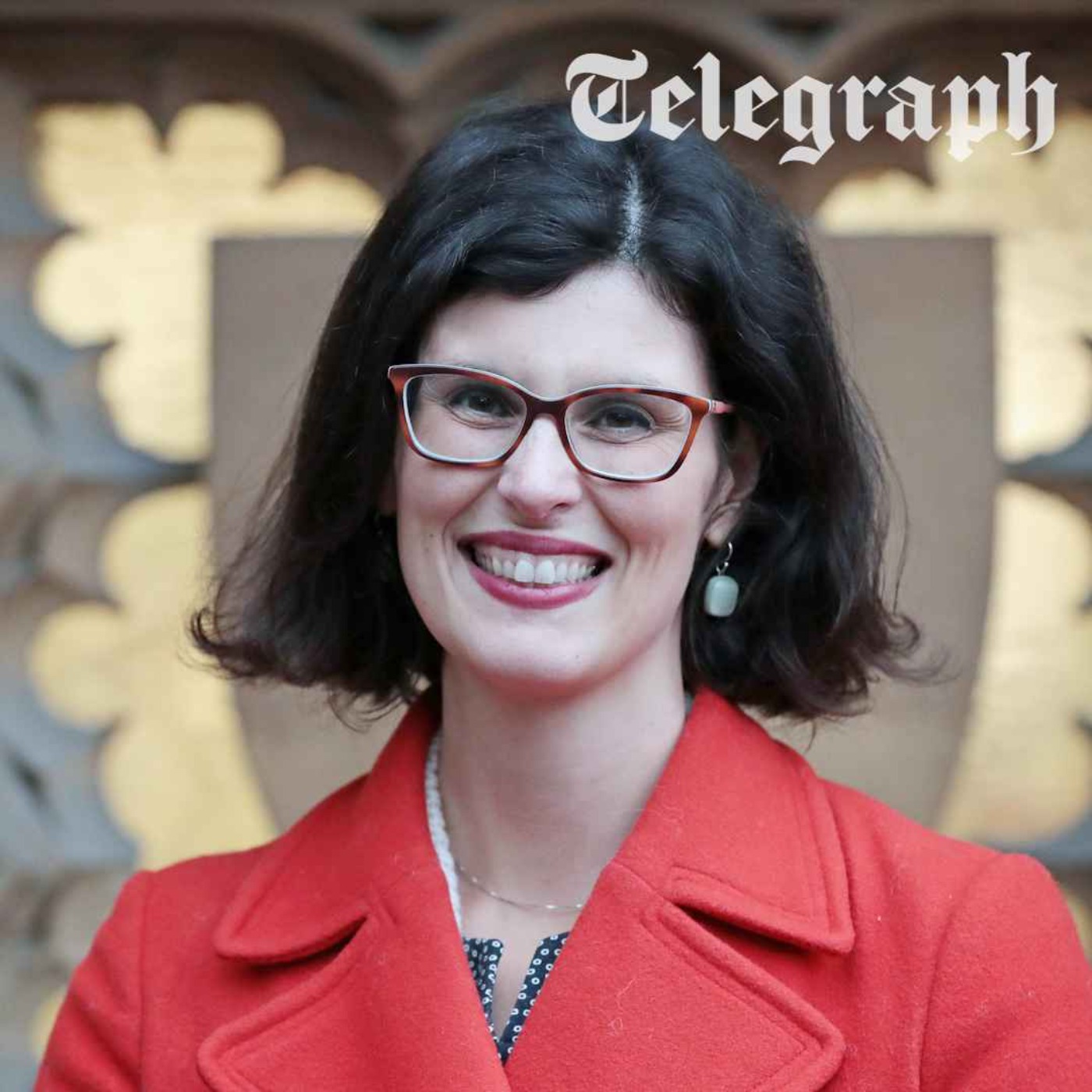
A “Sunday showdown” tea chat between Camilla Tomini (right-leaning Telegraph journalist) and Leila Moran (Lib Dem MP) debating Brexit, the case for rejoining the EU single market, migration/asylum policy (including the EU migration and asylum pact), and welfare/benefits.
Moran argues Brexit should be honored but the Lib Dems want a closer EU relationship based on liberal principles (international law, working with others). She says rejoining the single market would restore opportunities and help small businesses/exporters, while claiming standards would stay high (e.g., SPS). On migration, she rejects “nothing about small boats is okay,” calls it a multi-level failure, and supports joining the EU asylum pact to process people in the first EU country landed in. On welfare, she opposes benefit cuts, arguing support is needed for people who can’t work and that cutting face-to-face assessments/support can push people from work into non-work.
references to Ed Davey’s Brexit stance, Rwanda plan opposition, Afghanistan’s Kabul anniversary, and PIP controversies (e.g., motability cars for “tennis elbow,” claims for mild anxiety/ADHD).
Leila Moran, Lib Dem MP for Oxford West and Abingdon; chair of the Health and Social Care Select Committee; background in physics/data and international school teaching (IB). Host: Camilla Tomini, Telegraph journalist.
Written by AI. May contain mistakes.
A discussion on political ideologies and the dynamics between the hosts.
“knowing who actually has deep expertise matters more than ever.”
A discussion on political ideologies and the dynamics between the hosts.
“You and I go way back because we first met, didn't we, prepping for, I think, our first ever Question Time.”
Debating the importance of honoring Brexit votes and its implications.
“It's liberal and authoritarianism is actually the spectrum that liberals tend to operate on.”
Discussing the Lib Dem's approach to Europe and Brexit fallout.
“And now you want to re-enter the single market.”
Exploring the economic implications of re-entering the single market.
“At the moment, economically, it's resembling a little bit of a basket case.”
A critical look at migration policies and their societal impacts.
“The single market re-entry sort of free movement plan is not going to sit well with the vast majority of voters who have now got a different opinion of mass migration because of small boats.”
Discussion on the causes and implications of the refugee crisis.
“And I'll tell you one thing that frustrates me about this debate a little bit is, and thank you for giving the space and time to talk about it.”
A critical look at immigration trends and their implications for the UK.
“Create your first Monday agent today at Monday.com.”
Discussion on the social contract and the importance of skills in the workforce.
“I think what I'm going to and you tell me if I'm putting words in your mouth or in your thoughts in your head.”
Explore the complexities of the social contract, welfare, and the challenges faced by families in the current economic climate.
“The fact is most people on a door that I might be are somewhere sort of in between.”

Get the gist, explore an idea or ask about something said.
 Claude
On The Daily T, what are the key points of this episode?
Searching your listeningAutomatic transcript. May contain errors.
0:02The Telegraph.
0:30Enjoy customizable features for elevated comfort and convenience. It's more than a fixture. It's a cleaner routine and a more refined space. Experience the difference of Kohler smart toilets. Find more at Kohler.com. In a world where AI is changing every role in every industry, knowing who actually has deep expertise matters more than ever. Upwork connects you with the highly skilled freelance professionals with proven track records, so you can hire with confidence. Upwork gives your business fast access to highly skilled specialists with deep expertise, so you can fill critical skill gaps, launch projects faster, and scale support up or down without committing to full-time headcount.
1:11With Business Plus, you can access the top 1 % of talent on Upwork. AI-powered shortlisting delivers a curated shortlist of top freelancers matched to your goals in under six hours. No endless searching required. Thousands of growing businesses already trust Upwork to hire highly skilled freelance professionals for everything from one-off projects to ongoing support. It's free to sign up and posting a job is easy. Visit Upwork.com right now and post your job for free. That is Upwork.com to connect with top talent ready to help your business grow. That's U-P-W-O-R-K.com, Upwork.com. What happens when a telegraph journalist on the right, me, has a cuppa with a passionate Lib Dem MP?
1:53We have a great debate about Brexit, votes, and benefits. Welcome to The Daily Tea with me, Camilla Tomini And me, Leila Moran We have ruled out any kind of propping off Nigel Farage We think fundamentally that he is a charlatan that he is someone who is bad for the country and that we would have profound concerns about where we would be going if he were Prime Minister But we will always do what is best in the national interest Leila Moran, welcome to The Daily Tea Now, people will think you're a Lib Dem I'm quite critical of the Lib Dems being a bit of a righty They'll think These two women don't get on.
2:28But actually... What a lie. What a lie. You and I go way back because we first met, didn't we, prepping for, I think, our first ever Question Time. Was it Question Time or Politics Live? There was a time where I sort of saw you every two weeks. I know. It was lovely. Our media whoring new no-vow. You've met my mum. I have met your mother. You've met my mum, even. I have met your mother. And also, my esteemed colleague, Tim Stanley, picked this up from a conference or a Lib Dem event, thinking it would be funny. This is Leila Moran's face on a mug. and I said it might surprise you to learn that Lena and I are actually quite good friends we might not agree all the time on politics so I proudly have a cup of tea or coffee in that mug oh thank you that's more than I do I'm pretty sure my mum doesn't even have that now we love to do this thing called the Sunday showdown where we take lefty and righty issues and we debate them in an agreeable way I mean I'm I'm pinning you down as a lefty is that accurate I was going to say, the thing about us liberals, right, is we reject the left-right spectrum.
3:24It's just right or wrong. It's not right or wrong. It's liberal and authoritarianism is actually the spectrum that liberals tend to operate on. Okay. And so I've never, I'm not a left, I would not self-describe as a lefty. I'm not. I'm a scientist. So my background is in physics, in data, in what works in a very pragmatic way. Okay. And over my political journey, which was, I was never one of those young liberal I was not interested in politics when I was younger you know not at all in quite the opposite because my dad's job was a bit in that realm I wanted to sure have nothing to do with it and actually it's over the years when I was looking at well I've got this thing that I care deeply about in my case it was education I was a teacher what's going to actively make the difference in the long term what policies should that be and then I sort of track back and I suppose if you had to pin me somewhere on the left right I would maybe describe the centre left fine yeah but actually I'm very pragmatic and you'll find this about liberals all over the place some people are like are you left are you right and our answer to that is well actually kind of neither okay remind me what you taught and where you taught so physics yes so I did physics at imperial as my undergraduate degree I then taught very briefly in west London but then moved to Brussels to be close to my parents I taught at an international school there I specialised the international baccalaureate came back and taught in an international school in London and yeah and then went into politics honestly from one classroom of children to another genuinely my very first pmqs I had my teacher face on did you I just I just sat there with my can you do your teacher face now is it going to scare me absolutely oh it's an eyebrow rage all about the eyebrow okay all about the power of the left you're going to use your teacher face when I ask some questions now and now let's just be clear about it you are the mp for oxford west and abingdon and you are the chair of the health and social care select committee and we will discuss that policy i first came to blows with the yellows over brexit and there was a relatively infamous it kind of went viral exchange between me and your esteemed leader ed davie over the lib dem attempt to reverse the referendum.
5:38And I made the point as a proud lever that I found it neither liberal nor democratic to try and undo a vote. So that was probably around 2016, 17. And I interviewed Ed in the past. And funny enough, I used to live down in Kingston, which is his patch. And I just felt that having got through the whole coalition years and, you know, the Lib Dems, although they arguably made a mistake over tuition fees and maybe students took a long time if they even have to forgive you for that. I just felt the Lib Dems lost their way during Brexit because at the end of the day, if you're going to have a once in a lifetime vote, a mandate, a democratic mandate that is supported by a majority, even if it's 52 to 48, as a liberal and a Democrat, you've got to honour that.
6:26And I felt that you breached the Trade Description Act on that. And now you want to re-enter the single market. And again, I think that is a betrayal of the people who voted for Brexit. So what's your counter argument to that? Well, first of all, that was the original vote 10 years ago now. Sure. Right. So, I mean, I almost owe my seat to that vote because actually Oxford Western Abingdon was a fairly true blue conservative seat. So it was an over 10 ,000 majority when I took it on in that snap election of 2017. and we overturned it in part because of the upheaval, the political upheaval that that caused.
7:05And reflecting back, you know, what happened then, what happened in that row you were having, why were we sort of quite gung-ho about it? For what it's worth, in Libyan circles, I think we would all admit that the way we went about talking about Article 50 in that election, it clearly didn't work out electorally, but actually, you know, why did it go so badly wrong? We've learned a lot from that. I think the principles behind what we were trying to say was fair. When you have an opinion, you don't suddenly change your mind. You know, the principles behind why we are pro-European, we like to work with other people.
7:38And by the way, I'm not wedded to the European Union as an institution, no matter what, it's perfect. None of that. Absolutely not. In fact, we would have been the first to advocate for many changes within it. But there is a deeper liberal principle behind that. It's the same reason why we believe in the UN and in international law. And it's because we believe you solve the world's problems by working with other people. And you can do that at a geopolitical international level. It's also, by the way, why we deeply care about local democracy, because the same thing works. It's the same principle.
8:15So I would still argue, and we do, that we want a closer relationship with our European neighbours. The best way we think to do that is to engage directly with the European Union. If it suddenly went bonkers, then we would change our minds. You say suddenly went bonkers. At the moment, economically, it's resembling a little bit of a basket case. We've got successive chancellors boasting that our growth is better than most of the Eurozone, which then begs the question, why would you want to go back into the single market? And if we did go back into the single market, we would be, and sorry to use the language of the referendum debate, but we would be rule takers, not rule makers.
8:51So it would be the worst of both worlds. We're having to take instructions from Europe. We don't have any say over them. We're going to have to realign with their regulations, even if we disagree with them. And it's going to cause a huge amount of resentment among Leave voters and actually those pragmatic remainers who say, listen, I made the argument. We lost. It's time to move on. So first of all, we would accept that we need to make the argument for why this is, there would be pain. There would be pain on some sides and we would have to robustly make those arguments. But there's a few I'd make back.
9:21So first of all, it was a while ago and there are new people who have now entered the electorate, young people in particular who didn't have a say, who are actively looking around at their options in life and want more. And so for them, it would restore, you know, the ability to be able to live, work, love abroad in the way that our generation just took for granted and all the opportunities. To reinstate free movement of people across Europe. But the single market, there are no ifs and buts. And if you join it, that is one of the things you'd have to do. But and this is really important. This is so important.
9:54Why would you do that? Unless there's a big payoff. Everything in life is about a risk reward payoff. And what you pay in. What you get out of that is what small businesses and big businesses alike are crying out for. So it's not just about opportunities for our citizens. You talk about the economy. It's all about the economy, stupid. You know, what has been happening on the world stage? We know that just speak to a small business who used to export into the EU now can't. With all the global shocks that we've seen, let alone the geopolitical reasons, just for businesses alone, I would argue this is something we need to consider.
10:29So do we actively need to make the argument? Absolutely. Do we hope that there might be some, particularly the pragmatic remainers who 10 years on, you know, how's it going, guys? You know, we've got small boats crossings before zero. Now, 200 ,000 people have entered the country. Small businesses are saying we've got more red tape than ever. Actually, in terms of standards, by and large, you know, we've more or less stayed aligned. And the SPS agreement, this is the one that is most important for farmers, but also exporters of food and drink. What will tell you that by and large, you know, our standards are higher, are good.
11:05And what we always brought to the table was higher standards on the EU side. That's a good thing. We wouldn't have to lower our standards. We'd ask them to maintain higher standards. The single market re-entry sort of free movement plan is not going to sit well with the vast majority of voters who have now got a different opinion of mass migration because of small boats. but just because of this notion that actually you know open borders haven't proved to be an overwhelming success not necessarily economically because growth has been sclerotic literally for years and also not socially because some people argue that multiculturalism has failed in this country and therefore if you're saying that you want to go back to a pre-2016 world where people can freely move across the EU, not least with the small boats crisis in mind, people are going to think that that's going to reopen floodgates.
11:57Yeah, and so what you are describing is the argument that we are going to have to face head on. So first of all, literally in the last week, Max Wilkinson and Adevi have been making the case for why without joining single market or whatever else, customs union, actually there is something we do think we should be joining or actively trying to join first, which is the migration and asylum pact that the EU has just signed. So that came in in June. And now if an asylum seeker comes and lands on any shore in the EU, the EU processes them, they take their biometric data and there is a first country assumption that whichever country they land in, they have to stay in and they can't leave and they can track that because they've taken all of that biometric data and they can track them across.
12:42And one of the issues that we've got now is that those people who fail that system double dip yeah so they go to the eu they land somewhere whether it's that country or another but from june it's just that country and if they fail that system we don't have access to that biometric data bank that would allow us to be able to cross check and therefore those people who come across and i understand the authorities have told without joining the eu well we have been but what the eu you know again what what give and take you know everything in this world is a negotiation What are you going to give in return?
13:15So this is a pact that we would be asking to join as a sign that we do want closer cooperation. It directly solves the issues that people see in the small boats crossings. And I would agree that we have to deal with things like small boats before we then go on to make these wider arguments. But the two are not the same, right? So one is about illegal migration. The other, I would argue, is about opportunities for business and the individuals. Okay, so on migration, do you think when it comes to the channel that the French have shafted us? They've taken over£600 million of our money and they're not turning back boats.
13:53In fact, they're encouraging them over to Dover. I genuinely have no idea about shafting or not. It's clearly not working from our perspective. No one wants this. And I'll tell you one thing that frustrates me about this debate a little bit is, and thank you for giving the space and time to talk about it. there's a sort of weird assumption that somehow those of us on you know left right or you know wherever you want to place us on the political spectrum that we we think it's okay there is nothing and i just want to make this really clear for as a liberal democrat there is nothing okay about the small votes crisis nothing at all it is a symptom of failure on so many levels not just returns agreements but actually let's go way back if we want to talk about why are people coming you know we can talk then about climate change and we can talk then about you know whether foreign aid has worked or not we can talk about global instability well it could just be they're coming here because we give them free staff we give them free room and board and then we allow them to claim asylum even if they're not entitled to and then when they fail in their asylum claim we allow them to appeal and then we get a load of human rights lawyers who may or may not vote liberal Democrat, letting them continue on a legal merry-go-round.
15:04And by the way, we have politicians of your hue holding up refugee welcome signs. Yes, because refugees are... That probably is more of the reason than climate change, foreign aid and anything else, isn't it? I don't think that's right. I think there is... Why are they all coming here, Leila, and not going to other countries which are less generous? The vast majority of them don't come here. Well, a lot of them do. Some do, but the vast, vast majority go to all... The vast majority of refugees from crises, for example, are far more likely to be found in the countries next door. Do you think they're all refugees or do you accept that some of them are economic migrants?
15:38Absolutely. Some of them are actually, let's be clear, some of them are criminals. Yes. And we know some of them are criminals because the authorities have said that. So are you going to, with any one policy, look, the Conservatives utterly failed, utterly failed in this. Do we have any belief that Nigel Farage is going to solve this? You know, he suggests that he's going to send out the army, send out the Navy, sorry. Well, Boris Johnson tried that and it didn't work either. We've tried the one in one out returns agreement. OK, it's only been going a year, but I don't think that's enough. So is there any one thing that is going to solve this?
16:12No. If you look at that migration and asylum pact, and I was rereading it before coming on here, I suspected we might discuss this. Yes. It is pretty wide ranging and it talks about, you know, those countries that do accept them, that they would get extra support to deal with the things like the social cohesion point. We say and, you know, for those who say, well, they're getting something for free, they're getting something for nothing. We say, well, actually, you're right. They are. So let them work. Let them work and pay taxes and pay their way. But then if they're allowed to work, then that could be an even greater draw to people who are coming here illegally.
16:45And in the first instance, we just don't want people coming here illegally. Second of all, if you then did have safe and legal roots, how many do you have? How many do we have in? Do you accept generally the premise that is made largely by the right? Although I appreciate what you're saying about people labeling people on the left as being pro-migration when they're not pro-wall migration.
17:09In a world where AI is changing every role in every industry, knowing who actually has deep expertise matters more than ever. Upwork connects you with the highly skilled freelance professionals with proven track records, so you can hire with confidence. Upwork gives your business fast access to highly skilled specialists with deep expertise, so you can fill critical skill gaps, launch projects faster, and scale support up or down without committing to full-time headcount. With Business Plus, you can access the top 1 % of talent on Upwork. AI-powered shortlisting delivers a curated shortlist of top freelancers matched to your goals in under six hours.
17:45No endless searching required. Thousands of growing businesses already trust Upwork to hire highly skilled freelance professionals for everything from one-off projects to ongoing support. It's free to sign up and posting a job is easy. Visit Upwork.com right now and post your job for free. That is Upwork.com to connect with top talent ready to help your business grow. That's U-P-W-O-R-K dot com. Upwork.com. Hi, this is Brooke DeVard from Naked Beauty. I am always looking for ways to elevate our daily rituals. And the Kohler Smart Toilet is proof that design changes everything. It's this stunning sculptural piece that feels like quiet luxury for your bathroom.
18:25It totally transforms your daily ritual into something elevated with customizable cleansing and touchscreen controls. It's functional art that makes your space feel cleaner and more intentional. A modern home deserves a modern toilet. Experience the difference of Kohler Smart Toilets. Find more at Kohler.com.
19:12in you. Try it. Create your first Monday agent today at Monday.com.
19:25Do you accept that actually there has been an explosion in immigration to this country over the course of the last 20 years that has been very hard to sustain and it was doubled down on by the Boris wave and actually you've just taken on too many people? Do you accept that basic premise? So can I just can I just can I just unpick the question to say, because you said the last 20 years and I would put that into sort of two 10 year stints. So the first and I think the first place where this all started going wrong was, do you remember when there was that huge expansion of the European Union? Yeah, with and I think it was Jack Straw, right, who was foreign secretary at the time.
20:02And it was under Tony Blair that allowed in a large number of countries into the EU and the single market, particularly and allowed freedom of movement from the off. for what it's worth. Other EU countries did not do that. I think we were one, someone's going to correct me, but I think we were one of two, possibly three countries who chose that. That was a mistake. And I think they have said since it's a mistake. Then since then, since Brexit, we have also seen an explosion. And that was because we've never had a proper plan for how we are going to get the workforce to do the important things in our economy, some of which are hugely undervalued, like social care.
20:37Yes. You know, so if we don't want, my grandmother is literally in the home for the first time this year. A lot of those people, largely women from abroad, who are helping to look after her, I'm so grateful for what they are doing. If they didn't do it, we know for a fact we just don't have the workforce here to do it. So what's grandma going to do? Literally tell me the answer. Hold that thought on grandma. No, but just on your premise, I think the issue here is not migration full stop or even levels. I think it's the lack of a plan and an honest conversation with people about what do we need as a country and what's our plan.
21:15There was a plan for stopping the boats. It was the Rwanda plan. It was meant to echo what happened in Australia when they decided to process illegal migrants to Australia offshore in Nehru. It didn't take off, in part because Rishi Sunak bottled it and called an early general election, but also because it did not have the support of other parties, including the Lib Dems. Now, if offshore processing stopped the boats in Australia and you're worried about the boats and you say there is, quote, nothing right about channel crossings in barely inflatable dinghies, why did you block the Rwanda plan?
21:51Because it was hugely costly, first of all. So the money that we were pointing out, that the money that they were spending on the Rwanda plan, we could have spent on the thousands more people to process the asylum applications here. And remember, it was Robert Jenrick, I think, who was the immigration minister, the one who actively ran up the waiting list for the processing of asylum claims. All right, he may dispute that. No, he said it publicly. But don't act as a deterrent. To act as a deterrent. Because here in the first place by stopping the boats and you stop the boats by having a deterrent and that's the Rwanda plan that the Lib Dems opposed.
22:27So what we are saying now, What we are saying now is if we joined this asylum and migration pact, one of the points in it is that those people would have to be processed in the first EU country that they landed in. And the vast majority, by the way, if you look at the world, we benefit from the fact we're an island. It's much easier to go via a lorry across land from a lot of the places towards the east where you might have that instability than it is to do. The small boats crossing is the last often bit of that journey. They would have landed somewhere else. So by joining this pact, that would be the answer.
23:02They would be processed. And then this is the key point. This is the bit that I just, we want, we have a proud history. And this is maybe where we disagree. I don't know. I'm proud that Britain over many centuries has been a country that welcomes those who suffer persecution in other parts of the world. I'm an Oxford MP. We are proud to welcome academics. you know for example Jews from East Eastern Europe when they were being persecuted there as one of many many groups when they are in peril we will be there for you that is a core principle in my view of what it means to be British that is a different thing to chances criminals yeah who are actively trying to misuse that goodwill and we kind of need to separate the two so let's actively do that rather than clobbering everyone even if they've got legitimate claim and just one last thing like it's been the anniversary of that botched exit from afghanistan right just recently the fall of kabul right famous august where who are we seeing on these small boats some of the very people that we relied on the british army relied on when we were there to protect our people that we let down.
24:18And some of those people are the ones on the small boats doing the crossing. So let's make a distinction between who is genuinely fleeing persecution. And that is a lot of people. And we need a plan for that. And then how do we actively deter the chances and the criminals? And those, I think, are the people, I hope we can all agree, need to not be here. So we might find a point of agreement here. And that is that not all immigrants are the same. Right. And that they should be weighed up in different ways. and those who can bring professional skills to the country should be welcomed. But those who are low skilled and cannot contribute to the economy shouldn't.
24:54Can I just stop you on low skilled, though? Because how many people would consider that social care work that I was discussing? So, yes, but let's also have a discussion about what high and low skilled. You know, we are a country in the midst of a discussion about university versus technical qualifications. So in the old speak, where high and low skilled, you know, when you're at school, what are you encouraged to do? oh, don't be a plumber, be a barrister. Actually, let's just define what low and high skill. I would maybe say differently, what skills do we need? Let's have a cool-headed assessment as a country.
25:26But what skills we can and cannot train for provide. A doctor or a nurse will say that they're more highly skilled than a care worker. Sure. But are you saying, and I wouldn't dispute that, but therefore are you saying in the context of migration that low-skilled workers, because when we don't have the people who want to or can do it and people have a choice, you can't force people to be a care worker. No. Maybe, maybe, maybe, I don't know, let's discuss that. But currently I would disagree with that. So if we just don't have the people and we have the need, what does it matter if it's a high or low skilled skill?
25:59It's a skill we need. Because I suppose wages are paid according to skills and in the care sector particularly. Yeah. I mean, I feel sorry for the care sector because... It's often used as this example, isn't it? It's unfair. Private care providers are damned if they do and they're damned if they don't. They don't get kind of afforded the privileges of being workers for the NHS. We've recently had a hike to employers NICs, which mean that actually private providers are really struggling to pay the wages for their staff and to compete. Not least when they themselves have been grappling with a cost of living crisis, high energy bills.
26:32OK, they're exempt from business rates, but they've got other additional costs and they're trying to provide a very top level of nursing and residential care. and they're competing against the NHS that has given pay rises for staff. Without a doubt. So it's a perfect circle. I suppose what the point is is that in many respects when we have got a growing number of people not in employment or education, that there is an argument, and it sounds Faragean, but to have kind of British jobs for British people before we import labour, not least when we're also suffering from a housing shortage, 1.3 million still waiting for social housing in this country.
27:07Therefore, I think there's this perception that the Lib Dems are constantly sort of migration, migration, migration, when actually there are people who can do the work. And in a way, that leads me on to the next topic, which is welfare and benefits. Consistently, the Lib Dems appear to be wanting to inflate the welfare and benefit bill rather than bringing it down. I disagree with that framing. OK. I think what I'm going to and you tell me if I'm putting words in your mouth or in your thoughts in your head. But I think that perception comes from the fact that when there is a fight to be had, especially, I mean, the whole time I've been an MP with the exception of this parliament, I've been fighting the Conservative Party, who the people on my side of the argument might characterize as being sort of very much whip before carrot.
27:56Right. Yes. And so if you force people, if you say that there is no safety net, then they'll buck up and they'll find themselves the thing that they need to do or whatever. I think we're probably the realist. The fact is most people on a door that I might be are somewhere sort of in between. On the one hand, you want fairness in our system. What does fairness look like for me? Well, fairness is if you are trying hard to get a job, if you are someone who's got a skill, the premise should be that you want to use it, not just because it's good for the economy and it's your way. this is our social contract.
28:27The social contract is not just what does the state provide. The social contract is broader than that. It's what do you provide the state? And one of the things we all provide the state, our society, are the skills that we offer. Some of those are paid and some of those are not. And these days, especially these days, and perhaps this actually circles back a little bit to social care, with women in the workplace and that is what they want and it gives them agency. That's great. But then there's a whole host of skills that women just used to provide for free and it was obvious that that was what would happen social care being one of them and so you know many people might ask why are we now talking about social care when we didn't even 20 30 years ago well the i think the answer in part of that question is that we are now seeing the fruits of the very positive thing which is look at us two professional women who are balancing kids and parents and everything but very often we're doing this and jobs sure not instead of jobs.
29:19So coming back to that original point, when it comes to welfare, we need to weigh up whether or not someone is just, you know, generation after generation taking active advantage, or is it that they just don't have the opportunity? Do they just not have the skills? We know very well that you can now, and this is the bit that I think really bites. You could have a full-time job. You could have a full-time job on the minimum wage and yet not have enough money in the context of the cost of living crisis that we are in to fill up the car to go to that job, to be able to give your kids the minimum amount of, you know, awake time that you would want to raise them well, to look after your elderly parents and still not have enough money, especially in parts of the country which have expensive rents to be able to find a home.
30:16And so very often those are families who are asking for some of that social housing. So our answer to that often is, first of all, when they say, well, cut PIP or cut universal, we're just like, whoa, whoa, whoa, whoa, whoa. The reality out there for a lot of people is that they are trying hard. There are a huge number of people trying very, very hard to get jobs, to keep jobs, to keep their families going to make ends meet and they also need that help. So if you're going to remove that benefit, what are you going to do to make sure they can still actively contribute to society? I'm going to give the counter narrative to that.
30:48I mean, you could argue that the Lib Dems at every turn, whenever it's been proposed to cut welfare, to scrap the two-child benefit cap, you've always sided with Labour. You've never supported cuts to welfare. And that's problematic because actually it's a distortion to suggest that the welfare bill is being cut anytime soon. In fact, by the end of this parliament, it'll be higher than it was at the beginning. We still haven't gone back to pre-pandemic levels. All Labour are doing really is cutting the increase. They're slightly cutting a planned increase, but the bill's still going up by the end of parliament.
31:22And the right wing response to that is as follows. Listen, if you dispense with face to face assessments, you're inevitably going to have people gaming the system. and conservatives don't turn around and say, do you know what, we'd really like the poor to digest paving slabs. We want people to suffer. Of course we don't because the right believes in the power of work and responsibility. It believes in people lifting themselves out of poverty with opportunity and aspiration. It believes in education to get people to socially mobilise, perhaps even above the level of their own parents. And it wants to encourage people to do that.
31:55It certainly does not want a system in which people are better off on benefits than working. And if you are that low wage family, if you are the nurse that goes out, who's married to the lorry driver and you're like passing ships in the night, there is nothing more insulting to those hardworking people than to look across the cul-de-sac and see people who are basically scrounging with no real justification. Now, I speak as the daughter of a retired GP who did a lot of work with the disabled. And I know how instrumental PIP and what it was in the old days, Disability Living Allowance, can be to people with profound physical disabilities.
32:32They cannot live without it. But unfortunately, thanks to well-meaning liberals and others on the left, the system has spiralled out of control so that we're now in a situation where the newsroom behind me is reporting on people getting motability cars for tennis elbow, a huge surge in claims for mild anxiety and ADHD, both conditions I'm familiar with familiarly, that may require an intervention at school or some help at work. But certainly don't require a free car and insurance, transport to school and PIP payments. So all the right is saying is, can we please give benefits to those who really need them and not to those who don't and could work but just choose not to?
33:19So there's a lot of what you've just said I just don't disagree with. Why do you block the cuts to the welfare bill? Because I'm talking about these people. But let me expand on that, on why. So the point about work being good for you, a way to, but this is, by the way, a very core liberal principle. And, you know, what does it mean to be a liberal above all else is that we put stock in individuals and communities before the state. You know, the job of the state is to enable that opportunity to absolutely catch you when you fall. And there are some people, as you say, with profound disabilities who with the best will in the world and the best technology in the world will never be able to work.
33:56And absolutely. Is there a difference between someone with, you know, debilitating, you know, schizophrenia, bipolar, whatever it might be, who cannot work beyond a certain amount and someone with mild anxiety? Absolutely. There is all of that. I think there's a large landing zone there where we would both agree. And I think perhaps the difference is here, the framing. So, you know, why do we stop? But there's another question. I would be to believe me and I chair the health and social care select committee would I like to see this country take mental health in both its most mild but even its most serious forms seriously and have a system that genuinely puts mental health on a par with physical health as creaky as that may be too but even that would be a start so that anyone including my own partner who has bipolar too and I've seen how poorly the system has treated her over the years.
34:51Do I want to see those people not just survive but thrive? Absolutely. Can they without a doubt? Do they have a huge amount to offer our society? Yes they do but time and time again we have a system that has let them actively in some cases fall through the cracks because it was that support was never there so when we say don't cut this it's often because there is no other plan for how are you going to then make sure that they engage right okay so then so that that's my counter argument you cut it's cart before horse you are trying to do the cut before you put in the support our argument would be sort out the support and then you will find the bill reduces but you might be saying but the opposing view to that could be listen we've got to reassess everyone to find to see the wood for the trees here and if you're only on eight percent face to face when it used to be 80 something's gone horribly wrong and and not just that i mean you know there's there's huge issues with pip i mean i've got a real bee in my bonnet over relapsing remitting conditions so these are conditions that one day will present like you're fine and you're able to get up in the morning and actually have a very productive day in work or otherwise and then you almost pay that back physically in your own body and you aren't able and there's a number of different conditions that meet that criteria.
36:12Pip is notoriously bad at dealing with those kinds of conditions and actually what you find and I've spoken to so many disability charities and councils who are often the ones who have to provide the care that goes into supporting those individuals there can be literally a difference between working 16 hours where they are okay and if they worked 20 hours a week, then actually you find they don't work at all because they go backwards. So we do need a system that puts the individual at its heart and the premise needs to be everyone does as much as they can. What we often find though is when we're just talking about a cut, you remove that support and what you'll find is often some people who are in part-time work end up being in not work at all and it achieves the opposite of what you would expect.
36:56Also, there was an extraordinary anecdote from a couple of weeks ago of somebody going into the job centre looking for work and being told we can't allow you to look for work unless you're on benefits already. And that makes the brain explode. Final question, Leila, as our time together is coming to an amicable end. Is Ed Davey going to continue to suck up to Andy Burnham as he did Keir Starmer? Because I don't know about anyone else. I think that the Lib Dems would not get back into bed with the Tories for all the tea in China. But if the electoral maths presented itself to your party, actually you would get up in bed with Labour and possibly the Greens to form a progressive alliance to keep, notably, reform out of power.
37:33This is a podcast. I know many of you are listening, but the teacher face came out. What, so you're saying no PACs on the left? Even to keep Nigel Farage out of number 10? Listen, we will always, often to our own detriment, do what's right in the national interest. So let's see what happens at the next election. That is not a no, Leila Murat. No, no, no. And because we have been in coalition before, it would be stupid of me to say we don't do that kind of thing. Yeah, but you're not going to go and do a pact with the Tories if they're going to do a pact with reform. So the only pact you can do is on the left.
38:09That's true. We have absolutely ruled out a pact with Nigel Farage. That does not mean... Oh, so you could do a pact with Kemi Badenock. Two and two equals five in your calculation here. We have ruled out any kind of propping off Nigel Farage. We think fundamentally that he is a charlatan, that he is someone who is bad for the country and that we would have profound concerns about where we would be going if he were prime minister. Prop up the Tories. But we will always do what is best in the national interest. And that is to ensure that Nigel Farage doesn't get into. So you will prop up anyone that can keep Nigel Farage out of number 10.
38:45You're assuming that a coalition is the only thing that is possible. Well, it's looking that way. But also we should have, I think, let's have a chat about proportional representation because at that point. You're not still backing PR. Absolutely we are. What, with 70-year-old seats having triumphed the first past the post. I know, but this is the thing, Camilla, don't you see? We often do things that aren't in our own self-interest because they are the right things to do. I tell you whose interest PR would be in. Riffle? Rupert Lowe's. Possibly. So why would you advocate that? Absolutely. Because we believe, and this is actually key, we are having this discussion right now.
39:20We don't agree on everything. We don't, I fundamentally disagree on much of Rupert Lowe and Nigel Farage say. Do they have a place in our democracy? Yes. Okay. Do we believe that we should have a democracy that reflects the actual views of our public in government, in the executive, not just in parliament and beyond? Of course we do. And that is the fundamental reason why, you know, we've got five party politics. I think it's here to stay. In fact, six, if you want to include Robert Lowe's party. If this is where we are now as a country, how poorly served are we by the fact that Andy Burnham, who didn't even go through an election, possibly changing his mandate or at least finessing it, has got a majority in parliament and that much executive power?
40:09Our democracy, because we don't have proportional representation, in my view, is fundamentally broken. And if you want to look back at why are all these intractable issues, we've talked about social care, we've talked about migration, we've talked about the economy. We are possibly facing an election sooner than later is now what everyone's saying. Where is all this instability coming from? I think it's one place and it's quite simple, but also complex, of course. we don't have a democracy that is reflecting the views of our public. Not really. Perhaps once in a while, but one of the ways we're going to solve that is with proportional representation.
40:45It's not the only way, but I think it's one of the key things that we need and must change. Leila Moran, we need to leave it there, but we've had a lovely five-steer debate. Thank you very much indeed for joining me on The Daily Tea. And Tim and I will be back tomorrow, 5pm.
41:22Hi, this is Brooke DeVard from Naked Beauty. I am always looking for ways to elevate our daily rituals, and the Kohler Smart Toilet is proof that design changes everything. It's this stunning sculptural piece that feels like quiet luxury for your bathroom. It totally transforms your daily ritual into something elevated with customizable cleansing and touchscreen controls. It's functional art that makes your space feel cleaner and more intentional. A modern home deserves a modern toilet. Experience the difference of Kohler Smart Toilets. Find more at Kohler.com.
42:00This Monday.com ad was created by a team of people and AI agents. Reese, our content agent, wrote the copy based on our best practices, like mentioning Monday.com three times. That was the second. Johnny, our coordination agent, built the timeline and kept everyone aligned. Olivia, our human creative director, stayed in the loop. Because agents are great, but they don't always know when a joke lands. She had one note. Tell listeners it only takes minutes to build an agent. So, minutes. Create your own AI agent today on Monday.com.
Camilla Tominey sits down with Layla Moran, the Liberal Democrat MP, for a special Sunday Showdown edition of The Daily T podcast.
In a lively discussion, Camilla challenges Layla on her party’s plan to re-enter the single market and reinstate free movement, and questions her way of tackling small boat crossings.
Plus, Layla reveals a potential pact to prevent Nigel Farage becoming prime minister – and whether she would entertain another coalition with the Tories.
► Subscribe to our new Daily T YouTube channel: youtube.com/@dailytpodcast
► Sign up to our most popular newsletter, From the Editor. Look forward to receiving free-thinking comment and the day's biggest stories, every morning. telegraph.co.uk/fromtheeditor
Studio Operator: Meghan Searle
Producer: David Levene
Social Producer: Nada Aggour
Video Producer: Kevin Smith
Executive Producer: Charlotte Seligman
Editor: Camilla Tominey
Highlights:
Hosted on Acast. See acast.com/privacy for more information.


