
 Ask ChatGPT


 The Daily T
6 Mar 2026 · 1h 6m · 26 chapters
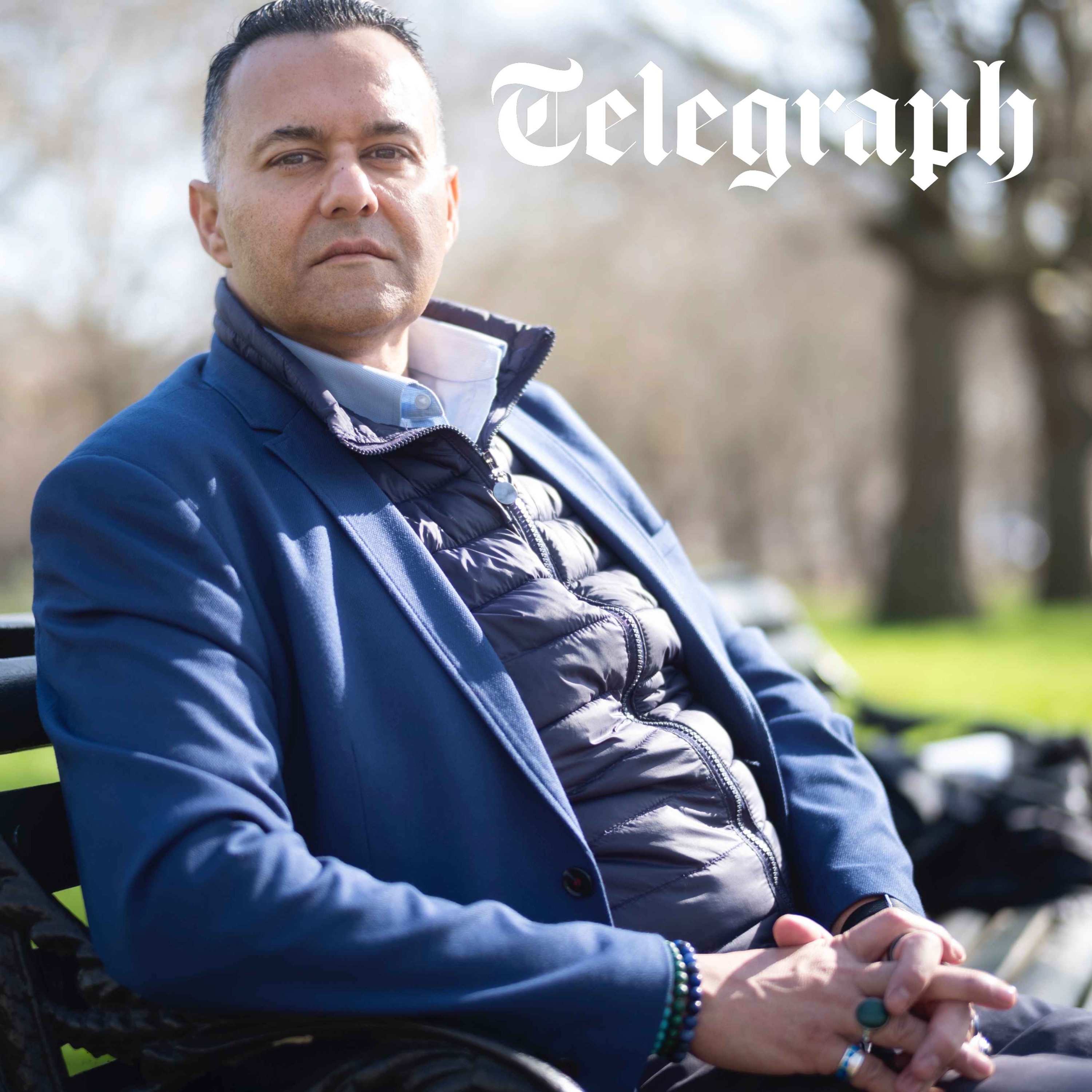
The moderate Muslim 'silenced' by the Home Office for fighting Islamist extremism
In this episode, Fiyaz Mughal, a counter-terrorism expert and founder of the organization Tell Mama, discusses his experiences with the Home Office and the challenges of addressing Islamist extremism within the Labour Party. He expresses concerns about failed integration, the misuse of a formal definition of Islamophobia, and the political dynamics affecting discussions around radicalization in Muslim communities.
Written by AI. May contain mistakes.
Fiyaz Mughal discusses his organization Tell Mama and the challenge of addressing anti-Muslim hate.
“Right, we're going to get into some thorny issues on today's Daily Tea, and who better to get into them with than Fyaz Mukul, who is the founder of Tell Mama.”
Fiyaz shares his experience of working with the Home Office and his views on Islamist extremism.
“And in the process of that, it took a very long time for the Home Office to vet me over 14, 15 months.”
Discussion on political strategies related to Islamist extremism and its implications.
“And yet it's shut down by what you perceive to be concerns over alienating Muslim voters.”
Fiyaz explains the difference between anti-Muslim hatred and the concept of Islamophobia.
“learn that actually nothing is about having things our way, but about adjusting and accommodating.”
Explore the Koskinen case and its significance in the context of free speech and public interest.
“Yes, so let's talk about Hamit Koskin, who recently had the High Court fined in his favour.”
Fayez shares his challenges as a moderate Muslim and the backlash he faces from extremists.
“Because if he is prosecuted, it is sending a very chilling message out to anybody else, in a way reinforcing a sense of blasphemy.”
A discussion on the historical and contemporary experiences of racism and integration for Muslims.
“and in 71 my family got a one-way ticket courtesy of Idi Amin out of, thrown out of Uganda, arrived here and were put up for six months in RAF camps as refugees.”
Discussing how Islamist terrorism has shaped public perception and the experience of Muslims in Britain.
“and the jokes that would have been told that you would have been on the receiving end of racism, even on sitcoms, on the telly, casualised tropes being used about black and brown people and all the rest of it.”
Examining how the Iranian revolution and subsequent events have altered Muslim identity in the UK.
“It has bent and warped what Islam means for many people and for me caused many nights of self-reflection as even whether I want to be in this faith.”
Explore how the Iranian revolution reshaped Muslim identity and visibility in society.
“The sense that there is an Islamic revolution and a sense that the Islamic identity comes first in that revolution catches fire and that idea catches across the Middle East.”
Understand the ramifications of the Salman Rushdie affair on Muslim visibility and societal perceptions.
“because of the Rushdie affair, out and much wider in society.”
Learn about the ideological shifts in the Muslim community due to migration and external influences.
“During 85 to 89, 90, you had a lot of people who were moving from North Africa.”
Discuss the rise of extremism in Muslim communities and the political reactions in the UK.
“And so after you've got these people from kind of Muslim Brotherhood and kind of ideologically driven backgrounds in the UK, they're spreading this information, this ideological sense of Muslim identity first.”
Examine the complexities and nuances within Muslim communities regarding perceptions and behaviors.
“We then get the rise of what I would call sort of, yeah, homegrown, white liberal, pro-Islam support.”
Delve into the concept of no-go areas and the integration challenges faced by Muslim communities.
“And in the grey of life, we have to admit there's bad here, there's bad here, there's good over there.”
Discussion on how housing policies and migration control lead to community segregation.
“They won't engage other people because they can speak in Urdu in that area.”
Exploration of the coercive practices in voting within certain communities.
“But as Democrats, we can allow her to do that.”
Debate on the intersection of cultural practices and the rights of women in Muslim communities.
“So this whole we can't say anything, we can't criticise, for instance, Sharia law, even though it heavily disadvantages women.”
Critique of the government's failure to address community polarization and segregation.
“which hold back women and girls throughout their lives, not just for a few years, but throughout their lives.”
Analysis of the hypocrisy in progressive politics regarding extremism and community relations.
“We're in polarisation, ghettoisation and a perspective that, well, you're racist, frankly you shouldn't be in the country.”
Learn about the historical instances related to hostage situations and their implications.
“which this organisation has described as a man of great substance who was on the right side of history.”
Explore how personal beliefs shape mourning practices and political views within Muslim communities.
“So why would anyone want to turn up to a demonstration where these things were being said, even if they were being said?”
Discuss the potential changes in Middle Eastern politics and their impacts on society.
“We spoke earlier about the UCL situation.”
Understand the importance of addressing extremist ideologies and challenges within communities.
“But then you think to yourself, this can only improve as society becomes more modernised and more westernised.”
Analyze the government's responsibilities in tackling societal issues and promoting inclusivity.
“I would also add that it's going to be a tougher fight with a weaker government that doesn't want to talk about difficult issues.”
Learn about the necessity of defending core British values in a changing society.
“and this battle of winning over a sense of who we are as a nation.”

Get the gist, explore an idea or ask about something said.
 Claude
On The Daily T, what are the key points of this episode?
Searching your listeningAutomatic transcript. May contain errors.
0:03Fiyaz Mughal: The Telegraph.
0:09Camilla: Labour is too scared of losing Muslim voters to address Islamist extremism. So says our guest today, a moderate Muslim and leading counterterrorism expert. In this special edition of The Daily Tea, we speak to Fiyaz Mughal about how high immigration bred extremism, his decision to leave the Home Office, and why an Islamophobia definition is a very bad idea. Welcome to The Daily Tea with me, Camilla Tomini.
0:46Camilla: Right, we're going to get into some thorny issues on today's Daily Tea, and who better to get into them with than Fyaz Mukul, who is the founder of Tell Mama. Tell us what Tell Mama is, Fyaz.
0:57Fiyaz Mughal: Yes, it's a national project that's been running for 13 years, which supports victims of anti-Muslim hate and also monitors and measures incidences of anti-Muslim hate across the UK.
1:09Camilla: With everything going on in Iran, with various political figures, and we'll get into this in just a minute, appearing to support pro-Iran regime rallies, a massive row over whether we should intervene and help the US and Israel in this quest or not, which is very reminiscent of the row that's been ongoing since October the 7th with regard to Gaza. I sit here as a white-lapsed Catholic, slightly nervous about having these discussions because I think like many people in the UK, I am concerned about the rise of Islamic extremism. I'm concerned about the sectarian nature of our politics, as evidenced in Gorton and Denton.
1:52Camilla: But I'm also acutely aware, and I don't say this in terms of, you know, the classic phrase that white people come out with, some of my friends are black. You know, I am close to Muslims. I don't want to be tarring everyone with the same brush. And I'm interested in speaking to you because you're the moderate Muslim that calls out both those who hate Muslims and are being awful towards them, but equally the Islamists in your midst who you believe, I think, Fayez, give moderate Muslims a bad name. Is that fair?
2:23Fiyaz Mughal: That's very fair. That's absolutely fair. Indeed.
2:26Camilla: So, Fayez, as well as setting up Tell Mama, you've also been an expert on counter-extremism for many years. You've advised governments. And until recently, you were working in the Home Office, but then you quite sensationally claimed that you'd been forced out. Can you tell me about that? Yes.
2:45Fiyaz Mughal: So I'd applied to be an individual as part of the Channel program, which is trying to help people move them away from extremist ideology. And in the process of that, it took a very long time for the Home Office to vet me over 14, 15 months. Ridiculous time.
3:02Camilla: Wow. If only they had applied the same application to Peter Mandelson. The Prime Minister might not be in the mess he currently is. But sorry, fires continue. you.
3:14Fiyaz Mughal: And there was a quote, sprint review being conducted by Home Office officials on the counterterrorism strategy to kind of review it for the new Labour government in place. And I remember being there. And when it started, the use of the term Islamist extremism was not mentioned till about 90 minutes into the session.
3:38Camilla: Right.
3:39Fiyaz Mughal: What the Home Office officials were talking about was misogynistic hate, mixed ideological hate, everything, including far-right extremism, except Islamist extremism. And I thought to myself, well, hold on, I put my hand up after 90 minutes and I said, you didn't say anything about Islamist extremism when it's the main threat we have today in the form of extremism in our country. And I got kind of glared at and I I got growled at in a way by Home Office officials who kind of looked at me to say, can I shut up? You're kind of disrupting our session and our moment.
4:16Camilla: And to be fair, the statistics do bear this out.
4:18Fiyaz Mughal: Majority of cases are Islamist extremism and they still come through our courts every few weeks. They're still flooding through our courts. They come through our court systems, right? So I raised it twice on the day and it was pretty clear that they didn't take a shine to me raising this because I basically showed them up.
4:36Camilla: Yeah. And so I then kind of wrote a piece in The Telegraph,
4:42Fiyaz Mughal: and the piece was actually in February 2025 for The Telegraph. The next day I got a text message from a Home Office official along the lines of, I'd love to have a chat with you about our role in this area. Oh, what did that mean? What does that mean? And about kind of media engagement.
4:59Camilla: Oh, so you had spoken out of school.
5:02Fiyaz Mughal: Out of school. Naughty boy, how dare you speak out of turn? And that's what I read it as.
5:08Camilla: And then what happened?
5:10Fiyaz Mughal: And I responded back saying, I hope you're not trying to pressurise me because I will keep speaking about Islamist extremism in the media. I responded. That's exactly what I responded to. He said, no, no, nothing along the lines. At that point I realised I don't think I'm comfortable here.
5:26Camilla: So what does that teach us about the wider picture here when it comes to the Home Office and the government?
5:32Fiyaz Mughal: It teaches, at that point, I interpreted that as civil servants wanting to push the Islamist extremism terminology down the agenda because they perceived that politically Labour may not really want to talk about it as much as the Conservatives were.
5:53Camilla: And just to get you to state the obvious, why do you think that is?
5:58Fiyaz Mughal: Because they believe that the Labour government, frankly, were politically reaching out to Muslim communities and Islamist extremism as a term, talking about it, discussing it openly would probably not sit well with the Labour government because there was a proportional set of votes attached to it. And that's why they were kind of trying to say, let's not focus on this area. Let's just kind of, OK, it's an issue, but shut up, Fires, right now. Just keep going, get off the stage.
6:28Camilla: But this is extraordinary because you're coming to this as a moderate Muslim on behalf of other moderate Muslims and indeed wider communities of any faith, creed, colour, because you're expressing legitimate concerns about Islamist extremism in the UK.
6:46Fiyaz Mughal: Yeah.
6:47Camilla: And yet it's shut down by what you perceive to be concerns over alienating Muslim voters. Yeah. And this echoes quite a lot that has happened in the last 20 years. Because if we look at the rape gang scandal, we see a degree of complicity by not just Labour politicians and others in politics. Civil servants. Civil servants. Correct. By police officers. Correct. By social workers.
7:16Fiyaz Mughal: Absolutely.
7:17Camilla: By a number of different key authorities that decide to turn a blind eye. Now, in the case of the other organisations that aren't reliant on votes, but are probably reliant on public support in general, they're doing it because they fear upsetting the Muslim community. Yeah. So something interesting has taken hold there, that there's a uniqueness to one particular community in the UK that can't be offended.
7:46Fiyaz Mughal: I think there's real truth to that. I think there's real truth to that. I think in the process of that, I think that the people Labour has been listening to over many years has sold Labour a dud, a set of duds. Let me explain this. One that they can, quote, bring Muslims to the Labour Party. We know that loads of Muslims are actually not going to vote for Labour in the future. We can see that in the by-election just now.
8:14Camilla: In the Gorton and Denton by-election, of course, they mainly voted for the Greens. And then we witnessed at the last general election the rise of the so-called Gaza independents who were preferred over Labour MPs.
8:26Fiyaz Mughal: Absolutely. Now, the other thing that has been sold to Labour is the fact that, you know, if you talk about Islamist extremism, you're going to kind of push the community away from you. Right. And that Labour has swallowed wholeheartedly. And the other thing that's been pushed as a dud is let's talk about the cuddliness of social cohesion and stick to that. And actually, the fourth dud that's been sold to them by some of these people has been, let's not include in social cohesion the need to tackle extremism as if the two things are separate. This is what's been pushed. And I think, no, I don't think, Labour have swallowed that wholeheartedly.
9:07Fiyaz Mughal: You're seeing it in how they're acting.
9:09Camilla: Yes.
9:09Fiyaz Mughal: And let me add this. For years after 7-7, I heard public voices saying, where are the Muslims talking about extremism? Well, here we are. We've been speaking for 20 years. With the Conservatives, I think they could have done a lot more and they got totally tangled up with Brexit and all the paraphernalia of fighting each other.
9:30Camilla: Because there were concerns raised about Trojan horse schools by Michael Gove. That's right. There was a move to prescribe the Muslim Brotherhood. They were making efforts. Which was on David Cameron's desk and then, I think, got lost in the ether of other policy.
9:44Fiyaz Mughal: Correct. So they were making moves. They were much more robust at a political level in dealing with this issue. You look at where we are now and even getting the term Islamist extremism out of the mouths of ministers is like bulldogs chewing a wasp.
10:01Camilla: Well, now we've got ministers agitating for an Islamophobia definition.
10:05Fiyaz Mughal: And now we've got ministers agitating for an Islamophobia definition. And these are the people they're listening to, the very people who are selling them the dud. And I'll tell you now, if they produce a definition, which I think they'll do, what they'll do is what Labour is doing consistently. They will satisfy nobody. They'll produce something which won't satisfy these so-called advisers who want the racialisation element lumped in, even though we Muslims are never one race. And legal president is in place which says we're not a singular race. So they won't be satisfied. and people like me who say, frankly, the laws, because I've worked on this on thousands of cases, the law is sufficient enough.
10:47Fiyaz Mughal: We don't need this because it'll have an impact and be misused by malign actors to curtail free speech. Won't satisfy us. So Labour are in a bind because they listen to these, excuse my word, plonkers. But plonkers is a nice word. These people have a malign attitude and a malign view of how our country should be. Instead of getting people to understand, engage, listen, learn that actually nothing is about having things our way, but about adjusting and accommodating.
11:21Camilla: But when you say that about their motivations, what do you mean that they do want a so-called Islamic takeover of Great Britain?
11:28Fiyaz Mughal: I don't think they want that. I think that they live with their identity first, and it's about their identity first. I don't say it's an Islamic takeover in terms of a kind of a potential power takeover. If you look at two individuals, for me, my identity doesn't come first. For them, it does.
11:51Camilla: Religious identity. Religious identity. To be very clear.
11:53Fiyaz Mughal: To be very clear. And there are two forms of Britain we can go down here. And this is really important. This comes down to the crux of where this struggle has become. Do you want an Islam which is my view, which is my identity as a Muslim is behind and part of multiple identities which allow me to feel accepted in society and connected to others? Or do you want the Muslimness of the other side to constantly be slapping you in the face? Because that is the one creating the division. That is the one that says, I'm different to you, you're different to me. Or do you want the one like me that comes into a room and says, I'm not different to you.
12:38Fiyaz Mughal: I'm even in many ways connected to you. I may disagree, but I still care about you.
12:43Camilla: So what's your concern then about the term Islamophobia? Because many will say, well, look, you're somebody who runs an organisation that fights anti-Muslim hatred. What's the difference between anti-Muslim hatred and then taking it a step further? Yeah. And making Islamophobia a thing?
13:02Fiyaz Mughal: Good question. So anti-Muslim hatred is what it says on the tin. I've always said that with the work we did. If you target me because I'm a Muslim and you decide you want to spit at me, break my windows at home or break my mosque windows, you're criminally liable. And it's fundamentally wrong against the values of our country. Full stop. Period. OK? If I'm walking down the street and I hear you preaching that you do not like Islam, that you think Mohammed was a heretic and a no good so-and-so, that is your right to do so.
13:36Camilla: Yes. Now, for those people who talk about Islamophobia as a term,
13:43Fiyaz Mughal: they will use that to shut you down to talk about your fundamental right to either hate, critique or just dislike Islam and vocalise it.
13:54Camilla: Yeah, we should be able to hate, dislike and critique any religion in the UK. Any religion you want. Because we do not have blasphemy laws.
14:01Fiyaz Mughal: Because we do not have blasphemy laws. Now, the Koskinen case...
14:05Camilla: Yes, so let's talk about Hamit Koskin, who recently had the High Court fined in his favour. He famously burned a Quran.
14:14Fiyaz Mughal: Yes, outside the Turkish consulate, I think.
14:16Camilla: He was criminalised for it. He took his case to the High Court and the High Court found that he was able to burn a Quran.
14:24Fiyaz Mughal: Yeah. Now, Koskin's case is really important. It's important because it's one of the fundamentals and the values of our society. It really is. People really need to recognise this case and the importance of it. The fact that Koskin burnt a Quran and did not specifically target a Muslim in doing so, and the fact that he didn't go into a mosque and burn it, meant that actually he was within his legitimate rights to campaign in doing so.
14:55Camilla: Yeah.
14:56Fiyaz Mughal: And the fact of the matter is that they're using public order offences to try to get a prosecution against him. So the CPS has taken back the case, and again, it's been kicked back in favor of Koskin. But one has to answer, the DPP has to answer, why did they take that back to court? Why? Because there are two main fundamentals. One is the CPS will act if it's in the public interest. Why taking Koskin back to court after he was effectively disavowed of doing anything criminal? Why did they use public expenditure? And why did they think it was in the public interest to do so? Who advised them? We need to know who advised them.
15:39Camilla: Well, they're coming under pressure or they themselves, as often happens, frankly, with white people in positions of authority. They do things because they don't want to look as if they're racists, fires.
15:50Fiyaz Mughal: I would agree to that. I mean, I would agree to that.
15:53Camilla: We had this on a different level quite recently with a Nottingham inquiry where we find out that Valdo Calicane, who killed three people in Nottingham, did so after he was released from being sectioned amid concerns that too many black men had been sectioned. So when you have that kind of feelings running through the heads of people running local authorities and organisations designed to keep us safe, then it's hard to quantify or calculate what's behind the thinking. It could just be fear of appearing bigoted. And we saw this with the rape gangs. We see this time and time again.
16:32Fiyaz Mughal: The fact that Koskinen, thankfully, has not been prosecuted is really important that that line is held. Because if he is prosecuted, it is sending a very chilling message out to anybody else, in a way reinforcing a sense of blasphemy. So this man needs to be out and away from any prosecution and we need to watch this case very carefully, very carefully indeed. Last thing, I don't agree with what he did. I don't believe in burning books or religious books, but Koskinen has every right to want to do that and I'll defend his right to the hilt.
17:14Camilla: But as a moderate Muslim, Fayez, I would assume that you are not particularly respected and admired among some in your community that you would put on the more extreme end of the wedge. Would that be right?
17:27Fiyaz Mughal: That would be right. That would be right. I think I've had multiple use of the term Zionist.
17:33Camilla: Yes.
17:35Fiyaz Mughal: Islamophobe. Interesting. I've had that thrown at me, even though I've worked for 10 years helping Muslims. Yes. And also I've been called an unbeliever, which is actually a bit more threatening because that kind of puts a target on my head.
17:46Camilla: Yes.
17:46Fiyaz Mughal: And for many years I had to travel to work by changing my trains, walking endlessly round, getting paranoid thinking people were after me because of the threats I had. So I lived a rather painful, stressful and lonely number of years doing the work in Telmama.
18:05Camilla: Would you go back to working for the Labour government in any capacity at this? No.
18:09Fiyaz Mughal: Right. Because the Labour government have really swallowed hook, line and sinker some of this very kind of ideology, some of the dud ideology I've talked about, and actually really are in tandem with people, I think, who haven't got the best interests of the UK at their heart.
18:36Camilla: Before we get on to discussing a bit more about Gorton and Denton, sectarianism in politics, the situation in Iran, and what we've learnt about different people's affiliations, let's put it that way, just tell me a little bit more about yourself and your own background. Where your family originates from, how long you're born in the UK?
18:59Fiyaz Mughal: I was, interestingly, I have not been born in the UK. I wasn't born in the UK. I was born in a nunnery in Uganda.
19:08Camilla: Right.
19:09Fiyaz Mughal: In 1971, I was born in a nunnery in what was then previously a slave fort.
19:16Camilla: OK.
19:17Fiyaz Mughal: And that became this nunnery. And my family were in Uganda, had lived there since the late 60s. and in 71 my family got a one-way ticket courtesy of Idi Amin out of, thrown out of Uganda, arrived here and were put up for six months in RAF camps as refugees. And then my father loved Africa and didn't like the weather here and decided as a qualified electrical engineer he wants to go and work in Africa again. And it took us back and we lived in Kenya till 1983. and then we were kicked out again by political instability. I came here and lived ever since 1983.
19:58Camilla: So how old were you then, Fayez?
19:59Fiyaz Mughal: I was 11.
20:01Camilla: 11. So you had your secondary education here and lived here ever since. Yes. And can we talk about being a Muslim in the UK?
20:10Fiyaz Mughal: Yeah.
20:10Camilla: How do you think the complexion of that has changed? This is such a generalised question, but since you arrived in the early 80s, how were you all received? What's your experience been like in Britain? And can you comment on the sort of changing narrative around Muslim integration into this country?
20:28Fiyaz Mughal: OK, there's a lot in there. And so let me pick it up by when I arrived in the UK, the country was, I guess, in many ways, still proud of its kind of history, its identity, where it was going. At that point in time, we had Margaret Thatcher, who was in power. There was a sense of direction in the country. the institutions were respected. There was trust in the institutions. I then went off to a school in Kent as the one of three Asian kids in Kent. It wasn't easy. Bullying, racism, harassment, kindness, care, anger. I had the whole mix as life is a mix of things. But racism was in your face in those days.
21:15Fiyaz Mughal: And unfortunately, I heard it, I felt it, and I lived through that. So if I just take that to today's context, when I hear from people saying, you know, racism is so significant and bad, I understand it's within their context of their world now. But compare it to where 1983, as a young Asian kid, one of three in the school who was Asian, our country has moved significantly forward, significantly forward from the blatant overt racism of the 80s. Look, I couldn't go into a pub till around the 1990s because I was scared I was either going to get spat at, I was going to get abused, and I just didn't feel comfortable going into a pub in the 80s.
22:01Camilla: But there's a contradiction here, isn't there? Because we have a completely different scene now from when you and I were growing up in that period and the jokes that would have been told that you would have been on the receiving end of racism, even on sitcoms, on the telly, casualised tropes being used about black and brown people and all the rest of it. And yet at the same time, there has been since October the 7th and maybe even before, and maybe it is as a result of, to be fair, and this is what people will pinpoint on X and social media, a succession of Islamist terror attacks on the West, which have then turned whites against some parts of the Muslim community.
22:49Camilla: So we've got a strange thing bubbling up here, not as overt racism as was witnessed in the 80s, and yet this Islamophobia word keeps on making an appearance, even though there are some who, by the way, aren't racist, but just worried about the introduction of blasphemy doors who are trying to resist that being defined by government.
23:10Fiyaz Mughal: That's right. So all of those things are real and relevant. And, you know, people who go into black and white thinking I have real problems with, because all of them are real and relevant. I have a problem with the Islamophobia definition, and I've worked on this area for over a decade, having set up Talmama, and I've lived it. I have a problem with the definition. I have a problem with racism and I've challenged it all my life. But in the middle of that, we cannot distinguish, as you rightly said, the fact that Islamist extremism and terrorism has been one of the leading causes for a rise in polarization.
23:50Camilla: Yeah.
23:50Fiyaz Mughal: And a rise in extremism, but also a rise in, I would say, real segregationist mindsets in our society. so a lot of people of my faith don't want to talk about this but the reality is when you've had multiple terrorist attacks based on islamist extremism and i've been working on this since seven seven it will create polarization segregation it will create anger and it's doing that to our
24:19Camilla: country repetitively is that fair though i mean speaking as a catholic albeit more lapsed than my co-presenter Tim Stanley, I don't remember being targeted for criticism because of what the IRA was up to in Northern Ireland. You know, I do have sympathy with this idea that you cannot smear an entire religious community because of the actions of a few, frankly, deranged medievalists.
24:47Fiyaz Mughal: Correct. And I think your terminology is absolutely right. Look, the reality is this small but vocal population and small but significantly vocal has created enormous problems for British Muslims as a whole. It has created enormous problems for the interpretation of Islam itself. It has bent and warped what Islam means for many people and for me caused many nights of self-reflection as even whether I want to be in this faith. This is what it's done. it has caused Britain to be impacted on at points where I just really feel I want the Britain of the 80s and 90s back. Now that's difficult to say.
25:33Camilla: That's really weird because you're saying that your life was made of misery at school.
25:37Fiyaz Mughal: Correct. That's really weird to say and this is difficult. I'm going to mention this because the Britain then, whilst difficult and troubling, had a sense of things that bound us together. It had a set of foundations. It had a set of values that we all felt we could bind into. Yes. OK, there was something that connected us that I could connect with other people from other communities. And I didn't, and this is important, I didn't wear my Muslimness first as a badge of identity.
26:15Camilla: I didn't. Yes. I just was me.
26:19Fiyaz Mughal: And I miss those days.
26:21Camilla: So what's changed? Why did it change? How did it change?
26:26Fiyaz Mughal: It's changed because of the geopolitical situation. It's changed because of Islamist extremism. It's changed because of migration. It's changed because of, and I'm going to say this, identity politics taking a hold in our country and really throttling the neck of our sense of what binds us together.
26:47Camilla: Yeah.
26:48Fiyaz Mughal: And the identity politics is exceptionally corrosive over the last two decades, has been. But when did it begin?
26:56Camilla: Are you saying that it began in the era of Tony Blair? Immigration explodes. We have a large number of migrants coming into the country from Muslim countries who are probably following relatives and therefore all descending on unique geographical areas where they then, because there isn't any degree of proper assimilation or integration, end up existing in silos. I mean, that happens.
27:28Fiyaz Mughal: Yeah, that happens.
27:29Camilla: But then we have absolutely contrasted experiences of other Muslims, yourself and your family included, that do not end up like that.
27:37Fiyaz Mughal: Yeah.
27:38Camilla: So talk to me about that. And is this about where people are migrating from? Is it about the educational standards of those coming in?
27:46Fiyaz Mughal: Correct. It's a mixture of a whole range of things and exactly including those. But let me start off by this. I'll give you a bit of a timeline here. So, and it's really topical. We're talking about this now, given what's happening in the Middle East. So let's start off with this. And it really does start off with the Iranian revolution.
28:05Camilla: Okay, so 1979.
28:07Fiyaz Mughal: 79, the revolution takes place. The sense that there is an Islamic revolution and a sense that the Islamic identity comes first in that revolution catches fire and that idea catches across the Middle East. and also starts to touch globally through news and other sources. Prior to the late 70s, the majority of the Muslim communities here were always just getting on, living, breathing, working like anyone else. Their religion was very personal and never on their shoulders. So prior to the Iranian revolution, Muslims were pretty invisible, except for racialization. We looked different, but our Muslim identity was invisible.
28:54Camilla: You are hitting on something here, that religion wasn't worn publicly that much. I mean, of course, people who migrated here might have actually worn religious clothing. And of course, we saw head coverings. But I don't think there was the innate understanding now of what different faiths people from the Asian community practice or indeed the African community.
29:16Fiyaz Mughal: Indeed. And let me just say, so even in this up to the late 70s, you would not have Muslim women head covering unless they were probably over the age of 50. And that was just as kind of a shawl over the head. It wasn't a full covering. It was just kind of respectively using a shawl over the head. And that was for women over 50. You didn't have the head covering there, which has become an identity marker today. OK. So you've got this population that's kind of inwardly spiritual, not really showing their Muslimness. But the revolution kicks in the issue of Muslim identity being primary. OK. It catches globally.
29:54Fiyaz Mughal: The idea catches. It impacts us. OK. That's the first buffet in our country. The second one, which is really marked, which then kind of in a way takes root, is the Salman Rushdie affair.
30:07Camilla: Yes.
30:08Fiyaz Mughal: The Salman Rushdie affair took Muslimness and its visibility in society by its discussion, because of the Rushdie affair, out and much wider in society.
30:18Camilla: And we should explain that to the uninitiated, that when he published the Satanic Verses, he was issued with a fatwa, which is basically a death threat.
30:27Fiyaz Mughal: It's a death threat.
30:28Camilla: And he was forced into hiding. And we know what subsequently happened with the attempted murder of Salman Rushdie. Yes, deny, was stabbed. That's right. When he published a more recent book.
30:40Fiyaz Mughal: That's right. And at the time, to give some context, we had book burning demonstrations in Bradford and places like that. If you remember, mainly men of Pakistani heritage over the age of 50, 60 were burning books. And so you could see on the news the visibility of Muslims pretty much looking like book burners at that time. So you could see that visibility out there. The Rush TFA really changed things. That visibility was now really kind of evident and being discussed. OK, so we took an 89. During 85 to 89, 90, you had a lot of people who were moving from North Africa. People were moving because of asylum, persecution, migration.
31:21Fiyaz Mughal: Some of those individuals who moved because of persecution were people who I would regard as being part of a loose affiliation with the Muslim Brotherhood ideologies.
31:31Camilla: Yeah.
31:32Fiyaz Mughal: Libya, Algeria, Egypt. They took asylum in the UK. very committed, driven, just like communists would be with ideological zealotry. They came in and they wanted to create change. And what they found were open institutions within British Muslim communities that were very spiritual, very kind of let everything just happen. It was okay. We come to pray. And they took over a lot of these institutions. They influenced a lot of these institutions. And with the revolution element also going from a Shia perspective from Iran, it pushed forward a Sunni perspective that, yes, actually Islamic ideology should be primary.
32:13Camilla: You need to define the difference between Shia and Sunni.
32:17Fiyaz Mughal: So, good point. So this was a schism that happened just when Muhammad died. The succession was meant to be a central point to hold the small community of Muslims together. And so the schism happened in who was going to succeed. some thought his son-in-law Ali should be of the succession and others thought that actually the initial early followers and disciples of Muhammad should lead the community and that personal and political and religious difference led to two camps developing the majority following the early disciple of Muhammad let's use the word disciple and a smaller number following his son-in-law so
33:02Camilla: So there are more Sunni Muslims in the world than there are Shia, by far.
33:06Fiyaz Mughal: Four-fifths Sunni to about one-fifth Shia.
33:10Camilla: But we associate Shia Muslims with regimes like Iran.
33:14Fiyaz Mughal: With regimes like Iran, Iraq, and you'll find some in East Africa, etc. Much smaller in number. The main premise of the religious ideology is pretty much the same. But the schism was primarily around succession. and early individuals involved in Shia Islam were also persecuted by the majority Sunni population. And so within Shia Islam, there's a strong sense of martyrdom.
33:42Camilla: Yes.
33:43Fiyaz Mughal: It's very strong because in the early essence of the development of Shiaism, martyrdom became the founding principle that kind of held the glue. And so that is why when you hear about martyrdom in today's geopolitics, a sense of being persecuted becomes a badge of honour to die for the defence of the community.
34:05Camilla: Yeah. OK.
34:07Fiyaz Mughal: And so after you've got these people from kind of Muslim Brotherhood and kind of ideologically driven backgrounds in the UK, they're spreading this information, this ideological sense of Muslim identity first. You then have the first Gulf War and you start to see the seeds of some young Muslims siding with Saddam Hussein openly.
34:27Camilla: Yeah.
34:28Fiyaz Mughal: That was happening. And where people like me were thinking, oh, you live in Britain. We've got British soldiers, part of our brigades fighting here in 1991. What's going on? Something was fragmenting within Muslim communities. And there was the evidence.
34:47Camilla: So I'm thinking now the natural place to fast forward to is 9-11.
34:52Fiyaz Mughal: So 9-11 created a massive shockwave. And in that massive shockwave, you start to see more younger women wearing the hijab. It is marked. It is at that time. And it becomes an identity marker, a sense of a feeling for some that I may be rejected. So I'm going to overtly show my identity.
35:14Camilla: So we have 9-11. That changes the complexion of everything.
35:18Fiyaz Mughal: Everything. So it's much wider. The amplification of it, the sense of segregation, separation is taking root and heavily. You have 9-11, then you have 7-7. And now it's become localized because it's the UK. It's not over in the US. And there's this consistent reinforcement of difference. And with that, you start to have the anti-Muslim hatred reinforcing the difference. You also have the politicization of external actors like Iran and others who are then saying, we told you you live in the West. Yes. You're never really going to be accepted. And don't forget, after 9-11, you then have a lot of al-Qaeda rhetorics distributed through cassette tapes.
36:10Yes, through institutions and networks here.
36:14Fiyaz Mughal: They were distributed. And you have the ideology of al-Qaeda circulating through old video Betamax tapes. Yes.
36:23Camilla: Okay.
36:24Fiyaz Mughal: And so you've got here the fomentation of what is an extreme interpretation of Islam that is exceptionally anti-West taking root in small but significant parts of Muslim communities.
36:39Camilla: But the politicisation of the pro-Islamic cause, not just by Muslims in the UK, but also by white liberals, occurs as a result of opposition to the Iraq war.
36:55Fiyaz Mughal: That's right.
36:56Camilla: Opposition to Tony Blair.
36:58Fiyaz Mughal: That's right.
36:59Camilla: So it then becomes a legitimate struggle if you've got whites on your side in Britain agreeing with you that 2003 shouldn't have happened.
37:08Fiyaz Mughal: Correct.
37:09Camilla: That we were the US's poodle.
37:11Fiyaz Mughal: Correct.
37:11Camilla: We then get the rise of what I would call sort of, yeah, homegrown, white liberal, pro-Islam support.
37:21Fiyaz Mughal: Yeah, indeed. And in that sense of white liberal support, an overlooking of bad behaviour within parts of the extreme sections of my co-religionists, right? Overlooking some of that. Even sometimes saying, well, it's part of their kind of cultural background. Leave it alone.
37:41Camilla: Yes. Also, we have an environment being created where people are afraid to call out any kind of extremism for fear of being branded racist and Islamophobic. So we can fast forward further now to actually October the 7th via the rape gang scandal, via a number of different moments. But what I think is similar between now Iran, then Gaza, and before that Iraq, is the caucus of support that is afforded. Now, let's just get this straight, because Tim Stanley and I have been debating this all week. I'm not for one minute saying that people who oppose US intervention are ergo Islamists or supporters of Islamists.
38:29Camilla: I'm not saying that at all. What I'm saying is we see these conflicts suddenly legitimize support for regimes that you wouldn't ordinarily think anyone. OK, it's more understandable if they're Muslim. It's unfathomable if they're white liberals enjoying the freedoms, the democratic freedoms of life in Britain, that they would side with the other side. So I cite, for instance, Zach Polanski, the Green leader, discussing the US and Israel in terms of being rogue states, but not Iran. I refer to longstanding friend, although he distanced himself from that latterly, of Hamas and Hezbollah, Jeremy Corbyn.
39:13Camilla: I'm talking about the Zahra Sultanas of this world. I'm talking about hard left politicians that now think that it's justified to side with, I suppose, the opponents because they think that the proponents are capitalist and overreaching. Indeed.
39:33Fiyaz Mughal: Indeed. And actually, with that myopic view, they are in effect also twisting and deviating young mindsets that are impressionable in parts of my community, where black and white thinking is really part of the problem, not looking at the grey of life. And in the grey of life, we have to admit there's bad here, there's bad here, there's good over there. And actually that kind of much more multivariate thinking is at loss in these kind of debates, right?
40:09Camilla: But if the extremists are in such a minority, are we being overly hysterical about their influence over the young, the community, the areas in which they live?
40:21Fiyaz Mughal: We're not. Look, it's very sad for me to say this, but we're talking of the tens of thousands here. Our security services at one point over the last few years have had up to 45 ,000 individuals being monitored as best as possible regarding Islamist extremism. These are the kind of numbers we're talking about.
40:43Camilla: So if somebody like Matt Goodwin, who stood for reform in Gorton and Denton, talks about no-go areas, or indeed Robert Jenrick, his new reform buddy, talks about no white faces in Birmingham. Obviously, everyone points and says you're a racist, you're a bigot, and you have no nuance yourself, which may be a fair comment. But are there no-go areas? Are some areas so Muslim heavy that it's difficult for whites to walk around? Or is that hysterical?
41:12Fiyaz Mughal: So I think there is some hystericism within that. But again, there is some truth to that. And I'm caveating this. And let me explain the truth to that. People can go into these areas. You can enter and you can walk and you can go down the street. So on the no-go areas, it's not factually accurate. You can go in there. The reality, though, is in those areas, there are people who are living in those areas who never will cross over the little, small, four or five, six streets in the majority of their lives, let's just say. They won't leave those areas. They won't meet other people. They won't engage other people because they can speak in Urdu in that area.
42:06Fiyaz Mughal: They can get their meat and food in that area. They can live their lives within that small area. And that's been driven, and I go back to what you said, it's been driven by housing policy, one element. It's been driven because they have relatives in those areas. When they migrated to the UK, they went to those areas. And three, it's also been driven by the issues around the lack of migration control where people have relatives or think there's a high cluster of those populations in those areas. And so, yes, there are areas where there's a significant cluster of individuals in areas like Birmingham or Luton, etc.
42:45Camilla: Or Leicester.
42:46Fiyaz Mughal: Or Leicester. And some people may feel intimidated by that. Do I take that on board? Yes. But actually, they can still go in and walk there. But there are intense, clustered areas where people can live their lives without getting to know or engage with other people. I think that's deeply problematic. You look at my background, I had to live with others. I had to learn that my survival was based upon accepting, understanding, listening, even not agreeing, but sitting and giving people the time.
43:25Camilla: Where this becomes difficult, I suppose you could say, well, this is a free and democratic nation where people can live precisely as they like. Just as you could say for a Muslim immigrant coming here who doesn't speak any English. Let's think about a Bangladeshi woman who's in her 50s or 60s. She doesn't need to learn the language necessarily to operate within her own community. She's economically inactive. She's there to be a homemaker, a wife, a mother. She can carry on her existence as she wishes confined to a few streets. I'm not advocating it as a woman in 2025. I don't want women to not be freed to do whatever they like and to learn the language and to get jobs and to branch out.
44:06Camilla: But as Democrats, we can allow her to do that. I think where this all becomes problematic, and that's what we witnessed in Gorton and Denton, is when allegations of family voting surface. That's right. OK, so family voting, the coercion usually of man to woman.
44:26Fiyaz Mughal: Indeed.
44:26Camilla: Can also be grandchild to grandparent who doesn't speak English or son and daughter to parents. But this idea that some in Muslim communities are being told how to vote is in itself problematic. I was intrigued to read an email that was sent to me by somebody who lived in Oldham. OK, a white person now, I would say boomer generation. Let's just say that he's in his late 70s, early 80s. Don't want to identify him because I don't want him copying any flack. But this was his observation, having lived in that area for 57 years. He talks about himself and his wife, now deceased, having observed for years a degree of family voting in ballots.
45:08Camilla: He says, I can categorically state that in some polling centres we have attended, this practice was the norm and it simply wasn't husband speaking to wives. It was grandchildren accompanying grandparents and uncles and aunties saying, oh, she can't read. She doesn't speak English and actually going into the booth. Trying to raise any concerns to the officials was blatantly ignored. At one general election, after having to struggle through the crowds outside to even get to vote, then trying to raise this with the police afterwards was an absolute waste of time. This went on for years and years.
45:48Fiyaz Mughal: Well, it's been going on for a long time. I know that. I've worked with different Muslim communities for 20 years. Unfortunately, with some families, I have seen how the wife who can't speak English has also said to me on occasions that actually, you know, the husband deals with all those kind of issues around voting and politics.
46:14Camilla: Yeah. You see, this is my other problem with it, is that progressives turn a blind eye to what is effectively the subjugation of women within British communities in 2026. So this whole we can't say anything, we can't criticise, for instance, Sharia law, even though it heavily disadvantages women.
46:32Fiyaz Mughal: Correct.
46:33Camilla: We can't discuss the wearing of burqas and niqabs, even though. And I would fight for a woman's right to wear whatever she likes, provided she's decided to do so. Yeah. Because we can't speak about that, even though I think it is a woman's rights issue. We can't talk about women being controlled by the men in their lives because they don't speak English.
46:56Fiyaz Mughal: That's right.
46:56Camilla: Because they don't have jobs. We can't talk about...
47:00Fiyaz Mughal: Mental coercion.
47:00Camilla: Mental coercion. Right. Domestic abuse.
47:03Fiyaz Mughal: Yes.
47:04Camilla: Because there are cultural sensitivities around it.
47:07Fiyaz Mughal: That's right.
47:07Camilla: And I just don't think that that accords with my own feminist values.
47:11Fiyaz Mughal: Well, it shouldn't accord with, absolutely, and it shouldn't accord for a Muslim male like me. I'm sickened by it. You know, I'm sickened by it because it doesn't make me an angel of any sort. Let me just get that straight. The fact is, there are people out there who are thinking this is a normal part of everyday life, that it is a normal part of their local community. It's not. And I think it's fundamentally important for men of my generation and my age, 50 plus, who have to seriously look at their behavior. This behavior is holding back the economic progression of their communities. It is destroying the mental health of their families, their daughters and their mothers.
47:58Fiyaz Mughal: and it is destroying a sense of mentorship in their sons. And I know from the work I've done in extremism that if mainly sons start to see their parents as people who they can manipulate, who are weaker, who can't speak the language, who are less respected in their eyes, then I have also seen how that leads them to the path to look at others for leadership or mentorship, and they can fall into the hands of people who can do very nasty ideological things with them. And so, you know, we have a real problem here where gender identity power dynamics are very corrosive in parts of small parts of my community, which hold back women and girls throughout their lives, not just for a few years, but throughout their lives.
48:57Fiyaz Mughal: And that needs to be challenged. And I make a real call out to Western white liberals out there that if you really want to talk about rights and obligations and diversity and pluralism, fine, great, I'm there with you. But let's talk about fighting for the rights of those women and girls in those homes because we start from there to build a stronger community. And the second thing we need to discuss is, again, it's a democracy.
49:31Camilla: If pro-Gaza independents decide to stand in constituencies and they get elected for very obvious reasons, for the reasons precisely that you have listed, then unfortunately the rest of us have to say, well, that's our voting system, isn't it? Labour MPs have privately expressed concerns to me. You know, West Streeting in Ilford North. Will he win that next time round? I don't think he will. Health Secretary. One Labour MP said to me fairly recently, you know, we won't get elected in Leicester again.
50:02Fiyaz Mughal: Leicester's gone. It's gone. It's gone. Well, you see, here's the thing. So let me just set Islamist extremism aside for a second and take up this issue of segregationism. OK, because here's another fundamental aspect, which is tearing our communities apart and pulling each other apart. The fact is that there are a lot of areas that, as I said, won't mix. And in doing so, the perspectives of one another, our perspectives of one another in those areas become very skewed and become part of everyday life. And actually that and a lack of central government, that localization of polarization of opinion because we're never going to physically engage with each other and a lack of successive governments since 2000, since Brown's era, Tony Blair tried.
50:59Camilla: Yeah.
51:00Fiyaz Mughal: After Brown, not a single government put into place an active, practical and enforceable cohesion plan in our country. it's been glaringly obvious central government have left that aside. And when central government have not been actively engaged and local communities have just said, and local authorities in particular take the approach of laissez-faire is fine because we don't want to get involved in these community politics, it'll cost us politically. Then you have the problem we have. We're in polarisation, ghettoisation and a perspective that, well, you're racist, frankly you shouldn't be in the country.
51:35Fiyaz Mughal: These perspectives, which are so toxic, are taking root.
51:38Camilla: But then Tim would argue it's schadenfreude for Labour. Labour have been incubating these so-called Muslim votes for years. And then because Labour has moved away from what would be an Islamist position, for instance, on Gaza, because they've expressed some support for our allies, US and Israel, suddenly they're not pro-Muslim enough. And so they're going to go to the next best pro-Muslim candidate. It was George Galloway's lot. Now it's Gaza independence. Yes. It could be. And now it's the Greens. So let's have a conversation about Mothin Ali, the deputy leader of the Greens. Yeah. Now, I've put quite a lot on X about this because I originally wrote up the story of the rabbi in Leeds.
52:21Camilla: Oh, yes. Being driven out of his home, along with his wife and his family. And I took a personal interest in it because I went to university in Leeds and I studied law and I had a lot of Jewish friends up there. So I thought, well, this is curious. This is interesting, this Leeds councillor who had, because the rabbi had served in the IDF in the aftermath of October the 7th. Now, to be fair, Mr Ali has apologised for appearing to justify the October the 7th attacks in a social media post that he since took down. He had recorded a video describing this rabbi as an animal, being very critical of him.
52:55Camilla: The next thing that happens is the rabbi, the rabbi's wife, received death threats on the telephone and they're forced into hiding. That's all on the record. My objection to Mr Ali's behaviour is that he keeps on claiming he's peace loving and he's a proponent of community cohesion. And at the time, I didn't see any evidence of that in relation to how this rabbi was treated. I think if you're going to say that you're somebody who brings communities together, you do have to include Jews in that. even Jews who have served in the IDF, which is a requirement of being Israeli.
53:32Fiyaz Mughal: Absolutely. Now, if you say you're peace loving and you're such a cuddly flower, you know, budding and seeding individual and putting water on animals and plants or whatever. You're a gardener. You're a gardener.
53:44Camilla: He's been described by Zach Polanski as just a gardener.
53:47Fiyaz Mughal: Just a gardener. Then you need to demonstrate that you are like that. And sadly, there are videos, as you've said on social media, which demonstrate something else. okay now first of all you need to live by what you say okay and so there seems to be some disparity in in that in in what you picked up and the stories that you put on record and mothin alley
54:12Camilla: but there's two strains here to why people find this all very difficult it's hypocrisy progressives suggesting that they are open to all ideas and free thinking and supporters of democracy, except if you do support Israel or you happen to be Jewish, okay, or you happen to raise perfectly legitimate concerns about Islamic extremism. That does not ergo make you Islamophobic, point one. Point two, I think, is the gaslighting. So let's take the recent march, which some have described as a peace march. Others have described as a pro-Iran regime march. OK, this took place on the Saturday after the bombing raid started.
55:01Camilla: Mothin Ali was there. Jeremy Corbyn was there. Now, we do appreciate the protests. In protests, you get all sorts of elements. And I could turn up at a pro-Brexit protest back in the day and there might be elements from Tommy Robinson's mob. There might be elements from all sorts of different... You get a mix of people. Exactly, right? But let's just get to the truth of this. This rally was organised by the Islamic Human Rights Commission, described in a 2023 review into Prevent by Sir William Shawcross as, quotes, an Islamist group ideologically aligned with the Iranian regime that has a history of extremist links and terrorist sympathies.
55:35Camilla: OK, and I should say that in response to that report by Shawcross, the IHRC, so that's the Islamic Human Rights Commission, told The Telegraph, William Shawcross's review of Prevent has been thoroughly debunked as a piece of Islamophobic propaganda.
55:51Fiyaz Mughal: But the point was there were sentiments expressed at this march along the lines of death to America, death to the IDF.
55:59Camilla: I think there were reports of an American flag being burnt, but also praise for the Ayatollah, which this organisation has described as a man of great substance who was on the right side of history.
56:09Fiyaz Mughal: Oh, right side of history.
56:10Camilla: So the gaslighting is what I'm objecting to here. Don't say it's something when we know the elements are there. Are there.
56:17Fiyaz Mughal: Exactly that. I mean, I think I'm old enough to remember the archbishop's envoy who was taken hostage for many years. Terry Waite. Terry Waite. OK. The hostage taking, the suicide bombing of the 82, 83, 84 in Lebanon, the killings, the assassinations, the extrajudicial killings. All these came from the Ayatollah. They all came from the Ayatollah. They would have come on his command to the Revolutionary Guards and through there to Hezbollah and the proxies in those countries. So why would anyone want to turn up to a demonstration where these things were being said, even if they were being said?
56:56For example, if I turned up and I thought, right, I don't want war and these things are being said, I'd get the hell out of there.
57:02Camilla: Yeah. But then maybe the people who are supporting it, and as well, we cited the example earlier this week of a student society, a Shia Muslim student society at UCL, holding a mourning event for the Ayatollah.
57:16Fiyaz Mughal: Yeah.
57:16Camilla: I mean, that is born out of their genuine beliefs.
57:20Fiyaz Mughal: Beliefs, that he was a spiritual leader in their mind.
57:23Camilla: And also maybe they just do hate the US and Israel.
57:25Fiyaz Mughal: Maybe they do. Again, for me, they are looking at it in the here and now. We cannot, we cannot with the Ayatollah and his regime look at anything in the here and now. For 40 years, the murder, the brutality, the vindictiveness and the terrorism and the intelligence gathering that Iran has undertaken in our country is extensive.
57:55Camilla: how can people eulogise
57:58Fiyaz Mughal: they may think okay he's a spiritual leader we need to pray for him but there is a context which is glaringly obvious over 40 years if anyone wants to even google that person this person was contemptible
58:22Camilla: where do we go from here to finish fires because i think it's interesting this week that the education secretary bridget phillipson who is not somebody i always agree with and yet she announced this week that she was starting an independent study into anti-semitism in schools and i just thought that was interesting, particularly for a Labour politician to do. We spoke earlier about the UCL situation. We've had a great many very disturbing instances of friction at best between Muslim and Jewish students on campus, all the way to outright anti-Semitism that Jewish students have had to deal with in the aftermath of October the 7th.
59:03Camilla: So we have to try and create a better future. Now, the optimist in me would say this. We've discussed some elements of your community that do seem to be backwards in their thinking, do seem to be quite sexist, do seem to be extremely antagonistic towards Jews, don't seem to represent modern British values. But then you think to yourself, this can only improve as society becomes more modernised and more westernised. If the Iranian regime is overthrown, and God forbid, maybe Iran becomes the kind of place that people want to live in again and they actually leave this country and go back to what was once Persia, then that could change the dynamic.
59:41Camilla: So we've got anti-Semitism being tackled in schools. We've got the potential for an uprising in Iran. That could change the complexion of the Middle East. So is there a brighter future ahead or am I being too glass half full?
59:57Fiyaz Mughal: No, there is a brighter future ahead globally, particularly in the Middle East. Now, if the Ayatollahs fall, there definitely is a brighter future for women and girls, not just in Iran, but that will have an impact across that arc in the Middle East.
1:00:18Camilla: Yeah.
1:00:18Fiyaz Mughal: And so, yes, the Middle East will benefit from that.
1:00:21Camilla: Even though Afghanistan appears to have gone backwards.
1:00:24Fiyaz Mughal: Afghanistan's appeared to go backwards, but at least Iran and subsequent states around that Middle Eastern Gulf area will see the benefit of the fall in terms of the kind of misogynistic, archaic, barbaric view taken against women by the Ayatollahs. Now, I would also add one other thing that actually we need to maintain challenge because I think this government and I'm not I don't I'm not here to bash this government. But this government is excessively weak on saying what needs to be said, because if they don't distinguish Islamism, the political, autocratic, demagogical, real kind of difficult and brittle interpretation of Islam that sits within that.
1:01:14Fiyaz Mughal: If they don't separate that from Muslims, then we have a real problem of polarization, anti-Muslim hate, rise of extremes. But the government's so weak, they've bought into this dirty ideology, not to mention Islamist extremism, that actually we're at a point where we, the rest of us in society, you, other commentators need to challenge extreme behavior, misogynistic behavior that is linked to Islamism, as well as challenging Islamist ideology. We need to do that more actively. I would also add that it's going to be a tougher fight with a weaker government that doesn't want to talk about difficult issues.
1:01:56Camilla: Yeah. And with the Greens bringing up the rear.
1:01:58Fiyaz Mughal: And with the Greens bringing up the rear and with other useful idiots. Sorry, I'm going to use that term. Who are reinforcing poisonous voices that will hold back parts of my communities.
1:02:16Camilla: Yeah.
1:02:17Fiyaz Mughal: And frankly, I am saying as a Muslim who is proud to live in Britain and enjoy the freedoms and protections of this country, that the time to challenge extreme ideologies is here right in front of our faces because our country is fragmenting. It is coming apart in some areas and there is no glue to hold it together because local authorities are too weak and don't want to talk about difficult issues. And this government will not talk about difficult issues like this.
1:02:50Camilla: Well, it's going to be less likely to because it's chasing the same votes that are now being challenged by the Greens. Right. So this is the trouble.
1:03:00Fiyaz Mughal: This is the trouble.
1:03:00Camilla: So now I'm thinking, why am I being hopeful? We can't put the genie back in the bottle. Well, I tell you what I'm basing some hope on, that actually people like this Home Secretary and others will have a greater role to play in the future in being
1:03:19Fiyaz Mughal: sensible voices in this debate.
1:03:22Camilla: Yeah, so you rate Shabana Mahmud on this?
1:03:24Fiyaz Mughal: Yes. And I think Shabana is a real sensible voice who's willing to talk about difficult issues. And I think there is hope in people like her to move forward and to be allies in these debates and difficult discussions. I think it'll be a long, hard slog for the next three years. And that's why I say it's imperative for all of us to start joining in this discussion. and this battle of winning over a sense of who we are as a nation.
1:04:04Camilla: But aren't you speaking reforms language more than any other party? Although I'm sure Kemi Badenot would disagree with that.
1:04:10Fiyaz Mughal: I think Kemi would disagree with that. I hope I'm not speaking reforms language.
1:04:16Camilla: No, you're not comfortable with that. Yeah, I'm not comfortable with that. No, fair enough.
1:04:20Fiyaz Mughal: I would say it comes down to defending the values that I grew up in Britain. which is there are certain parameters and norms in this country. We need to express them. We need to be proud of them. We need to hold them and we need to defend them. But in doing so, we also need to make clear that this is not about taking a soft, cuddly approach to anything goes in our country. So if you want to call it muscular liberalism, call it what you want, but that's the framework I see us defending and protecting within our country, that felt like the Britain that had vision in the late 80s and early 90s. It doesn't feel like this hodgepodge of anything goes right now in which perverse ideas can grow and radicalism can be seen as being the norm because it's really not the norm of who we are.
1:05:19Fiyaz Mughal: The norm of who we are is a fundamental set of values that we live with each other, we engage with each other, we might disagree, but we can value each other.
1:05:33Camilla: Here's hoping. Faiyaz Mughal, thank you very much indeed for joining me on The Daily Tea. Thank you.
1:05:49Thank you.
Labour is too scared of losing Muslim voters to address Islamist extremism.
That’s according to Fiyaz Mughal, the counter-terrorism expert who left the Home Office over concerns it was overlooking radicalisation in the Muslim community for fear of appearing Islamophobic.
A moderate Muslim himself, Fiyaz tells Camilla that failed integration has bred ghettoisation of Muslim communities, and how a formal definition of Islamophobia will be “misused by malign actors to curtail free speech”.
A Home Office spokesman said: “The Government regularly works with external partners and experts to discuss policy ideas, as broad consultation is an important part of responsible policy development.
“The UK has one of the most robust counter-terrorism frameworks in the world with the powers needed for the security services and police to keep us safe.”
We want to hear from you! Email us at [email protected] or find @dailytpodcast on TikTok, Instagram and X
► Sign up to our most popular newsletter, From the Editor. Look forward to receiving free-thinking comment and the day's biggest stories, every morning. telegraph.co.uk/fromtheeditor
Producers: Lilian Fawcett
Senior Producer: John Cadigan
Executive Producer: Charlotte Seligman
Video Producer: Will Walters
Studio Operator: Meghan Searle
Social Producer: Nada Aggour
Editor: Camilla Tominey
Hosted on Acast. See acast.com/privacy for more information.


