
 Ask ChatGPT


 The Daily T
19 Apr 2026 · 46m · 17 chapters
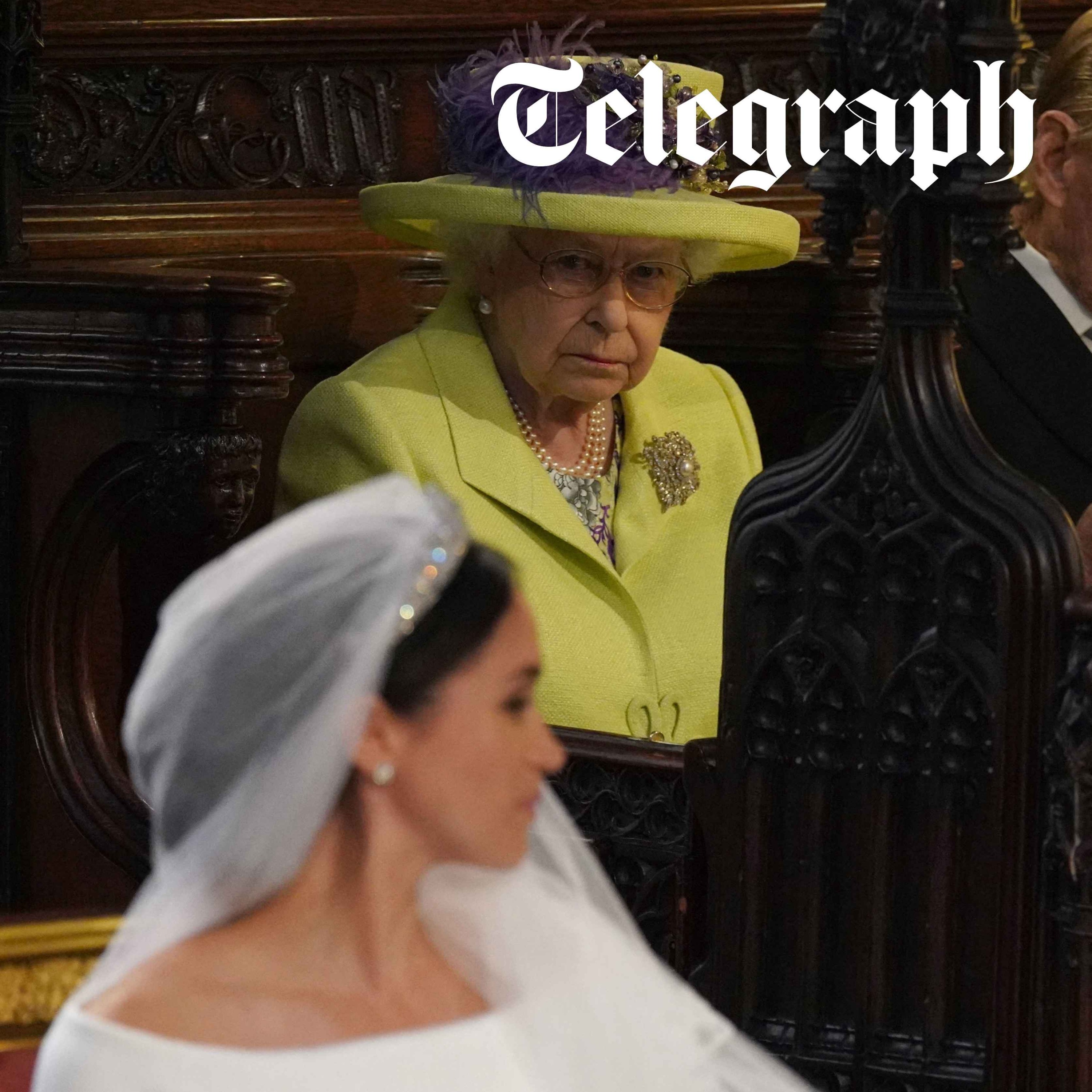
Royal expert Robert Hardman discusses his biography Elizabeth II, in private, in public, focusing on behind-the-scenes palace life and controversies: the Queen’s view of Donald Trump, Prince Andrew’s conduct and removal as trade envoy, and the Harry-Meghan “Tiara Gate” dispute after the Oprah interview.
Robert Hardman is a long-time royal journalist (ex-Daily Telegraph reporter) and best-selling author; he appears with hosts Camilla Tominey and Hannah Furness from The Daily Tea.
The Queen was more “scared” by private Meghan/Oprah-era behavior than she was sympathetic, and a senior aide’s “narcissists” remark reflects her upset in spring 2021. Trump’s “old-world” manners impressed the Queen despite his politics. Andrew wasn’t a “favourite”; he was the one she worried about most, and David Cameron said Andrew’s trade-envoy speeches repeatedly contained inappropriate remarks, making it a national embarrassment.
Mar-a-Lago meetings; the “Queen look” at Hardman’s scuffed shoes; Mobutu’s wife smuggling a dog into Buckingham Palace; Andrew punching Tony Johnson Burt (Master of the Household); Andrew’s “orange” telecoms remark; Andrew’s Epstein-linked access; tiara delays tied to Angela Kelly and diamond-bando concerns.
Written by AI. May contain mistakes.
Explore Hardman's path to becoming a royal correspondent.
“It's me and Hannah Furness today with our little crowns on, isn't it, Hannah?”
Hardman discusses his latest book on Queen Elizabeth II.
“And I wasn't allowed the title, by the way.”
Gain insights into the duality of the Queen's public and private personas.
“Elizabeth II, in private, in public, the inside story.”
Understand the significance of the Queen's 'look' from those who experienced it.
“I mean, you know, obviously Public Queen was, you know, the queen that everybody knows, dutiful, quite serious.”
Hardman shares his unique experience interviewing Trump about the Queen.
“The look, by the way, for your listeners, is that sort of that unspoken stare you got from the Queen that just denoted that she was not entirely best pleased about something.”
Examine the unexpected connections between Trump and the British monarchy.
“who he just thought was wonderful, or unbelievable, as he kept saying.”
Learn about Trump's mannerisms during his visits with Queen Elizabeth II.
“therefore how could the queen possibly have liked him?”
Discover anecdotes about Prince Andrew's controversial conduct at the palace.
“including some real sort of 24-carat monsters, and you've got a charming Donald Trump who just wants to talk about Scotland and his Scottish mother.”
Explore the difficulties faced by Prince Andrew as a trade envoy and his public blunders.
“Andrew apparently said, who the F do you think you are?”
Explore the dynamics between Prince Andrew and Jeffrey Epstein.
“On Epstein, it's interesting you mentioned the Mandelson connection.”
Understand how state visits are orchestrated amidst controversies.
“Is the king going to be able to navigate it, do you think, in the same way the queen might have done?”
Delve into the painful media moments experienced by Sarah Ferguson.
“Before we get on to the shy and retiring occupants of a lovely mansion in Montecito, just a quick further word on Fergie.”
Investigate the events surrounding Meghan's tiara for the wedding.
“They were kissed and caressed and canoodled, but they weren't quite sucked.”
Learn about the Queen's efforts to welcome Meghan into the family.
“and it was when it was with Catherine Middleton and it was with Sophie Rhys-Jones, this would just be the Queen and the bride, nobody else.”
Explore the Queen's evolving feelings towards Harry and Meghan amid their controversies.
“And that's why I think when it was just blown up Within less than two years, I think the Queen found that very upsetting.”
Analyze Prince William's desire to modernize the monarchy and his complex relationship with Harry.
“Do you think she held out hope that they would come back or he would come back?”
Gain insights from Robert Hardman on the dynamics within the royal family and their public perceptions.
“and I got the uncomfy one in the corner, or we did this or we did that.”

Get the gist, explore an idea or ask about something said.
 Claude
On The Daily T, what are the key points of this episode?
Searching your listeningAutomatic transcript. May contain errors.
0:02The Telegraph.
0:30No spreadsheet in sight. What a life. Do right by yourself and your business and search XERO for your free trial. Conditions apply. Most all-in-one HR systems are a patchwork of disconnected and manual tools. Rippling is totally automated. If you promote an employee, Rippling can automatically handle necessary updates. From payroll taxes and provisioning new app permissions to assigning required manager training. That's why Rippling is the number one rated human capital management suite on G2, TrustRadius, and Gartner. If you're ready to run the backbone of your business on one unified platform, head to rippling.com slash AcastBiz and sign up today.
1:11That's R-I-P-P-L-I-N-G dot com slash AcastBiz to sign up.
1:21Camilla: Why did a royal aide suggest that the Queen had seen quotes plenty of narcissists after that Oprah interview? And what did ex-Prime Minister David Cameron say was the real reason Andrew was stripped of his trade envoy role? Royal expert and best-selling author Robert Hardman joins us in the studio today to talk about his new biography, Elizabeth II, in private, in public, the inside story. The well-connected journalist lifts the lid on life behind palace gates during the reign of Elizabeth II. Welcome to The Daily Tea with me, Camilla Tominey. And me, Hannah Furness.
2:07Camilla: Robert Hardman joins us on The Daily Tea. It's me and Hannah Furness today with our little crowns on, isn't it, Hannah? as we all have what you've described. Giles Brandreth described a discussion like this as a tiara of royal correspondents. Very good. All chewing the fat. And, Robert, you used to be of this parish. I did. This is how I got into the whole royal beat in the first place. I was a Daily Telegraph reporter back in the early 90s and covering anything, having sort of cut my teeth on the Peterborough column, which was the diary column in those days. And, yeah, one day the cry went up in the newsroom, can anybody ski?
2:44And I thought, yeah, I can ski a bit. And they said, right, well, the editor wants some pieces from the Alps. Could you go and get some news stories from the Alps? Because it was over Christmas and it was all a bit, sort of there wasn't much going on. And ended up in closters, covering a royal photo opportunity involving the Duchess of York and her children. And thought, this is quite civilised, you know, just sort of turn up and watch a bit of skiing, do a bit of skiing, have a fondue, you know.
3:14Camilla: People say that this beat isn't taken seriously, Hannah. But this was just, you know, the first, this was just a little light relief in early January and I came back to the office and then suddenly there was another story about the Duchess of York and then more and more and then suddenly it all started gathering momentum and there was no, believe it or not, there was no Daily Telegraph royal correspondent in those days. Sacrifice. Yep, absolutely. And I wasn't allowed the title, by the way. I was never called royal correspondent because my editor at the time... So, to cut a long story short, there were more and more royal stories in what we didn't know then, but we know now it was the start of what the Queen called her Annus Horribilis.
3:51So within a matter of weeks, the Royal Beat suddenly took on a life of its own and by the end of the year, I was, as well as being the sketchwriter in Parliament and doing a sports column, I was also the royal correspondent, but I couldn't be called the royal correspondent because the then editor said that royal is an adjective and you could only be called the royal correspondent if you were yourself royal, which I wasn't. And he said, I could call you the Royal Affairs Correspondent, but it sounds a bit inappropriate in the present climate. So we'll just stick with by Robert Hardman, if that's all right.
4:21Camilla: The Royal Affairs Correspondent at the time of the War of the Wales would have been busy with third people in marriages. So basically you became a Royal Correspondent because you could ski. I became one because I'm called Camilla. You became one because... Because I knew how to say please and thank you and they wanted to send somebody on tour. We love it. Very well qualified. Well, Robert, you have come out with, is this your fifth book about the Queen? Sort of fourth, really. There was one about the monarchy in general, and this is my fourth about her, and there was another one, obviously, about the King.
4:52Camilla: Elizabeth II, in private, in public, the inside story. And it's the first that you've done since her death? Yes, exactly. So you've had a chance to step back? Yeah, and yes, I mean, the first thing my children said when I said, who are my harshest critics, and I said I was doing this, It was, oh, Dad, can't you leave the poor Queen alone? You know, why another book? But it was the first since her death. All the other ones I've written were while she was alive. And they sort of focused on various aspects of her life and reign while she was still reigning. And with her centenary coming up, I thought, no, this is a moment to sort of step back and appraise her in toto, as it were.
5:32And then as I started looking around, talking to people, looking at, you know, papers, archives, interviews and whatever. There's just an awful lot of news stuff to say.
5:42Camilla: Yes, news lines. Hannah, you were going to ask the first question. You had a very good question about what... Oh, yeah, I was just wondering, after all of these conversations you've had after so many years, does the Queen still have the capacity to surprise you? What did you learn here? Yes, she does. I mean, I haven't discovered there was some completely new aspect to her character that I never knew existed, But what happens every time I've written about her is it sort of amplified and extended my sort of sense of her, the depth of her character. I mean, you know, obviously Public Queen was, you know, the queen that everybody knows, dutiful, quite serious.
6:22More smiley in later life than earlier. Very unsmiley early on in the rain. Not giving very much away. Private Queen, much more direct, amusing, much more smiley. and are really much more scary, I think, in a lot of ways. Just the look. You write about the look. Yeah, I write about the look.
6:44Camilla: I don't think I ever got close enough to her personally to get the look. She was very smiley when I met her. I got the look at my shoes when I was very new. I was at Westminster Abbey and I had slightly scuffed flat shoes and it was before I'd really covered any jobs and I saw her looking at my shoes and I thought, is she looking at my shoes? and very flustered and embarrassed. And I asked a senior aide afterwards and he said yes. She absolutely was and I never made that mistake again. When did you get the look? I never got the full look. I got a sort of, I think it was a sort of in-gest look.
7:18The look, by the way, for your listeners, is that sort of that unspoken stare you got from the Queen that just denoted that she was not entirely best pleased about something. Tony Blair wrote about it in his memoirs, his terror of getting the look, and he probably did get it once or twice. But I came close to it once when I was... The only time I ever got invited to a state banquet was years ago, and I was making a documentary about the monarchy, and it was the president of Indonesia's state banquet. And before dinner, everyone is lined up, and you're sort of brought along, and everyone's announced before dinner.
7:58And I remember I was sort of queuing up behind the foreign secretaries He was obviously very important. At the time was William Hague, and he was announced, and then I was announced. It was just sort of Mr Robert Hardman, and I thought I'll just be sort of ushered down the line. Anyway, I was sort of going down the line and shook hands with the president and then shook hands with the queen, and the queen suddenly said, this man has been following me everywhere for a whole year in a sort of jokey way, but looking sort of, you know, very, very sort of queenly. And this had to be translated to the president of Indonesia who didn't speak English.
8:27And you could see a sort of look of horror on his face, and I could see him thinking, you know, looking at the Queen, well, why haven't you had him arrested? But, you know, she could do those sort of little asides.
8:38Camilla: The Queen stalker, ladies and gentlemen, with us now. What I find astonishing about this book is the sources. So we've got David Cameron on Prince Andrew and we'll get on to that in a minute. One of your sources was Donald Trump. Tell us about your meeting with the big orange man at Mar-a-Lago. It's your mini-break. My Christmas mini-break. Yes, it was very bizarre. He's not orange, by the way. Isn't he? No, he's not. What's going on there then? He looked perfectly normal. He was in good form. It was just after Christmas. I didn't have much notice. I had been trying to get a chat with him for the best part of a year, not really getting anywhere, but trying lots of different avenues.
9:19And eventually one bore fruit, and I was told, if you come to the golf club, his golf club, Trump International Golf Club in Florida, at 9am on a particular morning, you can have a short chat with him. So I had to rearrange my Christmas plans. I actually flew out of Britain on Boxing Day, abandoned my family, they weren't very happy, couldn't really tell anybody why, told my wife, but no one else, and flew to Miami and went down to Mar-a-Lago and was at the golf club at the allotted time. And he came in, the first words, I sort of said, oh, Mr President, it's so good of you to give me this interview.
9:57And he said, no one's told me about an interview. I'm not doing an interview. I'm here to play golf. And I thought, oh, this is going really well. And I said, well, you know, yeah, I was told we were having an interview. No, no, I'm here to play golf. You're here to play golf? I went, no, I don't play golf. You don't play golf? I just ski. Yeah, yeah. I don't think he's a skier. And, yeah, it was all a bit sticky. and so I thought, well, I'll just pile on in there. So I said, look, I'm writing the biography of the late Queen. She had a record-breaking reign. She met more people than any monarch in history and you were the very last state visitor of her reign.
10:38You seemed to get on pretty well. I just wondered if you had some things to say about that. And he went, oh, you want something to eat? And back came me to the table and we had breakfast. And then that became, we had another meeting later on, en passant Mar-a-Lago and then the next night I found myself at his table at dinner so yeah we had quite a lot of there are other people at the table and everyone's trying to sort of talk about their thing whether it be so extraordinary at times breakfast for example there's Steve Whitkoff the peace envoy he's obviously quite keen to talk about Ukraine but also there is the golf caddy he's quite keen to talk about golf me trying to talk about the Queen and we all end up talking about poisonous snakes which is quite interesting.
11:20Why not? Why not? It was quite a, yeah, it was a wide-ranging conversation, but he was good value, he was a good host, and he had lots to say about the late Queen, who he just thought was wonderful, or unbelievable, as he kept saying. And at some point you single-handedly stop him invading Canada, I think. There was, yeah, at one point in the conversation, over drinks on the second night, and he said, you know, do you think I should invade Greenland? And I said, no, I really don't think that's a good idea. I think it would upset NATO, destroy NATO. And I said, well, we're at it. And it was sort of good-natured.
11:58I mean, this was not a sort of sit-down formal Q &A. This is a conversation. But I said, look, I really think you probably ought to lay off Canada as well because, you know, the king of Canada would be very unhappy if anyone invaded his country. And he said, well, do they still take that stuff seriously? And I said, yeah, they do, they do. and, you know, they've been a very great ally. They've been for both Britain and America. I mean, you know, the Canadians are, whenever we've been in a scrape, they've been there. They got further inland on D-Day than any other allied nation. I think, you know, leave them alone.
12:34And he said, well, yeah. He said, I guess they've got, he said, I guess they've got all that, oh, Canada stuff, he said, and they've got 200 years of history. And then he said, I don't think I can sort that out in three and a half years. and I thought that was quite interesting because it was certainly an acknowledgement he's not going to go for another term and it was an acknowledgement that, you know, Canada's got its king, its anthem, its history and it's not going anywhere. So nothing down to me, I think it's entirely to the credit of the king and the late queen that certainly if you look back at the...
13:10There was all that rhetoric about Canada being a 51st state and all those jibes at Governor Trudeau and then Governor Carney. That has gone. Yes.
13:18Camilla: Well, we hold you responsible for that, have it? Well, listen, I mean, if... Honestly, from the slopes to diplomacy. But is it surprising that the Queen and indeed the King now get on so well with Trump? We can understand why Trump loves the royals, because he's an Anglophile and he goes on about his mother being Scottish and Turnberry and all the rest of it. But isn't it slightly surprising that the Queen, who famously got on very well with the Obamas, for instance, should have been quite so entranced by Donald Trump and the king, as you wrote, maintain this kind of pen pal relationship with Donald Trump between the two presidencies.
13:55Well, I think people tend to look very much in the present and think, well, you know, Donald Trump's just said something appalling, therefore how could the queen possibly have liked him? But he does have this sort of old-world US sort of manners and that was put to me by someone who knew her very well. So there was an interesting phrase. Someone said there was something mid-century about him, an old-fashioned American charm, which he can deploy when he wants to. And it was interesting when he made his first visit here in 2018. And I had previously interviewed Jeremy Hunt, who was Foreign Secretary at the time.
14:36And this was before it was a state visit. The first time Trump came to meet the Queen, he just had tea with her at Windsor, and this is when he was coming on that trip for a sort of summit at Blenheim Palace and meetings with Theresa May. But as Jeremy Hunt said, the White House had made it very clear that he would come to Britain if there was tea with the Queen involved, otherwise he wasn't coming at all. So clearly meeting the Queen was a very big deal. And from the moment he arrived to the moment he left, he was on sort of, he'd switched off the phone. There was no tweeting. He was just very polite, respectful.
15:10and it was the same with the state visit the following year. He was having endless Twitter spats with Sadiq Khan, Mayor of London, you may remember, constantly.
15:18Camilla: Yes, the baby blimp going up and all that stuff. But the minute, and it was quite amusing, he said he was sort of standing on the runway waiting to welcome him and he was sort of late off the plane and they thought maybe he was having a sleep or a shower or something. He wasn't, he was just finishing off a Twitter spat with Sadiq Khan. And then, having done so, then, you know, he came down, hit the tarmac and that was it. No tweeting, no sort of snapping at people, just very, very correct. And I think, you know, he did have this great respect for her. And they, you know, when you look back at all the people the Queen met in her reign, all the state visitors, of course, some people at the moment might think that, you know, Donald Trump is beyond the pale.
15:58But this is someone who had Idi Amin to lunch when he was sort of, you know, committing atrocities in Uganda, who had Emperor Mobutu to lunch when he was, you know, the worst story is that he was even eating his political enemies. He was the man who famously, whose wife smuggled a dog inside Buckingham Palace at the height of the rabies scare.
16:23Camilla: Bet that went down well with the Queen. First of all, indeed, the corgis. Imagine their reaction. The corgis had to be immediately evacuated to Windsor and the Queen, according to one who was there at the time, I did interview you actually, said that they had never seen the Queen so angry ever. Can imagine. And she summoned the deputy master of the household, Lord Plunkett, and said, get that dog out of my house. Such a good headline though, Queen in rabies. You can see it now in tabloid form. I thought the funniest aspect of the whole thing was that the Emperor Mobutu's wife, who had smuggled in the dog and had given the game away by ringing down to the palace kitchens and asking for a plate of fresh meat, which obviously slightly alarmed the master of the household.
17:05She could have been on the Atkins. But the best thing about it, she was called Mary Antoinette. The dog? No, the emperor's wife. Mrs Mabutu was Mary Antoinette Mabutu. Wow. So you've got Mary Antoinette in the Belgian suite, state visitor's wife, ringing down for raw meat. Staging her own canine revolution. Yeah. I mean, it's why Peter Morgan didn't get a whole episode of The Crown out of that one visit. I know.
17:31Camilla: The truth is stranger than fiction. What are they playing at? So Trump's not so bad. What I'm saying is when you've been Queen for 70 years, you met every significant substantial figure in post-war history, including some real sort of 24-carat monsters, and you've got a charming Donald Trump who just wants to talk about Scotland and his Scottish mother. I mean, you know, what's not to like? Can we move on to speaking about somebody else with a predilection for pretty ladies and golf? Prince Andrew, this Tony Johnston Burt anecdote. Tony Johnson, Hannah, explain who this very upstanding courtier is because this is an account by Robert Hardman about basically fisticuffs behind palace gates but to explain we need you to tell us who Tony is.
18:18With a gentleman very unlikely to have fisticuffs, I imagine. I've never heard him getting into a fight with anybody. He's incredibly smooth. He's the kind of person who comes to the palace and when you visit the palace he hosts you. He's very charming. He was head of the household. Or is he still head of the household? He still is. He's, I think, the second longest-serving master of the household in history, and that's a position that goes back to medieval times. He has survived longer than Andrew in these circumstances. Sorry, who punched who? Oh, Prince Andrew hit him. It was one-way traffic.
18:48I mean, Sir Anthony, as he is now, was merely doing his job, and Prince Andrew had demanded a room at the palace to host one of his pitch at the palace events. And the master had explained, I imagine Prince Andrew had sort of shouted at a lot of other people before then and had worked his way up to the man at the top, the master, and said, look, I need a room for my event. And the admiral said, well, we'll just have to wait like everyone else. We'll get you a room when we can, but at the moment they're all booked for whatever reason. Love the admiral for that. And Prince Andrew got very, very cross and it ended up with him, We're not quite sure whether it was which part of the Admiralty hit, but anyway, it was described to me as a kinetic blow, and everyone was just shocked that this had happened.
19:41And the Master, the Admiral, was utterly corrected, followed all the due process, which is, in that situation, reported it to his superior, who was the Lord Chamberlain, who took it up with the Prince of Wales, and who took it up with the Duke of York, who then complained to the Lord Chamberlain that he was causing trouble. And the Lord Chamberlain went round to see him and said, you do not treat any member of staff, whoever they are, like that. And everyone was just appalled by this. And Prince Philip, who by this point had retired from public life, was so cross that he actually wrote a letter of apology to the master.
20:18And, you know, everyone was obviously, as ever, not wanting to upset the Queen, but she heard about it and she wasn't that surprised. and I think we can all divine her response by the fact that fairly soon afterwards the master was knighted and the Prince Andrew did not get his room.
20:35Camilla: Hannah, you're going to get into probing what David Cameron saw of Andrew, which is quite sensational. But you say, Robert, just to give the context of Andrew's general behaviour, 2011, he performs a handbrake turn in his blue Bentley, spraying gravel on people's cars who had arrived at Buckingham Palace for an investiture. A few years earlier, some grooms from the Royal Muse had been riding some of the Queen's horses on the estate when Andrew approached revving his car. When a rider waved a firm hand at the car, I just slow down, I'm on a horse, Andrew apparently said, who the F do you think you are?
21:08Camilla: And took it up with the Queen. There's plenty more anecdotes. Do you remember him ramming the gates? Because they wouldn't hope it would be time. Well, this is a lesson. I wonder if you found people are more willing to tell you these things nowadays than they might have been a decade ago. That's a very good point, Hannah. I think they are. I mean, I think people who... The people around the Queen always had and continue to have a huge respect for her and never wanted to do or say anything that might upset her. And I think for that reason, a lot of people kept their counsel about Prince Andrew for a very long time.
21:42But you didn't have to push too hard, and I'm sure you've found this on your travels. When you're chatting, maybe in a private moment, I've always found with either, say, a Lord Lieutenant who are sort of county representatives of the monarch around the UK or indeed talk to people in the Foreign Office who've been around for a few years who hosted a few royal tours and they're always incredibly positive about the monarchy and what a pleasure it is to host pretty much everybody and then you go, did you ever have the pleasure of the Duke of York? And there will be a sort of rolling of the eyes, a clearing of the throat, they'll either go, let's not go there or increasingly they go, well, actually, yes.
22:20and there are just so many of these stories. I mean, I didn't actually put them all in the book because some of them, I've said before, some of them have been reported elsewhere. But there is, I would think, if someone wanted to do the Oxford book of Prince Andrew blunders...
22:38Camilla: There's several volumes there, isn't there? It wouldn't take long. That's an idea, isn't it? I could do a little joint job on that. Yeah, our book. Tell us the David Cameron one. He was talking about Andrew when he was a trade envoy, was he? Yeah, I mean, and again, one thing that has struck me since in the last year or so is the way that there has been a slight tendency, you probably picked it up as well, that people want to sort of blame the Queen personally for the whole Prince Andrew de Barclay and that somehow she'd indulged him. And it all goes back to this whole idea of him being a favourite.
23:10and as I explain in the book, I'm explaining to lots of people who knew her very well, it really wasn't a case of him being a favourite, it was a case of him being the one she worried about far more than the others. That's what it was all about. There's a lovely passage in the book, can you just explain it, where you go into the Queen's thoughts about this, that he didn't have a wife and he didn't have a job. Yeah, I mean that's one of the reasons why she was happy to be escorted by him to Prince Philip's memorial service. Everybody else, they've got their job, their family, their respect, their role, their purpose and he had been this fairly lost figure since he left the Navy in 2001 and it was clear, and I write about it in the book, that the palace had gone to some trouble, some effort to persuade the Navy to find something for him to do, to keep him in the Navy and finally the Navy said, look, there really is nothing left.
23:58We can't find him any... They'd sort of been making up various roles. What about that thing?
24:03Camilla: Sort out the stationery company. Well, and it was at that point... Find a couple of friggers. That would be useful right now. But anyway. I know. Anyway, the government of the day, Tony Blair's government, prompted by, I understand, and I think your Telegraph reported this, a certain Peter Mandelson suggested a role as a trade envoy. So that's when this came into being. And there had been a long history of one or two members of the royal family having a designated role promoting British trade. And the Duke of Kent famously had done this for about 25 years without a glitch. which, you know, very conscious that he wasn't there as a sort of a salesman or to give his own insights into how you do this or that.
24:48He was there essentially to say, I'm here representing the Queen and she's very pleased with all you're doing. And, you know, if it would help me to sort of host an event, I will. And he'd done that for years. And stepped forward Prince Andrew into this role as this trade envoy. And he just started going off to all sorts of different parts of the world, but a lot of them not particularly savoury places. And, you know, gradually the sort of stories started coming back that he was, you know, saying occasionally saying disobliging things or putting a foot wrong. And even when he was at events where the government wanted him to go, as there was one episode I report in the book where, I mean, he was at a telecoms conference and suddenly came out with the line, what is orange?
25:34And everyone went, oh. Oh, God.
25:37Camilla: But then you say here, look, you're quoting, I mean, David Kaplan seems to be painting this picture of Andrew becoming the human personification of Bungle from Rainbow. You're literally saying here that Cameron told you his speeches would always contain three or four inappropriate things. He kept on turning up and making terrible remarks. I'd seen it myself at Davos, where he was going to his receptions and it was all just a bit crass. It was just a national embarrassment, wasn't it? Yeah. I mean, I think because people were reluctant to say, look, you really don't know what you're talking about or could you just sort of shut up, the problem got worse.
26:15And, I mean, you know, other people have reported, I mean, I can't remember what it was in a previous book, but, you know, the time he was ostensibly supposed to be selling British helicopters in the Middle East. and was sort of chatting away to this Minister of Defence, saying, of course, what you really want, you want the American ones. I mean, they've got the best king. Oh, my God. And, you know, yet again, you know, more ambassadors would be sort of toes curling, you know, eyes going skywards. And as David Cameron said to me, he was just, you know, it was just getting embarrassing. And he had to be the one who had to say to the Queen, look, this has now run its course.
26:55And this was all, of course, this was at the same time as the revelations were coming out that he had been to see Jeffrey Epstein in New York after Epstein had been inside for sex offences.
27:25of it. But batch payments? Wow. Automated accounts payable? Even better. All in one place? That's a big one. And I can keep track from my phone while I get the job done. No bills in sight. What a life. Do right by yourself and your business and search XERO for your free trial. Conditions apply. If you work in university maintenance, Grainger considers you an MVP because your playbook ensures your arena is always ready for tip-off and Grainger is your trusted partner. Offering the products you need all in one place from HVAC and plumbing supplies to lighting and more and all delivered with plenty of time left on the clock so your team always gets the win.
28:08Call 1-800-GRAINGER, visit grainger.com or just stop by Grainger for the ones who get it done. Most all-in-one HR systems are a patchwork of disconnected and manual tools. Rippling is totally automated. If you promote an employee, Rippling can automatically handle necessary updates, from payroll taxes and provisioning new app permissions to assigning required manager training. That's why Rippling is the number one rated human capital management suite on G2, TrustRadius, and Gartner. If you're ready to run the backbone of your business on one unified platform, head to Rippling.com slash AcastBiz and sign up today.
28:47That's R-I-P-P-L-I-N-G dot com slash ACAST biz to sign up.
29:04Camilla: On Epstein, it's interesting you mentioned the Mandelson connection. I mean, we can't really join those dots, although we have now got the famous photograph of Epstein, Mandelson and Andrew together, thanks to the Epstein files. but you're basically painting a picture here of Andrew being a bit of a patsy for Epstein that actually, although he was using him to make connections in the UK and obviously with royalty and aristocracy, actually he thought that Andrew was a bit stupid and was sort of playing him. Is that right? Yeah, I wouldn't say necessarily playing him. I mean, we were just using him to gain access to, you know, to whoever it was, you know, a dictator here, an energy minister there, perhaps in a former part of the Soviet Union.
29:48And clearly, we all know that the umpteen legal proceedings are ongoing on this. But what was very clear was that Epstein did regard Andrew as something of a passport. It wasn't just a case of having this sort of royal ornament at the table for everyone to sort of feel a bit grander. I mean, I think, you know, Andrew did open doors. And it's, as we've seen, I mean, since, and I just think one of the sort of blessings in all this is that the Queen hasn't had, wasn't around to live through the final degradation. Because, I mean, it really has been the most brutal disgrace of a royal, really, since the descendant of Queen Victoria was a traitor in the First World War.
30:38I mean, it's at that level. That's the last time somebody had their princeship or princedom taken away. And this is very far from going away. We've got the state visit coming up in a couple of weeks. Epstein is already hanging over that. Is the king going to be able to navigate it, do you think, in the same way the queen might have done? Yes, I do. I mean, I think when these state visits happen, they're very carefully choreographed. and this one has been framed from the outset as a celebration of the 250th anniversary of the USA coming together and the founding fathers kicking out the king's great times five grandfather, George III, with the Declaration of Independence in 1776.
31:18This is all about everything that's happened since then and all those great combined allied successes that have sort of saved the free world. I mean, that's going to be the messaging. And, yeah, there are going to be some pretty substantial elephants in the room. Andrew will be one. Epstein will be one. Iran will be one. And we haven't even gone on to the residents of California. We will do. Don't worry, Robert, before you go. But the thing about state visits is they are because they're very elaborately done. And there is, you know, 250 years of history. There's a lot of stuff to cover. I think it's very interesting.
31:55and we understand that the king will address Congress and all his previous state visits, he has done these addresses to Parliament. And, Hannah, you and I have sat there and seen them and they're very effective. The host nations feel this is sort of quite historic and they're not going to expect him and indeed want him to sort of start sort of referring to, you know, whatever the royal headline of today is. When you're king and you're representing those 250 years of history, you want gravitas and grandeur. And so I think whatever happens either side of the state visit, I think the visit itself will be fine.
32:36Camilla: Before we get on to the shy and retiring occupants of a lovely mansion in Montecito, just a quick further word on Fergie. You mentioned the Annus Horribilis. We've talked about rabid dogs being brought into Buckingham Palace. Let's be honest, the Royals have had their fair share of controversies, but you say that she was never more upset or caused more pain than by the toe-sucking revelations that landed in the Daily Mirror. As Fergie was at Balmoral, the newspaper's Robert. Imagine it. A buy the full English for the entire royal family to see. It's just so painful. I can't bear thinking about it, actually.
33:15Camilla: It's just awful. And the papers really are there. I've seen them for myself. I mean, the late Queen did not like to be, didn't want things sort of glossed over. And she would have on her table, laid out in her study at Balmoral, the whole lot, every paper, including all the rebtops, the Guardian, the lot. Yes, the racing post would be at the top, probably along with Country Life and Horse and Hand, but everything else would be there. And the Telegraph. And, of course, the Telegraph. And I would like to, at this point, point out that I was also told very firmly that her day would begin with her reading the Daily Mail, for whom I now write.
33:53What convenient. I'll never get that.
33:56Camilla: I think recollections may vary. And would end with her and the Telegraph. And she liked to end having read the Telegraph at the back of the Telegraph doing the crossword. Started on a low and ended on a high. I think we can all agree. But Togate was upsetting. It caused her actual physical pain. It was, well, according to a house guest at the time, Yeah, she found that. But we have to remember that with each passing horror at the time, that does seem quite extraordinary, that her daughter-in-law should be in this hideously embarrassing position. I'm not sure those toes were ever sucked, actually.
34:40They were kissed and caressed and canoodled,
34:44Camilla: but they weren't quite sucked. He didn't actually have a toe in his... Oh, I couldn't... Can we move smoothly on to Tiara Gates? Yes, let's do that. Let's go to tiaras. What a gem that is. It was interesting that you get the chance now to revisit some of these old stories and come up with close to the definitive version. Are you confident this is the definitive version of Tiara Gate, the Harry-Meghan wedding, Angela Kelly, tiara situation? Yeah, I mean, I think Harry's had his say in his book and he's painted his particular version of it. And as the Queen famously said, recollections may vary.
35:23But having spent a number of people around some of these episodes, such as what we call tiara gay, where, according to Harry, Meghan had been told she could borrow this particular tiara off the Queen. And then she needed it because her hairdresser was flying in for what I think in his book he calls a hair rehearsal. and also the Omid Scobie, Carolyn Duran book, Finding Freedom. Again, has sort of the same story, but the details are slightly different in there. But in both cases, it's presented that, you know, Megan just simply wanted to sort of have this tiara so she could sort of stick it on for this hairdresser to do a trial run with the hair.
36:03And this was the same sort of episode, I think I'm right in saying, that then Kate Middleton used a Claire's accessory plastic tiara. This is what's transpired. To start with, the Queen liked to do this before weddings with the bride. Whether the bride was, for example, Eugenie, one of her own, someone from the royal family or someone from outside, she would say, would you like to borrow a tiara? To which everyone's going to, yes, that's very kind. And she really enjoyed that process. As someone put it to me, it was almost like a bonding process for her, particularly with a non-family bride. and it was when it was with Catherine Middleton and it was with Sophie Rhys-Jones, this would just be the Queen and the bride, nobody else.
36:48And the Queen really enjoyed, because she's got a lot of tiaras to choose from, so she'd pick a sort of short list of the ones she thought would be best and then say, well, what do you think? And the bride would go, well, these are all lovely, can I have that one? And she'd go, yes, of course. But this time around, what was unusual, what hadn't happened before, was that the bride, Meghan, turned up with the groom. so immediately it had lost that sort of bonding ambiance. And anyway, they'd chosen this particular piece, which very little was known about it, and they said, thank you very much. And then a few weeks later, it was like, can we have this tiara now, please, because this frightfully important hairdresser is flying in.
37:30I mean, I'm never... I'm my hairdresser. I just get a knock on the door. Say, can you cut my hair? I certainly don't have to put them on a plane. But anyway, he's obviously this intergalactic hairdresser who's even busier than the royal family. And he's only got five minutes, you know, snap fingers, where is the tiara? And what was going on in the meantime is that the team within the sort of the curatorial part of the Queen's office, led by Angela Kelly, but they... Her chief dresser. Yeah, her chief dresser. And close his aide. Her title, I think, and I'm trying to remember off the top of my head, it's not just dresser, it's a dresser person.
38:09Yeah, it's curator. Yeah, there's a curatorial role in there as well. And they were trying to just establish that there wasn't anything embarrassing about this particular piece because it wasn't very well known. The diamonds had been given to Queen Mary back at the time of her wedding by some grandees from Lincolnshire and had then sort of joined forces with some other pieces to create this, what was called the diamond bando. And they wanted a cheque that, you know, it didn't have within it, you know, a stolen loot from somewhere that was going to suddenly come out on the wedding day and you'd have sort of placards saying, handbag are stolen diamonds.
38:50Camilla: Or some diamond linked to slavery or something. Well, precisely. I mean, you've got... I mean, the Koh-i-Noor is now... It sits in the Tower of London. It's quite clearly never coming out again because it's too controversial. I mean, even bits of the Cullinan diamond, which were early 20th century acquisition. But, I mean, there's a growing pressure group in South Africa saying that this is imperial loot and it should be returned. So, you know, there was basically a... That was part of the reason why the tiara wasn't just sort of there, ready to go. And the other thing was it was Easter Court, and so everyone was down at Windsor.
39:25And Harry was sort of on the phone shouting at people, demanding that this thing be brought around, and eventually got through to Angela Kelly, we're told, and said, get it round here now. And that was that. And eventually, you know, Angela did turn up with us. and there was a very frosty atmosphere. In Harry's book, he says that Angela started having a go at him. The accounts I've heard, it was the other way round. And as we say, recollections may vary.
39:57Camilla: I wouldn't take on Angela Kelly, would you? My gosh, she was formidable in her day. You also say in the book that the Queen actually tried very, very hard to accommodate Meghan. It's just a slightly different version of events from her. Well, you say, first of all, you don't think she was offered etiquette lessons? No, she said she wasn't offered etiquette lessons. You think she was? Well, I think there were plenty of people there wanting to show her how things were done. So people were offering. The Queen was not one for sort of suddenly saying, this is what you'll do, this is how you'll do it.
40:32But she liked to just keep things more informal, if you put it that way.
40:35Camilla: But Meghan sort of paints this picture of being thrown in at the deep end and, you know, nobody was welcoming. And you make the point, the Queen takes her on the royal train, she does her best to accommodate her. And really makes a big thing of it, you know, gets to the train before she does, welcomes her on board, has a little present for her. It's really... She's really excited about this. This is just after the wedding. The Queen's really sort of looking forward to this sort of opportunity to sort of get to know her granddaughter-in-law. And other examples, I mean, there are those patronages that Meghan was offered early on, which were quite complicated.
41:10They were long held by the Queen, and she really valued them. I mean, someone like the Association of Commonwealth Universities is one of the oldest university patronages, one of the oldest Commonwealth patronages. It certainly goes back over 100 years. The Queen was very attached to it. But she put a lot of thought into it. Well, this would be a good thing for Meghan because it gives her an opportunity. It gives her a sort of platform. and here is someone who everybody knew. She had sort of views, but this would be a good non-political platform from which to speak in different jurisdictions without, you know, when you're someone like that, you can't sort of start making speeches to Parliament.
41:51But if you've got a university locus across the Commonwealth, well, that's great. And so there was a great deal of thought went into all this stuff. And that's why I think when it was just blown up Within less than two years, I think the Queen found that very upsetting. When you get into the Oprah documentary, you speak to a senior aide who tells you the business of having Oprah at the wedding now made sense. The Queen had initially been very sympathetic to Meghan and her family. I think she saw similarities between Meghan and the young Philip and his chaotic family. But it was now starting to look like the move to California had been the plan all along.
42:28The Queen had seen plenty of narcissists in her life. Do you think that is something the Queen believed or is that something the senior aide believed? Possibly both. I mean, the Queen, as we know, was very good at keeping her thoughts to herself and didn't like sort of staking these things. But I don't think my sources were speaking out of turn. I mean, I think they could tell just how upset she was in that spring of 2021. with everything going on, with Prince Philip taking a turn for the worse. Of course, he died that spring with all the other stresses to then have this interview going out and to have the family being accused of racism by someone who, until very recently, everyone had tried to welcome.
43:18Yeah, I don't think there was any great love lost at the end. But I think the Queen always adored Harry, you know, always did. And I think when Harry, in his book, writes about a special relationship with the Queen, I think that's true. I think there were lots of little moments in later life which proved that. And I think one that stands out, actually, and often gets overlooked, is in the extraordinary summer of 2012, when, you know, there was the fabulous diamond jubilee, and then there was the on-come the Olympics, and the Queen has a starring role with James Bond. and, I mean, for many people around the world, that was a bigger deal.
43:58Queen jumps out of helicopter with James Bond. That was a bigger headline than Olympics Open in London. You know, that was sensational. Anyway, the Olympic charter is very clear. The Games shall be open and closed by the head of state. But this head of state, who'd seen more Olympics than anyone else, said, actually, no, I'm not going to close them. I'm going to Balmoral and I'm going to leave it to a member of the family. And everyone assumed it would be Prince Charles or, at the very least, Prince William. But no, it was Harry who got this huge sort of pat on the back. And to be put in that position, I mean, this is a proper global television moment, closing an Olympic Games.
44:35It's definitely a sort of billion-plus audience. You don't have to do very much. You've got to be there, look smart, shake hands, pronounce the Games closed. But it's a huge deal for, I mean, you know, presidents love that moment. And she'd given it to Harry, and everybody thought, well, that's an interesting move. And, of course, what she knew and he knew and none of us knew at the time was that he was going to be sent to Afghanistan that autumn. And nobody could say that. But I think it was very touching. There was clearly a possibility he might not come back. He was going off to action. And I think she wanted posterity to have a moment where Harry was absolutely centre stage.
45:15and I think that does underline a real bond there. So when all that gets blown up at the end and he's led off to California, I think we can all have our own theories about what she must have felt, but I think she would have felt very, very upset. Do you think she held out hope that they would come back or he would come back? No, actually. She kept a... She did keep the door open, if you remember, and that sort of deal that was drawn up at the so-called Sandringham Summit, that they could come back after 12 months. Although that was then, obviously, that was scrapped by the Oprah thing. But there was a moment where somebody said to her, ma 'am, do you think they'll come back?
46:01And there was a great line. She said, no, of course not. They took the dogs. Yes. And that, for her, you know, when people take their dogs abroad, that's it.
46:09Camilla: That's it. Final question, Robert Hardman. I mean, you say here about William's desire to modernise the monarchy and you make the point that actually when he was offered a very grand investiture, when he became Prince of Wales, actually he turned it down for something far more low-key. He ended up going back to Andelsea where he and Catherine had first been based and did something very kind of quiet and cosy in Wales, which was great. Now you sort of look at William now and think that he would much rather opt for a quieter life than opening the door to any kind of Harry return. And it's always said, really, that while the king might be forgiving, William really won't be.
46:50Camilla: Finally, just what's your analysis of any prospect at all of a royal reconciliation between those two brothers? Well, I think you're spot on that it might be much easier to affect between father and son. I think it's going to take a lot of time and considerable backing down on both sides. And I don't see much sign of that, but I think for someone like William, who's an intensely private man, to see so many intimate childhood memories just tossed into the public domain by Harry the way he did, and it's a lot of the bit utterly harmless. It's like, you know, William got the big bed and I got the uncomfy one in the corner, or we did this or we did that.
47:33It doesn't really matter whether it's, you know, the dog bowl story or the shouting story or whatever. It's the fact that he could go and do that. He could just put all that stuff out there, knowing how much it would upset him. And also, you know, he's clearly had great challenges with the princesses, you know, medical diagnosis as well. I think, you know, when Prince William talked about that brutal year, I don't think that was any sort of exaggeration. And so you put all those things together and you've got a brother sort of still saying he wants an apology, I think it's going to be a long wait.
48:10Camilla: Robert Hardman, thank you very much for joining us on The Daily Tea with your new book, Elizabeth II, in private, in public, The Inside Story, which is released this month to celebrate what would have been the late Queen's 100th birthday. Thank you very much. Just sorry we won't get to see her send a card to herself. I think that would have been a fabulous moment, wouldn't it? Wouldn't it have just? Thank you very much. Thank you.
49:03Wayfair's big sale is almost here and you can score the best deals in home. Like up to 80 % off everything home. Yes, you heard that right. 80 % off with free shipping on everything. Plus surprise flash deals all way day long. We're talking outdoor furniture and essentials, rugs and more. All at Wayfair and all up to 80 % off during Wayday. Shop Wayfair's Wayday from April 25th through 27th. Wayfair, every style, every home. Security program on spreadsheets, new regulations piling up, and audit dread? It's time for Vanta. Vanta automates security and compliance, brings evidence into one place, and cuts audit prep by 82%.
49:43Less manual work, clearer visibility, faster deals. Zero chaos. Call it compliance, or call it compliance. Get it? Join the 15 ,000 companies using Vanta to prove trust. Go to Vanta.com slash com. Thank you.
Camilla and Hannah are joined by bestselling royal biographer Robert Hardman, author of the explosive new book Elizabeth II: In Private. In Public. The Inside Story, to reveal the secrets and scandals that rocked the late Queen’s reign.
Hardman, the only biographer to have interviewed all senior members of the Royal Family, shares exclusive, inside details sourced from family, staff, advisors, and even President Donald Trump.
He explains what ex-PM David Cameron told him about the real reason Andrew was stripped of his trade envoy status in 2011 and the “cold fury” within the Palace after Andrew secured the Queen’s consent for the disastrous 2019 Panorama interview, which he tragically thought “had all gone rather well”.
And he shares the full story on the Harry and Meghan drama, revealing that the Queen genuinely “tried so hard” to build a strong relationship with Meghan. A senior aide, however, revealed that “The Queen had seen plenty of narcissists in her life” after THAT Oprah interview with the couple that shocked the world.
🚨 LIVE EVENT: The Daily T will be going on the road to London (April 27), Cardiff (April 28), Warwick (April 29) and Worthing (April 30) ahead of May’s critical local elections, where you'll have a chance to put your questions to Camilla and Tim.
🎟️ Tickets are limited, book yours now!: https://www.telegraph.co.uk/politics/0/live-event-the-daily-t-on-the-road/
We want to hear from you! Email us at [email protected] or find @dailytpodcast on TikTok, Instagram and X
► Sign up to our most popular newsletter, From the Editor. Look forward to receiving free-thinking comment and the day's biggest stories, every morning. telegraph.co.uk/fromtheeditor
Producer: Georgia Coan
Senior Producer: John Cadigan
Executive Producer: Charlotte Seligman
Video Producer: Will Walters
Studio Operator: Meghan Searle
Social Media Producer: Nada Aggour
Editor: Camilla Tominey
Hosted on Acast. See acast.com/privacy for more information.


