
 Ask ChatGPT


 The Daily T
21 Jun 2026 · 52m · 16 chapters
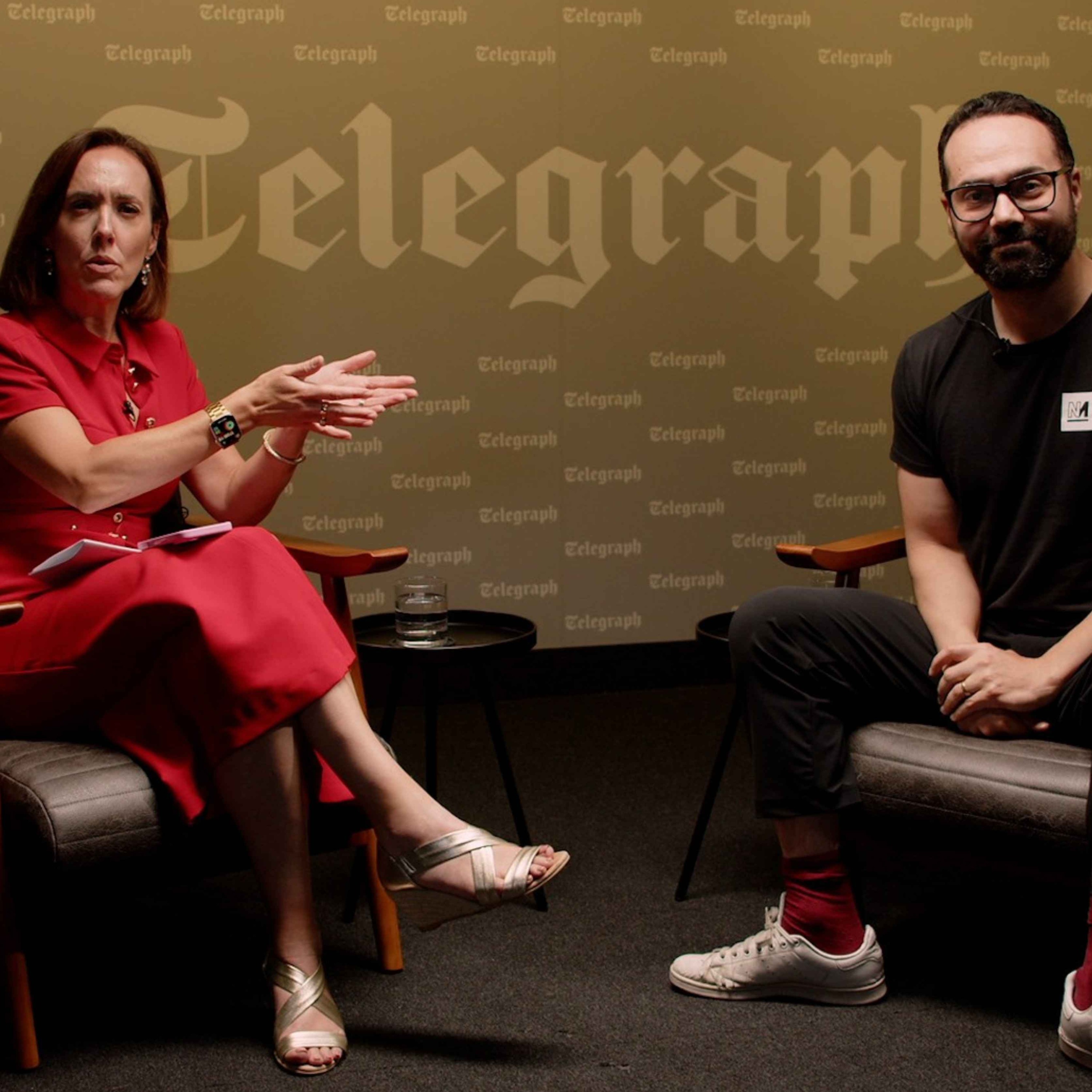
A “Right Sunday showdown” between Telegraph journalist Camilla Tominey and left commentator Aaron Bastani, debating communism vs capitalism, taxation, private education, housing policy, automation/“luxury communism,” and the human-rights costs of green/tech supply chains.
Aaron Bastani is co-founder of Novara Media (left-leaning media) and author of Fully Automated Luxury Communism. Camilla Tominey is a Telegraph journalist and host of the episode.
Bastani argues communism can be compatible with automation delivering broad affluence, but warns automation can increase inequality if billionaires capture gains. He supports VAT on private schools and proposes shifting tax burdens (e.g., reducing high marginal effective rates around £100k–£125k; wealth tax on wealth over £100m). He criticizes right-to-buy for selling state assets below market value. He says fracking is “terrible” due to methane leakage. He argues benefits can disincentivize work and may fund addiction (e.g., PIP), favoring treatment over cash.
Eton for Prince George; effective tax rates and a “£2 lose £1 allowance” mechanism; wealth migration (Sunday Times rich list drop); Congo cobalt/tantalum mining by children and collapsing villages; China’s EV/5G/high-speed rail vs alleged abuses (Uyghurs); care-home closures and CQC staffing ratios; Elm Grove halfway houses in Southampton; self-driving cars eliminating millions of driving jobs.
Written by AI. May contain mistakes.
Camilla and Aaron explore their political identities and backgrounds.
“You just tell Serval what you want to automate in plain English, and it's built.”
Camilla and Aaron explore their political identities and backgrounds.
“Aaron Bistani, thank you very much indeed for joining me for this Sunday showdown.”
Discussion about media coverage of the royals and public perceptions.
“I think the truth to that, I would say actually, I mean, that's only five years ago.”
Aaron and Camilla discuss Prince George's schooling and its implications.
“So Zahra Sultana said, why can't he go down to the comp down the road?”
The conversation shifts to taxation policies on private schooling and goods.
“It's at the highest point that it has been since the Second World War.”
Exploring perspectives on wealth tax and government trust issues.
“wealthiest have had a really good, really since 2008, actually, but let's say a bit after that, of course, in the sort of teeth of the financial crisis, they didn't have a good time.”
Discussion on the financial pressures faced by junior doctors in the UK.
“people that work for a living to keep as much of their money as possible within the limits of needing to fund a government and all of the public services we need.”
Debate on the implications of the right to buy policy and its impact on housing.
“people when I'm expected to work in the NHS at quite a senior level?”
Exploration of how socialist policies influence housing ownership in various countries.
“Again, your viewers or listeners will maybe be surprised.”
Discussion on China's human rights record and its economic development practices.
“But you've got experience of China having abused the human rights of its own citizens, right?”
Examining the environmental impact of rare earth mineral mining for green technology.
“Mao did some evil stuff, but he was also, you know, he was one of the great historical figures of the 20th century.”
Examining the environmental impact of rare earth mineral mining for green technology.
“You can think that's a really good thing, even if you're a fossil fuel nut, whereas solar panels, that's a bit different, right?”
A discussion on fracking's economic benefits versus its environmental dangers.
“How much do you think fracking has added to the US economy over the last five years, according to the University of Berkeley?”
Exploring how immigration affects wages, housing shortages, and labor markets.
“When we think about workers in this country, and this is something that I raised with Mick Lynch, and I wonder where you stand on it.”
Debating the welfare system's effectiveness in addressing addiction and mental health.
“There's a road in South called Elm Grove.”
Discussing the implications of the welfare system and contrasting liberalism with different economic systems.
“My mum used to take the child benefit out of the post office and straight into the off-licence.”

Get the gist, explore an idea or ask about something said.
 Claude
On The Daily T, what are the key points of this episode?
Searching your listeningAutomatic transcript. May contain errors.
0:02The Telegraph.
0:30You just tell Serval what you want to automate in plain English, and it's built. No drag and drop workflows, no expensive consultants. Employees get unblocked, and IT teams go from drowning in tickets to building what actually matters. With Serval, IT becomes the AI engine powering the entire company. This is a new way to run IT. We guarantee you'll automate 50 % of all tickets, and we'll prove it to you in a free four-week pilot. Go to serval.com slash ACAST. That's S-E-R-V-A-L dot com slash ACAST.
1:29Lamine Yamal, and Alfonso Davies. Right now, get one of nine legendary cups when you order the FIFA World Cup meal only at McDonald's. At participating McDonald's, only for a limited time, while supplies last. All rights reserved. Copyright 2026. McDonald's at the FIFA World Cup 2026.
1:52Camilla: What happens when a Telegraph journalist on the right sits down with a commentator on the left, Aaron Bistani? Well, we get a Right Sunday showdown in which we discuss who was worse, Hitler, Mao or Stalin. And why communism is a good thing. Or why it really, really isn't. Welcome to this special Daily Tea Sunday showdown with me, Camilla Tomini. And me, Aaron Bastani.
2:24Camilla: Aaron Bistani, thank you very much indeed for joining me for this Sunday showdown. Am I the luxury capitalist to your luxury communist? I hope so. It's good to have something in common. We might have the luxury in common. And you are the co-founder of Novara Media, which is very much positioning itself on the left. We like to have these right and left ding-dongs so that we can challenge each other and our thinking. And you wrote a book which is entitled... Fully Automated Luxury Communism. Falk. Falk, that's right. It's a thing. It's an acronym. And we'll get onto that in just a minute. But I'm going to take something up with you.
2:55Camilla: Oh, no. Actually, it's not even political or economic. It's royal. Okay. Back in March 2021, you tweeted... Long time ago. Long time ago, Camilla. ...about the royals. If Camilla Tominey writes stories about Meghan Markle or anyone else without first going to them for comment while having two separate sources for her story, she doesn't deserve to be called a journalist. I'm sure you did that. She's doing PR for someone. Yeah, I just found it funny because the whole point about the Harry and Meghan thing is that they were making protestations about the royals without giving them a right of reply at all.
3:27Camilla: And of course we would always go to a right of reply, but the idea that I was doing PR for someone. Somebody was imputing that you weren't. Yeah, I constantly... It's funny, we did a podcast earlier in the week where I talked about this conversation I'd had on the phone with Kate, then Middleton, before she married William when he actually dumped her. And now there are conspiracy theories online that because I managed to get her number, then everything I subsequently wrote about Meghan Markle must have been spoon-fed to me by Carol with an E, her mother, or the palace or whatever. And I just found it an interesting thing to revisit because actually what subsequently transpired is that a lot of journalists were being briefed by disgruntled staff members making bullying claims.
4:11And therefore it was a kind of, I thought the kind of left's handling of the Harry and Meghan affair was quite interesting because there was always a need to see them as the victims and not the oppressors, even when they were accused of doing some quite bad things,
4:26Camilla: not only to friends and family, but also to staff. I think the truth to that, I would say actually, I mean, that's only five years ago. I know. I would say that's something where I've actually changed my mind quite considerably. So I would have said probably five years ago, there's a bandwagon and legacy media attacking these poor people. They're not perfect, but you know, that's a job being in the Royals, which is just really relentless in terms of media attention and scrutiny. And they're not getting a fair shake and it's not on. And you know, they're being targeted. And actually, I think five years later, I'd say that Harry, less Harry, more Meghan, you're probably closer to the truth than I would have given you credit four or five years ago.
5:00Camilla: Yeah, I appreciate that we've taken something in the time and we know a lot more now than we knew then, so fair enough. And it leads me nicely onto my next theme because some on the left have really thrown their toys out of the pram about the announcement that Prince George is going to be sent to Eton. So Zahra Sultana said, why can't he go down to the comp down the road? Others have said, you know, I think Lewis Goodall made a comment about this isn't modern monarchy. What do you think? Well, the modern monarchy point is probably true, isn't it? If you were doing things for PR and trying to earn brownie points with swing voters who are indifferent to the monarchy, maybe liked Princess Di, like Queen Elizabeth, but aren't so warm on Charles, maybe you would do something different.
5:40But that's not my job. I personally don't care about it very much. I have to say something like the national anthem, the conversation about the national anthem, how do we identify collectively as 68 million people? And obviously that intersects the royal question. That to me is more interesting because it affects all of us and our collective conversation. What school he goes to is kind of less interesting to me.
6:00Camilla: But you are interested in private schools in general and whether they should exist. And obviously, Eton is almost at the top of the tree when it comes to the public school experience. I'm not opposed to private schools. No? No, I think they should pay VAT. Yeah. So you're happy even though it sparked an exodus of pupils into the state sector, which is already oversubscribed, you're happy with that? Totally. That's a really fair point. I would have done it differently. So I would have said, let's phase in VAT for private schools at say 5%, 10 % and see how it goes. If there were really, if there was a really negative aftershock, I think you obviously rethink it.
6:33I think in a perfect world, we'd have VAT applied to as many services and goods as possible and you'd have it equalised. So for instance, this will make me very unpopular with people on my side as well. I would probably have VAT on kids' clothes. How come? Because you've got a really liquid secondary market for children's clothes, right? If you've got two kids or you've got vintage or whatever, you can get really cheap kids clothes because of course they don't last more than six months so people always pass them on and selling them. So that's actually one of the most liquid markets imaginable.
7:00I would have VAT on them. I'd probably have VAT on books sold on Amazon. Does that mean you could probably get overall VAT down for things like hospitality? Yeah, I think maybe that's a conversation worth having.
7:10Camilla: But is that just because you're a tax freak? That you just love people being taxed? Tax on the VAT, tax VAT on their school fees, taxed on the children's clothes, taxed on books, tax, tax, tax, you advocate a wealth tax. Yeah. A tax-free. Well, justify that because those on the right will make the following argument. Okay. The tax take has never been higher. It's at the highest point that it has been since the Second World War. If we look back to sort of the 90s and noughties, you've got a tax take that begins with a three, now it begins with a four. It's only likely to get higher because of seemingly an insatiable desire by this Labour government to spend more money and to borrow more money.
7:50Camilla: So how on earth can you make an argument for more tax when people already feel like they're taxed until the pips squeak? So the middle class have, in my lifetime, not been taxed more than they are right now. I agree with you. I would say that some parts of the country don't pay enough tax. I'd say, and again, this will make me very unpopular. People on lower incomes aren't paying enough tax. What? Yeah. Why are you saying that? How much tax do you want them to pay? I think the tax allowance, well, it depends. So let's look at this in the round. The tax allowance, the tax allowance being what, 12 ,500, I think is probably too high as a socialist, as somebody on the left.
8:24But hear me out. You know, I think that if you're a couple, both on say 50 ,000 pounds, and you live outside London, you get a really good deal. You get free childcare hours, you get child benefit. If you're not graduates, you actually have a relatively low effective rate. Now, let's go fast forward. Let's say you're two parents. One of you earns 120 ,000. The other's not working. The effective tax rate on somebody earning between 100 and 125 ,000 is 60%. If your student graduates, actually, even if you're earning 50K, your effective rate is already over 50 % once you include national insurance, student loan repayments, etc.
9:03So those are two really different experiences of the tax and benefit system. Let's say a couple with two kids living in, well, I'm from Bournemouth with no university loans, versus a couple, one's not in work, one is, one's 120k. The first couple is doing much, much better right now because of how the tax system works. So I would say, again, the fact that we've got an effective rate of 60 % on income between 100 and 125k, that's way too high. We have to get rid of that. It's really unjust, I would say that. I'd say, Maybe we draw down the tax allowance at 100k. So for people saying, how on earth is the effective rate at 60 %?
9:37It's because for every£2, you earn over£100 ,000, you lose£1 of the tax allowance. Maybe push it up to£250 ,000. But 100k, I think, is too low for that. So that's one area where maybe some people on the centre-right would say, well, that sounds fantastic. How are you going to pay for it? Well, we're going to have to move tax around. So for instance, a wealth tax of, say, 2 % on wealth over 100 million would allegedly raise 15 billion pounds.
10:02Camilla: Yeah, is that enough? Well, if you're in the centre right, here's the thing, Camilla, you could scrap inheritance tax. You could get rid of the situation with that 100 ,000 pound kind of fall off, which I just spoke about. You could get more police. What I don't understand is why the centre right don't have that conversation. Yeah. If I was on the centre right and I was an affluent family person with two kids, I would rather billionaires be paying a little bit more on a wealth tax and actually the upper middle do a little bit better. Because right now you're right. Those people haven't been taxed as much as they are right now in 80 years.
10:35Camilla: People will talk about the flight of wealth. And we have witnessed that. I mean, even if you looked at the Sunday Times rich list, the idea that one in six of those who appeared last year no longer appear suggests that they'll just take their money elsewhere. And actually, don't you just want their tax take, regardless of how much it is, You'd rather take the tax than lose the tax, wouldn't you? Not least when the oft-cited figure on the right is about the top 1 % paying 26 % of the tax in this country. You want that top 1 % here. You don't want them in Dubai. You don't want them in Monaco. You don't want them increasingly in Italy where they have that flat rate of 200 grand if you earn over a certain amount.
11:13Camilla: So isn't there a simple economic premise to the idea of any tax is better than no tax in the same time that they say to runners, slow miles are better than no miles. Yeah, there is some truth to it, of course. But if you look at the very wealthiest, the very wealthiest have had a really good, really since 2008, actually, but let's say a bit after that, of course, in the sort of teeth of the financial crisis, they didn't have a good time. Very few people did. But because of quantity of easing, low interest rates, they've had a really good time because asset values have just gone bananas, right?
11:44We have to be realistic about that. And that includes, again, upper middle class pensioners, right, because of their private pensions. but they've had a really, really good time and their wealth has outpaced any increases in tax. And, you know, I think the effective income tax rate on the people I'm talking about, you know, these guys with more than 100 million, obviously many of them aren't earning a wage because they are a CEO of a company and it's done differently. The rate in terms of income tax, I think is something like 0 to 2 % on average for the Nordics, for Italy. Gabrielle Zutman's talked about this.
12:14And so I would say, let's bump up CGT a little bit. We can do it in smart ways where we're not hurting regular small businesses, medium and small businesses, and get those people to pay a bit more. And then, of course, you would say, well, they're going to go elsewhere. I wonder, a Telegraph subscriber who's worth 50 million, I'm sure you like those subscribers. They must be good for business.
12:37Camilla: As long as they keep on subscribing. They're not going to cancel, exactly. We'll take people on all incomes, by the way, provided they subscribe. Yeah, but they're not going to be penny pinching with the subscription, are they? Somebody like that might say, well, you know what? If I could be guaranteed that there were less people jumping trains at Waterloo and there were more bobbies on the beat in central London and nurses weren't paying student fees because I find that a ridiculous way to run a country, I'll do it. But their criticism isn't, oh, if you tax me more, I'll leave. Their criticism is, I don't trust the government to do the things I think it needs to do.
13:07That's generally my experience.
13:08Camilla: You can understand mistrust in government. I mean, for instance... 100%. And we'll get onto that because I think it really falls in line with your kind of the thesis of FALC, I should say. But this is what people can't quite work out about socialists. You're claiming that you want higher wages, but you also want higher taxes. So just again, in simple terms, what's the point in having a wage increase if you're having to pay it back to the government in tax? Where's the sum gain? What people am I saying that should have higher wages? Not necessarily. Well, the unions are constantly... a previous Sunday showdown with Mick Lynch, he couldn't quite square this circle.
13:46Camilla: Okay, Mick, you want ever greater wages for your train drivers that you once represented in the RMT, that's great, but you're also asking for taxes to be higher across the board. That just cancels out the wage increases. Don't you surely want... Isn't the main sort of liberating economic theory here that actually you should allow people that work for a living to keep as much of their money as possible within the limits of needing to fund a government and all of the public services we need. And isn't the resentment, it's not even a left or right thing, it's as follows. Do you know what, if you want an extra P in the pound for the NHS, for God's sake, make sure it's more efficient.
14:23Camilla: And if people are paying a greater amount for the NHS and it's less productive than it was, for instance, before the pandemic, people are rightly going to question why they're throwing good money after bad. And they may also say that about public sector wage increases. Well, hang on a minute, we've given junior doctors X, Y or Z and they're still going on strike. Well, hang on a minute. We're giving rail drivers X, Y and Z and I've still got to face a tube strike. I've still got to face problems on my daily commute. I'm working. I can't hold the country to ransom. What are they actually arguing for?
14:53So many junior doctors, if you speak to them, you say, well, why do you want a pay increase? And they'll say, well, I live in a house share, five of us in London or Manchester or whatever. And the junior doctors thing is fascinating because of course in 15 years when their consultants, they'll be on a shed of money.
15:07Camilla: And they've got massive fat pensions. But there's this pinch point where it is quite, let's be realistic, it is actually quite hard. And they generally, I think for this country, it's also a problem because they generally are now thinking, well, I might go to Australia or the US or whatever. It's a problem in terms of retaining that very valuable labour. And you talk to them and say, well, housing is too expensive. And all of a sudden, you're not actually talking about wages, you're talking about the cost of housing. And this is, again, I'm not trying to say this because I'm talking to the Telegraph and I'm trying to be affable and get on with you.
15:32Camilla: Stop being so agreeable. This is a Sunday showdown. I know. But the actual problem they're talking about, they're not saying, I want higher wages for the sake of higher wages. They're saying that housing is too expensive and my housing situation needs to improve. And of course, one way of doing that within a market economy is higher wages. Or we really reconsider our housing market in this country. And I don't think the left or the right has a monopoly on good ideas here. I would say we need to immediately end right to buy. Immediately. We're selling really valuable assets at a loss. Don't do that.
16:00We need to really look at supply stuff, which the right is very good on, the left isn't so good on. But we also need to think about the fact we need a market maker to rapidly build lots of houses. That probably is going to require some state intervention and local authorities having the ability to access finance to do that. And by the way, loads of local authorities will screw that up because some will be really effective and some won't be. So my point is really, I don't think actually everybody needs higher wages and more money, although of course some people do deserve more money, some people are underpaid.
16:31often when you dig deeper, the problem is around access to resources like, why am I£55 ,000 worth of debt as a graduate nurse? Why am I living in a house show of five people when I'm expected to work in the NHS at quite a senior level? Why is my transport costing so much to get into London, etc? So these are things that we should try and get the cost down for.
16:50Camilla: Okay, so you're not advocating for a high wage, high tax economy? I think some people should have high wages, but I don't think, for instance, I don't think it's answer to all of our problems, no. No. And what do you think about the Green Party's latest suggestion, which is that there should be a 10 to 1 ratio of businesses. So the CEO can only earn 10 times as much as his lowest paid worker. I think that's very ambitious. Isn't it just unworkable? If you said 25 times, maybe, maybe. Really? I don't know. I'm not a civil servant. You might say 25 times and And if it's beyond that, I don't know, you have to pay an extra percent and corporation tax or something.
17:33That's not my policy, but maybe that is a sensible policy. I think 10 to 1 is too low.
17:37Camilla: On housing, did you agree with Margaret Thatcher allowing people to buy their council houses? Terrible idea. Why? It gave them an inheritance to pass on to their children. Well, because those were assets that belonged to the state. The state then sold them at a loss and the states lost money as a result. You know, we often talk about this country being in debt and of course the national debt is enormous. It's more than three trillion pounds at this point. We've got a ticker going on the Telegraph website every time it goes up and it's going up rapidly. But we've gotten rid of all the assets. So, you know, like a business, you have a spreadsheet of assets and liabilities.
18:10And increasingly, the British state in 2026 just has liabilities. I think it would have been quite good to have some assets. So even if they were sold off, well, I don't think they should have been sold off because you hear the argument, they should have been sold off and we could have used the money to build new ones, but they're being sold off at a loss. the point of right to buy is you're selling it below market value. Why would you do that?
18:26Camilla: Well, you want more people to own their own home. And you might have people who have no hope of earning their own home because they're always going to be on minimum wage. And because houses have tended to go up in price almost exponentially compared to anything else, not least since the 1990s. An Englishman's home is their castle. And you want to give them something so that they have something to hand on to those who come next, who they hope, by the way, to socially mobilise to earn more money than they do. We've done the opposite, right? I think something like 40 % Well, yeah, I think something like 40 % of right to buy in London.
18:56I don't, I think actually made this an underestimate. 40 % is more than a third of right to buy in London is now just their landlords. How's that socially mobile? So I always hear politicians say, I grew up in a council house, I lived in a council house, I lived in a council house, I was paying the landlord, you know, a thousand pound a month for the pleasure. So as a, you know, as a graduate. So I don't think it was wise policy. I like the idea of housing security. I think home ownership is good. Yeah? Oh yeah. But again, look at the countries. Again, your viewers or listeners will maybe be surprised.
19:27Go on to Wikipedia, countries with the highest rates of home ownership, Cuba, Romania, Bulgaria, China, Poland.
19:32Camilla: What you're saying that communism has created an environment where more people are owning their own homes. It's created an environment where they have a really high supply of housing, which is really interesting. So we had a housing bubble up until 2008. Here's the interesting thing. As utter consequence to whom though, say for instance in China? What country? I think China's a pretty good place. Do you? Yeah. Do you think the Uyghurs would agree with you? Do I think the Uyghurs? I'm sure some would, some wouldn't. None of them would. I've met some Uyghurs who say it's a conspiracy theory. I don't agree with that.
20:01I've also spoken to activists.
20:02Camilla: Hang on a minute, you're not denying to use a progressive phrase, the lived experience of the average Uyghur. I don't know the average Uyghur. I've never been to Xinjiang. Well, I mean, they've spoken extensively, right? I've spoken to activists on both sides. And talked about their plight and talked about how they're subject to human rights abuses, ironically, making the solar panels and other energy efficient gubbins that we need to fire our net zero dream. There's an irony there, isn't there? There's an irony that the net zero dream and - This is a different thing. Well, I know because we're segwaying from topic to topic because we haven't got all day and I wanted to bring it onto the concept, the premise of your book and my understanding of the premise of your book and how one achieves luxury communism, and please do correct me if I'm wrong, because I might have got it wrong, is that you want to create the society where automation and technological advances mean that the working classes don't need to do the menial chores anymore and that society will flourish because they are freed into a different direction where with state help they will be supported to have more enriched lives.
21:07Camilla: Is that a fair summary? Well, the idea that people are not going to be doing manual work, horrible backbreaking work, I mean, that might happen under capitalism just because of levels of automation with people like Elon Musk driving out and whatnot. And that brings its own problems because, of course, that's going to create greater inequality. Lots of people won't be able to access work, blue collar jobs that have provided lots of work for people over the decades. Driving is the great example right now, I think. Some like three and a half million people drive for a living in the United States.
21:34If you have self-driving cars, those jobs disappear. So the automation bit's happening, the question is who's going to benefit from it, is the central part of the book. And you don't have to be a radical socialist to think it shouldn't be billionaires and oligarchs. It could be a relatively widespread sort of affluence, like we saw after the second war.
21:53Camilla: But back to the Chinese example, aren't they building houses and roads and other things at an alarmingly quick rate because the workers there are on very low wages and possibly being abused? I've never been to China. But you've got experience of China having abused the human rights of its own citizens, right? So again, if I speak to people from China, I've spoken to British people who've been to China and they say, I would rather be born in Britain, you know, the whole John Rawls, you know, veil of ignorance. But actually, having seen how old the people live there, I think it's perhaps the best place in the world to be an old person.
22:27That's what they've said to me. But again, I don't want to talk with kind of, you know, real sincerity because I've never been to China. But I think we have to count on the possibility that actually the median 65-year-old in China has a nicer quality of life than the median 65-year-old in this country. That's quite possible, yeah.
22:41Camilla: Okay. And when it comes to mining for rare earth minerals and for some of the materials that we need, for instance, to power this green revolution, and we're going to have to power it somehow, aren't we? Because you're leaning into the idea of more and more automation, more and more AI. We need a huge stock of energy for that and then some. Are you troubled by the contradiction at play here between progressives pushing for a net zero dream that might cause others in developing nations to live extremely miserable lives trying to propel it forward? 100%. What do we do about that? Well, the sort of ground zero for this stuff is the Democratic Republic of Congo.
23:22So things like cobalt, tantalum, nickel. It's just, you know, it's like the Saudi Arabia of these metals. And, you know, you have, I think they're called artisanal miners. You hear the word artisanal, you think it's quite, you know, like artisanal coffee, but this is 12-year-olds just getting bits of metal from the ground. Actually, there are whole towns and villages where people have found these deposits underneath the towns and they start mining under their houses and the houses start collapsing. It's just dystopian. And I will talk very positively about what China's done with electric vehicles or how quickly it's developed 5G or how quickly it's developed high-speed rail.
23:59But if you look at China's role in the Democratic Republic of Congo as one example, horrific.
24:03Camilla: Yeah. So why are you giving them the benefit of the doubt in China? Why are you giving them the benefit of the doubt over the Uyghurs? Don't you think that the development of these electric cars and all of these solar panels and other... Frankly, there's an irony here by the way, because they're building these coal-fired power stations while at the same time exporting all of this gear to countries like us that lap it up, that want it hook, line and sinker without asking the real questions about who's being abused in the process. So why are you giving them the benefit of the doubt in China with their own people and the Uyghurs and not giving them the benefit of the doubt in the Congo?
24:36Camilla: Why would they behave differently in the Congo than they would of their own country? Well, just from what I've read. But you're forgiving them this because they're communists and you can't bear the idea of communists being bad people. No, communists have been very bad people. Okay, good. I'm glad we agree on that. Well, there are some on the left that don't think Stalin was that bad. And actually, you know, look at Jeremy Corbyn in his bloody little red book. Oh, Chairman Mao. Actually, he was a big, friendly, cuddly bloke who wasn't responsible for millions of deaths during the Cultural Revolution.
25:00Mao did some evil stuff, but he was also, you know, he was one of the great historical figures of the 20th century. He just was.
25:05Camilla: Imagine saying that about Hitler. But in what regard? Well, that's a bit like saying Hitler was an evil Nazi, but he was a good orator. He was a good orator. I'm not going to say he was a bad orator. If you look at Germany, the country he takes over in 1933, very highly advanced, Nobel Prize winners coming out of your ears, many of which were Jewish, the most sophisticated society in Europe at that point. and look where it ends up in 1945. Smashed, pulverised, 10 million Germans plus dead, millions more having to be displaced after 1945 to create nice clean borders. Okay, then let's compare that to the legacy of Mao or Stalin.
25:47I don't think it's actually in terms of what they did to their country. I don't think it's incomparable, isn't it?
25:51Camilla: Well, Stalin and Mao were both responsible for millions of deaths. 100%. I mean, read Yung Chang on Mao, read anyone Russian on Stalin. Let's go back to the central point about China. Why are you giving them the benefit of the doubt in China but not in the Congo? In what respect? I think there are bad Chinese people who do bad things. Of course they do. I think EVs are a net beneficial product. young children to mine for rare earth minerals and other products to put into solar panels and other things that are needed to fuel a net zero revolution in the rest of the Western world. If you're saying that they are doing bad things and probably committing human rights abuses against people in the Democratic Republic of Congo, why on earth do you think that it might not be the case that they're doing it in China?
26:41So Chinese people aren't inflicting this in the way that you're sort of saying. There are many Chinese miners in the Democratic Republic of Congo, partly because the one-child policy, you've got a lot more men than women. This is a really fascinating aspect of it. So they want to start families. They want to make a fortune for themselves, a bit like Europeans went to America in the 19th century. Increasingly, you hear about young Chinese... I've read a great book about this recently, Elements of Power by Nicholas Niarchos. Young Chinese guys going to places like the Democratic Republic of Congo, and actually their lives are pretty crap and miserable, and it hasn't really worked out for them.
27:09So yes, of course, elite Chinese interests are exploiting primarily people from the DRC of African heritage, but there are many Chinese working people also getting a really bum deal from this. All I'm trying to say is, you've said solar panels and wind and electric vehicles, even if you don't want to decarbonise, even if Nigel Farage comes on here and says, I want coal and oil and gas and fracking, that still aligns with electric vehicles because you need a grid that's powered by those things.
27:38Camilla: You need to produce energy. Right. So you can still think electric vehicles are really, really good because they're clean, they're cheaper to run, you're probably less exposed to global energy shocks because they can run on basically any of these things because of electrification. You can think that's a really good thing, even if you're a fossil fuel nut, whereas solar panels, that's a bit different, right? What do you think of fracking? Terrible. Why? How much do you think fracking has added to the US economy over the last five years, according to the University of Berkeley? It's been astonishing, but also...
28:10Camilla: $3 trillion. Yeah, and also as Obama. I mean, again, for the left, that's a tough thing to think about, right? Why is it terrible? Because he's the hero for so many centre-left people in this country. Why have you decided suddenly fracking is terrible? So it produces a bioproduct methane, and methane as a fossil fuel gas is actually way more, it acts way more harmfully in terms of the actual effects of warming the climate than CO2. So right now we talk about CO2 emissions being the problem, but methane, although it's much less in terms of the volume that's being emitted, methane is way, way, way more dangerous than CO2.
28:44And that's the problem with fracking because you don't capture all the methane that's being secreted out, some escapes, and then that's the major issue.
28:50Camilla: Is it justifiable if it makes the working class more prosperous? If you look at the data around methane and how bad it is for global warming as a process, I mean, I don't think so, no.
29:09Camilla: Health care can feel complicated. That's why Optum uses technology to connect the people and processes that make health care easier, more affordable, and more effective. We're making it clearer for you to know exactly what your benefits cover. And to help you better manage your health, we're coordinating care between your doctors and your technology. We believe better, simpler health care is always possible. That's healthy optimism. That's Optum. Visit Optum.com to learn more.
30:17We'll see you next time.
30:34Camilla: Thank you for calling the Bombas Comfort Line. Bombas make socks, slippers, tees, and underwear made with the highest quality materials. Press 1 for comfort, 2 for style, 3 for donation. You chose style. Bombas is styles for whatever you enjoy. You can run in Bombas, lounge in Bombas, dress them up, dress them down, but always give back in Bombas. Because with every item purchased, another is donated. Bombas, comfort worth calling for. Go to bombas.com slash audio and use code audio for 20 % off your first purchase. That's B-O-M-B-A-S dot com and use code audio.
31:13When we think about workers in this country, and this is something that I raised with Mick Lynch, and I wonder where you stand on it.
31:22Camilla: I mean, he did pull the you're a racist and a bigot lever pretty quickly when I talked about whether or not low skilled immigrants to this country had pushed down wages and made housing more expensive because obviously of a supply and demand issue. He roundly rejected that, said it was complete nonsense for me to suggest that low skilled workers coming into this country from other countries had depressed wages. and I tried to cite some kind of real world examples because we remember in the forerun to Brexit that British builders were complaining that they were being undercut by the Poles. I remember going up to Grantham where there's quite a large Polish community who are voting for Brexit because they didn't want the Romanians coming in and undercutting them.
32:08Camilla: So clearly the theory of undercutting is real. Do you accept that premise or not? It depends on the industry, but there's obviously some truth to it. I think in the building game, clearly that was a thing before Brexit. There are other industries where, again, if we look at China, the biggest migration in human history over a long period of time has been rural workers going to cities in China, but wages have been going up in Chinese cities. So it's not impossible to have large migration and wages to go up. Has that happened in this country? I don't think so. So maybe when you were talking about that to Mick, he might be talking at the level of abstraction, that it doesn't necessarily have to be like that.
32:46Camilla: I think he was talking in general that he felt that I was being negative about immigration in the basis that it might have depressed wages. I was just asking the question because I sometimes feel like it's the elephant in the room. If we talk about housing shortages, how can we deny that immigration has had an impact on our housing supply when the numbers tell their own story? If there are so many more million coming into the country since, say, you could say 1997, but let's say 2007, seven, where are they all being accommodated? Of course, it's put a terrific strain on our housing stock, hasn't it?
33:20Camilla: Do you agree with that? And that's not about demonising people. It's just about stating the fact of the matter. So again, I think somebody like Mick could have spoken in the abstract. I don't know. I didn't watch the argument, but he might have said, well, you need, I don't know what he was saying, you need immigrant labour to build the houses, blah, blah, blah, blah, blah. But in reality, what you're talking about, say, I don't know what year it was 2022, 2023, this mega year of net migration almost reaching... Yeah, the 9 ,000 ,000 ,000 ,000 year. Almost a million net migration. The Boris wave year.
33:462022 or 2023. In that year, if you're building 150 ,000 new homes... Doesn't touch the science. ...but you've got net migration, of course. So could you have moderately high migration like you do in the 90s, by historical standards, late 90s, early 2000s? And could you have built a lot more homes? I think that's quite plausible. That didn't happen for various reasons. Partly because of planning, I suspect. Partly because of labour shortages. Partly because the British state just got really bad at building homes. So I don't know what level that debate was happening at. But the country we're in, the last 20 years we've experienced, has been one where we have had a shortage of homes.
34:24And clearly, migration is part of that. There's an alternate reality where we build more than enough homes, you have slightly lower migration, a larger portion of those workers are helping to build the homes. That's not what happened. And increasingly, I think, you know, you can criticise Keir Starmer and Labour, but net migration is really falling. Increasingly...
34:43Camilla: Well, there's nowhere else for it to go. Well, I mean, it's... From the 9 ,4-5 ,000. It's gone down pretty dramatically. But that's increasingly going to be workers in the care sector because we're an ageing population. So the argument that, oh, well, we need people to come from overseas to help us build homes. I mean, that's just, that's not really going to work, is it? But we might want British youngsters who are increasingly out of work and education, and I know this is a big thing for you, kind of burst onto the scene campaigning against tuition fees, right? And you must be as concerned as anybody on the right or the left about Alan Milburn's report, the number of NEATs going up to 1.2 million in the next four years.
35:19Camilla: Don't we need to get to a stage where we get as many youngsters in work as we can? And if that means in the care jobs that were once taken by immigrants, that's no bad thing. Agree. I don't know what's going on. What do you think is going on? I don't know. I was speaking to a friend of mine who wants to work in the care sector. They're quite progressive, a normal person. They want a young family. They want to work in the care sector and they said, I can't get a job. And I was just thinking, hold on. Clearly the demand for those jobs is on the rise. We're told that all the time because we need the visas, etc.
35:48And I'm thinking that's bizarre, isn't it? Is it because immigrants are taking those jobs?
35:54Camilla: And if it is, is it a problem for the left? I don't know if it's immigrants taking the jobs or is the pay... Again, I don't know about that sector. I think that is one example where pay is really low. And you said earlier on about should wages be higher? I think care work should have higher wages. But it might be... I don't know in terms of the way that industry works. Do you basically have a layer of people who want foreign labour to be as cheap as possible, to have as large a profit margin as possible? I suspect so. I mean, that's not... That's not implausible, is it? So the idea that the left would stand alongside the owners of large care homes, these empires around, you know, geriatric care.
36:31Camilla: I mean, there are some empires. I think we saw loads of care home closures during COVID. I think it's increasingly difficult to run care homes because of the high cost of energy, because of food inflation. Energy? Why energy? Because care homes need to be warm all the time. And therefore, if your energy bill is going to double, something's going to have to give. Now, of course, the alternative is you put up fees for your residents. And that's one option, isn't it? The other thing about care homes, which makes them unique to, say, other establishments, is there is a CQC regulation on staff to resident ratios.
37:11Camilla: And you can't change that. So say if you're running a hotel, you would just trim the workforce, perhaps, if everything was going up and the cost of everything was going up and you'd maxed out on how much you can charge someone for a room per night, you axe the staff. Care homes can't do that. So therefore, you've actually seen a great many care homes. And I've spoken to Nadra Ahmed, who's the head of the National Care Association, about this at great length. And yeah, care homes are closing. And that is then contributing to huge pressure on the NHS because we're increasingly finding that older people, if they don't have a care package back into their home to be cared for in the home, we've got absolute scarcity of places in actual homes that are affordable for everyday people.
37:55But isn't this... I mean, this goes back to your point about migrant labour and wages, and I think that is a sector with lower wages, which is kind of aided and abetted by the fact that you have visas galore for people in it. But if you wanted British people to work in that sector, or more British people, maybe not exclusively, but significantly more British people to work in that sector, the wages would go up, and then that problem would exacerbated, surely, because it's a very labour intensive industry.
38:17Camilla: Possibly, but then let's get on to welfare. If people can earn more on benefits, then let's be frank about it, as it's described rather unkindly, wiping old people's bottoms for a living, they might just want to remain on benefits. But how much? I mean, I don't think care workers are paid particularly much. I mean, even if... That's what I'm saying. I'm saying if people are better off on benefits than doing those jobs... But that's an argument to increase the wages more than... or yours, but it sounds like you're saying we should reduce the benefits. You can make that argument. Yeah, I am saying that.
38:46Camilla: I don't think we should have a benefit system that incentivises people not to work. What do you think? So my experience... I live on the South Coast, right? I live in South Sea, Pompeii. I'm from Bournemouth. My experience of people out of work is probably different to many people. As probably many of your viewers and listeners are aware, we increasingly warehouse people with addiction issues on the South Coast. Nothing angers me more than seeing a group of 10 young guys, all in their 20s, maybe early 30s, dossing around doing nothing in halfway houses, drinking in the park. They're throwing their lives away.
39:21And that's become really acceptable. And that should be resolved. I don't think it's a good thing. I don't think it's a good thing for them. I don't think it's a good thing for society. Some people will have really complex emotional psychological trauma, 100%. But the point is to address it. I don't see how warehousing people with the same problems helps them.
39:38Camilla: Yeah. Right? The thing is actually inhumane in a way. So that's one thing I'm really familiar with on an everyday basis. The way that's working is terrible. It's awful. I can't speak with any real authority about, you know, people on universal credit, et cetera. Of course, many people that are on universal credit are working. They're supplementing income. Are working as well. Sure. But something like that, I look at that and it, to me, seems really dysfunctional. Let me give you one example. I live in South Sea, as I've said. There's a road in South called Elm Grove. And it was called Elm Grove because there were so many elms.
40:07And before the Luftwaffe and World War II stunning road, like lots of roads in Southampton and Portsmouth, very good looking. You wouldn't think it now because of course they were rebuilt in a very poor way. Today, that same road has, I think, three or four halfway houses. So you've got hundreds of these people warehoused on one road. And then you've got businesses paying business rates, whose windows are being smashed, people are asleep outside drunk, rubbish everywhere, fly tipping galore. And you think, if you're a business, why would you be paying the national insurance, the tax on everything, just so that you can have a premises on a road, which is basically a dumping ground for people with problems?
40:47Camilla: You're sounding like a capitalist when you're saying this. That's something I agree with you on. There you go. But then the state's answer to that... You're talking about Mao and Stalin, not that I would go with Mao and Stalin solutions. Let's bloody hope not. No, but they would have said that's not good either. You know, there is a strong tradition on the left of saying... Well, just because the left and right agree on things doesn't mean that their solutions to the problem are good. Let me give you my own example. Well, they would have said more discipline. I suspect you would as well. I would say more discipline, but also I would say instead of giving people PIP payments for addiction, that they should put them into addiction programmes.
41:20Camilla: And I speak personally about that because of my own mother who unfortunately drank herself to death. Now, we weren't in the bracket where I was flagged to social services. We lived a relatively comfortable middle class life from an economic point of view, from an emotional one, not so much. Now, if my mum, she passed away in 2001, this is what worries me about the benefits system. And I think Fraser Nelson has written about this as well, because he lost a close friend in Scotland who was a chronic alcoholic, who basically ended up drinking himself to death on the basis of the PIP payments he was being paid that he was taking straight down to the off-licence and throwing down his neck.
41:55Camilla: Okay? Exactly the same would have happened to my mum. Remember when child benefit was universal for all? My mum used to take the child benefit out of the post office and straight into the off-licence. I saw her do it and buy 40 silk cut extra while she was at it. My problem with the benefit system is twofold. First of all, if benefits are higher than the average wage, then it disincentivises people from work. And that's hugely problematic when people are suffering from what appears to be some kind of mental health crisis in this particular era, because I do think that largely work really helps people to get through these problems.
42:29Camilla: Agreed. And I remember personally from when my mum was actually working, there's a need to get up in the morning and do a day's work and be presentable and be functional, which really does help. But second of all, I cannot for the life of me understand a system where benefits are given to people with drink and other problems that actively fund their habits. So I'm somebody on the right who says, give people the means to catch fish, not just throw fish at them. I feel that communism is the opposite. Just keep on throwing fish at them and let the state take control of this. Because of course, historically, the state's always been great at managing things.
43:07Camilla: We have a failing state and you want more state intervention. I would actually say that those people, I don't know about your mother, I'm sorry to hear about that, but the people I was referring to, that to me is about the failure of liberalism. I wouldn't say it's the failure of... Why is it the failure of liberalism? On two counts. So firstly, it's a failure of liberalism because we say generally, and it's generally a good thing, let people live their own lives, right? Who are you to tell that person how to live? And you see this in somewhere like Vancouver, or I was speaking to Adrian Waldridge, who said, you know, for him, the apogee of humanity was San Francisco in the 80s.
43:39And he goes there now and he says, what the hell happened?
43:41Camilla: Yeah, everyone's on spice and God knows what else. Yeah. And he said part of it, again, I've not been to San Francisco, I've been to Vancouver, there's similar issues. He said part of it is you have people in San Francisco who say, well, who are you to tell these people how to live? Who are you to tell these people living lives of awful addiction and they can't flourish and have meaningful relationships and connections the way they should, as humans need? Who are you to tell them how to live? It's just another way of living. It's no more or less valuable than what you think is a good way to live.
44:12I completely repudiate that. That's one part of liberalism. Another part of liberalism is that, like you say, the state should just sort of casually move things around rather than say, no, you're a person, you need a job, let's have a holistic interpretation of what we should be doing with you. You matter as a citizen, we're going to make sure you're okay, rather than sort of this hands-off, namby-pamby, NGO, you know, quango industrial complex where we kind of try and feel good about ourselves, we don't address the problems. Sure. Like with addiction. Well,
44:42Camilla: people handling a lot and then they don't provide any solutions. So this is what I'm saying, I think those are the problems of liberalism. Yeah, but I think the counter argument to that would be, well, better to let people decide how to live their lives rightly or wrongly than have the state dictate to them. One of the characteristics of communism is such a degree of state control that everyone is expected to do the same thing and be dictated to as to how they live their lives and where they live and how much they should earn and who they should work for. Is that how China works? I mean, is that a misrepresentation of communism?
45:15Camilla: I think some systems have been like that. Because to bring the conversation full circle, of course, there are many, many people on the right who think that the idea of even saying luxury and communism in the same sentence is an oxymoron. Where in the world has communism proved to be a luxury to anyone? Well, I think China's done pretty well. It's taken 850 million people out of poverty in, what, 35 years? It's producing the world's leading EVs and lithium-ion battery companies. It's not luxury communism though, is it? It's capitalism masquerading as communism. No, it's not capitalism. It's a market system.
45:44Camilla: It's political communism. It's state control of people's individual liberties, but it's absolutely free market capitalist economics. It's not capitalism. Of course it is. It's not capitalism. Have you ever seen any of the Chinese people coming over and buying up Hermes handbags and Gucci scarves on Bon Street? Lots of that's money laundering, by the way. Well, yeah, which I presume you would imagine to suggest is a capitalist invention in itself, moving pockets of money around different enterprises in order to disguise its provenance and indeed probably avoid tax. Because they've got capital controls and there's all kinds of funny...
46:18Camilla: But you cannot be referring to the communism of China in the same vein as the communism, say, of Cuba. Well, Cuba's had challenges for different reasons, right? Has it ever been luxurious for anyone other than, I don't know, Castro? Well, maybe a few mojitos down, I might say yes, but it's obviously had challenges. And I don't think because of its proximity to the United States, its lack of energy resources, etc., has had problems, it's different. I think you can have a proper conversation about this stuff when it comes to the Soviet Union or China, because these were basically self-sufficient economies.
46:50So they succeed or fail on their access to resources. The DDR is another example, East Germany. You know, East Germany had very, very few natural resources. If the DDR had the oil of Saudi Arabia, yeah, of course it would be a really successful country because it had really high human capital. It had really impressive advanced manufacturing. Carl Zeiss lenses, which we use in all our phones, was an East German firm. So it's a broad conversation, but you're saying, has it ever worked anywhere? I would say that China today is a market economy, but it's not a capitalist economy, and we can learn a lot from it.
47:22Camilla: I don't know why you're arguing that it's not a capitalist economy. It's based on free markets, it's based on the creation of wealth to create jobs. So if you look at a company like Huawei or Cattle, a big player in batteries or BYD, because banks in China are socialised, they can give very low interest rate loans to many of these companies, large and small, and that allows these companies to sell products with razor thin margins but of course at huge scale. companies in the West can't do that for a ton of reasons because we have shareholders, because the costs of accessing credit are much higher.
48:01Camilla: 101 reasons. Also, we can't compete with low energy costs in Chinese factories, fuelled by carbon. Chinese energy costs aren't necessarily that. A great example of energy... Chinese energy costs are considerably lower than ours. Taiwan, high energy costs, actually, but they have this trillion dollar company with CSMC. Yes, while they're making all these microchips. Hang on, I must take issue with this. Do you think the workers on the factory floor in China or indeed in the sweatshops think that there's anything luxurious about the communism? You're being very selective. No, I'm really not. If you look at India and you look at China, I know, and I'm sure if anybody, and you as well, if you're being totally honest, what country would you rather have been born in the last 30 years?
48:39I think China is an economic miracle when you look at the last 50 years.
48:42Camilla: Under no circumstances on earth would I wish I was born in China in the last 30 years. Rather than India. Can you address... Oh, I see. Not rather than the UK. Well, no, but the UK had several hundred years head start. Fine. But can you just answer the question about the actual workers on the factory floor and indeed in the sweatshops of China, in the Xi 'an factories and beyond? You think they're enjoying luxury communism? I don't think the process they go through is any different to what happened with this country's working class over the late 19th, early 20th centuries. It's the same. No, I'm talking about it now.
49:12Camilla: You're saying that China is a beacon of luxury communism. No, I'm not saying that. What are you saying? You said, where has communism worked? And I said, China is not a communist state, it's a socialist market state, but it's not a capitalist state. And so you say, well, why is it not a capitalist? Because capital, the interests of capital, don't direct the political priorities of the country. They do in this country. I said, where did luxury communism work? Don't you think that using the term luxury to describe the communism in China that subjugates the worker at the bottom end of the ladder is an insult?
49:45I don't think it's luxury communism. The book doesn't... That would have been a great book.
49:47Camilla: Hang on, we can rewind the tape, Your Honour. I did say, where can you cite an example of luxury communism working in the world? I thought you were saying communism. And you said China. Luxury communism is the title of my book. I mean, it would be fabulous if that was the case. Then I could just, it'd be one page. I'd be like, you know, Google China. Read the Wikipedia article. There you go. End of the book. I would have saved lots of time. As long as I get the same royalties, I'm happy. As long as you get the same royalties. Final question. Are you convinced the left supports fully automated luxury communism?
50:17Camilla: And I single out the A word there, automated, because there's a contradiction at play here. And it brings me back to my other Sunday showdown guest, Mick Lynch. The left rails against automation. It doesn't want driverless trains. Are driverless trains possible? Well, they are on the DLR. Well, Jubilee Line as well, I think, in terms of the actual train. Sure. It can operate driverless. I think most people... funny enough, my husband used to work on the London Underground in the future planning of the network. And I think, yes, driverless trains are perfectly possible but they're being resisted understandably by unions who don't want to put their workers out of work.
51:00Camilla: So you're advocating a system that perhaps many of your fan boys and girls don't actually agree with. Yeah, well, on the one hand, automating things like buses and rail and trains, obviously, that would have pushback or anything. Cars, delivery, etc. There's lots of jobs at stake. So you need to manage that in a way that's not going to screw people like we did with mining in this country in the 80s or a plethora of industries in the past. What I would say, though, is that there's not an honest conversation around London Underground. Because if you want driverless trains, and of course, you've got the throughput of people going on these trains every day is enormous.
51:34a ton of safety issues. You're going to have to have, like you do on the Elizabeth line, you know, access via automated doors, etc. You're going to have to have it level access so that older people or people with disabilities can easily get on and off, again like the Elizabeth line. Now, if you're saying we need driverless trains and a completely automated network and we can smash the unions and we can have cheaper travel, blah, blah, blah, blah, and it's going it cost us 25 billion to do all of this because we've got a really old network. I'd say, okay, you're being honest. But what I see instead from the right is we need to automate the network and there'll be no costs.
52:11To bring a network from the 19th century into the 21st century...
52:13Camilla: Are righties denialists of the cost of things? I think they're acutely aware. They say that you're the ones who think that money grows on trees. No, I mean, look, any choice like that, there are costs and benefits. And I think with automating London Underground, for instance, people only talk about the benefits. There are costs as well. And look, Mick Lynch wouldn't give you that answer, would he? I think you still would need a human element, of course, because of antisocial behaviour. Look what a disaster, by the way. If you look at automated supermarket checkouts, they're not really automated.
52:40You're doing it yourself.
52:41Camilla: But now you're arguing against your own argument. You want more in automation. I want more automation, but you also, there has to be a human element. There has to be a human element because that in itself is valuable. But that's different from a human being an automaton, just putting your things through, to a human element like, I don't know, Waitrose. You know, you've got the automated checkout but you've got a lovely pleasant server there as well, making everything's okay, helping you with the kids, helping you with the bag. That's a different relationship between man and machine. Hang on a minute, we had a revelation here.
53:08Camilla: Aaron Bastani shops at Waitrose. Oh, I love Waitrose. Thought you'd be more of an Aldi or Lidl man. I love Lidl. No, we shop around, I have to be honest, the weekly shop is Sainsbury's. Yeah. Delivered or... Times are tough. In person. Delivered. If times are tough, you go to Aldi or Lidl. We do also go to Aldi or Lidl. It's literally a third of the price for it. you've got a relatively new baby, a daughter, you're going to cut the shopping bill. You know why? Because of market competition, Aaron, which is a great thing, isn't it? Free market competition and capitalism brings down supermarket prices for the likes of you and me.
53:45Camilla: That's great, isn't it? I'm not a Polanskiite on the old food stuff, just to be clear. But I'm just saying the reason you can shop around is, thank goodness, I'm a communist, thanks to capitalism and free markets. But the problem is... And yet you're a communist. Many of the changes, I'm a moderately conservative communist. Because don't you think actually, sorry, while we're on this theme, that supermarkets, and this is probably why Rachel Reeves was trying to target them because I find her policies to be largely vindictive, supermarkets are a classic example of the success of capitalism. 100%.
54:14But there's not many successes. Thames Water, South West trains, the housing market...
54:20Camilla: Hang on a minute. There are some, of course. But has renationalising southern trains been a success? No, Heidi Alexander, the Transport Secretary, has admitted it's been absolutely plagued and beset by problems because, hey, lo and behold, a failing state isn't very good at running failing businesses. So let me say something where you might agree. In my view, you can have a privately operated train system like Japan, which is really good. Yeah. You can have a state-operated system. I've been on, in Norway, trains. Incredible. Incredible. or you can have a bad state-operated system or privately-operated system like we've had in this country.
54:53I don't think, oh, well, if it's state, it's going to work, and if it's private, it's going to fail, or the other way around. I think that's a problem in terms of debate in this country in particular. But on things like natural monopolies, when it's a train, I kind of think public ownership makes more sense. Although the Japanese model is...
55:07Camilla: Because there's only one rail network. Yeah. You know, when you're waiting for a bus, say, I'll let this bus go because I want to get the other bus after it. Yeah, yeah, sure. Because it's marginally better product. Okay. We might need to leave it there. Have we agreed on more than we've disagreed on? Too much. I think Mick's going to stop answering my calls. I don't know. Maybe Telegraph readers will stop answering mine. Aaron Bastani, lovely to have you on The Daily Tea for this Sunday showdown. Thank you. My pleasure.
55:54Hey there, it's Wayfair here, where delivery and setup are as easy as a few taps on your phone. You're relaxing in an old hammock, scrolling Wayfair's app, when you spot it, a brand new patio set. Next thing you know, Wayfair delivers it right to your patio and sets it up. Oh, you need a new grill too? All right, Wayfair's got you covered. With Wayfair's room of choice delivery and fast expert setup on qualifying orders, life gets a little easier. Visit Wayfair.com or the Wayfair app.
56:21Camilla: Wayfair, every style, every home. Hey, Pablo Torre here. As a sports journalist, I've covered global sports for many years now. And there is one thing that I can promise you. Nothing compares to the World Cup. And this time it is even better thanks to McDonald's. You have the chance to take home one of nine legendary cups when you order the FIFA World Cup meal. The cups feature some of the biggest legends in football, like David Beckham, Terry Henry, and Ronaldinho, Christian Pulisic, Lamine Yamal, and Alphonso Davies. Right now, get one of nine legendary cups when you order the FIFA World Cup meal only at McDonald's.
56:56At participating McDonald's, only for a limited time, while supplies last, all rights reserved, copyright 2026, McDonald's at the FIFA World Cup 2026.
Camilla is joined by Aaron Bastani, journalist from left-wing organisation Novara Media and self-confessed “luxury communist”.
The two argue the case about how much tax is too much, whether China can be classed as a success story for communism when the regime has overseen extensive human rights abuses as well as surveillance of it’s own citizens, and why Bastani thinks fracking isn’t the solution for cheaper energy.
We want to hear from you! Email us at [email protected] or find @dailytpodcast on TikTok, Instagram and X
► Sign up to our most popular newsletter, From the Editor. Look forward to receiving free-thinking comment and the day's biggest stories, every morning. telegraph.co.uk/fromtheeditor
Studio Operator: Andy Watson
Producers: Georgia Coan and Emma Williams
Video Producer: Will Walters
Social Media Producer: Nada Aggour
Senior Producer: John Cadigan
Executive Producer: Charlotte Seligman
Editor: Camilla Tominey
Highlights:
Hosted on Acast. See acast.com/privacy for more information.


