
 Ask ChatGPT


 The Daily T
27 Sep 2026 · 40m · 19 chapters
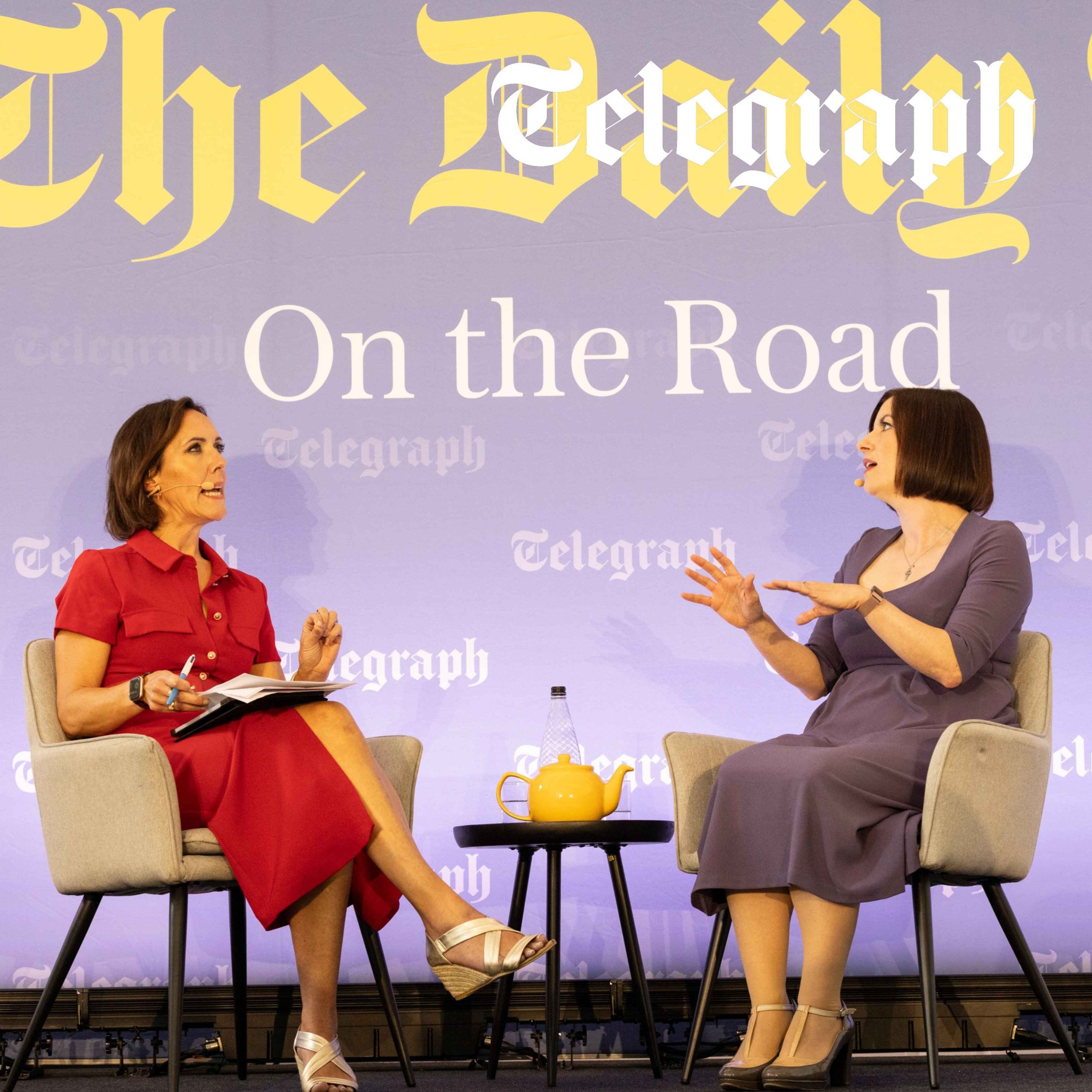
A head-to-head interview between Telegraph journalist Jake Stouck and Labour Party chair Bridget Phillipson, focused on VAT on private school fees, education policy (phonics, national curriculum, breakfast clubs), misogyny/child safeguarding legislation, illegal migration and women’s safety, and trans rights/single-sex spaces.
Bridget Phillipson (born 1983 in Gateshead; raised on a Washington council estate; Catholic schooling; Oxford modern history at Hartford College; ran a women’s refuge; became a Labour MP at 26; served as education secretary; now chair of the Labour Party; also described as first stand-alone minister for women inequalities). Jake Stouck is a right-wing journalist at The Telegraph.
VAT on private schools hasn’t caused a mass exodus; more than 40,000 pupils moved into state education (Phillipson cites DfE-based analysis). Breakfast clubs are for parents and learning readiness. Government should set a national curriculum baseline while allowing school innovation. She supports child protection upgrades and argues she voted against a rape-gang inquiry motion to avoid collapsing broader safeguarding legislation. She says Nigel Farage “doesn’t care” about violence against women except in immigration context. She supports trans people’s dignity but backs single-sex spaces for women based on biology.
Her own Oxford access; Kenneth Baker’s reforms and SATs/phonics; Catherine Burgess/“Burblesing” as an exemplar school; the “grooming gangs”/Casey review; Rhiannon Stouck’s case (Siobhan White interview); Supreme Court definition of “woman”; Eton/public schools as VAT targets.
Written by AI. May contain mistakes.
Bridget shares her background and education journey leading to Oxford.
“Yet your doctor says everything looks fine.”
Bridget shares her background and education journey leading to Oxford.
“That must have been difficult when, with the fall of Keir Starmer, you then lose that job.”
Discussion on the importance of family and education in Bridget's life.
“before getting to know them better, shall we say.”
Bridget discusses her role in education policy and challenges she faced.
“But before we get on to that question, what role did your mum play in all this?”
Exploring the various challenges within the current education system.
“but then you grew up without your father around.”
Debating the autonomy of schools versus government control in education.
“There is a limit to what you can achieve through schools alone.”
The discussion centers on the necessity and implications of strict school uniform policies.
“I don't see why you should have to have branded pencil cases or water bottles or coats or bags.”
Exploration of the role breakfast clubs play in children's education and parental support.
“government should have more state control.”
Discussion on the consequences of introducing VAT on private school fees and its effect on state education.
“But for me, it was always about the club.”
Examining the challenges faced by state schools and the response to educational needs.
“So you have kids in school for a term and then their parents go, oh, no, we can't actually make this work.”
Examining the challenges faced by state schools and the response to educational needs.
“Wayfair had everything I needed to get the house holiday ready.”
Discussion on misogyny in society and the importance of child protection legislation.
“I brought forward the Children's Wellbeing in Schools Bill, as it was then, it's now an act of parliament.”
Discussion on the importance of listening to young women and community needs regarding safety.
“And the argument that we were making was that that should be allowed to continue.”
Debate on political figures' responsibility regarding women's safety and immigration issues.
“because they were afraid of losing Muslim voters.”
Exploration of the balance between women's rights and trans rights in support services.
“I would draw the distinction between those individuals and the likes of Nigel Farage and Reform.”
Reflection on the historical challenges faced in establishing women's services.
“Women like my mother had to fight really hard for a long time to actually create women's refuges, to create rape crisis centres and to get councils to take that seriously.”
Light-hearted rapid-fire questions covering various personal preferences and opinions.
“the level of discussion that it had about did women's services even really matter.”
Closing remarks on the importance of debate and differing viewpoints in politics.
“I haven't prepped you with these, have I?”
Explore the dynamics of political debates and friendships in journalism.
“Oh, a friend just gave me, there's a bit of a Catholic theme to this, I'm going to sound a bit obsessed.”

Get the gist, explore an idea or ask about something said.
 Claude
On The Daily T, what are the key points of this episode?
Searching your listeningAutomatic transcript. May contain errors.
0:02The Telegraph.
0:30and everyone has to sleep over. Ready to go with extra bedding and towels. From guest-ready essentials to holiday decor you can trust, Wayfair delivers. Most women have been there. Something feels off. You don't feel like yourself. Yet your doctor says everything looks fine. Spoiler, it's your hormones. MIDI is a virtual care platform built for women by women and offers specialized hormone care from trained clinicians. Plus, it's covered by most major insurances. Getting started is easy. You can book your first visit with a clinician right away. It's not you. It's your hormones. Visit joinmidi.com to book your first visit.
1:05That's joinmidi.com. Insurance coverage varies. Check with your plan for coverage. What happens when you get a right-wing journalist like me at The Telegraph interviewing Bridget Philipson, chair of the Labour Party? Well, we're going to go head-to-head on VAT on private schools. whether she actually is a vindictive class warrior and, Bridget? Whether I've ever kissed a Tory. That must have been difficult when, with the fall of Keir Starmer, you then lose that job. You know, it was disappointing, but that's politics. And why were you happy to be called a spiteful class warrior? I don't believe Nigel Farage could care less about any of this.
1:44You will only ever hear... No, I don't believe he cares. Do you still think trans women are women? I believe that I'm a woman defined by my biology.
1:57Bridget Phillipson, lovely to see you and thank you for your time today because I know you're really busy. So let me ask you something. Born in Gateshead in 1983, brought up on a Washington council estate, you end up being educated at a Catholic school, you get all the way to Oxford studying modern history at Hartford College. You then run a women's refuge for a while and become a Labour MP at 26. The crucial question is this. Have you ever kissed a Tory?
2:29I was never in the habit of asking people their political views before getting to know them better, shall we say. So we can't rule it out. You can't rule it out. The world is full of all kinds of people. and tell me when you ended up at Oxford how did you feel with the background you had I'm not sure there'd be many people that had had that journey to Hartford College did you feel at home there was it difficult to adjust were you like a fish out of water just explain what your educational situation was like at that point I mean I was incredibly fortunate the school that I went to had encouraged lots of us to apply to Oxford and Cambridge and it was a brilliant school and I I owe them so much.
3:08My family really valued education, really prized education. When I went to Oxford in 2002, the numbers of state school students was improving, was increasing, although it's much, much better now even than it was today. I'd say the big shift wasn't just going to Oxford. It was living in the south of England, which was quite a big change. Did you have a nosebleed? You crossed over the Midlands. You couldn't cope like me going north to your neck of the woods. No. but was it all right being in northern and southern town? There weren't many of us but I I loved my time there it wasn't it wasn't 100 % positive no experience ever is but it was an incredible place to study I was so lucky to have to be taught by such amazing people to have access to such a wonderful education and everything that's always motivated me is how we can make sure more children have experiences that aren't determined by their background because whilst I feel very fortunate, it's still the reality now that lots of kids from ordinary backgrounds don't achieve all that they're capable of because where you're from, your family background, the town that you're born into, I believe still determines too much about your life chances.
4:17And, you know, my experience there was I always felt I had just as much right to be there as anybody else. I'd worked hard, I'd got the A-levels I needed to be there and I wanted to make the best of it. But, you know, there were people from better-off backgrounds. I didn't begrudge them that. I want people not to have to struggle. Well, we'll come on to that in a minute because you have been accused of being a spiteful class warrior. But before we get on to that question, what role did your mum play in all this? Because you seem to be saying that your journey to Oxford was predicated on this very strong Catholic education, but brought up by a single mother.
4:54What was she like? Was she encouraging you to reach for the stars? Yeah, my mom is an amazing woman, really formidable, and was always really active in politics and in campaigning. So set up a women's charity with some friends in the late 70s, early 80s, and did amazing, really pioneering work championing women's rights. And education was just so important to her and to the whole family. My grandparents, too, they'd come over from Ireland. My granddad, right from when I was very, very little, would always give me books, teach me times tables. You know, he was someone who had been in education to the age of 18.
5:33His family had moved to Scotland. Were it not for the war, probably would have gone to university himself, but his life was totally changed when the Second World War broke out. And therefore, the value that he placed, not just on formal education, but also the importance of that and learning within the family home. And I think as parties of the left, progressive parties like Labour, we don't talk enough about the importance of family, I believe. You know, there is, of course, we need to have brilliant schools to support children. But the people that first teach their children are their parents and family.
6:06Now, when I talk about family, I don't mean that in a judgmental sense, because I come from a single parent family. And I think families that give love are the families that matter the most and come in all different shapes and sizes. But supporting families has always been a key part of what I've believed in. And it's the role of government to give families more freedoms and make life easier. Families shouldn't have to struggle. Life shouldn't be tough. But if you're on the left and you start talking about, for instance, fatherlessness, which might be something people on the right talk about more.
6:35And there have been successive studies. The Centre for Social Justice has done a lot of work on this when it comes to working class boys, both white and black, falling behind. and they have identified fatherlessness as a factor, but then you grew up without your father around. So how do you tackle that issue? Because I had a really loving wider family. So I had my granddad and he was just the most amazing man. But I didn't have a father. My dad walked out when my man was pregnant. I never met him. He had no part in my life. That's just how life goes. But I don't yearn for what could have been.
7:09I value what I had. and what I had was a wonderful loving family and I feel really fortunate and that to me demonstrates that it is the love that families can give and the time that they can give that matters the most. When you got the education brief because you were shadow education and then you went on to become education secretary and that seemed to me to be in a role that you absolutely kind of like got into politics to do, that must have been difficult when with the fall of Keir Starmer you then lose that job and specifically sorry not to rob salt into the wounds but you lose it to lucy powell who's also got the deputy leadership of the labor party you're given the chair role and that's a really important role but you must have been pretty gutted to have lost your job yeah i was i'd be lying if i tried to pretend otherwise i'd worked on education since becoming shadow education secretary in 2021 so i'd given it a lot of time and energy and thought and of course you know it was disappointing but that's politics and you know Andy Burnham has the right to build the team around him that he thinks you know is in the best place to drive forward on his agenda.
8:16I'm still obviously a part of the cabinet and I'm really proud to be the first ever stand-alone minister for women inequalities and I wish Lucy every success because I genuinely want education to continue to improve under this government and Lucy has my absolute full support. Is it true to say that you and Andy Burnham might not have seen eye to eye on education as far as kind of the more command and control from government structure that you advocate, which is less autonomy to academies and free schools? He in Manchester was trying to do this thing of kind of T levels and getting kids straight from Manchester schools into local businesses.
8:54That was somewhat juxtaposed to your approach, if I've interpreted your approach correctly, which is that the government should be setting the rules and the schools should be following them. So I've spoken to Andy about this a lot. And I did in my time as education secretary, because I think the work he did around making sure that you had really good work placements for young people, T-level students, but also expanding work placement opportunities for young people was absolutely fantastic, alongside making it easier for young people to travel. So with cheaper and reduced travel for young people going into education.
9:24I think the balance that you need to strike in any education system is how you allow for innovation and allow for schools and colleges to deliver really new ways of doing things and drive up standards in the process, whilst you also ensure that you don't end up with a postcode lottery, depending on where you happen to be in the country. And, you know, I think if you look at the history of education in terms of educational policy over the last 30 or so years, it's not just been Labour governments that have believed in high standards everywhere. So when I was at school, I saw the impact that Kenneth Baker's policies and the transformation that he brought made to my life.
10:02So I remember I was the first year of at primary school to do SATs, the first year I think they were boycotted. So the very first year of all of the primary school children sitting sats. It was because that was coming that my school, having not done it before, started doing spelling tests and times tables. Sure. And for working class kids, you can't get away from not having those basics. So I've always believed that there is a strong role for government in setting the direction and ensuring that all children have, we have high expectations and high standards for all children. It was Kenneth Baker who also brought in the national curriculum.
10:41But yes, there will be the need to adapt to recognise the kind of the strengths and the challenges that local communities face alongside that. So if you don't mind me saying, you sound quite Govian in your approach. You sound like you're back to basics. Let's get the three R's sorted. Let's make sure that they learn, you know, phonics, that they can read by the time they're leaving year six into year seven, that they've got good maths, they've got their times table. And yet he became a bet noir of the left. And actually, he's been vindicated with these PISA results because England adopting his reforms and Wales and Scotland opting not to.
11:16I mean, we can see the disparity in the attainment of young people in England compared to Scotland and Wales very, very clearly. So there's two things I'd say. Firstly, I believe in high standards in our schools and I believe it's working class kids that need it the most. So if you leave school without a good level of English and a good level of maths, you will find opportunities closed down to you. So that matters most to the kids who haven't got a granddad like I had doing times tables at home. So it's absolutely critical. I think alongside that, you know, to take phonics as an example, phonics is a great example of where education policy shifted and where there was consensus.
11:52So the last Labour government on dread balls started the process of rolling out phonics. It continued under the Conservatives and it has led to really strong results in terms of children's reading. What I would say, however, around both PISA and our school system overall, is that we could be even better if we close that disadvantage gap. And I think Michael Gold himself has acknowledged that it was a mistake to hollow out Shoe a start. Because if we invest in children and their families when they're young, that makes an enormous difference. If we don't, we see children arriving at school not ready to learn.
12:26That disadvantage gap already open and then it widens through the school system. There is a limit to what you can achieve through schools alone. And I think Michael Gold himself acknowledges that had they continued to pursue policies that really backed young children, then that would have made a material difference to outcomes in schools. But what I could never understand from your period as Education Secretary was your enormous beef with Catherine Burblesing. Now, I appreciate that Catherine does like to voice an opinion. But here you have a head teacher that is running a school that's got the highest Progress 8th school for the last three years running.
13:00And she is teaching disadvantaged children. It's not as if you can look at a private school exemplar in some leafy Hertfordshire town and say, well, we know why the results are so good. She's taking children that don't have much opportunity at all, massively improving them and sending a lot of them off to Oxbridge, where you studied. Why didn't you at the time think that that was an exemplar for you? You know, she has complained that some of the measures you brought in removed her autonomy, removed her ability to set her own standards, set her own discipline codes, set her own uniform requirements.
13:31And that's actually set the school back. I have the utmost respect for our school leaders. And I have the utmost respect for Catherine Burglesing as well, because I think being a head teacher, being a school leader, it's a really tough job, and they deserve our backing. I think the changes that we've made around school uniform policy, for example, I just didn't understand the level of outrage about it because what you will see is schools often insisting that parents have to buy lots and lots of very expensive branded items that just aren't necessary. You can have kids looking smart without costing parents the earth.
14:03I don't see why you should have to have branded pencil cases or water bottles or coats or bags. My school had high standards, quite strict uniform policy for the area at the time, but it was just a standard kind of blazer, a standard kind of tie. But it's about more than that, because you've criticised schools like hers for not wanting to follow the national curriculum, for wanting to recruit people that might not on paper have the conventional route into teaching. The point is, I feel there's a contradiction at the heart of your argument, because schools like hers and academies and free schools, they are autonomous, they want to do things in their own way away from government.
14:41And you, because you're on the left, don't really like that, because you think the government should have more state control. It's also for that reason that you think that breakfast clubs should be started and that teachers should be potentially brushing children's teeth. The right will say, well, what happened to parental responsibility for those jobs? On what children are taught in school and the national curriculum, I think we've drifted, I find it odd that we've drifted quite a long way away from what, as I said earlier, was a conservative innovation, that you have the national curriculum as a baseline for what all children should, what we should expect all children should be taught in school.
15:16Schools can go beyond that. They can innovate. They should. But the national curriculum ensures that whoever you are and wherever you are, you have a good standard of education. And breakfast clubs. Look, I think that breakfast clubs matter to parents for two reasons. One, it means you can get to work and that does matter to parents. But two, it means your children get a soft start to the day. It's not about the breakfast, it's about the club. And I think what hasn't been so well understood about breakfast clubs is that it is in effect an extension of the school day. It's not mandatory, but for those children who need a bit of extra time, need a bit of extra care, including children with special educational needs, it's an absolute godsend for parents.
15:57And I find the way in which the Tories often laughed when we would talk about breakfast clubs, I just think shows detachment from the lives of parents who, you know, 30 minutes at the start of the day, if that allows you to then get to your shift at work, allows you if you're self-employed to get to your next job that's just making life easier for families it's not it's not obligatory you don't have to take no I know but you were also trying to scoop up the children of parents who didn't give them breakfast and wouldn't brush their teeth and that's saying something quite different that's saying that there's some kind of societal breakdown because even though you were brought up on a shoestring by a single mother without any fatherly support I would put a tenner on the table now and say there wasn't one morning that Bridget Phillips and went into school without having had breakfast.
16:42Which is why it's about, for me, it was genuinely, genuinely always about the club. Yes, there will be a small number of children whose families, for a range of reasons, will be really struggling. And I wish that, you know, I don't want children to be going to school hungry. But for me, it was always about the club. And actually, to go to the academic evidence around this, part of what allowed us to start the process of rolling out breakfast clubs was the evidence, the research that had been done that showed that children made stronger academic progress, their attendance improved and their behaviour improved.
17:11That's not just good for those children. It's good for the whole class. If a teacher's got more children arriving who are ready to come in, get going, sit down and start learning, that avoids the disruption. It means the teacher can get on with it. So actually, it's not about asking teachers to do more. It's about freeing up teachers to do the things that they have trained for. Teaching. Not having to spend so much time supporting children who, when they arrive at school, haven't been supported to learn how to use the toilet independently or can't put on their coat, which again, we've seen lots and lots of challenges, especially post-pandemic around school readiness.
17:44So, and that's where I think government does have to come in. Let's grasp the nettle. You and I have rowed about this before. VAT on private school fees. Now, I know you and I are going to debate about the numbers. I think we can probably come to a fairly safe conclusion. This isn't overinflated or underestimated that it's caused around 40 ,000 private school pupils to go into state schools. Now, notwithstanding whether the state schools were oversubscribed or undersubscribed, or the fact that sometimes in any given year, private schools close, do you accept that you have upset the education of those children because consequentially their parents haven't afforded the fees?
18:27They've had to be moved away from the schools they loved, away from the classmates they loved, and away from the teachers they loved and how can that possibly be branded a successful policy? God, we've had this ding-dong so many times. Right. So the facts here. We haven't seen this mass exodus that people were predicting. We have seen 40. Do you agree with 40 ,000? No, that was a projection of the number of children who not just around those that would leave, but also around those who would not take up a place in the first place is my recollection. This is official data suggesting that more than 40 ,000 private school pupils have moved into the state sector since the VAT was introduced.
19:09Official data from? Not ISC. This is a calculation that's been put together for 43 ,126 pupils, according to our own analysis, which is based on D of E figures. Yeah, there's a lot of numbers that the private schools lobby push about. But okay, even if it were only 10 ,000. The numbers have been stable. And alongside that, it has allowed us to raise a lot of money that we're investing in state education. Well, hang on a minute. You promised that this would deliver 6 ,500 teachers. It hasn't. We made a commitment to make sure that we've got teachers where we need them most. And that means in secondary and it means in post-16, where the numbers have increased by more than 2 ,000.
19:53But they haven't got to 6 ,500, which was the promise. No, we were on course. When I left the Department for Education, we were on course to meet that target. What about my point about displacing pupils? And there was something that some people felt was particularly vindictive about the policy being introduced in January and not in September. So you have kids in school for a term and then their parents go, oh, no, we can't actually make this work. I think it was designed to tackle people at Eton and other public schools where, you know, a thousand pounds here or there doesn't affect the parents.
20:26you were rightly criticised I think by middle earning parents saying how much more do you want to squeeze us and by the way the parents of SEND pupils who didn't have any state options and so sent their kids to SEND. So children with SEND where their places came from education health care plans were not affected by this that that didn't affect those children. Hang on a minute some were because they didn't have the EHCP. And if a parent has chosen to educate their child in the private sector that is absolutely they're right so I believe the parents have that choice however I don't believe that we're talking about middle earning parents here I mean you have to have quite a lot of money to send your children to private school these days because the costs have gone way way up over the years and I respect parents choices I respect the right for parents to choose private education but we had said you know to the point about what how it was introduced we'd said I think we announced our policy in 2021 2022 you know it was quite clear by 2024 that a that we were on course to win the next general election.
21:24So I think we have given fair indication as to the policy. I do believe it was the right policy to bring in. And it has allowed us to raise money to invest in state education. I also, look, if I'm honest, I'm happy to go around this, but I find it, we have, you know, obviously talked quite a lot about state education, which I appreciate. But the obsession that people have with what is effectively a minority interest, when 93 % of kids in our country go to state schools, the amount of time and energy and bandwidth that gets dedicated. I know, but it's quite a small section of pretty well-off parents.
21:55I do find quite extraordinary. It does help out state schools, doesn't it? Because if people are privately educated, then they're not in the state system. And I've had this debate with you because I had two children in private and one in state. So I could see it from both perspectives. And in my part of Leafy Hertfordshire, we did see an exodus from the private schools into the state schools, which then put pressure on the state schools. My point was always when you were education secretary how can it ever be a good policy to move children from the schools they love to schools they perhaps don't and second of all to witness school closures we've got more private schools now than we had previously the numbers the numbers have actually increased we have more private schools I'd always say the other thing about this middle earners don't send their children to private school that's not right I mean the average fee is now on 20 000 pounds a year I I mean, who's got that kind of money in Sunderland?
22:43Well, Diane Abbott, she had that money. She privately educated her son. Which is her right. Which is her right. Look, I would defend any parent's right to do what they believe to be right for their child. But I will also defend the 93 % of kids in state schools who need money invested in their education. So are you sure that this has achieved what you wanted it to? Because I'm not sure state schools are necessarily reaping the rewards of VAT on private fees. I'm not sure they're seeing it. I know I've had a chat with the state school headmaster about staffing. There's a constant need to find more STEM teachers, particularly.
23:15You're saying you're going to meet that 6 ,500 target, but you haven't yet. Is it really worth it? Was it really worth kind of terrorising that sector? We said we were going to do this and we did it. And I think I absolutely believe it was the right choice to make. And we've invested a lot of money in state education through budgets, through spending reviews. the extra money that I announced in July, now another two billion pounds, thanks to Rachel Reeves's support, to fund, to put extra funding into supporting our teachers. I mean, we have invested a huge amount in education. We have prioritized education, but are there challenges?
23:49Absolutely. We're picking up the pieces of, you know, years and years where the amount of money going into state schools did decline significantly. And why were you happy to be called a spiteful class warrior? Because if being a spiteful class warrior means you have a focus on tackling disadvantage and lifting children out of poverty, which I do, then I will wear that badge with pride.
24:18So you're not worried about hosting the whole family for the holidays? Why would I be? Wayfair had everything I needed to get the house holiday ready. What if Mike brings his cheerful dogs? My has tons of five-star reviews telling me how sturdy it is but what if everyone's plus one brings a plus one we'll see how extendable this extendable table really is and extra chairs are on the way okay what if there's a blizzard and everyone has to sleep over ready to go with extra bedding and towels from guest ready essentials to holiday decor you can trust wayfair delivers 75 of women who seek menopause care don't receive it the lying awake at 3 a.m wondering what's happening to your body ends now.
24:57Midi is virtual care built for women in perimenopause and menopause with clinicians who specialize in women's health. Plus, it's covered by most major insurances. Getting started is easy. You can book your first visit with a clinician right away. Midlife needs Midi. Visit joinmidi.com to book your first visit today. That's joinmidi.com. Insurance coverage varies. Check with your plan for coverage. I'm Jake Stouck, co-founder and CEO of Serval. We built Serval to automate the IT work that slows companies down. Onboarding, password resets, access to applications, my laptop stopped working. While employees wait for help, their real work is put on hold.
25:36IT desperately wants to automate this work, and that's why they need Serval. You just tell Serval what you want to automate in plain English, and it's built. No drag-and-drop workflows, no expensive consultants. Employees get unblocked, and IT teams go from drowning in tickets to building what actually matters. With Serval, IT becomes the AI engine powering the entire company. This is a new way to run IT. We guarantee you'll automate 50 % of all tickets and we'll prove it to you in a free four-week pilot. Go to serval.com slash tickets. That's S-E-R-V-A-L dot com slash tickets.
26:25let's move on to some of your um announcements this week on misogyny um you think misogyny is a big problem in the workplace right now in 2026 i think it's a big problem everywhere in our society for women yes okay the obvious question then is why did you vote against the rape gang inquiry so there's a lot of misunderstanding about this point so let me just briefly touch on that. I brought forward the Children's Wellbeing in Schools Bill, as it was then, it's now an act of parliament. And within it were contained the provisions that we've talked about around schools policy, but also lots of incredibly important measures around child safeguarding, around how we keep children safe and how we change the law to make sure we deal with some of what we've seen in the past, where people dodge responsibility and they don't work together to protect children.
27:12So this was the biggest upgrade in terms of child protection legislation that we've seen in decades, there was a motion put down by the Conservatives that would have declined a second reading to that piece of legislation. So if that had passed, all of that legislation would have fallen. So the Conservatives knew what they were doing when they tabled that. And yes, I do believe we have to better understand and take action against child exploitation, including what people will call grooming gangs. I've always believed that. I support the children that have experienced abuse. But had I voted in that way, then all of that legislation would have fallen because you can't reintroduce the same legislation in that form again.
27:50So it's a disingenuous political argument. If there had been a separate vote on having a national inquiry into grooming gangs, you would have supported it. So we had the Casey review that was underway at that point. And the argument that we were making was that that should be allowed to continue. We now have the work that's being led by Anne Longfield, which is considering all of the implications. so absolutely we need to do that I mean I I have long believed that we have not taken seriously as a country the experiences of children but especially young women from from the communities who were affected by this they weren't listened to because they were working class girls who were called all kinds of horrible yes insulting names which I won't know say here because and and they should have been heard and listened to and part of what always frustrates me about you know I think it is right that we have this inquiry but I also think we should just get on and do the things that should have been done a long time ago we always seem to want to talk about learning lessons I'd quite like to see more action but there's a theme isn't there to the suppression of the Pakistani nature of the assailants and there's also a theme to a degree of a labor cover-up you know it's alleged in some of these seats where this horrific abuse occurred be it Rochdale Rotherham or beyond and we're not going to relitigate that in this podcast because too much length and detail is required but that in general quite a few figures within the Labour Party turned a blind eye didn't want to address the racially aggravated notion of the crime because they were afraid of losing Muslim voters.
29:24Can you address that because that is of importance to people? Completely. I have always believed that we should come down like a ton of bricks on anybody who commits horrific crimes against children or women of a violent and sexual nature. I don't care who they are. I don't care what their background is. We should come down on like a ton of bricks. And there should be no excuses for anybody not taking action or not taking seriously when victims come forward. Now, I have to say that is not unique to one group of people. And, you know, when I talk about let's learn the lessons, it's clear what we need to do.
29:56When women come forward and when they report, when children come forward and say that awful things have been done to them we should believe them we should take that seriously and the people that are trusted to support them in positions of authority should work together to tackle it now that's what the legislation i brought in was designed to do to make all of those people who should be keeping children safe safe to do that and where it comes to violence against women and girls the same applies in whatever form i want people that do it to face serious consequences and they haven't done in recent years in the rape conviction rate the time it takes for cases to get to court you know I used to run a women's refuge I care really really strongly about this and it is my job in the new rule that I'm in to make sure that all women in our country feel safe wherever they are whoever they are but why have you so you've accused uh reform figures like Richard Tice and Nigel Farage of sort of weaponizing this issue when it comes to concerns about the safety of women and girls in reaction to illegal boat crossings.
30:55But why have you made that political? Do you not think that those people from those parties do care about the safety of women and girls? Because when we've seen protests, be it in Epsom or Piddington, yes, there's been a masked element to it. We know that. But a lot of the people turning out on the streets are mothers, aunts, sisters, grandmothers. They're worried about their daughters and grandchildren because of what's happened with the arrivals over the channel and also, let's be honest, the early release scheme. So I would draw a distinction between communities who have genuine worries and we should be absolutely serious about that.
31:30But I'd draw the distinction between communities and women, as you described, having concerns about all of that. I would draw the distinction between those individuals and the likes of Nigel Farage and Reform. I don't believe Nigel Farage could care less about any of this. You will only ever hear... No, I don't believe he cares. you don't think he cares about I don't think he cares about violence against women and girls and for two reasons one he will only ever talk about it in the context of immigration or asylum never hear him talking about it any other time two when was the last time Nigel or ever when's Nigel Farage ever visited a women's refuge or a rape crisis center has he ever visited one I don't know has he ever spoken to any of the women that are affected by it has Andy Burnham other than Ed Davey has other than if he wants to make a political argument using violence against women and girls as a political football in order to weaponise an issue.
32:20But aren't you doing the same? Hang on, Bridget Phillipson, aren't you doing exactly the same? By saying this, aren't you turning it into a political football? His motivations, he's got daughters. Why are you saying this? Do you know him well enough to suggest that he doesn't actually care about the safety of women and girls? If somebody wants to share with me all of the times that Nigel Farage has shown concern about violence against women and girls, other than in the context of immigration and asylum or his campaigning track record on this, then absolutely share that with me. There isn't one.
32:50He doesn't care. He just wants to use women's suffering to make an argument. But Bridget, I haven't been to a woman's refuge. That doesn't mean that I don't understand. You're not the leader of a mainstream political party. He is. I think that it could be the case that a great many people in Great Britain are very, very worried about the safety of women and girls. You yourself said in a recent interview, you and I quote you, all of us women are unsafe. Yeah. Do you believe that? I do believe that. I believe that women are, I believe that women make choices, we make choices about how we live our lives because of male violence.
33:27Right. But wouldn't that worry any bloke, be it Nigel Farage, your husband, my husband, Andy Burnham? I'd hope so, but I've yet to hear him. I've never really heard him say much about it other than in the context I've described. Also, to what extent do we need to look at the Labour government and its own failings on this? You know, I interviewed on the Daily Tea, Siobhan White, whose daughter Rhiannon was killed by that illegal immigrant who was in her migrant centre, followed her to the train station. I mean, it was one of the most appalling interviews I think I've ever conducted, how brutally Rhiannon was killed, literally a couple of stops from home.
34:01And by the way, she'd gone into that migrant centre to help run things, to help the people who had come in there. If the Labour government don't stop the boats, and we have undocumented migrants still coming into the country in their droves, then women and girls aren't going to be safe, are they? And we do need and we are taking action to stop illegal boat crossings. The numbers are the lowest they've been in six years. And we do need to deport more people who've got no right to be in this country. And we are. And we do need to reduce illegal migration. Absolutely. You can believe all of those things and yet still believe that parties like Reform only want to use suffering of women as a political football.
34:39All right, quick couple more questions before we go to the audience. Do you still think trans women are women? I believe that I'm a woman, defined by my biology, and that the Supreme Court made very clear what a woman is. But you did say previously you thought trans women were women. So do you now think trans women are trans women and women are women? I believe that everyone in our country should be treated with dignity and respect, and that includes trans people. but I also believe that women should have access to single-sex spaces on the basis of biology. I used to run a women's refuge. So you wouldn't have let a trans woman into a woman's refuge?
35:17No. Right. You can provide alternative provision but it would, my view is that services should be run for women, by women and that trans people who have, who are experiencing abuse absolutely have the right to access services that are appropriate for them but I don't believe a women's refuge. I believe a women's refuge should be for those of us who are biologically women. But plenty of your Labour colleagues would have been perfectly happy with a trans woman going into a women's refuge. They were saying things like women can have a penis, men can grow cervixes. They didn't see that distinction.
35:51Did you all really need the Supreme Court to rule on that? I can understand why people want to make sure that trans people are not harassed or intimidated. and I don't like the nature of how this is discussed. I feel very strongly about the need for single-sex spaces but I also believe we shouldn't be abusing people or pillorying people online because of who they are. And I think the Supreme Court were also clear that trans people have rights in law as well, the right not to be harassed or intimidated or suffer discrimination. We've all got that right. But then we as women also have the right to spaces and services that meet our needs.
36:28and it's not about what what it's not about what politicians want it's actually what about what women want when they are healing from male violence they want spaces that are suitable and appropriate where they can heal where they have the therapeutic support that they need so did some on the left get it wrong I think it was look I think it was well-intentioned but I think fundamentally misguided to think that you can suggest that women don't have the right to their own spaces or to organize in a way that works for them but I don't think that is just about the kind of sex and gender discussion that we have, by which I mean women had to fight really hard for a long time.
37:03Women like my mother had to fight really hard for a long time to actually create women's refuges, to create rape crisis centres and to get councils to take that seriously. That took such a big fight. And I think it is really important. And that progress was hard fought and hard won. And there were battles over many, many years, long before this was ever had the level of discussion that it had about did women's services even really matter. I believe women's services really matter. A couple of questions on Andy Burnham on the BBC this morning. So he failed to set out a plan to cut welfare. He failed to rule out tax rises.
37:38He declined to back a third runway at Heathrow. He mentioned reviews and consultations 12 times. And he failed to commit to spending 3 % of GDP on defence 2030. So it's a bit of a car crash. No. There's a lot of topics there. I could go into each of them. I don't think we've got the time, but you'll be hearing Cremanty on Tuesday. So I'm sure we'll be addressing a lot of your points. Well, let's just zone in very quickly on the economy then with John Healy due to speak tomorrow and the budget coming on October the 28th. You were on my show last week, I think, where I mentioned Sir Jim Ratcliffe saying the country's gone to the dogs.
38:15And you were like, I'm not taking any lessons from him. He's lived in Monaco since 2020 and doesn't pay his taxes here. There are quite a few billionaires that did pay their taxes here, including Chris Rocos, who has now disappeared off into the sunset with his 330 million. Do you regret what you said to me about Ratcliffe now that he has paused production in no less than three plants in Hull? No, I'm not going to take any lessons from tax exiles, no. Hang on a minute. He's a wealth creator in this country, isn't he? We can come pay his taxes here then, can't we? OK, then Chris Rocos, are you happy he's left the country with his£330 million worth of tax receipts?
38:52I want, and what John Healy wants, is Britain to be a great place to start a business, to grow a business and to do business. And you'll hear more of that tomorrow from John. Don't we safely conclude ahead of the budget that this government is spending too much and borrowing too much? £8 billion worth of borrowing in addition to what was anticipated revealed last week. You just can't cut spending because you're lefties and you're addicted, as Thatcher said, to spending other people's money. No, we do need to bring down borrowing. That isn't something that has just started under this government, but is absolutely a challenge.
39:26And John Healy's been pretty upfront about that. On spending, one area I'd like to spend less is the amount of money we spend on young people who are not in education, employment or training, who were just at home, directionless, with no purpose in life. And that's why the work that Alan Milburn is leading for us will lead to big and real radical changes that support young people. And that do mean we spend less on the cost of failure. I mean, it's a devastating failure for those young people and for our country that we're spending so much on young people having lesser lives. Some of those neats are outside the conference building right now shouting, Zionists control the Labour Party.
40:02I had to warn some of my Jewish staff that they wanted to be perhaps careful walking into conference today because there are people spouting actual blood libels outside the building. Your thoughts? I mean, I've always taken a really strong, you know, strong line in standing against anti-Semitism. It has no place in our country and we shouldn't tolerate it. It should be noted that Bridget Phillipson did not serve under Jeremy Corbyn and has been quite vociferous on the topic of anti-Semitism in university and schools. Right, some quickfire questions and then we'll open it up to the floor. I haven't prepped you with these, have I?
40:38No. Oasis or Blur? Blur. Really? You're a northerner. Oasis aren't northern. That's coming from somebody born in Gateshead, ladies and gentlemen. Ketchup or HP? Ketchup. Number 10 North or 10 Downing Street? Ooh. 10 Downing Street, because number 10 North is like number 10 Midlands to me. I thought you were going to say it's like a gimmick. No. Of course we wouldn't say that. No. This is a very important one. Ant. or deck you don't know what the little who the little one is do you you must know them both i i do you know them personally i don't know them personally but i was once on biker grove were you what did you play on biker grove i was an extra on biker grove twice after they'd left unfortunately have you got a little screenshot of that we need it for our socials yeah but deck because his brother was um was a catholic priest in the local area are you a practicing catholic Bridget.
41:34Are you as practicing as my podcast co-host Tim Stanley? Almost certainly not. But you are a Catholic. I am a Catholic. I'm not the world's best Catholic, but it is an important part of what I believe. You're in good company with me on this stage then. Alan Shearer or Jordan Pickford? It's got to be Jordan Pickford. Why? He and I went to the same school. Lovely. Safe pair of hands. Safe pair of hands. What book are you currently reading? Oh, a friend just gave me, there's a bit of a Catholic theme to this, I'm going to sound a bit obsessed. The Pope's recent book on AI. Oh, very good. Which I haven't started reading, but I have got it.
42:12I brought it in the bag to read on the train and I didn't quite get there. Yes, no answer. Is AI going to kill us all in 10 years time? No. Okay, great. What series are you currently binge watching? Oh, goodness me, what's it called? The Split Up on BBC. Somebody's just gasped. It's like a divorce thing, like a divorce drama. Bridget Phillipson, do we end this as the best of frenemies? Is that best to describe us? Do you know any other righties in the journalistic sphere? Have you discussed matters like this with any other righty more than me? We've had a lot of debates, haven't we? I always love coming on your programme.
42:51Why is that? Because I like the challenge. I like the debate. Yes. Yes. And it makes you confront how you view the world when you're challenged by others that come at it from a different perspective. Yes, we're trying to get out of our echo chambers together. I've enjoyed it. I hope you've enjoyed it. I hope you've all enjoyed it. We've got some nodding heads. That's good. Thank you very much, Bridget Philipson.
43:39So you're not worried about hosting the whole family for the holidays? Why would I be? Wayfair had everything I needed to get the house holiday ready. What if Mike brings his cheerful dogs? My tree has tons of five-star reviews telling me how sturdy it is. But what if everyone's plus one brings a plus one? We'll see how extendable this extendable table really is. And extra chairs are on the way. Okay. What if there's a blizzard and everyone has to sleep over? Ready to go with extra bedding and towels. From guest-ready essentials to holiday decor you can trust, Wayfair delivers. There are two types of business owners.
44:11Those who are busy and those who want to be busy. Toast is designed for both. With tools to keep you humming and help turn grind into growth. That's how you turn busy into business. Toast, built for busy.
In today’s special Daily T episode, live from Liverpool ahead of the Labour Party Conference, Camilla Tominey goes head-to-head with Bridget Phillipson, the party chairman and former education secretary. They debate the Government’s education policy, including issues from school uniform policies to VAT on private schools, as well as Ms Phillipson’s views on women’s access to single-sex spaces. The women and equalities minister also doubles down on her response to Sir Jim Ratcliffe’s public comments that Britain is “on the slide”. Camilla also asks her whether she was disappointed to be replaced as education secretary by Lucy Powell, and whether she’s ever kissed a Tory.
► Subscribe to our new Daily T YouTube channel: youtube.com/@dailytpodcast
► Sign up to our most popular newsletter, From the Editor. Look forward to receiving free-thinking comment and the day's biggest stories, every morning. telegraph.co.uk/fromtheeditor
The Telegraph is the Publisher Podcast Awards' Podcast Publisher of the Year 2026
Producer: David Levene
Senior Producer: Emma Williams
Social Producer: Nada Aggour
Video Producer: James England
Executive Producer: Charlotte Seligman
Editor: Camilla Tominey
Highlights:
Hosted on Acast. See acast.com/privacy for more information.


