
 Ask ChatGPT



Whether sharia law is spreading in Britain (and what that would mean for civil law and women’s rights), plus a debate over rising St George/Union flag use and Labour’s “reclaim the flag” messaging.
Fiyaz Mughal, founder of Faith Matters and Tell Mama (anti-Muslim hate monitoring) and leading the campaign against a proposed Islamophobia definition (“One Law for All”). Hosts: Camilla Tominy and Tim Stanley. Other cited figures include Nigel Farage, Sadiq Khan, Keir Starmer, and Labour Justice minister Sarah Sackman.
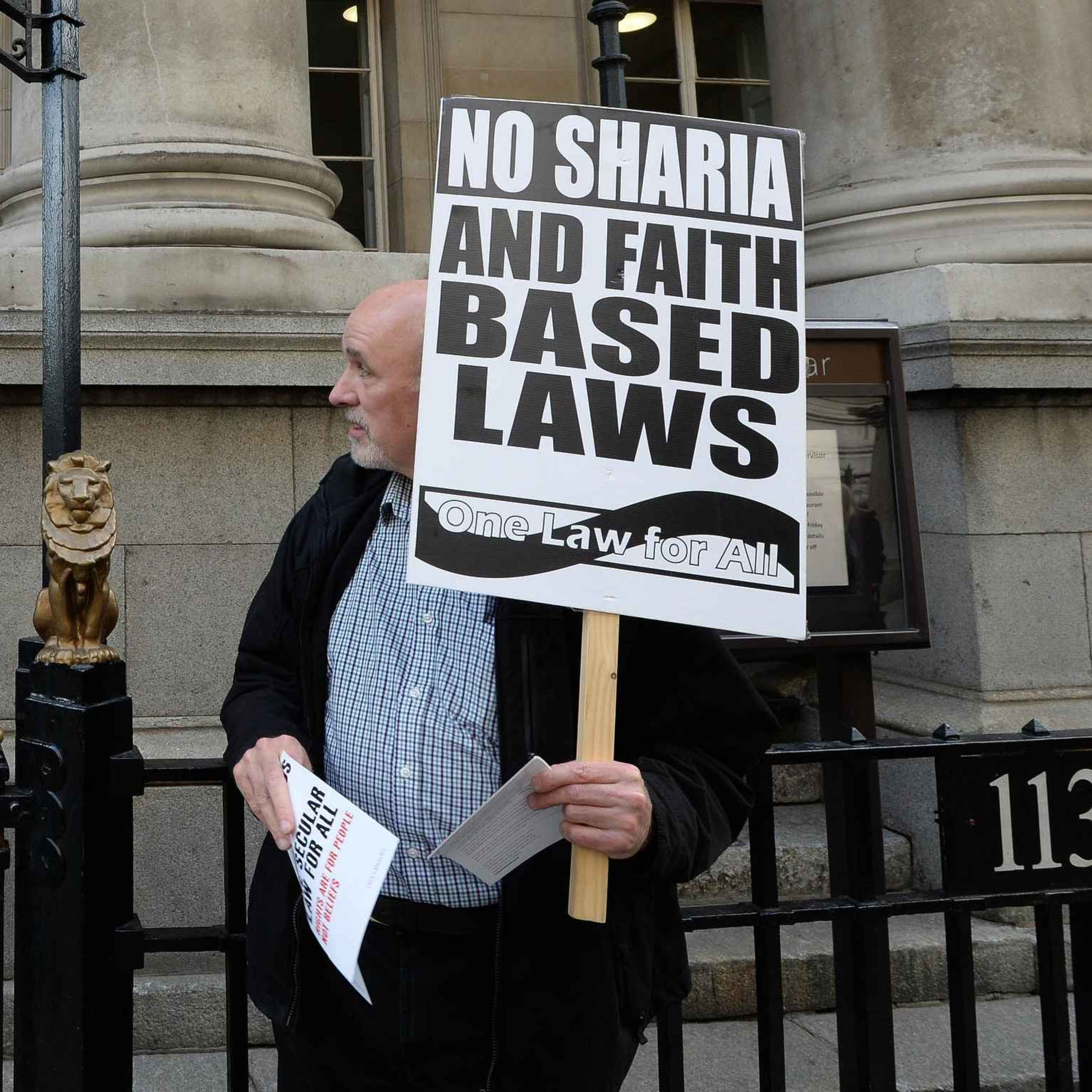
Trump’s UN remarks are framed as Islamophobic/racist, but the episode argues there is a real issue: a “shadowy” network of about 85 sharia councils/courts, limited transparency, and potential conflicts with English law. Mughal argues women are increasingly drawn to these courts and may be disadvantaged in divorce/marriage; he calls for enforcement, civil-law training/oversight, and better gender equality.
a controversial job posting for a “Sharia law administrator” in Didsbury (removed from a government jobs site); a parliamentary exchange where Sackman says sharia isn’t part of English/Wales law but faith courts exist; discussion of private sharia marriage not being registered civilly; and “Operation Raise the Colours” flag controversy around the Unite the Kingdom/Tommy Robinson march.
Written by AI. May contain mistakes.
Hosts discuss Trump's controversial speech at the UN and its implications.
“Welcome to The Daily Tea with me, Camilla Tominy.”
Discussion on Trump's criticism of London Mayor Sadiq Khan and its context.
“He also doesn't seem to have forgiven the London mayor, Sadiq Khan, for raising that baby blimp above Parliament Square, because once again he seemed to single out Keir Starmer's bestie for particular criticism.”
Exploration of the presence of Sharia law in the UK and associated controversies.
“Listen, when people say things, when people act in a certain way, when people behave in a certain way, you've got to believe them.”
Review of political figures' responses concerning the influence of Sharia law.
“Yes, that's right, but operating at some level in this country.”
Interview with Fiyaz Mughal discussing the nature and perception of Sharia law.
“I mean, Sackman got panned for suggesting that Sharia law was in line with British values.”
Discussion on the role and perception of Sharia courts in the UK Muslim community.
“So Sharia law predominantly is based on the kind of religious traditions, but also the Islamic scriptural law made by scholars over a period of time.”
Examination of how Sharia law may affect women's rights and legal standing.
“last general election, delivering the election of at least five openly Islamist MPs?”
Discussion on the differences between marriage in Sharia law and civil law.
“There has been a growth in people being more religious, and there's been a growth in people looking at their identity as Muslim first.”
Learn how marriage in Sharia law differs from civil marriage and the implications for women's rights.
“In, say, Christian tradition in this country, marriage is there is a religious service, but there's also a civil dimension to it.”
Explore the challenges women face in Sharia marriages and the need for legal protections.
“Fiyaz's point is quite a salient one for the only woman in this conversation that when you look at rabbinical courts or Catholic tribunals or indeed Sharia courts it's a patriarchy.”
Discuss the complexities of integrating Sharia law with British civil law and the consequences.
“traditions to somebody, you are missing out the obligations civilly and to society and to the country in which you're sitting.”
Fiyaz Mughal summarizes the impact of political movements on Islam in Britain.
“politically fused with Islam and we are now living with the consequences of that 30 to 40 years later.”
An exploration of the origins and cultural significance of St George's flag in England.
“Tim, can we do a little role reversal and can I be professorial and pretend that I'm the historian and academic here?”
Explores the context and implications of flying the St George's flag in England.
“I think it was meant to be sort of taking a stand against two things.”
Examines how political figures navigate the complexities of national identity and flag-waving.
“So on the day of the March, that was the 13th of September, that Saturday.”
Discusses the diverse and evolving nature of British identity and its historical roots.
“that people who are flag wavers are inherently far right.”
Shares personal anecdotes and reflections on what being English means today.
“So Downing Street has told The Telegraph the Prime Minister is particularly going to be keen on reclaiming the flag.”
Covers audience feedback on flag symbolism and a correction regarding misinformation.
“Shall we dip into what people are saying on the Telegraph website, which has been inundated with comments about flag-related stories?”

Get the gist, explore an idea or ask about something said.
 Claude
On The Daily T, what are the key points of this episode?
Searching your listeningAutomatic transcript. May contain errors.
0:04Camilla: The Telegraph.
0:09Camilla: Sharia law. Is it coming to the UK as President Trump has suggested in his blistering speech to the UN? And how worried should we be? We speak to a moderate Muslim about the subject. And we also discuss flags. Keir Starmer's planning to wrap himself in one on Friday. Is Labour really a patriotic party? And what is patriotism anyway? Welcome to The Daily Tea with me, Camilla Tominy. And me, Tim Stanley.
0:43Camilla, I don't know whether you thought Trump's speech was brilliant or insane, but his address to the United Nations was brutal.
0:50Camilla: It was compelling. It was a great watch. I got the popcorn out, that's for sure. It started badly when his golden escalator broke down as soon as he set foot on it, and his teleprompter didn't work. I know. Also known as an autocue. Teleprompter. And being the UN, one isn't certain if that's going to be conspiracy or just ineptitude. Nonetheless, he laid into the audience, accusing them of trying to destroy Western societies or encourage Western societies to commit suicide, and argued that Europe was being invaded by illegal aliens. He also doesn't seem to have forgiven the London mayor, Sadiq Khan, for raising that baby blimp above Parliament Square, because once again he seemed to single out Keir Starmer's bestie for particular criticism.
1:37And I have to say, I look at London where you have a terrible mayor, terrible, terrible mayor, and it's been so changed, so changed. Now they want to go to Sharia law, but you're in a different country. You can't do that. Both the immigration and their suicidal energy ideas will be the death of Western Europe if something is not done immediately. They cannot, this cannot be sustained. There's some debate when he said now they want to go to Sharia law as to who they are. But some people understandably thought he meant Sadiq Khan, who spoke to Sky News on a bus and hit back at the president. People are wondering what it is about this Muslim mayor who leads a liberal, multicultural, progressive, successful city that means I appear to be living rent-free inside Donald Trump's head.
2:35Are those comments Islamophobic? Listen, when people say things, when people act in a certain way, when people behave in a certain way, you've got to believe them. So you're saying he is Islamophobic? I think President Trump has shown he is racist, he is sexist, he is misogynistic and he's Islamophobic. It's actually a good idea for any Londoner to live rent-free inside Donald Trump's head. Yes, Ms Cheek. Because you certainly can't afford to live in London under Sadiq Khan.
3:07Camilla: All these politicians living rent-free in each other's heads. I know. Just pay some rent, for goodness sake. It's us poor Joes who actually have to pay a mortgage, isn't it? But is there any truth to Trump's claim? Is Sharia law increasingly influential in London and the UK? Who better to ask Tim than that gentle soul, Pat McFadden, now the new Work and Pensions Secretary, who was characteristically diplomatic on BBC Breakfast this morning? Well, I'm here at Selhurst Park in South London, where we don't have Sharia law, we have British law. It's a great capital city that we have. I think it's a great asset to the UK and I'm afraid I differ from the president on that.
3:48Nigel Farage was speaking to Nick Ferrari on LBC this morning and said this. At my last understanding, there were 85 Sharia courts operating in this country at some level. Civil level, by the way. Yes, that's right, but operating at some level in this country. So is he right to say that Sharia is an issue in London? Yes. Is it an overwhelming issue at this stage? No. Has the Mayor of London directly linked himself to it? No. Is the Mayor of London doing as bad a job as President Trump asserts? Oh, shocking.
4:23Camilla: Get off the fence there, Faraj. But we have reported here at The Telegraph that there is a, quote, shadowy network of roughly 85 Sharia courts and councils operating in the UK to deal with disputes within Muslim communities. And do you remember that story? there was a job posting for a Sharia law administrator in Didsbury in Manchester and it caused a storm because it appeared on an official government jobs website. And at the time, Faraj said, our country and its values are being destroyed and it was promptly removed from the government website. So the idea of trying to employ someone to administer Sharia law did seem to be quite controversial.
5:03And also Sarah Pochin, famous for asking a question about the burqa, which led to a big huff by Zia Yusuf, has also asked a question previously about Sharia law. Here she is speaking to the Minister for Courts and Legal Services, Labour's Sarah Sackman. Does the new Secretary of State for Justice recognise Sharia law and Sharia courts in the United Kingdom, yes or no?
5:31Camilla: Sharia law forms no part of the law of England and Wales, But in common with Christian, Jewish and other courts of faith where people choose to put themselves before those councils, that's part of the religious tolerance that is an important British value. I mean, Sackman got panned for suggesting that Sharia law was in line with British values. But she made a valid point about other religious courts in the UK, didn't she? She did. We're talking about several different things here. What we're not talking about is the imposition of Sharia law upon all of us. nor I think is it particularly controversial for churches to self-govern and have their own rules as directly affect the consciences of their members.
6:15So there are rabbinical courts. I'm a Catholic. We have canon law and Catholics have views which differ from those of the state on, say, marriage or sexuality. The key thing is, do you ultimately accept, are you bound to civil law? And the worry with Sharia courts is they don't recognise the authority of civil law, and thus the individuals can be governed by an entirely separate set of laws, which in some cases, particularly on issues like marriage and the treatment of women, fundamentally differ from Western values.
6:52Camilla: Well, let's speak to an expert on these matters. Fiyaz Mughal is the founder of Faith Matters and Tell Mama. That's an anti-Muslim hate monitor. He's also leading the campaign against the new Islamophobia definition. And that campaign is called One Law for All. Fiyaz, welcome to The Daily Tea. First question, Fiyaz, what is Sharia law? Well, Sharia law is an interpretation made by Islamic scholars of the legal jurisdiction in their minds around sayings in the Quran, as well as some inclusion of the hadith, the sayings and the followings of the prophets. So Sharia law predominantly is based on the kind of religious traditions, but also the Islamic scriptural law made by scholars over a period of time.
7:41And how far is the individual Muslim believer supposed to be bound by Sharia courts? It has waxed and waned over time. You know, if you look at the Nasrid times of the 12th and 13th century in Spain, there was a lot more fluidity and flexibility around the implementation of Sharia. In other words, there was more openness. Today's world, there are large communities of Muslims across the globe who look at Sharia law as the first primary law by which they should live their lives. So it waxes and wanes, but there are, I would suspect, a significant number of British Muslims who see Sharia law as something they should try to live by.
8:24Camilla: So Nigel Farage, the reform leader, is referred to there being around 85 Sharia courts or councils in the UK. Indeed, The Telegraph has also reported using that figure. How prevalent is it, Fiyaz? Well, there is a prevalence. Again, the Muslim community is very diverse, like any other community. However, I would suggest that the 8085 is probably a conservative figure, because there are other elements by which groups may come together to interpret religious tradition and provide advice. So is it more than 80-85? I suspect that is the case. But here's another issue. We don't really formally know what's happening out there in communities around religious advice being given, whether you want to call it Sharia councils or religious advisors, etc.
9:16Camilla: And when it comes to Donald Trump talking about Sadiq Khan sort of overseeing the rise of Sharia law, which clearly the London mayor repudiates. There is this fear, isn't there, that there is a growing support for Sharia law and courts. And there is a growing quest in the UK among some members of the Muslim community to impose this on not only their own communities, but non-Muslim communities in the UK. I mean, is that a genuine fear? Is that just the whipping up of divisive rhetoric? What's the reality of this situation, Fiyaz, not least in light of the last general election, delivering the election of at least five openly Islamist MPs?
9:58Let me take this step by step. I think it's a really good question you've raised, Camilla. The first thing is, do I think that Sadiq Khan is in any way involved in the implementation of Sharia law? I think that's a ludicrous statement, frankly. I think the mayor has done nothing to demonstrate that he is in any way backing Sharia processes or Sharia law. So I think that's a ludicrous statement. However, with Donald Trump, my view is the specifics of what he says don't need to be taken into account because he goes off tangentially. But there is something at the core of what he says that we need to address.
10:31And that's my analysis interpretation of Donald Trump. Now, saying that, there has been a growing sense of identity within British Muslim communities for the last 30 years, which has seen their identity primarily through being a Muslim first, and the British identity second. If you look at my generation, which is the over 50s, we grew up with a sense of being British as our identity first and being Muslim second. So there has been a 180 degree flip in the way people are looking at their identity. There are more people who are becoming religious and there are more people who are also becoming more politically active in terms of their Islamic views.
11:16Now, the politically active can move in a variety of directions of which political Islamism is one. And so, yes, there has been a growth in political Islamism. There has been a growth in people looking at religious courts to give them interpretation. There has been a growth in people being more religious, and there's been a growth in people looking at their identity as Muslim first. That is why we see the political gain in terms of individuals who are playing identity politics. And I also wanted to add, the fact is that more and more women are approaching religious Sharia courts. And for me, that is a problem.
11:55That is a wholehearted problem because majority of these people in Sharia courts are overwhelmingly men over the age of 65 and don't have a good grasp either of the legal standing of the country or of the culture of the country itself, given that many of them have difficulty with language, difficulty with understanding the legal standing, etc. Can I ask, why would that be a particular problem for women? It'd be a particular problem for women because if we look at the religious traditions of Islam, which at the time gave women the opportunity to have possessions, gave women the opportunity to basically have things passed on to them through traditions, when they didn't pre-Islamically.
12:34Pre-Islamically, there were laws which items were passed on to men. So Islam opened up the gate for women to have those items, the ability to have materialistic gain. The fact is, if we look at the religious tradition and we look at current laws in the country and we look at where we are in society, there is a gap. So if we talk about equality for women and we talk about wholehearted equality, still through a religious lens, if somebody looks at it through a wholehearted scriptural religious lens, women will still not just come off worse. But actually, let me also add, the male elements, the over 65s will still be carrying with them somewhat archaic views.
13:14And those archaic views will be things like, you must stay with your husband. Religion says that you must not break up. Why don't you just allow your husband to be able to make decisions? These things may come up in those discussions and women may be psychologically or emotionally gently or overtly coerced into making decisions that are worse for them in the use of, well, this is what Islam says. This is what God wants. This is what the scripture says. So I am concerned. And this just this doesn't go just for Islam. This goes for Jewish and other Christian traditions. I am concerned that in a lot of these religious courts, women don't really have a scriptural voice in terms of leaders who are giving them the space to have a full analysis of what their rights are.
14:07To give a practical example, marriage. In, say, Christian tradition in this country, marriage is there is a religious service, but there's also a civil dimension to it. And it's done publicly. Am I correct that within Sharia, the nature of marriage is different? And that is where some element of tension could exist between Sharia and civil law? Yes, in effect, the marriage and the Sharia tradition is fundamental for it to be recognized religiously. Secondly, is there any natural push for individuals to then register it at a civil level? The answer is there is still a significant gap in today's space in British Muslim communities.
14:49So it's just to say it's a private exchange of vows between individuals rather than a very public one. Absolutely. It's a private exchange of vows. Now, here we still have, let me be honest and straight, we always have to be honest in these discussions. There's no point in faffing around the bush. And partly we're getting this polarization because nobody really talks about the facts. Let's talk about the facts. There are women today who will have an agreement with a man, get married, and come off worse because the bloke decides to up and go. And at some point, they're left with nothing. They are sometimes left with children, and they're left with no legal rights to basically pull on in relation to the breakup of that relationship.
15:30There are Muslim women who are suffering that today and will continue to suffer that unless we enforce. And enforce is the key. The fact that if they have a Sharia marriage, if they have a marriage under legal Islamic tradition, they must, they must legally, and we have to enforce this, go and get it registered. And there needs to be some kickback on this because actually there are women who are suffering today around their personal rights.
16:00Camilla: This is what astonishes me about how the debate around Sharia law and courts has been closed down, probably out of legitimate fears of accusations of racism and Islamophobia that actually what we're talking about here fundamentally are women's rights. Fiyaz's point is quite a salient one for the only woman in this conversation that when you look at rabbinical courts or Catholic tribunals or indeed Sharia courts it's a patriarchy. They're all dominated by men making decisions on behalf of women. Well I'm going to strongly disagree with you on that of course. I would say that in the case, I don't know about Islamic, but I would say in the case of Catholic, they are applying Catholic doctrine and I don't see Catholic doctrine as gendered.
16:43Camilla: But I suppose I'm saying that none of the leaders or the elders of these different religions are female and that may be problematic. Second of all, from what I've looked into of Sharia law, yes, women are disadvantaged when it comes to divorce. They're actually disadvantaged when it comes to marriage. A Muslim man is able to marry a non-Muslim woman, but a Muslim woman isn't able to marry a non-Muslim man. You've then got the sanctioning of child-enforced marriage, which for anybody here I would imagine is a problem. Which crucially is difficult to police if marriage is a private exchange of vows under Sharia law.
17:20That's the key point, isn't it?
17:21Camilla: And Fiyaz has raised a good point about the secrecy of these councils and courts. So when it comes to Jewish courts or indeed Catholic tribunals, they have to sign up to the Arbitration Act. It's a piece of legislation that ensures that they are working in tandem stroke parallel with English law. Sharia courts and councils haven't had a tendency to do that. And therefore, they may remain quite unaccountable and frankly shadowy. Well, and also I want to add a critical difference between, say, Christian canon law and Sharia is that Christian canon law might contradict civil law, but you're free to walk away from it.
17:59It doesn't bind you to stick with it. So Catholics don't recognise gay marriage, they don't recognise remarriage after divorce, but you're free to then go and do that civilly.
18:08Camilla: Yes, but Sharia law, am I right, Fias, bans or forbids homosexuality, cross-dressing, gambling, fornication, the consumption of pork, the consumption of alcohol. I struggle to understand how you can have a sort of separate sort of religious legal framework, which seems to be, frankly, in direct opposition to the English stroke British rule of law, somehow working in tandem. I can't understand how that's meant to work in practice. This is my standing in my view. If anyone wants to run a religious council, they must be fully versatile and trained over a significant period of time about what the laws of the country are.
18:52And that means they must tell people when there is a contradiction between civil legal laws and religious traditions. They must. This should be enforced on them. So if they say, for example, Sharia law does not allow homosexuality, but in our laws and civil tradition, you can be who you want to be. That's what they should be advising. That's the way you advise. And so it is fundamental to have that versatility of mindset. Do I find that in Sharia councils, the ones I've previously engaged with? Hell no. So you've got to place the civil tradition next to the advice you are giving if you want to be a council of sorts.
19:34If you do not do that, you should not exist. That is as clear as that, because once you just promote the religious traditions to somebody, you are missing out the obligations civilly and to society and to the country in which you're sitting. And so it is a fundamental element that needs to be undertaken. And so that there is a role for government to come in, to be able to provide the advice, to signpost and an oversight and enforcement agency that looks at the training, the delivery, the kind of individuals involved, the gender equality. And again, I hold steadfast to this. Most religious leaders in all Christian, Jewish and Muslim denominations are still men.
20:19And I think that needs to be a sea shift over time. So there are some real concerns I have about the kind of people, the quality of advice, the kind of religious direction and the lack of openness that's going on in these councils?
20:35Camilla: Because the interesting thing is, there are some that are interpreting the Quran as teaching that it's perfectly acceptable to impose Islam on non-Islamic countries. And then that seems to be contrary to the Prophet Muhammad's teachings himself, who, who, when his own prophets went to Ethiopia, then a Christian country, he advised to abide by the law of that land. You know, there are actually plenty of ayatollahs and others who say to Muslims, no, you can't impose your own religious beliefs, religious laws and councils on a non-Muslim country. The other irony being, of course, there are plenty of Muslim countries that don't abide by Sharia law.
21:20Camilla: Sharia law is practiced in Iran. It's practiced in Brunei. It's practised in Saudi Arabia. It is rejected by a great many more Muslim countries. And yet there is this movement among some. I'm not saying all. I'm saying among some at the extreme end of the wedge to impose it on this non-Muslim country. I mean, there is a massive contradiction there. Absolutely. So let me just start off by saying Islam would not have survived if it was not living under or working in tandem with other religious groups at the time of its inception. It would have never survived. So you talked about Ethiopia, it was because of the Christian king, Islam was able to grow.
22:05So Christianity assisted Islam and its growth. Secondly, if it was not for people who were worshipping idols, that in effect did not kill Muhammad. They tried, but some of them didn't want to kill him. So there has been a tradition where Islam has lived with and sometimes just got by other faiths. We have to acknowledge that. The second thing is, I think the important thing we're all missing out here is the fact that the Iranian revolution and the fact of the Muslim Brotherhood, in effect, and people who are campaigning for it coming to the UK because they were persecuted in North Africa and the Middle East, has led to a politicization of Islam in this country, a politicization of Islam in this country, which I never saw growing up in the 70s and 80s, early 80s in Britain.
22:59That Islam was one which was very open, very personal between individual and God. In the mid 80s, after these individuals ran because they had tried to overturn governments in Egypt, in Libya, etc. When they came to the UK and when the Iranian revolution happened and the sense of revolution in the Islamic majority countries at that time, that became politically fused with Islam and we are now living with the consequences of that 30 to 40 years later. So it was a significant tremor and the repercussions of which we are living within this country to this day.
23:39Camilla: Fiyaz Mughal, thank you very much indeed for joining us on today's Daily Tea. Pleasure. Camilla, patriotism is the last refuge of the scoundrel. Indeed. Sir Keir Starmer is going there this Friday. He's going to give a speech about reclaiming the flag. We break down what that means next.
24:02When everything is moving all at once, your workforce, your tech stack, your business, you don't need more tools. You need one solution. That's why Paylocity built a single platform to connect HR, finance, and IT with AI-driven insights and automated workflows that simplify the complex and power what's next. Because when everything comes together in one place, growth comes easy. Experience one place for all your HCM needs. Start now at paylocity.com.
24:41Camilla: Tim, can we do a little role reversal and can I be professorial and pretend that I'm the historian and academic here? OK. Normally I pretend I'm the historian. You do. You're the highbrow and I'm the lowbrow, but I'd like to flip positions because I did do a little study into the history of the St George's flag, which you will no doubt be familiar with. Oh, yes, like the back of my hand. Indeed. So you answer me some questions. When did the St George's flag first emerge? I have absolutely no idea. The Crusades. Indeed. Knights Templar. And why was it red and white? Well, that would normally be blood and purity.
25:16Camilla: Well, quite. It was because the Crusaders wore a white cloak with a red cross on the back because it looked so distinctive. And yes, of course, there was a link to sort of literally spilling blood in battle. It was meant to make them look well-ard. OK, this continues. And then, of course, at which battle is the red and white cross most prominent? Oh, how interesting. I don't know. Agincourt, darling. No, really. I was about to just take a gamble and say Agincourt. If in doubt, always say Agincourt. Right. Henry V, right. Of course. And then we have Henry V declaring for God Almighty and St George, later immortalised by Shakespeare and then it gets adopted into the Union flag the George's flag in 1606 and in between all that it should be stated that Edward I was very keen on the St George's cross because at the time he was fighting with the Scots and the Welsh and he wanted to reassert English identity.
26:15Oh England my Lionheart.
26:16Camilla: You see, this is A-level history for you. I appreciate you've got a doctorate in it. But I think that's quite an interesting background isn't it? It's interesting to look at the history of all this. There is something inherently English and it is sort of steeped in history and heritage. And I think Agincourt sort of sums up why there are many English that are very attached to this symbol of what it means to be English. Yes. And proud of our patron saint. I don't disagree with that. I think the debate we're about to have is the role that it plays in public life. OK. And also I'm just thinking in the back of my mind because my late mother was born on St George's Day, April the 23rd.
26:50Camilla: She was very proud of that. She was born in Yorkshire. She was very proud of the white rose versus the red rose. This kind of red and white theme has been an important one for the English for centuries. That's all I'm saying. Have you seen a lot more flags flying recently than you had done before? Not really. And that's because I live in the part of the countryside where people have flown flags for decades. And so I've been taken a bit by surprise by the fuss. Because everyone else is thinking, where will these flags come from? I'm thinking, you've not been flying flags? Yes. OK, so it's kind of, that's the thing that happens in the Garden of England.
27:27Yeah, St George's flag on a flagpole in a garden is really common or garden.
27:31Camilla: Do you know where I noticed it the most? It was when I travelled up to Oxford Airport for that reform immigration crackdown speech where Nigel Farage proudly had on display apparently the biggest union flag in the UK. It was massive. It was the backdrop of this thing. And as I went up, it must have been the A40, there were lots of flags. I also take my son to football in a certain part of Hertfordshire every week and somebody has painted on the roundabout. It's painted with a George cross. So we have seen this. I think it was meant to be sort of taking a stand against two things. I think there was a stand being taken against the prolific flying of Palestinian flags.
28:14Yes, correct.
28:15Camilla: And I think it was a stand taken against the notion that the St George's flag is a far-right fascist symbol. I think people who are ordinary non-racist people concerned about the erosion of British values in this country started flying the flag to normalise celebration of all things English. And the tragic irony is that it's now being treated as evidence of a revival of a racist far-right. Whether that's accurate or not, that's what's happened. It is worth remembering that the flags first started to be noticed back in July during the Lionesses Euro campaign. Lionesses is not normally seen as a far right thing.
28:57Camilla: No. So it began as just a display of patriotic support for a football. Well, some of the players were also being very patriotic. Some of the players came out and said, I'm so proud to be English. And many people thought to themselves, I mean, you can be proud to be Scottish in this country. you can be a Scottish nationalist. If you're an English nationalist, that means a completely different thing. So it was a bit of a moment that in the summer. It's a totally unfair double standard. And then in August, because people were now hanging them from street lamps and from street furniture, some councils started to say, stop doing this because it's dangerous.
29:31Noticeably, Birmingham City Council, not a popular council to begin with because of its problems with the bins.
29:38Camilla: Still haven't been collected. So a council telling people don't litter the high street when it's Birmingham with its bins problem is, you know, paradoxical. But some councils started to say, please stop doing this. And some councils started to actually take them down. And that is what triggered people putting more of them up and doing things like painting roundabouts in the colours of the St George's flag. Context is everything though, isn't it? So on the day of the March, that was the 13th of September, that Saturday. This is the Tommy Robinson March. The Tommy Robinson organised Unite the Kingdom March, which we've both written about.
30:14Camilla: We agree that there were many, many, many people on that march who were flying the flag proudly. Yes. Because they were English, they were British, and they have perfectly mainstream concerns, understandable worries that are not racist about mass migration, two-tier policing, the erosion of free speech in this country. extremist Islam and all the rest of it. You know, even cost of living, shortage of housing, GP waiting lists, the NHS, you name it. That's why people turned out. But context is everything, isn't it? Because the flag waving there, some had denounced as being a far-right fascist concept.
30:57Camilla: I, that night, was at the last night of the proms at the Royal Albert Hall. Yes, where middle class people wave flags. That's fine. If the middle classes wave flags, that's perfectly acceptable. That's fun. That's japes. To be fair, the flag war there is between the Union flag and the EU flag. Yes. And even outside the Royal Albert Hall, there are Remainer agitators. Tedious. Handing out these flags. It's like you're so behind. You're 10 years too late. And also it gives something away about their class, that their chosen battleground is the proms. I know. But so context is key. But you noticed when you were at the Lib Dem conference that Tim Farron, the former party leader, was, I think the words you used were, making love to a union flag.
31:38That is correct. That's what I saw.
31:39Camilla: We had Yvette Cooper literally insisting that she went to bed in union flag pyjamas and a union flag duvet. That was brilliant. She had flags in every drawer, didn't she? She had union flag bunting. She had the whole works. Which we know is not the case. Was she selling it? I don't know what she was doing. What was going on? Was she running a party store in her spare time? So we had the ridiculousness of that. And now we understand that Keir Starmer is going to reclaim the flag in a speech on Friday. But can we actually believe what he's saying when we know that there are many in the Labour movement who are anti St George's flag?
32:14Camilla: Let's take this chap, Jeremy Newmark, who is a Labour councillor in Leafy Hartsmere, who described that flag-waving operation, which actually has an official name, Tim, it's called Operation Raise the Colours, as... An organised and orchestrated attempt by a bunch of criminals liberals, extremists, nonces, to hijack our national flag. With this in mind, with this sort of sentiment within his own party, are we seriously suggesting that Starmer is a flag waver? I think he probably is. Yes, why do you say that? One thing I have never doubted about Keir Starmer is his patriotism. And I don't quite, I think it's unkind and unfair when the right impugns it.
33:05Camilla: Well, let me just caveat what I'm saying. I'm saying that because, and maybe these two statements can be true, Keir Starmer is a patriot, but Keir Starmer has had a history of suggesting that people who are flag wavers are inherently far right. Because he used that description about the riots after Southport. and therefore people are suspicious when it comes to whether he is even-handed in his approach to people who have re-embraced the flag. And what did David Cameron say about UKIP supporters? Swivel-eyed loons, etc. Closet racists. Closet racists and swivel-eyed loons. So it's not uncommon for centrist politicians to try to make a distinction between what they regard as sensible, normal patriotism and extreme racist ideology.
33:55And I think such a distinction probably does exist in their defence. And there is an element of ideological nationalism which is emerging, I think, caused by liberal error, caused by things like letting in vast numbers of migrants, caused by denigrating British culture, caused by pretending the English don't exist. That's a common one. And this has triggered a reaction in some people which is becoming hard-age and ideological. And so I think if you want to make a distinction between those two kinds of patriotism, as Ed Davey has tried to do, saying we're the centrist dad patriotism. He gave this ridiculous speech about village lawns and all this.
34:32Yes. It's John Major type language versus ideological nationalism. Then I think that's politically salient and I have some sympathy for it.
34:41Camilla: Also, isn't there a contradiction at the heart of what Starmer, Davey and others have preached? This idea that mass migration automatically leads to a wonderfully diverse and multicultural community that all gets along when actually it's produced the opposite effect in some areas. And then they're surprised when people who appear to have been pushed down housing waiting lists, GP surgery lists, dentist lists get quite angry when they feel that the British have been put at the back of the queue and actually been treated more badly than people who have come here illegally. Yes. National identity is one of the hardest things to discuss because it's so complicated and it's about context and it changes over time.
35:28I know a lot of people are flying the flags because they feel they've not been allowed to express their national identity, particularly their English identity, confidently. They're sick of pen pushers telling them what they can and can't do. And how many other ways are there to express yourself except through the waving of a flag? I entirely get that. On the other hand, as I say, national identity is complicated. The union flag is a flag of four different nations which have distinct cultures. We have been multicultural as a union for a very long time. The union is essentially an empire. Arguably, it's London's empire.
36:03There are parts of England which feel disenfranchised from it, as well as parts of Scotland and Wales. You know, we have an MP now who likes speaking a bit of Cornish, and quite right too. I'm all for that. The St George's flag, to me, is an expression of Englishness in a very particular Christian context. You know, people always love to say things like, St George was Turkish. And all this sort of stuff. Yeah, OK, he was, because England is Christian. It's historically Christian, right?
36:29Camilla: Well, I read a piece to you earlier, a little snippet of The Guardian saying, well, you know, Richard Lionheart, he spent most of his life in France, didn't speak the language. You know, it's a sort of typical Guardianist view on why we shouldn't be sort of flying the St George flag. And are they as being racially purist and saying you cannot use that flag as English because it has foreign connections? This makes no sense. British identity has evolved, is European, through Christianity is also a bit Jewish, a bit North African. So my point is those who look at the flag and say don't fly that because it's a narrow definition of Britishness, it's not.
37:10An intelligent definition of it says it's absolutely not that.
37:14Camilla: Let me ask you this. So Downing Street has told The Telegraph the Prime Minister is particularly going to be keen on reclaiming the flag. He's going to say that the flag is for all of us. It should be a symbol of unity rather than a symbol of division, a symbol of pride, a symbol of inclusion. He's going to frame Farage as the toxic force whose vision of Britain must be challenged. Very Ed Davey. Andy's going to make clear, however, that it's entirely legitimate to have concerns about illegal immigration and the need to improve border security. Let's not forget that this was the man who once said when he was a lawyer that there was something inherently racist about border control.
37:50Camilla: Just going to put that out there. He wouldn't be doing it if it wasn't for the rise of reform. This is the irony here. So he's going to say everything under the sun. You can both be patriotically British and there is a problem with migration, but also migration's great. Yes. We are a country with a clear identity, but we're also diverse. And this is why I come back to the interesting thing about identity, and you realise this as you get older, is its ambiguities and its nuance. In the way that families grow, someone marries in, or you mature, or you realise you're sick of living with this person.
38:21We change over time. Nations are the same. And if you try to pin this down, whether you're doing it from a right-wing point of view and saying being British is being white, well, that's dumb. But equally if you're doing it from a centrist point of view and you're saying being British is having this five values that I've put on a pledge card. Yes. That's dumb. That I've carved into a stone. To say Britishness is diversity. Well, Singapore or Abu Dhabi are pretty diverse places. They're not necessarily British. It's about tolerance. Well, America has a constitutional framework built around tolerance.
38:54America isn't British, is it? No, nations are defined by history and by identity and by culture. And any attempt to fight over these things just becomes a tedious airing of grievances between people. To me, again, it's about maturity, my patriotism has become a much quieter and personal thing. I have a personal relationship with England, which is based upon its landscape, its people and its culture. For me, it's Purcell, O fairest isle. It's that very quiet, gentle kind of Englishness. It's not something I feel any need to parade down a high street waving a flag to prove that I believe it. And ultimately, the people who should have the final say on flags are people who've used a Union flag as a tourniquet after a gun battle with the Taliban and the Tora Bora Cays.
39:44If you're a soldier, then you can hold a strong opinion on this and I will listen to you. anyone else you're just one opinion among many and i don't see why anyone gets to define what
39:53Camilla: britishness is no you're so right i'm thinking it's jerusalem it's a heavily buttered crumpet it's history i had i had victorious sponge i had one of my best friends visiting from new york a couple of weeks ago what does she want to go and see noel park to look at the paintings and i realized walking around with her oh yeah this is what england is yeah it's not exclusively what it is, but our USP is this house is 500 or 600 years old. Yeah. It's Anne Hathaway's cottage. Yeah. It's frankly a trip up the M40. It's a trip at the service station. It's so much. It's so much in it. Shall we... It's a wimpy's...
40:28Camilla: It's a wimpy's... In a service station on the M40. Shall we dip into what people are saying on the Telegraph website, which has been inundated with comments about flag-related stories? M Ross I fly the Union flag and the England flag I'm not far right just a Middle English male who loves my country and I'm not happy about it being sold out to those who would wish us harm and have no intention of integrating into the British values, laws and customs which make us British Read the room, Starmer 99 % of those on the march were not far right they were people just like me I would add if you want to prove you're patriotic here, Starmer stop the boats, don't fly flags.
41:11Anna Leggett says, the far right, our national flags, are a disgrace in the eyes of Labour. To reclaim them now is far too little, far late. You have lost the people with your hatred of all things traditional and your contempt for the British people.
41:25Camilla: While we're talking about readers, Tim, I do want to issue a little correction because I had suggested that Donald Trump had suggested that we drink bleach to be cured of Covid. he actually suggested that it might be an idea to inject disinfectant and didn't specify that it was bleach. And a reader did contact me and say, you shouldn't be spreading fake news, so I just want to correct that on their behalf because that's what we do here at The Daily Tea. And should we do a little shout-out? If you do have any comments, corrections, queries, do get in touch. It's thedailytea at telegraph.co.uk or you can contact us via our socials.
42:05Camilla: We're going great guns on YouTube right now. Do please watch us on there. But the social tag, the social tag, Tim, is it called tag? I don't know. Well, it's at Daily Tea Podcast and it's on your exes, your Instagrams and your ticky-tockies. We'll be back tomorrow at 5pm.
Among the claims Donald Trump made in his blistering UN speech was that Sadiq Khan is “terrible” and “they want to go to sharia law”.
The London mayor has called the comments “Islamophobic”, but are there legitimate concerns to be had about the "shadow system" of approximately 85 sharia courts operating in the UK?
Camilla and Tim speak to Fiyaz Mughal, founder of anti-Muslim monitoring project Tell MAMA, about how sharia courts work and why they can be harmful – not least to women.
Plus, ahead of a speech by Keir Starmer about “reclaiming the flag”, we ask what patriotism and flag-waving really mean in the UK today.
Read: ‘Shadow system’ of Sharia courts challenges British justice
► Sign up to our most popular newsletter, From the Editor. Look forward to receiving free-thinking comment and the day's biggest stories, every morning. telegraph.co.uk/fromtheeditor
We want to hear from you! Email us at [email protected] or follow @dailytpodcast on Instagram, TikTok and X
Producer: Lilian Fawcett
Senior Producer: John Cadigan
Planning Editor: Venetia Rainey
Video Editor: Will Walters
Studio Director: Meghan Searle
Social Producer: Ece Celik
Executive Producer: Charlotte Seligman
Hosted on Acast. See acast.com/privacy for more information.


