
 Ask ChatGPT


 The Daily T
3 May 2026 · 33m · 16 chapters
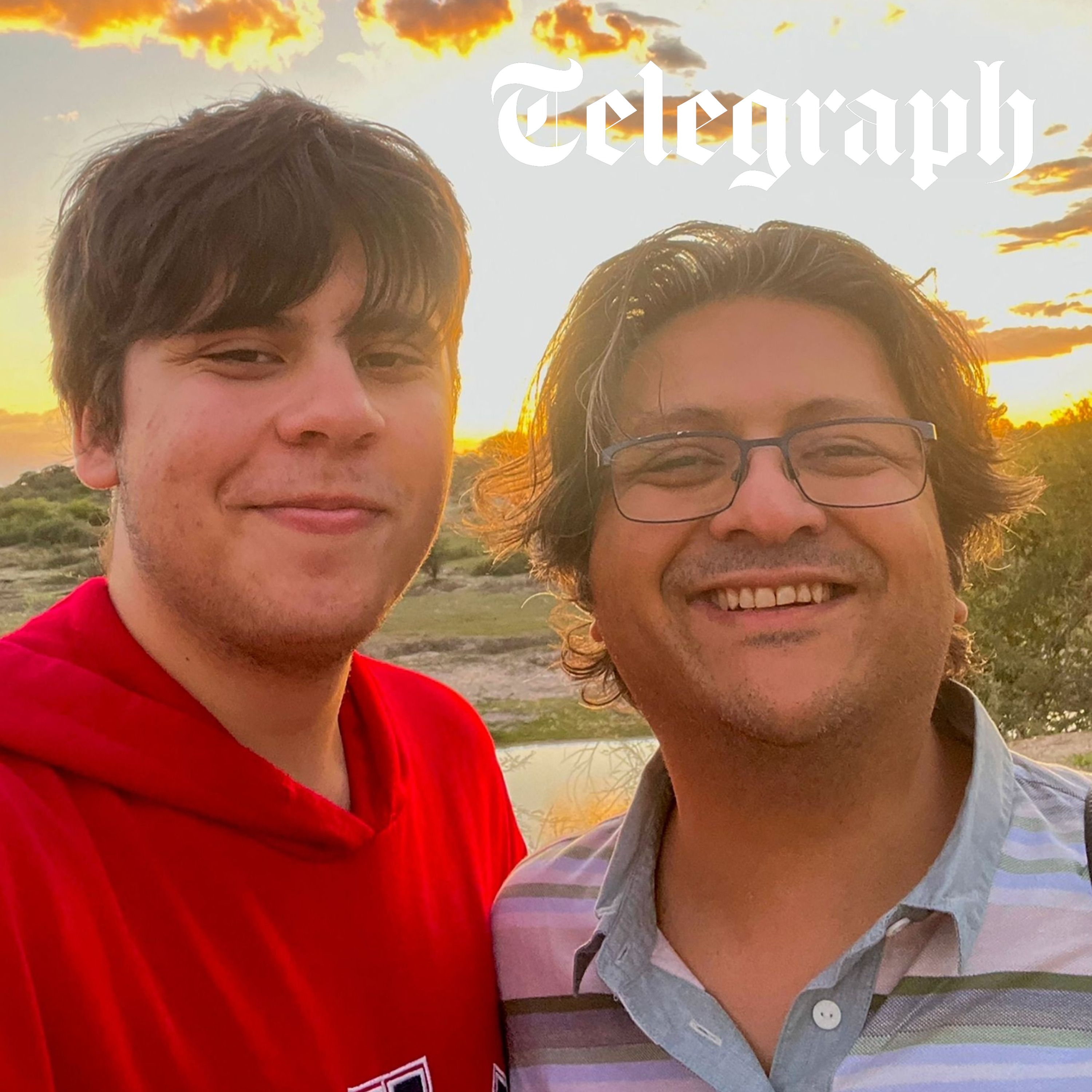
Christine Darwood, widow of Titan sub victim Shahzada Dawood and mother of Suleiman Dawood, discusses her memoir “90” and the four-day wait after the June 18, 2023 OceanGate Titan dive to the Titanic wreck went missing and was later confirmed destroyed by implosion. She argues the tragedy was preventable due to undisclosed safety risks.
Christine Darwood, German-Pakistani family member; husband Shahzada (textiles businessman, Pakistan-born) and teenage son Suleiman (Titan enthusiast, Rubik’s Cube fan) died in the disaster. Interviewers: Tim Stanley and Rachel Johnson (Daily Tea hosts).
OceanGate’s marketing and due diligence led them to believe the craft was safe; she says she “could have not known” because critical safety information was hidden. She avoids blaming individuals, but says her trust was “broken.” She describes hope lasting 96 hours, then relief when oxygen concerns were confirmed.
the family’s decision process after seeing OceanGate ads during lockdown; Suleiman’s desire to share time with his father; media focus on “five rich people” versus other global tragedies; plans for a trauma/grief healing center and a human heritage foundation.
Written by AI. May contain mistakes.
Discover the events leading to the Titan sub disaster and its aftermath.
“In the summer of 2023, Christine Darwood and her family, including her husband, Shahzada, and her teenage son, Suleiman, travelled to the North Atlantic to take part in a dive to visit the wreck of the Titanic.”
Understand the dynamics of Christine's family and her son's character.
“who has kindly come here to talk about her new book and to give her perspective on what happened over four agonising days as the world waited to see if these people were still alive.”
Explore the factors that led to the family choosing to dive to the Titanic wreck.
“Shehzada was also a very much a family person was a little bit more reserved he like he preferred like smaller groups more meaningful conversations like big parties weren't his thing.”
Learn about the family's expectations for safety and excitement during the dive.
“Yeah, but we didn't know that at that time.”
Christine reflects on misplaced trust in the expedition's safety promises.
“He just wanted to have that time with his dad because, I don't know, like he just wanted that experience to have with his dad.”
Christine describes the harrowing four days of waiting and the search efforts.
“Because you never blame anyone in the book?”
Christine shares her impressions of Stockton Rush, CEO of OceanGate.
“So for me, the distances and the length of time everything took was just very frustrating and also like very, I didn't know how to deal with that because, so it's what, how many miles out?”
Exploration of the emotional turmoil during the Titan sub incident.
“The book is very much about hope and how painful hope is.”
Discussion on the intense media scrutiny following the tragedy.
“So I also said, like, we got the confirmation of...”
Insights on dealing with the media's focus on personal tragedy.
“News organizations were following it minute by minute, if not second by second.”
A deep reflection on suffering and media narratives.
“this needs to get done in order to protect ourselves and protect our two boys.”
Explore the disparity in media coverage of tragedies based on cultural narratives.
“And I'm afraid I think it's partly because people think that's just what happens in the Middle East to people like that.”
Learn about Suleiman's passion for the Rubik's Cube and his aspirations.
“I'm sorry to bring it up, but he intended to actually do it when they reached the Titanic so he could hit a world record.”
Understand the complex feelings surrounding loss and the mother's reflections.
“Can I just ask one probably final question from me, which I hope isn't too intrusive, but how do you feel about the fact that Suleiman went and you didn't and that was how it ended?”
Discover the plans for a healing center aimed at supporting those in grief.
“Christine, I think you're remarkably well composed given what you've been through and I can see that there must be a great enough psychic effort that goes into doing that.”
Examine the lack of terminology for certain types of loss and the concept of empathy.
“that people need a safe haven to go where they can heal.”

Get the gist, explore an idea or ask about something said.
 Claude
On The Daily T, what are the key points of this episode?
Searching your listeningAutomatic transcript. May contain errors.
0:02The Telegraph.
0:30And we give you the platform to do it all yourself. Browse thousands of popular podcasts, choose the shows that match your perfect audience, set your budget and launch. And if you want a hand, our podcast specialists are there to help you launch with confidence. This is podcast advertising without barriers. Get started at Acast.com slash advertise.
0:58us. Christine Darwood, who lost her husband Shehzada and her son Suleiman in the Titan sub disaster, has released her memoir. In this Daily Tea special, we'll look at the agonising decision that led her to step back and to give her seat on the Titan sub to her son Suleiman, and how her family held on to hope for 96 hours whilst aboard the support vessel. Welcome to The Daily Tea with me, Tim Stanley. And me, Rachel Johnson.
1:36In the summer of 2023, Christine Darwood and her family, including her husband, Shahzada, and her teenage son, Suleiman, travelled to the North Atlantic to take part in a dive to visit the wreck of the Titanic. A five-man crew on June the 18th, 2023, dived at 9.04 a.m. local time. This included Shehzada and Suleiman. Contact was lost with the vessel at 10.47. They were expected to resurface at 3 p.m., and they never did, and they were officially declared to be missing at 7pm. We now know that the vessel was destroyed by a sudden implosion because of a problem with the structure. We are now joined by Christine Darwood, who has kindly come here to talk about her new book and to give her perspective on what happened over four agonising days as the world waited to see if these people were still alive.
2:42and I'd like to begin by asking you to tell us something about your husband and your son what kind of people were they?
2:51Suleiman was an old soul he was I think very wise for his age and he was very loving like he never was embarrassed if I would hug him even like in his young teenage years right if I would go to school he would never mind me hugging him I actually asked him once I was like dude are you sure I can hug you you know like because if you look at other till most of the children don't want their parents anyway no no he wanted that so he was very loving and we had a very um good relationship um with their ups and downs you know like anybody who has a teenager at home will know that it is quite a interesting relationship with teenagers but he was very loving and very he was very family oriented he he loved his family around he was he loved people around like he was in that way very extroverted like he would get his energy from people.
3:47Shehzada was also a very much a family person was a little bit more reserved he like he preferred like smaller groups more meaningful conversations like big parties weren't his thing. So he was, yeah, family always first, that for sure. Your husband was from Pakistan. Yes. And how did you two meet? In university in Germany. And you are German? Yes, I am. And what did he do? He did his textiles master's and I did my undergrad in textile technology. Okay. So he was a businessman working in textiles. Yes. I think everyone will be fascinated to know the kind of succession of events that led to you as a family going out, joining Ocean Gates expedition to go see the wreck of the Titanic miles below the surface of the sea.
4:42and how it was that you got into that place, you took the decision to enter this submersible, which was pretty experimental. It hadn't been classed as safe to do the dives and so on. Yeah, but we didn't know that at that time. That's critically important. And so just tell us the excitement of the journey when you decided you were going to do this extraordinary trip as a family. So where would you like me to start? Well, I know it started when you saw an ad on your screen to say, you know, visit the Titanic. So Ocean Gate put like these ads out and I got it during lockdown. I got one of those ads and it looked very fantastical, to be honest.
5:26And I asked my travel agent if that is even true. And well, they confirmed then that this is actually possible because I first thought it's a prank because like who can dive down? I mean, I knew how deep down the Titanic is. And then from there, Shazada was very fascinated and wanted to try it. And, well, all the brochures and all the due diligence we did was all that this is all a very serious and very safe journey to take. They said it was more safe than going in a helicopter, you write in the book. And how was it that in the end Shahzada and Suleiman went, not you and your husband? Because Suleiman wanted to.
6:18He just wanted to have that time with his dad because, I don't know, like he just wanted that experience to have with his dad. And he was obsessed with the Titanic, wasn't he? But he wasn't obsessed. No, he wasn't obsessed. No, that would overstate it. I mean, he was fascinated by it because we saw the, in Singapore, we saw the, the Millennium show they had, that exhibition where all the, you know, they had like these original dresses and original, all the things they, they brought up from the wreck and everything. So it was a beautifully done, beautifully done exhibition. Like you really felt like you're going into the ship.
6:58I don't know if you have ever been, have you seen it? No, no. And it was like, it impressed me as an adult. But I think for a child, it was even more like impressive to see that well done exhibition. And, you know, you even got a ticket from the Titanic. And so from there on, he was just like, it was a really interesting story for him or like an interesting event. And so he wasn't obsessed. Okay. So you did also. How much was the dive itself part of the appeal? or was it about seeing the Titanic? It was about the Titanic. It was about the Titanic. It was about the Titanic. But this kind of extreme travel, is this something your family had done before?
7:40Well, we are the glampers of explorers. Like we need running water. We need a bed. So no, like we weren't. No, no, we're not. Right. So this was like really out of our comfort zone. Let's put it this way. Right. Because other people who did go on the trip were seasoned explorers. Yes. And we were certainly not one of them. And they said, they made it very exciting. You're the first family who's going to do this expedition. Was there any training for? No, nothing. No. Because we've just seen, obviously, the Artemis, the four astronauts who are going to orbit the moon launch late last night. Yes.
8:22And as you point out, you were told, you know, what you're doing is more kind of extreme and rare than going to the moon. 600 people have gone into orbit and only 250 people have seen the wreck of the Titanic. So you were made to feel that this was the most exceptional journey you could have taken as a family. How do you feel about that now?
8:49Well, if it would have gone differently, it would have been quite a story to tell. But do you feel that the excitement was sold more than the risks were explained? Absolutely. Absolutely. We did our research and nothing came up. And also, I don't know if you have access to the files of the U.S. Coast Guard investigation. It's also that that's the first thing the lead of the investigation said to me. he says you could have not known right like that was very important for him to tell me he's like I really want you to know and I want you to listen to me like he made sure I listened and he's like you could have not known because they hid so much right that was you've written the book very much it's your emotional journey from and it's interwoven of course with your your history of your relationship with Shazada and I do recommend the book to everyone listening it's called 90 because that is the amount of time that those in the submersible had for survival, 96 hours.
10:0296 hours of oxygen. It's a book written without any rancour or judgment, which I thought was remarkable. Looking back now, as Tim has asked you, you didn't know an awful lot about that expedition. You wouldn't have taken it had you known. Who do you now blame for what happened? I'm not blaming anybody. because that's not healthy for me. Because you never blame anyone in the book? No. And that's very, very deliberate. But what didn't you know that you should have known, that they should have told you? Well, that it wasn't safe. In principle, or that this particular craft wasn't safe? This particular craft, yeah, and in principle.
10:46I mean, in principle, obviously, you do have an idea of the risk. It's just like, you know, if you do bungee jumping or whatever, you're aware of the risks, but you do trust. So I think it's what really gets me. It's like that my trust was misplaced and that, yeah, that my trust was just broken. because whatever we travelled before, right, you do put, even if you go on a safari, right, I mean, you do put trust in that driver of that car that he knows how to react in a crisis situation. You do trust. And, yeah. Can you describe a bit the four days when you felt that the time was running out and even though there was this extraordinary rescue effort that came from the US Coast Guard, it came, search and rescue vessels, ROVs, you know, all the acronyms, everyone flooded to the scene.
11:54And how it felt to be on the support vessel, knowing that the hours were passing and there was still no news. Well, so I'm not a marine person. So for me, the distances and the length of time everything took was just very frustrating and also like very, I didn't know how to deal with that because, so it's what, how many miles out? So on land, if we could have put a RV on a truck, it could have been there a lot faster than on a ship. That's just how things work and the distances, right? And even planes, I mean, how could they have landed? There's nothing to land. And so it's just that kind of complete isolation.
12:48There was nothing but water, like no other landmark, nothing. Like, obviously, we're in the middle of the ocean. That was just quite a new and frightening experience. The CEO of OceanGate, Stockton Rush, went with the submersible when it went down. Yes. What was he like in person? Did he sort of radiate confidence?
13:22From a British perspective, I think he was just very typical American.
13:29I think that says it all. Brash, self-confident? No, like self-confident. Like there's something about... Reassuringly self-confident.
13:43well, I call it cocky, but he was just that type of person who just was really, really confident in himself and thought that he knew everything there is to know about some merciful travel.
14:27Mm-hmm. and your technology. We believe better, simpler healthcare is always possible. That's healthy optimism. That's Optum. Visit Optum.com to learn more. Hey, Prime members. You can listen to this show ad-free on Amazon Music. Download the Amazon Music app today. Here's a tip for you. There's a podcast out there with fans waiting to be your next customer. They tune in every week. They trust the host. And that host wants to talk about brands like yours in their own words to their audience. The problem is you just haven't been introduced yet. We're Acast, where that introduction happens. As the world's largest podcast marketplace, we let you browse shows, see who's listening, and book host-read sponsorships or run your own ads all from one platform.
15:20Transparent pricing, real-time data, complete control. Start advertising on podcasts by visiting acast.com slash advertise.
15:38The book is very much about hope and how painful hope is. And then the moment when you realize there is no hope. And it's interesting to me now, when the Coast Guard knows more about what happened and the world knows more, that actually the catastrophic accident happened an hour and a half into the dive, didn't it? and they heard a bang. And I don't know whether the bang was the moment that the Titan sub imploded and that was when all hope was effectively lost. But hope was strung out for four days. And you've got a wonderful passage in the book where in a way there's a moment of relief because you know you can stop worrying about the suffering of your husband and your son.
16:36it must have come as a terrible relief though yeah I mean that that was that was the real kind of difficulty right that imagining that a they're running out of of oxygen be them knowing that they are and then also like everything is dark i mean there's no natural light down there right so um and i'm sure like at that point they would have literally switched off everything they could in order to preserve right um so sitting in the dark knowing that you're running out of oxygen that you're slowly suffocating. That was so hard. And also then the consequences, right? Because everything took so long.
17:31So I also said, like, we got the confirmation of... So the last, the 6 ,000 ROV went down, like, just about the 96-hour mark, right? So by that time, if they would have been still there, coming up would have taken also like, so they would have run out of oxygen while they would be rescued, right? And imagining that, like, if they would have come up, suffocated, I think that would have been a very different pain. Do you now regard it as a preventable tragedy rather than a catastrophic accident? Well, now people are aware of it, that these things, you know, should not be done. But at that point, I didn't know.
18:30Has there been any conclusion about what precisely went wrong? Well, you can read the report from the, it's like a 200-page report from the US Coast Guard. But I mean, can we pinpoint an error or a technical fault or just it should never have gone down? No, they do. They do. But as I said, I stay away from that because it's not good for my mental health. So if you would like to know, you would need to read the report. Of course. Sorry. Christine, I mean, the book is an agonizing read, but it's nothing as to the agony that you and your daughter who you were with on the support vessel experienced during those four days.
19:13But then the agony was sort of prolonged because this was an international media storm that surrounded what happened to the Titan. News organizations were following it minute by minute, if not second by second. And when you came off, when you reached shore, you had to deal with the media. I cannot imagine what that was like. You did a big sit down interview. And of course, you then must have become aware of some of the media coverage, which was not necessarily entirely sympathetic towards the expedition. Do you want to tell us something about that? Well, you read in the book on which day I arrived, right?
19:57So it was my birthday. That wasn't fun.
20:03So in a way, it was like a bubble on that ship, right? I mean, on one hand, we were really isolated, which was not ideal. But on the other hand, it also protected us, right? Because nobody could get to us. nobody could talk to us apart from all these rescue ships. And then coming on shore and then, have you heard about sea legs? Yes, of course. I've had them. You had them? Yeah. So you come down the ship and then I had a really bad case of sea legs. And so you are emotionally unstable. Then your body is also unstable. And then everything, everybody just wants something from you at that point. So it is so utterly overwhelming because it's just.
21:02Yeah, I was never trained for something like that. Right. I mean. And you were I think your brother in law persuaded you to do this interview to try and, you know, to kind of keep the ravening wolves of the media at bay. How unfair do you think the media coverage of the expedition was?
21:24I think that's a very philosophical question on media coverage in general, right? I mean, it's... They focused on how much it cost to do the trip. They focused on the sort of foolhardiness of the mission in itself. They focused on the credentials and the bona fides of Ocean Gate. I mean, there seemed to be there was not much good to say about the whole expedition. Well, you know, it's very easy to sit on the sofa and be that sofa expert. And, you know, no, it's just like sitting on the sofa and knowing all the answer for a show. But when you're in that situation, it's different, right? I didn't read much because I felt it not healthy for me.
22:15I stayed away from the media as much as I could because it just, I, well, from my profession, I know that it's not healthy. But also personally, I felt that reading that is just like it drags me even further down than I already was. And it hurts. But in another way, you can also separate it. I mean, haters will be haters, right? And I'm like, they didn't know them. They didn't know me. They didn't know the situation. And we tried. So my brother-in-law didn't pursue me. He just asked me because he obviously wanted to protect us. He wanted to protect me. He wanted to protect my daughter. And it was in that point, it just needed to be done.
23:04and because he and Sabrina, my sister-in-law, they both were basically on shore and they just tried, like you said before, if you're in crisis mode, you get into that needs to be done kind of mindset and that's where they were, right? So they are just calling people, they are just getting things done. And that was just another item on the, this needs to get done in order to protect ourselves and protect our two boys. Some people drew a comparison to a vessel that sank a fishing boat in the same week, going from Libya to Italy with hundreds of migrants on. And they said, why is the world's attention focused on what's happening in the North Atlantic rather than what's happening in the Mediterranean?
23:52I mean, I think the answer to that is because what was happening in the North Atlantic was a very personal human drama. and because there was an element of hope to it, falsely placed, it tragically turned out that we were watching it because we were desperately hoping that the people might somehow, against all the odds, be taken out of the ocean. I think that's why the world was so focused upon it. But, I mean, how do you feel about that point, about the different attention placed on different people? It's awful. First of all, I would have wished that they get the attention and not us, first of all because a lot more help could have sent be sent to them and a lot quicker because their distances would have like it could have really made a difference to those people if if help would have arrived earlier for them and i
24:45as i said this is a philosophical question about the power of media and and the narrative media can drive um again it's also not i was the last person who had any influence over that i was a single person hoping for my loved ones to come back i didn't drive that narrative and yet people would blame kind of me for that and i'm like literally like zero control over that yes and and on the top i switched even off my phone so it's as i said this is a deeper question and i wish that people who there are so many people who are suffering and we just put a blind eye to it and i think that says a lot more about our society which media is a part of right a story was being told about you.
25:47It wasn't your story. It's the one that other people were telling you and you weren't even aware it was being told because you were focused on your family. I was focused on getting them up, yes. You've been through so much. I just can't imagine after what you went through then to be the centre of a kind of media kind of bashing about the fact that so much attention had been placed by the media on five rich people as opposed to 800 poor people. You know, I mean, as if you had any part to play in that. And that really saddens me because, and it's still happening, right? I mean, certain refugees are better than others.
26:33Skin colour does make a difference. And it's really, really sad because, like, people tell me, you have been through a lot, but what about all these people now in the war zones, they are suffering. There are families who are eradicated, where there's a single surviving person of a family of 20. Like my suffering is nothing in comparison to that. Extraordinary thing to say. You lost half your family. I lost half my family. And yet I am surrounded by love and by support and I can still find pockets of, like I can still be grateful for what I have. I can still I'm I'm so proud of of my daughter and I'm so so incredibly thankful to the family and my friends and for the also professional help I had what do what do those people in the war zones have nothing and and that that really saddens me because it's like I want to help them well I will help them but because that's my next step but it's like why did I get that attention why why am I in that position now that I have a voice now I wrote the book now now I have a voice why do I have a voice and and not that woman who lost three of her sons in in a bomb blast why do I get that attention and not that woman because the suffering is the same you're losing a child right because that is like just an unbearable pain.
28:02I couldn't agree with you more. And I'm afraid I think it's partly because people think that's just what happens in the Middle East to people like that. And I think one reason why... Not just Middle East. Look at Africa. There's not only one war going on, right? I just think Europeans are totally immune to it. And they just think, well, that's what those people do to each other. And they focus on the tragedy in the North Atlantic in part because it's unusual and it involves Europeans. But it involves very rich Europeans doing something very experimental, daring, that had only been done a couple of hundred times before.
28:36I mean, it had everything as a story. Well, I understand that it was a very juicy story for the press. I do understand that. And I also understand why we got more coverage. I mean, I do understand, but I hate it. And I think it's not right. but there's nothing I can do about it. Your son Suleiman was a fan of the Rubik's Cube, am I correct? Fan is a bit of an understatement. Oh, really? Oh, yes. He was obsessed with the Rubik's Cube. Yeah, yeah, yeah. There he was obsessed. He was obsessed with his Rubik's Cube. And am I right? I'm sorry to bring it up, but he intended to actually do it when they reached the Titanic so he could hit a world record.
29:21In depth, the depth of doing the Rubik's Cube. Yes, solve the Rubik's Cube. I wish someone could explain to me how you do the Rubik's Cube. I just can't. Aside from peeling off the stickers. Oh, yeah, well, yeah. So I tried it once and Sullivan got really upset with me. And he's like, mother, you have to do it properly. And he tried to teach me, but like, no, no. But am I right that you subsequently tried to do it yourself? That's a bit of a, not yet. Right. Okay. Not yet. Not quite ready yet. Right. But I will. I promised him I will learn it, but I'm not quite there yet. Can I just ask one probably final question from me, which I hope isn't too intrusive, but how do you feel about the fact that Suleiman went and you didn't and that was how it ended?
30:25There is no answer. Because originally, am I correct that the ticket was yours? Yes, it was. And you took it instead?
30:38The only way I can explain, well, there is, I don't know. I think certain questions just cannot be answered for sure. but I think I've made an attempt because he was an emergency baby. He was an emergency C-section and we almost lost him. I think without modern medicine I would have not had him. So he was a gift from the beginning and I guess our time of enjoying that gift just had run out but I don't know, that's just an attempt but there's nothing I can say. Christine, I think you're remarkably well composed given what you've been through and I can see that there must be a great enough psychic effort that goes into doing that.
31:35What do you practically want to do in the future? Do you have a plan for something to do? So I opened up, I registered now a foundation the Soleimani Chazada Foundation for Human Heritage, Protection of Human Heritage. But the bigger project for me is now I'm creating a healing center for trauma, loss and grief to help people. Like when I was in my darkest phase, I needed a safe haven and I couldn't find that in the UK. and so if I can't find something then I have to make it. So I'm creating that for other people and we're in the process of it. I'm sure it will be a huge success. If you build it, they will come.
32:32Well, I think it's needed. It's not about if I want it or if I think it's needed because we all experience loss and we all have our traumas. It doesn't have to be big traumas, but we all experience traumas. And I think it's absolutely essential that people need a safe haven to go where they can heal. And it's extraordinary to meet you after reading the book, to be inside your head during those terrible, terrible days. And you were brilliant about keeping records. You have lost somebody, haven't you? Of course, yeah. But you're right. Everybody has lost somebody. And also I have three children.
33:15So I was with you. Yeah. That's a different kind of loss. Yeah. And you say, you know, there's no word, there's no actual word in the English language to describe a parent who's lost a child. No, no, no. Isn't that odd? There's a widow, there's a widower. Oh, that's interesting. There's an orphan. Yeah. And also not for a sibling. If you lose a sibling, there's also no word for it. Yeah. I wonder if in German, are there the words in German? No. Like I did research on it, and I think there's only one African native language that has it. But otherwise, no, there's no word for it. We need those words.
33:57I don't know, do we? That's the question. I don't know if we do because I don't know. I don't want to describe it. I don't. Like usually if something is not in a language, is something the community doesn't experience, right? You also know that the word empathy is from German, right? So until 1920... No, it's from the Greek, pathos, meaning suffering. But until 1920, the word empathy was not in the English language. So when Carl Jung and... What's the other one? Freud. Freud, when they did their research, when they translated it, then they had to find a word for it for empathy and that's how empathy came into the English language That's fascinating I think it is So I don't know if that means that English people weren't empathetic before Yes it probably does Word not needed Christine Talbot, thank you very very much Thank you
35:21We'll be right back.
35:35base with select mattress purchases. With 0 % interest financing and free delivery available, getting better sleep has never been easier. And with our exclusive lifetime price guarantee, you'll always know you got the best deal. Save big today at Mattress Warehouse. We're more than a mattress store. We're Mattress Warehouse. Quick question. When was the last time a display ad changed your mind? Now think about the last time a friend told you about something they loved. Different feeling, right? That's how podcast advertising works. A host who's built real trust with their audience talks about your brand in their own words, in their own voice.
36:10It doesn't interrupt the experience. It's part of it. With Acast, you can access the world's largest podcast marketplace. Choose the right shows, the right audiences, the right format. Then watch the data tell you it worked. You're not buying impressions. You're buying influence. Learn more by visiting acast.com slash advertise.
In June 2023, the Titan submersible disaster saw a deep-sea sub vanish during a dive to the Titanic wreck, triggering a global search before it was confirmed the vessel had catastrophically imploded.
In this Daily T special, Tim Stanley and Rachel Johnson speak to Christine Dawood, who lost her husband Shahzada and her son Suleman in the disaster.
In her memoir Ninety-Six Hours, she recounts the agonising wait aboard the support vessel as the search unfolded above the wreck of the RMS Titanic sinking, and reveals the heartbreaking decision that led her to give up her own seat on the submersible to her son, who had dreamed of making the dive.
We want to hear from you! Email us at [email protected] or find @dailytpodcast on TikTok, Instagram and X
► Sign up to our most popular newsletter, From the Editor. Look forward to receiving free-thinking comment and the day's biggest stories, every morning. telegraph.co.uk/fromtheeditor
Producers: Georgia Coan and Lilian Fawcett
Senior Producer: John Cadigan
Executive Producer: Charlotte Seligman
Video Producer: Will Walters
Studio Director: Meghan Searle
Editor: Camilla Tominey
Highlights
Hosted on Acast. See acast.com/privacy for more information.


