
 Ask ChatGPT


 The Daily T
22 Sep 2025 · 36m · 20 chapters
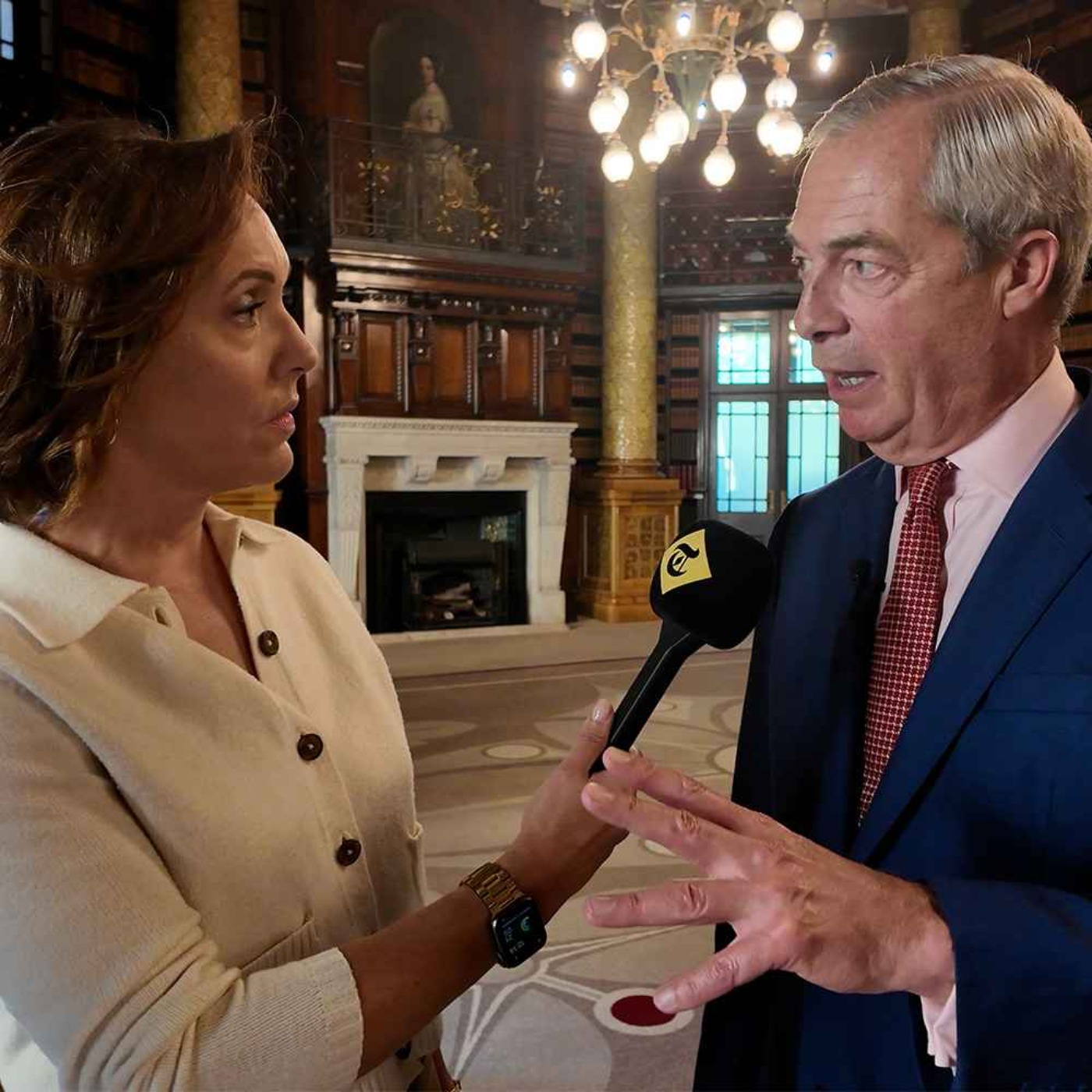
Reform UK’s plan for “deportations”/removal of legal migrants with indefinite leave to remain (ILR), plus debate over whether the policy is evidence-based and compatible with “Christian” and “family” values. The episode also covers Liberal Democrats’ conference messaging and Ed Davey’s perceived seriousness/identity crisis.
Nigel Farage (Reform leader; former UKIP/Brexit-era figure; argues mass migration makes Britain poorer and that “huge numbers…don’t work”; cites Centre for Policy Studies figures later disowned) and Danny Kruger (new Reform MP, defected from Conservatives; frames policy as “fair and compassionate,” says Conservatives’ points system was too lax).
ILR holders must reapply every five years with higher salary and English requirements; wait seven years for passport; prove good character/clean record; ban those outside UK or claiming benefits over 90 days. Farage claims £234bn lifetime savings (CPS disowned). He argues work visas shouldn’t become family-settlement routes; “normal countries” don’t allow family to live off the state.
“Boris wave” (2019 and subsequent migration); comparisons to Labour tightening asylum family rules; parallels to Trump’s income-threshold approach; discussion of Hong Kongers, Ukrainians, and long-settled pensioners potentially affected.
Written by AI. May contain mistakes.
Discussion about Nigel Farage's new plan to deport migrants with indefinite leave to remain.
“It looks like you're facing a firing squad.”
Examination of the migration statistics and Farage's claims about benefit claimants.
“The 800 ,000 people that will get indefinite leave to remain unless this policy is revoked tend to be young, tend to be low-skilled.”
Exploration of proposed changes to the visa application process for migrants.
“the very people he needs to support him to become prime minister?”
Discussion surrounding the implications of work visas and family migration policies.
“And frankly, all we're doing is what a normal country would do.”
Analysis of how Reform's policies compare with those of Labour and other parties.
“which suggests to me this isn't just reformed dog whistling.”
Discussion on how proposed policies affect businesses and their operations.
“And one might argue, as I would, that if you're someone fleeing persecution, of course you want your wife to join you.”
Farage addresses concerns over British workers and low-paid jobs.
“It's one which some people see as unfair and unjust.”
Discussion on the sustainability of current immigration models and future economic needs.
“But I would notice that the Lib Dems opened their conference by Tim Farron making love to a union flag and by Ed Davies saying, stop the boats coming across the channel.”
Explore the challenges of labor shortages and the need for sustainable solutions in the economy.
“Part of the point of the Boris wave was that post-COVID there was this fear there would be no fruit pickers, that many industries in this country would simply collapse.”
Analyzing the political ramifications of deportation policies affecting various communities.
“Having said that, to go back to the politics of this thing, the talk of deportations touches upon certain groups that are politically very safe, where we might ask ourselves, are we comfortable with where this is going?”
Danny Kruger shares insights on the proposed reforms to immigration and legal migration.
“You know, Nigel Farage has been very keen to weave into his messages an element of Christian identity.”
A discussion on the fairness of proposed migration policies and their impact on families.
“which undermines the wages and the welfare of the British people.”
Danny Kruger reflects on his defection from the Conservatives and its implications.
“So, no, I'm afraid to say, and why we're saying this very clearly now is to give people a lot of warning about what's coming.”
Exploring listener feedback on the challenges faced by high-earning immigrants in the UK.
“Before we get on to the Lib Dem Fest, Tim, I think this is quite interesting, this email, in reaction to what we've heard this morning from a regular listener to The Daily Tea.”
A critical comparison of immigration policies between the UAE and the UK’s Reform Party.
“Just to pick up on what that email said, Nigel Farage compared reform's policy to the immigration policy of the UAE.”
Discussing the Lib Dems' identity crisis amidst rising political challenges and strategies.
“But the Lib Dem conference is huge on TAT.”
Discussion on Ed Davey's public image and strategic approach as a Liberal Democrat leader.
“But this is becoming a bit silly now, because marching on conference, he's been using strange memes online, you know, So SpongeBob SquarePants one minute, mean girls the next.”
Exploration of the identity crisis within the Liberal Democrats, focusing on their stance on key issues.
“But one YouGov poll found that only 37 % of respondents knew who he was.”
Debate on the gender identity issue within the Liberal Democrats and its implications for liberal values.
“There's a lot of pro-Palestinian lanyards.”
Discussion on the definition of freedom within classical liberalism and its current application.
“This ambiguity is strange to most people.”

Get the gist, explore an idea or ask about something said.
 Claude
On The Daily T, what are the key points of this episode?
Searching your listeningAutomatic transcript. May contain errors.
0:03Camilla: The Telegraph.
0:09Camilla: Nigel Farage has today unveiled Reform's controversial plan to deport hundreds of thousands of legal migrants. We're going to give you all of the details and speak to Nigel Farage himself and that new Reform MP, once a Conservative, Danny Kruger. And Tim Stanley is in Bournemouth at the Liberal Democrat conference, so I don't have to be. And we're going to be discussing whether Ed Davey is becoming too much of a clown to represent a serious political movement. Welcome to The Daily Tea with me, Camilla Tomini. And me, Tim Stanley.
0:52Camilla: Tim, we're separated. You are standing against a brick wall. It looks like you're facing a firing squad. You're at the Lib Dem conference in Bournemouth. Just tell me where you are exactly. What's happening here? Fortunately, the Lib Dems, they're certain about anything as the rejection of Ryanair, so I'm not going to get shot. But I am in what I believe is a skating rink at the Bournemouth conference centre, which is where the media is based. There is a room put aside for broadcast, but it has no internet. So instead, I am literally sitting on the floor. Right. We'll get on to Ed Davey in just a moment.
1:27Camilla: Let's discuss this reform press conference that I was obviously at. You weren't because you're on the south coast. Farage has unveiled new plans to force all migrants with indefinite leave to remain, that's ILR, to reapply for visas under stricter criteria, including a higher salary requirement and a better standard of English. He says this is going to happen within 100 days of a potential reform government. He's also going to change the law to prevent foreign nationals from accessing the British welfare system and free NHS services. He claims it's going to save 234 billion over the lifetime of the average migrant.
2:06Camilla: And he's based that on Centre for Policy Studies data. But that think tank, also known as the CPS, has disowned that figure. So as is ever the case, Tim, the ideas are there. the rhetoric is there, but is it actually backed up by proper thought through figures? OK, so let's listen to how Nigel Farage justified this policy. We are not the world's food bank. It is not for us to provide welfare for people coming in from all over the world. The 800 ,000 people that will get indefinite leave to remain unless this policy is revoked tend to be young, tend to be low-skilled. They are going to be a huge burden on the state.
2:49And yes, of course, there's been debate in the newspapers this morning about those already here with indefinite leave to remain. And we just don't know. We don't know because the figures aren't available just how many of those are currently claiming benefits. What we do know is that one in six claimants of universal credit alone today, one in six is a foreign-born national.
3:17Camilla: And he did seek to insist that this was all Boris Johnson's fault. In particular, what we're focusing on this morning is the Boris wave. The Boris wave, after his huge victory in 2019, and I think the millions that came in the years of his premiership, represents the greatest betrayal of democratic wishes, certainly in anyone's living memory. This is not what Brexit voters wanted, and it's certainly not what any Conservative voter wanted from 2010 onwards, where in election after election after election they were promised that net migration would come down to tens of thousands a year, and we learn it was up to, in the worst year, a million.
4:03Although we haven't yet got the revisions. By the time they come in, it almost certainly will be over one million.
4:09Camilla: What I found interesting about this, Tim, and I spoke to Nigel Farage afterwards, is you and I have discussed this. He has moved away from Rupert Lowe and Ben Habib and others into a more moderate position. And yet isn't this policy in danger of alienating the very people he needs to support him to become prime minister? Nigel Farage, thanks for joining me on The Daily Tea. The Telegraph reaction to this, if we look at the comments, is actually quite positive. However, there are some that are saying this is populist, this isn't the kind of tolerant party that I believe reform was. Are you worried because you're talking about the Boris wave having created this?
4:43Camilla: You need the moderates who voted for Boris Johnson to vote for you next time round if you're going to be the next Prime Minister. We need them to know the truth. This has been the problem. To have an argument about illegal immigration has been relatively easy. You can see, you know, I was the first person to highlight it. You can see a dinghy crossing the channel, right? To have a proper debate about legal immigration has been so difficult because both the Labour and Conservative parties for a quarter of a century have opened the doors up in a way that we've never seen before. And the impression many of your readers perhaps have got is that everyone that comes works.
5:18So therefore, what's the problem? It's when you learn that actually huge numbers that come don't work, are a massive burden on the welfare system that you need to start rethinking things. And frankly, all we're doing is what a normal country would do. Normal countries don't say, come and work here for a little bit and bring the rest of your family. Oh, and we'll pay for them for the rest of our lives. So what we're talking about here is plain common sense.
5:40Camilla: So to put a bit more beat on the bones of this, Tim, these plans would mean that people with indefinite leave to remain would have to reapply for their visas every five years and maintain that higher salary threshold. So currently it's at£35 ,800 for skilled workers. Then they'd have to wait seven years before applying for a British passport. And they'd also have to prove that they're fluent in English, that they have a good character and clean criminal record and any applicant who spent more than 90 days outside the UK or claimed benefits would be banned from remaining in the country which might be a bit difficult for the odd non-dom.
6:17Camilla: I mean, do you have any sympathy with this argument that actually workers' visas have been turned into something completely different? Actually, let's just hear him answer a question on that. All over the world, you apply for a work visa, that visa is for you. Not to bring your family, it's for you. It's for a set period of time, and at the end of it you leave, or you're physically deported. That is how a normal work visa works. And we're talking about a five-year renewable visa, and there'll be those that bring great credit to themselves, to our country, who will want, in some cases, to transition to UK citizenship.
6:56Others who won't, and once the visa is up, it's up and they go. and this is the odd thing about our debate in this country is that we've just accepted that a work visa is an automatic right, route and right to immigration for you and the whole of your family from whatever part of the world it may be. That is how completely wrong-headed everything has been. I keep coming back to this is designed to win votes but it's also addressing real problems and the other parties are talking about addressing them too which suggests to me this isn't just reformed dog whistling. If you think about similar complaints with regards to other areas of immigration, that one migrant comes in and they may have a perfectly legitimate case of being here and they might contribute, but they then bring people in addition with them.
7:46And we're all left wondering why, and is this a net cost to the economy? So think back to previous controversies about that with relation to student visas, with relation to carer visas. And now, what is Labour doing with regards to asylum seekers? It is reducing their ability to bring family in, saying that if you want to bring family in, so if you're an asylum seeker, your application has been accepted, hitherto you could stop to apply to bring family members in. Labour is saying, no, they must have an income of a certain level, and they must be fluent in English, which, by the way, are rules that are copied across Europe.
8:27And that's for asylum seekers. And one might argue, as I would, that if you're someone fleeing persecution, of course you want your wife to join you. She very properly can't speak English, and she very probably doesn't have a high income. So what reform is really doing is what all the other parties are doing, which are tightening up the system so that individuals come in, yes, because we want her, but they don't come in with people who are a net cost to the exchequer. Now, the interesting debate around this is how much of a net cost are migrants? And the evidence seems to suggest a sliding scale depending upon individual migrants' income.
9:05So what are countries across the world? Well, reform is copying Donald Trump, who is talking about the income you've got to have before you come in. So what Western governments are increasingly saying is we want smaller numbers, very high skilled workers. Reformers policy is eye grabbing. Other parties will follow.
9:26Camilla: It was interesting when Zia Youssef was asked, because obviously the left now are trying to say that they don't want anyone to remain here, even if they're skilled or unskilled. And they're saying we are talking about this 800 ,000 that came in under the so-called Boris wave. We're putting this threshold in place. Zia Youssef, who's now head of policy, was saying, look, If we get a neuroscientist in and they've got 2.4 children, then they can all come. We're not talking about preventing people from coming here and seeking British citizenship. But a couple of just practical points. For instance, if one of my children wanted to go and study at an American university, under no circumstances would I expect them to be able to get me, my husband and my other two children in on the back of their student visa.
10:10Camilla: OK, second of all, if you do apply somewhere for a work visa, it is right to suggest that that just applies to you. You know, you and I have to get a special kind of visa to go over to America. I've got an iVisa now. I think it's for five years. Yeah, I can go and work in America for the next five years because I've got that visa. There's no way that all my family can come with me on the back of my one visa. I agree with you. I think this is a practical problem. It's one which some people see as unfair and unjust. And I don't mean to crowbar the Lib Dems in here just because I happen to be here, because I'm trying to justify the cost of my hotel and train ticket.
10:49But I would notice that the Lib Dems opened their conference by Tim Farron making love to a union flag and by Ed Davies saying, stop the boats coming across the channel. In other words, these issues of national identity, sovereignty, control of migration, reform might be at the cutting edge and using language that some people are uncomfortable with, like deportations, but it's where everyone's going because, as you've suggested, there are some obvious problems in the system.
11:19Camilla: Yes. The other thing that was addressed heavily during this press conference was the issue of people being on benefits, not just migrants. And Nigel Farage made quite the claim in the press conference. Let's listen to that. What we are attempting to do today is to make people realise that large scale migration into Britain, where 50 % at least of those that come will never work and live off the British state, is actually making this country substantially poorer. But of course, the other question was, do British workers want to do the low paid, low skilled jobs that foreigners do? Second of all, why would they possibly be incentivised to do that if they make more money on benefits?
12:02Camilla: And third of all, and this was a second question I put to Mr Farage, you're putting a huge burden on businesses here because you're basically saying to businesses already cash strapped. Right. You train people up. You invest in British workers if they want to do it. And by the way, don't think that you can undercut on wages by getting foreigners in. Those days are over. Isn't this a bit of a two-fingered salute? F business. You know, you're complaining about the increase to national insurance. You're complaining, understandably, Telegraph readers agree with you, on the increase to corporation tax under the Tories.
12:34Camilla: And yet at the same time, you're saying this is now business's problem to solve. Business also be saying post-cost of living crisis, not least if they run care homes, and my dad used to run one, paid above living wage, still can attract British staff, that you're actually just putting an extra burden on businesses who are already really suffering. We've just proposed the biggest welfare cuts anybody's ever talked about in the history of this country. We're talking about£230 billion of potential savings to this country. I'll repeat the point. If businesses need, whatever sector it may be, take care homes for argument's sake.
13:09if businesses absolutely need people they will get a special visa but that visa means they come for a period of time and then they leave it's as simple as that which we should never have allowed work visas to become an automatic right to living settling and bringing your family and your message
13:26Camilla: to british workers who tone their noses up at low paid jobs low paid jobs in care i think there's no doubt the result of these policies would be the salaries would rise people often pick up on the paradox that reform is staffed, packed with Thatcherites, and yet it's pitching itself to the red wall. How do you explain that? Well, one answer is because they are against no paid work. And their argument is that mass migration has helped to depress wages because there's this big surfeit of labor. So employers don't have to pay people. They don't have to upskill their workers. And Boris Johnson sort of acknowledged that with the Boris wave.
14:03Part of the point of the Boris wave was that post-COVID there was this fear there would be no fruit pickers, that many industries in this country would simply collapse. So therefore we had to let in a lot of people in order to keep the economy going. But reform says no, that model is unsustainable. The short term, yes. In the long run, no, because it means you just keep relying upon wave after wave of foreign workers rather than investing in your own people. And that actually sustains low productivity because you're not upskilling and you're not investing in automation. The last week, Donald Trump was here, signed a big tech deal with the government that's about AI.
14:41But AI, automation, these things are going to transform our economy to the point where in the future, robots will be picking the fruit. Britain needs to be developing an economy where the working class are getting well-paid, high-skilled jobs rather than going back and forward to, well, if we don't bring them foreigners, are you too lazy to do it? I think that debate will hopefully seem old-fashioned in a few years' time. Having said that, to go back to the politics of this thing, the talk of deportations touches upon certain groups that are politically very safe, where we might ask ourselves, are we comfortable with where this is going?
15:16One, and this came up at the press conference, is the fate of Hong Kongers and Ukrainians. Does this apply to them? The answer is yes. In a way, I think that's the bravest thing we did at this press conference. because there's been a sense that Ukrainians and Hong Kongs are different. Hong Kong is because of our history, Ukrainians because of the war. And him saying, no, that's going to be very controversial. And then the other thing, the other question, which is a very good one, is what happens to people who have been here a very long time? Are you talking about pensioners? Are they going to have to suddenly revisit their status?
15:49And if we're talking about that, are we talking about breaking up families? You know, Nigel Farage has been very keen to weave into his messages an element of Christian identity. This is a Christian country. Well, part of being Christian is being ignorant and stranger and wanting to support people and be kind and compassionate to people. And it's worth noting that polling indicates that Christians tend to be quite unfriendable through mass migration. But Christians who regularly go to church are much friendlier to it. So the more you're practicing Christian, the more critical you are of some of the things that form is roaring out.
16:30Camilla: Well, to kind of pivot towards the more Tory view of it, and to be fair, Farage made it about the Tories because he kept on banging on about Boris. There was a Theresa May moment. I just must point that out, Tim. The wheels fell off at one point. A sign came down as Farage was speaking, although he handled it rather more deftly than the former Prime Minister. Zia will lay out in a minute the... Oh, dear. That's not very good, is it? Well, things go wrong, hey. We'll laugh and carry on. And then I couldn't resist having a little chat, a little catch-up with Danny Kruger, fresh from his defection from the Conservatives to reform.
17:09Camilla: Danny Kruger, new Reform MP, having recently defected, good to speak to you for the first time since that happened. It's quite a bold announcement today, isn't it, on legal migration. I was standing there listening to it thinking, how does this fit in with Danny Kruger's small-c Conservative Christian values? because you're talking about possibly deporting pensioners from the country under this scheme? Listen, my values are to put the interests of the British people first and to do that in a fair and compassionate way. We're announcing today a long-term plan. We're giving people a lot of notice, including businesses, which at the moment are exploiting the opportunity to bring in cheap labour to this country, which undermines the wages and the welfare of the British people.
17:52So I think this is a fair and compassionate thing to do. is very appropriate to make it clear. Listen, we're all very conscious that we have had way too many people coming into this country over the last five years. I mean, going back decades, but particularly in recent years. If what's called the Boris wave were to come to pass, all of those people would be eligible to apply for indefinite leave to remain, to get free welfare and to be on a trap for citizenship. We are saying now, we think that is the wrong future for this country, and we are saying clearly many of those people who came into this country under that scheme will need to leave.
18:22They will want to leave because they will be denied access to the benefit system and to the future British passport. So it's going to be a voluntary programme for most people. But yes, people who are not eligible to stay here anymore, who will be here illegally under these proposals, will have to be removed.
18:39Camilla: But forgive me, I don't remember you campaigning and railing against the Boris wave when it was in the offing. Well, listen, I was very concerned, particularly about illegal migration throughout the time that we were in government. And on the legal migration, none of us, I mean, probably, to be fair, Boris himself didn't want to see the extent of the migration system we've got. But that wasn't done through legislation. What we introduced in government was the points-based system. The problem was where the Home Office and ministers from Boris down do need to be responsible for this, enabled a system that was far too wide and lax.
19:11So the points system that was introduced was far too liberal. That's the great mistake. And it wasn't until a number of years later that that became apparent. And the numbers that we've got are obvious. So I'm afraid to say ministers and the Conservative government absolutely bear responsibility for the problems we've got. But that clearly was never the intention, particularly of backbenchers like me.
19:31Camilla: All right. But then at the weekend, you wrote two really compelling pieces explaining why you had defected from the Conservatives to reform. And in that, you kept on hammering home one message. You know, this is about faith and family. You're now advocating a policy that could break families up. Listen, I'm really sorry. It's not OK to say that because people have got a family link, if they're allowed to stay in the UK indefinitely if they've arrived here on a, what is a temporary visa. So, no, I'm afraid to say, and why we're saying this very clearly now is to give people a lot of warning about what's coming.
19:59What we think is that you should only be here on a work visa if you are coming here to work. You should only be doing, you should only get the visa if the job you're going to do can't be done by a British worker if you're earning a salary that is well above the national average. Those, I think, are fair principles. It shouldn't be a route for family immigration, which is what it is at the moment. So, yes, I believe very much in families. I think the best thing for some of these more high-achieving people is to stay in the country they're from, bring their families up there, contribute to their own national wealth in their own country.
20:31They shouldn't be treating our work visa system as a route for family migration.
20:35Camilla: Final question. The Tory family that you've left behind, there's been a divorce. How have they been? Well, listen, I don't regard it as a family. I think of it more as a club. something that's very important to many of us, and I deeply regret some of the broken friendships that I've got. I hope some of those can be repaired in time to come. It's no fun, Camilla. I mean, I really do regret the sense that I've let so many good people down, people I really believe in and trust and who trusted me. But I have to put what I think is the national interest first. I don't think the Conservative Party can deliver for Conservatives, let alone for the country as a whole.
21:05So I think I've done what I think is the right thing, even though it's painful.
21:09Camilla: Would the right thing be to stand in a by-election in East Wiltshire? Try again and see if you are elected under the reform banner and not the Tories? Well, I hope to be re-elected under the reform banner at the next election. I'm not causing a by-election now because I'm not changing from the government to the opposition or vice versa. I'm going to carry on doing exactly the same job that I've done since the election, which is to stand for conservative values, to oppose the Labour government and to represent my constituents as best I can. Danny Kruger, thank you very much indeed for joining me on The Daily Tea.
21:35Thank you, Camilla.
21:36Camilla: Before we get on to the Lib Dem Fest, Tim, I think this is quite interesting, this email, in reaction to what we've heard this morning from a regular listener to The Daily Tea. He wants to remain anonymous. He is a high-skilled immigrant worker in this country, and this is what he says. It does feel like being a high-earning immigrant in the UK is just pointless. We are taxed to death by Labour and hated by the right. Will anyone stand up for the admittedly minority of high-earning immigrants? That's an interesting point, isn't it? Farage is saying, well, look, we're speaking up for you because we're talking about quality over quantity.
22:10Camilla: But that might be a little bruise that Kemi Bagnot can press upon. You know, those moderate small C conservatives that look at this policy, find it unsavoury and are thinking, do I actually want to vote for reform? Just to pick up on what that email said, Nigel Farage compared reform's policy to the immigration policy of the UAE. Do you know the percentage of the UAE that are foreign-born? Quite high, I would imagine. It's 88%. Wow. Yes, the UAE attracts high-income individuals and is very particular about who can move there, but it is pro-immigration. The policy that reform is rolling out smacks rather more of you want to turn the immigration tap off.
22:55So there's some irony in the comparison.
22:58Camilla: It's a nice link, actually, to now discussing the Liberal Democrats because actually, if you get moderate Conservatives that don't want to vote for the Tories because they just feel the party is dead, as Danny Kruger has declared, but can't stomach the idea of voting for this sort of proposal from Reform and Nigel Farage, inevitably, Tim, they're going to be looking at the yellows. This is what happens, particularly in the Blue Wall and in the South West. So what we have there, nearby to your skating rink, is a very serious political movement that some people think may form the opposition next time around because Labour and Jeremy Corbyn and Zahra Sultana and the Greens will all eat themselves and eat into each other's votes.
23:41Camilla: The Tories will die, reform will conquer, and who's left? The Liberal Democrats. So what I want to ask you coming up next is, yeah, it's a serious political movement, but the leader's a clown.
24:24Thank you.
24:36Camilla: So, Tim, what's happening in Lib Dem land? I'm at the Lib Dem conference in Bournemouth. I did not have a good night of sleep. But I... Not because it was the Lib Dem conference. There wasn't some sort of mad sex party going on next door. It's just an uncomfortable hotel. Perish the thought. But the Lib Dem conference is huge on TAT. This is the place to come to for TAT. and they have created key rings and fridge magnets of all of their MPs. And I have bought you a present. I have bought you a present. Camilla and I sit next to each other in the Telegraph and I thought it's time we get a his and her mug.
25:12So you have got Leila Moran.
25:14Camilla: Yes, love Leila. And I have got Tim Farron because he's a Tim. Oh, wonderful. Why is Tim Farron parading around there? He's yesterday's man, isn't he? What's he doing there? The Lib Dem conference is actually quite a pleasant one to cover because unlike the other two parties, they still hold them at seaside resorts. So the sun is out. The sea looks silvery. It's pleasant. The Lib Dems themselves are perfectly OK. They're motivated by either hedgehogs or Gaza. They're obsessed. They're obsessed with local democracy. It's all chat about A roads and ring roads and where they're going to put the next wind turbine.
25:52It's very hard to dislike them. And they're very friendly and they're very helpful. But this is actually a party with a bit of an identity crisis, which I think is interesting. So the party has got the largest number of MPs it's had for a very long time. The general election looked like a breakthrough. And there was one poll recently that suggested that if Labour and the Tories fall any further, then the next parliament could be a government by reform with an opposition by the Lib Dems. But the truth is, is that their gain in MPs all comes from the Tories, more or less. And their actual overall vote is stagnated.
26:34And if you look at their polling, they have for a long time now hovered at around 13 or 14 percent in the national polls. And the Green Party is just behind them. In other words, they're not actually cutting through. If they wound up as the opposition, it would be due to a statistical fluke in the way that people vote. It wouldn't be because there's enormous enthusiasm for the Lib Dems. Now, their strategy thus far to cut through has been to emphasise the personality of their leader, Ed Dain.
27:05Camilla: Oh, God. That's a mixture. Well, hang on. That's a mixture of talking about his genuinely moving personal struggles with raising his son who has special needs. So the party has really emphasised the care issue and tried to own it. But the other side of it is to turn Ed into a kind of cloud. And he opened this particular conference by heading a marching band. And this was straight out of the Ed Davey Carnival playbook. Yeah, so my husband came up to me on Saturday night and said, look at this book. And I thought, oh, who's he going to show me a video of? And then he showed me the marching. And I knew I was interviewing Wendy Chamberlain, who's a lovely lady, Lib Dem Deputy Scottish Leader the next day.
27:50Camilla: And I thought, this is a serious political movement, or at least it's purporting to be a serious political movement. We get the japes and the hijinks of the general election campaign because it was literally just an attempt to get some publicity. Hello, we're over here. Look at Ed Davey, he's on a zip wire. But this is becoming a bit silly now, because marching on conference, he's been using strange memes online, you know, So SpongeBob SquarePants one minute, mean girls the next. And I get this whole shtick of, well, you don't take yourself seriously, but you take the work seriously. And I totally agree with you on the issue of care and social care.
28:28Camilla: He's a completely credible voice on it, not just because of John, his son, but also because of his late mother, who he nursed throughout the later stages of his childhood. So we get all that. But this is now becoming a massive distraction technique. and the whole thing just lacks seriousness. And if you really are going to try and appeal to the blue wallers who are disenfranchised from the Tories and think the reform is a bit much, you know, those people, OK, they want the Lib Dems to get the bins out, but they want Ed Day to be somebody who can represent them on the international stage. This is a man who has petulantly snubbed President Trump last week, made no impact at all on the debate.
29:07Camilla: I feel he's looking a bit ridiculous. And Camilla, the key thing is it's not working. The strategy would be justified if Ed Davey were a recognizable figure. But one YouGov poll found that only 37 % of respondents knew who he was. So when he does these stunts, we in the media and the public who follow this go, oh, I can't believe he did that. That's so ridiculous. Actually, most people just pay no attention to it or haven't connected his antics to his name. The other problem they have is one of, as I say, definition. What is this party really for? They are the liberal Democrats. Are they not supposed to be liberal?
29:45Well, that's starting to blur a bit. So recently they have signaled that they're open to the idea of digital ID cards. Now, they're arguing that this is not the same as the paper ones that we were talking about in the 2000s. Everyone uses digital ID now, so they could actually be a good thing. Okay, but it just doesn't sound very liberal. I attended a speech this morning in which they argued for having health warnings on apps for kids. Again, not a bad idea. It doesn't sound particularly liberal.
30:15Camilla: No. And when it comes to Labour and the Tories, they're walking this very narrow tightrope, right? On the one hand, almost all of their target seats are in Tory-held areas. In other words, the handful of Tories that are still left are what the Lib Dems regard as their low-hanging fruit. So they're competing in the blue wall. And that's why they're doing things like Tim Farron wrapping himself in the flag and Ed Davey saying we need to reduce the boats. On the other hand, they know that their only hope of power is to enter a coalition agreement with the Labour Party after the next election. And for that reason, Ed Davey has really toned down his rhetoric against Labour.
30:57that. So that looks kind of cynical. Perhaps the issue which defines the liberal Democrat identity crisis is the trans issue. We're actually pretty united on Gaza. There's a lot of pro-Palestinian lanyards. There's quite a few trans lanyards. And here in the convention hall, the kind of pro-trans stand has been put comically next to the Lib Dem Christian stand. And there are sort of two old Christian ladies sort of eyeing it, sort of warily, what are the trans people up to now? But actually, there was an effort in the conference hall, Lib Dems are all about voting, to trigger a vote to recognize the Supreme Court's definition of a woman in the party's apparatus.
31:38That vote was defeated by about two thirds, right? So the conference is by an overwhelming majority of the view that trans women are women. But there is a small but significant number of liberal Democrats who do not agree with that. Ed Davey has failed to define whether or not a woman can have John Thomas. And I know you had this row over the weekend as well.
32:03Camilla: Well, let's have a listen to me questioning Wendy Chamberlain. Dear Ed Davey, I mean, the march into conference, he's tweeting about mean girls. He's larking about a little bit. Should we really be taking this man seriously? What's he playing at? His arrival at conference yesterday was very much linked to the topic of the rally last night, which was about reclaiming Britishness and that feeling of identity. But, you know, what I would say is Ed is somebody who potentially doesn't take himself too seriously, but he absolutely takes the issue seriously. And Camilla, when you think back to the general election last year, yes, there were a number of stunts, but they were always linked to strong policy positions.
32:43Camilla: And I think anybody who saw the party political broadcast on care and his experiences of caring for his family would know that he is somebody who is a serious person when it comes to the issues that matter. The funny thing about this, Tim, is I do think this party stopped being both liberal and democratic when it tried to reverse the referendum result. And now we have this strange development that this party that is absolutely on the side of the Supreme Court and Baroness Hale when it came to proroguing Parliament, it's illegal. It must not happen. are now absolutely not in favour of a different kind of Supreme Court judgment that they don't agree with.
33:20Camilla: And I cannot for the life of me understand why Wendy, who I'd like to caveat, I respect this woman, I like her a lot, she's a very lovely lady, why Wendy needs to wait for the Human Rights Court to tell her whether or not a woman has a penis when we've already had it from the highest court in the land. Doesn't add up. By the way, it also makes the Lib Dems look a little bit 2020. I think we've probably all moved on from this biological debate. Yeah, it either looks cynical or it looks like you're so well-meaning that you've disappeared up your bottom, right? Because the gender debate is the most instinctual one that we have.
33:58We all know because we feel it literally in our chromosomes what defines a man or a woman. And you might disagree and say, actually, it's a subjective thing. You might say the biology is unclear, but say what you think and mean it and believe it. What the Lib Dems are trying to do is wriggle around it by saying we respect what the court has to say, but we're not necessarily going to reflect that in our policy. This ambiguity is strange to most people. Most people know what a man or a woman is. And what is worse, their self-censorship about it feels profoundly illiberal. They would say, of course, we're being liberal because we're being tolerant.
34:42But they're not being liberal in the sense that they are contributing to the climate within which people feel they cannot speak their mind. There was a quote which I've written down, it was so striking, by the MP this morning that was arguing in favour of health warnings on apps for kids. She said, we as liberals know that true freedom is freedom from harm. Well, that gets to the very heart of the debate about what is freedom. and that is the classically illiberal definition of freedom, right? Yes. The classic liberal definition of freedom is that constitutional political freedoms come first and then material freedoms, freedom from harm, freedom from hunger, etc., they come after.
35:22But actually in the balance, if we have to make a choice between someone being offended and someone being free to speak their opinion, classic liberals, classical liberals, will come down on the side of free to speak your opinion. So I feel this party needs a name change. Like the Conservatives are not really Conservative. Labour doesn't support the working class. And this party, I don't feel, is really liberal anymore.
35:44Camilla: Well, they can't take Monster Raving Looney because unfortunately that's already been seized by someone else. Maybe it should be the Flying Circus, Tim. And on that note, you have to literally get your skates on. I mean, you are in a skating rink. We look forward to seeing that footage on social media to cover the afternoon. I have to skate away to go to a debate in the main hall called Reform Watch, where apparently they've been spying on reform and they're going to discuss how to stop it. Again, the very concept is so Orwellian and illiberal. It's beyond the joke. The idea that they've got their little binoculars out, they're keeping an eye on their reform neighbours.
36:21They're going to tell us what they've been thinking and saying.
36:24Camilla: Right. Well, you'll be making your way back from Bournemouth to be back with me in the Daily Tea studio tomorrow, 5pm. Thank you.
Reform UK says it will deport hundreds of thousands of legal migrants if elected to government.
Nigel Farage has set out plans to scrap indefinite leave to remain, ban migrants from ever accessing benefits or the NHS, and raise the language and salary requirements for all foreign nationals.
Camilla caught up with the Reform leader to ask if the proposals are a “two-fingered salute” to business and if they risk alienating moderate Tory voters.
Plus, with Ed Davey opening the Liberal Democrats’ conference in Bournemouth via marching band, can the party be taken seriously as a political force? And are they either liberal or democratic any more? Tim is in Bournemouth to find out.
We want to hear from you! Email us at [email protected] or find @dailytpodcast on X, Instagram and TikTok.
► Sign up to our most popular newsletter, From the Editor. Look forward to receiving free-thinking comment and the day's biggest stories, every morning. telegraph.co.uk/fromtheeditor
Producer: Lilian Fawcett and Georgia Coan
Senior Producer: John Cadigan
Planning Editor: Venetia Rainey
Video Editor: Will Walters
Studio Director: Meghan Searle
Social Producer: Jessica Phillips
Executive Producer: Charlotte Seligman
Hosted on Acast. See acast.com/privacy for more information.


