
 Ask ChatGPT


 The Daily T
10 Mar 2026 · 46m · 25 chapters
Hosts: Camilla Tominey and Tim Stanley
David Blair, Chief Foreign Affairs Commentator at The Telegraph
In this episode, hosts Camilla Tominey and Tim Stanley discuss the ongoing conflict involving Iran and the United States under President Donald Trump. They analyze the inconsistencies in Trump's statements regarding the war's status, engage with expert commentary from David Blair, and touch upon the implications for the royal family, particularly in light of the Jeffrey Epstein scandal.
Written by AI. May contain mistakes.
Discussion about Trump's conflicting statements on the Iran war and its current status.
“Camilla, where are we with the Iran war?”
David Blair discusses the complexities of the Iran war and Trump's lack of control.
“Given that the commander in chief himself seems unclear on that point, I'm not sure that anyone really knows.”
Analysis of Iran's military strength and their response to the conflict.
“David, let's deal with each of those spheres of the conflict, starting with Iran, America's attack upon Iran.”
Discussion on Mushtaba Khamenei's rise to power and its implications for Iran.
“And just because Trump calls things off, it doesn't mean that they're going to stop.”
Examination of the civilian casualties resulting from the conflict, particularly in Iran.
“Whereas before there was a sort of patchwork of powers, right?”
Insights into the command structure enabling Iran to sustain military operations.
“He has the most intense personal reasons to loathe America and not retreat by one iota.”
Discussion on Iran's missile stockpiles and their potential limitations during the conflict.
“I get this whole they've got nothing to lose, they're going completely nuts, and why not?”
Exploration of the conflict's impact on Gulf states and their energy markets.
“With missiles, they may possibly stop altogether.”
Analysis of Hezbollah's involvement in the conflict and its implications for Israel.
“It's been very distressing to see the level of destruction in southern Lebanon as well.”
Contrasting Netanyahu's strategic approach with Trump's lack of a clear plan.
“David, talk to us more about the point you made at the very beginning about the US's inability to control what Netanyahu does.”
Explore how Trump's shifting stance impacts the Iran conflict.
“But from Trump's point of view, I mean, you know, his objection has changed by the hour.”
Discuss the feasibility of military options and potential outcomes in Iran.
“I mean, this whole thing, Operation Epic Fury should be renamed Operation Epic Fiasco.”
Analyze the risks associated with regime change in Iran and its global implications.
“Obviously, they were out on the streets some weeks ago.”
Examine the divisions within UK politics regarding military involvement in Iran.
“I mean, my analysis was more about the UK's approach to all this being bungled, indecisive and embarrassing, by the way.”
Discuss the potential fallout for the York princesses amidst royal controversies.
“Tim, I know this has kept you up at night.”
Explores the current state of royal family representation and public perception amidst scrutiny.
“Do they have anybody representing them at the palace?”
Discusses the royal family's attendance at events and the implications of their interactions.
“and they're still supportive and they can turn up to events were they likely to go to something like trooping the colour in this slimmed down monarchy.”
Delves into the practice of lip reading in royal contexts and the controversies surrounding it.
“If there's ever a word of them, literally Hannah Gordon, Vicky and I are all like, right, where are the lip readers?”
Examines family relations within the royals and public perception of alleged snubs.
“In front of the press, at a funeral, or even at all.”
Discusses Fergie's attempts to publish a memoir and its potential implications.
“The most dramatic parts of the Fergie story as it relates to the royal family have already been told.”
Explores the potential influence of Kate Middleton on royal diplomacy and public relations.
“It's not the first time I'm going to ask you this, Hannah, and I know this is a preoccupation of this newsroom, but can Kate save the day?”
Analyzes the relationship between President Trump and the royal family, focusing on soft power and public perception.
“for some kind of extraordinary soft power punch.”
Discussing the royal family's role in international relations and soft power dynamics.
“First it was Starmer, now it's William and Kate.”
Exploring the complexities of modifying royal succession laws within the Commonwealth.
“I'm not sure that a foxtrot with Princess Kate changes anything.”
Concluding the discussion and expressing gratitude to the guest.
“And they can frame it as we're supporting the king.”

Get the gist, explore an idea or ask about something said.
 Claude
On The Daily T, what are the key points of this episode?
Searching your listeningAutomatic transcript. May contain errors.
0:03David Blair: The Telegraph.
0:10David Blair: Donald Trump says the war in Iran is nearly over. His cabinet says it's just beginning.
0:15Camilla: We speak to our foreign affairs expert David Blair who says this is one war Trump can't win.
0:21David Blair: And princesses under pressure. More Epstein questions for the royals. This time Andrew's daughters Beatrice and Eugenie are the ones under scrutiny.
0:30Camilla: We're going to be joined by The Telegraph's Royal Editor Hannah Furness, who says there could be more to discover about that visit to New York. And could Kate save the special relationship from Starmer's Iran fiasco?
0:43David Blair: Welcome to The Daily Tea with me, Tim Stanley.
0:45Camilla: And me, Camilla Tominey.
0:56David Blair: Camilla, where are we with the Iran war?
0:59Camilla: No idea.
1:00David Blair: After a conversation with Vladimir Putin, Donald Trump said that he thought the war was very complete, pretty much. Right. Pete Hexeth, his Secretary of State for war, then said it's only just beginning. And then when asked for a clarification, Donald Trump said, in a way, it's both.
1:18Camilla: Right.
1:19David Blair: It's both over and just beginning.
1:22Camilla: OK, that's a bit tricky to navigate. So shall we get an expert? Let's speak to our chief foreign affairs commentator, David Blair. who joins us now. David, is the war beginning? Is it ending? Is it somewhere in between?
1:38David Blair: Given that the commander in chief himself seems unclear on that point, I'm not sure that anyone really knows. But the truth is that even if Trump is sincere when he says that, as he did last night, that it's nearing completion, he isn't in complete control. Even if he were to order a halt to American combat operations. He can't necessarily stop Benjamin Netanyahu. He certainly can't stop Iran from continuing to fire its missiles and drones if it wishes. And there's a whole new axis of the conflict, which is broken out in Lebanon between Israel and Hezbollah, in which America has no direct involvement at all.
2:17David Blair: And even though Trump has indirectly started that particular conflagration in Lebanon, he has no power whatever to stop it. So this whole thing has taken on a sort of monstrous force, which Trump doesn't any longer have the power to control. David, let's deal with each of those spheres of the conflict, starting with Iran, America's attack upon Iran. What do we think the status of that is? Has the president there achieved his objective of, well, just destroying the Navy and military? Well, his first objective, if you remember, was regime change. It was freedom for the people of Iran. That's gone out of the window.
2:57David Blair: They killed the supreme leader, Ayatollah Khamenei. He's now handed over to his son. The regime is intact. It's probably more extreme and hardline than it's ever been. And it has been firing missiles and drones at all its neighbors, which have succeeded in causing mayhem on the global energy markets and pushing the oil price up to about$100 a barrel. So the Iranians will think they're doing pretty well. And when you've got your enemy publicly musing on whether to call the whole thing off, well, that's pretty encouraging. You know, by all the rules of warfare, if your enemy is considering ending it, that's exactly the moment when you press on.
3:38David Blair: And so a senior figure in the Revolutionary Guard, a guy who commanded it for 15 years, He gave a very interesting interview to the Iranian media the other day where he said, look, if the Americans want a short war, we're going to give them a long war. And they've still got missiles. They've still got drones. They're still firing them. And just because Trump calls things off, it doesn't mean that they're going to stop.
3:59Camilla: David, before we get on to the other spheres, Moshtarba Khamenei, the son of the Ayatollah who's now taken power, what do we know about him? And also, aren't people going to be rather curious about this notion of things just continuing and the lack of regime change when the first bombing of the Ayatollah and his top team wiped them all out? We then had a bombing of the council that gathered together to choose the next Ayatollah. So people watching this from afar could be forgiven for thinking, oh, I thought you had wiped out most of them. Clearly, he hasn't.
4:32David Blair: Correct. The regime is intact and they've carried out a transfer of power. And as for Mushtaba, I think there's three things you need to know about him. First of all, he's not an ayatollah. He actually has very little religious authority, which matters quite a lot in an Islamic republic. Secondly, he's only in power because his dad was in power. So you've had a hereditary succession in a country that calls itself a republic. It's quite hard to sell that. And thirdly, his whole background is in the Revolutionary Guard. He fought in the long war with Iraq back in the 1980s as a member of the Revolutionary Guard.
5:10David Blair: So the IRGC, the Islamic Revolutionary Guard Corps, are now running Iran. Mushtaba and the senior commanders and the people making the decisions. So I think the best way to think about Iran now is it's a military dictatorship in effect. So that's really what... Whereas before there was a sort of patchwork of powers, right? There were clerics, there was the IRGC, there was some role for the parliamentary system as well. But now it's really under the control of the militants. I think so. And you're right. In the past, there was some sort of balance of power between the different elements of the system, although the IRGC was always in the end supreme.
5:47David Blair: But now I don't think there's any pretense at all. Now you have a military dictatorship, which is more hardline, more extreme, probably more anti-Western than ever before. One other point about Mushtaba, the airstrike that killed his father on February the 28th, the opening day of the war, also killed his mother, his wife, and at least one of his children. He has the most intense personal reasons to loathe America and not retreat by one iota. So this regime, I mean, if you thought the last one was bad, this one is going to be even worse. Have we in the West verified the attack upon a girls' school in Iran, which is reported to have killed over 150 children?
6:34David Blair: So the official line is the Americans say they're investigating that. But open source investigations have confirmed that the missile which fell on the school and killed all those children was a tomahawk. And only one belligerent in this war is using tomahawks, and that's America. Donald Trump has said at a press conference that the Iranians may have got it from somewhere else. Well, that's nonsense. It's ludicrous.
6:59Camilla: So then we have to move on to a discussion of sphere two.
7:02David Blair: And to get there, I want to ask, how has a regime that's had the head of the snake cut off so decisively been able to carry out all these other attacks elsewhere? Well, the Islamic Republic has an institutional strength. and before they began this war they anticipated or before this war was launched against them they anticipated that their leadership was going to get killed and so what they did was they gave orders to all the local commanders in charge of various missile and drone batteries to start firing the moment hostilities began and they were all given their target lists and they were effectively told, look, don't wait for orders, which may or may not come, just get going and keep going.
7:48David Blair: And that's what they're doing. And that's why they've just been firing off these missiles and drones ever since at pre-approved targets, which means that even if someone in Tehran were to decide that they want to end this, they may not actually be able to control all the different local commanders who are firing off the missiles and drones. So even if they did decide that the moment had come, it's not at all clear that a political decision in Tehran will be enough to stop it.
8:17Camilla: What are their stockpiles like? I mean, are they likely... I get this whole they've got nothing to lose, they're going completely nuts, and why not? And I also completely understand your point about probably some rogue military types also just flexing their own muscles, but surely there is an end in sight when it comes to how much weaponry they actually have to deploy.
8:41David Blair: Yes, that's right, Camilla. And I think that's the only variable that counts. They're going to carry on firing for as long as they can until they run out of missiles or drones. Now, to begin with, they were believed to have about 1 ,500 missiles. Now, they fired several hundred. No doubt more have been destroyed. So they could be running low on missiles. It's quite possible that we could see that come to an end reasonably soon. The official figure from the Americans is that missile launchers are down by about 90%. Drones, however, are much harder because they're much simpler, cheaper to manufacture.
9:18David Blair: The Iranians will have heaven knows how many thousands. And if you're going to start blowing up every factory in Iran that can make a drone, I mean, that's quite something. I suspect it's not possible at all. So Iran's capabilities are certainly going to diminish. With missiles, they may possibly stop altogether. But it's very hard to see how their drone capability will be eliminated. So broadening the war out, how much real damage has been done to the Gulf states? And how is it shifting the politics of the region? The attacks on the Gulf states have had a colossal impact. When you think that in Qatar, Ras La Fan, which is the biggest single gas export terminal in the world, has had to close.
10:02David Blair: In Saudi Arabia, Rastanoura, which is one of the biggest oil export terminals in the world, has had to close. Effectively, no shipping whatever is going through the Strait of Hormuz, which previously handled about 20 % of the world's oil. What it means is that the greatest energy reserve in the whole world is now paralysed. And Iran has achieved this without really having a navy at all. I mean, Trump says he's destroyed Iran's navy. I'm sure that's true, but they never really had much of a navy to begin with. They've done it through the missiles and through the drones. So it is an extraordinary example of the disproportionate effect, which even a relatively weak country like Iran can have, with just a handful of well-targeted missiles.
10:48David Blair: It's been very distressing to see the level of destruction in southern Lebanon as well. Where do you think the Israelis will stop short? What is their war plan? Well, to begin with how it started, Iran has always expected Hezbollah to come to its aid whenever it's under attack. And sure enough, the war begins on February the 28th. It takes Hezbollah two days to get going because they're in a much weaker state than they used to be. And on March the 2nd, they fire rockets at Israel. So Israel now responds in the way that it has done in the past with sending ground forces into southern Lebanon and carrying out airstrikes right the way across the country, including in Beirut.
11:30David Blair: How far Israel takes that, I think, really depends on whether Hezbollah continue to fire their rockets and to fight and to bombard Israel or whether they don't. And remember that Hezbollah was eviscerated back in 2024, when Israel carried out that extraordinary operation with the exploding pagers and walkie-talkies, and actually destroyed the entire leadership of Hezbollah and also got thousands of the rank and file operatives. So Hezbollah today is a shadow of its former self. But it's still been able to open up a new front in this war and open up a new axis of this conflict, which America has no influence over whatever.
12:13Camilla: David, talk to us more about the point you made at the very beginning about the US's inability to control what Netanyahu does. We note that the Israeli Prime Minister said on Tuesday that the military offensive was not done yet. There is no doubt that the action's taken so far. We are breaking their bones, but we are not done yet, he said. The IRGC have also said that the war only finishes when we say so. So what's your analysis right now of the relationship between Trump and Netanyahu and how much control the US can actually exert?
12:48David Blair: The big difference between Netanyahu and Trump is Netanyahu is a man with a plan and Trump is a man with no plan at all. From Netanyahu's perspective, just weakening Iran across the board is an end in itself. Every missile that gets destroyed in Iran is one that isn't going to get fired at Israel. Same with the drones, same with all their military capabilities. So for Netanyahu, regime change, if it happens, that's fine. But if it doesn't happen, just weakening Iran is worthwhile and makes the whole conflict worthwhile. So from his perspective, stopping it now suddenly, you know, supposing Trump were to order that would be a bad outcome because that would leave Iran with a lot of missiles, a lot of drones, conceivably some of its nuclear programs still intact.
13:36David Blair: So Netanyahu will want to press on. And for him, it's all about buying time. It's all about delaying how long Mushtaba Khamenei would need in order to rebuild all his capabilities. Because Mushtaba is going to want to do that. The intentions of the Iranian regime haven't changed. From Israel's perspective, the key is to degrade their capabilities, to make it as difficult as possible for them to recover. But from Trump's point of view, I mean, you know, his objection has changed by the hour. I mean, it's all, there's no thinking behind it at all. Now, whether he would be able to stop Netanyahu if Netanyahu were determined to continue, it's very difficult to say.
14:16David Blair: I would just point out that last year, when the 12-day war took place to destroy Iran's nuclear plants, Netanyahu started that war alone. And Israel bombed Iran alone for 11 of those 12 days. America was only involved for the final 24 hours. So Netanyahu has shown that he can bomb Iran on his own if he wants to. OK. And what about the Gulf states? Because it has been reported that initially they were wary of the war. But now that it's started, they need to see Iran punished and defeated. Otherwise, people are going to be saying for decades to come, Gulf states are not safe because they're next door to a belligerent Iran.
14:56David Blair: That's right. And the fact that Iran has used its missiles and drones to such extraordinary effect means that for the Gulf states, you know, that capability really does have to be destroyed. They've seen what it can do. And they don't want Iran to draw the conclusion that it works. So they will be looking to America and although they won't say it openly, Israel as well, to finish off those capabilities, even if that means a longer war.
15:23Camilla: Can Trump win this war, David?
15:26David Blair: No, because he hasn't even defined what winning means. I mean, this whole thing, Operation Epic Fury should be renamed Operation Epic Fiasco. It's an absurdity. The whole thing is ludicrous from America's point of view. You're going to end up now with the Iranian regime not just intact, but more extreme, more hardline than it's ever been. And they will probably calculate that the only way they can guarantee themselves against something like this ever happening again is by getting nuclear weapons. So you will probably, Trump will probably end up accelerating exactly what it was that he was trying to prevent.
16:02Camilla: You know what this means? This means that Tim Stanley may have been right when we first debated this war. Tim Stanley.
16:10David Blair: Oh, I'm afraid I didn't see that.
16:12Camilla: Did you not? We had a bit of a bunk fight about it. Everyone else did. Because I was playing Land of Hope and Glory and Royal Britannia in my head as I suggested the removal of the Ayatollah was a good thing and that we should have provided our bases to the Americans and that Starmer had dithered and delayed. I think we can still agree that, but also agree that I did admit at the time there didn't seem to be a phase two.
16:34David Blair: No, that's correct. I was struck by an Iranian hardliner being quoted as saying that the regime has been stress tested. And that really stuck with me. If he does not bring the ayatollahs down, if it doesn't change, then this is a country that has unusually stood up to and survived the United States. If Trump ends up walking away and they're left there, that is going to be interpreted globally as a win for the axis of evil. Well, is it walking away, David, or is it now a new bombing campaign potentially to take out the latest, the replacement Ayatollah?
17:13Camilla: Otherwise, there is no avenue for victory. David?
17:16David Blair: Well, I think, Camilla, the essential rule is you cannot remove regimes by air power alone. The only way this regime could be overthrown would be by a popular uprising by Iranians themselves.
17:29Camilla: Yes.
17:29David Blair: Now, whether that happens or not, none of us can know. If it did happen, no one, certainly not Donald Trump, can control the outcome or have any idea who would then take over. So it's a gamble. And the only way, perhaps I was a bit too swift in saying that he can't possibly win. The only way he could win would be if there is now a popular uprising which sweeps away the Ayatollahs. Is there any sign of that?
17:55Camilla: Is there any sign of that now? Obviously, they were out on the streets some weeks ago. They've now clearly been frightened into not protesting because, funny enough, that does happen if thousands of your own people are slaughtered in the streets.
18:10David Blair: Yeah, no one can know whether that will happen. So Trump's whole plan, if there is one, is essentially a gamble on how the Iranian people might react to this situation. And it's a gamble that's completely reckless and so far has not succeeded. Someone else observed that it took the Americans about 20 years to replace the Taliban with the Taliban. It has taken Donald Trump about a week to replace one Khomeini with another Khomeini. I'm afraid the Middle East and Central Asia are the graveyard of empires and anyone with a scintilla of history would have known that.
18:44Camilla: All right, Tim Stanley, we know you were bright last week. David Blair, you're always right about these matters, so thank you very much indeed for your expertise on The Daily Tea today.
18:53David Blair: Thanks, Camilla.
18:58Camilla: Don't want you gloating now. Don't want you gloating because anything could happen.
19:03David Blair: I'm not gloating about death and destruction. I really wish it had never happened. This is not something you do not want to be proved right on.
19:08Camilla: I'm putting all of my faith in the Iranian people right now. It's not that I'm being proved right.
19:11David Blair: I think it's that tragically America is being proved very wrong.
19:14Camilla: All right. I mean, my analysis was more about the UK's approach to all this being bungled, indecisive and embarrassing, by the way.
19:22David Blair: Well, reform is trying to agree with you. It's trying to spin everything it said in the last week.
19:27Camilla: Quick word on Faraj before we go into royal matters. What's he been saying?
19:31David Blair: He said this at a press conference earlier today. Given that we can't even send a Royal Naval vessel to defend British sovereign territory and an RAF base, we certainly don't have the capability to offer anything of any value to the Americans or the Israelis. So defending the base, recognising the catastrophe that is now the Royal Navy. And by the way, President Macron is really, frankly, showing the humiliating state that we've sunk to today with his very decisive actions and his intention to help clear the Straits of Hormuz. If we can't even defend Cyprus, let's not get ourselves involved in another foreign war.
20:14Camilla: Suddenly he's reverse ferreted because he's realised that his own electorate, reformers, don't really like this Trump-Iran war.
20:22David Blair: I think that the centre-right in Washington has been saying something for the last few days which it assumed everyone would agree with, because particularly when you see it through a prism of culture war, oh, you don't want to be on the same side as Keir Starmer, or you don't want to be on the same side as the Greens. And so this was entered into a sort of kinetic feedback loop of overexcitement about the Iranian regime change, and we've got to be on the side of Donald Trump. But at some point, they've worked out the long-term effects upon the economy. They've spoken to their own voters, and now they are trying to find some way of finessing that argument into saying, no, they're not in favour of Britain getting involved.
21:04David Blair: The point is that Keir Starmer bungled the initial stages by not allowing Americans use of a base that he has now allowed them to use. And secondly, that we couldn't get involved even if we wanted to because our military has been so depleted. But it's been really intriguing to see Rob Generic leading the argument for we cannot afford this. And to me, it illustrates once again, the very real division between the conservatives and reform.
21:33Camilla: Yes.
21:34David Blair: Reform shares many of the principles and values of the conservative party, but ultimately is populist. It will do what its voters want it to do. Yeah. The conservative party, which prides itself on being pragmatic, is in practice the most ideological party in parliament. I really think that. They always stand on principle, which is an admirable thing, but that can fossilise into just taking the view that they will always do this one thing, whatever happens. And the Conservative Party, I'm unaware of the Conservative Party in recent years being hesitant to join a war.
22:09Camilla: I do sniff the whiff of dissent within the reform ranks though, because if we apply that actually to the people now inside Nigel Farage's party, as clearly, weirdly, we've got Robert Jenrick, the former Tory, cautioning against war. Yes. And Richard Tice, OK, back, back, back, back, back, like all reformers in the day he was a Tory, but he's resolutely a reformer arguing the Conservative position. And Farage probably stuck in the role of negotiator, which is just interesting, just to watch for the future, tensions like this bubbling up. And we know there's tension between Tice and Jenrick anyway, because Tice wanted the future chancellor job, didn't get it and has had to concede to the Tory in his midst.
22:52David Blair: Reform is a magnet for dissidents and that means they can attract both dissident populists of the kind of nationalists who don't want Britain to get involved in foreign wars, but it also means they attract dissident conservative ideologues, the kind of people who do want Britain to become involved in foreign wars and they're going to have to figure that stuff out. But to me, foreign policy is about ruthless pragmatism, not about ideology or dogma.
23:16Camilla: Well, talking about ruthless pragmatists, can the royals save the special relationship? We're going to be discussing that and also what might happen to the princesses of York who seem to be embroiled in their parents' woes now. That's coming up next.
23:38Camilla: So you're running out of closet space. The good news? You don't need to stop shopping. You just need to start selling with The RealReal. The RealReal is the world's largest and most trusted resource for authenticated luxury resale. Whether it's that mini bag that can't even fit your phone, or those boots you never fully broke in, The RealReal handles everything from photography and copywriting to shipping and pricing. So you can just sit back, get paid, and make room for things that actually feel like you. And with 10 ,000-plus new arrivals every single day from top designers like Prada, Celine, Louis Vuitton, and Louave, all for up to 90 % off retail.
24:15Camilla: You're bound to find something perfectly on brand to fill that extra closet space with. Plus, right now, you can get an extra$100 to shop when you sell for the first time. Make room for what feels like you. Go to therealreal.com to start selling and get your extra$100 to keep shopping at therealreal.com. That's therealreal.com. Terms apply.
24:45Camilla: Tim, I know this has kept you up at night.
24:48David Blair: I've slept for weeks.
24:49Camilla: I'm a bit worried about the future of the princesses of York. And I tell you why I say that, because as this narrative around Prince Andrew and indeed his ex-wife Sarah Ferguson has descended into the stuff of headline nightmares, there have been concerns about Eugenie and Beatrice. And this isn't the first time I've received such a message as I did yesterday saying the York sister stuff is going to get a lot worse. Let's just I'm just going to call this person a royal insider. I say, oh, really? Well, they've escaped a lot of the scrutiny, but there's a lot of information on them and their associations with Epstein, along with their parents.
25:27Camilla: Now, that point has been made and it has been glossed over. And I think Andrew Lowney did say when Fergie went to see her great friend, the man she wanted to marry, she joked in an email, Jeffrey Epstein, post-conviction. She did take the princesses with her. And I think how would they have been? Well, they were in their early 20s. So we have a tendency to infantilize younger members of the royal family. People still refer to Princes Harry and William as the boys. They're not boys. They're grown men. In the same vein, these princesses weren't young girls. They were young women.
26:01David Blair: Well, one of them was having a shagging weekend at some point. Remember, there was an email from Fergie to Epstein about that.
26:06Camilla: Thankfully, that wasn't that weekend. Otherwise, the whole thing would take on a completely new complexion. That was a reference that Fergie made about her own daughter going off and having a, quote, shagging weekend with her then boyfriend, now husband, Jack Brooksbank. But we digress. Hannah Furness, our royal editor, thankfully is here to unpick some thorny royal matters. Can we deal with the York sisters, first of all? Do you agree with this growing dialogue that actually they had so far escaped unscathed-ish, but then we read at the weekend, Eugenie's been dumped by a charity.
26:42Tim: Could it start getting a bit dicey for these two? Well, so far what we have written down in the paperwork is that, yes, they visited Epstein with their mother when they were adults. You can't escape that. You have them being used almost as tour guides to the palaces. It seems that when Sarah and Andrew were asking favours of people like Epstein, what they would have to give in return is, when your friend's over in London, I'll get the girls to give them a tour of the palace. So they're involved in the paperwork to that extent. There does seem to be this rumbling idea that there is more to discover, whether that is about financial arrangements.
27:14Tim: We don't know until we can find that evidence, or somebody provides their evidence, it's possibly a little bit unfair to talk about it as if it's a fact. We keep hearing the phrase they're up to their necks in it, but nobody has yet provided any evidence that they are. What seems to have changed recently is the mood music around the girls. So where in October, the king, when he stripped Andrew of his titles and his honours and he left Royal Lodge, or said he was leaving Royal Lodge, the mood music then was that the king really supported his nieces and that they were still part of the family, it was business as usual for them.
27:48Tim: Business as usual is the phrase that we've heard between October and now. That seems to have gone a little bit quiet in the last few weeks. I'm not sure the girls feel as supported as they did by the palace as an operation, by their media, by people speaking to people like us. Do they have anybody representing them at the palace? Officially, yes, but there isn't that much conversation about them. Anybody on the side, do they have any paid PR support to them also know. They used to have someone, but not now. They used to have somebody. They could yet have somebody. There's absolutely nothing stopping them having somebody making their case for them.
28:24Tim: At the moment, they don't. And they're sort of in this vacuum of suggestions and rumours and questions and not very many answers for them. And that must be frustrating.
28:33David Blair: They still have their titles. They're still invited to the Christmas party. What exactly do they do that is royal?
28:41Tim: They're not working royals. Right. So they have real jobs in the real world. They have their own families they've spent quite a lot of years sort of cultivating that and having quite a happy life outside the royal family in recent years before all this exploded they would go to ascot they go to garden parties do you remember that lovely year when um william hosted a garden party at buckingham palace by himself and all the cousins turned up to support him and there was a sense then that maybe they don't have any official working role but they're still in the fold and they're still supportive and they can turn up to events were they likely to go to something like trooping the colour in this slimmed down monarchy.
29:18Tim: Not really. But they're still around. They're at the heart of things at Sandringham. Happy families. And the thing that they always, everybody says the girls are lovely, they've got lovely manners, they're so well brought up. And of course they have this link to late Queen Elizabeth and Philip as the grandchildren who they were very close to.
29:35Camilla: Is it true that they're not going to be able to go to Royal Ascot this year?
29:39Tim: Well, I would be surprised if we saw them at Royal Ascot, particularly in the carriage procession. yes we are told that there haven't really been any discussions about it it's still a long way to go the idea that the king's picked up the phone and said you're not going to be in my carriages is not quite the right impression to give however i think everybody is cognizant of how it looks how much more there may be to come my impression of it is that people are waiting to see what happens between now and then if the girls have done nothing wrong as is the case at the moment then there's no reason to block them from doing something like that and what are we to make
30:18Camilla: this is the trouble with royal life right every little video that is recorded of them then is prone to further scrutiny once events unfold as they have done with the york family so we've now got lip readers analyzing interactions between the princess of wales and beatrice and Eugenie, you know, suggestions that Kate snubbed Beatrice at Ascot in a previous year, apparently frosty relations.
30:48David Blair: This is as far back as 2017, I want to point out.
30:51Tim: I know, I mean, is there anything in all this stuff? You have to take it with a vat of salt, don't you? I mean, these are forensic lip readers, so they're professionals. This is not to disparage a lip reader as a professional.
31:03Camilla: If there's ever a word of them, literally Hannah Gordon, Vicky and I are all like, right, where are the lip readers? Who should we get? I mean, the lip readers came in very handy in events like, it's the anniversary of it this week, the last Commonwealth Day service that was attended by Harry and Meghan, which is like a body language expert's dream.
31:25David Blair: But how do you lip read the aristocracy? Because they don't move their lips.
31:29Camilla: It's tricky. To be fair, it's quite hard to read Kate's lips because she barely opens her mouth. mouth when she speaks. But sorry, Hannah.
31:36Tim: And also, they're aware that this happens. So we don't actually use them. We very rarely use them. But we use them for something like a royal wedding, where you're on the balcony. What's Kate saying to William as they go in for their kiss? And normally it's something like, wow. It gives us one sentence to write and that's about it. There's no constitutional implications. The idea that Andrew and William are on the steps of a funeral of a family member in full public gays. Oh, so this wasn't the Royal Ascot snub. There's another snub. What funeral was it, remind us? It was the Duchess of Kent's funeral.
32:06Tim: Do you remember that awkward moment where Andrew and William were in conversation? William looks like he would rather be anywhere else but there. We heard afterwards it was because he just felt like his uncle Andrew was laughing and joking and it just felt totally inappropriate. Well he was. He was guffawing about at a funeral. And William wanted to just distance himself and concentrate on the funeral as he would. Lip readers are now saying that there was much more of a discussion here and Andrew was apologising for his behaviour, saying, could William ever forgive him? I find that totally extraordinary.
32:41Tim: That he would do that on public steps. In front of the press, at a funeral, or even at all. Andrew Mountbatten-Windsor, we're not aware that he's big on apologising to members of his family and asking for forgiveness. None of this hugely adds up, but if a recording of it ever comes out, I will hold up my hands.
33:00Camilla: But do we think there's any frostiness between Kate and these sisters? Now, I only ask that because back in the day when I broke the Harry dating Meghan story, which was October 2016, at that point, Eugenie was very close to Harry because they were out in America with them at a Halloween party and photographs then subsequently emerged. and I always wondered whether there was a bit of a divide between the York sisters and a bit of resentment from Kate and William that Eugenie appeared to side with Harry and Meghan.
33:38Tim: Yes, and Eugenie was in their Netflix documentary as well, having visited them in California. Beyonce's texted.
33:45Camilla: Famous line. Do you remember that?
33:47David Blair: Who had texted who?
33:48Camilla: Do you remember in the Netflix documentary, suddenly Meghan's like, Beyonce's texted. And Harry's like, oh, wow, no, she hasn't. That's amazing. Carry on, Hannah. I can't carry on. Just carry on with this. Sorry. Whenever anyone says Netflix, I say, Beyonce's texted. Continue.
34:08Tim: I'm not aware, you say if you are, that the Princess of Wales is hugely close to the York sisters. I'm not really aware that they socialised very much. No. There's an idea that William is close to his cousins, but that seems to lean a little bit more to Zara and Mike.
34:22Camilla: Yes, definitely. Nowadays, they're very close.
34:25Tim: Yeah, and Peter Phillips. and Peter Phillips and you don't see we don't see or hear as much of them overlapping but again you can do almost anything you can find a clip from almost any event that tells you any story that you want to be told and there are a lot of events I'm sorry this is so boring to say but there are events like Ascot where you're having a conversation and somebody says hello so you just turn your back and go and have a conversation with somebody else and if you clip that up and put it on social media there are lots of people who will seize on that and turn it into It happens to me all the time.
34:55David Blair: I think it's significant that the charity that has broken with Princess Eugenie is an anti-slavery charity. Now, we should stress that everyone has said this is amicable and the two things are not linked. Nonetheless, Epstein is fundamentally a story about human trafficking. And to be involved with an anti-slavery charity, you might say that's a bad look.
35:16Camilla: The charity is saying that the two issues aren't related. Right, yeah. Who knows? It may have just come to the end of the line of having that royal patron. I do note that Fergie did once found a charity called Children in Crisis.
35:28David Blair: Well, she could found a charity called Fergie in Crisis.
35:32Camilla: Yes, well, where does she go from here, Tim?
35:36David Blair: She's attempting to sell a book. Is this correct?
35:41Tim: We read that this is correct. We read that it's also been rejected.
35:45David Blair: Right.
35:45Tim: We've been told for quite a while that this was an option on the table, haven't we? She's probably not going to do a big sit-down television interview. She is an established author. She could do another memoir. She's done memoirs before. Any potential book from Fergie is a very different proposition to a Prince Harry book or a potential Meghan Duchess of Sussex book in the future because these huge royal publishing deals have been made on the back of, oh, my goodness, what could they say? What's happened behind Crow's doors? What's the real story here? Everybody knows the Fergie story. The most dramatic parts of the Fergie story as it relates to the royal family have already been told.
36:20Tim: We know about her mental health issues, her weight loss battle. The toe sucking is the most famous story in royal history, more or less at this point. So I'm a little bit wary of this idea of using a memoir as this big threat to the royal family. That seems to be how it's pitched, because one would imagine that anything she knows about the royal family, the royal family will know plenty about Fergie that has not yet been aired. I don't think it's the threat that people are pitching it to be.
36:48David Blair: She was reportedly seeking an advance of£1.5 million, which is, in modern publishing, very, very high.
36:56Tim: Yes. It's huge, but in terms of a lifestyle that she has led and wants to lead, it's barely a drop in the water.
37:02David Blair: It's not going to cover the flower budget.
37:04Camilla: It's not a long-term plan. No. It's not the first time I'm going to ask you this, Hannah, and I know this is a preoccupation of this newsroom, but can Kate save the day? female specific what does she need to say well there are two pieces that hannah and i have written more than once the first piece is centered around whether sophie now the duchess venebra can save the day is she the secret weapon is she the royal family secret weapon and the second question we have often asked ourselves in copy is is kate the one is kate the peacemaker can she save the day. Now, I ask that more in terms of the special relationship, because Tim and I discussed yesterday on the Daily Tea whether Ed Davey's call for the king not to go out to Washington in light of everything that Trump has done is a good one.
37:51Camilla: The public seems to support the Liberal Democrat leader in that. But I don't think the royals are going to be listening to the likes of Ed Davey on this. I would imagine that if it's happening in April, there are already plans in place. I know how these things are meticulously worked out. I can't see the King and Queen Camilla now pulling out of this. That would be a diplomatic incident, wouldn't it?
38:12Tim: It would be huge. So the interesting thing about this, I looked into this a lot last week and we wrote about it with Tony Diver and Connor Stringer, who spoke to people in government and in the US about it. The idea that we would pull out of a state visit at this point, it hasn't yet been announced, but it's way down the line in the planning, would be a declaration of war to Trump on our part. We don't have, there is no reason people in diplomatic government circles are saying it would be very difficult to pull out at this point. It would upset President Trump, who we know love the royal family.
38:48Tim: Everybody we spoke to said this is pretty much the only card we've got left to play. If they could move it forward, they should move it forward at this point rather than cancel it. But the royal family, as far as the royals are concerned, they do it on behalf of the government. So if the government want them to go, they will go. They have really not very much choice in that.
39:06Camilla: So why I'm asking about Kate saving the day, it's not just a Trump card, royal flush on the table. They're not just going to send Charles and Camilla. Dun, dun, dun. There is planning for William and Kate to be parachuted into America for some kind of extraordinary soft power punch. Sailing into Boston Harbour.
39:26David Blair: Right, right.
39:27Camilla: 250 years. The special relationship could be saved by this couple, Hannah. I may be editorializing.
39:36Tim: I don't even think you are over-egging this, actually. Really? Okay, good. So what we need to understand about President Trump, and I don't want to sound patronizing towards the president of America, but he really loves the royal family. He loves the glamour. He loves the novelty. When he visited Windsor, he left brimming with ideas for his own decor. He was wowed by the hospitality of Windsor Castle. He loved the carriages. He loved the banquet. He loved the speeches. He's very fond of the king and Camilla, actually. They have a proper relationship. They're pen pals. They're friends. They're pen pals.
40:08Tim: Yes.
40:09Camilla: Not that Trump can read the king's writing, by the way.
40:12Tim: The black spider memos of yesteryear.
40:14Camilla: What is this?
40:15Tim: So in between President Trump's terms, when the world had sort of forgotten him, He was the former president. And the king would occasionally write him letters and he'd be very pleased to receive them. This is the model of monarchy. This is the soft power that they've kept up this relationship. He's been voted back in. He's the president again. And now the king can ring him and discuss things with him. Yes. Or soothe things.
40:39David Blair: That's especially impressive given how expensive it's become to send a letter to America. It is, isn't it?
40:43Camilla: I think the king can just about afford it. And also I think he probably gets a few free stamps on account of him being on them. He's on them. He's on them.
40:51Tim: But, so let's get to Kate now. So he loves the royals. Yes. He loves the Princess of Wales. I was told last week that he personally asked to be sitting next to her at the State Bank. I bet he did. There's a lot of talk from the White House end of, do you remember the John Travolta dance, the Travolta moment, everybody calls it, where Princess Diana danced with John Travolta, 1985, I think it was, at the White House. And the picture went around the world. the idea that the Prince and Princes of Wales could go back for a similar moment Trump's getting a new ballroom as we know it would be around the July 4th celebration somehow It's quite a few images of Beauty and the Beast
41:31Camilla: Be my guest
41:35David Blair: Because basically
41:36Camilla: Trump is the same colour as the Beast in the Disney film
41:39David Blair: Also if we had a republic Oh stop it No but if we had a republic No, I'm saying this is a bad thing. Oh, OK, go on. If we had a republic and say Tony Blair was the president, we'd be shipping off Cherie Blair to dance with him. Yes. And it would not have the same impact.
41:54Tim: No, it wouldn't. No, it really, really wouldn't. So this week was the first time that I've heard the phrase Trump whisperers in relation to the royal family.
42:03Camilla: First it was Starmer, now it's William and Kate.
42:06Tim: Prince William is quite likely to go, I would say. There's no planning for it. There's been no invitation issued. If William goes, will the Princess of Wales at this point go? She hasn't travelled for quite a long time because of her health and also the family commitments. You know they don't like to be away for very long at the same time because of the children. I think it's looking...
42:24Camilla: Come on, get the nanny in. Go off to America for a week. Is this private school holidays? Yeah, July. Because they break up early July, don't they? They've got the whole of July and August. I mean, goodness knows what parents are paying for.
42:37David Blair: I don't think anyone needs a Trump whisperer Because whatever he's thinking, he just says it.
42:45Camilla: He says it out loud.
42:45David Blair: The idea that we need someone to go there and interpret what the president thinks when he posts it every five minutes. Or that we might rescue the special alliance by giving him a dance with a pretty girl. And we might just as well ship over half a dozen page three stunners. To be fair, I think... And maybe he'll give us everything we want.
43:04Camilla: I think a dance with a pretty girl. I mean, he was so bowled over by Kate at the state banquet. What did he say? He channeled it as in a James Blunt. started telling her, you're beautiful. You're just so beautiful. But of course, Melania entranced the late Duke of Edinburgh back in the day. Do you remember that, Hannah? He's at the wheel of the Range Rover. He's loving Melania and her millinery. Remember all that? The old goat thing? Yes, I know. All over her like a rash.
43:29David Blair: You imagine the conversation.
43:30Camilla: I just so loved her being a fly. I love crowns and borgers and diamond rings.
43:38Tim: Oh, my God. Right, Hannah Furness on that note. I was just going to say, your point, Tim, is actually a very good one, that this is soft power, this is niceness, this is relationships. Does it actually change the fundamentals of the politics?
43:51David Blair: No, because ultimately, if we do not go in on a war with America, we don't go in on a war with America. I'm not sure that a foxtrot with Princess Kate changes anything.
44:01Camilla: There is a hard punch being played right now among a discussion between Commonwealth heads of government, Hannah, about whether Prince Andrew should be moved from the line of succession and to take the conversation full circle, that could have an impact too on Beatrice and Eugenie, who are just after their father. I think he's at eight, they're at nine and ten.
44:21David Blair: Can I just ask, why is that a separate discussion with the Commonwealth as to the British state?
44:26Camilla: Because the Commonwealth heads of government have to agree any change or support legislation going through Parliament to remove him from the line of succession. Thank you.
44:34Tim: Because the king is head of state, is king of 15 countries. So they would have to agree to the change of line of succession before it can go ahead.
44:42David Blair: Oh, fascinating. OK.
44:43Tim: Which is very difficult because it's very easy for them to signal, but to get legislation through 15 different parliaments is difficult. What is problematic for the monarchy, the royal family, I would say, is that it will re-up all discussions about derailming, which was the big fear after the death of Queen Elizabeth at the Commonwealth, or at least having our monarch as a head of state in other Commonwealth states is a bit of a hangover. Why is the king king of New Zealand? Why is he a king in the Caribbean? To a new generation, does that make a great deal of sense? There's already a suggestion that this process of derailming, as we call it, is going to happen.
45:20Tim: It's quite inevitable, particularly in the Caribbean countries where it's so wrapped up in discussions about slavery and reparations as well. So the fact that separate parliaments are going to have to be debating the line of succession is generally quite unwelcome in terms of the monarchy's popularity overseas.
45:39Camilla: Although who in the Commonwealth is going to put their head above the parapet and say, no, I absolutely insist that the former Prince Andrew remains?
45:46David Blair: One hopes there will be one plucky island, one guano-soaked island where they just really like him because he visited one weekend and spent a lot of money.
45:55Camilla: I mean, if the Commonwealth included countries that were friendly to Andrew, like Kazakhstan and Saudi Arabia, they'd all be voting for it. But I'm not sure the current crop are going to be particularly supportive.
46:07Tim: Canada and Australia say no, thank you. They're very happy for him to go. And they can frame it as we're supporting the king. It's the British decision and we're supporting it.
46:14Camilla: Hannah, what a wonderful march through recent royal history. Thank you so much. Thank you for having me.
46:19David Blair: Yeah, thank you, Hannah. If readers, by the way, have any questions or thoughts on what we discuss in today's episode, please get in touch and we might answer them in our next social media question and answer. You can email us at thedailytea at telegraph.co.uk or find us on X, Instagram and TikTok where we are at Daily Tea Podcast.
46:43Camilla: We'll be back tomorrow, 5pm.
46:50Thank you.
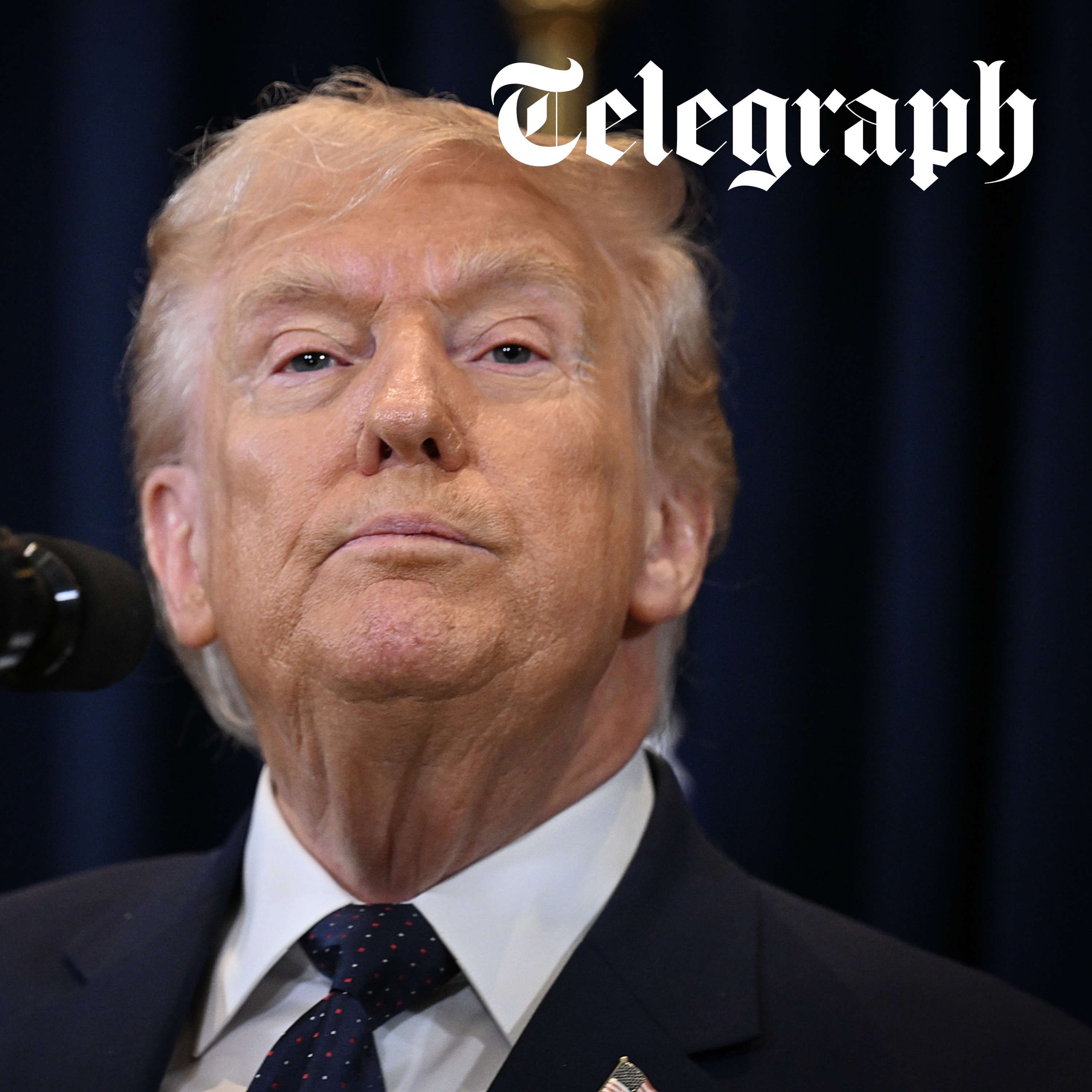
Donald Trump said on Monday that the Iran war was “very complete, pretty much”. But Pete Hegseth, his defence secretary, has said we have seen “only just the beginning” of the assault. When asked for clarification, the president said, “in a way, it’s both”.
But with suggestions that Washington was bounced into the war by Israel, and as Iran escalates the conflict across the region, is this even Trump’s war to end anymore?
Tim and Camilla are joined by David Blair, The Telegraph’s chief foreign affairs commentator, to help understand the president’s plan (hint: he doesn’t have one). They also profile the Mojtaba Khamenei, the new supreme leader.
Later, more Jeffrey Epstein questions for the Royal family, and this time it’s Andrew’s daughters Beatrice and Eugenie who are under scrutiny. Hannah Furness joins to digest the latest royal gossip, including suggestions that Princess Kate could be dispatched to Washington to save the special relationship.
We want to hear from you! Email us at [email protected] or find @dailytpodcast on TikTok, Instagram and X
► Sign up to our most popular newsletter, From the Editor. Look forward to receiving free-thinking comment and the day's biggest stories, every morning. telegraph.co.uk/fromtheeditor
Producers: Lilian Fawcett
Senior Producer: John Cadigan
Executive Producer: Charlotte Seligman
Video Producer: Will Walters
Studio Operator: Meghan Searle
Social Producer: Nada Aggour
Editor: Camilla Tominey
Hosted on Acast. See acast.com/privacy for more information.


