
 Ask ChatGPT



The podcast discusses whether Donald Trump will authorize US involvement in a renewed Israel-Iran conflict, amid claims of a possible US role in an Israeli attack while US-Iran nuclear talks were underway. It analyzes military options (including US bunker-buster capability against Fordow), the status of diplomacy, and whether the goal is preventing nuclear capability versus regime change. It also considers implications for Iran’s internal politics and Britain’s potential role via Diego Garcia.
Camilla Tominey and Roland Oliphant (hosts/commentators). Katie McFarland (Deputy National Security Advisor in Trump’s first administration). No other named guest appears.
McFarland served as Deputy National Security Advisor under President Trump; hosts are political/foreign-affairs commentators with Middle East focus (Roland references his work on Battle Lines).
Trump is portrayed as deliberating in the Situation Room rather than impulsive; Israel can’t fully neutralize Fordow without US bunker-buster bombs; Iran’s Supreme Leader (Khamenei) claims Israel attacked during indirect negotiations and warns against coercion; bombing may not trigger regime change and could instead harden resistance.
Fordow nuclear site; MOP “Massive Ordnance Penetrator” bombs from B-2s based at Diego Garcia; references to Stuxnet; Oman talks involving Steve Witkoff and Abbas Harachi; Netanyahu urging Iranian uprisings; discussion of potential succession after Khamenei.
Written by AI. May contain mistakes.
Discussion about Trump weighing involvement in the Iran-Israel conflict.
“Visit telegraph.co.uk slash newsletters today.”
Exploring the implications of Trump and the Ayatollah communicating via social media.
“So I'm literally up to the second because he's just, let me see.”
Reviewing the Ayatollah's statements regarding recent tensions and attacks.
“I mean, don't you think we've crossed a Rubicon here?”
Discussion on military assets in the region and the implications of US actions.
“You are stringing us along in order to basically allow the Israelis to take us unawares.”
Speculations on the likelihood of US airstrikes targeting Iran's nuclear facilities.
“OK, so kind of the vulnerability of that particular nuclear site at Fordow, where only the Americans have the bombing capability to take it out.”
Analysis of the breakdown in negotiations over Iran's nuclear program.
“because I don't see another way forward here.”
Exploring the potential consequences of a military strike on Iranian nuclear facilities.
“There's everything they've done to enrich the 60 % uranium, which is a stage below weapons grade and so on.”
Discussing the broader implications of conflict in Iran and the notion of regime change.
“Well, I mean, when Russia invaded Ukraine in February 2022, Russia's already waging a low level, a low threshold, effectively a war campaign against Europe.”
Exploring the prospects of regime change in Iran amidst ongoing unrest and external pressures.
“They clearly hope that there's going to be a regime change, whatever you call it.”
Exploring the prospects of regime change in Iran amidst ongoing unrest and external pressures.
Insight into President Trump's deliberative process regarding military action in Iran.
“Katie McFarland, Deputy National Security Advisor in President Trump's first administration.”
Learn about Iran's defense situation and the implications for U.S. involvement.
“So Iran is defenseless and naked to Israeli aircraft or drones or missiles that would come in.”
Explore Trump's cautious approach to military intervention and decision-making.
“How could we reduce the number of risks that might happen?”
Discuss the consequences of U.S. military actions and implications for Iran.
“If regime change happens, it happens from within.”
Hear Katie McFarland's perspectives on Trump's communication style and strategy.
“and I've been in the Oval Office, in the Situation Room with all of those administrations.”
Review listener reactions to Trump's actions regarding Iran and Israel.
“Really interesting insights there from Katie McFarland.”

Get the gist, explore an idea or ask about something said.
 Claude
On The Daily T, what are the key points of this episode?
Searching your listeningAutomatic transcript. May contain errors.
0:02The Telegraph.
0:30Visit telegraph.co.uk slash newsletters today.
0:41Camilla: Well, it's beginning to look a little bit like World War III, isn't it? Donald Trump is weighing up whether to get involved in a conflict between Iran and Israel now that their decades-long proxy war has become a very real conflict. The president has come out with some pretty fiery rhetoric. Rick. He's the only world leader with the means to wipe out Iran's nuclear facilities. So is there any hope of a diplomatic solution now? Or is Trump about to take America into the war? Welcome to The Daily Tea with me, Camilla Tominy. And me, Roland Oliphant.
1:23Camilla: Roland, you've switched from one podcast to another because you normally host Battle Lines That's right But we're going to have a discussion because you know all about the Middle East and Iran and you are completely up to date with the latest from the Situation Room at the White House Well, even better, I've got Ali Hamonet's Twitter right here Brilliant. So I'm literally up to the second because he's just, let me see. Can I just say how weird it is that we are now in the realm of the US president and the Ayatollah communicating on social media as the rest of the world just looks on? It's strange, isn't it?
2:01Camilla: I mean, don't you think we've crossed a Rubicon here? Oh, we have, yes. Long ago. I mean, we're very much in the, we live in a science fiction world already. And I was astonished, actually. I mean, I'm quite often astonished by Donald Trump's truth social posts. But this one, I mean, it really does take things to a new level, doesn't it? He fired off his own warning on his platform, calling the Ayatollah, quotes, an easy target and saying, America's patience is wearing thin. And he's basically suggested, well, we're not going to take him out now, but we might. That's very Trump, isn't it, though?
2:37I mean, every world leader has it. It's not just Ali Hamon. You know, it's poor old Volodymyr Zelensky and everybody else who thinks they're going to the White House to have a discussion with Donald Trump. And then they have to either it's all going to be said in public or he's going to put something out on on social. It's very much Donald Trump's way of doing well doing diplomacy. But it's war now as well.
2:56Camilla: What is the latest from the Ayatollah on X? Latest from the Ayatollah on X. So five minutes ago, the Zionist regime's malicious attack on our country took place at a time when Iranian officials were indirectly engaged in negotiations with the US side. There was no indication on the part of Iran that signaled a military move. So he's saying Israel attacked unprovoked. It was suspected the US was involved in the malicious move carried out by the Zionist regime. That's his preferred term for Israel. But considering their recent remarks, responding to Donald Trump's comments, this suspicion is growing stronger by the day.
3:29So he's saying, I think Donald Trump knew about this all along. We are engaged in diplomacy with you. You are stringing us along in order to basically allow the Israelis to take us unawares. Then he says the Iranian nation will stand firmly against any imposed war. The Iranian nation also firmly stands against any imposed peace. And I think that's very important. The Iranian nation will not capitulate to anyone in the face of coercion. He's basically saying, you want me to back down. You want me to agree to your ultimatum of completely dismantling my nuclear program. giving up in Richmond and so on.
4:04I'm not going to do that. So basically, he's doubling down.
4:08Camilla: What's your analysis of it, though, Roland, in truth? I mean, we've got this talk about Israel now own the skies. That's been backed up by Donald Trump because obviously he is supporting in the air. He's sent how many jets? Oh, I mean... It's hard to know, isn't it? Well, something in the region of 200. Yes. I'm not sure. A large number of fighter jets, and then he's got B-2 bombers, which I'm sure we'll get to down on Diego Garcia. OK, so kind of the vulnerability of that particular nuclear site at Fordow, where only the Americans have the bombing capability to take it out. I mean, how likely do you think it is?
4:44Camilla: What's the name of the bomb that they could drop? It's called the MOP. It's the Massive Ordnance Penetrator. It's about six metres long. That's three of me and a bit. It weighs, according to Wikipedia, about 14 metric tons. The only country in the world that makes these monsters is the United States. They built them specifically for this job. And the only aircraft that can really deploy them is the B-2 stealth bomber, which is only operated by the United States, and a number of which have been deployed to the US British air base in Diego Garcia, directly south of Iran, over the past several weeks.
5:21So they are in place to go if Donald Trump gives the order.
5:25Camilla: What do you think is going on here? Because there is a surprising amount of prevarication from a man that many think is quite gung-ho and trigger-happy. You're talking about Ali Hamanoi, you're talking about Donald Trump. Indeed. I'm talking about the latter, actually. I mean, don't you think it's interesting? He leaves the G7 early, he goes straight to the Situation Room. That does suggest that something is afoot. And yet, it's being quite carefully thought out, Roland. isn't it? There's a lot we don't know yet and which will come out in due course. I think if you look at the American posture, it is beginning to look like everything is in place for America to enter this war.
6:01I talked about the B-2 bombers on Diego Garcia. We know that they've moved in the kind of, you know, either jet fighters, they've moved in the air bridge assets. So the air-t-air refueling aircraft you would need to make that very long journey to Iran and back and add in that the Israelis, if conventional wisdom is, it turns out to be true, the reasons why it might not be. But as you said, only the Americans can deal with Fordow. Fordow has to be dealt with if the Israelis are to succeed. I think the smart money is, and I know I'm holding myself to fortune here, isn't it? I think probably he's going to go and do it because I don't see another way forward here.
6:45because if his hope was that the Israeli bombardment would force Khamenei back to the negotiations, that doesn't seem to work. By the way, we should talk about the negotiations actually because the Iranians have a point, right? So they were, the Americans and the Iranians were in talks about the Iranian nuclear program. They were meant to meet, Steve Witkoff and Abbas Harachi, the Iranian foreign minister, they were meant to meet on Saturday in Oman for I think the sixth round of talks and so on. So until Friday morning, that was all set. And that was all blown out of the water by this bombing.
7:19Everyone I've spoken to was taken completely by surprise to it because everybody thought the diplomatic track still had a way to run before this hypothetical attack took place. Well, it was interesting, wasn't it?
7:29Camilla: Because this was kind of the pitch rolling of all this is curious. You have Donald Trump being very, very critical of the nuclear deal signed by Urbana and others. The Western world has been asleep at the wheel. What were you thinking? The Iranians were never going to give up their nuclear weapons. And lo and behold, yes, they've had to be destroyed by Israel and possibly we shall wait and see the US's help. But yet he was he annoyed, didn't he? He annoyed the Western world by kind of holding secret talks with Iran or only admitted that he'd had the talks with Iran after he had had them. It seemed as if there was a negotiation taking place behind the scenes.
8:08Camilla: And yet suddenly the rhetoric has changed. Why did it change? What's happened? Well, so the talks ran into a bit of a roadblock a couple of weeks ago. And essentially the roadblock was the Americans turned around to the Iranians and said, whatever deal we come to on this, you cannot have any capability to enrich uranium whatsoever. Not even a little bit. Not even what other countries do for their civilian nuclear power plants. Maybe Russia can do it for you. Maybe somebody else, but you can't do it. The Iranians have always opposed that. Always. Going back kind of 20, 30 years. They said, well, hold on.
8:42No, we didn't think that was on the table. We thought we'd retain a bit of that. We're not happy with that. Can I just intervene there?
8:47Camilla: Why? Because they are making an argument that they want to use nuclear power. Well, they have a nuclear power station. It's an oil-rich state. Well, they have a nuclear power station. But isn't that just complete flannel? No, not entirely. I mean, not entirely. So there's two things, right? There's everything they've done to enrich the 60 % uranium, which is a stage below weapons grade and so on. all the stuff they've done that has no plausible civilian application. Enriching to that there's a particular level. I don't want to get too technical, but there's a particular level. I can't record. It's like three point something percent enrichment.
9:19That is the level at which the previous nuclear deal in 2015 said they could enrich to. And the reason for that is because you can make nuclear fuel for a civilian nuclear power station with that. It's not useful for anything else. Why they want to keep that? But I think partly it's simply a kind of pride, a national pride thing.
9:38Camilla: Moving on to the idea of this mega bomb actually being dropped on Fordow, what impact does that have on the world? That's a massive question, Roland, I know. Because on one hand you could look at it as an isolated bombing of a facility obviously will involve some casualties but not necessarily civilian ones, will take out a load of nuclear scientists and others. is that acceptable because the Western world is saying that the nuclear threat from Iran is so significant and so grave that actually it's to secure future peace? Well, the Israeli argument for this operation is that this is the only way to stop Iran from acquiring a nuclear weapon.
10:19There are obviously people who disagree with that, obviously people who thought that there was a way to go on the diplomatic track, people who could point out that, look, the 2015 nuclear deal wasn't perfect, but it went a long way to removing their ability to build a nuclear bomb. And it's only since Donald Trump walked away from it that they've come within a few months of building a bomb.
10:41Camilla: Well, does the bombing of the nuclear facility automatically spark regime change in Iran? Oh, that is a... Wow, wow, wow. Because we've talked about, are we on the brink of World War III? I don't know whether the bombing of a nuclear facility amounts to that, to be honest. World War III started ages ago, Camilla. We're in the middle of it. Are we? Yeah, yeah, yeah. Explain that theory. Well, I mean, when Russia invaded Ukraine in February 2022, Russia's already waging a low level, a low threshold, effectively a war campaign against Europe. It's not a world war. Don't think about it as a world war in the more formal sense that it was last time.
11:26But if you start looking at the number of conflicts there are concurrent all over the world, I think it's quite possible that historians are going to talk about this era as World War III. And by the way, the scope of this war is already enormous. Just this particular bit with Iran, we're talking about there's the Gaza conflict. There's Yemen. There's what happened in Syria. Our colleague Sophia Yan is currently in Beirut because of the potential for this to spill over there. She's walking around Beirut city centre and you can hear the Israeli drones everywhere. Everyone can hear it. It's always present.
11:58So this war, this conflict is already covering the regional wars already begun. So anyway, we're in an era of global conflict anyway. Your question is about does it spark regime change?
12:10Camilla: Well, because I think the intention is from Israel and perhaps the US's perspective that Iran has been weakened because its proxies in Hamas, Hezbollah and the Houthis haven't been as successful as they may have hoped. We've obviously had this hugely successful Mossad operation to take out key military chiefs. It's quite extraordinary from a spycraft point of view to understand that Mossad agents have been inside Tehran, you know, building defences against the Iranians. They also will have noted that there is an increasing uprising in Iran among young people and indeed women. although there's a lack of joined-up resistance in Iran, which is problematic.
12:54Camilla: So, yes, you can bomb a nuclear facility and suggest that it's to save the world from the nuclear threat that Iran poses, or you could bomb the nuclear facility as part of a grand scheme for regime change because you've had enough of murderous and medieval mullahs running Iran since 1979 and engendering terrorism against the West while they're at it. well no i think i think there's two things going on here i mean i think that you know the israelis say this is about the nuclear program and part it's true because the iranian nuclear program is so big they couldn't do it in a simple overnight operation it was always going to drag on a bit yeah um and they were always going to kill quite a few iranian civilians which they've done by the way you know they're dropping bombs in the middle of tehran yeah innocent people are dying because of this and the counter-narrative the one i just stated was well, if you would like to ingratiate the Iranian people with their regime, then that is precisely the way to do it.
13:54Camilla: Right, right, right. So, exactly, right? But you can see from what the Israelis are doing and from the rhetoric and the scope of it, it goes well beyond that, right? They clearly hope that there's going to be a regime change, whatever you call it. And this is the massive question everybody's talking about. I've been on the phone to people in Tehran, Iranians outside Iran, asking about this question. No one really knows the answer. Everyone wants to know the answer. is the regime going to survive this war? Let's start with this thing about this uprising. Benjamin Netanyahu saying, calling on the Iranian people to rise up and overthrow the regime.
14:27I don't think that's gone down well at all in Iran, especially amongst kind of opposition people who have risked their lives or been arrested or been beaten. They've tried to overthrow this regime several times in the past few years. So for some outsider to tell them, oh, you do it now. And meanwhile, I'm going to like carpet bomb Tehran and I'm going to send all your parents. I mean, there's 14-hour traffic jams on the highways out of Tehran. People terrified, all of this.
14:53Camilla: People have been trying to take on the Iranian Revolutionary Guard literally with their bare hands. So this is the thing. And the problem is you can bomb the Iranian air defences, you can bomb their army bases, you can bomb the nuclear facilities, but the instruments of coercion are still there, right? The Basij militia are still there. The IRGC are still there. they still exist and this is not a regime that's going to disappear without a fight so you're asking people to go out and have a massive to take a massive risk yeah while you're bombing the country by the way and iranians are they're like any other any other nation right and outside power starts bombing them there is a degree of kind of rally to the flag effect i've spoken to people for example who were iranians who told me they were basically celebrating when they heard the list of top commanders who'd been killed.
15:42Yes. These are people who are, you know, very anti-regime. But that quickly turned to real fury and anger when they saw how many targets were being hit right in the middle of Tehran and so on. So...
15:55Camilla: Yeah, it's like, we want to help you stage an uprising, but sorry if you're collateral damage. Right. Okay. So there's that. But there is another way that the regime falls down. And that involves the removal of Khamenei. Yes. Well, what's your instinct on that? Because on one hand, Donald Trump is like, no, we're resisting that for now. I had two really interesting conversations on Sunday on my GB News show. I had the Israeli ambassador to the UK, Zippy Hotovli, came in and I said, do you want to take out the Ayatollah? No, no, no, that's not what we want. I then spoke to Sir Richard Dearlove, the former head of MI6.
16:30Camilla: He said, who's she kidding? Of course they want to take out the Ayatollah. Do you have to take out the Ayatollah for there to be regime change? Or just does somebody else come in? I mean, they replaced the top military general, then the Israelis killed him four days later. Yeah, exactly. So this is the problem. This is why some Iranians and some people who follow this very closely are really frustrated with the Israeli strategy. And one of the criticisms I've heard from lots of people is that the Israelis, they do these amazing military operations. They're great at that. And they're just hopeless with an endgame.
17:00They've got no endgame in Gaza. They've got no endgame in Syria. And they don't seem to have any endgame for us in Iran. And the reason people are saying that is, is like I say say say the Israelis or the Americans give the Israelis the green light to kill Hamanoi or say given that the Israelis as you said obviously have massive intelligence penetration of Iran well if you've got very high level penetration of Iran you've got people working for you and I don't know maybe maybe you've got a faction in the IRGC who might be able to you know go around to his house knock on the door say I'm sorry sir the game's up yeah and off you go into exile in Russia or Pakistan or something like that.
17:38Either way, he gets removed. When he goes, is it a change of the regime? In that scenario, in the latter scenario, probably not because who takes over?
17:50Camilla: They need an alternative. We've got Mariam Ravjani. It's a bit like the People's Front of Judea and the Judean People's Front over in Iran when it comes to the resistant movement. You have got Ravjani. She's got a lot of support. But then you've got other resistance groups and no joined up thinking. There's no key alternative democratically minded player. There is no, as it was put to me, there is no Iranian Alexei Navalny. Exactly. And that's partly because potential Alexei Navalny's have been killed systematically or sidelined. Mariam Rajavi mentioned no Iranian in Iran wants anything to do with her.
18:27They view her group as a bunch of terrorists and cultists. There is Reza Paklavi Shah, the son of the former Shah. He's really angered a lot of Iranians. He went on Laura Kunzberg the other day and she said, well, are you okay with Israel bombing your country? And instead of saying something like, I'm horrified to see Iranians getting killed, he basically, he sounded like an Israeli government spokesperson. He said something like, I'm sure that's not their intention, which went down like a lead balloon. So I don't think he's really got much of a chance. although he's not without support in the country.
19:02This is the big question. So probably you're talking about men with guns and money taking over and continuing to run the country. Who have guns and the money? The IRGC. There are some names floating around. People are already discussing the succession because Khamenei is very old. He's 85, 85, 86. So he's going to go in the next decade or so anyway. So people are talking about that. So probably the game plan here is this. You get a new leader, someone who looks at all the destruction, looks at everything else, says, if that's the price of rebuilding this nuclear program, can I be bothered? No, I don't.
19:34And therefore, Israel is relatively safe from a nuclear-powered Iran. The nuclear-powered, nuclear-armed Iran.
19:40Camilla: Yes. But, you know, they retain the capability and they will probably remain as hostile as the current regime. The alternative, Camilla, which is even darker, actually, and which some people have put to me, is this. You try regime change. Huge numbers of people die because, as we said, this isn't a regime that's going to leave quietly. It would be a bloody, bloody nasty mess. But nobody gains the upper hand. And you end up with Iran falling into a condition like Syria or Libya or Somalia, basically becoming a failed state. And that quite suiting Israel in a way, because a failed state is in no condition to carry out a really difficult long-term national project like building a nuclear bomb.
20:23But the impact on Iran and the rest of the world is colossal.
20:28Camilla: Yes. And to bring it back to domestic matters with a huge debate going on about immigration, you also then see a lot of people coming from Iran trying to seek asylum in countries like the UK. Oh, absolutely. Before we talk to somebody who can take us inside the Situation Room with Donald Trump, can we just briefly discuss Keir Starmer and David Lammy? I mean, the prime minister's not quite seeming to be ahead of the curve here. He's tweeting, oh, yeah, there's no way Donald Trump is going to intervene in this. Well, that doesn't seem to reflect the headline that I'm just looking at as I stare at the top of our kind of chart of most read stories in the newsroom.
21:09Camilla: I mean, we have Trump leaving the G7 early. Ben Reilly-Smith, the political editor, writes up a piece basically saying it was the G6 plus one. As ever, Trump dominates everything, leaves them all looking a bit stupid. We had the spectacle of Keir Starmer on the floor picking up the pieces of paper that were dropped from the trade deal. Where's the prime minister in this, right? Look, the bottom line, I'm afraid, is Britain is not really a player here. No. That's just the reality. There's an agenda here. There's a game plan. it's Israel's gay and clangal agenda, as kind of authorised or greenlit or allowed or supported by the United States.
21:46Camilla: Yeah, but we're not going to be at the races if we sort of go around sitting on the fence and talking about de-escalation. I'm just saying that somebody like Boris Johnson probably wouldn't have been this circumspect. Oh, you're talking about his character and the state of the rhetoric. Well, I'm just talking about the politics of it. We might be at the races if he was more willing to be fully throated in his support of the US and Israel. I don't really see how, because what do we have to offer? I mean, we will have some jets in Cyprus. Yeah, 20 jets. We have 20 jets in Cyprus. They've been deployed.
22:17The indication is that if things go hot, they will be there as a kind of backstop, perhaps, if Israel's air defences fail and so on. So there is a chance of getting involved in this. The really interesting thing, Camilla, actually, is not really about that at all. It's about Diego Garcia. So that air base, which we talked about, the whole Mauritius deal and so on. Nonetheless, it's still a British base.
22:37Camilla: The great Chagos giveaway. Yes. Nonetheless, that is still a British base. But that means if it's to be used for military operations for a war, the Americans have to need British permission, which means if Donald Trump does want to drop bombs on Iran, on the Fordow base, he's going to have to ask Keir Starmer and Keir Starmer is going to have to make a decision about that. Well, he's not going to say no, is he? Is he? Ask him. But, I mean, this is a big thing. We do invite the Prime Minister onto the Daily Tea. No, but you're making this point about him fence-sitting. That's the point where he's really got to make a decision.
23:09He can't, you know, that's big stuff.
23:12Camilla: Yeah. Right. Can you sit this out or not? Yeah. Our own prime minister's biggest test yet. I mean, that is a question I'd like to see put to the prime minister, put to number 10. You know, has a request been made? If so, what is our answer? And what is our position? Can British military facilities be used in an American attack on Iran? Okay. Roland, thank you so much for joining me on The Daily Tea. you shall be returning to your actual podcast, Battle Lines, where you'll be covering this in much, much closer detail than I ever could. Yeah, we've spent actually most of yesterday and the past week, we've spoken to people in Israel.
23:47The past couple of days I've been speaking to people in Iran and around Iran. Do listen. Hopefully it will cast a light. We've spoken to pro-regime Iranians, anti-regime Iranians, Iranian exiles. The one thing I would like to say, I think, which is to do them all justice, every single person I spoke to has basically hasn't slept for four days. Really high emotion. People genuinely shock, as you could imagine. Yeah, well, it just feels like the world is on a precipice, frankly.
24:14Camilla: And they're at the heart of it. Thank you, Roland.
24:26Camilla: Cooking up a storm. Dressing to impress. Staying fit and healthy. Whatever interests you, you'll find it in The Telegraph's newsletters. Explore the complete collection, from recipes with Diana Henry to fashion and beauty with me, Lisa Armstrong. Get the best of our journalism delivered to your inbox. Visit telegraph.co.uk slash newsletters today.
25:01Camilla: Welcome back. Katie McFarland, Deputy National Security Advisor in President Trump's first administration. Welcome to The Daily Tea. What factors do you think the president is weighing up as he considers whether to join military action in Iran? So I know President Trump really well. I've been in a situation room with President Trump during moments like this where he's making his decision. And I don't think he's decided yet. I think he's looking around. He's waiting for a couple of things to happen. And what he's doing now, he's sitting in the Situation Room, and it's like a conference room with a big, long desk, and he's going around.
25:39He sits at the head of it, and he's going around one by one. He's asking the Secretary of Defense, what are our military capabilities in the area? He's asking the intelligence chiefs, what's happening in the region? What do you know about any potential regime change efforts in Iran? He's asking the Secretary of State, what's the status of our negotiations? Is it dead in the water? So he's talking to Ambassador Huckabee, the American ambassador to Israel, and he's going all around the table and he's asking them for their situation, their status report of what's happening and what are the options they suggest he take.
26:11He's also probably coming up with a couple of options of his own. And then he personally decides he doesn't take the advice and counsel, but he doesn't bend to whatever his advisors say. He will be the decision maker, and he's intimately involved with all of the details of this, unlike previous presidents have been. So what he's probably looking at, or what I would tell him if I were sitting right next to him in the situation room to look at, are really two things. One, what's happening on the ground? What's happening with Israel? And, okay, so the big issue is, will Iran be allowed to have nuclear capability?
26:48Not just nuclear weapons, but are they going to be allowed to have anything nuclear? the ability to ever make a nuclear weapon. And Israel's pretty much taken away all the ability to do that, all the existing facilities, except for one. It's a nuclear facility deep inside a mountain north of Tehran, and it's called Fordo. The Israelis are not thought to have any kind of bombs that could go deep enough to penetrate one mile underground inside the mountain and blow it up. So the president's probably asking, well, what other capabilities? How else would you get rid of it. The United States does have the capability of doing it.
27:22It's called bunker buster bombs. We have about 20 of them. And they could burrow down inside the mountain and destroy the site. But Israel doesn't have that. Nobody else has that. And we've never given it to anybody. So what President Trump will be looking for is what other capabilities might Israel have? Could they go for a cyber attack and destroy the facility? We know that they used the Stutnet virus 15 years ago to destroy the Iranian centrifuges? Could they have groups on the ground? We know that they have people on the ground. We know they have commando units. Could they go and take over the site and destroy it?
27:57We know that Israel has no interference from the air. Iran has no air defense systems left. So Iran is defenseless and naked to Israeli aircraft or drones or missiles that would come in. Israel owns the air. So what could Israel do by itself without our help? And that's what he's going to hear from the Secretary of Defense and the Intelligence Service. And then he's going to ask the intelligence services, what are you hearing from the inside in Iran? Are they going to go to the negotiating table? Are they going to just stick to it, knowing that they're going to face destruction and immolation if they continue on the route that they're having?
28:34Or is there something happening inside Iran? Maybe around the Iranian situation room. Is one of the generals, is somebody saying, look, we're not going down on this ship with you? And are there any contacts that are being made or any overtures that the Iranians are making to a third party to the United States saying, OK, we're looking for a way out of this.
28:52Camilla: What I find interesting about your analysis of how carefully he's considering all this is from the outside world looking on, you know, he'll post quite bombastic messages on Truth Social. He's been so frank about this idea, yeah, we're not going to take out the Ayatollah brackets yet. You know, it's a very, very kind of visual. There's this impression of him because of his personality that he could be quite trigger happy. But you're suggesting, Katie McFarland, that actually, no, he isn't. He isn't as gung ho as his reputation suggests. No, he's in fact a reluctant warrior. I was in a situation room with him early in the first term where he had to make the decision that President Obama had said there's a red line.
29:36If the Syrian Bashar al-Assad, if the Syrians use chemical weapons against their own people, America will respond. Well, the Syrians used chemical weapons against their own people, nothing happened. So early in Trump's term, when the Syrians used chemical weapons against his own people, Trump decided to do something. But we looked at the options. We looked at the risks. He sat in the situation room. He weighed the pros and the cons. How could we reduce the number of risks that might happen? What could go wrong? How can we sort of prevent or anticipate what might go wrong? And then once he made the decision to do it, he walked away from it.
30:08And he didn't micromanage it. he actually went on to have a summit with the Chinese president in Mar-a-Lago, and the attack took place while they were having dinner and eating chocolate cake for dessert. And so President Trump, once he makes a decision, he'll let the military execute it.
30:23Camilla: And when it comes to the politics of all this, how might a decision to intervene affect his MAGA fan base? Because even his ultra-loyal congresswoman, Marjorie Taylor Greene, has expressed concerns about this. You know, there is that argument which President Trump and J.D. Vance stick to. There isn't popularity, particularly in Rust Belt America, for the idea of intervening in foreign wars. The American people, like the British, have had experience of the Western world trying to impose regimes change. They saw how disastrous the withdrawal was from Kabul under President Biden. And they actually think, sorry, we should be just sticking to domestic matters.
31:07Yeah, you know, it's an interesting split that I think everybody's tried to fan the flames of. I don't see it as that biggest split. First of all, who is MAGA, who defines who's MAGA and who's not? Donald Trump does. And what he's trying to do is to figure out a way to influence events, but without having American boots on the ground. You know, if, and I think it's a big if, if the president does decide to use the bunker buster bombs against the site in Iran, it's going to be a one-off. There are no American boots on the ground. It would be done from the air. As I pointed out, there's nothing to stop any aircraft from going into Iran right now.
31:41And it would be a limited one-and-done deal. I think one of the things he's also looking at, Camilla, is what happens the day after. You know, what happens if that military site is destroyed? Okay, it's great. Iran doesn't have a nuclear program, but who's running Iran now? And when you talked about regime change, you know, I think we've learned the hard way that American forces, Marines in boots going into capitals and saying, we don't like your government. We're going to put another government in that we like. It just has not worked. You know, these have been forever wars. The leaders have not been good partners with us.
32:14And so I don't think President Trump is going to want to have anything to do with a regime change. If regime change happens, it happens from within. It's either a palace coup by the people around the Ayatollah. It's the Iranian people rising up to say, we don't like the regime. We want to have democracy. We want to have an election. But that's not the United States driving it or Israel or anybody. That's the Iranian people. And I want to reinforce that because President Trump has made a number of speeches. Most recently, when he went to Saudi Arabia, and he said to the Arab world, we're not going to tell you what kind of government to have.
32:47We're not going to tell you how to worship your God. We're not going to tell you any of those things. Those are up for your own people to decide. And so I think in this case, he would be absolutely careful about not putting American boots on the ground and not intervening and not being part of any regime change. That's up to the Iranian people themselves.
33:04Camilla: Although you could force regime change by, as well as bombing the nuclear facility, taking out the Ayatollah. Well, I think that's why he said to the Ayatollah, you know, we know where you are and we could remove you. So maybe that's a bit of an incentive for the Ayatollah to come to the negotiating table. I've got to say, when you see those tweets from President Trump, that is actually him doing it. That's not even him dictating it to somebody who's typing it in. He's got his own cell phone and he's like, tap, tap, tap, tap, tap. And he's putting it in. And so it's really from his head immediately out into cyberspace that he's communicating.
33:37So when he's saying to the Ayatollah, man to man, we know where you are. We could take you out. I think he's trying to get and scramble the Ayatollah's brain. And he's also sending a signal, I think, to the other people around the Ayatollah. You know, if you go down, if he goes down, you go down with him. And maybe you should think about an alternative. Although, to conclude, it's an extraordinary way to sort of be commander in chief, giving so much away on social media.
34:06Camilla: Yes. I mean, look, I've worked for presidents like Richard Nixon, Jerry Ford, Ronald Reagan, President Trump. and I've been in the Oval Office, in the Situation Room with all of those administrations. President Trump is completely transparent. What he says in private is what he says in public. And he's very clear. And the one thing I've learned is that always take him seriously. When he says, Iran, you're not going to have a nuclear weapon. But don't necessarily take him literally, because he's going to get to that goal. But he might try this thing. If that doesn't work, he's going to attack. He's going to try another thing.
34:37He'll get there, but he won't necessarily get there the way you might on day one think it's going to happen.
34:43Camilla: Katie McFarland, thank you very much indeed for joining us on The Daily Tea today. Thank you, Camilla.
34:53Camilla: Really interesting insights there from Katie McFarland. Read a reaction. Sheridan Cooper says, As much as I like Trump and his policies, I can't help thinking that Israel has taken all the chances, done the hard graft, taken the fatalities, but now Trump wants to take the glory and the credit. Mark Hall says, I don't agree with Trump on much, but a hard line on Iran is one of the things I fully support. We've also done a poll on the Telegraph website. Should the US help defend Israel against Iran? 75 % say yes, 25 % say no. And of course, you can follow all of our coverage online as this situation develops.
35:31Camilla: We'll be back tomorrow, 5pm.
36:03We'll see you next time.
36:11Camilla: Stop overthinking. Start building. AWS AI is how.
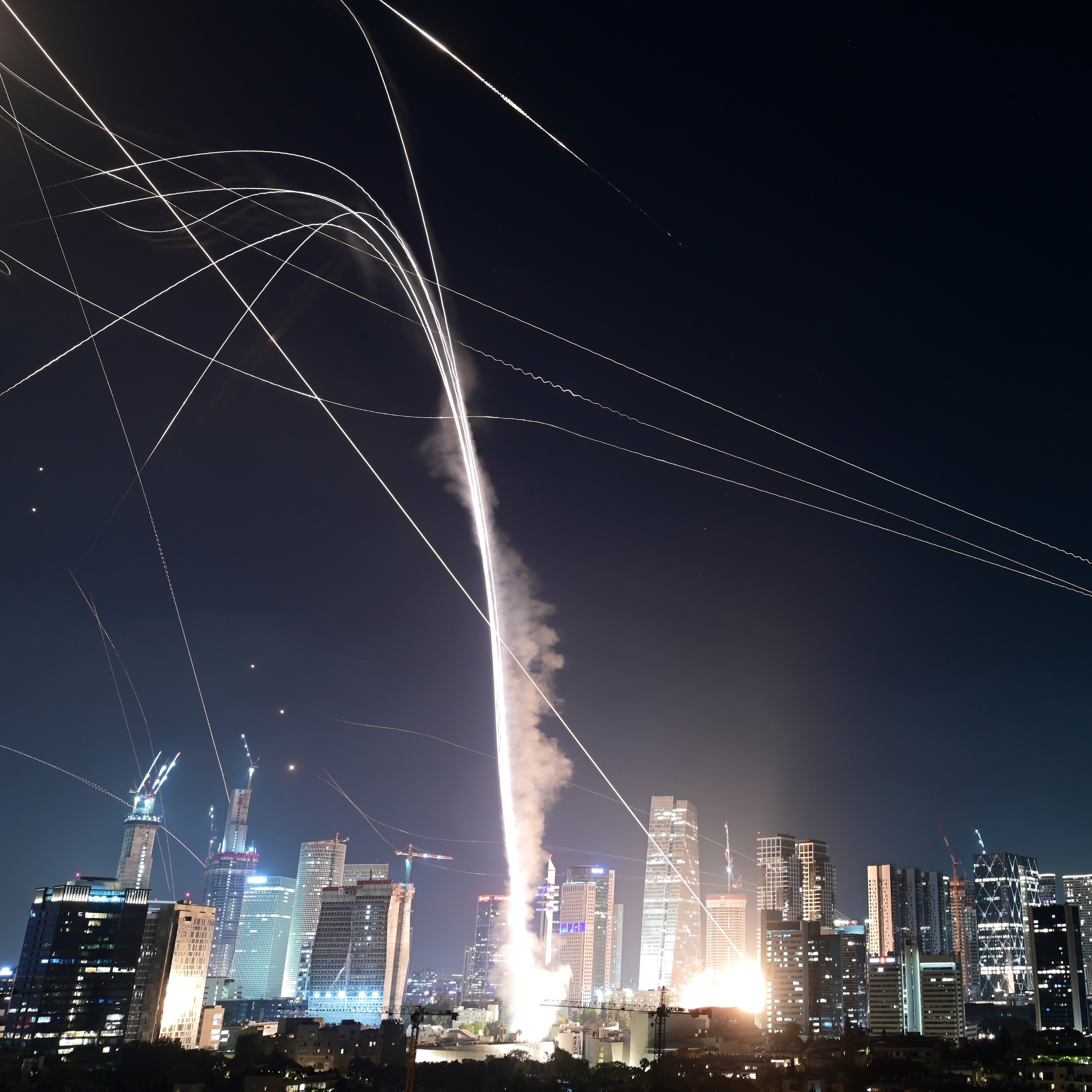
As tensions in the Middle East hit a boiling point with the crisis between Iran and Israel growing deeper every day, President Trump is reportedly weighing up if he'll join the conflict by taking military action against Iran’s nuclear facilities. So is the world on the brink of an even bigger war?
Camilla and Battle Lines' Roland Oliphant explore the global stakes, Tehran’s potential retaliation and whether a diplomatic solution is off the table.
And we ask KT McFarland, deputy national security advisor in President Trump’s first administration, what his next next move might be and what it means for the rest of us.
Listen to Battle Lines for more on the Iran-Israel conflict
We want to hear from you! Email us at [email protected] or find @dailytpodcast on X, Instagram and TikTok.
Producer: Georgia Coan and Lilian Fawcett
Planning Editor: Venetia Rainey
Executive Producer: Louisa Wells
Social Media Producer: Ji-Min Lee
Video Editor: Will Walters
Studio Operator: Meghan Searle
Original music by Goss Studio
Hosted on Acast. See acast.com/privacy for more information.


